Will We Be Smart Enough
Soon Enough?
Putting Civic Intelligence into Practice
Douglas Schuler
Public Sphere Project / Seattle
The Evergreen State College / Olympia
douglas@publicsphereproject.org


Research for Action:
Networking University and Community for Social Responsibility
A workshop in conjunction with Making Links 2010
Monday, 15 Nov 2010, Perth, Western Australia
What kind of world
             are we living in?
                One that needs our help.

•   Our global problems are vast and potentially catastrophic.

•   Our local ones aren’t exactly trivial.

•   The people in power won’t solve these problems by
    themselves
•   Nor will the free market or other approaches that rely
    on “side-effects” do it all.
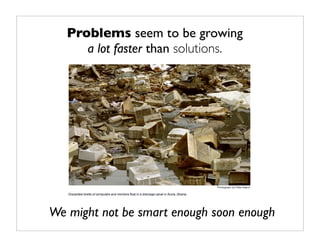
Problems seem to be growing
      a lot faster than solutions.


We might not be smart enough soon enough
I needed a concept to
 help me (and others)
 answer the question
 (It didn’t have to be new but it did
           have to be useful)
I wanted to identify a
        concept that
•   recognized actually existing phenomena

•   asserted social goals — at least indirectly;
    promoted and integrated theory and practice

•   incorporated and acknowledged social norms

•   could be used a common frame for motivating and
    coordinating (consciously and unconsciously) a
    large number of projects
The concept I
came up with was
civic intelligence
Some Definitions
 Informally, civic intelligence refers to how smart
   collectivities are in relation to their problems.

      Civic intelligence is a form of collective
 intelligence that focuses on shared problems. It
    addresses civic ends through civic means.

Although we know that civic intelligence exists, this
 fact is not explicitly acknowledged and hence
   not something that we can readily examine or
                      improve.
Some Assertions
Today more than ever, civic intelligence is needed to address
the problems we now face.

Civic intelligence is distributed throughout society — not just
among those with money and power

Although we know that civic intelligence exists, the capacity
that exists may not be adequate for our pressing needs.

Civic intelligence — its understanding and development —
could serve as a paradigm for activists and researchers.

Civic intelligence is necessary — but not sufficient.
Civic Intelligence is not a Brand New Topic
        Social Intelligence, Community Inquiry (John Dewey)
                  Social Learning (many authors)
                 Civic Community (Jane Addams)

         Civic Capacity (Harry Boyte, Xavier Briggs)

     Public Work Politics (Center for Democracy & Citizenship)

      Civic Innovation (Carmen Sirianni & Lew Friedman)
          Open Source Intelligence (Robert Steele)
                    World Brain (H.G. Wells)
          Civilizational Competence (Piotr Sztompka)

     + Social Enterprise / Entrepreneurism / Innovation, etc.
Civic Intelligence:
Three Brief Examples

     • Sustainable Prisons
     • Beehive Design Collective
     • Liberating Voices
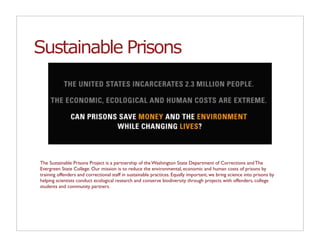
Sustainable Prisons


The Sustainable Prisons Project is a partnership of the Washington State Department of Corrections and The
Evergreen State College. Our mission is to reduce the environmental, economic and human costs of prisons by
training offenders and correctional staff in sustainable practices. Equally important, we bring science into prisons by
helping scientists conduct ecological research and conserve biodiversity through projects with offenders, college
students and community partners.
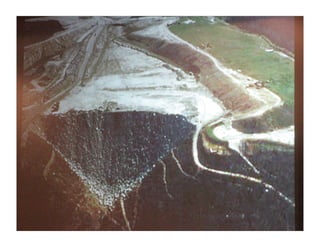
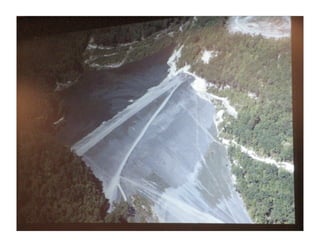
Bee Hive Collective

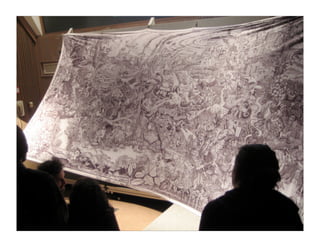
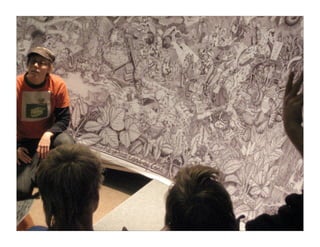
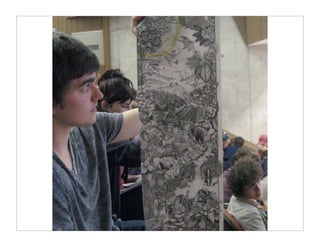
focusing on their “True Cost
of Coal” project
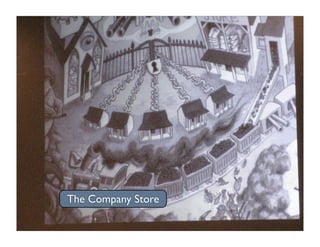
The Company Store
The Injury Medication Cycle
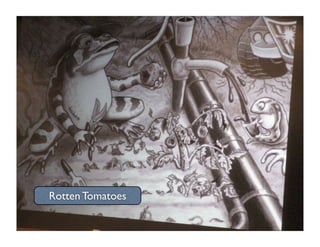
Rotten Tomatoes
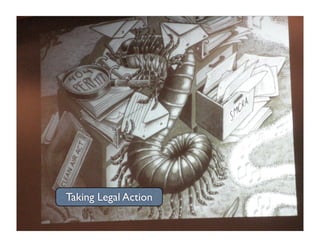
Taking Legal Action
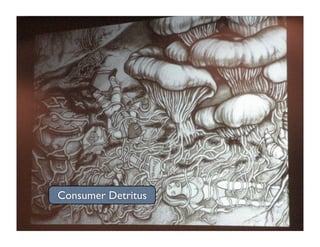
Consumer Detritus
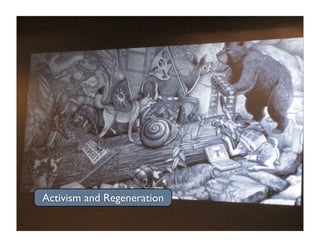
Activism and Regeneration
Interviewing: 1 year (my estimate)
Mural design: 6 months
Mural drawing: 1 1/2 years
Beehive Collective
                        Some Observations

•   They pollinate! They travel around working with activists, students,
    “ordinary people”

•   They combine popular education, art, social action, social analysis and
    critique — and, even, folklore.

•   They lead by example and help empower people

•   They demonstrate that other paradigms are possible. They are
    “traditional” and “slow” and their work is handmade and anonymous
    and collective.

•   They don’t use human figures in their work...
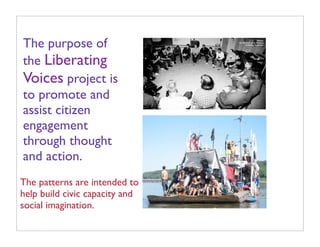
The purpose of
the Liberating
Voices project is
to promote and
assist citizen
engagement
through thought
and action.
The patterns are intended to
help build civic capacity and
social imagination.
Our Vision
                     Everybody is an Activist
•   The people in power won’t solve these problems by themselves. (Nor
    will the free market or other approaches that rely on “side-effects” do it
    all. )

•   The activists we need to do this work come in many varieties and there
    are a million ways for people to make positive contributions.

•   We need more people to support — and to lead — efforts to address
    our shared problems. (Note that this includes “ordinary people”)

•   Keeping “ordinary” people out is not only unfair, it deprives the rest of
    us of a vast, largely untapped resource

•   Unfortunately civil society is unorganized and spread out (although
    willing to help)
Patterns are not recipes
Patterns don’t provide precise instructions...


Patterns are more like seeds that have different results
when planted in different soil.

Different people, in different situations, will use the patterns
differently. They are really tools for thought.

The use of a pattern is intended to change the flow of
what would have happened in its absence.
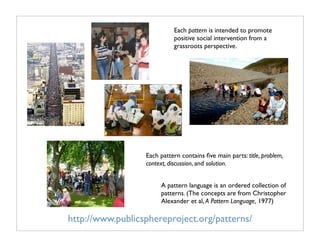
Each pattern is intended to promote
                            positive social intervention from a
                            grassroots perspective.


                  Each pattern contains five main parts: title, problem,
                  context, discussion, and solution.


                       A pattern language is an ordered collection of
                       patterns. (The concepts are from Christopher
                       Alexander et al, A Pattern Language, 1977)

http://www.publicsphereproject.org/patterns/
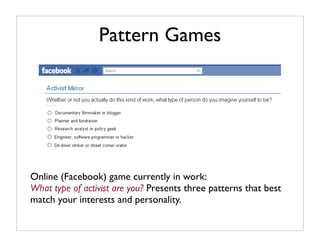
Pattern Games


Online (Facebook) game currently in work:
What type of activist are you? Presents three patterns that best
match your interests and personality.
Pattern Language Projects
              Using Patterns to Orient Projects
            from Conception to Implementation

•   Many possibilities have been discussed including
    sustainable design, ICT for development, and urban
    architecture

•   This is an important — and logical — next step

•   It’s (partially) uncharted territory

•   Begin constructing an evolving pattern language in your
    domain

•   Use / modify / improve the methodology in the book

•   Keep us in the loop!
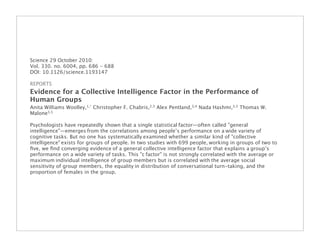
Science 29 October 2010:
Vol. 330. no. 6004, pp. 686 - 688
DOI: 10.1126/science.1193147

REPORTS
Evidence for a Collective Intelligence Factor in the Performance of
Human Groups
Anita Williams Woolley,1,* Christopher F. Chabris,2,3 Alex Pentland,3,4 Nada Hashmi,3,5 Thomas W.
Malone3,5

Psychologists have repeatedly shown that a single statistical factor—often called "general
intelligence"—emerges from the correlations among people’s performance on a wide variety of
cognitive tasks. But no one has systematically examined whether a similar kind of "collective
intelligence" exists for groups of people. In two studies with 699 people, working in groups of two to
five, we find converging evidence of a general collective intelligence factor that explains a group’s
performance on a wide variety of tasks. This "c factor" is not strongly correlated with the average or
maximum individual intelligence of group members but is correlated with the average social
sensitivity of group members, the equality in distribution of conversational turn-taking, and the
proportion of females in the group.
Some aspects of civic intelligence
     Presumably useful for comparing, measuring?
 •   Building civic intelligence in others; knowledge, motivation, imagination, and appreciation of
     potential power

 •   Inclusive and participatory; diffuses into society — extends civic intelligence as an orientation.

 •   Cross-disciplinary approaches are central; for one thing they don't just solve a portion of the
     problem or, even, make matters worse in other areas.

 •   Efficiency and creativity (developing novel solutions) are key (as with individual intelligence)

 •   Meta-cognition and better collaboration (and better / faster information on what's working) and
     forecasting. (Meta-cognition implies and requires evaluation)

 •   Addresses several problems at once

 •   Addresses fundamental problems (usually environmental degradation or social exploitation)

 •   Better frameworks for understanding intelligence — and ignorance. Includes characterization of
     problems and appreciation of the unknown

 •   Better monitoring

 •   Mechanisms for problematizing

 •   Make activism cool (again)
Some Common Useless Approaches
How do we get to the moon?
 Build a bigger ladder

What if we're going in the wrong direction?
 Drive faster

What if our problems are too complicated?
 (1) ignore their existence
 (2) crucify people who mention them
 (3) take refuge in our powerlessness
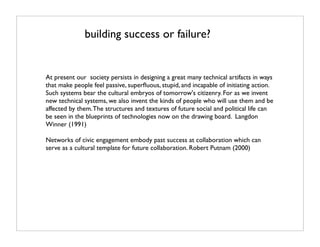
building success or failure?


At present our society persists in designing a great many technical artifacts in ways
that make people feel passive, superfluous, stupid, and incapable of initiating action.
Such systems bear the cultural embryos of tomorrow's citizenry. For as we invent
new technical systems, we also invent the kinds of people who will use them and be
affected by them. The structures and textures of future social and political life can
be seen in the blueprints of technologies now on the drawing board. Langdon
Winner (1991)

Networks of civic engagement embody past success at collaboration which can
serve as a cultural template for future collaboration. Robert Putnam (2000)
People can be intelligent. They can also
be compassionate, creative, enthusiastic,
and dedicated.


      Perhaps societies can too.

Will we be smart enough soon enough - putting civic intelligence into practice.key

  • 1.
    Will We BeSmart Enough Soon Enough? Putting Civic Intelligence into Practice Douglas Schuler Public Sphere Project / Seattle The Evergreen State College / Olympia douglas@publicsphereproject.org Research for Action: Networking University and Community for Social Responsibility A workshop in conjunction with Making Links 2010 Monday, 15 Nov 2010, Perth, Western Australia
  • 2.
    What kind ofworld are we living in? One that needs our help. • Our global problems are vast and potentially catastrophic. • Our local ones aren’t exactly trivial. • The people in power won’t solve these problems by themselves • Nor will the free market or other approaches that rely on “side-effects” do it all.
  • 3.
    Problems seem tobe growing a lot faster than solutions. We might not be smart enough soon enough
  • 4.
    I needed aconcept to help me (and others) answer the question (It didn’t have to be new but it did have to be useful)
  • 5.
    I wanted toidentify a concept that • recognized actually existing phenomena • asserted social goals — at least indirectly; promoted and integrated theory and practice • incorporated and acknowledged social norms • could be used a common frame for motivating and coordinating (consciously and unconsciously) a large number of projects
  • 6.
    The concept I cameup with was civic intelligence
  • 7.
    Some Definitions Informally,civic intelligence refers to how smart collectivities are in relation to their problems. Civic intelligence is a form of collective intelligence that focuses on shared problems. It addresses civic ends through civic means. Although we know that civic intelligence exists, this fact is not explicitly acknowledged and hence not something that we can readily examine or improve.
  • 8.
    Some Assertions Today morethan ever, civic intelligence is needed to address the problems we now face. Civic intelligence is distributed throughout society — not just among those with money and power Although we know that civic intelligence exists, the capacity that exists may not be adequate for our pressing needs. Civic intelligence — its understanding and development — could serve as a paradigm for activists and researchers. Civic intelligence is necessary — but not sufficient.
  • 9.
    Civic Intelligence isnot a Brand New Topic Social Intelligence, Community Inquiry (John Dewey) Social Learning (many authors) Civic Community (Jane Addams) Civic Capacity (Harry Boyte, Xavier Briggs) Public Work Politics (Center for Democracy & Citizenship) Civic Innovation (Carmen Sirianni & Lew Friedman) Open Source Intelligence (Robert Steele) World Brain (H.G. Wells) Civilizational Competence (Piotr Sztompka) + Social Enterprise / Entrepreneurism / Innovation, etc.
  • 10.
    Civic Intelligence: Three BriefExamples • Sustainable Prisons • Beehive Design Collective • Liberating Voices
  • 11.
    Sustainable Prisons The SustainablePrisons Project is a partnership of the Washington State Department of Corrections and The Evergreen State College. Our mission is to reduce the environmental, economic and human costs of prisons by training offenders and correctional staff in sustainable practices. Equally important, we bring science into prisons by helping scientists conduct ecological research and conserve biodiversity through projects with offenders, college students and community partners.
  • 14.
    Bee Hive Collective focusingon their “True Cost of Coal” project
  • 18.
  • 19.
  • 20.
  • 21.
  • 22.
  • 23.
  • 24.
    Interviewing: 1 year(my estimate) Mural design: 6 months Mural drawing: 1 1/2 years
  • 29.
    Beehive Collective Some Observations • They pollinate! They travel around working with activists, students, “ordinary people” • They combine popular education, art, social action, social analysis and critique — and, even, folklore. • They lead by example and help empower people • They demonstrate that other paradigms are possible. They are “traditional” and “slow” and their work is handmade and anonymous and collective. • They don’t use human figures in their work...
  • 30.
    The purpose of theLiberating Voices project is to promote and assist citizen engagement through thought and action. The patterns are intended to help build civic capacity and social imagination.
  • 31.
    Our Vision Everybody is an Activist • The people in power won’t solve these problems by themselves. (Nor will the free market or other approaches that rely on “side-effects” do it all. ) • The activists we need to do this work come in many varieties and there are a million ways for people to make positive contributions. • We need more people to support — and to lead — efforts to address our shared problems. (Note that this includes “ordinary people”) • Keeping “ordinary” people out is not only unfair, it deprives the rest of us of a vast, largely untapped resource • Unfortunately civil society is unorganized and spread out (although willing to help)
  • 32.
    Patterns are notrecipes Patterns don’t provide precise instructions... Patterns are more like seeds that have different results when planted in different soil. Different people, in different situations, will use the patterns differently. They are really tools for thought. The use of a pattern is intended to change the flow of what would have happened in its absence.
  • 33.
    Each pattern isintended to promote positive social intervention from a grassroots perspective. Each pattern contains five main parts: title, problem, context, discussion, and solution. A pattern language is an ordered collection of patterns. (The concepts are from Christopher Alexander et al, A Pattern Language, 1977) http://www.publicsphereproject.org/patterns/
  • 34.
    Pattern Games Online (Facebook)game currently in work: What type of activist are you? Presents three patterns that best match your interests and personality.
  • 35.
    Pattern Language Projects Using Patterns to Orient Projects from Conception to Implementation • Many possibilities have been discussed including sustainable design, ICT for development, and urban architecture • This is an important — and logical — next step • It’s (partially) uncharted territory • Begin constructing an evolving pattern language in your domain • Use / modify / improve the methodology in the book • Keep us in the loop!
  • 36.
    Science 29 October2010: Vol. 330. no. 6004, pp. 686 - 688 DOI: 10.1126/science.1193147 REPORTS Evidence for a Collective Intelligence Factor in the Performance of Human Groups Anita Williams Woolley,1,* Christopher F. Chabris,2,3 Alex Pentland,3,4 Nada Hashmi,3,5 Thomas W. Malone3,5 Psychologists have repeatedly shown that a single statistical factor—often called "general intelligence"—emerges from the correlations among people’s performance on a wide variety of cognitive tasks. But no one has systematically examined whether a similar kind of "collective intelligence" exists for groups of people. In two studies with 699 people, working in groups of two to five, we find converging evidence of a general collective intelligence factor that explains a group’s performance on a wide variety of tasks. This "c factor" is not strongly correlated with the average or maximum individual intelligence of group members but is correlated with the average social sensitivity of group members, the equality in distribution of conversational turn-taking, and the proportion of females in the group.
  • 37.
    Some aspects ofcivic intelligence Presumably useful for comparing, measuring? • Building civic intelligence in others; knowledge, motivation, imagination, and appreciation of potential power • Inclusive and participatory; diffuses into society — extends civic intelligence as an orientation. • Cross-disciplinary approaches are central; for one thing they don't just solve a portion of the problem or, even, make matters worse in other areas. • Efficiency and creativity (developing novel solutions) are key (as with individual intelligence) • Meta-cognition and better collaboration (and better / faster information on what's working) and forecasting. (Meta-cognition implies and requires evaluation) • Addresses several problems at once • Addresses fundamental problems (usually environmental degradation or social exploitation) • Better frameworks for understanding intelligence — and ignorance. Includes characterization of problems and appreciation of the unknown • Better monitoring • Mechanisms for problematizing • Make activism cool (again)
  • 38.
    Some Common UselessApproaches How do we get to the moon? Build a bigger ladder What if we're going in the wrong direction? Drive faster What if our problems are too complicated? (1) ignore their existence (2) crucify people who mention them (3) take refuge in our powerlessness
  • 39.
    building success orfailure? At present our society persists in designing a great many technical artifacts in ways that make people feel passive, superfluous, stupid, and incapable of initiating action. Such systems bear the cultural embryos of tomorrow's citizenry. For as we invent new technical systems, we also invent the kinds of people who will use them and be affected by them. The structures and textures of future social and political life can be seen in the blueprints of technologies now on the drawing board. Langdon Winner (1991) Networks of civic engagement embody past success at collaboration which can serve as a cultural template for future collaboration. Robert Putnam (2000)
  • 40.
    People can beintelligent. They can also be compassionate, creative, enthusiastic, and dedicated. Perhaps societies can too.