WILL vs. GOING TO
FUTURE
My Plans for the Evening
I have decided!, after class today, I’m going to get some
drinks with my friends. We are going to take Mike to
celebrate his birthday. We will have a very good time!
After that, I hope, I’ll do some homework in a coffee shop.
Around 6:00, I’ll go home and cook dinner. A movie that I
want to see is playing at 7:30 tonight, so I’m going to watch
it. It will end around 9:15. After it ends, I think I’ll clean
up my kitchen. I will be in bed by 10:00.
WILL
 When we are not so certain about the future. Sometimes
with expressions such as: probably, possibly, I think, I
hope, I believe
 After that, I hope, I’ll do some homework in a coffee shop
 I hope you will visit me one day
 They will probably win
 When we talk about far future facts or things we believe to
be true.
 We will have a very good time!
 The President will serve for 6 years
 I am sure, you will like her
WILL
 A decision made by a speaker at the moment of speaking
 After it ends, I think I’ll clean up my kitchen
 What would you like?.... I will have a coffee
 When you make an offer, a promise or a general prediction
 I will be in bed by 10:00
 I will give you a discount if you buy it right now.
 Commonly used for reporting information, calculations,
schedules.
 It will end around 9:15
 Ana will be here at 4:00
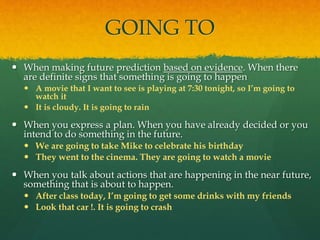
GOING TO
 When making future prediction based on evidence. When there
are definite signs that something is going to happen
 A movie that I want to see is playing at 7:30 tonight, so I’m going to
watch it
 It is cloudy. It is going to rain
 When you express a plan. When you have already decided or you
intend to do something in the future.
 We are going to take Mike to celebrate his birthday
 They went to the cinema. They are going to watch a movie
 When you talk about actions that are happening in the near future,
something that is about to happen.
 After class today, I’m going to get some drinks with my friends
 Look that car !. It is going to crash
WILL
 When we are not so certain about the future. Sometimes with
expressions such as: probably, possibly, I think, I hope, I
believe
 When we talk about far future facts or things we believe to
be true.
 A decision made by a speaker at the moment of speaking
 When you make an offer, a promise or a general prediction
 Commonly used for reporting information, calculations,
schedules or plans.
GOING TO
 When making future prediction based on evidence. When
there are definite signs that something is going to happen
 When you express a plan. When you have already
decided or you intend to do something in the future.
 When you talk about actions that are happening in the
near future, something that is about to happen.

Will and going to

  • 1.
    WILL vs. GOINGTO FUTURE
  • 2.
    My Plans forthe Evening I have decided!, after class today, I’m going to get some drinks with my friends. We are going to take Mike to celebrate his birthday. We will have a very good time! After that, I hope, I’ll do some homework in a coffee shop. Around 6:00, I’ll go home and cook dinner. A movie that I want to see is playing at 7:30 tonight, so I’m going to watch it. It will end around 9:15. After it ends, I think I’ll clean up my kitchen. I will be in bed by 10:00.
  • 3.
    WILL  When weare not so certain about the future. Sometimes with expressions such as: probably, possibly, I think, I hope, I believe  After that, I hope, I’ll do some homework in a coffee shop  I hope you will visit me one day  They will probably win  When we talk about far future facts or things we believe to be true.  We will have a very good time!  The President will serve for 6 years  I am sure, you will like her
  • 4.
    WILL  A decisionmade by a speaker at the moment of speaking  After it ends, I think I’ll clean up my kitchen  What would you like?.... I will have a coffee  When you make an offer, a promise or a general prediction  I will be in bed by 10:00  I will give you a discount if you buy it right now.  Commonly used for reporting information, calculations, schedules.  It will end around 9:15  Ana will be here at 4:00
  • 5.
    GOING TO  Whenmaking future prediction based on evidence. When there are definite signs that something is going to happen  A movie that I want to see is playing at 7:30 tonight, so I’m going to watch it  It is cloudy. It is going to rain  When you express a plan. When you have already decided or you intend to do something in the future.  We are going to take Mike to celebrate his birthday  They went to the cinema. They are going to watch a movie  When you talk about actions that are happening in the near future, something that is about to happen.  After class today, I’m going to get some drinks with my friends  Look that car !. It is going to crash
  • 6.
    WILL  When weare not so certain about the future. Sometimes with expressions such as: probably, possibly, I think, I hope, I believe  When we talk about far future facts or things we believe to be true.  A decision made by a speaker at the moment of speaking  When you make an offer, a promise or a general prediction  Commonly used for reporting information, calculations, schedules or plans.
  • 7.
    GOING TO  Whenmaking future prediction based on evidence. When there are definite signs that something is going to happen  When you express a plan. When you have already decided or you intend to do something in the future.  When you talk about actions that are happening in the near future, something that is about to happen.