A Touchin' Love Story from
Kerala

As you Know
Kerala is God's own Country;
stories ought to be touching hence.
In the beginning it was just
friendship. He used to
lend me books, mainly
novels and poems. Once
he gave me a collection of
poems by a Malayalam
romantic poet, and I found
sentences expressing love
and romance were
underlined,”
Widow of a Bachelor

The heartbreaking story of a Hindu girl and a Muslim boy who fell in
love while crossing a mighty river, the war between their parents,
and a truce that came too late, as always.....
Kanchana the Golden Girl
Sixty nine-year-old Kanchana
Kottangal -the golden girl- has
ignored the river for 27 years
The Widow of a Bachelor

It hasn’t been easy.
Mukkom, Kanchana’s hometown in the north Kerala district
Kozhikode, is on the banks of the river Iruvanji. The wooden
canoes that ply across the Iruvanji river connect Mukkom with
the rest of the district,
Some even prospect the river for
gold. But these waters that flow
westward to the Arabian Sea
remind her of lost love.
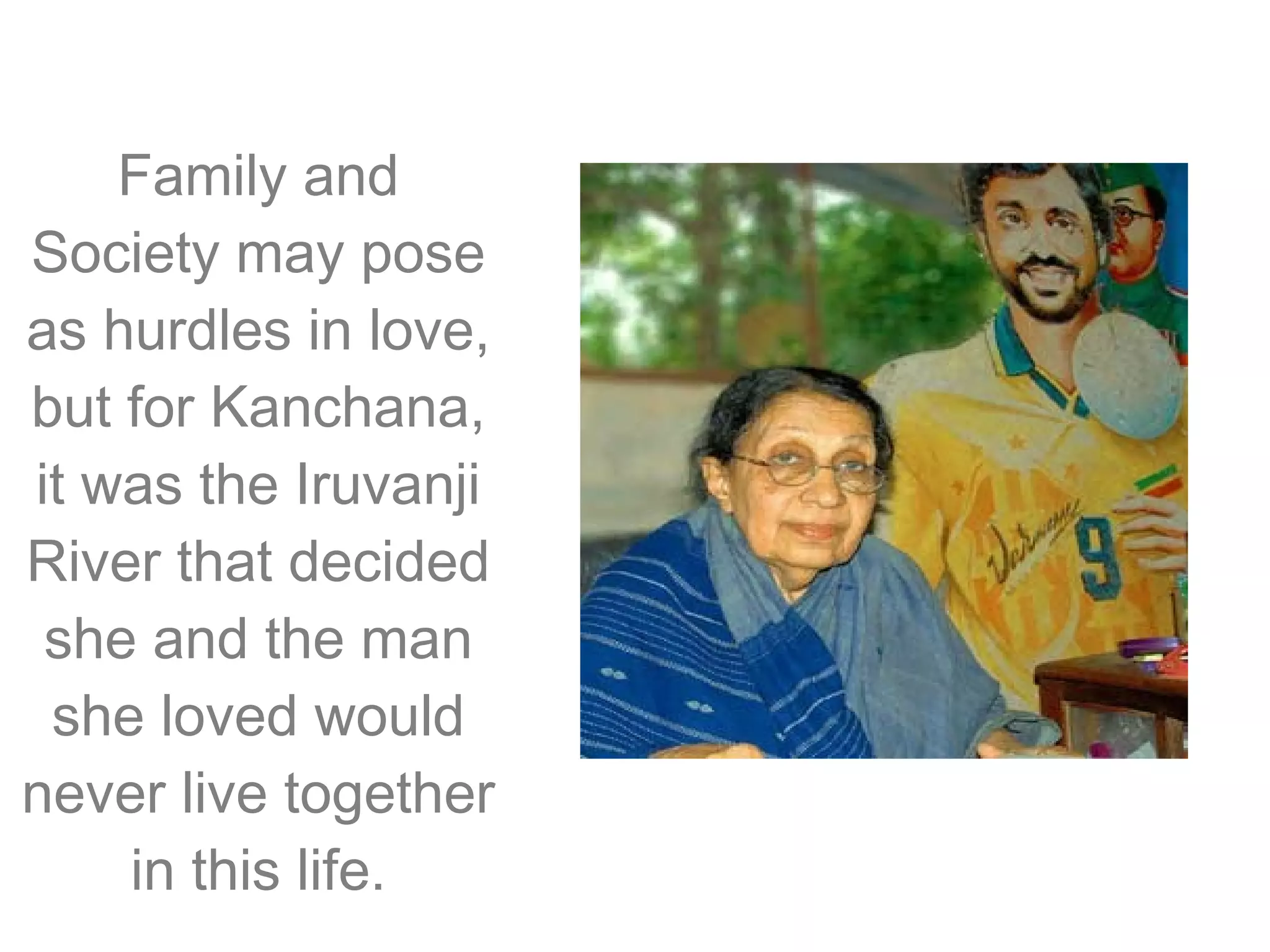
Family and
Society may pose
as hurdles in love,
but for Kanchana,
it was the Iruvanji
River that decided
she and the man
she loved would
never live together
in this life.
About 55 years ago, Kanchana
and BP Moideen were among
the many teenagers from
Mukkom who travelled in a
canoe across the Iruvanji to
catch a bus that would take
them to school in Kozhikode, the
closest city.
She was the daughter of a Hindu
landlord, he the son of a
They were childhood friends, who studied in
the same school, grew up playing and
studying together. The two families went
back a long way. And as the two children
grew out of school and joined college, they
walked in love along the banks of inspiring
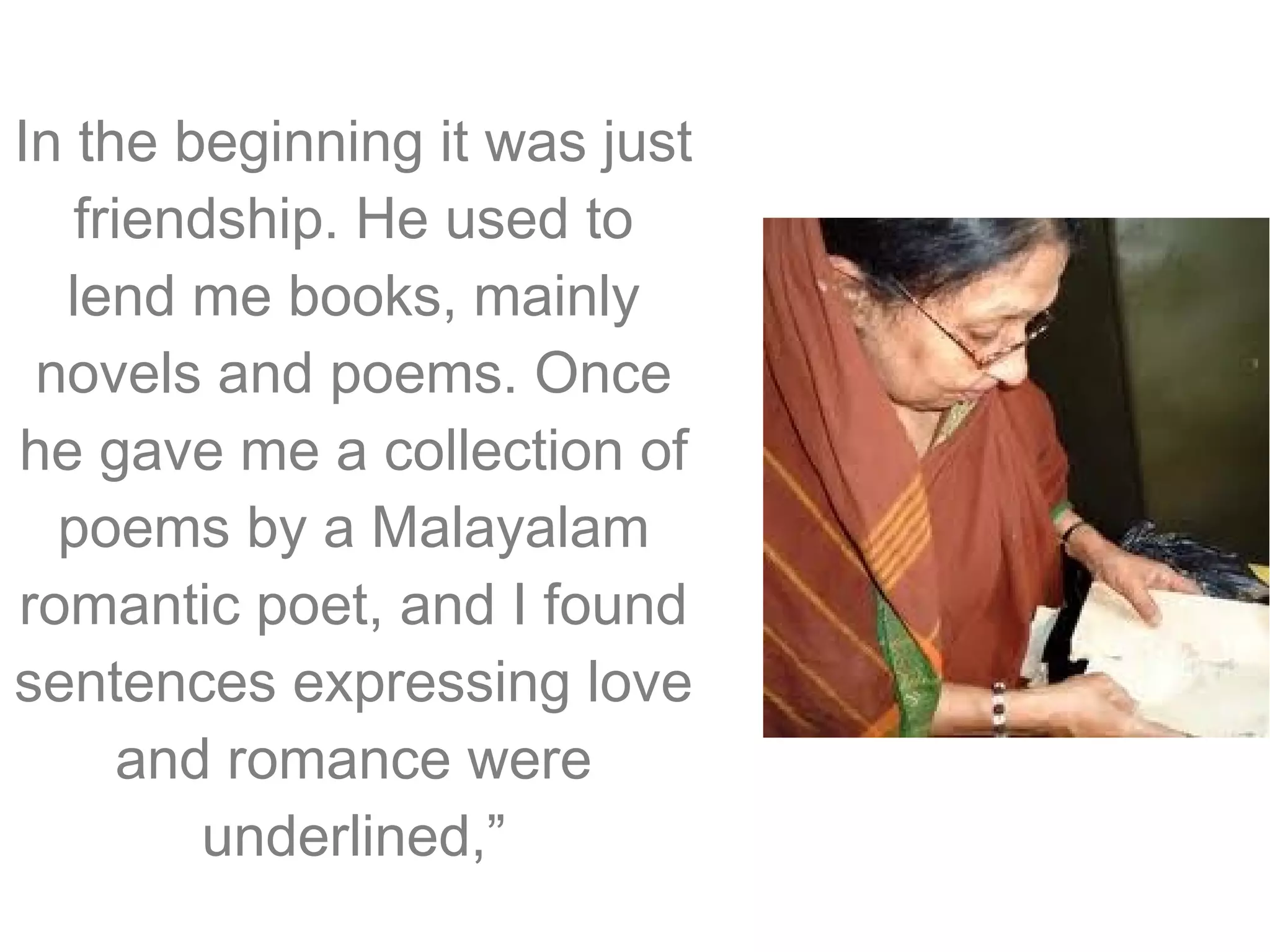
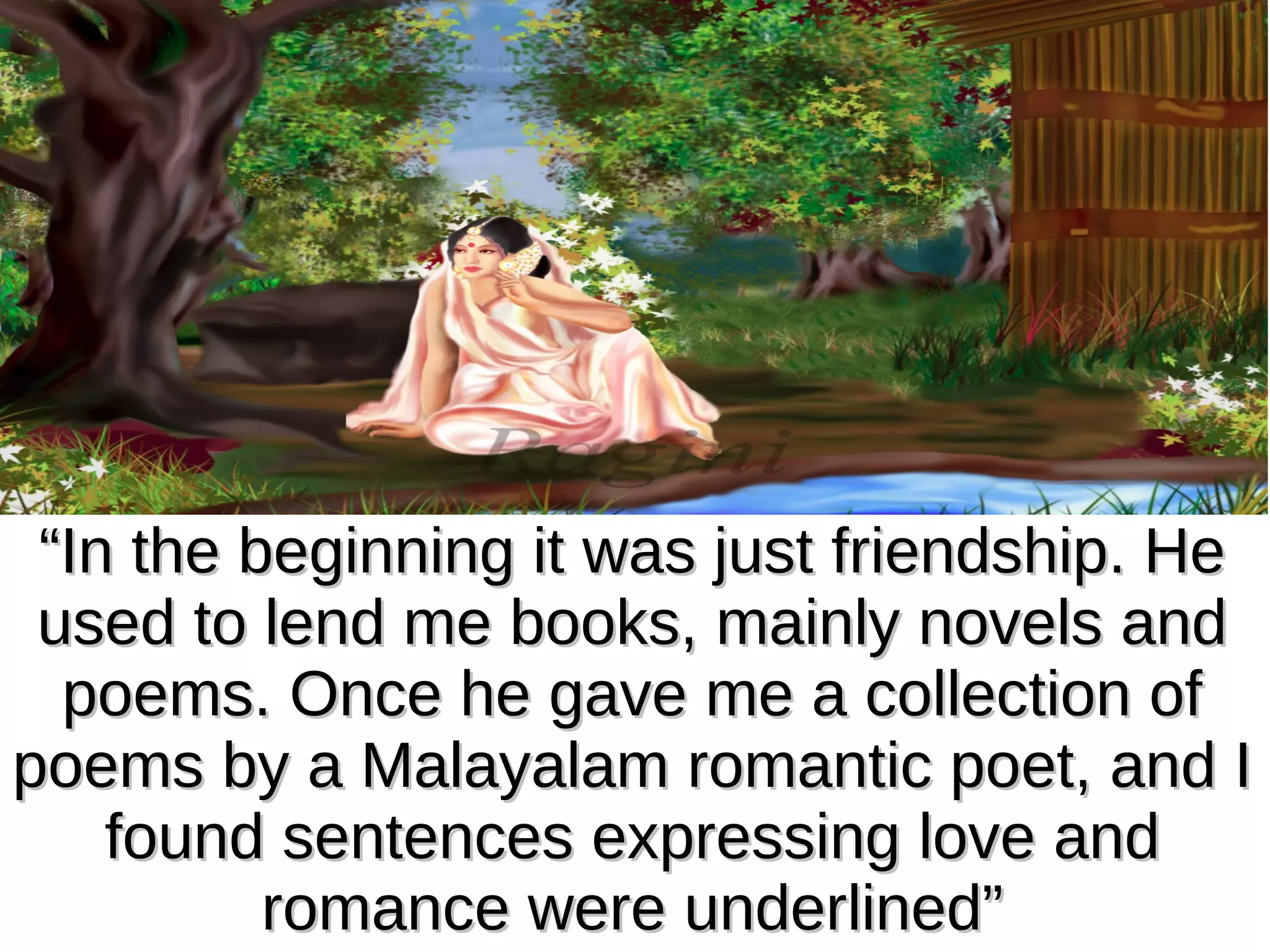
“In the beginning it was just friendship. He
used to lend me books, mainly novels and
poems. Once he gave me a collection of
poems by a Malayalam romantic poet, and I
found sentences expressing love and
romance were underlined”
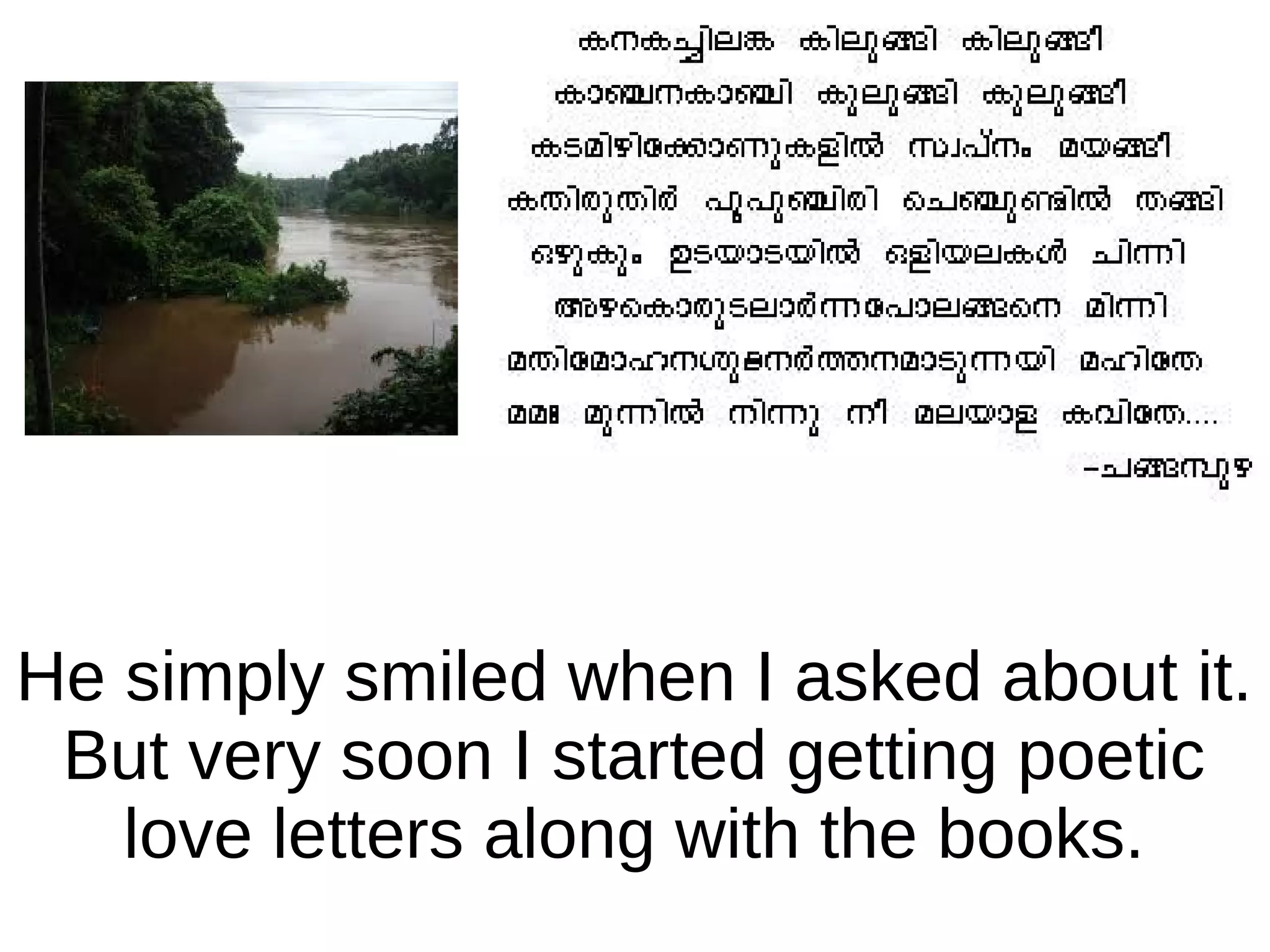
He simply smiled when I asked about it.
But very soon I started getting poetic
love letters along with the books.
Kanchana had no cause to question
Moideen’s sincerity or how much he
cared about her, so it never crossed her
mind to turn him down either.
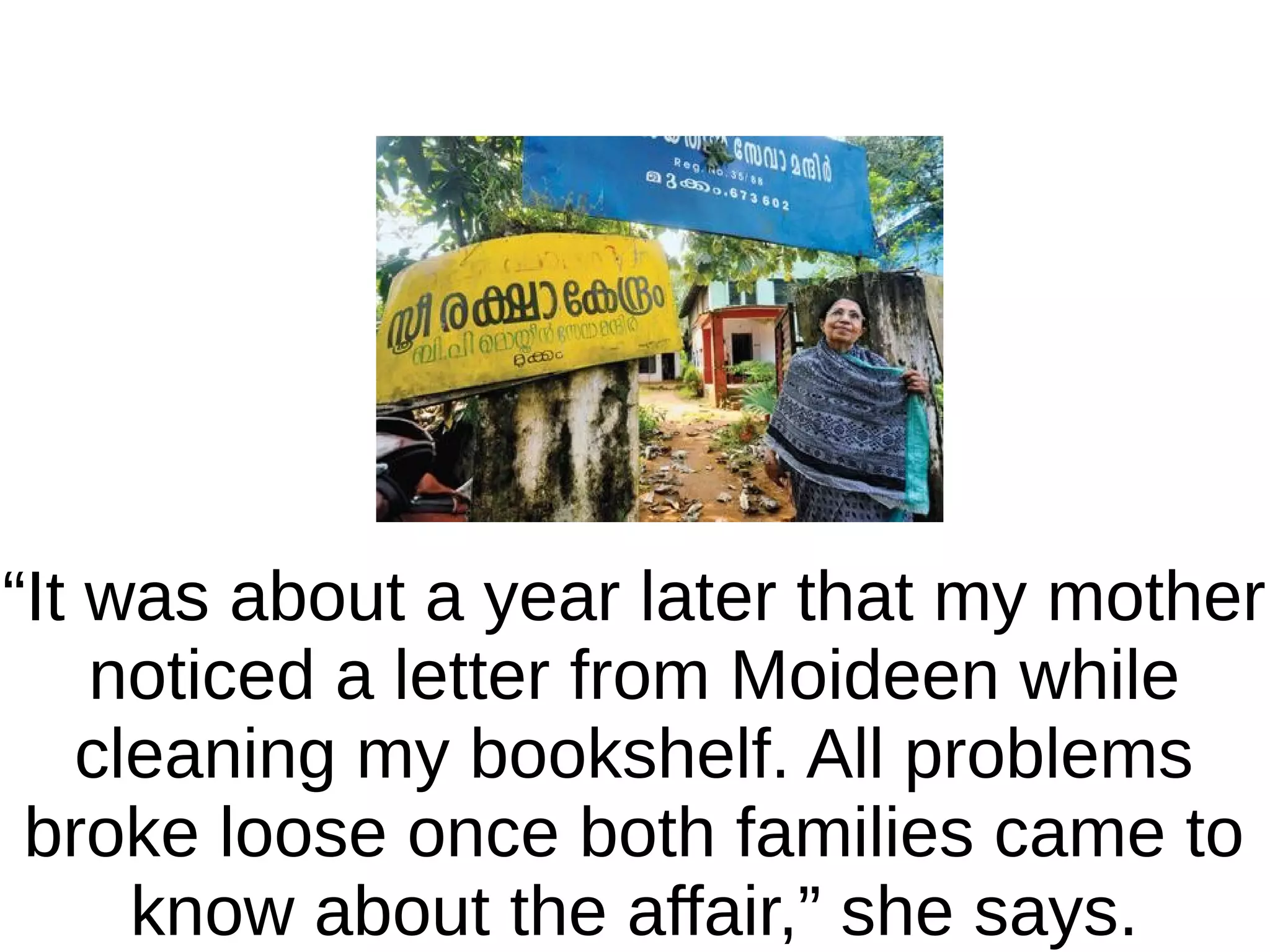
“It was about a year later that my mother
noticed a letter from Moideen while
cleaning my bookshelf. All problems
broke loose once both families came to
know about the affair,” she says.
Despite the long-standing friendship
between the two families, in the ultraconservative Kerala of the 1950s, there
was no question of the possibility of an
inter-faith marriage
The families broke all links with each
other. The life sentences of the two
lovers began soon after. Kanchana was
forced to discontinue her studies and,
she says, she was put under “house
arrest”
Moideen was thrown out of his home for
refusing to marry a girl his family chose.
Under pressure from community
leaders, his father cut him out of his will
and denied him a share in the family
property,
even tried to kill him.
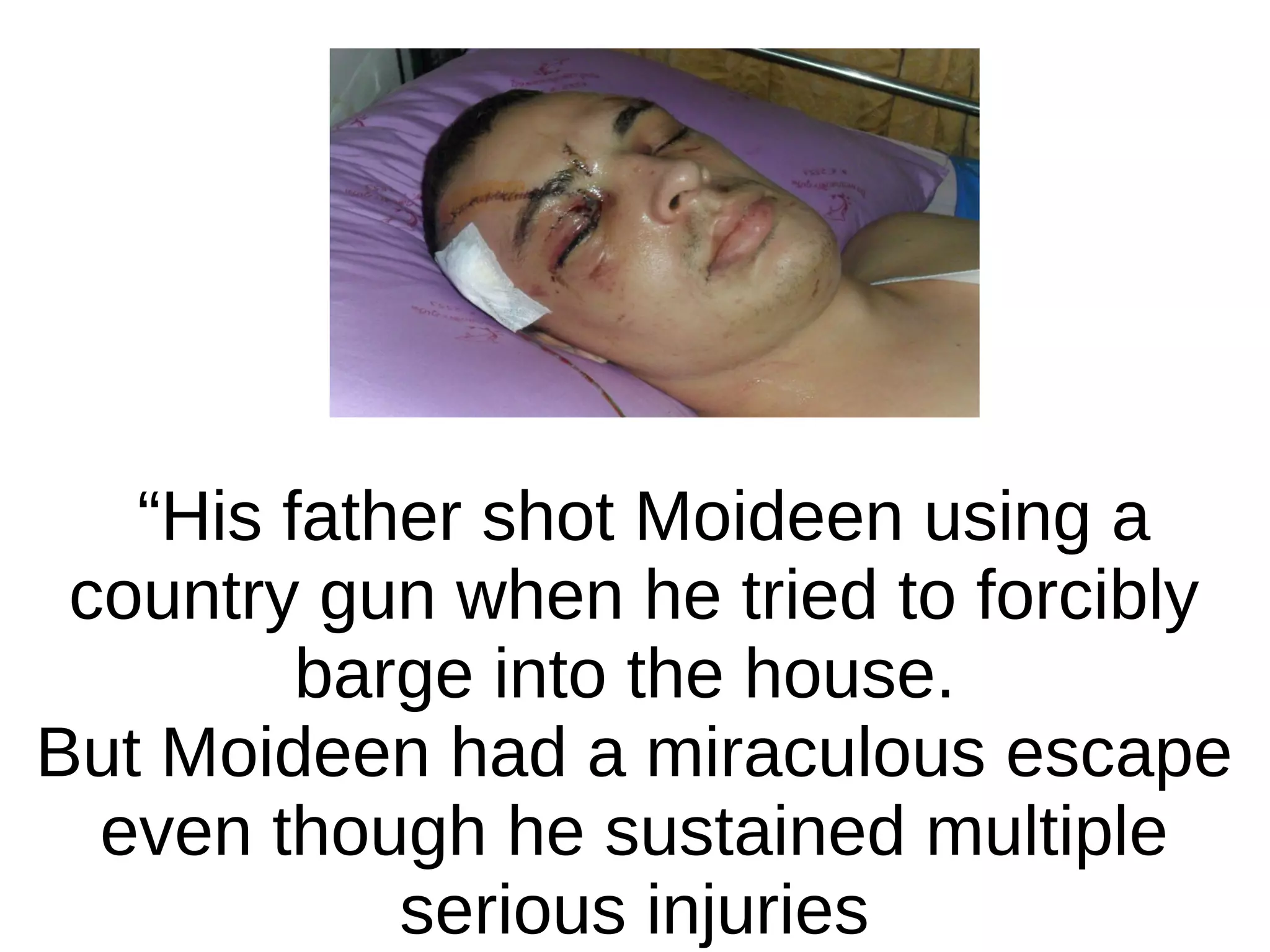
“His father shot Moideen using a
country gun when he tried to forcibly
barge into the house.
But Moideen had a miraculous escape
even though he sustained multiple
serious injuries
On another occasion, his father stabbed
him 22 times for giving a critical speech
in public but Moideen survived again,’’
says Kanchana.
Remorseful after the second attack, his
father relented to giving him a share of
the family property, but never allowed
him to enter the parental home or meet
his mother.
“Moideen was a multi-faceted
personality. Apart from being a known
short story writer, he was a footballer,
swimmer, political activist and painter,”
says Kanchana.
But she never saw him do any of those
things.
Separated and chaperoned all the time,
it was impossible for the two to talk,
let alone meet without being found out.
Soon after their confinement, they
worked out a system of
communication. They wrote each other
letters in an encoded language, and
sent them through trusted servants
and farm hands.
“It was I who developed the
language in my free time at home
using the Malayalam alphabet
The vocabulary was created by
misspelling common words. With the
help of supportive servants at home and
on the estate, I sent him basic concepts
of the code language,” she says.
For 10 years, they hardly managed to
even get a glimpse of each other. “I saw
him once while travelling in the village
canoe. He spoke a few words to me.
(The first time in 10 years),’’
“It was a Herculean task to ensure that
a letter would safely reach the other’s
hands.
“Mine was a joint family with too many
members. Elders told me to avoid that
path as the infamy would affect the
marriage prospects
of my unmarried sister.
At one point, they decided to elope. But
concern for their families stopped them.
At one point, they decided to elope. But
concern for their families stopped them.
When his father died it became his
responsibility to look after the rest of
the family,’’ she says.
Eventually, her confinement lasted
exactly 25 years, till a time when it
became entirely unnecessary to keep
one apart from the other—when
Moideen died in the Iruvanji;
during the monsoon season of 1982,
she was 41 and he 44
On a rain-drenched evening, Kanchana,
like everyone else in Mukkom, heard
about the tragic canoe accident in which
the craft overturned in the river, and a
person who had saved several
passengers drowned.
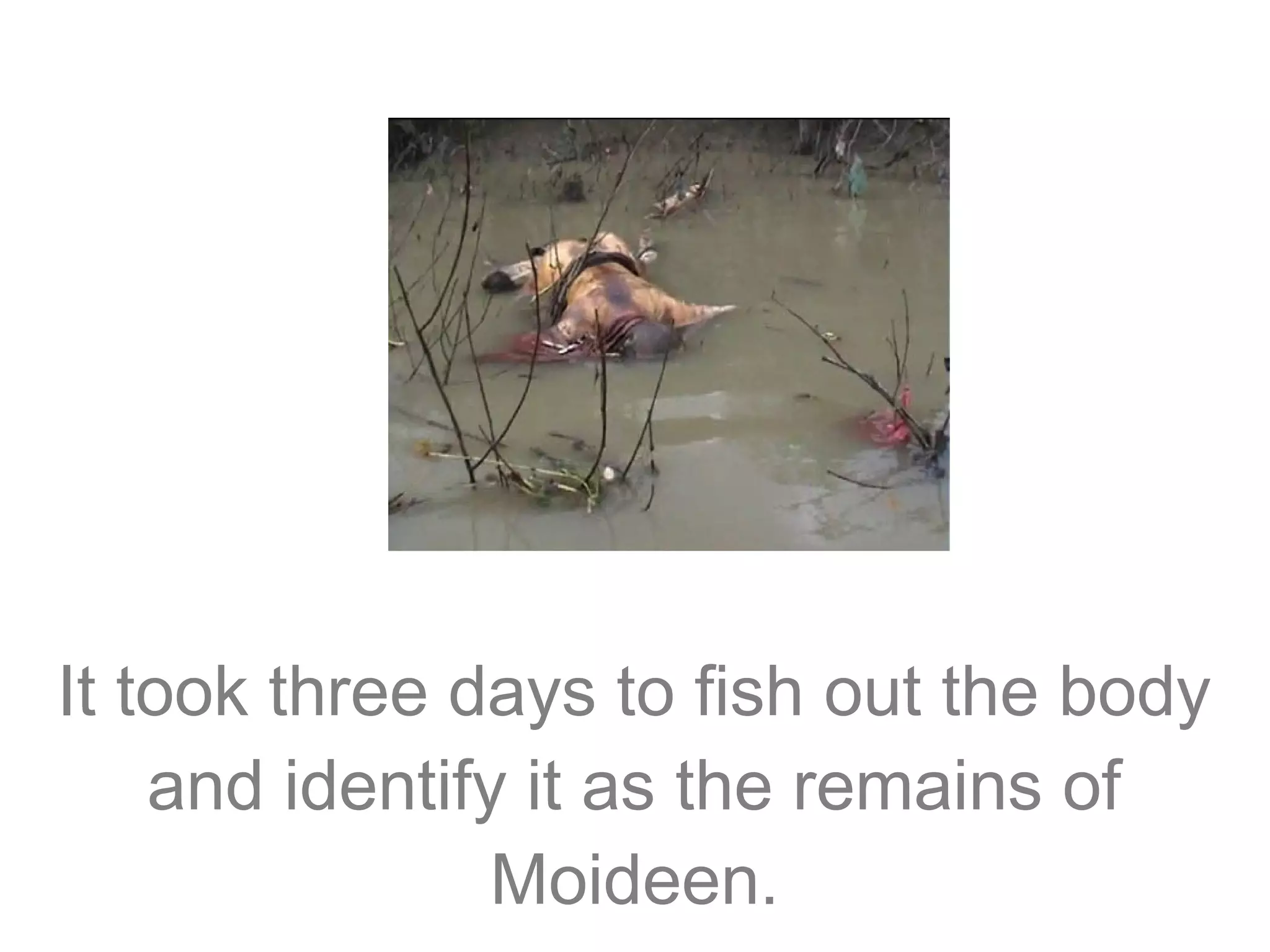
It took three days to fish out the body
and identify it as the remains of
Moideen.
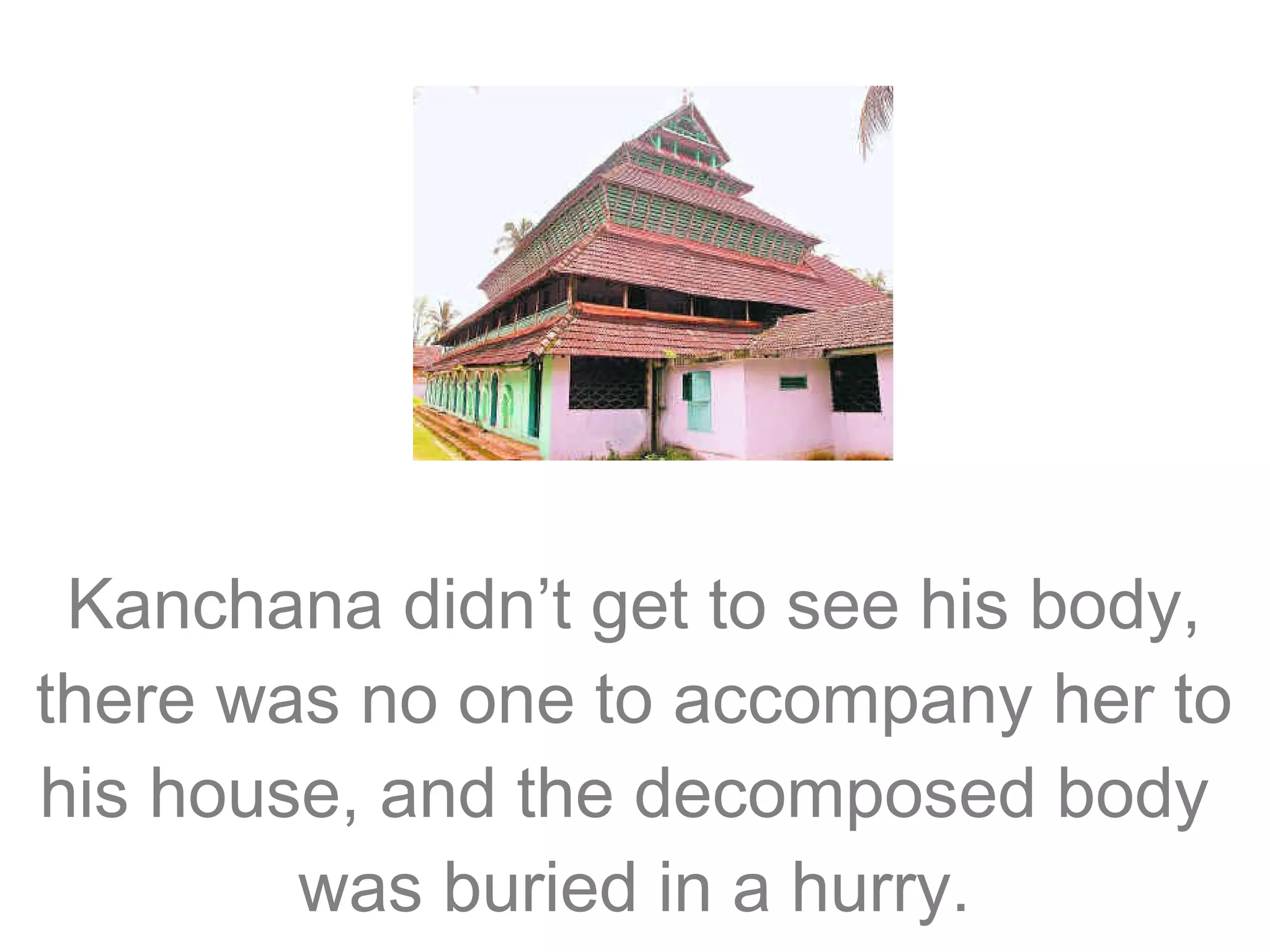
Kanchana didn’t get to see his body,
there was no one to accompany her to
his house, and the decomposed body
was buried in a hurry.
Following his death, she tried to commit
suicide six times. After the last attempt,
she was admitted to a local hospital,
where she again tried to end her life.
A fortnight after Moideen’s death,
Kanchana had an unexpected visitor
Moideen's Mother
She told Kanchana that if she didn’t wish
to marry anyone else then Kanchana
should live as her son’s widow.
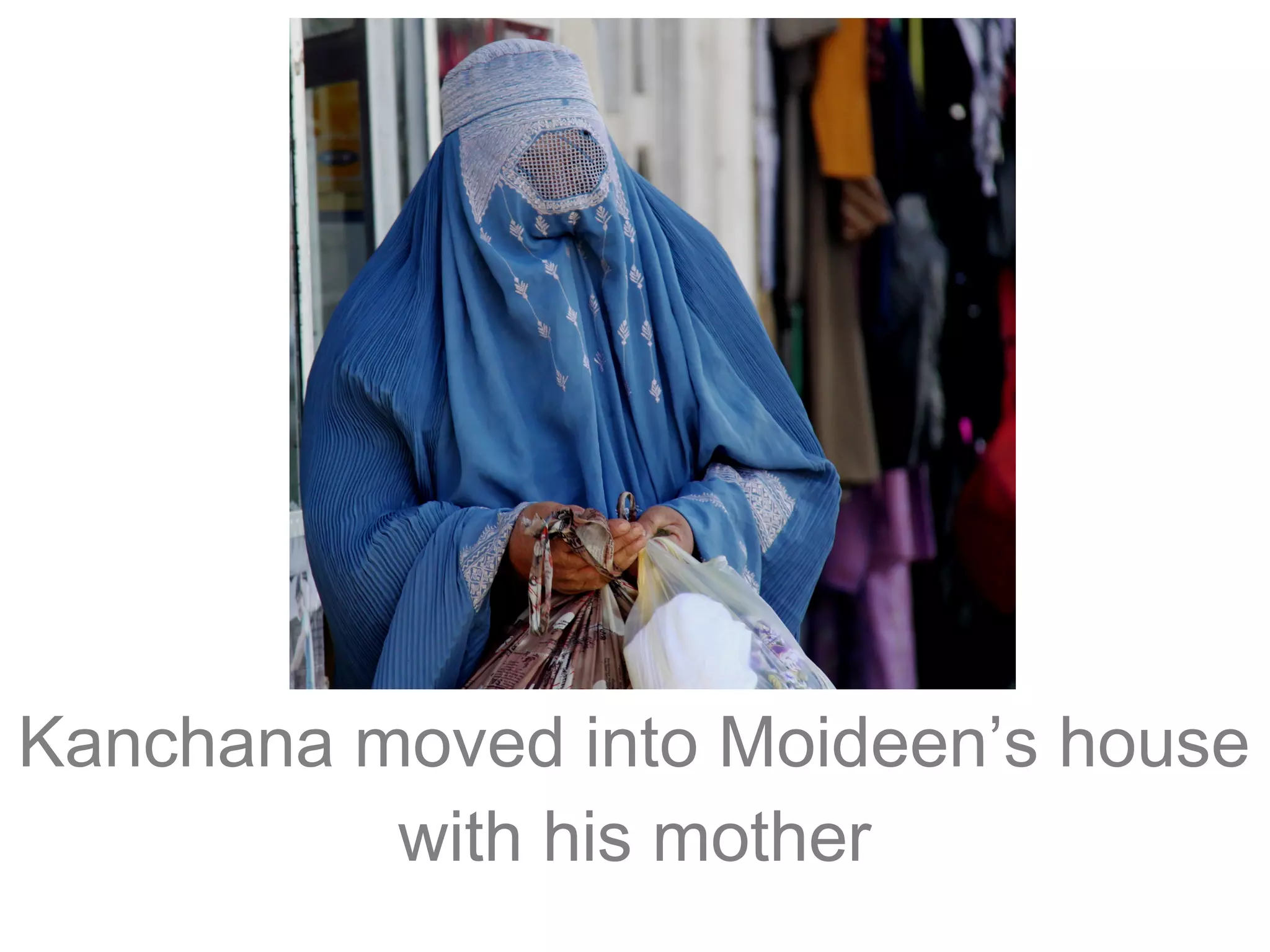
Kanchana moved into Moideen’s house
with his mother
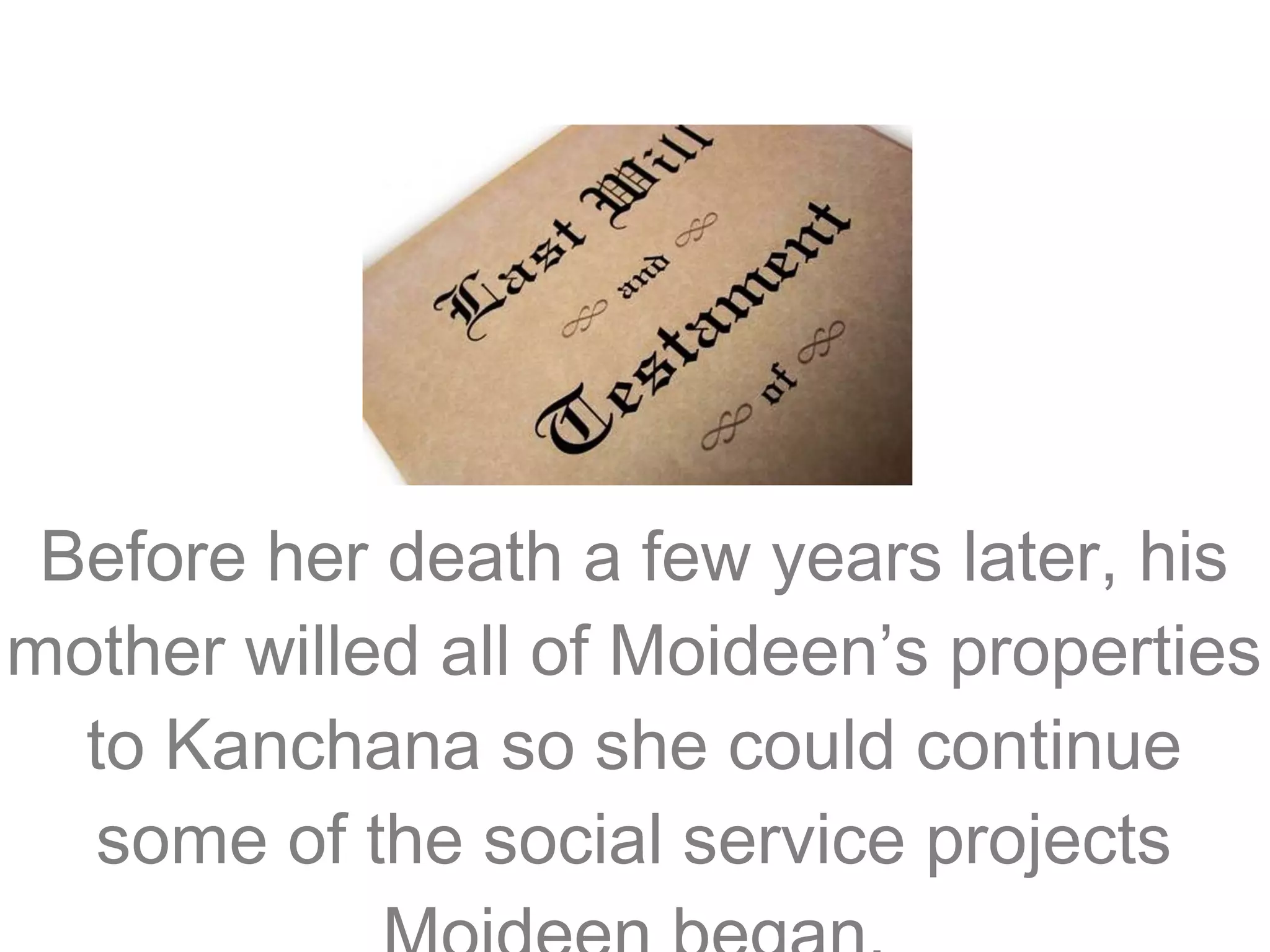
Before her death a few years later, his
mother willed all of Moideen’s properties
to Kanchana so she could continue
some of the social service projects
Just before his death, Moideen had set
up a village centre to help the destitute
women.
Kanchana now runs the institution and
its library, which contains many of
Moideen’s books
Kanchana runs a shelter for the
homeless , a family counselling centre
and a blood donors’ network.
She also runs a centre that provides
children swimming classes for free.
A state-level award for bravery was also
instituted in memory of Moideen.
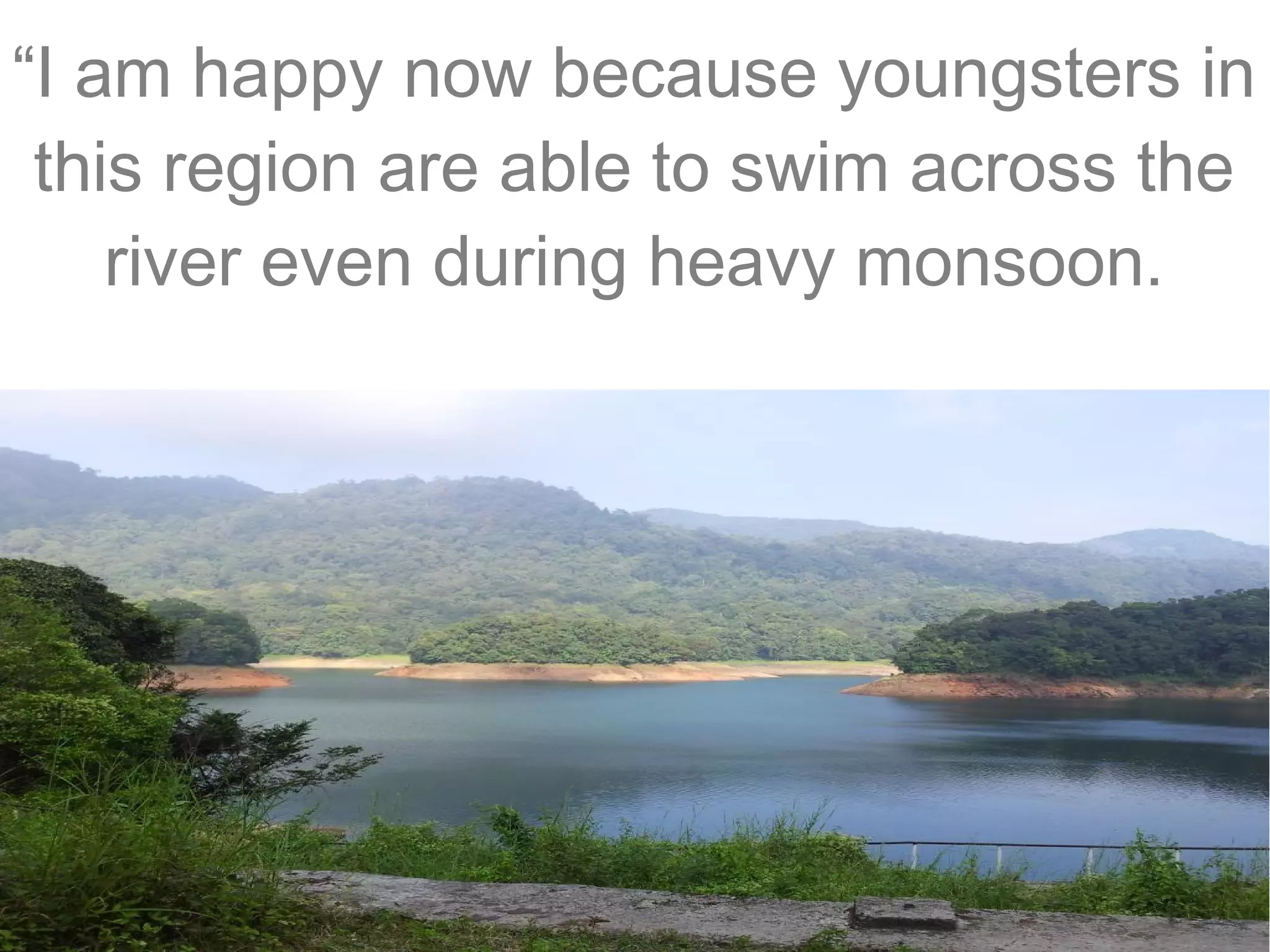
“I am happy now because youngsters in
this region are able to swim across the
river even during heavy monsoon.
This is my biggest achievement and
tribute to Moideen.” But it isn’t easy to
flee from the reminders of the losses in
her life.
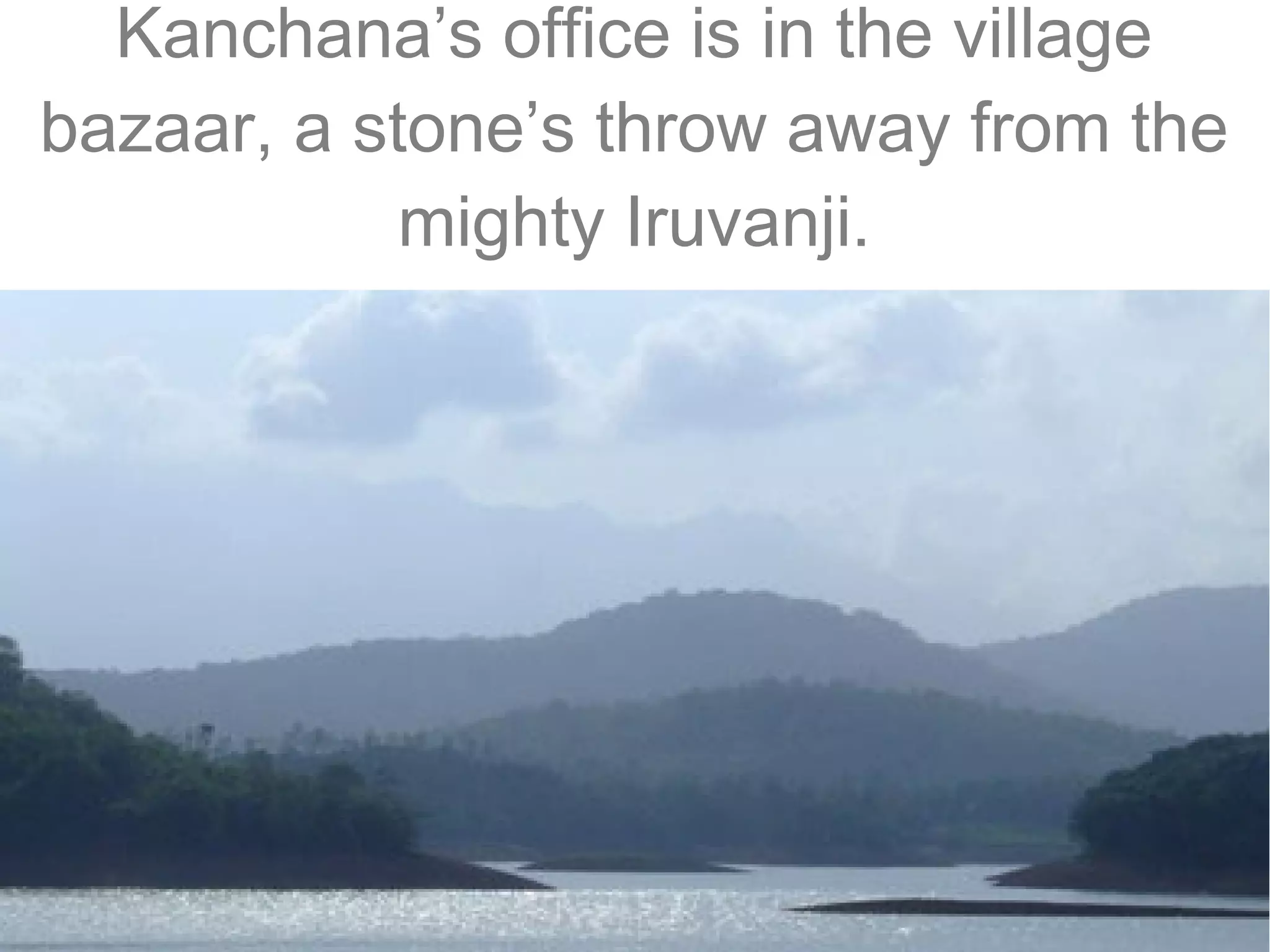
Kanchana’s office is in the village
bazaar, a stone’s throw away from the
mighty Iruvanji.
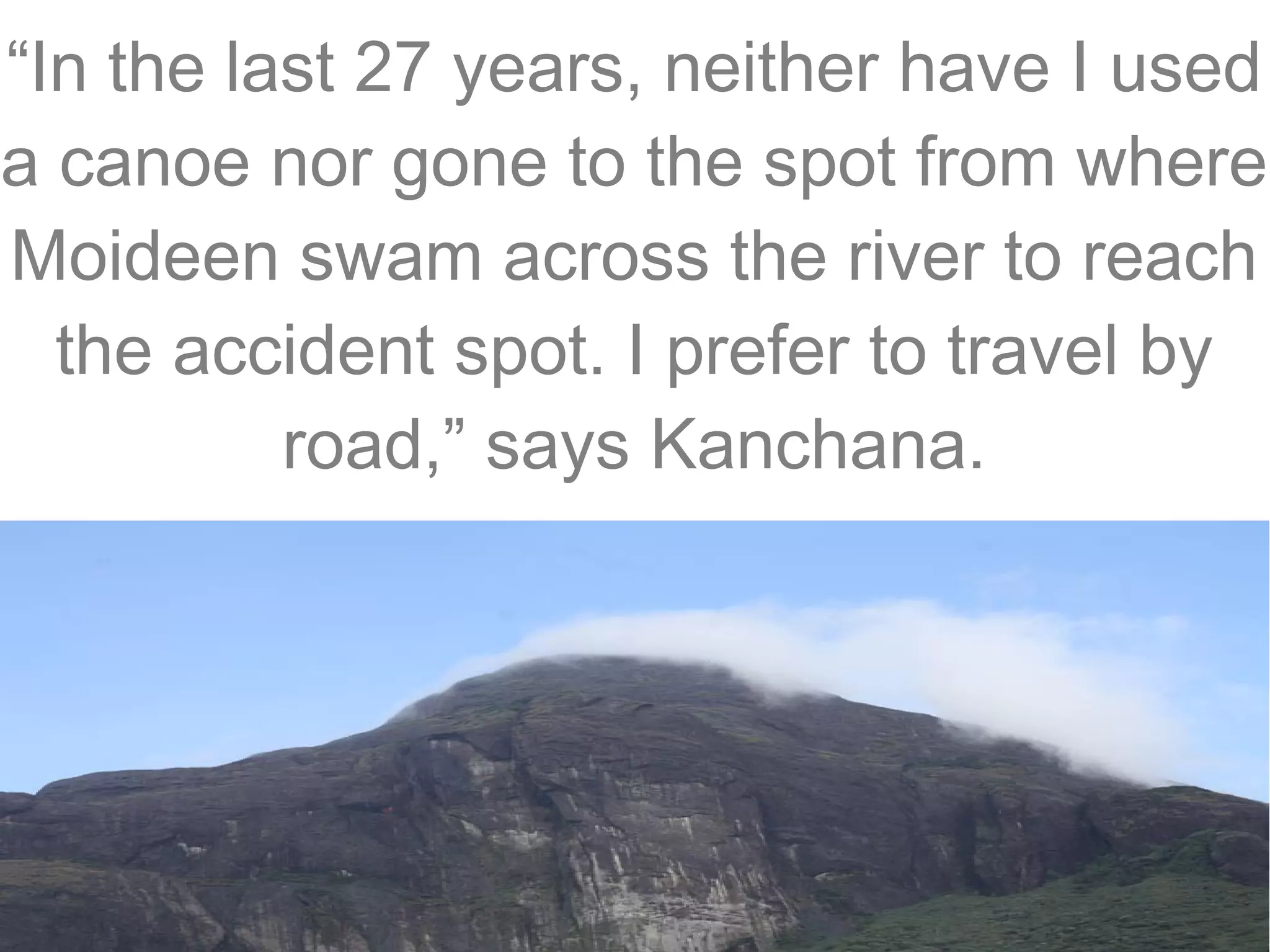
“In the last 27 years, neither have I used
a canoe nor gone to the spot from where
Moideen swam across the river to reach
the accident spot. I prefer to travel by
road,” says Kanchana.
This October, months after the monsoon
had receded, the Iruvanji still looked
ferocious. The operator of a canoe
gingerly manoeuvred his tiny craft with
four elderly villagers.
The four old gentlemen were on their
way back from the city after submitting a
memorandum to the district collector
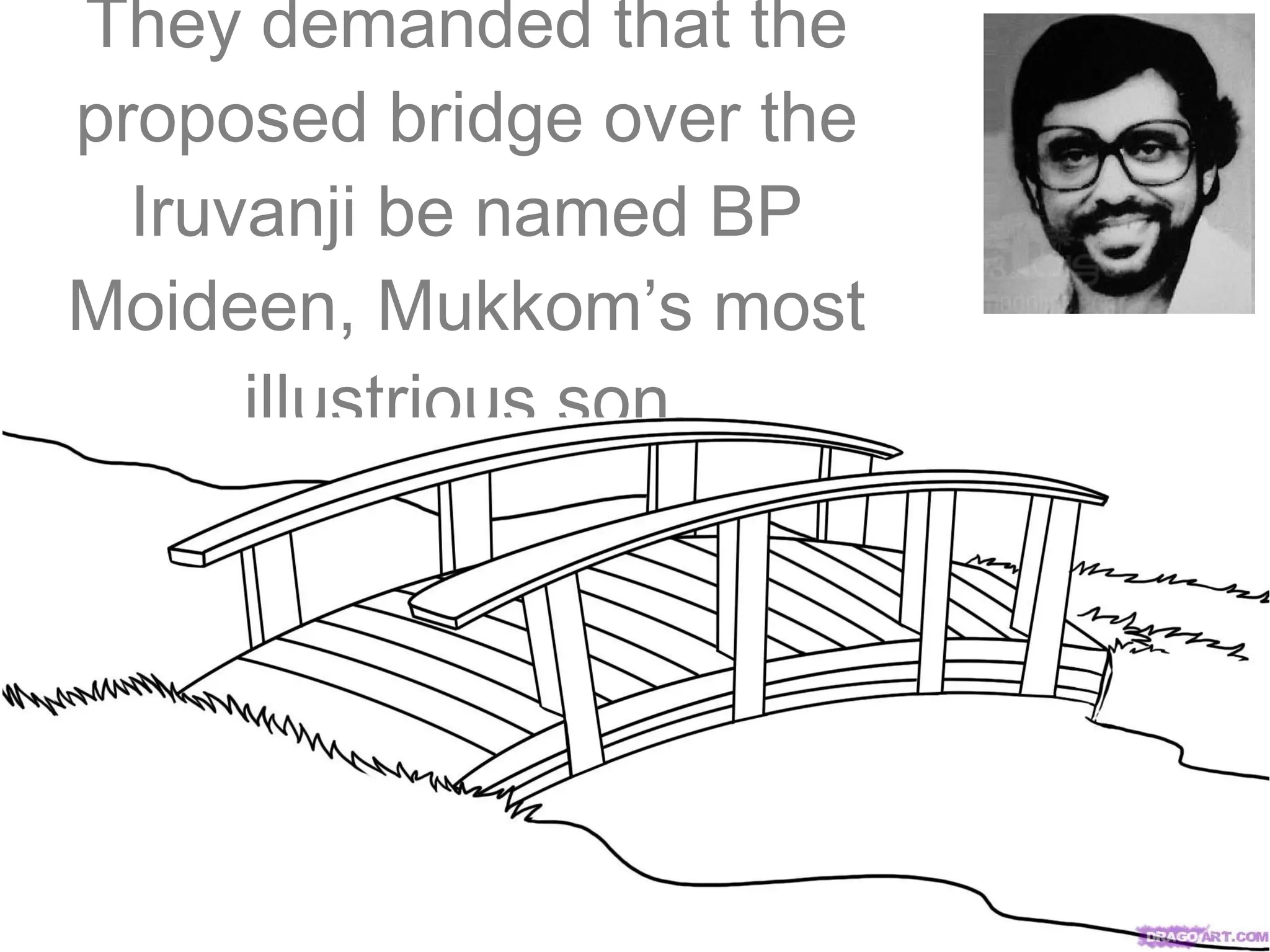
They demanded that the
proposed bridge over the
Iruvanji be named BP
Moideen, Mukkom’s most
illustrious son.
So young girls, never fall into love;
it's sensual..emotional...and never
rational a decision.
THANK YOU

Get Trained

Widow of a bachelor, A strange love story of a Hindu girl who loved a muslim boy

  • 1.
    A Touchin' LoveStory from Kerala As you Know Kerala is God's own Country; stories ought to be touching hence.
  • 2.
    In the beginningit was just friendship. He used to lend me books, mainly novels and poems. Once he gave me a collection of poems by a Malayalam romantic poet, and I found sentences expressing love and romance were underlined,”
  • 3.
    Widow of aBachelor The heartbreaking story of a Hindu girl and a Muslim boy who fell in love while crossing a mighty river, the war between their parents, and a truce that came too late, as always.....
  • 4.
  • 5.
    Sixty nine-year-old Kanchana Kottangal-the golden girl- has ignored the river for 27 years
  • 6.
    The Widow ofa Bachelor It hasn’t been easy.
  • 7.
    Mukkom, Kanchana’s hometownin the north Kerala district Kozhikode, is on the banks of the river Iruvanji. The wooden canoes that ply across the Iruvanji river connect Mukkom with the rest of the district,
  • 8.
    Some even prospectthe river for gold. But these waters that flow westward to the Arabian Sea remind her of lost love.
  • 9.
    Family and Society maypose as hurdles in love, but for Kanchana, it was the Iruvanji River that decided she and the man she loved would never live together in this life.
  • 10.
    About 55 yearsago, Kanchana and BP Moideen were among the many teenagers from Mukkom who travelled in a canoe across the Iruvanji to catch a bus that would take them to school in Kozhikode, the closest city. She was the daughter of a Hindu landlord, he the son of a
  • 11.
    They were childhoodfriends, who studied in the same school, grew up playing and studying together. The two families went back a long way. And as the two children grew out of school and joined college, they walked in love along the banks of inspiring
  • 12.
    “In the beginningit was just friendship. He used to lend me books, mainly novels and poems. Once he gave me a collection of poems by a Malayalam romantic poet, and I found sentences expressing love and romance were underlined”
  • 13.
    He simply smiledwhen I asked about it. But very soon I started getting poetic love letters along with the books.
  • 14.
    Kanchana had nocause to question Moideen’s sincerity or how much he cared about her, so it never crossed her mind to turn him down either.
  • 15.
    “It was abouta year later that my mother noticed a letter from Moideen while cleaning my bookshelf. All problems broke loose once both families came to know about the affair,” she says.
  • 16.
    Despite the long-standingfriendship between the two families, in the ultraconservative Kerala of the 1950s, there was no question of the possibility of an inter-faith marriage
  • 17.
    The families brokeall links with each other. The life sentences of the two lovers began soon after. Kanchana was forced to discontinue her studies and, she says, she was put under “house arrest”
  • 18.
    Moideen was thrownout of his home for refusing to marry a girl his family chose.
  • 19.
    Under pressure fromcommunity leaders, his father cut him out of his will and denied him a share in the family property, even tried to kill him.
  • 20.
    “His father shotMoideen using a country gun when he tried to forcibly barge into the house. But Moideen had a miraculous escape even though he sustained multiple serious injuries
  • 21.
    On another occasion,his father stabbed him 22 times for giving a critical speech in public but Moideen survived again,’’ says Kanchana.
  • 22.
    Remorseful after thesecond attack, his father relented to giving him a share of the family property, but never allowed him to enter the parental home or meet his mother.
  • 23.
    “Moideen was amulti-faceted personality. Apart from being a known short story writer, he was a footballer, swimmer, political activist and painter,” says Kanchana.
  • 24.
    But she neversaw him do any of those things. Separated and chaperoned all the time, it was impossible for the two to talk, let alone meet without being found out.
  • 25.
    Soon after theirconfinement, they worked out a system of communication. They wrote each other letters in an encoded language, and sent them through trusted servants and farm hands.
  • 26.
    “It was Iwho developed the language in my free time at home using the Malayalam alphabet
  • 27.
    The vocabulary wascreated by misspelling common words. With the help of supportive servants at home and on the estate, I sent him basic concepts of the code language,” she says.
  • 28.
    For 10 years,they hardly managed to even get a glimpse of each other. “I saw him once while travelling in the village canoe. He spoke a few words to me. (The first time in 10 years),’’
  • 29.
    “It was aHerculean task to ensure that a letter would safely reach the other’s hands.
  • 30.
    “Mine was ajoint family with too many members. Elders told me to avoid that path as the infamy would affect the marriage prospects of my unmarried sister.
  • 31.
    At one point,they decided to elope. But concern for their families stopped them.
  • 32.
    At one point,they decided to elope. But concern for their families stopped them.
  • 33.
    When his fatherdied it became his responsibility to look after the rest of the family,’’ she says.
  • 34.
    Eventually, her confinementlasted exactly 25 years, till a time when it became entirely unnecessary to keep one apart from the other—when Moideen died in the Iruvanji; during the monsoon season of 1982, she was 41 and he 44
  • 35.
    On a rain-drenchedevening, Kanchana, like everyone else in Mukkom, heard about the tragic canoe accident in which the craft overturned in the river, and a person who had saved several passengers drowned.
  • 36.
    It took threedays to fish out the body and identify it as the remains of Moideen.
  • 37.
    Kanchana didn’t getto see his body, there was no one to accompany her to his house, and the decomposed body was buried in a hurry.
  • 38.
    Following his death,she tried to commit suicide six times. After the last attempt, she was admitted to a local hospital, where she again tried to end her life.
  • 39.
    A fortnight afterMoideen’s death, Kanchana had an unexpected visitor
  • 40.
  • 41.
    She told Kanchanathat if she didn’t wish to marry anyone else then Kanchana should live as her son’s widow.
  • 42.
    Kanchana moved intoMoideen’s house with his mother
  • 43.
    Before her deatha few years later, his mother willed all of Moideen’s properties to Kanchana so she could continue some of the social service projects
  • 44.
    Just before hisdeath, Moideen had set up a village centre to help the destitute women.
  • 45.
    Kanchana now runsthe institution and its library, which contains many of Moideen’s books
  • 46.
    Kanchana runs ashelter for the homeless , a family counselling centre and a blood donors’ network.
  • 47.
    She also runsa centre that provides children swimming classes for free.
  • 48.
    A state-level awardfor bravery was also instituted in memory of Moideen.
  • 49.
    “I am happynow because youngsters in this region are able to swim across the river even during heavy monsoon.
  • 50.
    This is mybiggest achievement and tribute to Moideen.” But it isn’t easy to flee from the reminders of the losses in her life.
  • 51.
    Kanchana’s office isin the village bazaar, a stone’s throw away from the mighty Iruvanji.
  • 52.
    “In the last27 years, neither have I used a canoe nor gone to the spot from where Moideen swam across the river to reach the accident spot. I prefer to travel by road,” says Kanchana.
  • 53.
    This October, monthsafter the monsoon had receded, the Iruvanji still looked ferocious. The operator of a canoe gingerly manoeuvred his tiny craft with four elderly villagers.
  • 54.
    The four oldgentlemen were on their way back from the city after submitting a memorandum to the district collector
  • 55.
    They demanded thatthe proposed bridge over the Iruvanji be named BP Moideen, Mukkom’s most illustrious son.
  • 56.
    So young girls,never fall into love; it's sensual..emotional...and never rational a decision.
  • 57.