

Why User Centered Design
and Usability Matters
Michael Rawlins, Certified Usability Analyst


September, 2009
about me...
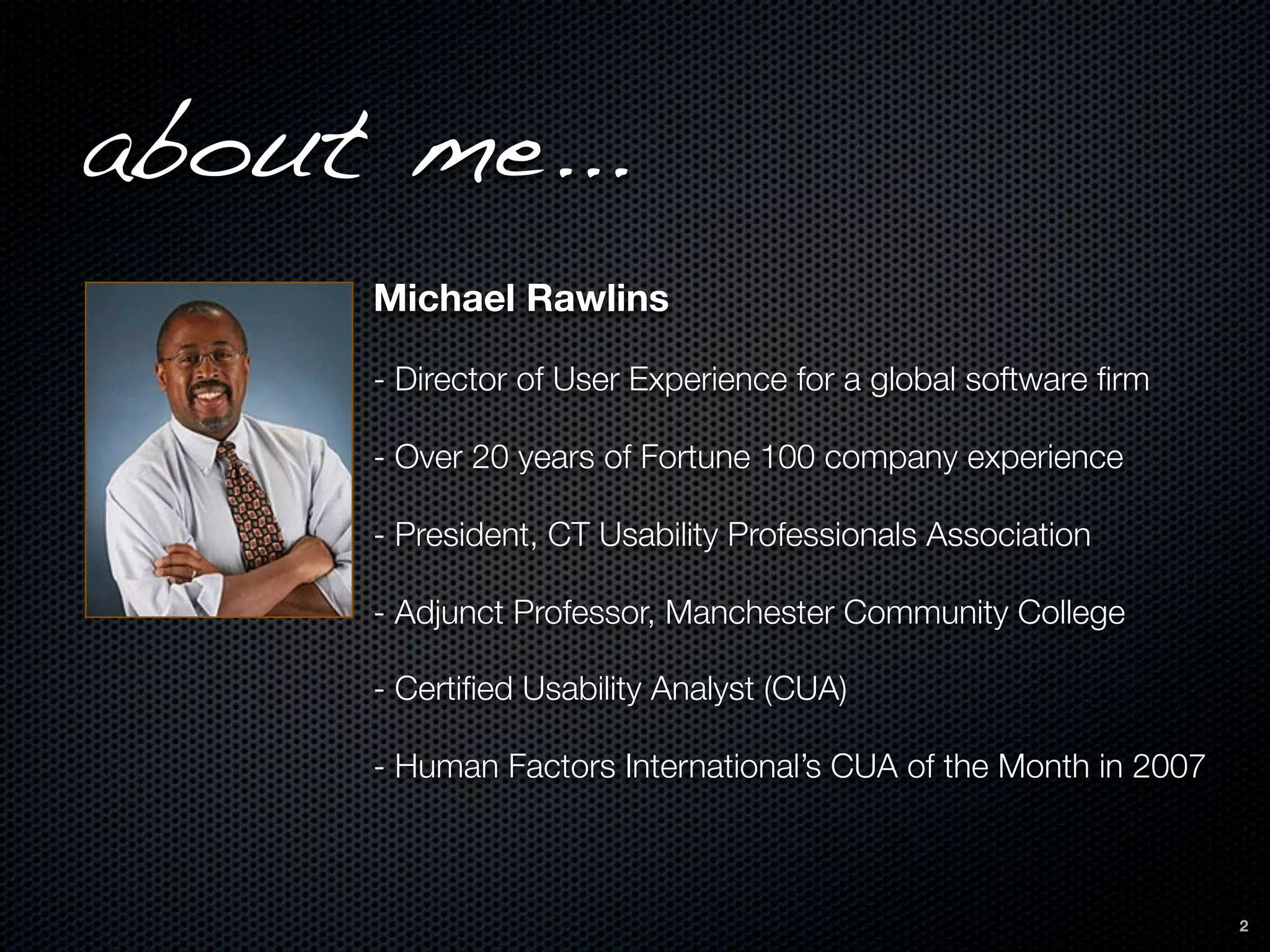
     Michael Rawlins

     - Director of User Experience for a global software firm

     - Over 20 years of Fortune 100 company experience

     - President, CT Usability Professionals Association

     - Adjunct Professor, Manchester Community College

     - Certified Usability Analyst (CUA)

     - Human Factors International’s CUA of the Month in 2007


                                                                2
value proposition...
   Every dollar invested in Usability returns $10 to $100
   Realize:
      better business requirements
      shorter development cycles
      non-functional requirements - design *SWOT analysis


* Strengths Weakness Opportunities Threats


                                                            3
a few definitions...


                       4
usability?
• Effectiveness - can users achieve their goal
• Ease of learning - how fast do they learn the interface
• Efficiency of use - how fast users complete tasks
• Memorability - short & long term memory leveraged
• Error prevention - is there forgiveness
• User satisfaction - do users like the application


                                                            5
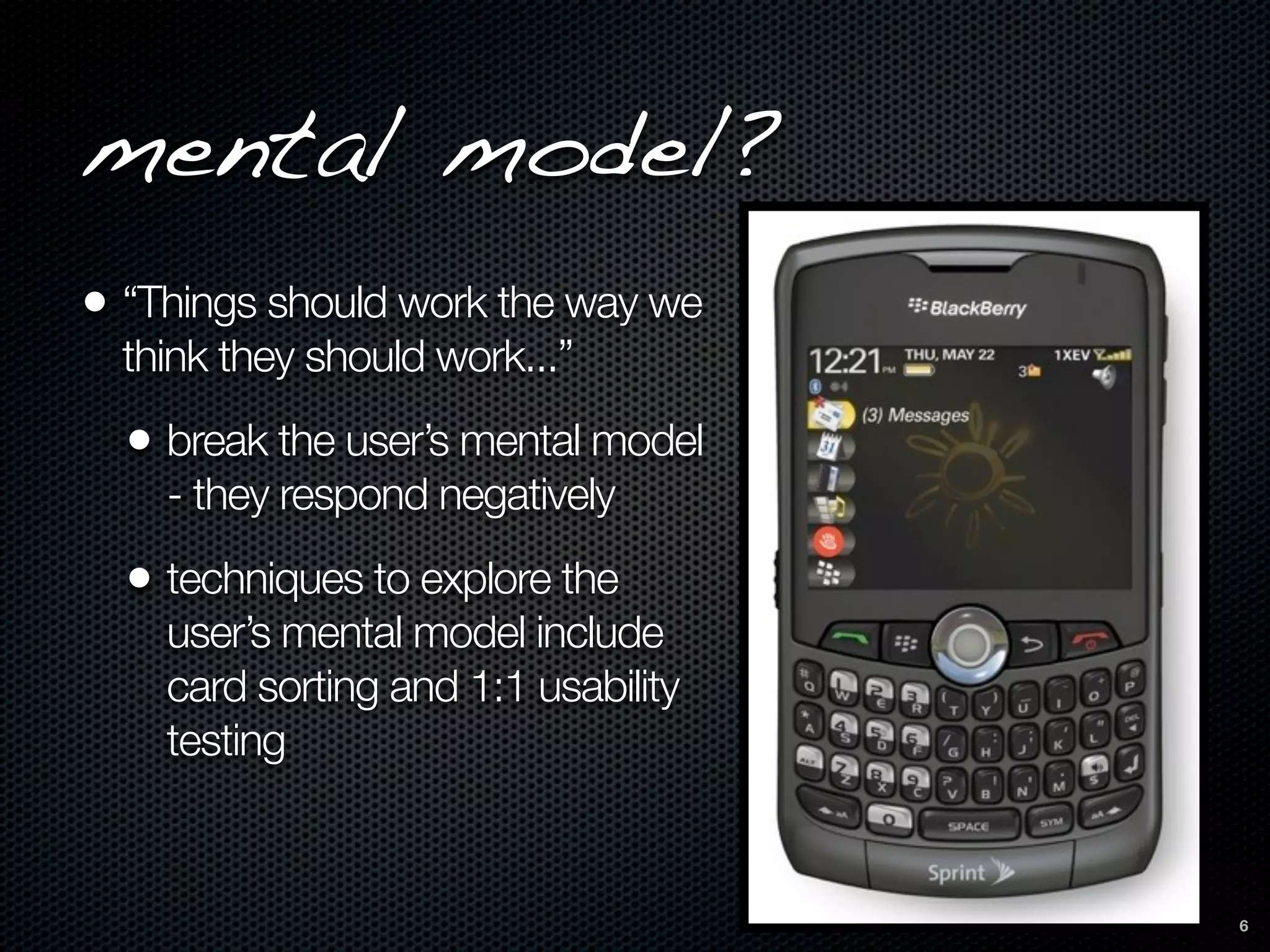
mental model?
• “Things should work the way we
  think they should work...”
  • break the user’s mental model
    - they respond negatively
  • techniques to explore the
    user’s mental model include
    card sorting and 1:1 usability
    testing


                                     6
user centered design?
User-centered design (UCD) is a structured product
development methodology that involves users
throughout all stages of the development lifecycle, in
order to create a web site or application that meets
users' needs. This approach considers an
organization's business objectives and the user's
needs, limitations, and preferences.


                                                         7
the process...
To create a user-centered web site you must think
about the needs of your users throughout each step in
the development of your site, including:
  plan (objectives & requirements)
  collect data from user population (observation)
  prototype (low-fidelity)
  test 1:1 with users (task based usability tests)


                                                        8
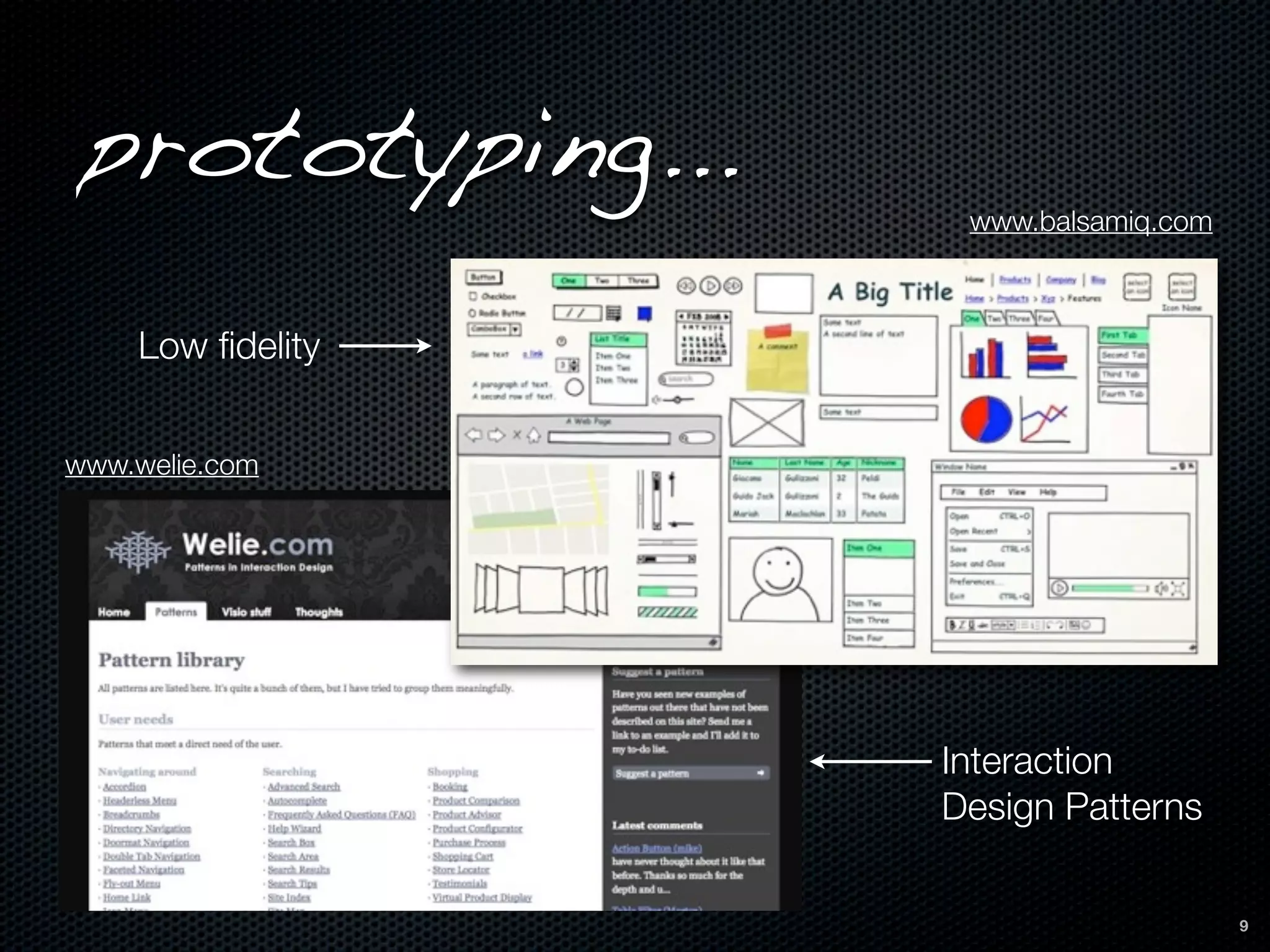
prototyping...
                   www.balsamiq.com


    Low fidelity


www.welie.com


                  Interaction
                  Design Patterns

                                      9
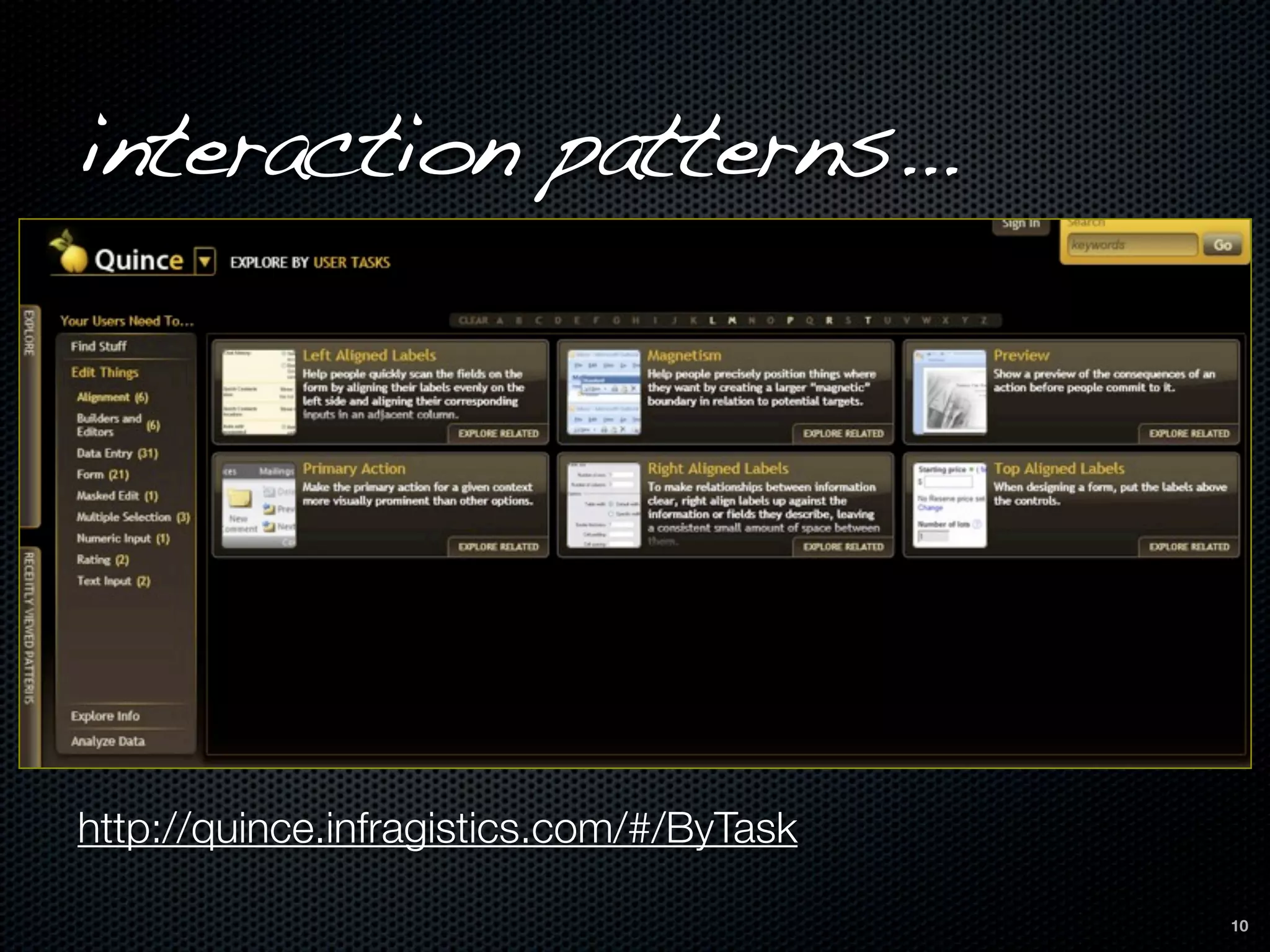
interaction patterns...


http://quince.infragistics.com/#/ByTask

                                          10
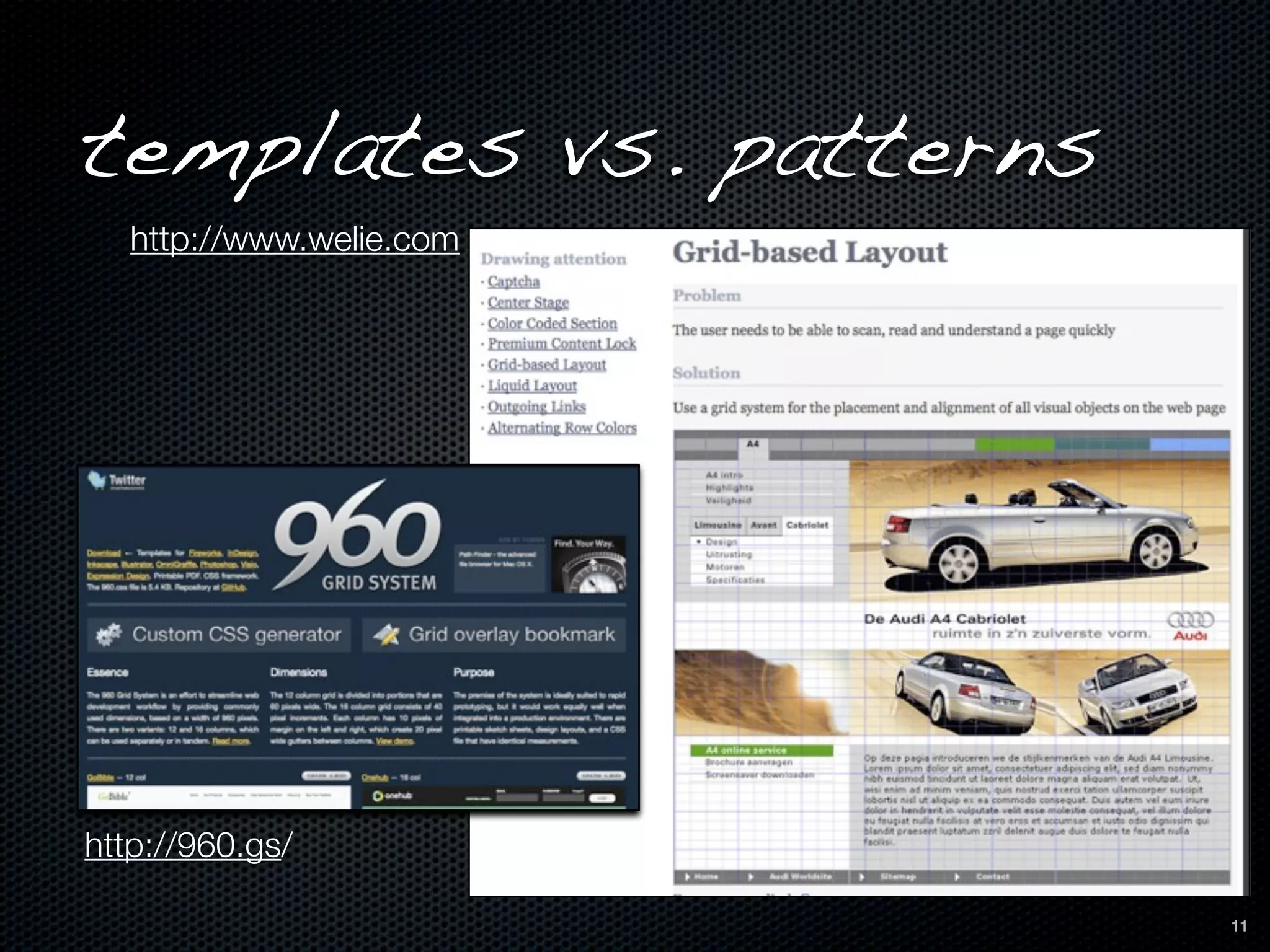
templates vs. patterns
   http://www.welie.com


http://960.gs/

                          11
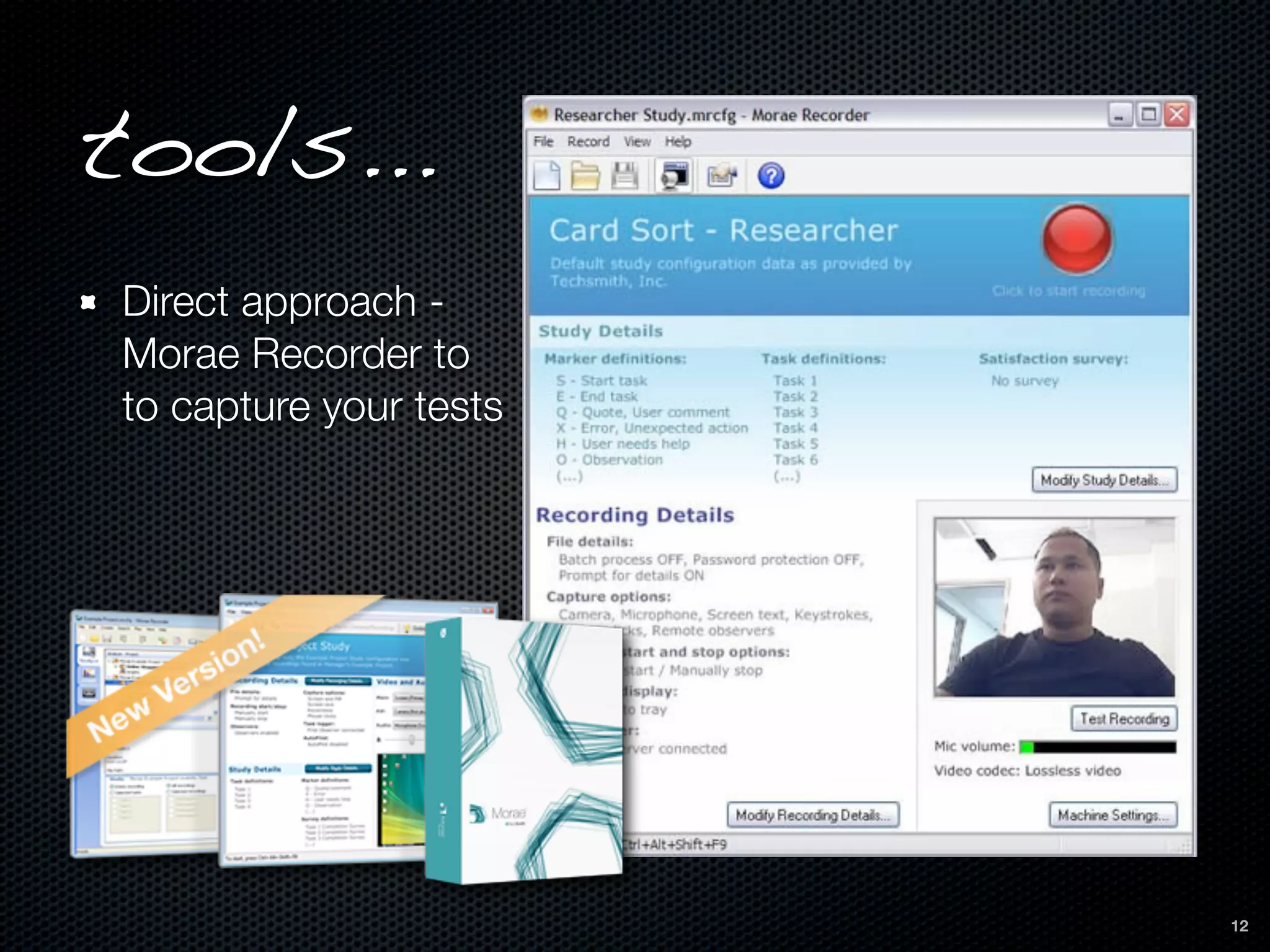
tools...
Direct approach -
Morae Recorder to
to capture your tests


                        12
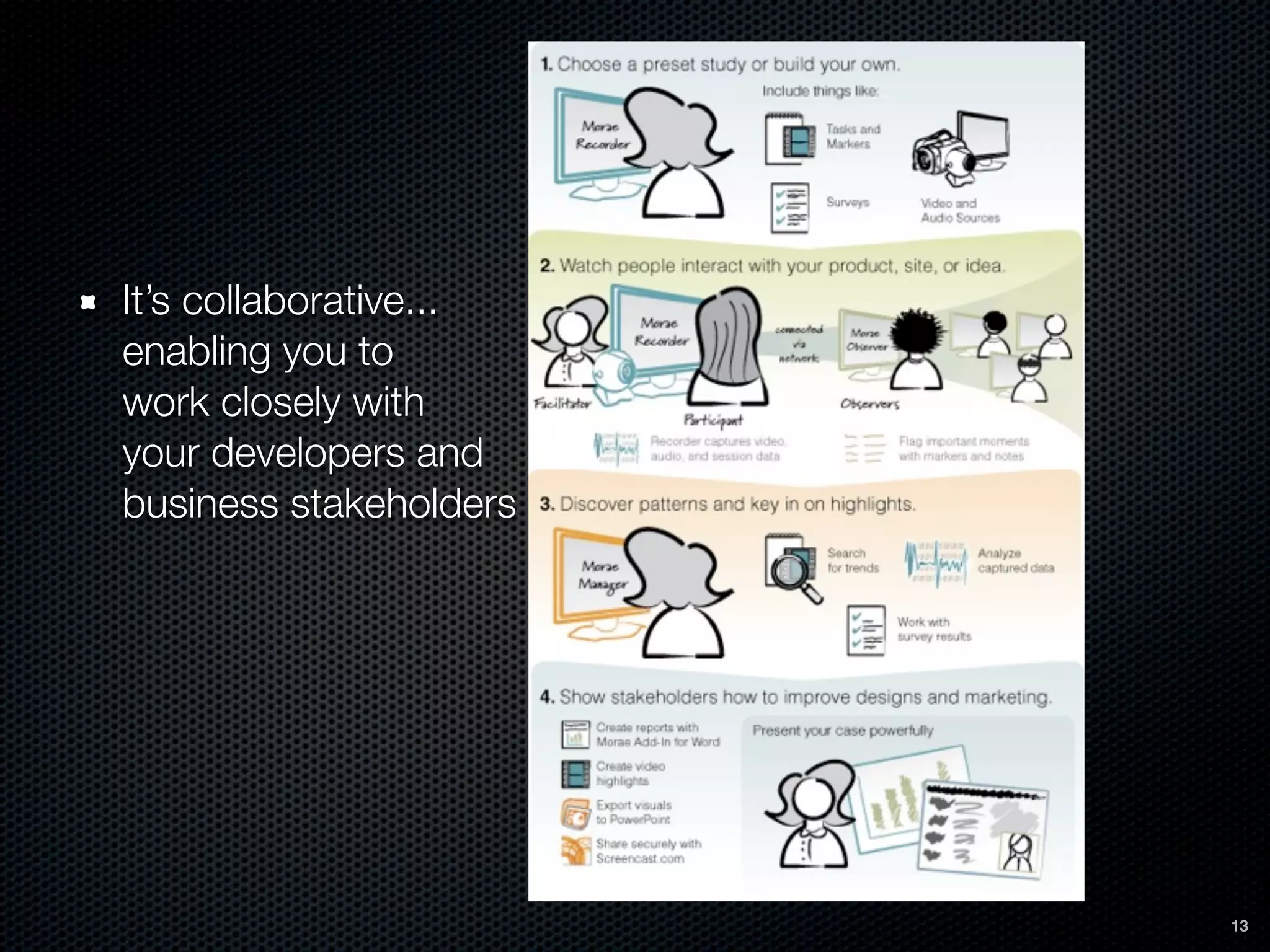
It’s collaborative...
enabling you to
work closely with
your developers and
business stakeholders


                        13
usability testing criteria
Establish usability criteria prior to creating the test questions
•   What are you measuring?

    •   Users will be able to do “x” in less than two minutes

    •   Users will be able to navigate to “x” in less than two minutes in three clicks

    •   Users will be able to buy “x” with no errors or customer support
        assistance

    •   Eight out of ten users will be able to purchase “x”


                                                                                         27
more tools...
Indirect approaches
  Expert Review (use heuristics - rules of thumb)
  Online Surveys (example: SurveyMonkey.com)


                                                    15
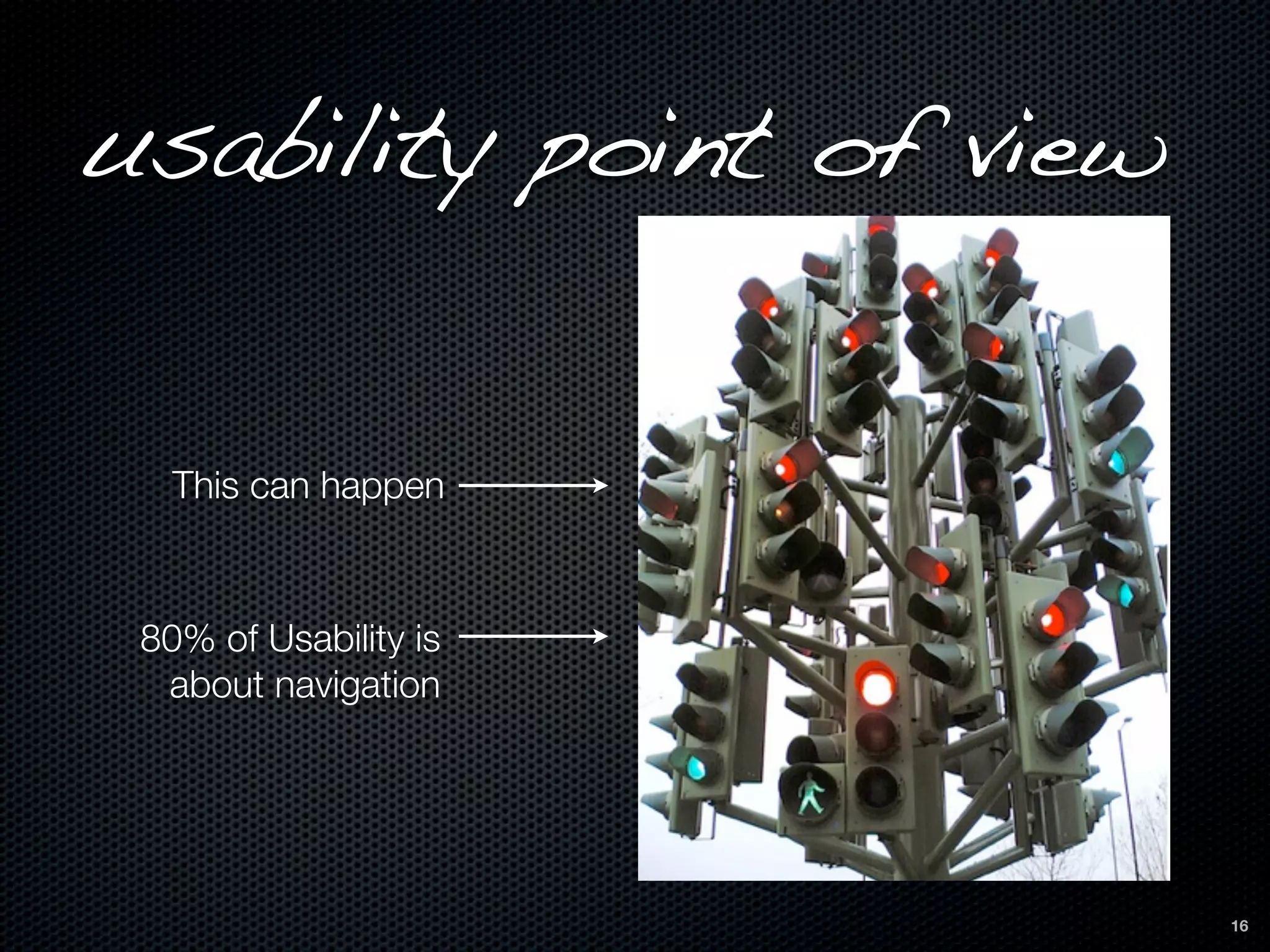
usability point of view


   This can happen


 80% of Usability is
  about navigation


                          16
the symptoms...
Your site or application doesn’t work when user’s:
  are over reliant on sitemaps to navigate
  access search as a primary navigation tool
  navigate with browser controls (forward & back)
To solve:
  test with real user’s to determine their mental model


                                                          17
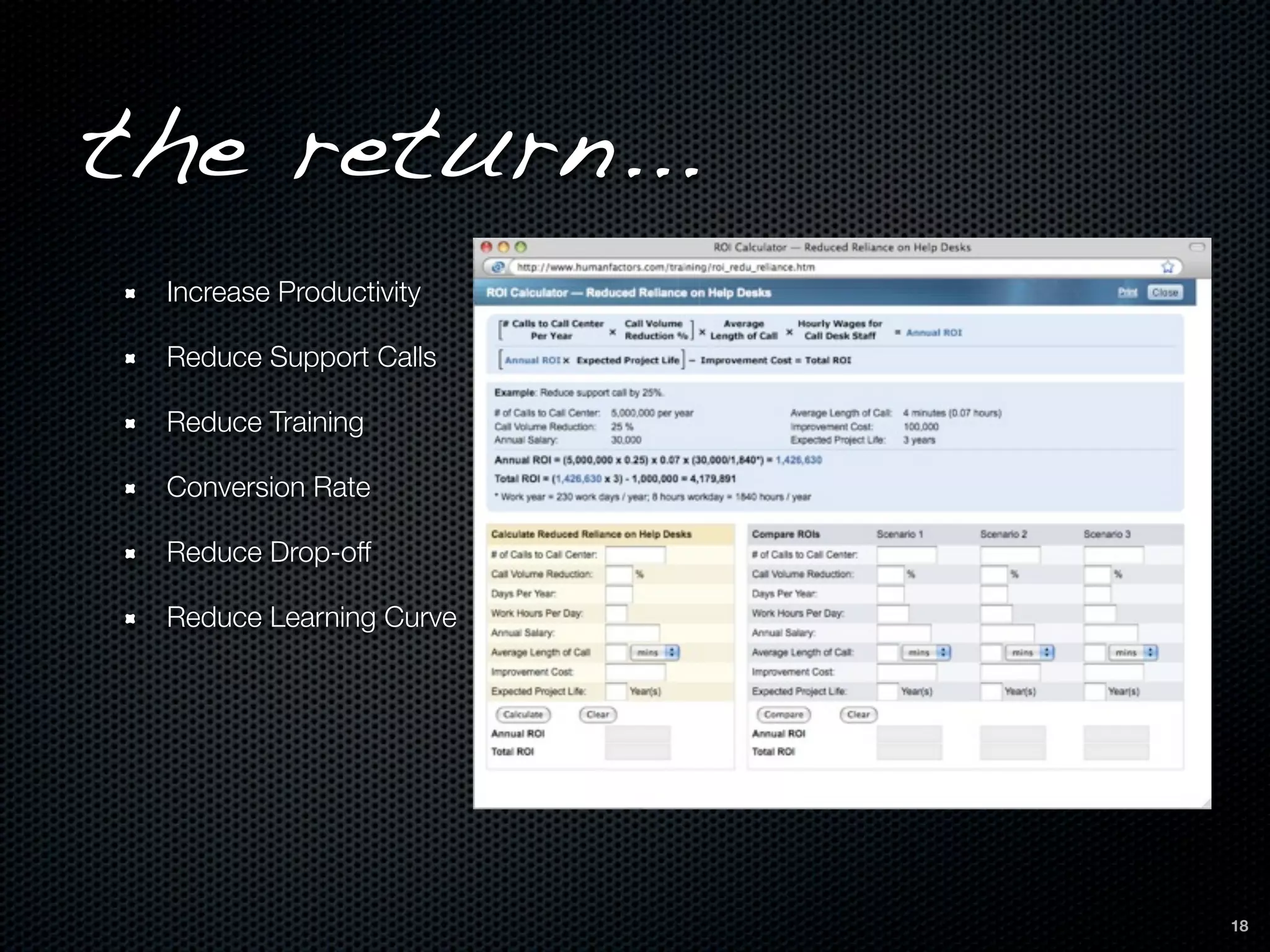
the return...
 Increase Productivity

 Reduce Support Calls

 Reduce Training

 Conversion Rate

 Reduce Drop-off

 Reduce Learning Curve


                         18
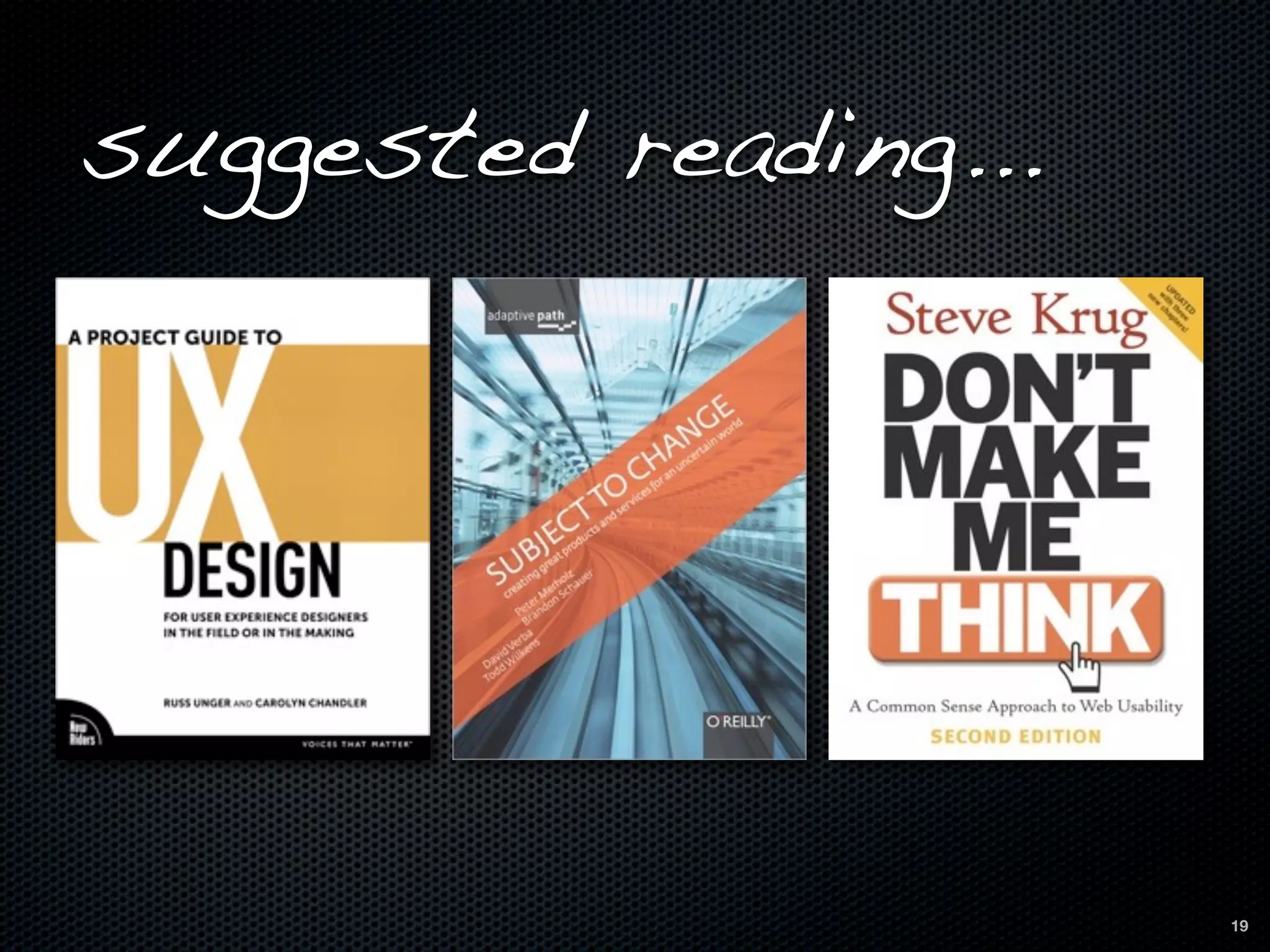
suggested reading...


                       19
questions...


               20
thank you...
michael.rawlins@gmail.com
http://www.michaelrawlins.com


                                21

Why User Experience Matters 2009

  • 1.
    Why User CenteredDesign and Usability Matters Michael Rawlins, Certified Usability Analyst September, 2009
  • 2.
    about me... Michael Rawlins - Director of User Experience for a global software firm - Over 20 years of Fortune 100 company experience - President, CT Usability Professionals Association - Adjunct Professor, Manchester Community College - Certified Usability Analyst (CUA) - Human Factors International’s CUA of the Month in 2007 2
  • 3.
    value proposition... Every dollar invested in Usability returns $10 to $100 Realize: better business requirements shorter development cycles non-functional requirements - design *SWOT analysis * Strengths Weakness Opportunities Threats 3
  • 4.
  • 5.
    usability? • Effectiveness -can users achieve their goal • Ease of learning - how fast do they learn the interface • Efficiency of use - how fast users complete tasks • Memorability - short & long term memory leveraged • Error prevention - is there forgiveness • User satisfaction - do users like the application 5
  • 6.
    mental model? • “Thingsshould work the way we think they should work...” • break the user’s mental model - they respond negatively • techniques to explore the user’s mental model include card sorting and 1:1 usability testing 6
  • 7.
    user centered design? User-centereddesign (UCD) is a structured product development methodology that involves users throughout all stages of the development lifecycle, in order to create a web site or application that meets users' needs. This approach considers an organization's business objectives and the user's needs, limitations, and preferences. 7
  • 8.
    the process... To createa user-centered web site you must think about the needs of your users throughout each step in the development of your site, including: plan (objectives & requirements) collect data from user population (observation) prototype (low-fidelity) test 1:1 with users (task based usability tests) 8
  • 9.
    prototyping... www.balsamiq.com Low fidelity www.welie.com Interaction Design Patterns 9
  • 10.
  • 11.
    templates vs. patterns http://www.welie.com http://960.gs/ 11
  • 12.
    tools... Direct approach - MoraeRecorder to to capture your tests 12
  • 13.
    It’s collaborative... enabling youto work closely with your developers and business stakeholders 13
  • 14.
    usability testing criteria Establishusability criteria prior to creating the test questions • What are you measuring? • Users will be able to do “x” in less than two minutes • Users will be able to navigate to “x” in less than two minutes in three clicks • Users will be able to buy “x” with no errors or customer support assistance • Eight out of ten users will be able to purchase “x” 27
  • 15.
    more tools... Indirect approaches Expert Review (use heuristics - rules of thumb) Online Surveys (example: SurveyMonkey.com) 15
  • 16.
    usability point ofview This can happen 80% of Usability is about navigation 16
  • 17.
    the symptoms... Your siteor application doesn’t work when user’s: are over reliant on sitemaps to navigate access search as a primary navigation tool navigate with browser controls (forward & back) To solve: test with real user’s to determine their mental model 17
  • 18.
    the return... IncreaseProductivity Reduce Support Calls Reduce Training Conversion Rate Reduce Drop-off Reduce Learning Curve 18
  • 19.
  • 20.
  • 21.