University of WrigleyvilleWhy Should our Next Campaign Feature a New Online Fundraising Strategy?July 2009Eric Horner, Senior Advancement OfficerEric_horner@yahoo.comFundraising Background and Projection
University of WrigleyvilleCurrent Status:Recently completed successful campaignBuilding on stable donor poolStrong Principal and Leadership level donorsGrowing Major gifts baseIncreasing participation among Young AlumniSetting strategic prioritiesFocus on more programs that engage volunteersBuilding new web communitySolid staffing structure
University of WrigleyvilleStandard Campaign Giving Pyramid Projection
University of WrigleyvilleCase for Using an Improved Online PlatformHigher Efficiency Return Online StrategyTarget High Potential/Low Effort audiences; including those not on the usual prospect pools of front-line fundraisersVirtual Fundraising is increase in outreach with a minimal investment in resources = excellent ROIStrengthens depth of involvement from more diverse donorsAll communication more personalized; segmented based on donor interests that learns over timeTriple Alumni/Volunteer ActivityCritical tools to build Young Alumni via their comfort zonesMore variety of programming targets currently unengagedSupports a viral volunteer infrastructureBuild International ActivityExtends programs to engage our audiences anywhere in the world
University of WrigleyvilleWhat is the effect of a Higher Efficiency Online Strategy?Modest projection of 25% more gifts at the Annual – Major level in first five yearsAdditional Net $30-40M for Campaign OverallAnnual Revenue up $3-4M by second year
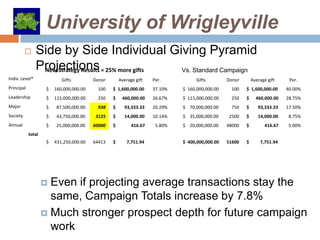
University of WrigleyvilleSide by Side Individual Giving Pyramid ProjectionsEven if projecting average transactions stay the same, Campaign Totals increase by 7.8%Much stronger prospect depth for future campaign work
University of WrigleyvilleRecent Example of the Online Campaign Potential Obama 2008 – more than $200,000,000 (or 30%) via small online donations (i.e. <$100 per transaction; average donor gave 2.3 times)http://www.opensecrets.org

Why Improved Online Strategy E Horner

  • 1.
    University of WrigleyvilleWhyShould our Next Campaign Feature a New Online Fundraising Strategy?July 2009Eric Horner, Senior Advancement OfficerEric_horner@yahoo.comFundraising Background and Projection
  • 2.
    University of WrigleyvilleCurrentStatus:Recently completed successful campaignBuilding on stable donor poolStrong Principal and Leadership level donorsGrowing Major gifts baseIncreasing participation among Young AlumniSetting strategic prioritiesFocus on more programs that engage volunteersBuilding new web communitySolid staffing structure
  • 3.
    University of WrigleyvilleStandardCampaign Giving Pyramid Projection
  • 4.
    University of WrigleyvilleCasefor Using an Improved Online PlatformHigher Efficiency Return Online StrategyTarget High Potential/Low Effort audiences; including those not on the usual prospect pools of front-line fundraisersVirtual Fundraising is increase in outreach with a minimal investment in resources = excellent ROIStrengthens depth of involvement from more diverse donorsAll communication more personalized; segmented based on donor interests that learns over timeTriple Alumni/Volunteer ActivityCritical tools to build Young Alumni via their comfort zonesMore variety of programming targets currently unengagedSupports a viral volunteer infrastructureBuild International ActivityExtends programs to engage our audiences anywhere in the world
  • 5.
    University of WrigleyvilleWhatis the effect of a Higher Efficiency Online Strategy?Modest projection of 25% more gifts at the Annual – Major level in first five yearsAdditional Net $30-40M for Campaign OverallAnnual Revenue up $3-4M by second year
  • 6.
    University of WrigleyvilleSideby Side Individual Giving Pyramid ProjectionsEven if projecting average transactions stay the same, Campaign Totals increase by 7.8%Much stronger prospect depth for future campaign work
  • 7.
    University of WrigleyvilleRecentExample of the Online Campaign Potential Obama 2008 – more than $200,000,000 (or 30%) via small online donations (i.e. <$100 per transaction; average donor gave 2.3 times)http://www.opensecrets.org