Whose Career is it Anyway?
Career Development in the 21st Century
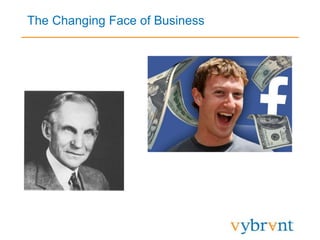
The Changing Face of Business
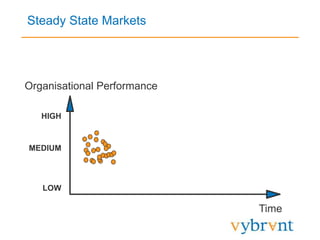
Steady State Markets
HIGH
MEDIUM
LOW
Time
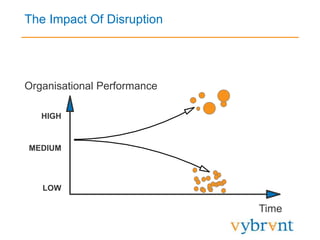
Organisational Performance
HIGH
MEDIUM
LOW
Time
Organisational Performance
The Impact Of Disruption
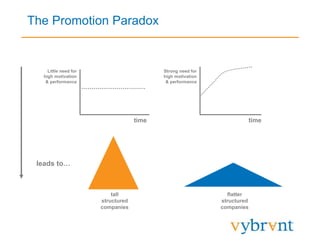
The Promotion Paradox
time time
Little need for
high motivation
& performance
Strong need for
high motivation
& performance
tall
structured
companies
flatter
structured
companies
leads to…
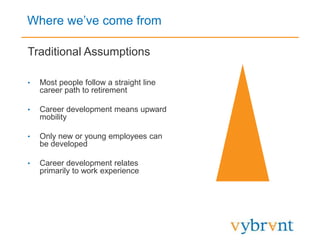
Where we’ve come from
Traditional Assumptions
• Most people follow a straight line
career path to retirement
• Career development means upward
mobility
• Only new or young employees can
be developed
• Career development relates
primarily to work experience
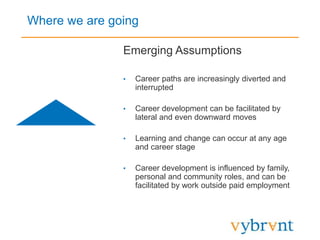
Where we are going
Emerging Assumptions
• Career paths are increasingly diverted and
interrupted
• Career development can be facilitated by
lateral and even downward moves
• Learning and change can occur at any age
and career stage
• Career development is influenced by family,
personal and community roles, and can be
facilitated by work outside paid employment
Career Development
So…
• Take responsibility
• If it doesn’t work in one direction you will have to try another
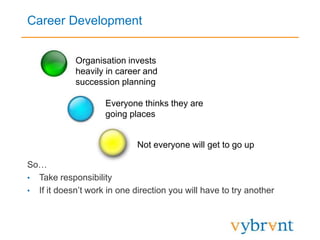
Organisation invests
heavily in career and
succession planning
Everyone thinks they are
going places
Not everyone will get to go up
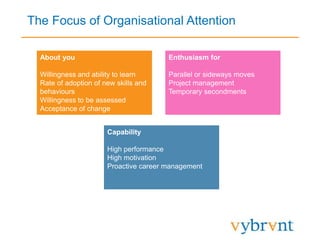
The Focus of Organisational Attention
Capability
High performance
High motivation
Proactive career management
About you
Willingness and ability to learn
Rate of adoption of new skills and
behaviours
Willingness to be assessed
Acceptance of change
Enthusiasm for
Parallel or sideways moves
Project management
Temporary secondments
Factors for Promotion
High performance in your current job is mandatory!
Factors for Promotion
High performance in your current job is mandatory!
Advice
Fortify yourself with knowledge
Factors for Promotion
High performance in your current job is mandatory!
Advice
Fortify yourself with knowledge
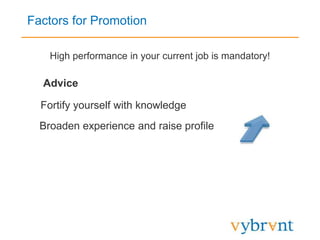
Broaden experience and raise profile
Factors for Promotion
High performance in your current job is mandatory!
Advice
Fortify yourself with knowledge
Broaden experience and raise profile
Look for new responsibilities
Factors for Promotion
High performance in your current job is mandatory!
Advice
Fortify yourself with knowledge
Broaden experience and raise profile
Ask for feedback
Look for new responsibilities
Factors for Promotion
High performance in your current job is mandatory!
Advice
Fortify yourself with knowledge
Confront yourself
Broaden experience and raise profile
Ask for feedback
Look for new responsibilities
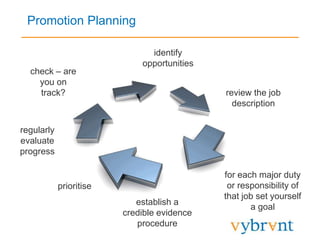
Promotion Planning
identify
opportunities
review the job
description
for each major duty
or responsibility of
that job set yourself
a goal
establish a
credible evidence
procedure
prioritise
regularly
evaluate
progress
check – are
you on
track?
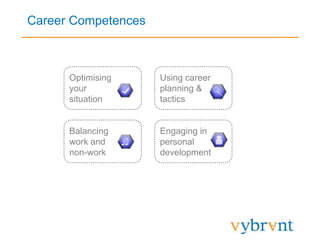
Career Competences
Engaging in
personal
development
Using career
planning &
tactics
Balancing
work and
non-work
Optimising
your
situation
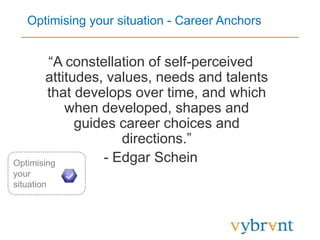
Optimising your situation - Career Anchors
“A constellation of self-perceived
attitudes, values, needs and talents
that develops over time, and which
when developed, shapes and
guides career choices and
directions.”
- Edgar ScheinOptimising
your
situation
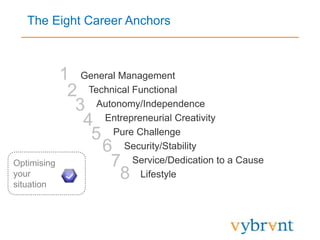
The Eight Career Anchors
General Management
Technical Functional
Autonomy/Independence
Entrepreneurial Creativity
Pure Challenge
Security/Stability
Service/Dedication to a Cause
Lifestyle
1
2
3
4
5
6
7
8
Optimising
your
situation
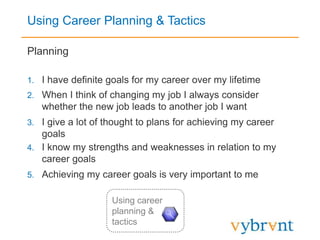
Using Career Planning & Tactics
Planning
1. I have definite goals for my career over my lifetime
Using career
planning &
tactics
2. When I think of changing my job I always consider
whether the new job leads to another job I want
3. I give a lot of thought to plans for achieving my career
goals
4. I know my strengths and weaknesses in relation to my
career goals
5. Achieving my career goals is very important to me
Career Planning & Tactics
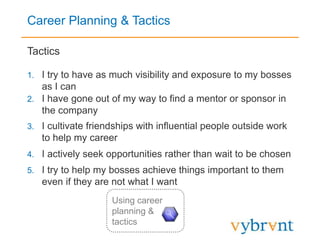
Tactics
1. I try to have as much visibility and exposure to my bosses
as I can
Using career
planning &
tactics
2. I have gone out of my way to find a mentor or sponsor in
the company
3. I cultivate friendships with influential people outside work
to help my career
4. I actively seek opportunities rather than wait to be chosen
5. I try to help my bosses achieve things important to them
even if they are not what I want
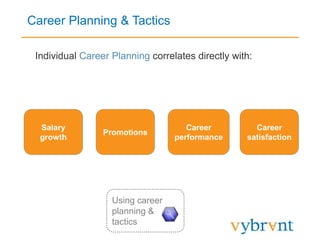
Career Planning & Tactics
Individual Career Planning correlates directly with:
Using career
planning &
tactics
Salary
growth
Promotions
Career
performance
Career
satisfaction
Career Planning & Tactics
Using career
planning &
tactics
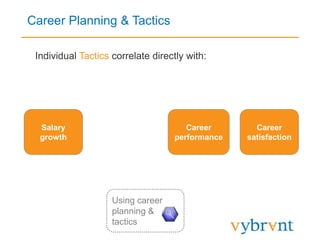
Salary
growth
Career
performance
Career
satisfaction
Individual Tactics correlate directly with:
The Results
Employees who systematically
plan their careers tend to be
more successful and feel more
positively toward their careers
than those who do not.
Balancing Work and Non-work
The business benefits
• Increased productivity
• Improved recruitment and retention
• Lower rates of absenteeism
• Reduced overheads
• An improved customer experience
• A more motivated, satisfied and equitable workforce
Balancing
work and
non-work
Work Life Balance
Balancing
work and
non-work
2
1
3
4
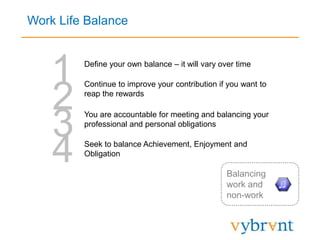
Define your own balance – it will vary over time
Continue to improve your contribution if you want to
reap the rewards
You are accountable for meeting and balancing your
professional and personal obligations
Seek to balance Achievement, Enjoyment and
Obligation
Engaging in Personal Development
Get good at getting what you
want!
Engaging in
personal
development
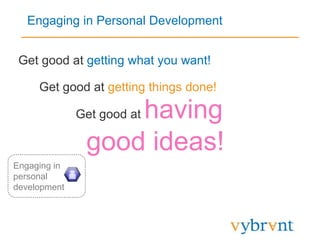
Engaging in Personal Development
Get good at getting what you want!
Get good at getting things
done!
Engaging in
personal
development
Engaging in Personal Development
Get good at getting what you want!
Get good at having
good ideas!
Get good at getting things done!
Engaging in
personal
development
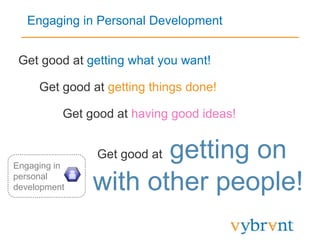
Engaging in Personal Development
Get good at getting what you want!
Engaging in
personal
development
Get good at getting on
with other people!
Get good at having good ideas!
Get good at getting things done!
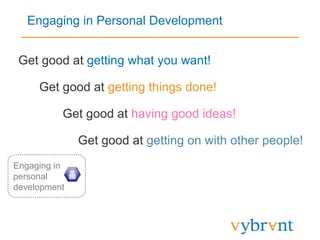
Engaging in Personal Development
Get good at getting what you want!
Engaging in
personal
development
Get good at getting on with other people!
Get good at having good ideas!
Get good at getting things done!
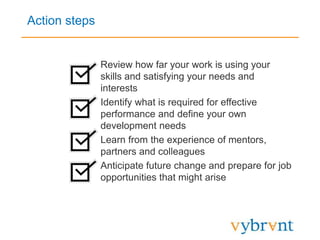
Action steps
• Review how far your work is using your
skills and satisfying your needs and
interests
• Identify what is required for effective
performance and define your own
development needs
• Learn from the experience of mentors,
partners and colleagues
• Anticipate future change and prepare for job
opportunities that might arise
Whose career is it anyway?

Whose career is it anyway?

  • 1.
    Whose Career isit Anyway? Career Development in the 21st Century
  • 2.
    The Changing Faceof Business
  • 3.
  • 4.
  • 5.
    The Promotion Paradox timetime Little need for high motivation & performance Strong need for high motivation & performance tall structured companies flatter structured companies leads to…
  • 6.
    Where we’ve comefrom Traditional Assumptions • Most people follow a straight line career path to retirement • Career development means upward mobility • Only new or young employees can be developed • Career development relates primarily to work experience
  • 7.
    Where we aregoing Emerging Assumptions • Career paths are increasingly diverted and interrupted • Career development can be facilitated by lateral and even downward moves • Learning and change can occur at any age and career stage • Career development is influenced by family, personal and community roles, and can be facilitated by work outside paid employment
  • 8.
    Career Development So… • Takeresponsibility • If it doesn’t work in one direction you will have to try another Organisation invests heavily in career and succession planning Everyone thinks they are going places Not everyone will get to go up
  • 9.
    The Focus ofOrganisational Attention Capability High performance High motivation Proactive career management About you Willingness and ability to learn Rate of adoption of new skills and behaviours Willingness to be assessed Acceptance of change Enthusiasm for Parallel or sideways moves Project management Temporary secondments
  • 10.
    Factors for Promotion Highperformance in your current job is mandatory!
  • 11.
    Factors for Promotion Highperformance in your current job is mandatory! Advice Fortify yourself with knowledge
  • 12.
    Factors for Promotion Highperformance in your current job is mandatory! Advice Fortify yourself with knowledge Broaden experience and raise profile
  • 13.
    Factors for Promotion Highperformance in your current job is mandatory! Advice Fortify yourself with knowledge Broaden experience and raise profile Look for new responsibilities
  • 14.
    Factors for Promotion Highperformance in your current job is mandatory! Advice Fortify yourself with knowledge Broaden experience and raise profile Ask for feedback Look for new responsibilities
  • 15.
    Factors for Promotion Highperformance in your current job is mandatory! Advice Fortify yourself with knowledge Confront yourself Broaden experience and raise profile Ask for feedback Look for new responsibilities
  • 16.
    Promotion Planning identify opportunities review thejob description for each major duty or responsibility of that job set yourself a goal establish a credible evidence procedure prioritise regularly evaluate progress check – are you on track?
  • 17.
    Career Competences Engaging in personal development Usingcareer planning & tactics Balancing work and non-work Optimising your situation
  • 18.
    Optimising your situation- Career Anchors “A constellation of self-perceived attitudes, values, needs and talents that develops over time, and which when developed, shapes and guides career choices and directions.” - Edgar ScheinOptimising your situation
  • 19.
    The Eight CareerAnchors General Management Technical Functional Autonomy/Independence Entrepreneurial Creativity Pure Challenge Security/Stability Service/Dedication to a Cause Lifestyle 1 2 3 4 5 6 7 8 Optimising your situation
  • 20.
    Using Career Planning& Tactics Planning 1. I have definite goals for my career over my lifetime Using career planning & tactics 2. When I think of changing my job I always consider whether the new job leads to another job I want 3. I give a lot of thought to plans for achieving my career goals 4. I know my strengths and weaknesses in relation to my career goals 5. Achieving my career goals is very important to me
  • 21.
    Career Planning &Tactics Tactics 1. I try to have as much visibility and exposure to my bosses as I can Using career planning & tactics 2. I have gone out of my way to find a mentor or sponsor in the company 3. I cultivate friendships with influential people outside work to help my career 4. I actively seek opportunities rather than wait to be chosen 5. I try to help my bosses achieve things important to them even if they are not what I want
  • 22.
    Career Planning &Tactics Individual Career Planning correlates directly with: Using career planning & tactics Salary growth Promotions Career performance Career satisfaction
  • 23.
    Career Planning &Tactics Using career planning & tactics Salary growth Career performance Career satisfaction Individual Tactics correlate directly with:
  • 24.
    The Results Employees whosystematically plan their careers tend to be more successful and feel more positively toward their careers than those who do not.
  • 25.
    Balancing Work andNon-work The business benefits • Increased productivity • Improved recruitment and retention • Lower rates of absenteeism • Reduced overheads • An improved customer experience • A more motivated, satisfied and equitable workforce Balancing work and non-work
  • 26.
    Work Life Balance Balancing workand non-work 2 1 3 4 Define your own balance – it will vary over time Continue to improve your contribution if you want to reap the rewards You are accountable for meeting and balancing your professional and personal obligations Seek to balance Achievement, Enjoyment and Obligation
  • 27.
    Engaging in PersonalDevelopment Get good at getting what you want! Engaging in personal development
  • 28.
    Engaging in PersonalDevelopment Get good at getting what you want! Get good at getting things done! Engaging in personal development
  • 29.
    Engaging in PersonalDevelopment Get good at getting what you want! Get good at having good ideas! Get good at getting things done! Engaging in personal development
  • 30.
    Engaging in PersonalDevelopment Get good at getting what you want! Engaging in personal development Get good at getting on with other people! Get good at having good ideas! Get good at getting things done!
  • 31.
    Engaging in PersonalDevelopment Get good at getting what you want! Engaging in personal development Get good at getting on with other people! Get good at having good ideas! Get good at getting things done!
  • 32.
    Action steps • Reviewhow far your work is using your skills and satisfying your needs and interests • Identify what is required for effective performance and define your own development needs • Learn from the experience of mentors, partners and colleagues • Anticipate future change and prepare for job opportunities that might arise