WHAT TO CONSIDER
WHEN PREPARING
THE BUSINESS CASE
FOR HR ANALYTICS?
Hendrik Feddersen
#HRULONDON NOVEMBER 16, 2017
Other business
functions use advanced
techniques to try to
understand
* hidden group patterns
through clustering
techniques, 
* hidden relationships
through what-if
analyses,
* the likelihood of
events by analysing
risks
* future trends based on
historical patterns
Has HR lost the bus?
Let us start writing a
business case.
INTRODUCTION
"OUTLINE THE BENEFITS OF
THE PROPOSED BUSINESS
CHANGE AND COMMUNICATE
THOSE BENEFITS TO THE
BUSINESS."
"CLEAR
DEFINITION OF
GOALS IS THE KEY
TO SUCCESS."
WHY ARE YOU STARTING A PROJECT?
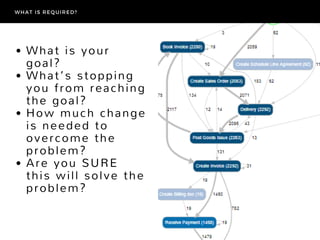
What is your
goal?
What’s stopping
you from reaching
the goal?
How much change
is needed to
overcome the
problem?
Are you SURE
this will solve the
problem?
WHAT IS REQUIRED?
"The value of analytics is derived from
identifying a group of people who ‐ in
aggregate ‐ will tend to behave in a
certain way”
 (Eric Siegel in ‘Predictive Analytics’) 
WHAT IS YOUR GOAL?
Identifying problems
worth solving and
thinking about them
in terms of inputs
and outputs, x’s and
y’s.
WHAT IS YOUR GOAL?
Look into automation:
Deloitte research showing that 38
percent of companies expect to
be fully automated within five
years.
Look into chatbots:
Chatbots can listen, build and
assess. They can build complete
profiles and make assessments of
candidates.
START WITH
LOW HANGING
FRUITS
WHAT IS YOUR GOAL?
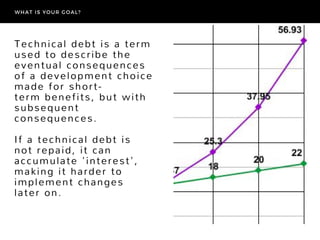
Technical debt is a term
used to describe the
eventual consequences
of a development choice
made for short-
term benefits, but with
subsequent
consequences.
If a technical debt is
not repaid, it can
accumulate 'interest',
making it harder to
implement changes
later on. 
WHAT IS YOUR GOAL?
Measurable outcomes and impact
is constrained within many
organisations due to dysfunctions
within HR, which need to be
acknowledged and addressed:
e.g. Disconnect between what
your CEO and what your HR
organization has the capability or
inclination to provide, HR more
focused on “programs” than
“outcomes”, 
DYSFUNCTIONS
WHAT’S STOPPING YOU FROM REACHING THE GOAL?
How long have people in
the organization been
doing something similar?
If it’s been a long time,
has the organization kept
a record of successfully
completed tasks?
If yes, this could be used
as a training dataset.
If no, you need to start
collecting data today and
keep a human in the loop
to train the algorithm
over time.
WHAT’S STOPPING YOU FROM REACHING THE GOAL?
PROJECT
GOVERNANCE
AND REPORTING
This section of the business
case shows how the project is
structured and the different
levels of decision-making.
The business case should
define how project progress is
recorded and the project board
updated on project
performance.
WHO DOES WHAT AND HOW TO REPORT PROGRESS?
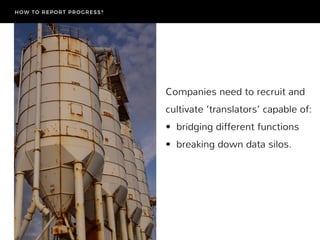
Companies need to recruit and
cultivate ‘translators’ capable of:
•  bridging different functions
•  breaking down data silos.
HOW TO REPORT PROGRESS?
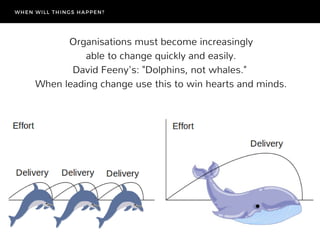
WHEN WILL THINGS HAPPEN?
Organisations must become increasingly
able to change quickly and easily.
David Feeny's: "Dolphins, not whales." 
When leading change use this to win hearts and minds.
We need to remember
that by creating
compelling, eye-catching
situations it is easier for
others to see problems
and solutions.
WHEN WILL THINGS HAPPEN?
59% OF
EMPLOYED DATA
SCIENTISTS
LEARNED SKILLS
ON THEIR OWN
OR VIA A MOOC
THE BIGGEST
HEADACHE IN
MACHINE
LEARNING?
CLEANING DIRTY
DATA FROM THE
SPREADSHEETS
HOW MUCH CHANGE IS NEEDED TO OVERCOME THE PROBLEM?
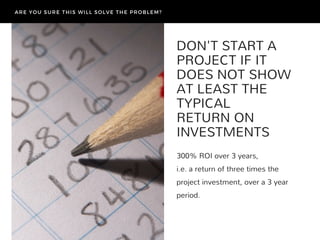
DON'T START A
PROJECT IF IT
DOES NOT SHOW
AT LEAST THE
TYPICAL
RETURN ON
INVESTMENTS
300% ROI over 3 years,
i.e. a return of three times the
project investment, over a 3 year
period.
ARE YOU SURE THIS WILL SOLVE THE PROBLEM?
Remember, the purpose of a
business case is to outline the
business rationale for undertaking
a project and to provide a means
to continually assess and evaluate
project progress.
THANK YOU
THANK YOU

What to consider when preparing the business case for HR Analytics?

  • 1.
    WHAT TO CONSIDER WHENPREPARING THE BUSINESS CASE FOR HR ANALYTICS? Hendrik Feddersen #HRULONDON NOVEMBER 16, 2017
  • 2.
    Other business functions useadvanced techniques to try to understand * hidden group patterns through clustering techniques,  * hidden relationships through what-if analyses, * the likelihood of events by analysing risks * future trends based on historical patterns Has HR lost the bus? Let us start writing a business case. INTRODUCTION
  • 3.
    "OUTLINE THE BENEFITSOF THE PROPOSED BUSINESS CHANGE AND COMMUNICATE THOSE BENEFITS TO THE BUSINESS." "CLEAR DEFINITION OF GOALS IS THE KEY TO SUCCESS." WHY ARE YOU STARTING A PROJECT?
  • 4.
    What is your goal? What’sstopping you from reaching the goal? How much change is needed to overcome the problem? Are you SURE this will solve the problem? WHAT IS REQUIRED?
  • 5.
    "The value ofanalytics is derived from identifying a group of people who ‐ in aggregate ‐ will tend to behave in a certain way”  (Eric Siegel in ‘Predictive Analytics’)  WHAT IS YOUR GOAL?
  • 6.
    Identifying problems worth solvingand thinking about them in terms of inputs and outputs, x’s and y’s. WHAT IS YOUR GOAL?
  • 7.
    Look into automation: Deloitteresearch showing that 38 percent of companies expect to be fully automated within five years. Look into chatbots: Chatbots can listen, build and assess. They can build complete profiles and make assessments of candidates. START WITH LOW HANGING FRUITS WHAT IS YOUR GOAL?
  • 8.
    Technical debt isa term used to describe the eventual consequences of a development choice made for short- term benefits, but with subsequent consequences. If a technical debt is not repaid, it can accumulate 'interest', making it harder to implement changes later on.  WHAT IS YOUR GOAL?
  • 9.
    Measurable outcomes andimpact is constrained within many organisations due to dysfunctions within HR, which need to be acknowledged and addressed: e.g. Disconnect between what your CEO and what your HR organization has the capability or inclination to provide, HR more focused on “programs” than “outcomes”,  DYSFUNCTIONS WHAT’S STOPPING YOU FROM REACHING THE GOAL?
  • 10.
    How long havepeople in the organization been doing something similar? If it’s been a long time, has the organization kept a record of successfully completed tasks? If yes, this could be used as a training dataset. If no, you need to start collecting data today and keep a human in the loop to train the algorithm over time. WHAT’S STOPPING YOU FROM REACHING THE GOAL?
  • 11.
    PROJECT GOVERNANCE AND REPORTING This section ofthe business case shows how the project is structured and the different levels of decision-making. The business case should define how project progress is recorded and the project board updated on project performance. WHO DOES WHAT AND HOW TO REPORT PROGRESS?
  • 12.
    Companies need torecruit and cultivate ‘translators’ capable of: •  bridging different functions •  breaking down data silos. HOW TO REPORT PROGRESS?
  • 13.
    WHEN WILL THINGSHAPPEN? Organisations must become increasingly able to change quickly and easily. David Feeny's: "Dolphins, not whales."  When leading change use this to win hearts and minds.
  • 14.
    We need toremember that by creating compelling, eye-catching situations it is easier for others to see problems and solutions. WHEN WILL THINGS HAPPEN?
  • 15.
    59% OF EMPLOYED DATA SCIENTISTS LEARNEDSKILLS ON THEIR OWN OR VIA A MOOC THE BIGGEST HEADACHE IN MACHINE LEARNING? CLEANING DIRTY DATA FROM THE SPREADSHEETS HOW MUCH CHANGE IS NEEDED TO OVERCOME THE PROBLEM?
  • 16.
    DON'T START A PROJECTIF IT DOES NOT SHOW AT LEAST THE TYPICAL RETURN ON INVESTMENTS 300% ROI over 3 years, i.e. a return of three times the project investment, over a 3 year period. ARE YOU SURE THIS WILL SOLVE THE PROBLEM?
  • 17.
    Remember, the purposeof a business case is to outline the business rationale for undertaking a project and to provide a means to continually assess and evaluate project progress. THANK YOU THANK YOU