People Analytics:
Improving employee experience and productivity
Dr Susan Entwisle
DXC.Technology Executive Director / Distinguished Technologist
@susanentwisle
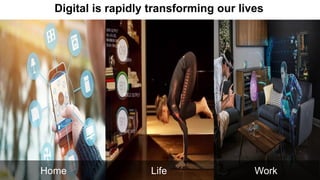
Digital is rapidly transforming our lives
Home Life Work
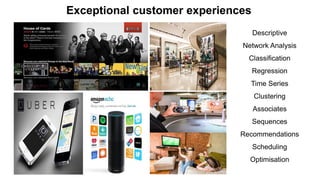
Exceptional customer experiences
Descriptive
Network Analysis
Classification
Regression
Time Series
Clustering
Associates
Sequences
Recommendations
Scheduling
Optimisation
By 2020, more than three-quarters of S&P 500 will be
companies you have never heard of yet.
New revenue streams
Increase business efficiency
Increase employee productivity
40-70% of company revenue spent on payroll.
Only 24% of Australians are engaged with their job.
60% are not engaged and 16% are actively disengaged.
Actively disengaged workers account for more quality defects, safety
incidents, higher rates of absenteeism and lower retention rates.
Source: Gallup Study, 2014
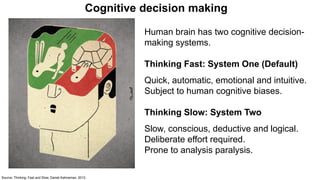
Human brain has two cognitive decision-
making systems.
Thinking Fast: System One (Default)
Quick, automatic, emotional and intuitive.
Subject to human cognitive biases.
Thinking Slow: System Two
Slow, conscious, deductive and logical.
Deliberate effort required.
Prone to analysis paralysis.
Cognitive decision making
Source: Thinking, Fast and Slow, Daniel Kahneman, 2013.
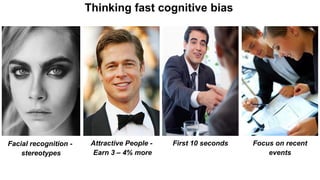
Thinking fast cognitive bias
Facial recognition -
stereotypes
Attractive People -
Earn 3 – 4% more
Focus on recent
events
First 10 seconds
Right people into the right jobs,
make them engaged and
productive, and get them to help
us attract more customers and
drive more revenue.
Requires fundamental shift in
leadership and culture.
Nirvana might be perfect blend
of domain experts, analytics
and psychometrics.
Using analytics to transform employee experience
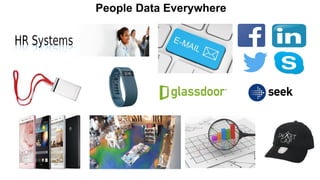
People Data Everywhere
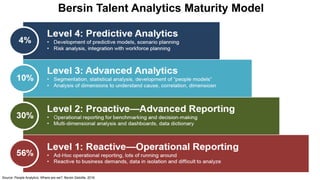
Bersin Talent Analytics Maturity Model
Source: People Analytics: Where are we?, Bersin Deloitte, 2016
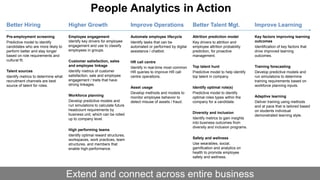
People Analytics in Action
Better Hiring
Pre-employment screening
Predictive model to identify
candidates who are more likely to
perform better and stay longer
based on role requirements and
cultural fit.
Talent sources
Identify metrics to determine what
recruitment channels are best
source of talent for roles.
Higher Growth
Employee engagement
Identify key drivers for employee
engagement and use to classify
employees in groups.
Customer satisfaction, sales
and employee linkage
Identify metrics of customer
satisfaction, sale and employee
engagement / traits that have
strong linkages.
Workforce planning
Develop predictive models and
run simulations to calculate future
headcount requirements by
business unit, which can be rolled
up to company level.
High performing teams
Identify optimal reward structures,
workspaces, work practices, team
structures, and members that
enable high-performance.
Better Talent Mgt.
Attrition prediction model
Key drivers to attrition and
employee attrition probability
prediction, for proactive
management.
Top talent hunt
Predictive model to help identify
top talent in company.
Identify optimal role(s)
Predictive model to identify
optimal roles types within the
company for a candidate.
Diversity and inclusion
Identify metrics to gain insights
into business outcomes from
diversity and inclusion programs.
Safety and wellness
Use wearables, social,
gamification and analytics on
health to promote employee
safety and wellness.
Improve Learning
Key factors improving learning
outcomes
Identification of key factors that
drive improved learning
outcomes.
Training forecasting
Develop predictive models and
run simulations to determine
training requirements based on
workforce planning inputs.
Adaptive learning
Deliver training using methods
and at pace that is tailored based
on students individual
demonstrated learning style.
Improve Operations
Automate employee lifecycle
Identify tasks that can be
automated or performed by digital
assistance / chatbot.
HR call centre
Identify in real-time most common
HR queries to improve HR call
centre operations.
Asset usage
Develop methods and models to
monitor employee behavior to
detect misuse of assets / fraud.
Extend and connect across entire business
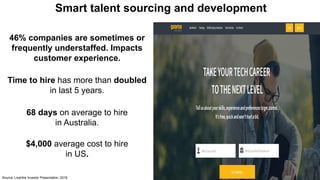
Smart talent sourcing and development
46% companies are sometimes or
frequently understaffed. Impacts
customer experience.
Time to hire has more than doubled
in last 5 years.
68 days on average to hire
in Australia.
$4,000 average cost to hire
in US.
Source: LiveHire Investor Presentation, 2016
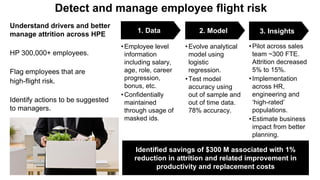
Detect and manage employee flight risk
Understand drivers and better
manage attrition across HPE
HP 300,000+ employees.
Flag employees that are
high-flight risk.
Identify actions to be suggested
to managers.
•Pilot across sales
team ~300 FTE.
Attrition decreased
5% to 15%.
•Implementation
across HR,
engineering and
‘high-rated’
populations.
•Estimate business
impact from better
planning.
•Evolve analytical
model using
logistic
regression.
•Test model
accuracy using
out of sample and
out of time data.
78% accuracy.
•Employee level
information
including salary,
age, role, career
progression,
bonus, etc.
•Confidentially
maintained
through usage of
masked ids.
3. Insights2. Model1. Data
Identified savings of $300 M associated with 1%
reduction in attrition and related improvement in
productivity and replacement costs
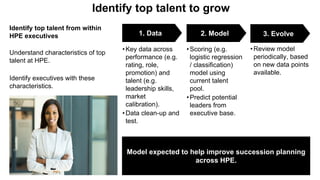
Identify top talent to grow
Identify top talent from within
HPE executives
Understand characteristics of top
talent at HPE.
Identify executives with these
characteristics.
•Review model
periodically, based
on new data points
available.
•Scoring (e.g.
logistic regression
/ classification)
model using
current talent
pool.
•Predict potential
leaders from
executive base.
•Key data across
performance (e.g.
rating, role,
promotion) and
talent (e.g.
leadership skills,
market
calibration).
•Data clean-up and
test.
3. Evolve2. Model1. Data
Model expected to help improve succession planning
across HPE.
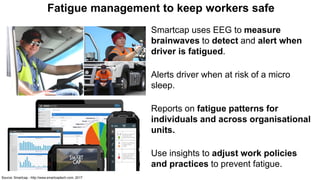
Fatigue management to keep workers safe
Smartcap uses EEG to measure
brainwaves to detect and alert when
driver is fatigued.
Alerts driver when at risk of a micro
sleep.
Reports on fatigue patterns for
individuals and across organisational
units.
Use insights to adjust work policies
and practices to prevent fatigue.
Source: Smartcap - http://www.smartcaptech.com, 2017
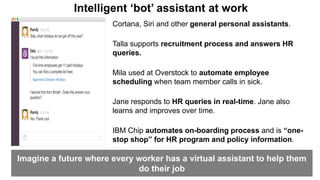
Intelligent ‘bot’ assistant at work
Cortana, Siri and other general personal assistants.
Talla supports recruitment process and answers HR
queries.
Mila used at Overstock to automate employee
scheduling when team member calls in sick.
Jane responds to HR queries in real-time. Jane also
learns and improves over time.
IBM Chip automates on-boarding process and is “one-
stop shop” for HR program and policy information.
Imagine a future where every worker has a virtual assistant to help them
do their job
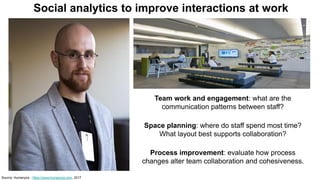
Social analytics to improve interactions at work
Team work and engagement: what are the
communication patterns between staff?
Space planning: where do staff spend most time?
What layout best supports collaboration?
Process improvement: evaluate how process
changes alter team collaboration and cohesiveness.
Source: Humanyze - https://www.humanyze.com, 2017
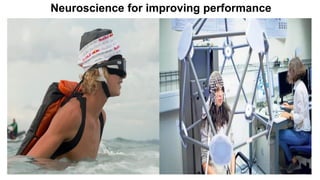
Neuroscience for improving performance
Big Data Challenges
Volume, Variety, Velocity and Veracity
Skills and capabilities
Data sources and integration
Infrastructure
Risk and governance issues –
security, privacy and data quality
Funding for initiatives
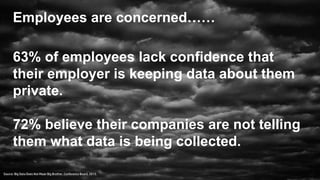
Employees are concerned……
63% of employees lack confidence that
their employer is keeping data about them
private.
72% believe their companies are not telling
them what data is being collected.
Source: Big Data Does Not Mean Big Brother, Conference Board, 2015.
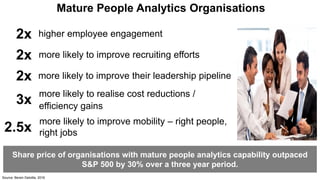
Mature People Analytics Organisations
Share price of organisations with mature people analytics capability outpaced
S&P 500 by 30% over a three year period.
Source: Bersin Deloitte, 2016
2x higher employee engagement
2x more likely to improve recruiting efforts
2x more likely to improve their leadership pipeline
3x
more likely to realise cost reductions /
efficiency gains
more likely to improve mobility – right people,
right jobs2.5x
susan.entwisle@hpe.com
@susanentwisle

People Analytics: Improving the Employee Experience and Productivity

  • 1.
    People Analytics: Improving employeeexperience and productivity Dr Susan Entwisle DXC.Technology Executive Director / Distinguished Technologist @susanentwisle
  • 2.
    Digital is rapidlytransforming our lives Home Life Work
  • 3.
    Exceptional customer experiences Descriptive NetworkAnalysis Classification Regression Time Series Clustering Associates Sequences Recommendations Scheduling Optimisation
  • 4.
    By 2020, morethan three-quarters of S&P 500 will be companies you have never heard of yet. New revenue streams Increase business efficiency Increase employee productivity
  • 5.
    40-70% of companyrevenue spent on payroll. Only 24% of Australians are engaged with their job. 60% are not engaged and 16% are actively disengaged. Actively disengaged workers account for more quality defects, safety incidents, higher rates of absenteeism and lower retention rates. Source: Gallup Study, 2014
  • 6.
    Human brain hastwo cognitive decision- making systems. Thinking Fast: System One (Default) Quick, automatic, emotional and intuitive. Subject to human cognitive biases. Thinking Slow: System Two Slow, conscious, deductive and logical. Deliberate effort required. Prone to analysis paralysis. Cognitive decision making Source: Thinking, Fast and Slow, Daniel Kahneman, 2013.
  • 7.
    Thinking fast cognitivebias Facial recognition - stereotypes Attractive People - Earn 3 – 4% more Focus on recent events First 10 seconds
  • 8.
    Right people intothe right jobs, make them engaged and productive, and get them to help us attract more customers and drive more revenue. Requires fundamental shift in leadership and culture. Nirvana might be perfect blend of domain experts, analytics and psychometrics. Using analytics to transform employee experience
  • 9.
  • 10.
    Bersin Talent AnalyticsMaturity Model Source: People Analytics: Where are we?, Bersin Deloitte, 2016
  • 11.
    People Analytics inAction Better Hiring Pre-employment screening Predictive model to identify candidates who are more likely to perform better and stay longer based on role requirements and cultural fit. Talent sources Identify metrics to determine what recruitment channels are best source of talent for roles. Higher Growth Employee engagement Identify key drivers for employee engagement and use to classify employees in groups. Customer satisfaction, sales and employee linkage Identify metrics of customer satisfaction, sale and employee engagement / traits that have strong linkages. Workforce planning Develop predictive models and run simulations to calculate future headcount requirements by business unit, which can be rolled up to company level. High performing teams Identify optimal reward structures, workspaces, work practices, team structures, and members that enable high-performance. Better Talent Mgt. Attrition prediction model Key drivers to attrition and employee attrition probability prediction, for proactive management. Top talent hunt Predictive model to help identify top talent in company. Identify optimal role(s) Predictive model to identify optimal roles types within the company for a candidate. Diversity and inclusion Identify metrics to gain insights into business outcomes from diversity and inclusion programs. Safety and wellness Use wearables, social, gamification and analytics on health to promote employee safety and wellness. Improve Learning Key factors improving learning outcomes Identification of key factors that drive improved learning outcomes. Training forecasting Develop predictive models and run simulations to determine training requirements based on workforce planning inputs. Adaptive learning Deliver training using methods and at pace that is tailored based on students individual demonstrated learning style. Improve Operations Automate employee lifecycle Identify tasks that can be automated or performed by digital assistance / chatbot. HR call centre Identify in real-time most common HR queries to improve HR call centre operations. Asset usage Develop methods and models to monitor employee behavior to detect misuse of assets / fraud. Extend and connect across entire business
  • 12.
    Smart talent sourcingand development 46% companies are sometimes or frequently understaffed. Impacts customer experience. Time to hire has more than doubled in last 5 years. 68 days on average to hire in Australia. $4,000 average cost to hire in US. Source: LiveHire Investor Presentation, 2016
  • 13.
    Detect and manageemployee flight risk Understand drivers and better manage attrition across HPE HP 300,000+ employees. Flag employees that are high-flight risk. Identify actions to be suggested to managers. •Pilot across sales team ~300 FTE. Attrition decreased 5% to 15%. •Implementation across HR, engineering and ‘high-rated’ populations. •Estimate business impact from better planning. •Evolve analytical model using logistic regression. •Test model accuracy using out of sample and out of time data. 78% accuracy. •Employee level information including salary, age, role, career progression, bonus, etc. •Confidentially maintained through usage of masked ids. 3. Insights2. Model1. Data Identified savings of $300 M associated with 1% reduction in attrition and related improvement in productivity and replacement costs
  • 14.
    Identify top talentto grow Identify top talent from within HPE executives Understand characteristics of top talent at HPE. Identify executives with these characteristics. •Review model periodically, based on new data points available. •Scoring (e.g. logistic regression / classification) model using current talent pool. •Predict potential leaders from executive base. •Key data across performance (e.g. rating, role, promotion) and talent (e.g. leadership skills, market calibration). •Data clean-up and test. 3. Evolve2. Model1. Data Model expected to help improve succession planning across HPE.
  • 15.
    Fatigue management tokeep workers safe Smartcap uses EEG to measure brainwaves to detect and alert when driver is fatigued. Alerts driver when at risk of a micro sleep. Reports on fatigue patterns for individuals and across organisational units. Use insights to adjust work policies and practices to prevent fatigue. Source: Smartcap - http://www.smartcaptech.com, 2017
  • 16.
    Intelligent ‘bot’ assistantat work Cortana, Siri and other general personal assistants. Talla supports recruitment process and answers HR queries. Mila used at Overstock to automate employee scheduling when team member calls in sick. Jane responds to HR queries in real-time. Jane also learns and improves over time. IBM Chip automates on-boarding process and is “one- stop shop” for HR program and policy information. Imagine a future where every worker has a virtual assistant to help them do their job
  • 17.
    Social analytics toimprove interactions at work Team work and engagement: what are the communication patterns between staff? Space planning: where do staff spend most time? What layout best supports collaboration? Process improvement: evaluate how process changes alter team collaboration and cohesiveness. Source: Humanyze - https://www.humanyze.com, 2017
  • 18.
  • 19.
    Big Data Challenges Volume,Variety, Velocity and Veracity Skills and capabilities Data sources and integration Infrastructure Risk and governance issues – security, privacy and data quality Funding for initiatives
  • 20.
    Employees are concerned…… 63%of employees lack confidence that their employer is keeping data about them private. 72% believe their companies are not telling them what data is being collected. Source: Big Data Does Not Mean Big Brother, Conference Board, 2015.
  • 21.
    Mature People AnalyticsOrganisations Share price of organisations with mature people analytics capability outpaced S&P 500 by 30% over a three year period. Source: Bersin Deloitte, 2016 2x higher employee engagement 2x more likely to improve recruiting efforts 2x more likely to improve their leadership pipeline 3x more likely to realise cost reductions / efficiency gains more likely to improve mobility – right people, right jobs2.5x
  • 23.