HOW TO WRITE
EFFECTIVELY
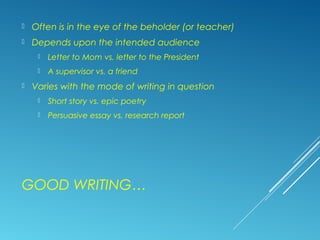
GOOD WRITING…
 Often is in the eye of the beholder (or teacher)
 Depends upon the intended audience
 Letter to Mom vs. letter to the President
 A supervisor vs. a friend
 Varies with the mode of writing in question
 Short story vs. epic poetry
 Persuasive essay vs. research report
In short: There are as
many definitions of
“good” writing as there
are forms of writing
 Fortunately, there are some common general
characteristics that all good writing shares.
 The traits (in order of relevance):
 Ideas
 Organization
 Voice
 Sentence Fluency
 Word Choice
 Conventions
 Presentation
IDEAS
 The focal point of writing –
why read if the work has
nothing to say?
 Not necessarily something
earth-shatteringly original
(though originality is good)
 Consistency of ideas also
important – everything said
should contribute to the
overarching idea or theme
of the work
ORGANIZATION
 Content should
“flow” in a logical
manner
 Structured
conversation, not
rambling
 Manner of
organization should
contribute to the
overall aim of the
work
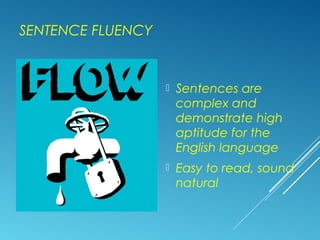
WHAT IS “FLOW”?
 English types like metaphors, and writing terms
are no exception
 In basic terms, flow is a logical, sequential
progression of ideas (i.e. getting from point A to
point B smoothly)
 Writing that flows well doesn’t have to sound
pretty, but it can.
VOICE
 Writing style
 Distinguishes an author’s
work from everyone else’s
 Bland, third-person
detached writing lacks a
solid voice
 Active, verb-driven
writing is more interesting
and clear
 Example:
 “When one must write an essay for College English,
one must always take care to use appropriate
punctuation and spelling.”
 “Essays should give you an idea of what’s
important to you, and that importance should be
reflected in the attention given to mechanics.”
SENTENCE FLUENCY
 Sentences are
complex and
demonstrate high
aptitude for the
English language
 Easy to read, sound
natural
WORD CHOICE
 A variety of words are used
 Words are appropriate to the context of the
work
 Challenging words based on writer’s level of
ability
 Words “move” the reader based on the authorial
purpose (i.e. forceful words in a persuasive essay,
etc.)
CONVENTIONS
 Writing follows
proper conventions
of language
 Spelling
 Grammar
 Punctuation
 Appropriateness of
conventions
depends on
audience and
authorial purpose
PRESENTATION
 The work must be easy on the eyes in order to be
consumed
 The reader should understand how sections are linked
together, and what topics are “nested” within what others
 Follow formatting guidelines of publication or instructor
 Looks aren’t everything, but they are important
HOW TO DEVELOP YOUR
WRITING
 Read a lot, and read widely
 Consume writing by a variety of authors in a
variety of different fields and styles
 Determine what “works” – what kinds of writing
do you like and find engaging?
 Notice what doesn’t work – what makes you
bored or confused?
 When you encounter bad writing, practice fixing
it. How could you rework a sentence, or
reorganize an essay to help its point shine
through?

What makes good writing

  • 1.
  • 2.
    GOOD WRITING…  Oftenis in the eye of the beholder (or teacher)  Depends upon the intended audience  Letter to Mom vs. letter to the President  A supervisor vs. a friend  Varies with the mode of writing in question  Short story vs. epic poetry  Persuasive essay vs. research report
  • 3.
    In short: Thereare as many definitions of “good” writing as there are forms of writing
  • 4.
     Fortunately, thereare some common general characteristics that all good writing shares.
  • 5.
     The traits(in order of relevance):  Ideas  Organization  Voice  Sentence Fluency  Word Choice  Conventions  Presentation
  • 6.
    IDEAS  The focalpoint of writing – why read if the work has nothing to say?  Not necessarily something earth-shatteringly original (though originality is good)  Consistency of ideas also important – everything said should contribute to the overarching idea or theme of the work
  • 7.
    ORGANIZATION  Content should “flow”in a logical manner  Structured conversation, not rambling  Manner of organization should contribute to the overall aim of the work
  • 8.
    WHAT IS “FLOW”? English types like metaphors, and writing terms are no exception  In basic terms, flow is a logical, sequential progression of ideas (i.e. getting from point A to point B smoothly)  Writing that flows well doesn’t have to sound pretty, but it can.
  • 9.
    VOICE  Writing style Distinguishes an author’s work from everyone else’s  Bland, third-person detached writing lacks a solid voice  Active, verb-driven writing is more interesting and clear
  • 10.
     Example:  “Whenone must write an essay for College English, one must always take care to use appropriate punctuation and spelling.”  “Essays should give you an idea of what’s important to you, and that importance should be reflected in the attention given to mechanics.”
  • 11.
    SENTENCE FLUENCY  Sentencesare complex and demonstrate high aptitude for the English language  Easy to read, sound natural
  • 12.
    WORD CHOICE  Avariety of words are used  Words are appropriate to the context of the work  Challenging words based on writer’s level of ability  Words “move” the reader based on the authorial purpose (i.e. forceful words in a persuasive essay, etc.)
  • 13.
    CONVENTIONS  Writing follows properconventions of language  Spelling  Grammar  Punctuation  Appropriateness of conventions depends on audience and authorial purpose
  • 14.
    PRESENTATION  The workmust be easy on the eyes in order to be consumed  The reader should understand how sections are linked together, and what topics are “nested” within what others  Follow formatting guidelines of publication or instructor  Looks aren’t everything, but they are important
  • 15.
    HOW TO DEVELOPYOUR WRITING  Read a lot, and read widely  Consume writing by a variety of authors in a variety of different fields and styles  Determine what “works” – what kinds of writing do you like and find engaging?  Notice what doesn’t work – what makes you bored or confused?  When you encounter bad writing, practice fixing it. How could you rework a sentence, or reorganize an essay to help its point shine through?