Graphic design uses visual communication in logos, graphics, publications and other visual media to convey messages effectively. It gives order to information and expression to ideas. Graphic design involves considering layout, typography, color and other visual elements to best communicate to the intended audience. The field has evolved with new technologies, and graphic designers today need strong creative skills along with the ability to work digitally to meet industry demands.
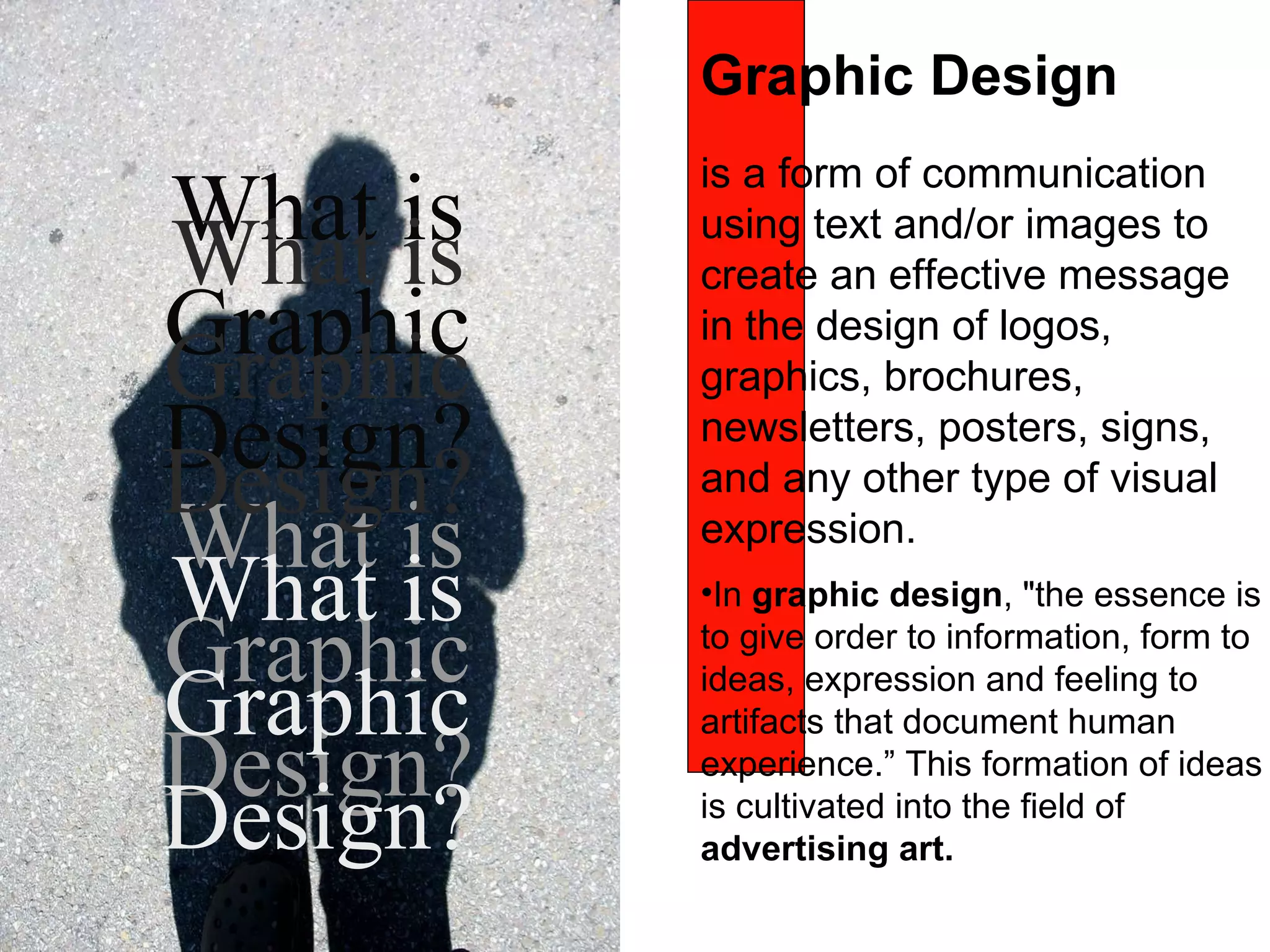
is a formof communication using text and/or images to create an effective message in the design of logos, graphics, brochures, newsletters, posters, signs, and any other type of visual expression . In graphic design , "the essence is to give order to information, form to ideas, expression and feeling to artifacts that document human experience.” This formation of ideas is cultivated into the field of advertising art. What is Graphic Design? What is Graphic Design? What is Graphic Design? What is Graphic Design? Graphic Design
2.
graphic arts GrApHiCdEsIgN VS. graphic arts Graphic Arts – “ Arts represented by drawing or imposing on a flat surface an image that communicates a message ; (PRINT MAKING) Graphic Design- The word “graphic” literally means, “of writing” but the term graphic design “ includes an arrangement of works, shapes, or images or a combination thereof.” Secondly, all graphic design has a purpose or a function .” ..to sell something, the intention to say something, to inform and influence your choices and your actions.
3.
Ways of SeeingPerception- interpret our unique experience of the world through our five senses (memory and sensation) Visualization – a journey we can follow in our minds through mental images Imagination - the ability to see images in the form of dreams, fantasies, fairy tales and or ideas.
4.
Creativity 5 ForcesBehind Creativity 1- Inspiration : is that creative fire which offers light, energy and a source of excitement 2- Motivation : is the immobilizing energy which moves you to reach a desired goal 3- Frustration : a feeling of disorganization which can be positively refocused into a creative solution 4- Intuition: an immediate sensation of an answer, a feeling or a direction (hunch) 5- Curiosity: is an eagerness to question further, and to explore beyond the initial idea
5.
the machines anddevices that make our lives more efficient are ever increasing. we need to teach technology and how to use it effectively. Teenagers today are well versed in cell phone use, text messaging, myspace, wiki and internet blogging, to name a few. Why Teach Graphic Design:
6.
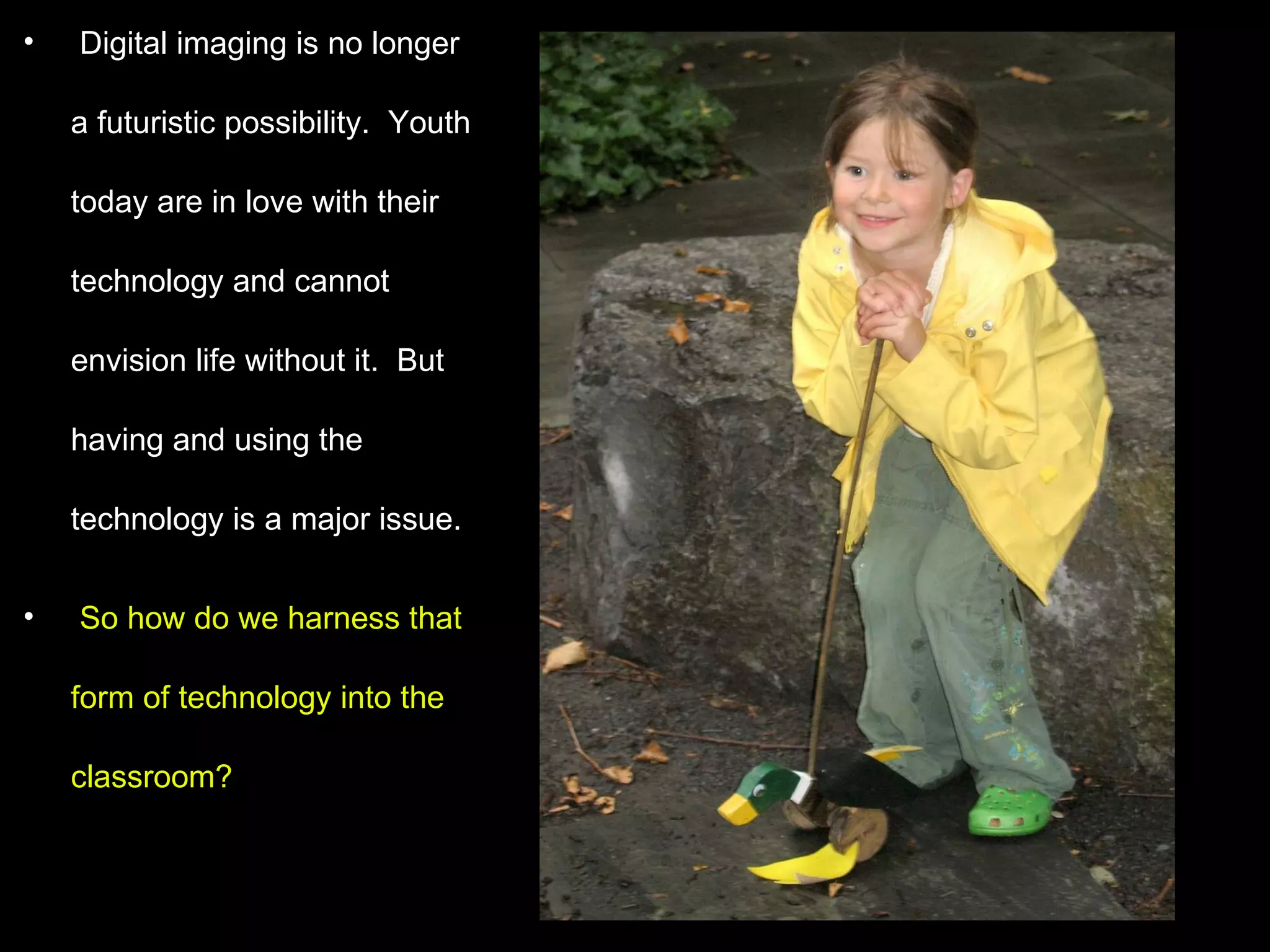
Digital imaging isno longer a futuristic possibility. Youth today are in love with their technology and cannot envision life without it. But having and using the technology is a major issue. So how do we harness that form of technology into the classroom?
7.
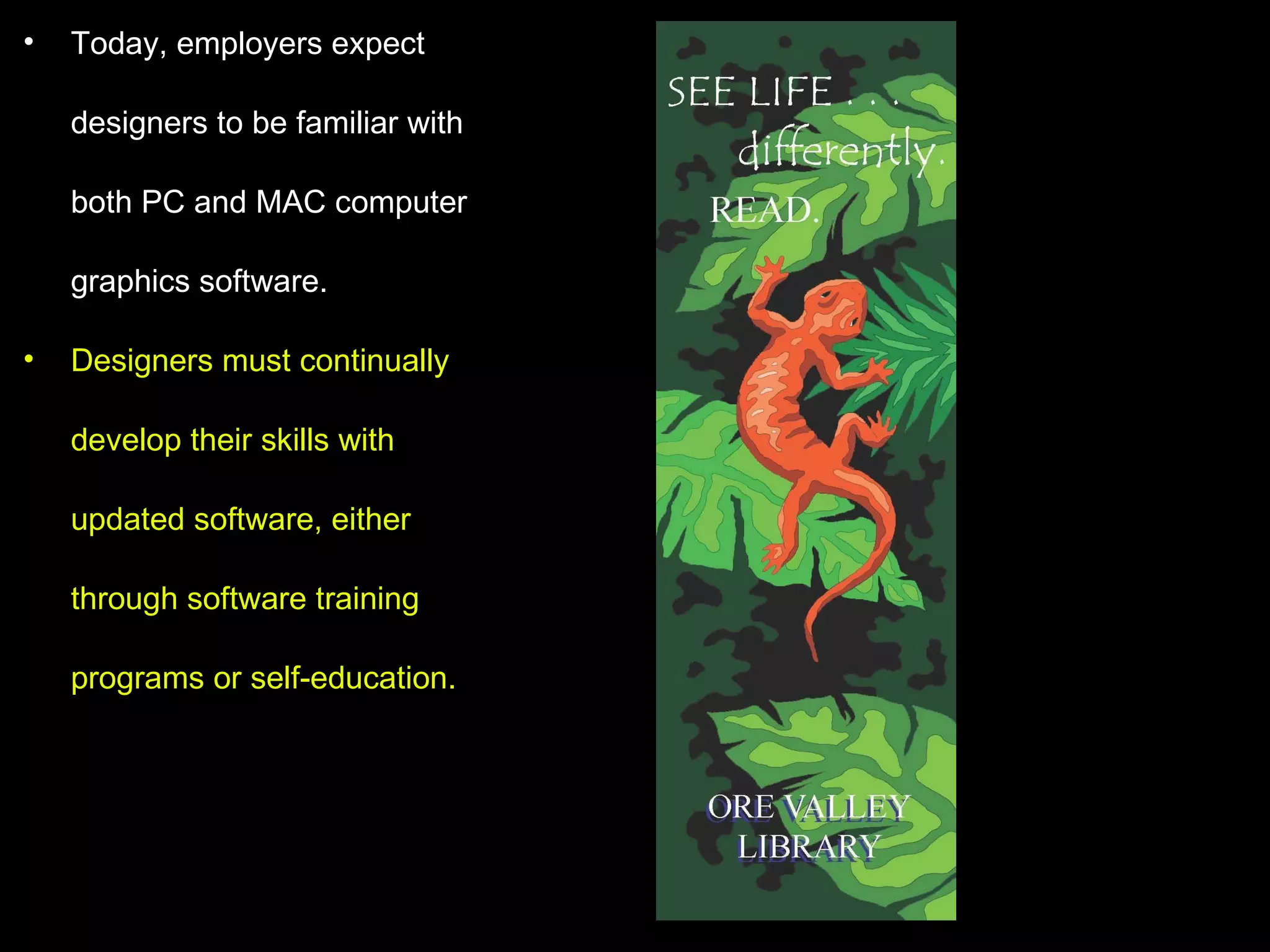
Today, employers expectdesigners to be familiar with both PC and MAC computer graphics software. Designers must continually develop their skills with updated software, either through software training programs or self-education.
8.
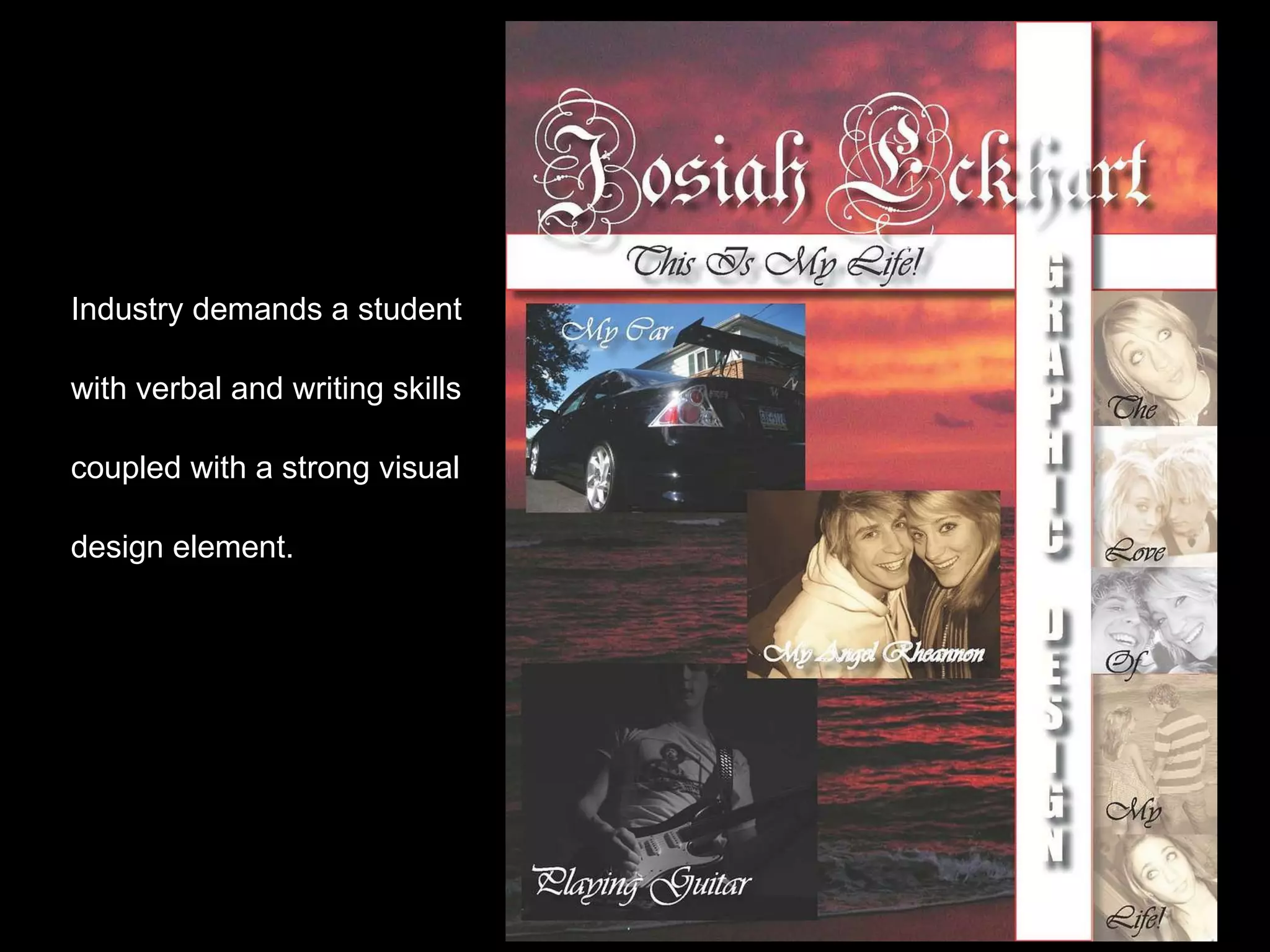
Industry demands astudent with verbal and writing skills coupled with a strong visual design element.
9.
Graphic designers mustbe creative and able to communicate their ideas quickly and effectively. Designers need to be well read, open to new ideas and influences, and quick to react to changing trends. Problem-solving skills, paying attention to detail, the ability to work independently
10.
People in thisfield need self-discipline to start projects, budget time, and to meet deadlines/production schedules. Good business sense and sales ability are also important, especially for those who freelance or run their own business.
11.
W hat do Graphic Designers do? plan analyze create visual solutions to communication problems. Decide the most effective way of getting a message across in print, electronic, and film media using a variety of methods such as color, type, illustration, photography, animation, and various print and layout techniques. Develop the overall layout and production design of magazines, newspapers, journals, corporate reports, and other publications. Produce promotional displays, packaging, and marketing brochures for products and services, design distinctive logos for products and businesses, and develop signs and signage systems—called environmental graphics-for business and government. Develop material for Internet Web pages, interactive media, and multimedia projects. Produce the credits that appear before and after television programs and movies.
12.
Graphic Design Careers: Creative / Art Director: Art directors, or creative directors are in charge of a creative team that produces artwork to be displayed in magazines, on television, on billboards, on the web, or on products. Layout Artist: A layout artist deals with the structure and layout out of images and text in a pleasing format for printed media. Brand Identity Design: Brand identity design is concerned with the visual aspects of a company or organization’s brand or identity. Logo Designer: A logo is a sketched or graphically designed symbol, set in a specific typeface or font, and arranged in a unique way, with distinct colors, shapes, and designs to represent a company, product, organization, agency, or service.... Flash Designer: Flash is the newest and trendiest technology currently used in web design. Illustrator: Illustrators conceptualize and create illustrations that represent an idea or a story through two-dimensional or three-dimensional images. Technical Illustrator: Technical Illustrators conceptualize and create three-dimensional images, storyboard sketches, and moving illustrations for animated productions, television commercials, movies, computer games, or set and exhibit designs.
13.
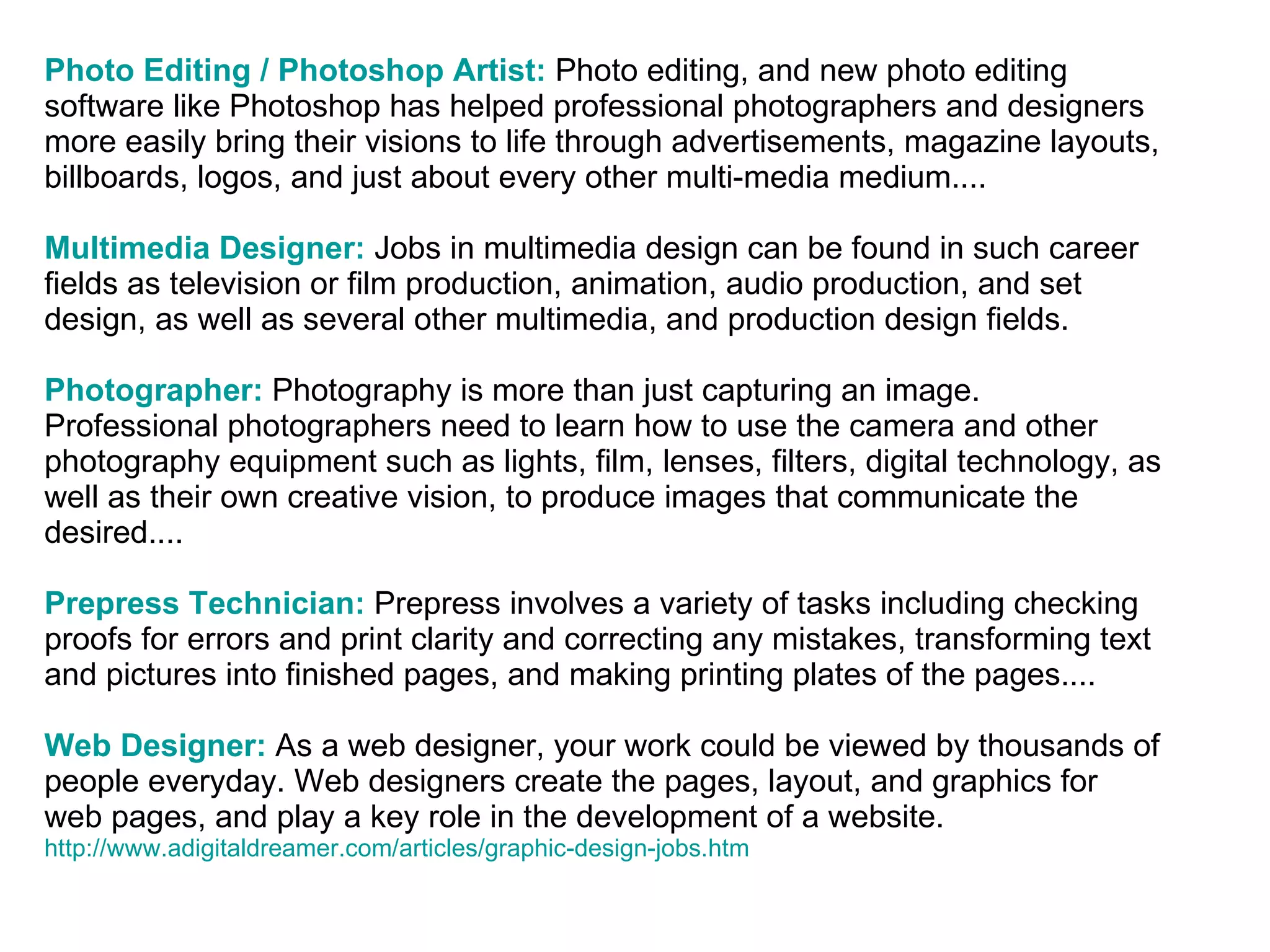
Photo Editing /Photoshop Artist: Photo editing, and new photo editing software like Photoshop has helped professional photographers and designers more easily bring their visions to life through advertisements, magazine layouts, billboards, logos, and just about every other multi-media medium.... Multimedia Designer: Jobs in multimedia design can be found in such career fields as television or film production, animation, audio production, and set design, as well as several other multimedia, and production design fields. Photographer: Photography is more than just capturing an image. Professional photographers need to learn how to use the camera and other photography equipment such as lights, film, lenses, filters, digital technology, as well as their own creative vision, to produce images that communicate the desired.... Prepress Technician: Prepress involves a variety of tasks including checking proofs for errors and print clarity and correcting any mistakes, transforming text and pictures into finished pages, and making printing plates of the pages.... Web Designer: As a web designer, your work could be viewed by thousands of people everyday. Web designers create the pages, layout, and graphics for web pages, and play a key role in the development of a website. http://www.adigitaldreamer.com/articles/graphic-design-jobs.htm
14.
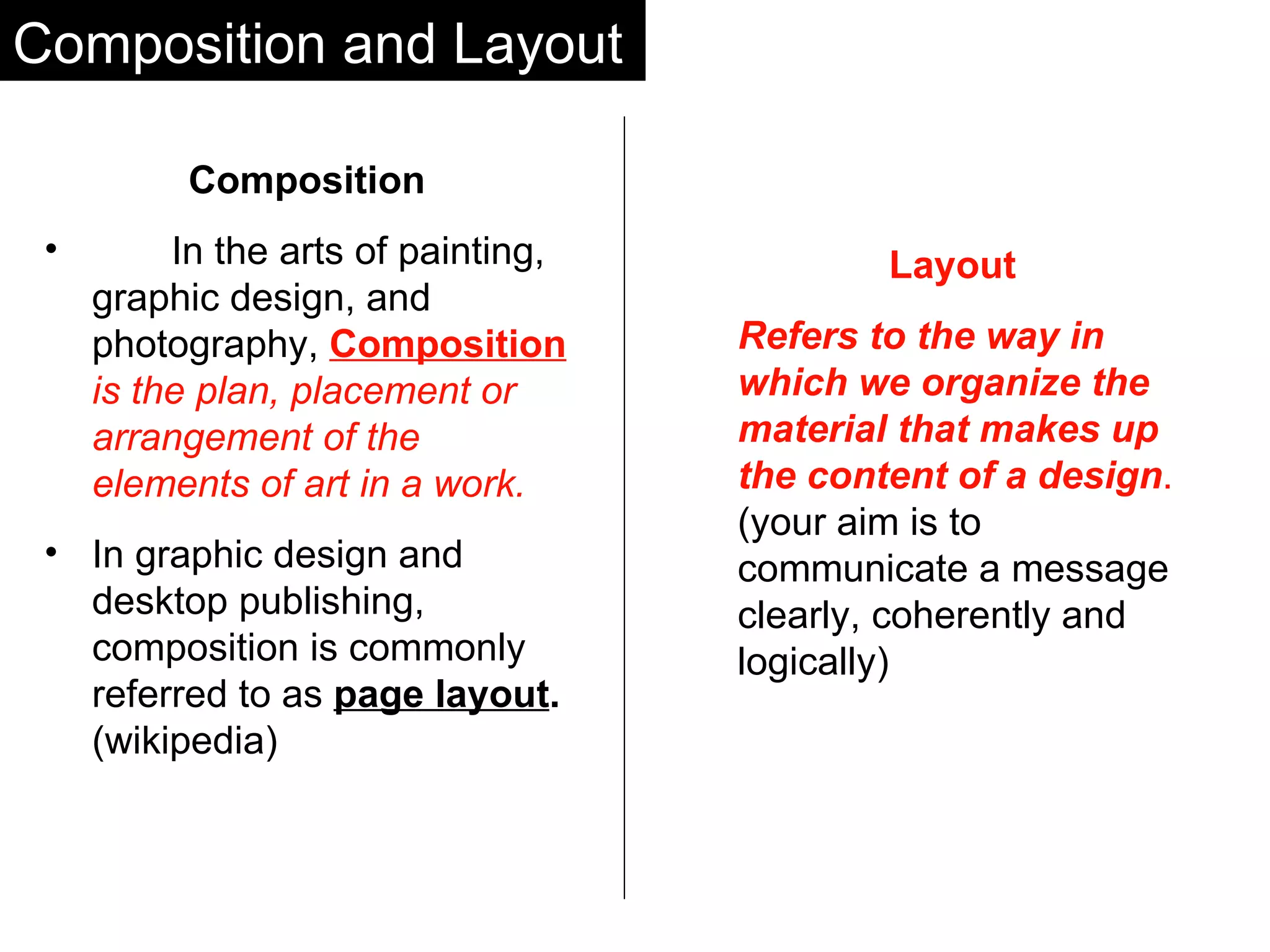
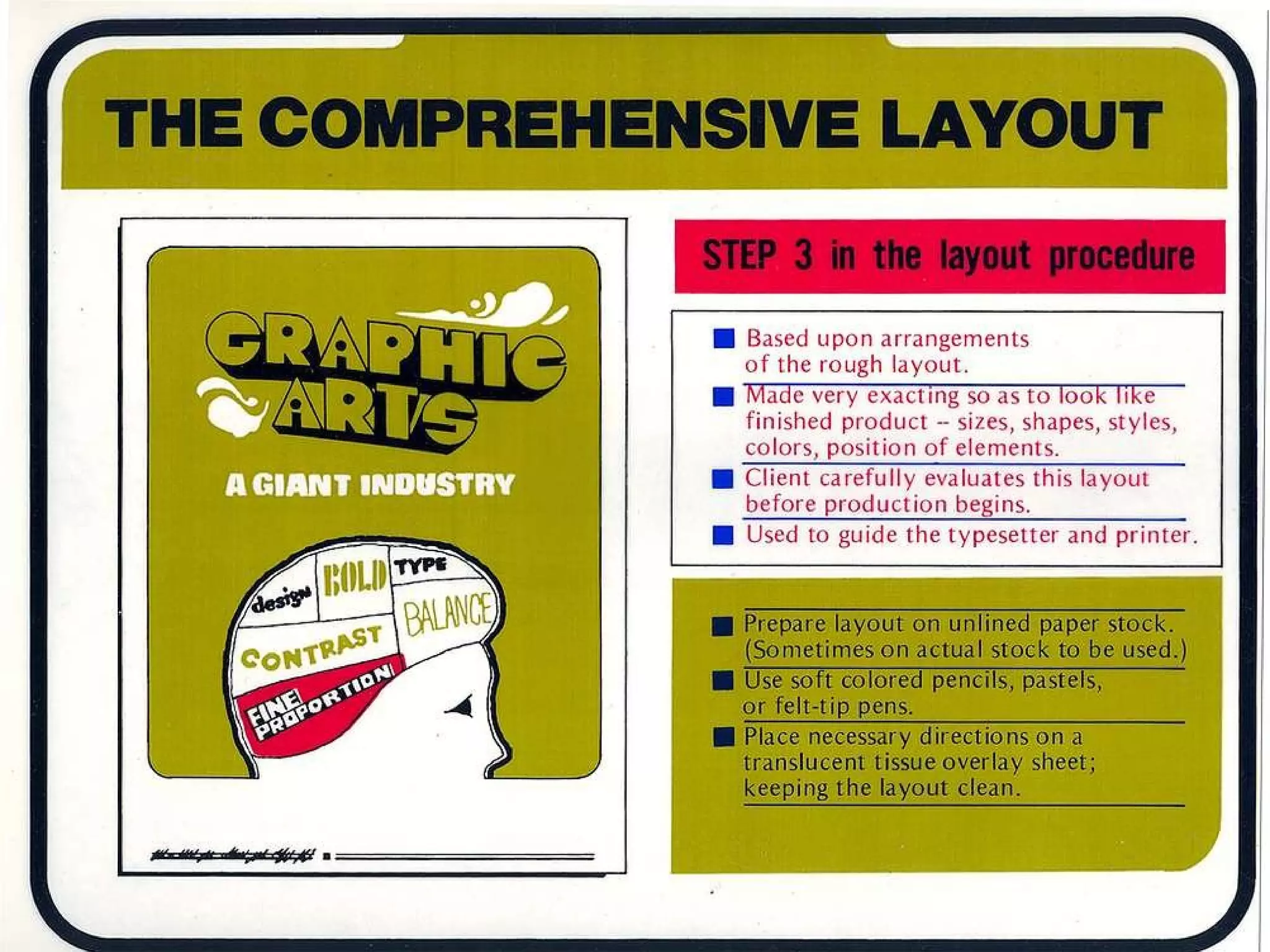
Composition and LayoutComposition In the arts of painting, graphic design, and photography, Composition is the plan, placement or arrangement of the elements of art in a work. In graphic design and desktop publishing, composition is commonly referred to as page layout . (wikipedia) Layout Refers to the way in which we organize the material that makes up the content of a design . (your aim is to communicate a message clearly, coherently and logically)
15.
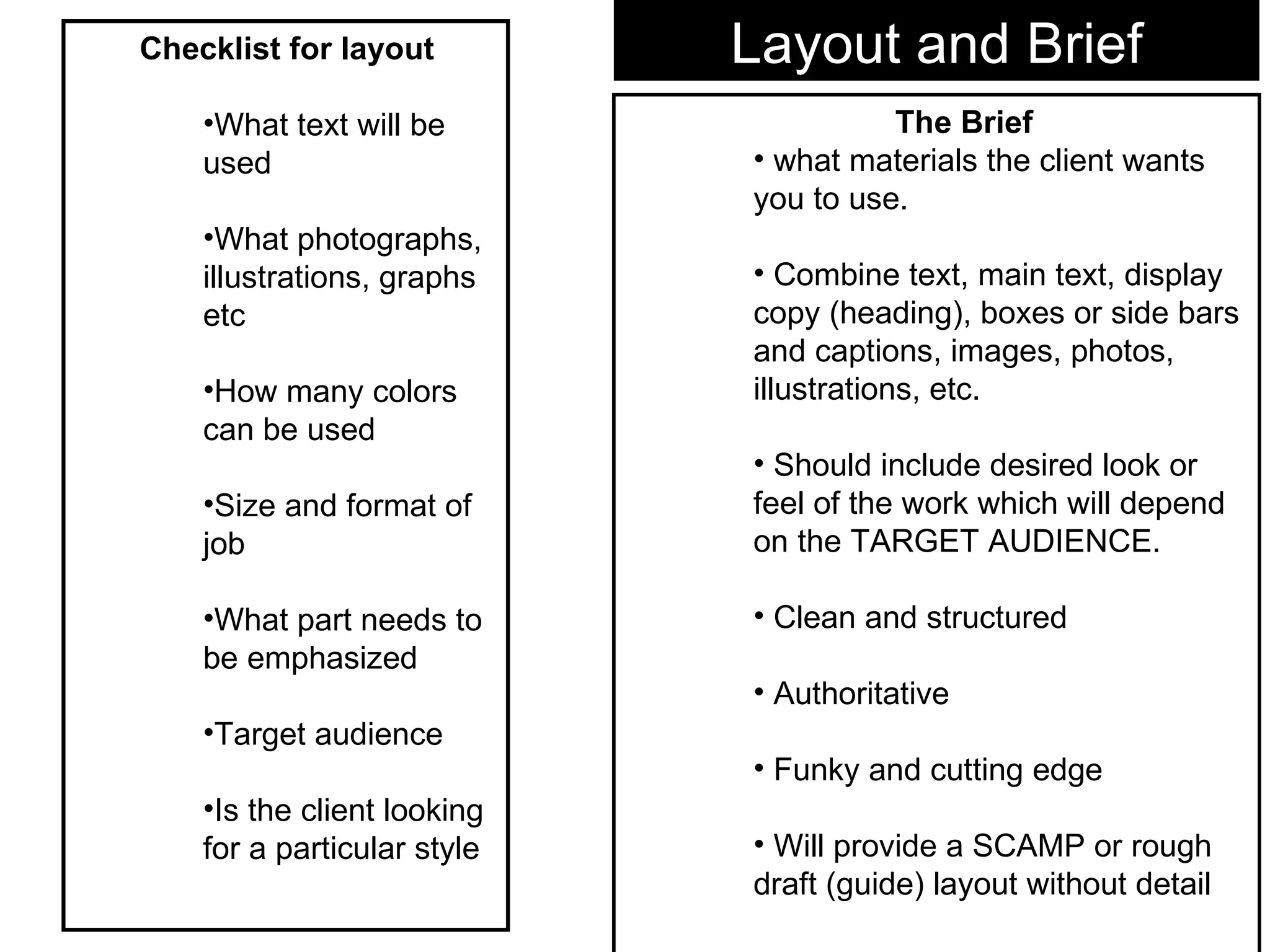
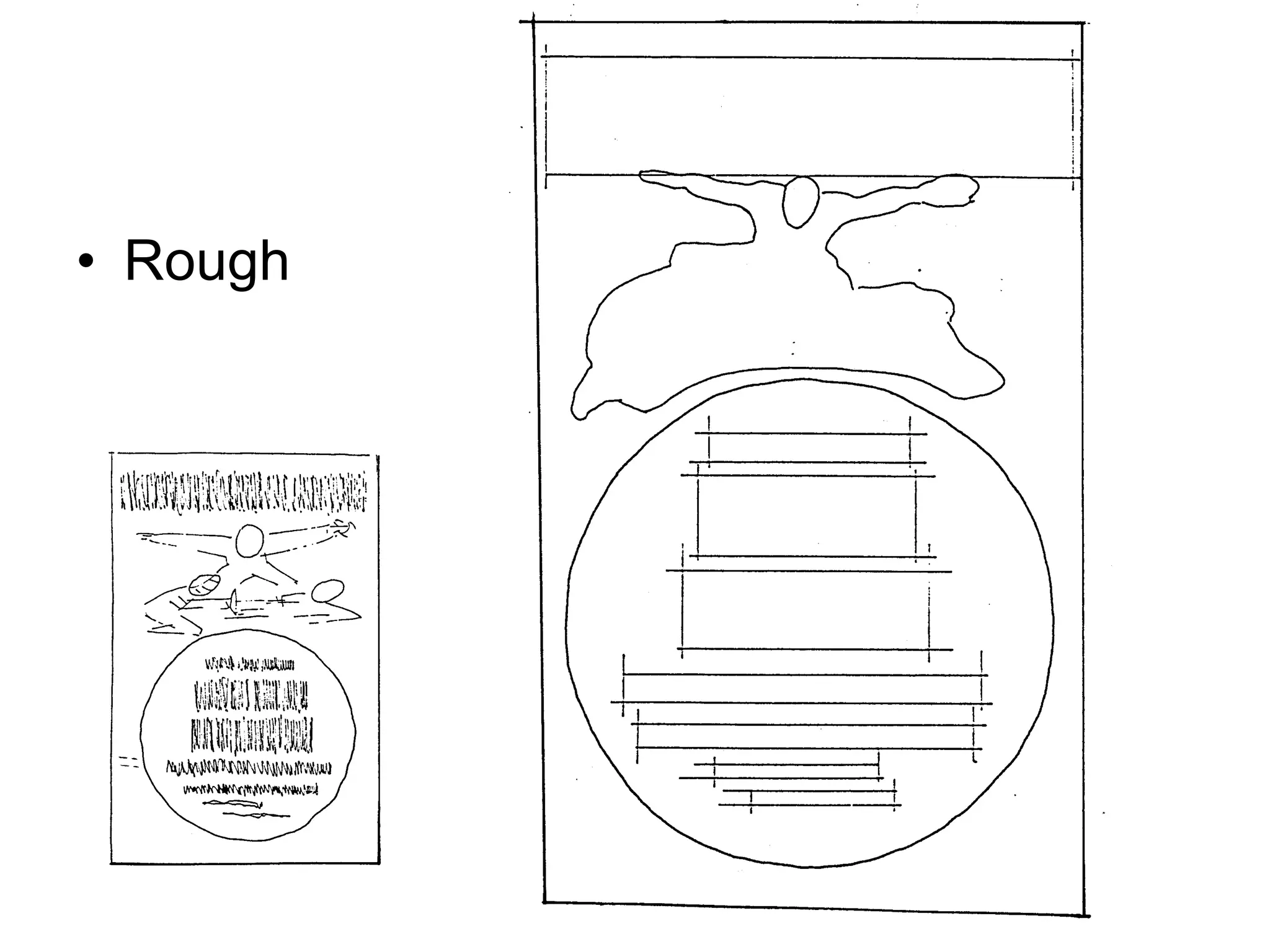
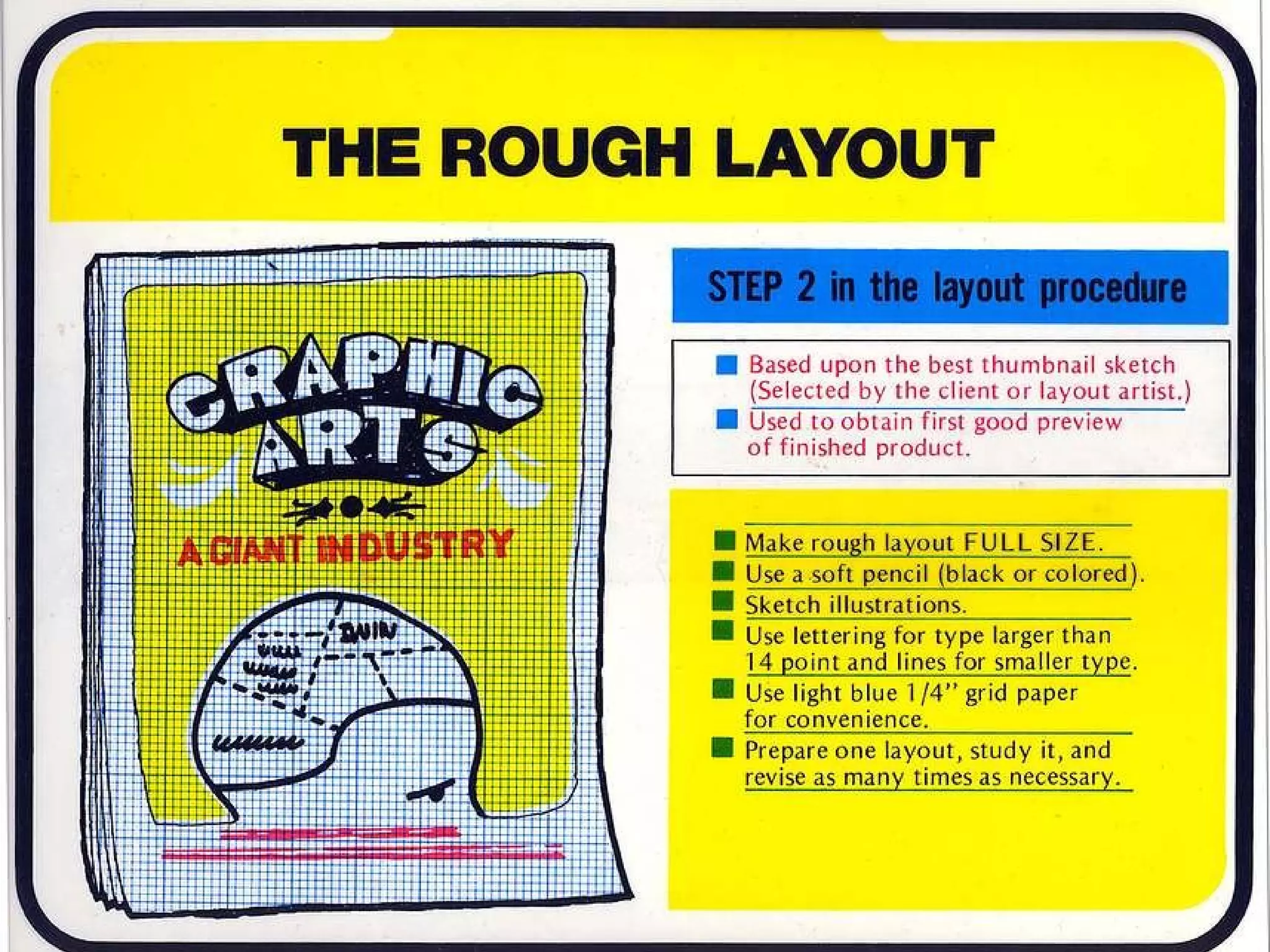
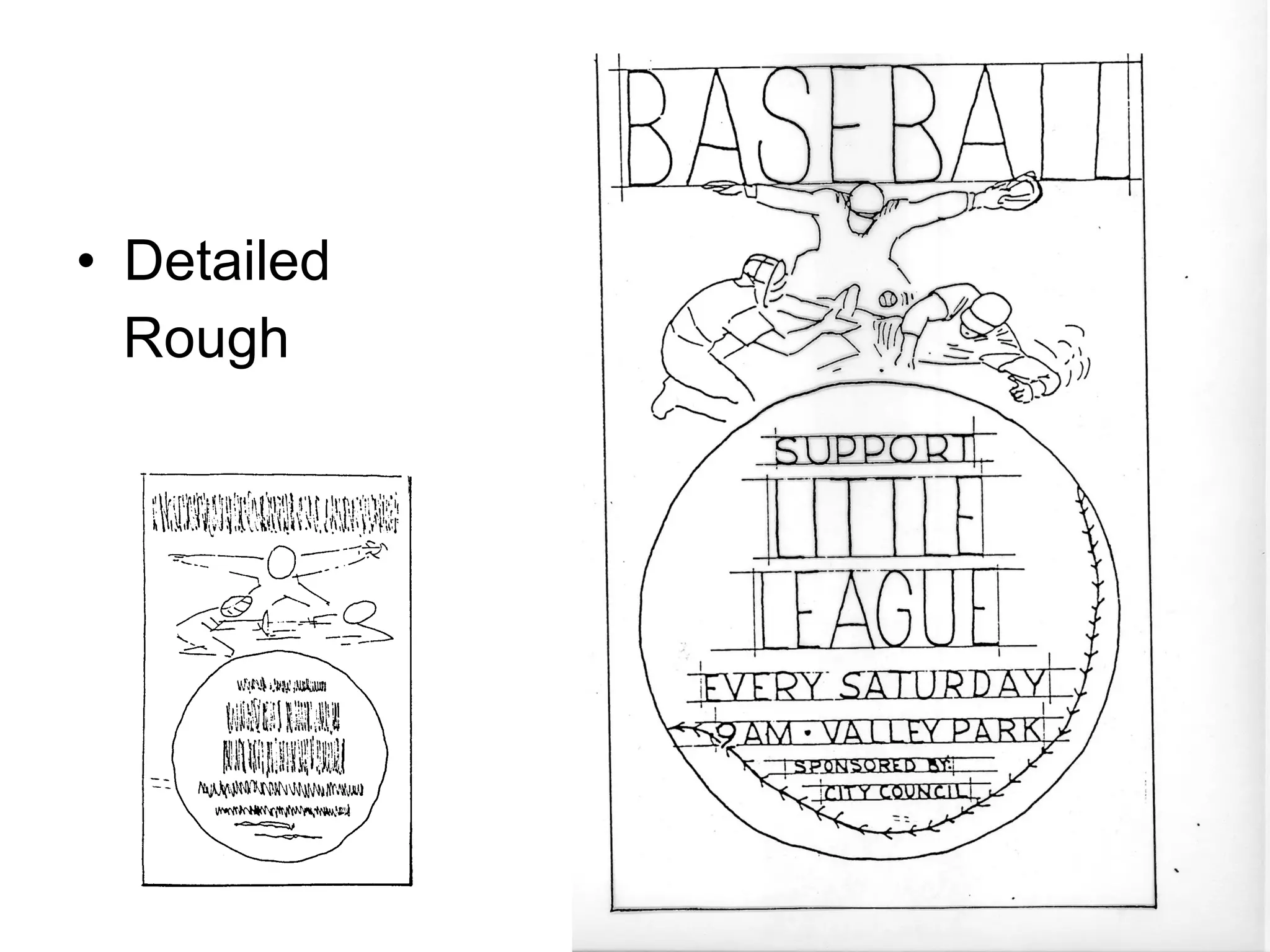
Layout and BriefChecklist for layout What text will be used What photographs, illustrations, graphs etc How many colors can be used Size and format of job What part needs to be emphasized Target audience Is the client looking for a particular style The Brief what materials the client wants you to use. Combine text, main text, display copy (heading), boxes or side bars and captions, images, photos, illustrations, etc. Should include desired look or feel of the work which will depend on the TARGET AUDIENCE. Clean and structured Authoritative Funky and cutting edge Will provide a SCAMP or rough draft (guide) layout without detail
16.
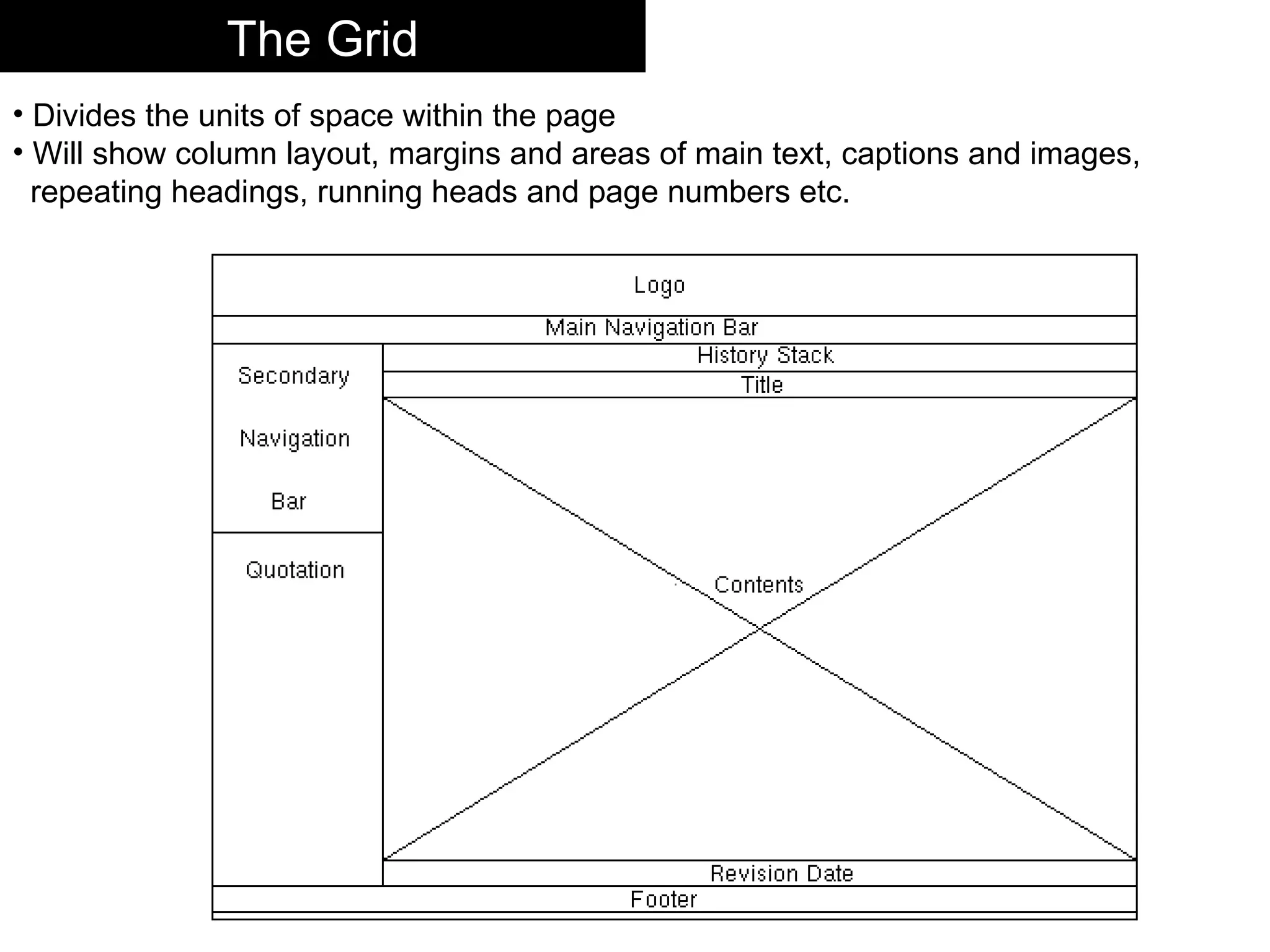
Divides the unitsof space within the page Will show column layout, margins and areas of main text, captions and images, repeating headings, running heads and page numbers etc. The Grid
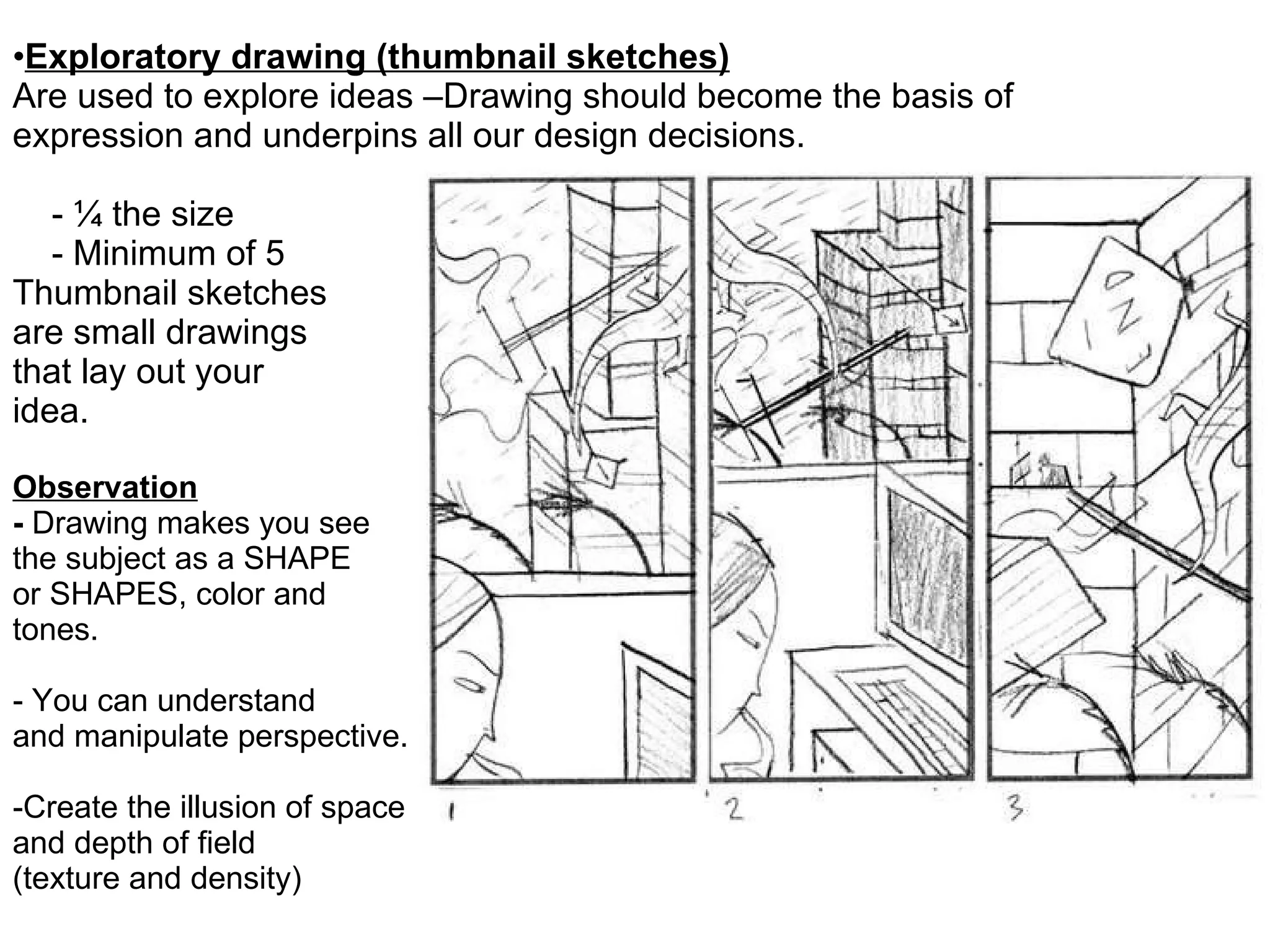
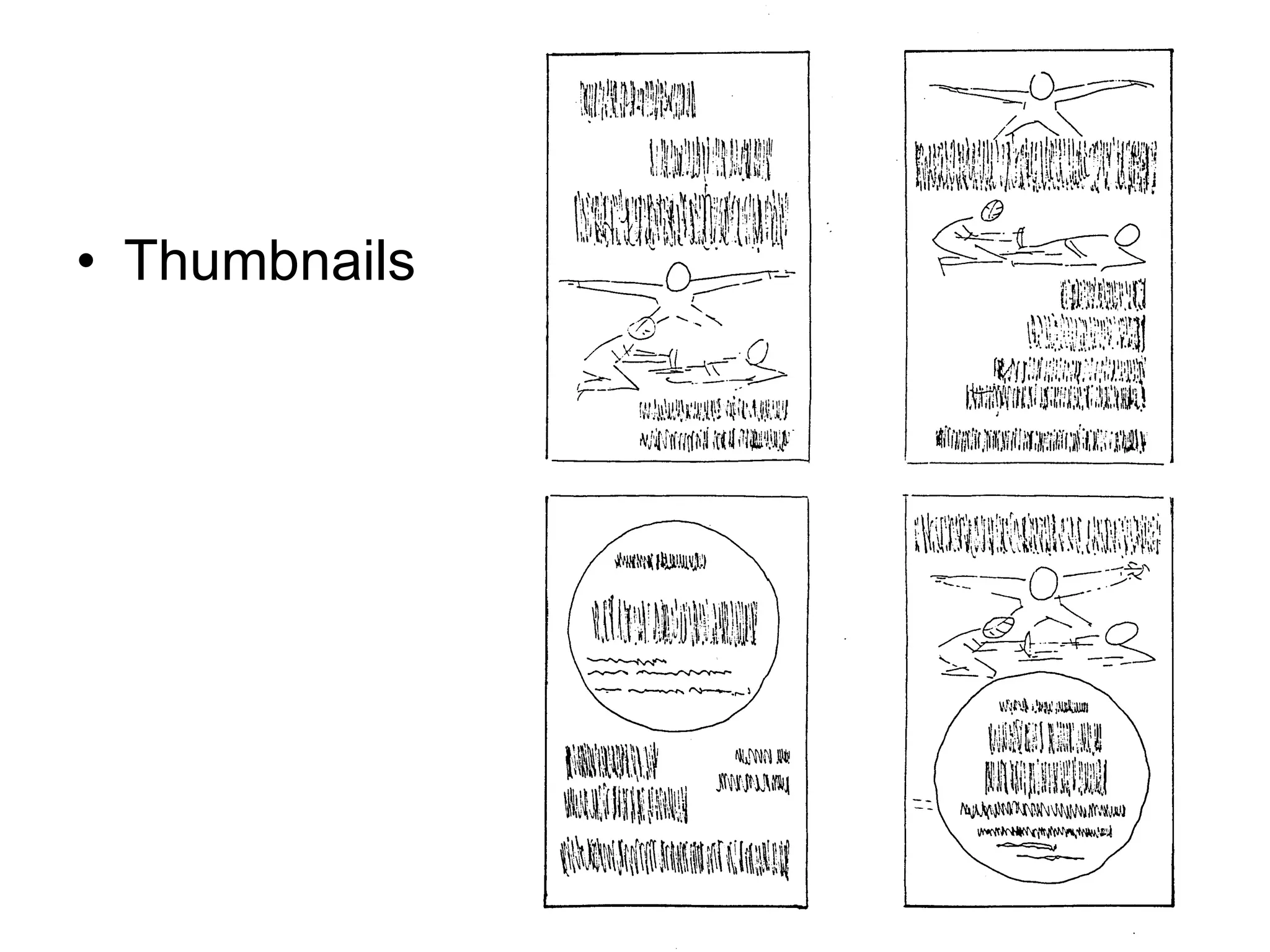
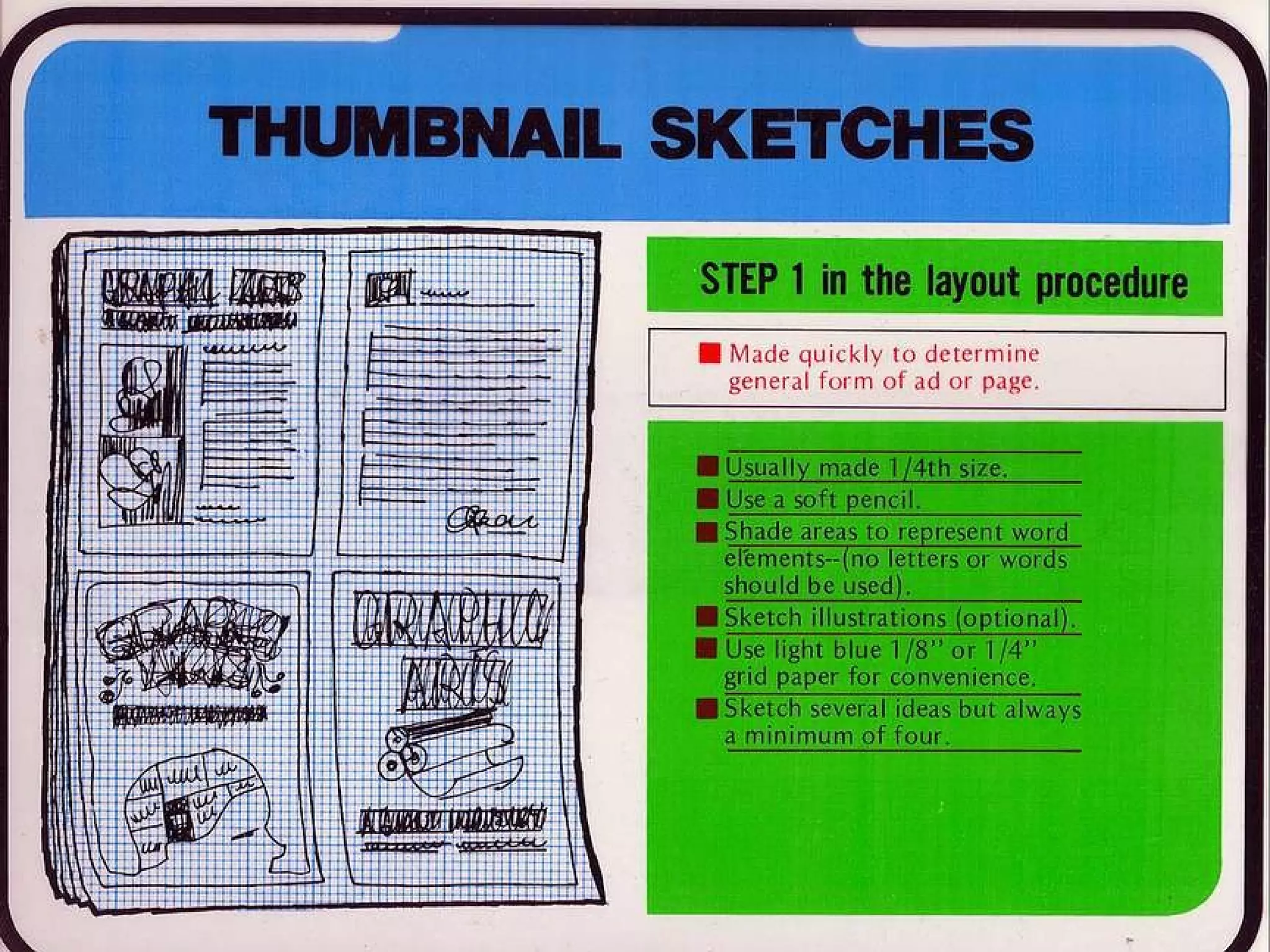
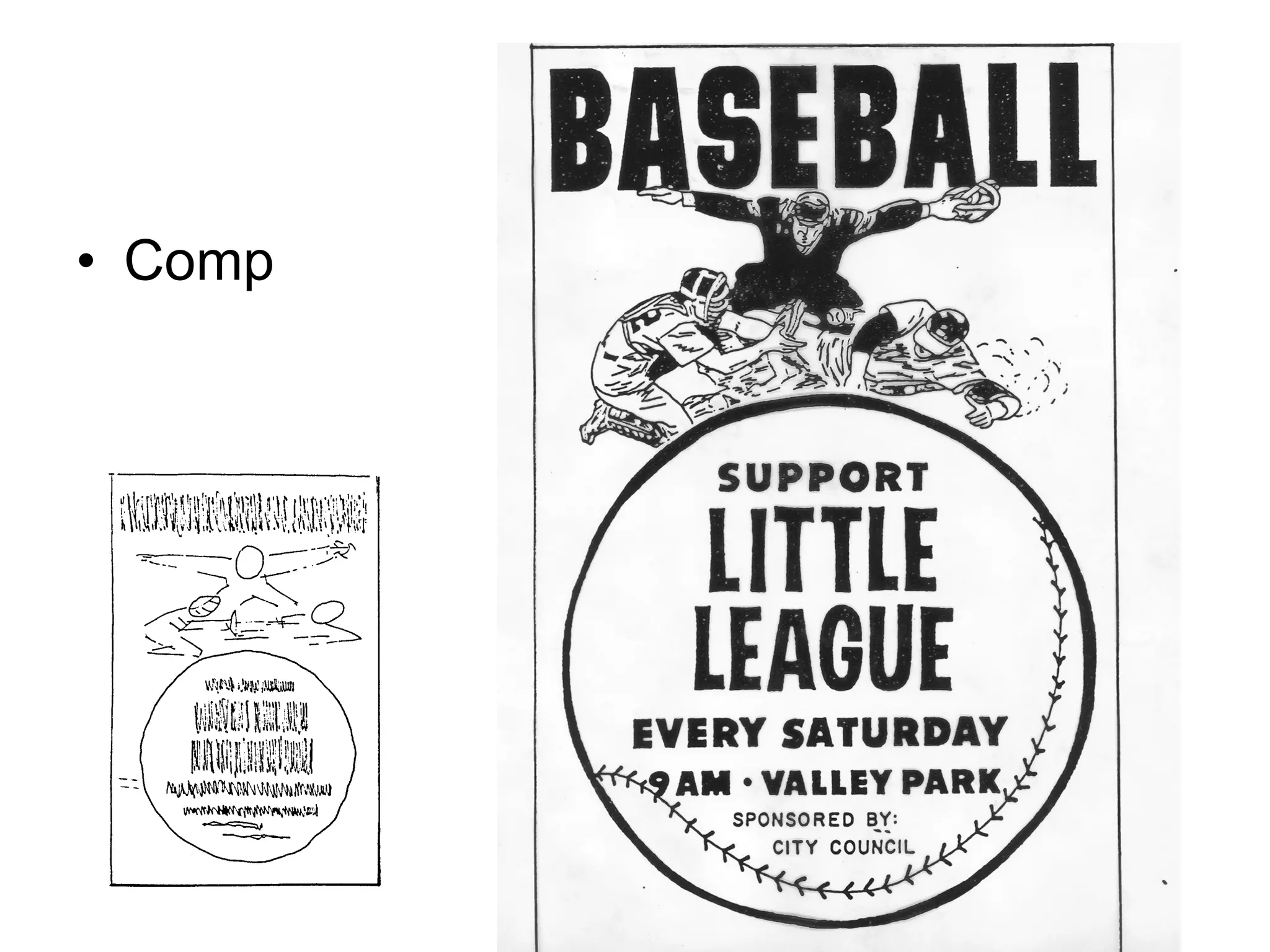
Exploratory drawing (thumbnailsketches) Are used to explore ideas –Drawing should become the basis of expression and underpins all our design decisions. - ¼ the size - Minimum of 5 Thumbnail sketches are small drawings that lay out your idea. Observation - Drawing makes you see the subject as a SHAPE or SHAPES, color and tones. - You can understand and manipulate perspective. -Create the illusion of space and depth of field (texture and density)
19.
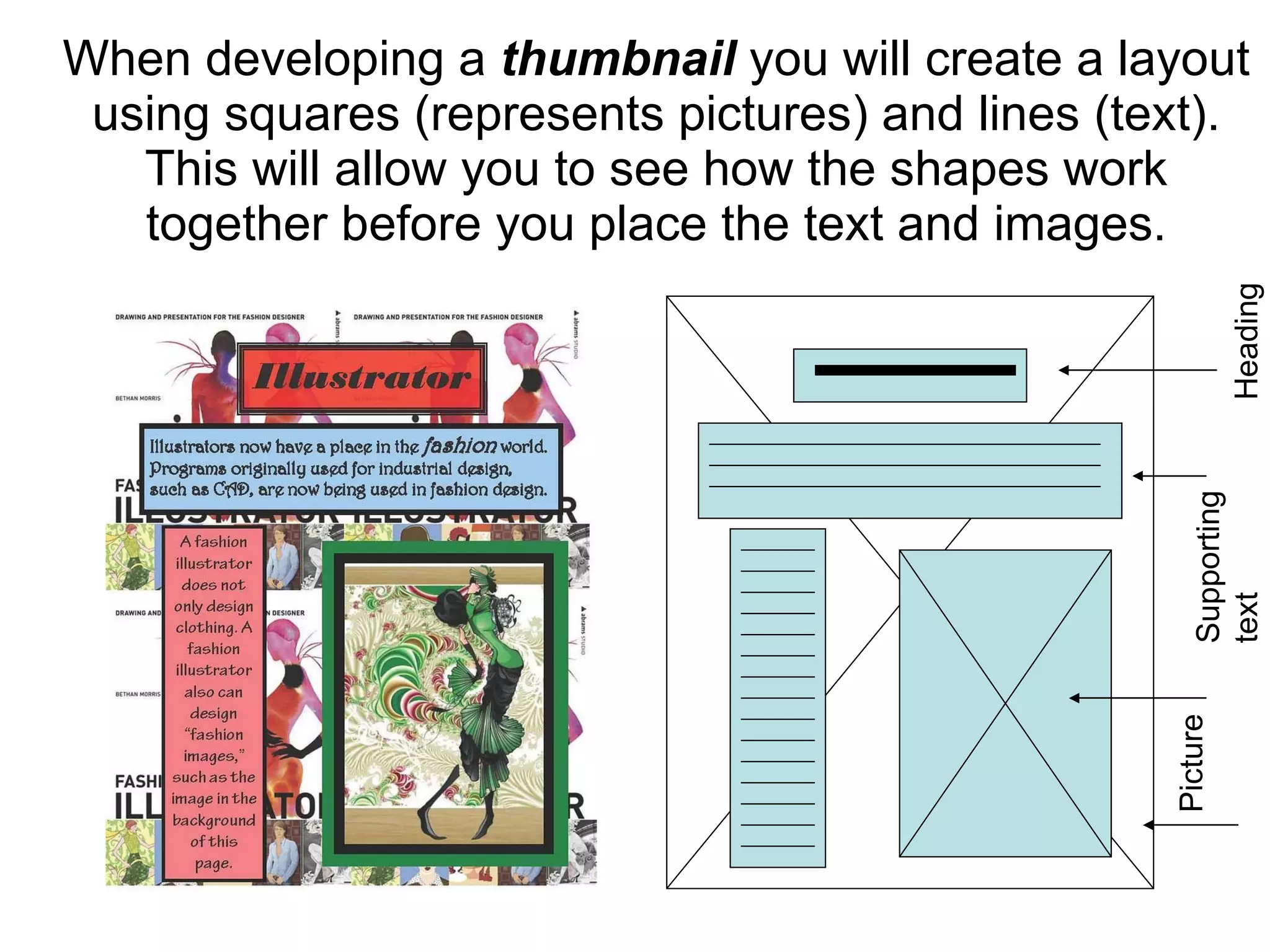
When developing a thumbnail you will create a layout using squares (represents pictures) and lines (text). This will allow you to see how the shapes work together before you place the text and images. Heading Supporting text Picture
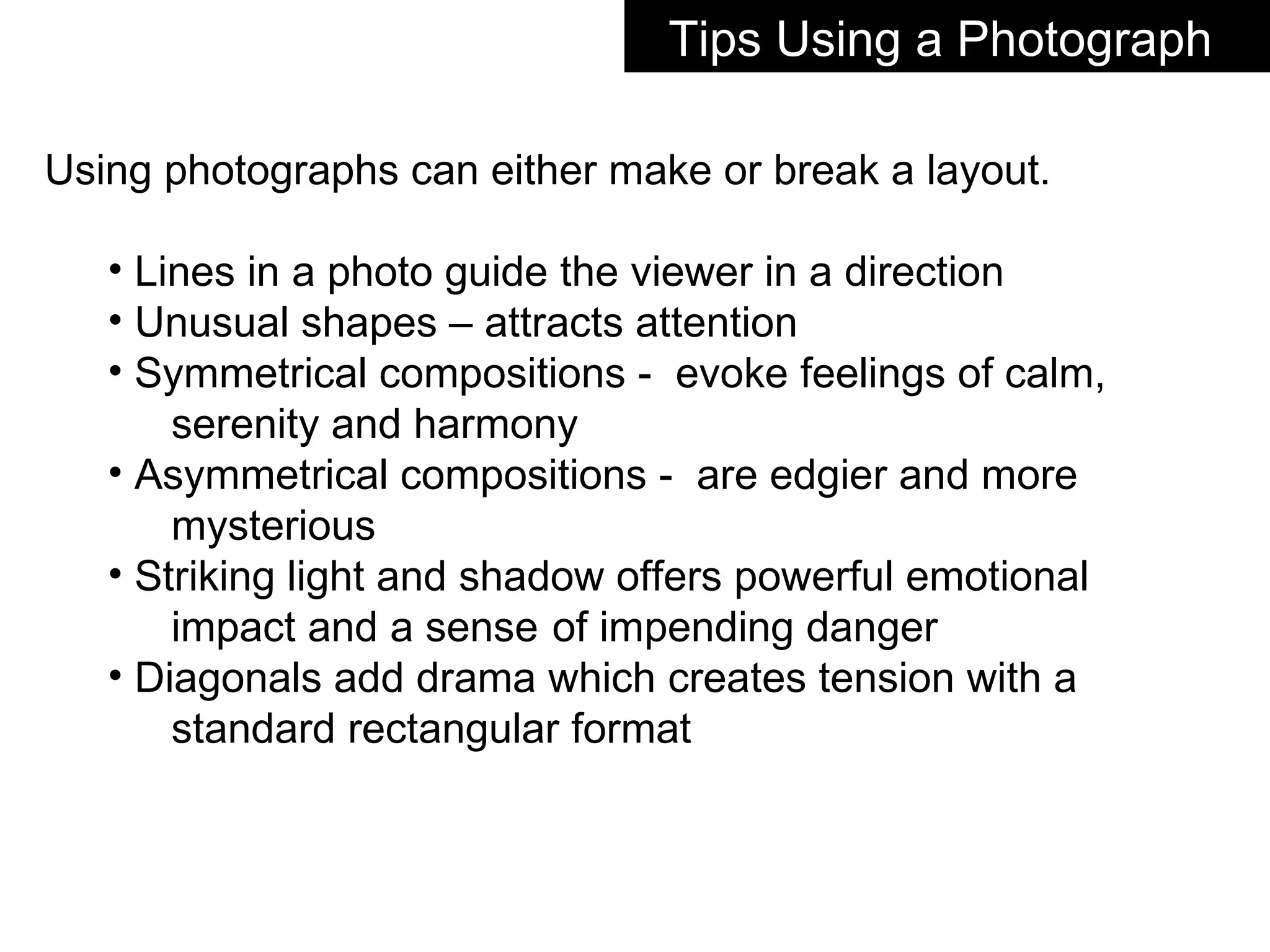
Using photographs caneither make or break a layout. Lines in a photo guide the viewer in a direction Unusual shapes – attracts attention Symmetrical compositions - evoke feelings of calm, serenity and harmony Asymmetrical compositions - are edgier and more mysterious Striking light and shadow offers powerful emotional impact and a sense of impending danger Diagonals add drama which creates tension with a standard rectangular format Tips Using a Photograph
30.
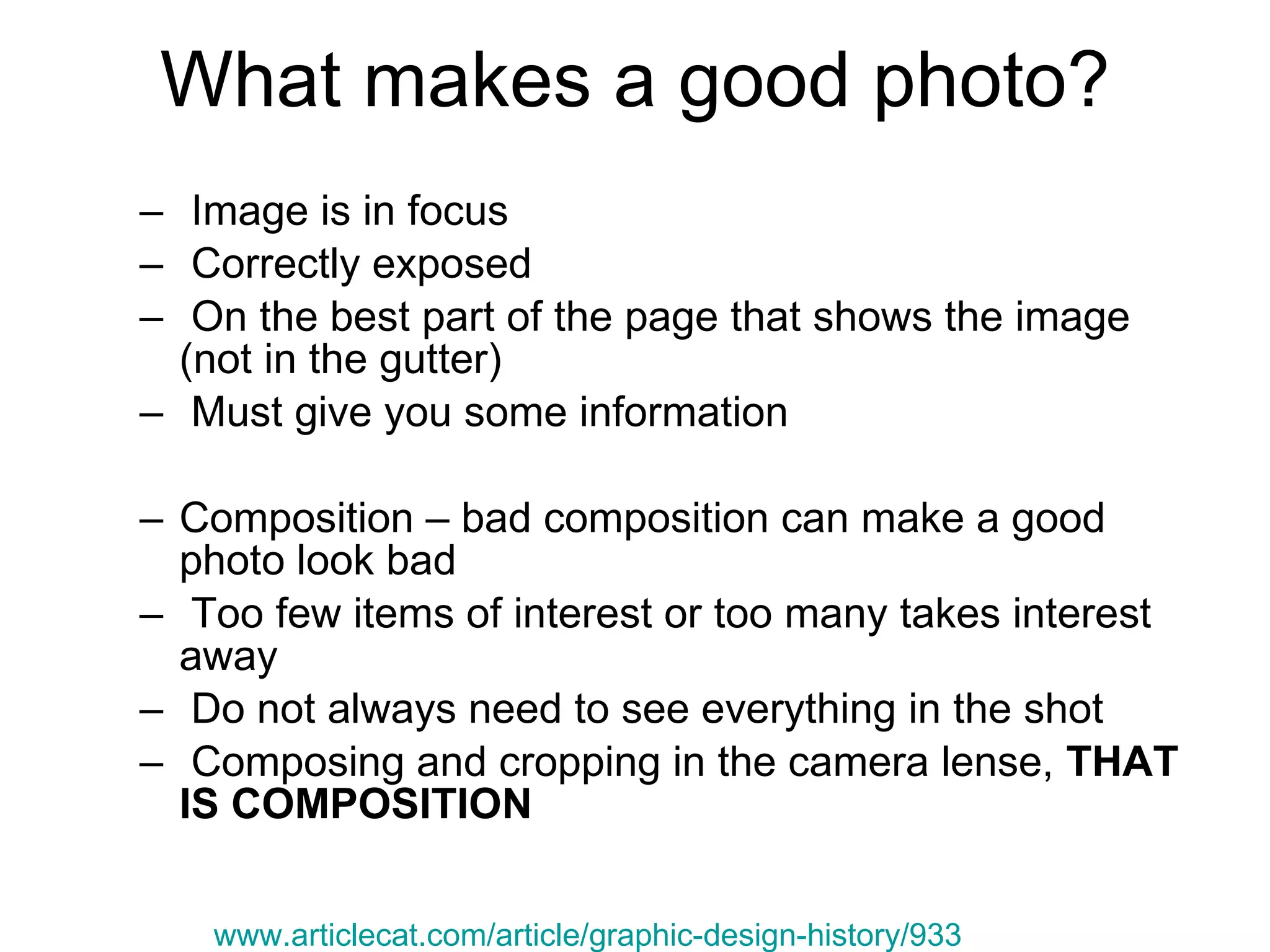
What makes agood photo? Image is in focus Correctly exposed On the best part of the page that shows the image (not in the gutter) Must give you some information Composition – bad composition can make a good photo look bad Too few items of interest or too many takes interest away Do not always need to see everything in the shot Composing and cropping in the camera lense, THAT IS COMPOSITION www.articlecat.com/article/graphic-design-history/933



![Introduction to Graphic Design PDF [slideshare]](https://cdn.slidesharecdn.com/ss_thumbnails/prologuegraphicdesignslideshare-190815200118-thumbnail.jpg?width=640&height=640&fit=bounds)


![Soundtoys Mac v5.5.5.0 Crack for MacOS Full Version [Latest] pptx](https://cdn.slidesharecdn.com/ss_thumbnails/softwareoverview-251207193711-91d8ae6b-thumbnail.jpg?width=640&height=640&fit=bounds)


![Wondershare Filmora 15.0.11 Crack for Mac Key Full Download [Latest] pptx](https://cdn.slidesharecdn.com/ss_thumbnails/software-251207184836-1d16ba16-thumbnail.jpg?width=640&height=640&fit=bounds)
![WinRAR Crack 7.13 Final Mac Keygen 2026 Download [Latest] Software.pptx](https://cdn.slidesharecdn.com/ss_thumbnails/software-251207185858-eb450678-thumbnail.jpg?width=640&height=640&fit=bounds)


