What is the Indian
Knowledge System (IKS)?
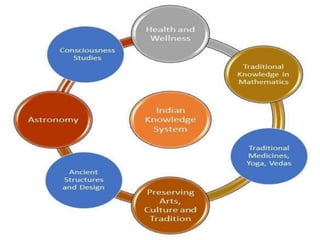
The Indian knowledge system is a term used
to refer to the intellectual and philosophical
traditions of India, which have a long and
rich history dating back to ancient times.
Guru-Shishya Parampara
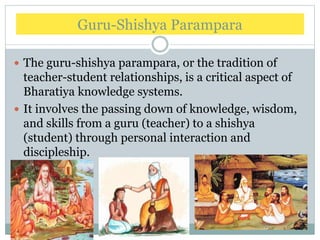
 The guru-shishya parampara, or the tradition of
teacher-student relationships, is a critical aspect of
Bharatiya knowledge systems.
 It involves the passing down of knowledge, wisdom,
and skills from a guru (teacher) to a shishya
(student) through personal interaction and
discipleship.
Ancient Roots
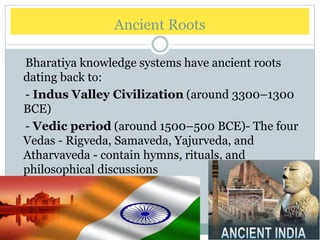
Bharatiya knowledge systems have ancient roots
dating back to:
- Indus Valley Civilization (around 3300–1300
BCE)
- Vedic period (around 1500–500 BCE)- The four
Vedas - Rigveda, Samaveda, Yajurveda, and
Atharvaveda - contain hymns, rituals, and
philosophical discussions
Rituals & scriptures
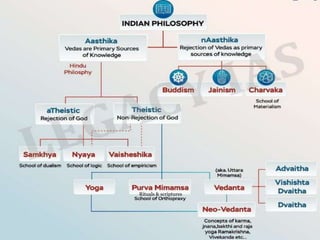
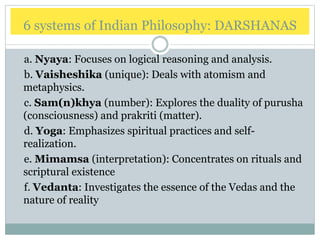
6 systems of Indian Philosophy: DARSHANAS
a. Nyaya: Focuses on logical reasoning and analysis.
b. Vaisheshika (unique): Deals with atomism and
metaphysics.
c. Sam(n)khya (number): Explores the duality of purusha
(consciousness) and prakriti (matter).
d. Yoga: Emphasizes spiritual practices and self-
realization.
e. Mimamsa (interpretation): Concentrates on rituals and
scriptural existence
f. Vedanta: Investigates the essence of the Vedas and the
nature of reality
Ayurveda
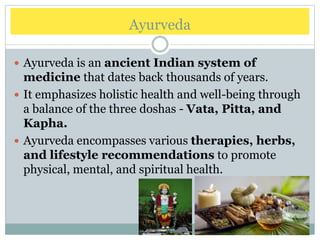
 Ayurveda is an ancient Indian system of
medicine that dates back thousands of years.
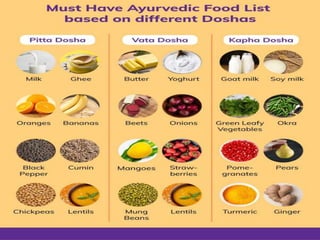
 It emphasizes holistic health and well-being through
a balance of the three doshas - Vata, Pitta, and
Kapha.
 Ayurveda encompasses various therapies, herbs,
and lifestyle recommendations to promote
physical, mental, and spiritual health.
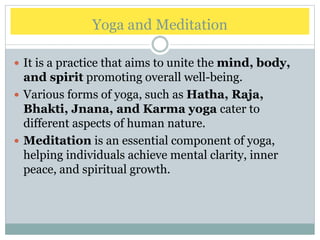
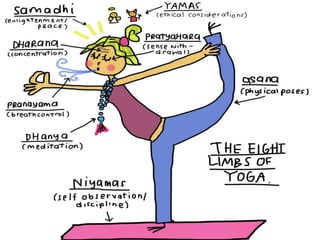
Yoga and Meditation
 It is a practice that aims to unite the mind, body,
and spirit promoting overall well-being.
 Various forms of yoga, such as Hatha, Raja,
Bhakti, Jnana, and Karma yoga cater to
different aspects of human nature.
 Meditation is an essential component of yoga,
helping individuals achieve mental clarity, inner
peace, and spiritual growth.
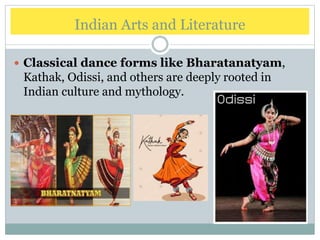
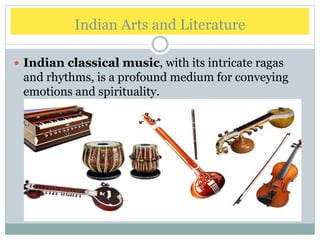
Indian Arts and Literature
 Classical dance forms like Bharatanatyam,
Kathak, Odissi, and others are deeply rooted in
Indian culture and mythology.
 Indian classical music, with its intricate ragas
and rhythms, is a profound medium for conveying
emotions and spirituality.
Indian Arts and Literature
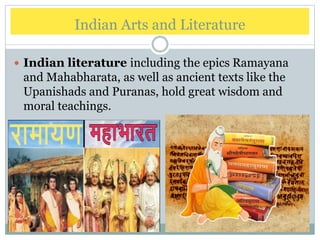
 Indian literature including the epics Ramayana
and Mahabharata, as well as ancient texts like the
Upanishads and Puranas, hold great wisdom and
moral teachings.
Indian Arts and Literature
Vastu Shastra and Jyotish
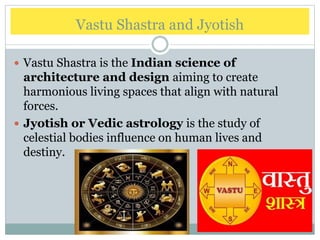
 Vastu Shastra is the Indian science of
architecture and design aiming to create
harmonious living spaces that align with natural
forces.
 Jyotish or Vedic astrology is the study of
celestial bodies influence on human lives and
destiny.
Dharma and Karma
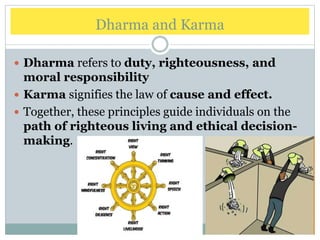
 Dharma refers to duty, righteousness, and
moral responsibility
 Karma signifies the law of cause and effect.
 Together, these principles guide individuals on the
path of righteous living and ethical decision-
making.
Spiritual Traditions
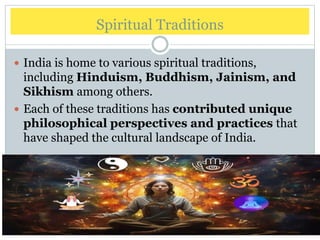
 India is home to various spiritual traditions,
including Hinduism, Buddhism, Jainism, and
Sikhism among others.
 Each of these traditions has contributed unique
philosophical perspectives and practices that
have shaped the cultural landscape of India.
Modern Relevance
 Bharatiya knowledge systems continue to influence
modern thought in India and beyond.
 Scholars, researchers, and practitioners study and
adapt these traditional systems to address
contemporary challenges in various fields,
including philosophy, science, medicine,
psychology, and spirituality.
CONCLUSION
 Bharatiya Knowledge Systems and Traditions are a
rich and multifaceted heritage that has evolved
over thousands of years.
 These systems encompass a wide array of
philosophical, spiritual, scientific, and
artistic knowledge that continues to shape the
cultural identity and intellectual discourse of India.
 By preserving and studying these traditions, people
gain valuable insights into human existence, the
nature of reality, and the pursuit of harmony
and well-being.
Irrigation and Water
Management
DAM
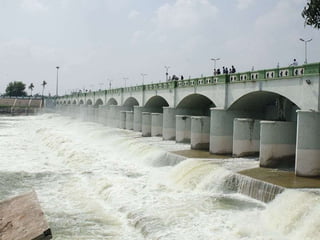
 Kallanai (also known as the Grand Anicut) is an ancient
dam.
 It is built (in running water) across the Kaveri river flowing
from Tiruchirapalli District to Thanjavur district, Tamil
Nadu, India.
 The dam was originally constructed during the reign of Chola
king Karikalan in c.150 CE.
 It is the fourth oldest water diversion or water-regulator
structures in the world and the oldest in India that is still in
use.
 Because of its spectacular architecture and distributing
the water of the delta district flourishing agriculture, it is
one of the prime tourist spots in Tamil Nadu.
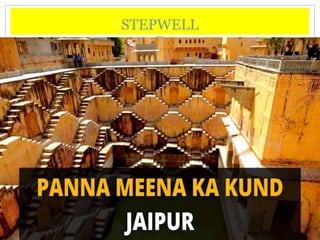
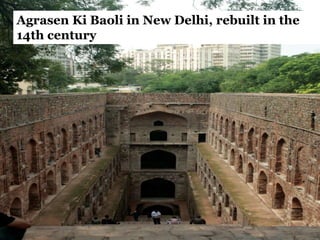
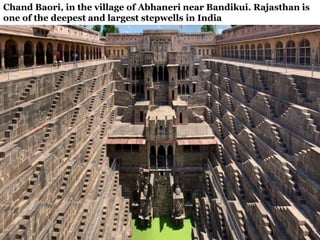
STEPWELL
Agrasen Ki Baoli in New Delhi, rebuilt in the
14th century
Chand Baori, in the village of Abhaneri near Bandikui. Rajasthan is
one of the deepest and largest stepwells in India
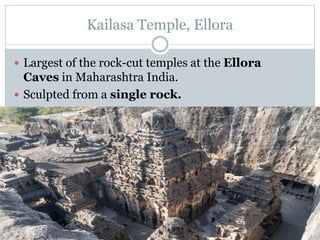
Kailasa Temple, Ellora
 Largest of the rock-cut temples at the Ellora
Caves in Maharashtra India.
 Sculpted from a single rock.
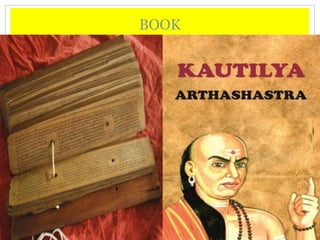
BOOK
Importance of Literature
 The meaning of ‘literature’ for our present purpose
has to be extended to mean ‘composition’ to include
the works composed and transmitted orally from
generation to generation.
Cāṇakya, in his Arthaśāstra, classifies
knowledge that one needs to know into
four types:
• ānvīkṣikī – used in the general sense of
(contemporary) Science, encompassing logic and
philosophy
• trayī – used to refer to traditional knowledge, to the
Vedas in particular
• vārttā – used to represent wealth creation
(agriculture and commerce)
• daṇḍanīti – used to represent politics and public
administration
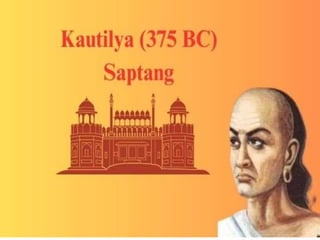
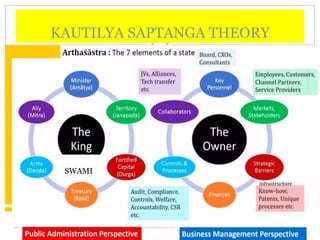
KAUTILYA SAPTANGA THEORY
SWAMI
infrastructure