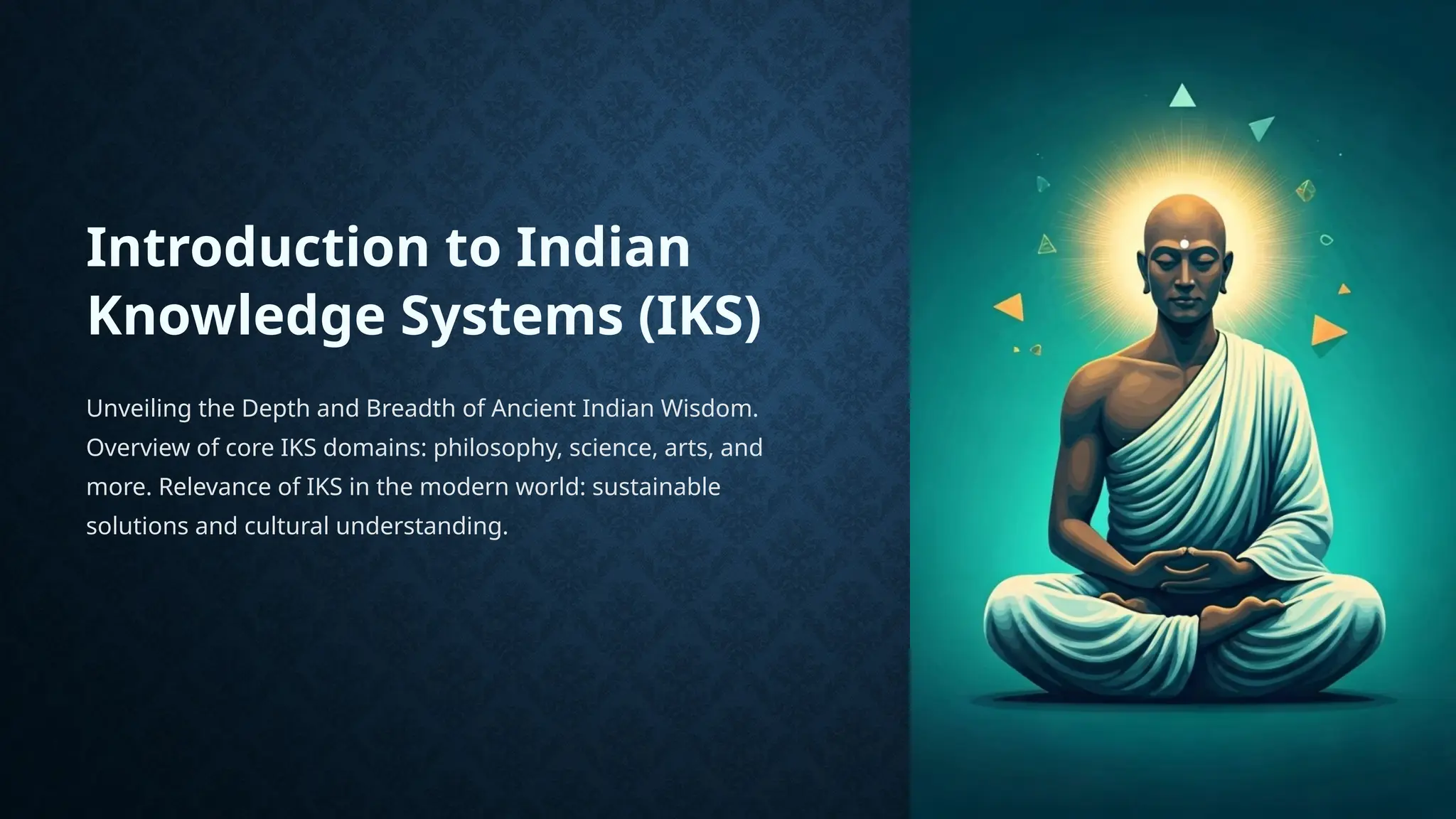
Introduction to Indian
KnowledgeSystems (IKS)
Unveiling the Depth and Breadth of Ancient Indian Wisdom.
Overview of core IKS domains: philosophy, science, arts, and
more. Relevance of IKS in the modern world: sustainable
solutions and cultural understanding.
2.
Unveiling Indian KnowledgeSystems (IKS)
Definition
A comprehensive framework of knowledge originating
from India.
Key Characteristics
Holistic, interdisciplinary, experiential, and rooted in
ethical principles.
Understanding the interconnectedness of existence and promoting harmonious living.
3.
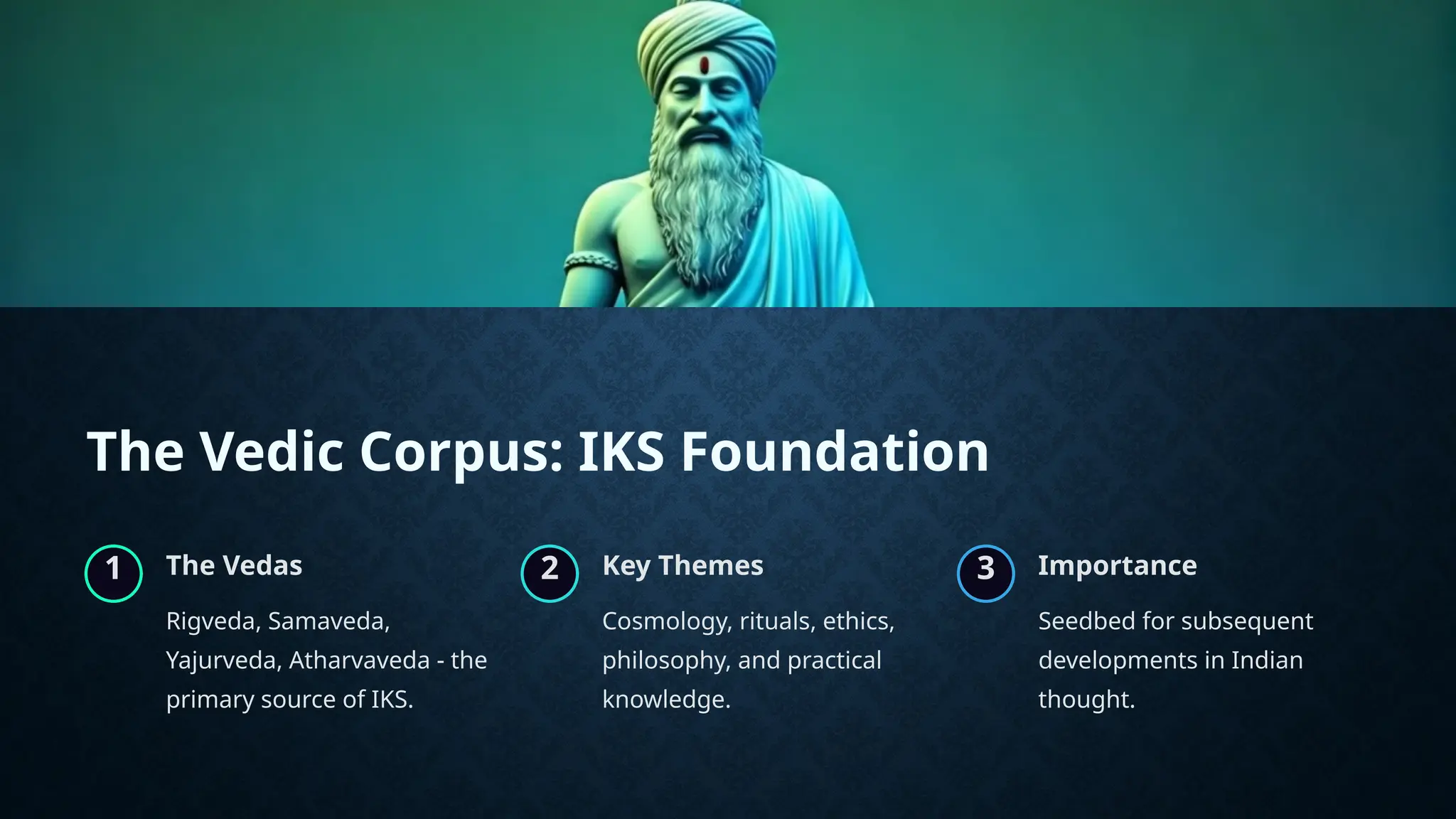
The Vedic Corpus:IKS Foundation
1 The Vedas
Rigveda, Samaveda,
Yajurveda, Atharvaveda - the
primary source of IKS.
2 Key Themes
Cosmology, rituals, ethics,
philosophy, and practical
knowledge.
3 Importance
Seedbed for subsequent
developments in Indian
thought.
4.
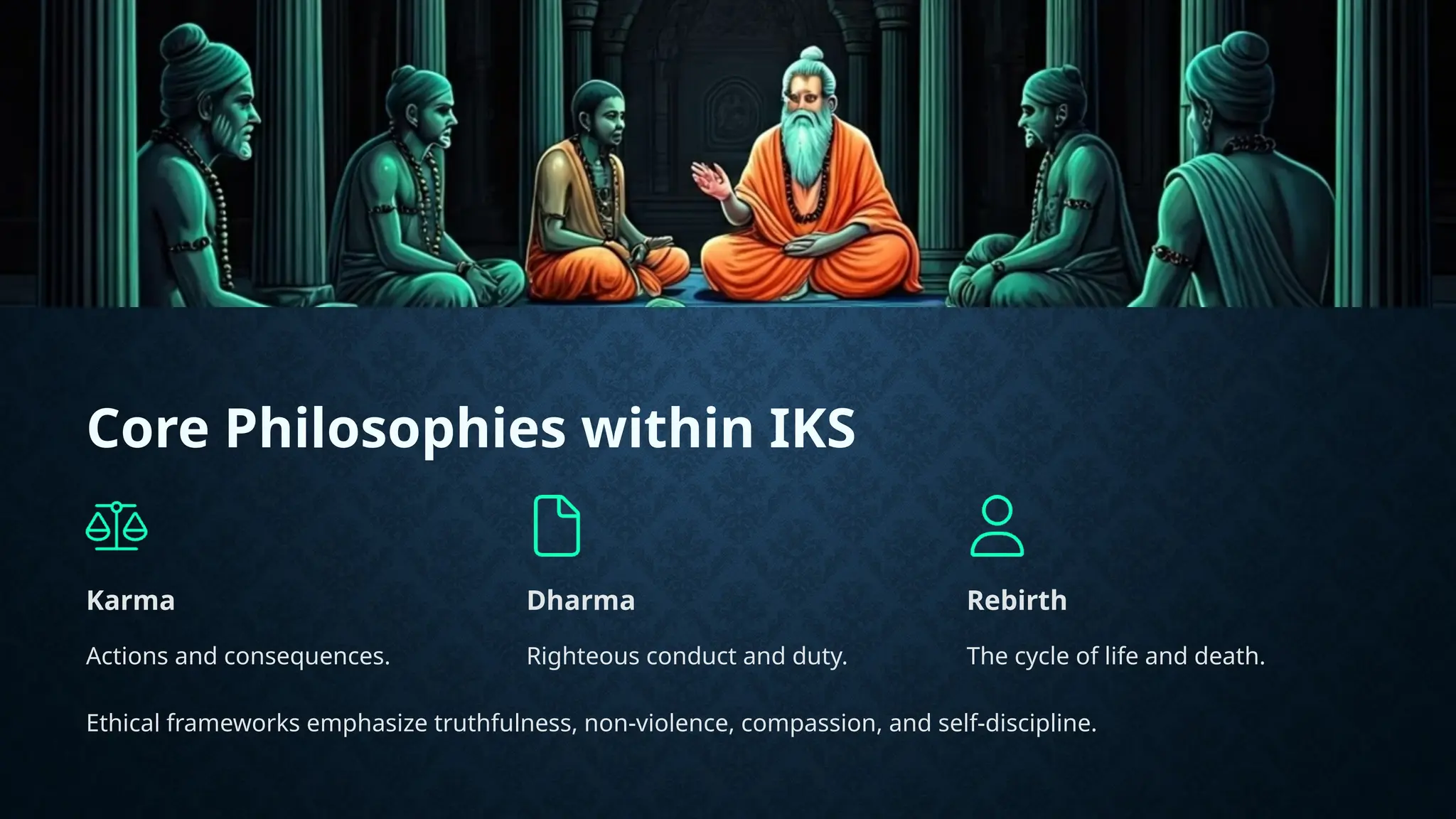
Core Philosophies withinIKS
Karma
Actions and consequences.
Dharma
Righteous conduct and duty.
Rebirth
The cycle of life and death.
Ethical frameworks emphasize truthfulness, non-violence, compassion, and self-discipline.
5.
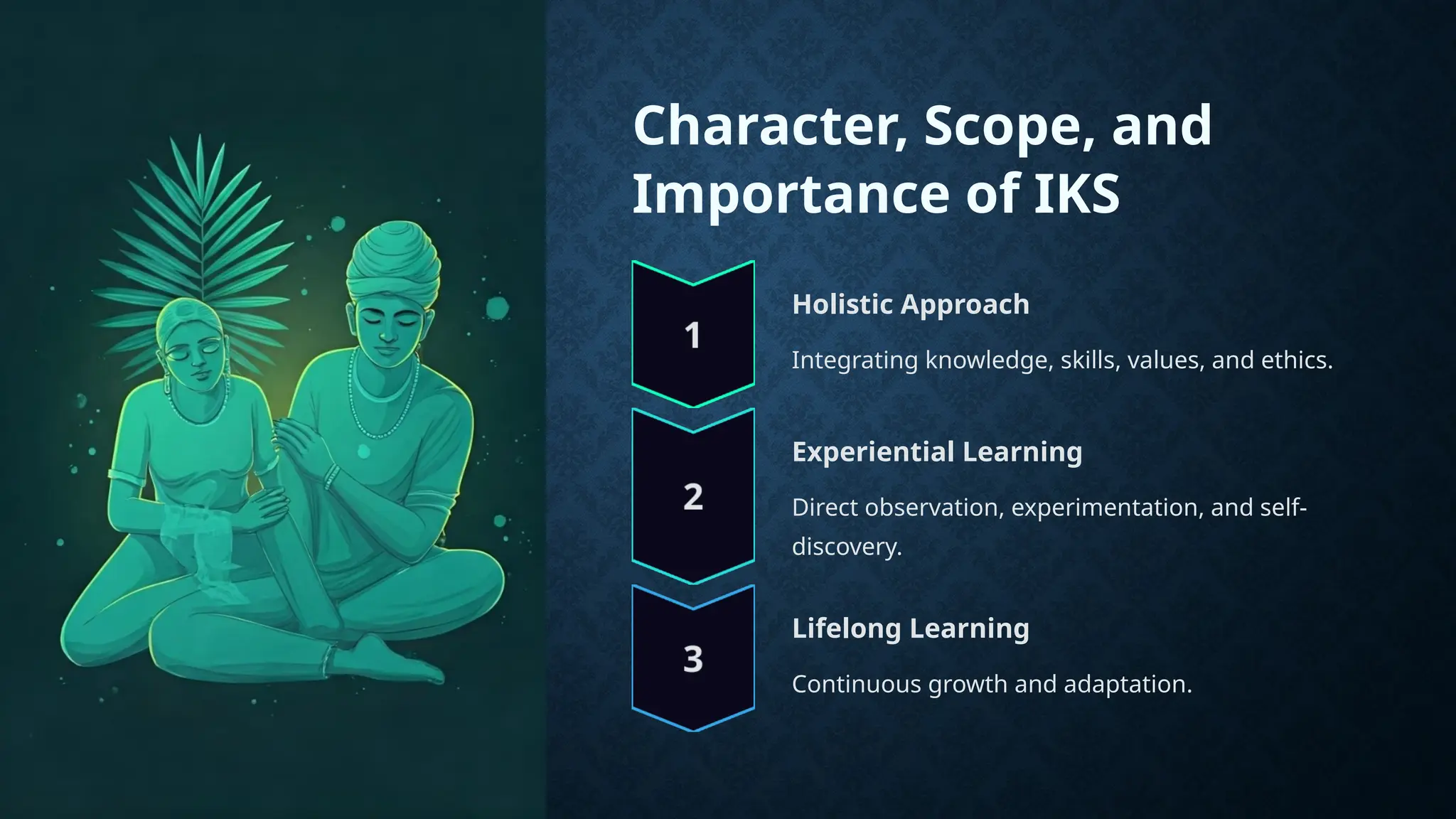
Character, Scope, and
Importanceof IKS
Holistic Approach
Integrating knowledge, skills, values, and ethics.
Experiential Learning
Direct observation, experimentation, and self-
discovery.
Lifelong Learning
Continuous growth and adaptation.
6.
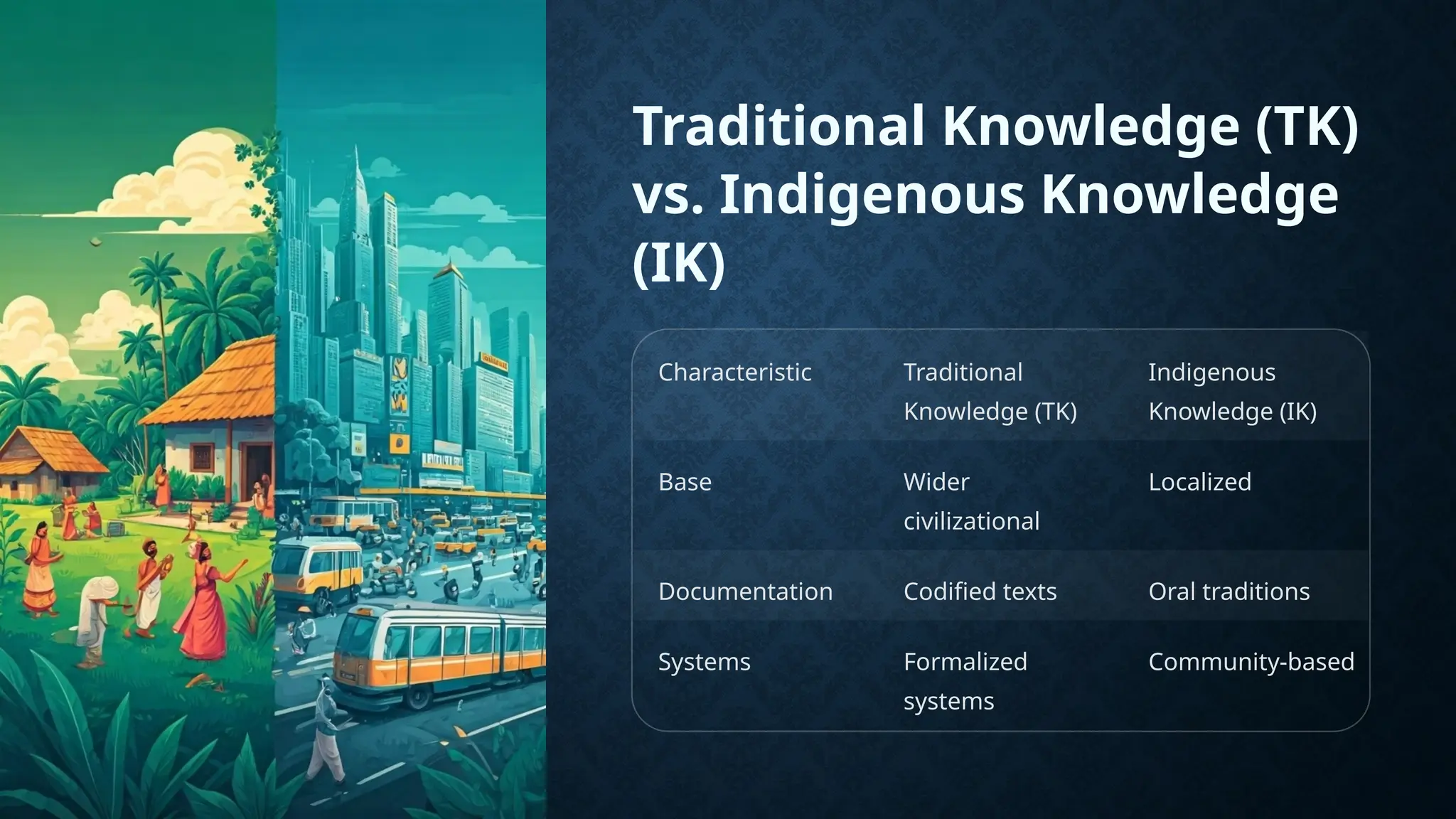
Traditional Knowledge (TK)
vs.Indigenous Knowledge
(IK)
Characteristic Traditional
Knowledge (TK)
Indigenous
Knowledge (IK)
Base Wider
civilizational
Localized
Documentation Codified texts Oral traditions
Systems Formalized
systems
Community-based
7.
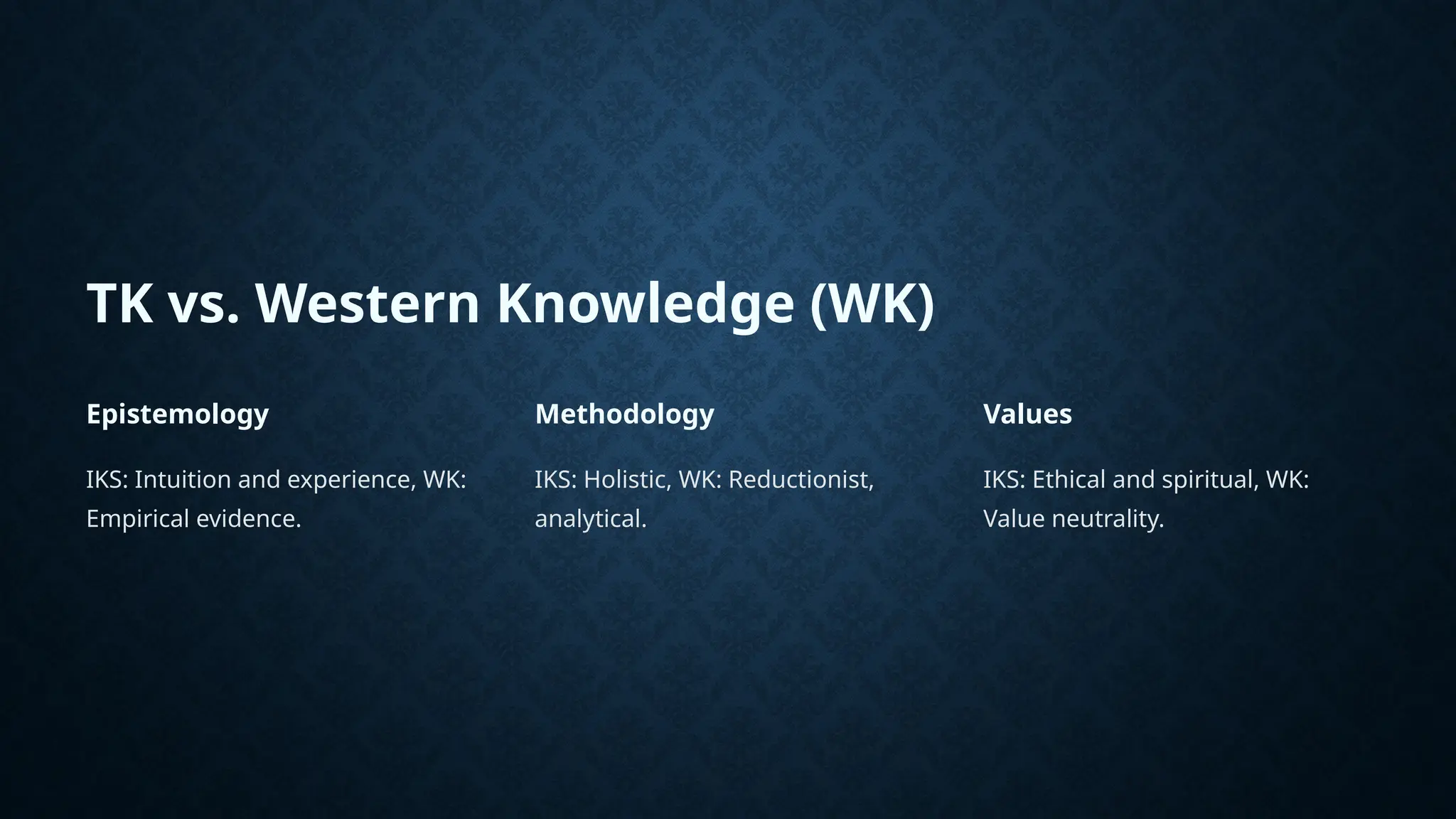
TK vs. WesternKnowledge (WK)
Epistemology
IKS: Intuition and experience, WK:
Empirical evidence.
Methodology
IKS: Holistic, WK: Reductionist,
analytical.
Values
IKS: Ethical and spiritual, WK:
Value neutrality.
8.
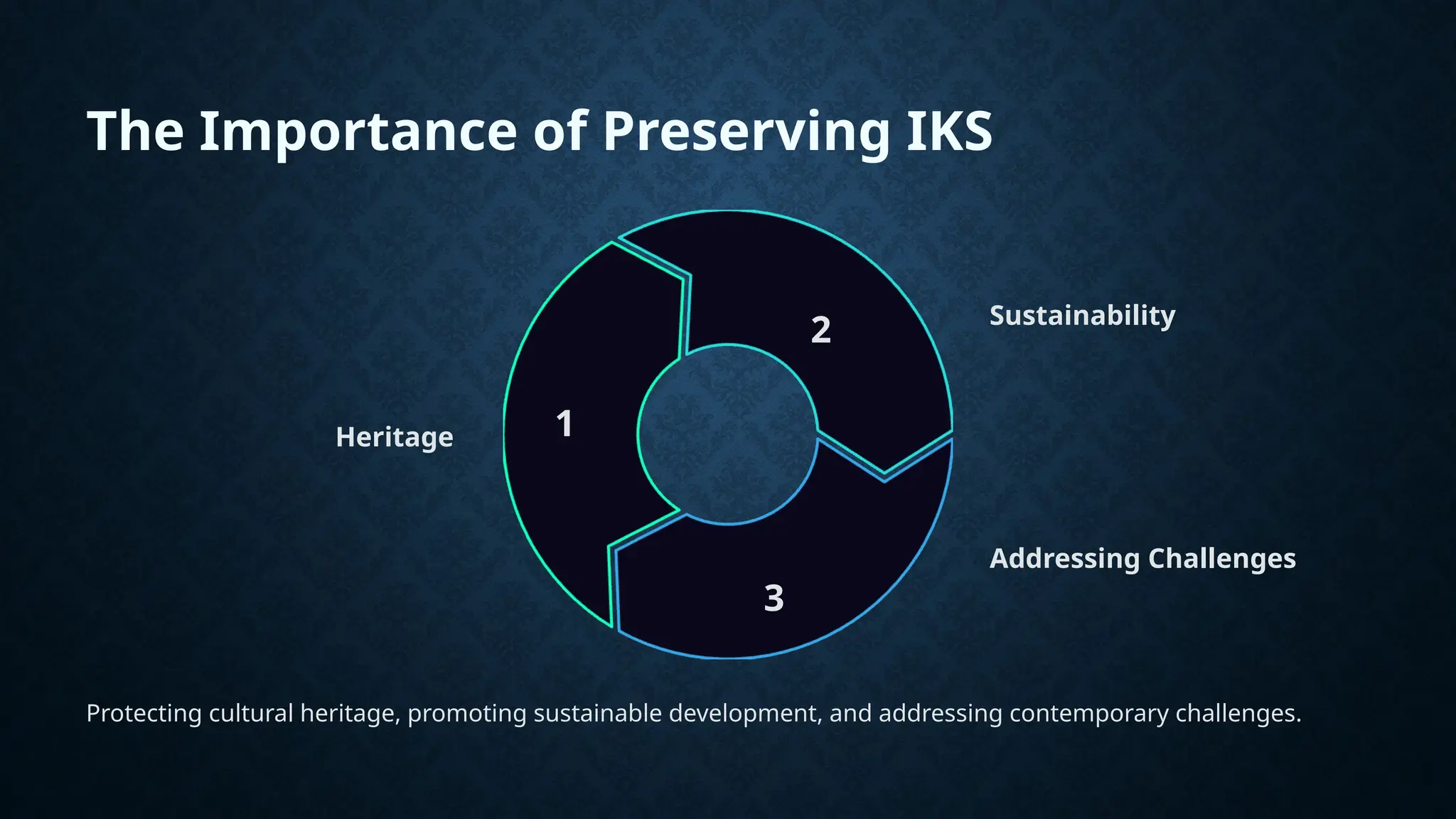
The Importance ofPreserving IKS
Heritage 1
Sustainability
2
Addressing Challenges
3
Protecting cultural heritage, promoting sustainable development, and addressing contemporary challenges.
9.
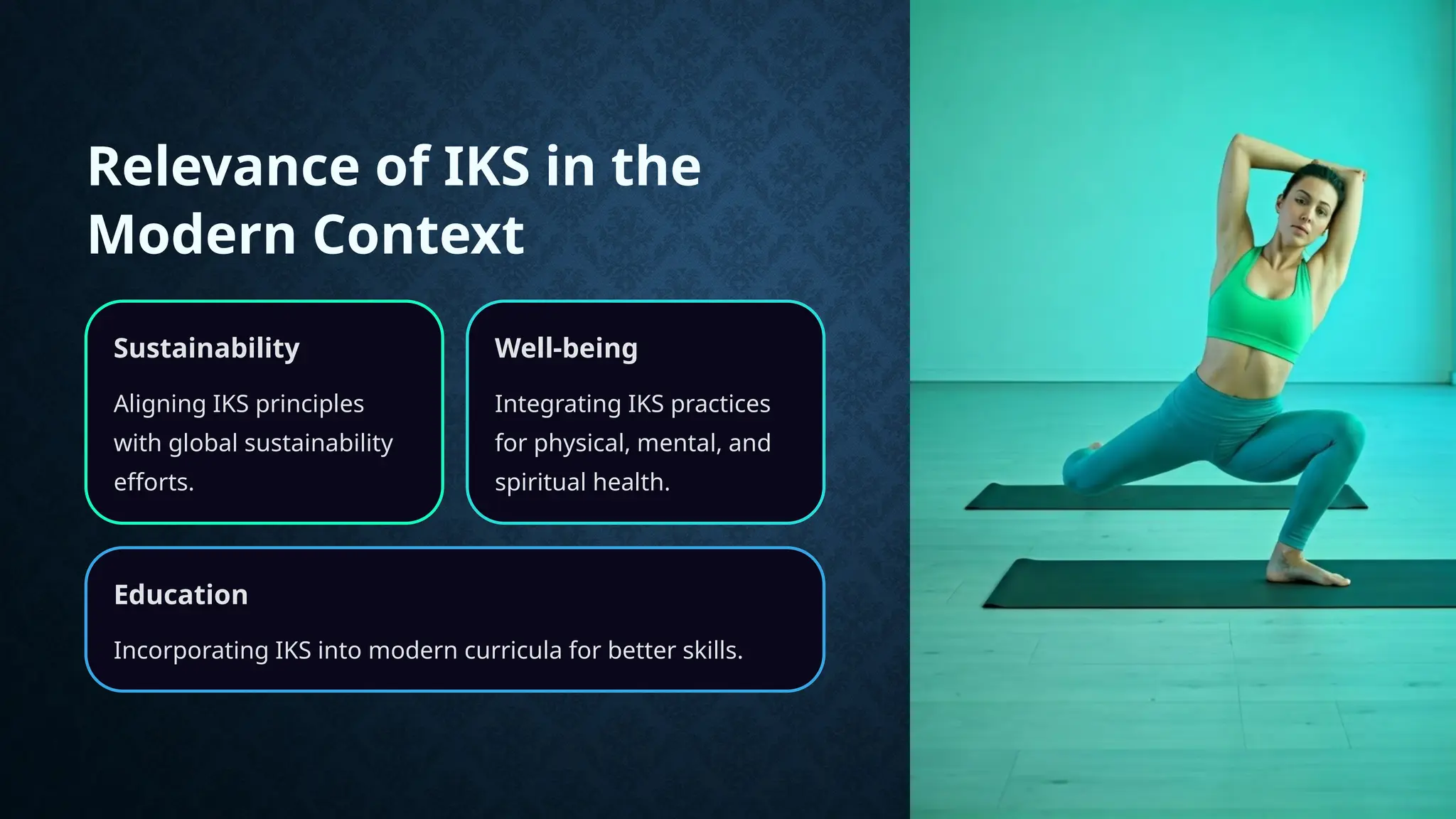
Relevance of IKSin the
Modern Context
Sustainability
Aligning IKS principles
with global sustainability
efforts.
Well-being
Integrating IKS practices
for physical, mental, and
spiritual health.
Education
Incorporating IKS into modern curricula for better skills.
10.
Integrating IKS fora
Better Future
IKS provides a wealth of knowledge for addressing contemporary
challenges. Encouraging further research, education, and
application of IKS principles.
Embrace IKS for a more sustainable, equitable, and harmonious
future.
11.
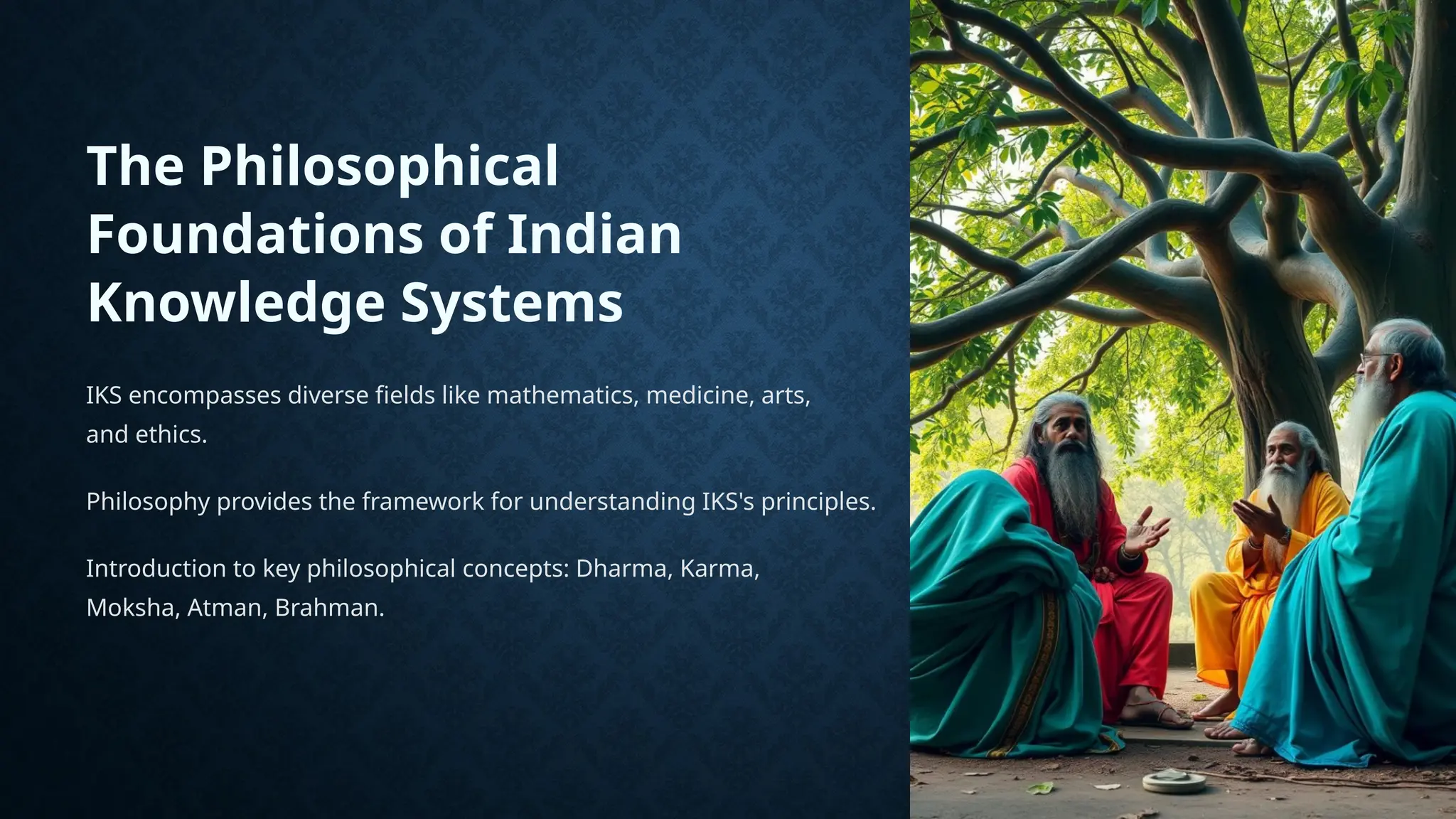
The Philosophical
Foundations ofIndian
Knowledge Systems
IKS encompasses diverse fields like mathematics, medicine, arts,
and ethics.
Philosophy provides the framework for understanding IKS's principles.
Introduction to key philosophical concepts: Dharma, Karma,
Moksha, Atman, Brahman.
12.
Key Schools ofIndian Philosophy and Their
Influence on IKS
Samkhya
Dualistic metaphysics impacts Prakriti (nature) in
Ayurveda.
Three Gunas: Sattva, Rajas, Tamas influence health.
Yoga
Experiential knowledge (Anubhava) for understanding
consciousness.
Patanjali's Yoga Sutras for self-realization.
13.
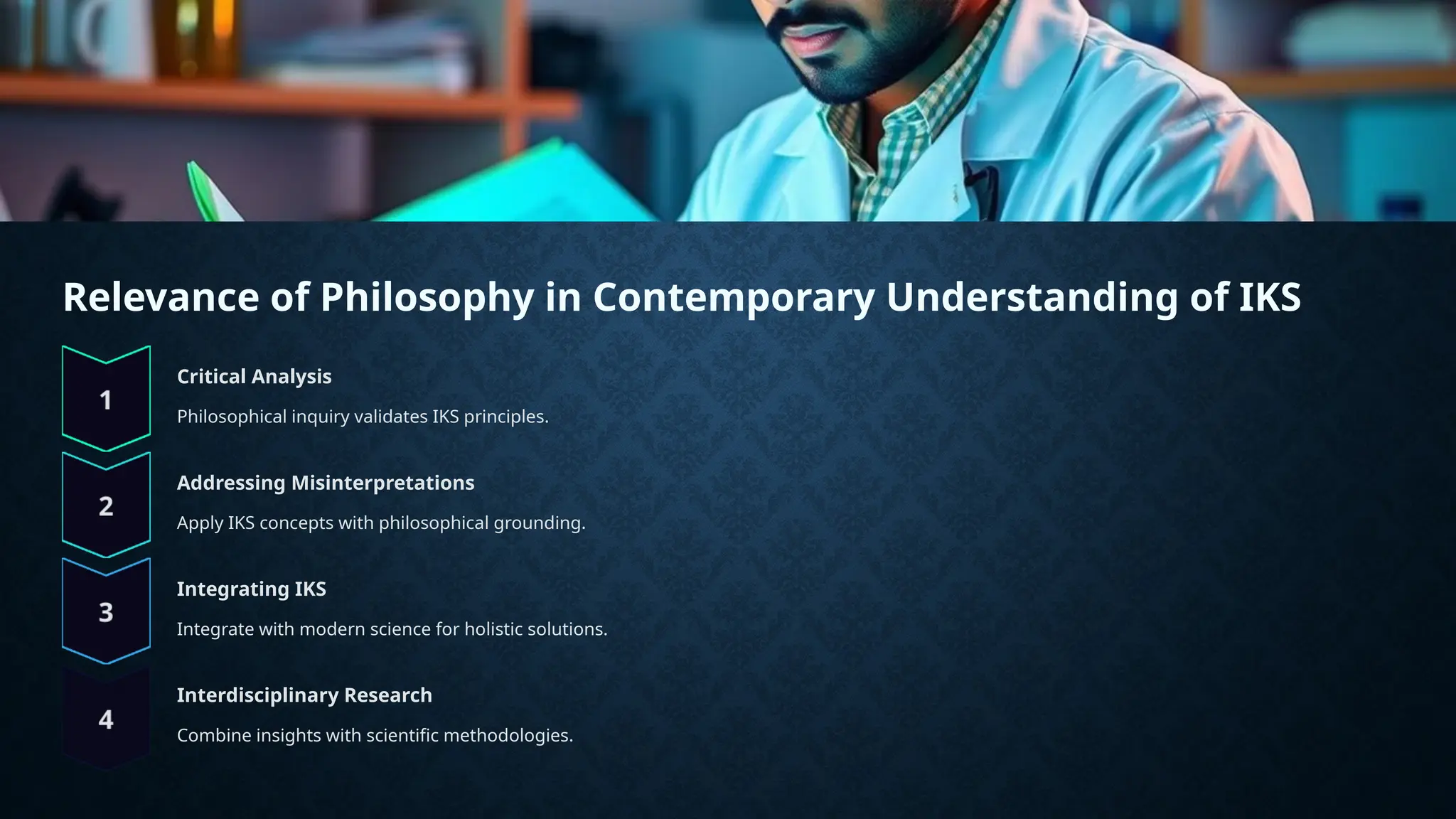
Relevance of Philosophyin Contemporary Understanding of IKS
Critical Analysis
Philosophical inquiry validates IKS principles.
Addressing Misinterpretations
Apply IKS concepts with philosophical grounding.
Integrating IKS
Integrate with modern science for holistic solutions.
Interdisciplinary Research
Combine insights with scientific methodologies.
14.
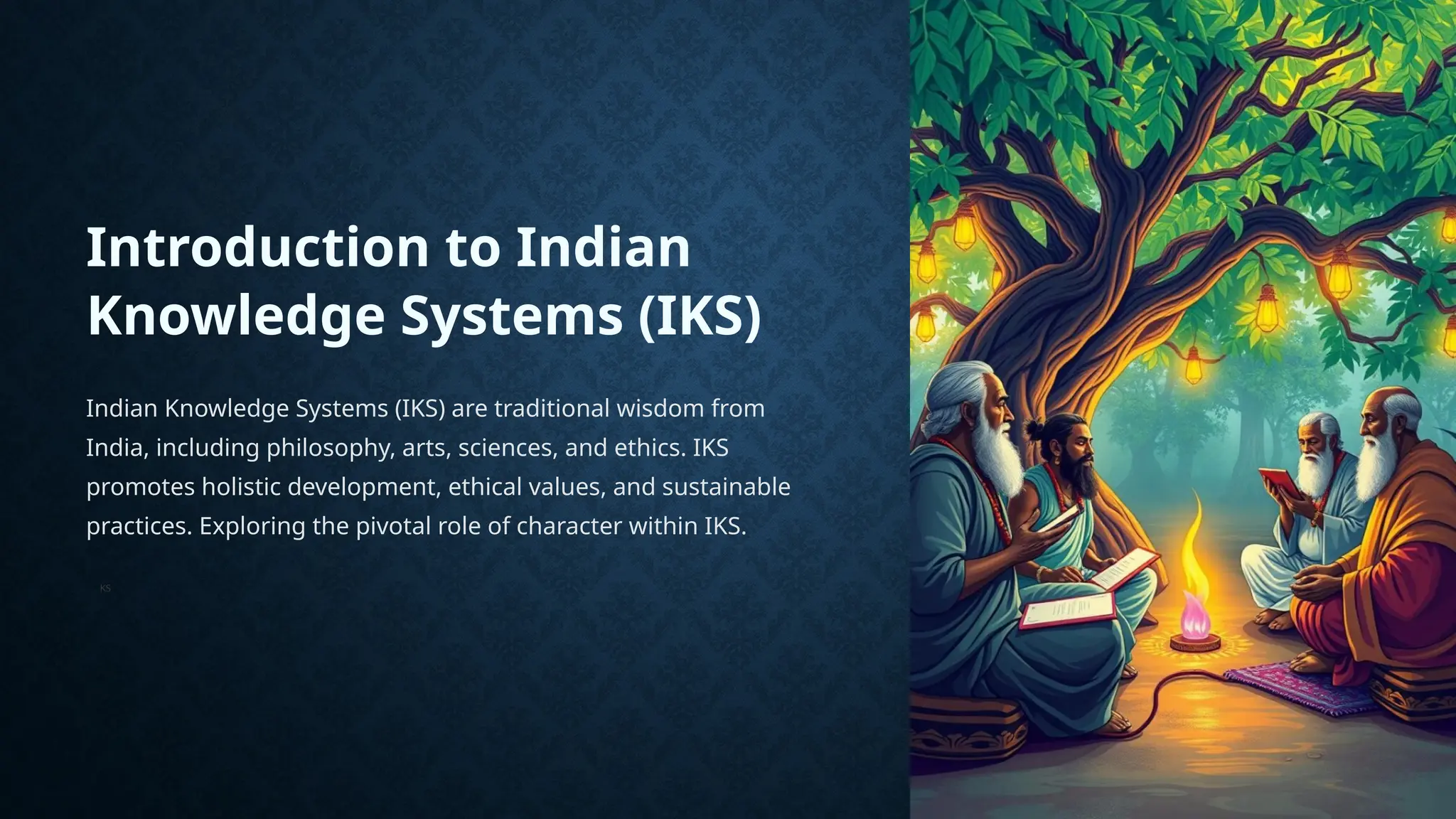
Introduction to Indian
KnowledgeSystems (IKS)
Indian Knowledge Systems (IKS) are traditional wisdom from
India, including philosophy, arts, sciences, and ethics. IKS
promotes holistic development, ethical values, and sustainable
practices. Exploring the pivotal role of character within IKS.
KS
15.
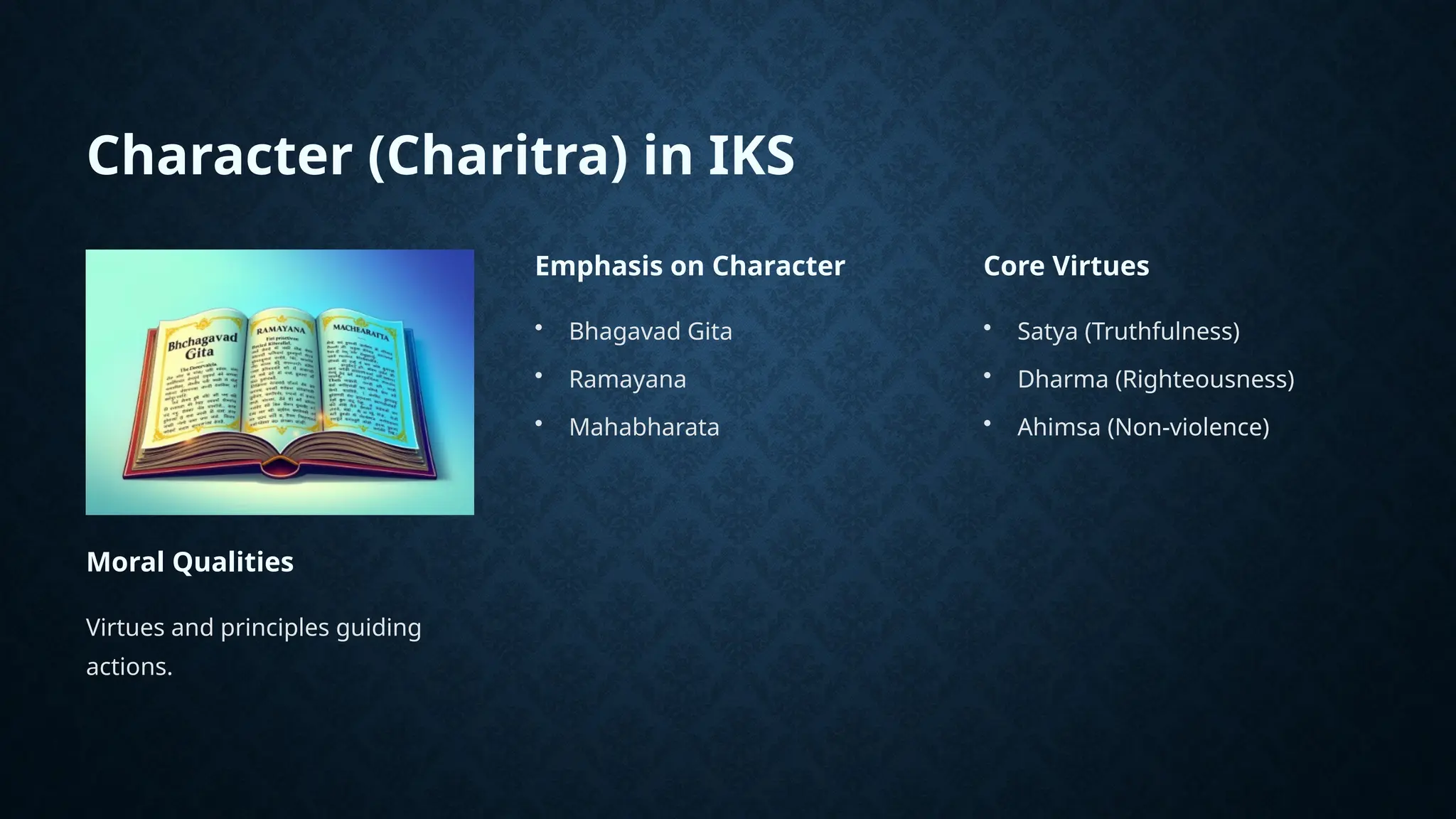
Character (Charitra) inIKS
Moral Qualities
Virtues and principles guiding
actions.
Emphasis on Character
• Bhagavad Gita
• Ramayana
• Mahabharata
Core Virtues
• Satya (Truthfulness)
• Dharma (Righteousness)
• Ahimsa (Non-violence)
16.
Importance of Character
1Foundation of
Knowledge
True knowledge is
inseparable from ethical
conduct.
2 Self-Realization
Ethical living is essential
for spiritual growth.
3 Impact on Society
Fosters trust, cooperation, and collective well-being.
17.
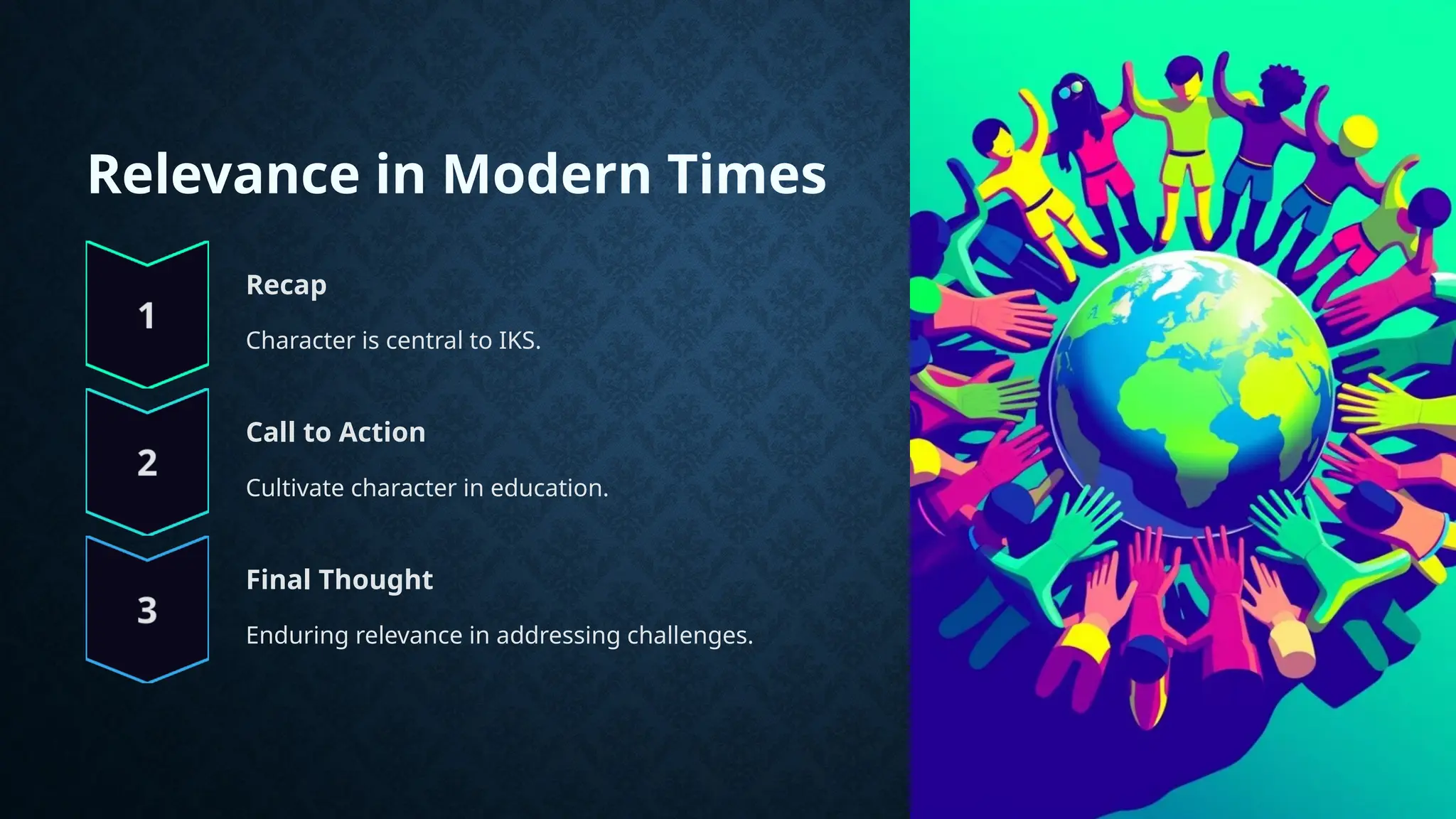
Relevance in ModernTimes
Recap
Character is central to IKS.
Call to Action
Cultivate character in education.
Final Thought
Enduring relevance in addressing challenges.
18.
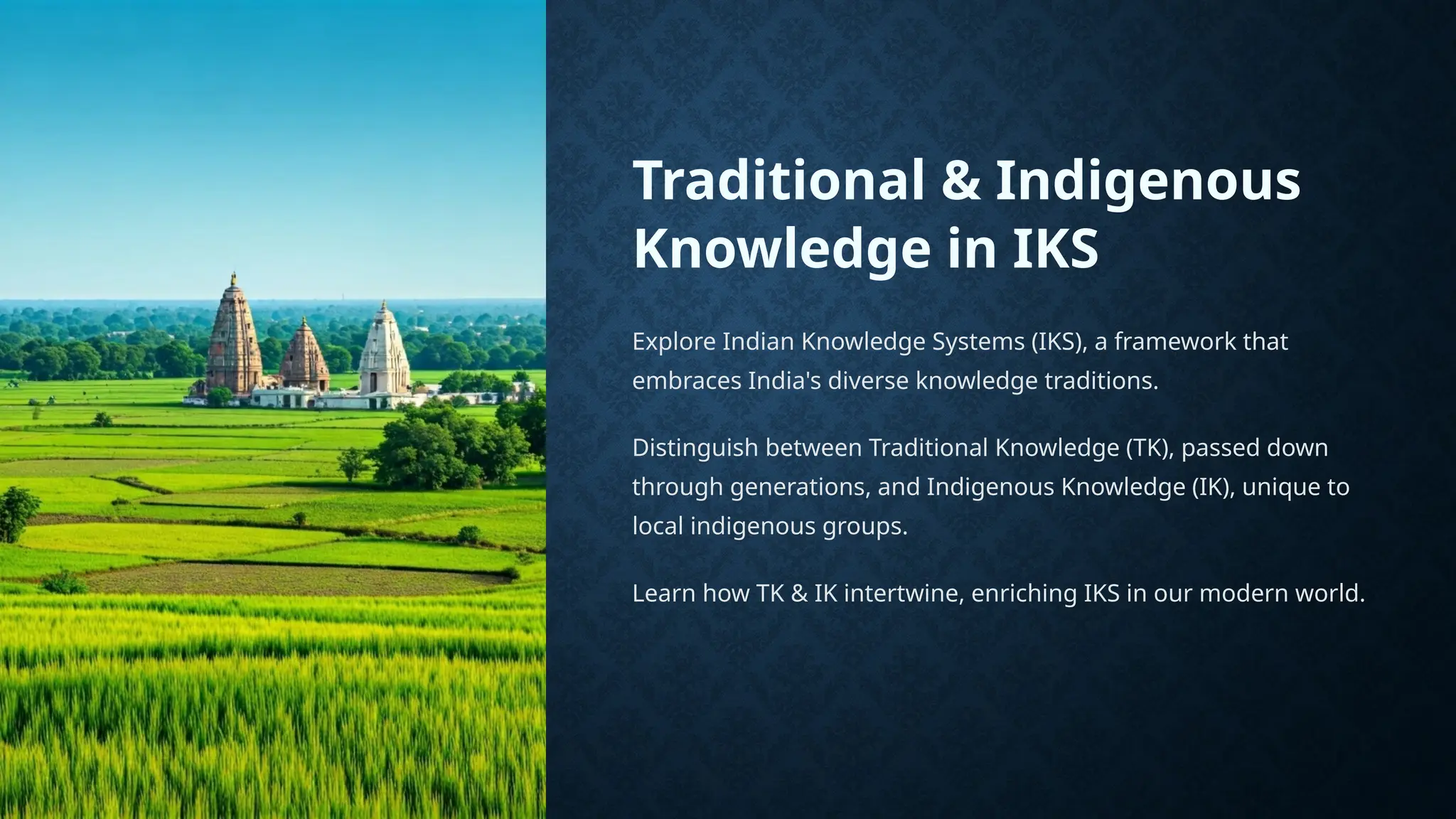
Traditional & Indigenous
Knowledgein IKS
Explore Indian Knowledge Systems (IKS), a framework that
embraces India's diverse knowledge traditions.
Distinguish between Traditional Knowledge (TK), passed down
through generations, and Indigenous Knowledge (IK), unique to
local indigenous groups.
Learn how TK & IK intertwine, enriching IKS in our modern world.
19.
Traditional Knowledge: Foundations
ScripturalKnowledge
Vedas & Upanishads: codified
knowledge.
Sulba Sutras: influencing geometry.
Oral Traditions
Storytelling preserves medicine.
Classical Arts
Temple architecture showcases
principles.
Systems like Ayurveda & Yoga offer standardized, widely disseminated practices.
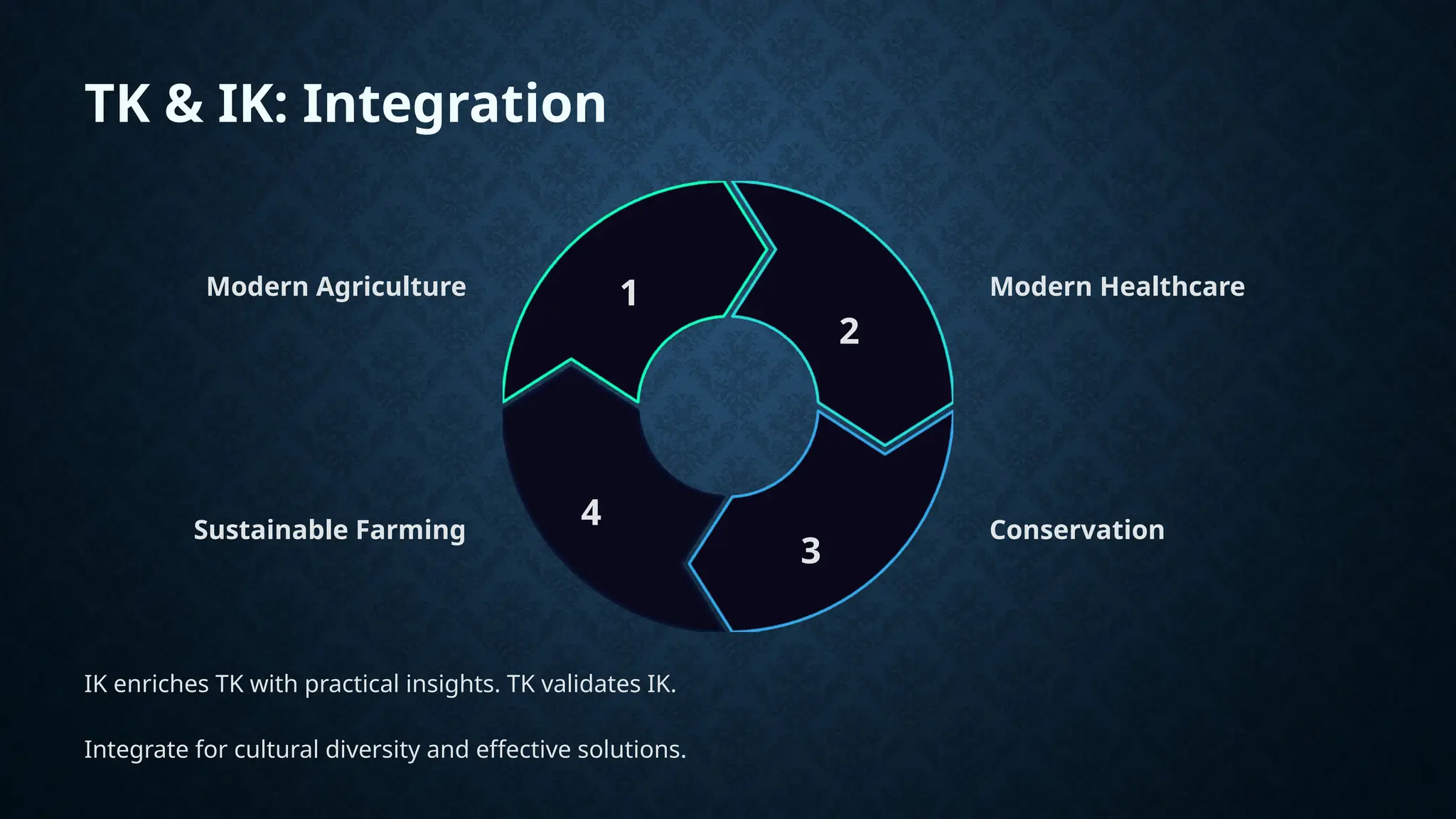
TK & IK:Integration
Modern Agriculture 1 Modern Healthcare
2
Conservation
3
Sustainable Farming
4
IK enriches TK with practical insights. TK validates IK.
Integrate for cultural diversity and effective solutions.
22.
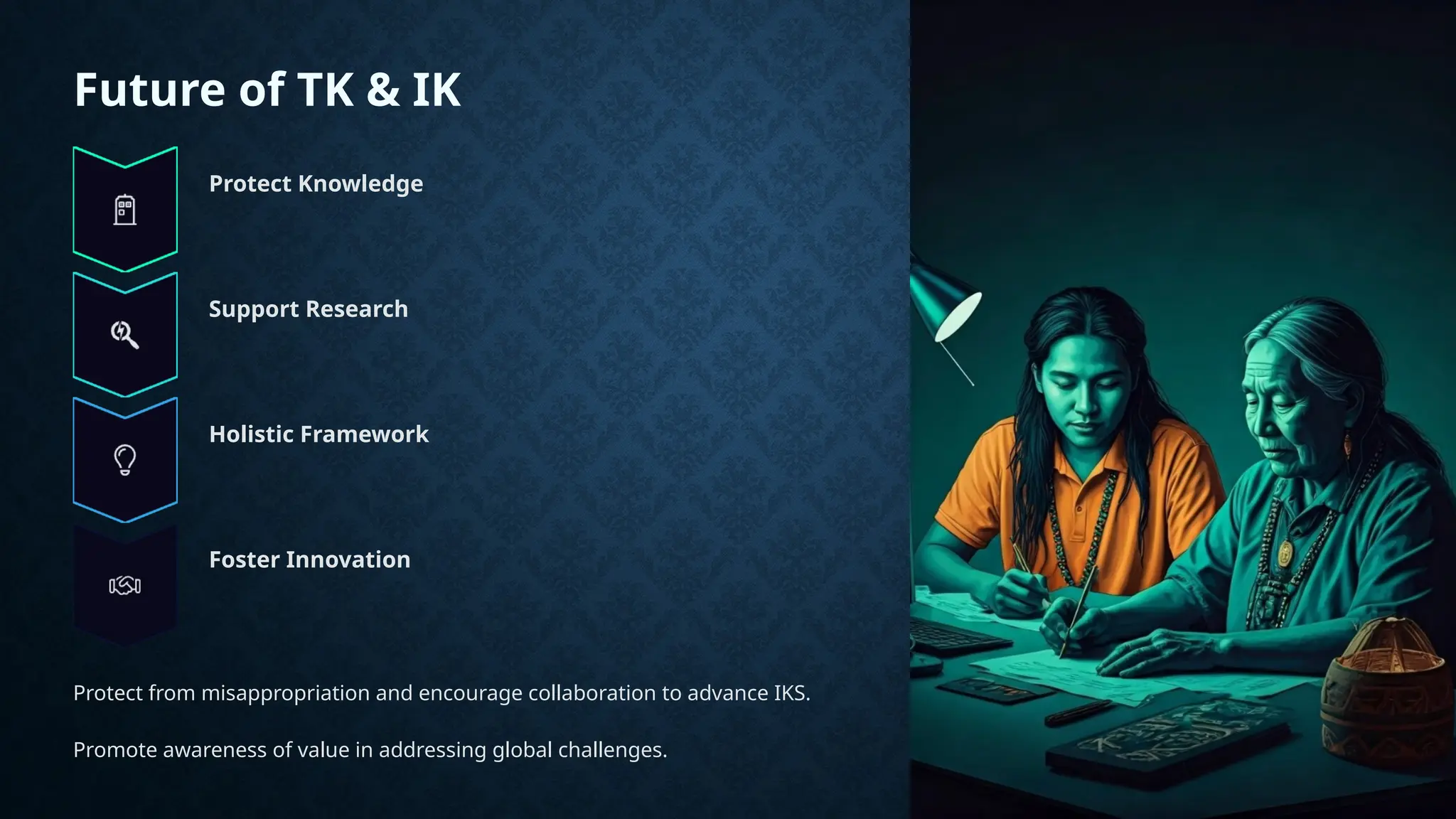
Future of TK& IK
Protect Knowledge
Support Research
Holistic Framework
Foster Innovation
Protect from misappropriation and encourage collaboration to advance IKS.
Promote awareness of value in addressing global challenges.
23.
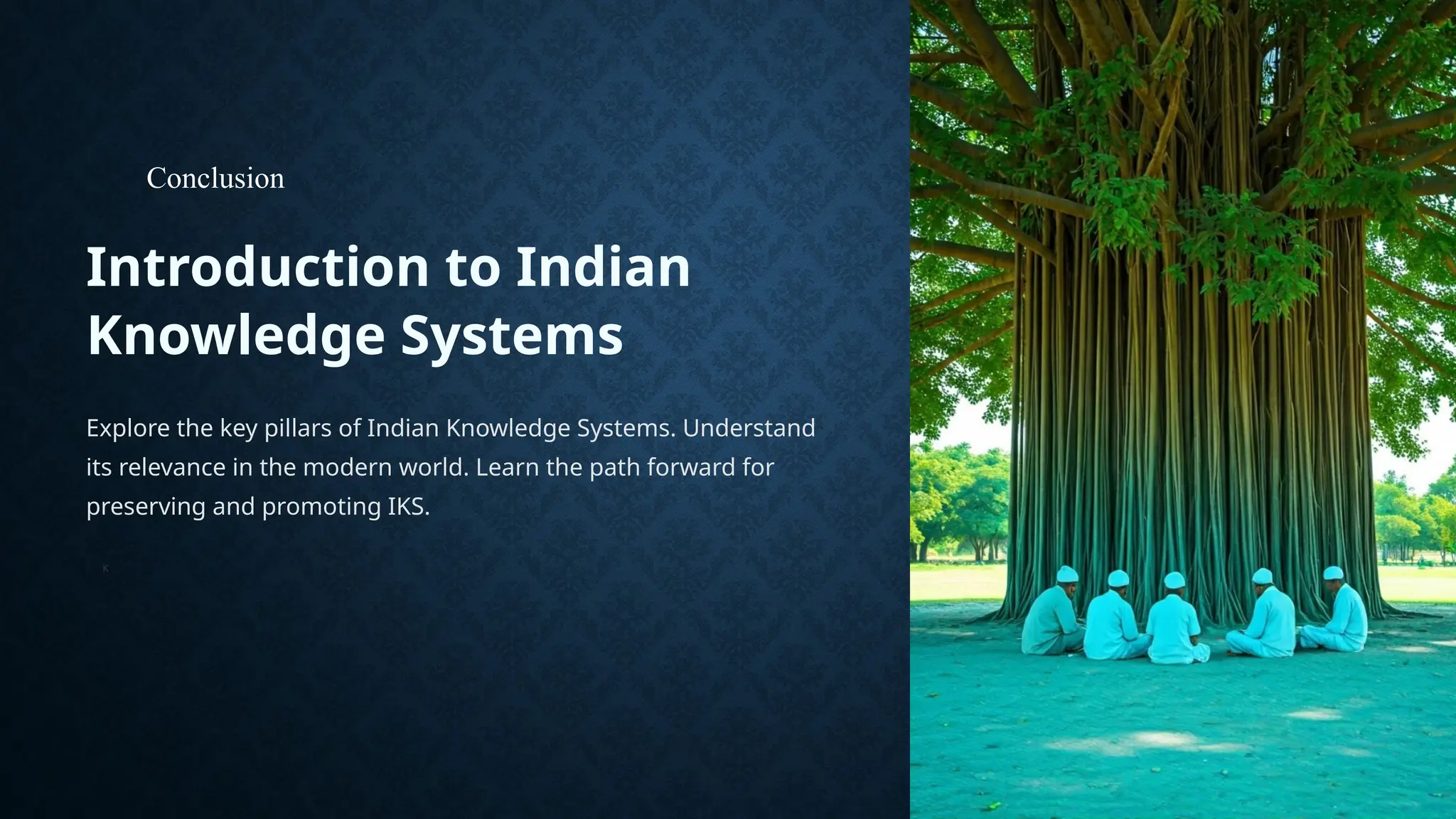
Introduction to Indian
KnowledgeSystems
Explore the key pillars of Indian Knowledge Systems. Understand
its relevance in the modern world. Learn the path forward for
preserving and promoting IKS.
K
Conclusion


![Wondershare Filmora 15.0.11 Crack for Mac Key Full Download [Latest] pptx](https://cdn.slidesharecdn.com/ss_thumbnails/software-251207184836-1d16ba16-thumbnail.jpg?width=640&height=640&fit=bounds)
![PowerISO 9.2 Mac Crack + Serial Key Free Download 2026 [Latest] Software.pptx](https://cdn.slidesharecdn.com/ss_thumbnails/software-251207185653-5d5700e6-thumbnail.jpg?width=640&height=640&fit=bounds)
![iStat Menus 7.20 Crack for MacOS 2026 Full Version [Latest] pptx](https://cdn.slidesharecdn.com/ss_thumbnails/softwareoverview-251207191544-22b737dc-thumbnail.jpg?width=640&height=640&fit=bounds)
![AnyTrans for iOS 8.9.14.20251127 With Crack for MacOS [Latest] pptx](https://cdn.slidesharecdn.com/ss_thumbnails/softwareoverview-251207190907-2316965f-thumbnail.jpg?width=640&height=640&fit=bounds)
![CleanMyMac X v5.2.8 Crack for MacOS Full Version [Latest] pptx](https://cdn.slidesharecdn.com/ss_thumbnails/softwareoverview-251207194121-a81f0142-thumbnail.jpg?width=640&height=640&fit=bounds)


