What is theIndian
Knowledge System (IKS)?
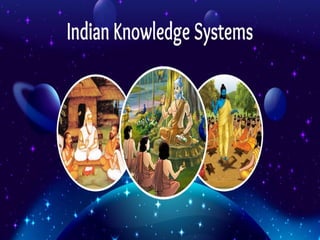
The Indian knowledge system is a term used
to refer to the intellectual and
philosophical traditions of India, which
have a long and rich history dating back to
ancient times.
6.
About Indian KnowledgeSystem (IKS)
Knowledge is passed down systematically
from one generation to the next through the Indian
Knowledge System (IKS).
it is an organized system and a method of
knowledge transfer.
7.
Objectives of Indianknowledge system
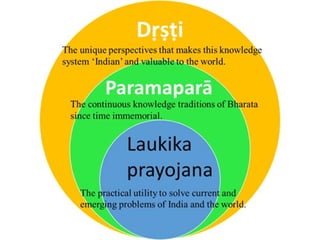
Use our ancient knowledge systems, which are
characterized by an unbroken tradition of knowledge
transfer and a distinctive point of view, to solve
current and emerging problems in India and
the world (Bhāratiyu Drishti).
T HI SA N S W E R S HO U L D I N CL U D E
E VE R Y T HI N G W E HA V E L E A R N T I N I K S I N
S HO R T
DISCUSS THE FEATURES OF
INDIA KNOWLEDGE SYSTEM
12.
Guru-Shishya Parampara
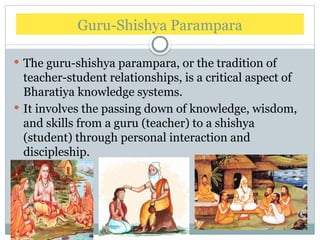
Theguru-shishya parampara, or the tradition of
teacher-student relationships, is a critical aspect of
Bharatiya knowledge systems.
It involves the passing down of knowledge, wisdom,
and skills from a guru (teacher) to a shishya
(student) through personal interaction and
discipleship.
13.
Ancient Roots
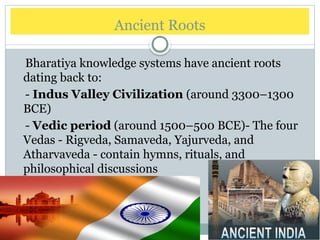
Bharatiya knowledgesystems have ancient roots
dating back to:
- Indus Valley Civilization (around 3300–1300
BCE)
- Vedic period (around 1500–500 BCE)- The four
Vedas - Rigveda, Samaveda, Yajurveda, and
Atharvaveda - contain hymns, rituals, and
philosophical discussions
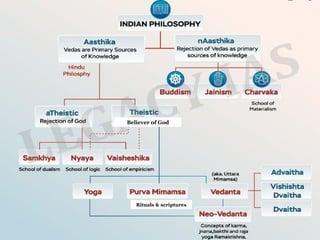
6 systems ofIndian Philosophy: DARSHANAS
a. Nyaya: Focuses on logical reasoning and analysis.
b. Vaisheshika (unique): Deals with atomism and
metaphysics.
c. Sam(n)khya (number): Explores the duality of purusha
(consciousness) and prakriti (matter).
d. Yoga: Emphasizes spiritual practices and self-
realization.
e. Mimamsa (interpretation): Concentrates on rituals and
scriptural existence
f. Vedanta: Investigates the essence of the Vedas and the
nature of reality
16.
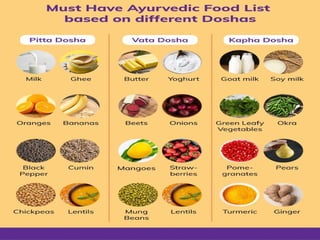
Ayurveda
Ayurveda isan ancient Indian system of
medicine that dates back thousands of years.
It emphasizes holistic health and well-being through
a balance of the three doshas - Vata, Pitta, and
Kapha.
Ayurveda encompasses various therapies, herbs,
and lifestyle recommendations to promote
physical, mental, and spiritual health.
18.
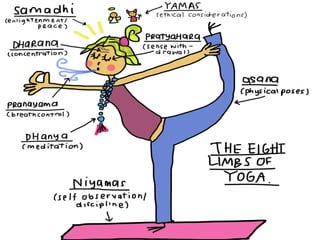
Yoga and Meditation
It is a practice that aims to unite the mind, body,
and spirit promoting overall well-being.
Various forms of yoga, such as Hatha, Raja,
Bhakti, Jnana, and Karma yoga cater to
different aspects of human nature.
Meditation is an essential component of yoga,
helping individuals achieve mental clarity, inner
peace, and spiritual growth.
20.
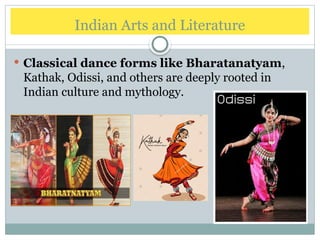
Indian Arts andLiterature
Classical dance forms like Bharatanatyam,
Kathak, Odissi, and others are deeply rooted in
Indian culture and mythology.
21.
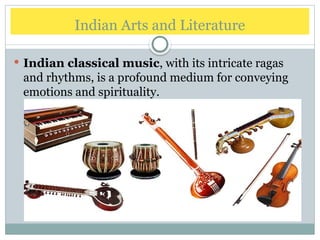
Indian classicalmusic, with its intricate ragas
and rhythms, is a profound medium for conveying
emotions and spirituality.
Indian Arts and Literature
22.
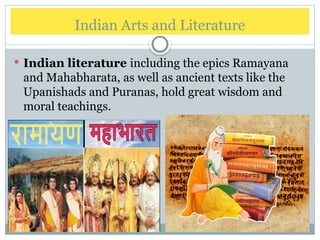
Indian literatureincluding the epics Ramayana
and Mahabharata, as well as ancient texts like the
Upanishads and Puranas, hold great wisdom and
moral teachings.
Indian Arts and Literature
23.
Vastu Shastra andJyotish
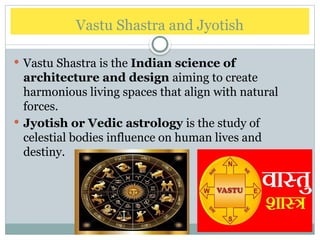
Vastu Shastra is the Indian science of
architecture and design aiming to create
harmonious living spaces that align with natural
forces.
Jyotish or Vedic astrology is the study of
celestial bodies influence on human lives and
destiny.
24.
Dharma and Karma
Dharma refers to duty, righteousness, and
moral responsibility
Karma signifies the law of cause and effect.
Together, these principles guide individuals on the
path of righteous living and ethical decision-
making.
25.
Spiritual Traditions
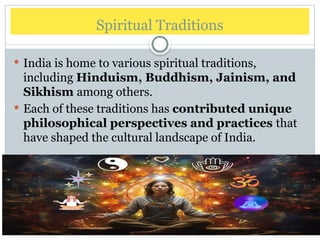
Indiais home to various spiritual traditions,
including Hinduism, Buddhism, Jainism, and
Sikhism among others.
Each of these traditions has contributed unique
philosophical perspectives and practices that
have shaped the cultural landscape of India.
26.
Modern Relevance
Bharatiyaknowledge systems continue to influence
modern thought in India and beyond.
Scholars, researchers, and practitioners study and
adapt these traditional systems to address
contemporary challenges in various fields,
including philosophy, science, medicine,
psychology, and spirituality.
27.
CONCLUSION
Bharatiya KnowledgeSystems and Traditions are a
rich and multifaceted heritage that has evolved
over thousands of years.
These systems encompass a wide array of
philosophical, spiritual, scientific, and artistic
knowledge that continues to shape the cultural
identity and intellectual discourse of India.
By preserving and studying these traditions, people
gain valuable insights into human existence, the
nature of reality, and the pursuit of harmony
and well-being.