 Name: Pipavat Gopi
 Class: M.A Sem 3
 Submitted To :Department Of English
Bhavnagar Uni.
 Topic Name: What Is The Difference
Between Task And Exercise ?
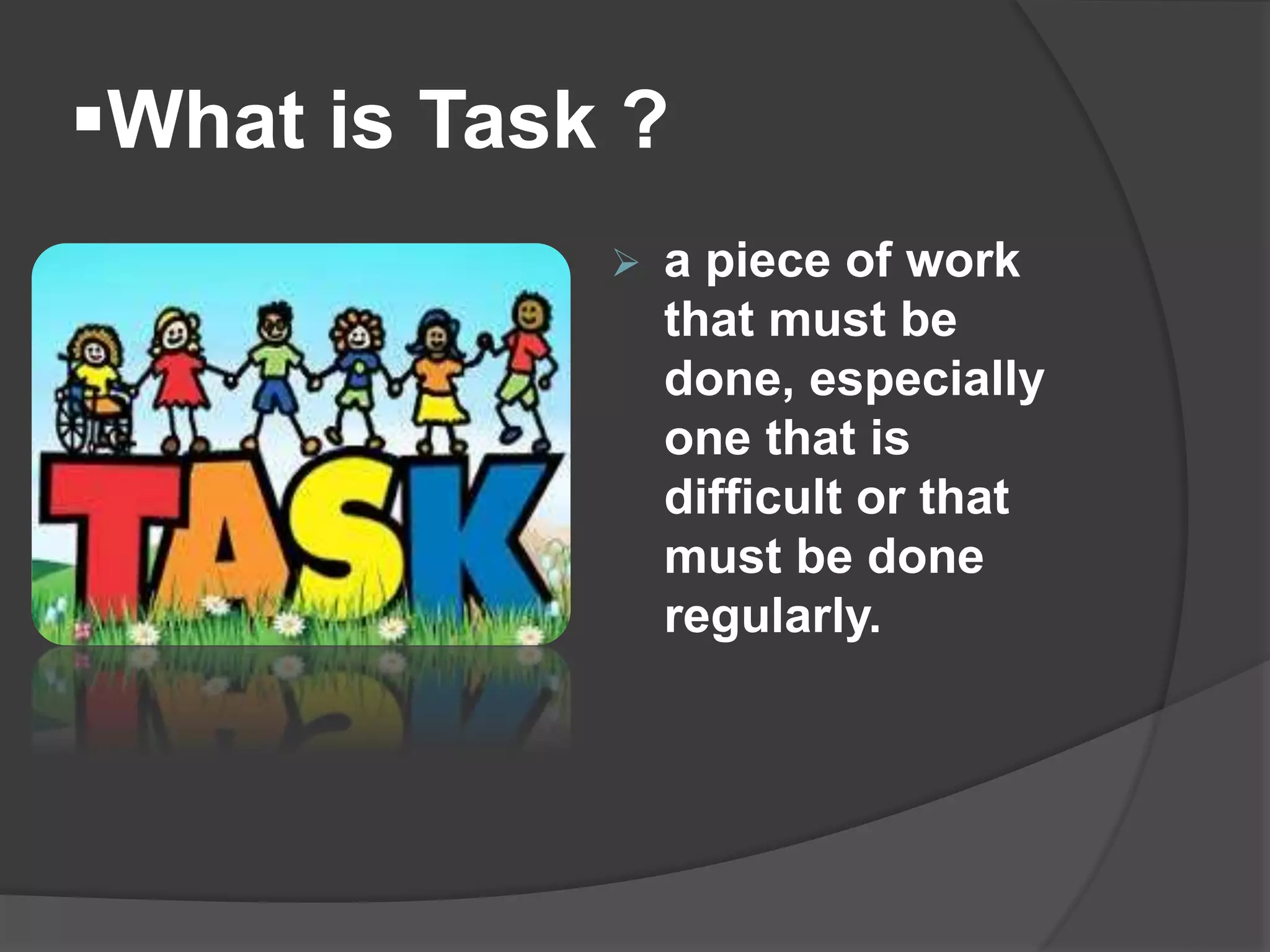
What is Task ?
 a piece of work
that must be
done, especially
one that is
difficult or that
must be done
regularly.
Definition
 The smallest identifiable and
essential piece of a job that serves as
a unit of work, and as a means of
differentiating between the various
components of a project.
 A piece of work to be done or under
taken.
 A task is any activity that learners
engage in to process of learning a
language. (Williams and Burden,
1997:168)
 An activity which required learners to
arrive at an outcome from given
information through some process of
thought and which allowed teachers
to control and regulate that process
was regarded as a task.
 A task is a communicative act that
does not usually have a restrictive
focus on a single grammatical
structure and has a non-linguistic
outcome.
 Tasks are free. Students are given
free will to use language for
communicative purposes.
 Focus on multiple skills rather than
on one.
 Tasks are used in context.
 Tasks are communicative and
usually authentic.
 Tasks are meaningful and focus is on
content.
 Correction of tasks is delayed and is
done through observation and
awareness raising
Example of a Task:
 Pedagogical tasks simulate real-life
tasks.
 Planning a party. Learners will be asked
to do the following:
 agree on what they need for the
preparation,
 choose the place where the party will be
held,
 prepare for the party, –write invitation
letters…
 write invitation letters…
What is Exercise:
 A type of physical
activity defined as
a planned,
structure and
repetitive bodily
movement done to
improve or
maintain one or
more components
of physical fitness
 An exercise usually has a restrictive
focus on a single language element,
and has a linguistic outcome.
 A language exercise is guided and
controlled by the teacher.
 An exercise usually has a restrictive
focus on a single language element,
and has a linguistic outcome.
 The focus is usually on a single skill.
 There is no reference to the context.
 A language exercise is not
communicative and usually not
authentic.
 It is not meaningful and the focus is
on form rather than on content.
 Correction is usually done
immediately.
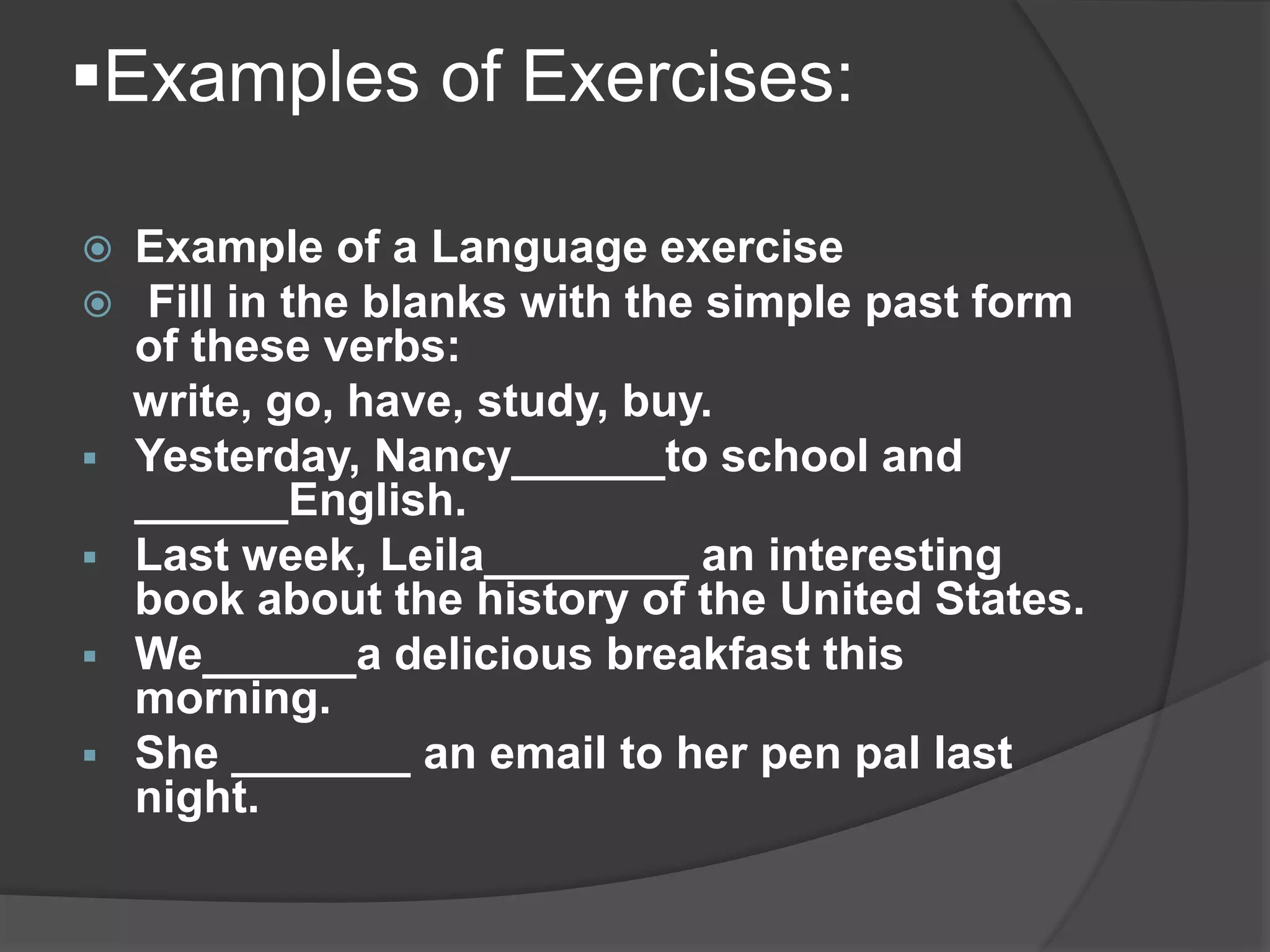
Examples of Exercises:
 Example of a Language exercise
 Fill in the blanks with the simple past form
of these verbs:
write, go, have, study, buy.
 Yesterday, Nancy______to school and
______English.
 Last week, Leila________ an interesting
book about the history of the United States.
 We______a delicious breakfast this
morning.
 She _______ an email to her pen pal last
night.
What is the difference between Task And Exercise

What is the difference between Task And Exercise

  • 1.
     Name: PipavatGopi  Class: M.A Sem 3  Submitted To :Department Of English Bhavnagar Uni.  Topic Name: What Is The Difference Between Task And Exercise ?
  • 2.
    What is Task?  a piece of work that must be done, especially one that is difficult or that must be done regularly.
  • 3.
    Definition  The smallestidentifiable and essential piece of a job that serves as a unit of work, and as a means of differentiating between the various components of a project.  A piece of work to be done or under taken.
  • 4.
     A taskis any activity that learners engage in to process of learning a language. (Williams and Burden, 1997:168)  An activity which required learners to arrive at an outcome from given information through some process of thought and which allowed teachers to control and regulate that process was regarded as a task.
  • 5.
     A taskis a communicative act that does not usually have a restrictive focus on a single grammatical structure and has a non-linguistic outcome.  Tasks are free. Students are given free will to use language for communicative purposes.  Focus on multiple skills rather than on one.
  • 6.
     Tasks areused in context.  Tasks are communicative and usually authentic.  Tasks are meaningful and focus is on content.  Correction of tasks is delayed and is done through observation and awareness raising
  • 7.
    Example of aTask:  Pedagogical tasks simulate real-life tasks.  Planning a party. Learners will be asked to do the following:  agree on what they need for the preparation,  choose the place where the party will be held,  prepare for the party, –write invitation letters…  write invitation letters…
  • 8.
    What is Exercise: A type of physical activity defined as a planned, structure and repetitive bodily movement done to improve or maintain one or more components of physical fitness
  • 9.
     An exerciseusually has a restrictive focus on a single language element, and has a linguistic outcome.  A language exercise is guided and controlled by the teacher.  An exercise usually has a restrictive focus on a single language element, and has a linguistic outcome.  The focus is usually on a single skill.
  • 10.
     There isno reference to the context.  A language exercise is not communicative and usually not authentic.  It is not meaningful and the focus is on form rather than on content.  Correction is usually done immediately.
  • 11.
    Examples of Exercises: Example of a Language exercise  Fill in the blanks with the simple past form of these verbs: write, go, have, study, buy.  Yesterday, Nancy______to school and ______English.  Last week, Leila________ an interesting book about the history of the United States.  We______a delicious breakfast this morning.  She _______ an email to her pen pal last night.