literature is based on imagination 
looks like beautiful Photographs 
where as History is based on reality 
or fact and looks like X-ray images.
•History deals with particular Facts 
•Always the use names of real character 
because what is possible is credible. 
•What actual happen in past is describe in 
particular way. 
•No justice found
•Literary Truth deals with the UNIVERSAL TRUTH. 
•Writer/poet doesn’t describes What happen but describes 
What may be/ ought to be happen. 
•They can change the name of characters. 
Hamlet changes into Haider. 
•They have right & poetic freedom to change the facts. 
Vishal Bhardvaj makes the changes into his movie of 
Haider . 
•We find poetic justice.
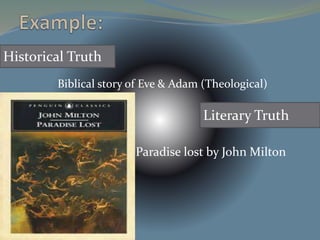
Historical Truth 
Biblical story of Eve & Adam (Theological) 
Literary Truth 
Paradise lost by John Milton
There are only two chapters in Bible related to history 
the of Eve & Adam where as Milton creates twelve 
huge books from that history / theology. 
Milton changes the character of Eve from Static in 
Bible to Dynamic in Paradise Lost. 
Eve’s character is larger in Paradise Lost than the 
story of Genesis. 
Milton creates Eve as complex Woman.
“ Man is the image and glory of God ; 
but the woman is the glory of the Man.” 
- St. Paul 
• Arguments between Eve & Satan 
• Dialogues like Fellowship, Conversation, Social communication
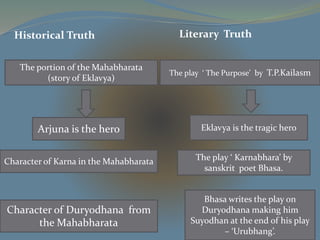
Historical Truth Literary Truth 
The portion of the Mahabharata 
(story of Eklavya) 
The play ‘ The Purpose’ by T.P.Kailasm 
Arjuna is the hero Eklavya is the tragic hero 
Character of Karna in the Mahabharata The play ‘ Karnabhara’ by 
sanskrit poet Bhasa. 
Character of Duryodhana from 
the Mahabharata 
Bhasa writes the play on 
Duryodhana making him 
Suyodhan at the end of his play 
– ‘Urubhang’.
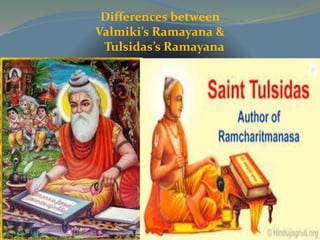
Differences between 
Valmiki’s Ramayana & 
Tulsidas’s Ramayana
In Valmiki’s Ramayana , 
Rama kill Vali from hiding while Vali and 
Sugreev were engaged in duel. So the 
question arise- Why Rama did not challenge 
Vali to face to face ? 
Where as Tulsidas does not deals with the 
issue.
In Ramachritmanasa , story of Sati testing 
Rama when he is searching for Sita where 
Valmiki Ramayana has 36sarga of 
Balakand & story of parvati.
Conclusion: 
From this illustrations, we can conclude that literary 
truth is beautiful and aesthetically delightful than the 
historical one. 
We remember history because there is literature on 
history. 
They are immortal because there is literature on them 
They are universal and timeless . . . .
Historical truth versus literary truth

Historical truth versus literary truth

  • 2.
    literature is basedon imagination looks like beautiful Photographs where as History is based on reality or fact and looks like X-ray images.
  • 3.
    •History deals withparticular Facts •Always the use names of real character because what is possible is credible. •What actual happen in past is describe in particular way. •No justice found
  • 4.
    •Literary Truth dealswith the UNIVERSAL TRUTH. •Writer/poet doesn’t describes What happen but describes What may be/ ought to be happen. •They can change the name of characters. Hamlet changes into Haider. •They have right & poetic freedom to change the facts. Vishal Bhardvaj makes the changes into his movie of Haider . •We find poetic justice.
  • 5.
    Historical Truth Biblicalstory of Eve & Adam (Theological) Literary Truth Paradise lost by John Milton
  • 6.
    There are onlytwo chapters in Bible related to history the of Eve & Adam where as Milton creates twelve huge books from that history / theology. Milton changes the character of Eve from Static in Bible to Dynamic in Paradise Lost. Eve’s character is larger in Paradise Lost than the story of Genesis. Milton creates Eve as complex Woman.
  • 7.
    “ Man isthe image and glory of God ; but the woman is the glory of the Man.” - St. Paul • Arguments between Eve & Satan • Dialogues like Fellowship, Conversation, Social communication
  • 8.
    Historical Truth LiteraryTruth The portion of the Mahabharata (story of Eklavya) The play ‘ The Purpose’ by T.P.Kailasm Arjuna is the hero Eklavya is the tragic hero Character of Karna in the Mahabharata The play ‘ Karnabhara’ by sanskrit poet Bhasa. Character of Duryodhana from the Mahabharata Bhasa writes the play on Duryodhana making him Suyodhan at the end of his play – ‘Urubhang’.
  • 9.
    Differences between Valmiki’sRamayana & Tulsidas’s Ramayana
  • 10.
    In Valmiki’s Ramayana, Rama kill Vali from hiding while Vali and Sugreev were engaged in duel. So the question arise- Why Rama did not challenge Vali to face to face ? Where as Tulsidas does not deals with the issue.
  • 11.
    In Ramachritmanasa ,story of Sati testing Rama when he is searching for Sita where Valmiki Ramayana has 36sarga of Balakand & story of parvati.
  • 13.
    Conclusion: From thisillustrations, we can conclude that literary truth is beautiful and aesthetically delightful than the historical one. We remember history because there is literature on history. They are immortal because there is literature on them They are universal and timeless . . . .