"Hungry, but I
don't want food!"
PICA
EATING
DISORDER
By: Fullon, Garcia, Hombrebueno, Van Cauwenberghe
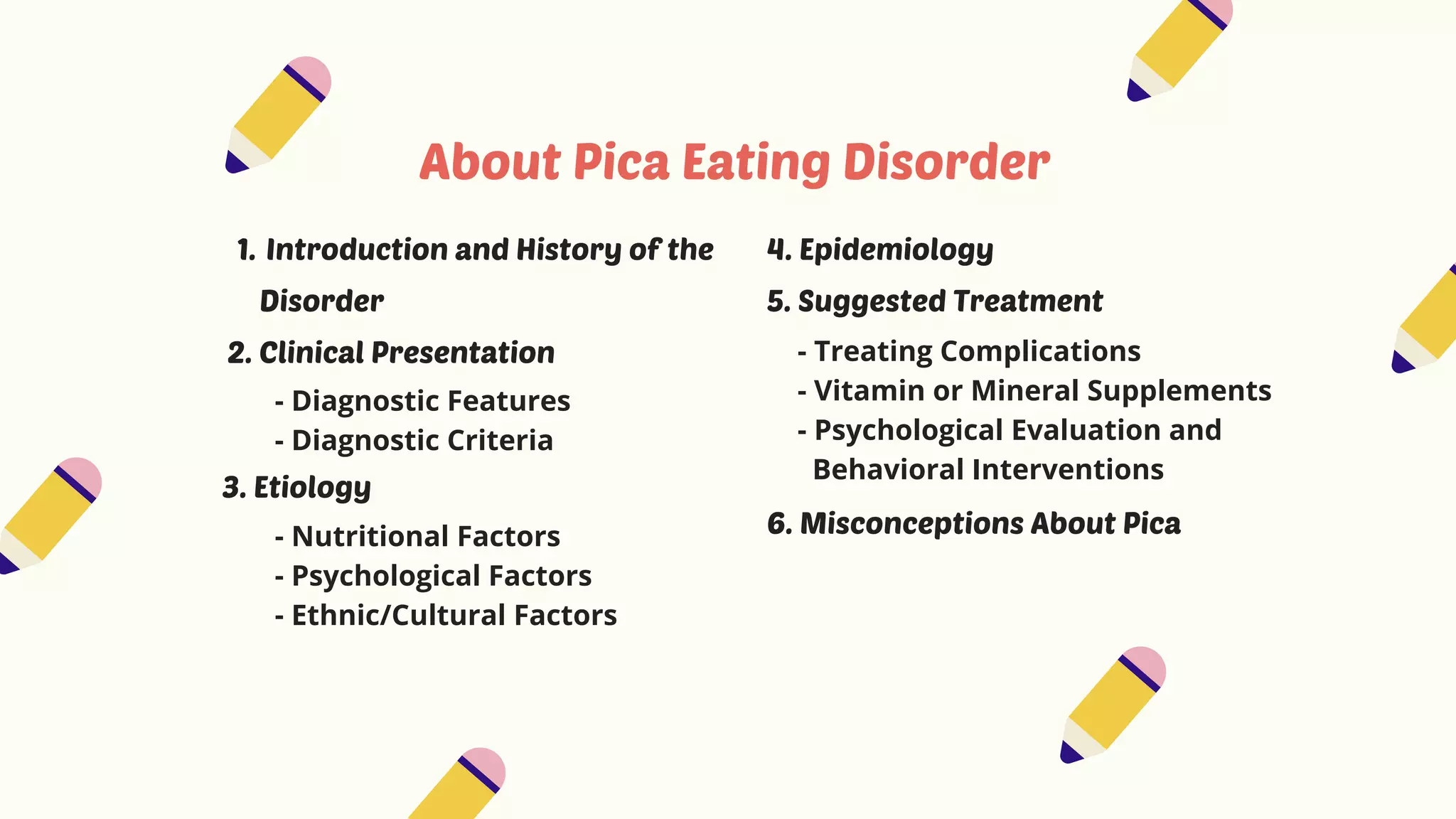
Introduction and History of the
Disorder
1.
2. Clinical Presentation
About Pica Eating Disorder
- Diagnostic Features
- Diagnostic Criteria
3. Etiology
- Nutritional Factors
- Psychological Factors
- Ethnic/Cultural Factors
4. Epidemiology
5. Suggested Treatment
- Treating Complications
- Vitamin or Mineral Supplements
- Psychological Evaluation and
Behavioral Interventions
6. Misconceptions About Pica
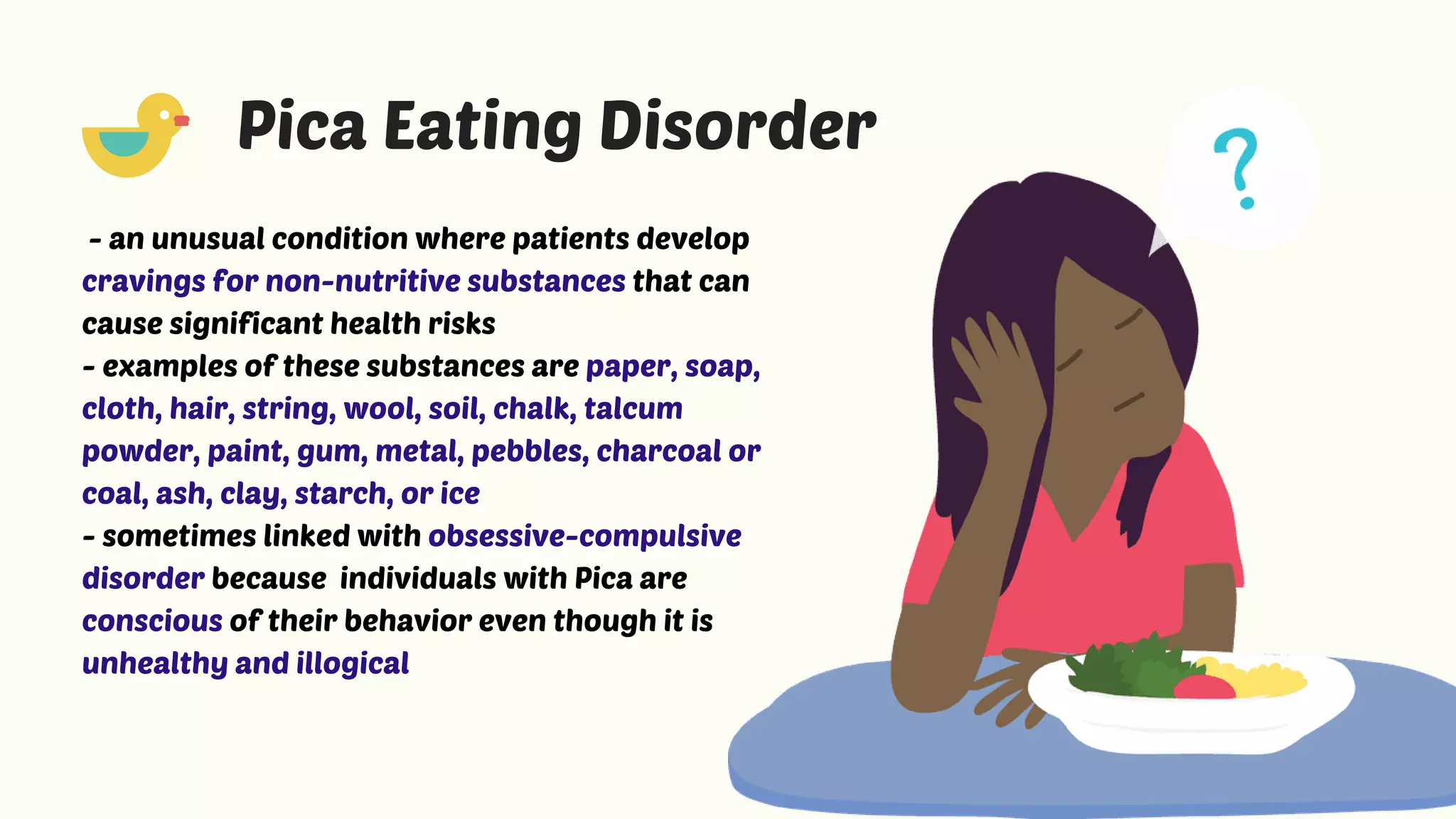
- an unusual condition where patients develop
cravings for non-nutritive substances that can
cause significant health risks
- examples of these substances are paper, soap,
cloth, hair, string, wool, soil, chalk, talcum
powder, paint, gum, metal, pebbles, charcoal or
coal, ash, clay, starch, or ice
- sometimes linked with obsessive-compulsive
disorder because individuals with Pica are
conscious of their behavior even though it is
unhealthy and illogical
Pica Eating Disorder
American Academy of Pediatrics identified Pica
as the medieval Latin name for a bird called the
magpie, which supposedly, has a appetite for
eating almost anything.
The first recorded case of Pica Eating disorder
was observed in a pregnant woman as she was
ingesting an abnormal amount of ice.
In DSM-5, Pica was formerly classified under the
section of disorders with onset of childhood and
adolescence, before it fell under the category of
eating disorders.
Brief History
Misconceptions
about Pica
addressing the elephant in the room
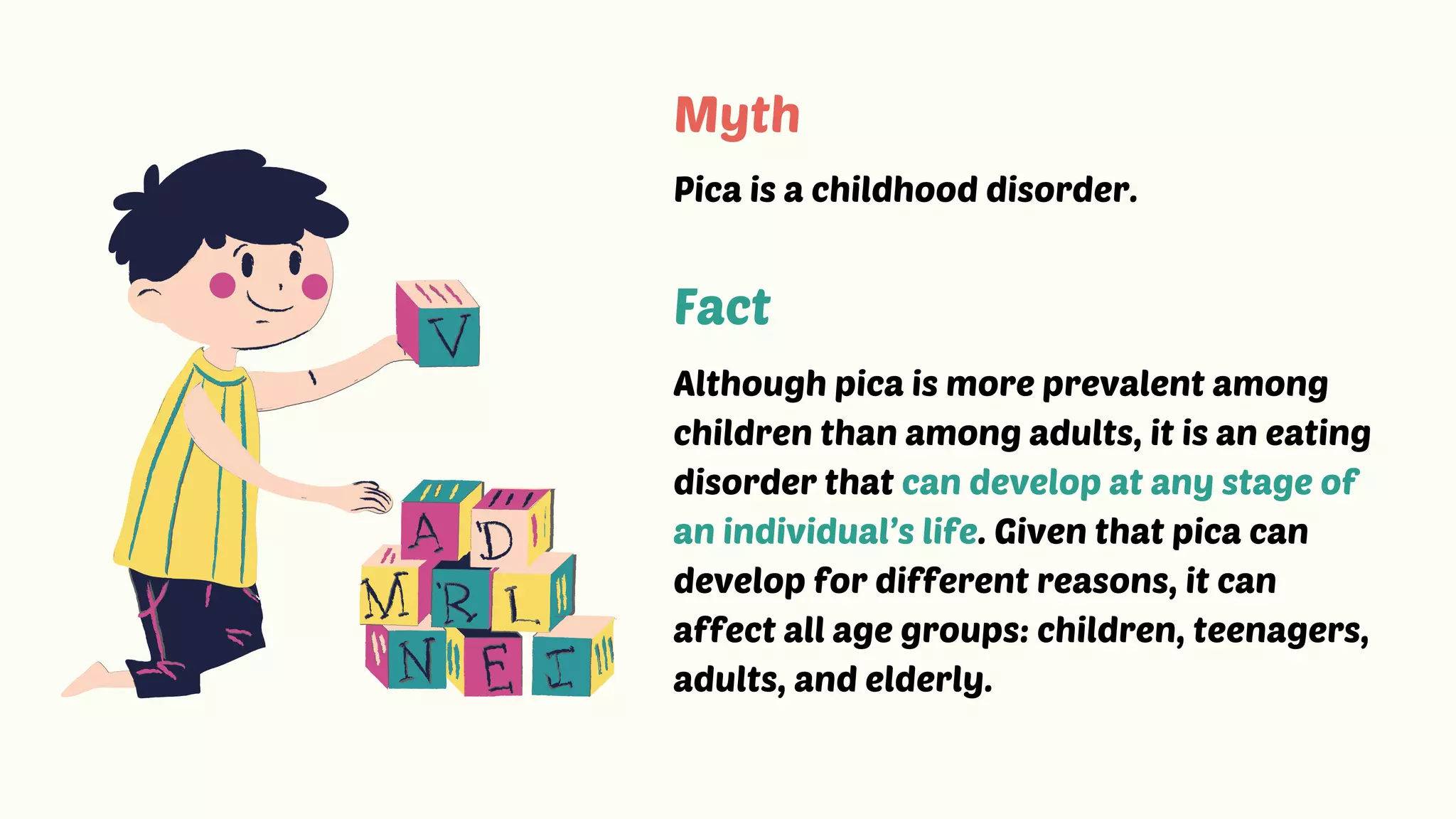
Pica is a childhood disorder.
Myth
Fact
Although pica is more prevalent among
children than among adults, it is an eating
disorder that can develop at any stage of
an individual’s life. Given that pica can
develop for different reasons, it can
affect all age groups: children, teenagers,
adults, and elderly.
Consuming odd foods is an example of pica.
Myth
Fact
Pica is the persistent consumption of nonfood items for at least one month
which have no nutritional value and are consumed intentionally. It is also not
part of a cultural or socially accepted practice such as geophagy in Africa.
Geophagy, or eating dirt or clay, is common especially for pregnant or lactating
African women because they believe that certain soils are considered to have
medicinal benefits and are often mixed with herbs as remedies for various
ailments (Holden, 2017). Economic factors may also play a role in this.
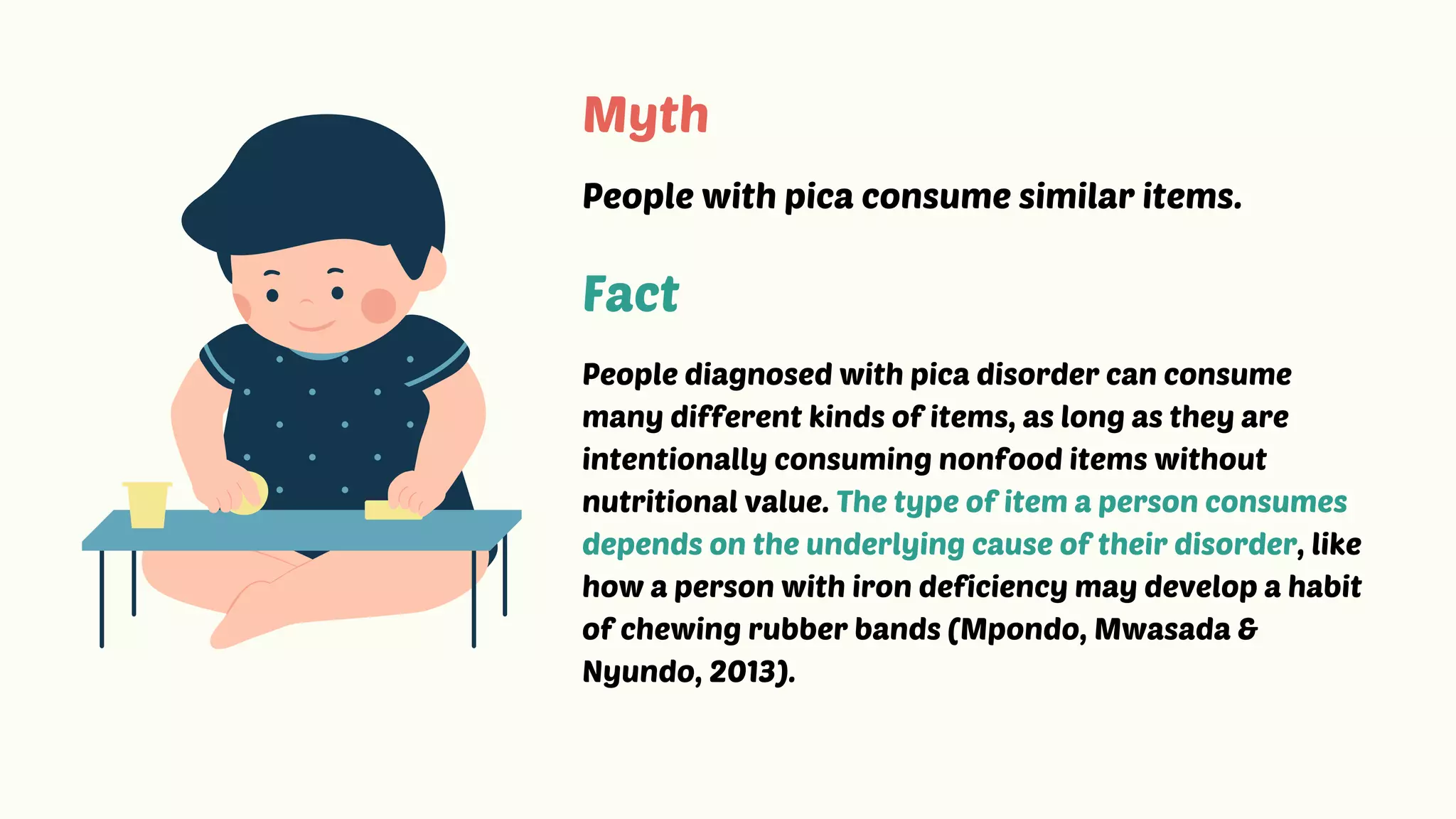
People with pica consume similar items.
Myth
Fact
People diagnosed with pica disorder can consume
many different kinds of items, as long as they are
intentionally consuming nonfood items without
nutritional value. The type of item a person consumes
depends on the underlying cause of their disorder, like
how a person with iron deficiency may develop a habit
of chewing rubber bands (Mpondo, Mwasada &
Nyundo, 2013).
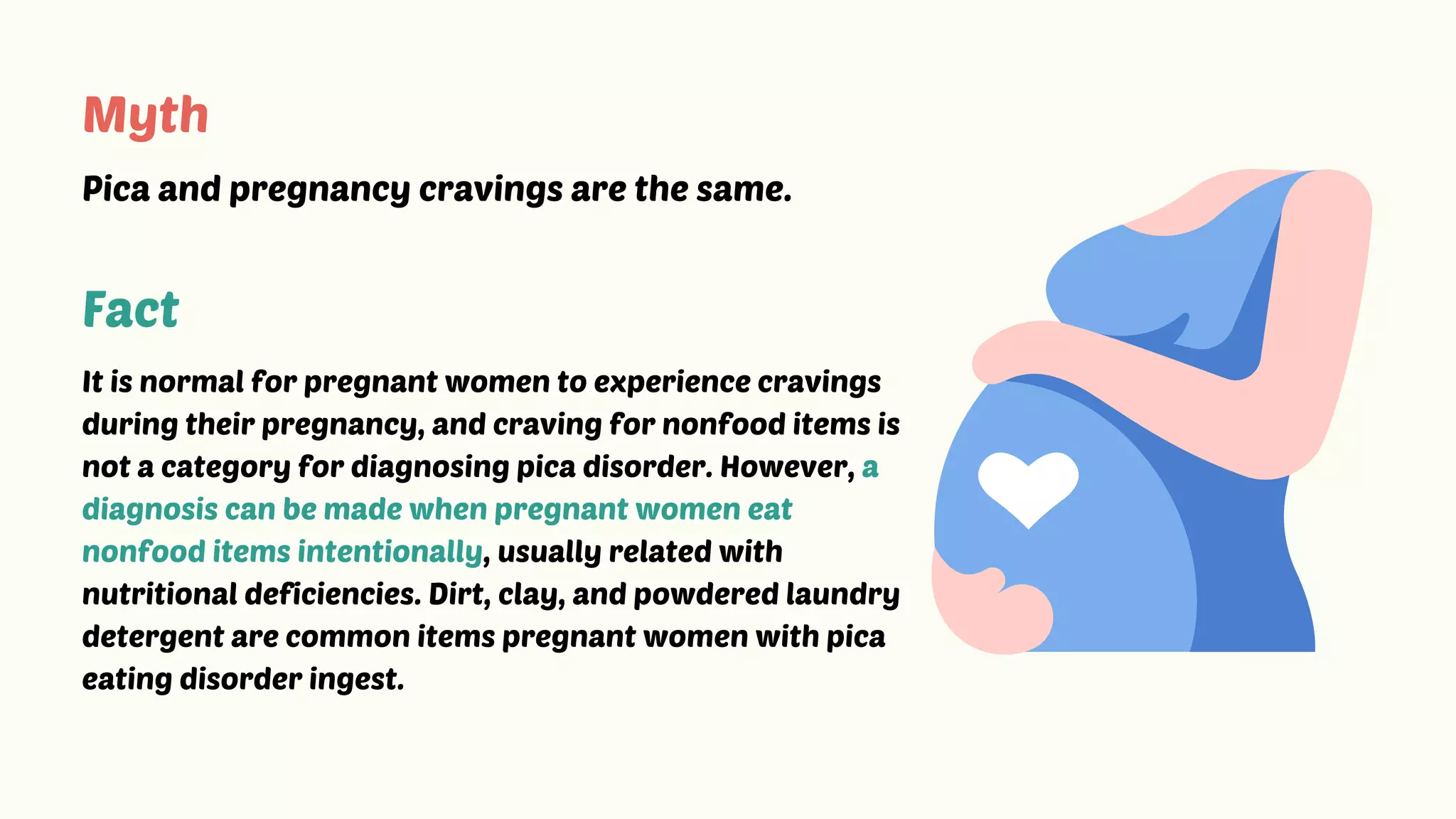
Pica and pregnancy cravings are the same.
Myth
Fact
It is normal for pregnant women to experience cravings
during their pregnancy, and craving for nonfood items is
not a category for diagnosing pica disorder. However, a
diagnosis can be made when pregnant women eat
nonfood items intentionally, usually related with
nutritional deficiencies. Dirt, clay, and powdered laundry
detergent are common items pregnant women with pica
eating disorder ingest.
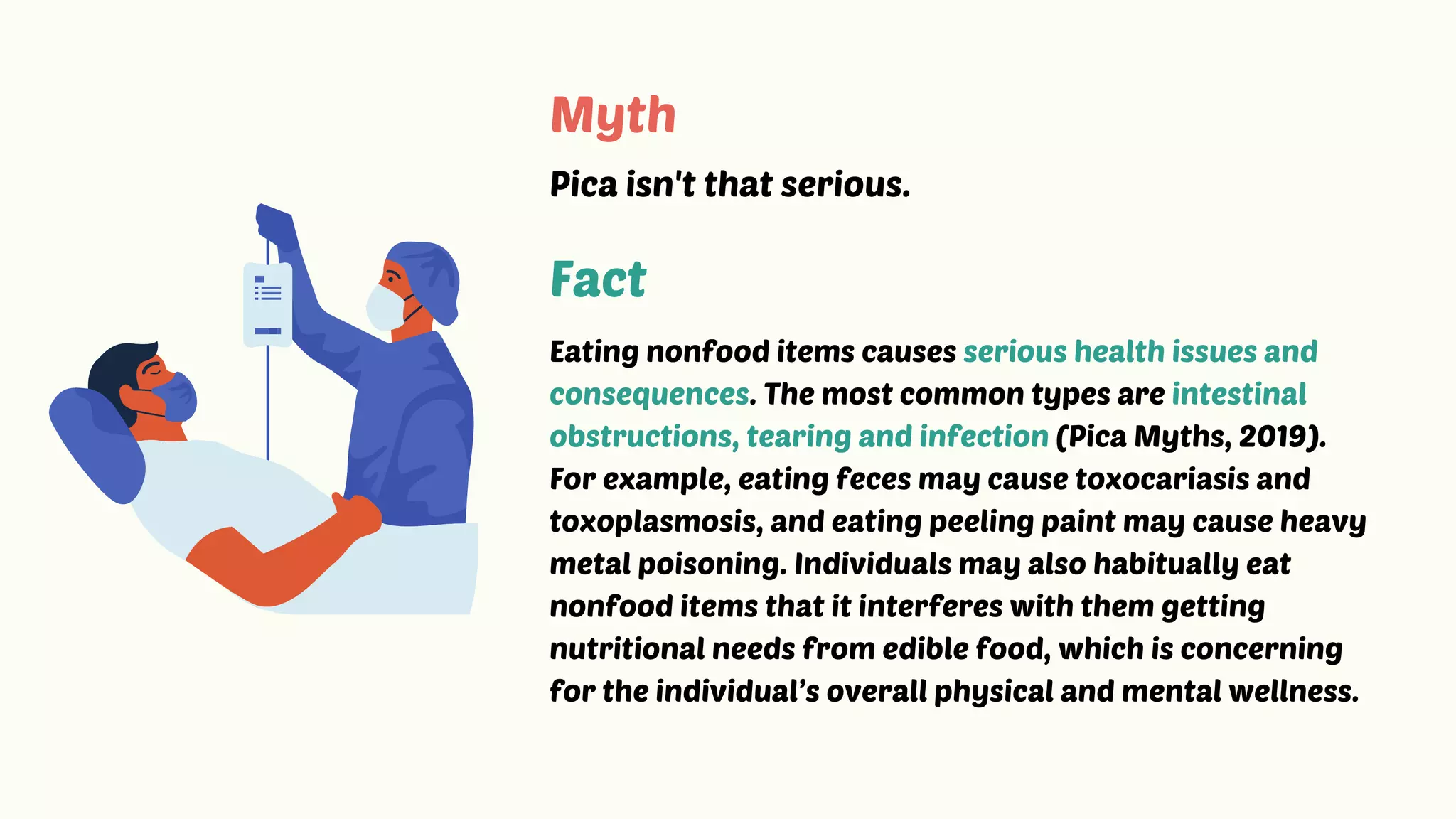
Pica isn't that serious.
Myth
Fact
Eating nonfood items causes serious health issues and
consequences. The most common types are intestinal
obstructions, tearing and infection (Pica Myths, 2019).
For example, eating feces may cause toxocariasis and
toxoplasmosis, and eating peeling paint may cause heavy
metal poisoning. Individuals may also habitually eat
nonfood items that it interferes with them getting
nutritional needs from edible food, which is concerning
for the individual’s overall physical and mental wellness.
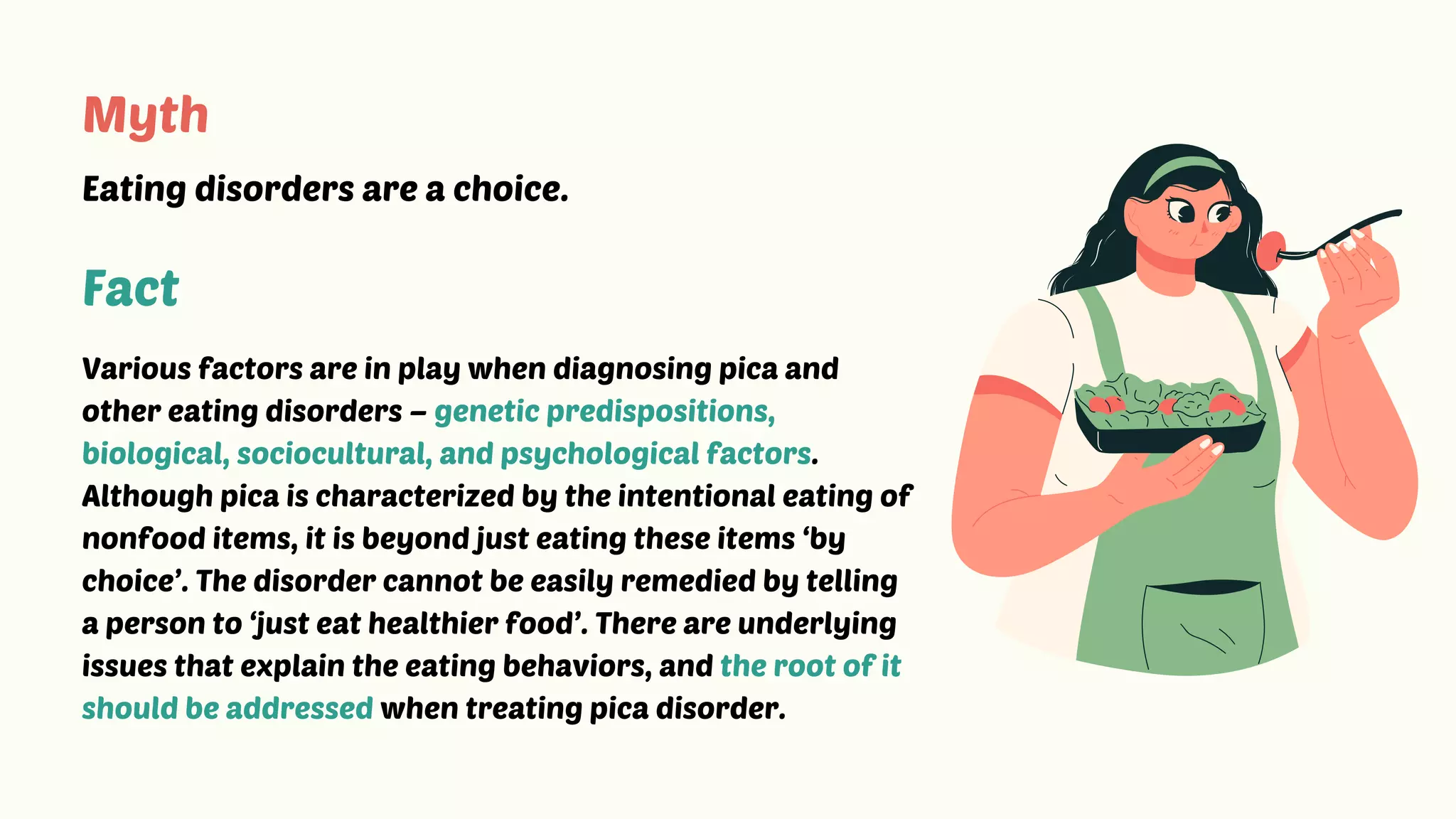
Eating disorders are a choice.
Myth
Fact
Various factors are in play when diagnosing pica and
other eating disorders – genetic predispositions,
biological, sociocultural, and psychological factors.
Although pica is characterized by the intentional eating of
nonfood items, it is beyond just eating these items ‘by
choice’. The disorder cannot be easily remedied by telling
a person to ‘just eat healthier food’. There are underlying
issues that explain the eating behaviors, and the root of it
should be addressed when treating pica disorder.
It is impossible to recover from an eating
disorder.
Myth
Fact
This is a common misconception when it comes to eating
disorders. In most cases, pica is successfully treated
across different ages as long as proper treatment and
rehabilitation is implemented and applied. Recovery may
be from treating medical complications, prescribing
vitamin or mineral supplements, and psychological
evaluation or behavioral interventions.
Clinical
Presentation
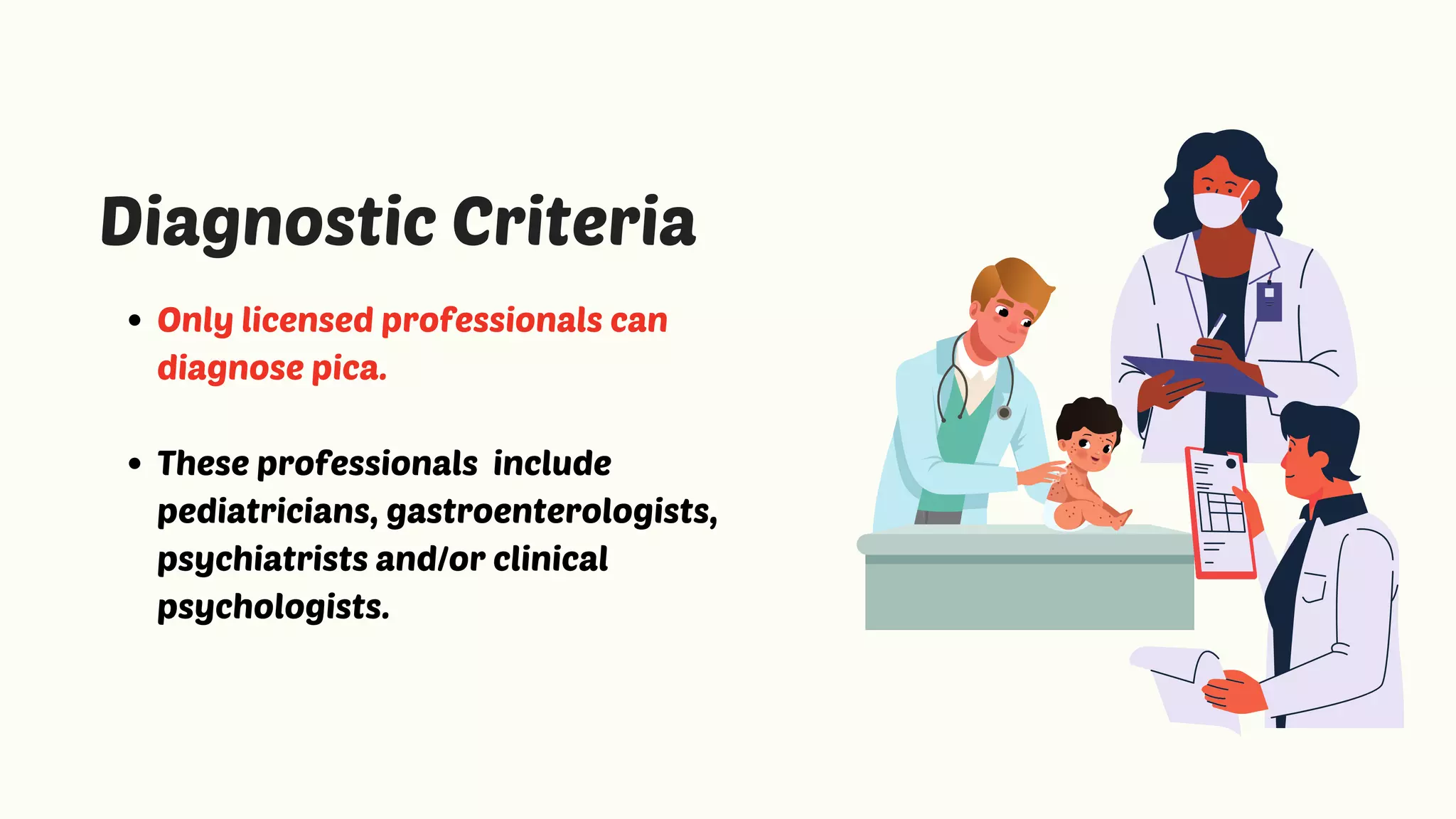
Only licensed professionals can
diagnose pica.
These professionals include
pediatricians, gastroenterologists,
psychiatrists and/or clinical
psychologists.
Diagnostic Criteria
If you are concerned that your child or
someone you know may be
experiencing symptoms of pica, you
must consult with a medical
professional right away.
Online resources and screenings are
available, but they are not always
reliable and cannot definitively
diagnose any medical or mental health
conditions.
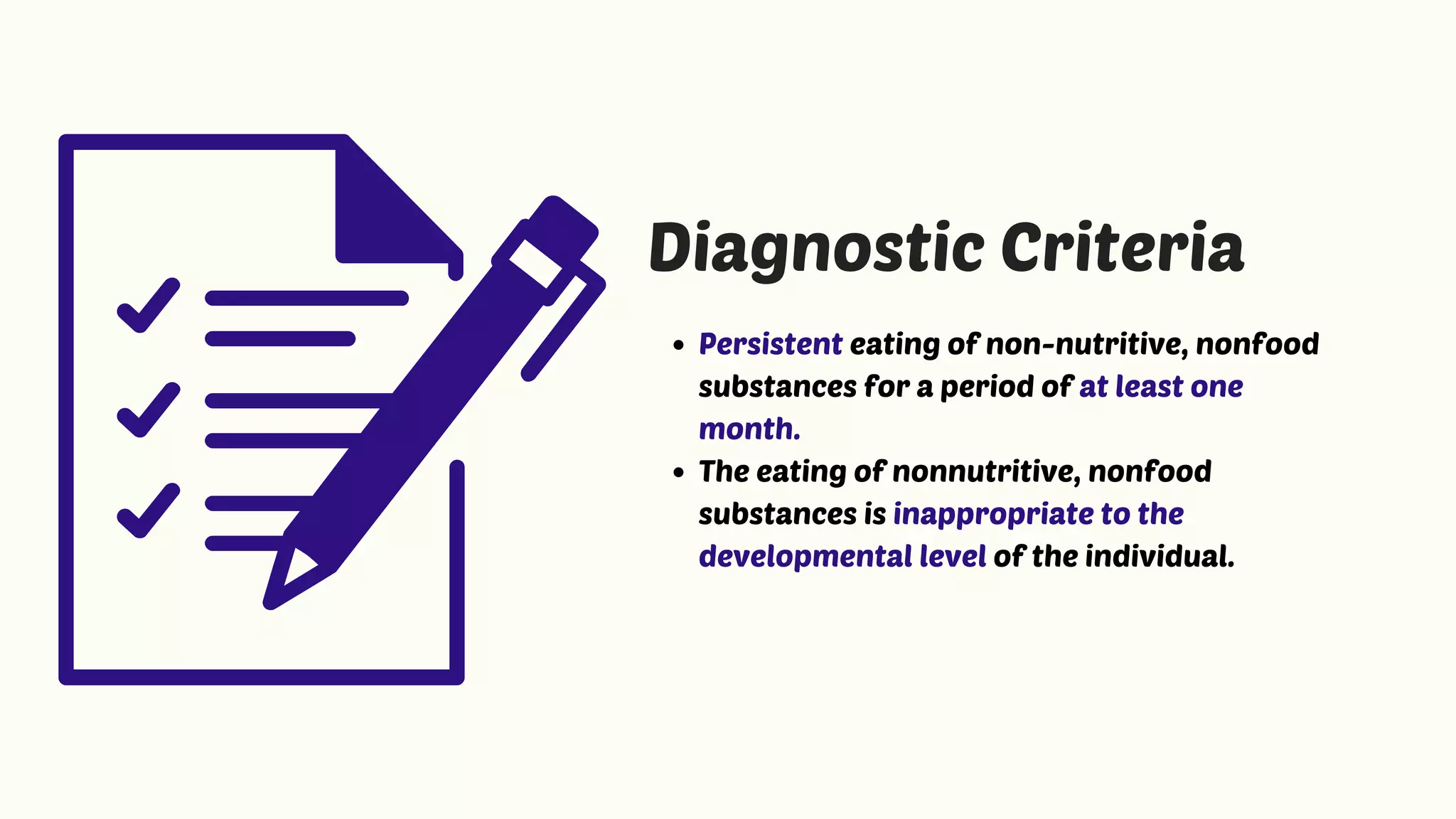
Diagnostic Criteria
Persistent eating of non-nutritive, nonfood
substances for a period of at least one
month.
The eating of nonnutritive, nonfood
substances is inappropriate to the
developmental level of the individual.
Diagnostic Criteria
The eating behavior is not part of a
culturally supported or socially normative
practice.
If occurring with another mental disorder,
or during a medical condition, it is severe
enough to warrant independent clinical
attention.
Specify if: In remission: After full criteria for
pica were previously met, the criteria have not
been met for a sustained period of time.
Diagnostic Criteria
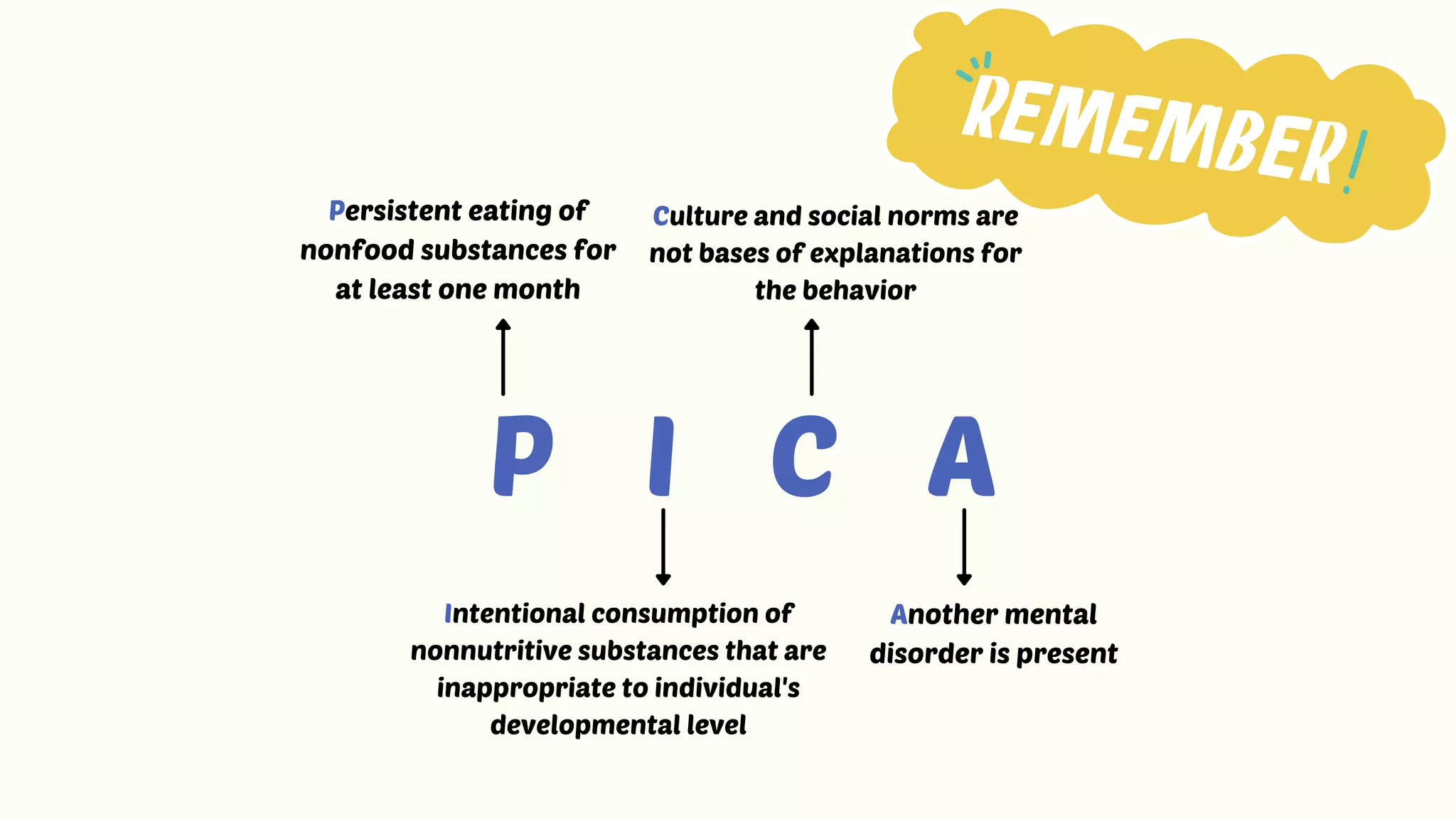
P I C A
Persistent eating of
nonfood substances for
at least one month
Intentional consumption of
nonnutritive substances that are
inappropriate to individual's
developmental level
Culture and social norms are
not bases of explanations for
the behavior
Another mental
disorder is present
Typical substances ingested tend to vary with
age and availability.
A. Eating of one or more non-nutritive, non-food
substances on a persistent basis over a period of at
least 1 month that is severe enough to warrant
clinical attention.
Diagnostic Features
The term non-food is included because the
diagnosis of Pica does not apply to ingestion of
diet products that have minimal nutritional
content
B. The eating of non-nutritive, non-food
substances must be developmentally
inappropriate.
Diagnostic Features
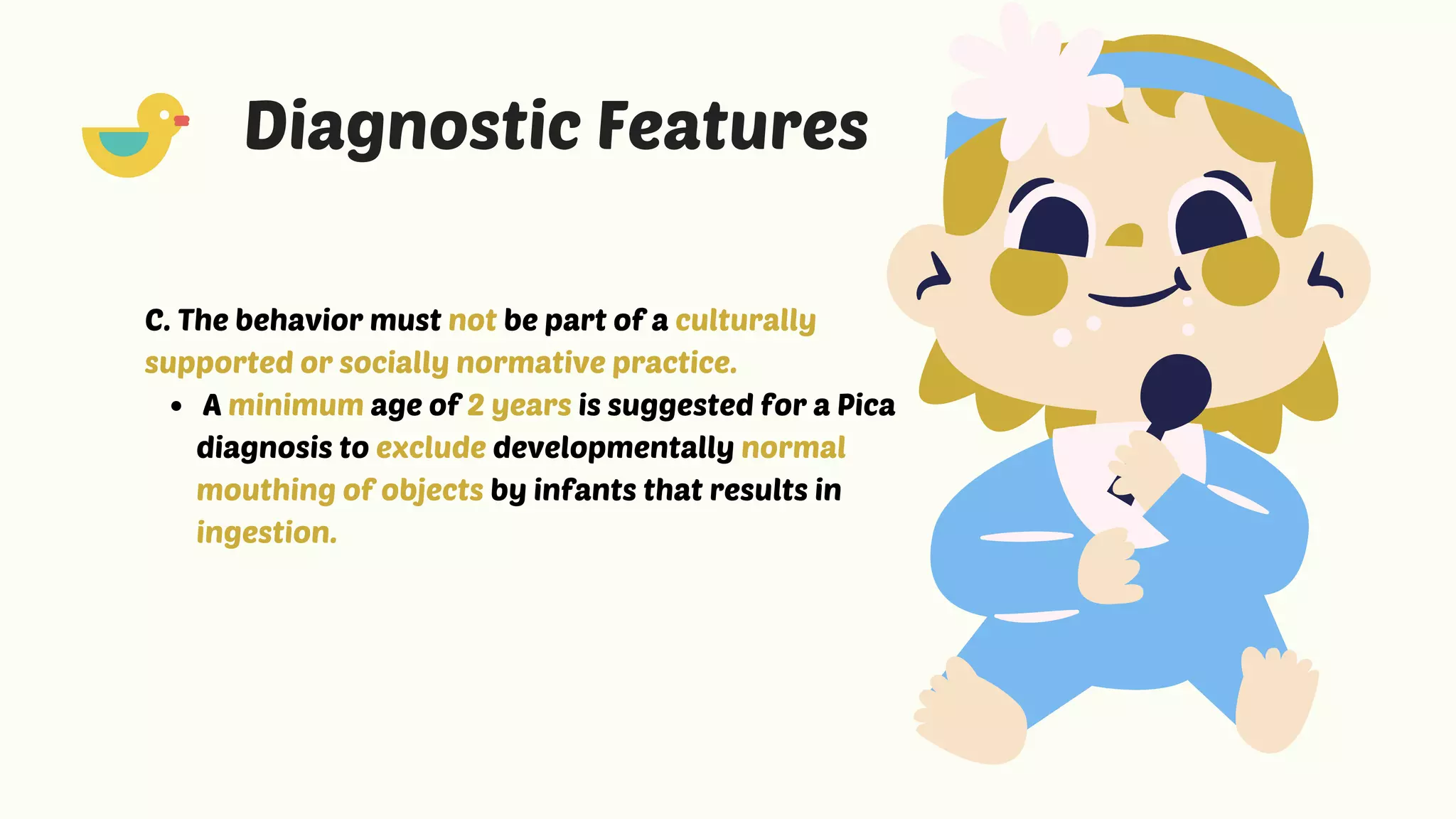
A minimum age of 2 years is suggested for a Pica
diagnosis to exclude developmentally normal
mouthing of objects by infants that results in
ingestion.
C. The behavior must not be part of a culturally
supported or socially normative practice.
Diagnostic Features
The eating of nonnutritive, nonfood
substances can be an associated feature of
other mental disorders (e.g., intellectual
disability [intellectual developmental
disorder], autism spectrum disorder,
schizophrenia).
D. If the eating behavior occurs exclusively in the
context of another mental disorder, a separate
diagnosis of Pica should be made only if the
eating behavior is sufficiently severe to warrant
additional clinical attention.
Diagnostic Features
Etiology
Pica is considered a multifactorial phenomenon due to the
fact that there is no known cause for it and that there are
numerous possible etiologies.
There have been several hypotheses put forward in an
attempt to explain this behavior, including nutritional and
dietary factors as well as psychological and biochemical
disorders
The cultural, ethnic, and family practices of people are
among the other areas being investigated for possible
causes.
Etiology
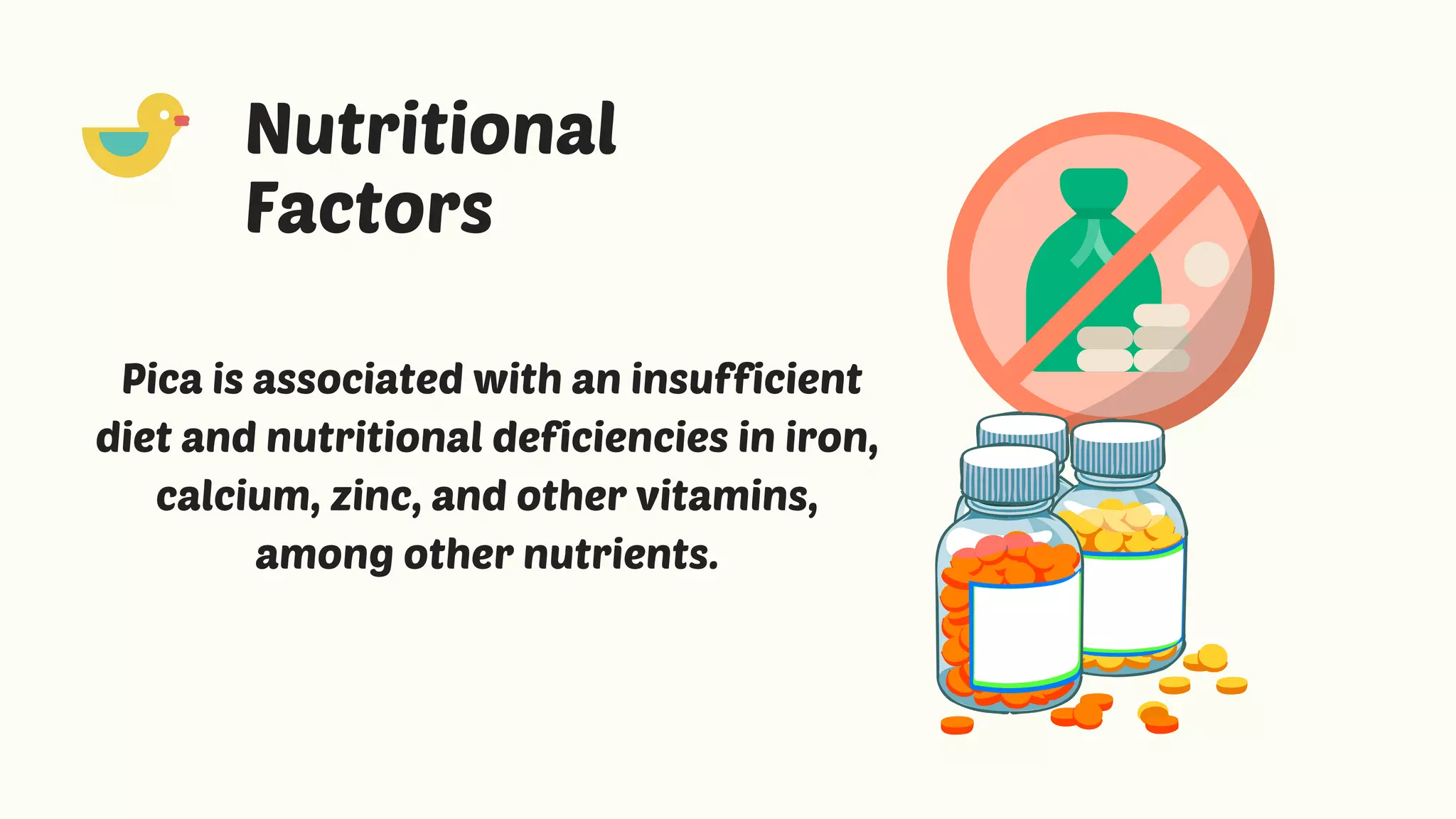
Pica is associated with an insufficient
diet and nutritional deficiencies in iron,
calcium, zinc, and other vitamins,
among other nutrients.


Nutritional
Factors
Pica is a learned behavior
More prevalent in environments with less social
interaction.
Children who experience neglect are at higher risk
of developing Pica disorder
People with certain mental health conditions like
Obsessive-Compulsive Disorder (OCD) and
Schizophrenia may develop pica as a coping
mechanism
Psychological Factors
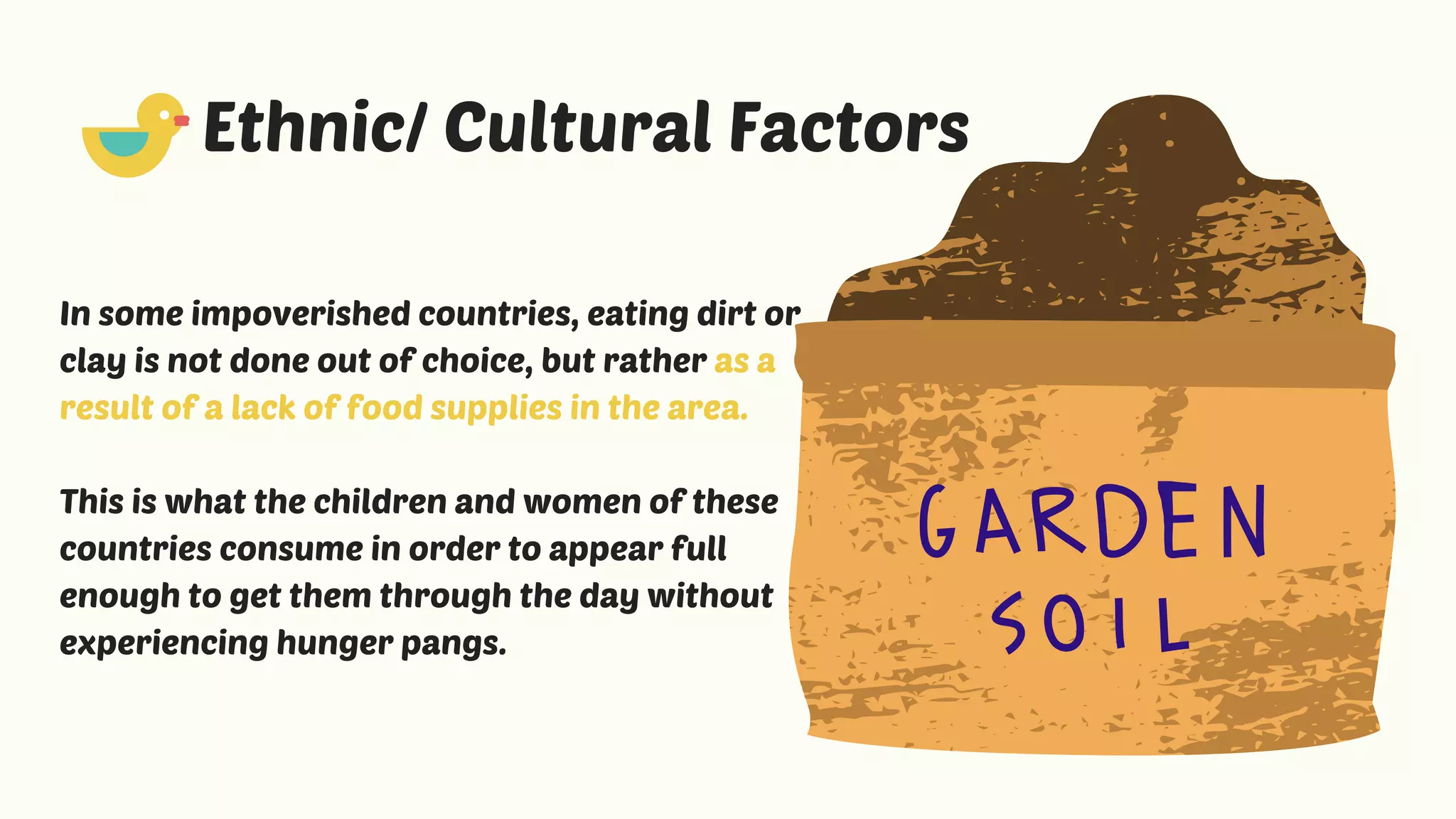
In some impoverished countries, eating dirt or
clay is not done out of choice, but rather as a
result of a lack of food supplies in the area.
This is what the children and women of these
countries consume in order to appear full
enough to get them through the day without
experiencing hunger pangs.
Ethnic/ Cultural Factors
Can be categorized according to the type of substance ingested:
clay ingestion
ice ingestion
excessive starch consumption
may contain a wide variety of toxic contaminants such as
lead, mercury, arsenic, fluoride, etc.
Geophagia
Pagophagia
Amylophagia
Other Substances
Pica Complications
Nasser, Y. A. (2021, July 29). Pica. StatPearls [Internet]. Retrieved from https://www.ncbi.nlm.nih.gov/books/NBK532242/
Epidemiology
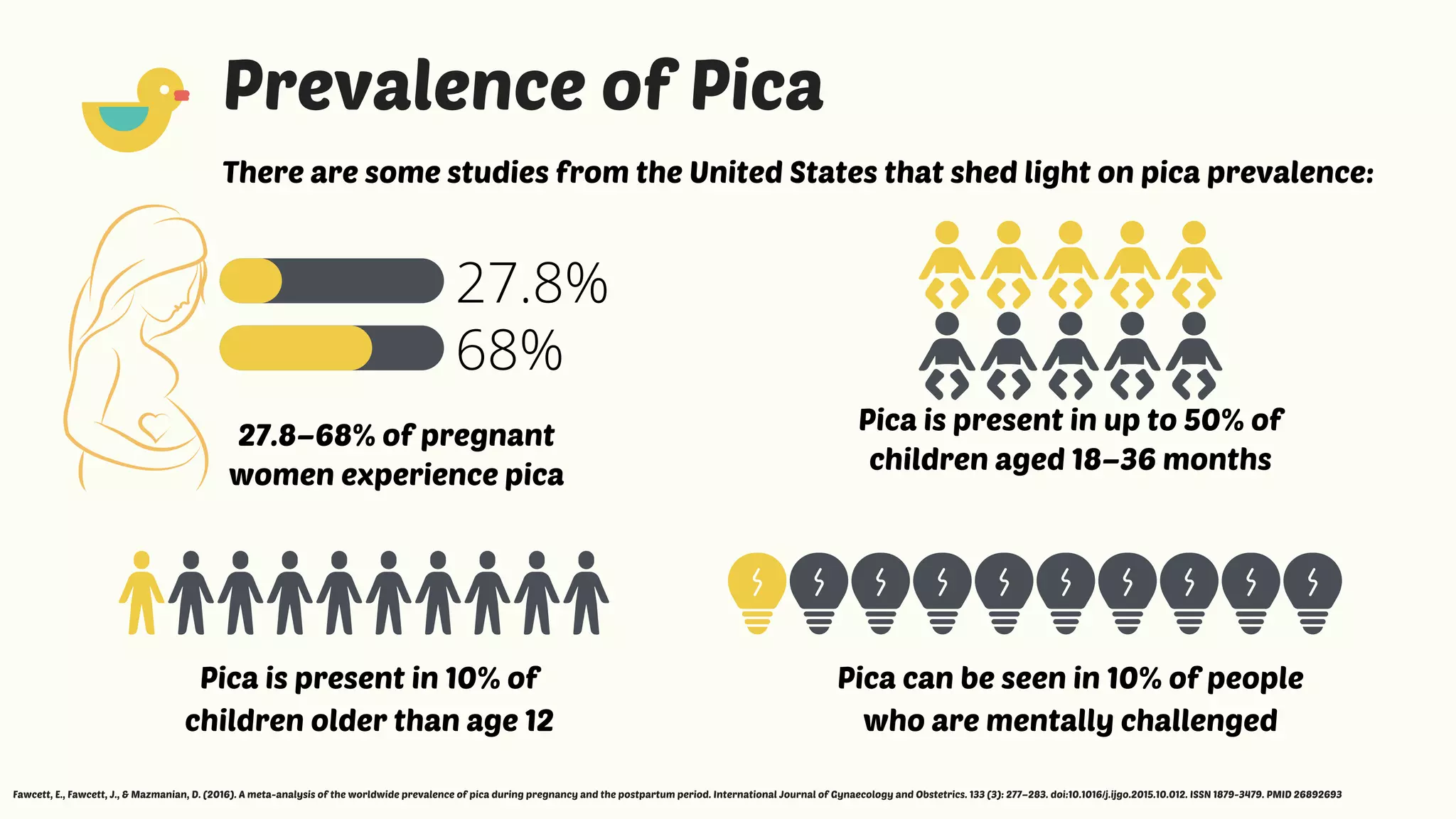
The actual number of those affected by
pica is unclear due to under-reporting
among affected subjects. However, it is
most likely more prominent in developing
countries.
Prevalence of Pica
Fawcett, E., Fawcett, J., & Mazmanian, D. (2016). A meta-analysis of the worldwide prevalence of pica during pregnancy and the postpartum period. International Journal of Gynaecology and Obstetrics. 133 (3): 277–283. doi:10.1016/j.ijgo.2015.10.012. ISSN 1879-3479. PMID 26892693
27.8%
68%
Prevalence of Pica
Fawcett, E., Fawcett, J., & Mazmanian, D. (2016). A meta-analysis of the worldwide prevalence of pica during pregnancy and the postpartum period. International Journal of Gynaecology and Obstetrics. 133 (3): 277–283. doi:10.1016/j.ijgo.2015.10.012. ISSN 1879-3479. PMID 26892693
27.8–68% of pregnant
women experience pica
Pica is present in up to 50% of
children aged 18–36 months
Pica can be seen in 10% of people
who are mentally challenged
Pica is present in 10% of
children older than age 12
There are some studies from the United States that shed light on pica prevalence:
Suggested
Treatment
The first line of treatment for individuals with pica eating
disorder is addressing the illness from ingesting nonfood
items, such as constipation, diarrhea, ulcer, intestinal tear,
infection, or any combination of these. They are treated as
advised by their physician or a medical professional.
Lead poisoning can also be acquired from eating items with
chemicals like paint chips, in which case chelation therapy is
prescribed. Chelation therapy is a method for removing heavy
metals, such as mercury or lead, from the blood (Cafasso,
2018). Together with medications, this allows the individual to
excrete the lead in their urine.
Treating complications
from nonfood items
In some cases, pica is caused by malnutrition or
nutritional deficits. The doctor would prescribe vitamin
or mineral supplements to address this.
For example, if the individual has iron or zinc deficiency,
they will be given iron supplements or vitamins to treat
the eating disorder (Holm, 2012). Usually, pica
symptoms would disappear after nutritional treatment
(Monroe, 2018). If pica symptoms persist despite
addressing the illnesses and nutritional deficits,
psychological intervention is done.
Vitamin or mineral
supplements
In collaboration with a mental health team, the eating behavior is addressed by
identifying the underlying psychological factors leading to the disorder.
The Handbook for Clinical Child Psychology currently supports general behavioral
strategies as the most effective treatment approach for pica, with training in which
foods are edible and which foods cannot be eaten through the use of positive
reinforcement (WebMD, 2005).
The doctor may also order psychological evaluation to determine if the individual
has another underlying mental health condition, such as OCD or autism spectrum
disorder (Holm, 2012). Treatment would vary depending on the diagnosis.
Prescriptions may require therapy, medication, or both.
Psychological evaluation and
behavioral interventions
It is advised that individuals who exhibit symptoms of pica, or
people who know of individuals who do, would consult
physicians and medical professionals for treatment and
recommendations on how to address the symptoms.
Should psychological and behavioral intervention be sought, it
would be as ordered by the medical professional. As such, the
individual can consult a recommended mental health
professional in such case.
Who to consult?
Where to seek help?
National Eating Disorders
Association (NEDA)
Philippine Mental Health
Association (PMHA)
National Center for Mental
Health (NCMH)
National Association of Anorexia
Nervosa and Associated Disorders
(ANAD)
If you are in a crisis and need help
immediately, text “NEDA” to 741741 to be
connected with a trained volunteer at Crisis
Text Line.
For counseling, you may get in touch with
them via Facebook Messenger, through
pmhacds@gmail.com, or contact them at
(02) 8921-4958 0917-565-2036.
For free psychosocial support,
mcc@ncmh.gov.ph/pro@ncmh.gov.ph,
landline (02) 531 9001, or you may reach
your regional DOH helpline through
bit.ly/DOHhelplines
ANAD is a professionally supported and peer-
run support group for people with eating
disorders. You may join ANAD's support group
through https://bit.ly/ANADSupport or contact
them through their helpline at 1 (888)-375-
7767.
Recommended
Pica Strategies
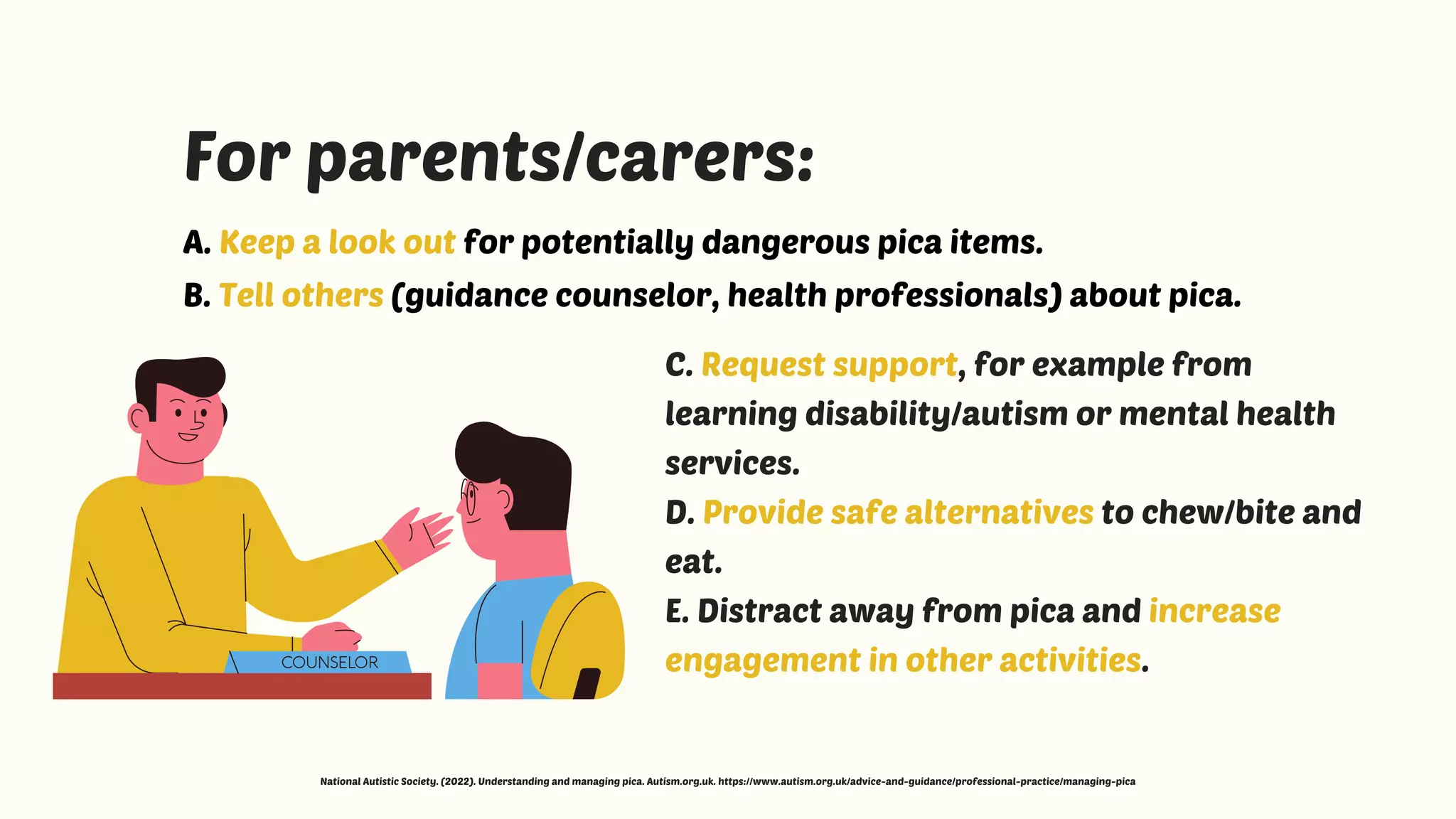
A. Keep a look out for potentially dangerous pica items.
B. Tell others (guidance counselor, health professionals) about pica.
C. Request support, for example from
learning disability/autism or mental health
services.
D. Provide safe alternatives to chew/bite and
eat.
E. Distract away from pica and increase
engagement in other activities.
For parents/carers:
National Autistic Society. (2022). Understanding and managing pica. Autism.org.uk. https://www.autism.org.uk/advice-and-guidance/professional-practice/managing-pica
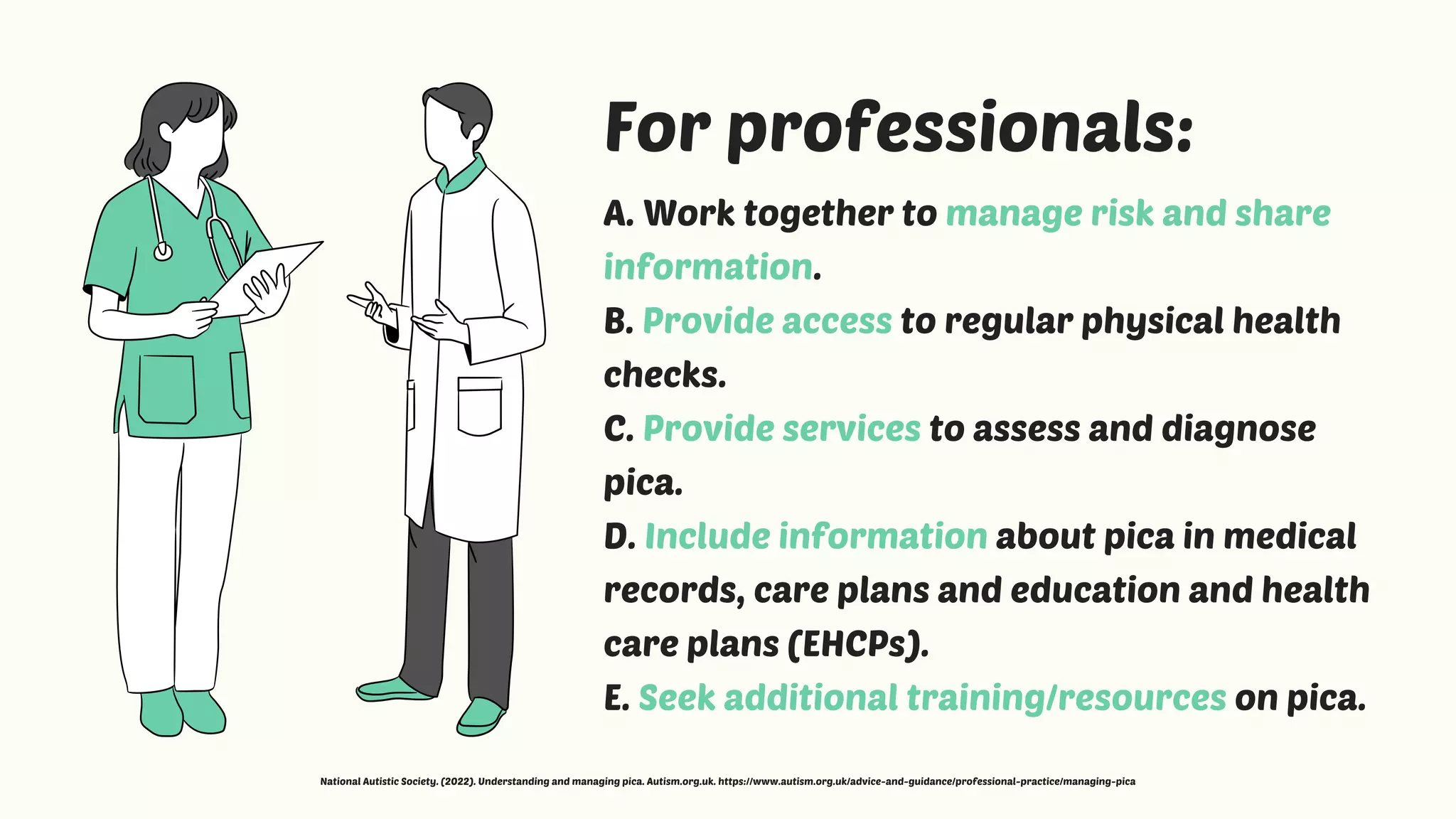
A. Work together to manage risk and share
information.
B. Provide access to regular physical health
checks.
C. Provide services to assess and diagnose
pica.
D. Include information about pica in medical
records, care plans and education and health
care plans (EHCPs).
E. Seek additional training/resources on pica.
For professionals:
National Autistic Society. (2022). Understanding and managing pica. Autism.org.uk. https://www.autism.org.uk/advice-and-guidance/professional-practice/managing-pica
American Psychiatric Association. (2013). Diagnostic and statistical manual of mental disorders (5th ed.). Arlington, VA:
American Psychiatric Publishing.
Cafasso, J. (2018). What Does Chelation Therapy Treat? Healthline; Healthline Media.
https://www.healthline.com/health/chelation-therapy
Fawcett, E., Fawcett, J., & Mazmanian, D. (2016). A meta-analysis of the worldwide prevalence of pica during
pregnancy and the postpartum period. International Journal of Gynaecology and Obstetrics. 133 (3): 277–283.
doi:10.1016/j.ijgo.2015.10.012. ISSN 1879-3479. PMID 26892693
Holden, J. (2017). Eat dirt? Why on earth would you do that? The Irish Times; The Irish Times.
https://www.irishtimes.com/life-and-style/health-family/eat-dirt-why-on-earth-would-you-do-that-1.2934821
Holm, G. (2012). Everything You Need to Know About Pica. Healthline; Healthline Media.
https://www.healthline.com/health/pica#treatment
Khan, Y. & Tisman, G (2010). Pica in iron deficiency: a case series. Journal of Medical Case Reports.
https://doi.org/10.1186/1752-1947-4-86
Mental Health and Pica. (2005). WebMD; WebMD. https://www.webmd.com/mental-health/mental-health-pica
Monroe, J. (2018). Pica Disorder and How to Treat It. Newport Academy; Newport Academy.
https://www.newportacademy.com/resources/mental-health/pica-eating-disorder/
Mpondo, B., Mwasada, G., & Nyundo, A. (2013). Pica as a persistent eating disorder associated with iron deficiency
anaemia: two case reports. South Sudan Medical Journal.
http://www.southsudanmedicaljournal.com/archive/august-2018/pica-as-a-persistent-eating-disorder-
associated-with-iron-deficiency-anaemia-two-case-reports.html
Pica Myths. (2019). The Recovery Village Drug and Alcohol Rehab; The Recovery Village Drug and Alcohol Rehab.
https://www.therecoveryvillage.com/mental-health/pica/pica-myths/
Rice, A. (2021). What Is Pica? - Pica Eating Disorder. Familydoctor.org. https://familydoctor.org/condition/pica/
References:
What's your favorite takeaway?
What can we do to raise more awareness about Pica?
Why is it important to learn about Pica?
How can we be more sensitive towards people with eating disorders?
end

What is Pica (Eating Disorder)?

  • 1.
    "Hungry, but I don'twant food!" PICA EATING DISORDER By: Fullon, Garcia, Hombrebueno, Van Cauwenberghe
  • 2.
    Introduction and Historyof the Disorder 1. 2. Clinical Presentation About Pica Eating Disorder - Diagnostic Features - Diagnostic Criteria 3. Etiology - Nutritional Factors - Psychological Factors - Ethnic/Cultural Factors 4. Epidemiology 5. Suggested Treatment - Treating Complications - Vitamin or Mineral Supplements - Psychological Evaluation and Behavioral Interventions 6. Misconceptions About Pica
  • 3.
    - an unusualcondition where patients develop cravings for non-nutritive substances that can cause significant health risks - examples of these substances are paper, soap, cloth, hair, string, wool, soil, chalk, talcum powder, paint, gum, metal, pebbles, charcoal or coal, ash, clay, starch, or ice - sometimes linked with obsessive-compulsive disorder because individuals with Pica are conscious of their behavior even though it is unhealthy and illogical Pica Eating Disorder
  • 4.
    American Academy ofPediatrics identified Pica as the medieval Latin name for a bird called the magpie, which supposedly, has a appetite for eating almost anything. The first recorded case of Pica Eating disorder was observed in a pregnant woman as she was ingesting an abnormal amount of ice. In DSM-5, Pica was formerly classified under the section of disorders with onset of childhood and adolescence, before it fell under the category of eating disorders. Brief History
  • 5.
  • 6.
    Pica is achildhood disorder. Myth Fact Although pica is more prevalent among children than among adults, it is an eating disorder that can develop at any stage of an individual’s life. Given that pica can develop for different reasons, it can affect all age groups: children, teenagers, adults, and elderly.
  • 7.
    Consuming odd foodsis an example of pica. Myth Fact Pica is the persistent consumption of nonfood items for at least one month which have no nutritional value and are consumed intentionally. It is also not part of a cultural or socially accepted practice such as geophagy in Africa. Geophagy, or eating dirt or clay, is common especially for pregnant or lactating African women because they believe that certain soils are considered to have medicinal benefits and are often mixed with herbs as remedies for various ailments (Holden, 2017). Economic factors may also play a role in this.
  • 8.
    People with picaconsume similar items. Myth Fact People diagnosed with pica disorder can consume many different kinds of items, as long as they are intentionally consuming nonfood items without nutritional value. The type of item a person consumes depends on the underlying cause of their disorder, like how a person with iron deficiency may develop a habit of chewing rubber bands (Mpondo, Mwasada & Nyundo, 2013).
  • 9.
    Pica and pregnancycravings are the same. Myth Fact It is normal for pregnant women to experience cravings during their pregnancy, and craving for nonfood items is not a category for diagnosing pica disorder. However, a diagnosis can be made when pregnant women eat nonfood items intentionally, usually related with nutritional deficiencies. Dirt, clay, and powdered laundry detergent are common items pregnant women with pica eating disorder ingest.
  • 10.
    Pica isn't thatserious. Myth Fact Eating nonfood items causes serious health issues and consequences. The most common types are intestinal obstructions, tearing and infection (Pica Myths, 2019). For example, eating feces may cause toxocariasis and toxoplasmosis, and eating peeling paint may cause heavy metal poisoning. Individuals may also habitually eat nonfood items that it interferes with them getting nutritional needs from edible food, which is concerning for the individual’s overall physical and mental wellness.
  • 11.
    Eating disorders area choice. Myth Fact Various factors are in play when diagnosing pica and other eating disorders – genetic predispositions, biological, sociocultural, and psychological factors. Although pica is characterized by the intentional eating of nonfood items, it is beyond just eating these items ‘by choice’. The disorder cannot be easily remedied by telling a person to ‘just eat healthier food’. There are underlying issues that explain the eating behaviors, and the root of it should be addressed when treating pica disorder.
  • 12.
    It is impossibleto recover from an eating disorder. Myth Fact This is a common misconception when it comes to eating disorders. In most cases, pica is successfully treated across different ages as long as proper treatment and rehabilitation is implemented and applied. Recovery may be from treating medical complications, prescribing vitamin or mineral supplements, and psychological evaluation or behavioral interventions.
  • 13.
  • 14.
    Only licensed professionalscan diagnose pica. These professionals include pediatricians, gastroenterologists, psychiatrists and/or clinical psychologists. Diagnostic Criteria
  • 15.
    If you areconcerned that your child or someone you know may be experiencing symptoms of pica, you must consult with a medical professional right away. Online resources and screenings are available, but they are not always reliable and cannot definitively diagnose any medical or mental health conditions. Diagnostic Criteria
  • 16.
    Persistent eating ofnon-nutritive, nonfood substances for a period of at least one month. The eating of nonnutritive, nonfood substances is inappropriate to the developmental level of the individual. Diagnostic Criteria
  • 17.
    The eating behavioris not part of a culturally supported or socially normative practice. If occurring with another mental disorder, or during a medical condition, it is severe enough to warrant independent clinical attention. Specify if: In remission: After full criteria for pica were previously met, the criteria have not been met for a sustained period of time. Diagnostic Criteria
  • 18.
    P I CA Persistent eating of nonfood substances for at least one month Intentional consumption of nonnutritive substances that are inappropriate to individual's developmental level Culture and social norms are not bases of explanations for the behavior Another mental disorder is present
  • 19.
    Typical substances ingestedtend to vary with age and availability. A. Eating of one or more non-nutritive, non-food substances on a persistent basis over a period of at least 1 month that is severe enough to warrant clinical attention. Diagnostic Features
  • 20.
    The term non-foodis included because the diagnosis of Pica does not apply to ingestion of diet products that have minimal nutritional content B. The eating of non-nutritive, non-food substances must be developmentally inappropriate. Diagnostic Features
  • 21.
    A minimum ageof 2 years is suggested for a Pica diagnosis to exclude developmentally normal mouthing of objects by infants that results in ingestion. C. The behavior must not be part of a culturally supported or socially normative practice. Diagnostic Features
  • 22.
    The eating ofnonnutritive, nonfood substances can be an associated feature of other mental disorders (e.g., intellectual disability [intellectual developmental disorder], autism spectrum disorder, schizophrenia). D. If the eating behavior occurs exclusively in the context of another mental disorder, a separate diagnosis of Pica should be made only if the eating behavior is sufficiently severe to warrant additional clinical attention. Diagnostic Features
  • 23.
  • 24.
    Pica is considereda multifactorial phenomenon due to the fact that there is no known cause for it and that there are numerous possible etiologies. There have been several hypotheses put forward in an attempt to explain this behavior, including nutritional and dietary factors as well as psychological and biochemical disorders The cultural, ethnic, and family practices of people are among the other areas being investigated for possible causes. Etiology
  • 25.
    Pica is associatedwith an insufficient diet and nutritional deficiencies in iron, calcium, zinc, and other vitamins, among other nutrients. Nutritional Factors
  • 26.
    Pica is alearned behavior More prevalent in environments with less social interaction. Children who experience neglect are at higher risk of developing Pica disorder People with certain mental health conditions like Obsessive-Compulsive Disorder (OCD) and Schizophrenia may develop pica as a coping mechanism Psychological Factors
  • 27.
    In some impoverishedcountries, eating dirt or clay is not done out of choice, but rather as a result of a lack of food supplies in the area. This is what the children and women of these countries consume in order to appear full enough to get them through the day without experiencing hunger pangs. Ethnic/ Cultural Factors
  • 28.
    Can be categorizedaccording to the type of substance ingested: clay ingestion ice ingestion excessive starch consumption may contain a wide variety of toxic contaminants such as lead, mercury, arsenic, fluoride, etc. Geophagia Pagophagia Amylophagia Other Substances Pica Complications Nasser, Y. A. (2021, July 29). Pica. StatPearls [Internet]. Retrieved from https://www.ncbi.nlm.nih.gov/books/NBK532242/
  • 29.
  • 30.
    The actual numberof those affected by pica is unclear due to under-reporting among affected subjects. However, it is most likely more prominent in developing countries. Prevalence of Pica Fawcett, E., Fawcett, J., & Mazmanian, D. (2016). A meta-analysis of the worldwide prevalence of pica during pregnancy and the postpartum period. International Journal of Gynaecology and Obstetrics. 133 (3): 277–283. doi:10.1016/j.ijgo.2015.10.012. ISSN 1879-3479. PMID 26892693
  • 31.
    27.8% 68% Prevalence of Pica Fawcett,E., Fawcett, J., & Mazmanian, D. (2016). A meta-analysis of the worldwide prevalence of pica during pregnancy and the postpartum period. International Journal of Gynaecology and Obstetrics. 133 (3): 277–283. doi:10.1016/j.ijgo.2015.10.012. ISSN 1879-3479. PMID 26892693 27.8–68% of pregnant women experience pica Pica is present in up to 50% of children aged 18–36 months Pica can be seen in 10% of people who are mentally challenged Pica is present in 10% of children older than age 12 There are some studies from the United States that shed light on pica prevalence:
  • 32.
  • 33.
    The first lineof treatment for individuals with pica eating disorder is addressing the illness from ingesting nonfood items, such as constipation, diarrhea, ulcer, intestinal tear, infection, or any combination of these. They are treated as advised by their physician or a medical professional. Lead poisoning can also be acquired from eating items with chemicals like paint chips, in which case chelation therapy is prescribed. Chelation therapy is a method for removing heavy metals, such as mercury or lead, from the blood (Cafasso, 2018). Together with medications, this allows the individual to excrete the lead in their urine. Treating complications from nonfood items
  • 34.
    In some cases,pica is caused by malnutrition or nutritional deficits. The doctor would prescribe vitamin or mineral supplements to address this. For example, if the individual has iron or zinc deficiency, they will be given iron supplements or vitamins to treat the eating disorder (Holm, 2012). Usually, pica symptoms would disappear after nutritional treatment (Monroe, 2018). If pica symptoms persist despite addressing the illnesses and nutritional deficits, psychological intervention is done. Vitamin or mineral supplements
  • 35.
    In collaboration witha mental health team, the eating behavior is addressed by identifying the underlying psychological factors leading to the disorder. The Handbook for Clinical Child Psychology currently supports general behavioral strategies as the most effective treatment approach for pica, with training in which foods are edible and which foods cannot be eaten through the use of positive reinforcement (WebMD, 2005). The doctor may also order psychological evaluation to determine if the individual has another underlying mental health condition, such as OCD or autism spectrum disorder (Holm, 2012). Treatment would vary depending on the diagnosis. Prescriptions may require therapy, medication, or both. Psychological evaluation and behavioral interventions
  • 36.
    It is advisedthat individuals who exhibit symptoms of pica, or people who know of individuals who do, would consult physicians and medical professionals for treatment and recommendations on how to address the symptoms. Should psychological and behavioral intervention be sought, it would be as ordered by the medical professional. As such, the individual can consult a recommended mental health professional in such case. Who to consult?
  • 37.
    Where to seekhelp? National Eating Disorders Association (NEDA) Philippine Mental Health Association (PMHA) National Center for Mental Health (NCMH) National Association of Anorexia Nervosa and Associated Disorders (ANAD) If you are in a crisis and need help immediately, text “NEDA” to 741741 to be connected with a trained volunteer at Crisis Text Line. For counseling, you may get in touch with them via Facebook Messenger, through pmhacds@gmail.com, or contact them at (02) 8921-4958 0917-565-2036. For free psychosocial support, mcc@ncmh.gov.ph/pro@ncmh.gov.ph, landline (02) 531 9001, or you may reach your regional DOH helpline through bit.ly/DOHhelplines ANAD is a professionally supported and peer- run support group for people with eating disorders. You may join ANAD's support group through https://bit.ly/ANADSupport or contact them through their helpline at 1 (888)-375- 7767.
  • 38.
  • 39.
    A. Keep alook out for potentially dangerous pica items. B. Tell others (guidance counselor, health professionals) about pica. C. Request support, for example from learning disability/autism or mental health services. D. Provide safe alternatives to chew/bite and eat. E. Distract away from pica and increase engagement in other activities. For parents/carers: National Autistic Society. (2022). Understanding and managing pica. Autism.org.uk. https://www.autism.org.uk/advice-and-guidance/professional-practice/managing-pica
  • 40.
    A. Work togetherto manage risk and share information. B. Provide access to regular physical health checks. C. Provide services to assess and diagnose pica. D. Include information about pica in medical records, care plans and education and health care plans (EHCPs). E. Seek additional training/resources on pica. For professionals: National Autistic Society. (2022). Understanding and managing pica. Autism.org.uk. https://www.autism.org.uk/advice-and-guidance/professional-practice/managing-pica
  • 41.
    American Psychiatric Association.(2013). Diagnostic and statistical manual of mental disorders (5th ed.). Arlington, VA: American Psychiatric Publishing. Cafasso, J. (2018). What Does Chelation Therapy Treat? Healthline; Healthline Media. https://www.healthline.com/health/chelation-therapy Fawcett, E., Fawcett, J., & Mazmanian, D. (2016). A meta-analysis of the worldwide prevalence of pica during pregnancy and the postpartum period. International Journal of Gynaecology and Obstetrics. 133 (3): 277–283. doi:10.1016/j.ijgo.2015.10.012. ISSN 1879-3479. PMID 26892693 Holden, J. (2017). Eat dirt? Why on earth would you do that? The Irish Times; The Irish Times. https://www.irishtimes.com/life-and-style/health-family/eat-dirt-why-on-earth-would-you-do-that-1.2934821 Holm, G. (2012). Everything You Need to Know About Pica. Healthline; Healthline Media. https://www.healthline.com/health/pica#treatment Khan, Y. & Tisman, G (2010). Pica in iron deficiency: a case series. Journal of Medical Case Reports. https://doi.org/10.1186/1752-1947-4-86 Mental Health and Pica. (2005). WebMD; WebMD. https://www.webmd.com/mental-health/mental-health-pica Monroe, J. (2018). Pica Disorder and How to Treat It. Newport Academy; Newport Academy. https://www.newportacademy.com/resources/mental-health/pica-eating-disorder/ Mpondo, B., Mwasada, G., & Nyundo, A. (2013). Pica as a persistent eating disorder associated with iron deficiency anaemia: two case reports. South Sudan Medical Journal. http://www.southsudanmedicaljournal.com/archive/august-2018/pica-as-a-persistent-eating-disorder- associated-with-iron-deficiency-anaemia-two-case-reports.html Pica Myths. (2019). The Recovery Village Drug and Alcohol Rehab; The Recovery Village Drug and Alcohol Rehab. https://www.therecoveryvillage.com/mental-health/pica/pica-myths/ Rice, A. (2021). What Is Pica? - Pica Eating Disorder. Familydoctor.org. https://familydoctor.org/condition/pica/ References:
  • 42.
    What's your favoritetakeaway? What can we do to raise more awareness about Pica? Why is it important to learn about Pica? How can we be more sensitive towards people with eating disorders?
  • 43.