Download as PPSX, PPTX
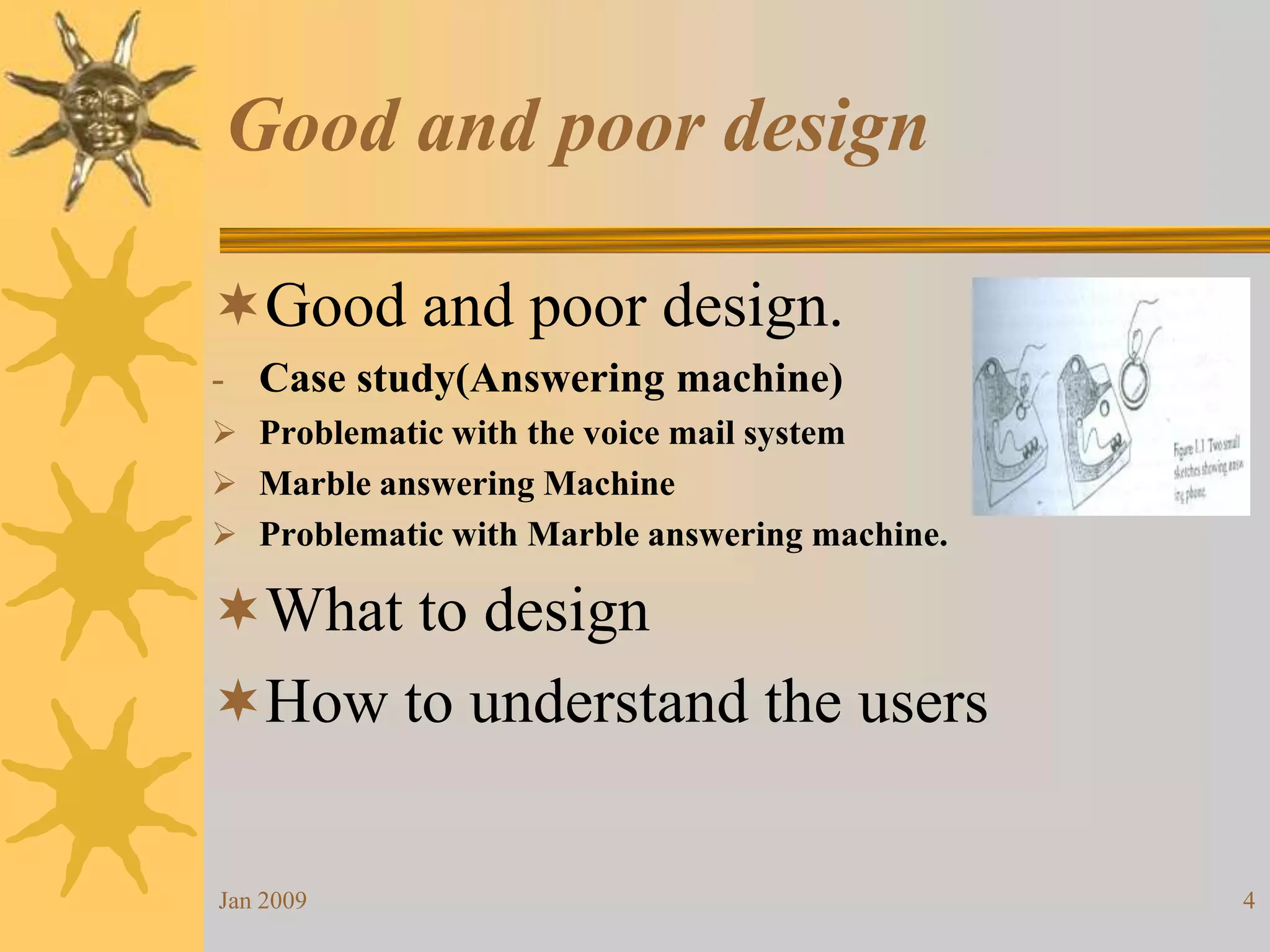
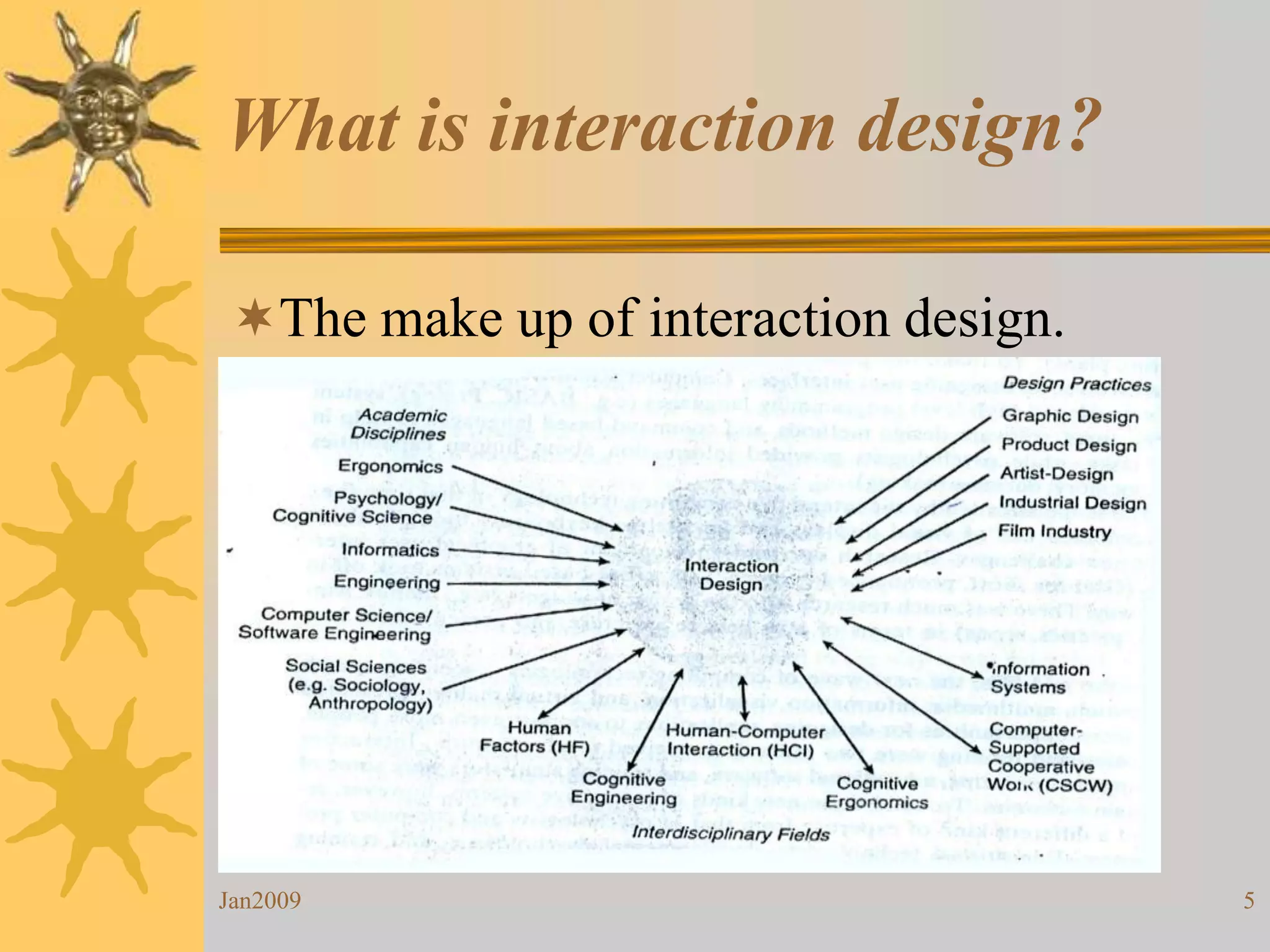
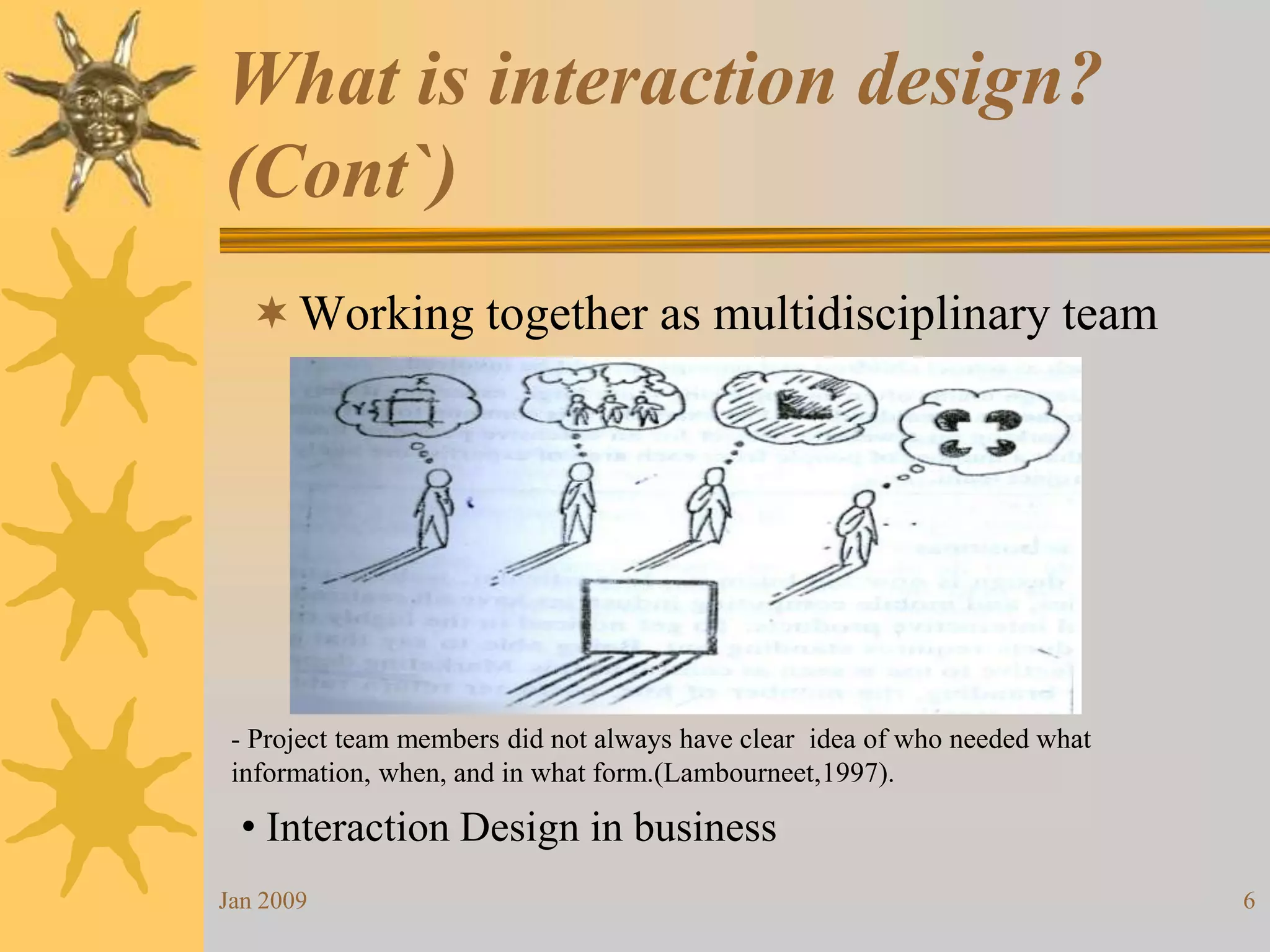
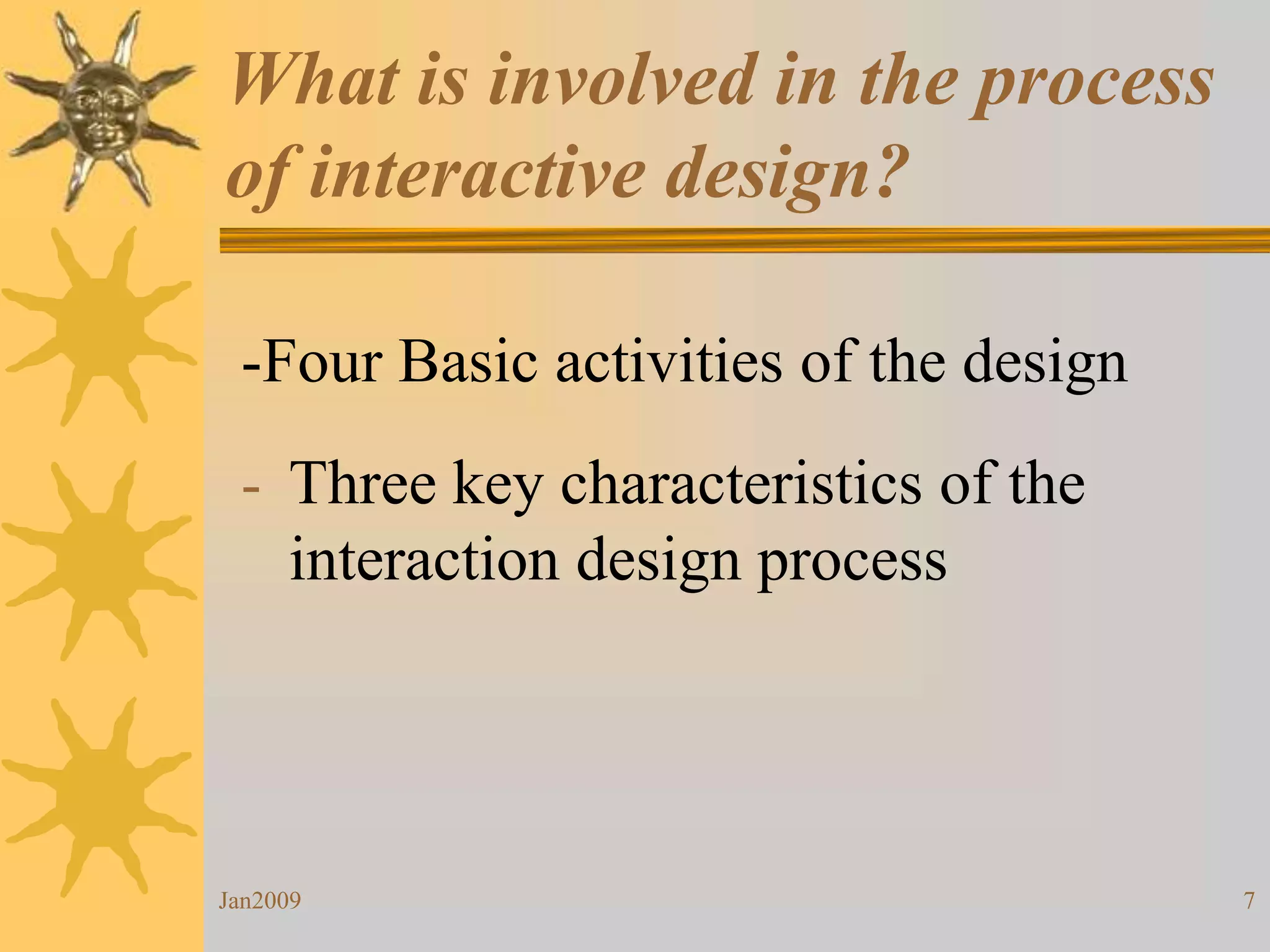
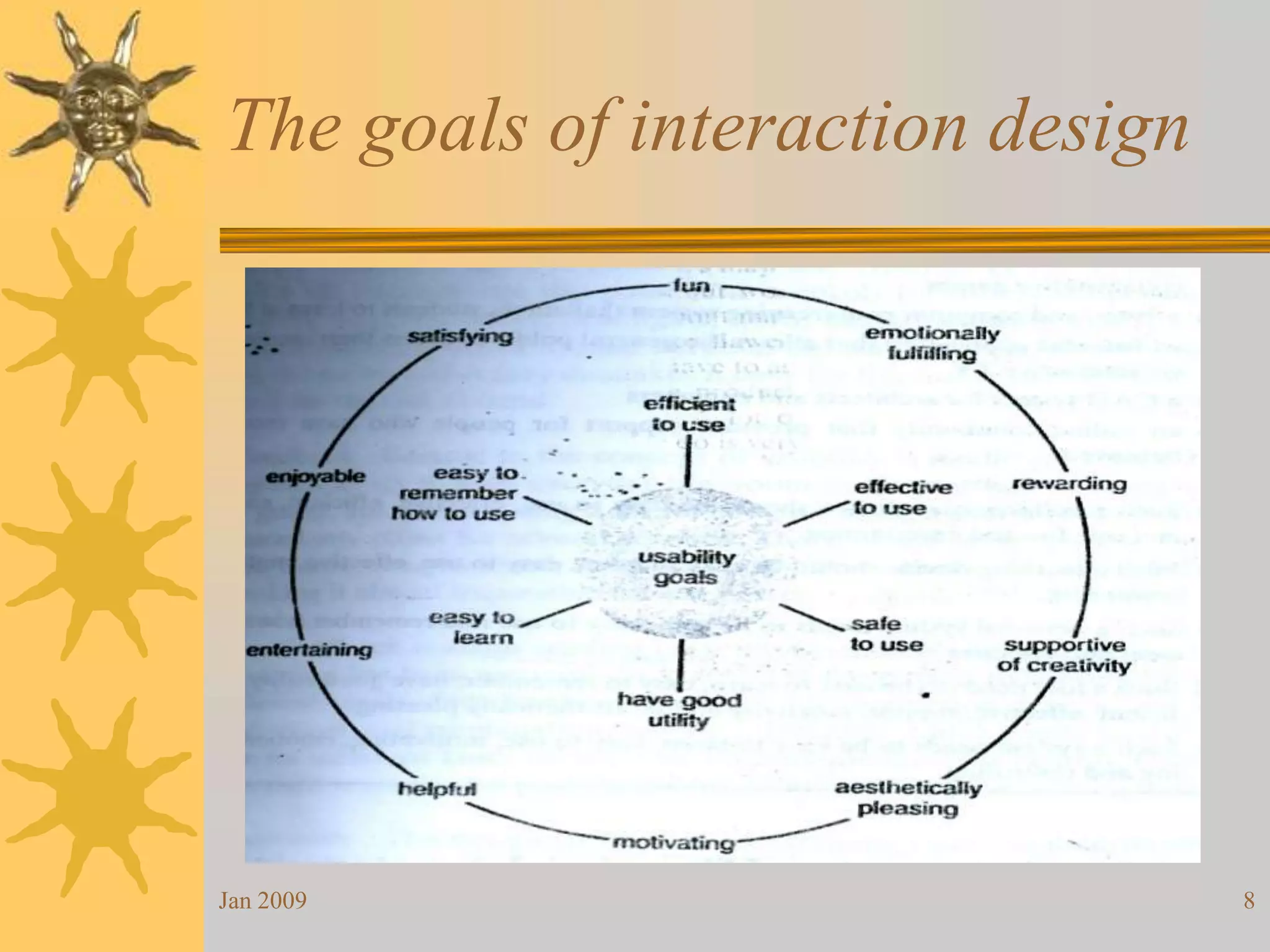
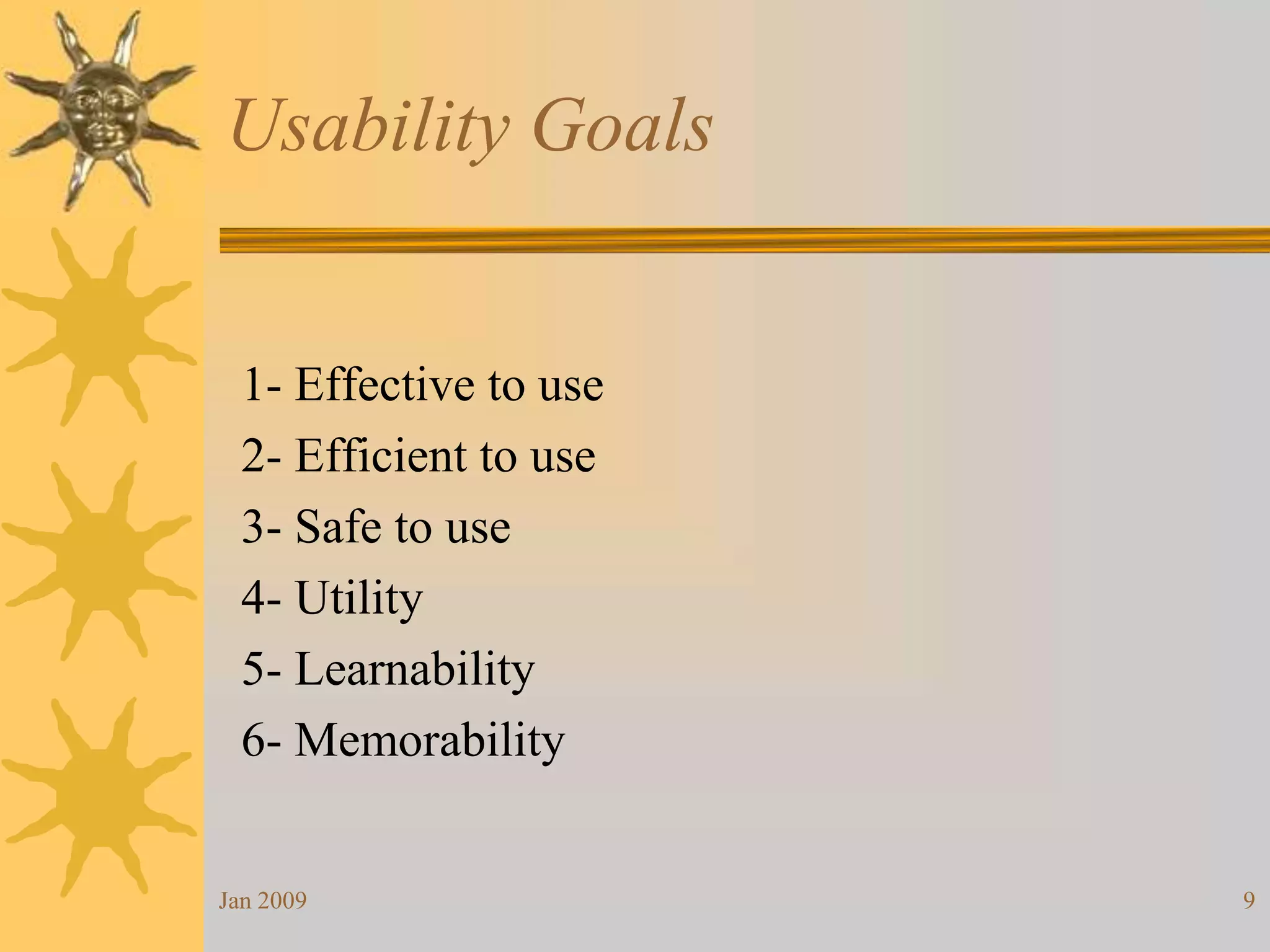
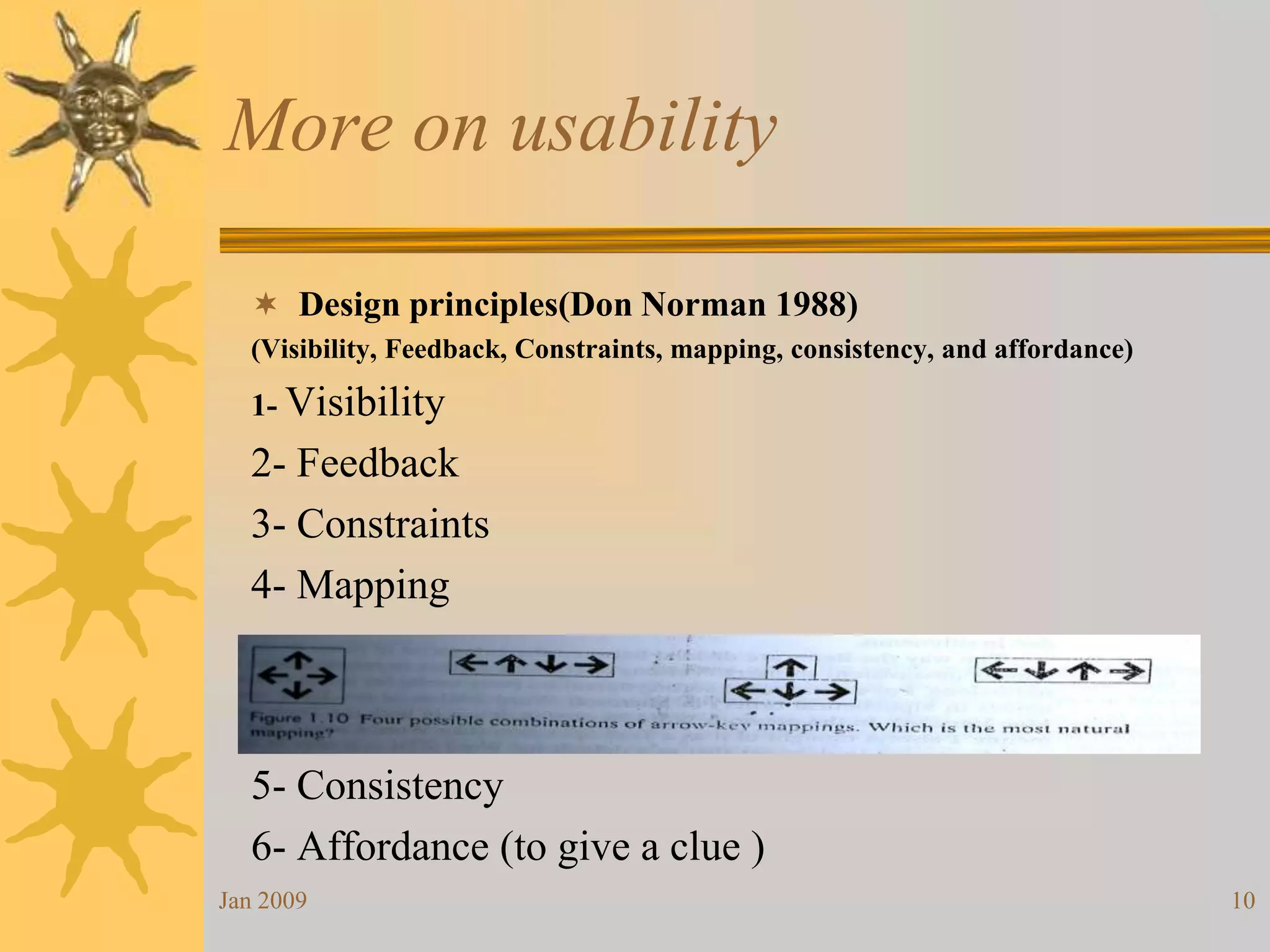
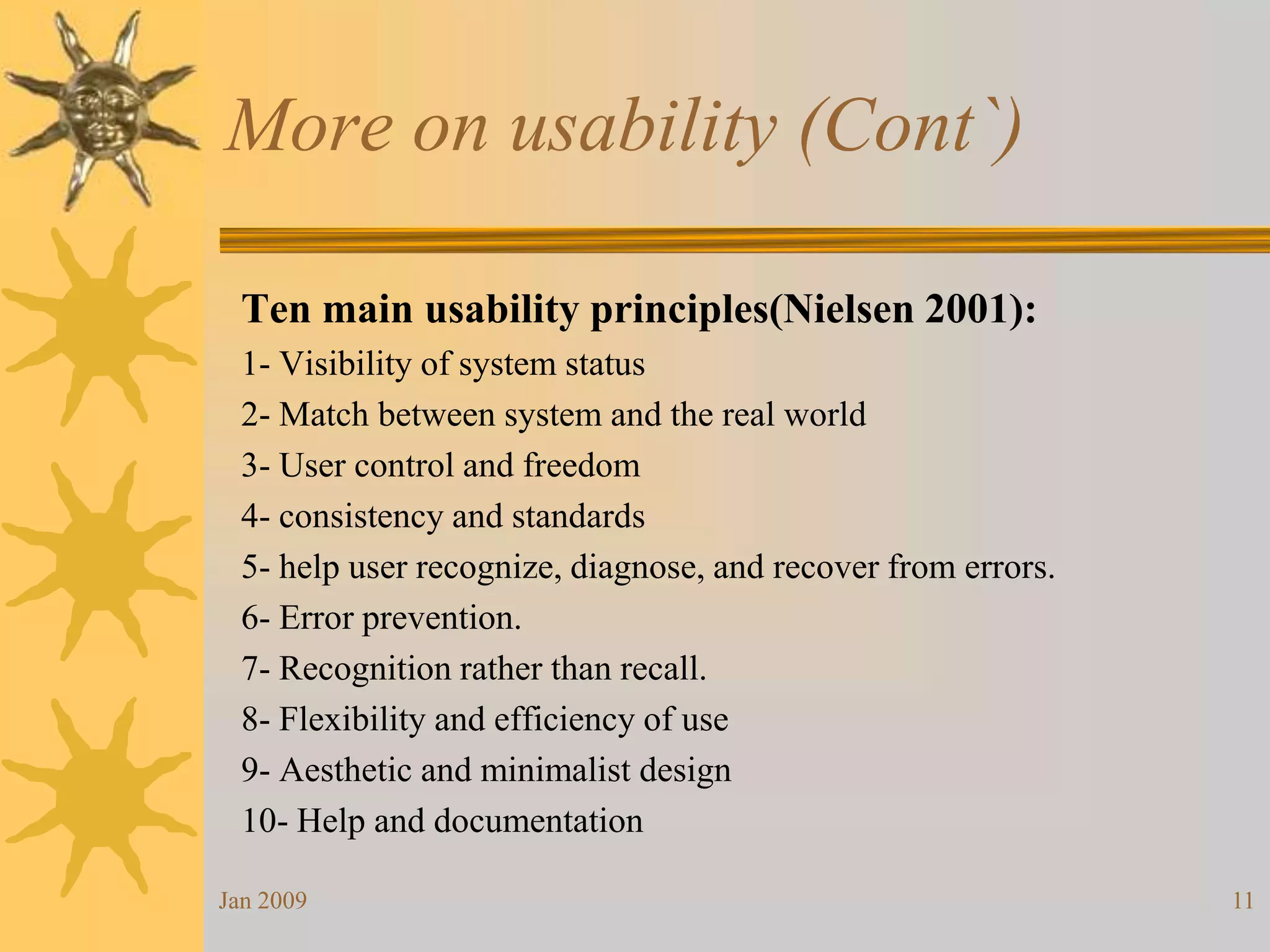


Interaction design involves more than just human-computer interaction. It is a multidisciplinary process that involves understanding users, defining goals of a project, and designing interactive products and services. The interaction design process involves four basic activities: specifying the context of use, structuring the content, presenting the form, and evaluating the design. The goals of interaction design are to create products and services that are effective, efficient, safe, useful, learnable, and memorable for users. Usability principles like visibility, feedback, and affordance guide interaction designers to create designs that are intuitive and easy to use.


![Hci [6]interaction design](https://cdn.slidesharecdn.com/ss_thumbnails/hci-6interactiondesign-140116110647-phpapp02-thumbnail.jpg?width=640&height=640&fit=bounds)


![PowerISO 9.2 Mac Crack + Serial Key Free Download 2026 [Latest] Software.pptx](https://cdn.slidesharecdn.com/ss_thumbnails/software-251207185653-5d5700e6-thumbnail.jpg?width=640&height=640&fit=bounds)


