Downloaded 130 times
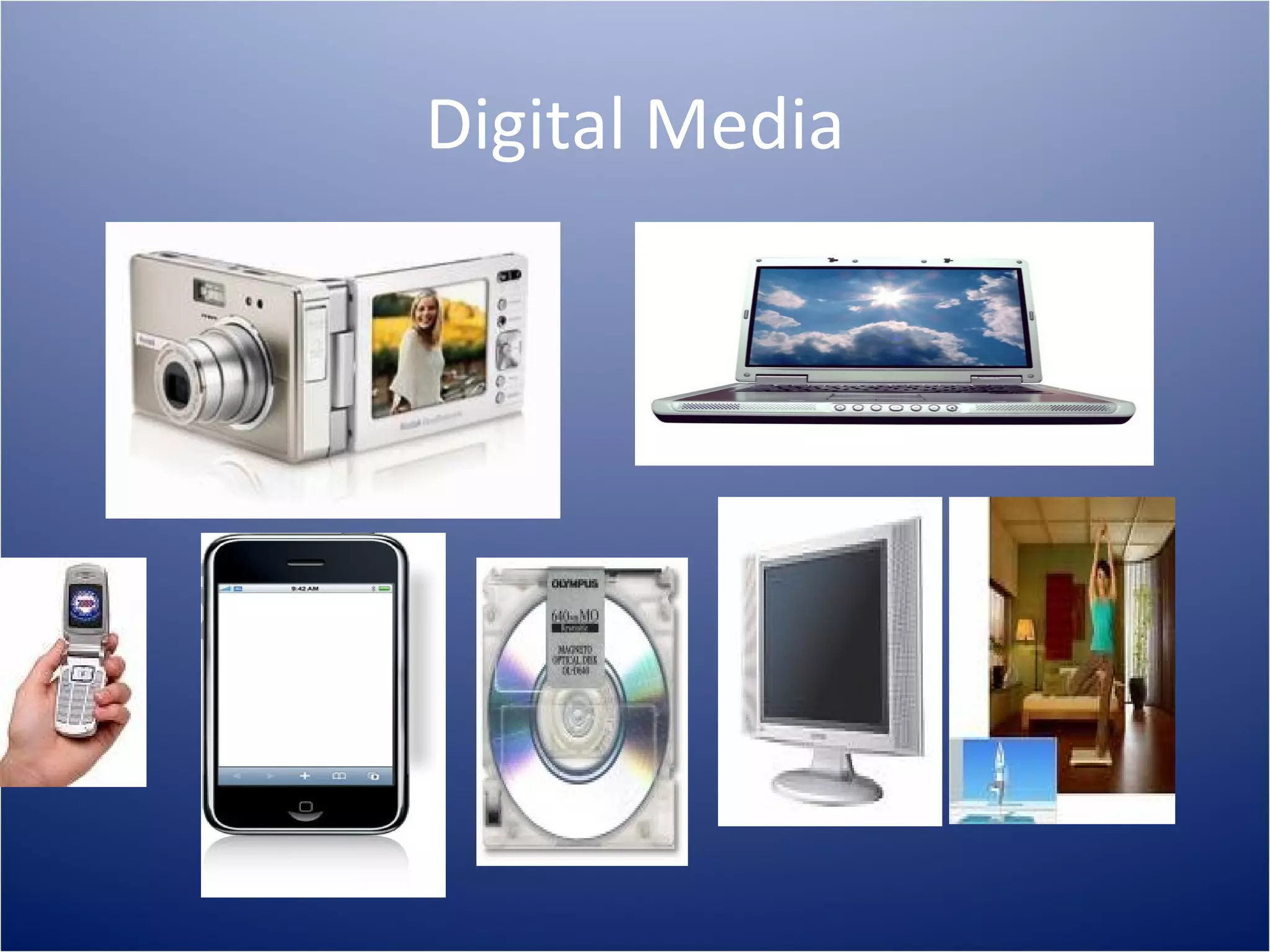
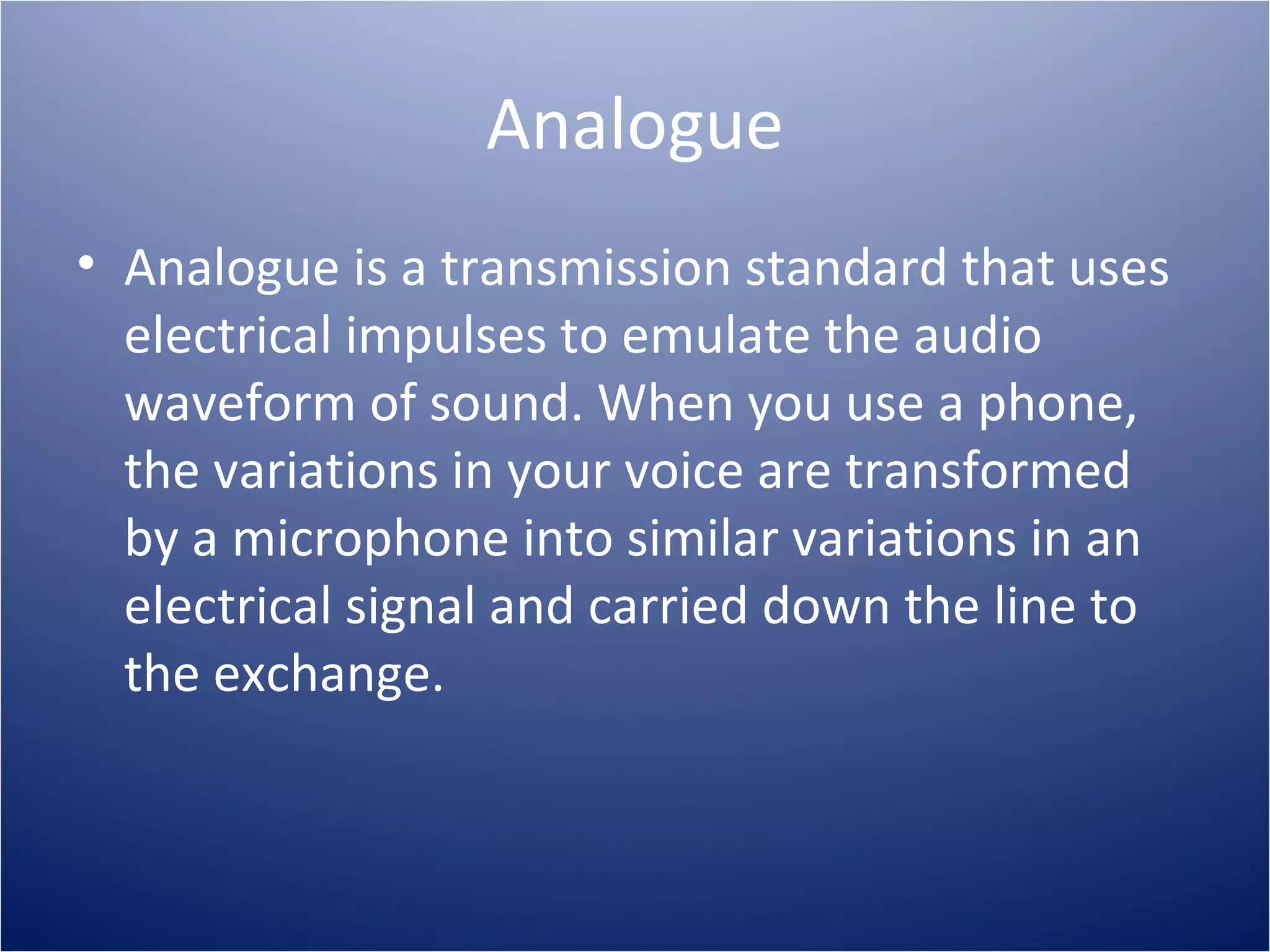
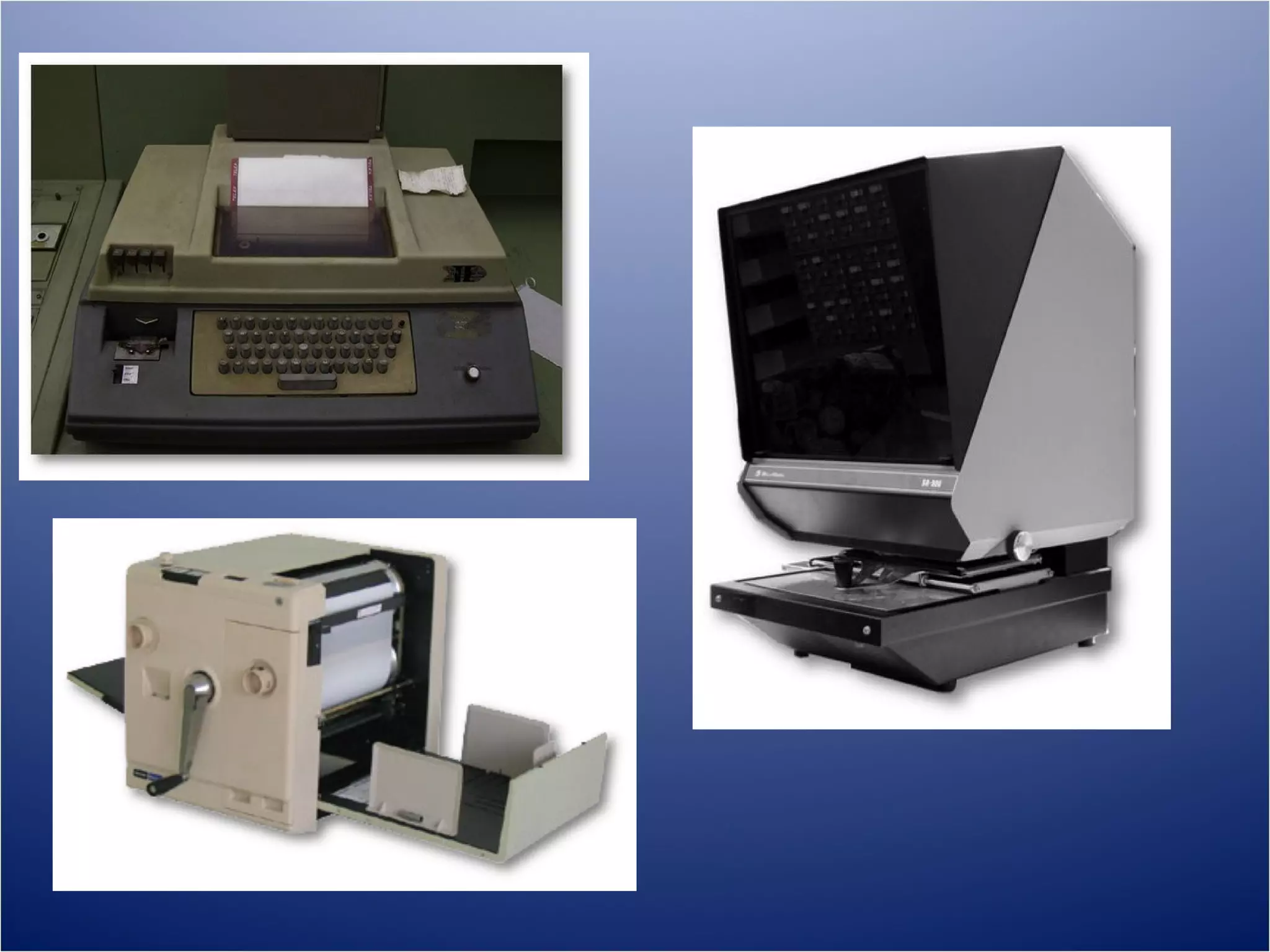
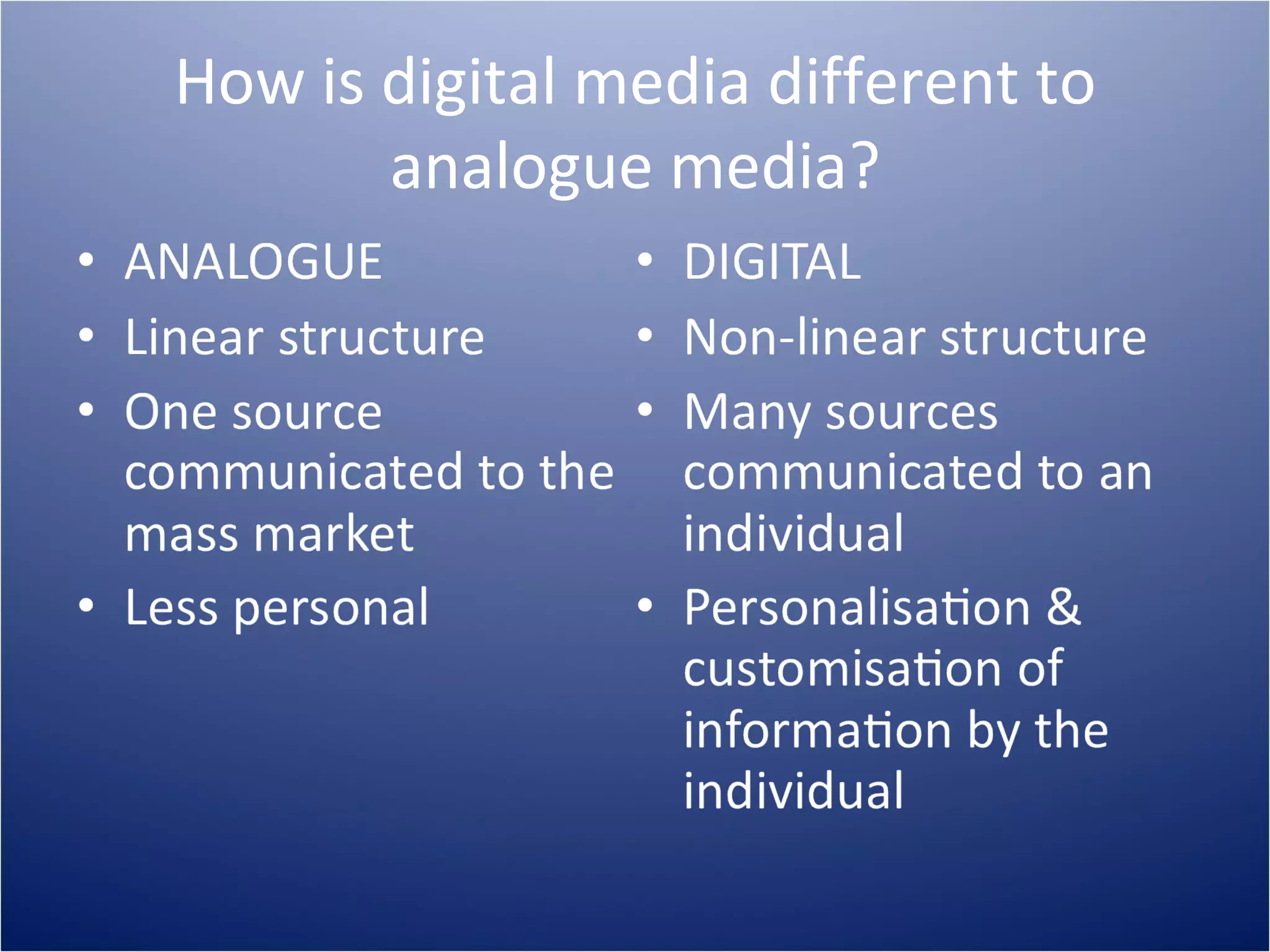
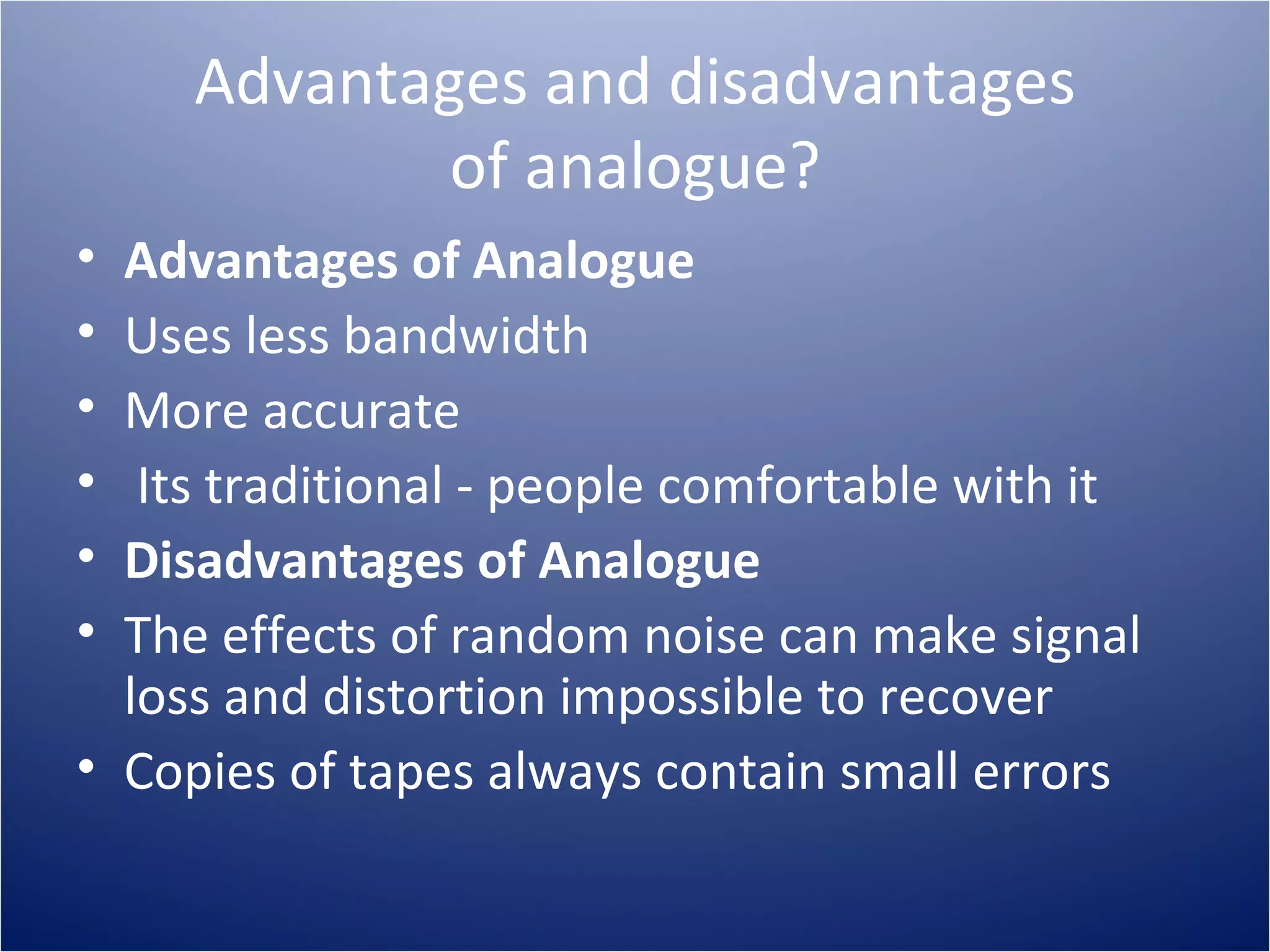
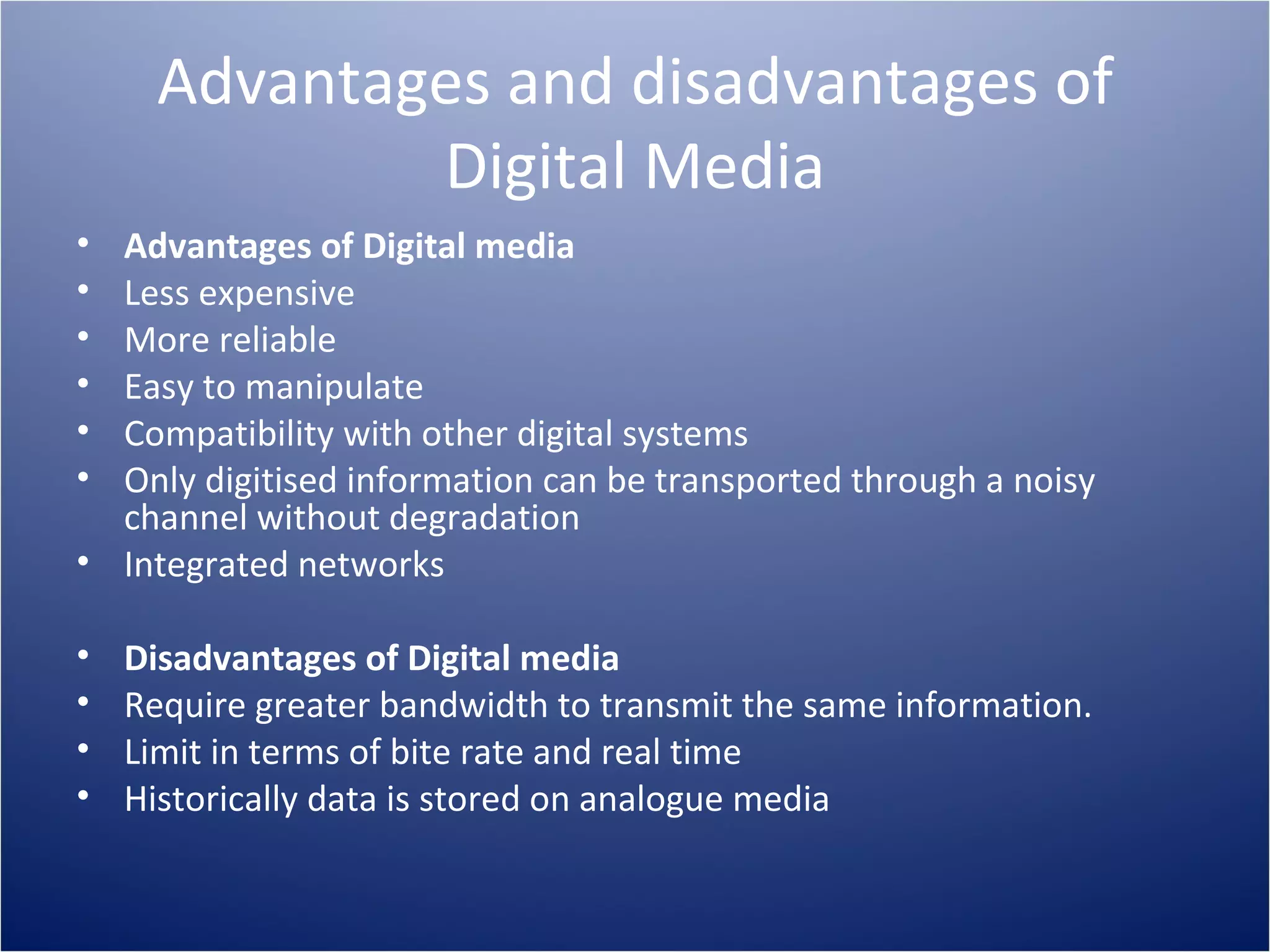
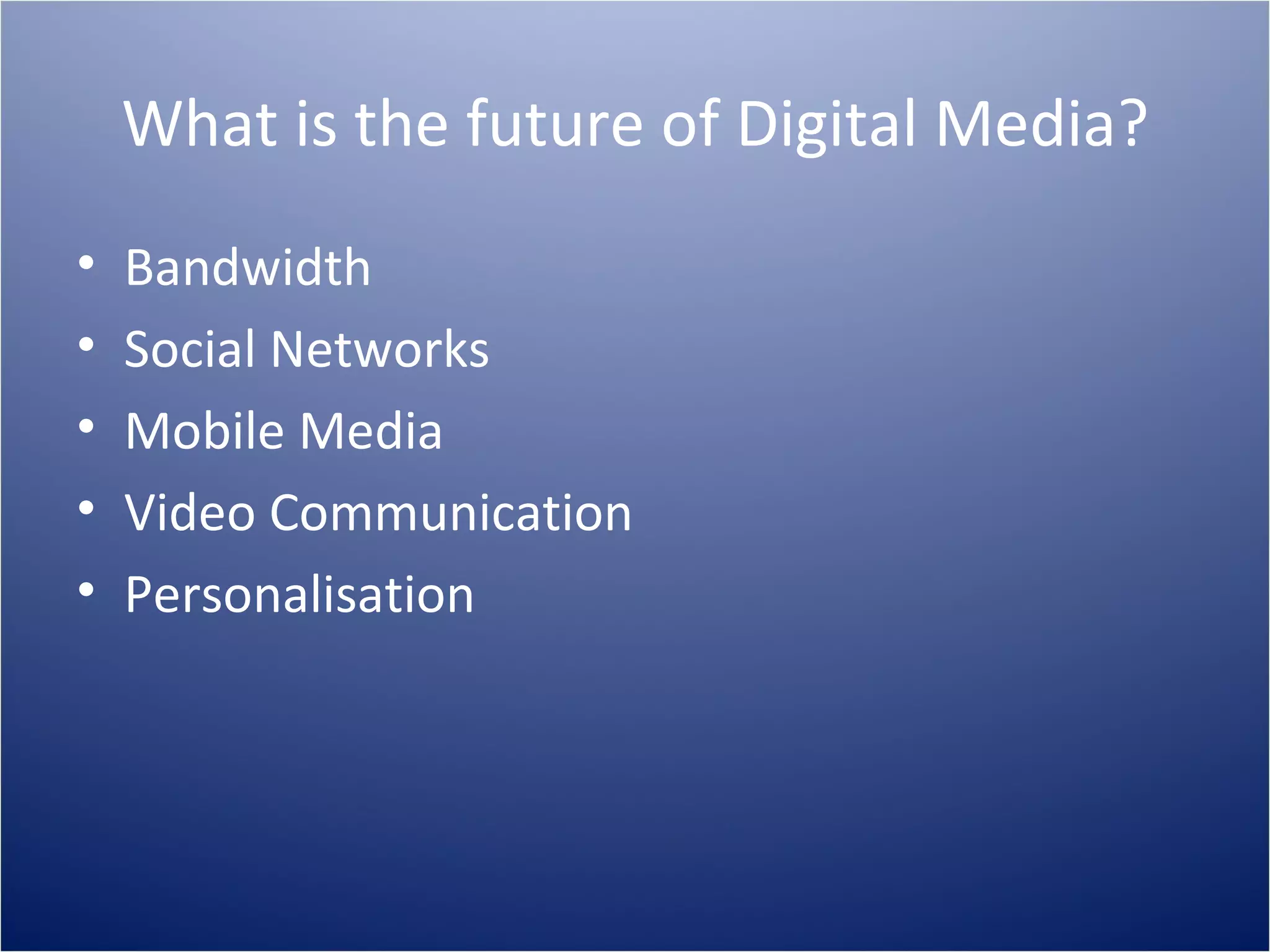

Digital media refers to electronic media that uses digital codes for interaction, as opposed to analogue which uses electrical impulses to transmit audio. Digital media has advantages over analogue in being less expensive, more reliable, and easier to manipulate, though it requires greater bandwidth for transmission and was historically stored on analogue media. The future of digital media involves increased bandwidth, the continued growth of social networks and mobile access, more personalized video communication, and other advances enabled by higher data transmission rates and digital technologies.
Digital Media is defined as electronic media operating on digital codes, allowing interactive engagement.
Explores the concept of Analogue media as a transmission method using electrical impulses.
Discusses the advantages like less bandwidth and traditional comfort, and disadvantages including signal loss.
Highlights advantages of Digital Media such as cost-effectiveness and reliability, alongside bandwidth challenges.
Addresses future aspects like bandwidth, social networks, and video communication in the digital media landscape.


![History of Digital [Media]](https://cdn.slidesharecdn.com/ss_thumbnails/historyofdigital-100722142712-phpapp02-thumbnail.jpg?width=640&height=640&fit=bounds)


