What Great Organizations
Know about Managing Change
Emma Murphy
HRD Congress, Mumbai, Feb 15th
Change capable organizations

Becoming a change
capable organization is
now a key competitive
advantage.
Is your organization
ready?
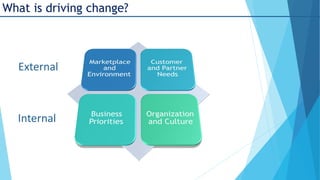
What is driving change?

External

Internal
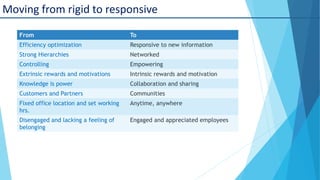
Moving from rigid to responsive
From

To

Efficiency optimization

Responsive to new information

Strong Hierarchies

Networked

Controlling

Empowering

Extrinsic rewards and motivations

Intrinsic rewards and motivation

Knowledge is power

Collaboration and sharing

Customers and Partners

Communities

Fixed office location and set working
hrs.

Anytime, anywhere

Disengaged and lacking a feeling of
belonging

Engaged and appreciated employees
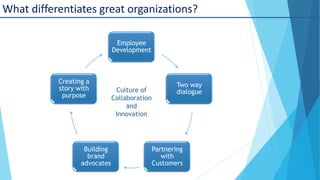
What differentiates great organizations?
Employee
Development

Creating a
story with
purpose

Building
brand
advocates

Culture of
Collaboration
and
Innovation

Two way
dialogue

Partnering
with
Customers
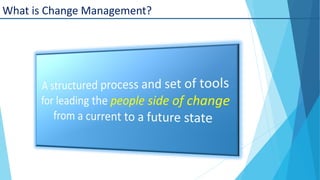
What is Change Management?
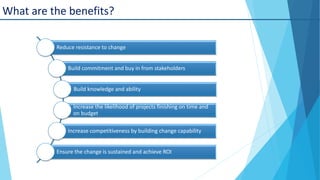
What are the benefits?
Reduce resistance to change
Build commitment and buy in from stakeholders

Build knowledge and ability
Increase the likelihood of projects finishing on time and
on budget
Increase competitiveness by building change capability
Ensure the change is sustained and achieve ROI
Leadership Alignment
How will your organization achieve it’s vision and keep pace with
change in our interconnected, global world?

No. 1 reason for change
project failure:
Lack of active and visible
leadership and
sponsorship
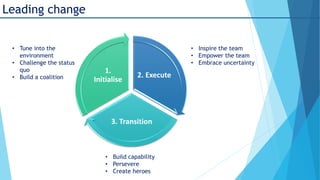
Leading change
• Tune into the
environment
• Challenge the status
quo
• Build a coalition

• Inspire the team
• Empower the team
• Embrace uncertainty

1.
Initialise

2. Execute

3. Transition

• Build capability
• Persevere
• Create heroes
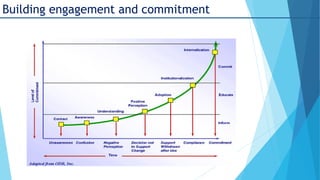
Building engagement and commitment
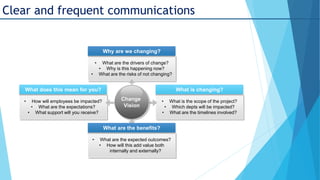
Clear and frequent communications

Why are we changing?
•
•

What are the drivers of change?
• Why is this happening now?
What are the risks of not changing?

What does this mean for you?
•

How will employees be impacted?
• What are the expectations?
• What support will you receive?

What is changing?

Change
Vision

•

What is the scope of the project?
• Which depts will be impacted?
• What are the timelines involved?

What are the benefits?
•

What are the expected outcomes?
• How will this add value both
internally and externally?
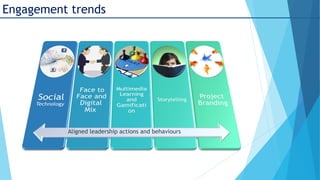
Engagement trends

Aligned leadership actions and behaviours
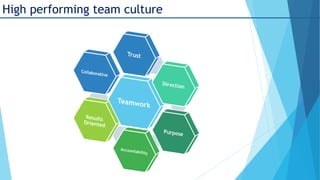
High performing team culture
Foundation for successful change

•
•
•
•
•
•
•
•
•

Clear vision and purpose
Amazing company cultures
Engaged employees
Clear business model
Encourage innovation
Adaptive to changes in the marketplace
In tune with changing customer needs
Built strong brand loyalty
Excellent customer service
Summary
• Build a solid foundation for change and growth
through company culture;
• Embed change management practices into your
strategic initiatives and projects;
• Develop change savvy leadership and middle
management;
• Involve, engage and collaborate with employees
before, during and after change.

What great organizations know about change

  • 1.
    What Great Organizations Knowabout Managing Change Emma Murphy HRD Congress, Mumbai, Feb 15th
  • 2.
    Change capable organizations Becominga change capable organization is now a key competitive advantage. Is your organization ready?
  • 3.
    What is drivingchange? External Internal
  • 4.
    Moving from rigidto responsive From To Efficiency optimization Responsive to new information Strong Hierarchies Networked Controlling Empowering Extrinsic rewards and motivations Intrinsic rewards and motivation Knowledge is power Collaboration and sharing Customers and Partners Communities Fixed office location and set working hrs. Anytime, anywhere Disengaged and lacking a feeling of belonging Engaged and appreciated employees
  • 5.
    What differentiates greatorganizations? Employee Development Creating a story with purpose Building brand advocates Culture of Collaboration and Innovation Two way dialogue Partnering with Customers
  • 6.
    What is ChangeManagement?
  • 7.
    What are thebenefits? Reduce resistance to change Build commitment and buy in from stakeholders Build knowledge and ability Increase the likelihood of projects finishing on time and on budget Increase competitiveness by building change capability Ensure the change is sustained and achieve ROI
  • 8.
    Leadership Alignment How willyour organization achieve it’s vision and keep pace with change in our interconnected, global world? No. 1 reason for change project failure: Lack of active and visible leadership and sponsorship
  • 9.
    Leading change • Tuneinto the environment • Challenge the status quo • Build a coalition • Inspire the team • Empower the team • Embrace uncertainty 1. Initialise 2. Execute 3. Transition • Build capability • Persevere • Create heroes
  • 10.
  • 11.
    Clear and frequentcommunications Why are we changing? • • What are the drivers of change? • Why is this happening now? What are the risks of not changing? What does this mean for you? • How will employees be impacted? • What are the expectations? • What support will you receive? What is changing? Change Vision • What is the scope of the project? • Which depts will be impacted? • What are the timelines involved? What are the benefits? • What are the expected outcomes? • How will this add value both internally and externally?
  • 12.
  • 13.
  • 14.
    Foundation for successfulchange • • • • • • • • • Clear vision and purpose Amazing company cultures Engaged employees Clear business model Encourage innovation Adaptive to changes in the marketplace In tune with changing customer needs Built strong brand loyalty Excellent customer service
  • 15.
    Summary • Build asolid foundation for change and growth through company culture; • Embed change management practices into your strategic initiatives and projects; • Develop change savvy leadership and middle management; • Involve, engage and collaborate with employees before, during and after change.