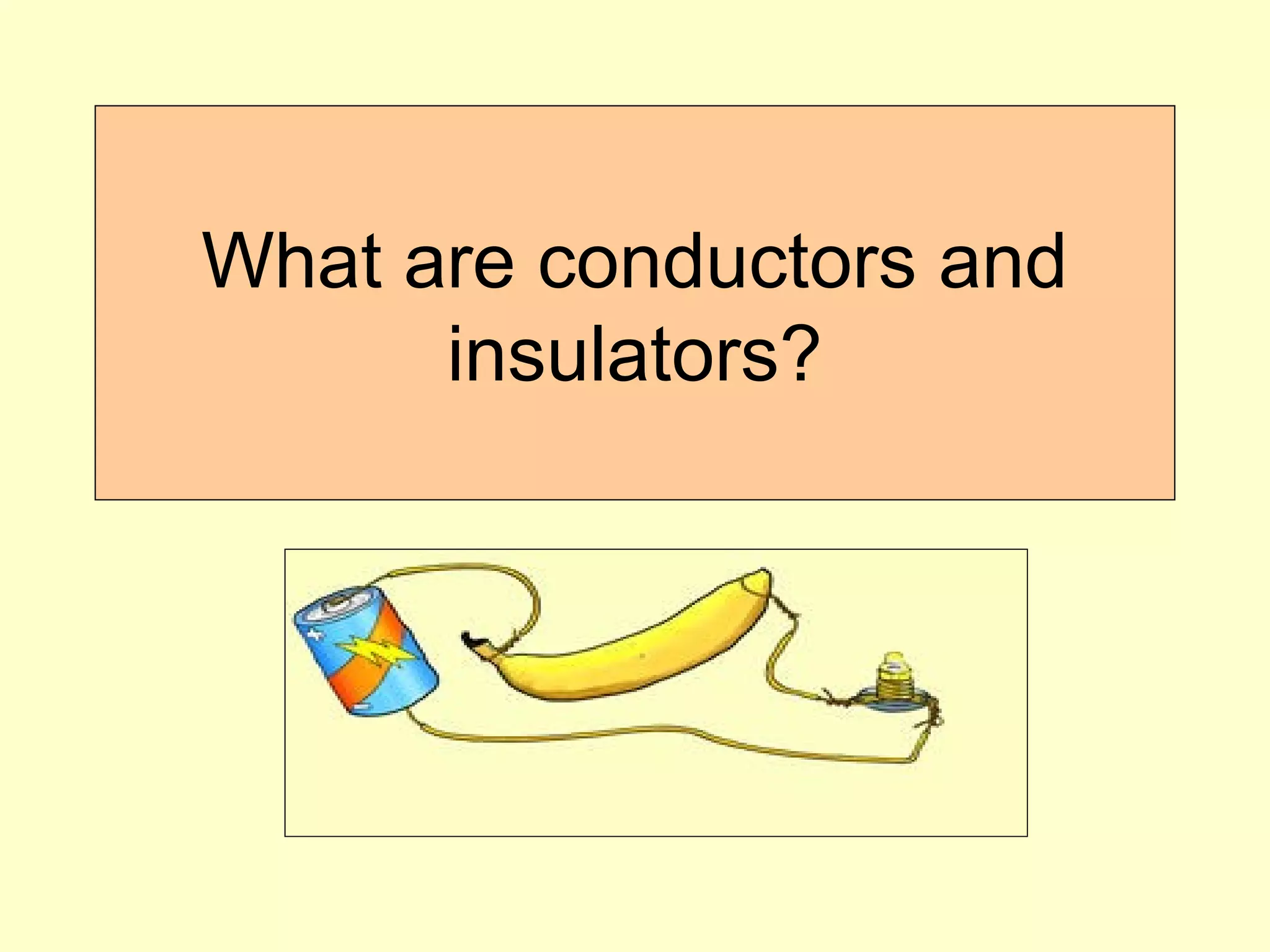
What are conductors and
insulators?
Warm Up
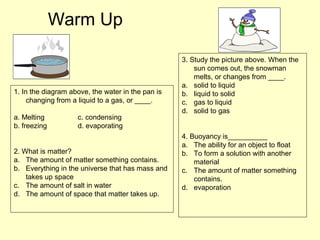
1. In the diagram above, the water in the pan is
changing from a liquid to a gas, or ____.
a. Melting c. condensing
b. freezing d. evaporating
2. What is matter?
a. The amount of matter something contains.
b. Everything in the universe that has mass and
takes up space
c. The amount of salt in water
d. The amount of space that matter takes up.
3. Study the picture above. When the
sun comes out, the snowman
melts, or changes from ____.
a. solid to liquid
b. liquid to solid
c. gas to liquid
d. solid to gas
4. Buoyancy is__________
a. The ability for an object to float
b. To form a solution with another
material
c. The amount of matter something
contains.
d. evaporation
What is a conductor?
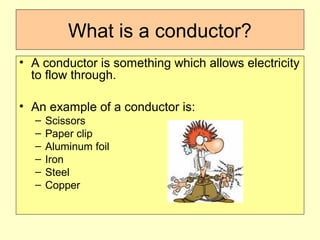
• A conductor is something which allows electricity
to flow through.
• An example of a conductor is:
– Scissors
– Paper clip
– Aluminum foil
– Iron
– Steel
– Copper
What is a Insulator?
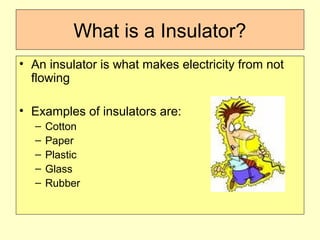
• An insulator is what makes electricity from not
flowing
• Examples of insulators are:
– Cotton
– Paper
– Plastic
– Glass
– Rubber
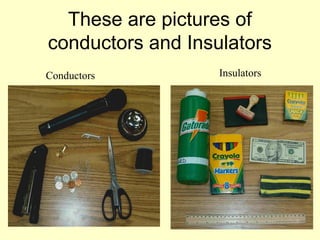
These are pictures of
conductors and Insulators
Conductors Insulators
Lets demonstrate….
Materials Needed:
• 1.2-volt lightbulb,
• a matching lightbulb base,
• a D-cell battery,
• a banana
• three pieces of copper wire with the
• insulation stripped off the ends.
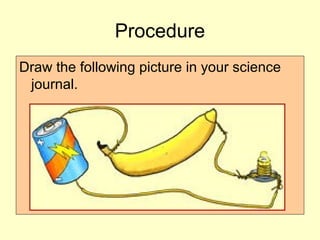
Procedure
Draw the following picture in your science
journal.
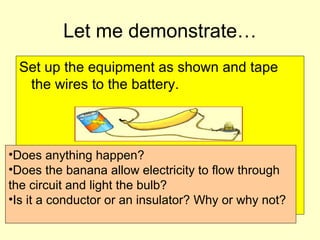
Let me demonstrate…
Set up the equipment as shown and tape
the wires to the battery.
•Does anything happen?
•Does the banana allow electricity to flow through
the circuit and light the bulb?
•Is it a conductor or an insulator? Why or why not?
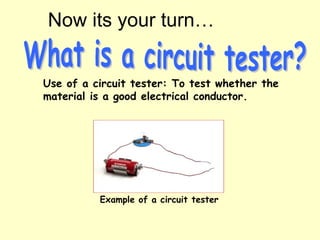
Use of a circuit tester: To test whether the
material is a good electrical conductor.
Example of a circuit tester
Now its your turn…
Inquiring Minds Want to Know!
Conductor or Insulator? That is the question!
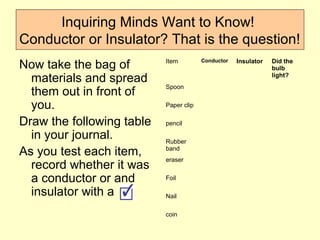
Now take the bag of
materials and spread
them out in front of
you.
Draw the following table
in your journal.
As you test each item,
record whether it was
a conductor or and
insulator with a
Item Conductor Insulator Did the
bulb
light?
Spoon
Paper clip
pencil
Rubber
band
eraser
Foil
Nail
coin
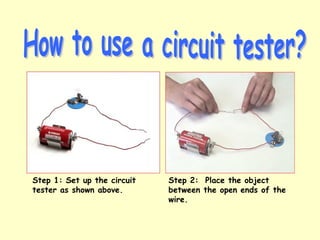
Step 1: Set up the circuit
tester as shown above.
Step 2: Place the object
between the open ends of the
wire.
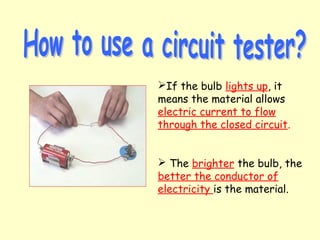
If the bulb lights up, it
means the material allows
electric current to flow
through the closed circuit.
 The brighter the bulb, the
better the conductor of
electricity is the material.
Now write your conclusion based
on your investigation…
• What objects were conductors of
electricity? Why?
• What objects were insulators of electricity?
• Did any of the conductors have common
characteristics?
• What about the insulators?
• How would knowing the difference
between conductors and insulators help
you in the real world?
Conductors allow electricity flow through them.
Conductors are materials that can carry
electricity - they conduct electricity. Metal
materials such as copper, iron, steel and
aluminum are all good conductors of electricity.
Insulators do not allow electricity to flow through
them. Materials such as wood, plastic, rubber
and glass do not carry electricity and are called
insulators – they don’t conduct electricity.
Conclusions…

What are conductors_and_insulators

  • 1.
    What are conductorsand insulators?
  • 2.
    Warm Up 1. Inthe diagram above, the water in the pan is changing from a liquid to a gas, or ____. a. Melting c. condensing b. freezing d. evaporating 2. What is matter? a. The amount of matter something contains. b. Everything in the universe that has mass and takes up space c. The amount of salt in water d. The amount of space that matter takes up. 3. Study the picture above. When the sun comes out, the snowman melts, or changes from ____. a. solid to liquid b. liquid to solid c. gas to liquid d. solid to gas 4. Buoyancy is__________ a. The ability for an object to float b. To form a solution with another material c. The amount of matter something contains. d. evaporation
  • 3.
    What is aconductor? • A conductor is something which allows electricity to flow through. • An example of a conductor is: – Scissors – Paper clip – Aluminum foil – Iron – Steel – Copper
  • 4.
    What is aInsulator? • An insulator is what makes electricity from not flowing • Examples of insulators are: – Cotton – Paper – Plastic – Glass – Rubber
  • 5.
    These are picturesof conductors and Insulators Conductors Insulators
  • 6.
    Lets demonstrate…. Materials Needed: •1.2-volt lightbulb, • a matching lightbulb base, • a D-cell battery, • a banana • three pieces of copper wire with the • insulation stripped off the ends.
  • 7.
    Procedure Draw the followingpicture in your science journal.
  • 8.
    Let me demonstrate… Setup the equipment as shown and tape the wires to the battery. •Does anything happen? •Does the banana allow electricity to flow through the circuit and light the bulb? •Is it a conductor or an insulator? Why or why not?
  • 9.
    Use of acircuit tester: To test whether the material is a good electrical conductor. Example of a circuit tester Now its your turn…
  • 10.
    Inquiring Minds Wantto Know! Conductor or Insulator? That is the question! Now take the bag of materials and spread them out in front of you. Draw the following table in your journal. As you test each item, record whether it was a conductor or and insulator with a Item Conductor Insulator Did the bulb light? Spoon Paper clip pencil Rubber band eraser Foil Nail coin
  • 11.
    Step 1: Setup the circuit tester as shown above. Step 2: Place the object between the open ends of the wire.
  • 12.
    If the bulblights up, it means the material allows electric current to flow through the closed circuit.  The brighter the bulb, the better the conductor of electricity is the material.
  • 13.
    Now write yourconclusion based on your investigation… • What objects were conductors of electricity? Why? • What objects were insulators of electricity? • Did any of the conductors have common characteristics? • What about the insulators? • How would knowing the difference between conductors and insulators help you in the real world?
  • 14.
    Conductors allow electricityflow through them. Conductors are materials that can carry electricity - they conduct electricity. Metal materials such as copper, iron, steel and aluminum are all good conductors of electricity. Insulators do not allow electricity to flow through them. Materials such as wood, plastic, rubber and glass do not carry electricity and are called insulators – they don’t conduct electricity. Conclusions…