ORAL
COMMUNICATION IN
CONTEXT
QUARTER 2 WEEK 3
Types Of Communicative
Strategy
After going through this module,
you are expected to:
distinguish various types of
communicative strategies
use acceptable, polite, and meaningful
communicative strategies
engage in a communicative situation
Get Me Right!
Tick the column that determines how
often you practice what the statements
say. Do this as objectively as possible.
Bear in mind that there are no wrong
answers. You can use your
performance in Let’s Warm Up as a
basis in completing this task.
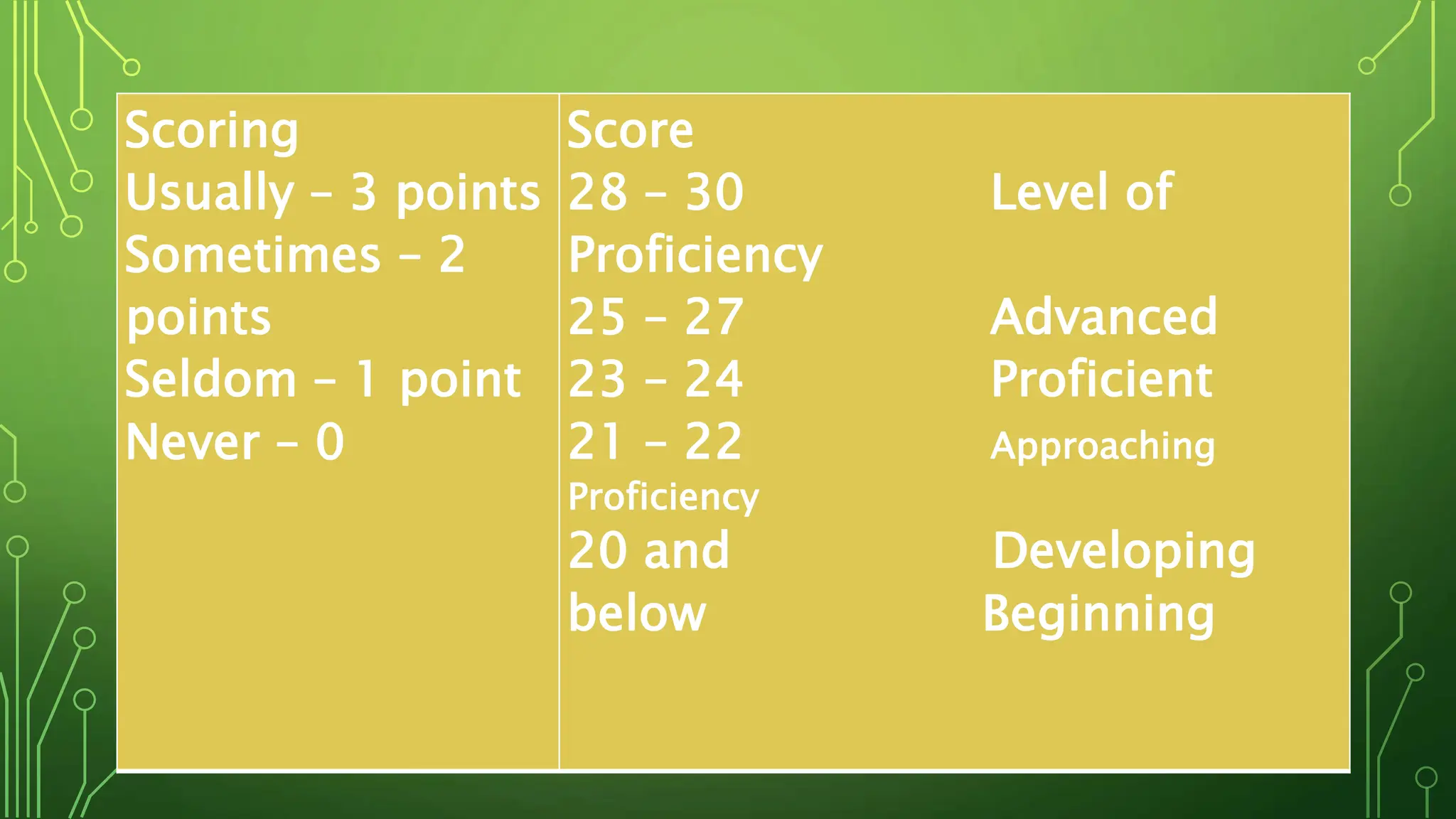
Scoring
Usually – 3 points
Sometimes – 2
points
Seldom – 1 point
Never – 0
Score
28 – 30 Level of
Proficiency
25 – 27 Advanced
23 – 24 Proficient
21 – 22 Approaching
Proficiency
20 and Developing
below Beginning
Types Of Communicative
Strategy
these are plans, ways or means
of sharing information which
are adopted to achieve a
particular social, political,
psychological, or linguistic
purpose.
NOMINATION
a speaker carries out
nomination to collaboratively
and productively establish a
topic. basically, when you
employ this strategy, you try
to open a topic with the
people you are talking to.
Examples:
Have you noticed the weird weather
lately? Is this because of global
warming?
I was late for class again! The MRT
stopped midway. What is wrong
with the MRT?
RESTRICTION
restriction in communication refers to any
limitation you may have as a speaker. when
communicating in the classroom, in a
meeting, or while hanging out with your
friends, you are typically given specific
instructions that you must follow. these
instructions confine you as a speaker and
limit what you can say.
Examples:
They say that the Philippine
economy is getting better. Only
the stupid thinks that, right? (No
one wants to be stupid.)
That arrest move was a disaster
waiting to happen. Do you agree?
TURN-TAKING
sometimes people are given unequal
opportunities to talk because others
take much time during the
conversation. turn-taking pertains to
the process by which people decide
who takes the conversational floor.
there is a code of behavior behind
establishing and sustaining a
productive conversation, but the
Examples:
I agree with the point just made. But
may I add that OFWs would rather be
home and work here so they could be
with their families
. May I have the floor, sir? The topic
under discussion is the state of the
Philippine economy today. We want
better lives for all Filipinos, whether
TOPIC CONTROL
topic control covers how procedural
formality or informality affects the
development of topic in conversations.
for example, in meetings, you may only
have a turn to speak after the
chairperson directs you to do so.
contrast this with a casual conversation
with friends over lunch or coffee where
you may take the conversational floor
Examples:
How do you often ride the MRT, Tony? How
many times have you encountered a
stoppage in service?
Your car may break down, too, Luna, right?
So you have to find another means of
getting to school. We all do not want to be
late for class, yes?
TOPIC SHIFTING
topic shifting, as the name
suggests, involves moving from
one topic to another. in other
words, it is where one part of a
conversation ends and where
another begins.
Examples:
This is a battle with corporations that
continue to pollute the environment. But
this is also a battle with man himself, who
continues to act as if there is another Earth
we can move to once this Earth dies.
If we cannot use the Earth’s resources, our
economies will die. We need to choose: the
economy or the environment.
REPAIR
repair refers to how speakers
address the problems in speaking,
listening, and comprehending that
they may encounter in a
conversation. for example, if
everybody in the conversation seems
to talk at the same time, give way
and appreciate other’s initiative to
Examples:
"We should take this moment as
learning opportunity. Let's take a note
regarding this matter."
"I'm sorry, could you repeat your
question please? I didn't hear it quite
clearly. Thanks"
TERMINATION
termination refers to the
conversation participants’ close-
initiating expressions that end a
topic in a conversation. most of the
time, the topic initiator takes
responsibility to signal the end of the
discussion as well
Examples:
“Yup, got it. I'll meet you there,
bye!“
"That's it for today's topic, I’ll
see you next week."
What’s More
Activity 1
Tourism
Commercial
1. Think of a possible commercial.
2. Create a three-minute tourism commercial.
3. Plan and present a tourism commercial
about the place you want to visit or any place
that you actually visited.
4. Mention the things that make the tourist
spot a dream destination. Remember, this
activity will help you practice making positive
statements about a vacation site and
responding to how people see this place
differently.
When writing your script for the commercial, answer these 10
questions.
• Why do tourists visit this place?
• What do many visitors like to do here?
• What would be best for a day trip?
• What should one do for a good night out?
• Where can visitors get the best food?
• Where can visitors buy their souvenirs?
• What outdoor activities are famous?
• What is amazing about the weather?
• What is the best thing to do here during summer?
• What do tourists say about this vacation spot?
Activity 2 That
Scene
Think of three scenes from a movie or a TV show where various communicative
strategies were employed in one conversation. Watch the scenes and evaluate the
effect of the strategy applied to the conversation and to the characters.
List your evaluations in the table below.
Movie
(scene and
context;
characters)
Communicative
strategy applied
Effect on the
conversation
Effect on the
characters
What I Have Learned
Answer this question:
How can the sudden change in
communicative strategy in a conversation
affect the quality of interaction, the speaker-
audience relationship, the role and
responsibilities of the speaker, the message,
and the delivery?
What I Can Do
Create Me A Dialogue!
Write a short dialogue in the given situation. Be sure
to apply the different types of communicative strategy.
You ask a police officer and a street vendor (on two
different instances) for directions to the beach because
the class is lost somewhere in town.
Assessment
Additional Activities
Think of a time when you had to explain one message in two different
instances with varying contexts. For example, you might have told your parents
over dinner how badly you want to study in your dream university and in
another instance, you talked about the same thing with your friends while
having coffee.
In an essay with a minimum of 500 words, discuss why your communicative
strategies change as there are adjustments in every speech context, speech
style, and speech act. Discuss your language, duration of interaction, your
relationship to the listener, your roles and responsibilities as a speaker, your
message, and your delivery and how these differ in the two varying instances
and contexts.

week 3-ORAL COMMUNICATION IN CONTEXT - Copy.pptx

  • 1.
    ORAL COMMUNICATION IN CONTEXT QUARTER 2WEEK 3 Types Of Communicative Strategy
  • 2.
    After going throughthis module, you are expected to: distinguish various types of communicative strategies use acceptable, polite, and meaningful communicative strategies engage in a communicative situation
  • 3.
    Get Me Right! Tickthe column that determines how often you practice what the statements say. Do this as objectively as possible. Bear in mind that there are no wrong answers. You can use your performance in Let’s Warm Up as a basis in completing this task.
  • 5.
    Scoring Usually – 3points Sometimes – 2 points Seldom – 1 point Never – 0 Score 28 – 30 Level of Proficiency 25 – 27 Advanced 23 – 24 Proficient 21 – 22 Approaching Proficiency 20 and Developing below Beginning
  • 6.
    Types Of Communicative Strategy theseare plans, ways or means of sharing information which are adopted to achieve a particular social, political, psychological, or linguistic purpose.
  • 7.
    NOMINATION a speaker carriesout nomination to collaboratively and productively establish a topic. basically, when you employ this strategy, you try to open a topic with the people you are talking to.
  • 8.
    Examples: Have you noticedthe weird weather lately? Is this because of global warming? I was late for class again! The MRT stopped midway. What is wrong with the MRT?
  • 9.
    RESTRICTION restriction in communicationrefers to any limitation you may have as a speaker. when communicating in the classroom, in a meeting, or while hanging out with your friends, you are typically given specific instructions that you must follow. these instructions confine you as a speaker and limit what you can say.
  • 10.
    Examples: They say thatthe Philippine economy is getting better. Only the stupid thinks that, right? (No one wants to be stupid.) That arrest move was a disaster waiting to happen. Do you agree?
  • 11.
    TURN-TAKING sometimes people aregiven unequal opportunities to talk because others take much time during the conversation. turn-taking pertains to the process by which people decide who takes the conversational floor. there is a code of behavior behind establishing and sustaining a productive conversation, but the
  • 12.
    Examples: I agree withthe point just made. But may I add that OFWs would rather be home and work here so they could be with their families . May I have the floor, sir? The topic under discussion is the state of the Philippine economy today. We want better lives for all Filipinos, whether
  • 13.
    TOPIC CONTROL topic controlcovers how procedural formality or informality affects the development of topic in conversations. for example, in meetings, you may only have a turn to speak after the chairperson directs you to do so. contrast this with a casual conversation with friends over lunch or coffee where you may take the conversational floor
  • 14.
    Examples: How do youoften ride the MRT, Tony? How many times have you encountered a stoppage in service? Your car may break down, too, Luna, right? So you have to find another means of getting to school. We all do not want to be late for class, yes?
  • 15.
    TOPIC SHIFTING topic shifting,as the name suggests, involves moving from one topic to another. in other words, it is where one part of a conversation ends and where another begins.
  • 16.
    Examples: This is abattle with corporations that continue to pollute the environment. But this is also a battle with man himself, who continues to act as if there is another Earth we can move to once this Earth dies. If we cannot use the Earth’s resources, our economies will die. We need to choose: the economy or the environment.
  • 17.
    REPAIR repair refers tohow speakers address the problems in speaking, listening, and comprehending that they may encounter in a conversation. for example, if everybody in the conversation seems to talk at the same time, give way and appreciate other’s initiative to
  • 18.
    Examples: "We should takethis moment as learning opportunity. Let's take a note regarding this matter." "I'm sorry, could you repeat your question please? I didn't hear it quite clearly. Thanks"
  • 19.
    TERMINATION termination refers tothe conversation participants’ close- initiating expressions that end a topic in a conversation. most of the time, the topic initiator takes responsibility to signal the end of the discussion as well
  • 20.
    Examples: “Yup, got it.I'll meet you there, bye!“ "That's it for today's topic, I’ll see you next week."
  • 21.
  • 22.
  • 23.
    1. Think ofa possible commercial. 2. Create a three-minute tourism commercial. 3. Plan and present a tourism commercial about the place you want to visit or any place that you actually visited. 4. Mention the things that make the tourist spot a dream destination. Remember, this activity will help you practice making positive statements about a vacation site and responding to how people see this place differently.
  • 24.
    When writing yourscript for the commercial, answer these 10 questions. • Why do tourists visit this place? • What do many visitors like to do here? • What would be best for a day trip? • What should one do for a good night out? • Where can visitors get the best food? • Where can visitors buy their souvenirs? • What outdoor activities are famous? • What is amazing about the weather? • What is the best thing to do here during summer? • What do tourists say about this vacation spot?
  • 25.
  • 26.
    Think of threescenes from a movie or a TV show where various communicative strategies were employed in one conversation. Watch the scenes and evaluate the effect of the strategy applied to the conversation and to the characters. List your evaluations in the table below. Movie (scene and context; characters) Communicative strategy applied Effect on the conversation Effect on the characters
  • 27.
    What I HaveLearned Answer this question: How can the sudden change in communicative strategy in a conversation affect the quality of interaction, the speaker- audience relationship, the role and responsibilities of the speaker, the message, and the delivery?
  • 28.
    What I CanDo Create Me A Dialogue! Write a short dialogue in the given situation. Be sure to apply the different types of communicative strategy. You ask a police officer and a street vendor (on two different instances) for directions to the beach because the class is lost somewhere in town.
  • 29.
  • 30.
    Additional Activities Think ofa time when you had to explain one message in two different instances with varying contexts. For example, you might have told your parents over dinner how badly you want to study in your dream university and in another instance, you talked about the same thing with your friends while having coffee. In an essay with a minimum of 500 words, discuss why your communicative strategies change as there are adjustments in every speech context, speech style, and speech act. Discuss your language, duration of interaction, your relationship to the listener, your roles and responsibilities as a speaker, your message, and your delivery and how these differ in the two varying instances and contexts.