DAY 1
REVIEW
Can you guess our
lesson?
LESSON
Is the creation of a plan
for the construction of
an object or a system.
It may be an
architechtural blueprints,
engineering drawings,
circuit diagrams or
sewing patterns.
DESIGN
ELEMENTS
OF
DESIGN
ELEMENTS
OF
DESIGN
The building blocks of what
a visual artist or graphic
designer uses to make a
successful composition.
ELEMENTS OF DESIGN
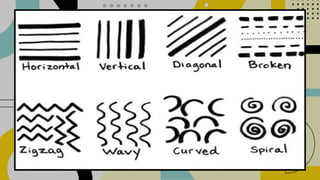
1. Line
Skeleton or basic
foundation sketch to
direct the eye vertically
or horizontally.
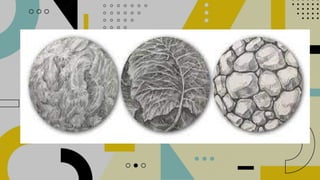
2. Texture
Refers to the surface
appearance which is either
rough or smooth, dull or
glossy, thick or thin.
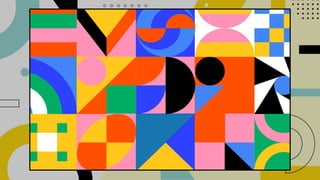
3. SHAPES
Defined as the boundary
or outline of an object.
Types of Shapes(closed
and open)

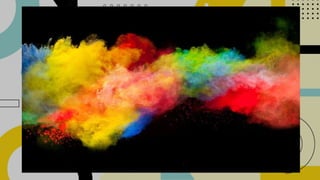
4. Color
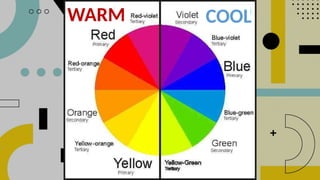
Color may be cool,
warm, bright or dull.
Choosing the right color will
greatly affect the appearance
of your finished project.
WARM COOL
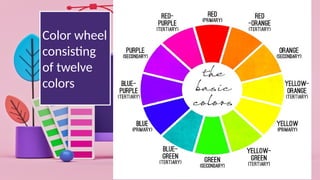
Color wheel
consisting
of twelve
colors
There are also
categories of colors
based on the color
wheel.
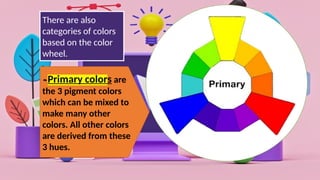
Primary colors are
the 3 pigment colors
which can be mixed to
make many other
colors. All other colors
are derived from these
3 hues.
There are also
categories of colors
based on the color
wheel.
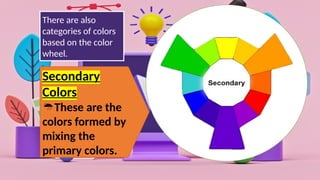
Secondary
Colors
These are the
colors formed by
mixing the
primary colors.

There are also
categories of colors
based on the color
wheel.

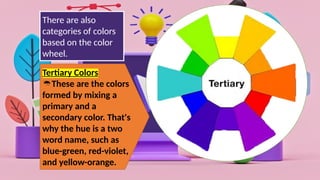
Tertiary Colors
These are the colors
formed by mixing a
primary and a
secondary color. That's
why the hue is a two
word name, such as
blue-green, red-violet,
and yellow-orange.
COLOR SCHEME
An arrangement or
combination of colors
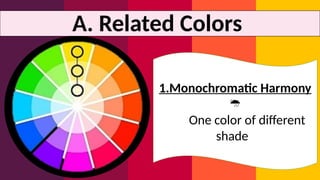
A. Related Colors
1.Monochromatic Harmony

One color of different
shade
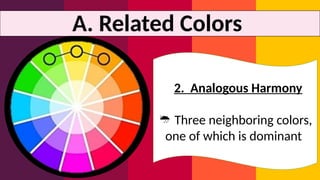
A. Related Colors
2. Analogous Harmony
 Three neighboring colors,
one of which is dominant
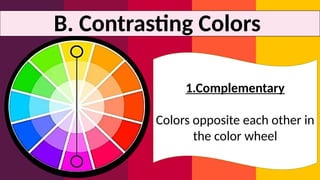
B. Contrasting Colors
1.Complementary
Colors opposite each other in
the color wheel
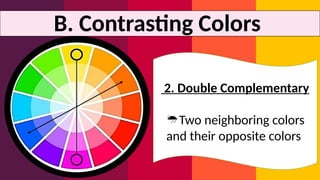
B. Contrasting Colors
2. Double Complementary
Two neighboring colors
and their opposite colors
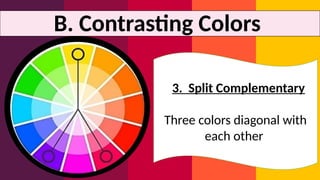
B. Contrasting Colors
3. Split Complementary
Three colors diagonal with
each other
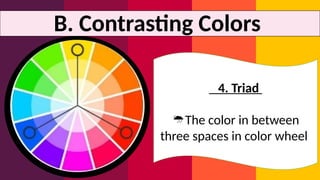
B. Contrasting Colors
4. Triad
The color in between
three spaces in color wheel
Questions?
ACTIVITY
Direction:Classify the following color if it is Primary, Secondary and Tertiary.
1.Purple ________________________
2.Red ________________________
3.Orange ________________________
4.Blue - green ________________________
5.Yellow - green ________________________
Why we need to be
knowledgeable about the
elements of design?
SHORT QUIZ
Direction: Identify what is being asked. Write your answer on the space provided
before the number.
_______________1. It refers to the surface appearance which is either rough
or smooth, dull or glossy, thick or thin.
_______________2. These are the colors formed by mixing the primary colors.
_______________3. These are the colors formed by mixing a primary and a
secondary color.
_______________4. It is one color of different shade .
_______________5. This colors in between three spaces in color wheel
ASSIGNMENT(by pair)
BRING the following materials next meeting:
1. Short Bondpaper
2. Pencil
3. Coloring materials
DAY 2
REVIEW
Are you familiar with
the different principles of
design?
PRINCIPLES OF DESIGN
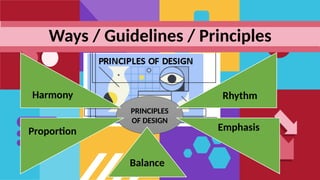
Ways / Guidelines / Principles
PRINCIPLES
OF DESIGN
Harmony
Proportion
Balance
Rhythm
Emphasis
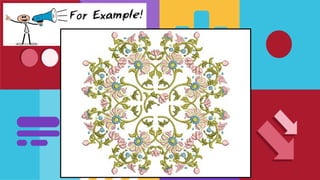
1. Harmony
Harmony is the Law of
Unity with variety. This
principle infers repetition
of line, form, shape and
size.
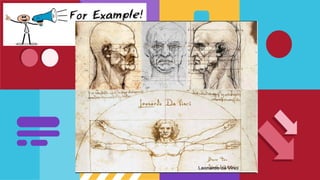
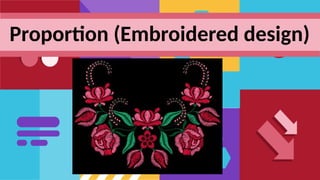
2.Proportion
Pertains to the
relationship in size
between a part and the
whole.
Proportion (Embroidered design)
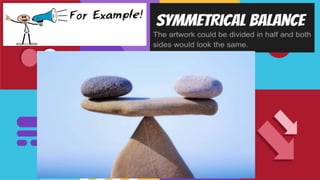
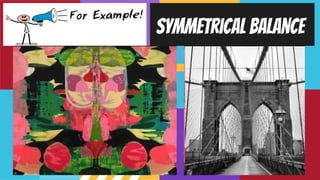
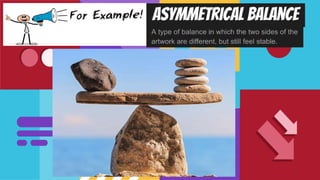
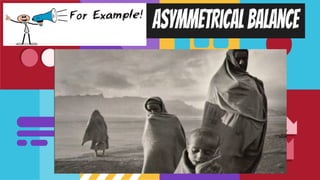
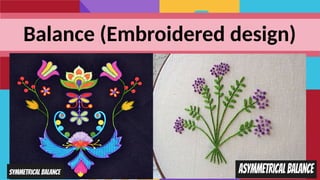
3. Balance
May be produced in two ways,
either formal or informal. Formal
balance or symmetry has equal color,
shape, and size on other side of a
design. While the informal has unequal
proportion.
Balance (Embroidered design)
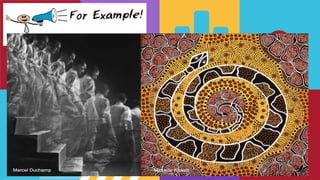
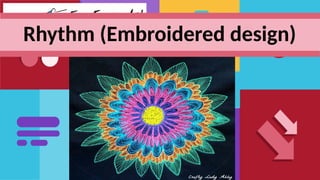
4. Rhythm
It is a smooth related movement.
Pattern and line carry the eyes along
without jerky motion.
Rhythm (Embroidered design)
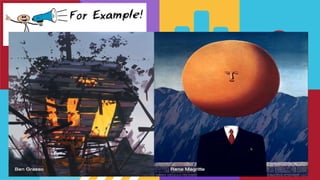
5. Emphasis
The eye is carried first to the most
important part of the design and then
to the other details in order of their
importance. This referred to as the
center of interest of a design.
Questions?
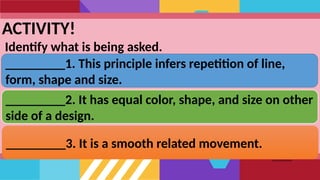
ACTIVITY!
Identify what is being asked.
_________1. This principle infers repetition of line,
form, shape and size.
_________2. It has equal color, shape, and size on other
side of a design.
_________3. It is a smooth related movement.
Does having knowledge
about the principles of
design will help you in
making simple craft?
How?
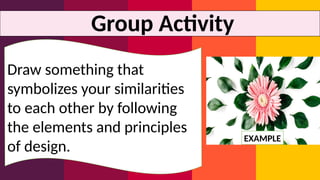
Group Activity
Draw something that
symbolizes your similarities
to each other by following
the elements and principles
of design.
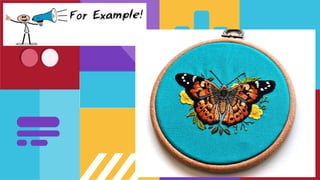
EXAMPLE
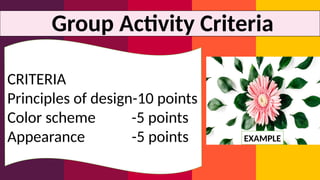
Group Activity Criteria
CRITERIA
Principles of design-10 points
Color scheme -5 points
Appearance -5 points EXAMPLE
DAY 3
Continuation of Group
Activity
DAY 4
REVIEW
QUIZ
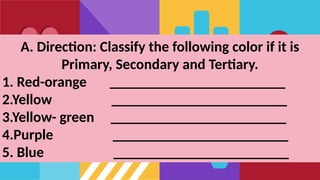
A. Direction: Classify the following color if it is
Primary, Secondary and Tertiary.
1. Red-orange ________________________
2.Yellow ________________________
3.Yellow- green ________________________
4.Purple ________________________
5. Blue ________________________
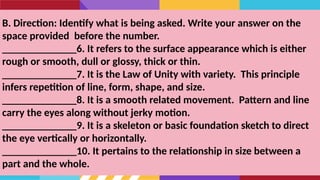
B. Direction: Identify what is being asked. Write your answer on the
space provided before the number.
______________6. It refers to the surface appearance which is either
rough or smooth, dull or glossy, thick or thin.
______________7. It is the Law of Unity with variety. This principle
infers repetition of line, form, shape, and size.
______________8. It is a smooth related movement. Pattern and line
carry the eyes along without jerky motion.
______________9. It is a skeleton or basic foundation sketch to direct
the eye vertically or horizontally.
______________10. It pertains to the relationship in size between a
part and the whole.
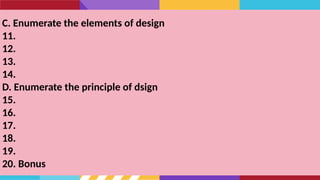
C. Enumerate the elements of design
11.
12.
13.
14.
D. Enumerate the principle of dsign
15.
16.
17.
18.
19.
20. Bonus
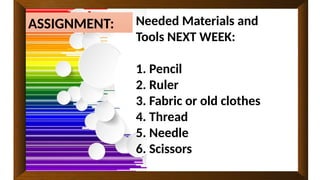
Needed Materials and
Tools NEXT WEEK:
1. Pencil
2. Ruler
3. Fabric or old clothes
4. Thread
5. Needle
6. Scissors
ASSIGNMENT:
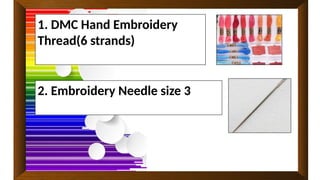
1. DMC Hand Embroidery
Thread(6 strands)
2. Embroidery Needle size 3

WEEK-3-ELEMENTS AND PRINCIPLES OF DESIGN.pptx

  • 1.
  • 2.
  • 7.
    Can you guessour lesson?
  • 8.
  • 9.
    Is the creationof a plan for the construction of an object or a system. It may be an architechtural blueprints, engineering drawings, circuit diagrams or sewing patterns. DESIGN
  • 10.
  • 11.
    ELEMENTS OF DESIGN The building blocksof what a visual artist or graphic designer uses to make a successful composition. ELEMENTS OF DESIGN
  • 13.
    1. Line Skeleton orbasic foundation sketch to direct the eye vertically or horizontally.
  • 15.
    2. Texture Refers tothe surface appearance which is either rough or smooth, dull or glossy, thick or thin.
  • 17.
    3. SHAPES Defined asthe boundary or outline of an object. Types of Shapes(closed and open) 
  • 19.
    4. Color Color maybe cool, warm, bright or dull. Choosing the right color will greatly affect the appearance of your finished project.
  • 20.
  • 21.
  • 22.
    There are also categoriesof colors based on the color wheel. Primary colors are the 3 pigment colors which can be mixed to make many other colors. All other colors are derived from these 3 hues.
  • 23.
    There are also categoriesof colors based on the color wheel. Secondary Colors These are the colors formed by mixing the primary colors.
  • 24.
    There are also categoriesof colors based on the color wheel. Tertiary Colors These are the colors formed by mixing a primary and a secondary color. That's why the hue is a two word name, such as blue-green, red-violet, and yellow-orange.
  • 25.
    COLOR SCHEME An arrangementor combination of colors
  • 26.
    A. Related Colors 1.MonochromaticHarmony  One color of different shade
  • 27.
    A. Related Colors 2.Analogous Harmony  Three neighboring colors, one of which is dominant
  • 28.
    B. Contrasting Colors 1.Complementary Colorsopposite each other in the color wheel
  • 29.
    B. Contrasting Colors 2.Double Complementary Two neighboring colors and their opposite colors
  • 30.
    B. Contrasting Colors 3.Split Complementary Three colors diagonal with each other
  • 31.
    B. Contrasting Colors 4.Triad The color in between three spaces in color wheel
  • 32.
  • 33.
    ACTIVITY Direction:Classify the followingcolor if it is Primary, Secondary and Tertiary. 1.Purple ________________________ 2.Red ________________________ 3.Orange ________________________ 4.Blue - green ________________________ 5.Yellow - green ________________________
  • 34.
    Why we needto be knowledgeable about the elements of design?
  • 35.
    SHORT QUIZ Direction: Identifywhat is being asked. Write your answer on the space provided before the number. _______________1. It refers to the surface appearance which is either rough or smooth, dull or glossy, thick or thin. _______________2. These are the colors formed by mixing the primary colors. _______________3. These are the colors formed by mixing a primary and a secondary color. _______________4. It is one color of different shade . _______________5. This colors in between three spaces in color wheel
  • 36.
    ASSIGNMENT(by pair) BRING thefollowing materials next meeting: 1. Short Bondpaper 2. Pencil 3. Coloring materials
  • 37.
  • 38.
  • 40.
    Are you familiarwith the different principles of design?
  • 42.
  • 43.
    Ways / Guidelines/ Principles PRINCIPLES OF DESIGN Harmony Proportion Balance Rhythm Emphasis
  • 44.
    1. Harmony Harmony isthe Law of Unity with variety. This principle infers repetition of line, form, shape and size.
  • 47.
    2.Proportion Pertains to the relationshipin size between a part and the whole.
  • 49.
  • 50.
    3. Balance May beproduced in two ways, either formal or informal. Formal balance or symmetry has equal color, shape, and size on other side of a design. While the informal has unequal proportion.
  • 55.
  • 56.
    4. Rhythm It isa smooth related movement. Pattern and line carry the eyes along without jerky motion.
  • 58.
  • 59.
    5. Emphasis The eyeis carried first to the most important part of the design and then to the other details in order of their importance. This referred to as the center of interest of a design.
  • 62.
  • 63.
    ACTIVITY! Identify what isbeing asked. _________1. This principle infers repetition of line, form, shape and size. _________2. It has equal color, shape, and size on other side of a design. _________3. It is a smooth related movement.
  • 64.
    Does having knowledge aboutthe principles of design will help you in making simple craft? How?
  • 65.
    Group Activity Draw somethingthat symbolizes your similarities to each other by following the elements and principles of design. EXAMPLE
  • 66.
    Group Activity Criteria CRITERIA Principlesof design-10 points Color scheme -5 points Appearance -5 points EXAMPLE
  • 67.
  • 68.
  • 69.
  • 70.
  • 72.
  • 73.
    A. Direction: Classifythe following color if it is Primary, Secondary and Tertiary. 1. Red-orange ________________________ 2.Yellow ________________________ 3.Yellow- green ________________________ 4.Purple ________________________ 5. Blue ________________________
  • 74.
    B. Direction: Identifywhat is being asked. Write your answer on the space provided before the number. ______________6. It refers to the surface appearance which is either rough or smooth, dull or glossy, thick or thin. ______________7. It is the Law of Unity with variety. This principle infers repetition of line, form, shape, and size. ______________8. It is a smooth related movement. Pattern and line carry the eyes along without jerky motion. ______________9. It is a skeleton or basic foundation sketch to direct the eye vertically or horizontally. ______________10. It pertains to the relationship in size between a part and the whole.
  • 75.
    C. Enumerate theelements of design 11. 12. 13. 14. D. Enumerate the principle of dsign 15. 16. 17. 18. 19. 20. Bonus
  • 76.
    Needed Materials and ToolsNEXT WEEK: 1. Pencil 2. Ruler 3. Fabric or old clothes 4. Thread 5. Needle 6. Scissors ASSIGNMENT:
  • 77.
    1. DMC HandEmbroidery Thread(6 strands) 2. Embroidery Needle size 3