WebRTC Transforming
Communications
2
> Web Real-Time Communications
> New standard that allows browser
to be endpoint for communications
> ―Allows developers to add real-
time voice calls, video chats and
file sharing to their web apps
without the need for plug-ins.‖ –
TechCrunch
> Javascript, open sourced by
Google
WebRTC
What it is, exactly
3 Communications at Web Speed
Nothing short of a communications revolution
4
> Threat to local telcomms
> Microsoft has made attempts
to stall, or drive it in a new
direction
> Cisco supports it
> Mozilla is betting on it
> Growing industry consortium
> Phone manufacturers?
The Controversy
Not everyone is happy with WebRTC
5
> A softphone in a browser
> Complexity reduction
> Next generation ‗phone‘ network
> Real-time everywhere
> $2 trillion industry re-invented
> Skype, but better, based on standards
The Vision of WebRTC
Approaching reality at Web speed
6
Features
• Codecs
• Encryption
• NAT
traversal
• Bandwidth
mgmt
Signaling
• SIP
• XMPP
• Proprietary
How Does It Work?
Simple, its (almost) all in the browser 6
WebSockets
WebSockets
7 Browser Support
Heading towards adoption
Chrome
• Desktop: Full support
• Mobile: Coming soon
Firefox / Firefox Mobile
• Desktop: Full support and interop with
Chrome
• Mobile: Announced (Android)
Safari
• Apple focused on Face Time walled garden
and H.264
• Third party plugin: e.g. webrtc4all
• iOS is closed and prevents third party
browsers from accessing certain functions
Opera
• Mobile: Available (Android)
IE
• Via ChromeFrame plugin
• Microsoft chose a proprietary path
8 Basic Diagram
Putting the pieces together
9
> Voice
• Opus (royalty free, open
source)
> Video
• Google and Mozilla and W3C
favor VP8 (patent free and
open source)
• Microsoft, Cisco, Apple favor
H.264 (requires a license)
> Microsoft
• Remember RTAudio and
RTVideo?
Ongoing Fight over Codecs and Patents
WebRTC attempts to set a new standard for open source and royalty free codecs
10
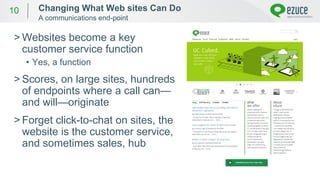
> Websites become a key
customer service function
• Yes, a function
> Scores, on large sites, hundreds
of endpoints where a call can—
and will—originate
> Forget click-to-chat on sites, the
website is the customer service,
and sometimes sales, hub
Changing What Web sites Can Do
A communications end-point
11
> WebRTC will be integrated the
way social needs to be now
> Part of the evolution to website as
applications
> Once it‘s accepted, will need to
plan for WebRTC as a key part of
any serious enterprise or
consumer-facing website
Changing Websites’ Function
Sites Become More Interactive In A Way Social Leads
12
> Email, such as Outlook,
Zimbra
> CRM, such as Salesforce
> Not just voice/video, but
screen-sharing, right in the
app
> Communications-enablement
becomes the standard for web
apps, especially at work
Communications-Enabling Web Apps
Adding Voice, Video, Screen Share, and Chat capabilities
13
Unite Zimbra first version
• Initiate calls (click-to-call)
• Presence integration
• Unified messaging / call history
• Conference management
• Corporate address book
• Calendar free / busy
Unite Zimbra second version
• Voice / video in the browser
• Screen sharing from the Zimbra UI
• Integrated chat / group chat
VMware Zimbra Communications Enabled
WebRTC brings voice / video / screen sharing right into the Zimbra UI
WebRTC Transforming Communications

WebRTC Transforming Communications

  • 1.
  • 2.
    2 > Web Real-TimeCommunications > New standard that allows browser to be endpoint for communications > ―Allows developers to add real- time voice calls, video chats and file sharing to their web apps without the need for plug-ins.‖ – TechCrunch > Javascript, open sourced by Google WebRTC What it is, exactly
  • 3.
    3 Communications atWeb Speed Nothing short of a communications revolution
  • 4.
    4 > Threat tolocal telcomms > Microsoft has made attempts to stall, or drive it in a new direction > Cisco supports it > Mozilla is betting on it > Growing industry consortium > Phone manufacturers? The Controversy Not everyone is happy with WebRTC
  • 5.
    5 > A softphonein a browser > Complexity reduction > Next generation ‗phone‘ network > Real-time everywhere > $2 trillion industry re-invented > Skype, but better, based on standards The Vision of WebRTC Approaching reality at Web speed
  • 6.
    6 Features • Codecs • Encryption •NAT traversal • Bandwidth mgmt Signaling • SIP • XMPP • Proprietary How Does It Work? Simple, its (almost) all in the browser 6 WebSockets WebSockets
  • 7.
    7 Browser Support Headingtowards adoption Chrome • Desktop: Full support • Mobile: Coming soon Firefox / Firefox Mobile • Desktop: Full support and interop with Chrome • Mobile: Announced (Android) Safari • Apple focused on Face Time walled garden and H.264 • Third party plugin: e.g. webrtc4all • iOS is closed and prevents third party browsers from accessing certain functions Opera • Mobile: Available (Android) IE • Via ChromeFrame plugin • Microsoft chose a proprietary path
  • 8.
    8 Basic Diagram Puttingthe pieces together
  • 9.
    9 > Voice • Opus(royalty free, open source) > Video • Google and Mozilla and W3C favor VP8 (patent free and open source) • Microsoft, Cisco, Apple favor H.264 (requires a license) > Microsoft • Remember RTAudio and RTVideo? Ongoing Fight over Codecs and Patents WebRTC attempts to set a new standard for open source and royalty free codecs
  • 10.
    10 > Websites becomea key customer service function • Yes, a function > Scores, on large sites, hundreds of endpoints where a call can— and will—originate > Forget click-to-chat on sites, the website is the customer service, and sometimes sales, hub Changing What Web sites Can Do A communications end-point
  • 11.
    11 > WebRTC willbe integrated the way social needs to be now > Part of the evolution to website as applications > Once it‘s accepted, will need to plan for WebRTC as a key part of any serious enterprise or consumer-facing website Changing Websites’ Function Sites Become More Interactive In A Way Social Leads
  • 12.
    12 > Email, suchas Outlook, Zimbra > CRM, such as Salesforce > Not just voice/video, but screen-sharing, right in the app > Communications-enablement becomes the standard for web apps, especially at work Communications-Enabling Web Apps Adding Voice, Video, Screen Share, and Chat capabilities
  • 13.
    13 Unite Zimbra firstversion • Initiate calls (click-to-call) • Presence integration • Unified messaging / call history • Conference management • Corporate address book • Calendar free / busy Unite Zimbra second version • Voice / video in the browser • Screen sharing from the Zimbra UI • Integrated chat / group chat VMware Zimbra Communications Enabled WebRTC brings voice / video / screen sharing right into the Zimbra UI