Productivity for Lawyers
Simple Lessons to Improve Your Law Practice and
Your Life
#lessonsforlawyers
Nora Riva Bergman, J.D.
3
4
About Our Presenter
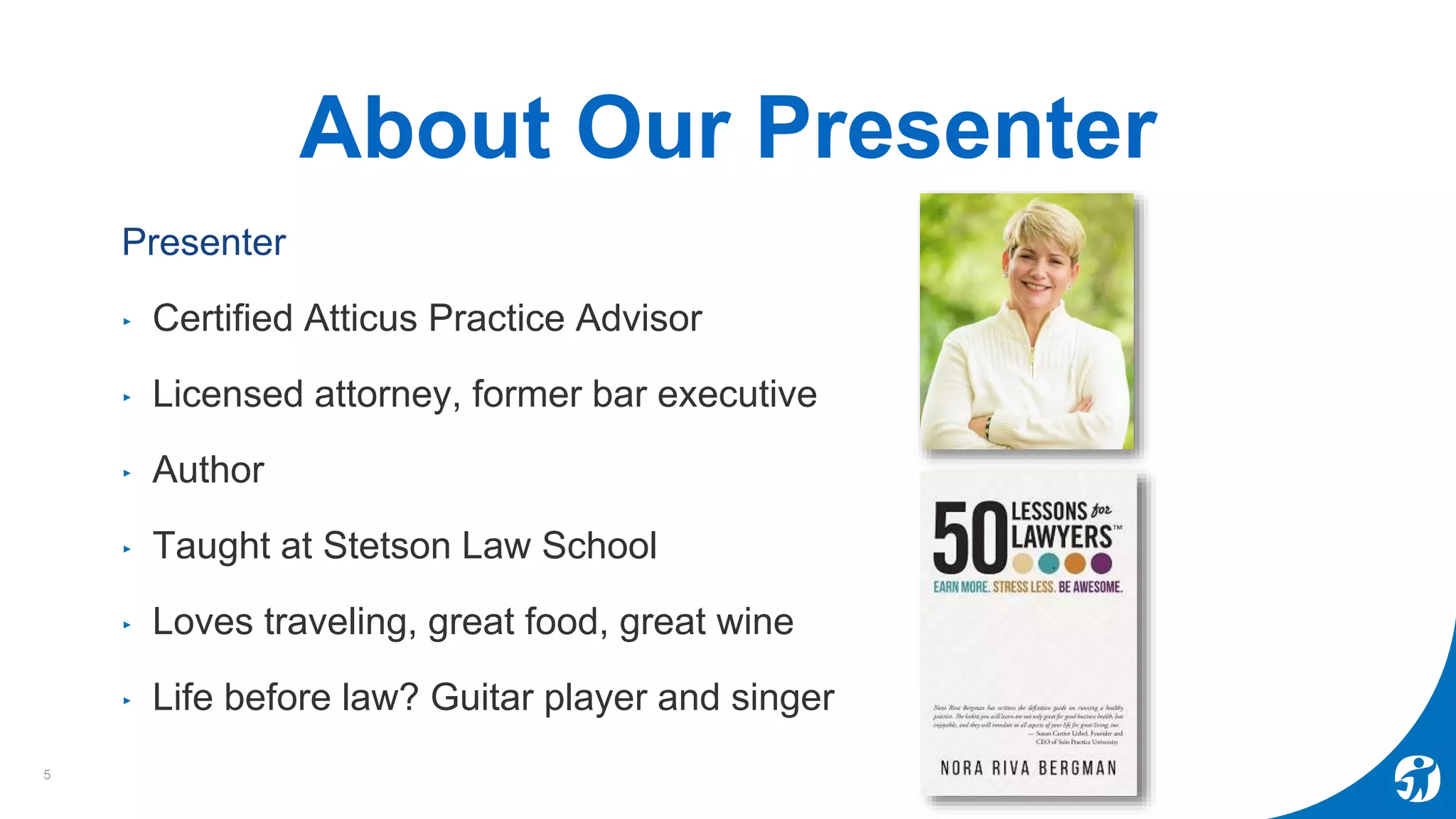
Presenter
‣ Certified Atticus Practice Advisor
‣ Licensed attorney, former bar executive
‣ Author
‣ Taught at Stetson Law School
‣ Loves traveling, great food, great wine
‣ Life before law? Guitar player and singer
5
How we spend our days is, of
course,
how we spend our lives.
– Annie Dillard
This is your life. Are you living it or is it living
you?
7
8
Today will
be different.
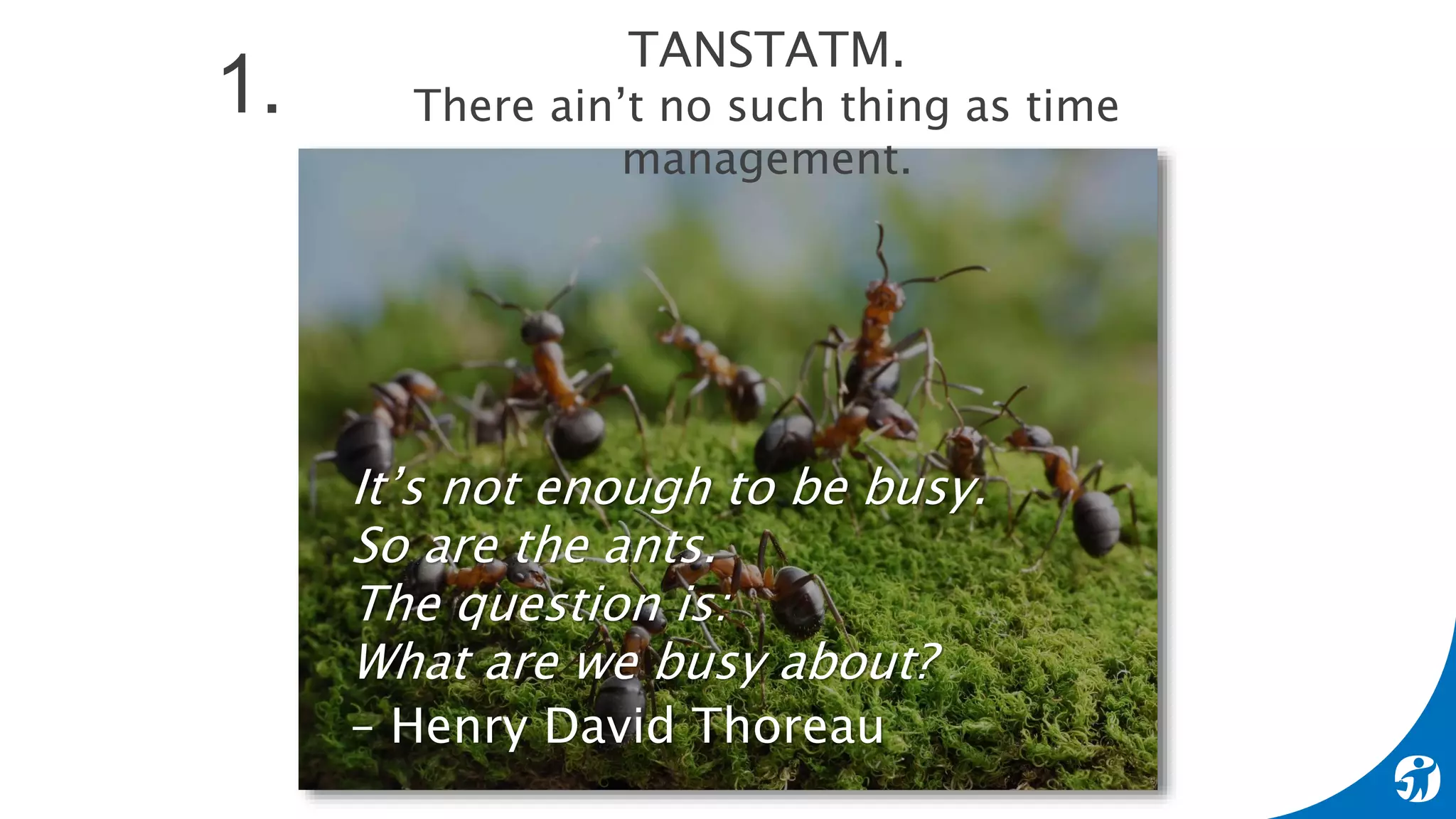
It’s not enough to be busy.
So are the ants.
The question is:
What are we busy about?
– Henry David Thoreau
TANSTATM.
There ain’t no such thing as time
management.
1.
10
Health.com reports that
“people who work more than 10 hours a day
are about 60 percent more likely to develop
heart disease or have a heart attack than pe
ople who clock just seven hours a day.”
11
THE PAINFUL
REALITY
Adrenaline Addiction
12
Locus of Control
13
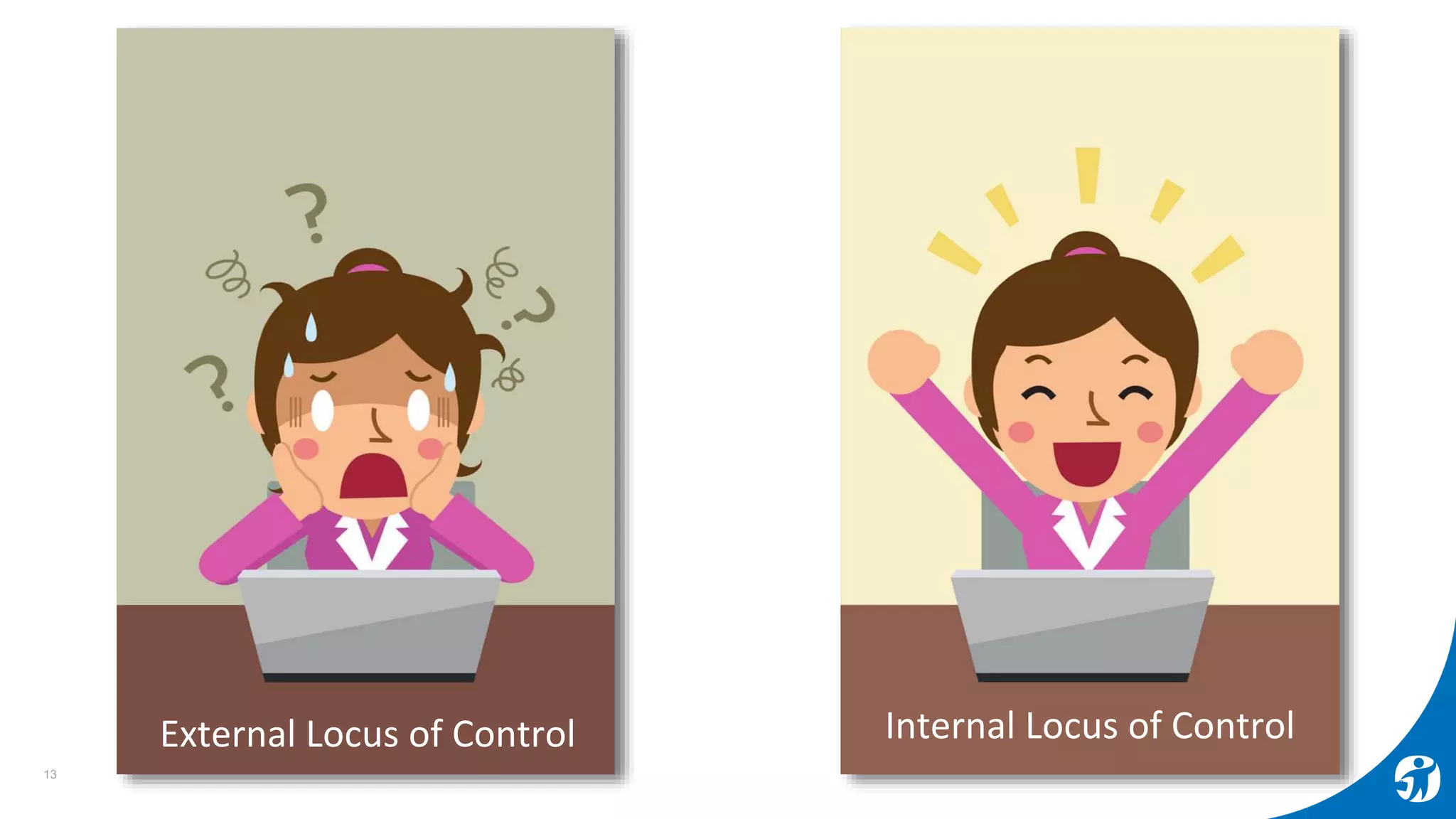
External Locus of Control Internal Locus of Control
14
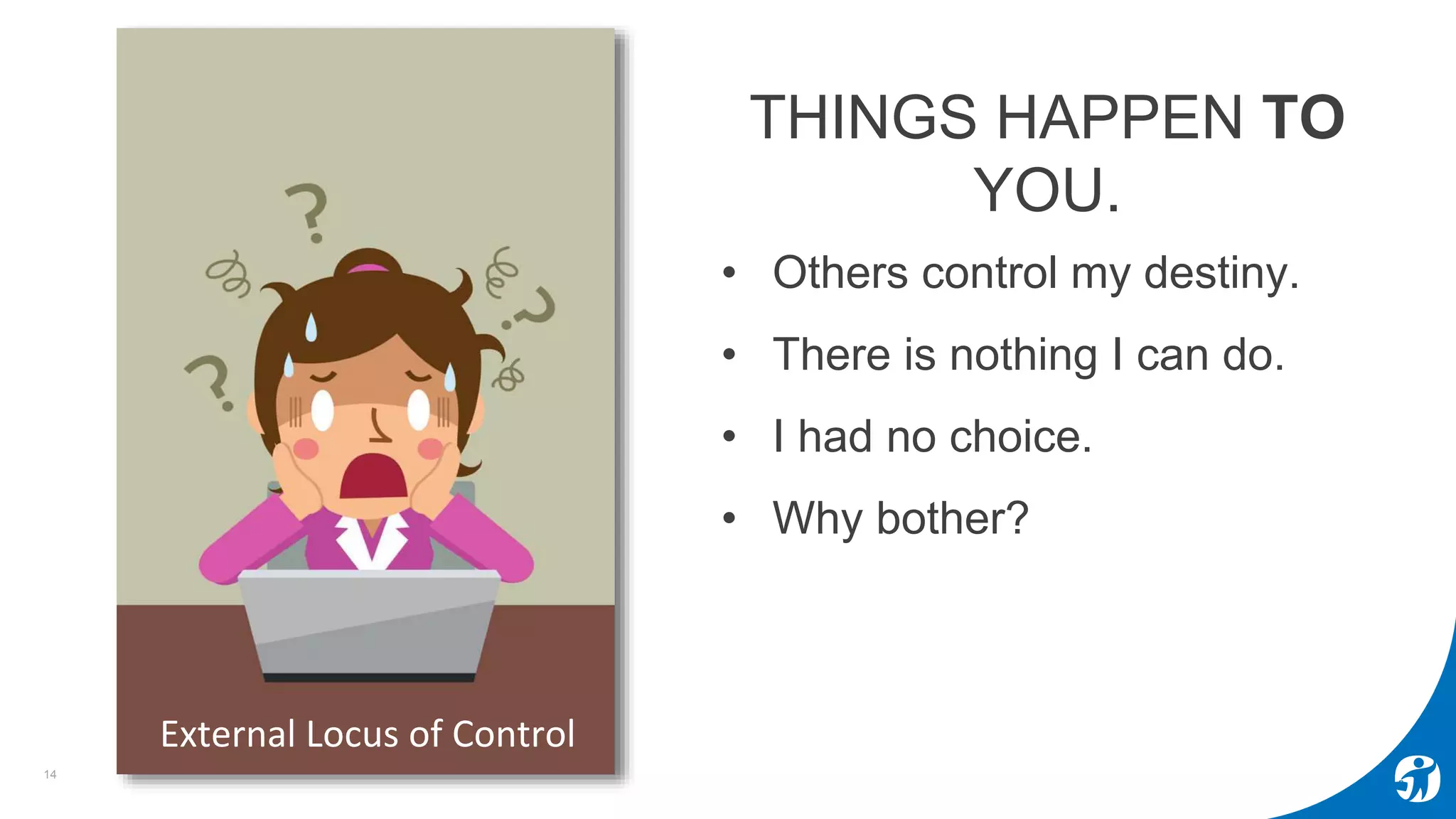
External Locus of Control
• Others control my destiny.
• There is nothing I can do.
• I had no choice.
• Why bother?
THINGS HAPPEN TO
YOU.
15
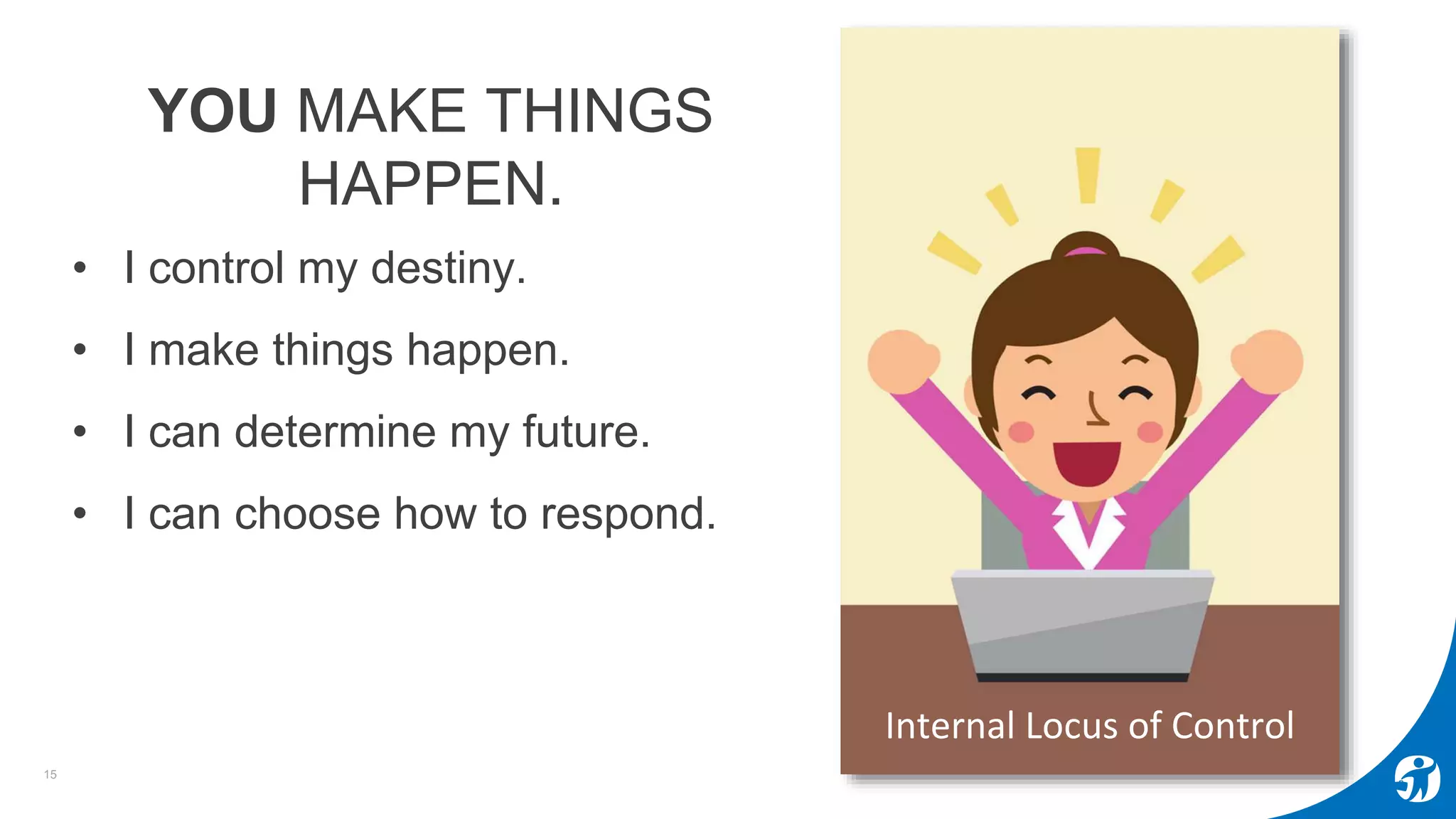
Internal Locus of Control
• I control my destiny.
• I make things happen.
• I can determine my future.
• I can choose how to respond.
YOU MAKE THINGS
HAPPEN.
16
“You have brains in your head.
You have feet in your shoes.
You can steer yourself any
direction you choose.”
- Dr. Seuss
17
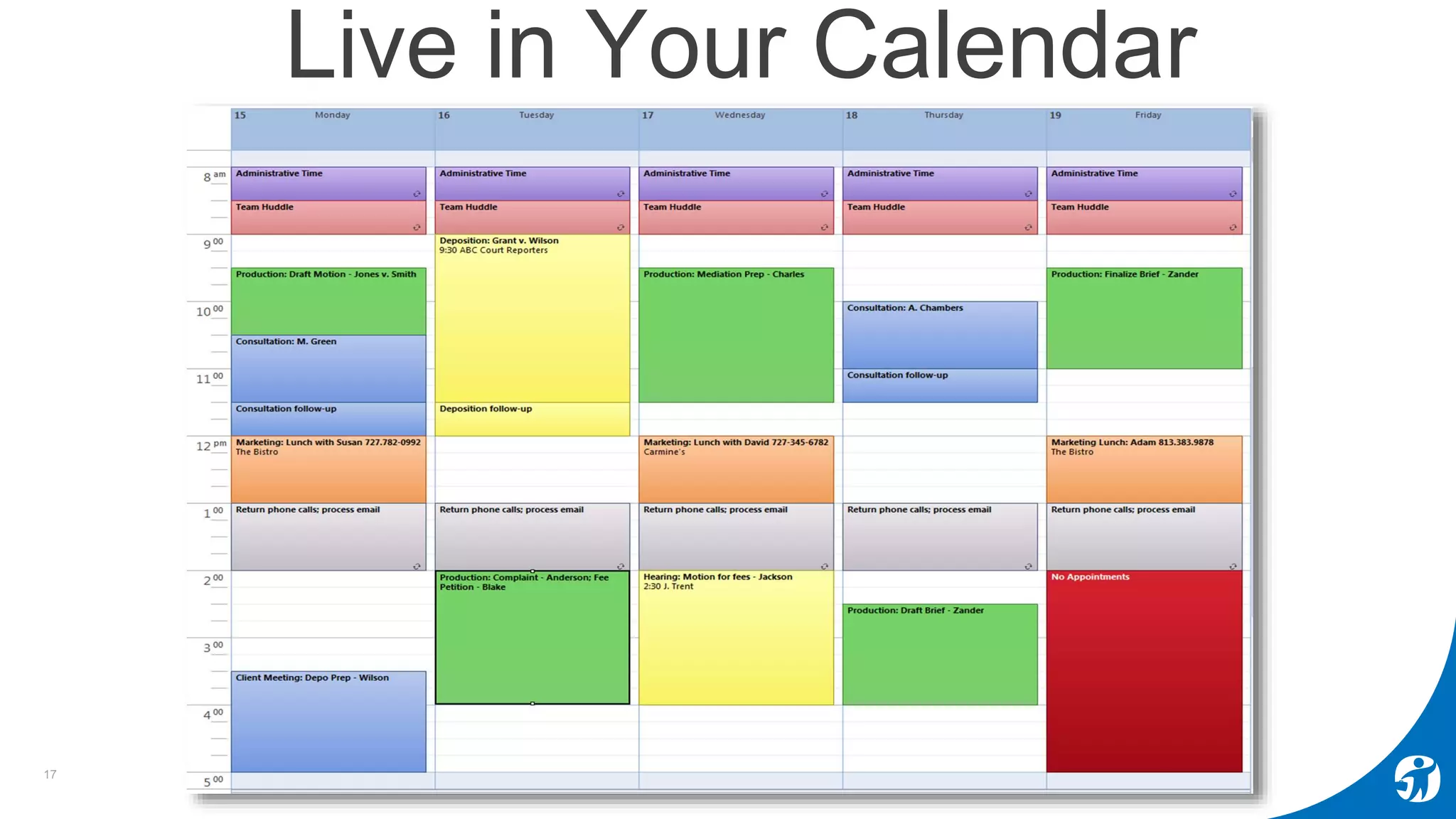
Live in Your Calendar
18
LIVING THE
LESSON• Change your “time management” mindset.
Think in terms of “self-management.”
• Increase your internal locus of control.
• LIVE IN YOUR CALENDAR – NOT YOUR INBOX.
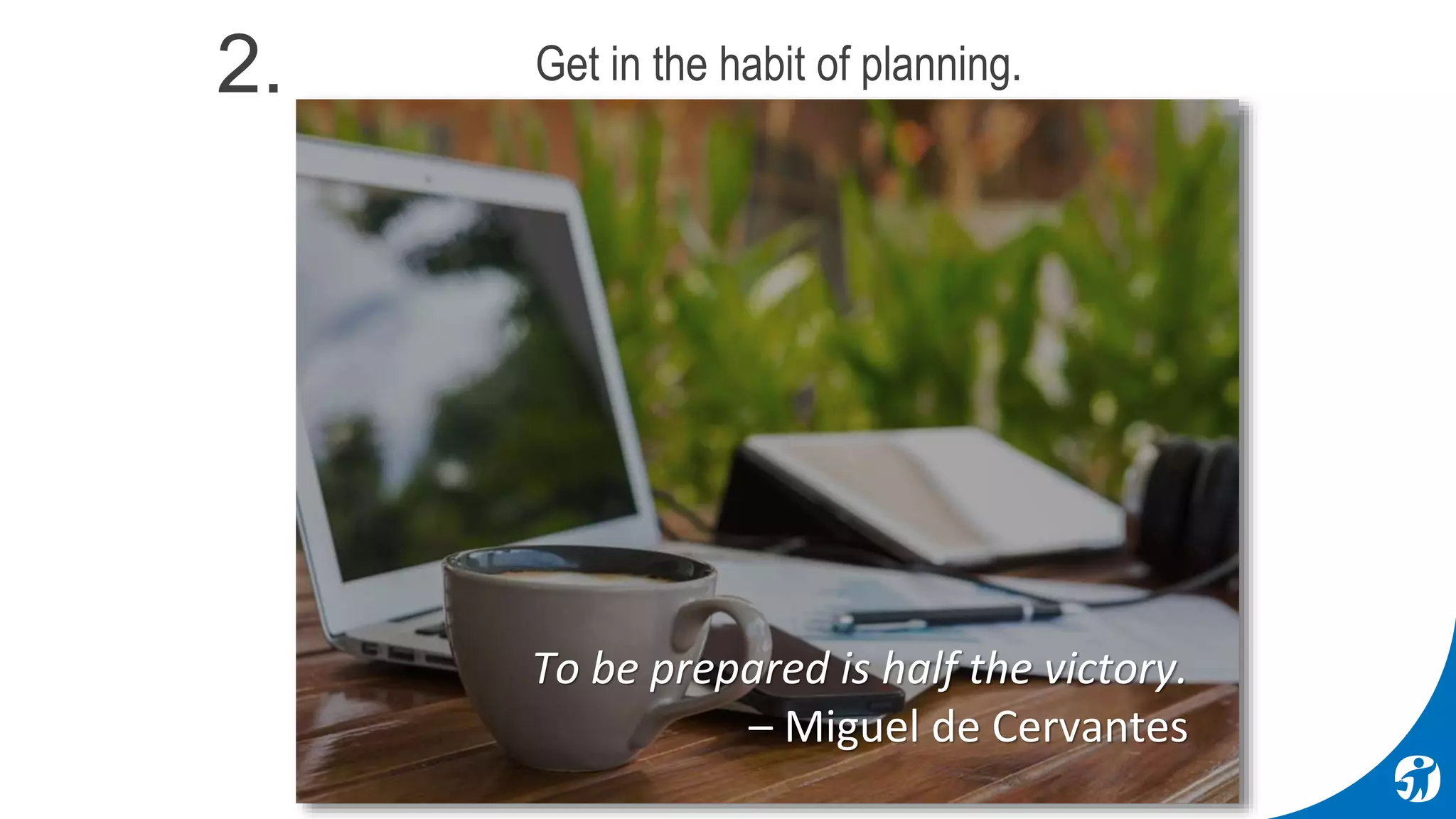
To be prepared is half the victory.
– Miguel de Cervantes
Get in the habit of planning.2.
Things which
Matter Most
MUST never be
at the mercy of
things which
Matter least.
- Goethe
“Predeciding should help a person protect goal pursuit from tempting
distractions, bad habits, or competing goals.”
– From The Way We’re Working Isn’t Working
Start Predeciding
LIVING THE LESSON
• Schedule 30 minutes in your calendar for weekly planning.
• Include your key support person in your planning session.
• Schedule time in your calendar during the coming week to actually do the
work associated with those deadlines and due dates.
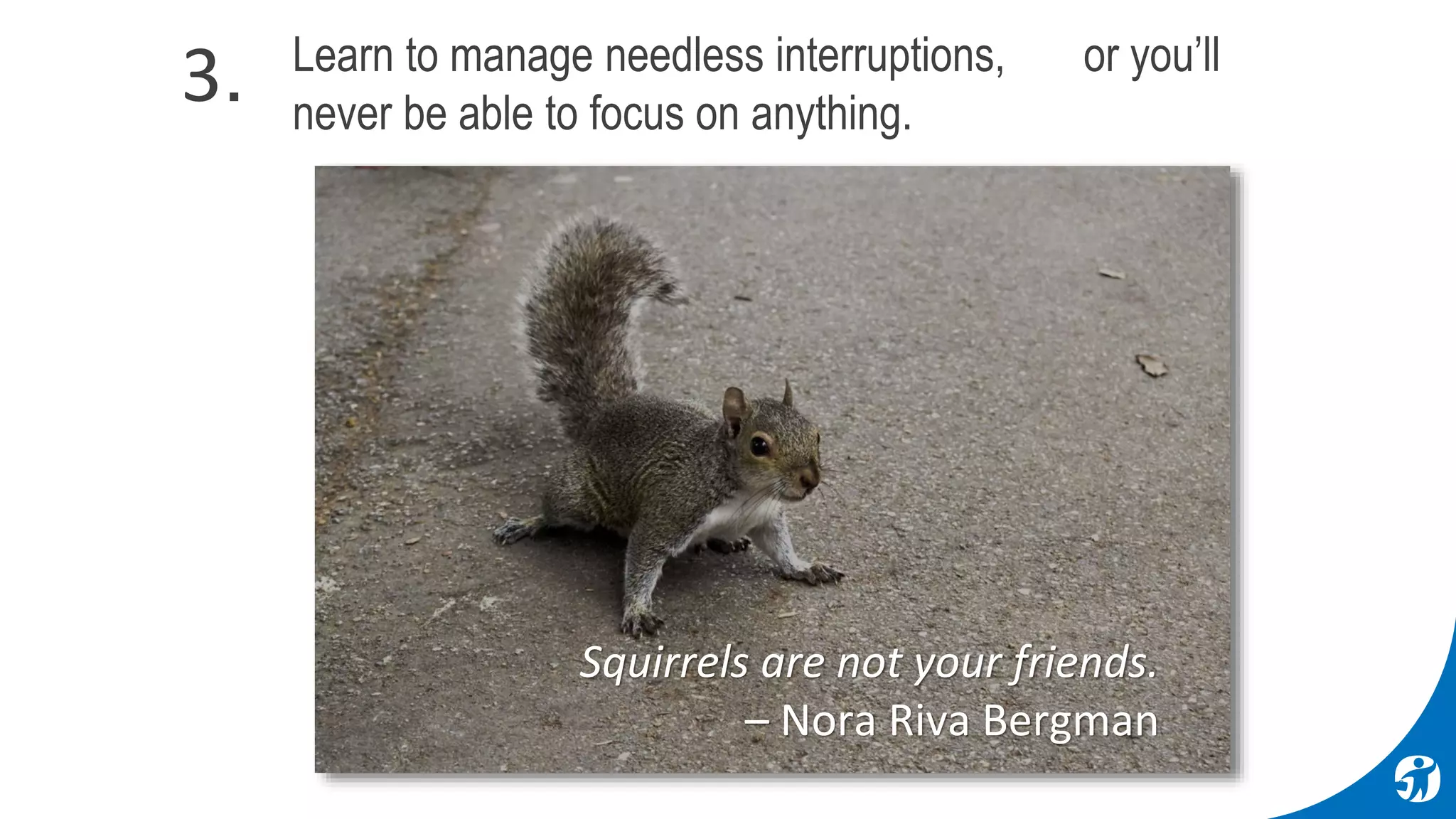
Squirrels are not your friends.
– Nora Riva Bergman
Learn to manage needless interruptions, or you’ll
never be able to focus on anything.
3.
The average knowledge worker
is interrupted
EVERY 8 MINUTES.
It can take your brain
20 MINUTES
to recover from an interruption.
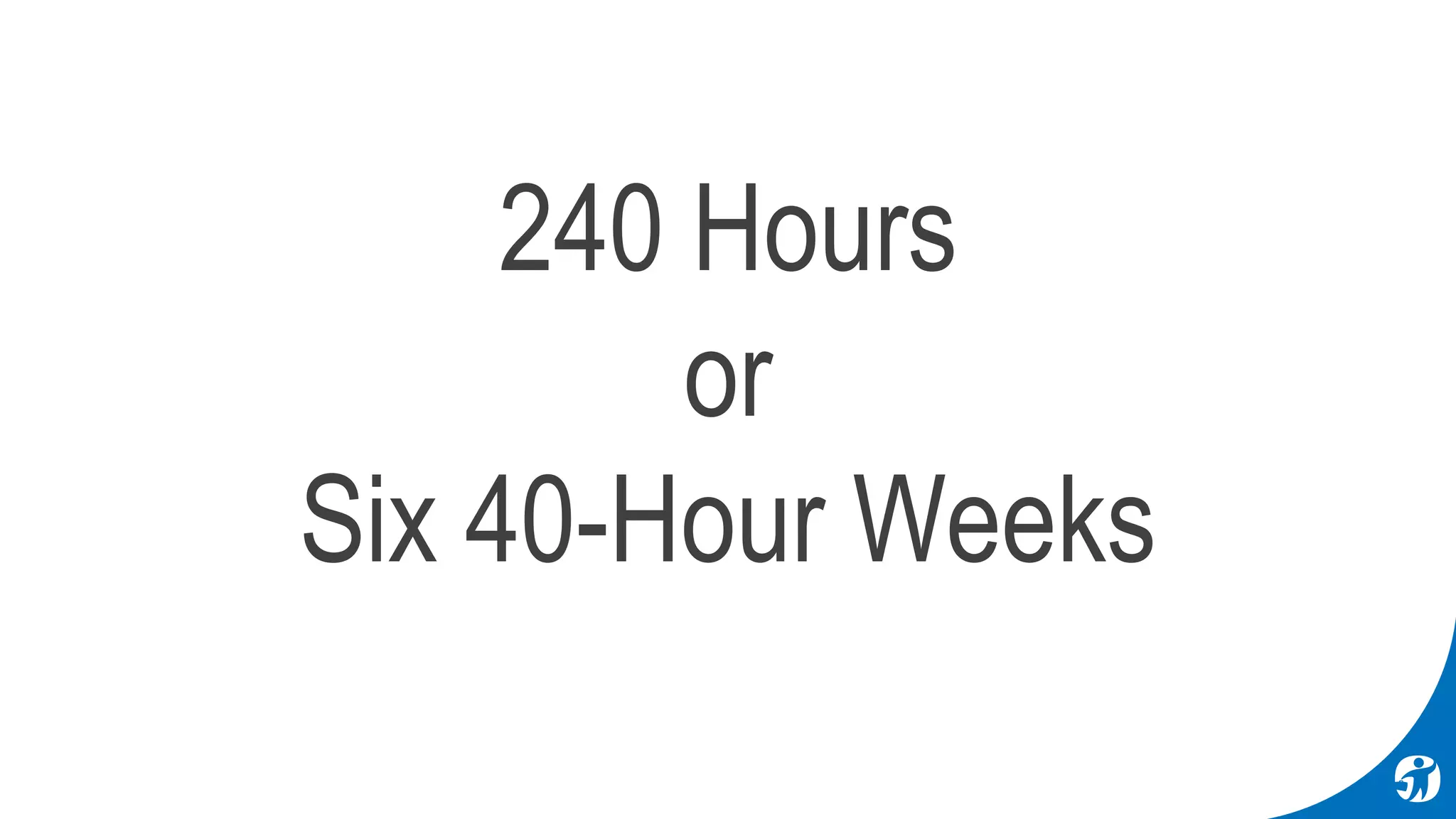
240 Hours
or
Six 40-Hour Weeks
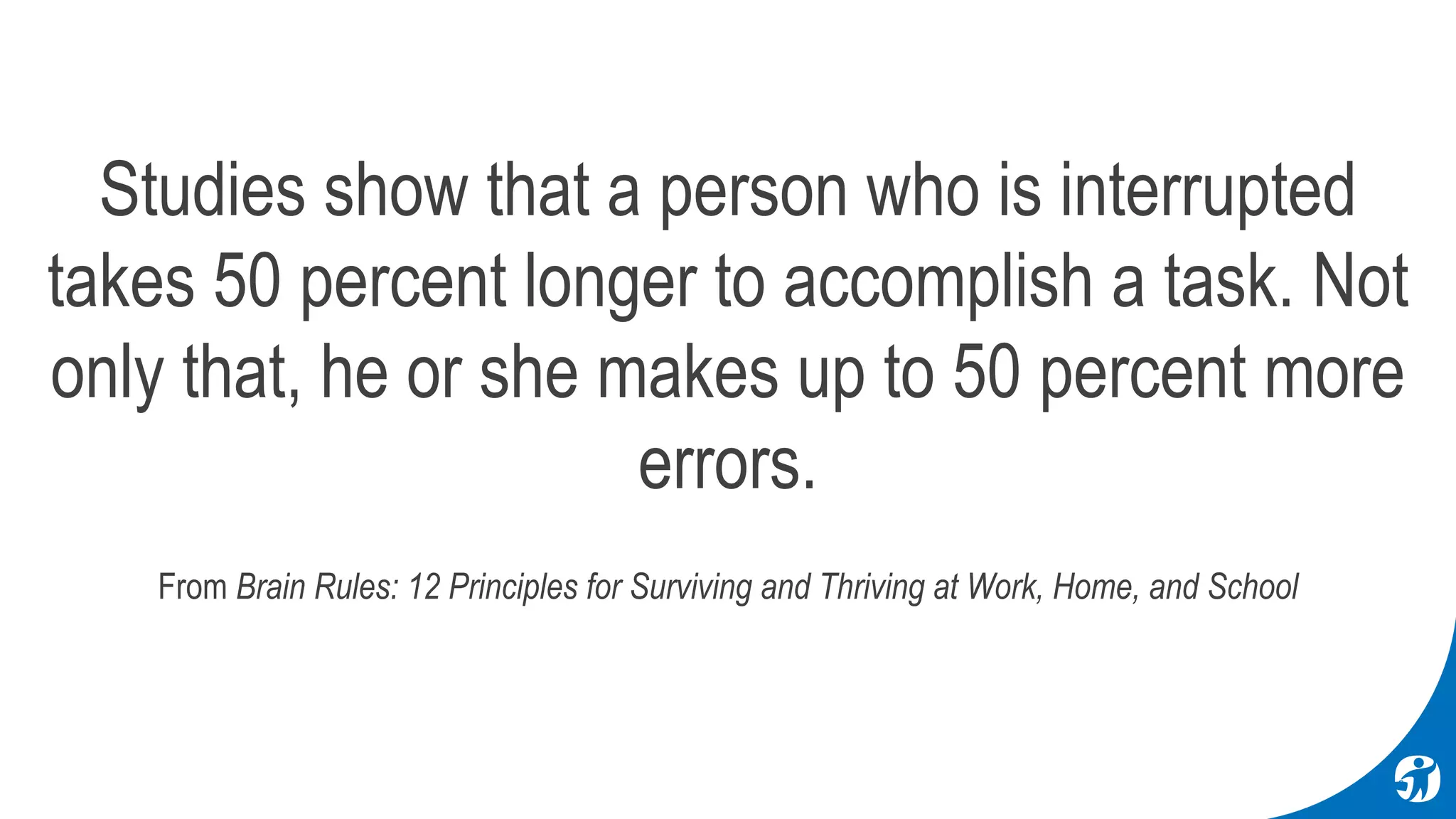
Studies show that a person who is interrupted
takes 50 percent longer to accomplish a task. Not
only that, he or she makes up to 50 percent more
errors.
From Brain Rules: 12 Principles for Surviving and Thriving at Work, Home, and School
Strive to eliminate
NEEDLESS
INTERRUPTIONS.
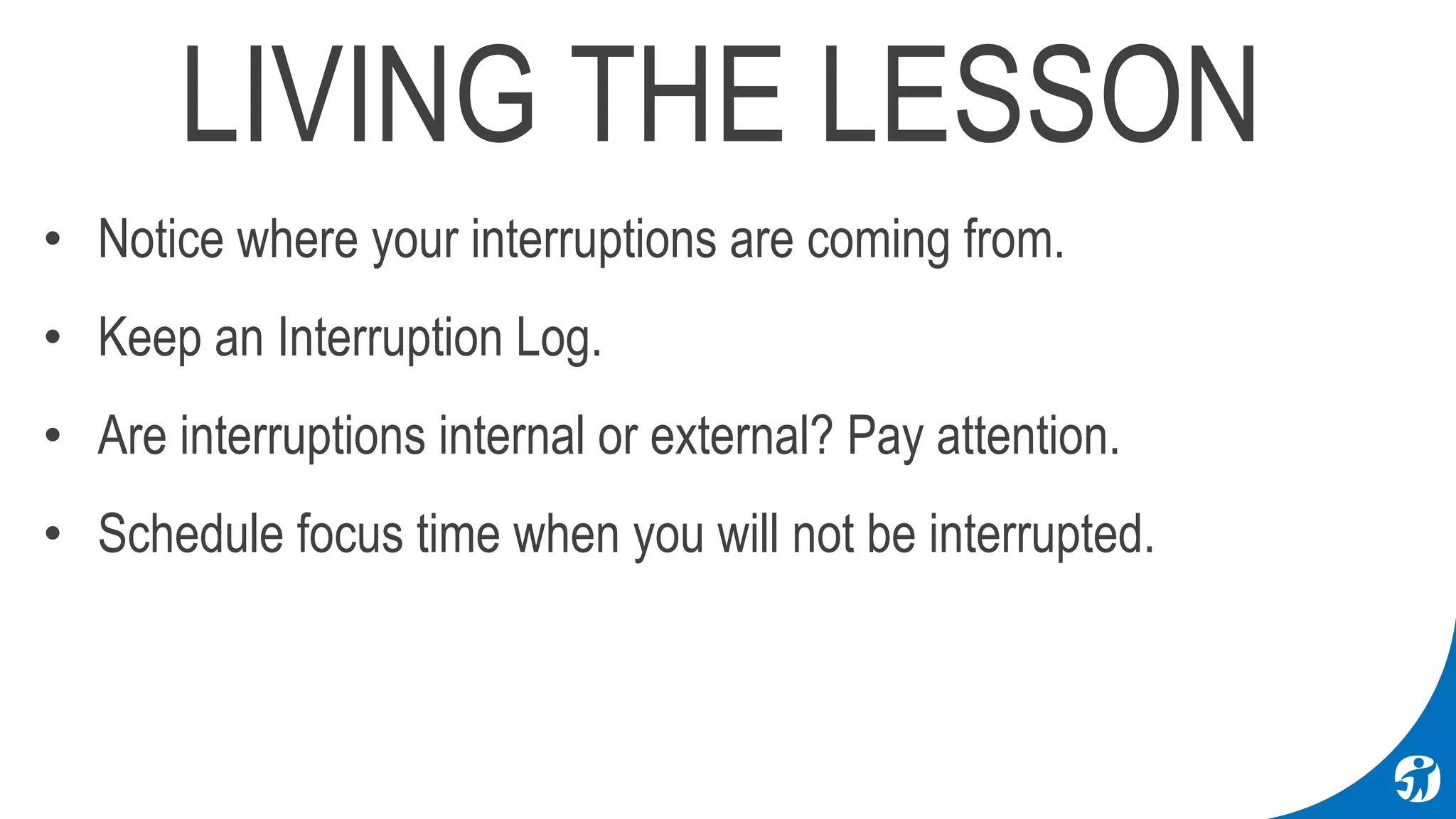
LIVING THE LESSON
• Notice where your interruptions are coming from.
• Keep an Interruption Log.
• Are interruptions internal or external? Pay attention.
• Schedule focus time when you will not be interrupted.
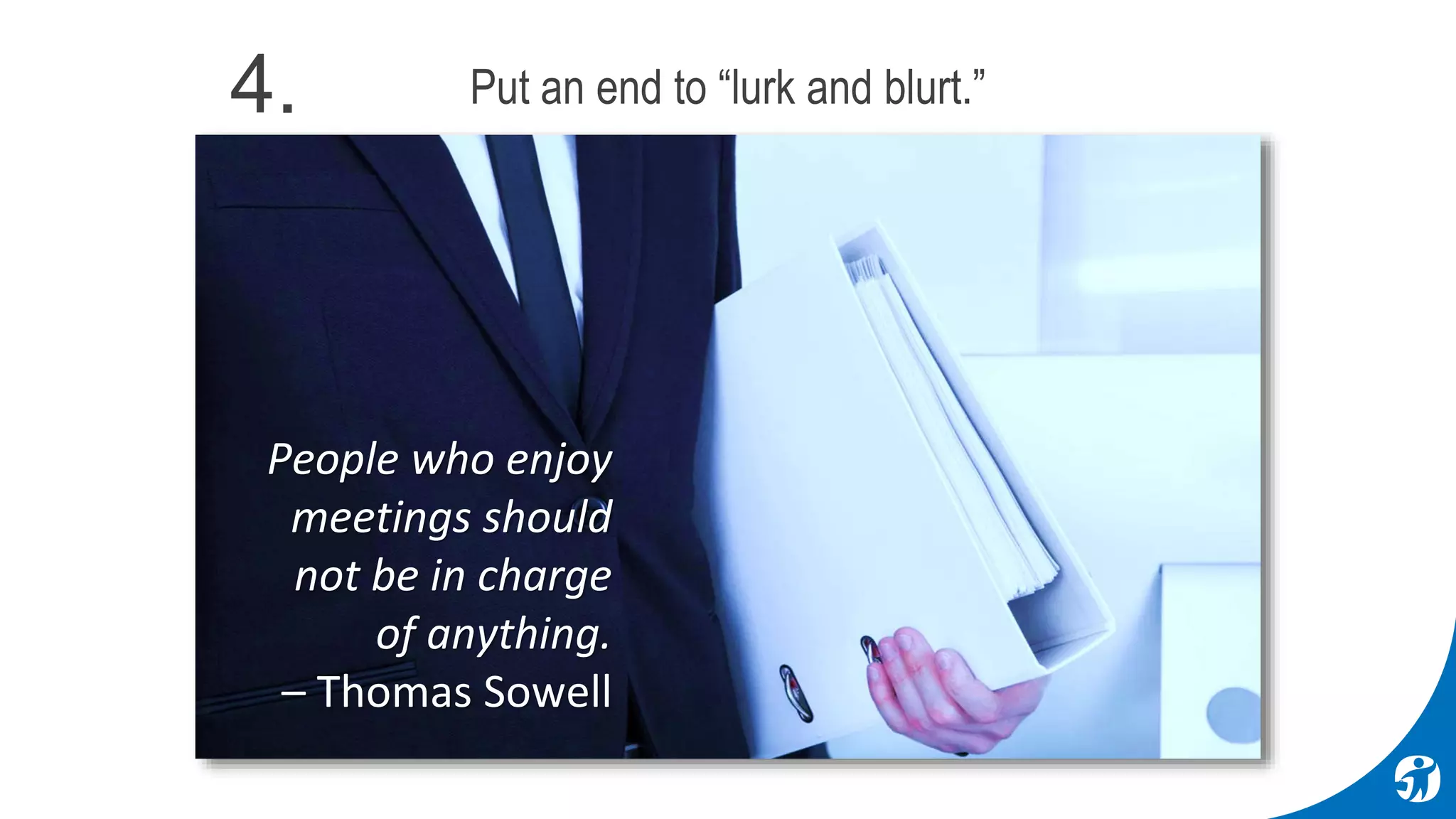
People who enjoy
meetings should
not be in charge
of anything.
– Thomas Sowell
Put an end to “lurk and blurt.”4.
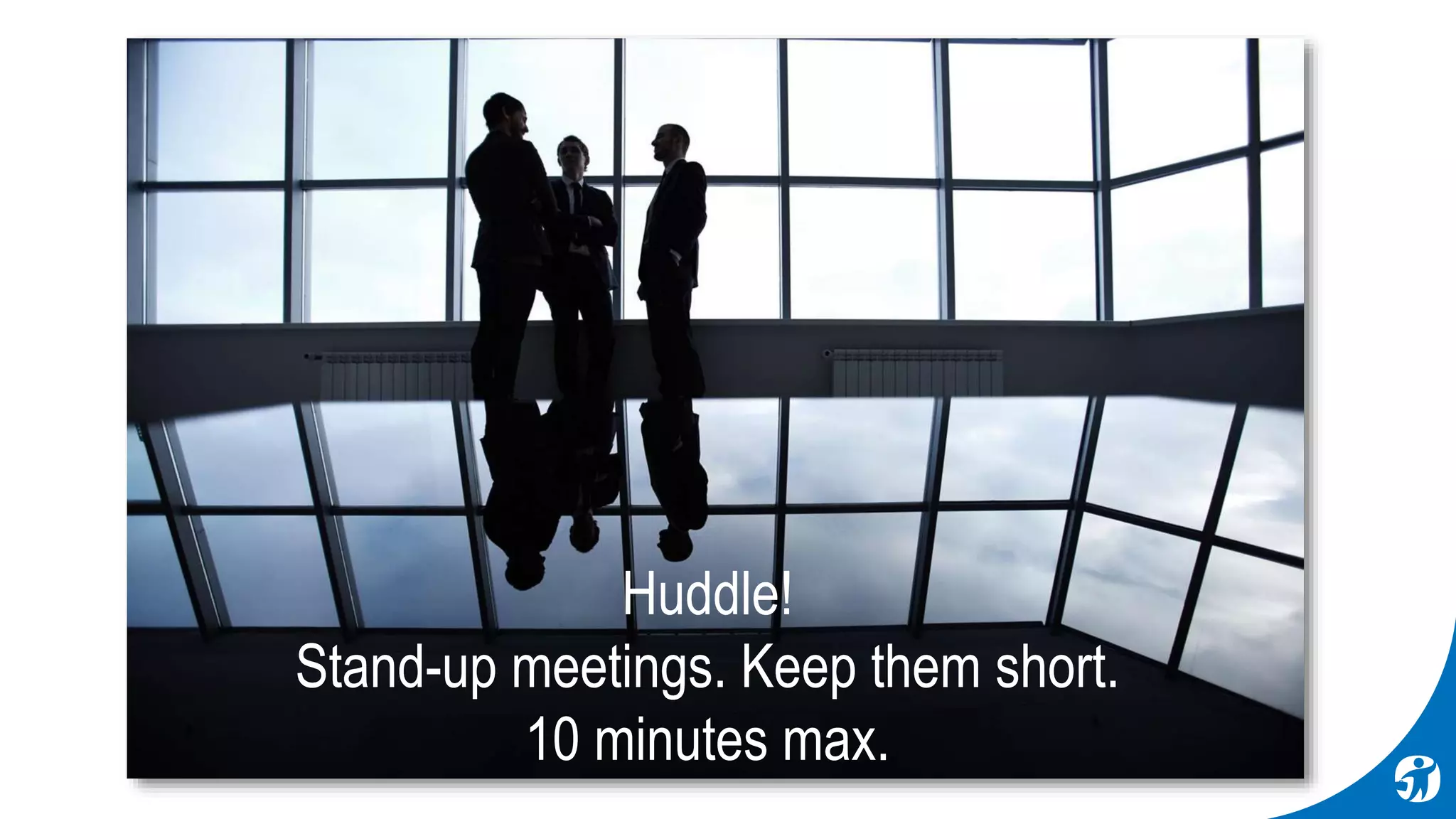
Huddle!
Stand-up meetings. Keep them short.
10 minutes max.
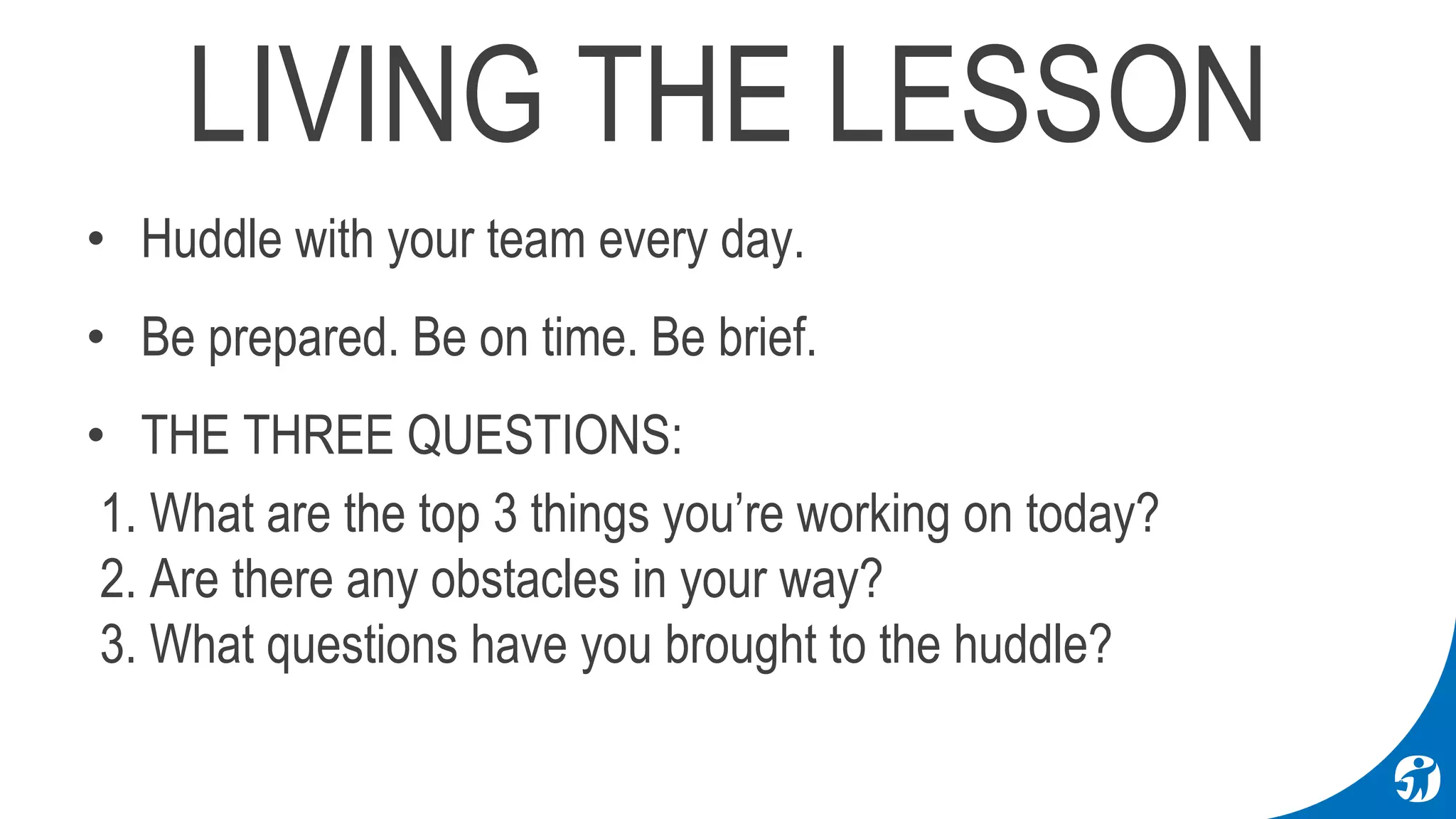
LIVING THE LESSON
• Huddle with your team every day.
• Be prepared. Be on time. Be brief.
• THE THREE QUESTIONS:
1. What are the top 3 things you’re working on today?
2. Are there any obstacles in your way?
3. What questions have you brought to the huddle?
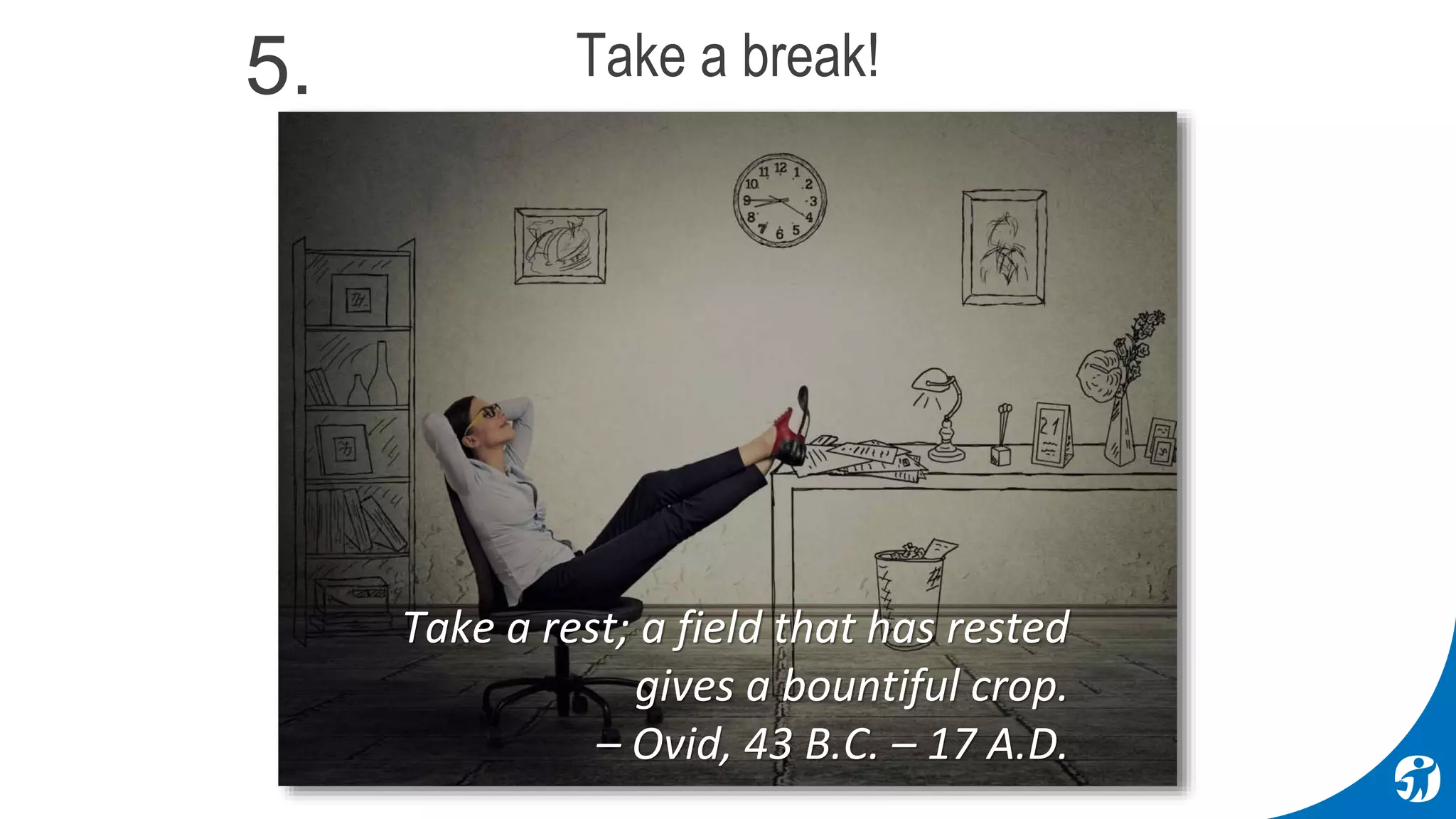
Take a rest; a field that has rested
gives a bountiful crop.
– Ovid, 43 B.C. – 17 A.D.
Take a break!5.
• Get up and move!
• Change your view.
• Sip ice water.
• Add some humor or inspiration.
• Deepen and relax your breathing.
How to Take a Break
A word (or two)
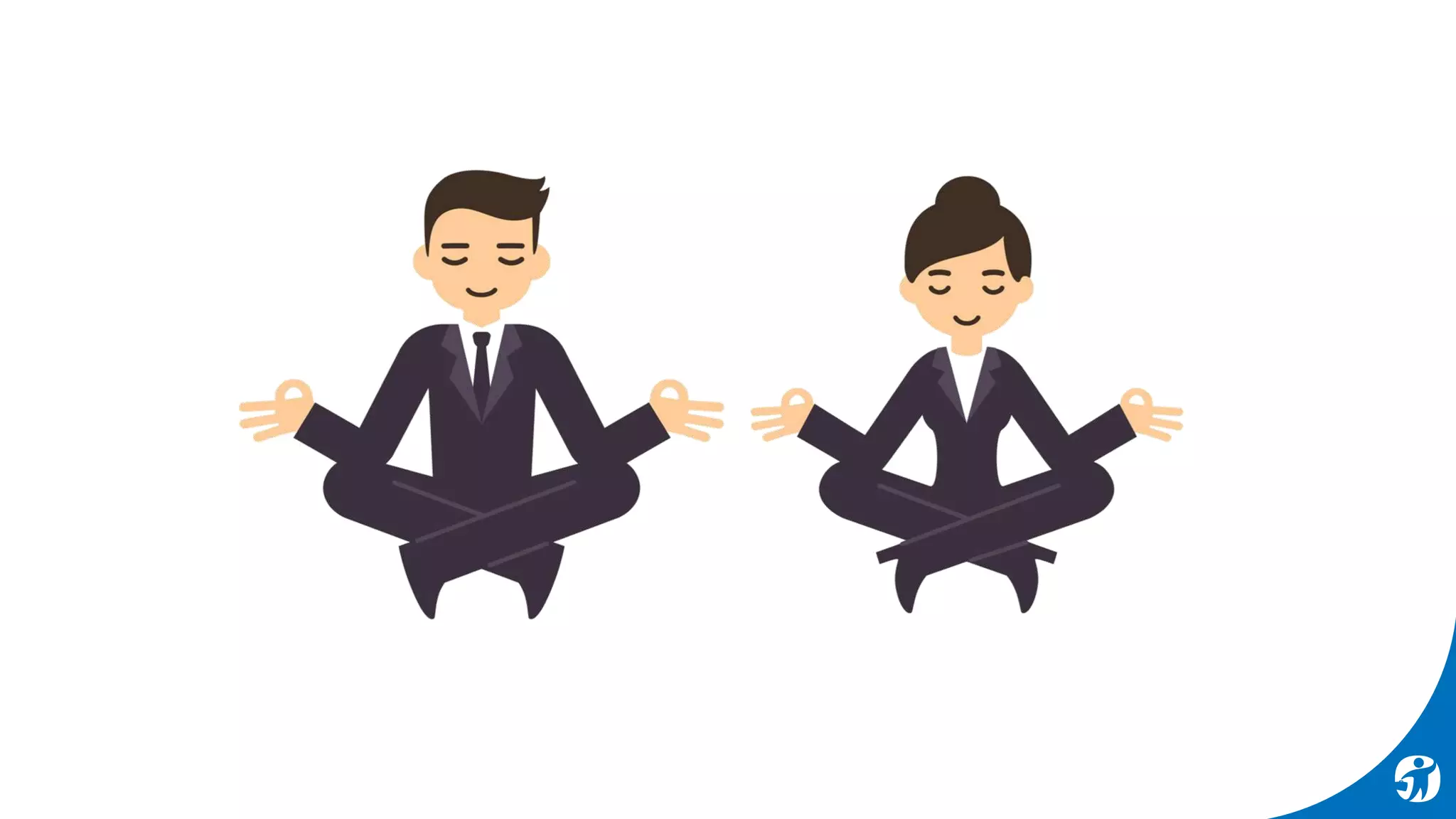
about mindfulness.
The neuroscience
of mindfulness.
38
Mindfulness is not about
stopping thoughts.
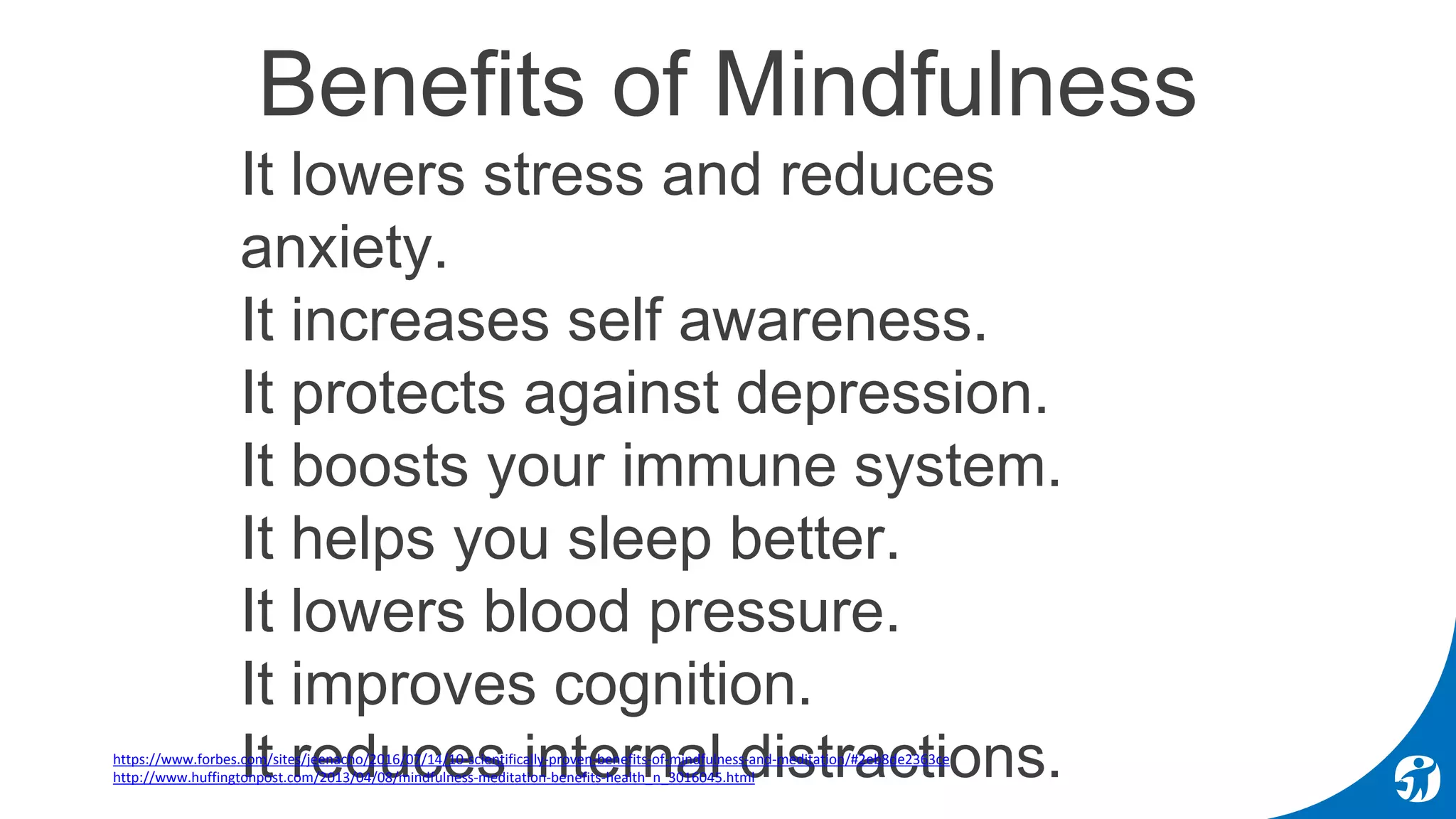
Benefits of Mindfulness
It lowers stress and reduces
anxiety.
It increases self awareness.
It protects against depression.
It boosts your immune system.
It helps you sleep better.
It lowers blood pressure.
It improves cognition.
It reduces internal distractions.• https://www.forbes.com/sites/jeenacho/2016/07/14/10-scientifically-proven-benefits-of-mindfulness-and-meditation/#2eb8de2363ce
• http://www.huffingtonpost.com/2013/04/08/mindfulness-meditation-benefits-health_n_3016045.html
LIVING THE LESSON
• Take breaks throughout the day.
• Don’t sit for more than 30 minutes.
• Add some humor or inspiration.
• Experiment with mindfulness.
• Headspace, Aura, Meditation Oasis
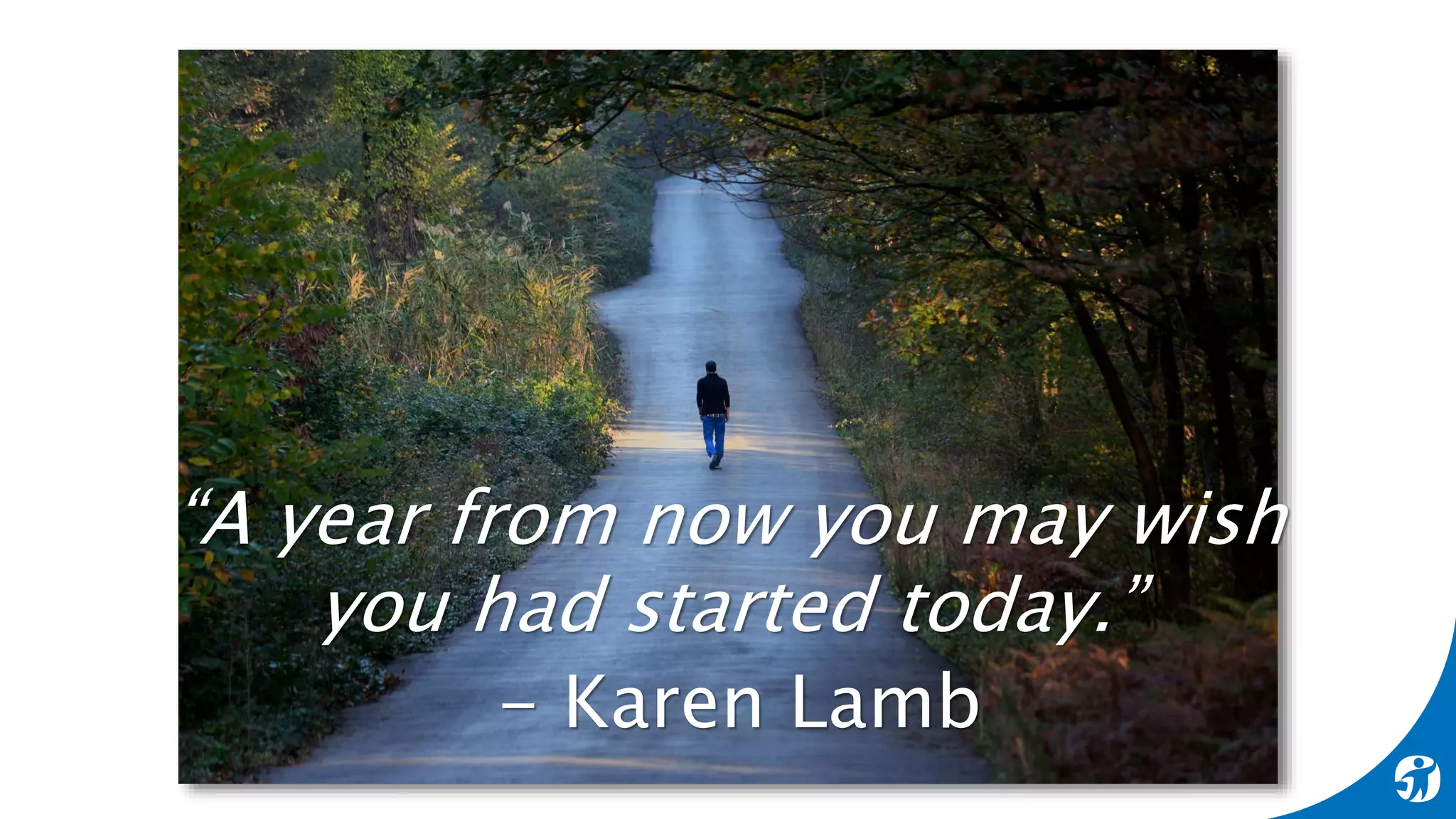
START NOW.
“A year from now you may wish
you had started today.”
- Karen Lamb
www.reallifepractice.com
nora@reallifepractice.com
nora@atticusonline.com
866.662.0993
MyCase
www.MyCase.com
support@mycase.com
800-571-8062
Contact
Nora
43
Thank you
44

(Webinar slides) Simple Lessons to Improve Your Law Practice and Your Life

  • 1.
    Productivity for Lawyers SimpleLessons to Improve Your Law Practice and Your Life #lessonsforlawyers Nora Riva Bergman, J.D.
  • 3.
  • 4.
  • 5.
    About Our Presenter Presenter ‣Certified Atticus Practice Advisor ‣ Licensed attorney, former bar executive ‣ Author ‣ Taught at Stetson Law School ‣ Loves traveling, great food, great wine ‣ Life before law? Guitar player and singer 5
  • 6.
    How we spendour days is, of course, how we spend our lives. – Annie Dillard This is your life. Are you living it or is it living you?
  • 7.
  • 8.
  • 9.
    It’s not enoughto be busy. So are the ants. The question is: What are we busy about? – Henry David Thoreau TANSTATM. There ain’t no such thing as time management. 1.
  • 10.
    10 Health.com reports that “peoplewho work more than 10 hours a day are about 60 percent more likely to develop heart disease or have a heart attack than pe ople who clock just seven hours a day.”
  • 11.
  • 12.
  • 13.
    13 External Locus ofControl Internal Locus of Control
  • 14.
    14 External Locus ofControl • Others control my destiny. • There is nothing I can do. • I had no choice. • Why bother? THINGS HAPPEN TO YOU.
  • 15.
    15 Internal Locus ofControl • I control my destiny. • I make things happen. • I can determine my future. • I can choose how to respond. YOU MAKE THINGS HAPPEN.
  • 16.
    16 “You have brainsin your head. You have feet in your shoes. You can steer yourself any direction you choose.” - Dr. Seuss
  • 17.
  • 18.
    18 LIVING THE LESSON• Changeyour “time management” mindset. Think in terms of “self-management.” • Increase your internal locus of control. • LIVE IN YOUR CALENDAR – NOT YOUR INBOX.
  • 19.
    To be preparedis half the victory. – Miguel de Cervantes Get in the habit of planning.2.
  • 20.
    Things which Matter Most MUSTnever be at the mercy of things which Matter least. - Goethe
  • 21.
    “Predeciding should helpa person protect goal pursuit from tempting distractions, bad habits, or competing goals.” – From The Way We’re Working Isn’t Working Start Predeciding
  • 22.
    LIVING THE LESSON •Schedule 30 minutes in your calendar for weekly planning. • Include your key support person in your planning session. • Schedule time in your calendar during the coming week to actually do the work associated with those deadlines and due dates.
  • 23.
    Squirrels are notyour friends. – Nora Riva Bergman Learn to manage needless interruptions, or you’ll never be able to focus on anything. 3.
  • 24.
    The average knowledgeworker is interrupted EVERY 8 MINUTES.
  • 25.
    It can takeyour brain 20 MINUTES to recover from an interruption.
  • 26.
  • 27.
    Studies show thata person who is interrupted takes 50 percent longer to accomplish a task. Not only that, he or she makes up to 50 percent more errors. From Brain Rules: 12 Principles for Surviving and Thriving at Work, Home, and School
  • 28.
  • 29.
    LIVING THE LESSON •Notice where your interruptions are coming from. • Keep an Interruption Log. • Are interruptions internal or external? Pay attention. • Schedule focus time when you will not be interrupted.
  • 30.
    People who enjoy meetingsshould not be in charge of anything. – Thomas Sowell Put an end to “lurk and blurt.”4.
  • 31.
    Huddle! Stand-up meetings. Keepthem short. 10 minutes max.
  • 32.
    LIVING THE LESSON •Huddle with your team every day. • Be prepared. Be on time. Be brief. • THE THREE QUESTIONS: 1. What are the top 3 things you’re working on today? 2. Are there any obstacles in your way? 3. What questions have you brought to the huddle?
  • 33.
    Take a rest;a field that has rested gives a bountiful crop. – Ovid, 43 B.C. – 17 A.D. Take a break!5.
  • 34.
    • Get upand move! • Change your view. • Sip ice water. • Add some humor or inspiration. • Deepen and relax your breathing. How to Take a Break
  • 35.
    A word (ortwo) about mindfulness.
  • 37.
  • 38.
    38 Mindfulness is notabout stopping thoughts.
  • 39.
    Benefits of Mindfulness Itlowers stress and reduces anxiety. It increases self awareness. It protects against depression. It boosts your immune system. It helps you sleep better. It lowers blood pressure. It improves cognition. It reduces internal distractions.• https://www.forbes.com/sites/jeenacho/2016/07/14/10-scientifically-proven-benefits-of-mindfulness-and-meditation/#2eb8de2363ce • http://www.huffingtonpost.com/2013/04/08/mindfulness-meditation-benefits-health_n_3016045.html
  • 40.
    LIVING THE LESSON •Take breaks throughout the day. • Don’t sit for more than 30 minutes. • Add some humor or inspiration. • Experiment with mindfulness. • Headspace, Aura, Meditation Oasis
  • 41.
  • 42.
    “A year fromnow you may wish you had started today.” - Karen Lamb
  • 43.
  • 44.