How	to	Create	an	Effective	
Agile	Insights	Team
About	Digsite
Digsite Sprints					SocialFind SmartReporting
Smarter,	
Faster	
Qualitative	
Research
Your	Speaker
Monika	Wingate
CEO	and	Co-Founder	of	Digsite
Agenda
What	agile	means	for	insights	teams
How	to	structure	your	team	to	be	more	agile
Which	tools/resources	can	help	you	apply	agile	principles
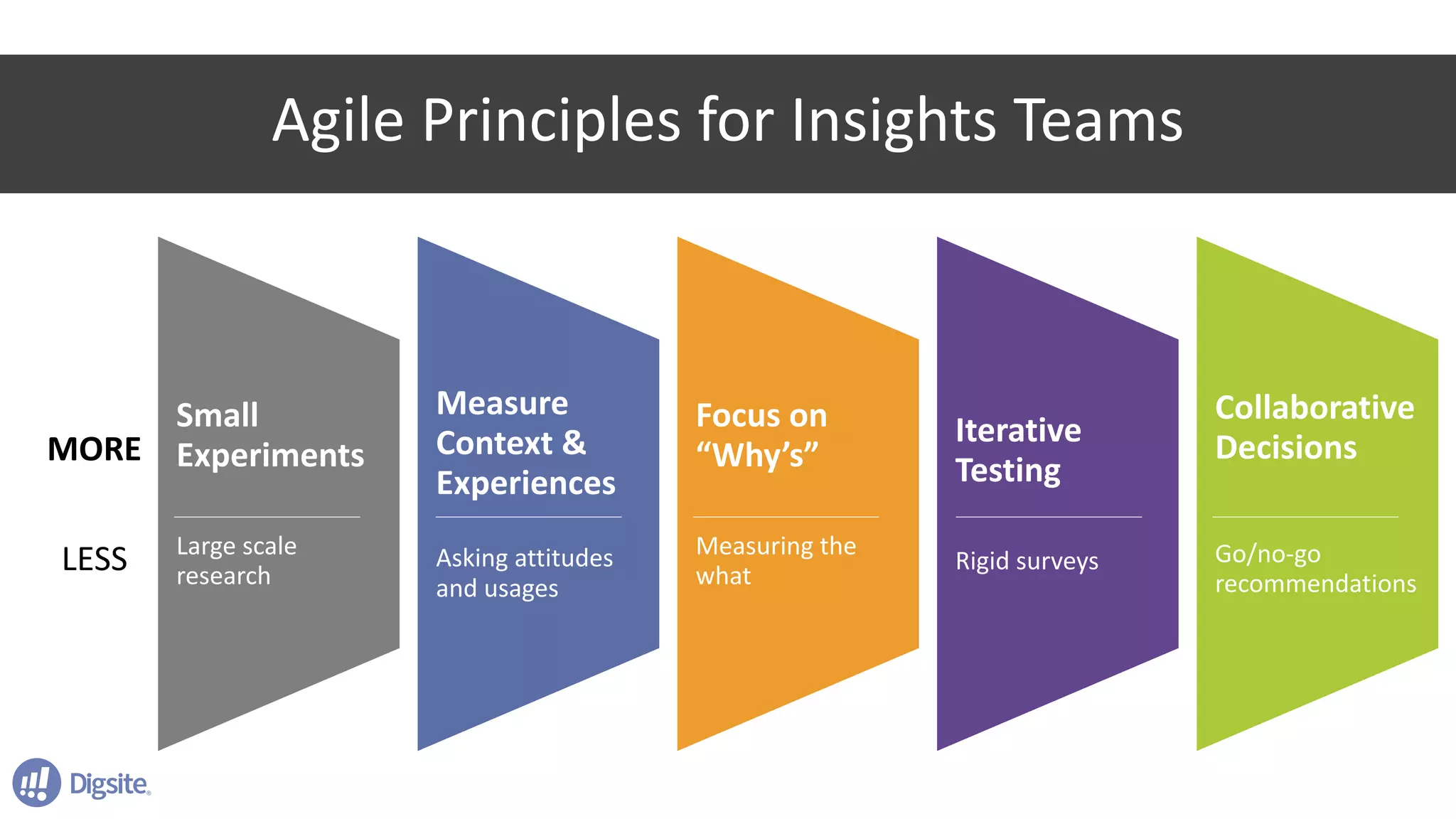
Agile	Principles	for	Insights	Teams
Small	
Experiments
Large	scale	
research
Measure	
Context	&	
Experiences
Asking	attitudes	
and	usages
Focus	on	
“Why’s”
Measuring	the	
what
Iterative	
Testing
Rigid	surveys
Collaborative	
Decisions
Go/no-go	
recommendations
LESS
MORE
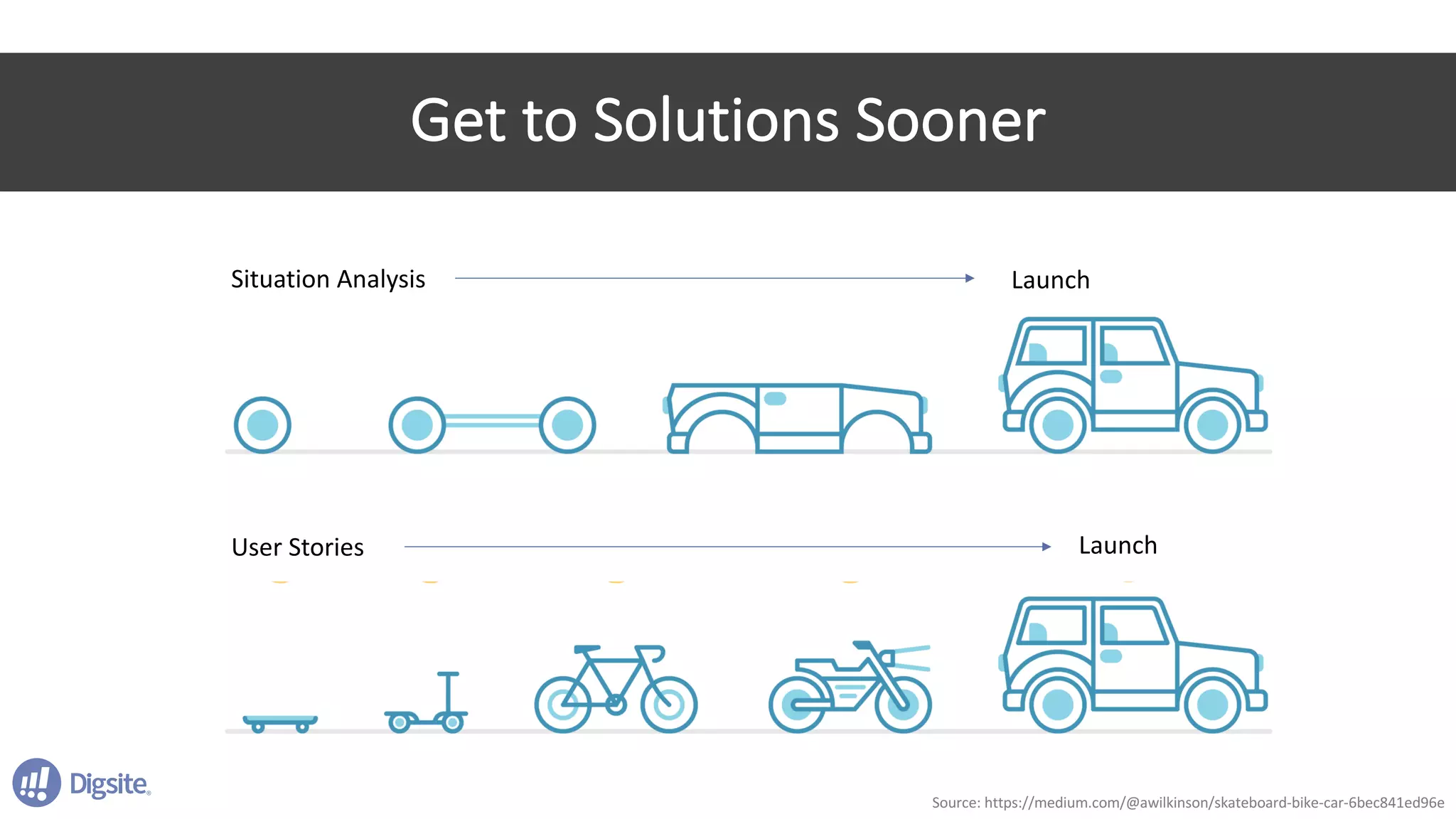
Get	to	Solutions	Sooner
Source:	https://medium.com/@awilkinson/skateboard-bike-car-6bec841ed96e
Situation	Analysis	 Launch
User	Stories Launch
What	does	agile	marketing	look	like?
Develop
Prototype
Learn
Agile	Development	Process
2-4	weeks
Concept	w/
benefits
Concept	w/	
Benefit	+
Claims	+
packaging
Ad	Campaign
Concepts
User	Stories Concept	w/
Benefit	+	
Claims	
Initial	Ad	
Concepts
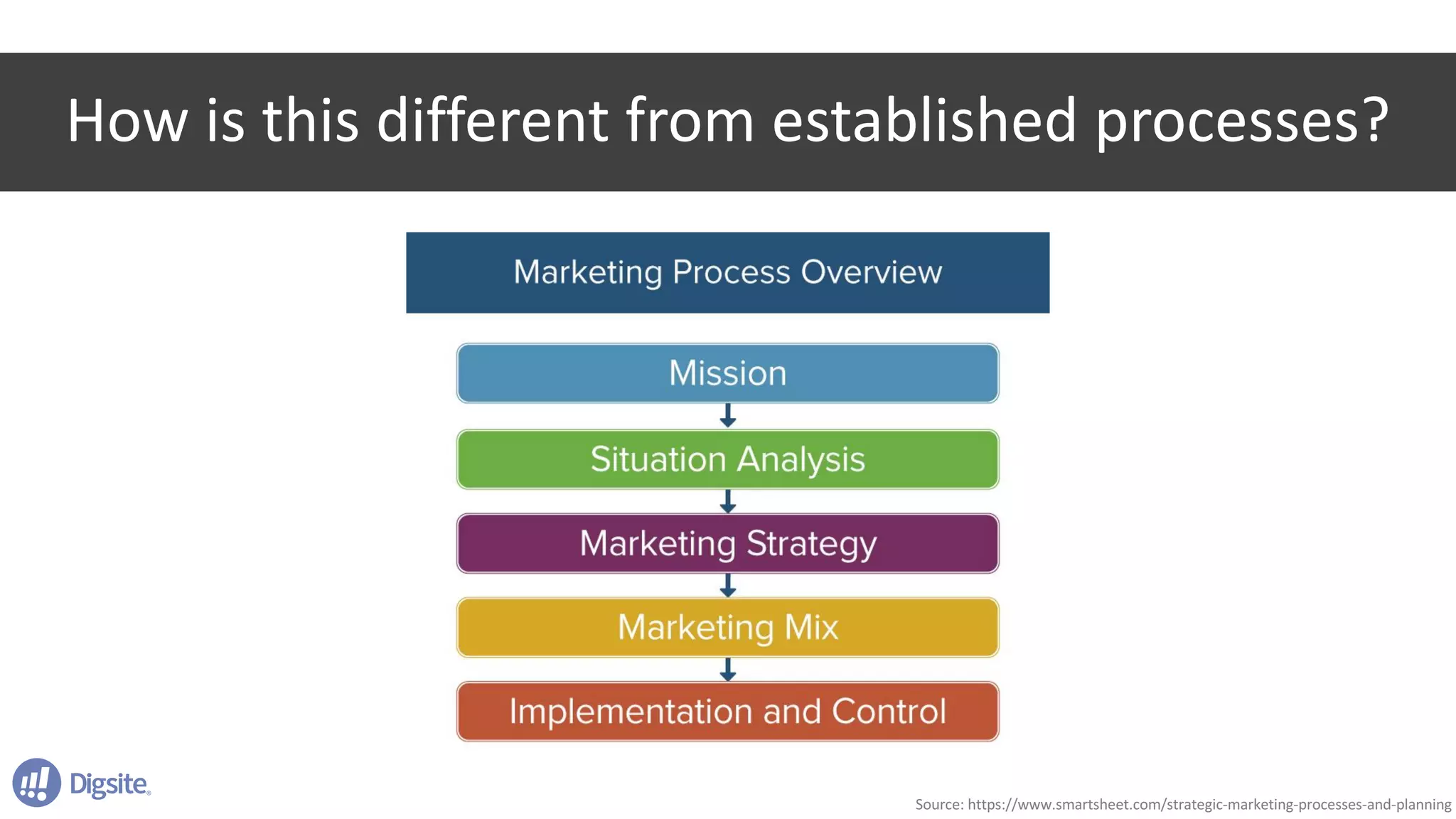
How	is	this	different	from	established	processes?
Source:	https://www.smartsheet.com/strategic-marketing-processes-and-planning
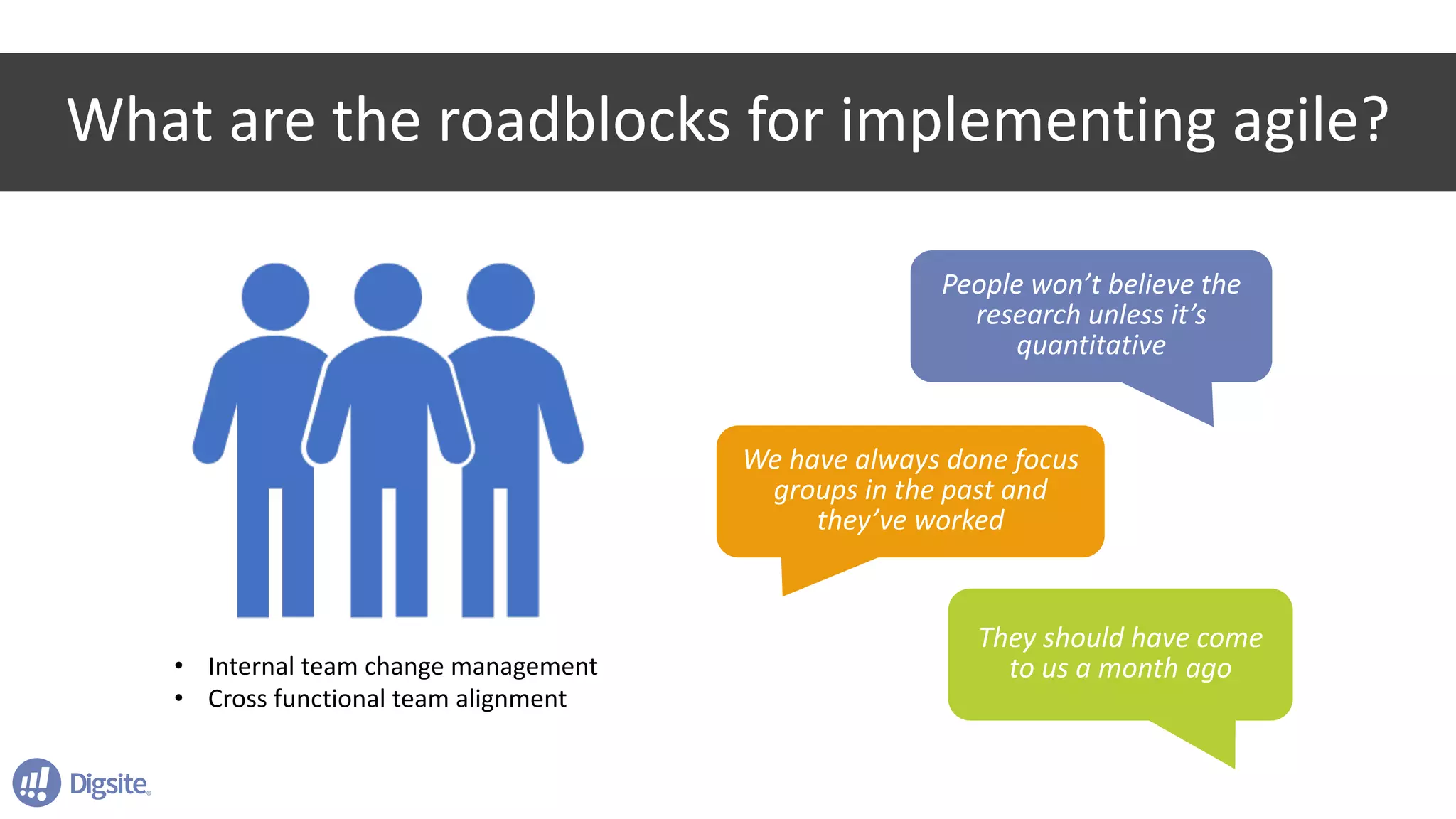
What	are	the	roadblocks	for	implementing	agile?
• Internal	team	change	management
• Cross	functional	team	alignment
People	won’t	believe	the	
research	unless	it’s	
quantitative
They	should	have	come	
to	us	a	month	ago
We	have	always	done	focus	
groups	in	the	past	and	
they’ve	worked
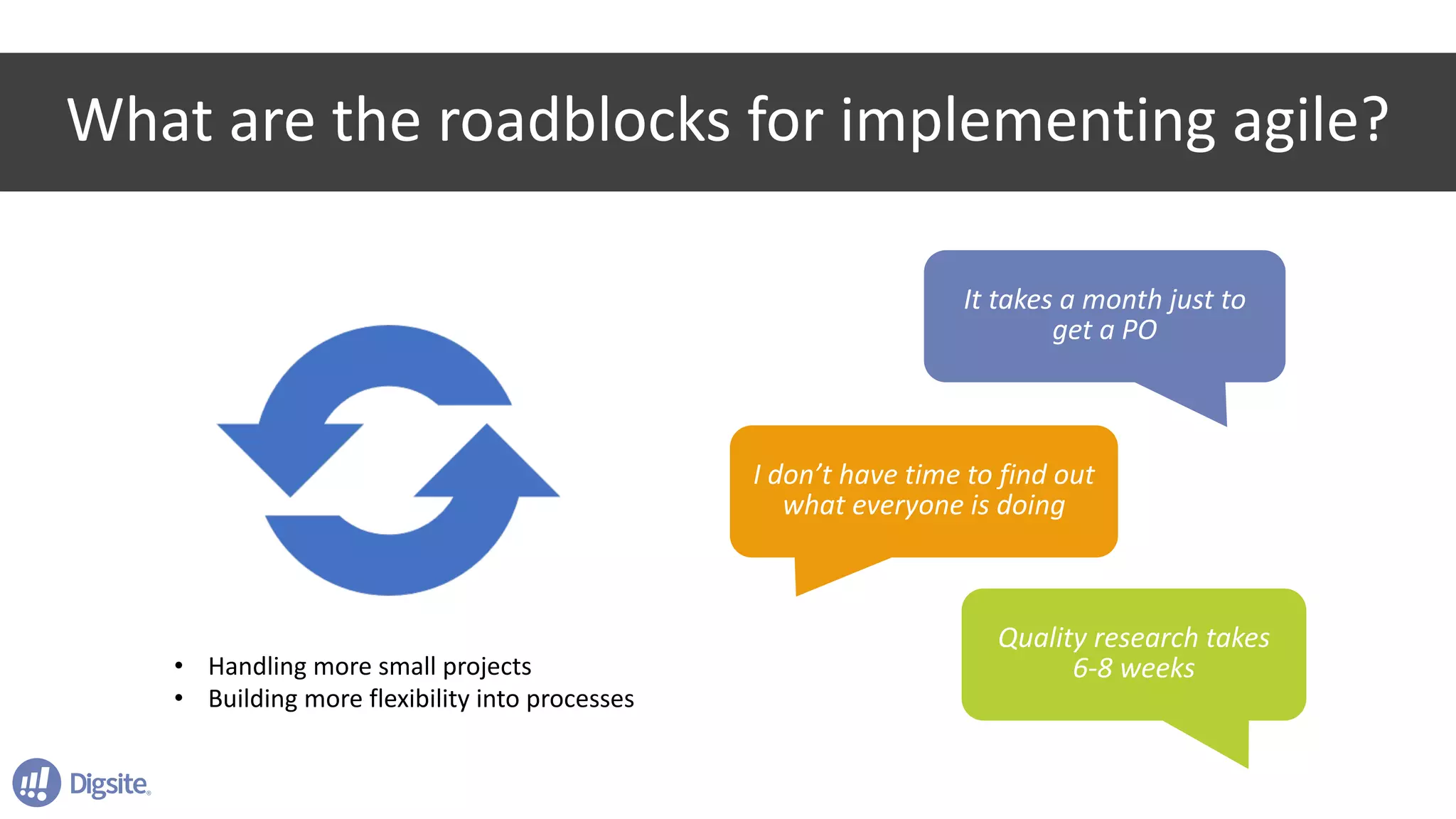
What	are	the	roadblocks	for	implementing	agile?
• Handling	more	small	projects
• Building	more	flexibility	into	processes
It	takes	a	month	just	to	
get	a	PO
Quality	research	takes	
6-8	weeks
I	don’t	have	time	to	find	out	
what	everyone	is	doing
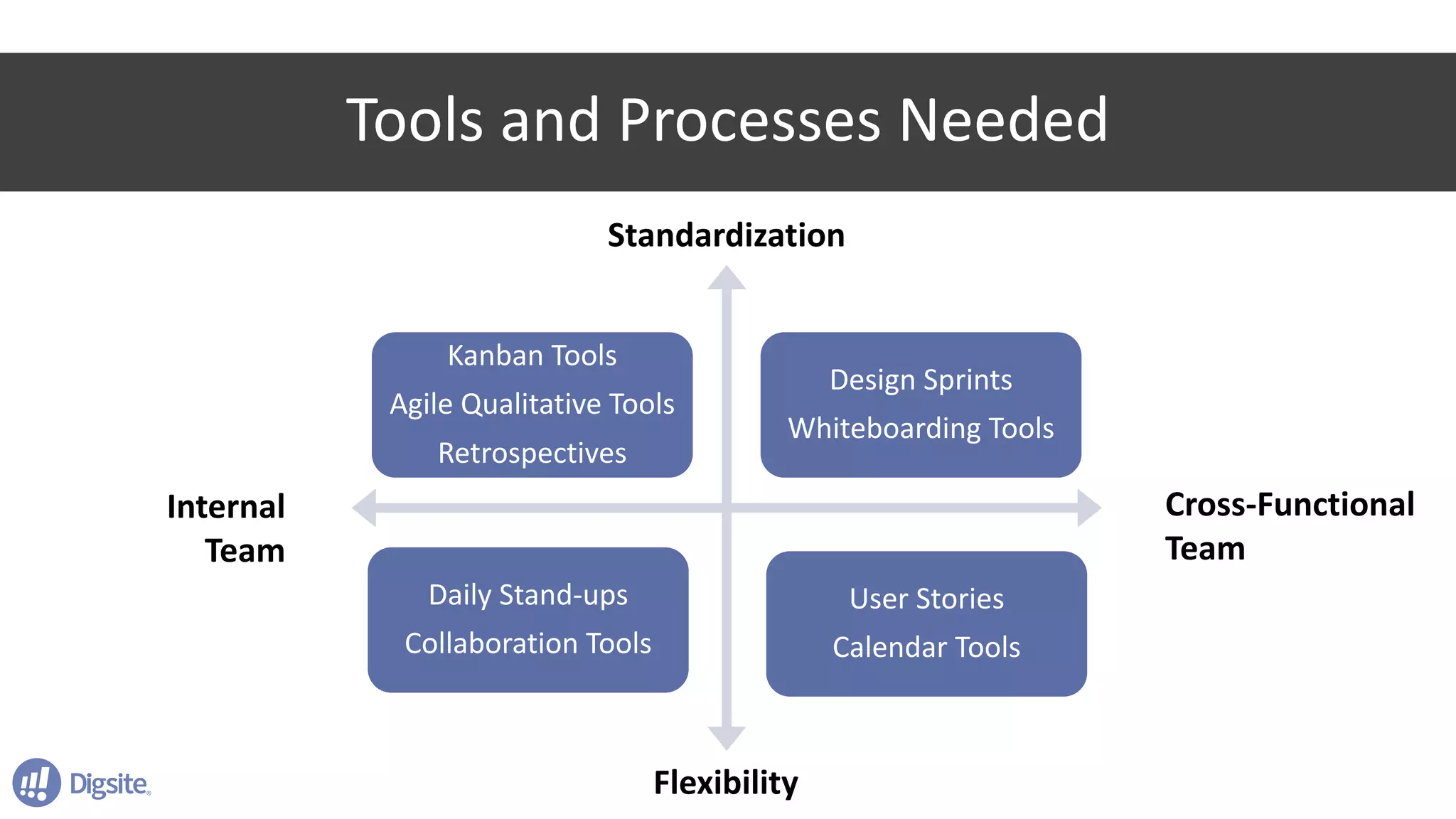
Tools	and	Processes	Needed
Kanban	Tools
Agile	Qualitative	Tools
Retrospectives
Design	Sprints
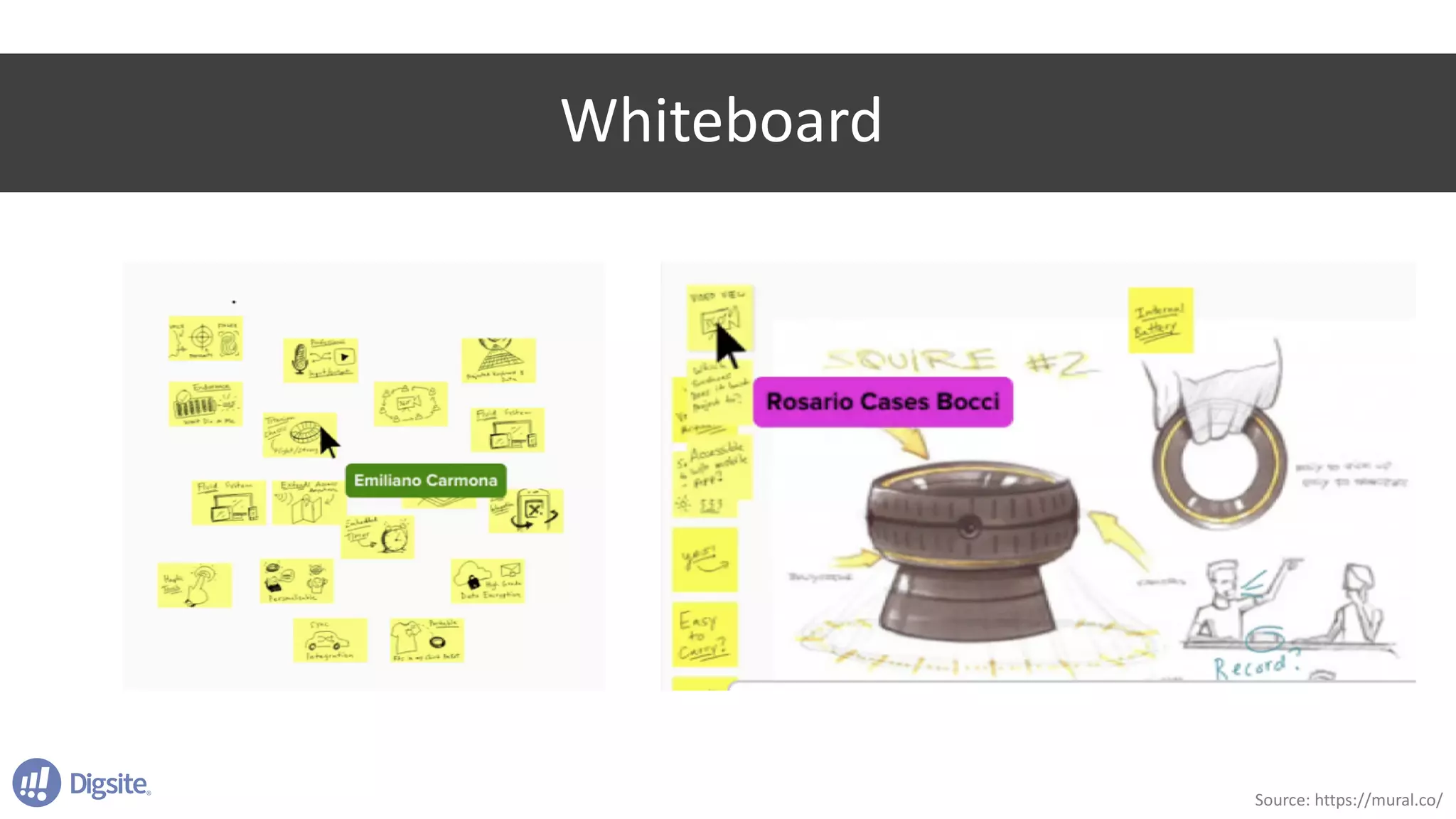
Whiteboarding	Tools	
Daily	Stand-ups
Collaboration	Tools
User	Stories
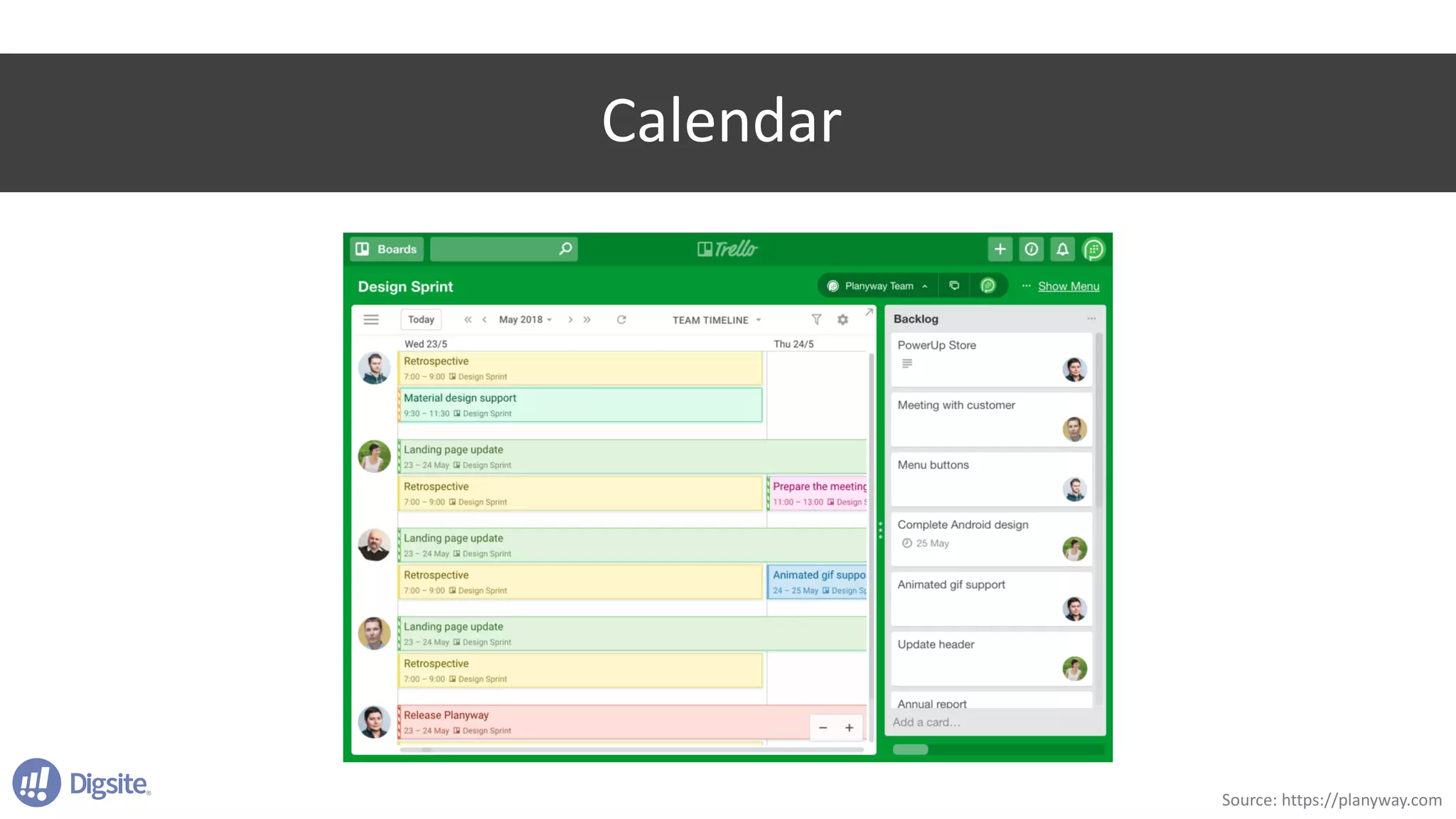
Calendar	Tools
Cross-Functional
Team
Internal
Team
Flexibility
Standardization
Processes
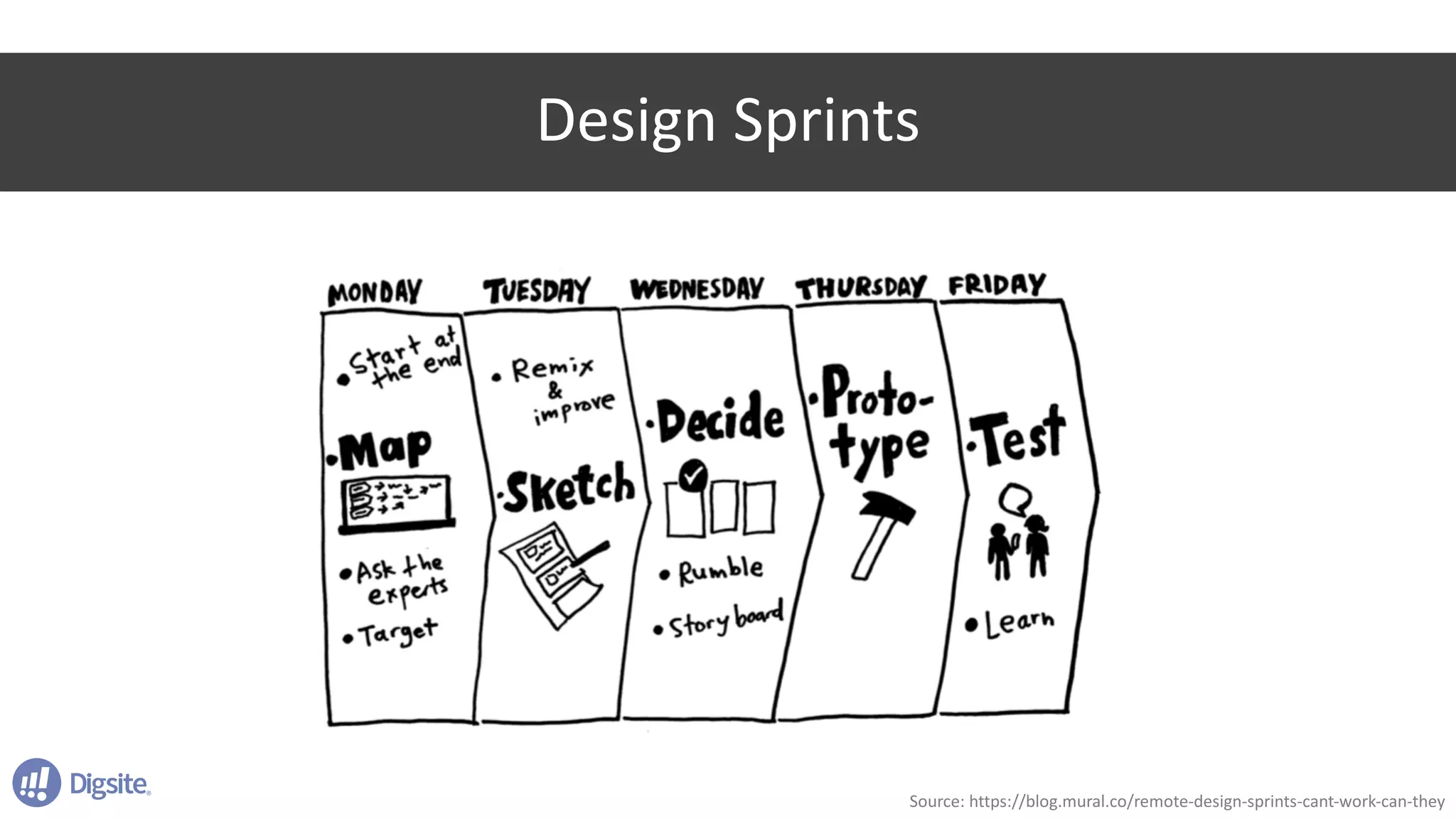
Design	Sprints
Source:	https://blog.mural.co/remote-design-sprints-cant-work-can-they
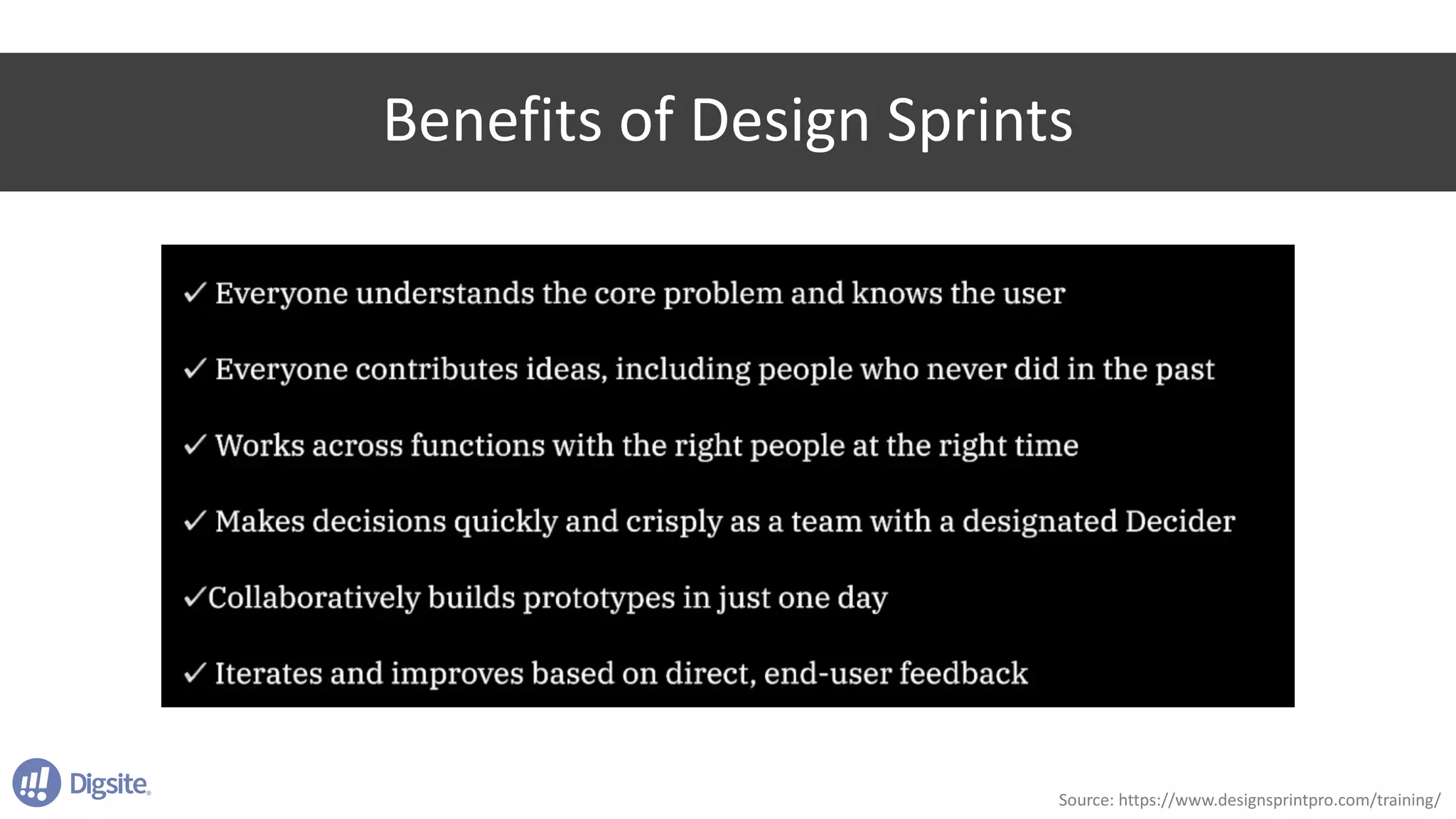
Benefits	of	Design	Sprints
Source:	https://www.designsprintpro.com/training/
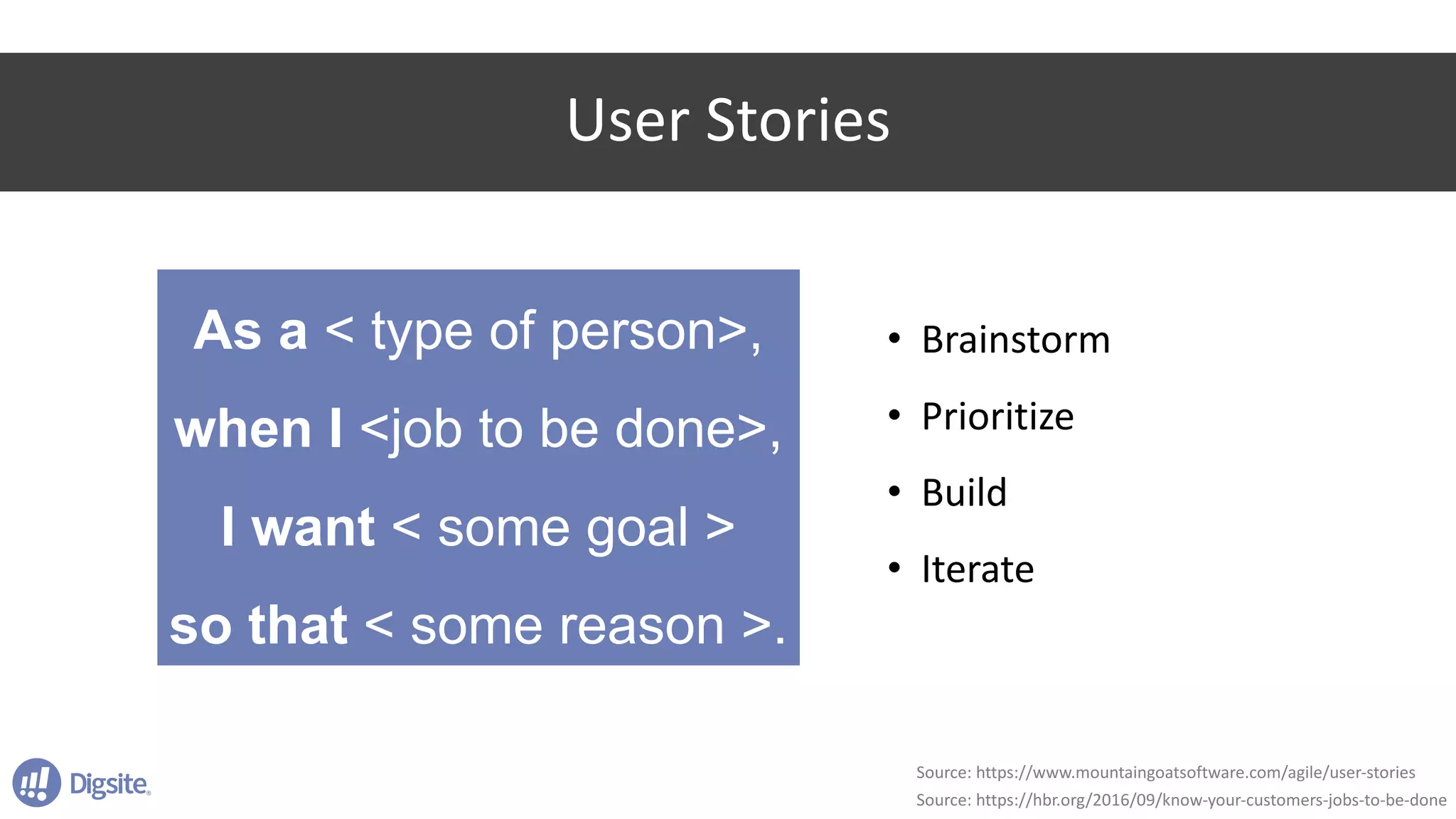
User	Stories
As a < type of person>,
when I <job to be done>,
I want < some goal >
so that < some reason >.
Source:	https://www.mountaingoatsoftware.com/agile/user-stories
Source:	https://hbr.org/2016/09/know-your-customers-jobs-to-be-done
• Brainstorm
• Prioritize
• Build
• Iterate
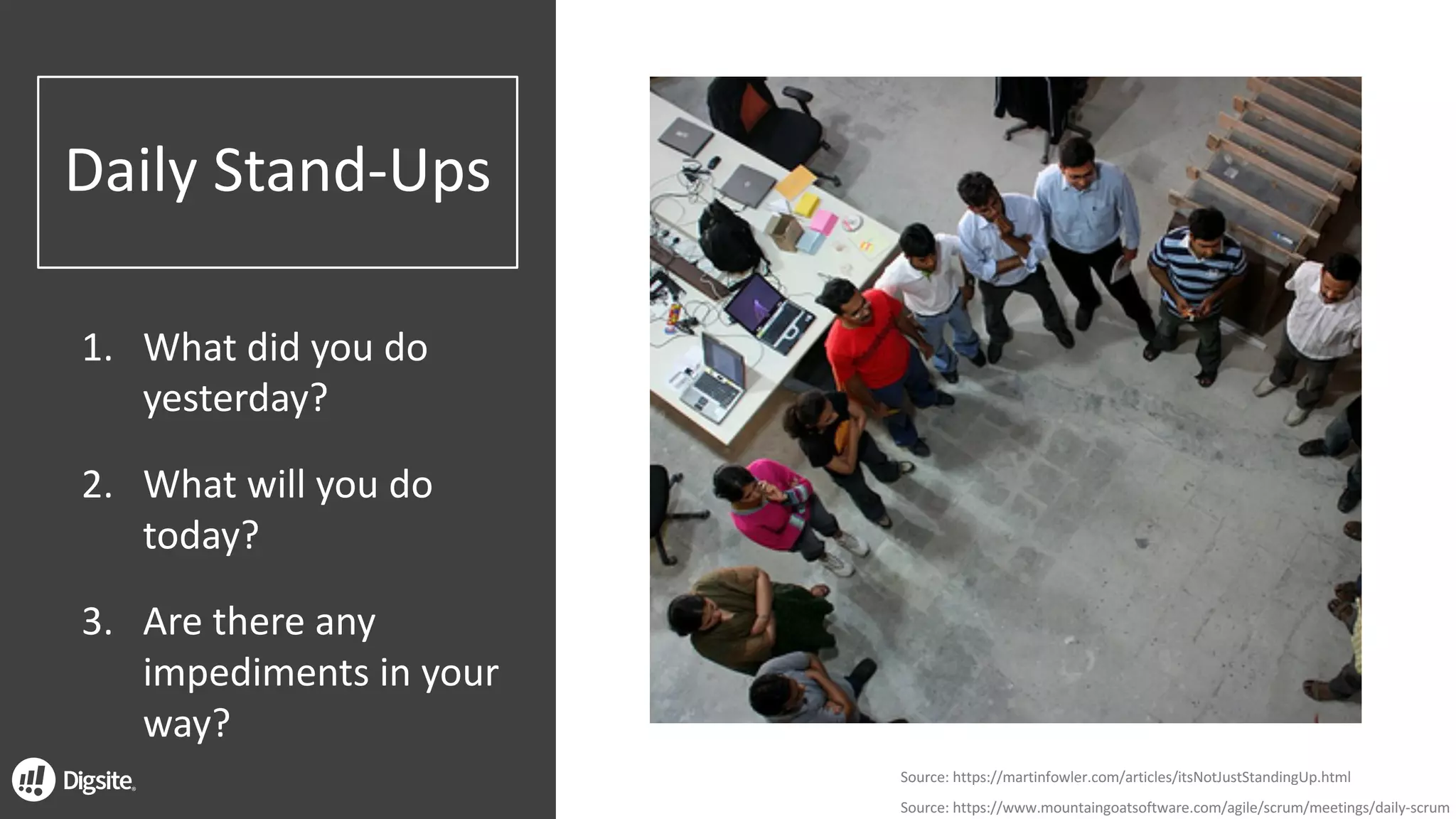
Daily	Stand-Ups
1. What	did	you	do	
yesterday?
2. What	will	you	do	
today?
3. Are	there	any	
impediments	in	your	
way?
Source:	https://martinfowler.com/articles/itsNotJustStandingUp.html
Source:	https://www.mountaingoatsoftware.com/agile/scrum/meetings/daily-scrum
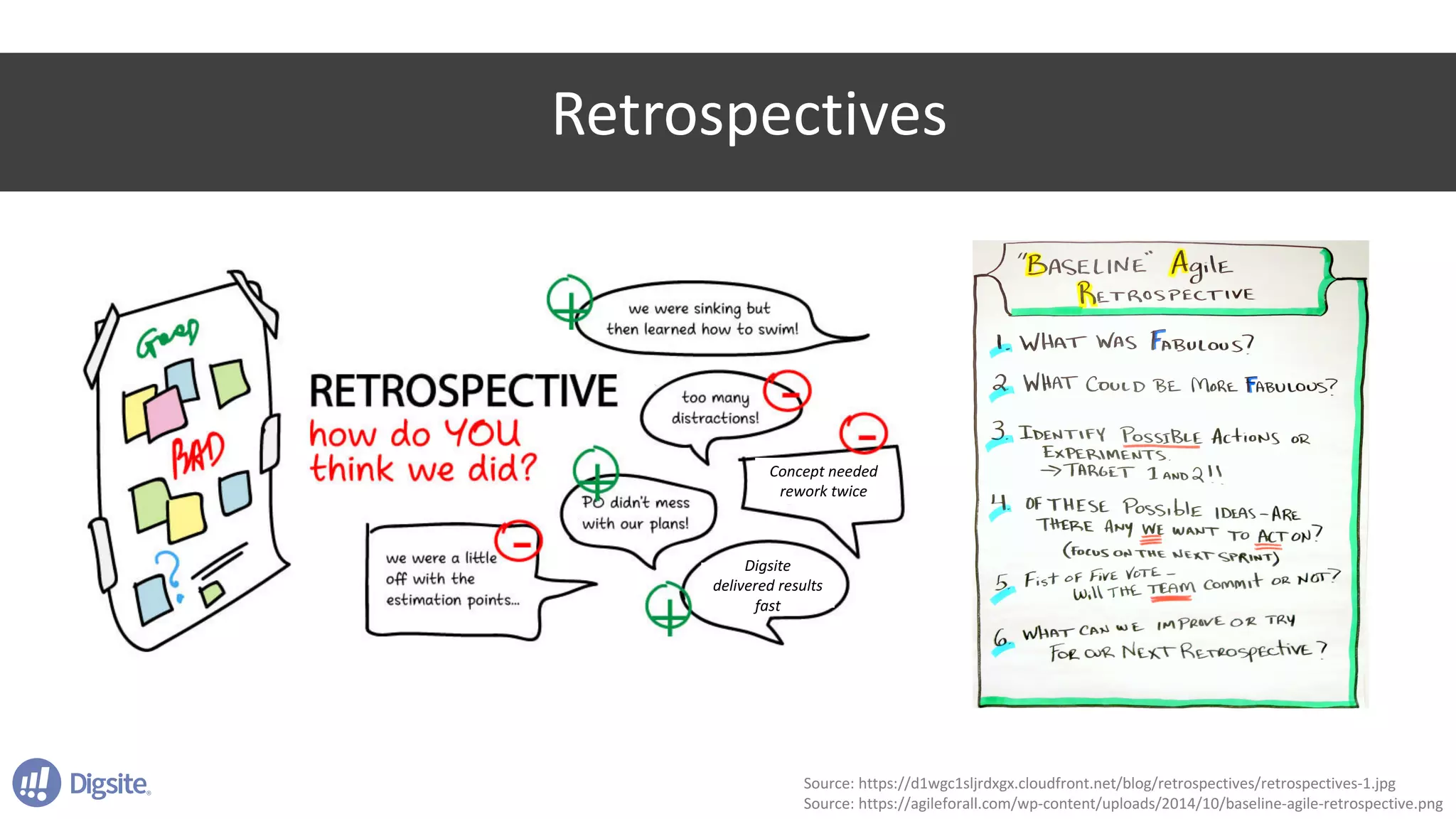
Retrospectives
Digsite	
delivered	results	
fast
Concept	needed	
rework	twice
Source:	https://d1wgc1sljrdxgx.cloudfront.net/blog/retrospectives/retrospectives-1.jpg
Source:	https://agileforall.com/wp-content/uploads/2014/10/baseline-agile-retrospective.png
Tools
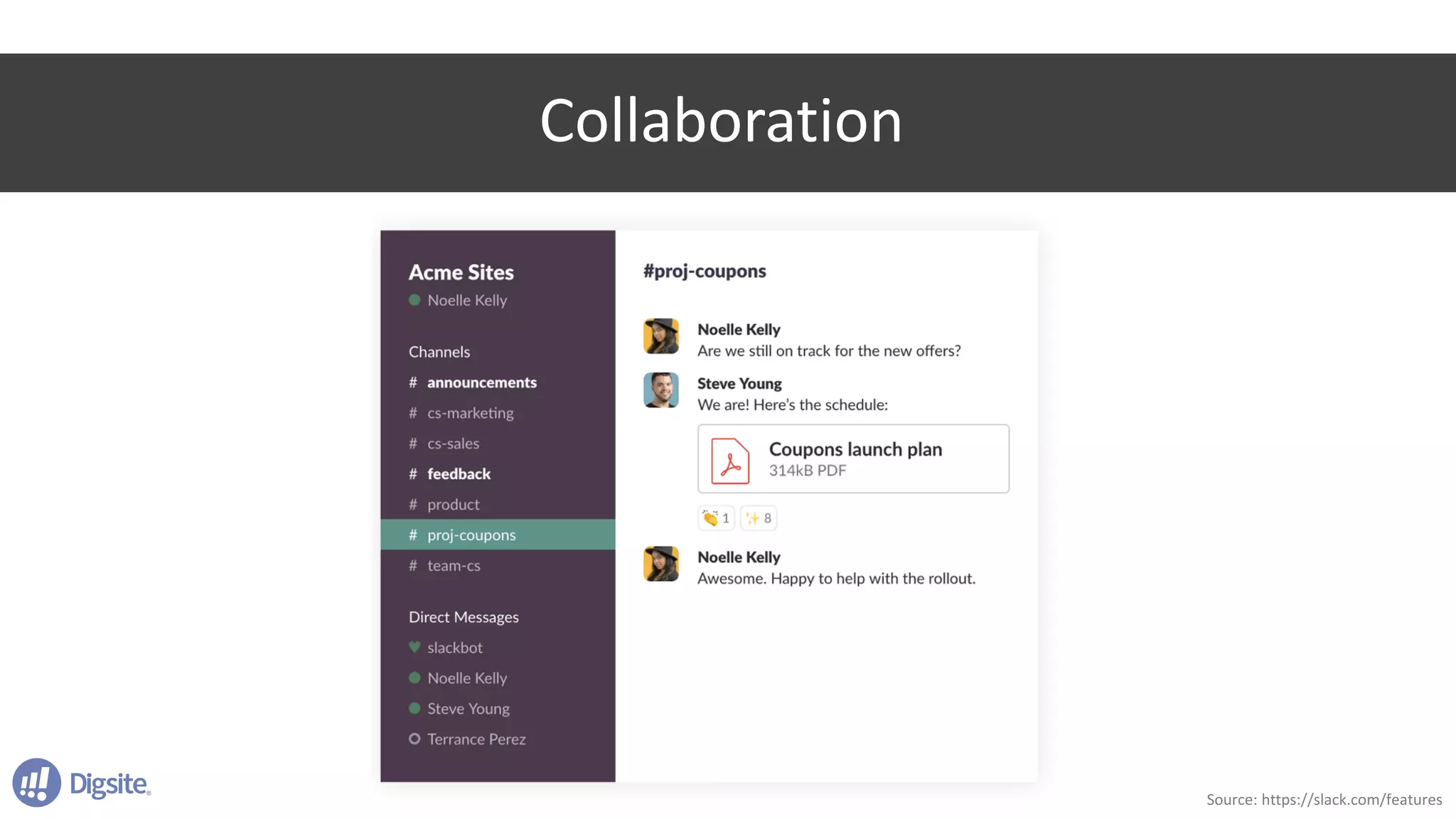
Collaboration
Source:	https://slack.com/features
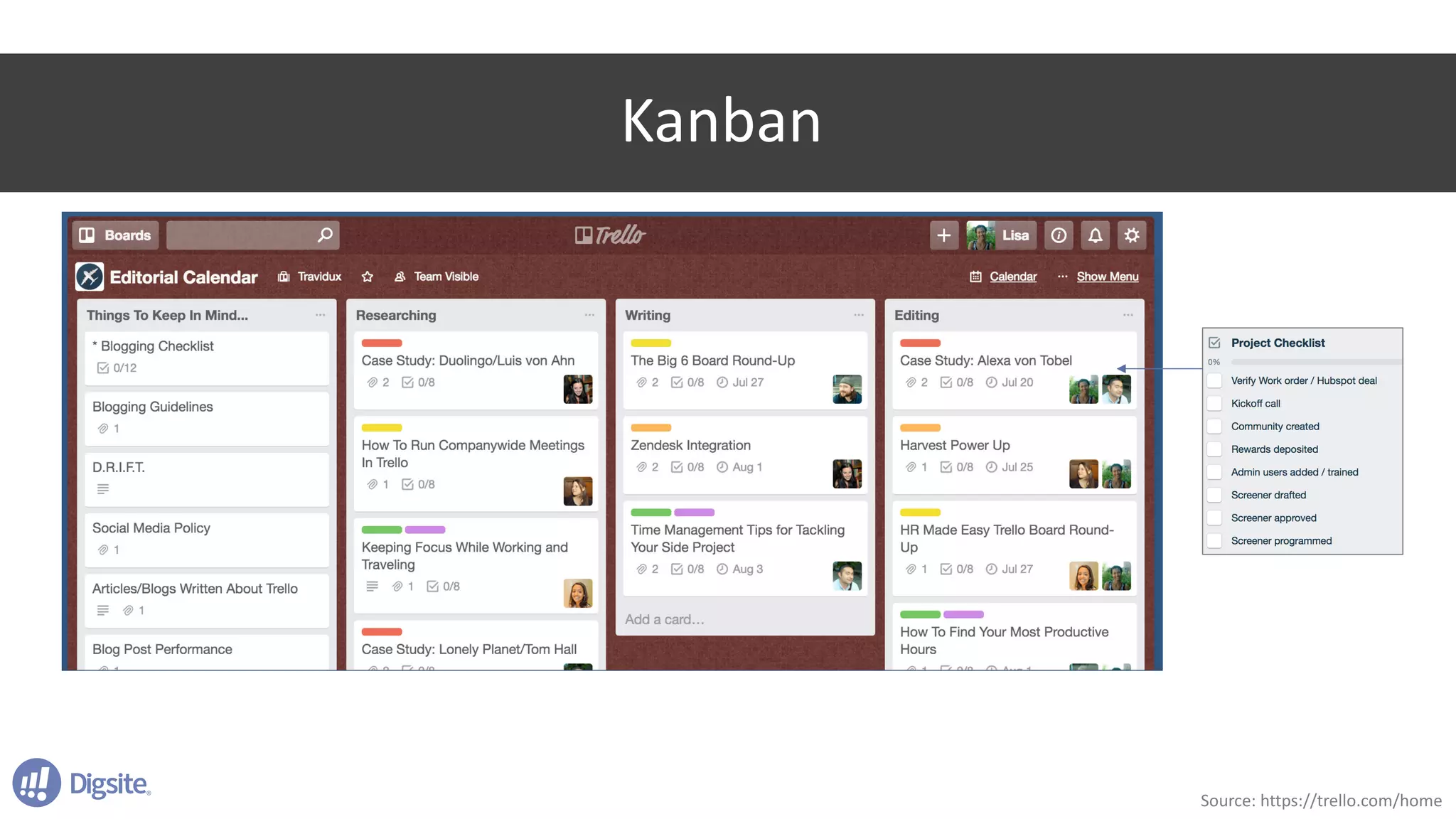
Kanban
Source:	https://trello.com/home
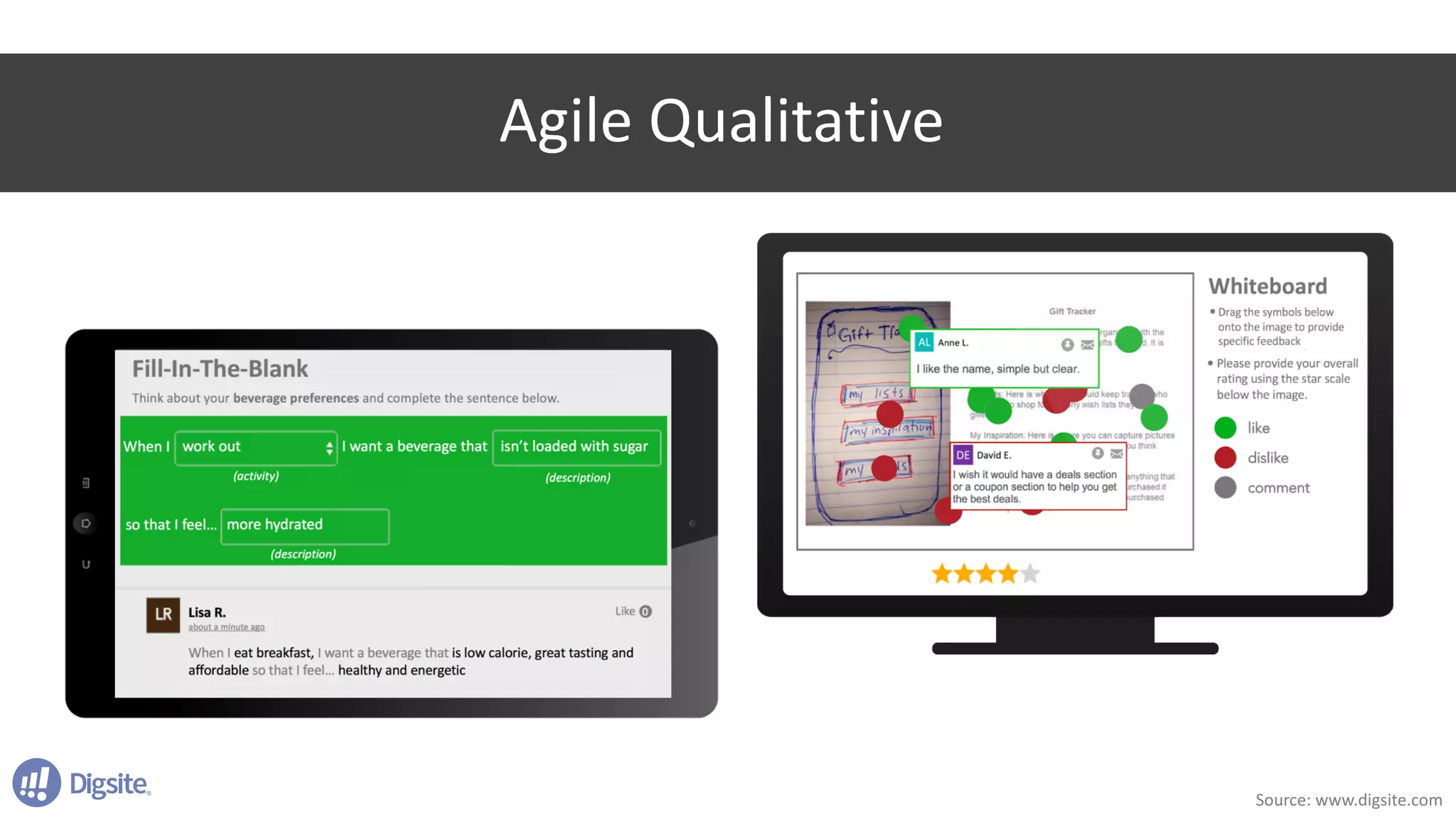
Agile	Qualitative
Source:	www.digsite.com
Whiteboard
Source:	https://mural.co/
Calendar
Source:	https://planyway.com
What	Success	Looks	Like
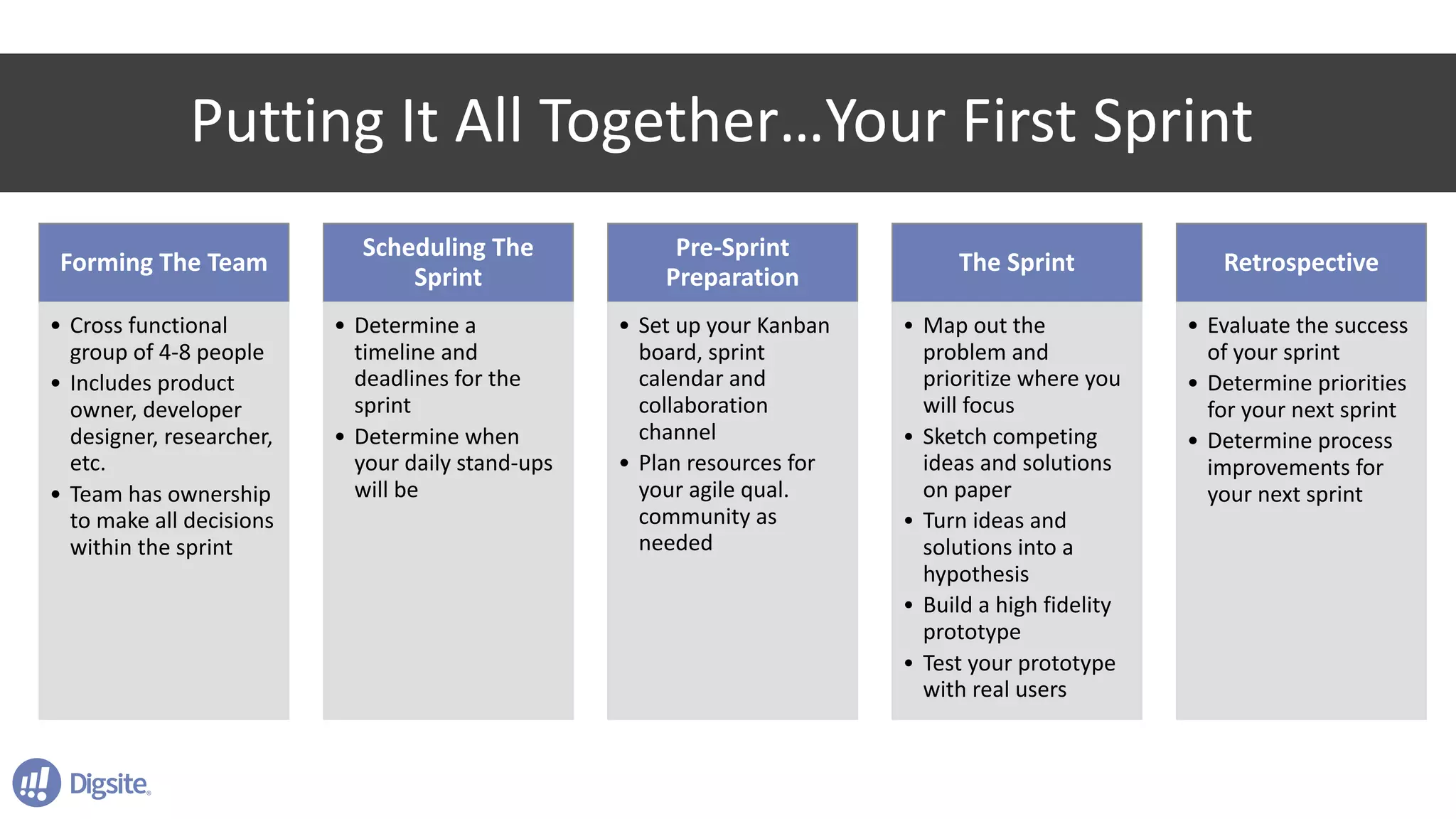
Putting	It	All	Together…Your	First	Sprint
Forming	The	Team
• Cross	functional	
group	of	4-8	people
• Includes	product	
owner,	developer	
designer,	researcher,	
etc.
• Team	has	ownership	
to	make	all	decisions	
within	the	sprint
Scheduling	The	
Sprint
• Determine	a	
timeline	and	
deadlines	for	the	
sprint
• Determine	when	
your	daily	stand-ups	
will	be
Pre-Sprint	
Preparation
• Set	up	your	Kanban	
board,	sprint	
calendar	and	
collaboration	
channel
• Plan	resources	for	
your	agile	qual.	
community	as	
needed
The	Sprint
• Map	out	the	
problem	and	
prioritize	where	you	
will	focus
• Sketch	competing	
ideas	and	solutions	
on	paper
• Turn	ideas	and	
solutions	into	a	
hypothesis
• Build	a	high	fidelity	
prototype
• Test	your	prototype	
with	real	users
Retrospective
• Evaluate	the	success	
of	your	sprint
• Determine	priorities	
for	your	next	sprint
• Determine	process	
improvements	for	
your	next	sprint
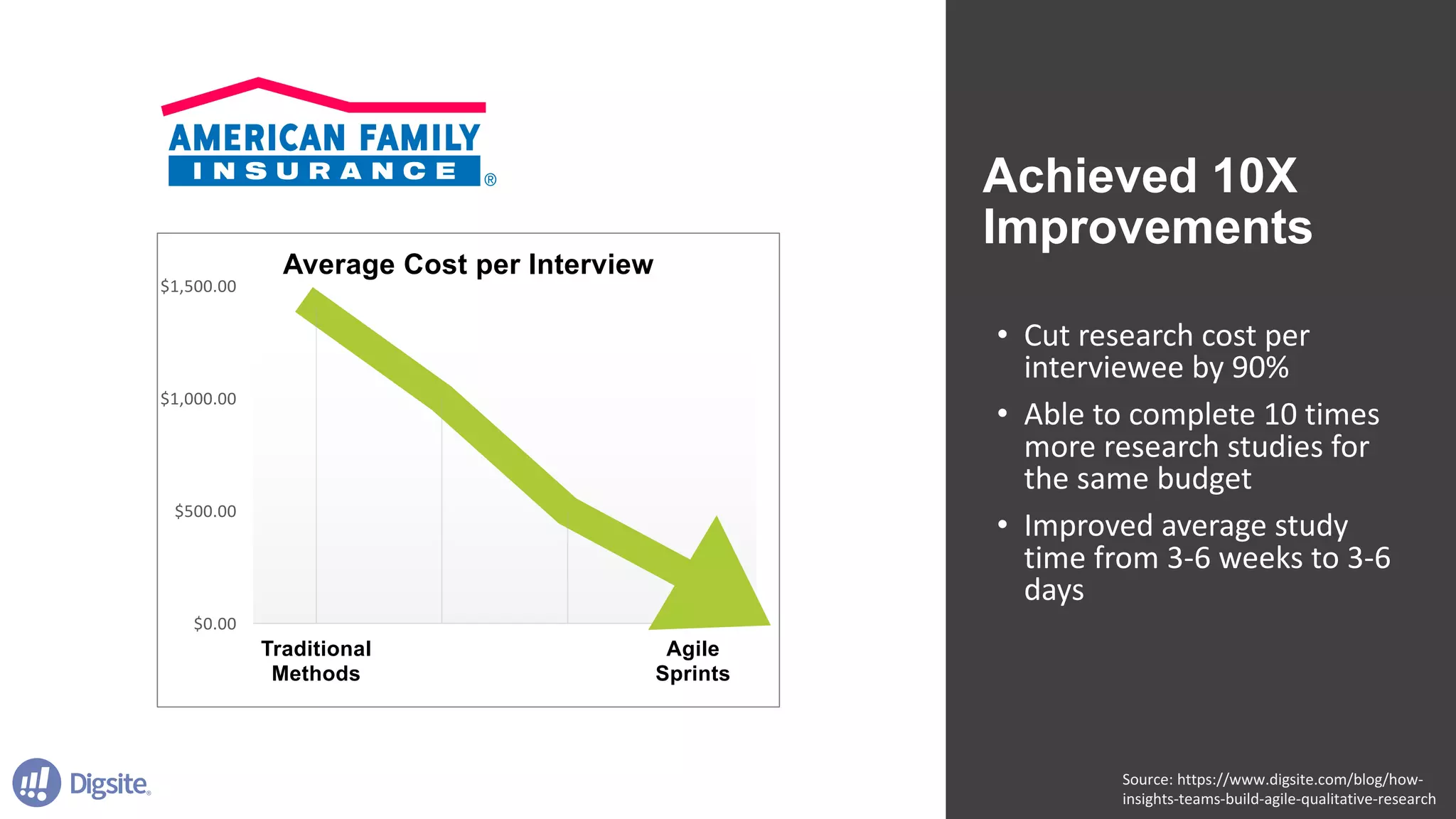
Achieved 10X
Improvements
• Cut	research	cost	per	
interviewee	by	90%
• Able	to	complete	10	times	
more	research	studies	for	
the	same	budget
• Improved	average	study	
time	from	3-6	weeks	to	3-6	
days
$0.00
$500.00
$1,000.00
$1,500.00
Traditional
Methods
Agile
Sprints
Average Cost per Interview
Source:	https://www.digsite.com/blog/how-
insights-teams-build-agile-qualitative-research
Pella
Results
Pella
Results
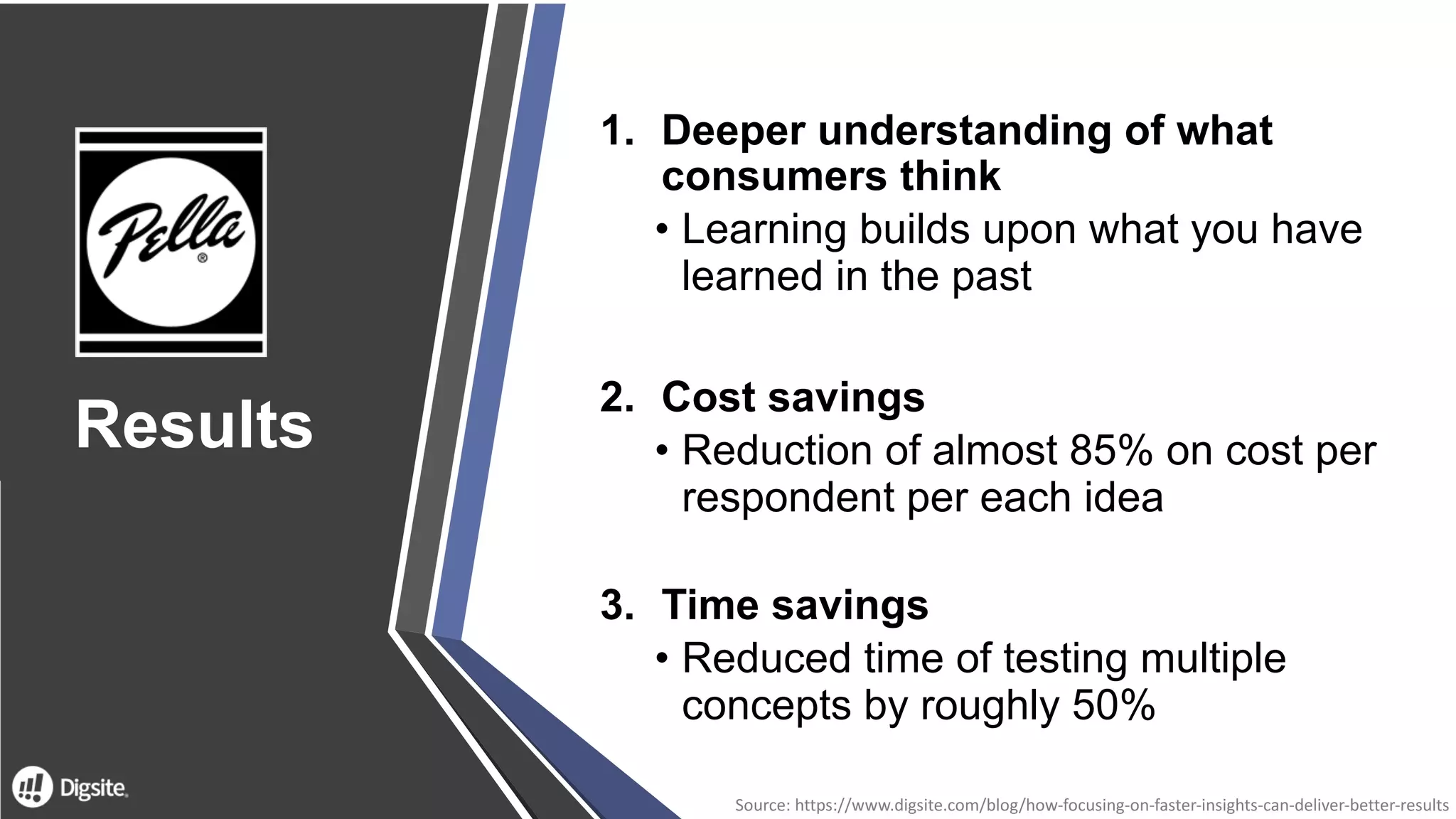
1. Deeper understanding of what
consumers think
• Learning builds upon what you have
learned in the past
2. Cost savings
• Reduction of almost 85% on cost per
respondent per each idea
3. Time savings
• Reduced time of testing multiple
concepts by roughly 50%
Source:	https://www.digsite.com/blog/how-focusing-on-faster-insights-can-deliver-better-results
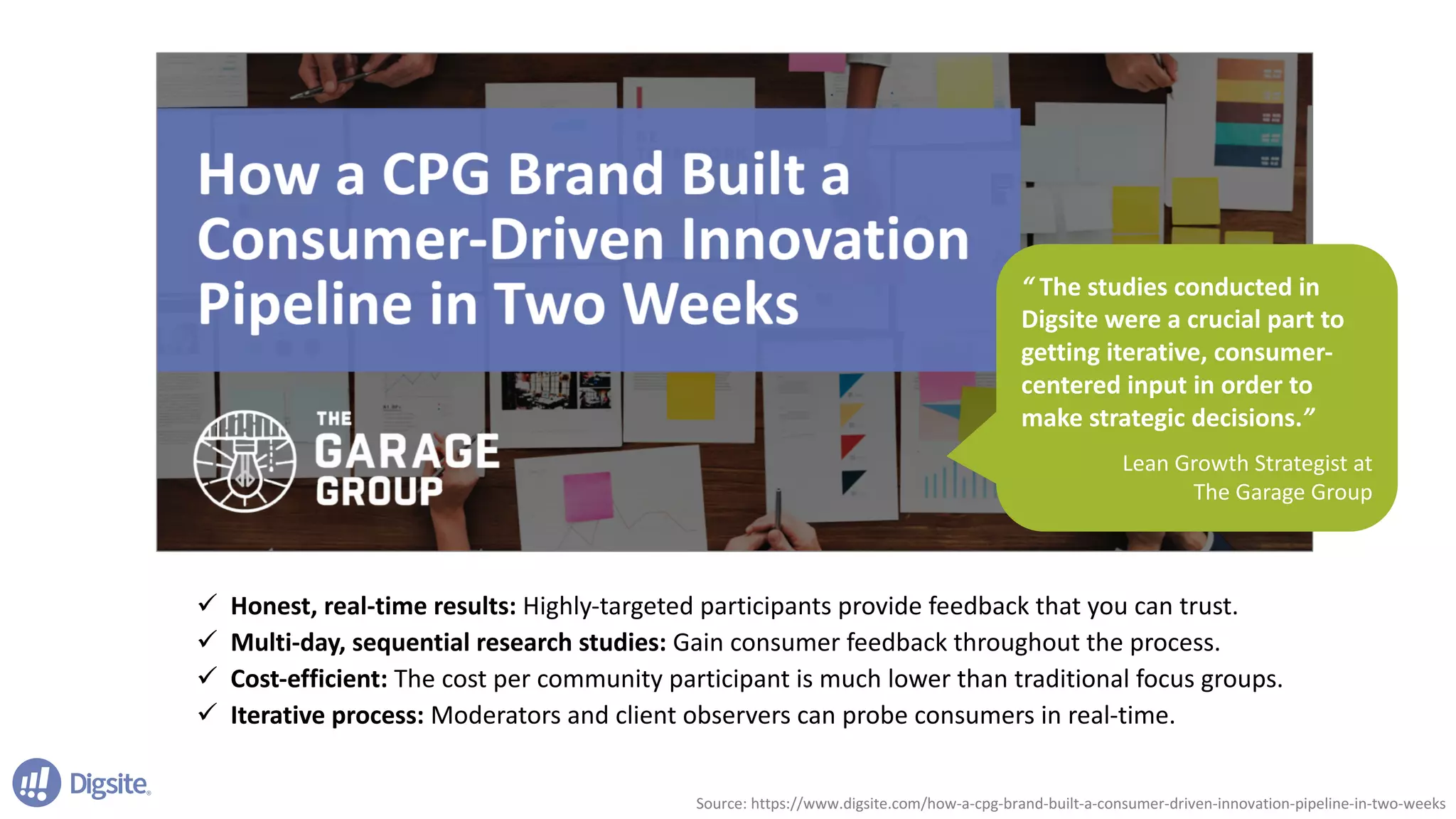
“	The	studies	conducted	in	
Digsite	were	a	crucial	part	to	
getting	iterative,	consumer-
centered	input	in	order	to	
make	strategic	decisions.”	
Lean	Growth	Strategist	at	
The	Garage	Group	
ü Honest,	real-time	results:	Highly-targeted	participants	provide	feedback	that	you	can	trust.
ü Multi-day,	sequential	research	studies:	Gain	consumer	feedback	throughout	the	process.	
ü Cost-efficient:	The	cost	per	community	participant	is	much	lower	than	traditional	focus	groups.	
ü Iterative	process:	Moderators	and	client	observers	can	probe	consumers	in	real-time.	
Source:	https://www.digsite.com/how-a-cpg-brand-built-a-consumer-driven-innovation-pipeline-in-two-weeks
27	Resources	for	Agile	
Marketing,	Innovation	
and	Experience	Research
www.digsite.com/blog
Questions?
Monika	Wingate	
monika@digsite.com	
+1	844-344-7483	x700

Webinar: How to Create an Effective Agile Insights Team