Game Theory:
Overcoming Rivals and Gaining Advantage
An eCornell webinar
with Prof. Justin Johnson,
Associate Professor of Economics
Today’s flow:
1. Poll questions
2. Presentation
3. Q & A
What is Game Theory?
 A tool for understanding and influencing your
environment
 A simple goal: increase your payoff
 A few key ideas:
 “Complementors” and competition
 Power at the bargaining table does not just come from how
big you can make “the pie”
 Understanding your rivals—today’s focus!
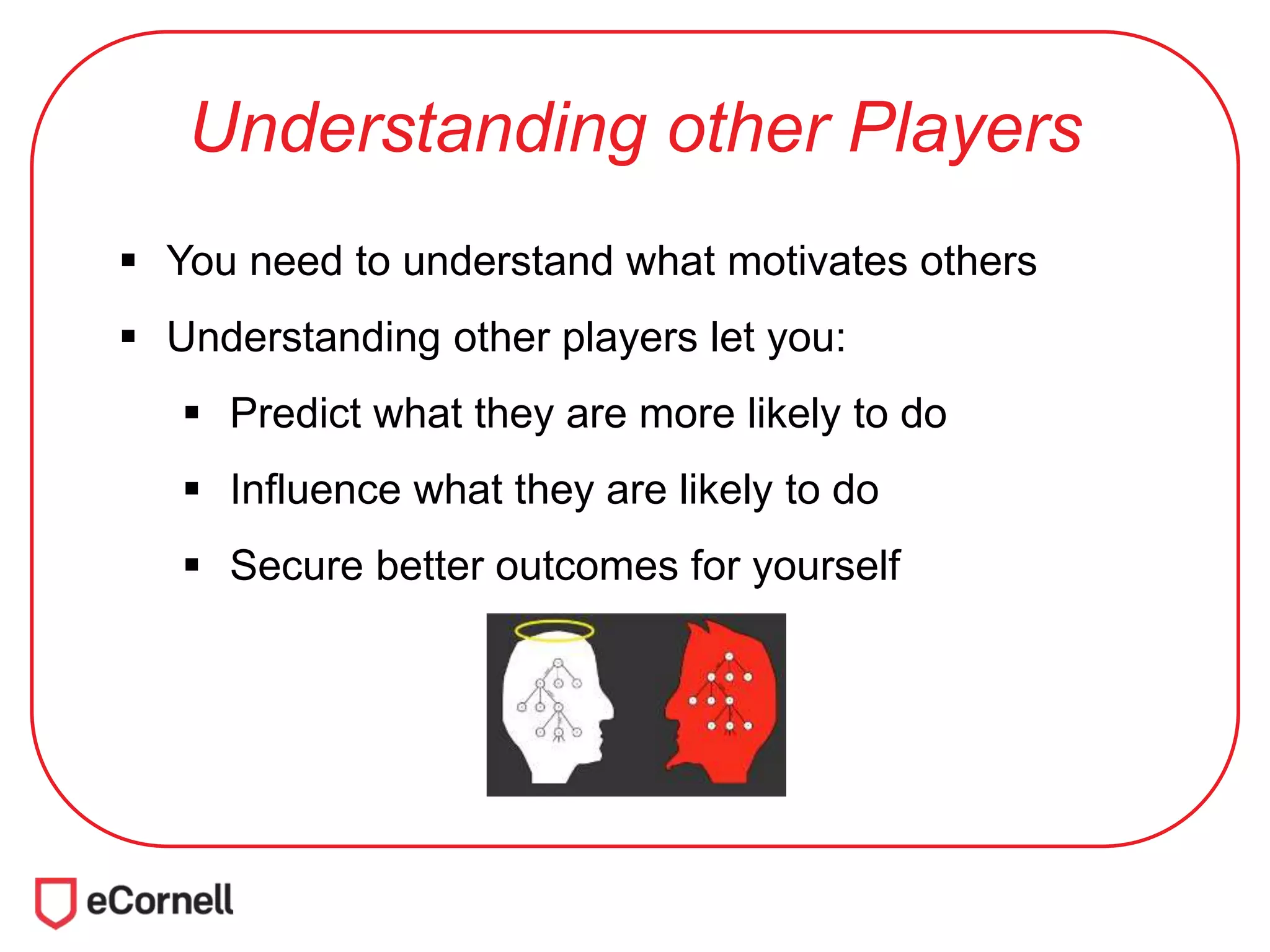
Understanding other Players
 You need to understand what motivates others
 Understanding other players let you:
 Predict what they are more likely to do
 Influence what they are likely to do
 Secure better outcomes for yourself
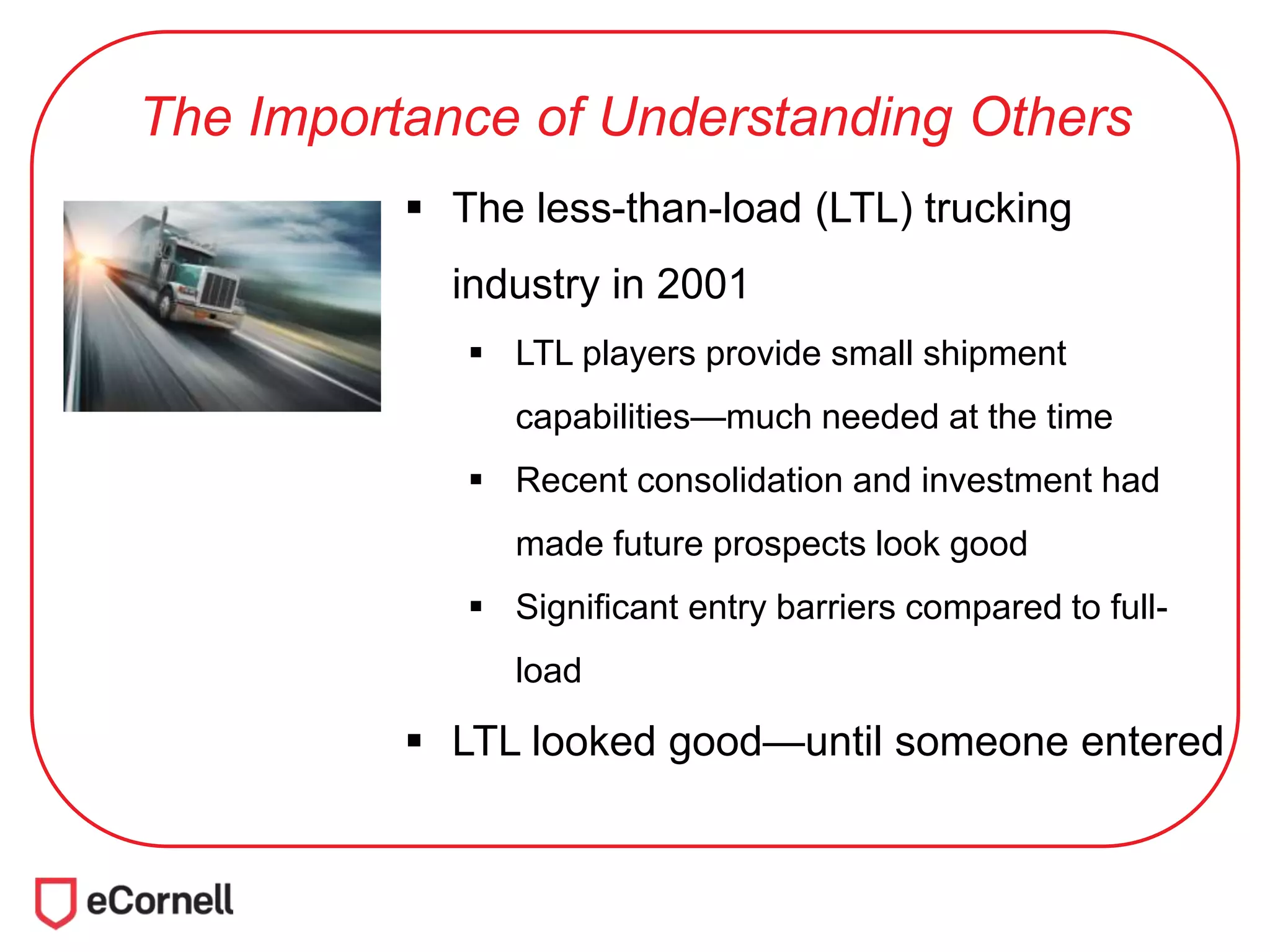
The Importance of Understanding Others
 The less-than-load (LTL) trucking
industry in 2001
 LTL players provide small shipment
capabilities—much needed at the time
 Recent consolidation and investment had
made future prospects look good
 Significant entry barriers compared to full-
load
 LTL looked good—until someone entered
The Importance of Understanding Others
 In 2006, Collins and Aikman (C&A) stopped
delivering parts for Ford’s hot Fusion automobile
 Ford threatened litigation, but soon rewarded C&A
with a more lucrative contract
 Why did this happen?
 C&A understood game theory better than Ford
Questions for Competitor Analysis
 What do other players want?
 Money? Fame? To be the biggest?
 How do they believe they can achieve it?
 What is their view of the world and how it works?
 What resources do they have?
 What are they capable of?
 What do they think you might do?
Being the Biggest
 In 2012, GM regained the mantle of global market
share leader
 In the past they did this by cutting prices on cars so
much they were unprofitable
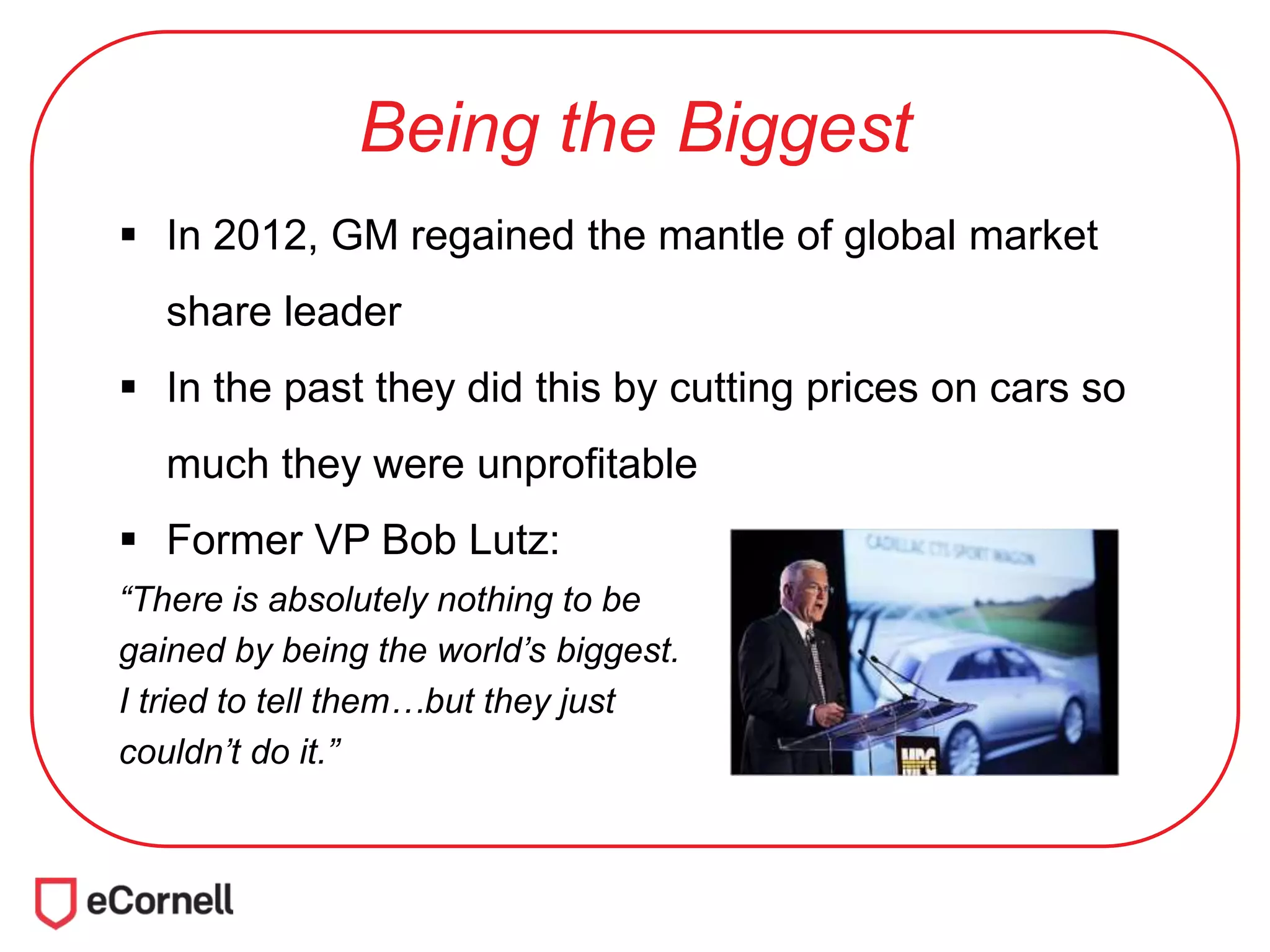
 Former VP Bob Lutz:
“There is absolutely nothing to be
gained by being the world’s biggest.
I tried to tell them…but they just
couldn’t do it.”
Being the Biggest
 It’s not just GM that wants to be the biggest
 Toyota has made this its goal in the past
 Airbus has accused Boeing of risking industry profits
by trying to be the biggest
 What do you do if your rival wants to be the biggest
(even at the expense of profits)?
vs.
 In 2005, eBay made a move against Craigslist
 What does eBay see when it looks at Craigslist?
 What might have been eBay’s plan?
 But…what does Craigslist see when it looks at
eBay?
How Others See You
 Just as important as understanding
 others is understanding how others see you
 What strategic posture are you projecting in your
market?
 Are you the tough player?
 Are you the non-threatening player?
 Are you the team player?
How Others See You
 Will being the “tough” player work for you?
 Microsoft and Intel in the 1990s pulled it off, and Apple did
more recently
 But can you do that?
 Maybe a different posture is better for you
 Either way, know that the actions you take today
influence how other players see you tomorrow
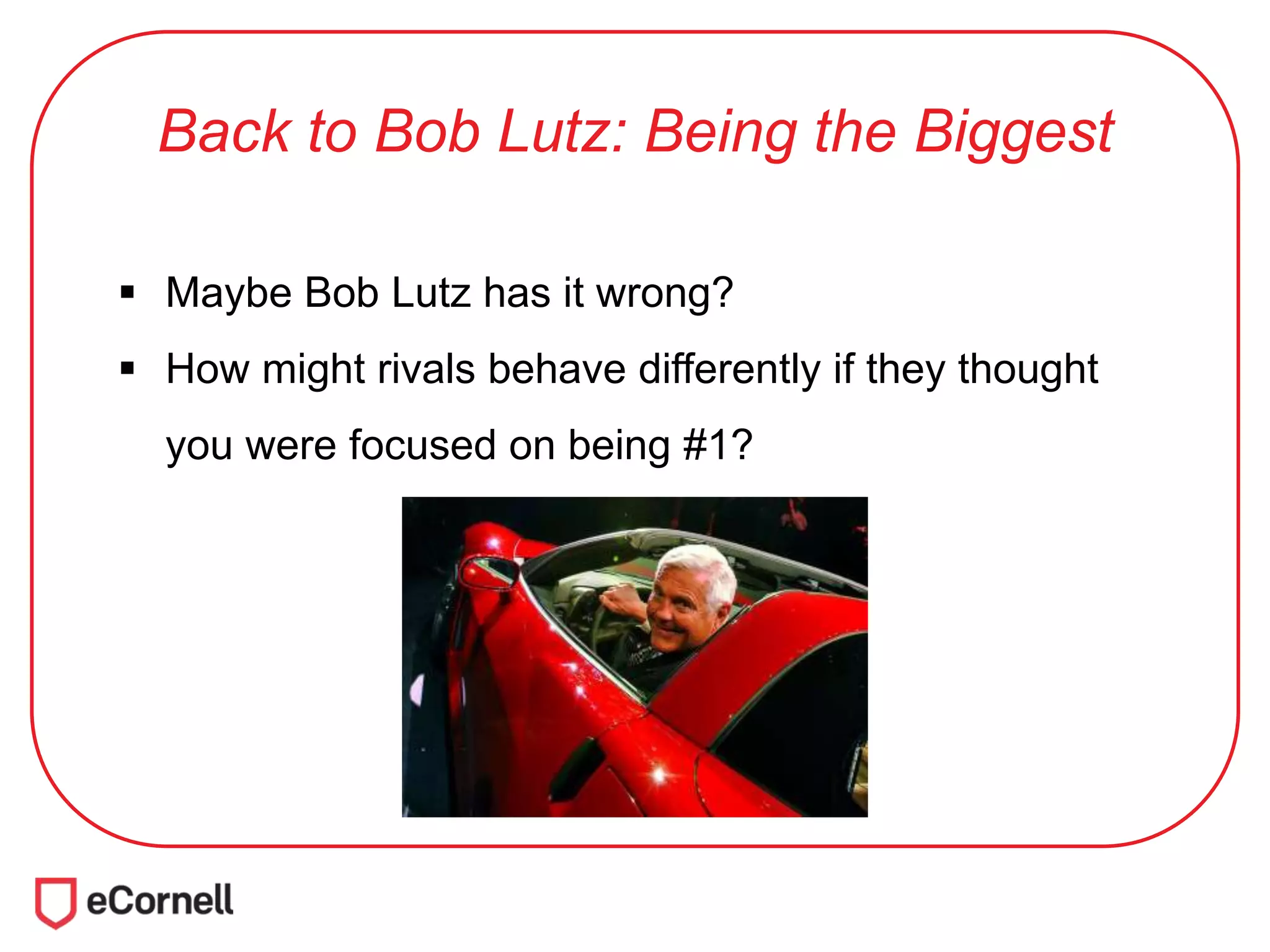
Back to Bob Lutz: Being the Biggest
 Maybe Bob Lutz has it wrong?
 How might rivals behave differently if they thought
you were focused on being #1?
Recap: Understand Your Rivals
 What motivates them?
 How do they think they an achieve their goals?
 What are they capable of?
 What do they think you will do?
 Consider these questions when making your own
strategic moves
Recap: Understand How Your Rivals See You
 Every action you take contributes to your “strategic
image/posture”
 How your rivals see you influences how they react
 Think carefully about how your moves today’s
influence how your rivals see you tomorrow
We’ve Just Scratched the Surface
 There’s much more to Game Theory and Business
Strategy
 If you’re interested, consider my eCornell Series
entitled Business Strategy: Achieving
Competitive Advantage.
Grow Expertise From Within
Equip your leaders and managers with MBA-level, project-based, actionable
learning in over 45 courses and 200+ topics on leadership, marketing,
strategy, sales, and project execution.
www.ecornell.com/goredshift
• Business Strategy: Achieving Competitive Advantage
• High-Performance Leadership
• Data-Driven Marketing
• Marketing Strategy
• New Media Marketing
• Project Leadership
• Management Reporting: Systems and Strategies
• Sales Leadership
Sales & Growth-Focused Content with Real World Application

Game Theory for Business: Overcoming Rivals and Gaining Advantage

  • 1.
    Game Theory: Overcoming Rivalsand Gaining Advantage An eCornell webinar with Prof. Justin Johnson, Associate Professor of Economics
  • 2.
    Today’s flow: 1. Pollquestions 2. Presentation 3. Q & A
  • 3.
    What is GameTheory?  A tool for understanding and influencing your environment  A simple goal: increase your payoff  A few key ideas:  “Complementors” and competition  Power at the bargaining table does not just come from how big you can make “the pie”  Understanding your rivals—today’s focus!
  • 4.
    Understanding other Players You need to understand what motivates others  Understanding other players let you:  Predict what they are more likely to do  Influence what they are likely to do  Secure better outcomes for yourself
  • 5.
    The Importance ofUnderstanding Others  The less-than-load (LTL) trucking industry in 2001  LTL players provide small shipment capabilities—much needed at the time  Recent consolidation and investment had made future prospects look good  Significant entry barriers compared to full- load  LTL looked good—until someone entered
  • 6.
    The Importance ofUnderstanding Others  In 2006, Collins and Aikman (C&A) stopped delivering parts for Ford’s hot Fusion automobile  Ford threatened litigation, but soon rewarded C&A with a more lucrative contract  Why did this happen?  C&A understood game theory better than Ford
  • 7.
    Questions for CompetitorAnalysis  What do other players want?  Money? Fame? To be the biggest?  How do they believe they can achieve it?  What is their view of the world and how it works?  What resources do they have?  What are they capable of?  What do they think you might do?
  • 8.
    Being the Biggest In 2012, GM regained the mantle of global market share leader  In the past they did this by cutting prices on cars so much they were unprofitable  Former VP Bob Lutz: “There is absolutely nothing to be gained by being the world’s biggest. I tried to tell them…but they just couldn’t do it.”
  • 9.
    Being the Biggest It’s not just GM that wants to be the biggest  Toyota has made this its goal in the past  Airbus has accused Boeing of risking industry profits by trying to be the biggest  What do you do if your rival wants to be the biggest (even at the expense of profits)?
  • 10.
    vs.  In 2005,eBay made a move against Craigslist  What does eBay see when it looks at Craigslist?  What might have been eBay’s plan?  But…what does Craigslist see when it looks at eBay?
  • 11.
    How Others SeeYou  Just as important as understanding  others is understanding how others see you  What strategic posture are you projecting in your market?  Are you the tough player?  Are you the non-threatening player?  Are you the team player?
  • 12.
    How Others SeeYou  Will being the “tough” player work for you?  Microsoft and Intel in the 1990s pulled it off, and Apple did more recently  But can you do that?  Maybe a different posture is better for you  Either way, know that the actions you take today influence how other players see you tomorrow
  • 13.
    Back to BobLutz: Being the Biggest  Maybe Bob Lutz has it wrong?  How might rivals behave differently if they thought you were focused on being #1?
  • 14.
    Recap: Understand YourRivals  What motivates them?  How do they think they an achieve their goals?  What are they capable of?  What do they think you will do?  Consider these questions when making your own strategic moves
  • 15.
    Recap: Understand HowYour Rivals See You  Every action you take contributes to your “strategic image/posture”  How your rivals see you influences how they react  Think carefully about how your moves today’s influence how your rivals see you tomorrow
  • 16.
    We’ve Just Scratchedthe Surface  There’s much more to Game Theory and Business Strategy  If you’re interested, consider my eCornell Series entitled Business Strategy: Achieving Competitive Advantage.
  • 17.
    Grow Expertise FromWithin Equip your leaders and managers with MBA-level, project-based, actionable learning in over 45 courses and 200+ topics on leadership, marketing, strategy, sales, and project execution. www.ecornell.com/goredshift • Business Strategy: Achieving Competitive Advantage • High-Performance Leadership • Data-Driven Marketing • Marketing Strategy • New Media Marketing • Project Leadership • Management Reporting: Systems and Strategies • Sales Leadership Sales & Growth-Focused Content with Real World Application