Strategic
 Intent
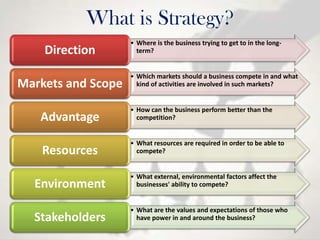
What is Strategy?
                    • Where is the business trying to get to in the long-
    Direction         term?


                    • Which markets should a business compete in and what
Markets and Scope     kind of activities are involved in such markets?


                    • How can the business perform better than the
   Advantage          competition?


                    • What resources are required in order to be able to
   Resources          compete?


                    • What external, environmental factors affect the
  Environment         businesses' ability to compete?


                    • What are the values and expectations of those who
  Stakeholders        have power in and around the business?
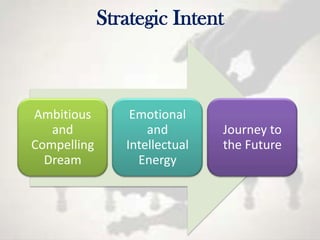
Strategic Intent


Ambitious        Emotional
   and              and        Journey to
Compelling      Intellectual   the Future
  Dream           Energy
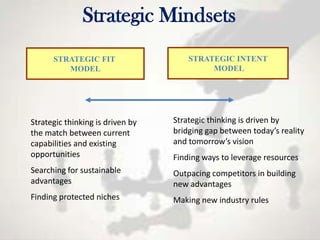
Strategic Mindsets
      STRATEGIC FIT                   STRATEGIC INTENT
         MODEL                             MODEL


Strategic thinking is driven by   Strategic thinking is driven by
the match between current         bridging gap between today’s reality
capabilities and existing         and tomorrow’s vision
opportunities                     Finding ways to leverage resources
Searching for sustainable         Outpacing competitors in building
advantages                        new advantages
Finding protected niches          Making new industry rules
Competitor Analysis

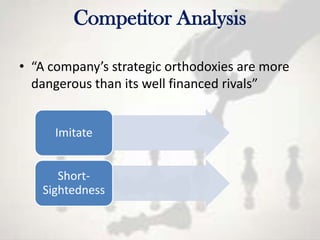
• “A company’s strategic orthodoxies are more
  dangerous than its well financed rivals”


     Imitate


      Short-
   Sightedness
Characteristics of Strategic Intent

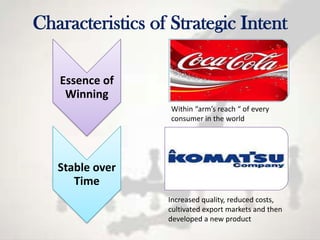
   Essence of
    Winning
                   Within “arm’s reach “ of every
                   consumer in the world


   Stable over
      Time
                  Increased quality, reduced costs,
                  cultivated export markets and then
                  developed a new product
Characteristics of Strategic Intent


         Personal
        effort and
       Commitment


        Enormous
        Creativity
Strategic Planning

• Planners and Winners
• Strategic Planning doesn’t focus on
  tomorrow’s opportunities
• Strategic intent required to fold the future
  back into the present
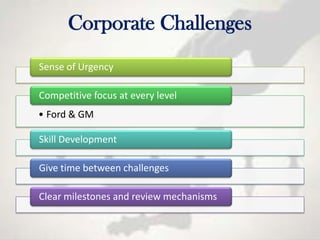
Corporate Challenges
Sense of Urgency

Competitive focus at every level
• Ford & GM

Skill Development

Give time between challenges

Clear milestones and review mechanisms
Building compt advtg komatsu
• Image…
Reciprocal Responsibility
• Shared Gain – Shared Pain
Approaches to Competitive Innovation
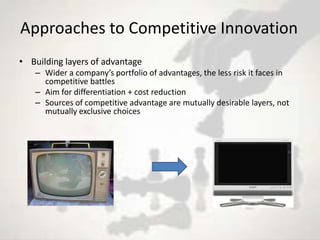
• Building layers of advantage
   – Wider a company’s portfolio of advantages, the less risk it faces in
     competitive battles
   – Aim for differentiation + cost reduction
   – Sources of competitive advantage are mutually desirable layers, not
     mutually exclusive choices
Approaches to Competitive Innovation
• Searching for loose breaks
  – Required to break into a market or challenge a
    competitor


                         • Attack outside existing
                           market
                         • Remain unnoticed
Approaches to Competitive Innovation
• Changing the terms of engagement
  – Barriers to Entry v/s Barriers to Imitation


                          • Standardized machine
                            components reduced cost
                          • Distribution through
                            office product dealers
                          • Create a national service
                            network
Approaches to Competitive Innovation
• Competing through collaboration
  – Win without fighting
  – “Enemy’s enemy is your friend”

                      • Calibrate competitor’s strength
                         • Assessed the progress US
                            rivals had made in cost
                            reduction, quality and
                            technology
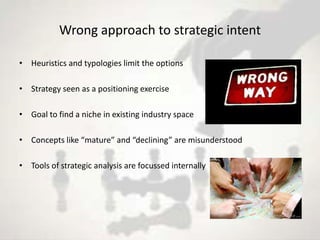
Wrong approach to strategic intent

• Heuristics and typologies limit the options

• Strategy seen as a positioning exercise

• Goal to find a niche in existing industry space

• Concepts like “mature” and “declining” are misunderstood

• Tools of strategic analysis are focussed internally
Evaluation Parameter
• Evaluation on “numbers” basis
• Unable to develop deep business knowledge
  due to “career development”
The No.1 Race
• Integration problem during Acquisition
• Overloaded with initiatives
• Incompatible collaborative ventures
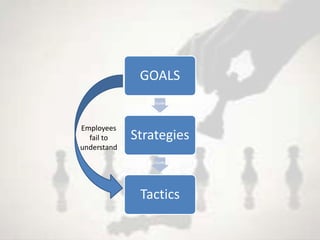
GOALS
                 Guide


Employees
  fail to    Strategies
understand
                 Guide


              Tactics
“Career Development”
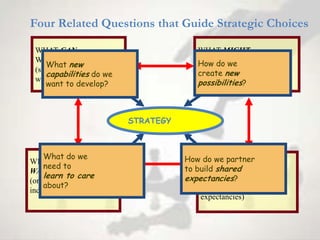
Four Related Questions that Guide Strategic Choices

 WHAT CAN                               WHAT MIGHT
 WE DO?                                 WE DO?we
                                        How do
     What new
 (strengths and                         (externalnew
                                        create opportunities
     capabilities do we
 weaknesses)
     want to develop?                   possibilities
                                        and threat) ?


                          STRATEGY


    What do we                       How do we partner
WHAT DO WE
    need to                          to build shared
                                         WHAT DO OTHERS
WANT TO DO?
    learn to care                    expectanciesUS TO DO?
                                         EXPECT ?
(organizational and
    about?                               (stakeholder
individual values)
                                         expectancies)
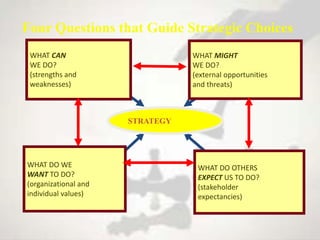
Four Questions that Guide Strategic Choices
 WHAT CAN                        WHAT MIGHT
 WE DO?                          WE DO?
 (strengths and                  (external opportunities
 weaknesses)                     and threats)


                      STRATEGY


WHAT DO WE                        WHAT DO OTHERS
WANT TO DO?                       EXPECT US TO DO?
(organizational and               (stakeholder
individual values)                expectancies)
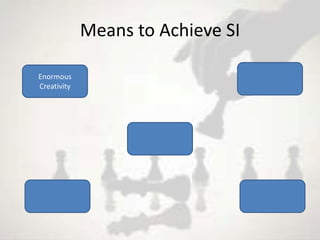
Means to Achieve SI

Enormous
Creativity
Strategic intent

Strategic intent

  • 1.
  • 2.
    What is Strategy? • Where is the business trying to get to in the long- Direction term? • Which markets should a business compete in and what Markets and Scope kind of activities are involved in such markets? • How can the business perform better than the Advantage competition? • What resources are required in order to be able to Resources compete? • What external, environmental factors affect the Environment businesses' ability to compete? • What are the values and expectations of those who Stakeholders have power in and around the business?
  • 3.
    Strategic Intent Ambitious Emotional and and Journey to Compelling Intellectual the Future Dream Energy
  • 4.
    Strategic Mindsets STRATEGIC FIT STRATEGIC INTENT MODEL MODEL Strategic thinking is driven by Strategic thinking is driven by the match between current bridging gap between today’s reality capabilities and existing and tomorrow’s vision opportunities Finding ways to leverage resources Searching for sustainable Outpacing competitors in building advantages new advantages Finding protected niches Making new industry rules
  • 5.
    Competitor Analysis • “Acompany’s strategic orthodoxies are more dangerous than its well financed rivals” Imitate Short- Sightedness
  • 6.
    Characteristics of StrategicIntent Essence of Winning Within “arm’s reach “ of every consumer in the world Stable over Time Increased quality, reduced costs, cultivated export markets and then developed a new product
  • 7.
    Characteristics of StrategicIntent Personal effort and Commitment Enormous Creativity
  • 8.
  • 9.
    • Strategic Planningdoesn’t focus on tomorrow’s opportunities • Strategic intent required to fold the future back into the present
  • 10.
    Corporate Challenges Sense ofUrgency Competitive focus at every level • Ford & GM Skill Development Give time between challenges Clear milestones and review mechanisms
  • 11.
    Building compt advtgkomatsu • Image…
  • 12.
  • 13.
    Approaches to CompetitiveInnovation • Building layers of advantage – Wider a company’s portfolio of advantages, the less risk it faces in competitive battles – Aim for differentiation + cost reduction – Sources of competitive advantage are mutually desirable layers, not mutually exclusive choices
  • 14.
    Approaches to CompetitiveInnovation • Searching for loose breaks – Required to break into a market or challenge a competitor • Attack outside existing market • Remain unnoticed
  • 15.
    Approaches to CompetitiveInnovation • Changing the terms of engagement – Barriers to Entry v/s Barriers to Imitation • Standardized machine components reduced cost • Distribution through office product dealers • Create a national service network
  • 16.
    Approaches to CompetitiveInnovation • Competing through collaboration – Win without fighting – “Enemy’s enemy is your friend” • Calibrate competitor’s strength • Assessed the progress US rivals had made in cost reduction, quality and technology
  • 17.
    Wrong approach tostrategic intent • Heuristics and typologies limit the options • Strategy seen as a positioning exercise • Goal to find a niche in existing industry space • Concepts like “mature” and “declining” are misunderstood • Tools of strategic analysis are focussed internally
  • 18.
    Evaluation Parameter • Evaluationon “numbers” basis • Unable to develop deep business knowledge due to “career development”
  • 19.
    The No.1 Race •Integration problem during Acquisition • Overloaded with initiatives • Incompatible collaborative ventures
  • 20.
    GOALS Guide Employees fail to Strategies understand Guide Tactics
  • 21.
  • 22.
    Four Related Questionsthat Guide Strategic Choices WHAT CAN WHAT MIGHT WE DO? WE DO?we How do What new (strengths and (externalnew create opportunities capabilities do we weaknesses) want to develop? possibilities and threat) ? STRATEGY What do we How do we partner WHAT DO WE need to to build shared WHAT DO OTHERS WANT TO DO? learn to care expectanciesUS TO DO? EXPECT ? (organizational and about? (stakeholder individual values) expectancies)
  • 23.
    Four Questions thatGuide Strategic Choices WHAT CAN WHAT MIGHT WE DO? WE DO? (strengths and (external opportunities weaknesses) and threats) STRATEGY WHAT DO WE WHAT DO OTHERS WANT TO DO? EXPECT US TO DO? (organizational and (stakeholder individual values) expectancies)
  • 24.
    Means to AchieveSI Enormous Creativity

Editor's Notes

  • #4 An ambitious and compelling dream which provides emotional and intellectual energy for the company and defines the journey to the future.”