Web Technology Trends (early 2009)

Editor's Notes

  • #2 Prodosh Banerjee, Managing Partner, Anolim Anolim develops web applications and provides services and solutions for: collaboration, marketing / communications, social media, knowledge sharing, e-commerce I have been working in IT since 1985 as a manager, consultant, developer Director & Head of IT, E-Services UBS Assest Management, Consultant Swiss Exchange, IBM Software Labs Worked with the Internet since 1996 when I started development of an Internet Banking solution
  • #9 Show Yahoo semantic search: “dries drupal”
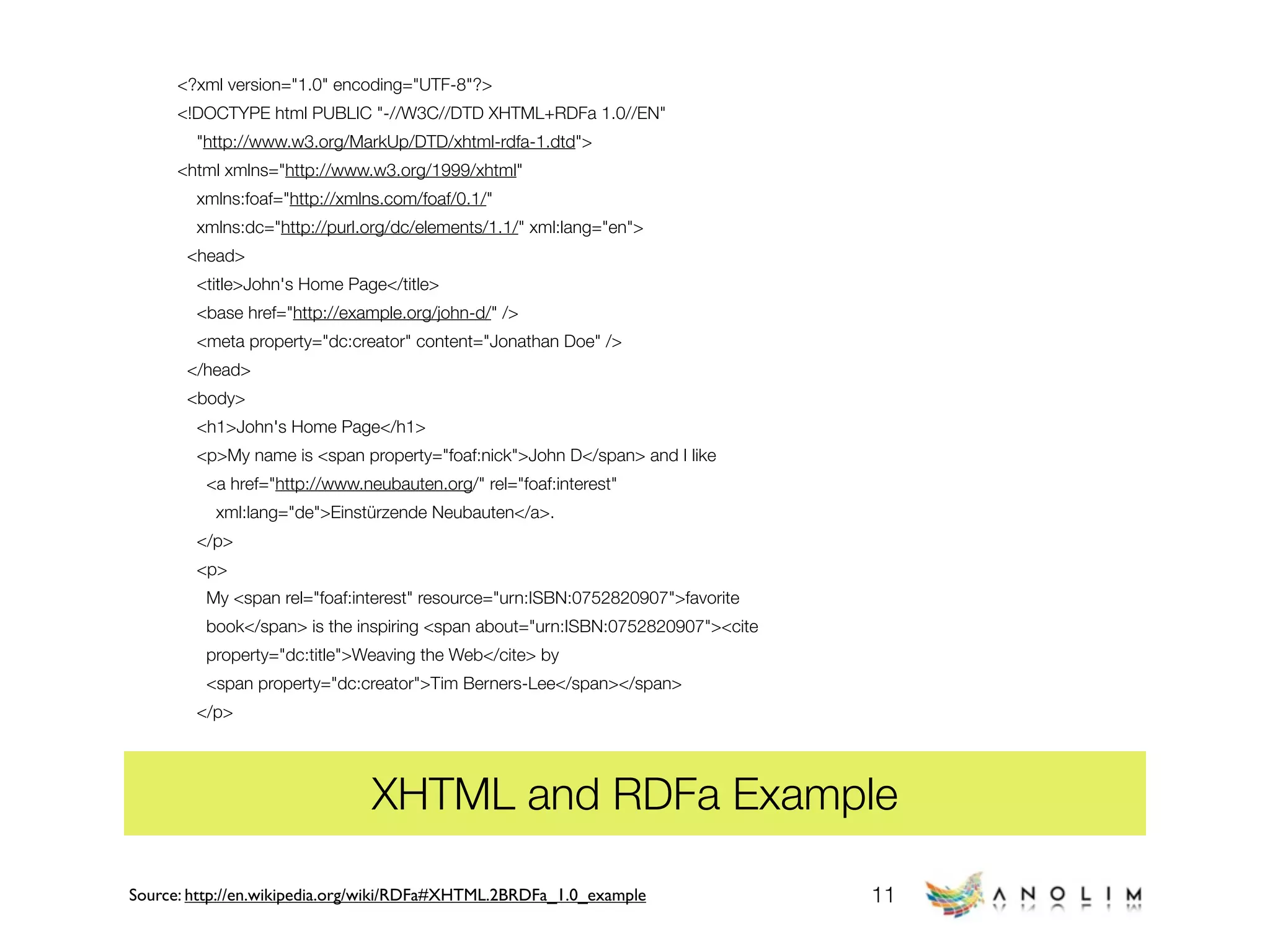
  • #11 Resource Description Framework in attributes RDFa uses attributes from XHTML's meta and link elements, and generalises them so that they are usable on all elements. Example: <div xmlns:dc=\"http://purl.org/dc/elements/1.1/\" about=\"http://www.example.com/books/wikinomics\"> <span property=\"dc:title\">Wikinomics</span> <span property=\"dc:creator\">Don Tapscott</span> <span property=\"dc:date\">2006-10-01</span> </div> Simple Dublin Core The Simple Dublin Core Metadata Element Set (DCMES) consists of 15 metadata elements: 1. Title 2. Creator 3. Subject 4. Description 5. Publisher 6. Contributor 7. Date 8. Type 9. Format 10. Identifier 11. Source 12. Language 13. Relation 14. Coverage 15. Rights
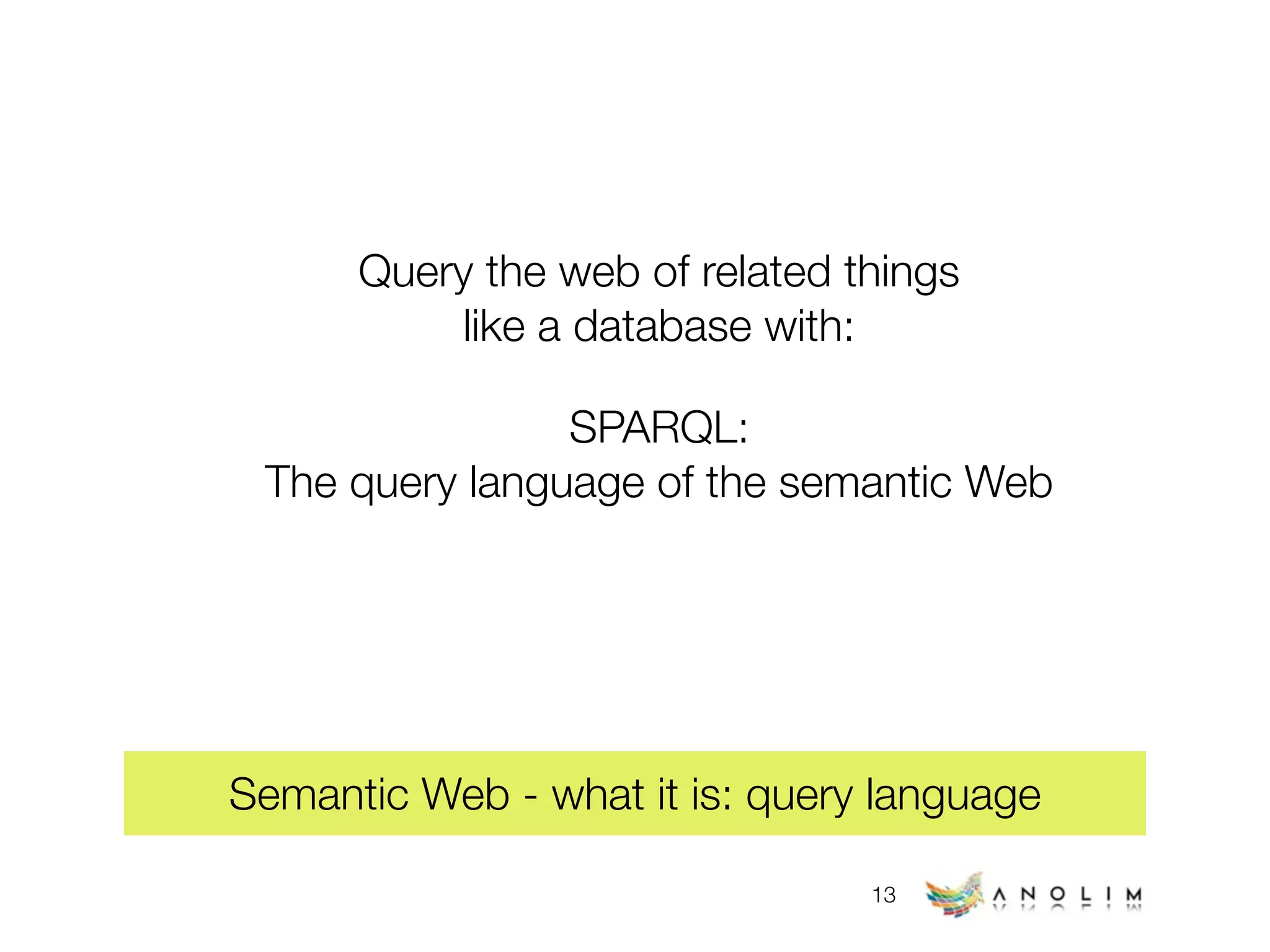
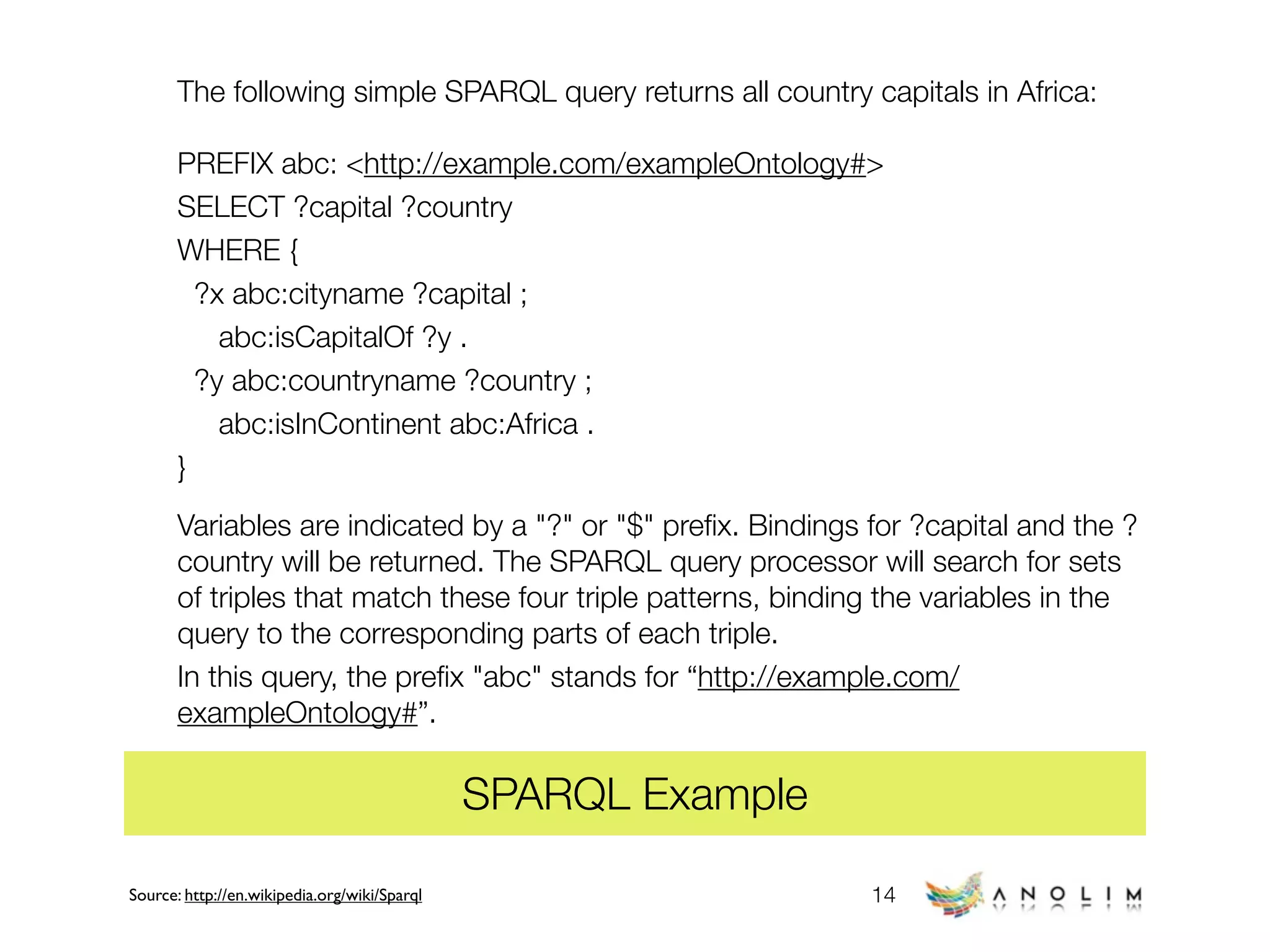
  • #14 Simple Protocol and RDF Query Language
  • #15  Important to note here is the \"property orientation\" (class matches can be conducted solely through class-attributes / properties - see Duck typing) To make queries concise, SPARQL allows the definition of prefixes and base URIs in a fashion similar to Turtle. In this query, the prefix \"abc\" stands for &#x201C;http://example.com/exampleOntology#&#x201D;.
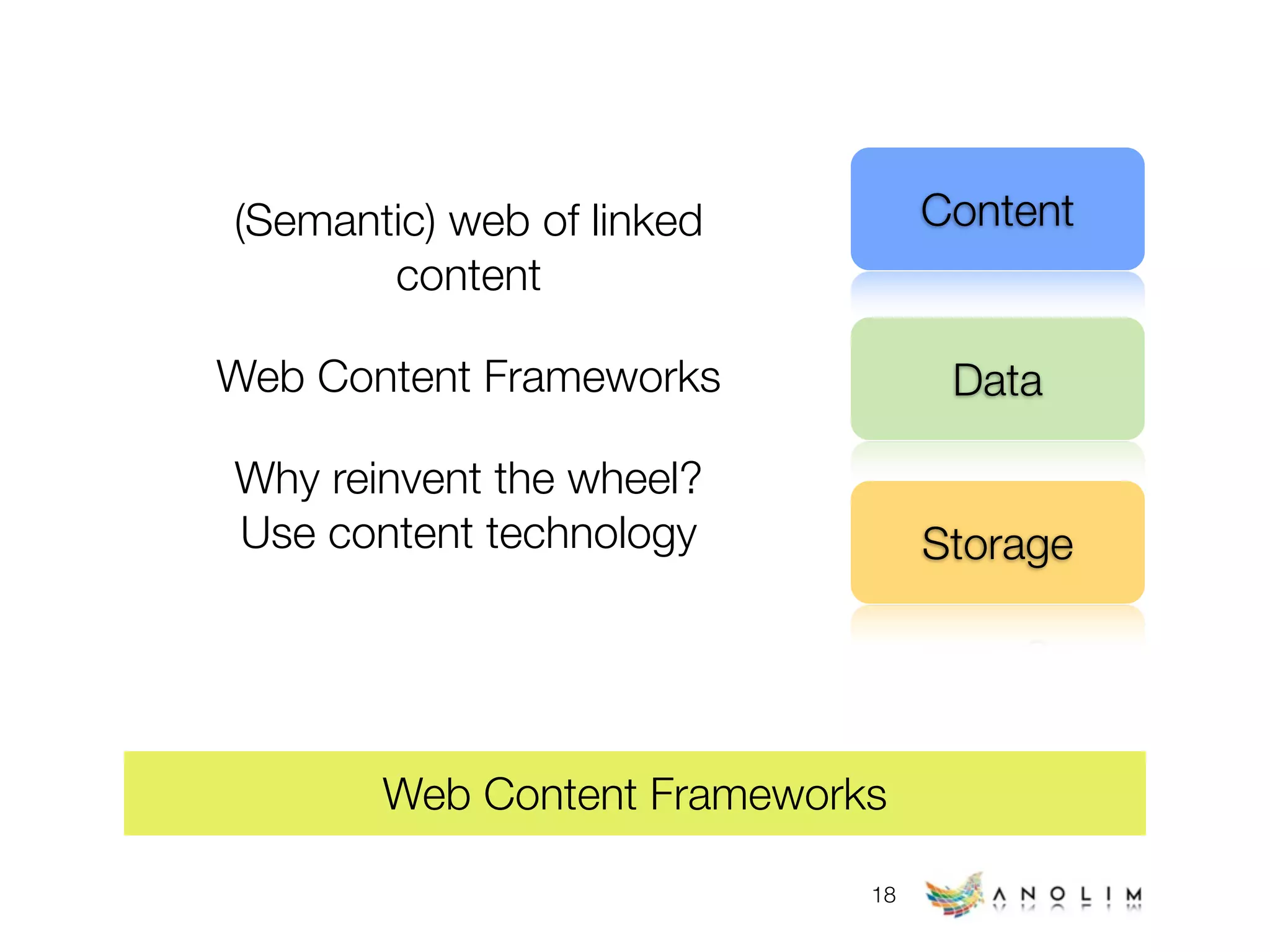
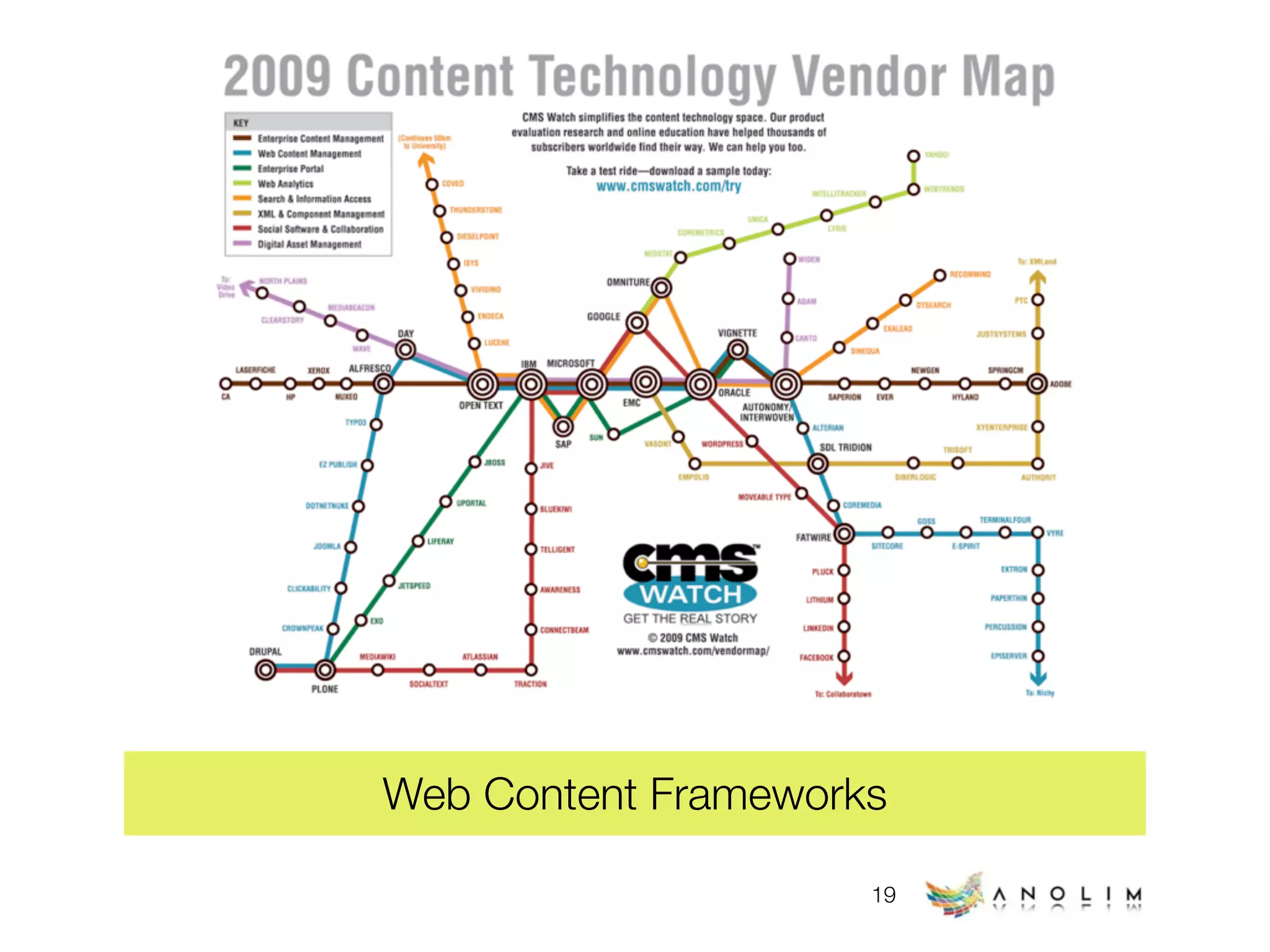
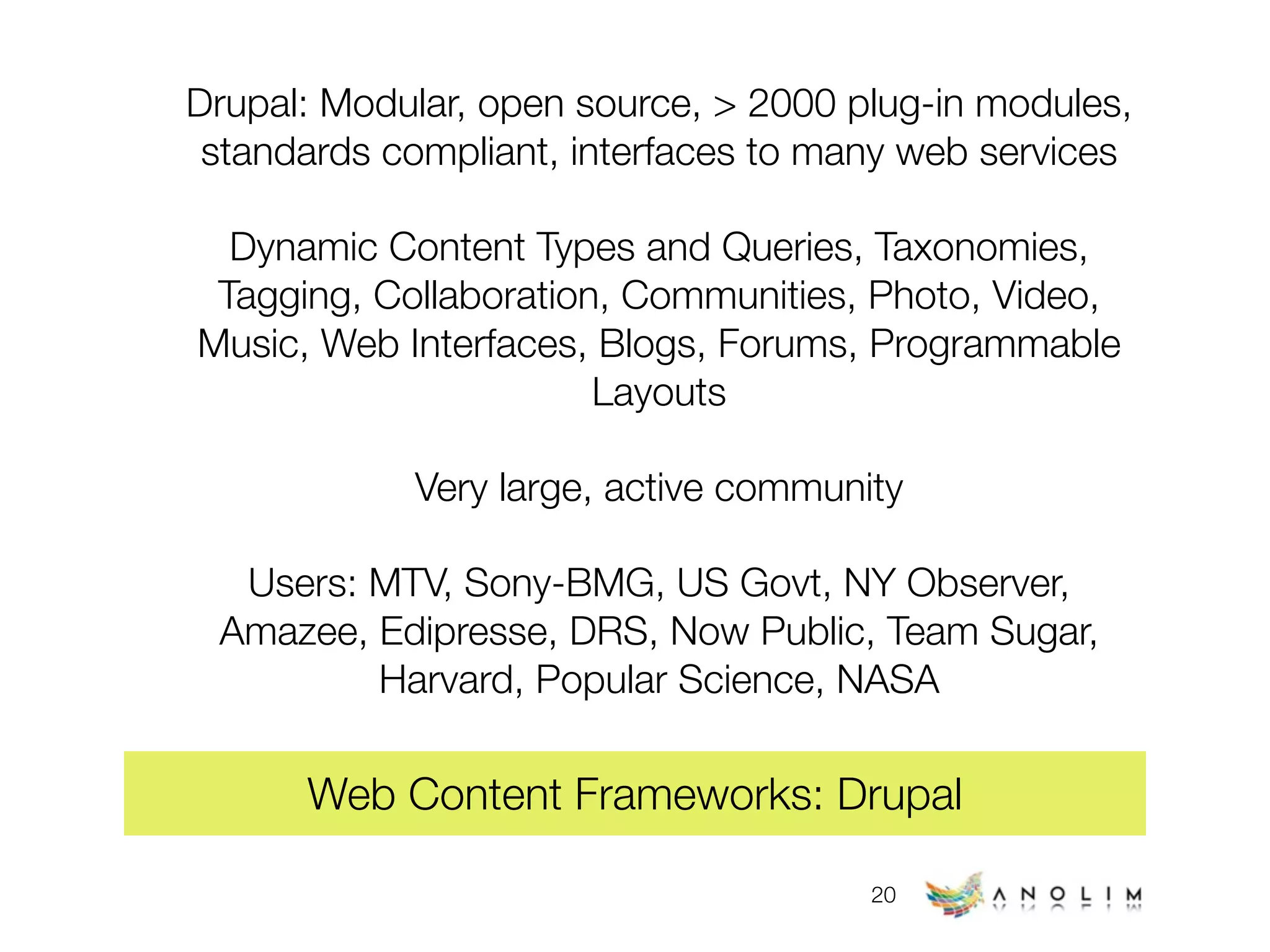
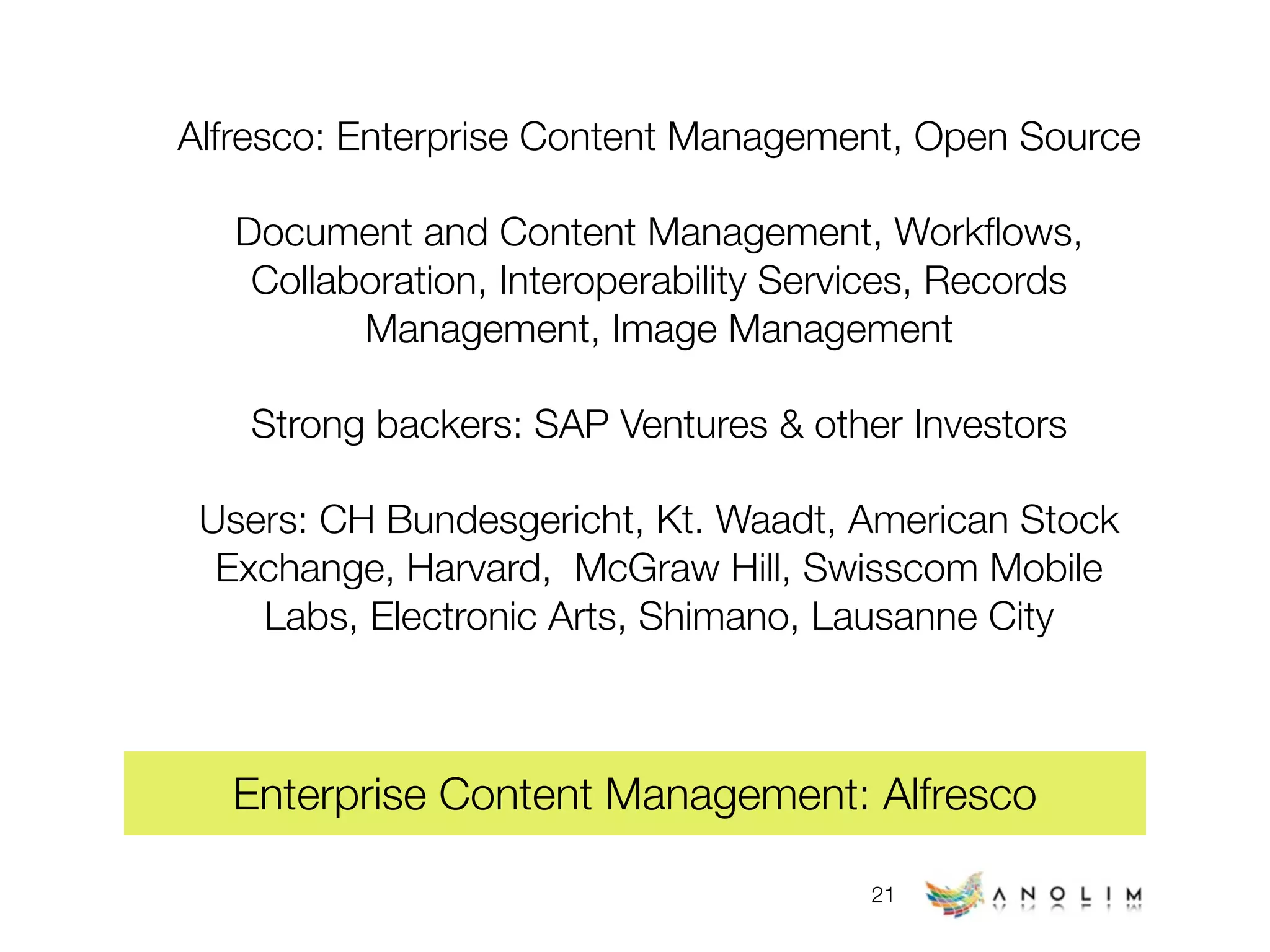
  • #20 There are content tools for almost everything We will look at Drupal, Alfresco
  • #23 FP has no side effects FP - running functions in every order produces same results FP is useful for parallel processing Map Reduce is used by Google Map - Reduce: an algorithm for executing packages in parallel Map: split into parallel processing packages and produce intermediate output Reduce: combine intermediate output to produce final output
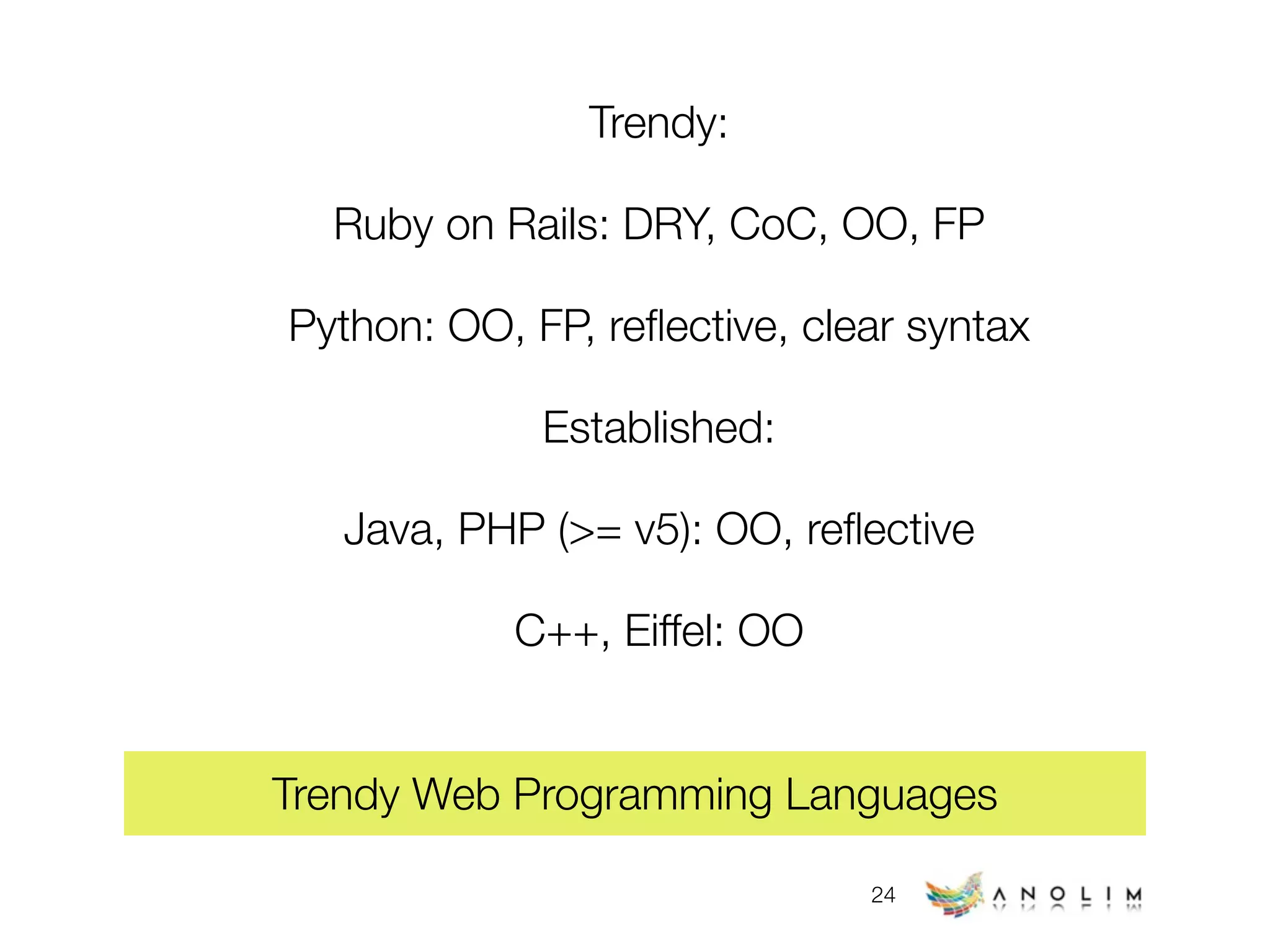
  • #25 DRY: Don&#x2019;t repeat yourself CoC: Convention over Configuration Reflection: ability to modify code and data
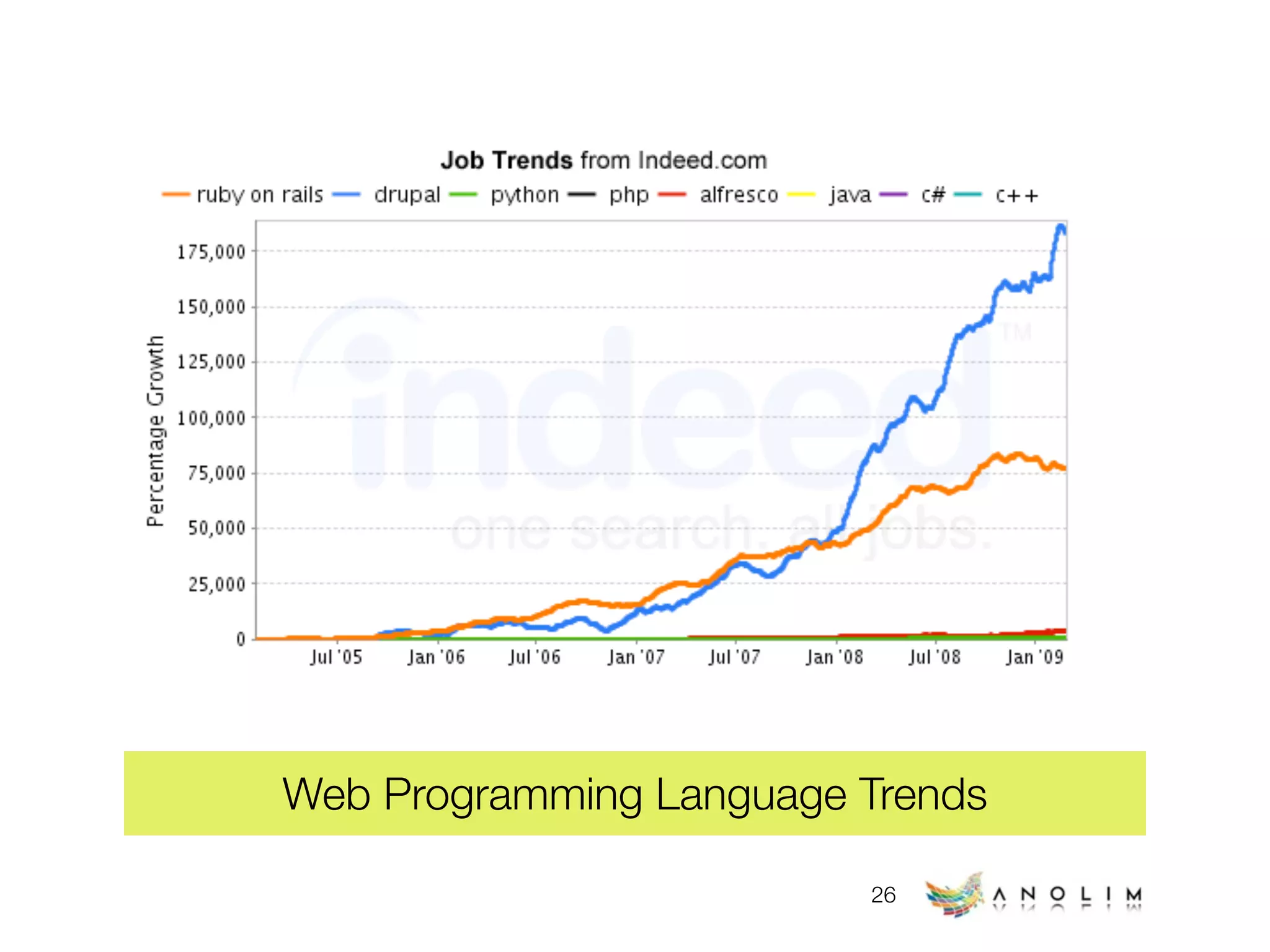
  • #27 Largest in absolute numbers are Java, C++, C# small but steady growth in C#, C++ steady, some recent growth in Java
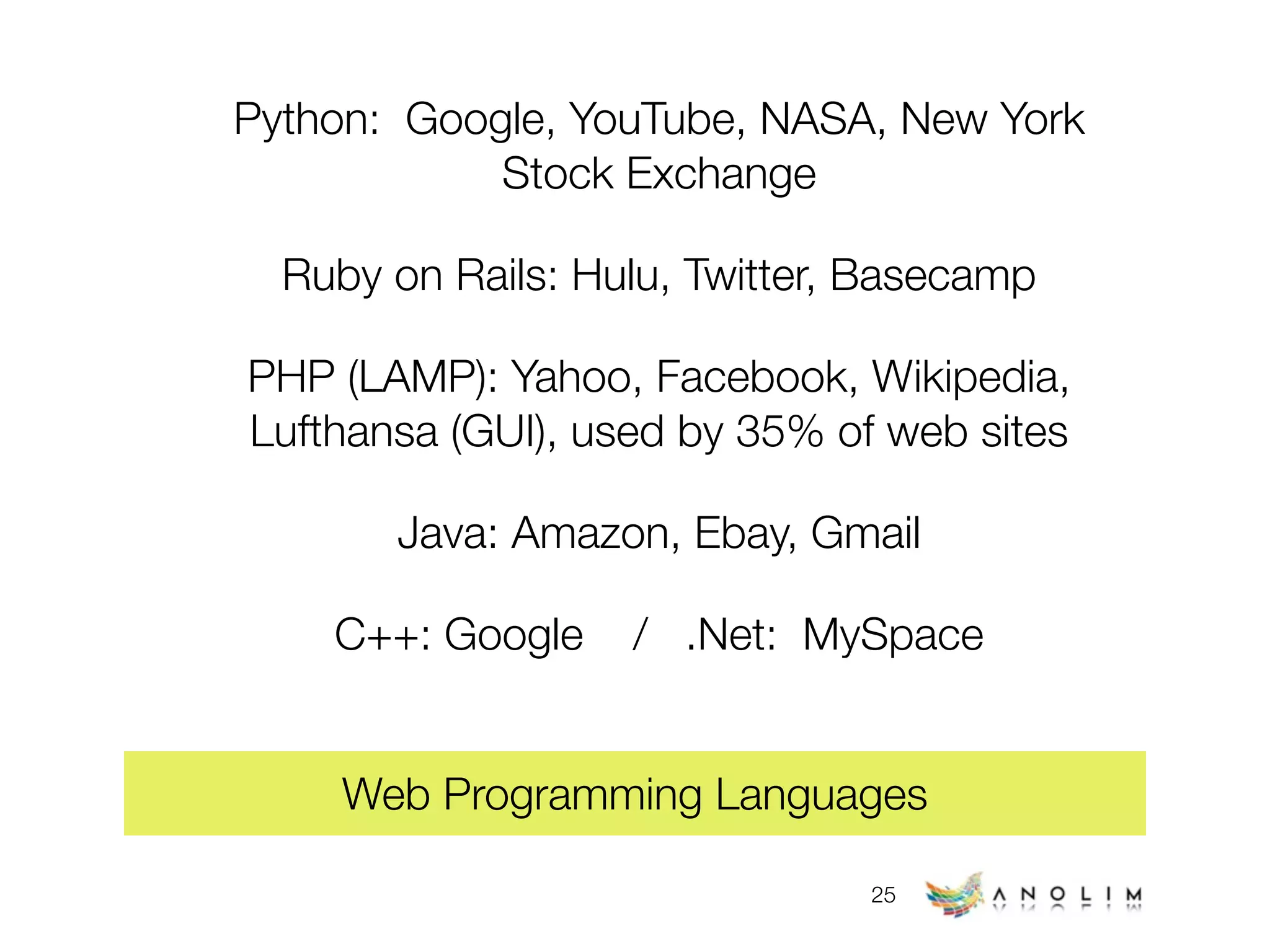
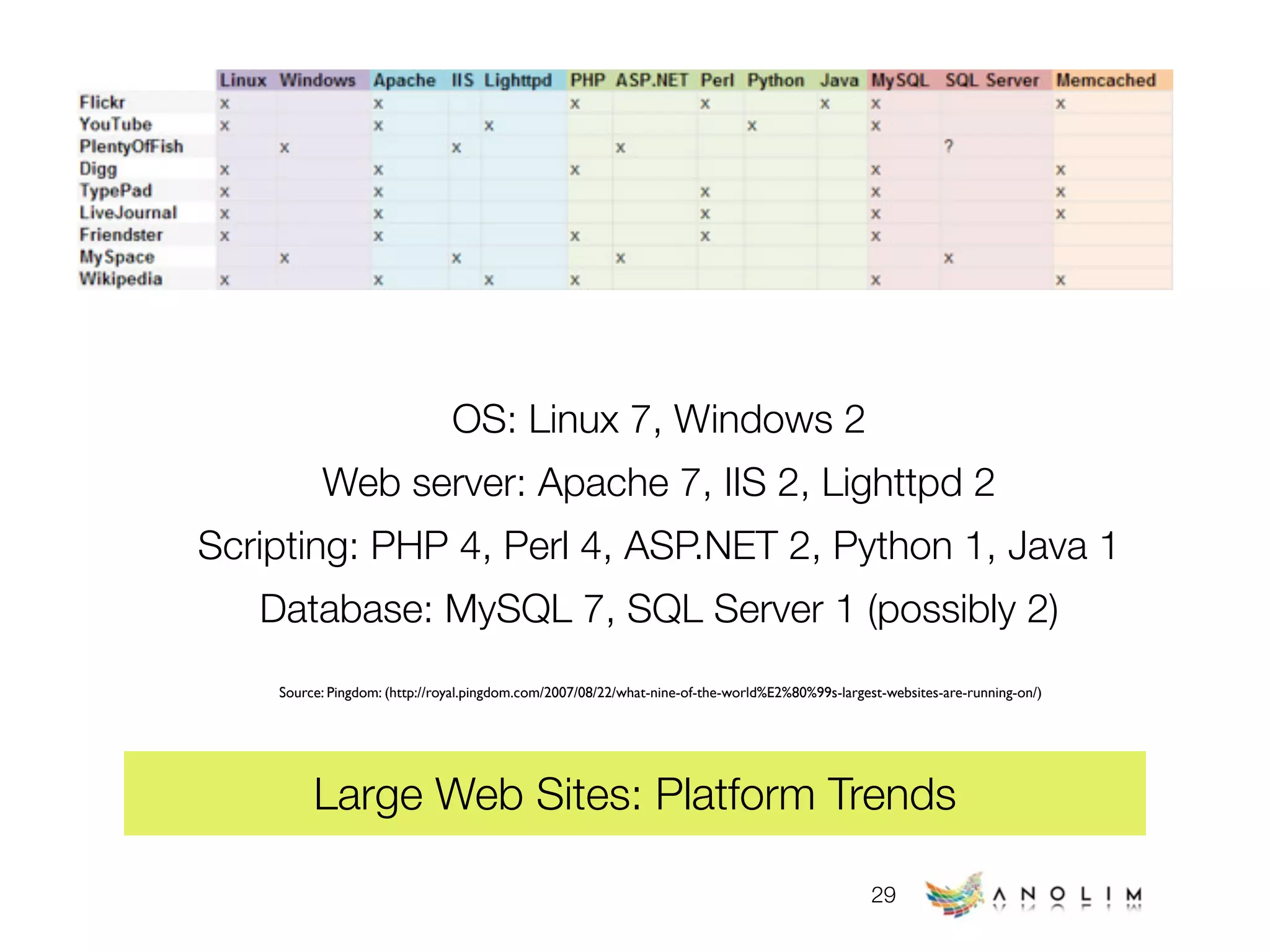
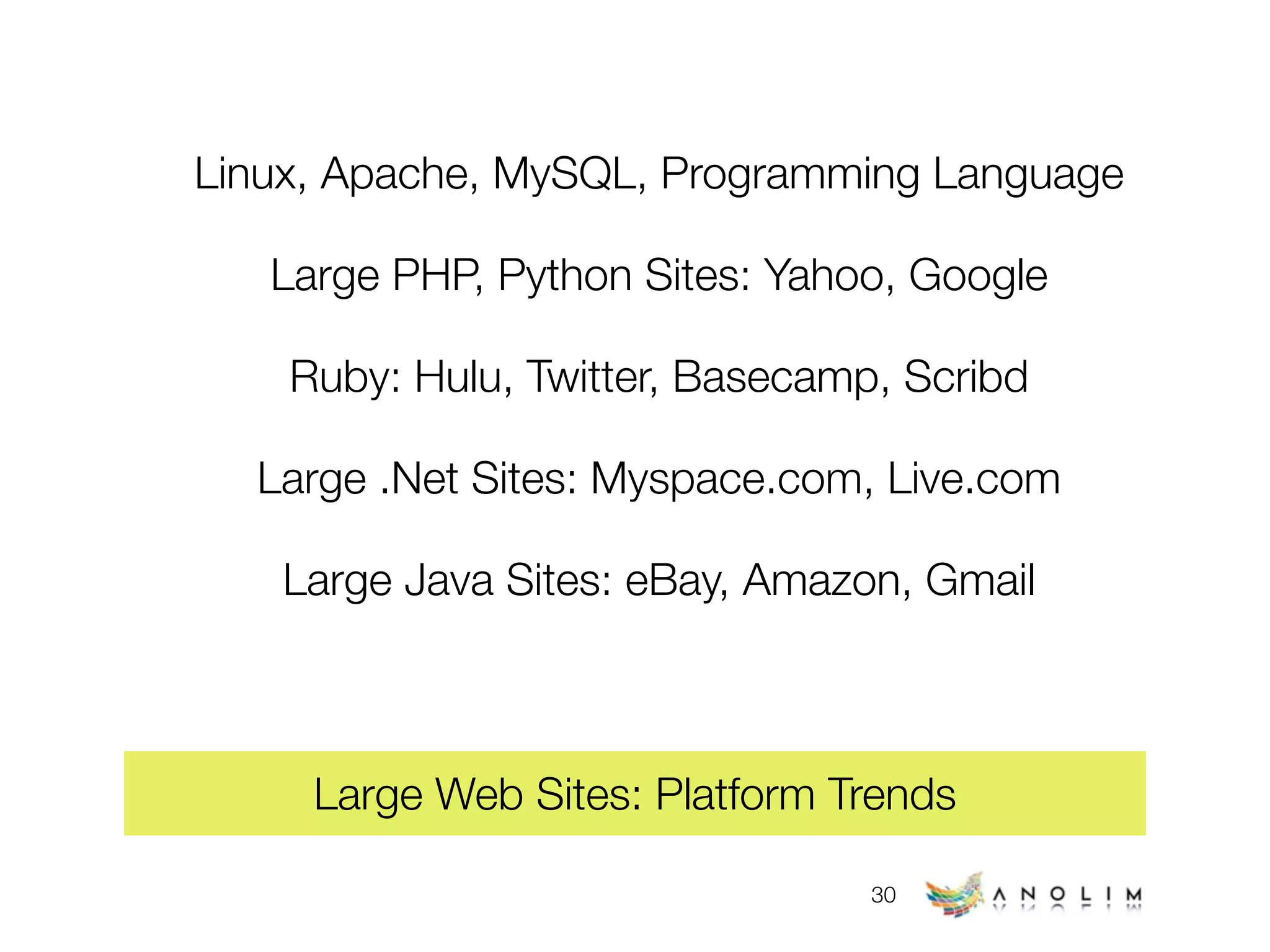
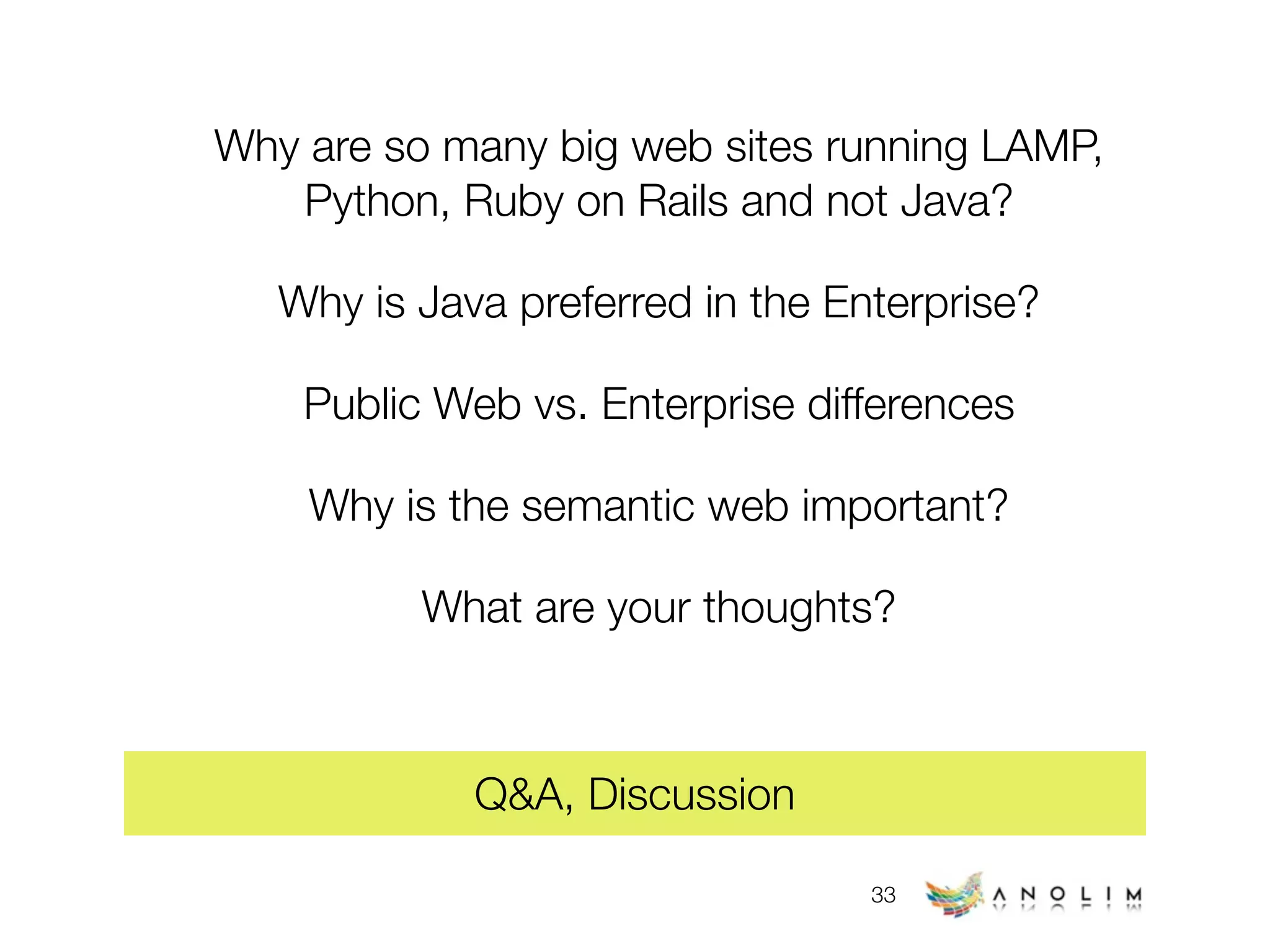
  • #34 Why are so many big web sites running LAMP, Python, Ruby on Rails and not Java? Challenge: large number of evolving and new web interfaces. Large communities are great at implementing these interfaces quickly.Established open source projects typically have large communities. Enterprise: smaller number of stable interfaces: stability and support important