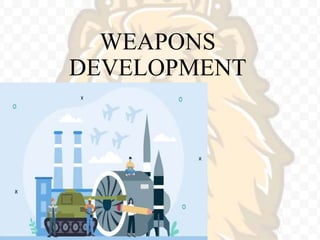
WEAPONS
DEVELOPMENT
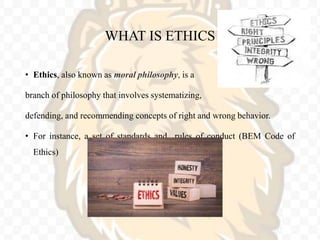
WHAT IS ETHICS
• Ethics, also known as moral philosophy, is a
branch of philosophy that involves systematizing,
defending, and recommending concepts of right and wrong behavior.
• For instance, a set of standards and rules of conduct (BEM Code of
Ethics)
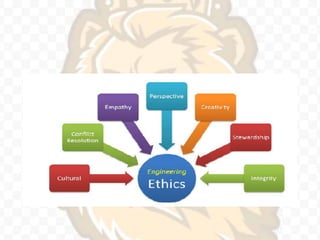
WHAT IS ENGINEERING ETHICS
• Engineering is the process of developing an efficient mechanism which
quickens and eases the work using limited resources, with the help of
technology.
• Ethics are the principles accepted by the society, which also equate to the moral
standards of human beings. An engineer with ethics, can help the society in a
better way.
• Hence the study of Engineering ethics, where such ethics are implemented in
engineering by the engineers, is necessary for the good of the society.
• Engineering Ethics is the study of decisions, policies and values that are morally
desirable in engineering practice and research.
WHAT IS WEAPON DEVELOPMENT
• Based on the size of expenditures, direct or indirect involvement of engineers and
innovative developments, military technology is an area that calls for serious
discussion on engineering ethics.
• For some engineers, their involvement with weapons develop conflicts with
personal conscience, such as knowing that making weapons in a company, is the
job which would be done by someone else if he doesn’t do and that cannot
change the results.
• Though working in a toxic chemical manufacturing plant can make you feel
guilty, the idea abolishing this disastrous thing once you become the CEO of the
company, makes you get the feeling of being in good books, though you might or
might not do that when the time comes.
WEAPONS EVELOPMENT
Engineers involve in weapon development because of the following reasons:
• It gives one job with high salary
• One takes pride and honor in participating in the activities towards the defense
of the nation.
• One believes the he fights a war terrorism and thereby contribute peace and
stability of the country, Ironically the wars have never won peace, only peace
can win peace
• By research and development, the engineer is reducing or eliminating the risk
from enemy weapons and saving one’s country from disaster
• By building-up arsenals and show of force a country can force the rogue towards
regulation
HISTORY OF WEAPONS
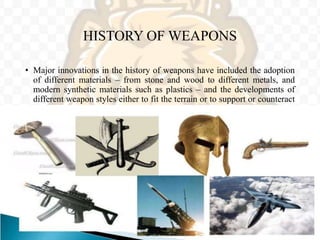
• Major innovations in the history of weapons have included the adoption
of different materials – from stone and wood to different metals, and
modern synthetic materials such as plastics – and the developments of
different weapon styles either to fit the terrain or to support or counteract
different battlefield tactics and defensive equipment.
PREHISTORIC WEAPONS
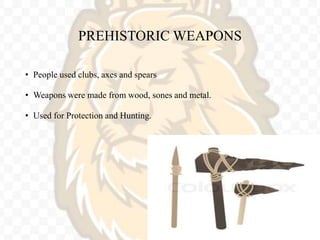
• People used clubs, axes and spears
• Weapons were made from wood, sones and metal.
• Used for Protection and Hunting.
ANCIENT WEAPONS
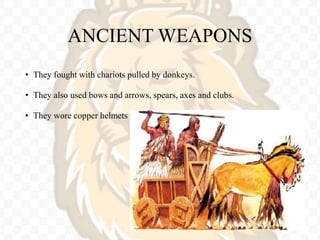
• They fought with chariots pulled by donkeys.
• They also used bows and arrows, spears, axes and clubs.
• They wore copper helmets and carried rectangular shields.
MODERN WEAPONS
• 19th century weapons the industrial reveloution transformed warfare.
• Railways meant armies could be transported much faster than before.
• Sir William Congreve developed the congreve Rocket.
• 1807 a Scot named Alexander Forsyth patented the percussion cap.
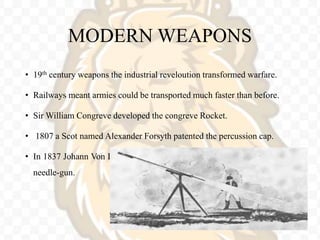
• In 1837 Johann Von Dreyse invented the first breech loading firearm, the
needle-gun.
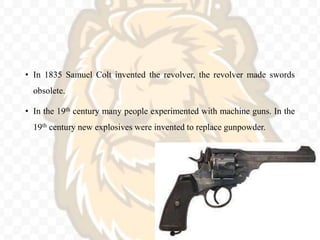
• In 1835 Samuel Colt invented the revolver, the revolver made swords
obsolete.
• In the 19th century many people experimented with machine guns. In the
19th century new explosives were invented to replace gunpowder.
20th Century Weapons
• In September 1916 the British introduced the tank.
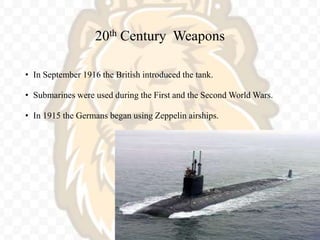
• Submarines were used during the First and the Second World Wars.
• In 1915 the Germans began using Zeppelin airships.
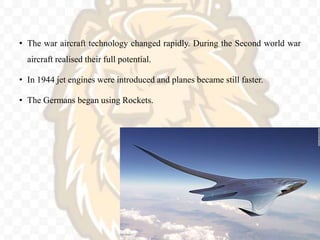
• The war aircraft technology changed rapidly. During the Second world war
aircraft realised their full potential.
• In 1944 jet engines were introduced and planes became still faster.
• The Germans began using Rockets.
• The other development was the atomic bomb.
• In 1952 American scientists invented the much more powerful hydrogen
bomb. The USSr expl
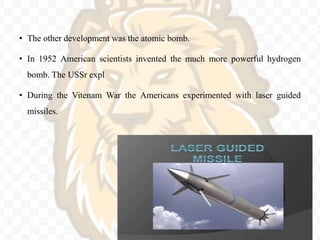
• During the Vitenam War the Americans experimented with laser guided
missiles.
WHY IS WEAPON DEVELOPMENT ETHICS
IS IMPORTANT FOR ENGINEER
• Though war seems to be part of human nature, the development of
weapons engineering can significantly reduce the harm produced by war.
Hopefully, with the help of engineers, future wars can be fought in a
more peaceful way with smarter weapons that protect the interests of
soldiers and civilians alike.
Weapons development

Weapons development

  • 1.
  • 2.
    WHAT IS ETHICS •Ethics, also known as moral philosophy, is a branch of philosophy that involves systematizing, defending, and recommending concepts of right and wrong behavior. • For instance, a set of standards and rules of conduct (BEM Code of Ethics)
  • 3.
    WHAT IS ENGINEERINGETHICS • Engineering is the process of developing an efficient mechanism which quickens and eases the work using limited resources, with the help of technology. • Ethics are the principles accepted by the society, which also equate to the moral standards of human beings. An engineer with ethics, can help the society in a better way. • Hence the study of Engineering ethics, where such ethics are implemented in engineering by the engineers, is necessary for the good of the society. • Engineering Ethics is the study of decisions, policies and values that are morally desirable in engineering practice and research.
  • 5.
    WHAT IS WEAPONDEVELOPMENT • Based on the size of expenditures, direct or indirect involvement of engineers and innovative developments, military technology is an area that calls for serious discussion on engineering ethics. • For some engineers, their involvement with weapons develop conflicts with personal conscience, such as knowing that making weapons in a company, is the job which would be done by someone else if he doesn’t do and that cannot change the results. • Though working in a toxic chemical manufacturing plant can make you feel guilty, the idea abolishing this disastrous thing once you become the CEO of the company, makes you get the feeling of being in good books, though you might or might not do that when the time comes.
  • 6.
    WEAPONS EVELOPMENT Engineers involvein weapon development because of the following reasons: • It gives one job with high salary • One takes pride and honor in participating in the activities towards the defense of the nation. • One believes the he fights a war terrorism and thereby contribute peace and stability of the country, Ironically the wars have never won peace, only peace can win peace • By research and development, the engineer is reducing or eliminating the risk from enemy weapons and saving one’s country from disaster • By building-up arsenals and show of force a country can force the rogue towards regulation
  • 7.
    HISTORY OF WEAPONS •Major innovations in the history of weapons have included the adoption of different materials – from stone and wood to different metals, and modern synthetic materials such as plastics – and the developments of different weapon styles either to fit the terrain or to support or counteract different battlefield tactics and defensive equipment.
  • 8.
    PREHISTORIC WEAPONS • Peopleused clubs, axes and spears • Weapons were made from wood, sones and metal. • Used for Protection and Hunting.
  • 9.
    ANCIENT WEAPONS • Theyfought with chariots pulled by donkeys. • They also used bows and arrows, spears, axes and clubs. • They wore copper helmets and carried rectangular shields.
  • 10.
    MODERN WEAPONS • 19thcentury weapons the industrial reveloution transformed warfare. • Railways meant armies could be transported much faster than before. • Sir William Congreve developed the congreve Rocket. • 1807 a Scot named Alexander Forsyth patented the percussion cap. • In 1837 Johann Von Dreyse invented the first breech loading firearm, the needle-gun.
  • 11.
    • In 1835Samuel Colt invented the revolver, the revolver made swords obsolete. • In the 19th century many people experimented with machine guns. In the 19th century new explosives were invented to replace gunpowder.
  • 12.
    20th Century Weapons •In September 1916 the British introduced the tank. • Submarines were used during the First and the Second World Wars. • In 1915 the Germans began using Zeppelin airships.
  • 13.
    • The waraircraft technology changed rapidly. During the Second world war aircraft realised their full potential. • In 1944 jet engines were introduced and planes became still faster. • The Germans began using Rockets.
  • 14.
    • The otherdevelopment was the atomic bomb. • In 1952 American scientists invented the much more powerful hydrogen bomb. The USSr expl • During the Vitenam War the Americans experimented with laser guided missiles.
  • 15.
    WHY IS WEAPONDEVELOPMENT ETHICS IS IMPORTANT FOR ENGINEER • Though war seems to be part of human nature, the development of weapons engineering can significantly reduce the harm produced by war. Hopefully, with the help of engineers, future wars can be fought in a more peaceful way with smarter weapons that protect the interests of soldiers and civilians alike.