We made Agile Look Hard
And why it doesn’t have to be
We made Agile look hard - the story (pre-covid)
- Working in a large company with a US Parent company
- Embarked on an agile @ scale journey
- Hired Consultants who were located in a different state - low availability
- Started with Scrum - by the book, in IT complete with hardening sprint
- Scaled through one of the Less complex scaling models
- Training on demand - in-house
- Organic expansion of teams from IT outwards
- Creation of an Agile culture bubble within organisation
- Agility of the system exceeded the capability of Leadership
- Misaligned Organisation Culture and Command and Control Leadership
- Lack of alignment between Product and Development
- Lack of alignment between HR and Agile
- Ultimately transformation died out - but with pockets of success
What did we get right?
- Embraced experimentation
- Team Self-selection
- Team engagement
- Leadership development
- Focused on customer outcomes
- Highly responsive to change
- Engaged team at all levels of
the organisation
- Leadership misalignment
- Transformation “insourced”
- No transformation roadmap
- Coaches as experts
- Top-down assessments
- No training plan
- Agile teams as gold standard
- Focus on process over people
What did we get wrong?
Are we the only ones that did that?
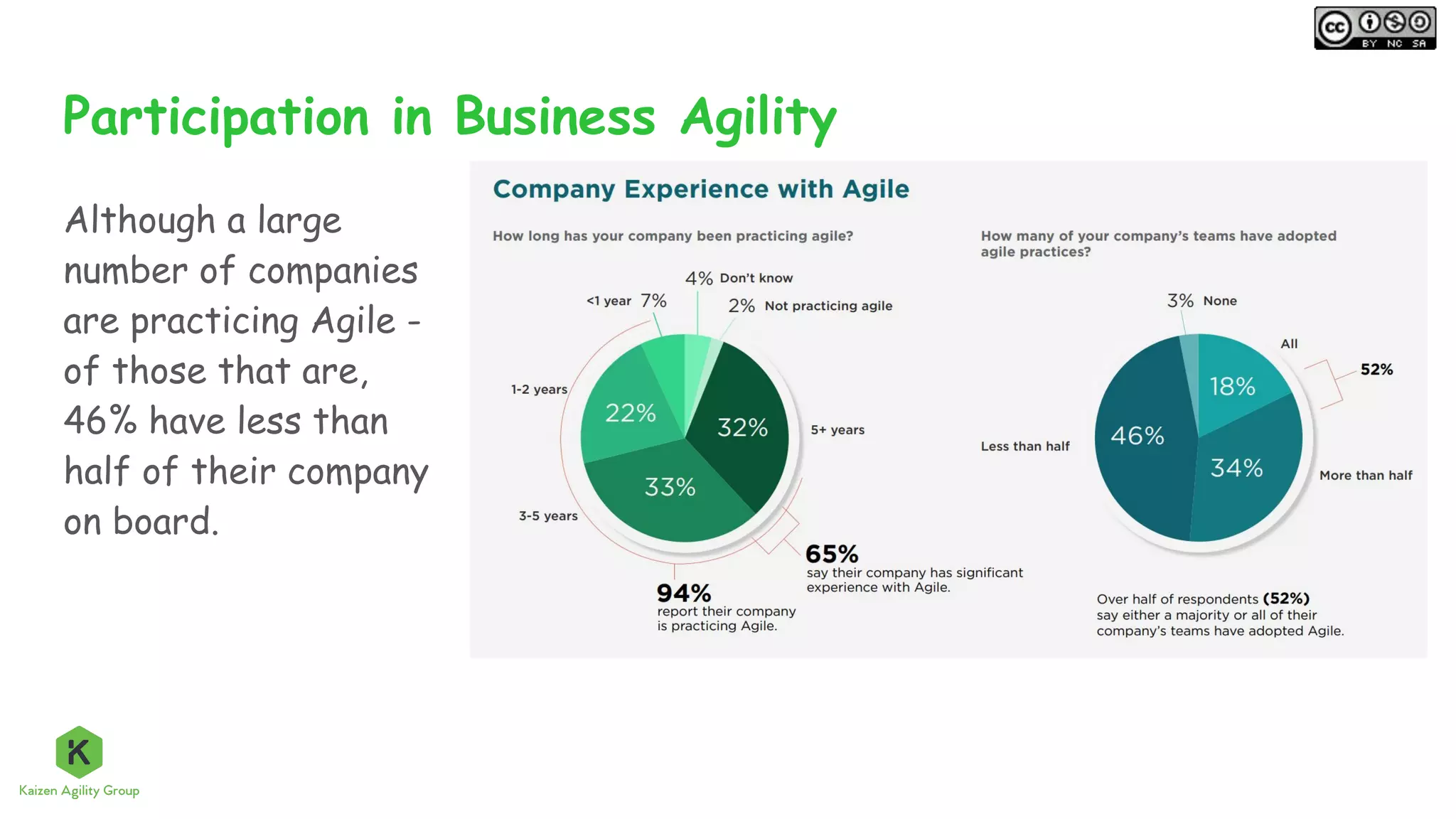
Although a large
number of companies
are practicing Agile -
of those that are,
46% have less than
half of their company
on board.
Participation in Business Agility
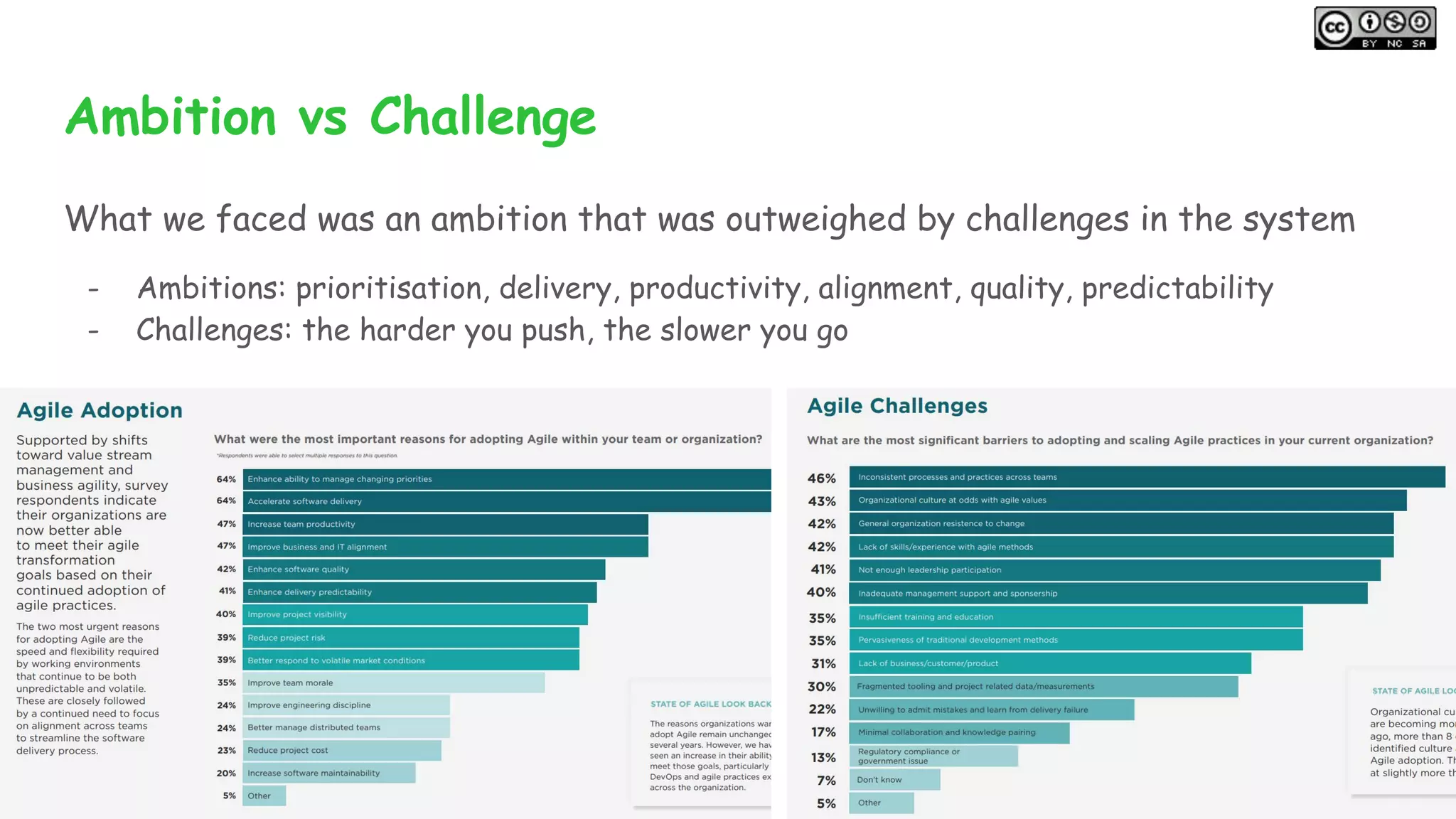
What we faced was an ambition that was outweighed by challenges in the system
- Ambitions: prioritisation, delivery, productivity, alignment, quality, predictability
- Challenges: the harder you push, the slower you go
Ambition vs Challenge
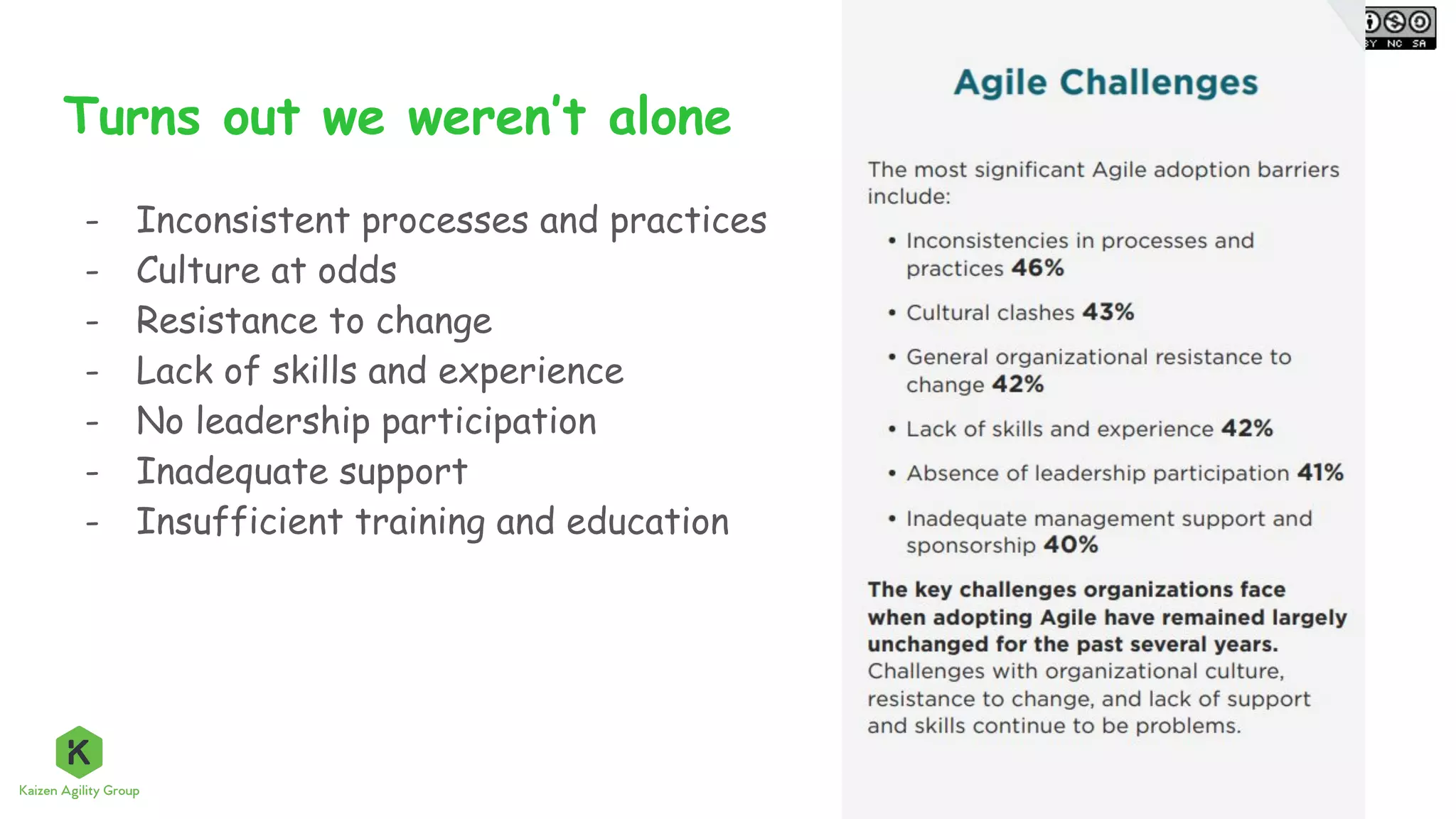
- Inconsistent processes and practices
- Culture at odds
- Resistance to change
- Lack of skills and experience
- No leadership participation
- Inadequate support
- Insufficient training and education
Turns out we weren’t alone
We made Agile Look Hard
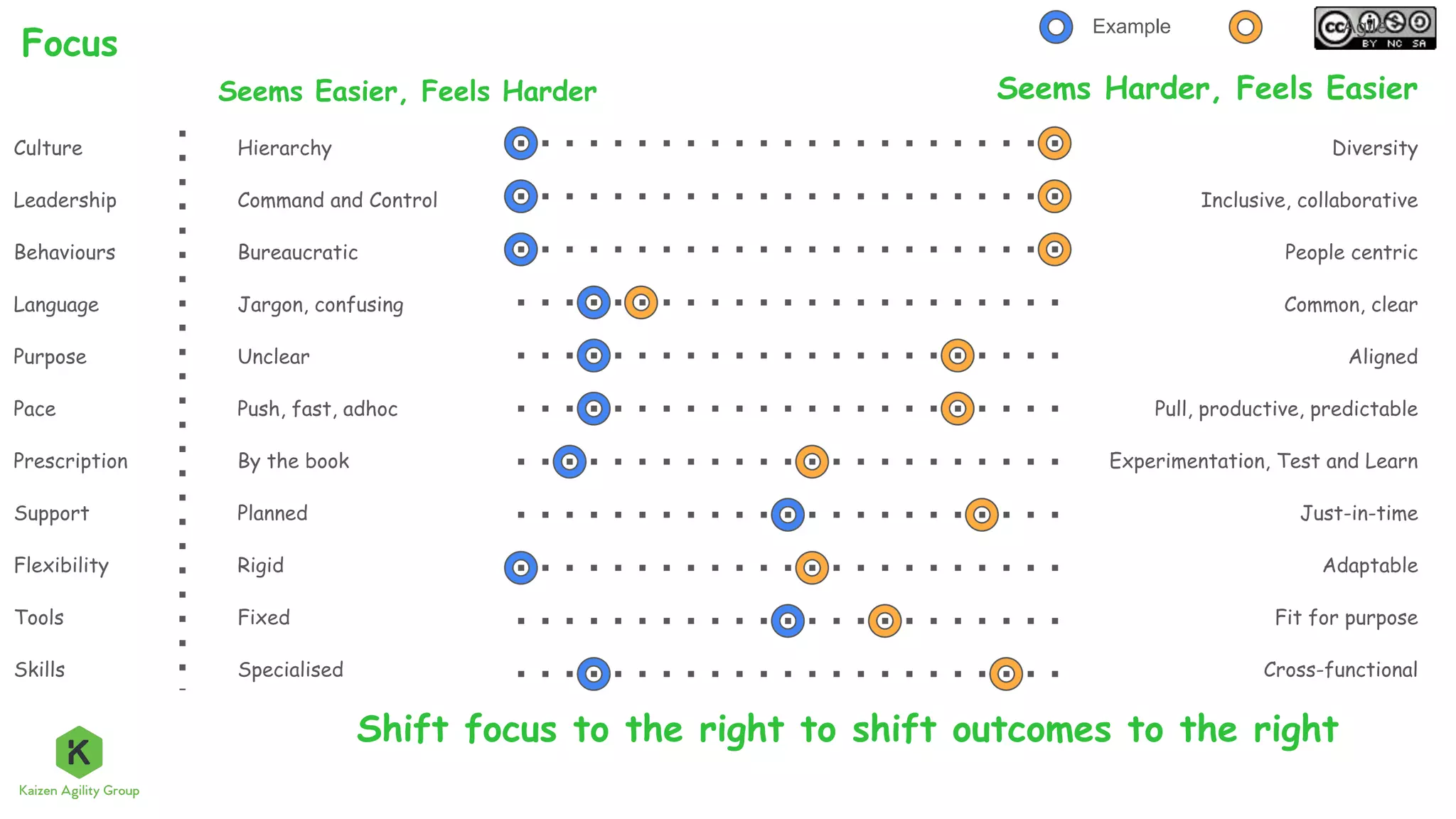
Seems Easier, Feels Harder
Hierarchy
Command and Control
Bureaucratic
Jargon, confusing
Unclear
Push, fast, adhoc
By the book
Planned
Rigid
Fixed
Specialised
Diversity
Inclusive, collaborative
People centric
Common, clear
Aligned
Pull, productive, predictable
Experimentation, Test and Learn
Just-in-time
Adaptable
Fit for purpose
Cross-functional
Seems Harder, Feels Easier
Culture
Leadership
Behaviours
Language
Purpose
Pace
Prescription
Support
Flexibility
Tools
Skills
Focus
Example Agile
Shift focus to the right to shift outcomes to the right
And why it doesn’t have to be
(hard)
Here is how we can make agility easy
- Co-design an organisational growth plan - not a transformation roadmap
- Focus on your purpose, your north star, not agility and not “Agile”
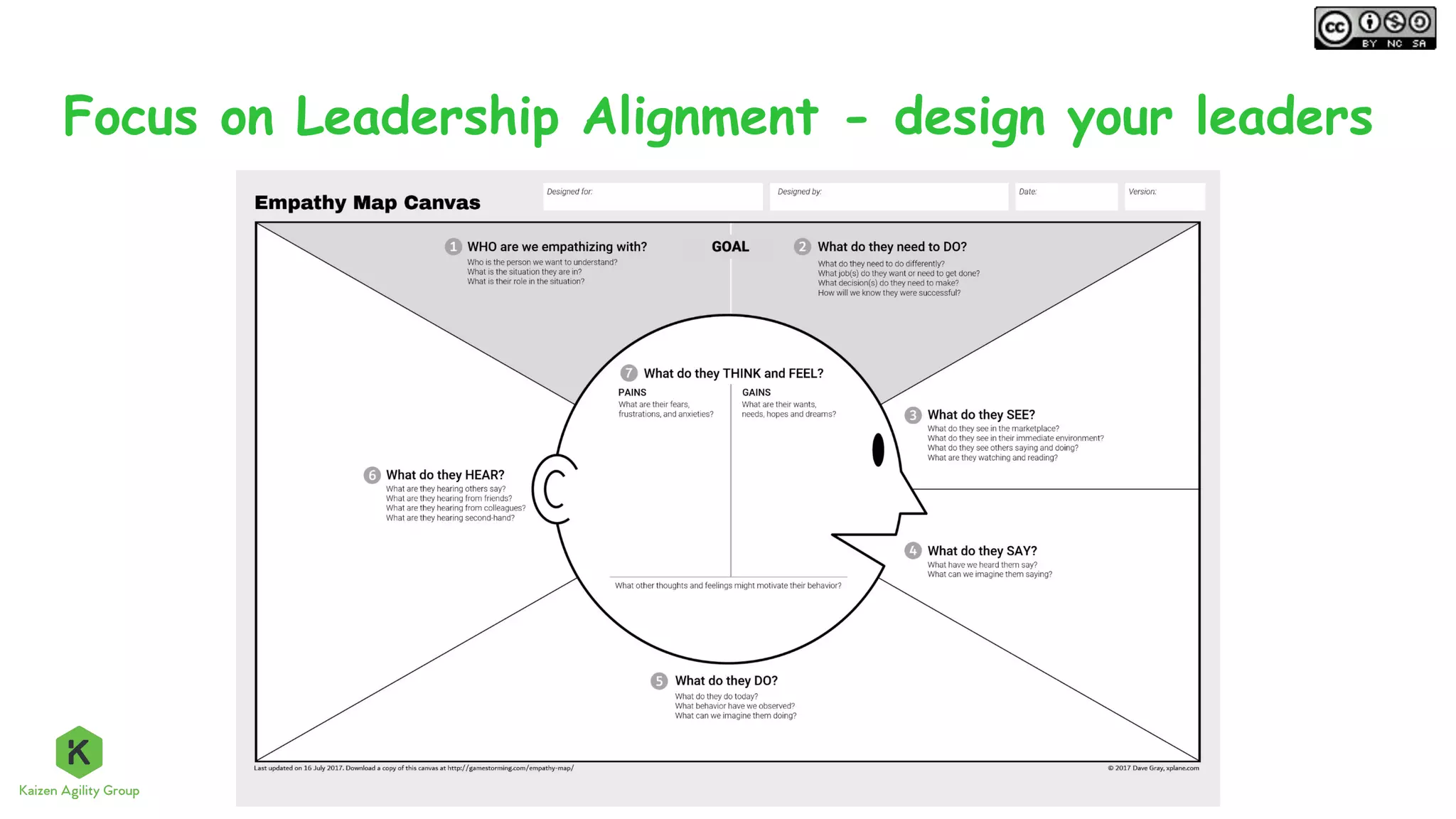
- Focus on Leadership Alignment - design your leaders
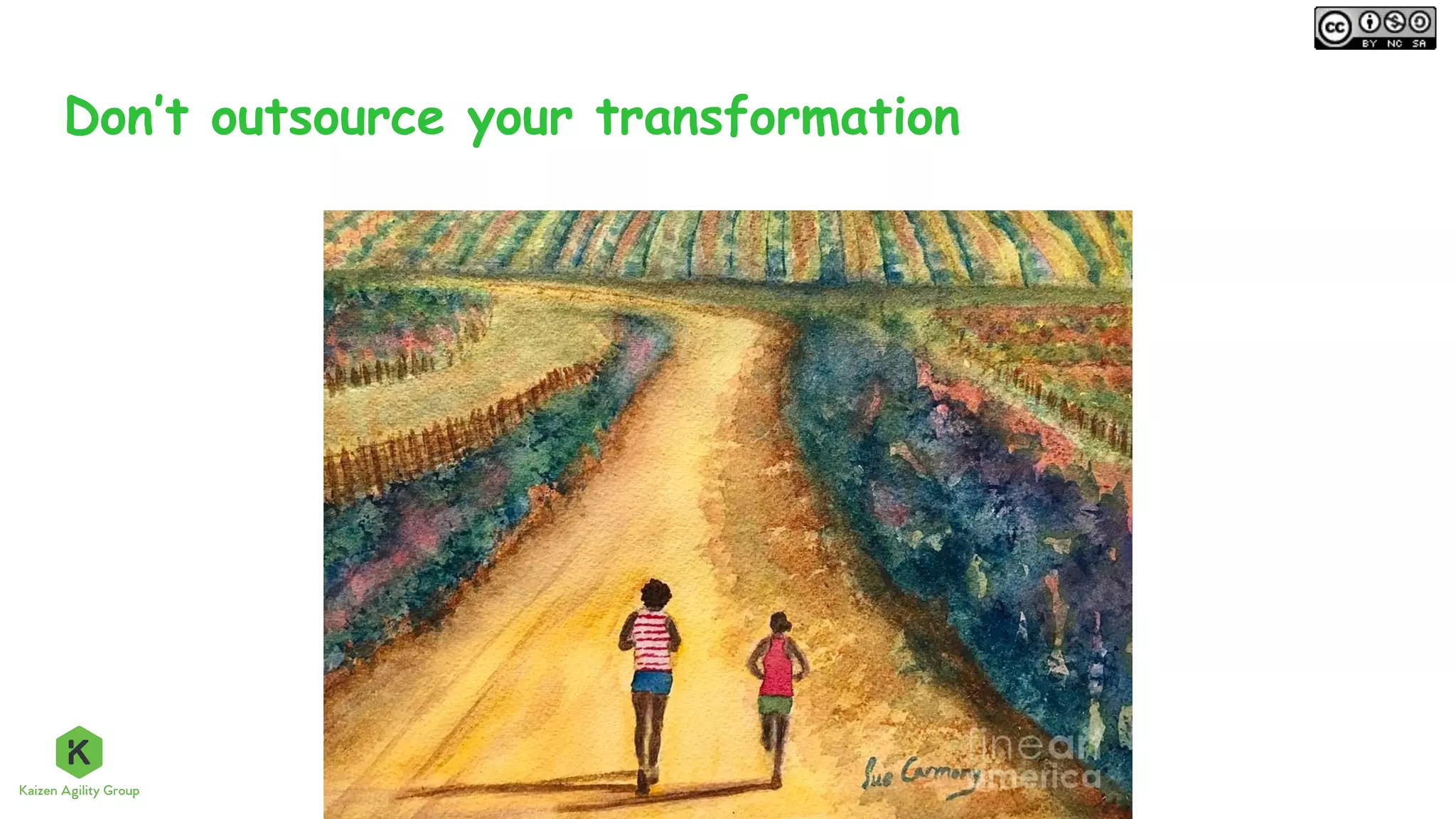
- Don’t outsource your transformation
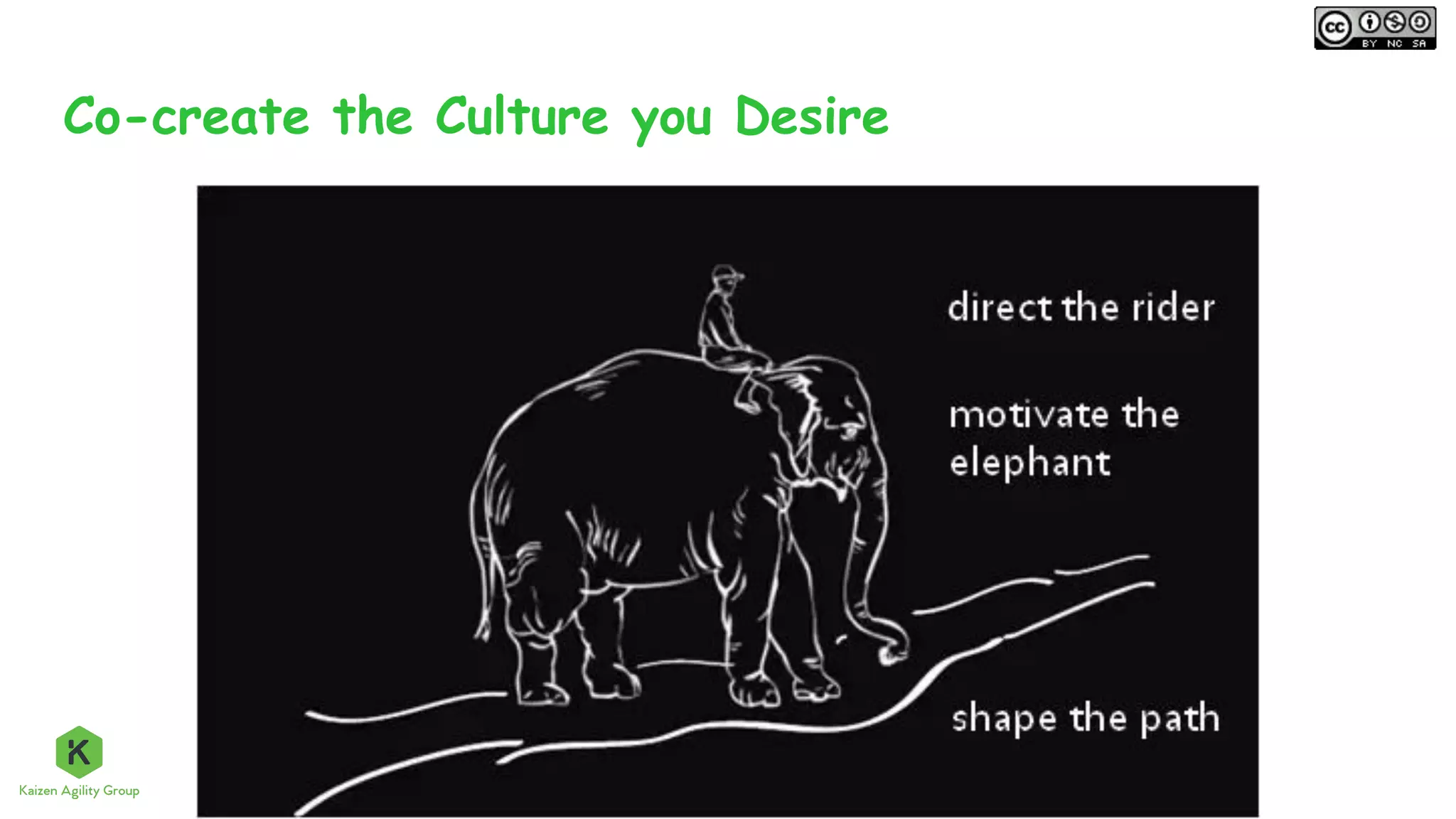
- Co-create the Culture you Desire
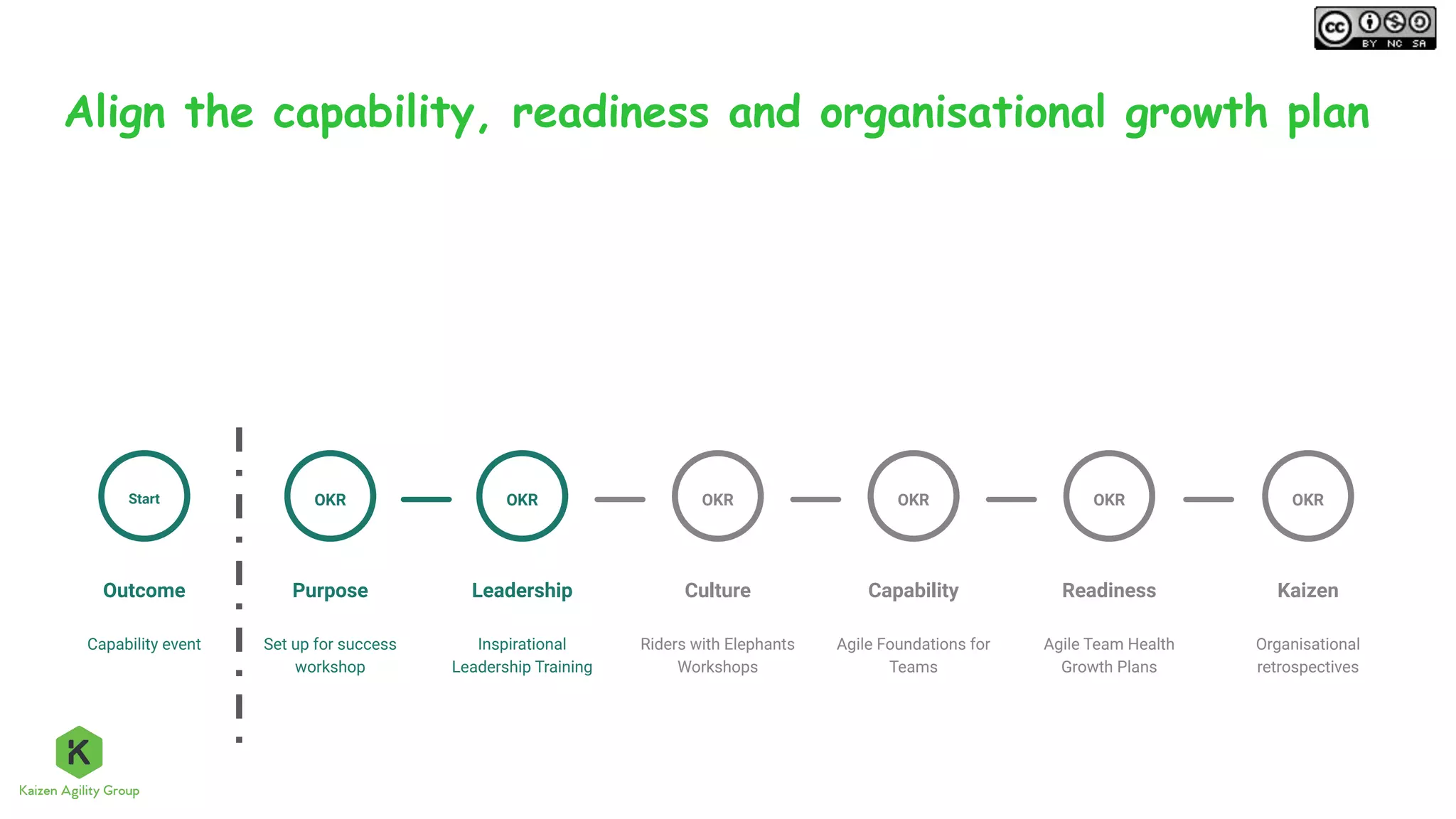
- Align the capability, readiness and organisational growth plan
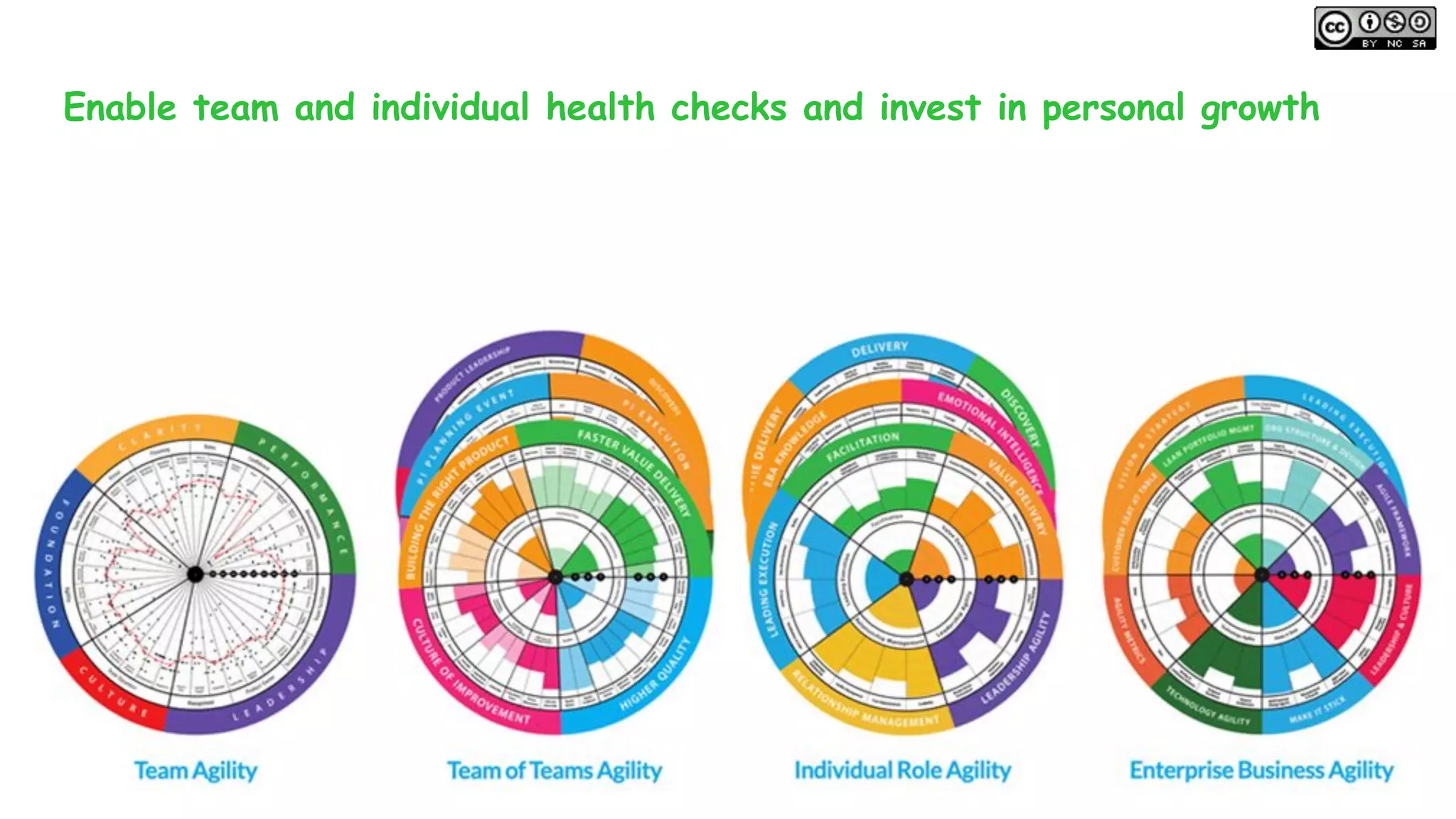
- Enable team and individual health checks and invest in personal growth
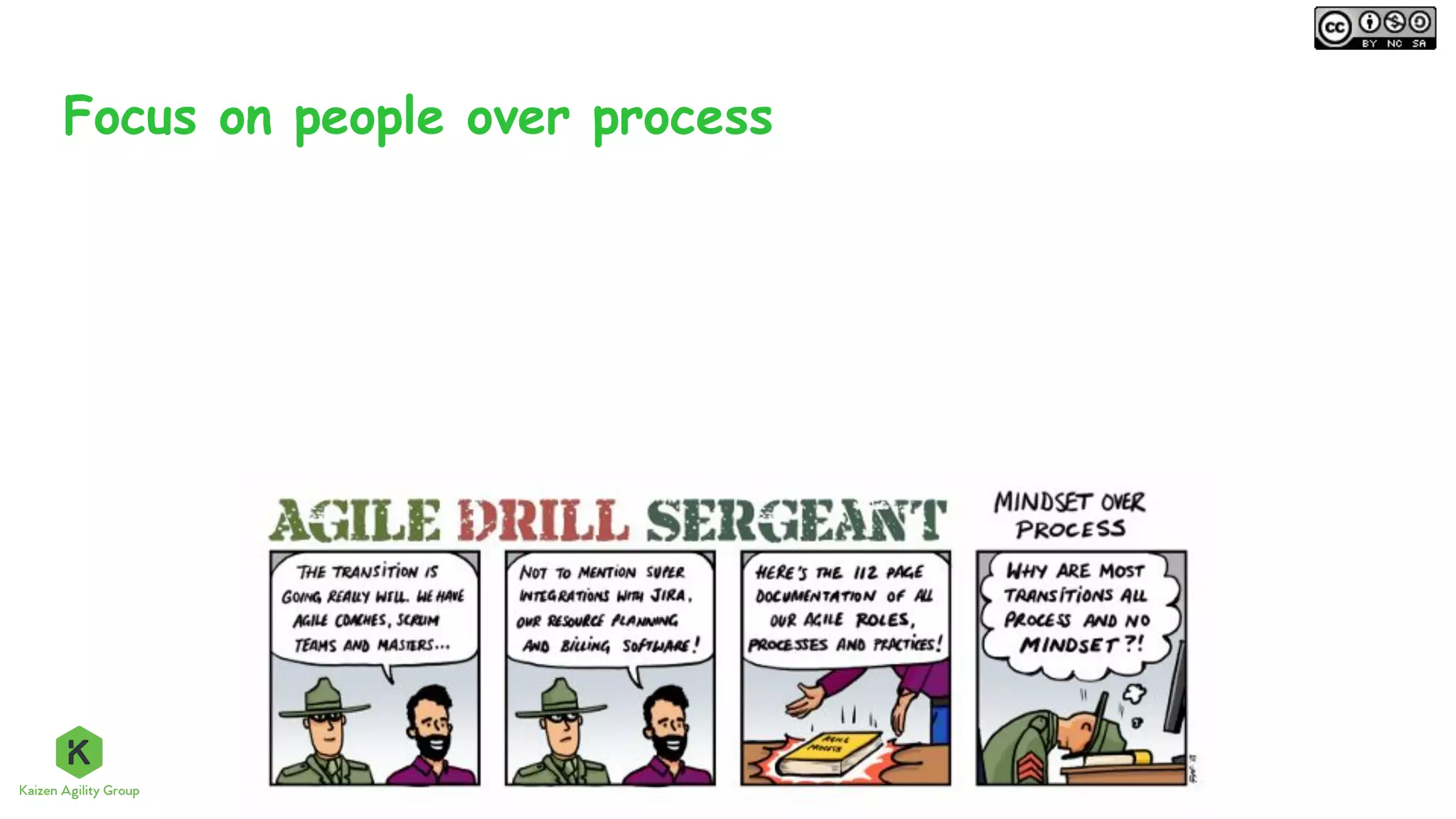
- Focus on people over process
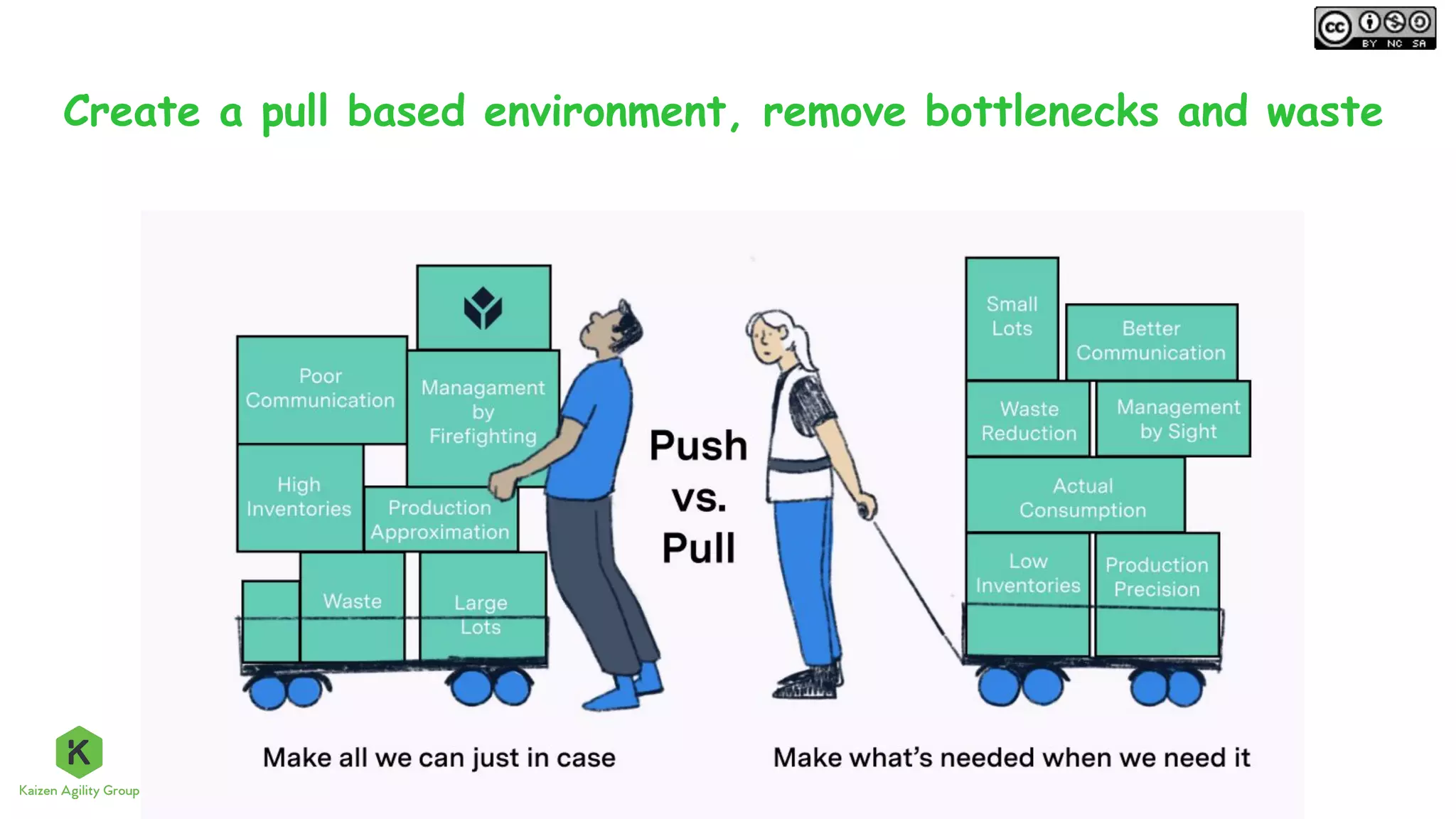
- Create a pull based environment, remove bottlenecks and waste
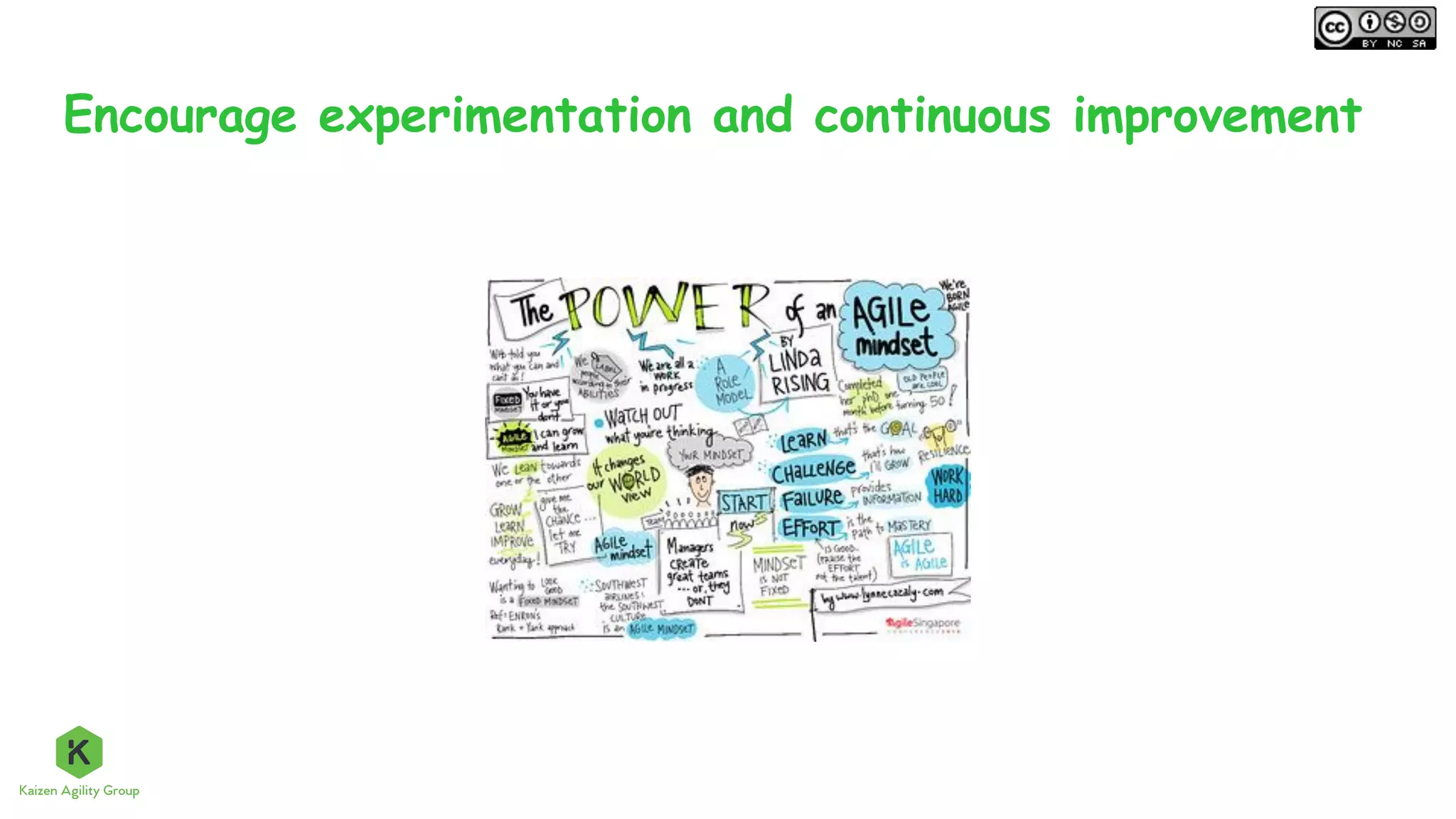
- Encourage experimentation and continuous improvement
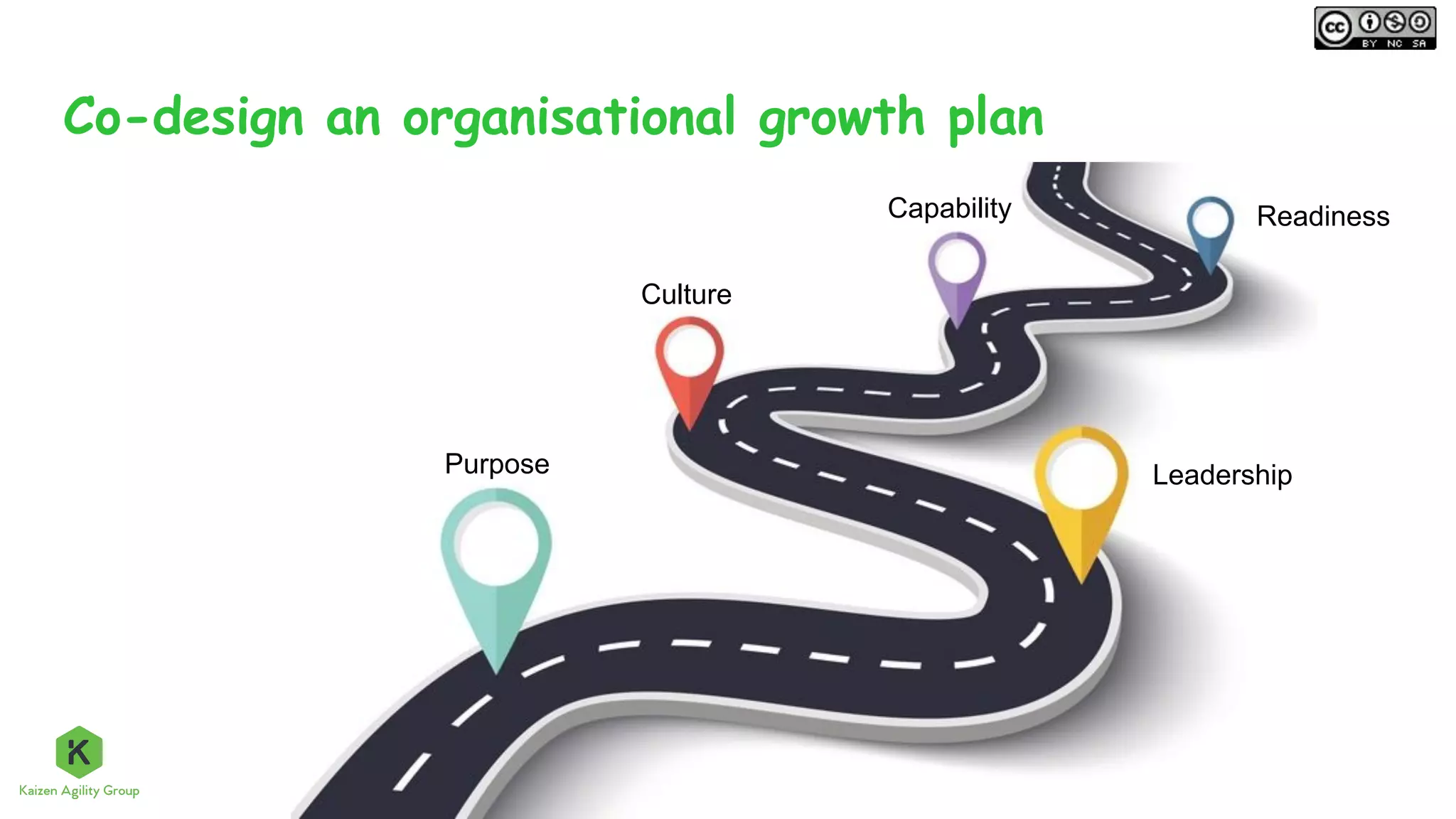
Co-design an organisational growth plan
Purpose Leadership
Culture
Capability Readiness
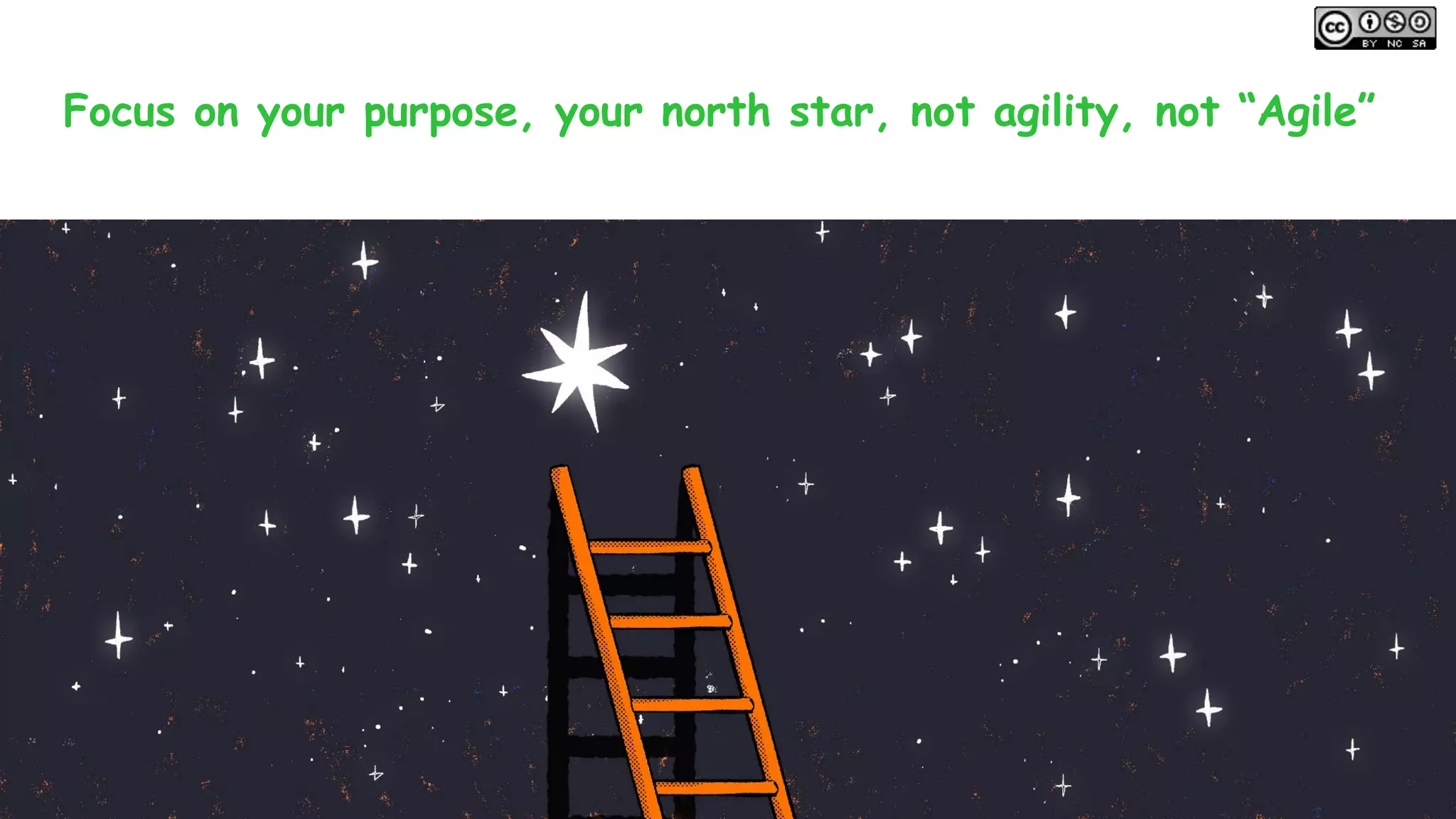
Focus on your purpose, your north star, not agility, not “Agile”
Focus on Leadership Alignment - design your leaders
Don’t outsource your transformation
Co-create the Culture you Desire
Align the capability, readiness and organisational growth plan
OKR
Purpose
Set up for success
workshop
Leadership
Inspirational
Leadership Training
OKR
Culture
Riders with Elephants
Workshops
OKR
Capability
Agile Foundations for
Teams
OKR
Readiness
Agile Team Health
Growth Plans
OKR
Kaizen
Organisational
retrospectives
OKR
Start
Outcome
Capability event
Enable team and individual health checks and invest in personal growth
Focus on people over process
Create a pull based environment, remove bottlenecks and waste
Encourage experimentation and continuous improvement
And just remember
- Try your best with the skills and knowledge you have at the time
- Take time regularly to reflect
- And if it isn’t working, try something different
- You’re always succeeding more than you’re failing
- Never give up
- You can’t fail
christian.vanstom@gmail.com

We made agile look hard & why it doesn't have to be

  • 1.
    We made AgileLook Hard And why it doesn’t have to be
  • 2.
    We made Agilelook hard - the story (pre-covid) - Working in a large company with a US Parent company - Embarked on an agile @ scale journey - Hired Consultants who were located in a different state - low availability - Started with Scrum - by the book, in IT complete with hardening sprint - Scaled through one of the Less complex scaling models - Training on demand - in-house - Organic expansion of teams from IT outwards - Creation of an Agile culture bubble within organisation - Agility of the system exceeded the capability of Leadership - Misaligned Organisation Culture and Command and Control Leadership - Lack of alignment between Product and Development - Lack of alignment between HR and Agile - Ultimately transformation died out - but with pockets of success
  • 3.
    What did weget right? - Embraced experimentation - Team Self-selection - Team engagement - Leadership development - Focused on customer outcomes - Highly responsive to change - Engaged team at all levels of the organisation - Leadership misalignment - Transformation “insourced” - No transformation roadmap - Coaches as experts - Top-down assessments - No training plan - Agile teams as gold standard - Focus on process over people What did we get wrong? Are we the only ones that did that?
  • 4.
    Although a large numberof companies are practicing Agile - of those that are, 46% have less than half of their company on board. Participation in Business Agility
  • 5.
    What we facedwas an ambition that was outweighed by challenges in the system - Ambitions: prioritisation, delivery, productivity, alignment, quality, predictability - Challenges: the harder you push, the slower you go Ambition vs Challenge
  • 6.
    - Inconsistent processesand practices - Culture at odds - Resistance to change - Lack of skills and experience - No leadership participation - Inadequate support - Insufficient training and education Turns out we weren’t alone
  • 7.
    We made AgileLook Hard
  • 8.
    Seems Easier, FeelsHarder Hierarchy Command and Control Bureaucratic Jargon, confusing Unclear Push, fast, adhoc By the book Planned Rigid Fixed Specialised Diversity Inclusive, collaborative People centric Common, clear Aligned Pull, productive, predictable Experimentation, Test and Learn Just-in-time Adaptable Fit for purpose Cross-functional Seems Harder, Feels Easier Culture Leadership Behaviours Language Purpose Pace Prescription Support Flexibility Tools Skills Focus Example Agile Shift focus to the right to shift outcomes to the right
  • 9.
    And why itdoesn’t have to be (hard)
  • 10.
    Here is howwe can make agility easy - Co-design an organisational growth plan - not a transformation roadmap - Focus on your purpose, your north star, not agility and not “Agile” - Focus on Leadership Alignment - design your leaders - Don’t outsource your transformation - Co-create the Culture you Desire - Align the capability, readiness and organisational growth plan - Enable team and individual health checks and invest in personal growth - Focus on people over process - Create a pull based environment, remove bottlenecks and waste - Encourage experimentation and continuous improvement
  • 11.
    Co-design an organisationalgrowth plan Purpose Leadership Culture Capability Readiness
  • 12.
    Focus on yourpurpose, your north star, not agility, not “Agile”
  • 13.
    Focus on LeadershipAlignment - design your leaders
  • 14.
    Don’t outsource yourtransformation
  • 15.
  • 16.
    Align the capability,readiness and organisational growth plan OKR Purpose Set up for success workshop Leadership Inspirational Leadership Training OKR Culture Riders with Elephants Workshops OKR Capability Agile Foundations for Teams OKR Readiness Agile Team Health Growth Plans OKR Kaizen Organisational retrospectives OKR Start Outcome Capability event
  • 17.
    Enable team andindividual health checks and invest in personal growth
  • 18.
    Focus on peopleover process
  • 19.
    Create a pullbased environment, remove bottlenecks and waste
  • 20.
    Encourage experimentation andcontinuous improvement
  • 21.
    And just remember -Try your best with the skills and knowledge you have at the time - Take time regularly to reflect - And if it isn’t working, try something different - You’re always succeeding more than you’re failing - Never give up - You can’t fail christian.vanstom@gmail.com