Watson Guiding The Way
Using cognitive computing
to discover the secrets behind
successful guide dogs
Jane Russenberger, BS
Guiding Eyes for the Blind
Yorktown Heights, NY
October 24, 2016
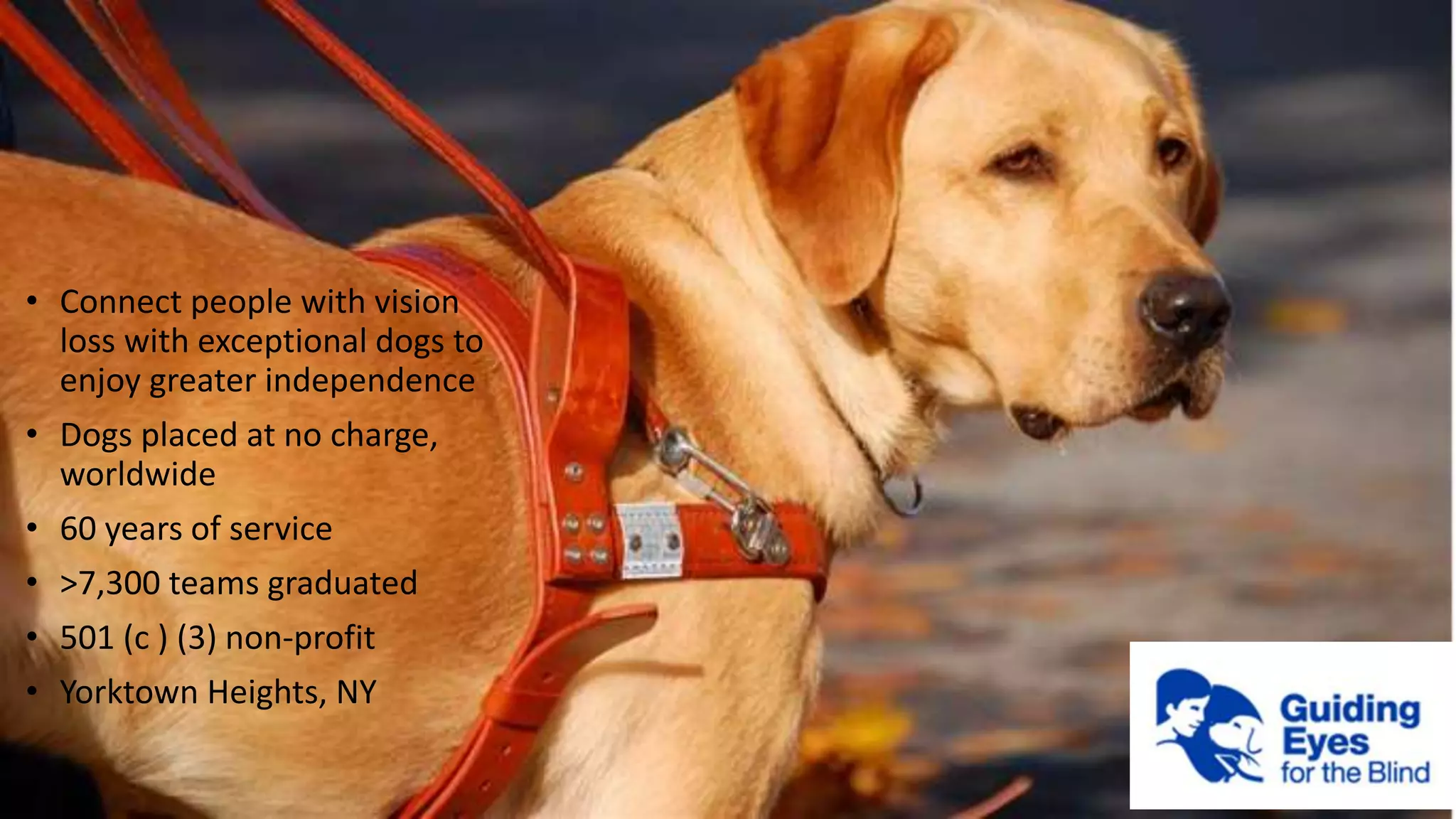
• Connect people with vision
loss with exceptional dogs to
enjoy greater independence
• Dogs placed at no charge,
worldwide
• 60 years of service
• >7,300 teams graduated
• 501 (c ) (3) non-profit
• Yorktown Heights, NY
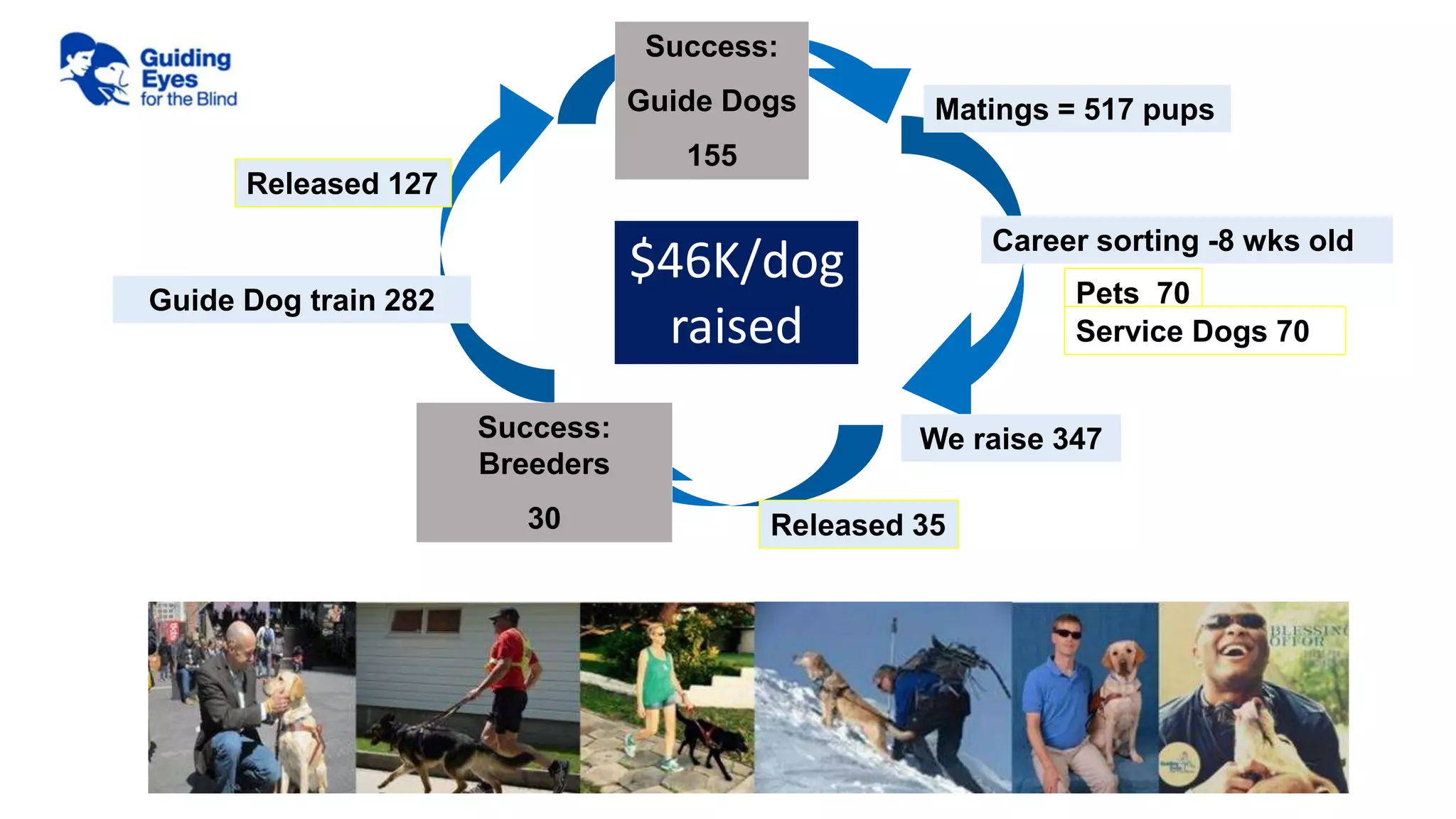
Volunteer
puppy raisers
Success:
Breeders
30
Matings = 517 pups
We raise 347
Success:
Guide Dogs
155
Released 35
Pets 70
Service Dogs 70
Career sorting -8 wks old
Guide Dog train 282
Released 127
$46K/dog
raised
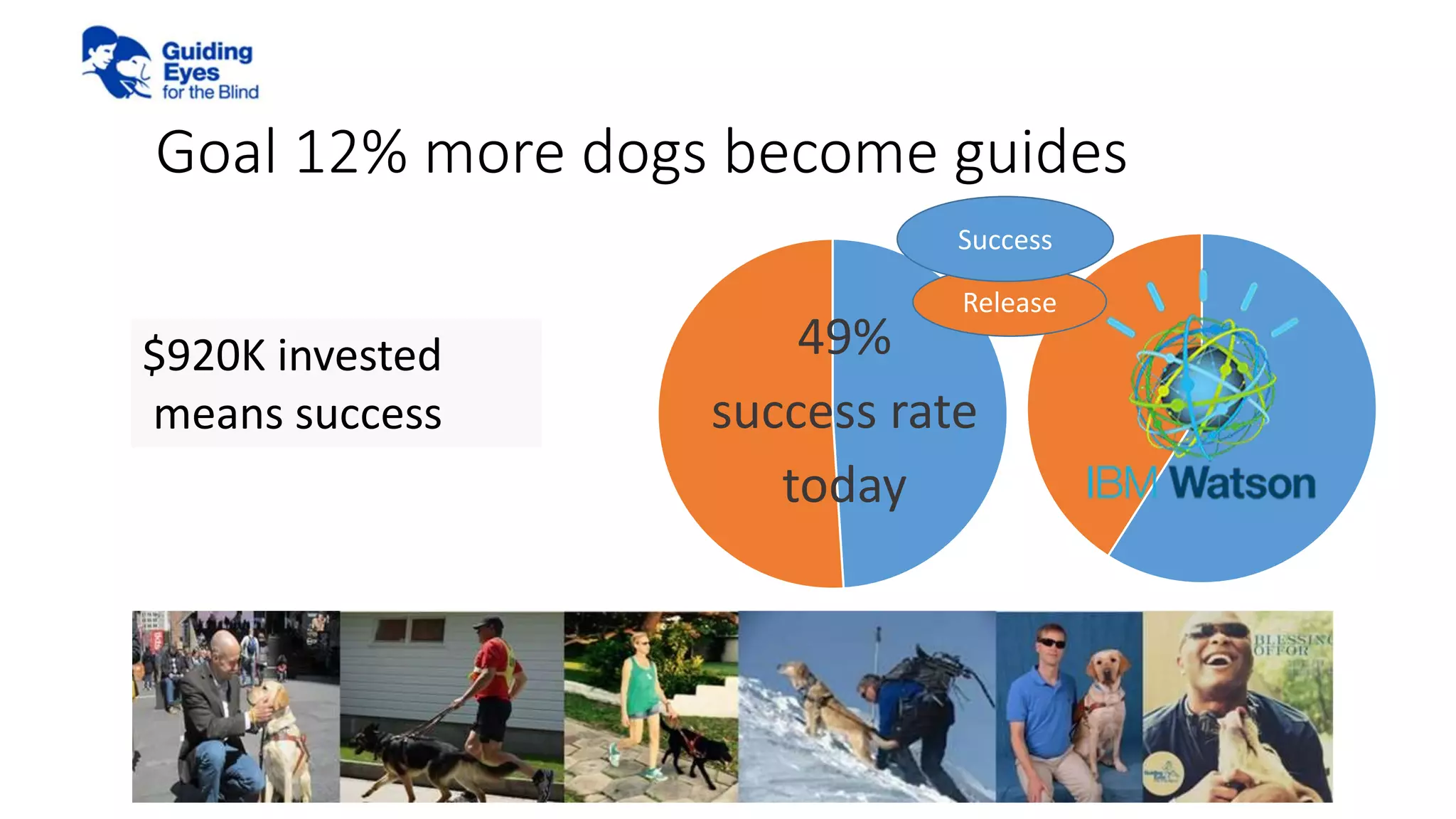
Goal 12% more dogs become guides
49%
success rate
today
$920K invested
means success
Release
Success
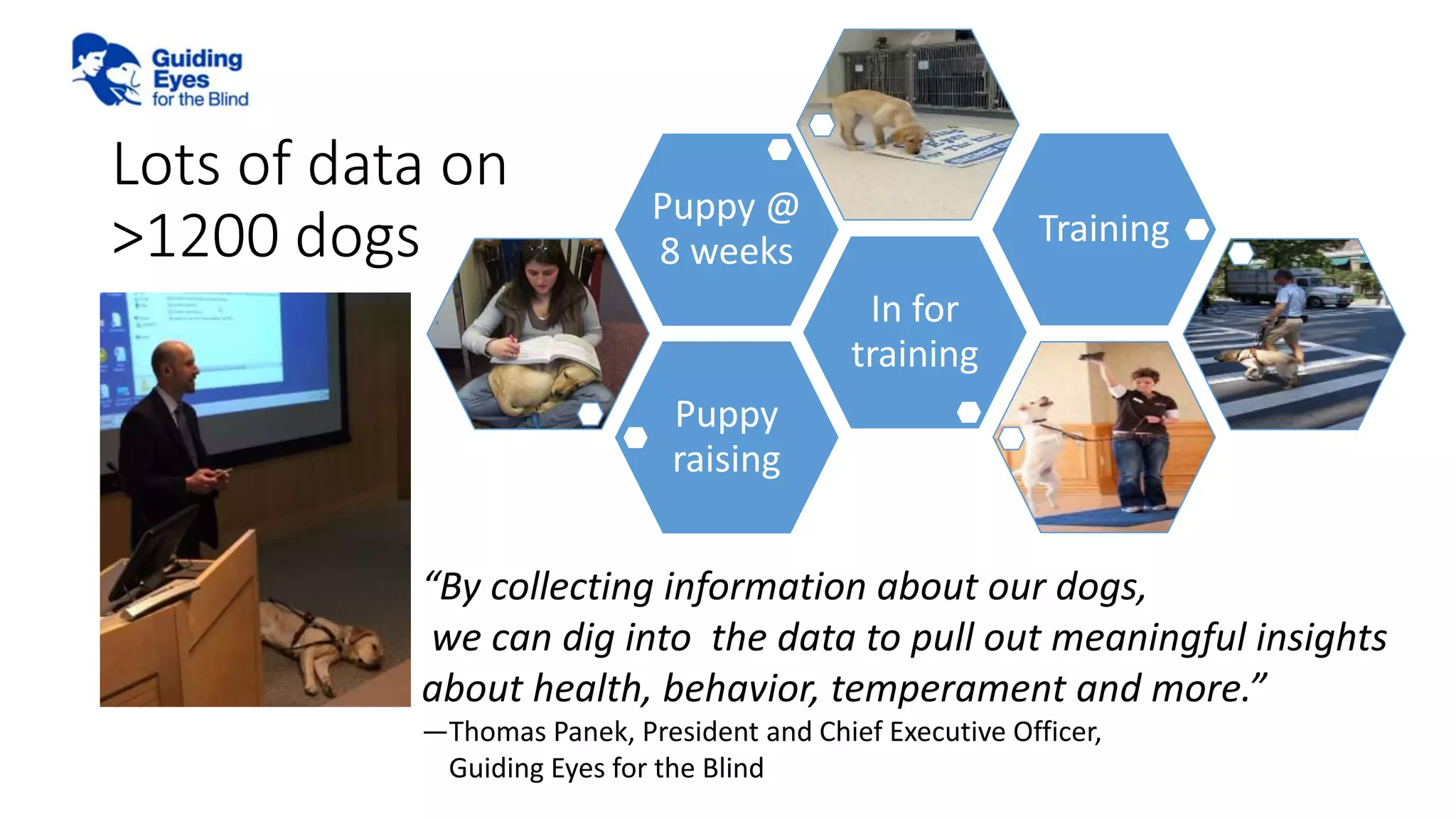
Lots of data on
>1200 dogs
Puppy
raising
In for
training
Puppy @
8 weeks
Training
“By collecting information about our dogs,
we can dig into the data to pull out meaningful insights
about health, behavior, temperament and more.”
—Thomas Panek, President and Chief Executive Officer,
Guiding Eyes for the Blind
6
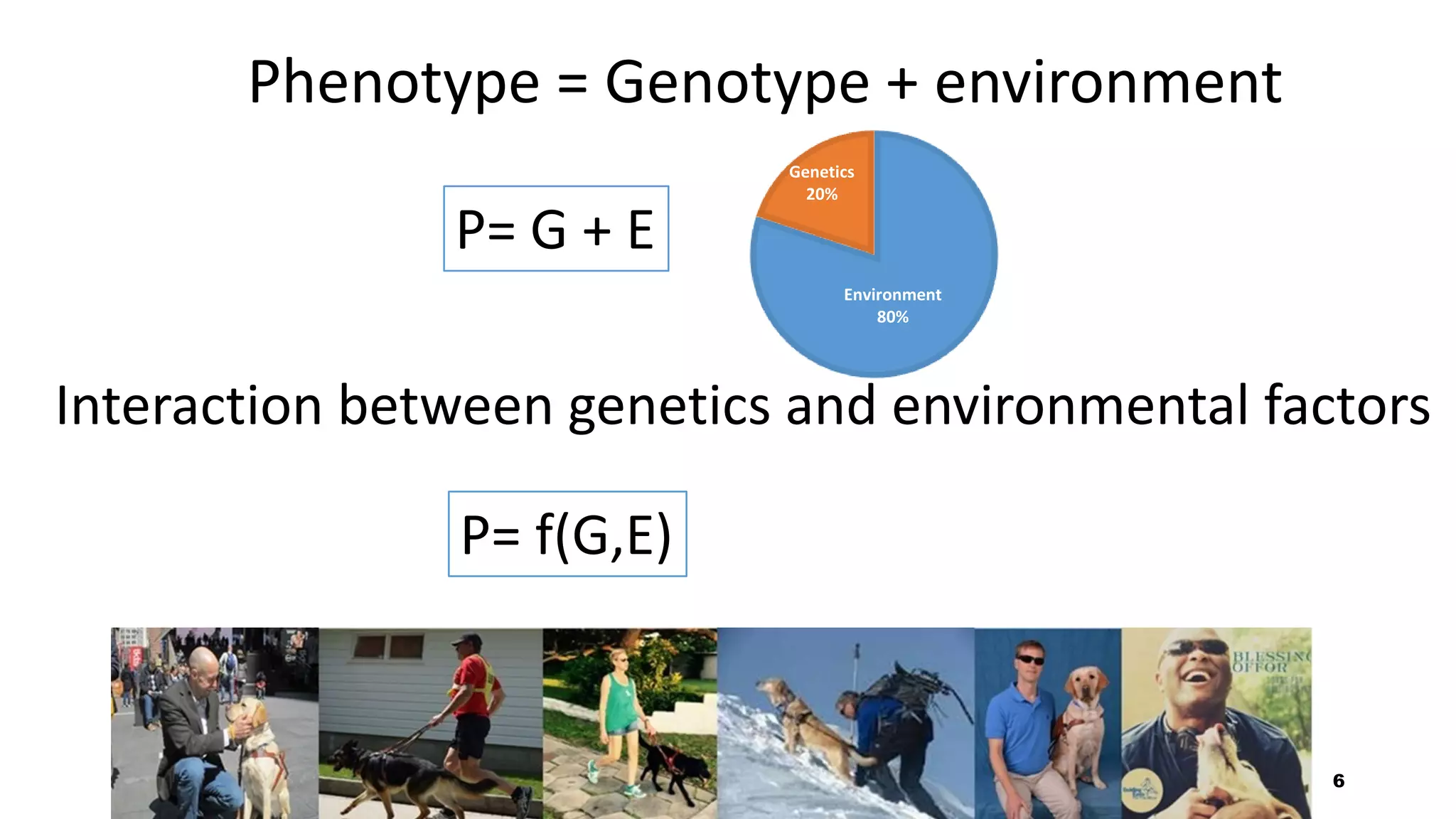
Phenotype = Genotype + environment
P= G + E
Interaction between genetics and environmental factors
P= f(G,E)
Environment
80%
Genetics
20%
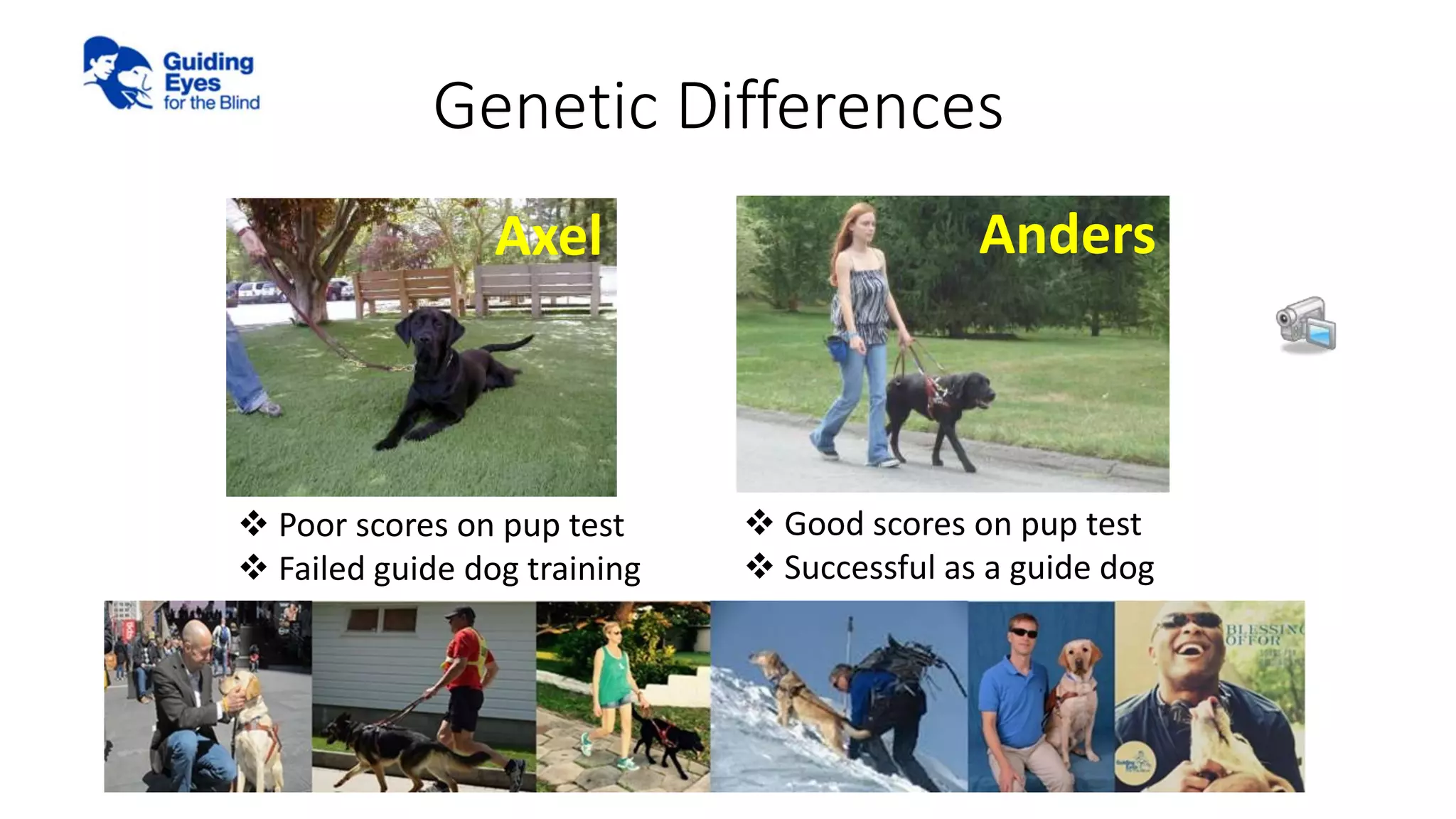
Genetic Differences
 Poor scores on pup test
 Failed guide dog training
 Good scores on pup test
 Successful as a guide dog
Axel Anders
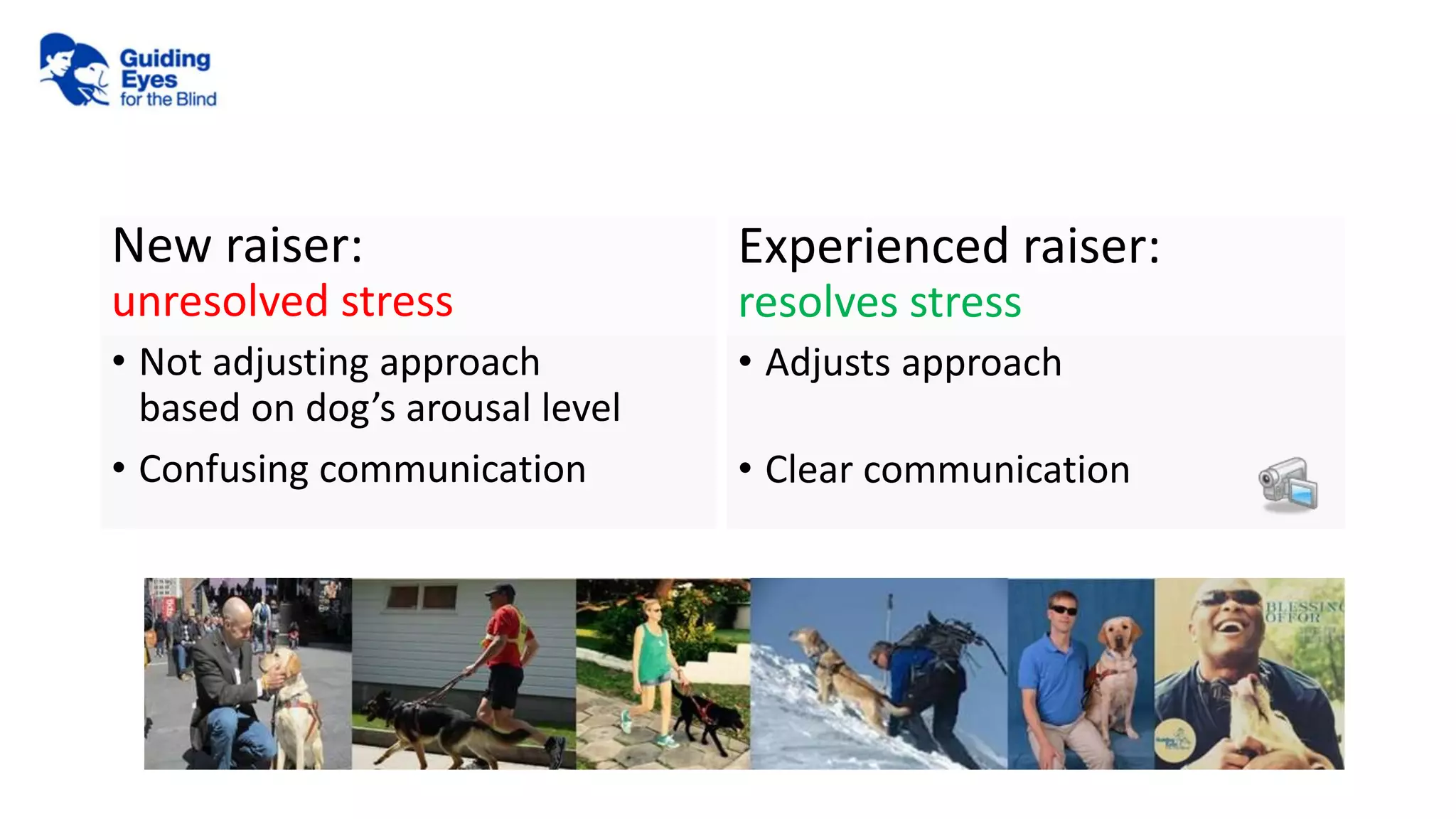
• Not adjusting approach
based on dog’s arousal level
• Confusing communication
Experienced raiser:
resolves stress
• Adjusts approach
• Clear communication
New raiser:
unresolved stress
Dr. Chris Tseng
Professor and
Director of
Data Intelligence Lab
for Cognitive
Computer Learning
Jane Russenberger, BS
Senior Director of
Genetics and Breeding
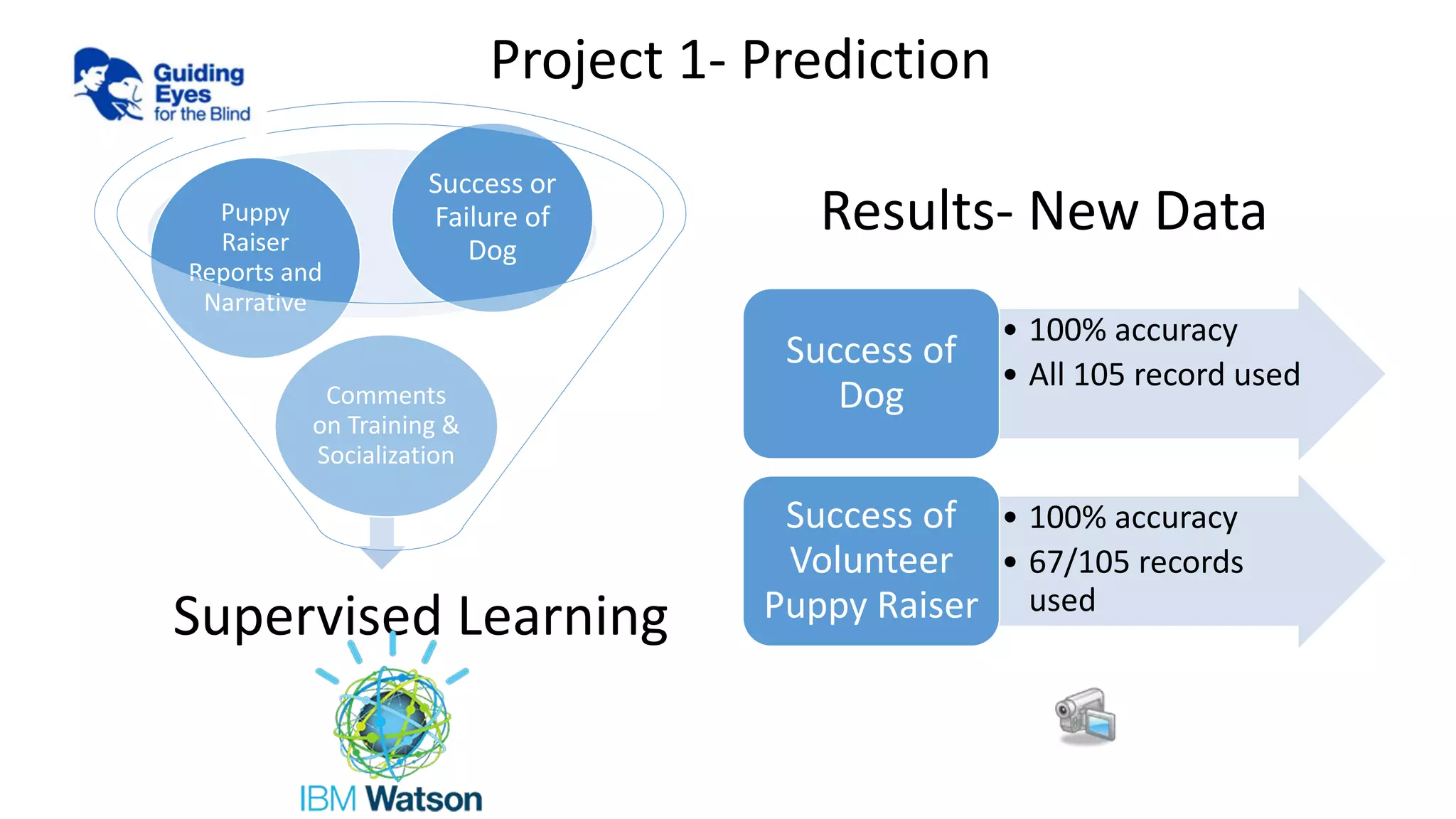
Comments
on Training &
Socialization
Puppy
Raiser
Reports and
Narrative
Success or
Failure of
Dog
• 100% accuracy
• All 105 record used
Success of
Dog
• 100% accuracy
• 67/105 records
used
Success of
Volunteer
Puppy Raiser
Results- New Data
Supervised Learning
Project 1- Prediction
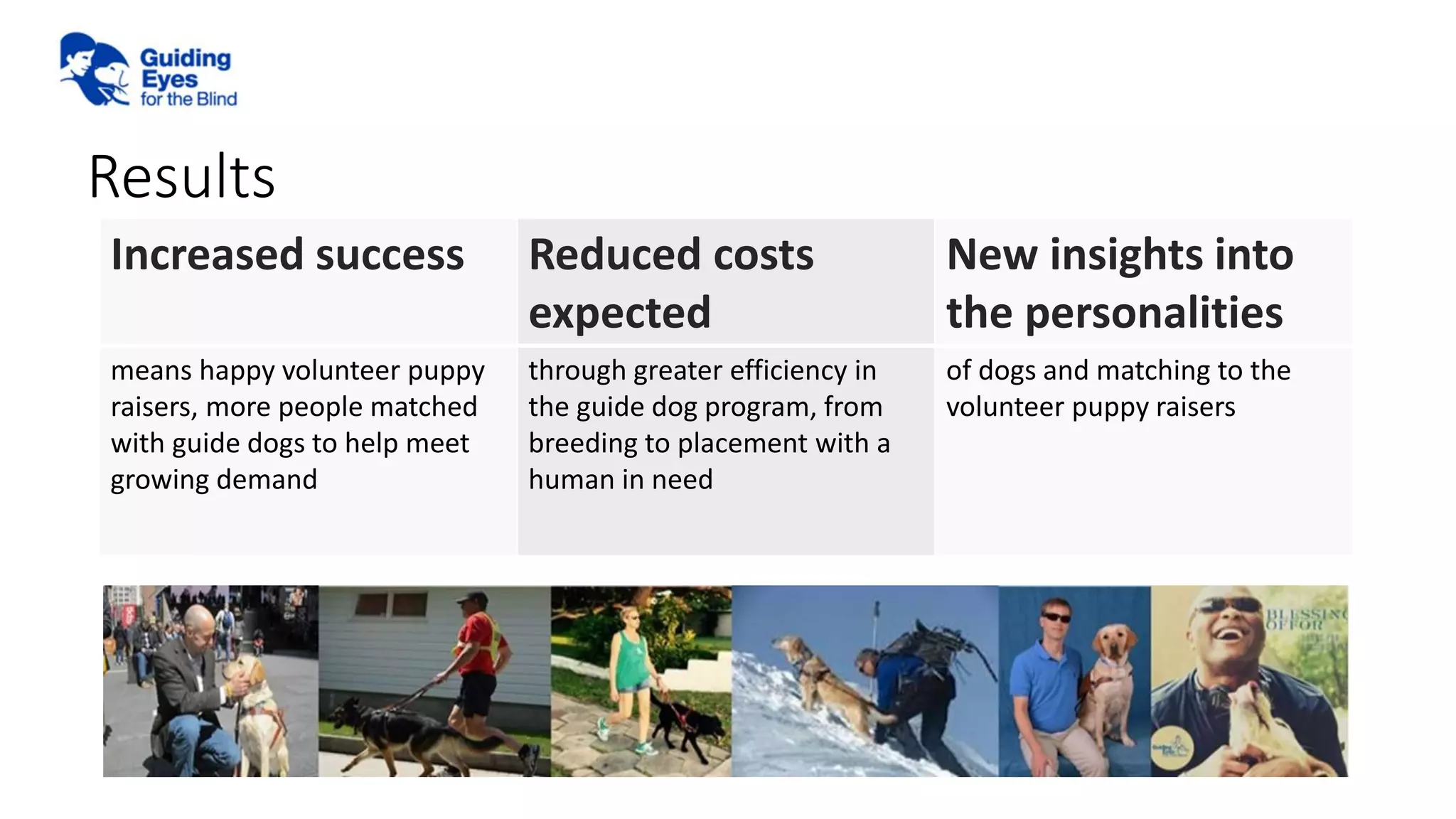
Results
Increased success Reduced costs
expected
New insights into
the personalities
means happy volunteer puppy
raisers, more people matched
with guide dogs to help meet
growing demand
through greater efficiency in
the guide dog program, from
breeding to placement with a
human in need
of dogs and matching to the
volunteer puppy raisers
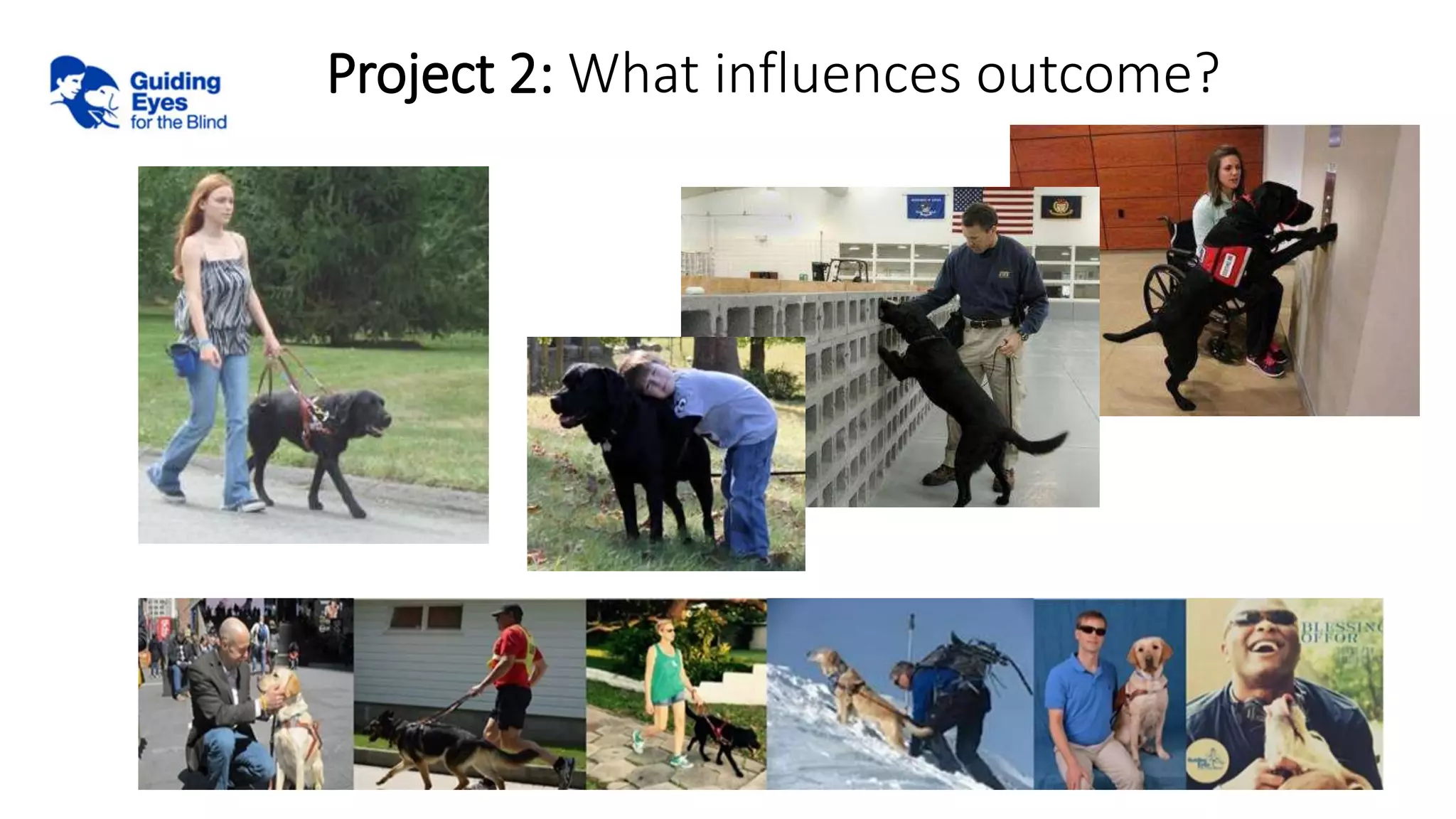
Project 2: What influences outcome?
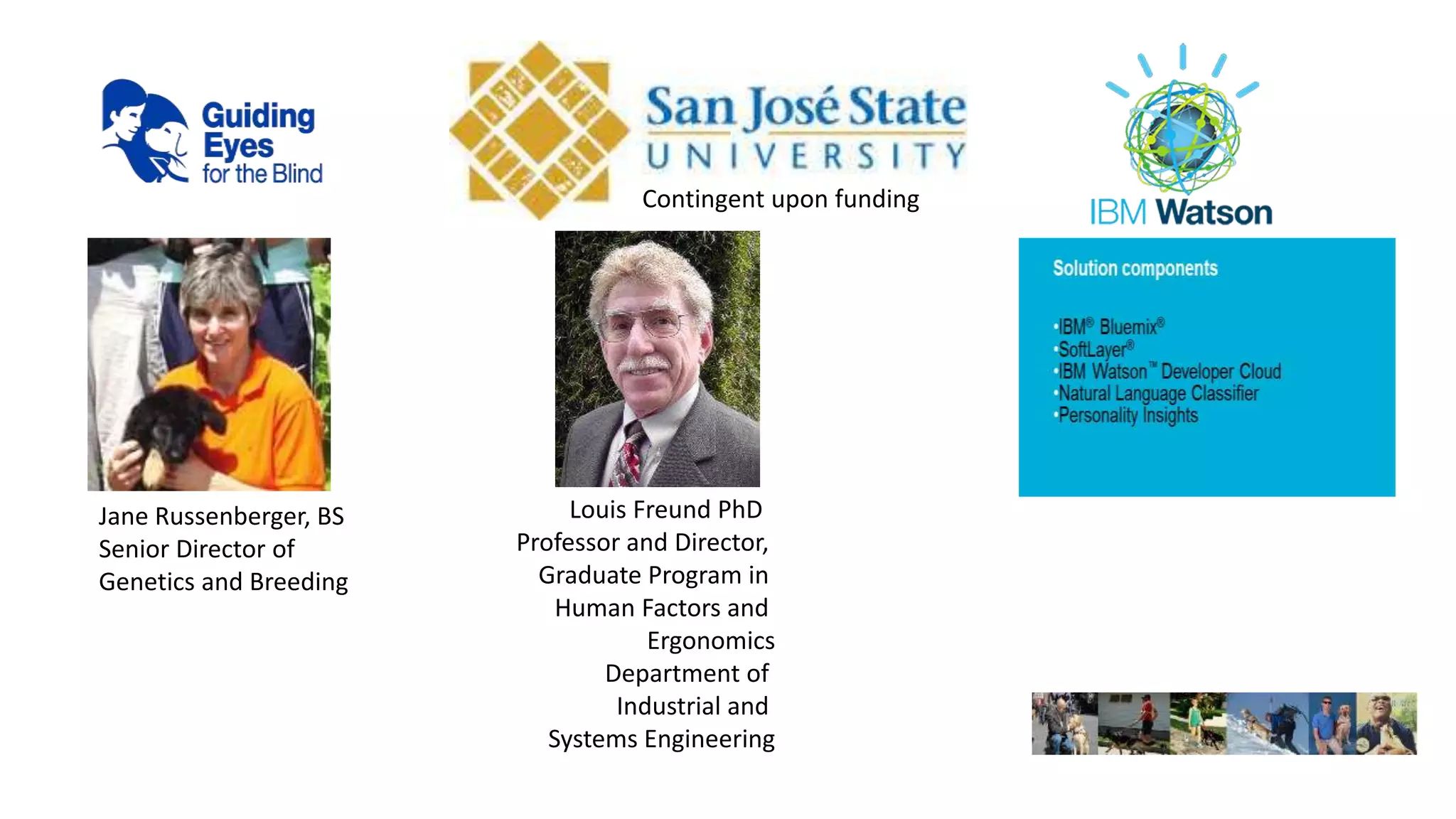
Louis Freund PhD
Professor and Director,
Graduate Program in
Human Factors and
Ergonomics
Department of
Industrial and
Systems Engineering
Jane Russenberger, BS
Senior Director of
Genetics and Breeding
Contingent upon funding
Which
Behaviors
or
Combinations
of Behaviors?
Outcome
Environmental
Fears
Ability to
Handle Stress
Body
Sensitivity
Excitability &
Distraction
Age
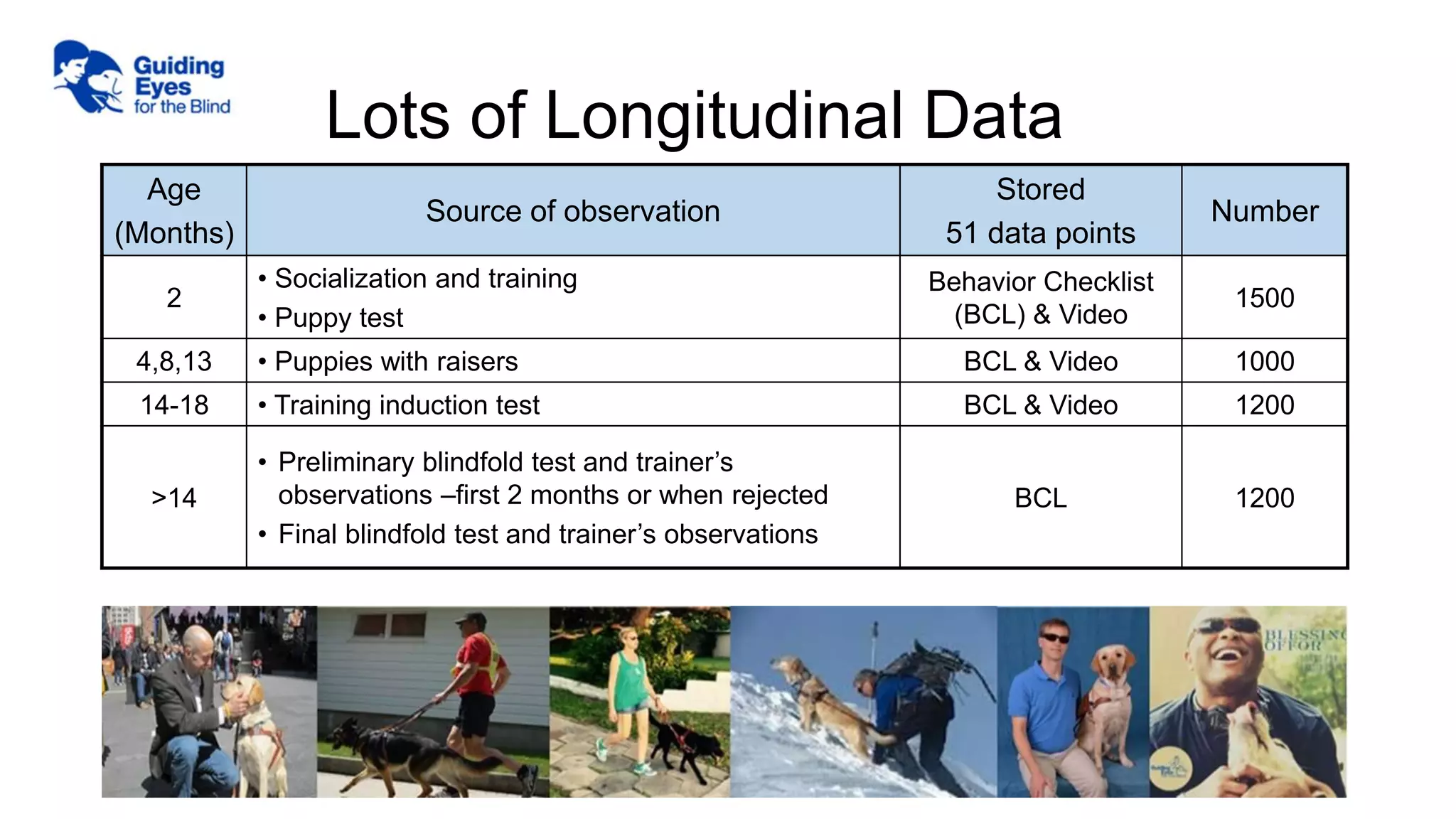
(Months)
Source of observation
Stored
51 data points
Number
2
• Socialization and training
• Puppy test
Behavior Checklist
(BCL) & Video
1500
4,8,13 • Puppies with raisers BCL & Video 1000
14-18 • Training induction test BCL & Video 1200
>14
• Preliminary blindfold test and trainer’s
observations –first 2 months or when rejected
• Final blindfold test and trainer’s observations
BCL 1200
Lots of Longitudinal Data
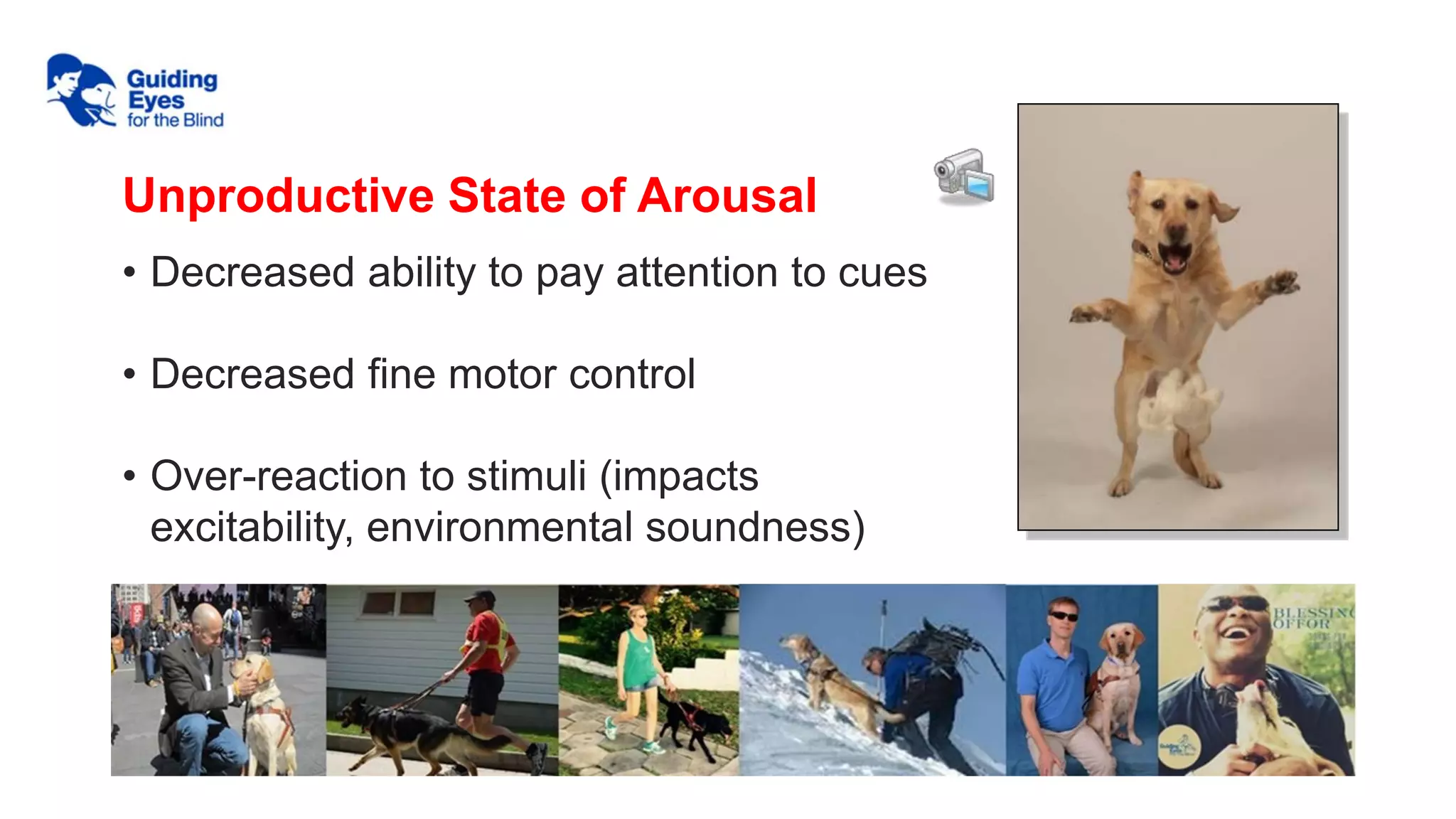
• Decreased ability to pay attention to cues
• Decreased fine motor control
• Over-reaction to stimuli (impacts
excitability, environmental soundness)
Unproductive State of Arousal
17
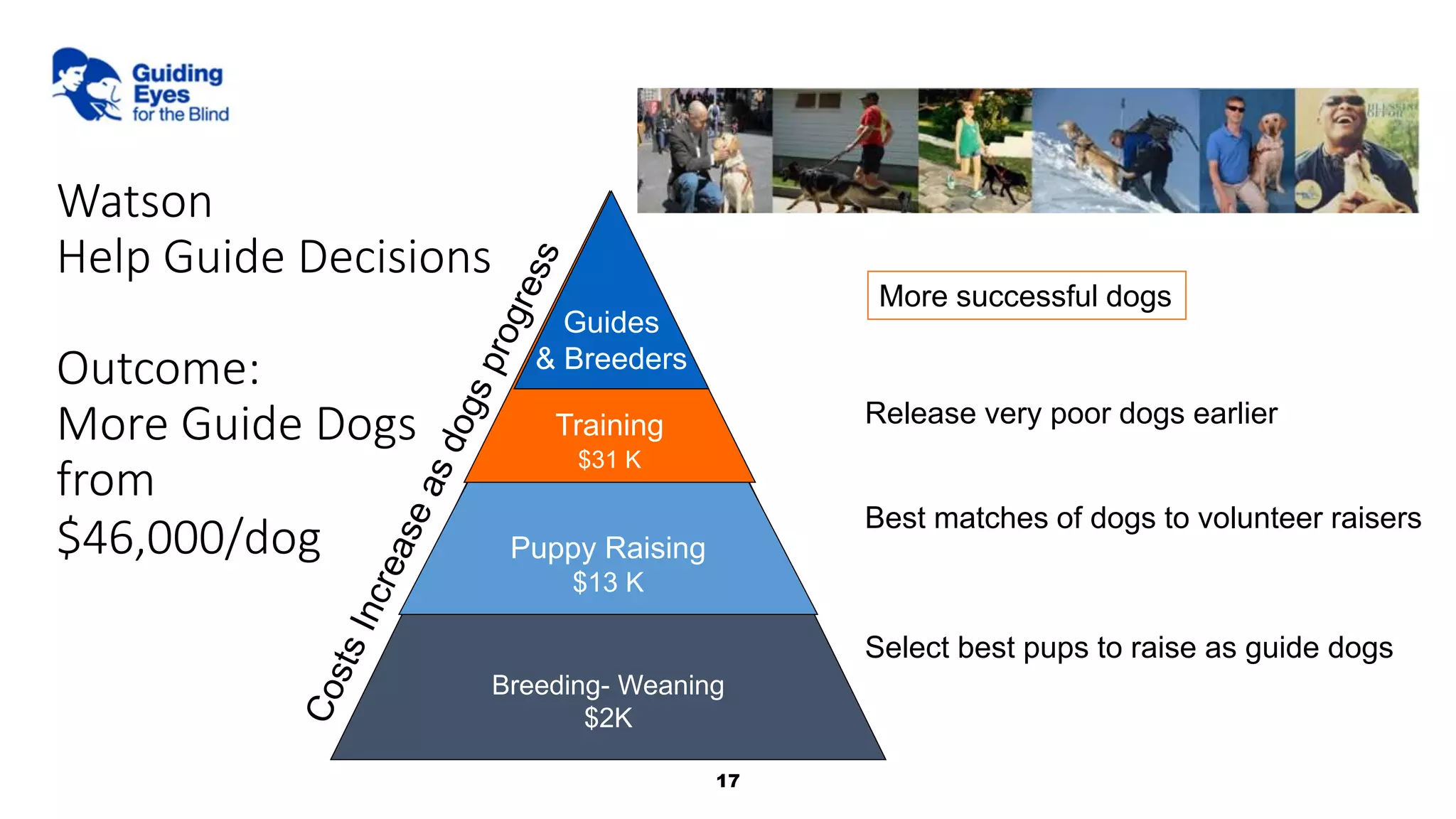
Breeding- Weaning
$2K
Puppy Raising
$13 K
Watson
Help Guide Decisions
Outcome:
More Guide Dogs
from
$46,000/dog
Training
$31 K
Guides
& Breeders
Release very poor dogs earlier
Select best pups to raise as guide dogs
Best matches of dogs to volunteer raisers
More successful dogs
Trainer
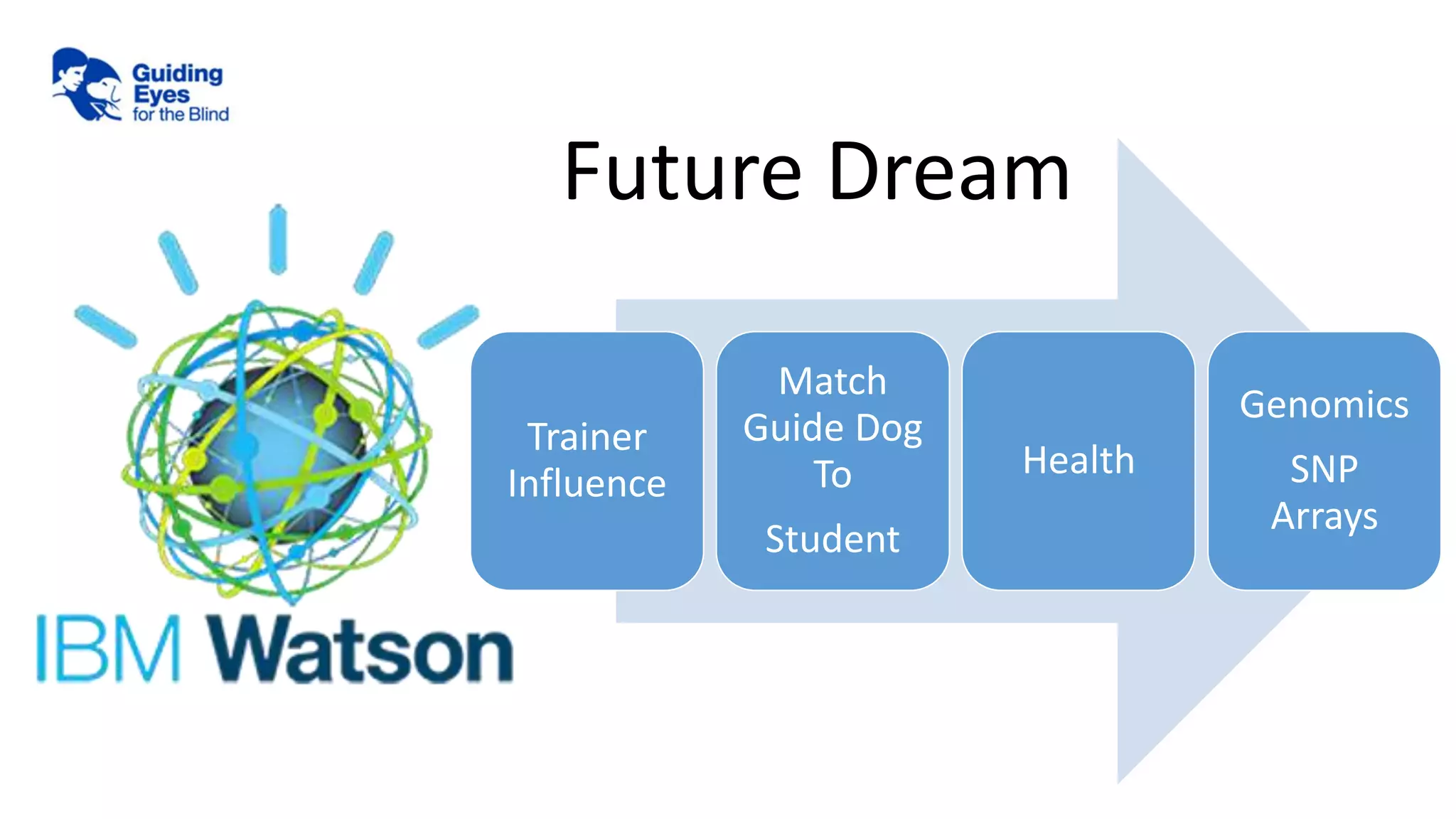
Influence
Match
Guide Dog
To
Student
Health
Genomics
SNP
Arrays
Future Dream
Questions?
jrussenberger@guidingeyes.org

Watson Guiding The Way Using cognitive computing to discover the secrets behind successful guide dogs

  • 1.
    Watson Guiding TheWay Using cognitive computing to discover the secrets behind successful guide dogs Jane Russenberger, BS Guiding Eyes for the Blind Yorktown Heights, NY October 24, 2016
  • 2.
    • Connect peoplewith vision loss with exceptional dogs to enjoy greater independence • Dogs placed at no charge, worldwide • 60 years of service • >7,300 teams graduated • 501 (c ) (3) non-profit • Yorktown Heights, NY
  • 3.
    Volunteer puppy raisers Success: Breeders 30 Matings =517 pups We raise 347 Success: Guide Dogs 155 Released 35 Pets 70 Service Dogs 70 Career sorting -8 wks old Guide Dog train 282 Released 127 $46K/dog raised
  • 4.
    Goal 12% moredogs become guides 49% success rate today $920K invested means success Release Success
  • 5.
    Lots of dataon >1200 dogs Puppy raising In for training Puppy @ 8 weeks Training “By collecting information about our dogs, we can dig into the data to pull out meaningful insights about health, behavior, temperament and more.” —Thomas Panek, President and Chief Executive Officer, Guiding Eyes for the Blind
  • 6.
    6 Phenotype = Genotype+ environment P= G + E Interaction between genetics and environmental factors P= f(G,E) Environment 80% Genetics 20%
  • 7.
    Genetic Differences  Poorscores on pup test  Failed guide dog training  Good scores on pup test  Successful as a guide dog Axel Anders
  • 8.
    • Not adjustingapproach based on dog’s arousal level • Confusing communication Experienced raiser: resolves stress • Adjusts approach • Clear communication New raiser: unresolved stress
  • 9.
    Dr. Chris Tseng Professorand Director of Data Intelligence Lab for Cognitive Computer Learning Jane Russenberger, BS Senior Director of Genetics and Breeding
  • 10.
    Comments on Training & Socialization Puppy Raiser Reportsand Narrative Success or Failure of Dog • 100% accuracy • All 105 record used Success of Dog • 100% accuracy • 67/105 records used Success of Volunteer Puppy Raiser Results- New Data Supervised Learning Project 1- Prediction
  • 11.
    Results Increased success Reducedcosts expected New insights into the personalities means happy volunteer puppy raisers, more people matched with guide dogs to help meet growing demand through greater efficiency in the guide dog program, from breeding to placement with a human in need of dogs and matching to the volunteer puppy raisers
  • 12.
    Project 2: Whatinfluences outcome?
  • 13.
    Louis Freund PhD Professorand Director, Graduate Program in Human Factors and Ergonomics Department of Industrial and Systems Engineering Jane Russenberger, BS Senior Director of Genetics and Breeding Contingent upon funding
  • 14.
  • 15.
    Age (Months) Source of observation Stored 51data points Number 2 • Socialization and training • Puppy test Behavior Checklist (BCL) & Video 1500 4,8,13 • Puppies with raisers BCL & Video 1000 14-18 • Training induction test BCL & Video 1200 >14 • Preliminary blindfold test and trainer’s observations –first 2 months or when rejected • Final blindfold test and trainer’s observations BCL 1200 Lots of Longitudinal Data
  • 16.
    • Decreased abilityto pay attention to cues • Decreased fine motor control • Over-reaction to stimuli (impacts excitability, environmental soundness) Unproductive State of Arousal
  • 17.
    17 Breeding- Weaning $2K Puppy Raising $13K Watson Help Guide Decisions Outcome: More Guide Dogs from $46,000/dog Training $31 K Guides & Breeders Release very poor dogs earlier Select best pups to raise as guide dogs Best matches of dogs to volunteer raisers More successful dogs
  • 18.
  • 19.

Editor's Notes

  • #3 Guiding Eyes is using cognitive computing to make dramatic advances in the art and science of raising guide dogs. Using natural language processing (NLP) on structured and unstructured data, the system is trained to find correlations to success among myriad genetic, health, temperament and environmental factors—and continues to learn.
  • #10 Dr. Tseng is supervising a group of students at San Jose State University in a project where Watson will undergo supervised learning We have provided a lot of data about the dogs and puppy raisers Working with a combination of structured and unstructured data. Early stages
  • #14 Dr. Tseng is supervising a group of students at San Jose State University in a project where Watson will undergo supervised learning We have provided a lot of data about the dogs and puppy raisers Working with a combination of structured and unstructured data. Early stages