IBM Watson Classroom Experience
Dr.Ayse Bener, Ryerson University, Toronto, Canada
 Certificate Program
 Course Objectives
 IBM Watson Analytics Lab
 IBM Watson Lab and course project
 Summary
Outline
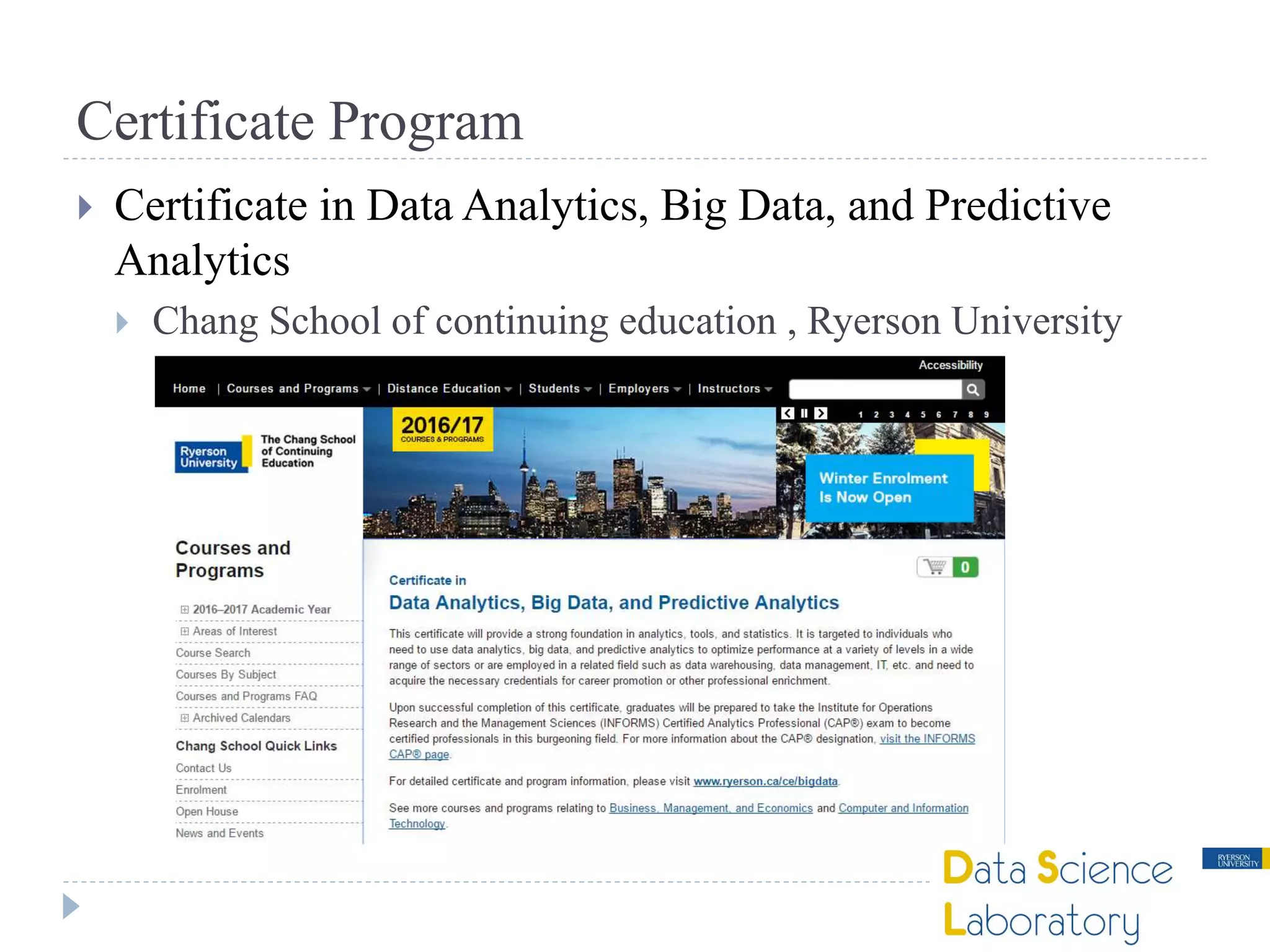
Certificate Program
 Certificate in Data Analytics, Big Data, and Predictive
Analytics
 Chang School of continuing education , Ryerson University
Offered courses at Certificate Program
 Industrial Engineering
 Data Organization for Data Analysis (core)
 Introduction to Big Data (core)
 Data Analytics: Basic Methods (core)
 Big Data Analytics Tools (core)
 Data Analytics: Capstone Course (core)
 Computer Science
 Data Access and Management (optional elective)
 Mathematics
 Data Analytics: Advanced Methods (core)
History
 Program started on Fall 2014
 Introduction to big data course was offered in all
semesters
 9 semesters
 On average 50 students enrolled on this course each
semester (4 terms/ year)
 100+ students enrolled in the current semester (Fall 2016)
 500+ students exposed to IBM Watson products
Course Objectives
 Give students overview of big data
 State of the art practice in analytics
 The role of the data scientist
 Big data analytics in industry verticals
 Analytics lifecycle as an end-to-end process
 Focuses on key roles for a successful analytic project,
 Main phases of the lifecycle
 Developing core deliverables for stakeholders
 Team work skills
 Problem solving skills
IBM Watson Analytics
 The system is used in two lab sessions
 First session while introducing software tools to analyze data
 Datasets and step by step instructions are provided for students to
interact with the system and explore the datasets
 Last session while introducing visualization of data
 Visualization techniques described in the lecture are tested on the
provided experiment
IBM Watson
 Lecture on Natural Language Processing
 Introduction to natural language processing
 Basic text processing
 Cognitive Computing
 Question answering systems
 Lab Session using IBM Watson
 Each team of 3-4 students upload a predefined document, train
the system by adding question-answer pairs and test after the
corpus is created
 This lab is considered as preparation for course project
IBM Watson
 Course project
 Group project with the team of 4-5 students
 One specific topic is selected as the project
 Food and Nutrition
 Canadian Education Information
 Canadian Tourism Attractions
 Crisis Management
 Etc.
 Sub-topics are selected by each group
 Foodbanks in Canada
 Nutrition in Beverages
 Nutrition in solid food
 Etc.
IBM Watson
 Each group prepares the documents based on the
instructions
 Conference paper on how to train IBM Watson*
 Students train the system by providing question-Answer
pairs
 Corpus is then created
 Testing phase and calibration
 Project report and presentation
* Murtaza, Syed Shariyar, Paris Lak, Ayse Bener, and Armen Pischdotchian. "How to effectively train IBM Watson: Classroom
experience." In 2016 49th Hawaii International Conference on System Sciences (HICSS), pp. 1663-1670. IEEE, 2016.
Summary
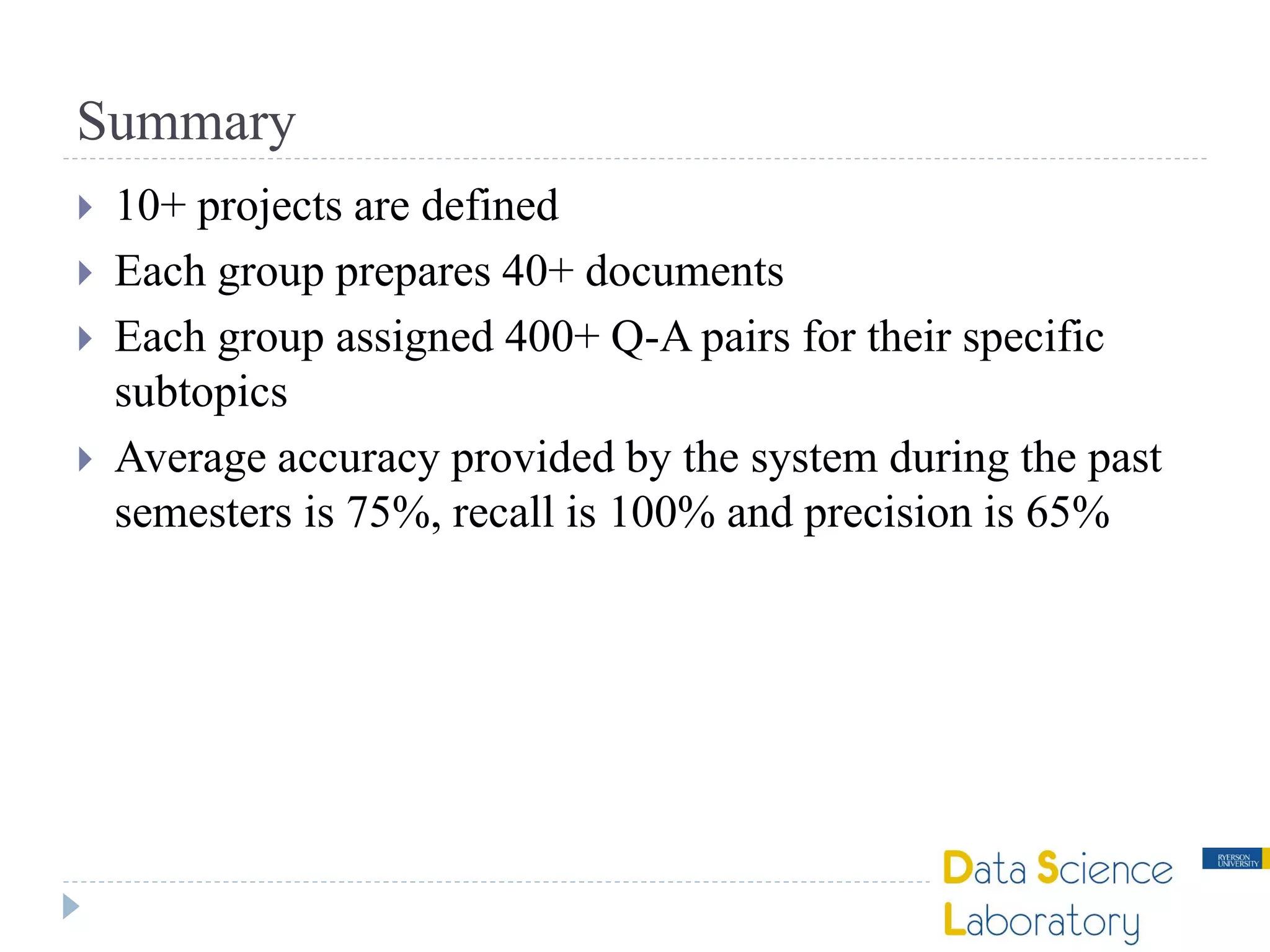
 10+ projects are defined
 Each group prepares 40+ documents
 Each group assigned 400+ Q-A pairs for their specific
subtopics
 Average accuracy provided by the system during the past
semesters is 75%, recall is 100% and precision is 65%
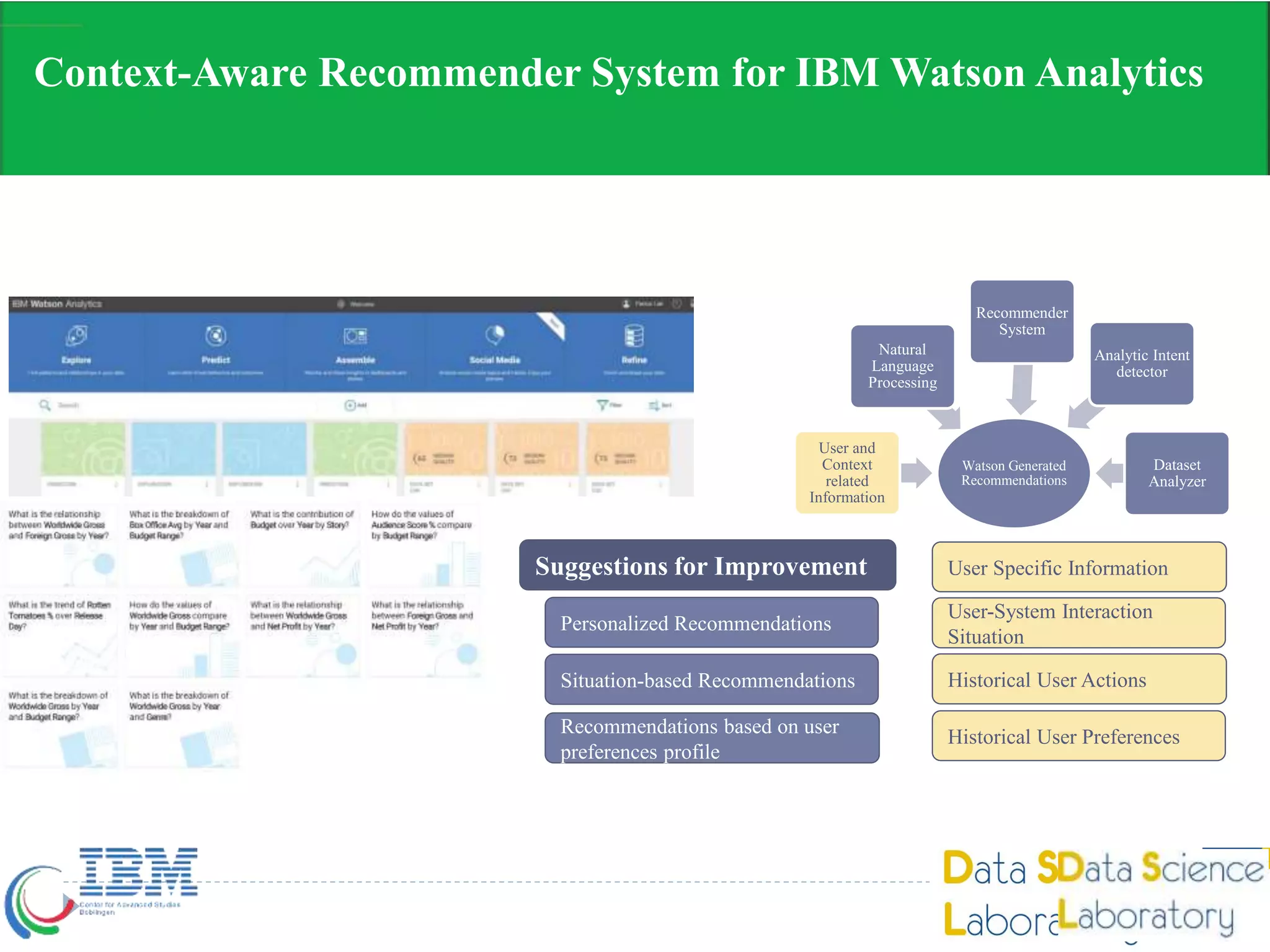
Watson Generated
Recommendations
User and
Context
related
Information
Natural
Language
Processing
Recommender
System
Analytic Intent
detector
Dataset
Analyzer
User Specific Information
User-System Interaction
Situation
Historical User Actions
Historical User Preferences
Personalized Recommendations
Situation-based Recommendations
Recommendations based on user
preferences profile
Suggestions for Improvement
Context-Aware Recommender System for IBM Watson Analytics
http://www.datasciencelab.ca

IBM Watson Classroom Experience

  • 1.
    IBM Watson ClassroomExperience Dr.Ayse Bener, Ryerson University, Toronto, Canada
  • 2.
     Certificate Program Course Objectives  IBM Watson Analytics Lab  IBM Watson Lab and course project  Summary Outline
  • 3.
    Certificate Program  Certificatein Data Analytics, Big Data, and Predictive Analytics  Chang School of continuing education , Ryerson University
  • 4.
    Offered courses atCertificate Program  Industrial Engineering  Data Organization for Data Analysis (core)  Introduction to Big Data (core)  Data Analytics: Basic Methods (core)  Big Data Analytics Tools (core)  Data Analytics: Capstone Course (core)  Computer Science  Data Access and Management (optional elective)  Mathematics  Data Analytics: Advanced Methods (core)
  • 5.
    History  Program startedon Fall 2014  Introduction to big data course was offered in all semesters  9 semesters  On average 50 students enrolled on this course each semester (4 terms/ year)  100+ students enrolled in the current semester (Fall 2016)  500+ students exposed to IBM Watson products
  • 6.
    Course Objectives  Givestudents overview of big data  State of the art practice in analytics  The role of the data scientist  Big data analytics in industry verticals  Analytics lifecycle as an end-to-end process  Focuses on key roles for a successful analytic project,  Main phases of the lifecycle  Developing core deliverables for stakeholders  Team work skills  Problem solving skills
  • 7.
    IBM Watson Analytics The system is used in two lab sessions  First session while introducing software tools to analyze data  Datasets and step by step instructions are provided for students to interact with the system and explore the datasets  Last session while introducing visualization of data  Visualization techniques described in the lecture are tested on the provided experiment
  • 8.
    IBM Watson  Lectureon Natural Language Processing  Introduction to natural language processing  Basic text processing  Cognitive Computing  Question answering systems  Lab Session using IBM Watson  Each team of 3-4 students upload a predefined document, train the system by adding question-answer pairs and test after the corpus is created  This lab is considered as preparation for course project
  • 9.
    IBM Watson  Courseproject  Group project with the team of 4-5 students  One specific topic is selected as the project  Food and Nutrition  Canadian Education Information  Canadian Tourism Attractions  Crisis Management  Etc.  Sub-topics are selected by each group  Foodbanks in Canada  Nutrition in Beverages  Nutrition in solid food  Etc.
  • 10.
    IBM Watson  Eachgroup prepares the documents based on the instructions  Conference paper on how to train IBM Watson*  Students train the system by providing question-Answer pairs  Corpus is then created  Testing phase and calibration  Project report and presentation * Murtaza, Syed Shariyar, Paris Lak, Ayse Bener, and Armen Pischdotchian. "How to effectively train IBM Watson: Classroom experience." In 2016 49th Hawaii International Conference on System Sciences (HICSS), pp. 1663-1670. IEEE, 2016.
  • 11.
    Summary  10+ projectsare defined  Each group prepares 40+ documents  Each group assigned 400+ Q-A pairs for their specific subtopics  Average accuracy provided by the system during the past semesters is 75%, recall is 100% and precision is 65%
  • 12.
    Watson Generated Recommendations User and Context related Information Natural Language Processing Recommender System AnalyticIntent detector Dataset Analyzer User Specific Information User-System Interaction Situation Historical User Actions Historical User Preferences Personalized Recommendations Situation-based Recommendations Recommendations based on user preferences profile Suggestions for Improvement Context-Aware Recommender System for IBM Watson Analytics
  • 13.