TERRACE WATERPROOFING
Types of Terrace Waterproofing
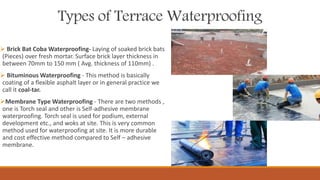
 Brick Bat Coba Waterproofing- Laying of soaked brick bats
(Pieces) over fresh mortar. Surface brick layer thickness in
between 70mm to 150 mm ( Avg. thickness of 110mm) .
 Bituminous Waterproofing - This method is basically
coating of a flexible asphalt layer or in general practice we
call it coal-tar.
Membrane Type Waterproofing - There are two methods ,
one is Torch seal and other is Self-adhesive membrane
waterproofing. Torch seal is used for podium, external
development etc., and woks at site. This is very common
method used for waterproofing at site. It is more durable
and cost effective method compared to Self – adhesive
membrane.
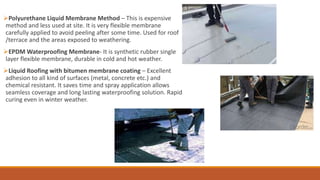
Polyurethane Liquid Membrane Method – This is expensive
method and less used at site. It is very flexible membrane
carefully applied to avoid peeling after some time. Used for roof
/terrace and the areas exposed to weathering.
EPDM Waterproofing Membrane- It is synthetic rubber single
layer flexible membrane, durable in cold and hot weather.
Liquid Roofing with bitumen membrane coating – Excellent
adhesion to all kind of surfaces (metal, concrete etc.) and
chemical resistant. It saves time and spray application allows
seamless coverage and long lasting waterproofing solution. Rapid
curing even in winter weather.
Dr. Fixit
Pidicrete URP
Rs. 6450/20l
Dr. Fixit
Roofseal
Rs. 4100/ 5l
Dr. Fixit LW+
Rs. 640/5l
Dr. Fixit
Bitufix
Polyurathene
Resin
Rs. 450/25Kg
App
Members
Rs. 110/Sq.
m
EPDM
member
Rs. 35/Sq.
Feet
Nitobond Rs.
125/L
Waterproofing Products
Waterproofing Brands : CICO, Sika, Fosroc, Dr. Fixit, Redwop, MYK Schomburg , Chowgule etc.
Preparing The Surface
It would be advantageous to roughen the surface by scraping
the surface when the slab is being cast.
In case the slab is already cast and surface fairly finished, the
same shall be chiseled neatly of all mortar droppings, loose
materials etc.
 Add a bag of cement to 100 lit of water. Stir the mixture to get a
consistent cement slurry. Spread this slurry on the terrace and
allow it to penetrate uniformly over the cleaned surface.
Check the terrace door level to ensure that enough margin
(Approx 15 cm) For waterproofing is left from the bottom side.
Ensure that the rain water pipe outlet is bent in the correct
position.
Blending Cement Water with water Proofing Compound
Whenever the water proofing compound is to be used, it is advantageous to blend the same with cement if the
water proofing compound is in powder form and if the same is in liquid form the required quantity of water blended
with water proofing compound alone should be used for preparing slurry / mortar.
The water proofing compound shall be used / mixed for preparation of slurry, mortar bedding layer , top layer or
wherever cement finishing is required.
Preparing of Slurry
The quantity of water required to prepare the slurry with 2.75 Kg of cement to be painted/applied over an area of
1 sqm shall be calculated.
Depending upon the area of surface that has to be covered, the required quantity of slurry should be prepared
using 2.75 Kg blended cement/sqm + x litres of water per sqm area to be covered, taking particular care to see that
only that much quantity of slurry shall be prepared which can be used within 1/2 an hour of preparation.
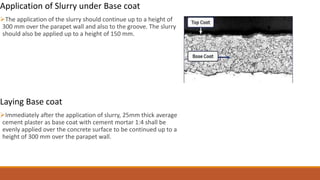
Application of Slurry under Base coat
The application of the slurry should continue up to a height of
300 mm over the parapet wall and also to the groove. The slurry
should also be applied up to a height of 150 mm.
Laying Base coat
Immediately after the application of slurry, 25mm thick average
cement plaster as base coat with cement mortar 1:4 shall be
evenly applied over the concrete surface to be continued up to a
height of 300 mm over the parapet wall.
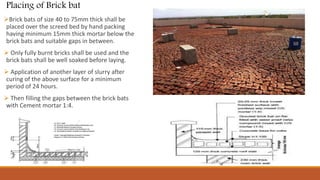
Placing of Brick bat
Brick bats of size 40 to 75mm thick shall be
placed over the screed bed by hand packing
having minimum 15mm thick mortar below the
brick bats and suitable gaps in between.
 Only fully burnt bricks shall be used and the
brick bats shall be well soaked before laying.
 Application of another layer of slurry after
curing of the above surface for a minimum
period of 24 hours.
 Then filling the gaps between the brick bats
with Cement mortar 1:4.
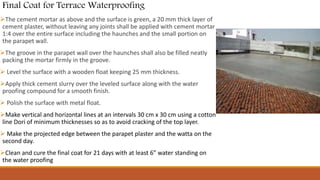
Final Coat for Terrace Waterproofing
The cement mortar as above and the surface is green, a 20 mm thick layer of
cement plaster, without leaving any joints shall be applied with cement mortar
1:4 over the entire surface including the haunches and the small portion on
the parapet wall.
The groove in the parapet wall over the haunches shall also be filled neatly
packing the mortar firmly in the groove.
 Level the surface with a wooden float keeping 25 mm thickness.
Apply thick cement slurry over the leveled surface along with the water
proofing compound for a smooth finish.
 Polish the surface with metal float.
Make vertical and horizontal lines at an intervals 30 cm x 30 cm using a cotton
line Dori of minimum thicknesses so as to avoid cracking of the top layer.
 Make the projected edge between the parapet plaster and the watta on the
second day.
Clean and cure the final coat for 21 days with at least 6” water standing on
the water proofing
Waterproffing.pptx
Waterproffing.pptx

Waterproffing.pptx

  • 1.
  • 2.
    Types of TerraceWaterproofing  Brick Bat Coba Waterproofing- Laying of soaked brick bats (Pieces) over fresh mortar. Surface brick layer thickness in between 70mm to 150 mm ( Avg. thickness of 110mm) .  Bituminous Waterproofing - This method is basically coating of a flexible asphalt layer or in general practice we call it coal-tar. Membrane Type Waterproofing - There are two methods , one is Torch seal and other is Self-adhesive membrane waterproofing. Torch seal is used for podium, external development etc., and woks at site. This is very common method used for waterproofing at site. It is more durable and cost effective method compared to Self – adhesive membrane.
  • 3.
    Polyurethane Liquid MembraneMethod – This is expensive method and less used at site. It is very flexible membrane carefully applied to avoid peeling after some time. Used for roof /terrace and the areas exposed to weathering. EPDM Waterproofing Membrane- It is synthetic rubber single layer flexible membrane, durable in cold and hot weather. Liquid Roofing with bitumen membrane coating – Excellent adhesion to all kind of surfaces (metal, concrete etc.) and chemical resistant. It saves time and spray application allows seamless coverage and long lasting waterproofing solution. Rapid curing even in winter weather.
  • 4.
    Dr. Fixit Pidicrete URP Rs.6450/20l Dr. Fixit Roofseal Rs. 4100/ 5l Dr. Fixit LW+ Rs. 640/5l Dr. Fixit Bitufix Polyurathene Resin Rs. 450/25Kg App Members Rs. 110/Sq. m EPDM member Rs. 35/Sq. Feet Nitobond Rs. 125/L Waterproofing Products Waterproofing Brands : CICO, Sika, Fosroc, Dr. Fixit, Redwop, MYK Schomburg , Chowgule etc.
  • 5.
    Preparing The Surface Itwould be advantageous to roughen the surface by scraping the surface when the slab is being cast. In case the slab is already cast and surface fairly finished, the same shall be chiseled neatly of all mortar droppings, loose materials etc.  Add a bag of cement to 100 lit of water. Stir the mixture to get a consistent cement slurry. Spread this slurry on the terrace and allow it to penetrate uniformly over the cleaned surface. Check the terrace door level to ensure that enough margin (Approx 15 cm) For waterproofing is left from the bottom side. Ensure that the rain water pipe outlet is bent in the correct position.
  • 6.
    Blending Cement Waterwith water Proofing Compound Whenever the water proofing compound is to be used, it is advantageous to blend the same with cement if the water proofing compound is in powder form and if the same is in liquid form the required quantity of water blended with water proofing compound alone should be used for preparing slurry / mortar. The water proofing compound shall be used / mixed for preparation of slurry, mortar bedding layer , top layer or wherever cement finishing is required. Preparing of Slurry The quantity of water required to prepare the slurry with 2.75 Kg of cement to be painted/applied over an area of 1 sqm shall be calculated. Depending upon the area of surface that has to be covered, the required quantity of slurry should be prepared using 2.75 Kg blended cement/sqm + x litres of water per sqm area to be covered, taking particular care to see that only that much quantity of slurry shall be prepared which can be used within 1/2 an hour of preparation.
  • 7.
    Application of Slurryunder Base coat The application of the slurry should continue up to a height of 300 mm over the parapet wall and also to the groove. The slurry should also be applied up to a height of 150 mm. Laying Base coat Immediately after the application of slurry, 25mm thick average cement plaster as base coat with cement mortar 1:4 shall be evenly applied over the concrete surface to be continued up to a height of 300 mm over the parapet wall.
  • 8.
    Placing of Brickbat Brick bats of size 40 to 75mm thick shall be placed over the screed bed by hand packing having minimum 15mm thick mortar below the brick bats and suitable gaps in between.  Only fully burnt bricks shall be used and the brick bats shall be well soaked before laying.  Application of another layer of slurry after curing of the above surface for a minimum period of 24 hours.  Then filling the gaps between the brick bats with Cement mortar 1:4.
  • 9.
    Final Coat forTerrace Waterproofing The cement mortar as above and the surface is green, a 20 mm thick layer of cement plaster, without leaving any joints shall be applied with cement mortar 1:4 over the entire surface including the haunches and the small portion on the parapet wall. The groove in the parapet wall over the haunches shall also be filled neatly packing the mortar firmly in the groove.  Level the surface with a wooden float keeping 25 mm thickness. Apply thick cement slurry over the leveled surface along with the water proofing compound for a smooth finish.  Polish the surface with metal float. Make vertical and horizontal lines at an intervals 30 cm x 30 cm using a cotton line Dori of minimum thicknesses so as to avoid cracking of the top layer.  Make the projected edge between the parapet plaster and the watta on the second day. Clean and cure the final coat for 21 days with at least 6” water standing on the water proofing