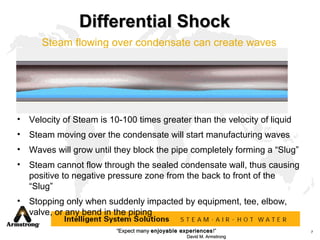
Water hammer occurs in water supply lines and biphase systems that carry water in both liquid and gas states. It can damage system components through overstressing and cracking over time as it subjects the pipe to repeated shocks. The three main types of shocks are hydraulic, thermal, and differential. Hydraulic shock occurs when water moving at high speed is suddenly stopped, like closing a faucet quickly. Thermal shock happens when steam condenses rapidly, creating vacuum pressures. Differential shock is caused by velocity differences between steam and condensate that form pressure waves down the pipe. All three can weaken pipes over time through these damaging pressure fluctuations until rupture occurs.