Water Conservation
  Techniques
Renewable
Energy
Renewable Energy
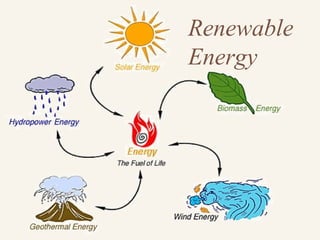
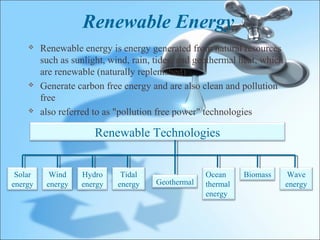
        Renewable energy is energy generated from natural resources
         such as sunlight, wind, rain, tides, and geothermal heat, which
         are renewable (naturally replenished)
        Generate carbon free energy and are also clean and pollution
         free
        also referred to as "pollution free power" technologies

                       Renewable Technologies


 Solar     Wind    Hydro      Tidal                 Ocean     Biomass      Wave
energy    energy   energy    energy    Geothermal   thermal                energy
                                                    energy
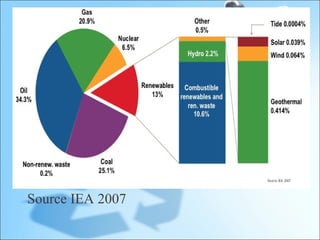
Source IEA 2007
Water Treatment/Conservation
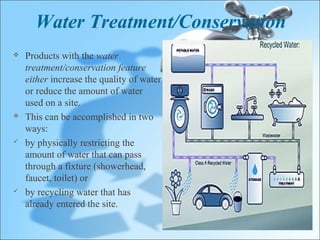
   Products with the water
    treatment/conservation feature
    either increase the quality of water
    or reduce the amount of water
    used on a site.
   This can be accomplished in two
    ways:
   by physically restricting the
    amount of water that can pass
    through a fixture (showerhead,
    faucet, toilet) or
   by recycling water that has
    already entered the site.
Water Efficient Appliances
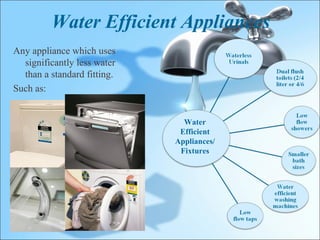
Any appliance which uses
  significantly less water
  than a standard fitting.
Such as:


                               Water
                              Efficient
                             Appliances/
                              Fixtures
Waterless Urinals
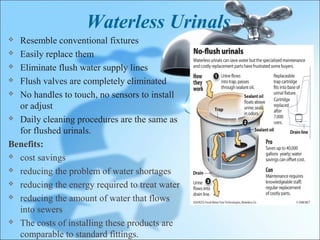
 Resemble conventional fixtures
 Easily replace them

 Eliminate flush water supply lines

 Flush valves are completely eliminated

 No handles to touch, no sensors to install

  or adjust
 Daily cleaning procedures are the same as

  for flushed urinals.
Benefits:
 cost savings

 reducing the problem of water shortages

 reducing the energy required to treat water

 reducing the amount of water that flows

  into sewers
 The costs of installing these products are

  comparable to standard fittings.
Water saving shower heads

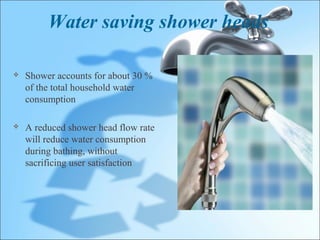
   Shower accounts for about 30 %
    of the total household water
    consumption

   A reduced shower head flow rate
    will reduce water consumption
    during bathing, without
    sacrificing user satisfaction
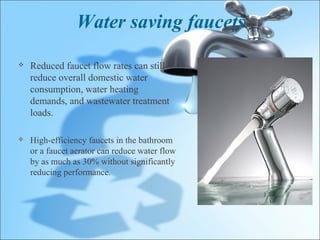
Water saving faucets
   Reduced faucet flow rates can still
    reduce overall domestic water
    consumption, water heating
    demands, and wastewater treatment
    loads.

   High-efficiency faucets in the bathroom
    or a faucet aerator can reduce water flow
    by as much as 30% without significantly
    reducing performance.
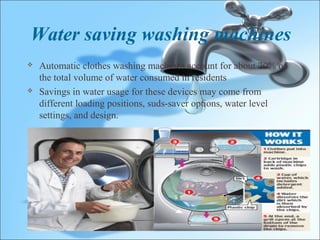
Water saving washing machines
   Automatic clothes washing machines account for about 20% of
    the total volume of water consumed in residents
   Savings in water usage for these devices may come from
    different loading positions, suds-saver options, water level
    settings, and design.
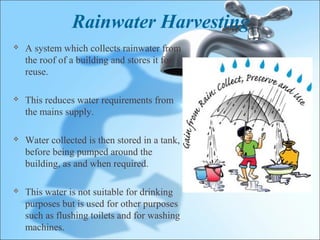
Rainwater Harvesting
   A system which collects rainwater from
    the roof of a building and stores it for
    reuse.

   This reduces water requirements from
    the mains supply.

   Water collected is then stored in a tank,
    before being pumped around the
    building, as and when required.

   This water is not suitable for drinking
    purposes but is used for other purposes
    such as flushing toilets and for washing
    machines.
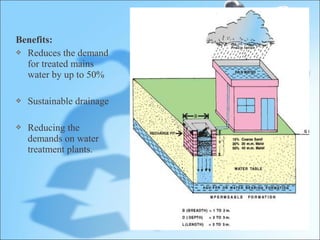
Benefits:
 Reduces the demand
  for treated mains
  water by up to 50%

   Sustainable drainage

   Reducing the
    demands on water
    treatment plants.
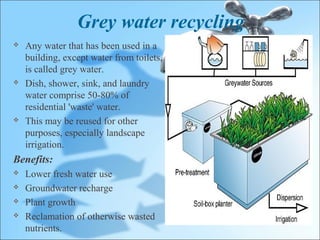
Grey water recycling
   Any water that has been used in a
    building, except water from toilets,
    is called grey water.
   Dish, shower, sink, and laundry
    water comprise 50-80% of
    residential 'waste' water.
   This may be reused for other
    purposes, especially landscape
    irrigation.
Benefits:
   Lower fresh water use
   Groundwater recharge
   Plant growth
   Reclamation of otherwise wasted
    nutrients.
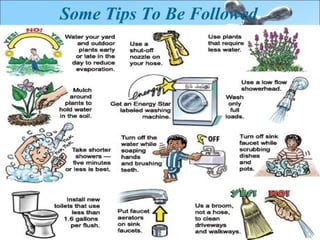
Some Tips To Be Followed

Water conservation new

  • 1.
  • 2.
  • 3.
    Renewable Energy  Renewable energy is energy generated from natural resources such as sunlight, wind, rain, tides, and geothermal heat, which are renewable (naturally replenished)  Generate carbon free energy and are also clean and pollution free  also referred to as "pollution free power" technologies Renewable Technologies Solar Wind Hydro Tidal Ocean Biomass Wave energy energy energy energy Geothermal thermal energy energy
  • 4.
  • 5.
    Water Treatment/Conservation  Products with the water treatment/conservation feature either increase the quality of water or reduce the amount of water used on a site.  This can be accomplished in two ways:  by physically restricting the amount of water that can pass through a fixture (showerhead, faucet, toilet) or  by recycling water that has already entered the site.
  • 6.
    Water Efficient Appliances Anyappliance which uses significantly less water than a standard fitting. Such as: Water Efficient Appliances/ Fixtures
  • 7.
    Waterless Urinals  Resembleconventional fixtures  Easily replace them  Eliminate flush water supply lines  Flush valves are completely eliminated  No handles to touch, no sensors to install or adjust  Daily cleaning procedures are the same as for flushed urinals. Benefits:  cost savings  reducing the problem of water shortages  reducing the energy required to treat water  reducing the amount of water that flows into sewers  The costs of installing these products are comparable to standard fittings.
  • 8.
    Water saving showerheads  Shower accounts for about 30 % of the total household water consumption  A reduced shower head flow rate will reduce water consumption during bathing, without sacrificing user satisfaction
  • 9.
    Water saving faucets  Reduced faucet flow rates can still reduce overall domestic water consumption, water heating demands, and wastewater treatment loads.  High-efficiency faucets in the bathroom or a faucet aerator can reduce water flow by as much as 30% without significantly reducing performance.
  • 10.
    Water saving washingmachines  Automatic clothes washing machines account for about 20% of the total volume of water consumed in residents  Savings in water usage for these devices may come from different loading positions, suds-saver options, water level settings, and design.
  • 11.
    Rainwater Harvesting  A system which collects rainwater from the roof of a building and stores it for reuse.  This reduces water requirements from the mains supply.  Water collected is then stored in a tank, before being pumped around the building, as and when required.  This water is not suitable for drinking purposes but is used for other purposes such as flushing toilets and for washing machines.
  • 12.
    Benefits:  Reduces thedemand for treated mains water by up to 50%  Sustainable drainage  Reducing the demands on water treatment plants.
  • 13.
    Grey water recycling  Any water that has been used in a building, except water from toilets, is called grey water.  Dish, shower, sink, and laundry water comprise 50-80% of residential 'waste' water.  This may be reused for other purposes, especially landscape irrigation. Benefits:  Lower fresh water use  Groundwater recharge  Plant growth  Reclamation of otherwise wasted nutrients.
  • 14.
    Some Tips ToBe Followed