Water Cycle
By: Angela Vazzana
         &
 Amanda Dobner
IL Learning Standard
12.E.2a (Late Elementary)
Identify and explain natural cycles of the
  earth’s land, water and atmospheric
  systems (e.g. rock cycle, water cycle,
  weather patterns)
Objectives
 Name three ways water gets back into
 oceans and lakes

 Label 4 main parts of the water cycle


 Explain the difference between surface
 runoff and percolation
 Match water cycle vocabulary with the
 definitions

 Explain the importance of the water cycle
Vocabulary
   Condensation-Water vapor in the air gets cold
    and changes back into liquid, forming clouds.

   Precipitation-occurs when so much water has
    condensed that the air cannot hold it anymore
    so the clouds get heavy and water falls back to
    the earth in the form of rain, hail, sleet or snow.

   Evaporation- is when the sun heats up water in
    rivers or lakes or the ocean and turns it into
    vapor or steam. The water vapor or steam
    leaves the river, lake or ocean and goes into the
    air.
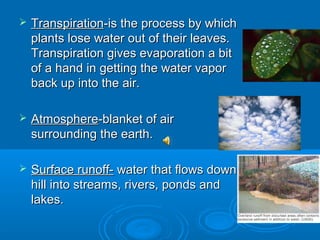
   Transpiration-is the process by which
    plants lose water out of their leaves.
    Transpiration gives evaporation a bit
    of a hand in getting the water vapor
    back up into the air.

   Atmosphere-blanket of air
    surrounding the earth.

   Surface runoff- water that flows down
    hill into streams, rivers, ponds and
    lakes.
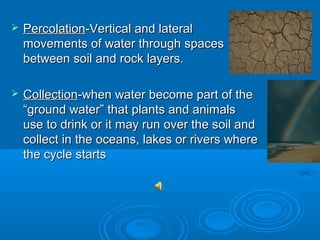
   Percolation-Vertical and lateral
    movements of water through spaces
    between soil and rock layers.

   Collection-when water become part of the
    “ground water” that plants and animals
    use to drink or it may run over the soil and
    collect in the oceans, lakes or rivers where
    the cycle starts
Accommodations
   Extended time on tests and quizzes

   Having directions re-explained by classmate

   Guided notes

   Tasks to be completed written on the board

   Enlarged print
   Squishy ball to play with while teacher gives
    directions

   Verbal reminders of what the student should be
    doing

   Task check off list (taped on desk)

   Preferential seating

   Using a variety of teaching styles to reach
    different modalities of learning
Modifications
   Marginal gloss for some of the vocabulary (e.g.
    precipitation=rain, snow)

   Alternative worksheets/assignments

   Simplified vocabulary used on tests

   Learning basic information on the water cycle (difference
    between an ocean and a lake)

   Only need to know two parts of the water cycle
    (evaporation and percipatation)
Teacher Resources
   www.proteacher.com (includes lesson plan ideas utilized
    by other teachers)

   www.songsforteaching.com

   www.teachers.net

   Greenway, Theresa.(2000) The Water Cycle
       Raintree (reading level age 9-12)
Teacher Resources
   Trueit, Trudi. (2002). The Water Cycle
        Franklin Watts

   Frost, Helen. (2000). The Water Cycle
        Capstone Press

   Relf, P. & Bracken, C. (1996) The Magic School Bus Wet
        All Over: A Book About the Water Cycle New York,
        NY: Scholastic Inc.
Tips for Parents
 Make flash cards for vocabulary and quiz
 kids

 Ask kids on a rainy day where the rain
 comes from and where it will go to
 reinforce their learning
 Look up information on the internet with
 kids

 Play online games related to the water
 cycle
 http://kids.earth.nasa.gov/droplet.html
Research Findings
   The Environmental Protection Agency. (2000). Great
    Minds! Great Lakes!. Chicago, IL:
        Great Lakes National Program Office.

    This research gives fun facts about how much water a
    person uses every day and how they use that water (on
    average a person uses 168 gallons of water a day). This
    research article also provides teachers with different
    activities in reference to different elements of the water
    cycle and how to incorporate them into other subjects to
    reinforce learning.
   The Environmental Protection Agency. (2000). Great
        Minds! Great Lakes!. Chicago, IL: Great Lakes
        National Program Office. The Environmental
    Protection Agency. (2002). Magnificent Ground
    Water Connection. Retrieved October 22, 2004 from
        World Wide Web:
       www.epa.gov/region01/students/teacher/groundw.html


      This research article provides statistics on the amount
      of salt water and fresh water the earth has and the
      things that we use it for. It also provides a variety of
      activities for children from different age groups in
      relation to the water cycle.
Special agencies/organizations
 U.S. Geological Survey’s (USGS)
http://www.usgs.gov/
http://ga.water.usgs.gov/edu/index.html
  (specialized for schools)

 Water Environment Education
http://www.wef.org/

 Enviromental Protection Agency
http://www.epa.gov
Assistive Technology
 Spell checker
 Using a computer for written assignments
 Vibrating watch (remind student of what
  he/she should be doing)
 Larger grip for pen/pencil
 Squishy ball
Website Review
   http://www.kidzone.ws/water/
        This website is a very good website for kids
    to use as a resource. It explained the different
    parts of the water cycle very well and had
    pictures to go along with its explanations. It
    would not be a good idea for a teacher to use
    this website for substantial materials for a lesson
    since it only provides coloring sheets.
   http://mbgnet.mobot.org/fresh/cycle/index.htm
        This website had a lot of explanations for on
    the water cycle but did not provide pictures to go
    along with them. The pictures that the website
    does provide of the water cycle would be very
    confusing for kids because the has arrows
    going all over. Kids would probably become
    bored with this website due to the lack of color
    and pictures.
   http://www.enchantedlearning.com/subjects/oce
    an/Watercycle.shtml
        This website is very kid friendly in that it is
    brief and to the point, has understandable
    pictures of the water cycle, and fun facts to
    interest kids in other things related to the water
    cycle. For teachers this website provides some
    worksheets on the water cycle that they could
    incorporate into their lesson.
The End

Water cycle

  • 1.
    Water Cycle By: AngelaVazzana & Amanda Dobner
  • 2.
    IL Learning Standard 12.E.2a(Late Elementary) Identify and explain natural cycles of the earth’s land, water and atmospheric systems (e.g. rock cycle, water cycle, weather patterns)
  • 3.
    Objectives  Name threeways water gets back into oceans and lakes  Label 4 main parts of the water cycle  Explain the difference between surface runoff and percolation
  • 4.
     Match watercycle vocabulary with the definitions  Explain the importance of the water cycle
  • 5.
    Vocabulary  Condensation-Water vapor in the air gets cold and changes back into liquid, forming clouds.  Precipitation-occurs when so much water has condensed that the air cannot hold it anymore so the clouds get heavy and water falls back to the earth in the form of rain, hail, sleet or snow.  Evaporation- is when the sun heats up water in rivers or lakes or the ocean and turns it into vapor or steam. The water vapor or steam leaves the river, lake or ocean and goes into the air.
  • 6.
    Transpiration-is the process by which plants lose water out of their leaves. Transpiration gives evaporation a bit of a hand in getting the water vapor back up into the air.  Atmosphere-blanket of air surrounding the earth.  Surface runoff- water that flows down hill into streams, rivers, ponds and lakes.
  • 7.
    Percolation-Vertical and lateral movements of water through spaces between soil and rock layers.  Collection-when water become part of the “ground water” that plants and animals use to drink or it may run over the soil and collect in the oceans, lakes or rivers where the cycle starts
  • 8.
    Accommodations  Extended time on tests and quizzes  Having directions re-explained by classmate  Guided notes  Tasks to be completed written on the board  Enlarged print
  • 9.
    Squishy ball to play with while teacher gives directions  Verbal reminders of what the student should be doing  Task check off list (taped on desk)  Preferential seating  Using a variety of teaching styles to reach different modalities of learning
  • 10.
    Modifications  Marginal gloss for some of the vocabulary (e.g. precipitation=rain, snow)  Alternative worksheets/assignments  Simplified vocabulary used on tests  Learning basic information on the water cycle (difference between an ocean and a lake)  Only need to know two parts of the water cycle (evaporation and percipatation)
  • 11.
    Teacher Resources  www.proteacher.com (includes lesson plan ideas utilized by other teachers)  www.songsforteaching.com  www.teachers.net  Greenway, Theresa.(2000) The Water Cycle Raintree (reading level age 9-12)
  • 12.
    Teacher Resources  Trueit, Trudi. (2002). The Water Cycle Franklin Watts  Frost, Helen. (2000). The Water Cycle Capstone Press  Relf, P. & Bracken, C. (1996) The Magic School Bus Wet All Over: A Book About the Water Cycle New York, NY: Scholastic Inc.
  • 13.
    Tips for Parents Make flash cards for vocabulary and quiz kids  Ask kids on a rainy day where the rain comes from and where it will go to reinforce their learning
  • 14.
     Look upinformation on the internet with kids  Play online games related to the water cycle http://kids.earth.nasa.gov/droplet.html
  • 15.
    Research Findings  The Environmental Protection Agency. (2000). Great Minds! Great Lakes!. Chicago, IL: Great Lakes National Program Office. This research gives fun facts about how much water a person uses every day and how they use that water (on average a person uses 168 gallons of water a day). This research article also provides teachers with different activities in reference to different elements of the water cycle and how to incorporate them into other subjects to reinforce learning.
  • 16.
    The Environmental Protection Agency. (2000). Great Minds! Great Lakes!. Chicago, IL: Great Lakes National Program Office. The Environmental Protection Agency. (2002). Magnificent Ground Water Connection. Retrieved October 22, 2004 from World Wide Web: www.epa.gov/region01/students/teacher/groundw.html This research article provides statistics on the amount of salt water and fresh water the earth has and the things that we use it for. It also provides a variety of activities for children from different age groups in relation to the water cycle.
  • 17.
    Special agencies/organizations  U.S.Geological Survey’s (USGS) http://www.usgs.gov/ http://ga.water.usgs.gov/edu/index.html (specialized for schools)  Water Environment Education http://www.wef.org/  Enviromental Protection Agency http://www.epa.gov
  • 18.
    Assistive Technology  Spellchecker  Using a computer for written assignments  Vibrating watch (remind student of what he/she should be doing)  Larger grip for pen/pencil  Squishy ball
  • 19.
    Website Review  http://www.kidzone.ws/water/ This website is a very good website for kids to use as a resource. It explained the different parts of the water cycle very well and had pictures to go along with its explanations. It would not be a good idea for a teacher to use this website for substantial materials for a lesson since it only provides coloring sheets.
  • 20.
    http://mbgnet.mobot.org/fresh/cycle/index.htm This website had a lot of explanations for on the water cycle but did not provide pictures to go along with them. The pictures that the website does provide of the water cycle would be very confusing for kids because the has arrows going all over. Kids would probably become bored with this website due to the lack of color and pictures.
  • 21.
    http://www.enchantedlearning.com/subjects/oce an/Watercycle.shtml This website is very kid friendly in that it is brief and to the point, has understandable pictures of the water cycle, and fun facts to interest kids in other things related to the water cycle. For teachers this website provides some worksheets on the water cycle that they could incorporate into their lesson.
  • 22.