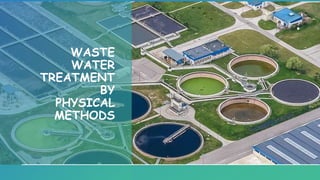
WASTE
WATER
TREATMENT
BY
PHYSICAL
METHODS
Physical
methods
There are six
methods in the
treatment of waste
water by means of
physical methods.
Screening
Grit Chamber
Fat and Grease removal
Flotation
Equalization basin
Wastewater Clarifier Sedimentation Tank
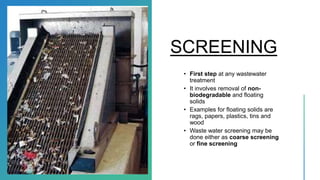
SCREENING
• First step at any wastewater
treatment
• It involves removal of non-
biodegradable and floating
solids
• Examples for floating solids are
rags, papers, plastics, tins and
wood
• Waste water screening may be
done either as coarse screening
or fine screening
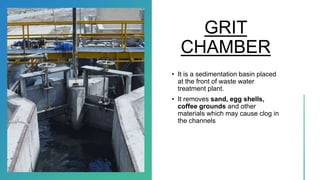
GRIT
CHAMBER
• It is a sedimentation basin placed
at the front of waste water
treatment plant.
• It removes sand, egg shells,
coffee grounds and other
materials which may cause clog in
the channels
FAT AND
GREASE
REMOVAL
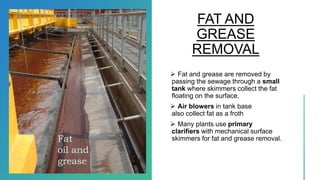
 Fat and grease are removed by
passing the sewage through a small
tank where skimmers collect the fat
floating on the surface.
 Air blowers in tank base
also collect fat as a froth
 Many plants use primary
clarifiers with mechanical surface
skimmers for fat and grease removal.Fat
oil and
grease
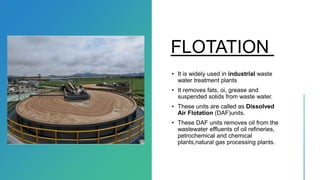
FLOTATION
• It is widely used in industrial waste
water treatment plants
• It removes fats, oi, grease and
suspended solids from waste water.
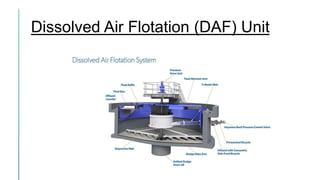
• These units are called as Dissolved
Air Flotation (DAF)units.
• These DAF units removes oil from the
wastewater effluents of oil refineries,
petrochemical and chemical
plants,natural gas processing plants.
Dissolved Air Flotation (DAF) Unit
EQUALIZATION
BASIN
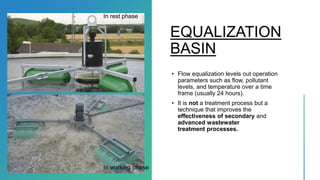
• Flow equalization levels out operation
parameters such as flow, pollutant
levels, and temperature over a time
frame (usually 24 hours).
• It is not a treatment process but a
technique that improves the
effectiveness of secondary and
advanced wastewater
treatment processes.
In rest phase
In working phase
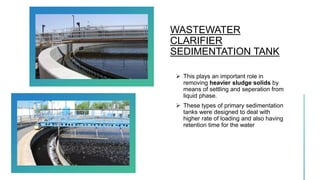
WASTEWATER
CLARIFIER
SEDIMENTATION TANK
 This plays an important role in
removing heavier sludge solids by
means of settling and seperation from
liquid phase.
 These types of primary sedimentation
tanks were designed to deal with
higher rate of loading and also having
retention time for the water
SOURCE:
CONTENT: NGO International
Company
IMAGES: Google Images

Waste water treatment physical methods

  • 1.
  • 2.
    Physical methods There are six methodsin the treatment of waste water by means of physical methods. Screening Grit Chamber Fat and Grease removal Flotation Equalization basin Wastewater Clarifier Sedimentation Tank
  • 3.
    SCREENING • First stepat any wastewater treatment • It involves removal of non- biodegradable and floating solids • Examples for floating solids are rags, papers, plastics, tins and wood • Waste water screening may be done either as coarse screening or fine screening
  • 4.
    GRIT CHAMBER • It isa sedimentation basin placed at the front of waste water treatment plant. • It removes sand, egg shells, coffee grounds and other materials which may cause clog in the channels
  • 5.
    FAT AND GREASE REMOVAL  Fatand grease are removed by passing the sewage through a small tank where skimmers collect the fat floating on the surface.  Air blowers in tank base also collect fat as a froth  Many plants use primary clarifiers with mechanical surface skimmers for fat and grease removal.Fat oil and grease
  • 6.
    FLOTATION • It iswidely used in industrial waste water treatment plants • It removes fats, oi, grease and suspended solids from waste water. • These units are called as Dissolved Air Flotation (DAF)units. • These DAF units removes oil from the wastewater effluents of oil refineries, petrochemical and chemical plants,natural gas processing plants.
  • 7.
  • 8.
    EQUALIZATION BASIN • Flow equalizationlevels out operation parameters such as flow, pollutant levels, and temperature over a time frame (usually 24 hours). • It is not a treatment process but a technique that improves the effectiveness of secondary and advanced wastewater treatment processes. In rest phase In working phase
  • 9.
    WASTEWATER CLARIFIER SEDIMENTATION TANK  Thisplays an important role in removing heavier sludge solids by means of settling and seperation from liquid phase.  These types of primary sedimentation tanks were designed to deal with higher rate of loading and also having retention time for the water
  • 10.