
Waste not woodSocial Venture Creation15th April, 2011Aditya Bhandari, NasrinKaniz, Catherine Sung, Kevin Twill
Who are we?
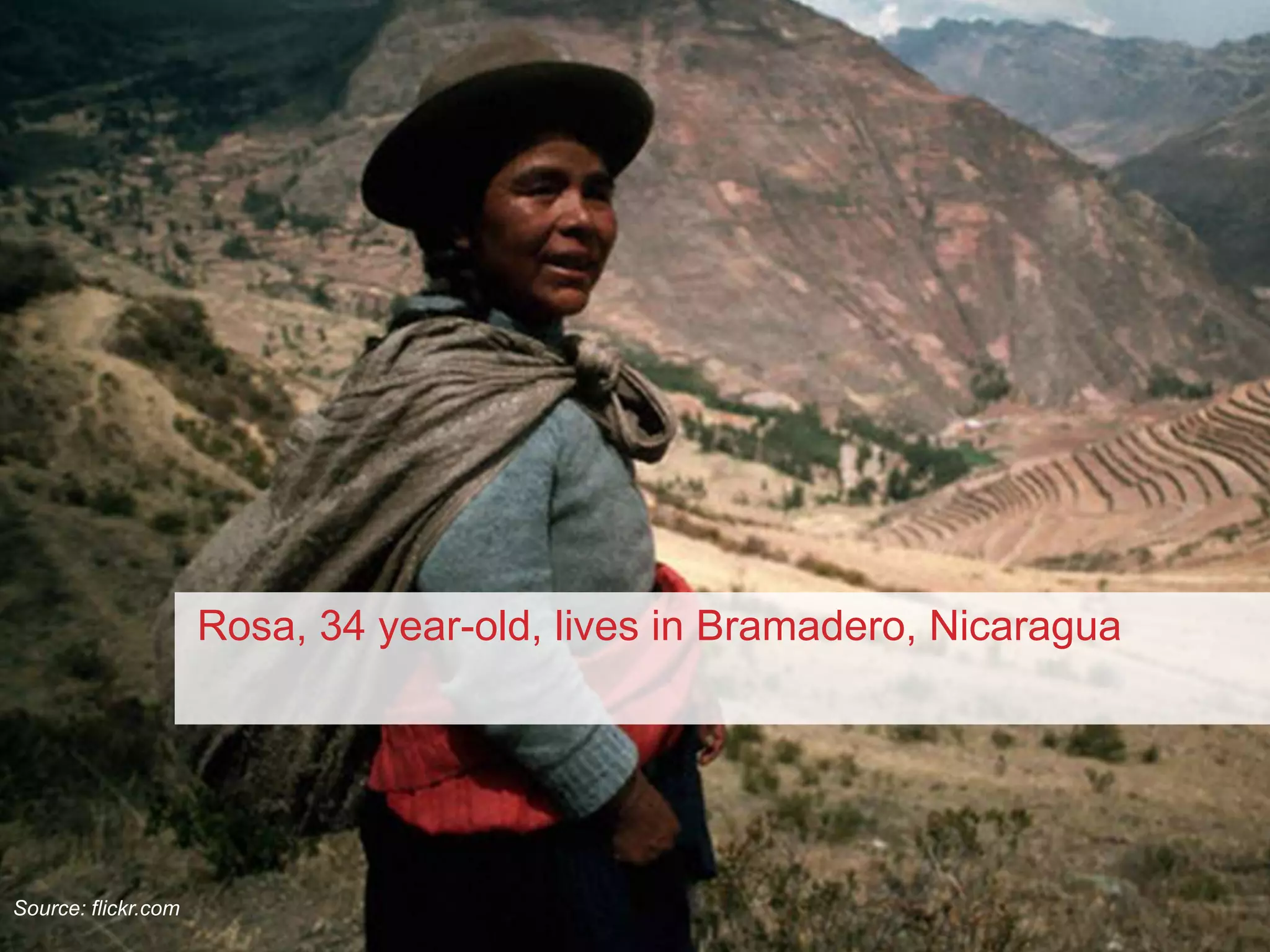
1Rosa, 34 year-old, lives in Bramadero, NicaraguaSource: flickr.com
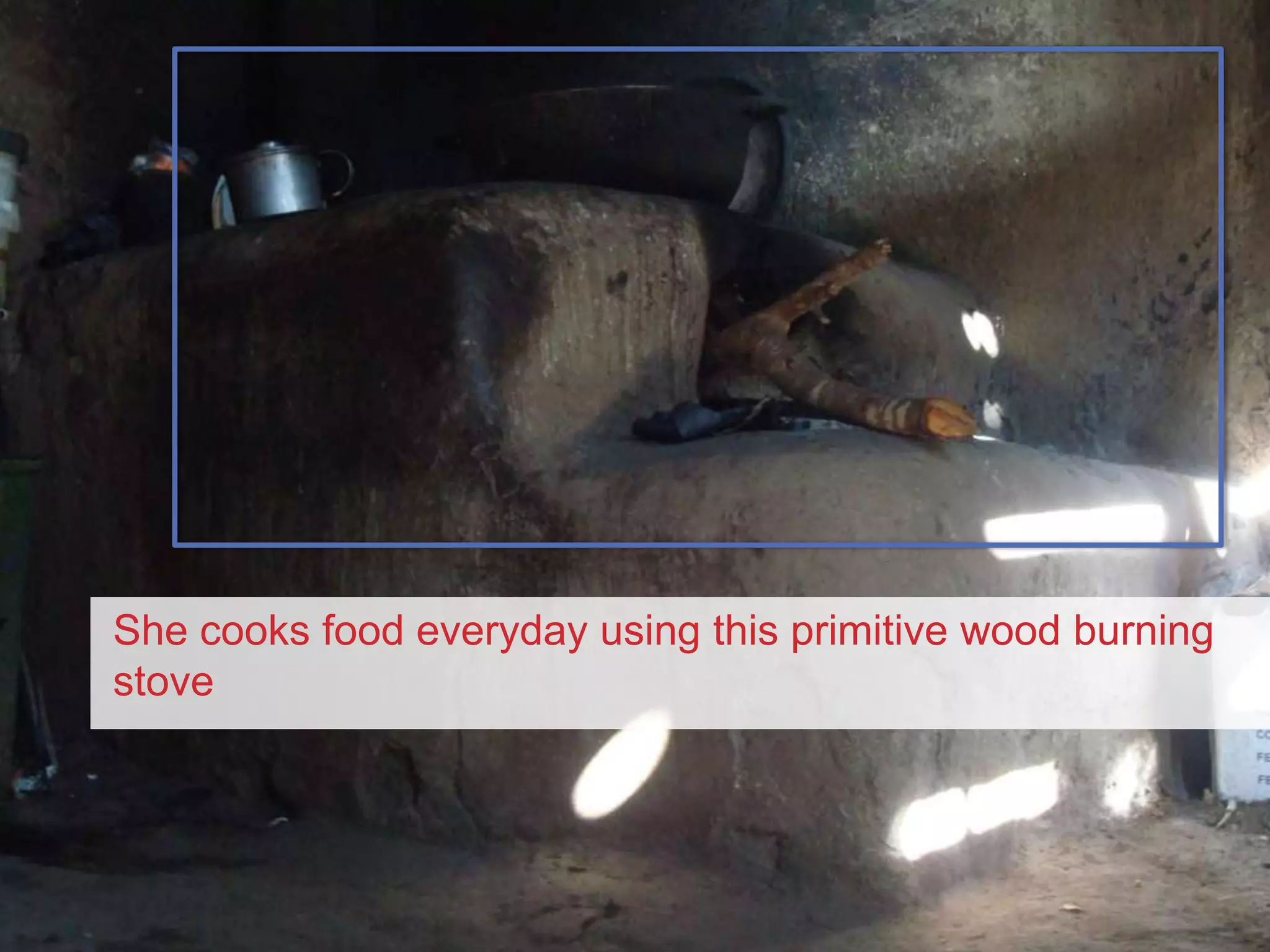
2She cooks food everyday using this primitive wood burning stove
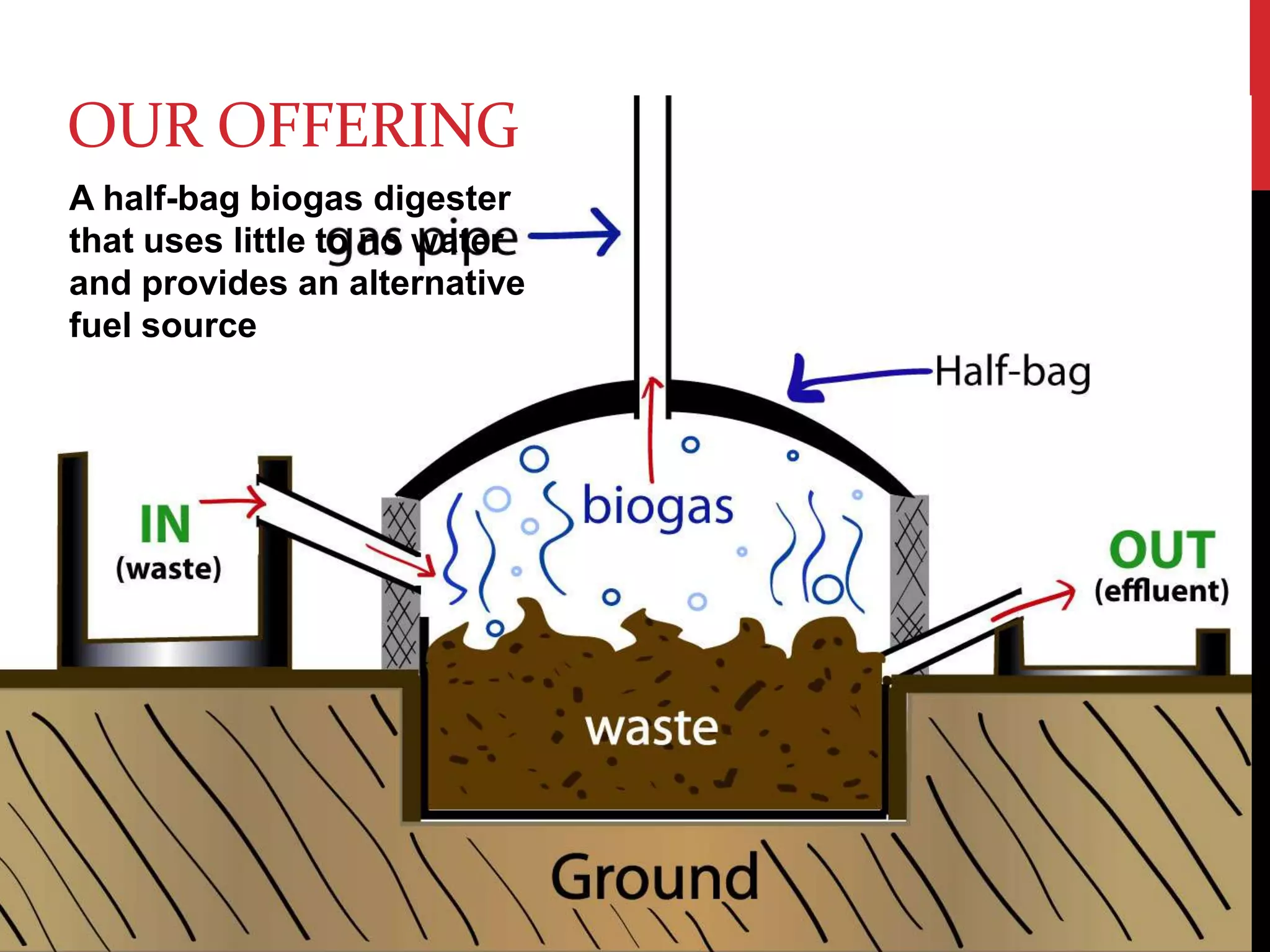
Our offeringA half-bag biogas digester that uses little to no water and provides an alternative fuel source
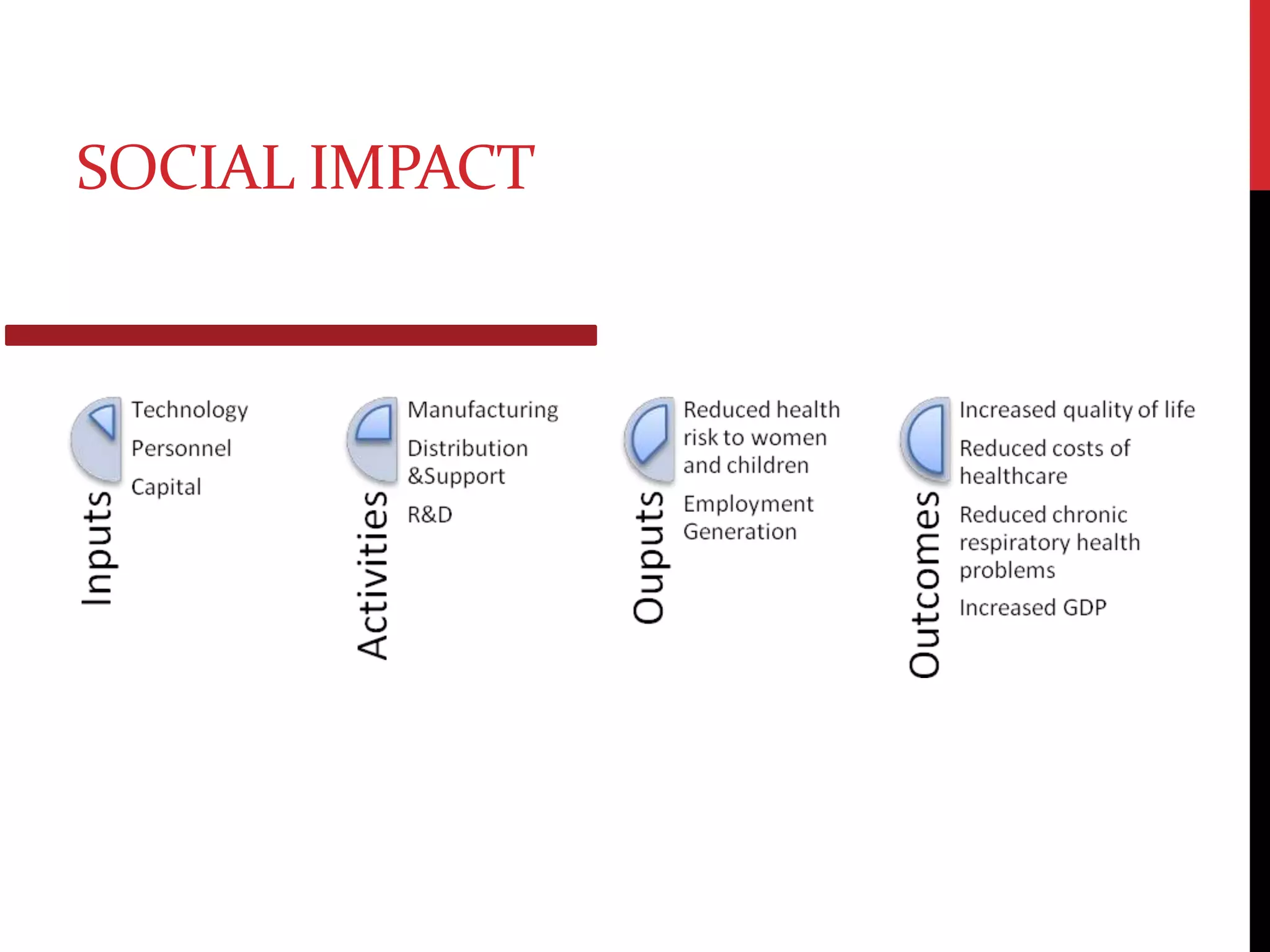
Social Impact
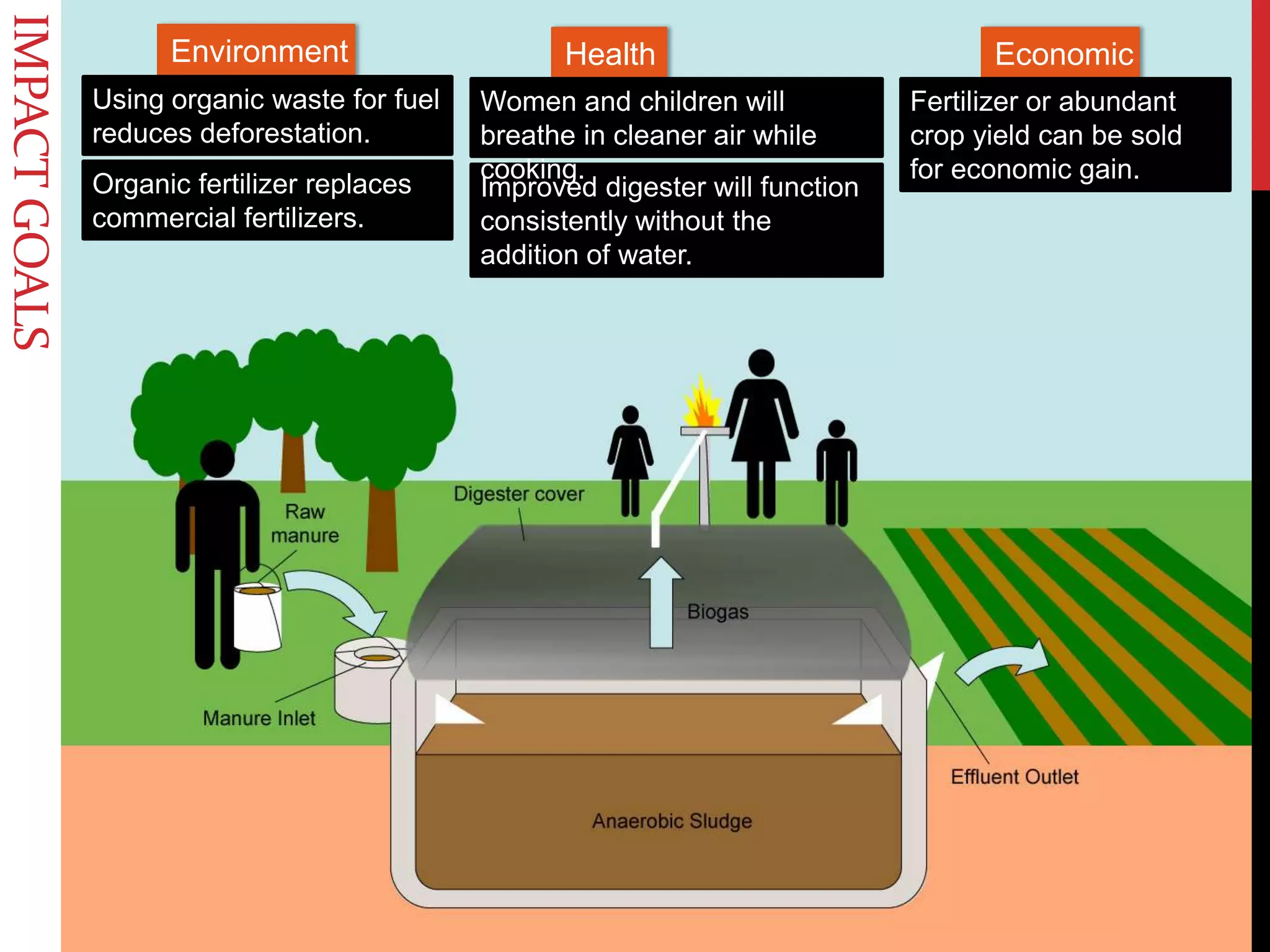
EnvironmentHealthEconomicUsing organic waste for fuel reduces deforestation.Women and children will breathe in cleaner air while cooking.Fertilizer or abundant crop yield can be sold for economic gain.Organic fertilizer replaces commercial fertilizers.Improved digester will function consistently without the addition of water.Impact goals
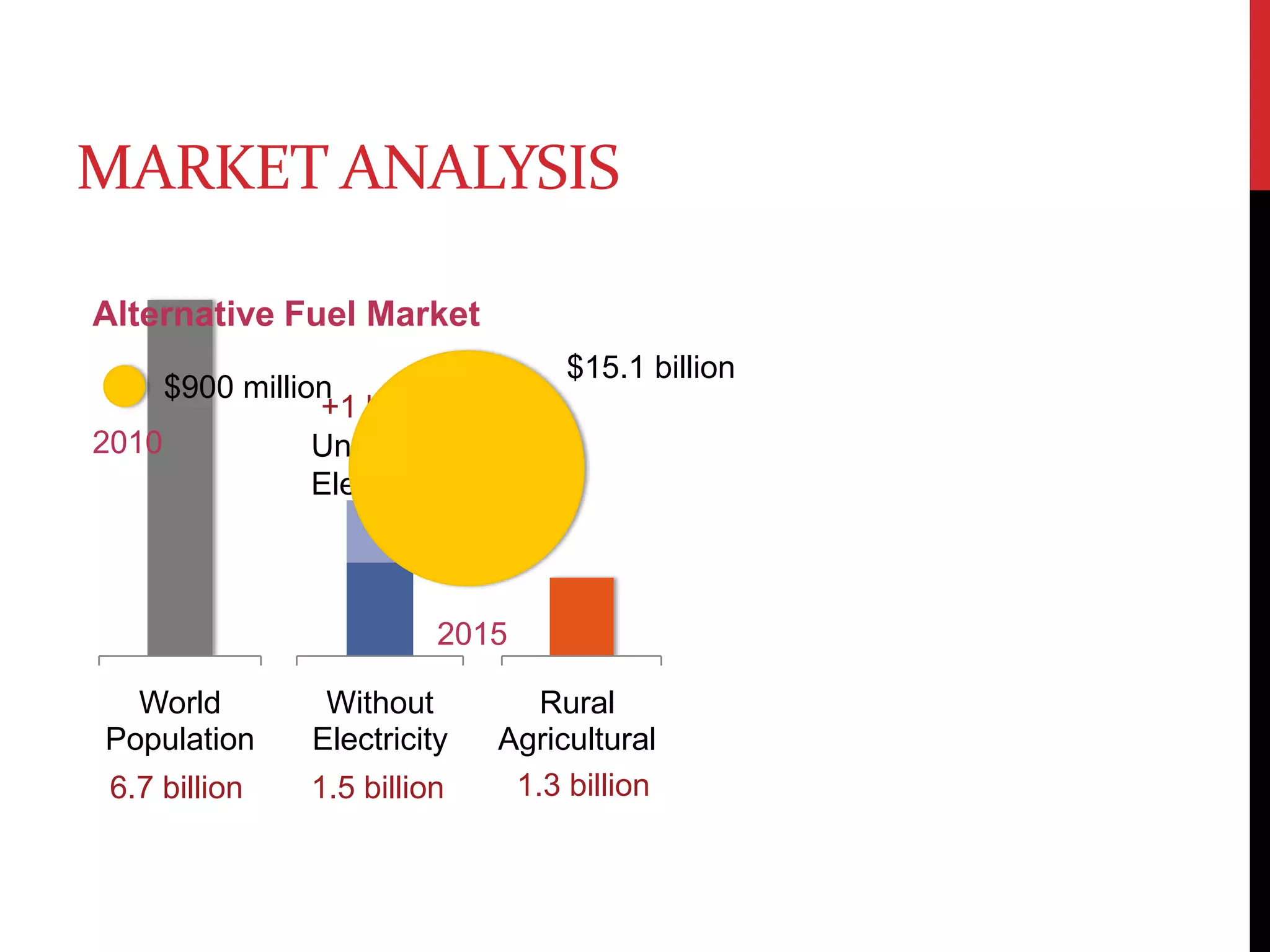
Market analysis$900 million$15.1 billionAlternative Fuel Market+1 billionUnreliableElectricity201020151.3 billion6.7 billion1.5 billion
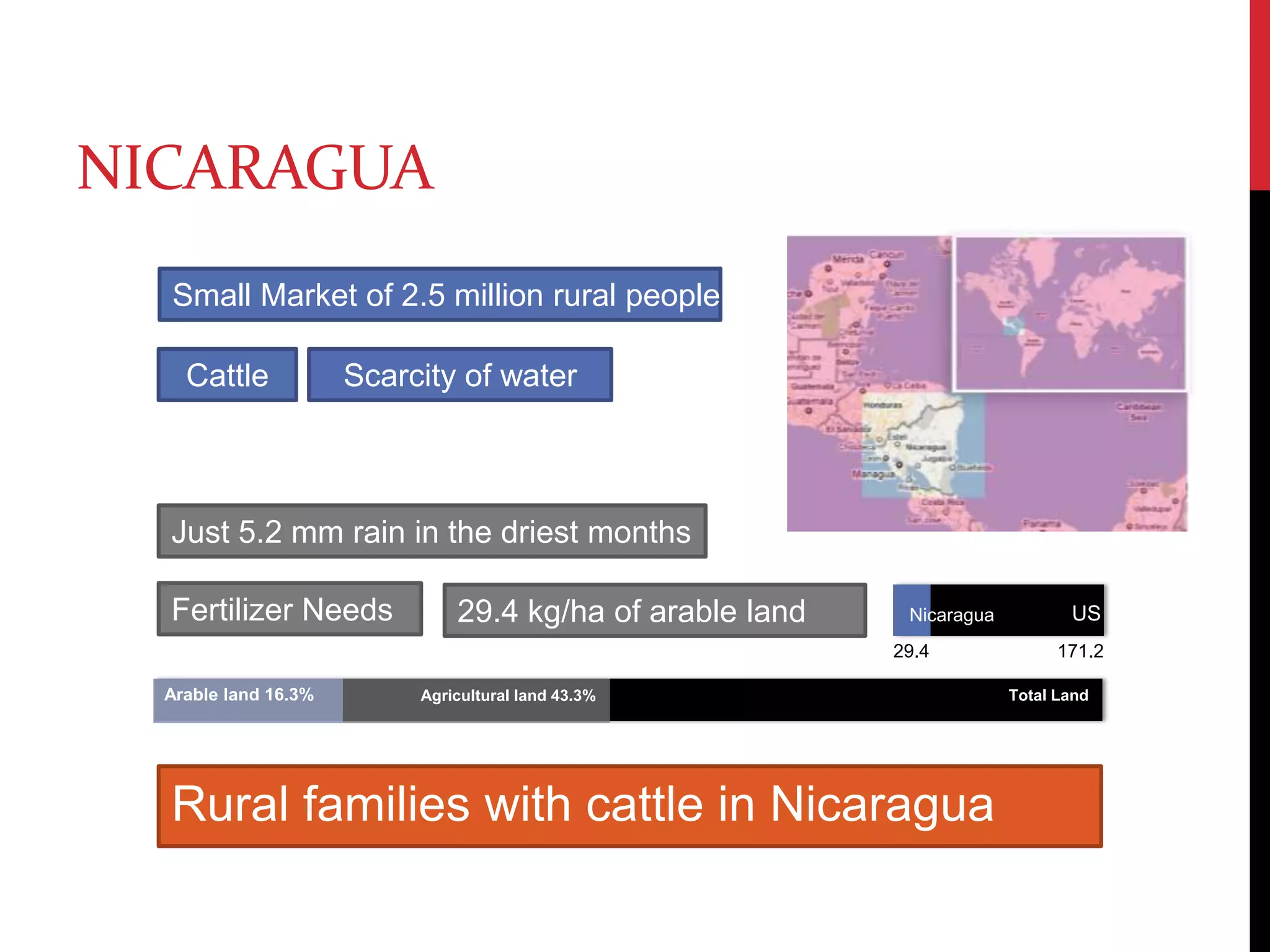
NicaraguaSmall Market of 2.5 million rural peopleScarcity of waterCattleArable land 16.3%Total LandAgricultural land 43.3%Just 5.2 mm rain in the driest months Fertilizer Needs 29.4 kg/ha of arable landUSNicaragua29.4171.2Rural families with cattle in Nicaragua
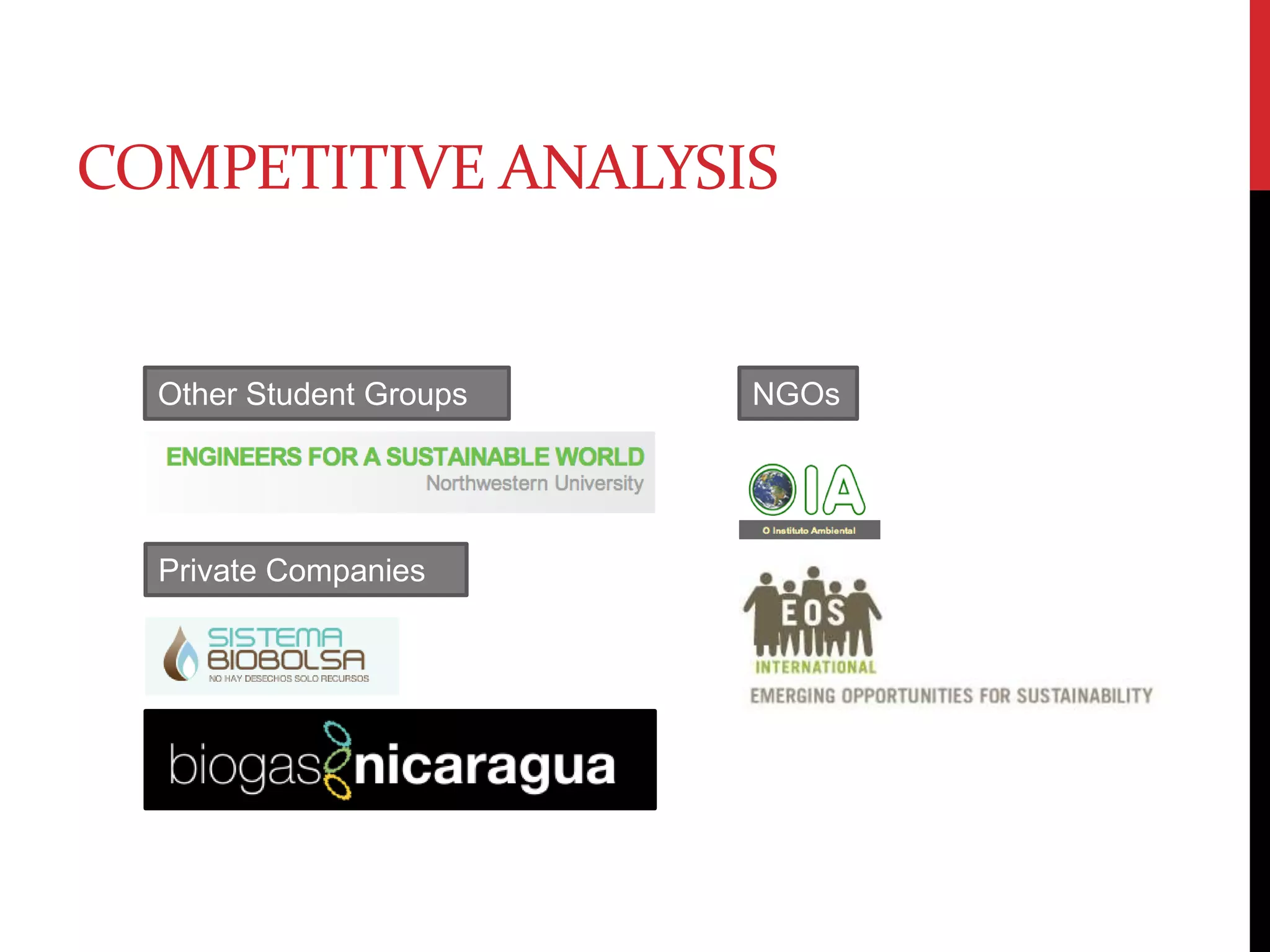
Competitive analysisOther Student GroupsNGOsPrivate Companies
Customer Discovery HypothesesUse Nicaragua as initial entry point Partner with NGOsFocus on health and environmental concerns
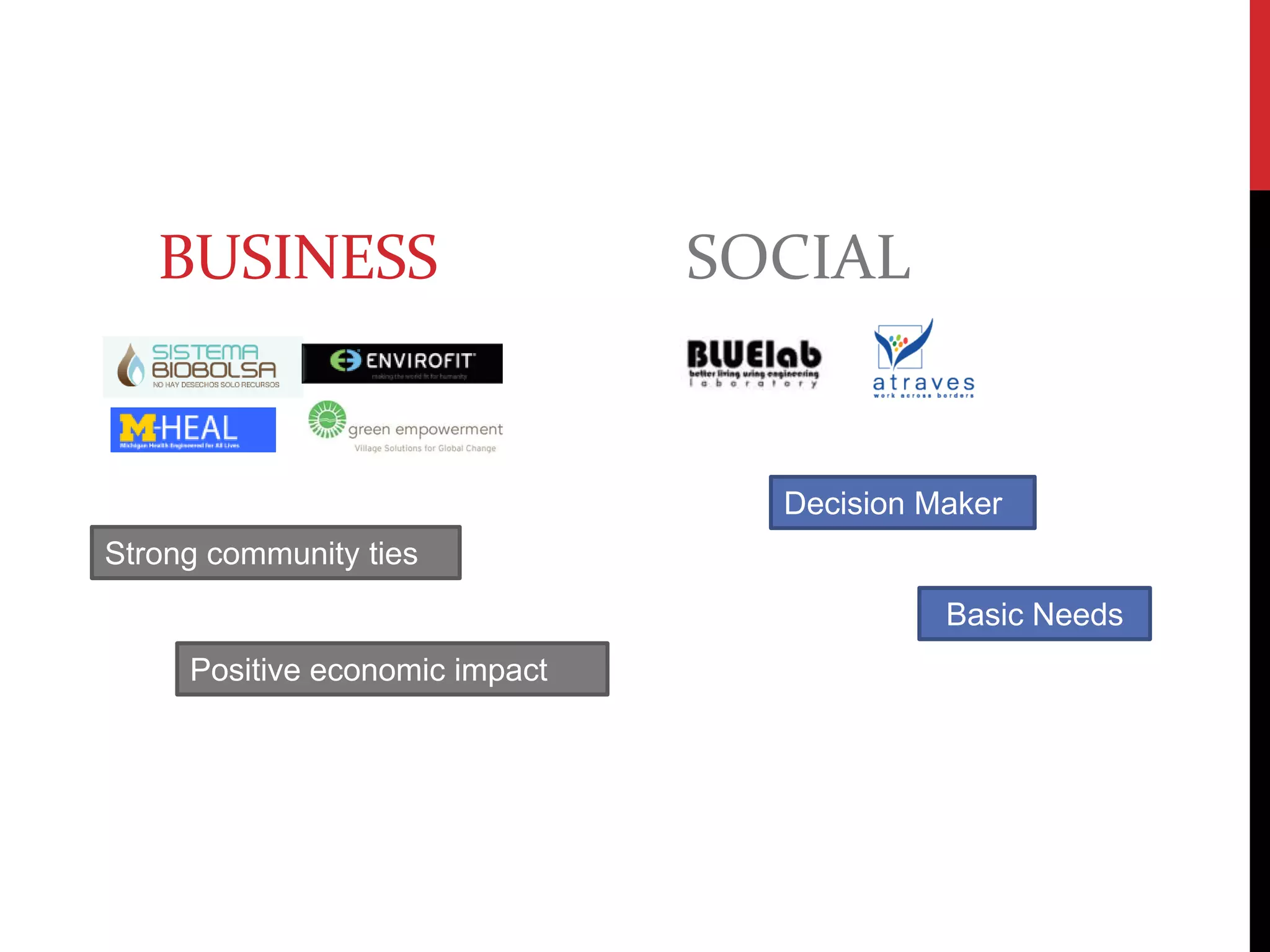
BusinessSOCIALDecision MakerStrong community tiesBasic NeedsPositive economic impact
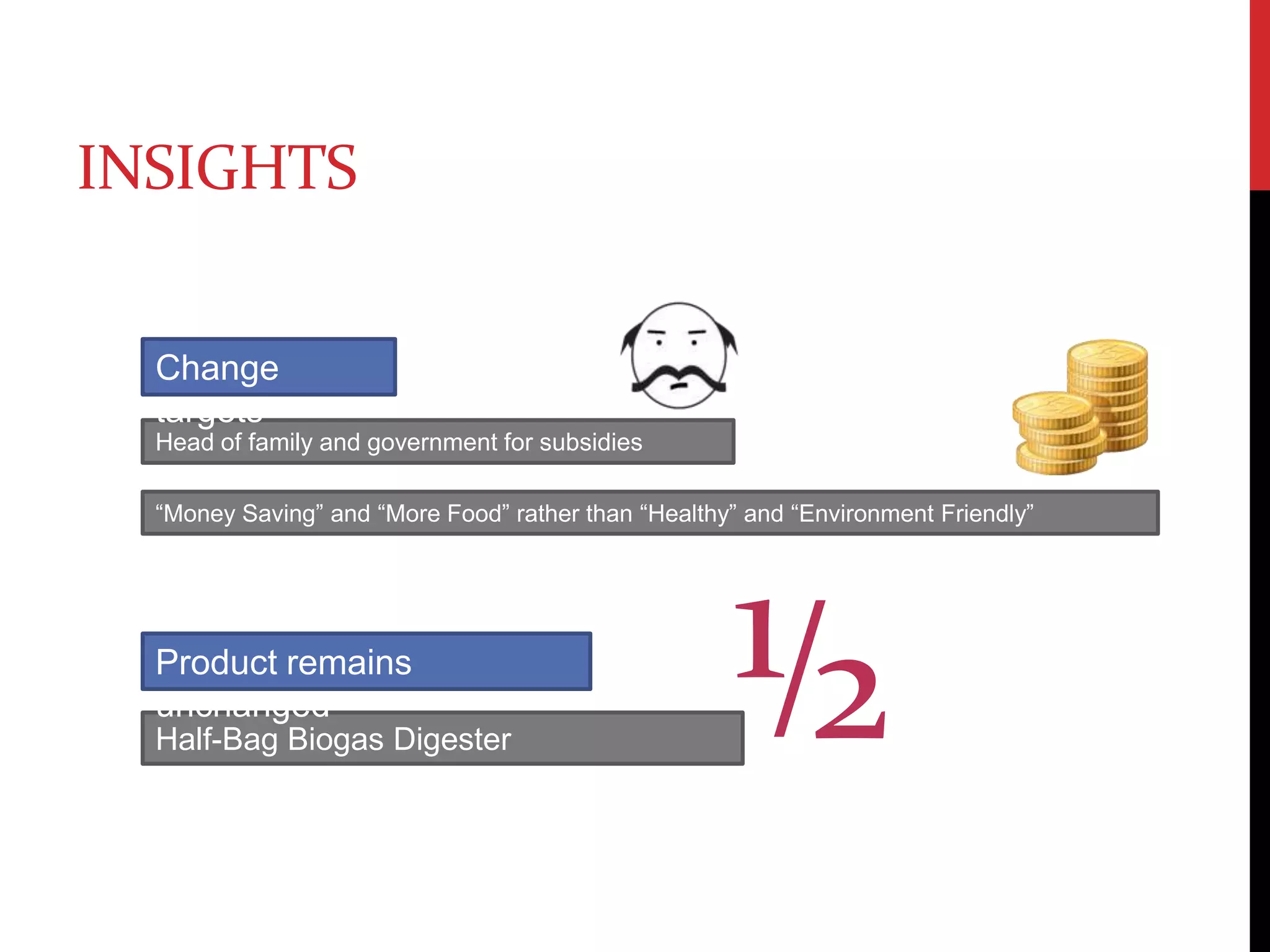
InsightsChange targetsHead of family and government for subsidies“Money Saving” and “More Food” rather than “Healthy” and “Environment Friendly”1/2Product remains unchangedHalf-Bag Biogas Digester
Business Model
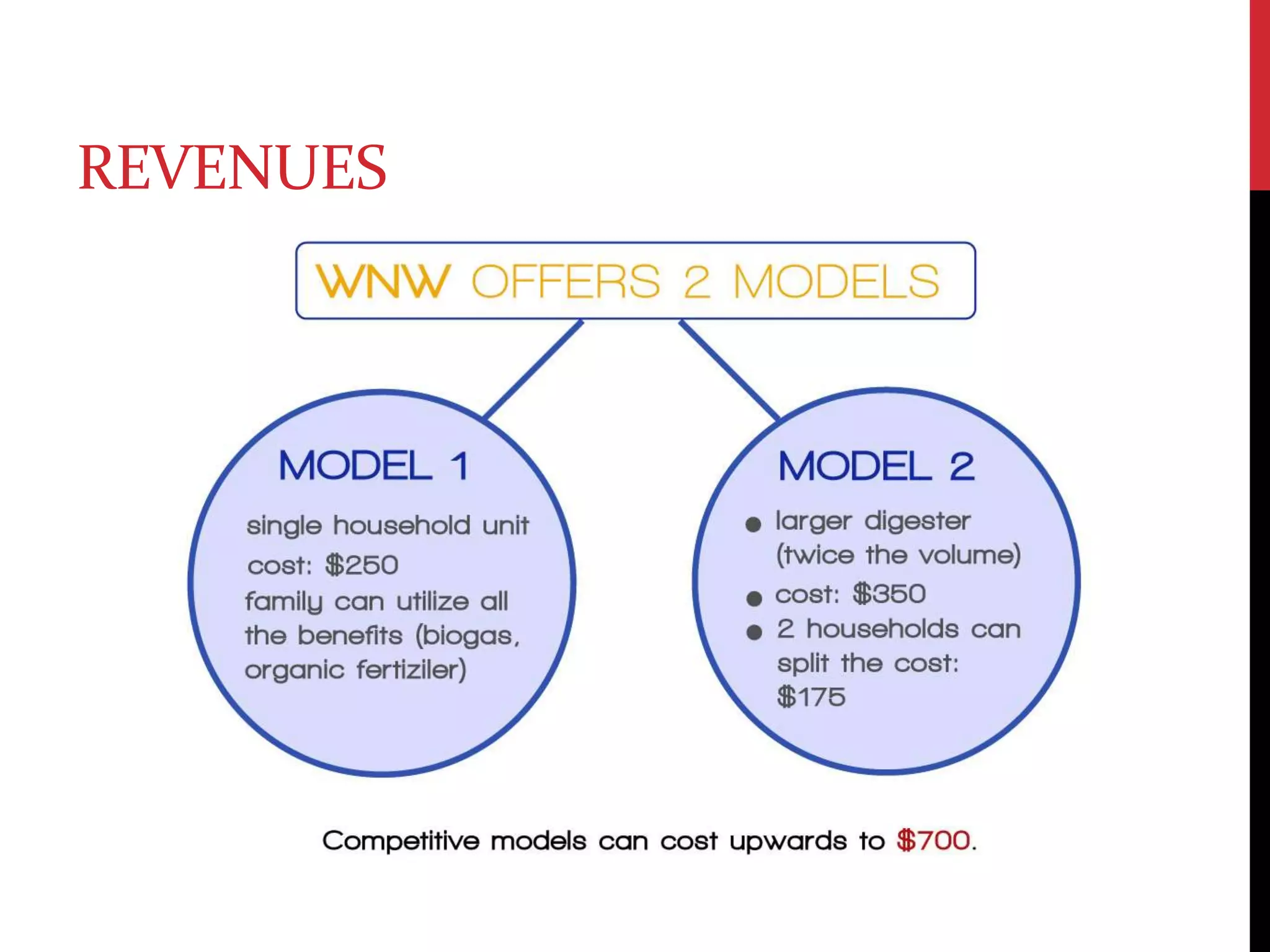
Revenues
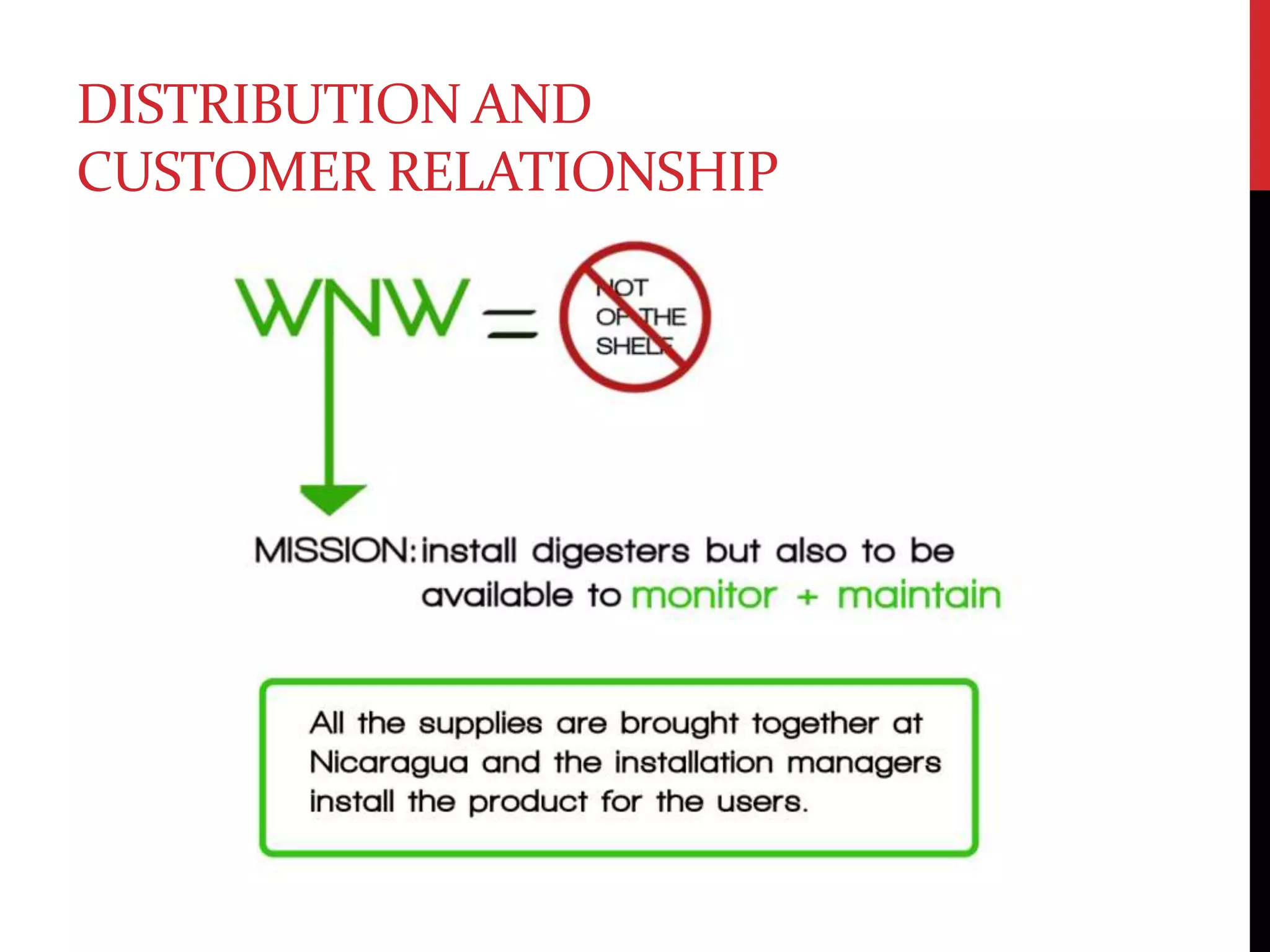
Distribution and Customer Relationship
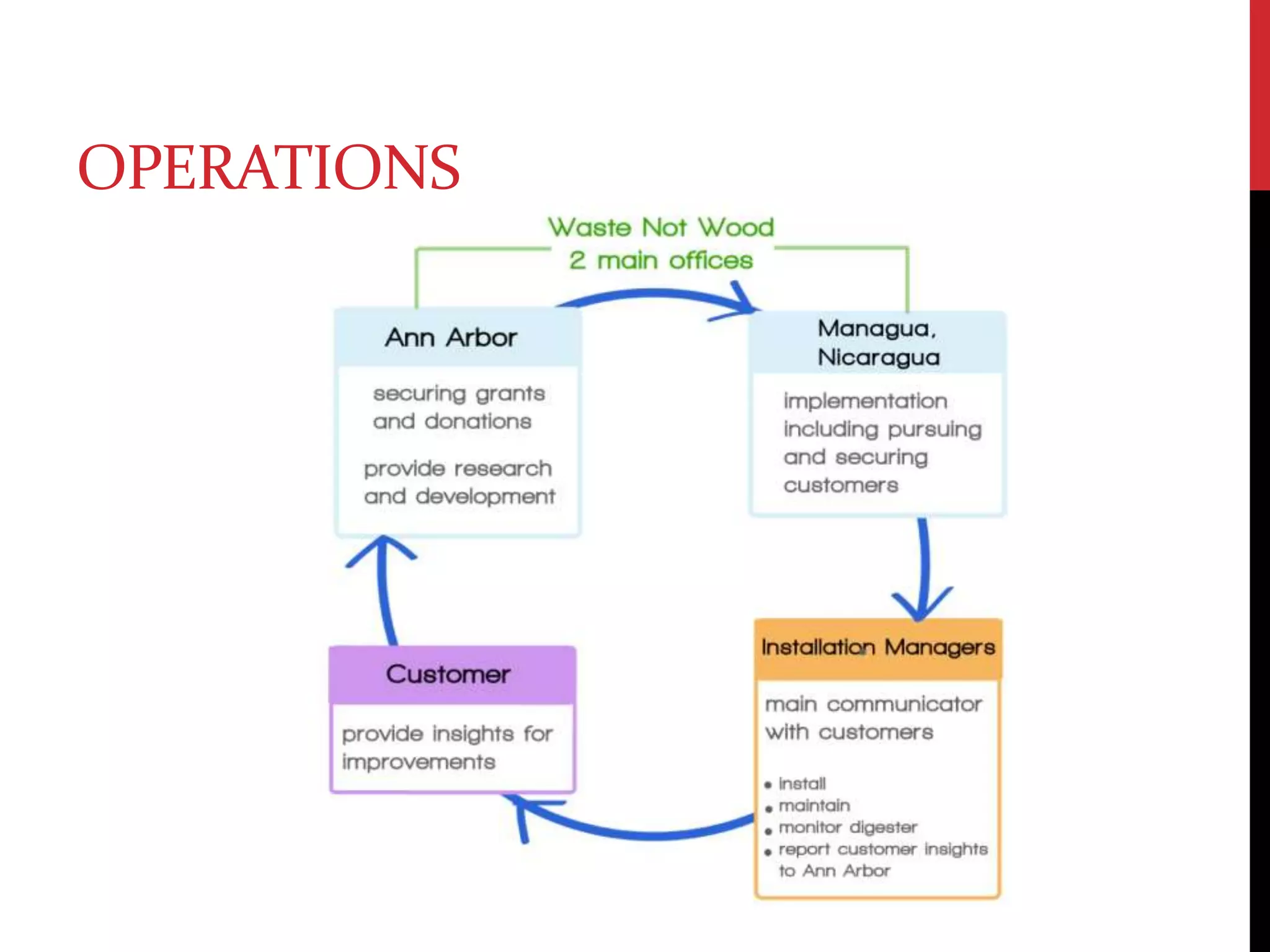
Operations
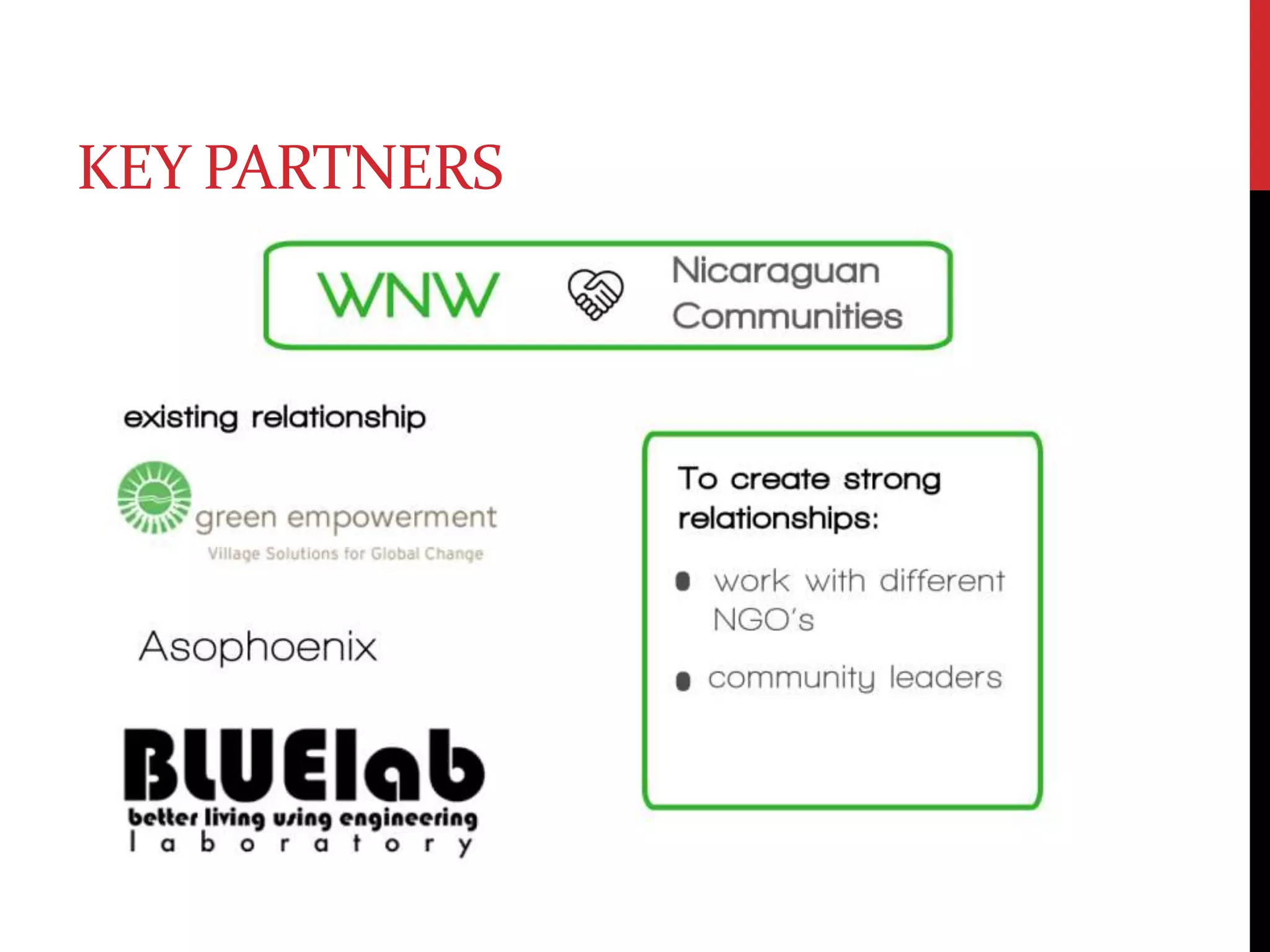
Key Partners
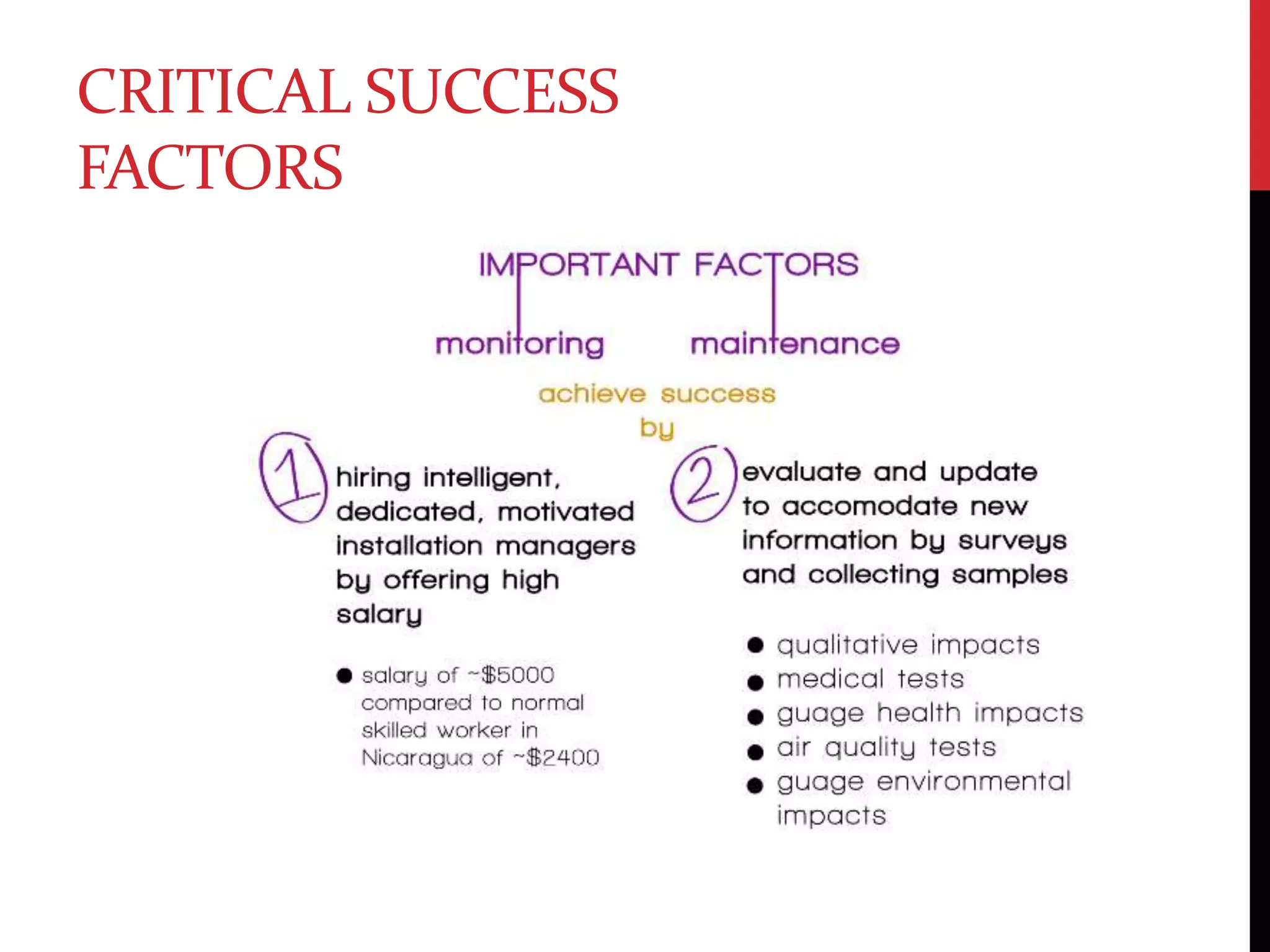
Critical Success Factors
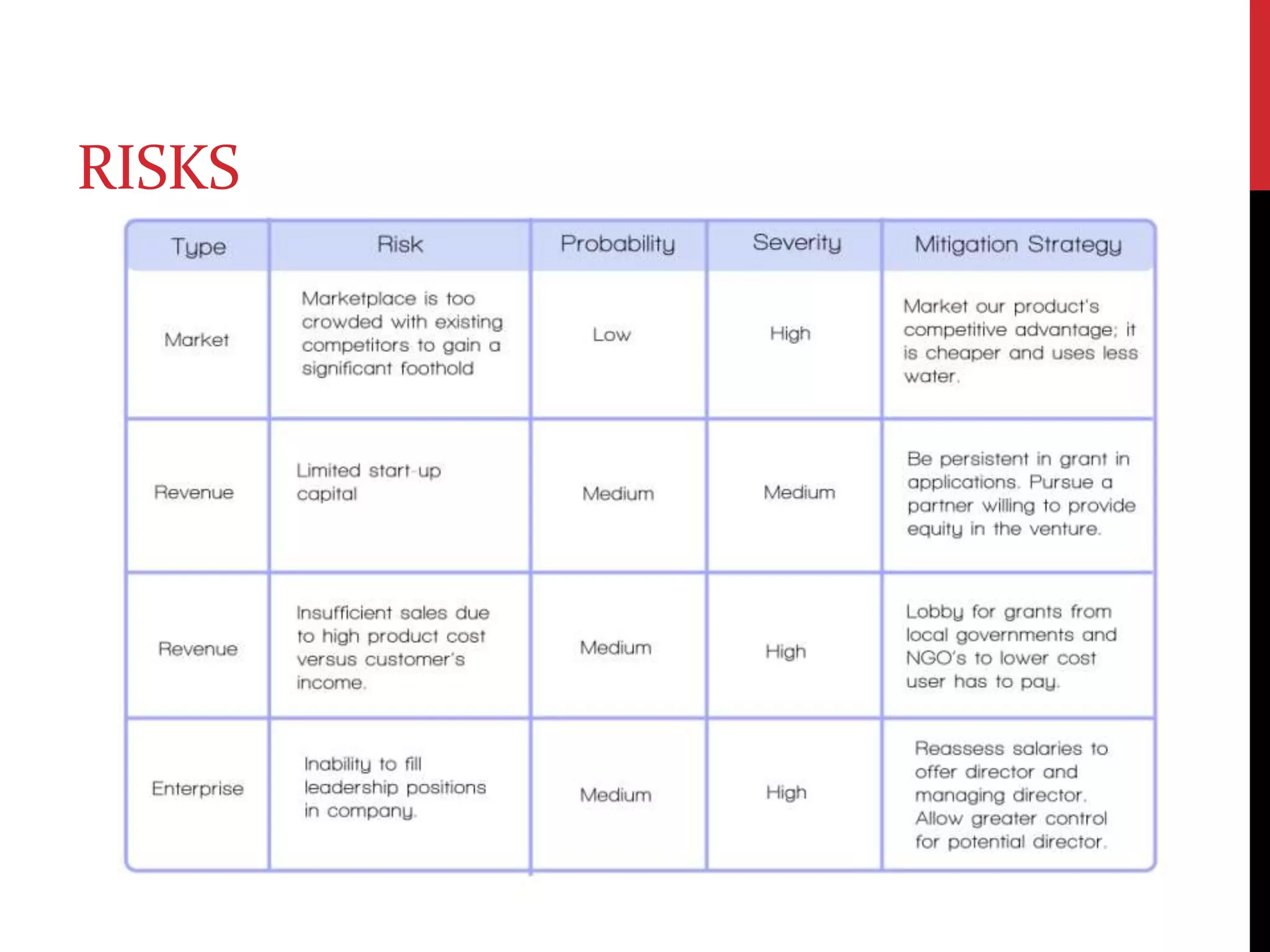
RISKs
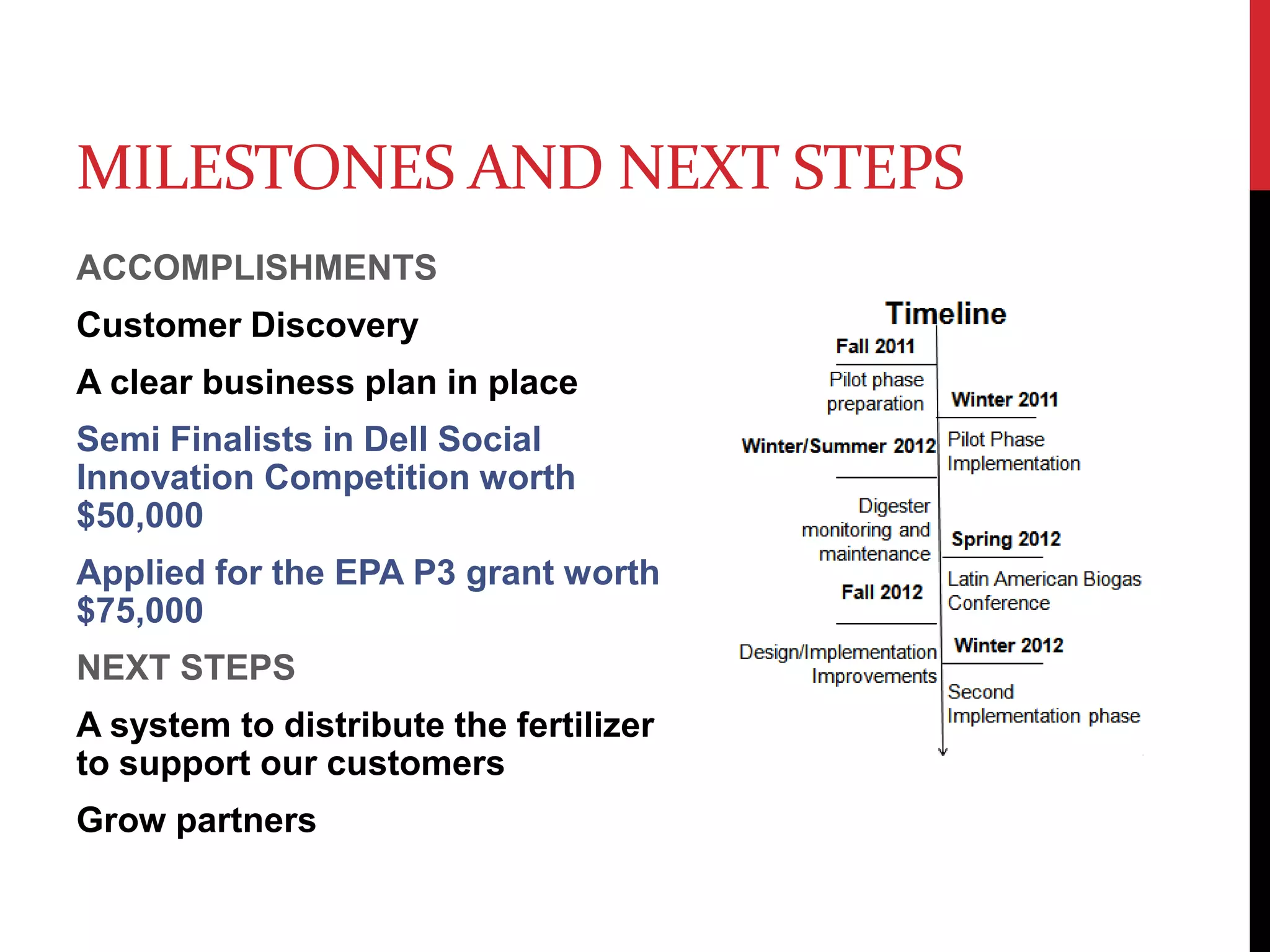
Milestones and next StepsACCOMPLISHMENTSCustomer DiscoveryA clear business plan in placeSemi Finalists in Dell Social Innovation Competition worth $50,000Applied for the EPA P3 grant worth $75,000NEXT STEPSA system to distribute the fertilizer to support our customersGrow partners
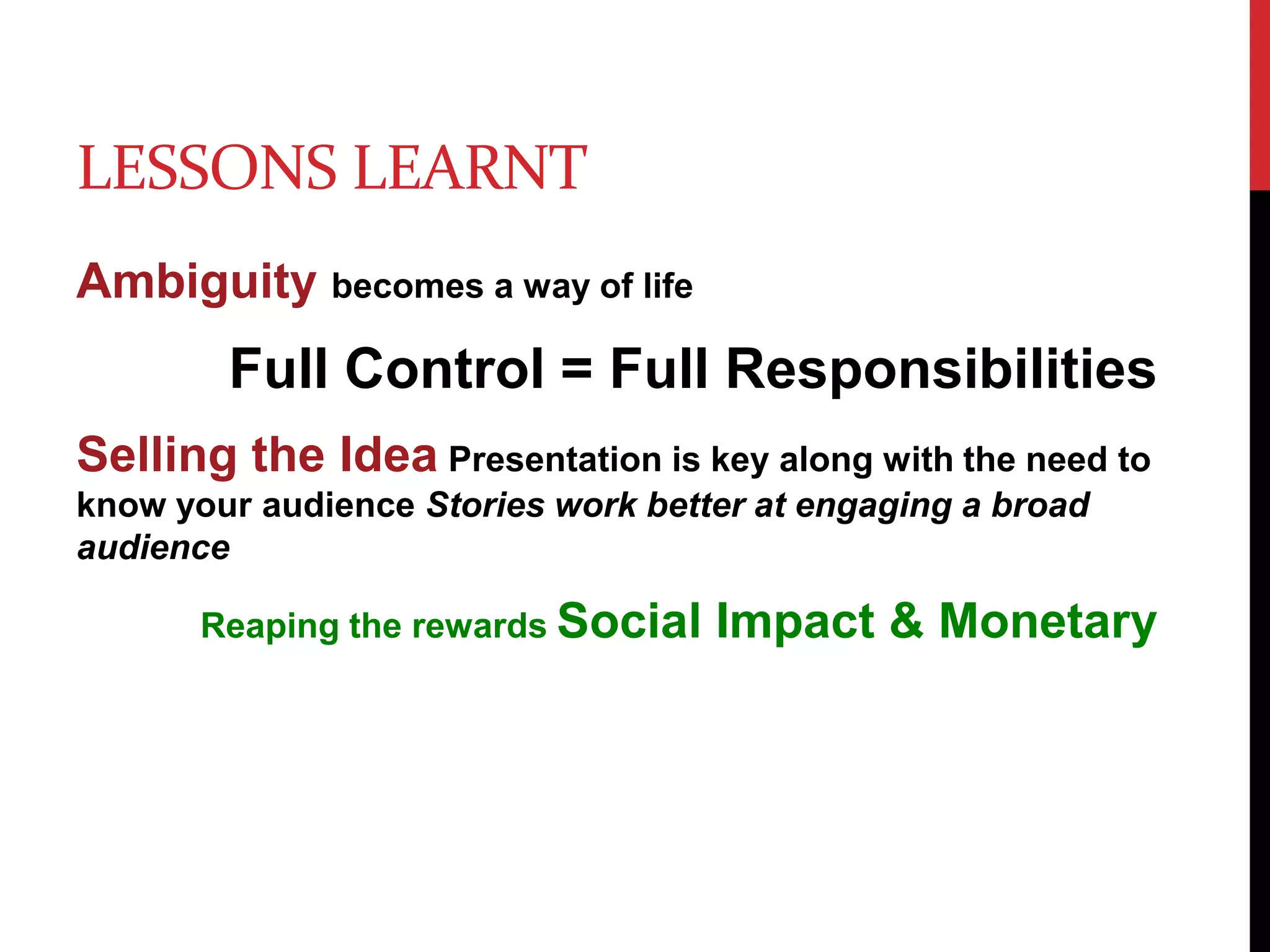
Lessons LearntAmbiguity becomes a way of lifeFull Control = Full Responsibilities Selling the IdeaPresentation is key along with the need to know your audience Stories work better at engaging a broad audienceReaping the rewards Social Impact & Monetary
Questions
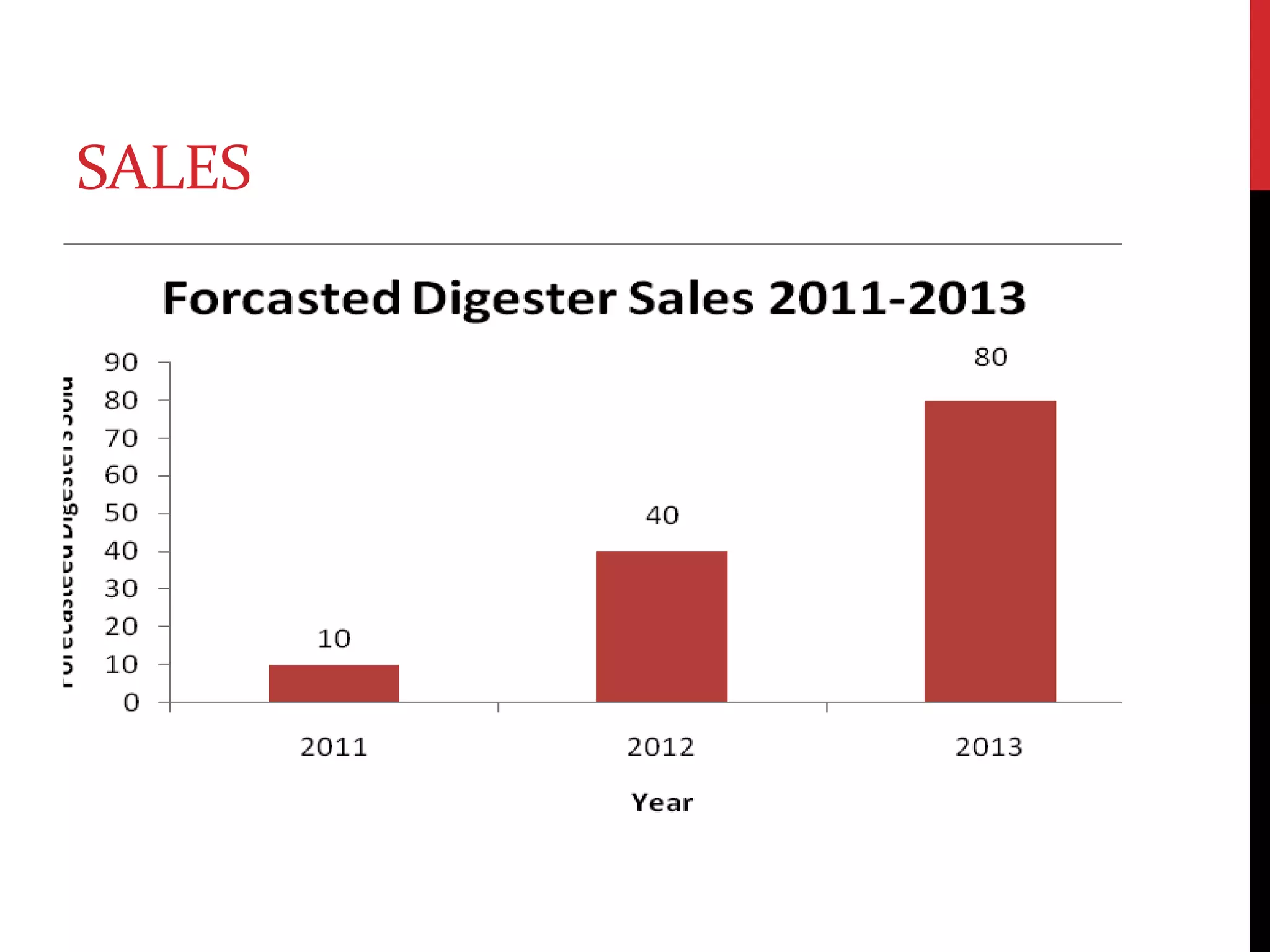
Sales
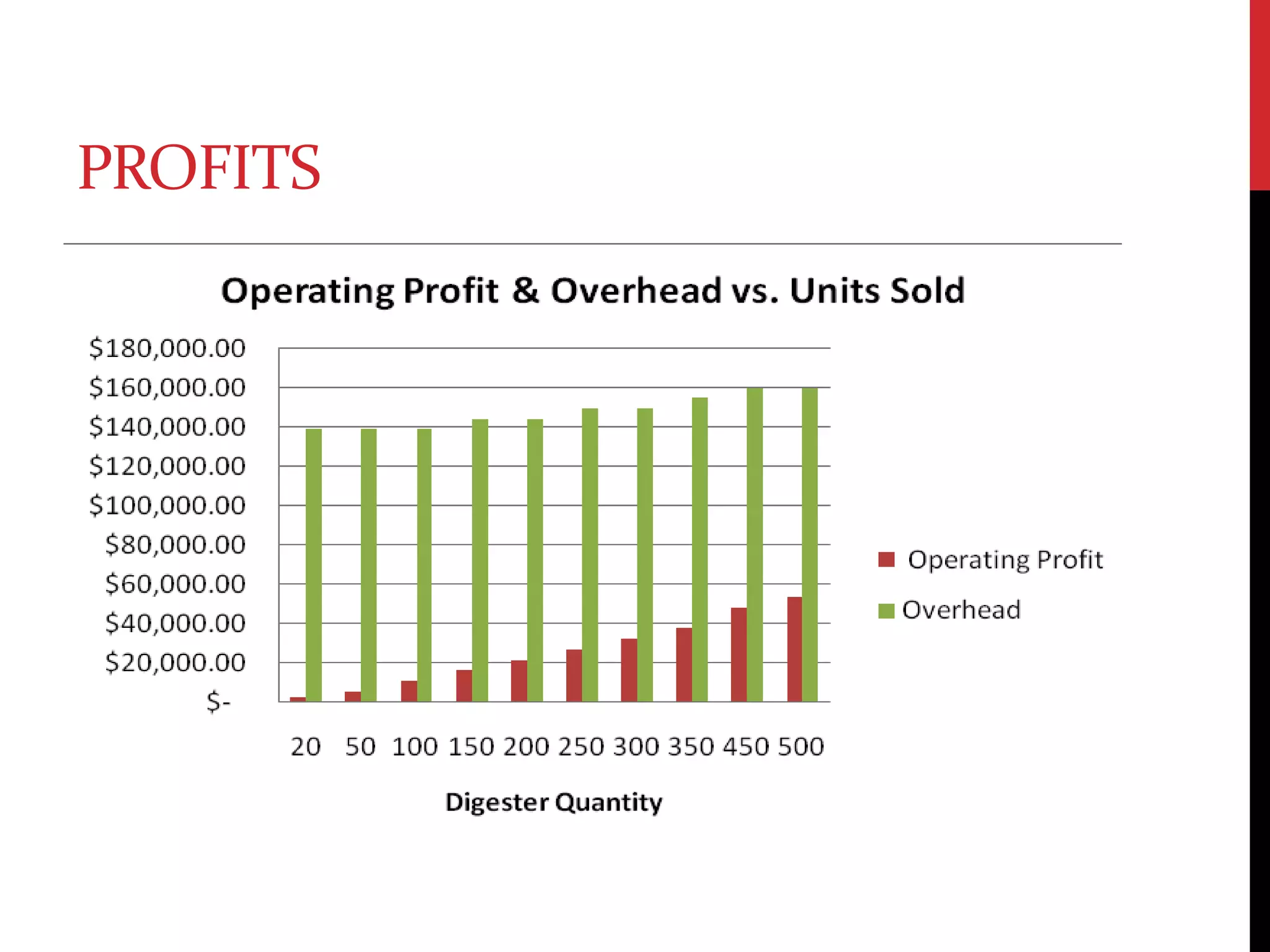
Profits
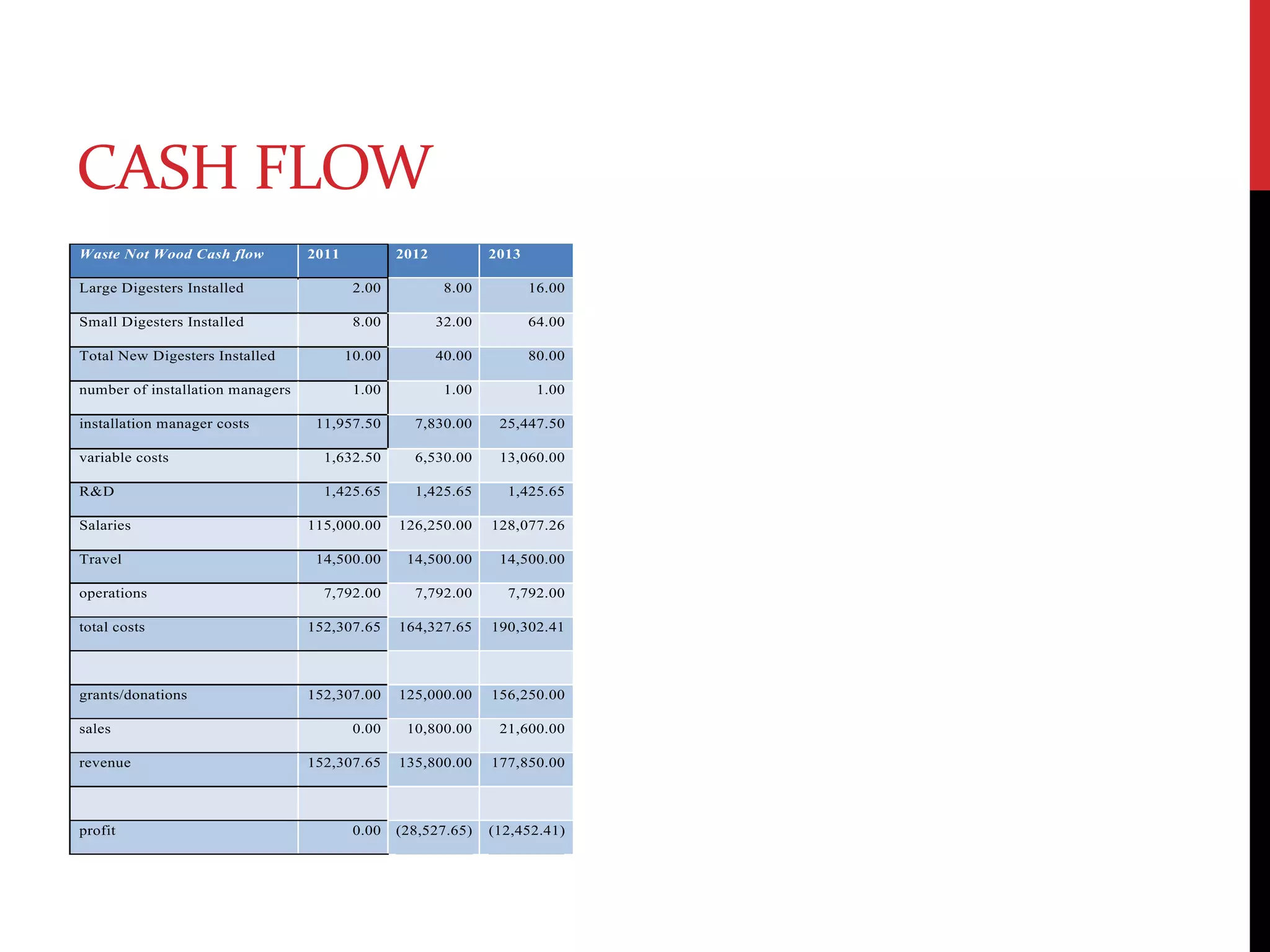
Cash Flow

Waste Not Wood

Editor's Notes

  • #3 x-Who are you? Describe your venture briefly and concisely as it exists today.  Introduce the team and its background.  x-Your Problem/Solution: What problem(s) are you trying to solve? What is your solution/value proposition?X-Impact Goals: What do you hope to achieve socially, economically, or environmentally?
  • #5 Exposure to indoor air pollution is responsible for 2 million deaths in developing nations and 4% of the global burden of disease.
  • #6 Improve design and implementationPartner with NGOs in Nicaragua in order to sell BGDs
  • #8 4% of global health burden
  • #9 Market AnalysisTarget Customers & Market Size: The different groups of people or organizations an enterprise aims to reach and serve;which customer segment to enter first and in which geography? How big is your customer base, if known?Competitive Landscape: Who are your primarily competitors and what are their value propositions? How will yourorganization be different and achieve greater results?Customer Discovery:   Has the team shown the interest and ability to engage customers to gather feedback on theirbusiness concept?
  • #11 Competitive Landscape: Who are your primarily competitors and what are their value propositions? How will yourorganization be different and achieve greater results?Global health and environment organizations have focused on this health and environmental issues; the result has been the implementation of clean cook stoves and anaerobic digesters. The Global Alliance for Clean Cookstoves and U.S. Secretary of State are examples of just two parties who have supported cookstove initiatives with the goal of raising $250 million over the next ten years. While clean cookstoves are the current solution to solving indoor air pollution problems, the initial problem of using nonrenewable fuel sources with high environmental costs remains. Biogas digesters solve all these issues in one product: using an underused renewable resource, animal waste, to have an enormous impact on the quality of life of people in the developing world.
  • #13 BusinessStrong community ties through NGOs and Local vendors, Perception by the locals plays a huge roleThe product should have a positive economic impact – by creating jobs as well as by allowing them to sell the fertilizerSocialTarget or incentivize the decision makerAddress the basicNeeds-food and water is scarce
  • #14 1/2The half bag design is a digester design with a concrete base in the ground and a durable plastic cover on top where the biogas gathers. This design is seen in the figure below. The advantage of the design is its low price compared to the alternative a full bag design. However, a full bag design takes 2 hours of installation versus 2 days for the half bag. Labor costs required to construct a half bag are low in developing nations and this counteracts the extra associated installation time
  • #15 Business ModelRevenue Streams: How the venture generate cash flows. Who will pay and at what price?Distribution & Customer Relationships: How a company communicates with and reaches its customer segments todeliver value; the type of relationships a company establishes with customersOperations: How will your venture operate? Where will it operate?  Does it have manufacturing needs? If so, where willthis take place?Key Partners: The network of suppliers and partners that make the business model work.Critical Success Factors: The most important actions a company must take to operate successfullyRisks: What will prevent your venture from achieving objectives?  Business Model Discovery:   Has the team shown the interest and ability to engage stakeholders to gather feedback ontheir business model?
  • #22 Milestones& NextSteps  Accomplishment: What were the key milestones accomplished this past semester?Drive: Has the team showed the ability to anticipate and/or embrace change in a competitive environmentNext Steps: How well did the student(s) identify and defend the next steps for the venture? If applicable, how muchfunding do they need to raise to keep moving forward?
  • #23 Lessons  Learned (10 points): What did you learn about entrepreneurship this past semester?There’s a lot of ambiguity in this way of life. Need to deal with uncertainties----- Meeting Notes (04/15/11 10:06) -----