AN OVERVIEW
Maj Gen Nilendra KumarAVSM, VSM
Director
Lecture at National Law Institute University,
Bhopal
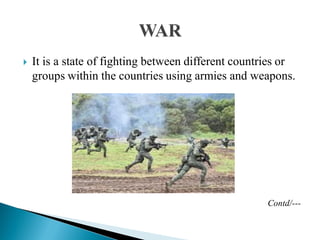
 It is a state of fighting between different countries or
groups within the countries using armies and weapons.
Contd/---
 Is an intense conflict between the states , governments,
societies or paramilitary groups such as mercenaries ,
insurgents and militia.
 It is generally characterized by extreme violence,
aggression, destruction, mortality and using regular or
irregular military forces.
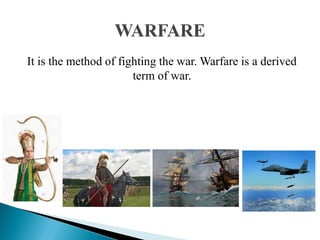
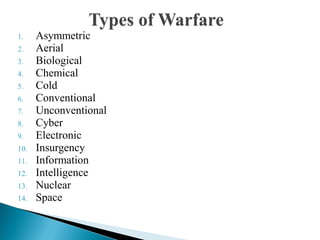
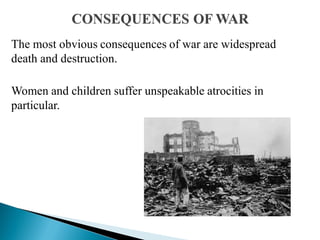
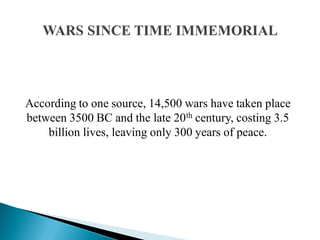
It is the method of fighting the war. Warfare is a derived
term of war.
1. Asymmetric
2. Aerial
3. Biological
4. Chemical
5. Cold
6. Conventional
7. Unconventional
8. Cyber
9. Electronic
10. Insurgency
11. Information
12. Intelligence
13. Nuclear
14. Space
The most obvious consequences of war are widespread
death and destruction.
Women and children suffer unspeakable atrocities in
particular.
According to one source, 14,500 wars have taken place
between 3500 BC and the late 20th century, costing 3.5
billion lives, leaving only 300 years of peace.
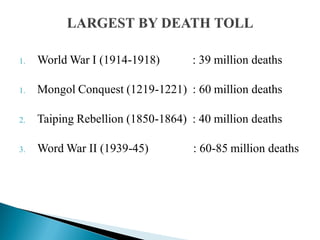
1. World War I (1914-1918) : 39 million deaths
1. Mongol Conquest (1219-1221) : 60 million deaths
2. Taiping Rebellion (1850-1864) : 40 million deaths
3. Word War II (1939-45) : 60-85 million deaths
Explanation of terms used.
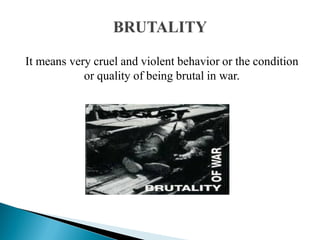
It means very cruel and violent behavior or the condition
or quality of being brutal in war.
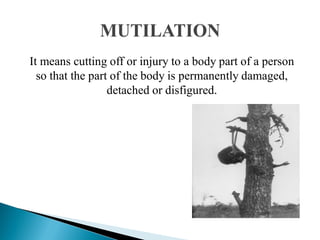
It means cutting off or injury to a body part of a person
so that the part of the body is permanently damaged,
detached or disfigured.
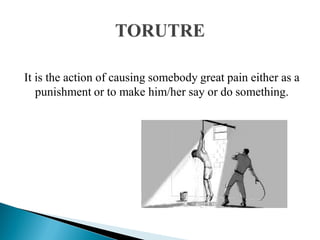
It is the action of causing somebody great pain either as a
punishment or to make him/her say or do something.
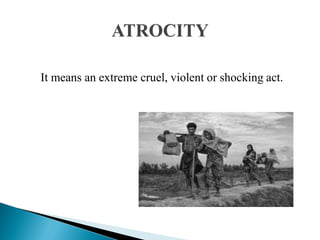
It means an extreme cruel, violent or shocking act.
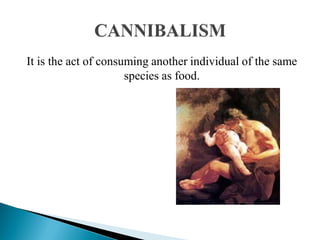
It is the act of consuming another individual of the same
species as food.
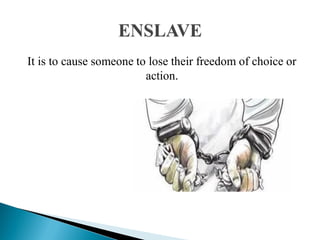
It is to cause someone to lose their freedom of choice or
action.
It means to destroy something completely so that nothing
is left.
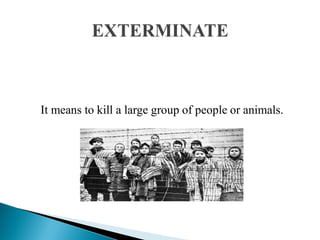
It means to kill a large group of people or animals.
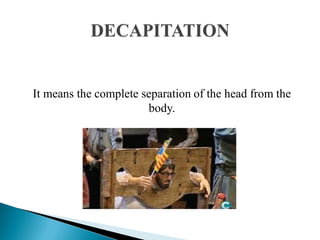
It means the complete separation of the head from the
body.
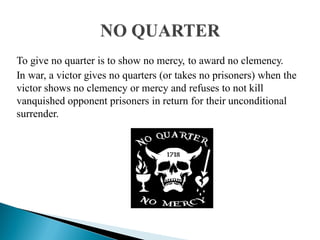
To give no quarter is to show no mercy, to award no clemency.
In war, a victor gives no quarters (or takes no prisoners) when the
victor shows no clemency or mercy and refuses to not kill
vanquished opponent prisoners in return for their unconditional
surrender.
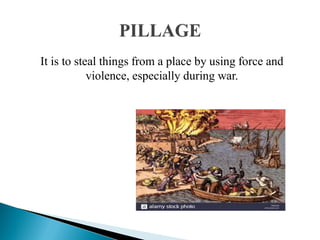
It is to steal things from a place by using force and
violence, especially during war.
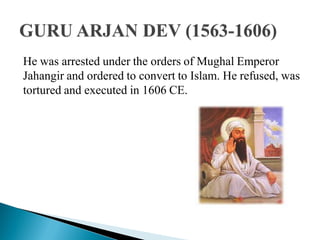
He was arrested under the orders of Mughal Emperor
Jahangir and ordered to convert to Islam. He refused, was
tortured and executed in 1606 CE.
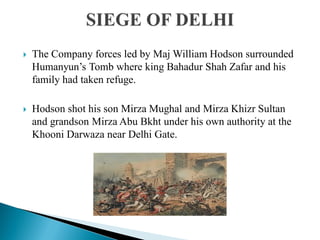
 The Company forces led by Maj William Hodson surrounded
Humanyun’s Tomb where king Bahadur Shah Zafar and his
family had taken refuge.
 Hodson shot his son Mirza Mughal and Mirza Khizr Sultan
and grandson Mirza Abu Bkht under his own authority at the
Khooni Darwaza near Delhi Gate.
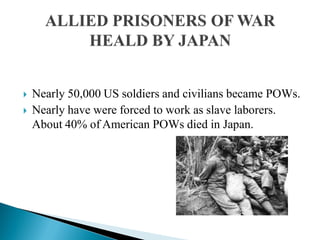
 Nearly 50,000 US soldiers and civilians became POWs.
 Nearly have were forced to work as slave laborers.
About 40% of American POWs died in Japan.
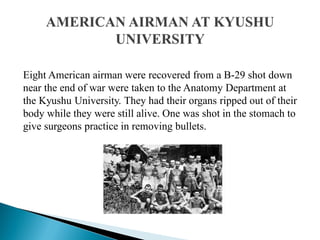
Eight American airman were recovered from a B-29 shot down
near the end of war were taken to the Anatomy Department at
the Kyushu University. They had their organs ripped out of their
body while they were still alive. One was shot in the stomach to
give surgeons practice in removing bullets.
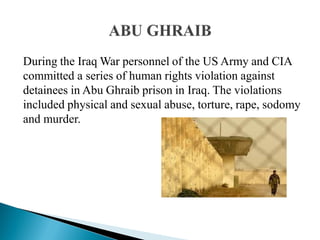
During the Iraq War personnel of the US Army and CIA
committed a series of human rights violation against
detainees in Abu Ghraib prison in Iraq. The violations
included physical and sexual abuse, torture, rape, sodomy
and murder.
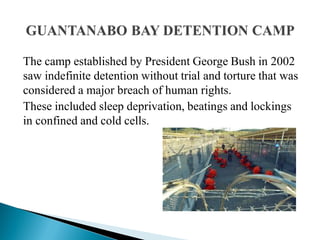
The camp established by President George Bush in 2002
saw indefinite detention without trial and torture that was
considered a major breach of human rights.
These included sleep deprivation, beatings and lockings
in confined and cold cells.
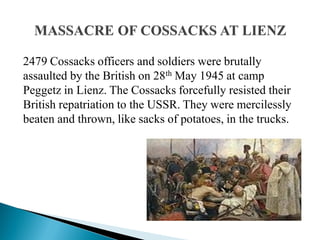
2479 Cossacks officers and soldiers were brutally
assaulted by the British on 28th May 1945 at camp
Peggetz in Lienz. The Cossacks forcefully resisted their
British repatriation to the USSR. They were mercilessly
beaten and thrown, like sacks of potatoes, in the trucks.
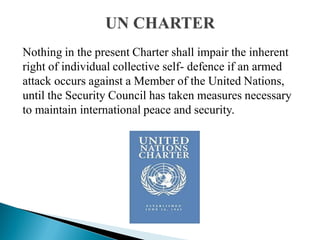
Nothing in the present Charter shall impair the inherent
right of individual collective self- defence if an armed
attack occurs against a Member of the United Nations,
until the Security Council has taken measures necessary
to maintain international peace and security.
There is no such thing as inevitable war. If war comes it
will be from failure of human wisdom. The world will
never have lasting peace so long as men reserve for war
the finest human qualities. War would end if the dead
could return.
“I hate was as only a soldier who has lived it can, only as
one who has seen its brutality, its futility, its stupidity.”-
Dwight D. Eisenhower
THANK YOU

War and Warfare - An Overview

  • 1.
  • 2.
    Maj Gen NilendraKumarAVSM, VSM Director
  • 3.
    Lecture at NationalLaw Institute University, Bhopal
  • 4.
     It isa state of fighting between different countries or groups within the countries using armies and weapons. Contd/---
  • 5.
     Is anintense conflict between the states , governments, societies or paramilitary groups such as mercenaries , insurgents and militia.  It is generally characterized by extreme violence, aggression, destruction, mortality and using regular or irregular military forces.
  • 6.
    It is themethod of fighting the war. Warfare is a derived term of war.
  • 7.
    1. Asymmetric 2. Aerial 3.Biological 4. Chemical 5. Cold 6. Conventional 7. Unconventional 8. Cyber 9. Electronic 10. Insurgency 11. Information 12. Intelligence 13. Nuclear 14. Space
  • 8.
    The most obviousconsequences of war are widespread death and destruction. Women and children suffer unspeakable atrocities in particular.
  • 9.
    According to onesource, 14,500 wars have taken place between 3500 BC and the late 20th century, costing 3.5 billion lives, leaving only 300 years of peace.
  • 10.
    1. World WarI (1914-1918) : 39 million deaths 1. Mongol Conquest (1219-1221) : 60 million deaths 2. Taiping Rebellion (1850-1864) : 40 million deaths 3. Word War II (1939-45) : 60-85 million deaths
  • 11.
  • 12.
    It means verycruel and violent behavior or the condition or quality of being brutal in war.
  • 13.
    It means cuttingoff or injury to a body part of a person so that the part of the body is permanently damaged, detached or disfigured.
  • 14.
    It is theaction of causing somebody great pain either as a punishment or to make him/her say or do something.
  • 15.
    It means anextreme cruel, violent or shocking act.
  • 16.
    It is theact of consuming another individual of the same species as food.
  • 17.
    It is tocause someone to lose their freedom of choice or action.
  • 18.
    It means todestroy something completely so that nothing is left.
  • 19.
    It means tokill a large group of people or animals.
  • 20.
    It means thecomplete separation of the head from the body.
  • 21.
    To give noquarter is to show no mercy, to award no clemency. In war, a victor gives no quarters (or takes no prisoners) when the victor shows no clemency or mercy and refuses to not kill vanquished opponent prisoners in return for their unconditional surrender.
  • 22.
    It is tosteal things from a place by using force and violence, especially during war.
  • 23.
    He was arrestedunder the orders of Mughal Emperor Jahangir and ordered to convert to Islam. He refused, was tortured and executed in 1606 CE.
  • 24.
     The Companyforces led by Maj William Hodson surrounded Humanyun’s Tomb where king Bahadur Shah Zafar and his family had taken refuge.  Hodson shot his son Mirza Mughal and Mirza Khizr Sultan and grandson Mirza Abu Bkht under his own authority at the Khooni Darwaza near Delhi Gate.
  • 25.
     Nearly 50,000US soldiers and civilians became POWs.  Nearly have were forced to work as slave laborers. About 40% of American POWs died in Japan.
  • 26.
    Eight American airmanwere recovered from a B-29 shot down near the end of war were taken to the Anatomy Department at the Kyushu University. They had their organs ripped out of their body while they were still alive. One was shot in the stomach to give surgeons practice in removing bullets.
  • 27.
    During the IraqWar personnel of the US Army and CIA committed a series of human rights violation against detainees in Abu Ghraib prison in Iraq. The violations included physical and sexual abuse, torture, rape, sodomy and murder.
  • 28.
    The camp establishedby President George Bush in 2002 saw indefinite detention without trial and torture that was considered a major breach of human rights. These included sleep deprivation, beatings and lockings in confined and cold cells.
  • 29.
    2479 Cossacks officersand soldiers were brutally assaulted by the British on 28th May 1945 at camp Peggetz in Lienz. The Cossacks forcefully resisted their British repatriation to the USSR. They were mercilessly beaten and thrown, like sacks of potatoes, in the trucks.
  • 30.
    Nothing in thepresent Charter shall impair the inherent right of individual collective self- defence if an armed attack occurs against a Member of the United Nations, until the Security Council has taken measures necessary to maintain international peace and security.
  • 31.
    There is nosuch thing as inevitable war. If war comes it will be from failure of human wisdom. The world will never have lasting peace so long as men reserve for war the finest human qualities. War would end if the dead could return. “I hate was as only a soldier who has lived it can, only as one who has seen its brutality, its futility, its stupidity.”- Dwight D. Eisenhower
  • 32.