Volcanoes 101
Magma - molten rock under the
earth

Lava - magma that has reached
the surface

Non-explosive Eruptions
     lava flows - rivers of hot
lava

       Lava fountains - sprays of
lava from non-explosive
eruptions
Is this an explosive or non-explosive
                        eruption?


What is this volcanic
formation called?
Explosive Eruptions
       - clouds of hot gases, lava and solid rock explode
out of volcanoes at super high speeds
Magma composition

Water - The more water the more explosive the volcano
will be, like CO2 in a soda can.

Silica - Magma with lots of silica will harden in the vents
and cause a pressure build up and a larger explosion.
Less silica means runny lava.
Types of lava

1. Blocky Lava

2. Pahoehoe

3. Aa

4. Pillow
Types of Pyroclastic Material

1. Volcanic Blocks

2. Volcanic Bombs

3. Lapilli

4. Volcanic Ash
Volcanoes' Effect on the Earth

1. Flows and Fall out

2. Climatic Changes
Volcanoes

Types of volcanoes
      1. Cinder cones
      2. Shield Cones
      3. Composite cones or
Stratovolcanoes
Label each volcano

Types of volcanoes
      1. Cinder cones
      2. Shield Cones
      3. Composite cones or
Stratovolcanoes
Craters

                Vent

                Magma
                Chamber


Lava Plateaus
Caldera
Lava Plateau
Formation of Magma

1. Pressure

2. Temperature

3. Density
Where do volcanoes occur?
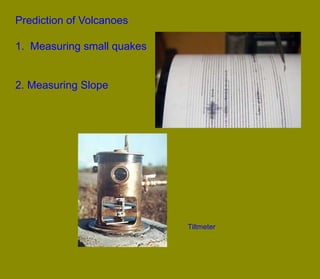
Prediction of Volcanoes

1. Measuring small quakes


2. Measuring Slope


                            Tiltmeter
3. Measuring Volcanic Gasses


      4. Measuring Temperature from Orbit
Volcanoes
Volcanoes
Volcanoes
Volcanoes

Volcanoes