International Journal
of
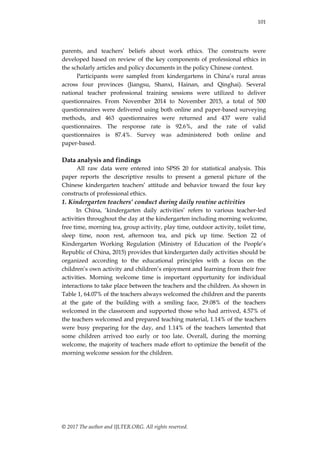
Learning, Teaching
And
Educational Research
p-ISSN:1694-2493
e-ISSN:1694-2116IJLTER.ORG
Vol.16 No.9
PUBLISHER
London Consulting Ltd
District of Flacq
Republic of Mauritius
www.ijlter.org
Chief Editor
Dr. Antonio Silva Sprock, Universidad Central de
Venezuela, Venezuela, Bolivarian Republic of
Editorial Board
Prof. Cecilia Junio Sabio
Prof. Judith Serah K. Achoka
Prof. Mojeed Kolawole Akinsola
Dr Jonathan Glazzard
Dr Marius Costel Esi
Dr Katarzyna Peoples
Dr Christopher David Thompson
Dr Arif Sikander
Dr Jelena Zascerinska
Dr Gabor Kiss
Dr Trish Julie Rooney
Dr Esteban Vázquez-Cano
Dr Barry Chametzky
Dr Giorgio Poletti
Dr Chi Man Tsui
Dr Alexander Franco
Dr Habil Beata Stachowiak
Dr Afsaneh Sharif
Dr Ronel Callaghan
Dr Haim Shaked
Dr Edith Uzoma Umeh
Dr Amel Thafer Alshehry
Dr Gail Dianna Caruth
Dr Menelaos Emmanouel Sarris
Dr Anabelie Villa Valdez
Dr Özcan Özyurt
Assistant Professor Dr Selma Kara
Associate Professor Dr Habila Elisha Zuya
International Journal of Learning, Teaching and
Educational Research
The International Journal of Learning, Teaching
and Educational Research is an open-access
journal which has been established for the dis-
semination of state-of-the-art knowledge in the
field of education, learning and teaching. IJLTER
welcomes research articles from academics, ed-
ucators, teachers, trainers and other practition-
ers on all aspects of education to publish high
quality peer-reviewed papers. Papers for publi-
cation in the International Journal of Learning,
Teaching and Educational Research are selected
through precise peer-review to ensure quality,
originality, appropriateness, significance and
readability. Authors are solicited to contribute
to this journal by submitting articles that illus-
trate research results, projects, original surveys
and case studies that describe significant ad-
vances in the fields of education, training, e-
learning, etc. Authors are invited to submit pa-
pers to this journal through the ONLINE submis-
sion system. Submissions must be original and
should not have been published previously or
be under consideration for publication while
being evaluated by IJLTER.
VOLUME 16 NUMBER 9 September 2017
Table of Contents
Technology to the Rescue: Appropriate Curriculum for Gifted Students.......................................................................1
Dr. Susan L. Zimlich
Perceptions of ESL Program Management in Canadian Higher Education: A Qualitative Case Study .................. 13
Sarah Elaine Eaton
Korean University Students‟ Perceptions of Teacher Motivational Strategies............................................................. 29
Michael Heinz and Chris Kobylinski
Visualising the Doctoral Research Process: An Exploration into Empirical Research Processes of Emerging
Researchers ............................................................................................................................................................................ 42
Kwong Nui Sim and Russell Butson
Student Experiences of a Blended Learning Environment.............................................................................................. 60
Jase Moussa-Inaty
“We Need to Give the Profession Something that No One Else Can”: Swedish Student Teachers‟ Perceptions and
Experiences of their Preschool Teacher Training Programme........................................................................................ 73
Birgitte Malm
Impact of Language Input on Comprehensiveness of Reading Material among Students in Saudi Arabia ............ 88
Mohammed Abdulmalik Ali
Teacher Conduct: A Survey on Professional Ethics among Chinese Kindergarten Teachers .................................... 98
Zhaolin Ji
Nursing Students‟ Experiences of Using Adobe Connect in a First-year Professional Nursing Course ............... 114
Liz Ditzel (RN, PhD) and Anna Wheeler (RN)
1
© 2017 The author and IJLTER.ORG. All rights reserved.
International Journal of Learning, Teaching and Educational Research
Vol. 16, No. 9, pp. 1-12, September 2017
https://doi.org/10.26803/ijlter.16.9.1
Technology to the Rescue: Appropriate
Curriculum for Gifted Students
Dr. Susan L. Zimlich
Southeastern Louisiana University
Hammond, Louisiana
Abstract. An appropriate curriculum for students who are gifted will
meet their learning needs and motivate them to stay engaged in the
learning process. In an effort to provide an appropriate curriculum for
gifted students, one possibility is to provide a behavior trap. Behavior
traps are learning activities that entice students to engage due to interest
in the content or activity itself. Behavior traps motivate because they are
easy to do at first and then reinforce motivation later to encourage
continued engagement (Albert & Heward, 1996). Technology can be both
a tool to provide a behavior trap and also a behavior trap in and of itself.
Students who are gifted benefit when curriculum provides practice with
complex topics, critical thinking, self-reflection, creativity, and access to
mentors for scaffolding. This is essential for helping students who are
gifted to reach their potential. Technology and what can be done with
technology in educational settings can provide complexity in
differentiated or individualized learning. Students’ critical thinking skills
and metacognition can be built through problem solving, projects, and
simulations enhanced or provided by technology. Students can compare
their work with peers in other locations or have access to mentors who
might not otherwise be available. Specialized software and equipment
can be used to help build academic skills and also develop creativity.
Technology can help teachers meet the standards for gifted education
programs, but only if teachers choose to implement technology in
meaningful ways that meet the needs of students who are gifted.
Keywords: Motivating gifted students; educational technology; gifted
curriculum; thinking skills.
Introduction
Technology has taken a firm hold in education. Technology can be taught as a
stand-alone topic or embedded within a lesson (Henriksen, Mishra, & Fisser, 2016;
International Society for Technology in Education, 2007). Schools have not only
labs, but also computers or tablets in classrooms, interactive white boards, digital
cameras, video cameras, computer projectors, and other digital equipment
(Lanahan & Boysen, 2005). Additionally, applications run the gambit from game-
style formats that use high- tech virtual interactions to teach children an
assortment of subjects and thinking skills (Siegle, 2015; Tünzün, 2007; Williams,
2
© 2017 The author and IJLTER.ORG. All rights reserved.
Ma, Feist, Richard, & Prejean, 2007) to traditional word processing and
presentation software. Teachers recognize that technology motivates many
students to produce high quality work (Clausen, 2007), and students themselves
report that it motivates them to engage with a variety of subject areas and topics
of interest (Clausen, 2007; “Digital Imaging,” 2001; Johnsen, Witte, & Robins, 2006;
Wighting, 2006). Teachers direct student use of technology in school and can use
their decision making power to purposefully plan to use technology in ways that
motivate students (Siegle, 2015).
Motivation is shaped by both personal and situational influences (Clinkenbeard,
2012; Little, 2012). Particular attention to the preservation and development of
motivation should inform programming for gifted students (Gottfried, Gottfried,
Cook, & Morris, 2005). Teachers should create a setting that encourages students
to achieve their full potential. Two key factors in developing potential are
motivation and challenge in the learning environment (Little, 2012; National
Association for Gifted Children, 2010). Gifted students are motivated by a
curriculum that matches their interests and levels of cognitive development
(Colangelo & Davis, 2003; VanTassel-Baska, 2015). When students’ goals match
their learning environment, they are more likely to stay engaged in school-
directed learning tasks (Kilian, Hofer, & Kahnle, 2013; Little, 2012). Thus, access to
an appropriate curriculum for students who are gifted could have lifelong
ramifications.
One possible way to increase students’ motivation is through the use of behavior
traps. In education, a behavior trap is a learning activity for students that a
teacher has created to entice students to be engaged in learning. The behavior
trap:
1. is irresistibly attractive to the students,
2. has an easy entry point that is already mastered,
3. reinforces and motivates the students, and
4. uses an activity that sustains the students’ interest over time (Albert &
Heward, 1996).
Technology can act as a behavior trap for students who are gifted. It could be that
the use of the technology is the behavior trap, or that the technology is a tool for
access to content or products that are behavior traps. Today’s students have
grown up with technology. They experience it in all areas of their lives. The
students expect technology to be everywhere, including school. Technology fits
the requirements for creating a behavior trap because:
1. it provides access to any topic that might be of interest to students,
2. fluency and expertise with technology are either already mastered or easily
mastered by students,
3. access to quick feedback and audiences with similar interests reinforces and
motivates students, and
4. access to Web 2.0 capabilities and almost limitless materials about topics can
sustain students’ interest over time.
3
© 2017 The author and IJLTER.ORG. All rights reserved.
Appropriate Curriculum
Curriculum plays a large role in determining the context in which teaching and
learning occur. All teachers, whether in resource rooms or in general education
classrooms, need to provide an appropriate curriculum to meet individual
student needs (Kaplan, 2016; Sak, 2004; Smith & Wietz, 2003; Zentall, Moon, Hall
& Grskovich, 2001). Although in every class there exist differences in the ability,
interest, and motivation of students, the flexibility and motivating nature of
technology can help create life-giving learning environments (Baule, 2007) by
providing students with the opportunity for differentiated instruction or tasks.
Differentiation to meet academic needs may come readily to mind; however, it is
also important to provide differentiation in terms of creativity. There are many
definitions of creativity, but in general students who are creatively gifted are
characterized by original thinking that comes from examining a variety of
perspectives, using divergent thinking, and thinking in nonlinear ways
(Colangelo & Davis, 2003; Sak, 2004). Some of the most creative students struggle
to function within the framework of specialized classes for gifted students where
their needs inform instructional planning for the class. How much more do they
struggle in the setting of the general education classroom where their needs are
often ignored (Sak, 2004)? Teachers who differentiate instruction honor and
recognize student strengths, interests, and abilities by providing choices that offer
different levels of support for learning. Differentiation of instruction may provide
the only opportunities that some gifted students receive to meet their particular
learning needs (Bain, Bliss, Choate, & Brown, 2007; Kaplan, 2016).
Technology can direct and organize student learning (Rosenfeld, 2008).
Technology can be used to differentiate lessons when students, rather than
teachers, are the ones using it (Garcia & Rose, 2007; Ysseldyke & Bolt, 2007).
Projects that require technology can engage collaborative groups (Donovan,
Hartley, & Strudler, 2007; Garcia & Rose, 2007; Wolsey & Grisham, 2007; Yang,
Chang, Cheng, & Chan, 2016). While some students are working more closely
with the teacher, other students can work independently, researching different
topics and using a variety of tools to produce distinct products (Smith & Wietz,
2003). Differentiation of subject matter, topic complexity, and products are all
possible natural side effects of assigning projects that use technology.
The role of the teacher is to compact the required curriculum to provide time for a
curriculum that better matches students’ academic and creative abilities and
growth. Technology helps teachers to provide an appropriate curriculum in terms
of complexity, higher order thinking skills, and specialized resources, including
the use of special software and access to mentors.
Complexity
Differentiating the levels or types of complexity benefits gifted students, who are
more engaged in learning when they encounter tasks that emphasize challenge
(Betts, Tardrew, & Ysseldyke, 2004; Harrison, 2004; Kimball, 2001), complexity
(“Digital Imaging,” 2001; Harrison, 2004), and high levels of learning (Kimball,
2001; Wighting, 2006). Technology can offer access to materials at all levels of
complexity, so students can find information at the level they prefer. Gifted
4
© 2017 The author and IJLTER.ORG. All rights reserved.
students move relatively quickly from concrete ideas to more abstract ideas
compared to other students (Harrison, 2004; Smith & Wietz, 2003). Advanced
software can allow students to process all kinds of information and transform it to
suit their purposes. Gifted students not only seek out complex ideas, but also
want to express their own complex ideas in unique and elaborate ways.
Gifted students rapidly master basic information in a discipline and quickly move
to abstract thinking across levels. Technology facilitates making connections
among ideas that originate in a variety of materials (Sak, 2004). These new
connections give students who are gifted ideas about what to research or how to
treat theories (Harrison, 2004).
Students build greater complexity in their products as they gain skill in using
technology. The more they appear competent and the more sophisticated the
technology they use it, the more exposure to technology they have (Dove &
Zitkovich, 2003). Teachers can model the use of advanced software in lessons that
introduce it at basic skill levels. As students acquire skills with the software,
teachers can assign projects that require greater complexity (“Digital Imaging,”
2001). Teachers can scaffold students’ skills in gathering data, editing written
work, and publishing products. Because gifted students seek out complexity not
just in the way their ideas are expressed, but also in the process of developing the
products that demonstrate what they have learned, teachers can encourage
student collaboration in initial stages of projects and then gradually let students
work on their own.
Critical Thinking Skills
Thinking skills are another focus of differentiated curriculum for gifted students.
All students benefit from developing higher order thinking skills, and good
teachers include as many higher order thinking tasks as possible in the regular
curriculum (International Society for Technology in Education, 2007; Siegle, 2004).
For gifted students, however, higher order thinking skills are the sine qua non of
education (Colangelo & Davis, 2003; Kimball, 2001). Successful use of technology
can increase students’ confidence and skill levels in critical thinking (Reid &
Roberts, 2006). Furthermore, the stimulation of higher order thinking skills may
keep gifted students engaged in school tasks.
Among the most common approaches to the development of critical thinking
skills instructions are problem-based learning and project creation, both of which
benefit from the infusion of technology. Students who spend more time online
show greater skill levels in evaluation and writing (Ba, Tally, & Tsikalas, 2002).
Some software applications are designed to use problem-based learning to teach
students specific critical thinking skills (Tünzün, 2007; Williams et al., 2007).
Teachers encourage critical thinking by promoting inquiry, by asking questions to
help students troubleshoot technology problems, and by limiting the number of
questions they answer directly (Ba et al., 2002; “Digital Imaging,” 2001; Clausen,
2007; Wong, Quek, Divaharan, Liu, Peer, & Williams, 2006; Smith & Weitz, 2003).
Reviewing Internet content for reliability is an essential technology skill that also
promotes critical thinking (Abelman, 2007). Evaluating the technology with which
5
© 2017 The author and IJLTER.ORG. All rights reserved.
they are interacting (Abelman, 2007; Siegle, 2004), determining the most suitable
piece of equipment, program, or tool (“Digital Imaging,” 2001), and learning how
to balance schoolwork and recreation time on the computer all call for higher
order thinking (Ba et al., 2002; Tünzün, 2007).
Technology can change the ways students think about and organize information
(Zentall et al., 2001). The development of concepts and connections within and
between diverse subject areas, to which Internet access greatly contributes,
depends on higher order thinking (Boon, Fore, & Rasheed, 2007). In the course of
working on almost any complex project, students will organize computer files
into folders, which helps them understand both how concepts are connected
within subject areas and the structure of particular branches of knowledge (Ba et
al., 2002; Boon et al., 2007). Technology’s ability to have multiple program
windows open at the same time eases side-by-side comparisons, facilitating
analysis and synthesis of ideas (Sak, 2004). Some problem-based virtual learning
environments develop analogical thinking using side-by-side analogies (Tünzün,
2007; Williams et al., 2007).
Technology can also create a context for problem solving particularly suited to
creatively gifted students. These students typically examine concepts from a
variety of perspectives (Sak, 2004) and often think about them in unusual ways
(Fleith, 2000; Russo, 2004). Computer simulations designed to help students
practice perspective-taking often present problems from a variety of viewpoints
(Tünzün, 2007). Hyperlinks or multi-nodal simulations stimulate nonlinear
thinking, which in turn fosters sensitivity toward and appreciation of unusual,
creative, and divergent approaches to problem solving by academically and
creatively gifted students, who use more cognitive strategies while problem
solving than average students (Hong & Aqui, 2004).
Gifted students are not necessarily highly able in all subject areas (Colangelo, &
Davis, 2003; Swiatek & Lupkowski-Shoplik, 2000). Although, many of them read
above grade level, not all do (Smith & Weitz, 2003). Most report that they are
bored by standard classroom reading activities, regardless of their actual reading
ability (Hettinger & Knapp, 2001), since the vast majority of such tasks focus on
lower-order thinking skills (Moon, Callahan, & Tomlinson, 2003). Many find it
more motivating to access material that would otherwise be unavailable
(Olszewski-Kubilius & Lee, 2004), or to collaborate on a common project with
students geographically distant from their school (Wong et al., 2006, Yang et al.,
2016) on topics that interest them (Zentall et al., 2001). Reading advanced, highly
interesting material online may benefit gifted students, even those who have
learning disabilities in reading, more than reading yet another story from a basal
reader (Zentall et al., 2001). Collaborating with an online group gives students
access to others far distant from their localities who share their interests. Some
may have greater ability or more expertise and thus able to scaffold learning of
knowledge or skills (Yang et al., 2016). Furthermore, the possibility of
collaboration online gives students a choice about working independently or in a
group (Wong et al., 2006).
6
© 2017 The author and IJLTER.ORG. All rights reserved.
Technology may also aid in the development of metacognition, as it can be a
resource for reflection and feedback as well as for investigation (Harrison, 2004).
Training in metacognition is an important part of gifted curriculum, as it
stimulates creativity, problem solving fluency, and self-regulation (Colangelo &
Davis, 2003). Metacognition and self-reflection are enhanced when students are
made aware of available strategies, and then are given open-ended meaningful
tasks in which to use the strategies (Kinnebrew, Segedy, & Biswas, 2014; Paris &
Paris, 2001). Web 2.0 technologies allow students plentiful options for tasks that
can be shared beyond the classroom walls, such as publishing a blog,
collaborating on research, and exploring opportunities for service learning.
Additionally, technology can allow for independence and choice in learning tasks,
characteristics that enhance the development of self-regulation in students (Paris
& Paris, 2001). Overestimation or underestimation of skills are improved through
feedback on work (Callender, Franco-Watkins, & Roberts, 2015). Technology can
provide immediate feedback to students, as well as give students access to
feedback sources beyond their classroom teacher. Students who are gifted have a
better sense of their own skills when they can compare their work to peers or
experts.
Mentors
Mentoring is an aspect of gifted education (Colangelo & Davis, 2003) that is
greatly enhanced through technology. Gifted students seek out mentors
(Colangelo & Davis, 2003). Technology allows a student access to a mentor no
matter what the subject area, level of expertise, or geographical constraint. Expert
mentors are available from all over the world via the Internet (Housand &
Housand, 2012; Mammadov & Topcu, 2014; Olthouse & Miller, 2012). Email,
webcams, blogs, wikis, and instant messaging make communication fast and easy.
Through such technologies, students can function as research aides alongside
scientists, historical writers, or mathematicians. Such opportunities help them
develop an understanding of what experts do in the field.
Creatively gifted students’ ratings of creativity have high correlation with those of
experts, but as novices, they need mentoring to learn how to provide and receive
feedback about how to improve their products. Mentors teach them ways to
express why one product is more creative than another (Dove & Zitkovich, 2003;
Mammadov & Topcu, 2014). Communication with mentors can help students
develop understandings of their own creativity by modeling and providing
meaningful creative feedback (Kaufman, Gentile, & Baer, 2005).
Mentors are a good resource for acceleration, guiding work when students’ zones
of proximal development are beyond the classroom teachers’ competence.
Mentors can help academically able learners advance to higher levels of skill
through discussions of hands-on learning and independent projects (Dove &
Zitkovich, 2003; Wong et al., 2006).
Specialized Software and Equipment
The curriculum for gifted students should include opportunities to learn about
and use specialized software or equipment to reflect their thinking patterns.
Instruction can have technology skill as an end in itself, but it can also be a tool for
motivating students to engage in high levels of academic work (“Digital
7
© 2017 The author and IJLTER.ORG. All rights reserved.
Imaging,” 2001; Johnsen et al., 2006; Wighting, 2006). The multimedia aspects of
software can help students express ideas using sounds, pictures, diagrams, text,
and combinations of those media. The motivation can come from using software
features (Boon et al., 2007) or from using specialized equipment (Dove &
Zitkovich, 2003).
The ways in which technology is used can reflect the areas of giftedness, whether
academic or creative (Zentall et al., 2001). Students who are more academically
gifted typically produce fewer original materials than creatively gifted students,
but they demonstrate a greater aptitude for managing information and academic
achievement (Sak, 2004). They often use software in ways that reflect linear
thinking. In some software, part of the design structure of the program is to
scaffold student learning (Williams et al., 2007). Learning is enhanced when
software facilitates study and/or provides course-related materials (Betts et al.,
2004; Boon et al., 2007; Olszewski-Kubilius & Lee, 2004; Siegle & Foster, 2001).
Software has even been written with the aim of increasing levels of metacognition
by students (Kinnebrew et al., 2014).
Creative students display originality, curiosity (Fleith, 2000; Harrison, 2004; Sak,
2004), and nonconformity, both in their classroom interactions and in their
thinking patterns. Such students easily take on other viewpoints (Zentall et al.,
2001), a skill which can be encouraged using technology. Hyperlinks and multiple
windows reflect their nonlinear thinking. For example, gifted student writers
make extensive use of software functions that find synonyms to experiment with
how particular words change the meaning of a sentence (Sak, 2004).
Games may be tied to standards and sometimes may directly teach or reinforce
skills when students answer questions and get immediate feedback (Siegle 2015).
Interactive games are a form of specialized game software that can offer virtual
learning environments with content that appeals to academically gifted students.
They often have an overarching, linear storyline, but feature game play that is
multi-nodal in nature, attracting creatively gifted students. The self-selected
quests and the multiple ways to explore the gaming environment promote the
kinds of higher order thinking privileged by gifted and talented curriculum
(Tünzün, 2007; Williams et al., 2007).
Software can also individualize the educational experience. Programs paired with
paper and pencil assignments, such as those created by Accelerated Math, track
student progress and offer learning activities for specific levels of performance
(Betts et al., 2004; Ysseldyke & Bolt, 2007). In immersive educational computer
games, student choice produces avatars and results in individualized experiences
of tasks and levels of game play (Tünzün, 2007; Williams et al., 2007).
Computer simulations are an especially helpful kind of software. They are
immersive virtual learning environments that mimic real life, feature real-time
interactions, and provide immediate feedback (Mohide, Matthey-Maich, & Cross,
2006; Tünzün, 2007; Williams et al., 2007). They facilitate problem-based learning
by helping students collaborate to solve the problems encountered in the
8
© 2017 The author and IJLTER.ORG. All rights reserved.
simulation. They provide a contextualization of the problems presented within
the content-laden storyline of the game (Mohide et al., 2006; Tünzün, 2007). For
example, they can help students explore the technologies, occupations,
governments, or lifestyles of different historical periods. Finally, they stimulate
students’ imaginations and show the depth of detailed knowledge needed to plan
an invention or create a fictional country.
In addition to specialized software, there are numerous pieces of specialized
equipment that use computer processing. Using Global Positioning Systems or
other equipment that adults use can excite and motivate students (Dove &
Zitkovich, 2003).
In summary, the full development of gifted students’ potential requires an
appropriate curriculum. Technology can help teachers offer a curriculum
differentiated by complexity, a focus on thinking skills, and opportunities to learn
about and use specialized software and equipment or access to mentors.
Conclusion
It is fitting that teachers of the gifted use technology in delivery of content for
their students (National Association for Gifted Children, 2013). Technology can
help teachers foster the motivation of high-end learners. Both digital literacy and
gifted education emphasize creativity, innovation, collaboration, critical thinking,
problem solving, and decision making. This overlap allows teachers to help
students develop in both areas simultaneously through strategic use of
technology in the classroom (Henriksen et al., 2016; International Society for
Technology in Education, 2007; Siegle, 2004). Differentiating lessons by
complexity, critical thinking, and challenge (Kaplan, 2016) will highly motivate
gifted students to better meet their needs and help them to achieve to their full
potential (Little, 2012).
In particular, using technology to structure the learning environment in ways that
ensure an appropriate curriculum can act as a behavior trap (Albert & Heward,
1996) to motivate high-end learners. The ways that technology can aid students in
accessing materials within their zone of proximal development and in allowing
students to create increasingly complex products means that technology facilitates
the behavior trap requirement of an easily mastered entry point. Additionally,
teaching strategies such as problem-based learning, inquiry methods, and
development of students’ conceptual skills in organization and metacognition,
require critical thinking and are supported by technology. Critical thinking
provides challenge that is irresistibly attractive for gifted students, another
requirement of a behavior trap. Mentors, who are readily accessible using
technology, can help meet the behavior trap requirement of providing
reinforcement and motivation for gifted students. In addition to easy access to
volumes of materials online, the specialized equipment and specialized software
that allow students to demonstrate varying levels of expertise, display creativity,
or experience alternate realities meets the final behavior trap requirement of
sustaining student interest over time. Teachers can use technology as a tool to
help meet the needs of students who are gifted.
9
© 2017 The author and IJLTER.ORG. All rights reserved.
References
Abelman, R. (2007). Fighting the war on indecency: Mediating TV, internet, and
videogame usage among achieving and underachieving gifted children. Roeper
Review, 29, 100-112.
https://doi.org/10.1080/02783190709554393
Albert, S. R., & Heward, W. L. (1996). Gotcha! Twenty-five behavior traps guaranteed to
extend your students’ academic and social skills. Intervention in School & Clinic, 31,
285-289. https://doi.org/10.1177/105345129603100505
Ba, H., Tally, W., & Tsikalas, K. (2002). Investigating children’s emerging digital literacies.
The Journal of Technology, Learning and Assessment, 1(4). Retrieved from
http://ejournals.bc.edu/ojs/index.php/jtla/article/view/1670/1510
Bain, S. K., Bliss, S. L., Choate, S. M., & Brown, K. S. (2007). Serving children who are
gifted: Perceptions of undergraduates planning to become teachers. Journal for the
Education of the Gifted, 30(4), 450-478.
https://doi.org/10.4219/jeg-2007-506
Baule, S. M. (2007). The components of successful technology. Teacher Librarian, 34 (5), 16-
18.
Betts, J., Tardrew, S., & Ysseldyke, J. (2004). Use of an instructional management system to
enhance math instruction of gifted and talented students. Journal of Education of the
Gifted, 27, 293-310. https://doi.org/10.4219/jeg-2004-319
Boon, R. T., Fore, C., & Rasheed, S. (2007). Students' attitudes and perceptions toward
technology-based applications and guided notes instruction in high school world
history classrooms. Reading Improvement, 4(1), 23-31.
Callendar, A. A., Franco-Watkins, A. M., & Roberts, A. S. (2015). Improving metacognition
in the classroom through instruction, training, and feedback. Metacognition
Learning 11, 215-235. https://doi.org/10.1007/s11409-015-9142-6
Clausen, J. M. (2007). Beginning teachers’ technology use: First-year teacher development
and the institutional context’s affect on new teachers’ technology use with
students. Journal of Research on Technology in Education, 39, 245-261.
https://doi.org/10.1080/15391523.2007.10782482
Clinkenbeard, P. R. (2012). Motivation and gifted students: Implications of theory and
research. Psychology in the Schools, 49, 622-630. https://doi.org/10.1002/pits.21628
Colangelo, N., & Davis, G. A. (Eds.). (2003). Handbook of gifted education (3rd ed.). Boston:
Allyn and Bacon.
Digital imaging supplement- shape: Adobe After Effects, Adobe Photoshop and Adobe
Premier used in Savannah R-III Elementary School. (2001). T.H.E. Journal, 29 (3),
66.
Donovan, L., Hartley, K., & Strudler, N. (2007). Teacher concerns during initial
implementation of a one-to-one laptop initiative at the middle school level. Journal
of Research on Technology in Education, 39, 263-286.
https://doi.org/10.1080/15391523.2007.10782483
Dove, M. K., & Zitkovich, J. A. (2003). Technology driven group investigations for gifted
elementary students. Information Technology in Childhood Education, 2003(1), 223-
241.
Fleith, D. d. F. (2000). Teacher and students’ perceptions of creativity in the classroom
environment. Roeper Review, 22, 148-153.
https://doi.org/10.1080/02783190009554022
Garcia, P., & Rose, S. (2007). The influence of technocentric collaboration on preservice
teachers’ attitudes about technology’s role in powerful learning and teaching.
Journal of Technology and Teacher Education, 15, 247-266.
Gottfried, A. W., Gottfried, A. E., Cook, C. R., & Morris, P. E. (2005). Educational
characteristics of adolescents with gifted academic intrinsic motivation: A
10
© 2017 The author and IJLTER.ORG. All rights reserved.
longitudinal investigation from school entry through early adulthood. Gifted Child
Quarterly, 49, 172-186. https://doi.org/10.1177/001698620504900206
Harrison, C. (2004). Giftedness in early childhood: The search for complexity and
connection. Roeper Review, 26, 78-84. https://doi.org/10.1080/02783190409554246
Henriksen, D., Mishra, P., & Fisser, P. (2016). Infusing creativity and technology in 21st
century education: A systematic view for change. Educational Technology & Society,
19(3), 27-37.
Hettinger, H. R., & Knapp, N. F., (2001). Potential, performance, and paradox: A case
study of J. P., a verbally gifted struggling reader. Journal for the Education of the
Gifted, 24, 248-289. https://doi.org/10.1177/016235320102400303
Hong, E., & Aqui, Y. (2004). Cognitive and motivational characteristics of adolescents
gifted in mathematics: Comparisons among students with different types of
giftedness. Gifted Child Quarterly, 48, 191- 201.
https://doi.org/10.1177/001698620404800304
Housand, B. C., & Housand, A. M. (2012). The role of technology in gifted students’
motivation. Psychology in the Schools, 49, 706-715.
https://doi.org/10.1002/pits.21629
International Society for Technology in Education. (2007). National Education Technology
Standards for Students. Retrieved from
http://www.cnets.iste.org/standards/standards/for-students
Johnsen, S. K., Witte, M., & Robins, J. (2006). Through their eyes: Students’ perspectives of
a university-based enrichment program – The University for Young People
Project. Gifted Child Today, 29 (3), 56-61. https://doi.org/10.4219/gct-2006-5
Kaplan, S. N. (2016). Challenge vs. differentiation: Why, what and how. Gifted Child Today
39(2), 114-15. https://doi.org/10.1177/1076217516628916
Kaufman, J. C., Gentile, C. A., & Baer, J. (2005). Do gifted student writers and creative
writing experts rate creativity the same way? Gifted Child Quarterly, 49, 260-265.
https://doi.org/10.1177/001698620504900307
Kilian, B., Hofer, M., & Kahnle, C. (2013). Conflicts between on-task and off-task behaviors
in the classroom: The influences of parental monitoring, peer value orientations,
students’ goals, and their value orientations. Social Psychology of Education, 16(1),
77-94. https://doi.org/10.1007/s11218-012-9198-y
Kimball, K. L. B. (2001). Interpretative stories from school careers of gifted students. Retrieved
from ProQuest database. (AAT 3032075)
Kinnebrew, J. S., Segedy, J. R., & Biswas, G. (2014). Analyzing the temporal evolution of
students’ behavior in open-ended learning environments. Metacognition &
Learning 9(2), 187-215. https://doi.org/10.1007/s11409-014-9112-4
Lanahan, L., & Boysen, J. (2005). Computer technology in the public school classroom:
Teacher perspectives. (NCES 2005-083). Washington, DC: National Center for
Education Statistics. Retrieved from http://nces.ed.gov/pubs2005/2005083.pdf
Little, C. A. (2012). Curriculum as motivation for gifted students. Psychology in the schools,
49, 695-705. https://doi.org/10.1002/pits.21621
Mammadov, S. & Topcu, A. (2014). The role of e-mentoring in mathematically gifted
students’ academic life: A case study. Journal for the Education of the Gifted, 37(3),
220-244. https://doi.org/10.1177/0162353214540824
Mohide, E. A., Matthew-Maich, N., & Cross, H. (2006). Using electronic gaming to
promote evidence-based practice in nursing education. Journal of Nursing
Education, 45, 384.
Moon, T. R., Callahan, C. M., & Tomlinson, C. A. (2003). Effects of state testing program
on elementary schools with high concentration of student poverty- Good news or
bad news? Current Issues in Education, 6(8). Retrieved from
http://cie.asu.edu/volume6/number8/
National Association for Gifted Children. (2010). 2010 pre-K-grade 12 gifted programming
11
© 2017 The author and IJLTER.ORG. All rights reserved.
standards. Retrieved from
http://www.nagc.org/sites/default/files/standards/K-
12%20programming%20standards.pdf
National Association for Gifted Children. (2013). NAGC-CEC teacher preparation
standards in gifted and talented education. Retrieved from
http://www.nagc.org/sites/default/files/standards/NAGC-
%20CEC%20CAEP%20standards%20(2013%20final).pdf
Olszewski-Kubilius, P., & Lee, S. Y. (2004). Gifted adolescents’ talent development
through distance learning. Journal for the Education of the Gifted, 28(1), 7-35.
https://doi.org/10.1177/016235320402800102
Olthouse, J. M., & Miller, M. T. (2012). Teaching talented writers with web 2.0 tools.
Teaching Exceptional Children, 45(2), 6-14.
https://doi.org/10.1177/004005991204500201
Paris, S. G., & Paris, A. H. (2001). Classroom applications of research on self-regulated
learning. Educational Psychologist 36(2), 89-101.
https://doi.org/10.1207/s15326985ep3602_4
Reid, P. T., & Roberts, S. K. (2006). Gaining Options: A Mathematics Program for
Potentially Talented At-risk Adolescent Girls. Merrill-Palmer Quarterly, 52, 288-
304. https://doi.org/10.1353/mpq.2006.0019
Rosenfeld, B. (2008). The challenges of teaching with technology: From computer idiocy to
computer competence. International Journal of Instructional Media, 35, 157-166.
Russo, C. F. (2004). A comparative study of creativity and cognitive problem-solving
strategies of high-IQ and average students. Gifted Child Quarterly, 48, 179-190.
https://doi.org/10.1177/001698620404800303
Sak, U. (2004). About creativity, giftedness, and teaching the creatively gifted in the
classroom. Roeper Review, 26, 216-222.
https://doi.org/10.1080/02783190409554272
Siegle, D. (2004). The merging of literacy and technology in the 21st century: A bonus for
gifted education. Gifted Child Today, 27(2), 32-35.
https://doi.org/10.4219/gct-2004-129
Siegle, D. (2015). Technology. Gifted Child Today, 38(3), 192-197.
https://doi.org/10.1177/1076217515583744
Siegle, D., & Foster, (2001). Laptop computers and multimedia and presentation software:
Their effects on student achievement in anatomy and physiology. Journal of
Research on Technology in Education, 34(1), 29-37.
https://doi.org/10.1080/15391523.2001.10782331
Smith, K. & Weitz, M. (2003). Problem Solving Education and Gifted Education: A
Differentiated Fifth-Grade Fantasy Unit. Gifted Child Today, 26(3), 56-60.
https://doi.org/10.4219/gct-2003-108
Swiatek, M. A., & Lupkowski-Sholik, A. (2000). Gender differences in academic attitudes
among gifted elementary school students. Journal for the Education of the Gifted, 23,
360-377. https://doi.org/10.1177/016235320002300403
Tünzün, H. (2007). Blending video games with learning: Issues and challenges with
classroom implementations in the Turkish context. British Journal of Educational
Technology, 38, 465-477. https://doi.org/10.1111/j.1467-8535.2007.00710.x
VanTassel-Baska, J. (2015). Curriculum issues: Error analysis in thinking about curriculum
for the gifted. Gifted Child Today, 38(3), 198-199.
https://doi.org/10.1177/1076217515583746
Wighting, M. J. (2006). Effects of Computer Use on High School Students' Sense of
Community. The Journal of Educational Research, 99, 371-379.
https://doi.org/10.3200/joer.99.6.371-380
Williams, D., Ma, Y., Feist, S., Richard, C. E., & Prejean, L. (2007). The design of an
analogical encoding tool for game-based virtual learning environments. British
12
© 2017 The author and IJLTER.ORG. All rights reserved.
Journal of Educational Technology, 38, 429-437.
https://doi.org/10.1111/j.1467-8535.2007.00707.x
Wolsey, T. D., & Grisham, D. L. (2007). Adolescents and the new literacies: Writing
engagement. Action in Teacher Education, 29(2), 29-38.
https://doi.org/10.1080/01626620.2007.10463446
Wong, A. F. L., Quek, C. L., Divaharan, S., Liu, W. C., Peer, J., & Williams, M. D. (2006).
Singapore Students' and Teachers' Perceptions of Computer-Supported Project
Work Classroom Learning Environments. Journal of Research on Technology in
Education, 38, 449-479. https://doi.org/10.1080/15391523.2006.10782469
Yang, E. F. Y., Chang, B., Cheng, H. N. H., & Chan, T. (2016). Improving pupils’
mathematical communication abilities through computer-supported reciprocal
peer tutoring. Educational Technology & Society, 19(3), 157-169.
Ysseldyke, J., & Bolt, D. M. (2007). Effect of technology-enhanced continuous progress
monitoring on math achievement. School Psychology Review, 36, 453-467.
Zentall, S. S., Moon, S. M., Hall, A. M., & Grskovich, J. A. (2001). Learning and
motivational characteristics of boys with AD/HD and/or giftedness. Exceptional
Children, 67(4), 499-519. https://doi.org/10.1177/001440290106700405
13
© 2017 The author and IJLTER.ORG. All rights reserved.
International Journal of Learning, Teaching and Educational Research
Vol. 16, No. 9, pp. 13-28, September 2017
https://doi.org/10.26803/ijlter.16.9.2
Perceptions of ESL Program Management in
Canadian Higher Education: A Qualitative Case
Study
Sarah Elaine Eaton
University of Calgary
Calgary, Canada
Abstract. ESL programs at post-secondary institutions must often
generate revenue in addition to teaching students English. Institutions
often impose explicit expectations on these programs to generate profit,
creating unique challenges for those who administer them. This
qualitative case study investigated challenges faced by ESL program
directors at one university in Canada. Semistructured interviews were
used to collect data from program directors (N = 3) on topics relating to
administration, marketing, the mandate to generate revenue, and the
complexities of ESL program legitimacy and marginalization in higher
education contexts. Five key themes emerged from the data: (a) the
necessity for directors to be highly qualified and multilingual, as well as
have international experience; (b) a general lack of training, support,
and resources for program directors; (c) institutional barriers such as
working with marketers and recruiters with little knowledge of ESL
contexts; (d) program fragmentation and marginalization on campus;
and (e) reluctance to share information and program protectionism.
Findings point to the need for increased training and support for ESL
program directors, along with the need for institutions to elevate the
profile of these programs so they are not viewed as having less value
than other academic programs on campus.
Keywords: TESOL; language program management; administration;
profit; revenue
Introduction
Directors of English as a Second Language (ESL) programs in higher education
face different professional challenges than those of their administrative
colleagues from other disciplines. ESL programs differ from other disciplines in
fundamental ways (Rowe, 2012). First, students take ESL either as a form of
skills training or to bridge into degree programs. They do not graduate with a
major or minor specialization in ESL (Panferov, 2012; Staczek & Carkin, 1984;
Stoller & Christison, 1994), and they often study English full-time and
exclusively (Szasz, 2009/2010). In addition, ESL programs in post-secondary
14
© 2017 The author and IJLTER.ORG. All rights reserved.
institutions exist, at least in part, to generate revenue (Eskey, 1997; Panferov,
2012; Pennington & Hoejke, 2014; Staczek & Carkin, 1984). As such, they often
have separate tuition structures, admissions policies, and budgets (Pennington
& Hoekje, 2014), meaning that administrative approaches to ESL programs differ
from others on a post-secondary campus. This creates a situation in which ESL
programs are obliged to generate revenue for the very institutions in which they
struggle to be regarded as legitimate contributors to the academic community.
This qualitative case study investigates the experiences of three ESL program
directors working in a Canadian higher education context, using semistructured
interviews to gather data. Findings point to the need for further training for
program directors, as well as increased institutional support, to ensure ESL
programs are viewed as legitimate contributors to the campus community.
Literature Review
The challenges faced by ESL administrators are linked to the unique nature of
their roles. The literature points to specific traits and training that an ESL
program director is likely to have. In addition to the characteristics ESL program
directors possess as individuals, two additional key topics emerged about the
nature of ESL programs in higher education: the aspect of having to generate
revenue while simultaneously being marginalized on campus. Each of these key
topics inform a collective understanding of how ESL programs in higher
education exist and are managed.
Characteristics of an ESL Program Manager
A typical ESL program manager has professional expertise in language learning
and global education, and likely has international work experience (Rawley,
1997). Three separate survey studies, each surveying over 100 participants,
found that over 90% of ESL program administrators held advanced degrees
(Matthies, 1984; Panferov, 2012; Reasor, 1986). Reasor (1986) also found that ESL
program managers are more likely to be ―cautious, careful, conservative and
orderly‖ (p. 341). A typical ESL program director has a combination of
international experience, advanced degrees, and a conscientious and intentional
approach to professional practice.
ESL directors are less likely to be tenured, less likely to hold a tenure-track
professorship, and less likely to have time available for teaching or research
when compared to academic administrators of other departments (Pennington &
Xiao, 1990). ESL directors may also have high levels of compassion, with a deep
desire to help others (Rowe-Henry, 1997; Soppelsa, 1997). Despite professional
expertise, academic qualifications, and altruistic intentions, the typical ESL
director is likely to be regarded as less authoritative or influential than
colleagues of similar academic rank in comparable roles.
To compound the issue further, ESL program directors are often ill-prepared to
take on management roles and lack training in administration and business
(Murdock, 1997; Nolan, 2001; Panferov, 2012; Pennington & Xiao, 1990; Reasor,
1986; Rowe, 2012). Hussein (1995) found that over three-quarters of Teaching
English to Speakers of Other Languages (TESOL) program graduates had
received no training in management during their degrees. The result is that ESL
program administrators often start out their careers as language teachers, thus
15
© 2017 The author and IJLTER.ORG. All rights reserved.
having a strong knowledge of language acquisition and language teaching
methodologies, leaving them only common sense and good intentions to guide
them when they take on management roles (Stoller & Christison, 1994). Only
through practice and experience do most ESL program directors develop
managerial competence (Hussein, 1995); therefore, their career development is
neither systematic, nor extensive. The result is that ESL program directors often
learn how to do their jobs by trial and error, fueled by a combination of common
sense, good will, and grit.
ESL Programs as Revenue Generators
The notion of ESL programs as money-makers has a history reaching back
almost half a century, when ―a great many new [ESL programs] were
established in the 1970s‖ (Eskey, 1997, p. 25), leading to the ―widespread
perception, probably accurate at the time, that such programs were sure-fire
money makers‖ (Eskey, 1997, p. 25). The 1970s proved to be a pivotal point in
the history of ESL at the post-secondary level, marking the first time
international students began to populate ESL programs (Staczek & Carkin,
1984). Eskey (1997) noted, ―In any given year, larger numbers come from certain
parts of the world (the Middle East in the 1970s, the Far East in the 1990s),
mainly as a consequence of economic and political factors‖ (p. 22).
By the 1990s, ESL enrollments were booming, and simultaneously institutions
began withdrawing centralized support from these programs, making
institutional support conditional on enrollment and revenue generation
(Staczek, 1997). Starting in the 1990s, financial solvency became a precondition
for the existence of ESL programs in higher education.
That precondition continues to be a reality well into the 21st century (Rowe,
2012). But solvency was merely the beginning. The commodification of English
language programs has become the norm in higher education (Pennington &
Hoejke, 2014), as they continue to be perceived as a ―cash cow‖ for universities
(Bista, 2011, p. 10; Eskey, 1997, p. 25; Kaplan, 1997, p. 7) and there is little
indication that the situation of ESL programs as institutional revenue generators
is going to change any time soon.
ESL Program Marginalization and Struggle for Legitimacy
ESL program directors struggle for legitimacy as professionals in an academic
context (Breshears, 2004; Jenks, 1997; Jenks & Kennell, 2012; MacDonald, 2016;
MacPherson et al., 2005; McGee, Haworth, & MacIntyre, 2014). Not only do
program directors struggle for recognition as individuals, ESL programs as a
whole remain marginalized and under-resourced (Eaton, 2013; Dvorack, 1986;
MacDonald, 2016; Norris, 2016; Rowe-Henry, 1997; Soppelsa, 1997). Although
ESL programs can bring significant value to an institution in terms of income
generated, they continue to be regarded as ―second-class‖ (Pennington &
Hoekje, 2014, p. 167) or ―questionable‖ (Stoller & Christison, 1994, p. 17). Unlike
other academic administrators on campus, the work of the ESL program director
includes helping the program achieve legitimacy (Jenks, 1997; Jenks & Kennell,
2012).
To summarize, the literature presents a picture of the ESL director who is a
highly qualified language teacher, has likely earned an advanced degree, has
16
© 2017 The author and IJLTER.ORG. All rights reserved.
international experience, and has demonstrated diligence, intentionality, and
conscientiousness. These individuals often lack management training but are
given the task, by their institutions, of leading ESL programs that have evolved
to be de facto cash cows. Concurrent to the responsibility of continually
generating revenue, ESL program directors must also advocate to have their
programs recognized as legitimate contributors to the academic communities
they serve. Thus, it would not be an exaggeration to declare that the role of the
ESL program director is both complex and formidable.
Present Study
The available literature on the administration of ESL programs has identified a
number of concerns with program mandates, institutional support, and director
capacity and skills. There is an identifiable gap in the research involving the
collection of primary data in the area of ESL program administration,
particularly in the last 25 years. Much of the literature is based on authors’
personal experiences, scholarly observations of the field, and literature reviews.
This study aimed to examine the issue from the perspective of ESL directors
within a Canadian context. The following research question was investigated: (1)
What do ESL program directors perceive to be the challenges and benefits of
leading a revenue-generating program in a university? Two additional questions
included: (2) What barriers do ESL program directors face in their roles?; and (2)
What qualities or experience are necessary for an ESL program director to lead a
revenue-generating ESL program in higher education?
Theoretical framework
There is a general lack of leadership literature within the TESOL field (Curtis,
2013; McGee et al., 2014). Greenier and Whitehead (2016) proposed a leadership
model for English language teaching, which covered the notion of authentic
leadership in the ESL classroom for teachers, but their work did not examine the
role of administrators. Pennington and Hoekje (2010) presented a leadership
model of language programs as an organizational ecology, noting the
dependencies of various interconnected components and how they are affected
by the larger context in which they exist (p. 214). Prior to that, only two edited
volumes touched upon the topic of leadership in language program
administration (Christison & Murray, 2009; Coombe, McCloskey, Stephenson, &
Anderson, 2008).
The current study is framed within the context of Heifetz’s notion of adaptive
leadership (Heifetz, 1994, 2006, 2010; Heifetz, Grashow, & Linsky, 2009; Heifetz
& Laurie, 1997; Heifetz & Linsky, 2004). Adaptive leadership is relevant to the
current study as it speaks to ―work [that] is required when our deeply held
beliefs are challenged, when the values that made us successful become less
relevant, and when legitimate yet competing perspectives emerge‖ (Heifetz &
Laurie, 1997, p. 124). For ESL program administrators, the need to generate
revenue as a necessary element of program management may deeply challenge
their belief that the motives for education should be altruistic. The values,
experiences, and expertise relating to second language teaching and language
acquisition that made them successful as classroom teachers become
significantly less relevant when they take on leadership roles.
17
© 2017 The author and IJLTER.ORG. All rights reserved.
Heifetz et al. (2009) have contended that adaptive leadership needs to address
current realities in which ―urgency, high stakes, and uncertainty will continue as
the norm‖ (p. 62). They specifically discussed the notion of leading adaptively in
a situation of ―permanent crisis‖ (Heifetz et al., 2009, p. 62). Although their
study applies to leadership in a business context, it is equally relevant to ESL
programs in higher education, because as Rowe (2012) pointed out, many ESL
programs operate through ―perpetual crisis management‖ (p. 109). The wording
may differ slightly, but the notion of leading in conditions of unceasing crisis is a
common denominator between them. What is compelling about this theory is
that although it emerged from a business context, it applies equally well to ESL
program managers, who are mandated to think and act as though they are
running a business.
Crises in ESL can arise for a variety of reasons, including but not limited to those
involving a single student, a program-wide issue, and factors internal and
external to the program (Rowe, 2012). Hence, Heifetz et al.’s (2009) notion of
leading in a permanent crisis was particularly relevant for the current study, as
participants consistently indicated the need to adapt to a variety of uncertainties
(e.g., institutional demands, market conditions, program enrollments) for their
programs to survive.
Research Method
This study examines the professional reality of three ESL program directors
whose experience parallels what the literature shows.
Research Design
Qualitative case study (Merriam, 1988; Merriam & Tisdell, 2016) provided the
overarching research design to address the research problem. Chapelle and Duff
(2003) pointed out that a university or a program is among the kinds of cases
typically studied in the TESOL field. The bounded case was a higher education
institution in a large urban Canadian city, with a combined enrollment of over
30,000 full- and part-time degree students. The institution was of particular
interest as it housed three distinct ESL programs operating on one campus, all of
which were administratively independent of one another. Two programs were
housed within the same faculty, but their directors reported to different senior
administrators. The third was housed in an entirely different unit on campus.
All three programs were mandated to generate revenue. None of the three
program directors were required to interact with one another as part of their
daily job functions.
It is worth adding that the number of students registered in these ESL programs
was neither disclosed nor publicly available through institutional documents. As
I have pointed out elsewhere (Eaton, 2009), ESL programs in higher education
institutions are often not required to release enrolment data. Thus, the total
enrollment of ESL students in the various programs studied remained unknown
throughout the research.
Participant selection
Directors of each of these revenue-generating ESL programs on campus gave
their written consent to participate, with the option of withdrawing at any time
18
© 2017 The author and IJLTER.ORG. All rights reserved.
during the process (N = 3). Participants are referred to by their chosen
pseudonyms (Lynn, Uma, and Ornelle). I used nonrandom purposive sampling
(Blackstone, 2017; Merriam, 1998) to recruit participants because gaining access
to individuals who were deeply informed about the various programs was key
to collecting appropriate data (Saunders, 2012).
Procedures
This study, and related components including data collection instruments,
participant recruitment plan, and consent form, were approved by the
institutional ethics review board. Data were gathered through 60- to 90-minute
semistructured interviews (Fylan, 2005; Harrell & Bradley, 2009; Luo &
Wildemuth, 2009). I transcribed the audio recordings, and the participants then
member checked the transcriptions for accuracy. Data were analyzed manually,
following a systematic codifying and categorizing of the data into themes
(Saldaña, 2009). In addition, I wrote analytic memos (Saldaña, 2009) to document
my reflections about coding choices and emergent patterns resulting from the
analysis.
Findings and Discussion
Five key themes emerged from the data codification process: (a) the need for
directors to be highly qualified and multilingual, with international experience;
(b) the general lack of training, support, and resources for program directors; (c)
institutional barriers; (d) program fragmentation and marginalization; and (e)
program protectionism. Each of these key findings is discussed in detail.
Theme 1: Highly Qualified, Multilingual Professionals with International
Experience
All three participants agreed that having a minimum of a master’s degree gave
them credibility among their peers, both internal and external to the university.
This finding aligned with previous studies that showed over 90% of ESL
program directors in the United States held either a master’s or a doctorate
degree (Matthies, 1984; Panferov, 2012; Reasor, 1986). All participants spoke at
least one additional language and had lived and worked in other countries.
Table 1 offers a high-level overview of participants’ qualifications and
experience.
19
© 2017 The author and IJLTER.ORG. All rights reserved.
Table 1: Profile of ESL Program Directors as Study Participants
Variable
Participant
Ornelle Uma Lynn
Gender Male Female Female
Length of time in
the profession
16 years 9 years
(including
graduate school)
33 years
Higher education MEd, TESL, some
business courses
PhD Master’s degree,
TESOL
International
experience
Japan U.S. UK, Spain, Italy,
Saudi Arabia,
China, Oman
Other languages
spoken
Fluent in Japanese Fluent in Bengali;
functional skills
in Hindi;
knowledge of
French and
Spanish
Fluent in Spanish;
knowledge of
French and Italian
Job classification Administrative Academic
(tenure-track)
Administrative
Theme 2: General Lack of Training, Support, and Resources
Ornelle had taken business courses during his master’s degree, noting that his
decision to do so was purposeful:
The tools that I needed to serve my students, I felt, would be better
served by improving operations, by improving my understanding of
what it was that my students needed as customers, what was the best
way of reaching the students, the best way of ensuring the deliverables.
So those courses I took were . . . very valuable.
Ornelle further reflected that his customized combination of graduate-level
training in both TESL and business prepared him well for his role, but he noted
that his experience was not the norm: ―I think the combination of the two was
very beneficial. . . . I haven’t really heard of other ESL program directors or
managers who . . . have formal training in marketing or who have a specific
interest in following a marketing directive.‖ Ornelle’s language reflected his
20
© 2017 The author and IJLTER.ORG. All rights reserved.
training in business. During the one-hour interview, he referred to students as
―customers‖ 26 times.
Lynn also referred to students as ―customers,‖ though she noted her training in
business was ―little to none‖. She remarked, ―You’re expected to do an awful lot
without any professional knowledge, which is quite extraordinary, really, when
you think about it. It does not happen in the business world.‖ Lynn expressed
frustration about institutional expectations for high performance as a manager,
coupled with a lack of training and support:
I think there’s a certain expectation that because of your knowledge or
intelligence base, you will somehow pick it up like osmosis, you know?
You are expected to know or learn how to do these things and in fact,
you don’t and can’t without training. And if you don’t, you are in a . . .
situation whereby you’re made to feel that . . . [you shouldn’t] talk about
it. . . . Go off and do it on your own.
Lynn later observed that being more educated about management would have
not only increased her confidence, but also connected her with others who had
an interest in same subject.
Both Lynn and Ornelle held jobs with administrative job classifications, rather
than faculty positions, and hence their jobs were dependent on student
enrollment. This finding aligned with the literature, which showed that staffing
for ESL programs often depends on program enrolments (Mickelson, 1997;
Staczek, 1997). Uma, on the other hand, held both a doctoral degree and a
tenure-track faculty position. With regards to her training in business, she was
emphatic about her lack of training: ―Absolutely nothing. . . . Zero. Zilch. If it
could be a negative integer, that’s what it would be,‖ noting that she was
―trained to be an academic.‖
Both Lynn and Uma stated that they would have benefitted from business
training. They observed that they had to learn necessary skills on the job,
making mistakes as they went. Uma explained, ―Because this is an academic
program, you really need someone who understands all of the . . . key
components to running this program [including] marketing, which is the one
place I have a complete deficit in knowledge.‖ As Uma continued to reflect on
her experience, she noted that she had developed expertise through practice and
experience: ―[I have] grown. Maybe I’m not at zero any more. And I’ve learned
quite a bit on the fly.‖
All participants agreed that training in business would be an asset for language
program directors. These comments echo what was found in the work of Kaplan
(1997), Nolan (2001), and Pennington and Xiao (1990), all of whom noted that
ESL administrators are generally poorly prepared to undertake essential
management functions. Moreover, unless they make a point to seek out courses
independently, they have few professional development opportunities.
Lynn noted a cause-and-effect relationship between her lack of training and
making mistakes: ―There’s not a lot of that kind of professional development
support that I have seen or that has been offered. So of course, you make
mistakes. You make some very big mistakes.‖ Lynn seemed to be indicating that
a lack of training led to negative consequences in terms how well she has
performed her job.
21
© 2017 The author and IJLTER.ORG. All rights reserved.
Theme 3: Institutional Barriers
The participants encountered other barriers as a result of working in a large
organization. These included a requirement to work with internal marketing
teams who did not understand the ESL market. Ornelle explained that ―working
in international education is far more complicated because . . . you’re working at
an international level.‖ He went on to explain that his own international work
experience contributed to his understanding of some of the complexities of
marketing to global audiences.
Lynn spoke about the time she lost working with colleagues from other units on
campus to develop brochures for her program. Similarly, Uma noted that
printed marketing materials produced by the institution sometimes lacked an
understanding of what might appeal to international audiences. She remarked:
I think people in the unit know what the needs of the unit are, and I
think it’s really not good when the marketing is done externally by
another unit . . . that has no understanding of how the language unit
functions, what their demographics are. I think usually someone will
come in and ask for stats and say, ―How many students do you have?
What languages do they speak?‖ And then they’re off making marketing
materials. But they don’t ask the right questions, as to who’s your
audience, who’s making the decisions? Parents? Is it the students? What
socioeconomic background are your students? ’Cause that is huge.
In addition to barriers related to marketing, one additional challenge
noted by both Uma and Lynn was that their programs had undergone extensive
changes in the previous few years, and even as recently as a few months prior.
This included changes to the program name, curriculum, structure, and staffing.
Uma talked about ―a total revision and restructuring, not only of faculty and
staff, but in curriculum‖ and then, two years later, the program ―went through
another revision and a massive overhaul to curriculum.‖ Uma noted that in her
program’s nine-year existence, it had undergone three name changes, finally
settling on ―English for Academic Purposes.‖ Lynn had also faced the task of
redesigning and reconceptualizing her programs, under the direction of her
superiors. She, too, noted that her program had undergone three name changes
over a five-year period, each time requiring a complete overhaul of the
marketing materials to match the name changes. She was happy with the
transformations her program had undergone, noting: ―We’re now a centre.
We’re in a position to create a brochure for the centre, which represents
everything we do.‖
Both Lynn and Uma observed that these administrative and operational changes
were, to a large extent, imposed on them by their institutional superiors. These
monumental changes were largely beyond their control, even though they were
the directors of their respective programs.
Theme 4: Program Fragmentation and Marginalization
Although Lynn and Uma both commented on the changes their programs had
undergone in the previous few years, they also expressed a desire to
differentiate their programs from other English language programs on campus.
Lynn commented that the target market of her program in its early days ―was
immigrant professionals, as well as international professionals, all of whom are
22
© 2017 The author and IJLTER.ORG. All rights reserved.
[learning] English as an additional language. And that . . . distinguished us from
ESL.‖ She further noted, ―We have been avoiding any undergraduate student
work because that’s very much covered by other programs in the university.‖
Both Lynn and Uma noted that the changes to their programs (including the
name changes) were partially intended to differentiate their programs from
others on campus and to prevent confusion among prospective students.
Ornelle commented on how his program was marginalized even within the
larger unit in which he worked. He commented that others perceived his
program as follows:
ESL is special. ESL always wants something. ESL always has needs that
seem to go . . . beyond what anybody else requires, and its expectations
are too high or they’re too low or this, that, or the other. . . . English
instruction is always seen as second class, or maybe fifth or sixth class.
This perception may be due to the fact that although the ESL program
―exists within the culture of the university at large, [its] culture contrasts sharply
with the institution of higher education, and as a university entity it is often
misunderstood‖ (Rowe-Henry, 1997, p. 77). Perhaps because they differ from
other academic courses, ESL programs are marginalized within the institution,
isolated from other disciplines, and often viewed as being remedial (Carkin,
1997; Stoller, 1997).
Stoller (1997) suggested that the physical placement of a program on campus is
indicative of the importance the administration places upon it. If it is relegated
to some distant space that is not easily accessible, then it is likely that the
program struggles to claim a legitimate place in the academy. Stoller (1997)
observed, ―That language programs are viewed as marginal—physically and
educationally—by our home institutions represents a major hindrance‖ (p. 40).
One cause of job dissatisfaction among ESL teachers is poor facilities (Jenks &
Kennell, 2012; Pennington, 1991).
In this study, all programs were situated in locations that were awkward to
access or away from centralized administrative support. One program was
housed in the basement of a building with no exterior windows. A second was
located on the 14th floor of a building with convoluted access, as the elevator
reached only the 13th floor. After that, people were required to exit the elevator
and take stairs to the next floor up. The third program was housed in a small
and cramped office, away from central administrative support. Jenks and
Kennell (2012) suggested that advocating for enhanced facilities is one of the
many job tasks of the ESL program administrator in higher education. They
noted that if ESL learners in higher education are viewed as degree-seeking
students, often ―universities decide to improve or update . . . facilities and
rethink poor policies regarding classroom space arrangements‖ (Jenks &
Kennell, 2012, p. 183).
Theme 5: Program Competition and Protectionism
It is noteworthy that none of the program directors interviewed indicated any
desire to cooperate with other ESL programs on campus. Lynn observed that
―everyone’s working in silos and there’s no . . . team approach.‖ Each program
director undertook his or her own marketing and recruitment efforts, with no
23
© 2017 The author and IJLTER.ORG. All rights reserved.
discernible collaboration. This lack of cooperation may have been a function of
each program being housed within a larger administrative unit.
Although some distinctions existed as to what type of students were eligible for
each program, there was also some overlap, creating a situation in which
programs might compete for the same prospective students. There was little
evidence to suggest that there was a strategic institutional approach to
delineating and differentiating these programs. Program directors commented
on how they tried not to duplicate one another’s programs, but this was more of
an ad hoc approach rather than a result of an institutional strategy.
For Lynn, revamping the program’s website was the impetus for doing market
research and, in particular, surveying what other ESL providers (who were also
potential competitors) were doing. She said that the process of redesigning the
website:
forced us to look out and see what everyone was doing, so that we didn’t
duplicate the services of the other programs on campus particularly, and
we didn’t duplicate what was being done really well elsewhere, outside
of campus by other groups in the city.
Participants in this study offered comments that indicated a sense of
protectionism over their own programs and a reluctance to share information
deemed to be proprietary. The result was a notable lack of communication
between the three program directors, with a veritable sense of competition
among them. Impey and Underhill (1994) explained that ―for all language
programs, there is the constant threat that our competitors will get an edge over
us, will find out how to exploit that lead successfully, and will take business
away from us‖ (p. 8). In the case of this study, competition came not only from
outside the institution, but also from within it.
Directions for Future Research
The reasons why a university would fail to develop a unified institutional
strategy for ESL remain unanswered, which may be a topic for future
investigation. In addition, this study points to the need for further investigation
of how higher education ESL programs are managed, particularly in revenue-
generating contexts. There is a need to advocate for better support from
institutional administration in terms of working conditions, resources, and
support for program directors. Finally, there is a need to further understand the
needs, perceptions, and experiences of TESOL administrators in order to
develop better training programs for graduate students who may well serve in a
leadership capacity at some point in their career, and also to develop better
professional development opportunities for those currently in leadership roles.
Conclusion
This study has presented a unique and complex case of multiple revenue-
generating ESL programs existing within a single post-secondary institution. Its
significance lies in the new insights it offers into the realities of ESL language
program directors working in within the context of this bounded case study.
Generative Modest Extrapolations
Although case studies are often deemed to lack generalizability, Merriam and
Tisdell (2016) have argued that the concept of generalizability applied to
24
© 2017 The author and IJLTER.ORG. All rights reserved.
quantitative studies can be misplaced in qualitative research contexts, and
instead researchers can point towards a ―working hypothesis‖ or ―modest
extrapolation‖ (p. 255) generated as a theoretical outcome of a qualitative
investigation. Given that the body of literature that exists on ESL program
management corroborated the findings of this small-scale study, it would not be
an overestimation to offer a generative working hypothesis that ESL programs
in higher education require a specific kind of director or manager. Furthermore,
the job the ESL program director differs from their counterparts in other
academic disciplines.
ESL program directors must not only have subject matter expertise in TESOL,
possess a graduate degree, speak at least one additional language, and have
international work experience to carry credibility in the field, but in addition
understand educational administration and possess the business acumen
necessary to generate the robust revenue needed to sustain their programs. This
is an exacting combination cultivated through the trajectory of a career, not
merely a set of skills a junior TESOL professional would likely have. In other
words, TESOL skills alone are insufficient to run an ESL program in higher
education. Similarly, transplanting a manager from a different discipline or
business background would be unsuccessful, given that a professional TESOL
background is needed for the manager to be viewed as credible by colleagues
and partners.
Panferov (2012) pointed out that language program administration as a
profession, distinct from that of an ESL teacher, is beginning to emerge. It is
worth acknowledging that those who lead ESL programs post-secondary
contexts are highly competent professionals who have developed substantial
leadership skills and business acumen through on-the-job experience. Those
who hold these leadership roles today could play a part in training and coaching
those who may follow in their footsteps in the future.
Recommendations
A primary recommendation emerging from this study is that TESOL graduate
programs must include a leadership component to provide more training and
support for those in the profession. Management skills have not typically been
included in the types of degree programs taken by TESL professionals, such as
an MA or MEd (Hussein, 1995; Reasor, 1986). Hussein (1995) suggested that
TESOL and applied linguistics programs should either include administrative
training or require students take such courses through a complementary
department, such as educational administration.
Not only do current ESL program administrators, as a body of professionals
with deep expertise and experience, have the opportunity to train the next
generation of ESL program administrators, we must provide professional
development opportunities for those currently serving in administrative roles
(McGee et al., 2014). Hussein (1995) suggested that professional associations can
facilitate further development those in administrative roles through workshops
and presentations at their annual conferences.
Leaders rely on their own first-hand experience as well as on their interactions
with professional peers with whom they work in similar contexts (McGee et al.,
2014; Sergiovanni, 1991). By incorporating components of leadership and
25
© 2017 The author and IJLTER.ORG. All rights reserved.
educational administration into graduate-level TESOL programs and
complementing that with professional development for those who already serve
in leadership roles, current TESOL professionals would cultivate the next
generation of program directors who could lead programs with skills and
confidence, while also having a network of peers with similar administrative
training upon whom they could rely for consultation and advice.
In addition, there is a need for a candid dialogue about the value ESL programs
bring to higher education not merely for their monetary contributions, but for
the much-needed support and services they provide to international students.
Institutions themselves carry substantial responsibility when it comes to
elevating the profile and prestige of ESL programs on campus. Only when these
programs receive considerable institutional support will they be legitimized as
authentic contributors to the academic community. Acknowledging the
emergence of language program administration as a profession distinct from
that of teaching is a valuable first step in elevating and empowering ESL
program directors, who serve the dual, if often competing, purpose of producing
revenue for their institutions while simultaneously preparing English language
learners for academic and professional success.
References
Eaton, S. E. (2009). Marketing of Revenue-generating ESL Programs at the University of
Calgary: A qualitative study. (Doctor of Philosophy), University of Calgary,
Calgary. Retrieved from
http://www.eric.ed.gov/ERICWebPortal/contentdelivery/servlet/ERICServlet
?accno=ED508999
Eaton, S. E. (2013). The Administration of English as a Second Language (ESL) Programs
in Higher Education: Striking the Balance Between Generating Revenue and
Serving Students. In Y. Hébert & A. A. Abdi (Eds.), Critical Perspectives on
International Education (pp. 165-180). Rotterdam: Sense. doi:
https://doi.org/10.1007/978-94-6091-906-0_10
Bista, K. (2011). How to create a learning-centered ESL program. English for Specific
Purposes World, 31(10). Retrieved from http://www.esp-
world.info/Articles_31/Ring-centered_Program.pdf
Blackstone, A. (2017). Principles of sociological inquiry: Qualitative and quantitative
methods, v. 1.0. Retrieved from
http://catalog.flatworldknowledge.com/catalog/editions/blackstone-
principles-of-sociological-inquiry-qualitative-and-quantitative-methods-1-0
Breshears, S. (2004). Professionalization and exclusion in ESL teaching [special issue].
TESL Canada Journal, 4, 23–39. https://doi.org/10.18806/tesl.v0i0.1038.
Carkin, S. (1997). Language program leadership as intercultural management. In M. A.
Christison & F. L. Stoller (Eds.), A handbook for language program administrators
(pp. 49-60). Burlingame, CA: Alta Book Center Publishers.
Chapelle, C. A., & Duff, P. A. (2003). Some guidelines for conducting quantitative and
qualitative research in TESOL. TESOL Quarterly, 37(1), 157–178.
https://doi.org/10.2307/3588471. Retrieved from https://www.tesol.org/read-
and-publish/journals/tesol-quarterly
Christison, M., & Murray, D. E. (Eds.). (2009). Leadership in English language education:
Theoretical foundations and practical skills for changing times. New York, NY:
Taylor & Francis. https://doi.org/10.4324/9780203077009
26
© 2017 The author and IJLTER.ORG. All rights reserved.
Coombe, C., McCloskey, M., Stephenson, L., & Anderson, N. (Eds.). (2008). Leadership in
English language teaching and learning. Ann Arbor, MI: University of Michigan
Press. https://doi.org/10.1108/s2041-272x(2010)0000002020
Curtis, A. (2013). A gap in our field: Leadership in language education. MultiBriefs.
Retrieved from http://exclusive.multibriefs.com/content/a-gap-in-our-field-
leadership-in-language-education
Eskey, D. E. (1997). The IEP as a nontraditional entity. In M. A. Christison & F. L. Stoller
(Eds.), A handbook for language program administrators (pp. 21–30). Burlingame,
CA: Alta Book Center.
Fylan, F. (2005). Semi-structured interviewing. In J. Miles & P. Gilbert (Eds.), A handbook
of research methods for clinical and health psychology (pp. 65–77). Oxford, UK:
Oxford University Press.
https://doi.org/10.1093/med:psych/9780198527565.001.0001
Greenier, V. T., & Whitehead, G. E. K. (2016). Towards a model of teacher leadership in
ELT: Authentic leadership in classroom practice. RELC Journal, 47(1), 79–95.
https://doi.org/10.1177/0033688216631203. Retrieved from
http://journals.sagepub.com/home/rel
Harrell, M. C., & Bradley, M. A. (2009). Training manual: Data collection methods: Semi-
structured interviews and focus groups. Retrieved from
http://www.mbamedicine.activemoodle.com/mod/resource/view.php?id=486
Heifetz, R. A. (1994). Leadership without easy answers. Cambridge, MA: The Belknap Press
of Harvard UP.
Heifetz, R. A. (2006). Educational leadership: Beyond a focus on instruction. The Phi
Delta Kappan, 87(7), 512–513. Retrieved from
http://journals.sagepub.com/home/pdk doi:
https://doi.org/10.1177/003172170608700709
Heifetz, R. A. (2010, Spring). Adaptive work. The Journal of the Kansas Leadership Center,
72–77. Retrieved from https://klcjournal.com/
Heifetz, R. A., Grashow, A., & Linsky, M. (2009, July–August). Leadership in a
(permanent) crisis. Harvard Business Review, 62–69. Retrieved from
https://hbr.org/2009/07/leadership-in-a-permanent-crisis
Heifetz, R. A., & Laurie, D. L. (1997). The work of leadership. Harvard Business Review,
124-134.
Heifetz, R. A., & Linsky, M. (2004). When leadership spells danger. Educational
Leadership, 61(7), 33. Retrieved from
http://www.ascd.org/publications/educational-leadership.aspx
Hussein, A. A. (1995). Preparation for administration of English as a second language
programs. Paper presented at the Annual Meeting of the Teachers of English as a
Second Language (TESOL) Association, Long Beach, CA. Retrieved from
https://ia601308.us.archive.org/23/items/ERIC_ED392258/ERIC_ED392258.p
df
Impey, G., & Underhill, N. (1994). The ELT manager’s handbook: Practical advice on
managing a successful language school. Oxford, UK: Heineman English
Language Teaching.
Jenks, F. L. (1997). The quest for academic legitimacy: Building for language program
entry into institutional and community infrastructures. In M. A. Christison & F.
L. Stoller (Eds.), A handbook for language program administrators (pp. 107–122).
Burlingame, CA: Alta Book Center.
Jenks, F. L., & Kennell, P. (2012). The quest for academic legitimacy. In M. Christison &
F. L. Stoller (Eds.), Handbook for language program administrators (2nd. ed., pp.
177–196). Burlingame, CA: Alta Book Center.
Kaplan, R. B. (1997). An IEP is a many-splendored thing. In M. A. Christison & F. L.
Stoller (Eds.), A handbook for language program administrators (pp. 3–20).
27
© 2017 The author and IJLTER.ORG. All rights reserved.
Burlingame, CA: Alta Book Center.
Luo, L., & Wildemuth, B. M. (2009). Semistructured interviews. In B. M. Wildemuth
(Ed.), Applications of social research methods to questions in information and library
science (pp. 222–231). Westport, CT: Libraries Unlimited.
MacDonald, J. (2016) The margins as third space: EAP teacher professionalism in
Canadian universities. TESL Canada Journal, 34(1), 106–116.
https://doi.org/10.18806/tesl.v34i1.1258. Retrieved from
http://teslcanadajournal.ca/tesl/index.php/tesl/article/view/1258
Matthies, B. F. (1984). The director’s job skills in intensive English programs. The
American Language Journal, 2(1), 5–16. Retrieved from
http://files.eric.ed.gov/fulltext/ED248691.pdf
McGee, A., Haworth, P., & MacIntyre, L. (2014). Leadership practices to support
teaching and learning for English language learners. TESOL Quarterly, 49(1), 92–
114. https://doi.org/10.1002/tesq.162. Retrieved from
https://www.tesol.org/read-and-publish/journals/tesol-quarterly
Merriam, S. B. (1998). Qualitative research and case study applications in education. San
Francisco, CA: Jossey-Bass.
Merriam, S. B., & Tisdell, E. J. (2016). Qualitative research: A guide to design and
implementation (4th ed.). San Francisco, CA: Jossey-Bass.
Mickelson, C. (1997). Grants and projects (as if you don’t have enough to do already). In
M. A. Christison & F. L. Stoller (Eds.), A handbook for language program
administrators (pp. 275–294). Burlingame, CA: Alta Book Center.
Murdock, R. S. (1997). Outreach on and off campus. In M. A. Christison & F. L. Stoller
(Eds.), A handbook for language program administrators (pp. 161–174). Burlingame,
CA: Alta Book Center.
Nolan, R. E. (2001). The power of theory in the administration of ESL programs. Adult
Basic Education, 11(1), 3–17. Retrieved from
https://www.learntechlib.org/j/ISSN-1052-231X
Norris, J. M. (2016). Language program evaluation. The Modern Language Journal, 100(S1),
169–189. https://doi.org/10.1111/modl.12307. Retrieved from
http://onlinelibrary.wiley.com/journal/10.1111/(ISSN)1540-4781
Panferov, S. K. (2012). Transitioning from teacher to language program administrator. In
M. Christison & F. L. Stoller (Eds.), Handbook for language program administrators
(2nd ed., pp. 3–18). Burlingame, CA: Alta Book Center.
Pennington, M. C. (1991). Work satisfaction and the ESL profession. Language, Culture,
and Curriculum, 4(1), 59–86. https://doi.org/10.1080/07908319109525094.
Retrieved from http://www.tandfonline.com/loi/rlcc20
Pennington, M. C., & Hoekje, B. J. (2010). Language program as ecology: A perspective
for leadership. RELC Journal, 41(3), 213–228.
https://doi.org/10.1177/0033688210380556. Retrieved from
http://journals.sagepub.com/home/rel
Pennington, M. C., & Hoekje, B. J. (2014). Framing English language teaching. System, 46,
163–175. https://doi.org/10.1016/j.system.2014.08.005. Retrieved from
http://www.sciencedirect.com/science/article/pii/S0346251X14001316
Pennington, M. C., & Xiao, Y. (1990). Defining the job of the ESL program director:
Results of a national survey. University Hawai’i Working Papers in ESL, 9(2), 1–30.
Retrieved from http://hdl.handle.net/10125/38623
Rawley, L. A. (1997). The language program administrator and policy formation at
institutions of higher learning. In M. A. Christison & F. L. Stoller (Eds.), A
handbook for language program administrators (pp. 91–104). Burlingame, CA: Alta
Book Center.
Reasor, A. W. (1986). Dominant administrative styles of ESL administrators. TESOL
Quarterly, 20(2), 338–343. https://doi.org/10.2307/3586550. Retrieved from
28
© 2017 The author and IJLTER.ORG. All rights reserved.
https://www.tesol.org/read-and-publish/journals/tesol-quarterly
Rowe, J. A. (2012). Decision maker and negotiator. In M. Christison & F. L. Stoller (Eds.),
Handbook for language program administrators (2nd. ed., pp. 99–116). Burlingame,
CA: Alta Book Center.
Rowe-Henry, A. (1997). The decision maker and negotiator. In M. A. Christison & F. L.
Stoller (Eds.), A handbook for language program administrators (pp. 77–90).
Burlingame, CA: Alta Book Center.
Saldaña, J. (2009). The coding manual for qualitative researchers. Thousand Oaks, CA: Sage.
Saunders, M. N. K. (2012). Choosing research participants. In G. Symon & C. Cassell
(Eds.), Qualitative organizational research: core methods and current challenges (pp.
35–54). London, UK: SAGE.
Sergiovanni, T. J. (1991). Constructing and changing theories of practice: The key to
preparing school administrators. The Urban Review, 23(1), 39–49.
https://doi.org/10.1007 /BF01120237. Retrieved from
https://link.springer.com/journal/11256
Soppelsa, E. F. (1997). Empowerment of faculty. In M. A. Christison & F. L. Stoller (Eds.),
A handbook for language program administrators (pp. 123–142). Burlingame, CA:
Alta Book Center.
Staczek, J. J. (1997). The language program budget: Financial planning and management
of resources. In M. A. Christison & F. L. Stoller (Eds.), A handbook for language
program administrators (pp. 219–234). Burlingame, CA: Alta Book Center.
Staczek, J. J., & Carkin, S. J. (1984). Intensive English program fit in traditional academic
settings: Practices and promise. Paper presented at the Eighteenth Annual
Convention of Teachers of English to Speakers of Other Languages (TESOL),
Houston, TX. Retrieved from http://files.eric.ed.gov/fulltext/ED274166.pdf
Stoller, F. L. (1997). The catalyst for change and innovation. In M. A. Christison & F. L.
Stoller (Eds.), A handbook for language program administrators (pp. 33-48).
Burlingame, CA: Alta Book Center Publishers.
Stoller, F. L., & Christison, M. (1994). Challenges for IEP administrators: Liaison with
senior-level administrators and faculty development. TESOL Journal, 3(3), 16–20.
Retrieved from https://www.tesol.org/read-and-publish/journals/tesol-
journal
Szasz, P. (2009/2010). State of the profession: Intensive English programs. CATESOL
Journal, 21(1), 194–201. Retrieved from
http://files.eric.ed.gov/fulltext/EJ1112266.pdf
29
© 2017 The authors and IJLTER.ORG. All rights reserved.
International Journal of Learning, Teaching and Educational Research
Vol. 16, No. 9, pp. 29-41, September 2017
https://doi.org/10.26803/ijlter.16.9.3
Korean University Students‟ Perceptions of
Teacher Motivational Strategies
Michael Heinz
Hankuk University of Foreign Studies
Seoul, Republic of Korea
Chris Kobylinski
Hankuk University of Foreign Studies
Seoul, Republic of Korea
Abstract. ELT (English Language Teaching) is a significant component
of the Korean Education system from elementary school to university.
The ELT industry is comprised of two distinct types of teachers: Native
English speakers and Native Korean speakers. While both groups share
similar educational goals, there is often very little interaction between
the two groups. Both groups spend considerable time with students and
have considerable influence on students studying English in South
Korea. The goal of this research was to see what students thought of the
motivational strategies employed by each group, in hopes of being able
to see how both groups could learn from each other. Motivation is one
of the most important elements of language learning and this research
hoped to find how each group of teachers motivated students. The focal
point of this research was a survey focusing on a set of motivational
strategies identified by Dornyei. This survey adapted Dornyei‟s survey
to focus on how the students perceived the strategies, rather than how
teachers assessed their own motivational strategies. The survey was
given to two groups, students in an undergraduate level Practical
English course and to students in a graduate level interpretation and
translation department to see how the students perceived the
motivational strategies of each group. The survey revealed a few clear
cut differences among each group. The surveys showed that Native
English teachers provided instinct motivation through various tasks and
by creating a positive classroom environment. Native Korean speakers
excelled in creating extrinsic motivation, by providing realistic goals and
by stressing the importance of English in the working world.
Keywords: ELT, South Korea, motivation, EFL, motivational strategies,
Donryei
30
© 2017 The authors and IJLTER.ORG. All rights reserved.
Introduction
Given the complexity inherent in learning a foreign language, it is not
surprising that motivating students has been identified as being one of the most
difficult aspects of teaching ELT; outranking even the selection of teaching
methodology, subject matter proficiency, and textbook and curriculum guide
usage (Veenman, 1984). Indeed, a lack of motivation is often a recurrent problem
in EFL classrooms (Dornyei & Kubanyiova, 2014; Ushioda, 2013). Given its
importance, this paper seeks to further research on motivational strategies and
chose the South Korean context as its focal point.
The South Korean ELT industry is massive in scale with ELT-based
institutions dotting the landscape in every conceivable direction. While the
industry is comprised primarily of domestic, ethnically Korean English teachers
for whom English is a second language, a considerable number of native English
speakers from the United States, Canada, Australia, and the United Kingdom
also teach in the ELT industry at all levels and age ranges. These two groups:
Native Korean speaking English teachers (hereafter referred to as NKS teachers)
and Native English speaking English teachers (hereafter referred to as NES
teachers) have limited interactions with one another despite the common goals
they pursue within the same educational environment.
The researchers themselves being NES teachers who have worked in the
Korean ELT industry for over a decade became accustomed to Korean students
remarking with great frequency on the differences between NKS and NES
teachers. As such these anecdotal comments made by Korean students about the
differences between NKS and NES teachers led the researchers to ponder a
number of research questions:
1. How do the motivational strategies of NKS and NES teachers differ?
2. How do students feel about the differences between these
motivational strategies?
Literature Review
There are a great many articles written about student motivation and
language learning with no small number of models having been created in an
attempt to understand the subject (eg., Clement, 1980; and MacIntrye, Clement &
Noels, 1998). Within the field two figures stand out as being relative authorities
on motivation and second language acquisition: Robert C. Gardner and Zoltan
Dornyei.
Gardner established his „Socio-educational model‟ as a model for
understanding motivation the 1960‟s and has been actively refining it ever since
(Gardner & Lambert, 1959; Gardner, 1985; Gardner & Lalonde, 1985). His model
is broadly divided into two types of motivation: instrumental and integrative
motivation. Instrumental motivation relates to things such as test scores, college
admissions, and job acquisition. Alternatively, integrative motivation concerns a
learner‟s desire to embrace the target language‟s culture and community, which
31
© 2017 The authors and IJLTER.ORG. All rights reserved.
Gardner singles out as being a more significant determiner of motivation for
students.
Additionally Gardner (2007) emphasizes the unique nature of motivation
as regards the acquisition of a second language. Whereas for most scholastic
subjects the educational context is a given in terms of understanding the roots of
motivation, second language acquisition requires examination of the cultural
context related to the second language. Common scholastic subjects are taught
almost entirely within the student‟s native culture while language study requires
the taking on of cultural traits such as pronunciation or vocabulary to
successfully acquire the new language. Thus educationally relevant variables are
as significant as culturally relevant variables.
On the other hand, Dornyei‟s model, the L2 Motivational Self System,
consists of three components: the Ideal L2 self, the Ought-to L2 self, and the L2
learning experience (2009). Dornyei defines those components in the following
manner: the Ideal L2 self is “the L2 specific facet of one‟s ideal self;” Ought-to L2
is “he attributes that one believes one ought to possess in order to avoid possible
negative outcomes;” and the L2 experience is “situation-specific motives related
to the immediate learning environment and experience (2009).”
Motivation in various models is seen as a quality predictor of student
achievements. Dornyei asserts that, “Motivation is one of the main determinants
of second/foreign language achievement (Dornyei 1994, p. 273). Gardner and
Bernaus (2008) found that motivation is a significant positive predictor of
language learning achievements.
While that finding has a ring of intuitiveness, other studies have found
that the motivational strategies adopted by language teachers influence student
motivation (Dornyei, 1994; Dornyei, 1998; Dornyei, 2001a; Dornyei, 2001b;
Bravo, Intriago, Holguin, Garzon & Arcia, 2017). Within the South Korean
context, Guillautaux and Dornyei (2008) explored the connection between the
language learning motivation of students and the motivational teaching
practices of teachers. The motivation orientation of language teaching (MOLT), a
classroom observation instrument was created to augment self-report
questionnaires for the study of 40 classroom that included 27 teachers and more
than 1,300 students. In the end, the study demonstrated a clear relationship
between the use of teacher‟s motivational strategies and the language learning
motivation of the students. Papi and Abdollahzadeh (2012) replicated the study
carried out by Guillautaux and Dornyei and reached similar conclusions but
added a need to focus more studies on motivation in tertiary settings due to the
unique context of those settings.
However, it is important to note that some discrepancy can exist between
the self-reporting of the motivational strategies implemented by teachers and the
perspectives of students. For example, Jacques (2001) examined the motivation
and preferences for teaching activities of both teachers and students.
Relationships were found related to motivational characteristics and perceptions
of strategy use within both the teacher and the student sample. Yet, the study
found that teachers had a tendency to rate activities more highly than the
students did.
32
© 2017 The authors and IJLTER.ORG. All rights reserved.
More significantly, a study by Bernaus and Gardner (2008) examined
more acutely the possible discrepancy between teachers‟ reported use of
motivational strategies and students‟ perceived use of motivational strategies.
Within the Catalan Autonomous Community of Spain, 31 English teachers and
nearly 700 of their students were selected for the study. The study adapted
Gardner and MacIntyre‟s mini-AMTB (Attitude/Motivation Test Battery) (1993)
to explore the attitudes of all the participants in addition to a 26 question survey
about motivational strategy use. The study concluded that motivational
strategies are solid predictors of language achievement but only when reported
by students, not when reported by teachers (2008).
It was the above findings that led us to examine student perceptions of
motivational strategies as employed by teachers in South Korea. The present
study felt that it was more significant to determine how students perceived their
instructors to provide more valuable feedback than instructor self-reflection.
Subjects
Graduate School Subjects
There were 49 participants from a graduate school of interpretation and
translation with highly selective admissions standards. Students admitted to that
program must pass two admissions tests. The first test judges the students‟
writing and translation ability with an eye towards their bilingual competency.
The second round of the test is an oral interview in which students are asked to
perform without preparation or notes generalized interpretative processes from
Korean to English and from English to Korean. The program does not rely upon
any forms of standardized testing to determine who is accepted into the
program. It is common for these students to have spent many years both in
Korea and other western nations such as the United States. For some of these
students, English is their dominant language though it is rarely their precise
mother tongue as the overwhelming majority of students are of Korean ethnic
descent.
Undergraduate Subjects
The undergraduate students were Korean university students from four
Communicative English classes; standard credit-bearing classes for first year
students. Communicative English classes are multi-skill classes designed to
prepare students to study in an English speaking classroom. The students are
level tested before the start of the semester and all students were placed in the
highest level. Each class size ranged from 28 students to 30 students and a total
of 102 participated in the survey. The level of the students ranged from fluent to
upper intermediate. Most students had a good grasp of English and of academic
language in their native language. The ages of the students ranged from 18 to 22.
Methodology
For the present study undergraduate and graduate school students from
the same Korean university were selected to answer a survey about the
motivational strategies of NKS and NES English teachers. The undergraduate
students were comprised of mostly freshman students of intermediate English
33
© 2017 The authors and IJLTER.ORG. All rights reserved.
proficiency enrolled in a required English competency course whereas the
graduate school students were interpretation and translation majors possessing
high level bi-lingual competency. The differences between the students‟
backgrounds were thought to be significant enough to produce varying attitudes
between the groups and provide two different perspectives particularly in terms
of exposure to NES teachers, since the graduate school were more likely to have
spent more time with NES teachers both abroad and domestically based on
anecdotal feedback from the student populations.
The survey was drawn up based on a survey device used by Dornyei and
Cheng (2007) in a study of 387 Taiwanese English teachers that included a
multitude of questions about motivational strategies and the frequency of their
usage.
In the end 47 items about motivational strategies were drawn up and
students were asked to rate the frequency of their usage by both NKS and NES
English teachers in addition to student background questions to determine what,
if any, significant differences exist between both groups (appendix). A Likert
scale of 1 to 6 was utilized to avoid the possibility of neutral answers due to the
large number of questions on the survey. In total there were 151 participants in
the study.
Findings
The first part of the survey that contained questions about previous
learning experiences provided insight into the English language learning
experiences of the students. Surprisingly, there answers were quite uniform
across all questions.
Both groups of students had studied English for a long period of time.
The graduate school students had studied for 16.5 years on average and the
undergraduate school students for 10.4 years. The graduate school students
reported that they spent 6.5 years studying with NES and 9.1 years with NKS.
The undergraduate students reported studying 5.1 years with NES and 7.5 years
with NKS. These numbers are very consistent given the fact that the average age
of the students was estimated to differ by roughly 6 years. These numbers show
a fairly constant approach to English language learning in South Korea and
highlighted the perceived importance of English in the Korean educational
system.
In terms of years spent studying English abroad, the graduate school
students spent an average of 5.4 years abroad and the undergraduate school
students spent an average of 1.7 years studying English abroad. This difference
wasn‟t unexpected, given the age difference between the students and the
importance of English in their majors.
The test scores that were optionally provided also showed that both
groups were successful English language learners. The graduate school students
reported an average TOEIC (Test of English for International Communication)
score (scores range from 10-990) of 977 and the undergraduate students reported
an average of 915. These scores were supported by the TOEFL (Test of English as
34
© 2017 The authors and IJLTER.ORG. All rights reserved.
a Foreign Language) scores (scores range from 0-120). The graduate school
students averaged 110 and the undergraduate school students averaged 106. The
slight difference between these two scores was unexpected but since responses
were optional it is possible that a full accounting would reveal broader gaps
between the groups.
The results of the surveys were analyzed and some obvious patterns and
preferences emerged. One of the first and most notable trends was that the
graduate school group scored both the NKS and NES teachers lower than the
undergraduate students in nearly all categories with only a few exceptions
where the average scoring for a couple items was almost identical. On average
they scored everything 0.6 lower. Although speculations could be made to
explain this difference, the quantitative and qualitative data from the survey
didn‟t explain this difference.
Another clear pattern was that NES scored higher on average than NKS.
The NES average score was 4.1 compared to an average score of 3.5 for the NKS.
These numbers are not an indicator of preference or educational quality, rather
they highlight some key differences in the motivational styles of NKS and NES.
The purpose of this study wasn't to show which type of teacher was preferred,
rather it was to find motivational strategies and techniques that worked. The
numbers as a whole show little more than an interesting pattern, however, when
examined more closely, they also reveal that there are some things that NES may
be able to learn from the motivational strategies of NKS and vice versa.
One of the clear differences that came out was that the students reported
that NES used various activities and projects to facilitate a communicative and
cooperative environment. On the statement, “Create opportunities so that
students can mix and get to know each other better,” NES scored 2.2 higher than
NKS. This was the biggest reported difference. This is supported by another
statement “Encourage student participation by assigning group activities that
require involvement from each participant.” NES scored 1.6 higher than NKS on
this statement.
In terms of classroom environment, statements 1, 15, 30, and 43 again
showed a higher average score for NES. NES scored 2 full points higher on
statement 1, “Bring in and encourage humor and laughter frequently in your
class.” NES scored 1.3 higher on statement 15, “Make sure that grades reflect not
only the students‟ achievement but also the effort they have put into the task;”
1.4 higher on statement 30, “Create a supportive and pleasant classroom climate
where students are free from embarrassment and ridicule;” and 1.5 higher on
statement 43, “Encourage students to share personal experiences and thoughts
as a part of the learning tasks.”
The survey also showed a higher average score for NES in terms of
lesson content and format. Students felt that NES were better able to delve into
the cultural aspects of English. For the statements which said, “…familiarize the
learners with the cultural background of the English language,” NES scored 1.8
higher. Statement 12, “…introduce in their lessons various types of interesting
content and topics which students are likely to find interesting,” NES scored 1.3
higher.
35
© 2017 The authors and IJLTER.ORG. All rights reserved.
Another important difference was that the students felt that NES did a
better job of communicating the importance of communicative competence,
while NKS were more focused on grammar. For the statement that said, “Make
it clear to students that the important thing in learning a foreign language is to
communicate effectively rather than worrying about grammar mistakes,” NES
scored 1.8. While this may seem like an obvious advantage, the qualitative
feedback showed that a strong focus on grammar was also valued by the
students, as they felt it better prepared them for standardized testing.
One area where NKS scored better was in terms of practical motivation.
While NES scored better on statements that related to integrative motivation,
NKS scored higher on statements related to instrumental motivation. NKS‟s
emphasis on stressing the importance of English for their lives and career was
reflected in statement 9, “Regularly remind students that the successful mastery
of English is beneficial to their future.” NKS scored .9 higher on this statement.
In addition to scoring higher on items concerned with instrumental
motivation, NKS also scored higher on items related to promoting realistic goals
for students. NKS scored .5 higher on statement 10, “Encourage students to
select specific, realistic and short term learning goals for themselves.” In
addition to helping students select short term goals, this also shows an emphasis
on giving the students responsibility, as the goals were selected by the students
themselves and not prescribed by the teacher.
Overall, the quantitative data revealed many patterns. NES scored better
on segments that related to integrative motivation. Students felt like the
classroom environment, cultural aspects, content, and the format of the classes
showed stronger signs of effective motivational strategies for NES. On the other
hand, NKS scored better on statements related to instrumental motivation and
practical goal setting.
Analysis and Conclusions
After the survey results had been collected and partially analyzed, a
group of students from both the undergraduate group and the graduate school
group were interviewed to aid in the interpretation of the data. The students
were asked to describe the differences between NKS and NES English teachers
in terms of motivational strategy and assess the strengths of both groups.
The undergraduate students viewed NES as more likely to utilize group
work and various types of content such as video clips and language content that
is practical in nature. Additionally they indicated that they feel that NES
maintain a more relaxed atmosphere in the classroom than their NKS
counterparts. While they were positive about the atmosphere created by NES,
they felt that the atmosphere created by NKS was more structured and utilized
clearer forms of assessment.
The graduate school students expressed similar opinions about the
contrasting motivational strategies of both groups. Overall the graduate school
students felt that NES were more engaging, encouraging, accepting of mistakes,
and enthusiastic. Students felt that NES stressed positive feedback, flexibility,
and a desire to move towards acclimation within an English speaking
36
© 2017 The authors and IJLTER.ORG. All rights reserved.
environment. Students stressed that in Korea, most NES did not have to follow a
set curriculum and utilized discussions and essay writing more than NKS.
The graduate school students had seemingly negative things to say
about NKS but were convinced of the results of such methods. NKS were
characterized as being patient but not providing verbal encouragement; being
less flexible; not being passionate; not using English often in the classroom; and
relying on “threats” to motivate students, a strategy they said was common
across all subjects in Korean schools. While these attributes have a ring of
negativity to them, the graduate school students felt that they were necessary to
ensure high test scores on standardized tests, to keep a fast pace within the
classroom, and to accommodate students that are shy or reticent about
discussing topics in a classroom environment.
Limitations
One of the limitations of this study was its lack of specificity. Students
were asked to generalize quite broadly about years of experience with a variety
of teachers which amounts to a considerable amount of over-generalization. Still
the research questions were created based in part on student tendencies to make
such generalizations in their remarks about classroom environments. Being able
to examine a group with more homogenous backgrounds could produce
interesting results.
Another limitation of this study was its implementation by native
English speakers to Korean students. As a result of their knowledge that we
would be reviewing the data it may have skewed opinions even at a subtle level
to try to appease the researchers in some fashion. Utilizing a third party in
future studies may be a reasonable remedy for this situation.
Perhaps more significantly, the lack of random sampling to create the
data means the results are only valid for this group of students. In future studies
random sampling should be utilized to generate results with greater validity. In
terms of internal validity items 3 and 34 were selected to measure internal
consistency and the coefficient generated was 0.599 which suggests a modest
correlation between two similar items. It should be noted that those items are
not identical as item 3 is about creating opportunities for students to interact
through group work whereas item 34 is about “requiring” students to work in
groups to improve cooperation. However these were the two items with the
closest relationship to one another.
One of the conclusions of this survey is that different goals drive the
usage of differing motivational strategies but it would be interesting to see how
teacher training for both groups generally differs. Also it would be interesting to
look at how the goals for NES and NKS are formulated or promulgated. Do NES
tend to concern themselves less with standardized tests because they are given
specific directives by administrators or does their perspective arise from their
cultural values?
Further studies could explore the reasons for the use of different
strategies and whether or not these strategies are effective for their respective
goals as suggested by some students. Does a highly instrumental motivational
37
© 2017 The authors and IJLTER.ORG. All rights reserved.
strategy result in higher scores on standardized tests? If so, many such strategies
could be of use to NES tasked with teaching Korean students and could account
for possible issues of low student satisfaction with English courses conducted by
NES.
References
Bernaus, M., and Gardner, R.C. (2008) Teacher motivation strategies, student
perceptions, student motivation, and English achievement. The Modern Language
Journal, 92, 387-402.
doi: https://doi.org/10.1111/j.1540-4781.2008.00753.x
Bravo, Jorge Cevallos, Eder A. Intriago, Jhonny Villafuerte Holguin, Gustavo Molina
Garzon, Luis Ortega Arcia (2017). Motivation and Autonomy in Learning
English as Foreign Language: A Case Study of Ecuadorian College Students.
English Language Teaching, Vol. 10, No. 2, 100-113.
doi: https://doi.org/10.5539/elt.v10n2p100
Cheng,H. F., & Dörnyei, Z. (2007). The use of motivational strategies in language
instruction: The case of EFL teaching in Taiwan, Innovation in language learning
and teaching, 1, 153-174. doi: https://doi.org/10.2167/illt048.0
Clément, R. (1980). “Ethnicity, contact and communicative competence in a second
language”. In H. Giles, W. P. Robinson & P. M. Smith (Eds.) Language: Social
psychological perspectives: Selected papers from the First International
Conference on Social Psychology and Language held at the University of Bristol,
England, July 1979. Oxford: Pergamon.
Dornyei, Z. (1994). Motivation and motivating in the foreign language classroom. The
Modern Language Journal, 78, iii, 273-284.
doi: https://doi.org/10.1111/j.1540-4781.1994.tb02042.x
Dörnyei, Z. (1998). Motivation in second and foreign language learning. Language
Teaching, 31(3), 117-135.
doi: http://dx.doi.org/10.1017/S026144480001315X
Dörnyei, Z. (2001a). Motivational Strategies in the Language Classroom. Cambridge:
Cambridge University Press.
doi: https://doi.org/10.1017/cbo9780511667343
Dörnyei, Z. (2001b). Teaching and Researching Motivation. Harlow: Pearson Education
Limited.
doi: https://doi.org/10.2307/3588444
Dörnyei, Z. (2009). The L2 motivational self system. In Z. Dörnyei, & E. Ushioda (Eds.),
Motivation, language identity and the L2 self (pp. 9-42). Clevedon, England:
Multilingual Matters.
Dornyei, Z., & Kubanyiova, m. (2014). Motivating learners, motivating teachers: Building
vision in the language classroom. Cambridge: Cambridge University Press.
doi: https://doi.org/10.14746/ssllt.2013.3.3.7
Gardner, R. C., & Lambert, W. E. (1959). Motivational variables in second-language
acquisition. Canadian Journal of Psychology, 13(4), 266-272.
doi: http://dx.doi.org/10.1037/h0083787
Gardner, R. C., & Lalonde, R. N. (1985). Second language acquisition: A social
psychological perspective. Paper presented at the annual convention of the
American psychological association, California.
Gardner, R. C. (1985). Social Psychology and Second Language learning: The Role of
Attitudes and Motivation. London: Edward Arnold.
doi: https://doi.org/10.1017/s0272263100007634
38
© 2017 The authors and IJLTER.ORG. All rights reserved.
Gardner, R. C. & MacIntyre, P. D. (1993). “On the measurement of affective variables in
second language learning”. Language Learning, 43: 157-194.
doi: https://doi.org/10.1111/j.1467-1770.1992.tb00714.x
Gardner, R. C. (2007). “Motivation and second language acquisition”. Porta Linguarum,
8: 920.
Guillauteaux, M. J. & Dörnyei, Z. (2008). “Motivating Language Learners: A Classroom
Oriented Investigation of the Effects of Motivational Strategies on Student
Motivation”. Tesol Quarterly, 42, (1): 55-77.
doi: https://doi.org/10.1002/j.1545-7249.2008.tb00207.x
Jacques, S. R. (2001). “Preferences for instructional activities and motivation: A
comparison of student and teacher perspectives”. In Z. Dörnyei & R. Schmidt
(Eds.), Motivation and second language acquisition. Honolulu: University of
Hawaii Second Language Teaching and Curriculum Center.
doi: https://doi.org/10.2307/3588443
MacIntyre, P. D., Clément, R. & Noels, K. (1998). “Conceptualizing willingness to
communicate in a L2: A situational model of L2 confidence and affiliation”. The
Modern Language Journal, 82: 545-562.
doi: https://doi.org/10.1111/j.1540-4781.1998.tb05543.x
Papi, m., & Abdollahzadeh, E. (2012). L2 teacher motivational practice, student
motivation and possible L2 selves: An examination in the Iranian EFL context.
Language Learning, 62(2), 571–594.
doi: https://doi.org/10.1111/j.1467-9922.2011.00632.x
Ushioda, E. (2013). Motivation and ELT: Global issues and local concerns. In E. Ushioda,
(Ed.), International perspectives on motivation: Language learning and
professional challenges (pp. 1–17). London: Palgrave Macmillan.
doi: https://doi.org/10.1057/9781137000873_1
Veenman, Simon (1984) “Perceived Problems of Beginning Teachers.” Review of
Educational Research Vol. 54, No. 2 (Summer), 143-178.
doi: https://doi.org/10.3102/00346543054002143
Appendix 1
For the following questions please rate domestic Korean English teachers
(referred to as Korean English Teachers and Native English speaking English
Teachers (referred to as Native English Teachers) based on their use of
motivational strategies using the following scale:
1 = Hardly Ever
6=Very Often
Use your general impression as a guide as opposed to thinking just about one
teacher for either category.
1. Bring in and encourage humor and laughter frequently in your class.
2. Show students that they respect, accept and care about each of them.
3. Create opportunities so that students can mix and get to know each other
better (e.g. group work, game-like competition).
4. Familiarize the learners with the cultural background of the English
language.
5. Explain the importance of the „class rules‟ that you regard as important
(e.g. let‟s not make fun of each other‟s mistakes) and how these rules
enhance learning, and then ask for the students‟ agreement.
39
© 2017 The authors and IJLTER.ORG. All rights reserved.
6. Give clear instructions about how to carry out a task by modelling every
step that students will need to do.
7. Invite senior students who are enthusiastic about learning English to talk
to your class about their positive English learning experiences/successes.
8. Monitor students‟ accomplishments, and take time to celebrate any
success or victory.
9. Regularly remind students that the successful mastery of English is
beneficial to their future (e.g. getting a better job or pursuing further
studies abroad).
10. Encourage students to select specific, realistic and short-term learning
goals for themselves (e.g. learning 5 words every day).
11. Design tasks that are within the learners‟ ability so that they get to
experience success regularly.
12. Introduce in your lessons various forms of interesting content and topics
which students are likely to find interesting (e.g. about TV programmes,
pop stars or travelling).
13. Make tasks challenging by including some activities that require students
to solve problems or discover something (e.g. puzzles).
14. Teach the students self-motivating strategies (e.g. self-encouragement) so
as to keep them motivated when they encounter distractions.
15. Make sure grades reflect not only the students‟ achievement but also the
effort they have put into in the task.
16. Ask learners to think of any classroom rules that they would like to
recommend because they think those will be useful for their learning.
17. Show your enthusiasm for teaching English by being committed and
motivating yourself.
18. Break the routine of the lessons by varying presentation format (e.g. a
grammar task can be followed by one focusing on pronunciation; a
whole-class lecture can be followed by group work).
19. Invite some English-speaking foreigners as guest speakers to the class.
20. Help the students develop realistic beliefs about their learning (e.g.
explain to them realistically the amount of time needed for making real
progress in English).
21. Use short and interesting opening activities to start each class (e.g. fun
games).
22. Involve students as much as possible in designing and running the
language course (e.g. provide them with opportunities to select the
textbooks; make real choices about the activities and topics they are
going to cover; decide whom they would like to work with).
23. Establish a good relationship with your students.
24. Encourage student participation by assigning activities that require
active involvement from each participant (e.g. group presentation or peer
teaching).
40
© 2017 The authors and IJLTER.ORG. All rights reserved.
25. Give good reasons to students as to why a particular activity is
meaningful or important.
26. Try and find out about your students‟ needs, goals and interests, and
then build these into your curriculum as much as possible.
27. Allow students to create products that they can display or perform (e.g. a
poster, an information brochure or a radio program).
28. Encourage learners to try harder by making it clear that you believe that
they can do the tasks.
29. Give students choices in deciding how and when they will be
assessed/evaluated.
30. Create a supportive and pleasant classroom climate where students are
free from embarrassment and ridicule.
31. Bring various authentic cultural products (e.g. magazines, newspapers or
song lyrics) to class as supplementary materials.
32. Make clear to students that the important thing in learning a foreign
language is to communicate meaning effectively rather than worrying
about grammar mistakes.
33. Notice students‟ contributions and progress, and provide them with
positive feedback.
34. Include activities that require students to work in groups towards the
same goal (e.g. plan a drama performance) in order to promote
cooperation.
35. Teach students various learning techniques that will make their learning
easier and more effective.
36. Adopt the role of a „facilitator‟ (i.e. their role would be to help and lead
students to think and learn in their own way, instead of solely giving
knowledge to them).
37. Highlight the usefulness of English and encourage your students to use
their English outside the classroom (e.g. internet chat room or English
speaking pen-friends).
38. Motivate your students by increasing the amount of English they use in
class.
39. Share with students that they value English learning as a meaningful
experience that produces satisfaction and which enriches your life.
40. Avoid „social comparison‟ amongst your students (i.e. comparing them
to each other for example when listing their grades in public).
41. Encourage learners to see that the main reason for most failure is that
they did not make sufficient effort rather than their poor abilities.
42. Make tasks attractive by including novel or fantasy elements so as to
raise the learners‟ curiosity.
43. Encourage students to share personal experiences and thoughts as a part
of the learning tasks.
41
© 2017 The authors and IJLTER.ORG. All rights reserved.
44. Enrich the channel of communication by presenting various auditory and
visual aids such as pictures, tapes and films.
45. Show students that their effort and achievement are being recognized by
the teacher.
46. The teacher tries to be herself/himself in front of students without
putting on an artificial „mask‟, and shares with them his/her hobbies,
likes and dislikes.
47. Give students opportunities to assess themselves (e.g. give themselves
marks according to their overall performance).
42
© 2017 The authors and IJLTER.ORG. All rights reserved.
International Journal of Learning, Teaching and Educational Research
Vol. 16, No. 9, pp. 42-59, September 2017
https://doi.org/10.26803/ijlter.16.9.4
Visualising the Doctoral Research Process:
An Exploration into Empirical Research
Processes of Emerging Researchers
Kwong Nui Sim
Victoria University of Wellington
Wellington, New Zealand
Russell Butson
University of Otago
Dunedin, New Zealand
Abstract. The completion of a doctoral programme requires a
fundamental knowledge of the research process. It is assumed and
expected by academic staff that PhD students are aware of the research
process prior to undertaking doctoral research. This study addresses the
degree to which these assumptions are valid, by investigating doctoral
students‟ understanding and practices of doctoral research. Nine
doctoral students, at various phases of their dissertation and from
different discipline backgrounds, were asked to illustrate, through
diagrams, the processes involved in their doctoral research. They were
invited to discuss their illustrated ideas and explain in more detail the
processes and practices they employed, including the role of technology.
The findings revealed a variety of processes characterised as: a) Linear
vs. Non-linear; b) Traditional vs. Non-traditional; c) Simple vs.
Complicated. In addition, the students exhibited diverse styles of
presenting the research process through: 1) the way they started their
research; 2) the language they used to describe the process; and 3) the
linearity and complexity of their doctoral research. The paper concludes
with a number of important insights with regard to the student‟s
perceptions and practices of undertaking doctoral research. Confusion
in these areas is a matter that directly affects the outcome of the
dissertation as well as the PhD student‟s future research practices.
Keywords: Best practice; doctoral research; participative drawing
method; PhD student; supervision.
Background/Context
I was lucky; I had an idea of what I wanted to research. Don’t
get me wrong; I knew I had a lot to learn about my topic and
43
© 2017 The authors and IJLTER.ORG. All rights reserved.
the process of doctoral research. Nevertheless, I recall being
very enthusiastic and excited about the thought of all this
learning before me. However, when I eventually started it was
much harder than I thought. It seemed I was spending hours
reading and yet making very little progress. There were good
times and bad times, times when I felt scholarly and in control
and times where I was ready to give up. My supervisor sessions
were similarly good and bad. It seemed the doctoral research
process came down to the repetitive act of rewriting sections.
Moreover, it appeared the rationale for many of these edits
correlated to her mood. On one occasion, she had me edit a
section that she actually wrote! I didn’t say anything - just
changed it. By the time I was in the final phases of my PhD, I
was sick of the study. I just wanted it finished. When I had
completed and was waiting to receive my PhD, I was so happy,
so pleased with myself, it’s as if the delayed gratification created
a sense of euphoria beyond expectation. It’s a part of me now.
Would I do it again? – no. Any regrets? Also no, but without it
I would not be who I am today.
It would be fair to say that the act of undertaking doctoral research is somewhat
daunting. It is also worth noting that doctoral research exists within a complex
mix of aspirations and expectations. Doctoral students operate not on their own,
but against the backdrop of pressures and agendas from family, supervisors,
peers, and institutions. For this reason, insights into the research processes that
doctoral students employ and their experiences of how they plan and achieve
the various phases of work, would be beneficial to our understanding of what is
required and how to prepare students to leverage the benefits of doctoral study.
The purpose of this paper is not to debate whether there is a „right‟ or „wrong‟
way of undertaking doctoral research. Rather, the paper reports on the various
approaches PhD students employ in their doctoral research. It is worth
mentioning that this paper is derived from the first author‟s PhD study on “An
investigation into the way PhD students utilise Information Communication and
Technology (ICT) to support their doctoral research process” but the ICT aspect
was eliminated from the data analysis for the purpose of this paper. Insights
from this study will serve to inform as well as enhance, our understanding of the
conceptions and practices of doctoral students in order to provide an
opportunity for academics, especially supervisors of postgraduate research
students, to provide better support for PhD students through their doctoral
research process.
Literature Review
There is a general acceptance that doctoral research is a crucial process in the
exercise of scholarship (Åkerlind, 2008; Brew, 2001; Council of Graduate Schools
(CGS), 2005; Kiley & Mullins, 2005; Meyer, Shanahan, & Laugksch, 2005), that is
so important in the development of an academic career (Hoskins & Goldberg,
2005; Leonard, Becker, & Coate, 2005). It is a process not only focused on
44
© 2017 The authors and IJLTER.ORG. All rights reserved.
developing the practice of research, but also the development of an identity
within a particular field (Golde, 1998).
While some PhD students see doctoral research as a means to become an
academic (Åkerlind, 2008), many regard the PhD as an essential qualification for
a variety of career opportunities outside the university (Leonard et al., 2005). A
study by Stubb, Pyhältö, and Lonka (2011) found 30% of their doctoral student
sample stated the purpose for gaining a PhD qualification was to improve their
status and salary rather than a particular occupation. Wood (2006) also found
PhD students frequently cited „changing as a person‟ as a significant element of
doctoral research. A study by Wellington (2012) found a variety of possible
reasons why student undertook doctoral study, ranging from a future role in
academia to personal development and achievement.
While the purposes for undertaking doctoral research may vary, the procedures
associated with empirical research typically follow four core phases according to
Gardner (2008): Preparation, Fieldwork, Analysis and Writing.
1. Preparation: when a doctoral student creates a research project proposal,
reads relevant literature and constructs a research framework.
2. Fieldwork: when the doctoral student collects data as planned according
to his or her research framework.
3. Analysis: when the doctoral student engages with the collected data, in
alignment with the designed research framework and the existing
literature.
4. Writing: when the doctoral student writes the thesis as a fulfilment of the
degree requirements.
It appears that this structure is not, however, well known by PhD students. A
study by Meyer, Shanahan, and Laugksch (2005) found that many PhD students
conceptualise what „research‟ is and how it should or should not be done, very
differently to each other and their supervisors. For instance, they showed PhD
students focused more on concrete activities such as information-gathering,
discovering facts and uncovering gaps in the research rather than following the
procedural framework of preparation, fieldwork, analysis and writing.
It is likely that instead of following core phases, doctoral students conceptualise
their doctoral research process on the immediate scholarly environment in
which they are situated (Gardner, 2007; Pyhältö, Stubb, & Lonka, 2009; Stubb et
al., 2011). In this way, students will look for and adopt views and practices they
perceive to be useful (Sweitzer, 2009). In some cases, the dominant influence will
be supervisors, but in others it is just as likely to be peers, either from within
their department/discipline or outside of it (Kaplan & Maehr, 1999; Seifert,
2004). Given that different disciplines reflect different conceptions of knowledge
and learning (Golde, 2010), it seems reasonable to accept that doctoral students
will believe that appropriate research practice in one discipline may well be
inappropriate in another.
45
© 2017 The authors and IJLTER.ORG. All rights reserved.
In summary, doctoral research embodies processes and practices alien to most
students and yet it is a process that demands a high level of student autonomy.
At the same time, while there is increasing demand on supervisor accountability
and performance, it is clear that the supervisor role must go beyond discipline-
specific models in teaching and defining the processes and procedures that
underpin doctoral research. Against this and the backdrop of departmental
expectations, doctoral students are responsible for forging clear ontological and
epistemological views, coherent practices and conforming to expectations of
research efficiency and productivity. Doctoral students‟ conceptions of doctoral
research are likely to influence the quality of the work and the development of
research process and practice (Pearson & Brew, 2002). For these reasons,
investigating the ways students plan and achieve the various phases of research
work in their doctoral process is particularly germane in growing competitive
landscape of academic research. Such investigations can help guide the
development of frameworks aimed at enhancing the teaching and learning
practices in the doctoral research process.
Study Design and Methods
In order to highlight doctoral student‟s practice and experience, the study
adopted a case-based, biographical approach (Guba & Lincoln, 1989) aimed at
generating rich descriptions of the student‟s conceptions of doctoral research,
the structural elements associated with processes and logistics and how these
conceptions and practices are interlinked. A general interpretive approach was
used to analyse the data. This provided a recognised framework and
epistemological basis for exploring the meanings and purposes associated with
each participant and their practice (Guba & Lincoln, 1989, p. 106). Discussions
with the participants encouraged us to „see‟ through the lens of the participants,
situating ourselves in their space, rather than placing ourselves apart or outside
their experience. Employing a co-constructed, systemic, iterative approach
served as a way to explore the topic while minimising the risk of incorporating
unidentified bias through our assumptions. It was our hope that weaving
together aspirations, conceptions and practices would have a transformative
effect on both the student and the researcher (Nelson, 1994) through the
awareness of different doctoral research processes and practices that exist.
Two data sources were generated: 1) Diagrams of Practice: study participants
created drawings, in their own time, of their conceptions of doctoral research
process; and 2) Discussions of Practice. Study participants discussed their
illustrations, explaining them in detail. These sessions elicited data that
enhanced the illustrations. The result was that the initial drawings become more
detailed with the addition of terms, shapes, colours and connecting lines. These
additions, in some cases, initiated considerable dialogue that at times, ventured
beyond the research process and incorporated a variety of doctoral-related
incidents. The „explicitness‟ of the drawings, and each participant‟s „point of
view‟ (explanation) allowed us a view beyond what conventional approaches
such as surveys or interviews are unable to offer (Spencer, 2011).
46
© 2017 The authors and IJLTER.ORG. All rights reserved.
Participants: Three questions were used for recruiting participants for this study.
The questions were:
1. My discipline background is
a. Sciences
b. Health Sciences
c. Humanities
d. Commerce
2. What is your current research phase? Circle as many as it suits.
a. Preparation Phase
b. Fieldwork Phase
c. Analysis Phase
d. Writing Phase
3. Please indicate the ratio (within 10) of how much your workload is,
according to the research phase that you have chosen in question two. For
example, write 5:5 if you have a balanced workload between Analysis Phase and
Write-up Phase.
Preparation Phase ( )
Fieldwork Phase ( )
Analysis Phase ( )
Writing Phase ( )
4. How do you rate your ability to use ICT?
a. Expert and skilful
b. Fairly skilful
c. Not at all skilled
d. Not applicable
Twenty full-time doctoral students volunteered for the study. From this group
nine were selected based on their study type being „empirical‟ (i.e., with
fieldwork involved), a mix of 1st, 2nd and 3rd year experience and their self-
reported level of computer literacy as „high‟. The year of study was converted to
study „phases‟ defined as Early (approximately 1 year), Middle (approximately 2
years) and Final (approximately 3 years). „Early‟ refers to a student who could be
broadly described as in the preparation phase, while „Final‟ refers to a student
who is the final write-up phase in preparation for submission. „Middle‟ refers to
anyone who isn‟t „Early‟ or „Final‟. As previously mentioned, Question 4 on the
doctoral students‟ use of ICT was excluded in the data analysis for this paper.
Table 1 presents a summary of the distribution for the participants‟ discipline
areas and their PhD phases as defined by this schema.
47
© 2017 The authors and IJLTER.ORG. All rights reserved.
Table 1: The PhD phases and the discipline backgrounds of the student
participants
PhD Phase Participant No. Discipline
Early 2
5
6
Health Science
Science
Commerce
Mid 1
7
8
Science
Commerce
Commerce
Final 3
4
9
Humanities
Humanities
Health Science
Data
Participants were invited to create a drawing of the research process. They were
allowed to use any form they wished: sketch, shapes, mind-maps, cartoon etc.
The participants carried out the task in their own time, unsupervised by the
researchers over a period of 5-7 days. Participants were free to include text,
either on the drawing or as an accompaniment.
Once completed, participants met one of the researchers to discuss what they
had generated. This allowed an opportunity for the participants to articulate
what the diagrams represented, particularly:
 their perspectives about their doctoral research process;
 the drawing style used to illustrate their research practice;
 their emphasis on certain aspects of doctoral research.
During these meetings, participants were encouraged to talk freely and to make
additions to the diagrams. These sessions played a key role in forming meaning
from the drawings.
Analysis and Discussion
A general inductive approach (Guba & Lincoln, 1989) was employed to guide
the process of coding and analysing the audio recordings of the discussion
sessions. Qualitative analysis software (NVivo) was employed to facilitate a
systematic, iterative method of coding. The process of the analysis for
participative drawing phase 1 is summarised in Figure 1.
48
© 2017 The authors and IJLTER.ORG. All rights reserved.
Figure 1: The analysis process for participative drawing Phase 1.
To gain an overall sense of the data, the analysis involved repeated reviews of
the audio- recorded discussion sessions, researcher notes and the texts and
markings on the participants‟ drawings, as shown in the example in Figure 2
below. This iterative process led to the identification of an initial code list based
on each of the participants‟ personal explanations of their doctoral research
process. As emphasised earlier, the ICT aspect as presented in all the following
drawings would not be analysed and discussed in this paper.
Figure 2: Participant drawings showing further markings in ‘dark blue’ & ‘black’ that
were added during a discussion session.
49
© 2017 The authors and IJLTER.ORG. All rights reserved.
As shown in Figure 2, the doctoral research process started by securing a
supervisor before engaging in experimental processes by referring to theoretical
studies and developing analysis in order to produce a thesis (note the words in
red circles). The initial coding based on the individual participants‟ drawings
(highlighter, thick lines, circles, numberings, etc. on each drawing) was
examined repeatedly through discussion sessions until the students had no more
to add. This process helped both parties gain clarity and enhance the
trustworthiness and authenticity of the data. It also exemplifies how the research
process can encourage participants to take on a “researcher-like” role and
experience the invested outcome of the study (Green, Rafaeli, Bolger, Shrout, &
Reis, 2006). This process of gaining clarity by discussing and adding additional
notes was undertaken in an informal relaxed manner. The diagrams offered an
ideal platform for stimulating focused, meaningful discussion.
Categories were developed through the process of breaking down, separating,
sorting, examining, comparing, and conceptualising the coded data. Every
segment of the data was coded through the use of descriptive labelling.
Relationships between these descriptive codes were then developed into
categories through iterative processes of reworking and refinement. These
processes gradually became more detailed and sophisticated with the
involvement of both the researcher and the participants.
The Process: We found that the participants constructed their perceptions of the
doctoral research process in three distinct ways: a) Linear vs. Non-Linear; b)
Traditional vs. Non-Traditional; c) Simple vs. Complicated.
a) Linear vs. Non-Linear
Figure 3: Participant drawings illustrating linear (on the left) and
non-linear (on the right) representations of doctoral research process.
50
© 2017 The authors and IJLTER.ORG. All rights reserved.
Figure 3 shows two examples which serve to illustrate differences in the way
these two students perceived the process. The image on the left illustrates
doctoral research as a „three step‟ sequential process, from generating the
research topic to running analysis followed by making conclusions. The
emphasis on the linear process is displayed by the student use of green directed
arrows between the steps. Six participants represented their understanding of
doctoral research in a similar linear way. The drawing on the right depicts a
non-linear form. One of the three proponents of this non-linear approach
explained doctoral research as never straightforward but a mix of moving
forward, backward and sideways. In all three non-linear cases, these depictions
showed a higher degree of „messiness‟.
The two participants in their early PhD phase and the mid-PhD phase
mentioned how perplexing (messy) the doctoral research process was. This was
repeatedly stated by these students in discussions and presented in their
diagrams. It was, however, surprising to discover „messiness‟ in the diagrams of
participants in the final phase. The assumption was that these more experienced
students would be in a position to articulate, retrospectively, the process in a
clear methodical manner.
b) Traditional vs. Non-Traditional
51
© 2017 The authors and IJLTER.ORG. All rights reserved.
Figure 4: Participant drawings illustrating traditional (on the top) and
non-traditional (at the bottom) representations of the doctoral research process.
Figure 4 shows two further depictions of the doctoral process, this time
illustrating traditional and non-traditional approaches to doctoral research. The
first image (on the top) shows a representation of the process illustrated in a
„traditional‟ format: from literature review to data collection and analysis
followed by a write-up. The emphasis on the traditional process is displayed by
the focus on finding a „gap‟ in the literature that leads to the „research idea‟ and
„data collection and analyses‟. Six participants represented their doctoral
research in this manner. The other three participants opted for a more non-
traditional form which they felt showed „innovation‟ in developing a personal
approach to research practice.
While we expected that students in the early and mid-PhD phases would be
conventional in their illustrations of process, two were not. In these cases, there
was clearly an interest in doing something different.
c) Simple vs. Complicated
52
© 2017 The authors and IJLTER.ORG. All rights reserved.
Figure 5: Participant drawings illustrating simple (on the top) and
complicated (at the bottom) representations of the doctoral research process.
Similar to the illustration on Figure 5 (on the top), seven students represented
their doctoral research in a simple layout that captured their idea of the project
to proposal preparation, followed by collecting evidence, developing framework
and generating validation ended by write-up. The emphasis on the simplicity is
displayed by the focus on the „lay terms‟ used in the drawing. Others, however,
chose to present their doctoral research in a „network‟ layout with linkages
among the „tasks-to-do‟. In this way the diagram reveals linkages showing how
particular stages affected important decisions relevant to other stages. It was
interesting that the author of the diagram in Figure 5 (at the bottom) spoke of
doctoral research as a rather „tortuous‟ process where it was easy to get confused
and lost.
Students in the early phase of their doctoral research tended to represent their
processes in more complex ways, while those in the final phase of doctoral
research presented in more „simplistic‟ forms. We had expected the reverse. We
thought it was likely that at start-up, PhD students would have a linear,
textbook style view of the process that lacked insight into the complexities and
those at the end of the process would be much more conscious of the
complexities involved.
Finding-2 The Starting Point: All students talked a great deal about the „starting
point‟ of their doctoral research. Findings from the analysis of the drawings as
well as the discussions showed that the participants began their doctoral
research in three different ways: a) With an idea; b) „Fishing‟ for an idea; c)
Finding a supervisor as presented in Figure 6 below.
53
© 2017 The authors and IJLTER.ORG. All rights reserved.
Figure 6: Participant drawing illustrating core elements perceived as important
starting points of their doctoral research process.
All indicated a preference for, and dependence on, a way to begin their doctoral
research. Three believed that one has to have a research idea in order to start the
doctoral research process. A further three preferred to begin their doctoral
research by finding a „gap‟ in the literature in order to generate a research idea.
The remaining three identified the need to secure a supervisor as the first and
most important task.
54
© 2017 The authors and IJLTER.ORG. All rights reserved.
Finding-3 The Language Used: Findings from the analysis of the drawings as
well as the discussion sessions showed that the participants were very
dependent on language to mediate process and meaning within their diagrams.
Typically, language was used in three different ways: a) General terms; b)
Specific terms; c) Structural terms as presented in Figure 7 below.
Figure 7: Participant drawings illustrating different languages used to
describe the doctoral research process.
Four students used general terms to describe the processes in the light of
completing a thesis, such as “Analysis”, “Literature”, “Research Proposal” and
“Initialising” to describe the steps in their doctoral research. Others chose
specific terms or phrases to illustrate each step in regards to the content of their
thesis, such as “Use GIS to identify patterns in the recorded features for
discussion in the body of the thesis” and “Establish the spatio-temporal models
for different renewable resources” respectively. Three of the participants
adopted structural terms to highlight their practices, such as “Validation”,
“Submission” and “Publication” in order to explain the process of their doctoral
research.
55
© 2017 The authors and IJLTER.ORG. All rights reserved.
Finding-4 Participative Drawing vs. Questionnaire: This finding focuses on the
methods used by the researchers to gather the data. Findings from the analysis
of the questionnaire and the drawings showed the limitation of using
questionnaire-only data.
Participant-6’s Drawing Participant-6’s Questionnaire
Participant-7’s Drawing Participant-7’s Questionnaire
Participant-8’s Drawing Participant-8’s Questionnaire
56
© 2017 The authors and IJLTER.ORG. All rights reserved.
Participant-9’s Drawing Participant-9’s Questionnaire
Figure 8: A comparison between drawing and questionnaire.
Findings from both the participants‟ questionnaire as well as drawings analysis
indicated the problem of using only questionnaire data to express the student
understanding of the process of carrying out doctoral research. As shown in
Figure 8, the questionnaire data was not as rich or personal as the data presented
in the drawings. Even with the discussion data, the individual student‟s process
of undertaking doctoral research was less comprehensive and thorough. During
the informal discussions, PhD students needed no prompting or persuasion to
talk to their drawing; in fact, they were eager and engaged and spoke of the
drawing task positively. In contrast, the questionnaire was not mentioned. It
neither prompted discussion nor offered anything interesting or tangible to
discuss. The drawings, on the other hand, offered cues and allowed students
space to express a variety of aspects without the restrictions of the conventions
of the written form or the researcher‟s presuppositions and therefore captured a
higher degree of authorship and ownership – we felt it offered a more accurate
reflection of the student‟s response to our inquiry.
In the discussion sessions, participants for the most part, focused on the outcome
– gaining the PhD (product) rather than on how to gain the PhD (process).They
explained that the outcome was more important than the process. In fact, it
seemed that some had manipulated the process in order to speed up the
completion time-frame. Many spoke about life post-PhD. For example, one
participant pointed out that, “Basically you can‟t really get a job in Chemistry
without a PhD”. Another stated, “I need a PhD because I am a very academic
person and I would like to stay in academia for the rest of my life”.
In summary, for those just starting the doctoral research process, we had
expected to see a degree of messy thinking and diagrams loaded with naïve
complexity, but instead these participants tended to draw simple linear
drawings. They possessed less knowledge than we were expecting and
struggled with describing many of the phases and terms that define the various
57
© 2017 The authors and IJLTER.ORG. All rights reserved.
elements and interlocking relationships involved in the process. For those
nearing completion we expected clarity in their thinking that would be
represented in well-defined (symbolic) structured illustrations depicting their
successful management of the „chaos‟ or complexity of doctoral study. But
instead we witnessed drawings that were extremely complex, confusing and ill-
structured. On reflection, it is not surprising that these students remained
cognisant of the complexities, with a lack of iterative processes that are assumed
and expected from our experiences at completion, in order to ensure sound
alignment.
The importance placed on the „starting‟ phase by participants was also
unexpected. This appeared to be a point of concern for a number of participants.
We were expecting students to recapitulate the research strategies and
approaches developed during their Master Degrees. Instead, we found most of
the students were very uncertain and naïve concerning their abilities to start
research. The discussion sessions revealed that the students in the early phase
knew very little about the processes to follow. Any anxiety during this early
phase was not the result of navigating the chaos of tasks, but more about not
knowing what tasks were relevant and what to do next.
On a more positive note, we were pleased that we included diagramming as a
data capture technique. The students found the process useful and enjoyable.
They created a level of infirmity that allowed for open and honest dialogue. At
these sessions, students willingly added meaning and extended the accounts
beyond what could be interpreted from the diagrams alone. It was also
fascinating to see how language was used within the diagrams and orally to
mediate meaning through a variety of forms and styles.
Conclusion
The purpose of this study was to investigate the ways PhD students
conceptualised and practised doctoral research. The focus was on a group of
PhD students‟ conceptions as well as their practices in different stages of
doctoral research processes and thus, the study did not examine the broader
domain of individuals or groups associated with the PhD process, such as the
supervisors or peers. While on the surface, the small cohort appears to imply
limitations to the research, it is important to note the research aimed to explore
deep data of individual experiences as opposed to a broader more general
approach.
The findings of this study have relevance for the broader tertiary population to
engender awareness of different ways to understand research into student
research practices. We hope it will provide an opportunity for academics,
especially supervisors of postgraduate research students, to understand PhD
students‟ research processes as well as practices and/or to what degree support
might be required to support PhD students. It is hoped that these findings will
help promote a deeper conversation about the ways PhD students understand
the process and practice of doctoral research. Additionally, visual and situated
behavioural data could be employed in higher education research as such data
58
© 2017 The authors and IJLTER.ORG. All rights reserved.
may offer new insights not found in data gathered through questionnaires and
surveys. Perhaps research on larger and more diverse groups of students could
be considered to obtain more representative data of the student population, as
this study is focussed on a small group of students at one university.
The process and outcomes of this study have convinced us of the benefits of
visual methodologies within higher education research. We hope this work acts
as a catalyst for those looking for new ways of undertaking research, particular
those involved in the field of doctoral research.
Acknowledgement
The study presented in the paper is derived from one aspect of KwongNui‟s
PhD thesis on “An investigation into the way PhD students utilise ICT to
support their doctoral research process”, which was completed at the University
of Otago, New Zealand in 2015 under the supervision of Sarah Stein, Russell
Butson and Jacques van der Meer.
Retrieved from https://ourarchive.otago.ac.nz/handle/10523/6263
References
Åkerlind, G. (2008). A phenomenographic approach to developing academics‟
understanding of the nature of teaching and learning. Teaching in Higher
Education, 13(6), 633-644. doi:10.1080/13562510802452350
Brew, A. (2001). Conceptions of research: A phenomenographic study. Studies in Higher
Education, 26(3), 271-285.
Council of Graduate Schools (CGS). (2005). The doctor of philosophy degree: A policy
statement. Washington, D.C.
Gardner, S. K. (2007). "T heard it through the grapevine": Doctoral student socialization
in chemistry and history. Higher Education, 54, 123-140.
Gardner, S. K. (2008). "What's too much and what's too little?": The process of becoming
an independent researcher in doctoral education. The Journal of Higher Education,
79(3), 326-350. doi:10.1353/jhe.0.0007
Golde, C. M. (1998). Beginning graduate school: Explaining first-year doctoral attrition.
In M. S. Anderson (Ed.), New directions for higher education (pp. 55-64).
Golde, C. M. (2010). Entering different worlds. Socialization into disciplinary
communities. In S. K. Gardner & P. Mendoza (Eds.), On becoming a scholar.
Socialization and development in doctoral education (pp. 79-95). Sterling, VA: Stylus:
Sterling, VA: Stylus.
Green, A., S. , Rafaeli, E., Bolger, N., Shrout, P., E. , & Reis, H., T. (2006). Paper or plastic?
Data equivalence in paper and electronic diaries. Psychological Methods, 11(1), 87-
105. Retrieved from
http://docsfiles.com/pdf_paper_or_plastic_data_equivalence_in_paper_and_el
ectronic_diaries.html doi:10.1037/1082-989X.11.1.87
Guba, E. G., & Lincoln, Y. S. (1989). Fourth generation evaluation. Newbury Park, Ca: Sage.
Hoskins, C., & Goldberg, A. (2005). Doctoral student persistence in counselor education
programs: Student–program match. Counselor Education and Supervision, 44(3),
175-188.
Kaplan, A., & Maehr, M. L. (1999). Achievement goals and student well-being.
Contemporary Educational Psychology, 24, 330-358.
59
© 2017 The authors and IJLTER.ORG. All rights reserved.
Kiley, M., & Mullins, G. (2005). Supervisors‟ conceptions of research: What are they?
Scandinavian Journal of Educational Research, 49(3), 245-262.
Leonard, D., Becker, R., & Coate, K. (2005). To prove myself at the highest level: The
benefits of doctoral study. Higher Education Research & Development, 24(2), 135-
149.
Meyer, J. H. F., Shanahan, M. P., & Laugksch, R. C. (2005). Students‟ conceptions of
research I: A qualitative and quantitative analysis. Scandinavian Journal of
Educational Research, 49, 225-244. doi:10.1080/00313830500109535
Nelson, A. (1994). Researching adult transformation as autobiography. International
Journal of Lifelong Education, 13(5), 389-403
Pearson, M., & Brew, A. (2002). Research training and supervision development. Studies
in Higher Education, 27(2), 135-150
Pyhältö, K., Stubb, J., & Lonka, K. (2009). Developing scholarly communities as learning
environments for doctoral students. International Journal for Academic
Development, 14(3), 221-232.
Seifert, T. (2004). Understanding student motivation. Educational Research 46(2), 137-149.
Spencer, S. (2011). Visual Research Methods in the Social Sciences (First ed.). London and
New York: Routledge.
Stubb, J., Pyhältö, K., & Lonka, K. (2011). Balancing between inspiration and exhaustion:
PhD students‟ experienced socio-psychological well-being. Studies in Continuing
Education, 33(1), 33-50.
Sweitzer, V. (2009). Towards a theory of doctoral student professional identity
development: A developmental networks approach. The Journal of Higher
Education, 80(1), 1-34.
Wellington, J. (2012). Searching for 'doctorateness'. Studies in Higher Education, 38(10),
1490-1503.
Wood, K. (2006). Changing as a person: the experience of learning to research in the
social sciences. Higher Education Research and Development, 25(1), 53-66.
60
© 2017 The author and IJLTER.ORG. All rights reserved.
International Journal of Learning, Teaching and Educational Research
Vol. 16, No. 9, pp. 60-72, September 2017
https://doi.org/10.26803/ijlter.16.9.5
Student Experiences of a Blended Learning
Environment
Jase Moussa-Inaty
Zayed University
Abu Dhabi, The United Arab Emirates
Abstract. Higher education institutions are showing increased interest
in innovative teaching and learning approaches. One such approach is
related to blended learning which is a combination of both face-to-face
and online delivery. This study aims to determine students’ feelings
towards a blended learning class. The study utilized a qualitative
method by employing text analysis of student’s reflective journals.
Three categories emerged, namely; F2F Preference, Blended Preference,
and Converted Preference. The results showed that majority of the
students preferred F2F classes instead of the blended classes. A
significant finding of this study was that despite a high percentage of
students who preferred a F2F learning experience almost all the students
mentioned that they enjoyed the blended learning experience and
would either take another blended course or recommend the same
course to a friend. Educational implications and future research
direction are also discussed.
Keywords: blended learning; face-2-face; online learning; learning
environment; learning preferences.
Introduction
Providing students with a variety of learning approaches offers a competitive
edge for any higher education institute. When instructors provide lecture type or
face-to-face (F2F) experiences, there is risk of students experiencing cognitive
overload especially if presented materials are crowded with information that is
redundant (Moussa-Inaty & Atallah, 2012; Moussa-Inaty, Ayres, & Sweller,
2012). Blended learning may offer a positive contribution and may reduce the
risk of cognitive overload hence provide an opportunity for students to engage
in a variety of delivery modes of instruction where F2F is not the only form of
learning. In a blended class, students engage in various targeted tasks through a
range of technological tools. Indeed, information and communication
technologies have become a fundamental part of the educational system and
learning in countries worldwide (Matukhin & Evseeva, 2014).
61
© 2017 The author and IJLTER.ORG. All rights reserved.
In defining blended learning, Graham (2013) speaks of blended learning
systems, while drawing on a systems theory perspective. According to Graham
(2013) blended learning involves a combination of both face-to-face and online
instruction. Others have identified various models of blended learning while
also stressing that blended involves online delivery of content and instruction in
addition to face-to-face delivery (Stalker & Horn, 2012). It has been argued that
blended learning can help in dealing with possible ineffective uses of learning
time through more virtual and interactive lectures and activities (Bonk &
Graham, 2012; Thorne, 2003).
Research has demonstrated a positive perception of the influence of blended
learning on student engagement (Atallah & Moussa-Inaty, 2012; Holley &
Oliver, 2010). A blended learning class may provide students a certain amount
of freedom allowing students to learn at their own pace (Singh, 2003). Blended
learning also offers a variety of learning experiences that may match individual
learning preferences. This, in turn, may positively impact students’ academic
achievement. It is important, however, to note that for successful blended
learning, students must be effectively engaged (Gradel & Edson, 2011). Hege
(2011) argues for the need to have an engaged community that takes into
consideration elements such as course design, social presence, tailored
assignments, learner expectations, in addition to a continued interaction
between course materials, learners and the instructor for a successful blended
delivery of instruction to occur. Blended learning is capable of offering solutions
when it comes to issues related to accessibility and cost. As stressed by Dziuban,
Hartman and Molskal (2004), blended learning in higher education is an
evolving phenomenon that addresses issues such as access, cost, efficiency and
timely degree completion. Singh (2003) further asserts that combining different
delivery modes, such as F2F and online, can optimize the deployment of cost
and time in addition to enhancing the development of learning programs.
Accordingly, more and more higher education institutions are showing
increased interest in such innovative teaching and learning approaches (Lim,
Morris & Kupritz, 2014). Recent studies have highlighted the importance of
student’s previous learning experiences when looking at student satisfaction on
blended learning (e.g. Zhu, 2017). As universities witness the emergence of new
technologies that offer unconventional approaches to teaching and learning,
there is a need to offer classes that are unconventional in nature as well. In the
context of the UAE, recent research has investigated student readiness to engage
in e-learning, results showing that students expressed willingness to enroll in e-
learning courses (Atallah & Moussa-Inaty, 2013). In fact, students indicated that
they would prefer a blended learning approach because it involved both online
and F2F learning experiences (Atallah & Moussa-Inaty, 2013). Though one can
conclude that students had positive attitudes towards e-learning, one cannot
assume that similar attitudes or feelings will be similar when enrolled in a
blended learning class and no research in the UAE has been conducted to
examine how students feel about blended classes they are enrolled in. The
research presented in this paper, therefore, aims to present students’ experiences
of a blended learning course offered at a federal institution in the UAE.
Specifically, the research attempts to analyze students’ reflective journals of their
own blended learning experience. This research is necessary as it allows for
62
© 2017 The author and IJLTER.ORG. All rights reserved.
more informed decisions related to the adoption of e-learning, specifically
blended learning, as an alternative mode of instruction. This study also provides
an opportunity for students to voice their opinion regarding a blended learning
experience. Furthermore, this type of analysis can help in identifying the
developing feelings of students enrolled in blended classes that can in turn be an
important finding as far as future enrolment in blended classes is concerned.
The following two research questions are addressed in this paper: (1) How did
students feel about their blended learning experience? (2) What
difficulties/challenges did students experience during their blended learning
experience?
Blended Learning in the United Arab Emirates
Some have argued that blended learning is ill-defined and inconsistently used
(Olivier & Trigwell, 2005), still there is enough evidence to support the benefits
of blended learning (Bower, Kennedy, Dalgarno, Lee, & Kenney, 2015; Buran &
Evseeva, 2015; El Alfy, 2017; Nazarenko, 2015) which explains why there is a
push towards e-learning and blended learning in the Gulf region (Biju, 2010).
Despite this, barriers towards e-learning and technology exist. For example,
Schoepp (2005) investigated what UAE faculty members perceived as barriers as
they attempted to integrate technology into their teaching - results indicating
strongest barriers were faculty being unsure as to how to integrate technology
effectively. Other barriers included lack of sufficient training, technical support
and time constraints. Several other e-learning barriers in the UAE have been
identified in the literature such as preference to talk to the teacher and
preference of e-learning in one’s own language, to name a few (Vrazalic,
MacGregor, Behl, & Fitzgerald, 2009). More recently, in a small-scale
preliminary study exploring graduate students learning experiences of a
blended learning class at a federal institute in the UAE, students commented
that they had concerns about technical failures and a lack of F2F communication,
which in their opinion, allowed for a smoother communication process between
the professor and students (Moussa-Inaty, 2012). Moussa-Inaty (2012) stressed
that while most students preferred a conventional F2F mode of instruction, some
were willing to engage in blended learning provided that classes start with F2F
sessions followed by online sessions and that there was on-going supervision
and mentoring during both F2F and online sessions. Similar results were
demonstrated in the Al-Mekhlafi (2004) study showing that many UAE colleges
prefer merging two modes of instruction-online teaching and onsite (F2F)
teaching. In a study by Tubaishat and Lansari (2011), UAE learners also showed
to prefer F2F learning.
The UAE studies presented in the literature are mainly preliminary in nature
and do not report on blended learning experiences. It is evident that there is a
need to seek students’ and faculty attitudes toward e-learning. A closer look at
current and first time blended learning experiences by students is also crucial. In
doing so, information can be gained especially when it comes to developing,
evaluating, and running current and future blended learning classes.
63
© 2017 The author and IJLTER.ORG. All rights reserved.
Methodology
The study adopted a qualitative method employing text analysis of student’s
online reflective journals to investigate student feelings towards a blended
learning experience. Journal writing as a method which involves analyzing,
criticizing, evaluating, and identifying challenges has gained significant
prominence in the literature (Daniel, 1992). Journal writing involves the
stimulation of thoughts - allowing one to look into oneself, one’s feelings, and
one’s actions (Wood, 2012). In addition to providing a platform from which
instructional designers can work from when designing and running blended
learning classes, it was anticipated that by looking at student’s reflective
journals, students were provided a voice to express themselves and a way of
conversing with themselves as they attempted to make sense of their blended
learning experience.
Participants
The study was conducted at a federal university in the UAE with seventy-two
undergraduate female Emirati students who were enrolled in an education class
on human growth and development. There were no male students in this class
because of the structure of the university (an all-female campus), hence the
participants were only females. The education class was not only open to
education students and so for most the students, this class was an elective. As
such, the participants were from the mixed majors offered at the university;
namely, Arts and Creative Enterprises, Business, Communication and Media Sciences,
Education, Sustainability Sciences and Humanities, and Technological Innovation.
Though the language of instruction was in English, the participants’ native
language was Arabic, but they all were able to read, write, and speak in English.
The participants were familiar with some e-learning tools such as Blackboard
and this was their first blended learning experience. The mean age for the
participants was 20.5 years. Ages ranged from 19 to 22.
Procedure
Technical skills and familiarity with the communication platform is crucial prior
to the start of the blended learning experience and warrants consideration
(White, Ramirez, Smith, & Plonowski, 2010). Accordingly, all students enrolled
in the blended learning class received various supporting and guiding tools at
the start of classes, which were F2F in order to help support their novel learning
experience. For example, a detailed course guide that included screenshots and
various images was provided to show how students could navigate and
effectively use Blackboard for (a) content related materials, and (b) assessment
related materials. Blackboard was used as the basic platform for the various
online and virtual activities such as discussion board. By also using Blackboard
as a platform for journal entry, the students were encouraged to write reflective
journals and although they were encouraged to contribute to their journal at
least once a month, they were allowed to add entries whenever they felt they
had something to write or share. Students were reminded that the journal was
about them, that is their feelings, thoughts, views, and reactions towards their
blended learning experience.
64
© 2017 The author and IJLTER.ORG. All rights reserved.
Instrument and Data Analysis
In order to address the two research questions, students enrolled in a blended
class were asked to keep a reflective journal about their blended learning
experience from the start until the end of the semester. Therefore, the data used
for this study was drawn from the students’ journal entries on Blackboard. The
participant’s reflective journals were analysed using constant comparative
analysis or the grounded theory approach (Glaser & Strauss, 1967; Strauss &
Corbin, 1990). Based on the grounded theory approach, the researcher does not
impose categories; rather, these categories for theorizing the data emerge from
respondents’ answers in the written reflective journals in the case of the current
study. Categories were generated by frequently comparing new statements with
previously reviewed statement. This process of categorical coding allowed the
researcher to establish credibility of the findings.
Results and Discussion
This section will present a summary of the results of the qualitative data. Results
are organized by research questions and are displayed by categories. It is
important to note that the majority of the students uploaded an average of three
journal entries throughout the semester.
Research question 1: How did students feel about their blended learning experience?
The outcome of the data analysis revealed the emergence of three major
categories in relation to how students felt towards their blended learning
experience. The first theme was F2F Preference and this referred to individuals
who preferred F2F class sessions throughout the blended learning experience.
The second category that emerged was Blended Preference which referred to
individuals who had positive feelings towards the blended learning experience -
preferring a mix of both F2F and online sessions. The last category to have
emerged was Converted Preference and this category referred to individuals who
preferred one specific learning approach at the beginning of the semester, and
then had a different or converted learning approach preference towards the end
of the semester.
The results demonstrated that after a blended learning experience, a large
number of students stated that they preferred a F2F learning experience (43.5%)
and this was followed by a group of students who stressed that they enjoyed the
blended learning experience (37%) more than a conventional F2F learning
experience. A number of students (19.5%) had converted feelings. Sample student
journal extracts can be seen in Table 1 below.
Table 1: Students responses on blended learning experience
Category Item Sample journal extracts
F2F
Preference
refers to F2F
preference
throughout the
blended
learning
One student highlighted in one of her earlier
journal entries that she preferred F2F and also later
added, “I think that I still prefer if the course was face-
to-face, but I agree that I’ve benefited a lot from this
course”.
65
© 2017 The author and IJLTER.ORG. All rights reserved.
Category Item Sample journal extracts
experience Another student wrote, “I prefer face-to-face because
when we attend and discuss in front of the teacher it is
much better…that’s because direct contact make you use
all your senses and that leads you to remember and learn
fast.”
Few of the students who preferred a F2F learning
experience over the blended learning experience
stated that they missed the personal contact. For
example, this student wrote, “I liked the face to face
because our instructor provides us with real life stories.”
Another student wrote, “It was an honour that Dr
[professors name] taught us this course and gave us
some examples from her own experiences which I really
liked.”
Others wrote that they preferred the F2F
experience because they were able to get instant
feedback from the teacher. For example one
student wrote, “Body language is most important
because the idea could transfer fast… and we can ask
and have a direct answer.” Another student
mentioned that, “the teacher is not in front of us to ask
her directly and the response quickly.”
Blended
Preference
refers to
blended
learning
preference
One student who enjoyed the blended learning
experience wrote, “Overall, I truly enjoyed this class;
the way that we learnt both in class and online, the way
we presented on blackboard and commented on students
presentations and the way our professor interacted with
us.”
Almost all the students who had positive feelings
towards the blended learning experience reasoned
that it helped them become more independent and
responsible. For instance, this student wrote, “I was
amazed that by taking this course, I have learnt and
knew that I can make it by myself and study alone
without a teacher…I have gained an important skill
which is being responsible”. Another student stressed
that, “I’m really feeling good and comfortable with the
online experience…from the beginning of this course I
felt that I’m literally independent and organized.”
Converted
Preference
refers to
preference of
one specific
class session
(e.g. F2F or
online) at the
beginning of
the semester,
and then a
converted
preference
towards the
end of the
semester
At the beginning of the semester one student
wrote, “unfortunately am not very happy about this
mixed learning course and am concerned about my
grades.” Mid semester, she wrote, “I would still
rather learn this information from a face-to-face”.
Towards the end of the semester, the same student
wrote, “I think that I am starting to like the online
course thing.
One student said, “when we started the online
learning I was not satisfied but after a few weeks I loved
it…”
66
© 2017 The author and IJLTER.ORG. All rights reserved.
It is important to note that of the students who had converted preferences, 75%
of them had originally preferred F2F and then changed to a blended preference.
There was not a significant number of students (25%) who converted from
preferring a blended approach to then preferring a F2F approach.
The data demonstrates that some students had stable and fixed feelings
regarding their blended experience throughout the course (either F2F or
blended), while others had changing or converting feelings. The students who
had positive feelings about their blended learning experience did admit that
since it was their first blended learning experience, they felt a little lost and
confused but then that feeling changed quickly as the days and weeks passed
on. For instance, this student wrote, “In the beginning it was a little bit confused
because I didn’t know how to use it...Later on I found it much easier that I thought.”
Another student specifically wrote about her studying skills and how they had
been impacted positively as a result of the blended learning experience. She
wrote, “From the beginning of the semester I thought that the online part will be hard
for me and I may face some difficulties in remembering what to do and when to do it. But
I find it a chance to try new thing and try to learn out of it being responsible and
organize my life…My behaviour totally changed during the last couple of weeks and I
really enjoy marking my tasks or appointment on my calendar which helped me a lot.”
On several occasions students who expressed positive or negative feelings
towards the blended learning experience made reference to the course content
and the teacher. In other words, there seemed to be a relationship between
student interaction with the course content and teacher and student feelings
towards their blended learning experience. In fact, in the late 80’s Moore (1989)
spoke about “interactions” that resulted in the transfer of knowledge including
identifying interactions between teacher and student, student and student, and
student and content.
One can argue that the content of the course as well as the teacher conducting
the class may have impacted students’ preference for F2F or blended learning.
The students indicated that because the topics were appealing and relevant, they
were eager to read and learn more. One student wrote, “our topics are appealing
and they attract the reader or the student to read more…online experience is better, it
forces you to concentrate.” Another student wrote, “the topic about children and their
developments, thoughts and behaviours is really interesting for me and I would like to
learn more about the topic whether it was by online learning or face-to-face lectures.”
Yet another student wrote, “For this specific topic I would rather learn about it face-
to-face because it is a very sad topic and I’d want to hear stories from my classmates
about their experiences with them.” One student expressed how the course content
helped her stay involved. She wrote, “I was amazed by the course content and
information that I felt unconsciously involved in such topics”. Another student who
focused on the relevance of the content in her life stated, “the class experience was
very interesting and well-managed. The topics we covered were very important and
useful. I believe that the core of this course is highly important to all girls where most of
us will be future mothers of new generations.” In one final journal entry, this student
expressed that, “what I liked most about this course is how useful and fun it is”.
67
© 2017 The author and IJLTER.ORG. All rights reserved.
The importance of the content on choosing a preference for learning is also
evident in this extract, “I think that it would have been better for a meaningful [F2F]
class discussion and debate on several issues with the other students in a verbal
discussion.” The same student gave an example emphasising that, “the issue of
marriages and the increasing divorce rates among the middle age adults in the country
would have prompted much heated discussion.” One student mentioned that, “I loved
the way that my teacher treated us…she was helpful and she tried her best to make this
course an easy and interesting course for us”. The idea that course content and the
instructor may have possibly influenced student F2F or blended learning
preference can be noted in the literature. For example, one study established that
student satisfaction in online and hybrid [blended] courses depended on course
content, student-teacher communications, the use of effective learning tools, and
the instructor (Estelami, 2012).
Another observation was that, those who preferred F2F still acknowledged some
positive feelings towards the online experience. One student wrote, “There are
some skill that developed such as I have been able to organize my time”.
Research question 2: What difficulties/challenges did students experience during their
blended learning experience?
Regardless of the preferred mode of instruction, a set of difficulties/challenges
were identified and these can be seen in Table 2 below. Five varying categories
emerged and these included: managing time, technical issues, novelty of the
learning experience, added responsibilities, and learning style.
Table 2: Student’s difficulties/challenges towards their blended learning experience
Category Item Sample Responses
Managing
Time
This category refers to
difficulties/challenges
related to time.
One student wrote, “I found it difficult and
challenging to maintain the level of control
required in an online classroom. I always had the
idea that I would get to do the work assigned
eventually, but I ended up wasting a lot of time.”
Another student wrote, “it takes us hours to
look for information and to find examples by
ourselves, sometimes we tend to ignore the
online lecture because we can look at it anytime
later. When we do that for several weeks, the
amount of study become more and more, which
is not good.”
68
© 2017 The author and IJLTER.ORG. All rights reserved.
Category Item Sample Responses
Technical
Issues
This category refers to
difficulties/challenges
related to technical
issues.
One student wrote, “downloading the power
points took a really long time…another challenge
was to be able to hear clearly the sounds of the
girls that were recorded.”
A student mentioned, “it’s fast, easy to apply
and reach the teacher, but sometimes the
connection is down and you cannot submit your
work on time.”
Novelty of the
Learning
Experience
This category refers to
difficulties/challenges
related to the novelty
of the experience.
A student stated, “I don’t have full knowledge
how should I work in the best way of learning
this subject.”
Another student stressed, “everything is new
to me and that make me very anxious.”
Added
Responsibilities
This category refers to
difficulties/challenges
related to student’s
added responsibilities
when enrolled in a
blended learning
class.
One student mentioned that, “we faced many
difficulties as getting the main idea…deciding
what to focus on.”
Another student wrote, “when I read the
slides, there were some difficult parts that I could
not understand, but I immediately opened the
book and read more about that topic.”
Learning Style This category refers to
difficulties/challenges
related to individual
preferences for
learning.
One student specified that, “honestly speaking
I can’t depend on myself … I would rather have
someone explain it to me and I would listen.”
One other student also said, “I prefer
listening and writing notes while the instructor
is explaining which makes it easier for me to
focus, understand, and memorize.”
An interesting observation was that the many students who had positive
feelings towards their blended learning experience also expressed that the
experience made them more independent and responsible. This finding supports
the work of Broadbent (2017) and Wang (2003) who showed that technologies
not only promote greater student involvement but also generate more individual
control and responsibility in the learning process. Still some viewed the added
responsibility as a challenge and difficulty as demonstrated in Table 2 above.
Even though almost all students discussed difficulties whether they were F2F or
blended learning related difficulties, one student stated that she, “did not see any
difficulties at all…I just find it very easy and flexible course that I would recommend to
all my friends”.
In general, this study showed that the participants had mixed feelings about
their blended learning experience with the majority preferring F2F learning,
although they did not mind some online class sessions because it was a new
69
© 2017 The author and IJLTER.ORG. All rights reserved.
experience, encouraged independency and allowed for flexibility. As the course
came to an end, students stressed that the class was the best class they had ever
taken and that they would either take another blended learning class and/or
recommend this class to their friends and others. As further established in the
results, the content of the class showed to impact student’s feelings towards the
blended learning. The topics discussed in this class (e.g. birth, motherhood,
parenting, aging, love and intimacy, etc.) were very relevant to the female
students and they openly expressed that they thoroughly enjoyed learning about
these topics. Many even wrote about how they were applying what they had
learnt from the course (whether through online or F2F means) into their daily
lives with their own families and friends. A significant finding of this study is
the fact that despite the number of students who preferred a F2F learning
experiences and despite the several identified difficulties/challenges, almost all
the students mentioned that they enjoyed the blended learning experience and
would either recommend the same blended learning class and/or take another
blended learning class.
Limitations, Implications, and Future Research
The two research questions explored in this study led to findings that are
suggestive of the need for further investigation. The major contributions of this
study is that it is the first attempt to investigate UAE students feelings towards a
blended learning class that students were enrolled in, still it is not without
limitations. It is worth noting that when students enrolled in the class, they were
not aware that it would be a blended class. It would be interesting to see if
students would have still enrolled in the class as an elective had they known it
was not going to be a typical university F2F class prior to enrolment. The study
is gender unbalanced with only female participants. The study is also restricted
to one institution and one blended class and therefore results cannot be
generalized. The study should be replicated in different learning environments
for further investigation.
Similar studies could be carried out with other courses and varying
concentrations. One could argue that some courses that are heavy in content
may lend themselves better to a blended learning approach. Still it would be
interesting to continue investigating students blended learning experiences, so
long as there are blended learning opportunities. This can provide valuable
information for course designers as they consider current students feedback
toward blended learning and make necessary changes that will in turn aim to
enhance blended learning experiences.
Implications for pedagogical practice, which could lead to more positive feelings
towards blended learning may include providing more opportunities for
students to experience blended learning, strengthening practical knowledge
related to blended learning and designing and offering courses that have
relevant, interesting and applicable content. Informing students of the benefits of
the actual blended learning experience and providing all sorts of support
(technical, student learning, etc.) throughout the blended learning experience
70
© 2017 The author and IJLTER.ORG. All rights reserved.
may further lead to more positive feeling towards blended learning. As it stands,
F2F continues to have a strong impact on student learning.
References
Al-Mekhlafi, A. (2004). The internet and EFL Teaching: the reactions of UAE secondary
school English language teachers. Journal of Language and Teaching, 2(2), 88-113.
Atallah, F., & Moussa-Inaty, J. (2012). Exploring Faculty and Student Readiness for E-
Learning in a UAE Public University. In Proceedings of World Conference on E-
Learning in Corporate, Government, Healthcare, and Higher Education 2012 (pp. 1747-
1754). Chesapeake, VA: AACE. Retrieved from
http://www.editlib.org/p/41862.
Atallah, F., & Moussa-Inaty, J. (2013). Emirati Student Voices on E-learning Readiness.
Paper presented at the E-Learn 2013 World Conference on E-Learning in Corporate,
Government, Healthcare, and Higher Education, Las Vegas, NV, United States,
(October 21-24).
Biju, S.M. (2010). E-learning and blended learning in the Gulf region. in I. Iskander, M.,
et al. (eds.), Technological Developments in Education and Automation (pp. 7).
Springer, New York.
Bonk, C. J., & Graham, C. R. (2012). The handbook of blended learning: Global perspectives,
local designs. John Wiley & Sons.
Bower, M., Kennedy, G. E., Dalgarno, B., Lee, M. J. W., & Kenney, J. (2015). Design and
implementation factors in blended synchronous learning environments:
Outcomes from a cross-case analysis. Computers and Education, 86, 1-17.
https://doi.org/10.1016/j.compedu.2015.03.006
Broadbent, J. (2017). Comparing online and blended learner's self-regulated learning
strategies and academic performance. The Internet and Higher Education, 33, 24-32.
https://doi.org/10.1016/j.iheduc.2017.01.004
Buran, A. & Evseeva, A. (2015). Prospects of blended learning implementation at
technical university. Procedia-Social and Behavioral Sciences, 206(17), 177 -182.
https://doi.org/10.1016/j.sbspro.2015.10.049
Daniel, C. (1992). The phenomenology of writing by hand. Intelligent Tutoring Media
3(2/3), 65-74. https://doi.org/10.1080/14626269209408310
Dziuban, C.D., Hartman, J.L., Moskal, P.D. (2004). Blended Learning. Research Bulletin,
2004 (7). Retrieved from http://net.educause.edu/ir/library/pdf/erb0407.pdf
El Alfy, S., Gómez, J. M., & Ivanov, D. (2017). Exploring instructors’ technology
readiness, attitudes and behavioral intentions towards e-learning technologies in
Egypt and United Arab Emirates. Education and Information Technologies, 22(5),
2605-2627. https://doi.org/10.1007/s10639-016-9562-1
Estelami, H. (2012). An exploratory study of drivers of student satisfaction and learning
experience in hybrid-online and purely online marketing courses. Marketing
Education Review, 22(2), 143-155. https://doi.org/10.2753/mer1052-8008220204
Glaser B.G., & Stauss, A. L. (1967). The Discovery of Grounded Theory, Chicago: Aldine.
Gradel, K., & Edson, A.J. (2011). Cooperative learning: Smart pedagogy and tools for
online and hybrid courses. Journal of Educational Technology Systems, 39(2), 193-
212. https://doi.org/10.2190/et.39.2.i
71
© 2017 The author and IJLTER.ORG. All rights reserved.
Graham, C. R. (2013). Emerging practice and research in blended learning. In Moore,
M.G. (ed) Handbook of distance education (3rd ed) (pp. 333-350). New York:
Routledge. https://doi.org/10.4324/9780203803738.ch21
Hege, B.A. (2011). The online theology classroom: Strategies for engaging a community
of distance learners in a hybrid model of online education. Teaching Theology and
Religion, 14(1), 13-20. https://doi.org/10.1111/j.1467-9647.2010.00668.x
Holley, D., & Oliver, M. (2010). Student engagement and blended learning: Portraits of
risk. Computers & Education, 54(3), 693-700.
https://doi.org/10.1016/j.compedu.2009.08.035
Horn, M. B., & Staker, H. (2014). Blended: Using disruptive innovation to improve schools.
John Wiley & Sons.
Lim, D. H., Morris, M. L., & Kupritz, V. W. (2014). Online vs. blended learning:
Differences in instructional outcomes and learner satisfaction. Journal of
Asynchronous Learning Networks, 11(2), 27-42.
Matukhin, D., & Evseeva, A. (2014). Further Professional Training as a Constituent Part
of Continuing Vocational Education. Lecture Notes in Management Science. 2nd
International Conference in Humanities, Social Sciences and Global Business
Management (ISSGBM 2014), 31,104-109.
Moore, M. (1989). Three types of interaction. The American Journal of Distance Education,
3(2), 1-7. https://doi.org/10.1080/08923648909526659
Moussa-Inaty, J. (2012). Graduate students’ e-learning experiences. Unpublished raw
data.
Moussa-Inaty, J., & Atallah, F. (2012). Multimedia use in higher education in the UAE: A
cognitive load perspective. Journal of Educational Hypermedia and Multimedia,
21(2), 127-142. Chesapeake, VA: AACE.
Moussa-Inaty, J., Ayres, P., & Sweller, J. (2012). Improving listening skills in English as a
foreign language by reading rather than listening: A cognitive load perspective.
Applied Cognitive Psychology, 26, 391-402. https://doi.org/10.1002/acp.1840
Nazarenko, A. (2015). Blended learning vs. traditional learning: What works? (A case
study research). Procedia - Social and Behavioral Sciences, 200 (22), 77 -82.
https://doi.org/10.1016/j.sbspro.2015.08.018
Oliver, M. & Trigwell, K. (2005). Can `Blended learning' be redeemed? E-Learning, 2(1),
17-26. https://doi.org/10.2304/elea.2005.2.1.17
Schoepp, K. (2005). Barriers to Technology Integration in a Technology-Rich
Environment. Learning and Teaching in Higher Education: Gulf Perspectives, 2 (1), 1–
24.
Singh H, (2003). Building effective blended learning programs. Educational Technology, 43
(6),51-54.
Stalker, H., & Horn, M.B. (2012). Classifying K-12 blended learning. Mountain View, CA:
Innosight Institute, Inc. http://www.innosightinstitute.org/innosight/wp-
content/uploads/2012/05/Classifying-K-12-blended-learning2.pdf
Strauss, A., & Corbin, J. (1990). Basics of qualitative research: Techniques and procedures for
developing grounded theory. Thousand Oaks, CA: Sage Publications.
Thorne, K. (2003). Blended Learning: how to integrate online & traditional learning. London:
Kogan.
72
© 2017 The author and IJLTER.ORG. All rights reserved.
Tubaishat, A., & Lansari, A. (2011). Are Students Ready to Adopt E-Learning? A
Preliminary E-readiness Study of a University in the Gulf Region”, International
Journal of Information and Communication Technology Research, 1(5), 210-215.
Vrazalic, L., MacGregor, R., Behl, D., & Fitzgerald, J. (2009). E-learning barriers in the
United Arab Emirates: Preliminary results from an empirical investigation. Ibima
Business Review, 4, 1-7.
Wang, Y.S. (2003). Assessment of learner satisfaction with asynchronous electronic
learning systems. Information and Management, 41, 75-86.
https://doi.org/10.1016/s0378-7206(03)00028-4
White, C. P., Ramirez, R., Smith, J. G., & Plonowski, L. (2010). Simultaneous delivery of a
F2F course to on-campus and remote off-campus students. TechTrends, 54(4), 34-
40. https://doi.org/10.1007/s11528-010-0418-z
Wood, J. (2012). Transformation through journal writing: The art of self-reflection for the
helping professions. London: Jessica Kingsley Publishers.
Zhai, X., Gu, J., Liu, H., Liang, J. C., & Chin-Chung, T. (2017). An Experiential Learning
Perspective on Students' Satisfaction Model in a Flipped Classroom
Context. Journal of Educational Technology & Society, 20(1), 198.
Zhu, C. (2017). University student satisfaction and perceived effectiveness of a blended
learning course. International Journal of Learning Technology, 12(1), 66-83.
https://doi.org/10.1504/IJLT.2017.083996
73
© 2017 The author and IJLTER.ORG. All rights reserved.
International Journal of Learning, Teaching and Educational Research
Vol. 16, No. 9, pp. 73-87, September 2017
https://doi.org/10.26803/ijlter.16.9.6
“We Need to Give the Profession Something that No One
Else Can”:
Swedish Student Teachers‟ Perceptions and Experiences of
their Preschool Teacher Training Programme
Birgitte Malm
MID Sweden University
Abstract. Current research points towards preschool and qualitative
pedagogical relationships as being determined and formed by a close
link between care and teaching. An Early Childhood Education should
lead not only towards the acquisition of knowledge within specific areas
but should also enhance the personal development of student teachers.
New and creative competences need to be developed to cope with in-
creasingly complex, changing and diversified learning environments.
The crucial questions are: How well does contemporary Teacher Educa-
tion prepare student teachers for their future role? Do students feel that
their teacher-training programme has sufficiently prepared them for
their profession? This study comprises Swedish student teachers‟ per-
ceptions and experiences of their Early Childhood Education. Data is
based on 181 written evaluations by final year student teachers. Results
are discussed using a theoretical framework based on the sociological
concept of an “educational contract” comprising three different levels of
negotiation: students‟ education and their current workforce; students
and their teacher training programme; students, teachers and learning in
any given educational situation.
Keywords: early childhood education, preschool, student teachers, per-
sonal and professional development, teacher training.
Introduction
All formal teacher education is concerned with restructuring the everyday concepts and
initial beliefs of the students. It is important to shed light on the crucial role that teacher
education has in order to develop awareness and reflection among the students about
their own initial beliefs and expectations, since these are the structures towards which
the new knowledge and experiences will be understood (von Wright, 1997, p. 259).
General goals for Teacher Education in Sweden include developing capacities
for independent and critical assessments, being able to discern, formulate and
74
© 2017 The author and IJLTER.ORG. All rights reserved.
solve problems, and preparation for meeting changes in working life. In addi-
tion to basic knowledge and skills, students need to develop capacities for seek-
ing and evaluating knowledge on a scientific level, keeping up to date with
knowledge development and be able to exchange knowledge even with persons
outside their special field of knowledge (Higher Education Act, 1992:1434, 8 §).
According to a recent report (Swedish Research Council, 2015) preschool re-
search is in need of urgent expansion due to the fact that “this field of research
has not developed in relation to extensive changes related to high expectations
of the preschool as an agency for pro-action and equality” (ibid., p. 26). As
Sheridan, Williams, Sandberg and Vuorinen (2011, p. 435) contend: “Preschool
competence is constituted in the intersection of values, knowledge and ideolo-
gies on different system levels. From a perspective of critical ecology, preschool
teachers can thus be viewed as a community of learners and agents of change”.
Further results from the report point towards preschool and qualitative
pedagogical relationships as being determined and formed by a close link be-
tween care and teaching. This implies that “a new concept of teaching is needed,
that moves from formal and adult-directed situations to situations where pre-
school staff engage the child‟s learning through dialogue, which even includes
dialogue that is non-verbal” (ibid., p. 27). A recurring implication is the impor-
tance of preschool teachers‟ knowledge, competences and commitment in con-
junction with all children‟s participation and inclusion. Furthermore, studies
show that pedagogical relationships between preschool staff and children are of
crucial importance for the enhancement of children‟s learning and socio-
emotional development (ibid.).
Ways in which preschool teachers work towards providing suitable condi-
tions for young children‟s learning and development is the focus of yet another
recent report (Swedish National Agency for Education, 2015). Building on the
assumption that capacities such as creativity, the will to co-operate, meticulous-
ness and a sense of responsibility determine how individuals succeed with their
education and working life, it is concluded that work done within preschools
and during the early years in school in order to enhance these capacities, is of
specific importance. Being able to enhance young children‟s capacities for learn-
ing and development is therefore a quality of crucial and particular importance
to all prospective preschool teachers.
For the award of a Degree of Bachelor of Arts in Early Years Education,
Swedish student teachers are required to demonstrate knowledge in three main
areas: (1) knowledge and understanding; (2) competence and skills; (3) judge-
ment and approach. The latter is of special interest to this study as it is in this
area that essential qualities of teaching are expressed, related to personal dispo-
sitions, competences and qualities and as such can be difficult to measure or
assess. According to The Higher Education Ordinance (1993:100) students need
to demonstrate the following knowledge within the area Judgement and approach:
self-awareness and the capacity for empathy; the capacity to adopt a profes-
sional approach to children and their caregivers; the capacity to make assess-
ments in educational processes on the basis of relevant scientific, social and ethi-
cal aspects with particular respect for human rights, especially children‟s rights
according to the Convention on the Rights of the Child, and sustainable devel-
75
© 2017 The author and IJLTER.ORG. All rights reserved.
opment; the capacity to identify the need for further knowledge and to develop
his or her own skills in professional practice.
Other specific concepts related to personal dispositions and self-development
that are included in The Higher Education Ordinance can be found under the
heading Knowledge and understanding: “demonstrate knowledge and understand-
ing of social relationships, conflict management and leadership”; and Competence
and skills: “display the capacity to benefit from, systematize and reflect critically
and autonomously on personal experience, the experience of others and relevant
research findings and thereby contribute to his or her own professional devel-
opment and the formation of knowledge in the field of professional practice”.
According to Olofsson (2013) the concept of an educational contract is of gen-
eral relevance to studies of higher education; especially so in regard to academic
professional training where students have expectations related to their studies
and aspirations that are primarily connected to their future occupations. He de-
scribes important aspects on four different levels: the educational system and
society as a whole; students‟ education related to the labour market; students
and their education (programme, subject, institution, university); students,
teachers and learning in any given educational situation.
The last two are incorporated into what Olofsson calls a teaching contract.
This is described as being a mutual, presupposed and relatively stable agree-
ment between students and teachers on the aims and content of the teaching
programme (in other words, a system of partly taken for granted and partly con-
tradictory conceptions, expectations and norms for what characterizes a good
education). Of interest is not primarily the situation as such but also the process
whereby such reciprocity is established and emerges. In sum it is the interplay
between expectations, approaches, negotiations and a fixed institutional form
that are central to the concept. Olofsson‟s studies demonstrate that: students‟
expectations include being given help and support from teachers in order to
succeed with their studies; demands make on them are reasonable and realistic;
they are treated well, kept well-informed and taken care of; they will get a quali-
fied education that will provide them with a job. At the same time however, all
these expectations can come into conflict with the students‟ desire for a stimulat-
ing as well as stress-free education (ibid., p. 54).
Cross and Hong (2009, p. 278) suggest that professional identity can be un-
derstood as “a framework established and maintained through interaction in
social situations, and negotiation of roles within the particular context”. Caires et
al (2012, p. 172) found that “teaching practice is perceived as a particularly
stressful and demanding period, which involves considerable amounts of dis-
tress, changes in psycho-physiological patterns and an increasing sense of wea-
riness and ‟vulnerability‟ (…) Despite these difficulties, data also reveal student
teachers‟ positive perceptions regarding their growing knowledge and skilful-
ness, their increasing sense of efficacy, flexibility and spontaneity in their per-
formance and interactions, as well as the awareness of having achieved reason-
able levels of acceptance and recognition amongst the school community”. Ac-
cordingly, “it can be claimed that the warmth, acceptance and satisfactory condi-
tions offered to these newcomers may determine not only their growing sense of
„belonging‟ but also (partially) their self-fulfilment regarding the teaching pro-
fession or the reasonable sense of professional identity acknowledged by these
76
© 2017 The author and IJLTER.ORG. All rights reserved.
student teachers” (ibid.).
Based on newly graduated teachers‟ evaluations of Teacher Education in
Sweden, Åstrand (2012, p. 17) found that “the pattern of priorities in Swedish
teacher education that emerges shows that it continues to follow a classic design
with the traditional emphasis on and a concentration on preparation for teaching
in classrooms and with less focus on the wider teacher work at schools, devel-
opment work and outreach and collaboration”. He also notes that “Teacher edu-
cation in Sweden has earlier been characterised by two different traditions, the
tradition of seminars and the university-based academic tradition. It has been a
reform ambition since the 1970s to integrate these two but this survey indicates
they they still have a parallel existence” (ibid., p. 18).
There are disturbing signs that Nordic Colleges and Universities are not suc-
ceeding when it comes to stimulating students‟ “self-cultivation” (Bohlin, 2013).
Swedish interview studies with teachers and students have shown that the ma-
jority experience a general “upper secondary school attitude” in today‟s colleges,
implying that, among other things, independence and the capacity for critical
thinking are not sufficiently developed. At the same time, stress over grades and
lack of time result in instrumental behaviour whereby students often choose not
to attend seminars that are not essential for their grade - but that could have
enriched their learning in other ways. The crucial and constantly recurring issue
that teacher educators need to address is how they need to teach in order that
higher education can truly become an arena for “self-cultivation”.
In the Higher Education Act (1992:1434, 4a§) it is stipulated that Universities
must work towards promoting students to take an active role in the further de-
velopment of their own education. It is important that institutions of higher
education “should give participating students, and students who have already
completed a given course, the opportunity to express their experiences and opin-
ions by means of a course evaluation coordinated by the institution” (Higher
Education Ordinance, 1993, 1:14). At the Faculty of Education in this study the
overall ambition (according to the student influence policy available on the Uni-
versity website) is that the students encounter and feel included in a coherent
and transparent education. Recent research suggests that coherence is a key fea-
ture of strong teacher programmes (Klette & Hammerness, 2016).
Student participation in the implementation, evaluation and development of
the programme is “decisive to its quality”. Incorporating student influence in all
its necessary forms is described as being both a significant and complex task.
Influence that occurs on a daily basis and in direct communication between the
student/educator/other members of staff in a respectful relationship is termed
“informal influence”. One of the sections describes the specific responsibilities of
the student and the educator:
• Student influence implies the responsibility of each student to participate in a
constructive development of their education. The student should therefore
take active part in the possibilities of student influence offered during the pro-
gramme.
• Educators have a particular responsibility for finding good forms for dialogue
and to see that each student be heard. The educator‟s attitude is therefore of
great importance for a student to feel included or not towards teaching activi-
77
© 2017 The author and IJLTER.ORG. All rights reserved.
ties. Educators alone cannot enhance a positive development, but they should
be able to - in concrete teaching situations - create the necessary prerequisites
for it.
Maintaining a meaningful balance between students‟ rights and obligations also
implies students‟ active participation in programmes and course evaluations.
This is important to ensure that the best conditions for learning and for the ac-
complishment of the goals of the programme or course are provided. Evalua-
tions provide students with the opportunity of sharing their experiences and
opinions of the course and should therefore be made accessible to all.
Method
The aim of the present study is to provide valuable insight into how individual
approaches to lives and work affect student teachers‟ perceptions and expecta-
tions regarding the content and meaning of their pre-school teacher training
programme. Overriding questions of significance are: How well does contempo-
rary Teacher Education prepare student teachers for their future role? Do stu-
dents feel that their teacher-training programme has sufficiently prepared them
for their profession?
Among the students who started their teacher training programme at this
Department of Early Childhood (the same term as the present study was com-
pleted), 75 % were younger than 29 years old and an overwhelming majority
were female. Almost half (44 %) combined full-time studies with part-time work.
41 % of the students had one or more children and 19 % did not have Swedish as
their home language. 64 % had more than 2 year‟s previous work experience and
39 % had already studied at a college or University. 25 % were concerned that
their studies would be difficult and half of the students expressed a desire to
continue with their studies. In answer to the question of what they wished of
their coming profession, this group of students answered that it be: Creative (77
%); Intellectually stimulating (62 %); Of relevance to society (48 %); Well paid (21
%); Able to offer opportunities for career advancement (19 %). Of interest is the
fact that creativity and intellectual stimulation are ranked so highly and that a
good salary and opportunities for career advancement are not their main priori-
ties.
Qualitative data analysis in this study is based on the written evaluations of
181 final year Early Childhood student teachers. Of these, 123 answers were col-
lected from a voluntary and anonymous web questionnaire. Here data collection
comprised only the students‟ answers to the last question, which was open-
ended and where they were able to, in their own words, add anything they felt a
special need to convey regarding their experiences of the teacher-training pro-
gramme.
In addition to the data collected via the web questionnaire, two separate
groups (a total of 58 students) were asked to first discuss and then answer the
following specific questions in writing: (1) In what ways has the teacher-training
programme had an impact on your personal development? (2) What in your
Teacher Education has influenced you the most? (3) Have you found anything to
be lacking in the teacher-training programme? (4) What is your experience of the
connection between theory and practice? (5) In what ways has your Teacher
78
© 2017 The author and IJLTER.ORG. All rights reserved.
Education prepared you for your future role? These students were part of my
supervision group. They discussed the questions in smaller groups, documented
their comments and handed in their notes to me. The written answers from the
questionnaire as well as from the two groups were transcribed, categorized and
analyzed in relation to the aims of the study and the five central questions.
Complementary notes from a student council meeting (attended by two
teachers and four students) as well as from a teacher educators‟ conference (at-
tended by thirty-two lecturers and senior lecturers) were also transcribed, cate-
gorized and analysed as supplementary data.
Results
In answer to the question of in what ways the teacher-training programme had
impacted on their personal development, one of the students wrote that she had
become more profound as a person, her self-confidence had increased and she
didn‟t have as many prejudices as she used to: “It‟s easier for me now to accept
diversity”. Another student describes how she has acquired a deeper under-
standing for hat the profession implies and for how “we can help make others
understand the way we feel about it”. In general, these students describe the
ability to reflect and analyse as being a natural and integrated part of the way
they work. Among these students, time spent in their practice schools has influ-
enced them the most. As one student concludes: “Everything I‟ve read and in-
terpreted and have been able to apply in practice!” Other positive influences
include positive relationships with specific teachers, opportunities for learning
to think critically, and discussions in their mentor groups. Most students feel
that most of the courses have been relevant and interesting. One student writes:
“We‟ve had many group presentations in front of the class. This has make me
stronger as a person and given me the wonderful feeling of daring to try!” A
negative factor described by one of the students, has been “stress related to our
exams.”
Many students feel that they lack examples of how to do certain practical
things, eg. implementing parent meetings and practicing together on how to
conduct performance appraisal meetings with parents. Other things described as
lacking include cardiopulmonary rescue, sign-language and practical courses in
maths and science. Many students would have liked to learn more about special
needs education. Having more mentor group meetings and discussions about
course literature was also something these students would have liked more of.
Several mention the desire for a more effective schedule, where fewer lectures
and more seminars could open up for opportunities for discussion with the
teacher and one‟s classmates. A negative aspect mentioned by many students is
related to the lack of communication between different group mentors. One stu-
dent writes: “They say and do different things, resulting in misunderstandings
and different pre-conditions for the students. This has disappointed me the
most”.
A majority of the students experience the connection between theory and
practice as positive. One student writes: “I‟ve been able to identify connections
and been able to apply my theoretical knowledge in practice”. For another it had
felt worthwhile and important, “… but I would have wanted more! The time
spent in practice school also gives a welcome break from school, which can be
79
© 2017 The author and IJLTER.ORG. All rights reserved.
nice at times. It makes it fun returning to one‟s studies and discussing one‟s ex-
periences with the class. When asked in what ways their education has prepared
them for their future role, there are only positive remarks. From having learnt to
take responsibility for one‟s own learning and development, to being “ an al-
most full vessel today - which will continue to be filled as long as I continue
working in preschool!” One student describes her process: “At the beginning I
did things without really understanding why. But after awhile I was able to ex-
plain why I did certain things. It is important to be able to stand up for what I do
and explain why. Most of all I think it‟s important as it can contribute towards
raising the status of our profession based on the knowledge we possess”. An-
other student concludes: “This has been a wonderful journey in many ways. It‟s
been fun, with lots of challenges and lots of laughs!
After having completed the teacher-training programme, critique from earlier
courses is still evident. This includes lack of communication between group
mentors, ambiguity, ineffective schedules and too little practice. That which
most of the students feel to be lacking is how to plan and implement parent
meetings, how to handle performance appraisal meetings and how best to assist
children with special needs. These students would also like more rhetorical ele-
ments earlier in the program and feel they need more training in being able to
give individual presentations (in contrast to the many group presentations re-
quired during their training). In regard to personal development, many students
feel that they have gained self-confidence, acquired a deeper understanding of
the meaning of the profession as a whole as well as having developed capacities
for reflection and analysis as a natural part of their work. Several mention the
fact that specific teacher educators have made a difference. A majority of the
students feel that theory and practice during their teacher training has gone
hand in hand, and has been of great benefit to them. In many positive ways they
feel that the programme has prepared them for their future role. It seems natural
that what these students at this final stage feel to be lacking are often practical
elements that they will need in their immediate future.
At a Student Council meeting for Early Childhood Education at the same De-
partment, student teachers from Terms 3 and 7 (the final term) shared experi-
ences of their teacher education regarding content and learning environment.
From the transcribed notes of their conversation it is evident that when these
student teachers‟ start their education they have high expectations; they want
and expect to make a contribution. This is especially evident during the first
term. They consider practice time in preschool as conclusive to being able to
connect with themselves and find their identity as teachers. There is soon a
growing frustration over what they deem to be too many theoretical work tasks
taking time from practical experience and thereby the possibility of self-
confirmation in their teacher role. By the third term there is a growing concern
over increasing academic challenges; the students have difficulty finding mean-
ing and consistency; there is self-doubt and absenteeism. Statistics from this
University also show that it is at this point that many students discontinue their
studies.
After the fourth term, 89 % of the students express the need for more clarity
and structure in their training programme and better communication between
the teachers; 70 % want more and better connections between theory and prac-
80
© 2017 The author and IJLTER.ORG. All rights reserved.
tice. During the following terms the student‟s express dissatisfaction over ineffi-
cient schedule planning, low expectations, too much spare time and once again a
lack of communication between teachers and students.
During the final year, and in retrospect, the meaning and significance of their
teacher education becomes much clearer. Students however want more rhetori-
cal elements included in their different courses as they see this as a necessary
and essential communicative competence in relation to working with children,
parents, school leaders etc. in their future profession. Although most experience
themselves as „students‟ during the programme, it is after they have been out in
their practice schools for the second time that they start feeling more aware of
having a specific professional role. These students also suggest that they be in-
cluded more actively in different parts of the course; they feel that this may in-
crease a sense of commitment and counteract absenteeism. They also express the
wish of sharing the end product – their thesis – in public, to make it a more
meaningful experience for them.
At a teacher educators‟ conference 32 lecturers and senior lecturers at this
Department shared their thoughts on the students‟ evaluations. Ways in which
students are introduced to the Academy they feel is important, i.e. addressing
the question of what it means to study at a University. Educators need to state
their case clearly. What is expected of the students? There has to be clear distinc-
tions between the students‟ and the educators‟ sense of responsibility. A di-
lemma arises based on the uncertainty of younger students: will their uncer-
tainty disappear if they are given too much support too early, or will it instead
create a pattern of dependency? The question was raised if it really is a “prob-
lem” that group mentors say “different” things, an often recurring criticism from
students. Group mentors have different personalities and this should instead be
accepted and considered as a resource - as long as examination criteria are ad-
hered to. Students need to be able to distance themselves from upper secondary
school; how should students be approached who want to be „controlled‟ (need
constant confirmation and acknowledgement)? What is “fixed” (learning out-
comes, course literature) and what is “open”? Students continually seem to fluc-
tuate between wanting to be „cared‟ for, and the uncertainty of relying on them-
selves. A recurring predicament is how to get the students to feel motivated to
engage in all aspects of the training programme, and not only choose to partake
of activities that are not examinations. Students need to be encouraged at an
early stage to motivate their opinions, in order to enhance critical thinking. The
concluding challenge is: “Raise expectations! Students need to be proud of their
education!”
Analysis of the results
Connecting theory with practice is one of the long-standing challenges of preparing new
teachers (Klette and Hammerness (2016, p. 44).
A constant and recurring theme throughout the teacher training programme has
been the wish for more practice time. One student refers to the University as a
“bubble” and practice schools as “reality”. Von Wright (1997, p. 263) believes
81
© 2017 The author and IJLTER.ORG. All rights reserved.
that the gap between theory and practice in teacher education “is created when
theories about development stages or class differences remain distant from prac-
tice and do not become tools for the student teachers‟ personal theories.” She
concludes that:
Self-reflection and awareness of one‟s own beliefs, choices and strategies do
not come by themselves, but they have to be acquired and practised. In order to
have a fruitful encounter between teacher education and the students‟ develop-
ment into professional teachers, it is important that the students themselves are
confronted with their own initial beliefs and get opportunities to challenge and
problematize them, to co-ordinate them and possibly alter them (ibid., p. 265).
Prospective teachers‟ existing knowledge and beliefs have been found to play
a crucial role in how they experience and/or envision their professional role
(Bukor, 2015). As far back as 1975, Lortie emphasized the intuitive, imitative and
personal aspects of teaching: “Students are undoubtedly impressed by some
teachers‟ actions and not by others, but one would not expect them to view the
difference in a pedagogical, explanatory way. What students learn about teach-
ing then, is intuitive and imitative rather than explicit and analytical, it is based
on individual personalities rather than pedagogical principles” (ibid., p. 62). As
Saunders (2012, p. 306) contends: “Exploring individuals‟ emotions as constructs
which are separate from the environment and their social relationships denies
the complex and inherently social nature of teaching.” As noted by Caires et al
(2012, p. 166):
Assuming that teaching practice is a period of intense search and exploration of
self, others and new scenarios, it is believed that it is most relevant to analyse the
lived experiences of those who are learning to teach. This involves not only the
scientific, procedural and pedagogical components of this process but also the
individual as a whole. It is, thus, important to focus on the cognitions, emotions
and meanings that emerge, to listen to the dilemmas, doubts and fears of the
student teachers regarding their teaching practice, as well as their drives, beliefs
and expectations about the profession
In a study by Nilsson Lindström (2012) beginner student teachers were found to
be very career oriented; that which attracted them most at the outset was the
prospect of study and learning in practice schools. There was a predominant
desire for helping children with special needs and teaching was to a large extent
experienced as a social profession. The practical element (working in a practice
school) was essential in order to be able “to identify myself as a teacher”. Becom-
ing a teacher was described as an inner journey of discovery in order to find out
whether or not the profession was the right choice. In this study too, the stu-
dent‟s express frustration over the fact that the time spent in practice schools is
too short. They feel that too much time is taken up by theoretical work at the
expense of practical experience, limiting opportunities for self-affirmation that
practicing their teacher role gives them. That which at the outset is experienced
as the students‟ individual approach to their profession is later modified after
their practice time - when they are able to appreciate the advantages of team-
work and the help and support this contributes to in their daily work.
82
© 2017 The author and IJLTER.ORG. All rights reserved.
In a study by Kuisma and Sandberg (2011) on how Swedish students and
preschool teachers regard professionalism today, results show that for both
categories “professionalism” is based on the possession of a shared knowledge
base. The concept of professionalism was considered in two ways: as the ability
for knowledge gained at a scientific level (teacher qualification) and as the abil-
ity for knowledge gained through practical activities with others (children, col-
leagues, parents, social services in the community). In Kuisma and Sandberg‟s
survey, “the students were more aware than the preschool teachers of the com-
prehensive picture of the ethical attitude and the holistic pedagogical contents”
(ibid., p. 62). Preschool teachers‟ views on children were often expressed and
understood using psychological theory and developmental stages whereas the
students viewed the child as a “construction”, using perspectives derived from
postmodern theory.
The authors ask themselves: “What happens when these two different views
meet during common activities, where the students encounter the preschool
teachers in their practical study periods? Will the preschool teachers‟ viewpoints
act as a model for the students, or will the preschool teachers become influenced
by the new theory presented by students, thus supporting their point of view
and subsequent endeavours?” Kuisma and Sandberg presuppose a positive reac-
tion where “synthesizing different ideas may lead to reflection. If the teacher has
to reframe her/his existing thoughts, strength in new knowledge can be culti-
vated” (ibid.). Developing professionalism through thinking and reframing
however requires necessary time for reflection. It also requires a meaningful
synthesis between the theoretical and practical elements within Teacher Educa-
tion. As concluded by Korthagen, Loughran and Russell (2006, p. 1038), “telling
new teachers what research shows about good teaching and sending them off to
practice has failed to change, in any major way, what happens in our schools
and universities”. They suggest “reconstructing teacher education from within”
(ibid., p. 1039).
Teacher students however can have very different thoughts about what a pro-
fession implies. In the present study one student writes: “I hadn‟t given any
thought to my future occupation in those terms”. Another has similar thoughts:
“I had no previous knowledge about this and had never heard the term ‟profes-
sional theory‟ before the course started. It was a completely new way of think-
ing”. Another student argues: “My view of the concept of profession implies
taking everyone‟s competences in the work team into consideration, regardless
of occupational background. This diversity is what motivates development, re-
gardless of whether you are a day-care attendant or a preschool teacher. Al-
though one comes from similar or different backgrounds one can interpret the
same situation in different ways; it‟s important to take advantage of the fact that
we have different competences”. Her conclusion is:
We who work in preschool need to feel proud of what we do and I believe that
by calling our occupation for a profession we can feel more „special‟ and more
proud of our work. This is especially important today when so many change
careers; we need to give the profession something that no one else can. No one
should be able to come from outside and be able to do our work as well or better
without an education. Then something is wrong. The course is extremely rele-
83
© 2017 The author and IJLTER.ORG. All rights reserved.
vant in order to show that we can actually accomplish things within our ‟occu-
pation‟ and are able to show what this is.
Several of the conclusions presented in a recent survey (The National Union of
Teachers in Sweden, 2016) coincide with the results of the present study. Re-
garding content and quality in teacher education as well as preparation for their
professional role, the survey summarizes the student teachers‟ perceptions as
follows (ibid., pp. 5):
 General satisfaction with the quality of their education, despite some
discontent.
 Good preparation for their future profession, despite flaws.
 Too few teacher-led lessons.
 The programme is not especially demanding.
 Satisfaction with the teacher educators‟ pedagogical competences and
relevant connections to research.
 Satisfaction with their engagement in practice schools, although the
majority complain of insufficient time.
 A majority of the students feel that they have acquired too little
knowledge in important areas (assessment, special needs, technology
and teaching newly arrived students), as well as lacking sufficient
knowledge of didactics, teaching and methodology.
In view of this and in addition to the issues raised in the present study, the find-
ings should be able to provide a base for wider discussions on the nature of the
challenges facing future teachers and the necessity for teacher training pro-
grammes to recognize, support and incorporate an education of the whole per-
son.
Concluding remarks
This article has addressed issues within Teacher Education that have dealt with
student teachers perceptions of their education in relation to their future profes-
sion, to the meaning and content of their teacher-training programme and to
teachers and learning in specific educational contexts (see Olofsson 2013). Of
general relevance has been student teachers‟ expectations and aspirations con-
nected to their future profession. Of specific relevance has been student teachers‟
perceptions and thoughts on what Olofsson (ibid.) describes as being a mutual,
presupposed and relatively stable agreement between students and teachers on
the aims and content of the teaching programme. These situations and processes
are determined by the constant interplay between expectations, approaches, ne-
gotiations and a fixed institutional form.
Quoting Brennan (2008, p. 385), Kehm (2015) describes a further dimension as
being “the increasing social embeddedness of higher education institutions
within a multitude of communities that make their own particular demands”
(ibid., p. 72). According to Kehm this “has led to new relationships between
higher education institutions and their external communities at local, national
and international levels that have sometimes been analysed as needing and lead-
ing to a new social contract between higher education institutions and society
84
© 2017 The author and IJLTER.ORG. All rights reserved.
(…) This is to some extent reminiscent of Gibbons (1998) demand for quality,
relevance and internationalization in higher education if institutions are to sur-
vive in the modern globalized knowledge economies” (ibid.). As Sheridan, Wil-
liams, Sandberg and Vuorinen (2011, p. 435) contend: “… preschool teaching is a
profession in change. Preschool competence is constituted in the intersection of
values, knowledge and ideologies on different system levels”.
If we are to aspire towards lifelong, transformative learning in educational
settings, we need to acknowledge the significance that relationships, dialogues
and personal dispositions have for the personal and professional development
of prospective teachers. As Eyler (2009, p. 30) contends: “The crucial factor for
achieving powerful learning outcomes from experiential-learning programmes
is the inclusion of opportunities for feedback and reflection. Challenging, con-
tinuous, context-appropriate reflection turns work experience into learning ex-
perience”. The contents of teacher training programmes need to be developed so
that they correspond more fully with the needs that newly-qualified teachers
have. This mainly involves the skills that form part of social competence but also
knowledge of the problems that children have and the ability to deal with them
professionally. According to Kristjansson (2000, p. 12), “the sad fact is that most
teacher-training programs fail to prepare teachers for work on moral and inter-
personal issues; as a consequence of which teachers frequently express insecu-
rity about how to address such issues in the classroom”.
An Early Childhood Education should lead not only towards the acquisition
of knowledge within specific areas but should also enhance the personal devel-
opment of student teachers. As stipulated by Clark and Byrnes (2015, p. 393),
“more time spent discussing expectations, beliefs, and attitudes can help teacher
educators create more personal and meaningful learning experiences for stu-
dents”. Of importance is also that “the questions and experiences that pre-
service teachers have should be the starting point for their own learning and
engagement” (ibid., p. 381).
If we are to construct a teacher education that contributes to developing stu-
dents‟ capacities for critical thinking and which fosters a complex understanding
of the world and its citizens while at the same time cultivating the students‟ ca-
pacity for empathy, we need to adopt a holistic perspective to personal and pro-
fessional development (Malm, 2011). Hansen (2007, p. 3) proposes that teacher
training should try to operate along two tracks: a professional and evidence-
based track (what works?) and an existential and normative track (how teachers
understand themselves in what they are saying and doing). The former is con-
cerned with pragmatic and instrumental questions in a functional problem-
solving and critical attitude. According to Hansen (ibid., p. 15), the challenge in
teacher training lies in finding a balance between “the instrumental track of com-
petence and the existential track of Bildung”. ”Bildung” is often referred to as a
process of both personal and cultural maturation, i.e. ”self-cultivation” (see
Bohlin, 2013).
In a report from the Swedish National Agency for Education (2009:24 R) the
main question raised is: What is the role of the concept of “bildning” in practice,
i.e. in the planning and implementation of Higher Education? “Bildning” is here
defined as “a perspective on knowledge where the awareness of the values from
which knowledge emanates and its content go hand in hand” (ibid., pp. 24, my
85
© 2017 The author and IJLTER.ORG. All rights reserved.
translation). “What is implied is in-depth knowledge that is integrated in the
learner and in the learner‟s value system. In order for education to be permeated
by ‟bildning‟ it needs to be conveyed in a context that is characterized by critical
thinking, reflection, ethics and communication. Developing the students‟ capaci-
ties for independent judgement within their area becomes central” (ibid., my
translation).
Fundamental to any attempt at initiating “bildning” (self-cultivation) in edu-
cation is the teacher‟s knowledge and ability, i.e. the capacity to be able to reach
the students and hold their attention while at the same time leaving them free to
pursue their own way through the subject (ibid., p. 18). Various examples of
how to achieve this, in regard to didactic approaches, are suggested: writing,
discussions, teachers who are able to inspire knowledge for the subject, exercises
where students are able to use their knowledge and apply their judgement in
order to handle or solve problems of an unknown nature or with unknown con-
sequences, interaction between the role-model (the teacher, the research topic,
the knowledge base) and the one who learns, seminars, dialogue with others and
collaboration with the local community.
To a much greater extent than is the case today, Swedish teacher training
programmes need to acknowledge as well as emphasize the cognitive as well as
moral and emotional perspectives of learning to teach as essential and interre-
lated dimensions of career development (Malm, 2009). In striving towards edu-
cational sustainability, we need to engage in the complexities of continuous im-
provement consistent with deep values of human purpose (Fullan, 2005).
Teacher education needs to focus more on the personal processes involved in
becoming a professional teacher, by helping students develop deeper under-
standings of themselves as well as of the contexts of teaching. Although focus in
this study has been limited to a group of 123 final year student teachers in Swe-
den, results have shown that they have been able to give voice to several long-
standing challenges that still persist and need to be confronted in our teacher
training programmes, on both national and international arenas.
How the processes described in this study manifest themselves at any given
time can in part be rendered visible through student evaluations, course reports,
discussions between educators, etc. As these processes are in continuous flux
due to new students, new teachers, revised course syllabi etc., so too are the
ways in which the contracts premises are established, conveyed and shared be-
tween different parties. Through continual, integral and complex interplay,
Teacher Education is characterized by its own unique dynamics where new chal-
lenges are constantly being formed and transformed over time.
References
Bohlin, H. (2013). Bildung and Intercultural Understanding. In Intercultural Education,
24(5), 391-400. http://dx.doi.org/10.1080/14675986.2013.826019
Boyd, D., Grossman, P., Lankford, H., Loeb, S., & Wyckoff, J. (2009). Teacher Preparation
and Student Achievement. Educational Evaluation and Policy Analysis, 31(4), 416–
440. https://doi.org/10.3386/w14314
Brennan, J. (2008). Higher education and social change. Higher Education, 56, 381-393.
86
© 2017 The author and IJLTER.ORG. All rights reserved.
Bukor, E. (2015). Exploring teacher identity from a holistic perspective: reconstructing
and reconnecting personal and professional selves. Teachers and teaching: Theory
and Practice, 21(3), 305-327. https://doi.org/10.1080/13540602.2014.953818
Caires, S., Almeida, L. & Vieira, D. (2012) Becoming a teacher: student teachers‟ experi-
ences and perceptions about teaching practice. European Journal of Teacher Educa-
tion, 35(2), 163-178. https://doi.org/10.1080/02619768.2011.643395
Clark, S. & Byrnes, D. (2015). What Millennial Preservice Teachers want to learn in their
Training. Journal of Early Childhood Education, 36(4), 379-395.
https://doi.org/10.1080/10901027.2015.1100148
Cross, D. & Hong, J. (2009). Beliefs and professional identity: Critical constructs in exam-
ining the impact of reform on the emotional experiences of teachers. In Schutz,
P. & Zembylas, M. (Eds.). Advances in teacher emotion research. New York:
Springer. https://doi.org/10.1007/978-1-4419-0564-2_14
Darling-Hammond, L. (1999) (Ed). Studies of Excellence in Teacher Education: Preparation at
the graduate level. New York, Washington, DC: National Commission on Teach-
ing and America's Future and American Association of Colleges for Teacher
Education.
Darling-Hammond, L. (2006). Powerful Teacher Education: Lessons from exemplary programs.
San Francisco, Jossey-Bass.
European Commission (2007). Improving the Quality of Teacher Education. Communication
from the Commission to the Council and the European Parliament. http://eur-
lex.europa.eu/legal-content/EN/TXT/?uri=celex:52007DC0392 Retrieved 2017-
09-28.
Eyler, J. (2009). The Power of Experiential Education. Liberal Education, 95(4). Association
of American Colleges and Universities. Retrieved 2011-06-23.
http://nirsa.net/nirsa/wp-
content/uploads/Eyler_PowerExperientialEducation.pdf
Fullan, M. 2005. Leadership and sustainability: System thinkers in action. Thousand
Oaks, CA: Corwin Press. https://doi.org/10.1108/09513540510591048
Gibbons, M. (1998). Higher Education Relevance in the 21st Century.
http://siteresources.worldbank.org/EDUCATION/Resources/278200-
1099079877269/547664-
1099079956815/Higher_ed_relevance_in_21st_century_En98.pdf
Grossman, P., Hammerness, K., McDonald, M., & Ronfeldt, M. (2008). Constructing Co-
herence: Structural predictors of perceptions of coherence in NYC Teacher Edu-
cation Programs. Journal of Teacher Education, 59(4), 273-287.
https://doi.org/10.1177/0022487108322127
Hansen, F. T. (2007). Phronesis and Authenticity as Keywords for Philosophical Praxis in
Teacher Training. Paideusis - Journal of Canadian Philosophy of Education, 16(3), 15-
32.
Higher Education Act [Högskolelag], (1992:1434). Stockholm: Utbildningsdepartementet.
Higher Education Ordinance [Högskoleförordningen], (1993:100). Stockholm: Riks-
dagen.
Kehm, B. (2015). Higher Education as a Field of Study and Research in Europe. European
Journal of Education, 50(1), 60-74.
Klette, K. & Hammerness, K. (2016). Conceptual Framework for Analyzing Qualities in
Teacher Education: Looking at Features of Teacher Education from an Interna-
tional Perspective. Acta Didactica Norge, 10(2), 26-52.
https://doi.org/10.5617/adno.2646
Korthagen, F., Loughran, J., & Russell, T. (2006). Developing fundamental principles for
teacher education programs and practices. Teaching and Teacher Education, 22,
1020-1041. https://doi.org/10.1016/j.tate.2006.04.022
87
© 2017 The author and IJLTER.ORG. All rights reserved.
Korthagen, F., Kessels, J., Koster, B., Lagerwerf, B., & Wubbels, T. (2001). Linking practice
and theory: The pedagogy of realistic teacher education. London: Routledge.
https://doi.org/10.4324/9781410600523
Kristjansson, K. (2000). The Didactics of Emotion Education. Analytic Teaching, 21(1), 5-
15.
Kuisma, M. & Sandberg, A. (2011). Preschool teachers‟ and student preschool teachers‟
thoughts about professionalism in Sweden. In Dalli, C. & Urban, M. (eds) Profes-
sionalism in Early Childhood Education and Care London: Routledge, pp. 55-64.
https://doi.org/10.1080/13502930802141618
Lortie, D. (1975). Schoolteacher: A sociological study. Chicago: University of Chicago Press.
Malm, B. (2011). En helhetssyn på lärarkompetens [A Holistic Approach to Teacher
Competence]. I A. Burman & P. Mehrens (Red.), Det goda lärandet: En antologi om
liberal arts education [Good Learning: An Anthology of Liberal Arts Education],
129-141. Lund: Studentlitteratur.
Malm, B. (2009). Towards a new professionalism. Enhancing personal and professional
development in Teacher Education. Journal of Education for Teaching. International
Research and Pedagogy, 35(1), 77-91. https://doi.org/10.1080/02607470802587160
Nilsson Lindström, M. (2012). Att bli lärare i ett nytt landskap: Identitet och utbildning [Be-
coming a teacher in a new landscape: Identity and Education], Lund: Arkiv förlag.
Olofsson, G. (2013). Utbildningskontraktet [The Educational Contract]. In E. Fasth & G.
Olofsson (red), Studenterna och deras utbildningar vid ett nytt universitet [Students
and their Education at a new University]. Lund: Ariadne förlag.
Saunders, R. (2012). The role of teacher emotions in change: Experiences, patterns and
implications for professional development. Journal of Educational Change, 14(3),
303-333. https://doi.org/10.1007/s10833-012-9195-0
Sheridan, S., Williams, P., Sandberg, A., & Vuorinen, T. (2011). Preschool teaching in
Sweden – a profession in change. Educational Research, 53(4), 415-437.
https://doi.org/10.1080/00131881.2011.625153
Swedish National Agency for Education. (2009). Att fånga bildning [Encompassing Self-
formation], (Rapport 2009:24 R). Stockholm: Högskoleverket.
Swedish National Agency for Education. (2015). Att utmana och stimulera barns lärande och
utveckling i förskolan [Challenging and stimulating children’s learning and develop-
ment in Preschool]. Stockholm, Sweden: Skolverket.
Swedish Research Council (2015). Forskning och skola i samverkan: Kartläggningar av
forskningsresultat med relevans för praktiskt arbete i skolväsendet [Research and Schools
in collaboration: A survey of research results of relevance for practical work in the school
system]. Stockholm, Sweden: Vetenskapsrådet.
The National Union of Teachers in Sweden [Lärarnas Riksförbund] (2016). Hur bra är den
nya lärarutbildningen? Studenternas uppfattningar om 2011 års lärar- och förskollära-
rutbildninger [How good is the new Teacher Education? Students perceptions of teacher
and preschool teacher education 2011].
https://www.lr.se/opinionpaverkan/undersokningar/arkiv/lararutbildningenbehoverstark
as.5.18b9c7241583bbc395a472b1.html Retrieved 2017-09-28.
von Wright, M. (1997). Student Teachers‟ Beliefs and a Changing Teacher Role. European
Journal of Teacher Education, 20(3), 257-266.
https://doi.org/10.1080/0261976970200305
Åstrand, B. (2012). Does Teacher Education Matter? Newly Graduated Teachers‟ Evalua-
tions of Teacher Education in Sweden. Reflecting Education, 8(2), 6-22.
88
© 2017 The author and IJLTER.ORG. All rights reserved.
International Journal of Learning, Teaching and Educational Research
Vol. 16, No. 9, pp. 88-97, September 2017
https://doi.org/10.26803/ijlter.16.9.7
Impact of Language Input on
Comprehensiveness of Reading Material among
Students in Saudi Arabia
Mohammed Abdulmalik Ali
Prince Sattam bin Abdulaziz University, KSA
Abstract. The aim of the study has been to determine the ways that may
facilitate the freshmen at universities, who have English as their second
language, with comprehension and understanding of study material. It
has included different levels of reading material to the students in order
to identify which approach is more convenient for the students to
perceive. The approach has concluded that advanced vocabulary and
grammatical structure may make it difficult for the students to perceive
the meaning of study material. It has been perceived from the study that
simplification in the text can bring upon positive impacts on the
comprehensibility of content. The comprehensiveness can assist
students in learning the study modules yet, it is also presumed that
simplification may not enhance the students' capability to comprehend
the second language more efficiently. It is expected that further research
in the field may give deeper insight of the linguistic modifications that
may improve the comprehending abilities of the students.
Keywords: Reading Comprehension, Readability, College Students,
Second Language Learning, Simplification
Introduction
Language skills in the bilingual university students are greatly varied as a
result of inconsistency of their language understanding (Hoff & Core, 2013).
Research in second language acquisition (SLA) assures that comprehension of a
note by language learners is a critical situation in acquisition process. Similarly,
language ‘input’ in SLA has to be comprehensible for the sake of understanding
and achievement. It has been observed that meaning focused instructions are not
sufficient to ensure the success in second language learning (Saito & Saito, 2016).
Moreover, many researchers in SLA consider that the cognitive processes,
convoluted in language acquisition, are simplicity-oriented. One manifestation is
to manage the variations in linguistic data by fitting it into a context of rules and
categories that the beginner already holds or has already formulated (Ellis,
2015).
89
© 2017 The author and IJLTER.ORG. All rights reserved.
Several researches have indicated that language facilitates comprehension
for SL learners and positive effects of syntactic simplification on learners’
reading comprehension were also declared useful. (Siddharthan, 2016; Mandya
et al., 2014; Park & Warschauer, 2016). Davoudi & Yousefi (2015) have
mentioned that shortening of the sentences will be helpful for the students to
improve their reading comprehension. Findings have further elaborated that the
simplification of texts is directly associated with the comprehensiveness of
sentences. It has been further mentioned that syntactic and organizational
simplification features have a positive impact on better reading and writing
abilities of the students (Davoudi & Yousefi, 2015). In particular, the
participants’ information recall abilities were affected significantly in the favor
of syntactic simplification. Similarly, it has been revealed that while
simplification facilitated the participants’ reading comprehension, it did not
considerably benefit the reading comprehension of low-proficiency students
(Dell’Orletta, Montemagni & Venturi, 2014; Moradian, Naserpoor & Tamri,
2013). Similarly, Crossley, Yang & McNamara (2014) have also retrieved relevant
outcomes in regards to the previous study.
Some modern work in text simplification has progressed in sentence
compression from research, an associated research field that intends to
abbreviate the sentences for the determination of summarizing the main content.
Historically, sentence compression has been addressed, where transformation
rules are understood from analysed corpora of sentences associated with
compressed versions, utilizing ideas taken from the statistical machine
translation. The learnt rules of compressions are characteristically syntactic tree-
to-tree transformations of some variety. Woodsend and Lapata (2011) developed
this type of research. The model is based on QTSG (quasi-synchronous tree
substitution grammar) and integer linear programming. Woodsend and Lapata
(2011) used QTSG to create all probable rewrite operations for a source tree. The
proposed system used syntactic and lexical compression as well as
simplification.
A study by Crossley et al., (2017) examined the text processing,
comprehensions, and familiarity judgment provided by readers utilize a number
of diverse approaches; including machine learning and natural language
processing. The aim is on the recognition of linguistic features that forecast the
readability judgments and how the performance of features is when compared
to traditional text readability. The findings indicated that the traditional
readability formulas are less analytical than text models of text comprehension,
and processing from advanced language processing tools (Crossley et al., 2017).
Sentence simplification aimed to make sentences easier to understand and
read. Recent approaches bring visions and understanding from machine
translation to learn simplification revisions from monolingual corpora of
simple and complex sentences. The simplification problem was addressed
with an encoder-decoder model coupled with profound learning outline.
The model explored the space of simplifications, optimizing the reward
functions that motivate outputs, which are fluent and simple (Zhang &
Lapata, 2017). Research has acknowledged a number of linguistic features
that impacts the reading comprehension of new readers; however, limited
90
© 2017 The author and IJLTER.ORG. All rights reserved.
information is identified about how and whether the findings encompass
to adult readers (Crossley et al., 2017).
Different ways have been determined in the study that facilitate the
freshmen at universities. It has been observed that there are different linguistic
features that impacts the reading comprehension of the new readers in the
educational institutes, who have English as their second language. The overview
of different studies showed that students of bilingual universities usually do not
comprehend varied languages, as they are inconsistent with the understanding
of different languages.
Problem Statement
Language skills in the bilingual university students are considered as the
significant factors for building the educational basis. Comprehension abilities of
students are highly dependent on the grounds of education. Past literature has
indicated that meaning focused instructions are not sufficient for ensuring the
success in second language learning. The inconsistency between the provided
study material and comprehension of students can create a gap in the
educational development. It is thus, necessary to provide the students with
several ways that can be comprehensible for them.
Research Objective
The main objective of this research has been to identify the ways that can
help the fresh students in universities, who have English as their second
language, with comprehending and understanding their study material. The
study has considered the problems faced by students due to English language at
the educational institutes in Saudi Arabia. The investigation has included
different levels of reading material to the students in order to identify which
approach is more convenient for the students to perceive.
Method
The study has implemented quantitative experimental research design. It
investigated the differences in the efficiency of reading comprehension among
the university students of Saudi Arabia. The target population is comprised of
100 Saudi male students, who began their Preparatory Year Program (PYP) at
Prince Sattam bin Abdulaziz University (PSAU), at the first term of the academic
year 2014-1015. Their ages ranged between 18 to 20 years. The students have
been assessed on the basis of an evaluating test, derived from the standard
testing method of British IELTS. Furthermore, students, who scored from 20% to
40% in the test, were recruited as the sample population for the study. The
freshman population from the Saudi university was assigned randomly to the
four treatments that consisted of an activity to read a passage in four levels. The
reading comprehension was developed in four manners as displayed in Table 1.
91
© 2017 The author and IJLTER.ORG. All rights reserved.
Table 1. Type of language input - Reading Texts
Treatment
Type
Treatment I Treatment II Treatment
III
Treatment IV
Language
Input
Authentic Text
No
Simplification
Lexically
Simplified
Text
Syntactically
Simplified
Text
Lexically &
Syntactically
Simplified
Text
Treatment I of reading comprehension was obtained from Harmer (1991).
Treatment II was simplified at the lexical level only; while Treatment III was
simplified at the syntactical level. Moreover, Treatment IV was linguistically
simplified at both levels of syntax as well as vocabulary. In order to collect
required data, the students in their groups were instructed to read one of the
four versions of reading text. The simplification processes were carried out to
cover two linguistic components: lexicon and syntax. To simplify the authentic
text, a pilot group of twelve students was asked to read the authentic text and to
highlight the sentences that may have complicated grammatical structures. They
were further instructed to list down new words in the text. At the syntactical
level, complex sentences were modified into compound or simple ones.
Anaphoric expressions; such as still and however, were added to help the readers
understand the rhetorical effect and the relationship between the pieces of
information. Concerning lexical items, unknown words were replaced by their
synonyms wherever required. The words that did not have relevant synonyms
were treated with the rephrasing of complete sentences for clearer meaning. The
synonyms and definitions were taken from the 2011 edition of Longman
Dictionary.
The validity of the simplified texts was established by a group of four
specialists (two native speakers and other two non-native speakers) of English
language. All the study groups were asked to answer the multiple-choice
comprehension test comprising of 25 items, with the text in front of them during
the conduct. The validity of the test was established by a group of specialists,
who provided reliability (78%) of the exam. To focus the readers’ attention on
the linguistic (lexical and syntactic) aspects of the text, the test contained factual
and text-based questions. Conversely, the test avoided inference questions as
they require focus on elaborative simplification (Yang & Chang, 2014). Each
correct answer of the test items scored one point. The groups’ mean scores on
the four treatments were used as indicators of language comprehensibility.
Therefore, the study proposed that higher mean score is directly associated with
higher level of comprehension. The one hour test was administered by the
students’ reading course teachers within the same setting. To investigate the
influence of one independent variable with four levels (the language input in
each of the four versions of reading texts) on one dependent variable (level of
comprehension), the ANOVA (One-Way Analysis of Variance) was used to
analyze the obtained data.
92
© 2017 The author and IJLTER.ORG. All rights reserved.
Results
Table 2 presents the reading comprehension mean scores of four treatments
on 25-item test. It shows that the students, who read the lexically simplified text,
scored the highest marks (X = 12.32). The least mean score (X = 9.68) was
observed in the group, who read the authentic text. However, no significant
difference has been found between the mean scores of achievement for the other
two groups; their mean scores were (X= 10.00) and (X= 10.48), respectively.
Table 3 presents the result of ANOVA Test that displays the differences between
the mean scores of the four treatments (F = 4.426, df = 3, p = 0.006).
Table 2. Reading Comprehension Mean Scores and Standard Deviations for the Four
Groups
Group N Mean Std. Deviation
Authentic Text 25 9.68 3.132
Lexically Simplified Text 25 12.32 3.038
Syntactically Simplified Text 25 10.00 2.062
Lexically & Syntactically
Simplified Text
25 10.48 2.859
Total 100 10.62 2.947
Table 3. One-Way Analysis of Variance of the Reading Comprehension Scores for the
Four Groups
Sum of
Squares
df Mean
Square
F Sig.
Reading
Comprehension
Score * Group
Between
Groups
104.440 3 34.813 4.426 .006
Within
Groups
755.120 96 7.866
Total 859.560 99
Table 4 displays significant statistical differences among the reading
comprehension mean scores of the learners, who read the lexically simplified
text (Treatment II) and those students in the other three groups. Significant
statistical differences (p = 0.022) have been found between the mean scores of
the groups, who read the syntactically simplified text (Treatment III) and that
who read the authentic text (Treatment III). Table 4 further indicates that only
lexical simplification had a significant positive effect on readers’ comprehension;
a case that has not been observed in the other three versions of the reading text.
Thus, the study has identified that lexical simplification can markedly increase
the comprehensiveness among the students and facilitate them in understanding
their study material with efficiency.
93
© 2017 The author and IJLTER.ORG. All rights reserved.
Table 4. Matrix of Post-hoc (Tukey) Comparisons
(I) Group (J) Group Mean
Difference
(I-J)
Std.
Error
Sig. 95% Confidence
Interval
Lower
Bound
Upper
Bound
Authentic
Text
Lexically Simplified
Text
-2.64* .793 .007 -4.71 -.57
Syntactically Simplified
Text
-.32 .793 .978 -2.39 1.75
Lexically &
Syntactically Simplified
Text
-.80 .793 .745 -2.87 1.27
Lexically
Simplified
Text
Authentic Text 2.64* .793 .007 .57 4.71
Syntactically Simplified
Text
2.32* .793 .022 .25 4.39
Lexically &
Syntactically Simplified
Text
1.84 .793 .101 -.23 3.91
Syntactically
Simplified
Text
Authentic Text .32 .793 .978 -1.75 2.39
Lexically Simplified
Text
-2.32* .793 .022 -4.39 -.25
Lexically &
Syntactically Simplified
Text
-.48 .793 .930 -2.55 1.59
Lexically &
Syntactically
Simplified
Text
Authentic Text .80 .793 .745 -1.27 2.87
Lexically Simplified
Text
-1.84 .793 .101 -3.91 .23
Syntactically Simplified
Text
.48 .793 .930 -1.59 2.55
Based on observed means.
The error term is Mean Square (Error) = 7.866.
*. The mean difference is significant at the .05 level.
94
© 2017 The author and IJLTER.ORG. All rights reserved.
Discussion
Results revealed that the type of written language input influences students’
comprehension in general. The mean scores of comprehension for the group,
who read the lexically and syntactically simplified text was higher than that of
those, who read the authentic text. The statistical analysis of data showed that
the difference in the mean scores of the two groups has not been significant. The
positive influence of linguistic simplification was statistically significant only in
the case of lexical simplification. Accordingly, this study confirmed the results of
previous research (Moradian et al., 2013) that text simplification (in general)
enhances comprehensibility of SL learners. The study stated that incorporating
lexical and linguistic items in the text can be helpful in exposing the learners to
new material that can enhance their abilities to comprehend the content.
The students, who read the lexically simplified text, scored better on the
comprehension test than those who read the authentic content, syntactically
simplified text, and text containing both forms of simplification. Such result can
be attributed to a set of factors. First, syntactic simplification may produce
written input that differs remarkably from authentic English and may lead to the
loss in meaning or message of the text (Oh, 2001). Second, the use of artificial
presentation modes of meaning, shorter sentences, and repetition of words may
disturb the readers’ cognition and impede the comprehension. Nevertheless, the
results of ineffective use of syntactically simplified input in reading instruction
approves previous research findings and recommendations of researchers (Oh,
2001).
Previous research; such as Crossley et al., (2007) and Crossley, et al., (2014),
argued that simplifying vocabulary can make reading texts harder to
understand due to more confusing and vague words. However, this study
demonstrated the opposite. The results could be attributed to the nature of the
comprehension test, which concentrated on factual and referential types of
questions that did not require students to go deeper in analyzing words in terms
of connotation and denotation (Allington, McCuiston & Billen, 2015).
Similarly, other research findings showed that syntactic simplification did
not lead to higher comprehension. However, despite the fact that there were no
statistically significant differences between the comprehension scores of the
groups, who read the authentic versus the syntactically simplified texts, the
latter enhanced the comprehension of the participants. It means that splitting
complex sentences into independent shorter ones made the text easier for the
participants to understand. The level 2 (L2: English as second language) teachers
and readers usually have two options, when choosing the reading texts: the first
is the authentic text that was formed for the level 1 (L1: English as native
language) language readers or the text that has been simplified linguistically to
increase the comprehension (Crossley et al., 2016).
For many university students, who study English as a foreign language and
part of their education requirements, reading has been considered as an
important skill. The courses are usually delivered in the classrooms in the first
language. It has been noted that textbooks for the daily class lectures are mostly
equipped in the English language. These textbooks are those that are primarily
developed for the native English speakers. Reading in English might be an
ordeal for less proficient second language students because of the great amount
95
© 2017 The author and IJLTER.ORG. All rights reserved.
of unknown vocabulary that makes it more complicated and sometimes even
impossible to get the main concept of a text. Researchers have investigated many
aspects of reading which include reading interest, reading comprehension,
readability, text difficulty, vocabulary retention, and acquisition consequently
identifying various techniques to teach second languages to the students. One of
the important methods ascending to make second language reading more
effective is the use of glosses in the second language as well as the first language.
Many investigators have suggested various kinds of glosses that may assist
reading comprehension or the acquisition of vocabulary by first language
speakers or second language learners of Spanish, Korean, Russian, and Chinese.
There are numerous studies that concern the effects of first language glosses. The
results have revealed that the effect of first language marginal glosses was
higher than in the dictionary because readers rarely use the dictionary during
their reading time (Ying-Hsueh & Good, 2009). It has been revealed that texts,
which are authentic, are not always the best to present to students. Simplifying
written authentic texts may facilitate the reading comprehension of English at
the university level, but the use of lexically simplified texts is much more
justifiable than the use of other types of text modifications. Therefore, the
findings provide an empirical support to the simplified reading texts in the
classroom.
Glavaš & Štajner (2015) asserted in their study that lexical simplification
plays a key role in determining the comprehensiveness of the reading material.
The simple technique of replacing the complex words from the text with simple
vocabulary facilitates the non-native perceivers in understanding the text. It has
been identified in the study that language remodeling is primarily practiced by
manual performance that may facilitate the reader with easy text to perceive and
understand (Glavaš & Štajner, 2015). Findings of this study have supported
present research and have asserted lexical simplification as a helpful modality in
linguistic terms, particularly for the students in engineering institutes.
The major premise is that the simpler text will be more comprehensible. It
has been confirmed that simplification has a positive effect on the
comprehensibility of texts. However, it cannot be said likewise that more
simplification in the text can enhance comprehensiveness of second language
learners. Moreover, it has been revealed that it was the type, rather than the
amount of simplification that might have a higher effect on reading
comprehension. The complications of segmenting the limited capacity and
stream of speech in short term memory are usual weaknesses for the language
learners. It is expected that the outcomes of this study will add new insights to
ongoing research about the influence of the different aspects of simplification on
reading comprehension. Further research in the field should go deeper in
identifying the thorough types of linguistic (and elaborative) modifications that
may improve the comprehensiveness of English language.
96
© 2017 The author and IJLTER.ORG. All rights reserved.
References
Allington, R.L., McCuiston, K. and Billen, M. (2015). What research says about text
complexity and learning to read. The Reading Teacher, 68(7), 491-501. DOI:
10.1002/trtr.1280
Crossley, S. A., Skalicky, S., Dascalu, M., McNamara, D. S., & Kyle, K. (2017). Predicting
Text Comprehension, Processing, and Familiarity in Adult Readers: New
Approaches to Readability Formulas. Discourse Processes, 1-20.
Crossley, S., Yang, H.S. and McNamara, D. (2014). What's so simple about simplified
texts? A computational and psycholinguistic investigation of text
comprehension and text processing. Reading in a Foreign Language, 26(1), 92-
113.
Crossley, S.A. and McNamara, D.S. (2016). Text-based recall and extra-textual
generations resulting from simplified and authentic texts. Reading in a Foreign
Language, 28(1), 1-19.
Crossley, S.A., Louwerse, M.M., McCarthy, P.M. and McNamara, D.S. (2007). A
linguistic analysis of simplified and authentic texts. The Modern Language
Journal, 91(1), 15-30. DOI: 10.1111/j.1540-4781.2007.00507.x
Davoudi, M. and Yousefi, D. (2015). Comprehension Breakdown: A Review of Research
on EFL Learners’ Reading Difficulty and Problems. All rights reserved., 58-72.
Dell’Orletta, F., Montemagni, S. and Venturi, G. (2014). Assessing document and
sentence readability in less resourced languages and across textual genres. ITL-
International Journal of Applied Linguistics, 165(2), 163-193.
Hoff, E. and Core, C. (2013), November. Input and language development in bilingually
developing children. In Seminars in speech and language (Vol. 34, No. 04, pp.
215-226). Thieme Medical Publishers.
Moradian, M.R., Naserpoor, A. and Tamri, M.S. (2013). Effects of lexical simplification
and elaboration of ESP texts on Iranian EFL university students’ reading
comprehension. International Journal of Psychology and Behavioral Research,
2(6), 332-338.
OH, S.Y. (2001). Two types of input modification and EFL reading comprehension:
Simplification versus elaboration. Tesol Quarterly, 35(1), 69-96. DOI:
10.2307/3587860
Park, Y., & Warschauer, M. (2016). Syntactic enhancement and second language literacy:
An experimental study. Language Learning & Technology, 20(3), 180-199.
Saito, Y. and Saito, K. (2016). Differential effects of instruction on the development of
second language comprehensibility, word stress, rhythm, and intonation: The
case of inexperienced Japanese EFL learners. Language Teaching Research,
p.1362168816643111.
Siddharthan, A. (2016). Automatic Text Simplification and Linguistic Complexity
Measurements. Mandya, A. A., Nomoto, T., & Siddharthan, A. (2014). Lexico-
syntactic text simplification and compression with typed dependencies. In 25th
International Conference on Computational Linguistics.
Woodsend, K., & Lapata, M. (2011). Learning to simplify sentences with quasi-
synchronous grammar and integer programming. In Proceedings of the conference
on empirical methods in natural language processing (pp. 409-420). Association for
Computational Linguistics.
Ying-Hsueh, C. and Good, R.L. (2009). L1 glosses: Effects on EFL learners' reading
comprehension and vocabulary retention. Reading in a Foreign Language, 21(2),
p.119-142.
Zhang, X., & Lapata, M. (2017). Sentence Simplification with Deep Reinforcement
Learning. arXiv preprint arXiv:1703.10931.
97
© 2017 The author and IJLTER.ORG. All rights reserved.
Declarations
Acknowledgement
The author is very thankful to all the associated personnel in any reference that
contributed in/for the purpose of this research.
Conflict of Interest
This research holds no conflict of interest.
98
© 2017 The author and IJLTER.ORG. All rights reserved.
International Journal of Learning, Teaching and Educational Research
Vol. 16, No. 9, pp. 98-113, September 2017
https://doi.org/10.26803/ijlter.16.9.8
Teacher Conduct: A Survey on Professional
Ethics among Chinese Kindergarten Teachers
Zhaolin Ji
Nantong University,
Jiangsu, China
Abstract. Teacher professional ethics have recently become a much
debated issue in China, which is in the wake of China‟s new
population policy that ends the „one-child‟ policy after 35 years of
stringent enforcement. With increasingly more children enrolled in
early childhood services, the quality of the teaching force is to stand a
tougher test of public scrutiny. Professional ethics is an integral and
pivotal component of teacher quality. Utilizing questionnaire as the
data collection method, this study examines self-reported
professional conduct of 437 in-service teachers from 50 kindergartens
across three provinces of China. It is found that: (1) The majority of
the kindergarten teachers report themselves as compliant with the
professional ethics when facilitating all the daily routine activities
and when working with colleagues and parents; (2) Several ethical
issues exist with some kindergarten teachers such as differentiated
approach to children from different backgrounds, unawareness of
the importance of parents as stakeholders, and unhealthy
relationship with colleagues.
Keywords: Kindergarten, professional ethics, China.
The Chinese context
Teacher professional ethics is an important and complex issue in early
childhood education in China. The Ministry of Education of the People‟s
Republic of China (2016) has recently promulgated Professional Standards for
Kindergarten Teachers. The document provides that professional ethics for
kindergarten teachers are the basis of meeting all professional standards
required by the society, and represent kindergarten teachers‟ basic attitude
toward education and care of children and their personal character. In China,
the term „kindergarten‟ refers to all early childhood services that cater to
children aged 3-6 years. In the contemporary Chinese society, while the
image of the early childhood education community is overall positive, there is
frequent media coverage of incidents of child abuse or child neglect which is
99
© 2017 The author and IJLTER.ORG. All rights reserved.
closely related to the lack of professional ethics among kindergarten teachers.
Therefore, kindergarten teachers‟ professional ethics, as an integral part of
kindergarten teacher quality, is an important and timely research topic in
China.
Literature review and the aim of the study
Teacher professional ethics has long been a focus of teacher education
research (Freeman & Feeney, 2005; Ngang & Chan, 2015; Schneider & Kipp,
2015). Strike (1990) wrote extensively on curriculum that embeds education of
professional ethics. While he admitted that teacher professional ethics could
be trained or taught, he warned that it would be „simply naive to suppose
that instruction in ethics in teacher education programs can significantly form
or reform character‟ (p. 48). Boon (2011) explored professional ethical
dilemmas encountered by pre-service and in-service teachers in a case study.
According to Snook (2003), ethical issues are pivotal and provision of ethics
education for future teachers is important. Bullough‟s (2011) study pays
particular attention to the nature of the ethical conflicts confronting teachers
and explores problems, dilemmas and conflicts that are of ethical nature.
Campbell (2008) suggested that teaching of ethics was neglected in teacher
education. Pointing to the fact that teacher education programs are the initial
place for developing teacher candidates‟ ethical dimensions of their chosen
profession, Campbell argued for more importance to be attached to ethical
education.
Further, Campbell (2008) emphasized that teacher professional ethics as
part of teaching qualities was „intangible‟ and therefore warranted more
attention. According to Campbell (2008), teacher professional ethics „may be
perceived in the tone of voice a teacher uses to speak to a child, in the way a
teacher justly adjudicates among competing needs and interests in the
classroom, in the way a teacher selects resources with care, evaluates student
work with‟ (p.357). Campbell (2008) believed that professional ethics and
teaching were „inherently compatible and unavoidably intertwined‟ (p.358).
Jeelani and Kumar (2015) made an attempt to develop a 55-item scale that
could be used to measure professional ethics among secondary school
teachers. Kumar‟s (2015) study on teacher professional ethics proposed what
was called „an improved case analysis‟ as a suitable approach for education of
professional ethics for future teachers.
Maxwell and Schwimmer (2016a) provided an overview of the
justifications for the inclusion of professional ethics as part of teacher
education programmes. According to Maxwell and Schwimmer (2016a),
researchers have a general consensus that initial teacher education should
include the intentional and explicit imparting of professional ethics as an
inherent component of teacher professionalism and teaching practice.
100
© 2017 The author and IJLTER.ORG. All rights reserved.
Maxwell and Schwimmer (2016b) reported two studies that explored codes of
ethics as indicators of professional ethics for teachers, with the first study
applying content analysis to determine whether there is any consensus on
teachers' professional responsibilities, and the second study deploying
interpretive analysis to assess whether there emerge some dominant core
values of professionalism in teaching. Maxwell and Schwimmer (2016b)
found that there were specific limitations in using codes of ethics as the
content of education of professional ethics.
With 50 teacher participants in their study, Shapira-Lishchinsky (2011)
explored ethical dilemmas in critical incidents in teaching and the responses
elicited by the incidents. They found that teachers chose to suppress these
incidences since the unpleasant feelings were evoked. Shapira-Lishchinsky
(2011) revealed what they called „a multifaceted model‟ of ethical dilemmas
which included for example clashing with the school rules, standards, or
norms. Contextualizing in early childhood education and care settings,
Taggart (2011) argued that early childhood education and care was a „caring
profession‟ with legitimacy, similar to care in other professions such as
nursing or social work which is defined by ethical purposes. Early childhood
practitioners enact an ethic of care as part of the teaching professionalism.
In summary, literature has provided sufficient evidences of the
importance of teacher professional ethics, the need for education of teacher
professional ethics and the tension and complexity involved in the subject of
teacher professional ethics. However, there is little, if not none, research that
focuses on teachers‟ perception of their own professional ethics. Given the
particular importance of agency, reflectivity and reflexivity for the teaching
profession (Ryan & Bourke, 2013), the lack of research in the area is
concerning. This research gap becomes even more apparent when it comes to
early childhood teaching in China. There is scant research in the English
literature that focuses on professional ethics among Chinese early childhood
teachers. To address such a research gap, this study is aimed to provide a
sample or specimen of the real picture of how professional ethics are
interpreted and implemented among Chinese kindergarten teachers, which is
expected to prompt further international research on the same topic. Focusing
on several dimensions of teacher professional ethics, the study addresses the
research question: How well are professional ethics enacted by kindergarten
teachers in China?
Methods
The study design is questionnaire survey. The questionnaire is
comprised of 29 items which come under four constructs of teacher
professional ethics, that is, teachers‟ conduct during daily routine activities,
teachers‟ conduct concerning colleagues, teachers‟ conduct in relation to
101
© 2017 The author and IJLTER.ORG. All rights reserved.
parents, and teachers‟ beliefs about work ethics. The constructs were
developed based on review of the key components of professional ethics in
the scholarly articles and policy documents in the policy Chinese context.
Participants were sampled from kindergartens in China‟s rural areas
across four provinces (Jiangsu, Shanxi, Hainan, and Qinghai). Several
national teacher professional training sessions were utilized to deliver
questionnaires. From November 2014 to November 2015, a total of 500
questionnaires were delivered using both online and paper-based surveying
methods, and 463 questionnaires were returned and 437 were valid
questionnaires. The response rate is 92.6%, and the rate of valid
questionnaires is 87.4%. Survey was administered both online and
paper-based.
Data analysis and findings
All raw data were entered into SPSS 20 for statistical analysis. This
paper reports the descriptive results to present a general picture of the
Chinese kindergarten teachers‟ attitude and behavior toward the four key
constructs of professional ethics.
1. Kindergarten teachers’ conduct during daily routine activities
In China, „kindergarten daily activities‟ refers to various teacher-led
activities throughout the day at the kindergarten including morning welcome,
free time, morning tea, group activity, play time, outdoor activity, toilet time,
sleep time, noon rest, afternoon tea, and pick up time. Section 22 of
Kindergarten Working Regulation (Ministry of Education of the People‟s
Republic of China, 2015) provides that kindergarten daily activities should be
organized according to the educational principles with a focus on the
children‟s own activity and children‟s enjoyment and learning from their free
activities. Morning welcome time is important opportunity for individual
interactions to take place between the teachers and the children. As shown in
Table 1, 64.07% of the teachers always welcomed the children and the parents
at the gate of the building with a smiling face, 29.08% of the teachers
welcomed in the classroom and supported those who had arrived, 4.57% of
the teachers welcomed and prepared teaching material, 1.14% of the teachers
were busy preparing for the day, and 1.14% of the teachers lamented that
some children arrived too early or too late. Overall, during the morning
welcome, the majority of teachers made effort to optimize the benefit of the
morning welcome session for the children.
102
© 2017 The author and IJLTER.ORG. All rights reserved.
Table 1 Teacher’s conduct during morning welcome
Morning welcome Frequency Percent
-age
Welcome at the gate with smiling face 280 64.07%
Welcome in the classroom and support other children 127 29.08%
Welcome and prepare teaching material 20 4.57%
Busy preparing for the day 5 1.14%
Lament some children arrive too early or too late 5 1.14%
Total 437 100%
Water drink and toilet use are important elements of the daily routine
activities. Section 22 of Kindergarten Working Regulation (Ministry of
Education of the People‟s Republic of China, 2015) provides that
kindergartens should include toilet training in the daily routine, and there
should be no restriction on the frequency and time of the use of toilet by the
children. As Table 2 shows, 57% of the teachers reported that there was a
general scheduled toilet use time but individual needs would be met, 21% of
the teachers reported that there was no scheduled toilet use time and children
could use the toilet at any time, 14% of the teachers reported that there was
scheduled toilet time and children were assisted accordingly, and 8% of the
teachers reported that children could use the toilet at any time except the
group activity time.
Table 2 Teacher’s conduct toward children’s water drinking and toilet using
Approach to water drinking and toilet using Frequency Percentage
Regular scheduled time 61 14%
Anytime and no restriction 92 21%
Anytime except the group activity time 35 8%
Generally scheduled but individual needs met 249 57%
Total 437 100%
During the lunch time period, for children who do not want to eat lunch,
21.05% of the teachers reported that they would first spoon feed the children
and then encourage them to eat on their own, 7.32% reported that they would
spoon feed them, talk about the nutrition in the food, and keep on feeding for
several days, 42.79% of the teachers reported that they would get to know
about the child‟s routine at home and individualize their strategy, 28.84% of
the teachers reported that they would give the child less food and encourage
the child to eat on their own. Therefore, the majority of the teachers were able
to provide individual support according to the needs of individual children
and attach importance to development of the children‟s self-help ability (See
Table 3).
103
© 2017 The author and IJLTER.ORG. All rights reserved.
Table 3 Teacher’s conduct when children do not eat lunch
When children do not eat lunch Frequency Percent
-age
Spoon feed for several days and talk about nutrition 32 7.32
Spoon feed first then encourage the child to eat on
their own
92 21.05
Individualize the approach based on the child‟s
home routine
187 42.79
Give less food and encourage the child to eat on
their own
126 28.84
Total 437 100%
During the afternoon sleep time, 6.78% of the teachers reported that they
would individualize their approach and allow the children to sleep at
different times, 29.98% of the teachers reported that they would ask the
children to sleep at the same time, 59.72% of the teachers reported that the
majority of the children sleep at the scheduled time but exceptions would be
allowed, and 4.12% of the teacher reported other approaches. Therefore, the
majority of teachers were able to manage the afternoon sleep time reasonably
but some teachers insisted on a rigid schedule (See Table 4).
Table 4 Teacher’s conduct during the afternoon sleep time
Conduct during the afternoon sleep time Frequency Percent
-age
Allow children to sleep at different times 27 6.78%
All children sleep at a scheduled time 131 29.98%
All children sleep at a scheduled time with
exceptions
261 59.72%
Other approaches 18 4.12%
Total 437 100%
As Table 5 shows, during the preparation for daily activities, 64.53% of
the teachers reported that they would have prepared all the material the day
before, 21.74% of the teachers reported that they would have prepared all the
material for group activities, 6.64% of the teachers reported that they would
prepare when they start the day, 7.09% of the teachers reported that no
preparation was needed. Therefore, the majority of the teachers were able to
prepare teaching materials in advance and get fully prepared for the day.
104
© 2017 The author and IJLTER.ORG. All rights reserved.
Table 5 Teacher’s conduct concerning preparedness for teaching
Conduct concerning preparedness Frequency Percent
-age
Prepare the material the day before 282 64.53%
Prepare the material for group activities the day
before
95 21.74%
Prepare at the beginning of the day 29 6.64%
No much preparation needed 31 7.09%
Total 437 100%
A further analysis of the data revealed age difference in the degree of
preparedness. In particular, 83.50% of the teachers aged 17-25 reported that
they would have all the teaching material prepared the day before compared
to 61.90% of the teachers aged 46-55 and 58.47% of the teachers aged 26-45
(Table 6).
Table 6 Age difference in teacher’s conduct concerning preparedness for teaching
Age Prepare all
material the
day before
Prepare group
activities the
day before
Prepare at the
beginning of
the day
Not much
preparation
17-25
(N=103)
83.50% (86) 13.59% (14) 2.91% (3) 0% (0)
26-45
(N=313)
58.47% (188) 24.28% (76) 7.35% (23) 9.90% (31)
46-55
(N=21)
61.90% (13) 38.10% (8) 0% (0) 0% (0)
As Table 7 shows, during the play period, 2.97% of the teachers reported
that they would do their own things during play time, 18.76% of the teachers
reported that they would observe children‟s learning and development and
provide guidance during the play, 16.48% of the teachers reported that they
would not step in unless there was safety concerns during the play time.
Therefore, the majority of teachers were able to provide appropriate guidance
while allowing the children space to explore on their own.
Table 7 Teacher’s approach to children’s play
Teachers‟ approach to children‟s play Frequency Percentage
Do their own things 13 2.97%
Observe for children‟s learning and development 82 18.76%
Provide guidance when needed 270 61.79%
Do not step in unless there is a safety concern 72 16.48%
Total 437 100%
105
© 2017 The author and IJLTER.ORG. All rights reserved.
As shown in Table 8, when asked whether they had preferred and
disliked children in the class, 75.91% of the teachers answered „yes‟,
and 24.03% of the teachers answered „no‟ and reported that they
treated all the children equally. The majority of teachers were unable to
treat all the children equally and were influenced by their personal
preference.
Table 8 Teacher’s attitude toward children
Teachers‟ attitude toward children Frequency Percentage
Have preferred children and disliked children 332 75.97%
Treat all the children equally 105 24.03%
Total 437 100%
2. Kindergarten teachers’ conduct concerning colleagues
As shown in Table 9, when voting for “teacher of excellence”, 73.46% of
the teachers made their choice objectively and fairly, 20.59% of the teachers
would vote for those were their close friends, 2.52% of the teachers would
vote for themselves, and 0.46% of the teachers would vote for someone who
was the least likely to be elected. Therefore, when voting for “teacher of
excellence”, although the majority of teachers adhered to fairness and justice,
a significant number of teachers did not.
Table 9 Teacher’s conduct when voting for “Teacher of Excellence”
Teacher‟s conduct when voting for
“Teacher of Excellence”
Frequency Percentage
Vote fairly and honestly 321 73.46%
Vote for their close friends 90 20.59%
Do not vote seriously 13 2.97%
Vote for self 11 2.52%
Vote for the one least likely to win 2 0.46%
Total 437 100%
In response to innovation in teaching initiated by their colleagues, 45.99%
of the teachers supported colleagues‟ initiative and learned from them,
39.13% of the teachers generally acknowledged the initiative without any
special feeling about it, 11.21% of the teachers held that innovation would be
nothing but extra work and pressure for others, 3.67% of the teachers felt
jealousy and would make negative comments (Table 10).
106
© 2017 The author and IJLTER.ORG. All rights reserved.
Table 10 Teacher’s attitude toward teaching innovation
Teacher‟s attitude toward teaching innovation Frequency Percentage
Support and see as role model 201 45.99%
Acknowledge without special feeling 171 39.13%
Deem it as extra work and pressure 49 11.21%
Feel jealous 16 3.67%
Total 437 100%
Further analysis of the data reveals age differences. As Table 11 shows,
47.57% of the novice teachers (aged 17-25) and 46.01% of the teachers with
certain years of experience (aged 26-45) would support teaching innovation
and learn from it, compared to 61.90% of the retiring teachers (aged 46-55)
who would acknowledge innovation generally with no particular feeling
about it.
Table 11 Age difference in teacher’s attitude toward teaching innovation
Age Support and see
as role model
Acknowledg
e generally
See as work
and pressure
Jealousy
17-25
(N=103)
47.57% (49) 33.98% (35) 16.50% (17) 1.95% (2)
26-45
(N=313)
46.01% (144) 39.30% (123) 10.22% (32) 4.47% (14)
46-55 (N=21) 38.10% (8) 61.90 (13) 0% (0) 0% (0)
In response to the question on scolding children, 4.35% of the teachers
held that it would be okay if the children were too naughty, 37.76% of the
teachers held that it was not proper but understandable, 56.75% of the
teachers held that it was not okay and must be stopped, and 1.14% of the
teachers held that it was part of the teacher‟s routine duties (Table 12).
Table 12 Teacher’s attitude toward scolding children
Teacher‟s attitude toward scolding children Frequency Percentage
Scolding is okay if the child is too naughty 19 4.35%
Scolding is improper but understandable 165 37.76%
Scolding is not okay and must be stopped 248 56.75%
Scolding is part of the teacher‟s work 5 1.14%
Total 437 100%
3. Kindergarten teachers’ conduct in relation to parents
According to Section 48 of the Chinese Kindergarten Operational
Regulations (Ministry of Education of the People‟s Republic of China, 2016),
kindergartens should work with parents and help parents to create nurturing
107
© 2017 The author and IJLTER.ORG. All rights reserved.
and educational home environment and gain the knowledge of education and
care of children. In response to the question on family-kindergarten
partnership, 74.83% of the teachers held that parents were key stakeholder,
14.87% of the teachers held that family-kindergarten partnership depended
more on those parents with better educational background, 2.52% of the
teachers held that there was no way for parents and teachers to cooperate,
7.78% of the teachers held that family-kindergarten partnership was mainly
about the kindergarten providing education to parents (Table 13).
Table 13. Teacher’s belief about family-kindergarten partnership
Teacher‟s belief about
family-kindergarten partnership
Frequency Percentage
Key stakeholder 327 74.83%
Depend on parents with better education 65 14.87%
There is no way for family-kindergarten
collaboration
11 2.52%
Partnership is education of parents by the
kindergarten
34 7.78%
Total 437 100%
Further analysis of the data reveals age difference. As Table 14 shows,
the retiring teachers (aged 46-55) communicated with parents more
effectively and were more likely to acknowledge that parents were an
important partner of the kindergarten.
Table 14. Age difference in teacher’s belief about family-kindergarten partnership
Age Key
stakeholder
Rely on better
educated
parents
No way to
co-operate
Mainly
education
of parents
17-25
(N=103)
79.62% (82) 9.71% (10) 0.97% (1) 9.71% (10)
26-45
(N=313)
71.57% (224) 17.57% (55) 3.19% (10) 7.67% (24)
46-55 (N=21) 100% (21) 0% (0) 0% (0) 0% (0)
As Table 15 shows, in response to the question on receiving gifts from
parents, 6.64% of the teachers held that gifts were parents‟ recognition of
teacher‟s work and teachers should accept, 82.15% of the teachers held that
educating and caring the children was teachers‟ duty and teachers should not
accept gifts from parents, 9.61% of the teachers held that teachers should
accept the non-monetary gifts but not monetary gifts, 1.60% of the teachers
held that teachers could accept any gift that was less than 200 Chinese dollars
108
© 2017 The author and IJLTER.ORG. All rights reserved.
in value. The data shows that over 80% of the teachers adhered to the
boundary between gifts and bribes.
Table 15. Teacher’s approach to the boundary between gifts and bribes
Boundary between gifts and bribes Frequency Percentage
Teachers should accept gifts from parents 29 6.64%
Teachers should not accept gifts from parents 359 82.15%
Teachers should not accept monetary gifts
from parents
42 9.61%
Teachers can accept gifts worth below ¥200 7 1.60 %
Total 437 100%
4. Kindergarten teachers’ beliefs about work ethics
In response to the question on work ethics, 27.00% of the teachers
endorsed self-sacrificing devotion, 8.92% of the teachers endorsed working
hard without complaining, 1.60% of the teachers endorsed carrying on work
while sick, and 62.47% of the teachers endorsed working smartly (Table 16).
Table 16. Teacher’s attitude toward work ethics
Teacher‟s attitude toward work ethics Frequency Percentage
Self-sacrificing devotion 118 27.00%
Working hard without complaining 39 8.92%
Carrying on work while sick 7 1.60%
Working smartly 273 62.47%
Total 437 100%
Further analysis of the data identifies age difference in teachers‟ work
ethics. As shown in Table 17, 42.86% of the retiring teachers (aged 46-55) were
more likely to go for sacrificing devotion.
Table 17. Age difference in teacher’s attitude toward work ethics
Age Self-sacrificing
devotion
Working
without
complaining
Carrying on
work while
sick
Smart
growth
17-25
(N=103)
35.92% (37) 4.85% (5) 0% (0) 59.22% (61)
26-45
(N=313)
23.00% (72) 10.54% (33) 2.24% (7) 64.22%
(201)
46-55
(N=21)
42.86% (9) 4.77% (1) 0% (0) 52.38% (11)
109
© 2017 The author and IJLTER.ORG. All rights reserved.
Discussion
Our survey shows that the majority of the Chinese kindergarten teachers
are capable of adhering to professional ethics during daily activities.
Professional ethics are embedded in all moments of the daily activities and
are visible through verbal and non-verbal language of the teachers. During
the different periods of daily activities, morning welcome, group activities
and play time, teachers‟ professional ethics are very visible. Professional
ethics are an important component of teachers‟ professional qualities. The
survey confirms that the majority of the teachers conform to the professional
ethics, for example, during the morning welcome, 64.07% of the teachers
waited at the gate and welcomed the parents and the children, which is a
significant contributor to the children‟s enjoyment of the day. For water
drinking and toilet using, 57% of the teachers attended to the different needs
of individual children. Over 90% of the teachers provided individual support
and allowed the children‟s independent choice during the lunch time. It is
clear that the teachers had strong awareness of the importance of respect for
children and were meeting the needs of individual children. There were
certainly issues with some teachers. For example, over two thirds of teachers
admitted that they had preferred and disliked children and only less than one
fourth of teachers truly treated the children equally. Research has shown that
the children are sensitive to teachers‟ attitude toward them, the
differentiation in teacher-child relationship is not only a barrier to children‟s
growth but also goes against the principle of social justice and equity. It is
easy for the kindergarten teachers to say that they would treat all children
equally, nevertheless, it is not easy to enact the equity principle.
Given the extreme importance of teamwork for early childhood
education (Heikka, Waniganayake, & Hujala, 2013), professional relationship
with colleagues becomes so crucial that it is not only an ordinary element of
professional qualities but also important part of the ethics. For the benefit of
children, kindergarten teachers must build up healthy and constructive
relationship with their colleagues. This is one of the fundamental
characteristics of the nature of early childhood teaching. The majority of the
teachers were able to establish professional and mutually supportive
relationship with each other, for example, embracing the teaching innovation
initiated by colleagues and voting for the right person for “excellence of
teacher”. It is notable that there were some teachers who adopted
unprofessional standards and displayed negative sentiments when engaging
in team activities, for example, detachment and jealousy which are in essence
harmful for effective delivery of education and care of children.
In early childhood, partnership with families and parental involvement
are essential and more important than any of other stages of education
(Fantuzzo, et al., 2013). Professional relationship between teachers and
110
© 2017 The author and IJLTER.ORG. All rights reserved.
parents is the basis of such partnership. The majority of the teachers adhered
to the professional and ethical principles, for example, not accepting parents‟
monetary gifts and emphasizing the importance of parent-teacher
cooperation. There were small proportion of teachers who were not able to
understand the essence of parent-teacher partnership, that is, they viewed
parents as the audience of teachers‟ talk rather than a stakeholder that would
make more meaningful contribution to the education and care of children.
The study discloses some sensitive and subtle issues which are seemingly
apparent but in fact hard to address in practice. These issues include: scolding
children, treating children differently, being unprepared for teaching. While
these conducts are against the professional ethics, due to the macro
environment and the teachers past life experiences, some teachers still are not
able to overcome the outdated, teacher-centred teaching philosophy that was
ingrained in the traditional Chinese notion of the authority of teacher (Ma &
Tsui, 2015). Another reason for the existence of such issues could be related to
the rural areas in particular. In China, although the gap between the rural and
urban areas are being narrowed, in some rural and remote counties and
villages, the traditional and old fashioned teaching philosophy still prevails,
for example, the teachers are still seen figures who have the authority to
discipline and control their students.
Implications for practice and policy
The study has implications for both practice and policy. It is important
that all kindergartens promote professional ethics and minimize the cases of
violating professional ethics. Due to the importance of teaching practice and
reflection on teacher professional development, kindergarten leaders can
encourage teachers to constantly reflect on their practice, and the reflection
may take both oral (e.g., conversation, team meeting, staff appraisal) and
written forms (e.g., reflective journal, pedagogical documentation, teaching
stories). Also, due to the importance of teacher-child relationship to the
wellbeing and all-around development of the children, the teachers need to
make conscious, intentional effort to build up and maintain nurturing,
responsive and reciprocal relationship with each and every child. The
kindergarten leadership as well as the teaching team need to heed the
tendency of having preferred and disliked children. It is important to
promote and practice the principle that all children are equal. Further,
maintaining professional and mutually supportive relationship within the
teaching team is also an area that kindergartens can work on. Constructive,
healthy, professional relationship with the teaching team not only is the
foundation of team approach to early childhood education, but also
contributes to the wellbeing of the teachers themselves. Since effective
establishment of professional relationship between team members largely
111
© 2017 The author and IJLTER.ORG. All rights reserved.
depends on the culture and leadership of individual kindergartens, it is
important that all kindergarten leaders include this area into their daily work
agenda.
At policy level, the government needs to allocate funding for the purpose
of professional learning for kindergarten teachers. The current situation is
that the teachers are fully occupied and have little time to attend professional
learning activities. Government funding may be used to recruit relievers who
can cover the jobs of those teachers who have to go off the floor and engage in
professional learning. Also, government need to reinforce statutory,
regulatory provisions on kindergarten teachers‟ professional ethics, for
example, there need to be more regulations on the implementation of recently
promulgated Professional Standards for Kindergarten Teachers (Ministry of
Education of the People‟s Republic of China, 2016).
Limitations and future research direction
Due to resource constraint, the study is limited to a small size of sample.
Given the importance of the research topic, future research should include
more kindergarten teachers in more geographically and socioeconomically
diverse areas. Another limitation of the study relates to its lack of in-depth
data that may explain the underlying reasons of some phenomena. Future
research may include individual, in-depth interview as data collection
method.
Conclusions
In spite of the limitations, it can be concluded from the study: (1) The
majority of the kindergarten teachers in China are aware of the importance of
professional ethics and adhere to the ethical principles in the profession; (2)
There are small percentage of kindergarten teachers who comprise on key
professional ethical principles, which is due to complex social cultural context
of the teaching profession in China; (3) For the benefits of all stakeholders,
particularly the children, there is a need for kindergartens, society and
government to work together to help kindergarten teachers improve on their
knowledge, skills, and attitude, and professional ethics in particular.
References:
Boon, H. (2011). Raising the bar: Ethics education for quality teachers. Australian
Journal of Teacher Education, 36(7), 76-93. doi: 10.14221/ajte.2011v36n7.2
Bullough, R. V. (2011). Ethical and moral matters in teaching and teacher education.
Teaching and Teacher Education, 27(1), 21-28. doi: 10.1016/j.tate.2010.09.007
Campbell, E. (2008). The ethics of teaching as a moral profession. Curriculum Inquiry,
38(4), 357-385. doi: 10.1111/j.1467-873x.2008.00414.x
Fantuzzo, J., Gadsden, V., Li, F., Sproul, F., McDermott, P., Hightower, D., & Minney,
112
© 2017 The author and IJLTER.ORG. All rights reserved.
A. (2013). Multiple dimensions of family engagement in early childhood
education: Evidence for a short form of the Family Involvement
Questionnaire. Early Childhood Research Quarterly, 28(4), 734-742. doi:
10.1016/j.ecresq.2013.07.001
Freeman, N., & Feeney, S. (2005). Ethics and the early childhood educator: Using the
NAEYC Code. National Association for the Education of Young Children,
1509 16th Street, NW, Washington, DC 20036.
Heikka, J., Waniganayake, M., & Hujala, E. (2013). Contextualizing distributed
leadership within early childhood education: Current understandings,
research evidence and future challenges. Educational Management
Administration & Leadership, 41(1), 30-44. doi: 10.1177/1741143212462700
Jeelani, B., & Kumar, R. K. (2015). Construction and Standardization of the teachers‟
professional ethics scale (TPES). International Journal of Multidisciplinary
Research and Modern Education, 1(1), 46-49.
Kumar, J. S. (2015). An Approach to Professional Ethics Education for Pre Service
Teachers. Educational Quest, 6(1), 61.
Ma, L., & Tsui, A. S. (2015). Traditional Chinese philosophies and contemporary
leadership. The Leadership Quarterly, 26(1), 13-24. doi:
10.1016/j.leaqua.2014.11.008
Maxwell, B., & Schwimmer, M. (2016a). Professional ethics education for future
teachers: A narrative review of the scholarly writings. Journal of Moral
Education, 45(3), 354-371. doi: 10.1080/03057240.2016.1204271
Maxwell, B., & Schwimmer, M. (2016b). Seeking the elusive ethical base of teacher
professionalism in Canadian codes of ethics. Teaching and Teacher Education,
59, 468-480. doi: 10.1016/j.tate.2016.07.015
Ministry of Education of the People‟s Republic of China. (2015). Kindergarten Working
Regulation. Retrieved from
http://www.edu.cn/xue_qian_news_197/20130329/t20130329_923792.shtml
Ministry of Education of the People‟s Republic of China. (2016). Professional Standards
for Kindergarten Teachers. Retrieved from
http://old.moe.gov.cn/ewebeditor/uploadfile/2012/09/13/20120913155511
581.doc
Ngang, T. K., & Chan, T. C. (2015). The importance of ethics, moral and professional
skills of novice teachers. Procedia-Social and Behavioral Sciences, 205, 8-12. doi:
10.1016/j.sbspro.2015.09.004
Ryan, M., & Bourke, T. (2013). The teacher as reflexive professional: Making visible
the excluded discourse in teacher standards. Discourse: Studies in the cultural
politics of education, 34(3), 411-423. doi: 10.1080/01596306.2012.717193
Schneider, A., & Kipp, K. H. (2015). Professional growth through collaboration
between kindergarten and elementary school teachers. Teaching and Teacher
Education, 52, 37-46. doi: 10.1016/j.tate.2015.08.006
Shapira-Lishchinsky, O. (2011). Teachers‟ critical incidents: Ethical dilemmas in
113
© 2017 The author and IJLTER.ORG. All rights reserved.
teaching practice. Teaching and Teacher Education, 27(3), 648-656. doi:
10.1016/j.tate.2010.11.003
Snook, I. (2003). The ethical teacher. Palmerston, NZ: Dunmore Press.
Strike, K.A. (1990). Teaching ethics to teachers: What the curriculum should be about.
Teaching and Teacher Education, 6(1), 47-53. doi: 10.1016/0742-051x(90)90006-q
Taggart, G. (2011). Don‟t we care? The ethics and emotional labour of early years
professionalism. Early Years, 31(1), 85-95. doi: 10.1080/09575146.2010.536948
© 2017 The authors and IJLTER.ORG. All rights reserved.
114
International Journal of Learning, Teaching and Educational Research
Vol. 16, No. 9, pp. 114-124, September 2017
https://doi.org/10.26803/ijlter.16.9.9
Nursing Students‟ Experiences of Using Adobe
Connect in a First-year Professional Nursing
Course
Liz Ditzel (RN, PhD)
Principal Lecturer, School of Nursing, Otago Polytechnic,
Dunedin, New Zealand
Anna Wheeler (RN)
Associate Director of Nursing and Midwifery,
South Canterbury District Health Board
Timaru, New Zealand
Abstract. This paper reports the survey results of first-year Bachelor of
Nursing students‟ (n=88) experiences using Adobe Connect in a
Professional Nursing course. Data were analysed using descriptive
statistics and themes were coded from responses to open-ended survey
questions. Quantitative data affirmed the learning and teaching benefits
of using Adobe Connect and identified areas for improvement.
Qualitative data indicated that accessing and using Adobe Connect from
the comfort of home was greatly appreciated. Negative aspects related
to feeling a lack of involvement, and poor digital audio and visual
quality, mainly due to Internet delivery problems. These findings
indicate that this technology suits the learning needs of first-year
students. Used in combination with a limited number of face-to-face
tutorials, students have the „best of both worlds‟ – home-based, self-
paced learning, access to recorded lectures, adequate peer/teacher
contact time and successful course results.
Keywords: Adobe Connect; nursing education; e-learning; distance
teaching.
1. Introduction
This study formed part of an annual evaluation of teaching methods for first-
year Bachelor of Nursing (BN) students. The specific aims were 1) to enhance
our understanding of students‟ experiences and perceptions of learning using
Adobe Connect in a foundational Professional Nursing course, and 2) to use the
findings to improve our teaching practice using web-based video conferencing
technology.
© 2017 The authors and IJLTER.ORG. All rights reserved.
115
1.1 Background
The first year of the BN degree programme at Otago Polytechnic has six theory
and two clinical practice courses. Theory courses (Bioscience, Pharmacology,
Sociology, Psychology, Theory for Practice, Professional Nursing: Theory and Research
1) are taught using a blended learning approach. Teaching methods include
traditional didactic lectures, small group tutorials and a range of directed and
self-directed online learning activities. Clinical courses, (Medical and Surgical
Nursing) are taught and nursing skills are practiced in laboratories and
simulation suites before students are placed in (hospital wards, community
centres and aged residential care facilities) to further develop their skills. This is
done under the guidance of a Registered Nurse preceptor and a clinical lecturer.
All nursing students are campus-based learners and course attendance is
compulsory.
1.2 Teaching Professional Nursing
The Professional Nursing: Theory and Research 1 (Professional Nursing 1) introduces
students to the nursing‟s historical foundation, legal, ethical and governance
frameworks, and principles of evidence-based research. To meet course-
learning outcomes students have a weekly lecture and are provided with a range
of online learning activities and video resources on „Moodle‟, the institution‟s e-
learning platform. Regular staff-student communication is facilitated through
institutional email and the Moodle „News Forum‟ function.
Three years ago, an academic lecturer with a young family living in a remote
location and expertise in the subject offered to teach the Professional Nursing 1
course from home using web-conferring software technology. „Adobe Connect‟
was selected, enabling students to use their own devices (computer, laptop and
smart phones) and to log into live-streamed broadcast lectures. This facilitates
lecturer sharing PowerPoint and other teaching resources on-screen with
students, closely resembling a face-to-face classroom environment.
In the first year of using Adobe Connect (2015), students could join the lecture
using their personal computer, or attend a live broadcast in a campus classroom
with other students supported by an academic staff member. However, due to
poor student attendance the classroom option was dropped (numbers fell to 10
in the third week). Small group tutorials (n=26-28) were later added in response
to student‟s request for more face-to-face learning support. Tutorials were
facilitated by the distance lecturer (who travelled to campus) and when required
was assisted by other academic staff. In 2016, lectures were recorded and links
posted on Moodle. Changes were made in response to students missing lectures
due to illness, part-time work and family commitments. These decisions are
supported by research finding that recordings increased the student‟s learning
flexibility (O‟Neil, Singh & O‟Donoghue, 2004).
© 2017 The authors and IJLTER.ORG. All rights reserved.
116
1.3 E-learning and the use of Adobe Connect in nursing education
The provision of online learning options including e-learning is used in nursing
curricula in a number of countries including Australia, Canada, Greece, Ireland,
New Zealand, UK and USA (Button, Harrington & Belan, 2014). Online
education involves Internet delivered courses on which students can participate
from any number of locations, usually their homes. Materials are delivered
synchronously using web conferencing software such as „Skype‟, „Elluminate‟, or
„Adobe Connect‟, or asynchronously using Learning Management Systems
using „Blackboard‟, „Moodle‟, or a combination of both (Torun, 2013). Delivery
requires varied teaching methodologies and levels of interaction between
students, content and technology to meet learning preferences of the diverse
groups of learners. In nursing education Adobe Connect is used for teaching
distance students or online courses (Button et al., 2014). It is also generally
preferred for teaching smaller and/or postgraduate groups where participants
use personal headsets, microphones and „hand-raising‟ icons to speak to others,
and can work collaboratively using the on-screen whiteboard function (Carter &
Heale, 2010; Greenberg, 2004).
There are many advantages for students associated with e-learning technologies,
among which, the most often cited, is the increased flexibility offered by the
online learning environment and the ability for students to be self-paced when
studying (Button, et al., 2014; Farrell, Cubit, Bobrowski & Salmon, 2007;
Hampton, Fachie & Moser, 2017). In one study, nursing students reported that
learning in the online environment was deeper than in the classroom (Mitchell,
Ryan, Carson & McCann, 2007). In a second study, connecting with peers and
getting to know each other outside of the classroom were important features of
the online learning environment (Kelly, Lyng, McGrath & Cannon, 2009). E-
learning and online courses also provide equal access to and equivalent learning
opportunities for those in remote areas (Carter & Heale, 2010; Wood, 2016).
Negative aspects relate to increased levels of anxiety and include a lack of skill
when using digital devices, insufficient technical support and time wasted when
computer systems do not work properly (Creedy, Mitchell, Seton-Sykes, Cooke,
Patterson, 2007; Levett-Jones, Kenny, Van der Riet, Hazelton & Kable, et al.,
2009). Other technical problems, such as computer screens freezing, online
connections dropping out and slow Internet broadband speed are other
frustrating impediments to learning (Bond, 2009; Deltsidou, Voltyraki,
Mastrogiannis & Noula, 2010). Educators thus generally favour using a blended
learning approach including online and face-to-face teaching methods
(Englehart, 2015). In todays‟ educational landscape, producing well-designed
courses using a mix of traditional and online teaching technologies enrich
student‟s learning experiences and generate re-usable and sustainable teaching
resources.
© 2017 The authors and IJLTER.ORG. All rights reserved.
117
2. Methods
2.1 Research purpose
This study formed part of an evaluation of first-year teaching because Adobe
Connect was newly adopted as a teaching and learning technology. The
research was based on end-of-year formal course evaluation feedback, indicating
that while students were highly satisfied (M=4.84, on a scale of 1 = strongly
disagree though to 6 = strongly agree) with Professional Nursing, they were
somewhat dissatisfied with the technical aspects of using Adobe Connect.
2.1 Research questions
This article addresses three research questions.
1. What is the student perspective of using Adobe Connect?
2. What impact does Adobe Connect have on student‟s learning
experience?
3. What can academic staff do to improve their teaching practice when
using Adobe Connect?
2.2 Study setting, participants, and ethical approval
The study was conducted in a New Zealand School of Nursing. First-year
students (N=117) enrolled in Professional Nursing 1 were invited to participate.
The survey was approved by the Research Ethics Committee (OPREC 2016-693)
and was advertised on the first-year Moodle site. Students were made aware
that participating was voluntary, the survey was not related to course
assessment and that their responses would remain confidential. Participants
gave informed consent and no demographic or personal data were requested.
Students accessed the online survey through a secured institutional course
portal.
2.3 Research instrument
The research instrument comprised 15 forced-choice and 5 open-ended
questions. Questions and items were derived from formal student feedback and
research on undergraduate‟s experiences of using online technology (Milne,
Skinner & Baird, 2014). Different response indicators were used for the forced-
choice responses but for all statements, 1 = the lowest level, and 5 = the highest level
of agreement or satisfaction. Open-ended questions explored students‟
experiences of using Adobe Connect. The survey was piloted before going live
in the last week of November and closed two weeks later.
2.4 Study sample
Research participants were first-year nursing students (N=88, 75.2%). De-
identified data were returned by the institution‟s research office as a computer
generated summary report of simple descriptive statistics. Responses to the
open-ended questions were manually coded to identify common themes. Data
© 2017 The authors and IJLTER.ORG. All rights reserved.
118
were analysed when all students had completed their 2016 academic
assessments.
3. Results
3.1 Online survey quantitative results
Nearly all respondents used a desktop (91%) or lap top computer (9%) when
accessing the online classroom. Most connected from home (87%), the
remainder logged on from the institution‟s library (12%) or student halls of
residence (1%). The majority (75%) easily accessed the Adobe Connect
classroom and few experienced Internet connectivity issues. Student comments
indicated that the technology was “simple to use” and “the instruction on how to
use it, very clear”. Less than half (43%) felt they should have had more technical
support before the course started.
Two thirds (66%) had problems hearing the lecture yet only 4% rated the audio
quality as „terrible‟ or „poor‟. Web camera picture quality was highly rated
(M=3.84) but most (79%) had experienced delay or Internet drag that interfered
with the presentation quality of the lecture. The majority (81.5%) favoured a
lecture time of at least 30 minutes and most (58%) felt it was easy to concentrate
for the current 50-minute lecture time. Nearly all (94%) accessed the post-lecture
recordings. Data relating to accessing and using the online classroom are
presented in Table 1 and show that mean scores that ranged from 2.49-3.84. The
higher the mean the more students agreed with the statement.
Table 1: Descriptive statistics
Item Mean
I feel confident in accessing the online classroom 3.43
I have enough support to be able to use the technology 3.36
I feel supported in my own learning needs 3.07
I am able to engage with the learning process when using Adobe Connect 2.96
I feel that I belong to a community of online learners 2.94
I feel that I was able to develop a relationship with the lecturer delivering
the content via Adobe Connect
2.81
I was more likely to ask questions in the „chat box‟ than in a classroom
setting
2.49
These data show that while students were confident in assessing and using the
technology and online classroom, they did not feel strongly that they belonged
to a community of online learners or that they had a relationship with the
lecturer. Also evident was a low preference for using the „chat box‟ function to
ask questions during the lecture.
© 2017 The authors and IJLTER.ORG. All rights reserved.
119
3.2 Online survey qualitative results
The responses to the open-ended questions were manually coded. Table 2 shows
the questions, number of responses and emergent themes. Results are presented
under the relevant headings and are supported by direct quotations in italic
script.
Table 2: Open-ended question themes: advantage and disadvantages of Adobe
Connect
Question Emergent themes
What is the best thing about learning
using Adobe Connect software? (n=86)
 Convenience and flexibility; access,
place and time (39)
 Revise, re watch, better supports our
learning (21)
 Can learn from home, look things up,
no distractions (16)
 Time to think, can pause, easier to
take notes and focus (6)
 Easy to ask questions (4)
What is the worst thing about learning
using Adobe Connect software? (n= 43)
 Poor sound quality (11)
 Digital lag/visual breakup (9)
 Don‟t like/prefer face-to-face (6)
 Impersonal, hard to connect with the
teacher (6)
 Lecturer misses a question (5)
 Lack of connection to group (3)
3.3. Advantages of using Adobe Connect
The question „what was the best thing about learning using Adobe Connect?‟
yielded 86 comments. Thirty-nine respondents reported that the main
advantage of using Adobe Connect related to its convenience and flexibility.
Students perceived it as “a different way to learn rather than sitting in the classroom”
and they appreciated “being able to watch and access the lecture anywhere, anytime”.
Comments including “being in the comfort of my own home; learning from home;
sitting at home with no distractions” suggest that home-based learning, rather than
travelling to or being on campus, was highly valued. Having the recorded
lectures “to watch later, and take notes without rushing” and “going back and checking
information to support learning” was also greatly appreciated.
3. 4 Disadvantages
Fewer disadvantages were reported; 42 responses yielded seven themes. The
main problem related to technical delivery and reception, i.e., poor sound
quality, digital lag and picture break-up. The following comment summed up
these frustrations:
“For some of the lectures, there was a blank screen. Audio has been a big
problem. Sometimes the connection isn’t very good and we get audio cuts and
miss information”.
© 2017 The authors and IJLTER.ORG. All rights reserved.
120
Many students (n=9) voiced a preference for face-to-face teaching and “more
opportunity to connect with the lecturer”. Another comment that “sometimes the
lecturer would miss a question in the chat box and not answer it” indicated that a lack
of real-time connectivity and a missing response was a disadvantage of the
virtual classroom. Table 3 shows responses to the remaining open-ended
questions.
Table 3: Open-ended question themes: Tutorials, learning support, recorded lectures
Question Emergent themes
Describe how you found the additional
tutorials in this course (n=33).
 Excellent, helped to tie the
information together (23)
 Really helpful, this is where most of
my learning came from (6)
 Helped to summarise (3)
Learning via Adobe Connect requires a
high level of self-directed learning skills.
What could be done to support your
learning? (n=17)
 More face-to-face time (9)
 A weekly tutorial (6)
 Provide a lecture room for students
to watch it together (2)
Why did you access the recorded
lectures? (n=50)
 Revision, clarification (25)
 To check and go over things (10)
 Hadn‟t attended the live lecture (9)
 I worked, forgot or was sick (7)
3. 5 Tutorials and learning support
Regarding tutorials, three very positive themes were identified from 33
responses. Students greatly valued tutorials with the distance lecturer, finding
them “amazing; awesome, extremely beneficial” and “really helpful”. The question
„what could be done to support self-directed learning?’ yielded three themes from 17
responses. Students wanted more face-to-face contact time, weekly tutorials and
a room to watch the lecture together.
3.6 Recorded lectures
Quantitative data showed that the majority (94%) had listened to the recorded
lectures. The average number of times students accessed these recordings was
five and the range, 1-10. As expected, these responses identified that students
used recordings primarily for “revision and clarification” and “when a lecture had
been missed” for a range of reasons such as illness.
4. Discussion
From the student perspective, these results confirm the value of using Adobe
Connect, especially as part of a blended teaching and e-learning approach.
Predominantly „Generation Z‟ learners, i.e. those born in 1995 and aged 21 or
© 2017 The authors and IJLTER.ORG. All rights reserved.
121
younger (Hampton & Keys, 2017), these net savvy students had no difficulty
using web-conferencing software or concentrating for the 50-minute lecture
time.
The benefits of e-learning for students are well known: providing greater time
flexibility and the ability to be self-paced (Farrell, et al., 2007; Hampton, et al.,
2017). For these respondents, the greatest perceived benefit of “accessing it
anywhere and from the comfort of my own home” is critical. This aligned with Milne
et al.‟s, (2014) findings that second-year student midwives‟ preferred using
video conferencing because it was home-based learning. Furthermore, enjoying
time flexibility for academic study and learning “from the comfort of my own
home” bears testimony to the high number of students who have part-time work
or family commitments and find travelling to campus expensive and/or
inconvenient. It also enables learners more freedom to multi-task whilst at
home i.e., to get food and drink, and to deal with problems and chores, as was
found in Cappiccie and Desrosiers‟ (2011) study of social work students.
Flexibility also helps those who miss attending a class because of illness or
personal factors (Button, et al., 2014).
Overall, the perceived advantages of using web-conferencing software were
more numerous than the disadvantages. Students appreciate using videotaped
lectures to help them understand difficult concepts and if they have missed a
class. Having a recorded lecture is particularly valued for revision purposes
since this feature is not usually available at the conclusion of traditional face-to-
face classes. Furthermore, contemporary research showing a positive correlation
between viewing recorded lectures and student‟s final grades, and a greater
reliance on recordings by females and older students (Heijstra & Sigurõardóttir,
2017) is significant for nursing students who are predominantly female.
Negative aspects of e-learning relate to technical problems (Englehart, 2015),
increased levels of anxiety when using computers (Deltsidou, et al., 2010), poor
information communication technology user skills, inadequate technical support
and the time wasted when computer applications do not work properly (Bond,
2009; Creedy, et al., 2007).
This study found that while technical and digital transmission difficulties were
commonly experienced they were not a major deterrent to learning, especially
when backed-up by recorded lectures. Though anxiety related to using web-
based technology was not reported, students felt a low level of belonging to a
community of learners. The „chat box‟ function also did not provide the desired
level of student teacher interaction. However, given the large number of online
participants (usually 75% of the class logged in for the live-stream lecture) it is
easy to understand why students felt this way. The campus face-to-face
tutorials helped to fill this void and were greatly valued, one student regarding
them as “the icing on the cake”, and another, a “privilege to attend”. It seemed that
providing only end-of-module tutorials was a prudent educational decision, as it
encourages greater self-directed learning, independence and enhances student
engagement with online resources.
© 2017 The authors and IJLTER.ORG. All rights reserved.
122
5. Lessons for educators
Many educators are sceptical that online education is as effective as conventional
face-to-face teaching and some regard the digital technology as challenging and
impersonal (Praechter & Maier, 2010). Nursing educators can be assured
however, that students like learning using Adobe Connect, particularly the
flexibility provided by live-streaming lectures and the convenience of using their
own devices, mainly from home. Recorded sessions help students to revise and
consolidate material, fostering deeper learning found) in comparable online
learning environments (Mitchell, et al., 2007). To improve their teaching practice
when using Adobe Connect, academic staff should be encouraged and enabled
to attend appropriate training and continuing education sessions. Technical
support is essential for all staff and it is vital to have a contact person or service
for technology problems, so that students may be referred to institutional
support services rather than the lecturer attempting to solve problems during
limited class time.
In the Professional Nursing 1 course students are required to engage with
complex material and develop an understanding of abstract concepts, research
principles and practice. Using Adobe Connect supported by end-of-module
tutorials proved to be an effective and efficient way to teach and for students to
learn as the course had a 98% pass rate. As an outcome of the successful
implementation of Adobe Connect in Professional Nursing 1, it has been adopted
for use in other first-year BN courses; typically to design and package learning
resources into topic-based modules.
In this study a distance lecturer used Adobe Connect to teach a large campus-
based class, whereas this technology is most often used by a campus based-
lecturer to teach distance students. How then to best support the distance
lecturer? Wood (2016, p. 256) recently noted, “little has been written about
faculty working at a distance” emphasising that the role required thoughtful and
diligent preparation with extra attention being paid to equipment needs,
support and strategies for ensuring continued engagement. The final issue
relates to students themselves becoming „distance learners‟ as an outcome of the
convenience of staying at home. Not regularly being on campus results in a lack
of interaction with peers and missed opportunities to build communication and
social skills. Social isolation of young people is concerning in the age of
increased digital connectivity that sometimes leads to over-reliance and over-use
of digital devices: a phenomenon recently referred to as the Generation Z mobile
phone addiction (Ozkan & Solmaz, 2015). However, requests for more face-to-
face tutorials indicated that students were reluctant to fully adopt online
learning.
6. Conclusion
In a time of rising costs, with many nursing students working part-time to
support their studies, web-based online learning makes sense. E-learning can
transform the traditional paradigm of teaching and learning by providing
© 2017 The authors and IJLTER.ORG. All rights reserved.
123
flexibility and opportunities for educators to innovate and deliver courses to suit
disparate groups of learners. However, to maximise e-learning‟s potential,
educators (and distance teachers in particular) require training in course design
and ongoing communication support. Similarly, students need instruction,
support and adequate opportunities for social engagement with campus-based
peers. First-year BN students liked using Adobe Connect and were confident in
accessing and using this technology. Poor sound quality and digital lag were
widely reported, yet successful learning was not impeded. Access to recorded
lectures and a backed up by a limited number of face-to-face tutorials were most
appreciated providing students with the „best of both worlds‟ in todays‟
challenging educational environment.
Acknowledgements and disclosures
No financial assistance was received for this research project.
References
Bond , C. S. (2009). Surfing or still drowning? Student nurses‟ Internet skills. Nurse
Education Today, 30, 5. DOI: http://dx.doi.org/10.1016/j.nedt.2009.11.005
Button, D., Harrington, A., & Belan, I. (2014). E-learning & information communication
technology (ICT) in nursing education: A review of the literature. Nurse
Education Today, 34, 1311-1323. http://dx.doi.org/10.1016/j.netd.2013.05.002
Carter, L. M., & Heale, R. (2010). Teaching undergraduate nursing courses via
videoconference: All that glitters is not gold. Journal of Distance Education
(Online), 24(2), 109.
https://eprints.soton.ac.uk/379854/1/Open%2520access%2520pub%2520All%2
520that%2520glitters%2520is%2520not%2520gold.pdf
Cappiccie, A., & Desrosiers, P. (2011). Lessons learned from using Adobe Connect in the
social work classroom. Journal of Technology in Human Services, 29, 296-302.
http://dx.doi.org/10.1080/15228835.2011.63829
Creedy, D. K, Mitchell, M., Seton-Sykes, P., Cooke, M., Patterson, E., Purcell, C., &
Weeks, P. (2007). Evaluating a web-enhanced bachelor of nursing curriculum:
perspective of third-year students. Journal of Nursing Education, 46(10), 460-467.
http://europepmc.org/abstract/med/17955743
Deltsidou, A., Voltyraki, E. G., Mastrogiannis, D., & Noula, M. (2010). Undergraduate
nursing students‟ computer skills assessment: A study in Greece. Health Science
Journal 4(3), 182-188. http://www.hsj.gr/medicine/undergraduate-nursing-
students-computer-skills-assessment-a-study-in-greece.pdf
Englehart, D. (2015). Explorations in online learning using Adobe Connect. International
Journal of Teaching and Educational Research, 14(2), 89-110.
Farrell, G. A., Cubit, K. A., Bobrowski, C. L. & Salmon, P. (2007). Using the WWW to
teach undergraduate nurses clinical communication. Nurse Education Today,
27(5), 427-435. http://dx.doi.org/10.1016/j.netd
Greenberg, A. (2004). Navigating the sea of research on video conferencing-based distance
education. Duxbury, USA: Wainhouse Research.
Hampton, D., Fachie, P. F. P., & Moser, D. K. (2017). Preferred methods of learning for
nursing students in an on-line degree programme. Journal of Professional Nursing,
33(1), 27-37. http://dx.doi.org/10.1016/profnurs.2016.08.004
© 2017 The authors and IJLTER.ORG. All rights reserved.
124
Hampton, D.C., & Keys, Y. (2017). Generation Z students: Will they change our nursing
classrooms? Journal of Nursing Education and Practice, 7(4), 111-115.
http://dx.doi.org/10.5430/jnep.v7n4p111
Heijstra, T., M., & Sigurõardóttir, M. S. (2017, August 8). The flipped classroom: Does
viewing the recordings matter? Active Learning in Higher Education,
http://journals.sagepub.com/doi/pdf/10.1177/146978741772317
Kelly, M., Lyng, C., McGrath, M., & Cannon, C. (2009), A multi-method study to
determine the effectiveness of students attitudes to online instructional video,
for teaching clinical nursing skills, Nurse Education Today, 29(3), 292-300. doi:
10.1016/j.nedt.2008.09.004. ..
Levett-Jones, T. Kenny, R., Van der Riet, P., Hazelton, M., Kable, A., Bourgeois, S., &
Luxford, Y. (2009). Exploring the information and communication technology
competence and confidence of nursing students and their perception of its
relevance to clinical practice. Nurse Education Today, 29(6), 612-616. doi:
10.1016/j.nedt.2009.01.007. Epub 2009 Feb 23.
Milne, T., Skinner, J., & Baird, K. (2014). Survey results of first and second year New
Zealand midwifery students‟ level of engagement in a flexible delivery
programme. New Zealand College of Midwives, 50, 5-10.
Mitchell, E. A., Ryan, A., Carson, O., & McCann, S. (2007). An exploratory study of web-
enhanced learning in undergraduate nurse education. Journal of Clinical Nursing,
16(12), 2287-2296. http://dx.doi.org/10.1111/j.1365-2702.2006.01931.x
O‟Neill, K., Singh, G., & O‟Donoghue, J. (2004). Implementing e-learning programmes
for higher education: A review of the literature. Journal of Information Technology
in Education, 3, 313-23. jite.org/documents/Vol3/v3p313-323-131.pdf
Ozkan, M. & Solmaz, B. (2015). Mobile addiction of generation Z and its effects on their
social lives. Procedia: Social and Behavioural Sciences, 205, 92-98.
http://dx.doi.org/10.1016/sbspro.2013.10.110
Paechter, M. & Maier, B. (2010). Online or Face-to-Face? Students' Experiences and
Preferences in E-Learning. Internet and Higher Education, 13(4), 292-297. Retrieved
October 1, 2017 from https://www.learntechlib.org/p/108376/.
Torun, E. D. (2013). Synchronous interaction in online learning environment with Adobe
Connect Pro. Procedia Social and Behavioural Science, 106, 2492-2499.
http://dx.doi.org/10.1016/sbspro.2013.12.286
Wood, F. G. (2016). Where are the faculty? Fulfilling the traditional faculty role at a
distance. Journal of Professional Nursing, 32(4), 256-
261.http://dx.doi.org/10.1016/j.profnurs.2016.01.009

Vol 16 No 9 - September 2017

  • 1.
    International Journal of Learning, Teaching And EducationalResearch p-ISSN:1694-2493 e-ISSN:1694-2116IJLTER.ORG Vol.16 No.9
  • 2.
    PUBLISHER London Consulting Ltd Districtof Flacq Republic of Mauritius www.ijlter.org Chief Editor Dr. Antonio Silva Sprock, Universidad Central de Venezuela, Venezuela, Bolivarian Republic of Editorial Board Prof. Cecilia Junio Sabio Prof. Judith Serah K. Achoka Prof. Mojeed Kolawole Akinsola Dr Jonathan Glazzard Dr Marius Costel Esi Dr Katarzyna Peoples Dr Christopher David Thompson Dr Arif Sikander Dr Jelena Zascerinska Dr Gabor Kiss Dr Trish Julie Rooney Dr Esteban Vázquez-Cano Dr Barry Chametzky Dr Giorgio Poletti Dr Chi Man Tsui Dr Alexander Franco Dr Habil Beata Stachowiak Dr Afsaneh Sharif Dr Ronel Callaghan Dr Haim Shaked Dr Edith Uzoma Umeh Dr Amel Thafer Alshehry Dr Gail Dianna Caruth Dr Menelaos Emmanouel Sarris Dr Anabelie Villa Valdez Dr Özcan Özyurt Assistant Professor Dr Selma Kara Associate Professor Dr Habila Elisha Zuya International Journal of Learning, Teaching and Educational Research The International Journal of Learning, Teaching and Educational Research is an open-access journal which has been established for the dis- semination of state-of-the-art knowledge in the field of education, learning and teaching. IJLTER welcomes research articles from academics, ed- ucators, teachers, trainers and other practition- ers on all aspects of education to publish high quality peer-reviewed papers. Papers for publi- cation in the International Journal of Learning, Teaching and Educational Research are selected through precise peer-review to ensure quality, originality, appropriateness, significance and readability. Authors are solicited to contribute to this journal by submitting articles that illus- trate research results, projects, original surveys and case studies that describe significant ad- vances in the fields of education, training, e- learning, etc. Authors are invited to submit pa- pers to this journal through the ONLINE submis- sion system. Submissions must be original and should not have been published previously or be under consideration for publication while being evaluated by IJLTER.
  • 3.
    VOLUME 16 NUMBER9 September 2017 Table of Contents Technology to the Rescue: Appropriate Curriculum for Gifted Students.......................................................................1 Dr. Susan L. Zimlich Perceptions of ESL Program Management in Canadian Higher Education: A Qualitative Case Study .................. 13 Sarah Elaine Eaton Korean University Students‟ Perceptions of Teacher Motivational Strategies............................................................. 29 Michael Heinz and Chris Kobylinski Visualising the Doctoral Research Process: An Exploration into Empirical Research Processes of Emerging Researchers ............................................................................................................................................................................ 42 Kwong Nui Sim and Russell Butson Student Experiences of a Blended Learning Environment.............................................................................................. 60 Jase Moussa-Inaty “We Need to Give the Profession Something that No One Else Can”: Swedish Student Teachers‟ Perceptions and Experiences of their Preschool Teacher Training Programme........................................................................................ 73 Birgitte Malm Impact of Language Input on Comprehensiveness of Reading Material among Students in Saudi Arabia ............ 88 Mohammed Abdulmalik Ali Teacher Conduct: A Survey on Professional Ethics among Chinese Kindergarten Teachers .................................... 98 Zhaolin Ji Nursing Students‟ Experiences of Using Adobe Connect in a First-year Professional Nursing Course ............... 114 Liz Ditzel (RN, PhD) and Anna Wheeler (RN)
  • 4.
    1 © 2017 Theauthor and IJLTER.ORG. All rights reserved. International Journal of Learning, Teaching and Educational Research Vol. 16, No. 9, pp. 1-12, September 2017 https://doi.org/10.26803/ijlter.16.9.1 Technology to the Rescue: Appropriate Curriculum for Gifted Students Dr. Susan L. Zimlich Southeastern Louisiana University Hammond, Louisiana Abstract. An appropriate curriculum for students who are gifted will meet their learning needs and motivate them to stay engaged in the learning process. In an effort to provide an appropriate curriculum for gifted students, one possibility is to provide a behavior trap. Behavior traps are learning activities that entice students to engage due to interest in the content or activity itself. Behavior traps motivate because they are easy to do at first and then reinforce motivation later to encourage continued engagement (Albert & Heward, 1996). Technology can be both a tool to provide a behavior trap and also a behavior trap in and of itself. Students who are gifted benefit when curriculum provides practice with complex topics, critical thinking, self-reflection, creativity, and access to mentors for scaffolding. This is essential for helping students who are gifted to reach their potential. Technology and what can be done with technology in educational settings can provide complexity in differentiated or individualized learning. Students’ critical thinking skills and metacognition can be built through problem solving, projects, and simulations enhanced or provided by technology. Students can compare their work with peers in other locations or have access to mentors who might not otherwise be available. Specialized software and equipment can be used to help build academic skills and also develop creativity. Technology can help teachers meet the standards for gifted education programs, but only if teachers choose to implement technology in meaningful ways that meet the needs of students who are gifted. Keywords: Motivating gifted students; educational technology; gifted curriculum; thinking skills. Introduction Technology has taken a firm hold in education. Technology can be taught as a stand-alone topic or embedded within a lesson (Henriksen, Mishra, & Fisser, 2016; International Society for Technology in Education, 2007). Schools have not only labs, but also computers or tablets in classrooms, interactive white boards, digital cameras, video cameras, computer projectors, and other digital equipment (Lanahan & Boysen, 2005). Additionally, applications run the gambit from game- style formats that use high- tech virtual interactions to teach children an assortment of subjects and thinking skills (Siegle, 2015; Tünzün, 2007; Williams,
  • 5.
    2 © 2017 Theauthor and IJLTER.ORG. All rights reserved. Ma, Feist, Richard, & Prejean, 2007) to traditional word processing and presentation software. Teachers recognize that technology motivates many students to produce high quality work (Clausen, 2007), and students themselves report that it motivates them to engage with a variety of subject areas and topics of interest (Clausen, 2007; “Digital Imaging,” 2001; Johnsen, Witte, & Robins, 2006; Wighting, 2006). Teachers direct student use of technology in school and can use their decision making power to purposefully plan to use technology in ways that motivate students (Siegle, 2015). Motivation is shaped by both personal and situational influences (Clinkenbeard, 2012; Little, 2012). Particular attention to the preservation and development of motivation should inform programming for gifted students (Gottfried, Gottfried, Cook, & Morris, 2005). Teachers should create a setting that encourages students to achieve their full potential. Two key factors in developing potential are motivation and challenge in the learning environment (Little, 2012; National Association for Gifted Children, 2010). Gifted students are motivated by a curriculum that matches their interests and levels of cognitive development (Colangelo & Davis, 2003; VanTassel-Baska, 2015). When students’ goals match their learning environment, they are more likely to stay engaged in school- directed learning tasks (Kilian, Hofer, & Kahnle, 2013; Little, 2012). Thus, access to an appropriate curriculum for students who are gifted could have lifelong ramifications. One possible way to increase students’ motivation is through the use of behavior traps. In education, a behavior trap is a learning activity for students that a teacher has created to entice students to be engaged in learning. The behavior trap: 1. is irresistibly attractive to the students, 2. has an easy entry point that is already mastered, 3. reinforces and motivates the students, and 4. uses an activity that sustains the students’ interest over time (Albert & Heward, 1996). Technology can act as a behavior trap for students who are gifted. It could be that the use of the technology is the behavior trap, or that the technology is a tool for access to content or products that are behavior traps. Today’s students have grown up with technology. They experience it in all areas of their lives. The students expect technology to be everywhere, including school. Technology fits the requirements for creating a behavior trap because: 1. it provides access to any topic that might be of interest to students, 2. fluency and expertise with technology are either already mastered or easily mastered by students, 3. access to quick feedback and audiences with similar interests reinforces and motivates students, and 4. access to Web 2.0 capabilities and almost limitless materials about topics can sustain students’ interest over time.
  • 6.
    3 © 2017 Theauthor and IJLTER.ORG. All rights reserved. Appropriate Curriculum Curriculum plays a large role in determining the context in which teaching and learning occur. All teachers, whether in resource rooms or in general education classrooms, need to provide an appropriate curriculum to meet individual student needs (Kaplan, 2016; Sak, 2004; Smith & Wietz, 2003; Zentall, Moon, Hall & Grskovich, 2001). Although in every class there exist differences in the ability, interest, and motivation of students, the flexibility and motivating nature of technology can help create life-giving learning environments (Baule, 2007) by providing students with the opportunity for differentiated instruction or tasks. Differentiation to meet academic needs may come readily to mind; however, it is also important to provide differentiation in terms of creativity. There are many definitions of creativity, but in general students who are creatively gifted are characterized by original thinking that comes from examining a variety of perspectives, using divergent thinking, and thinking in nonlinear ways (Colangelo & Davis, 2003; Sak, 2004). Some of the most creative students struggle to function within the framework of specialized classes for gifted students where their needs inform instructional planning for the class. How much more do they struggle in the setting of the general education classroom where their needs are often ignored (Sak, 2004)? Teachers who differentiate instruction honor and recognize student strengths, interests, and abilities by providing choices that offer different levels of support for learning. Differentiation of instruction may provide the only opportunities that some gifted students receive to meet their particular learning needs (Bain, Bliss, Choate, & Brown, 2007; Kaplan, 2016). Technology can direct and organize student learning (Rosenfeld, 2008). Technology can be used to differentiate lessons when students, rather than teachers, are the ones using it (Garcia & Rose, 2007; Ysseldyke & Bolt, 2007). Projects that require technology can engage collaborative groups (Donovan, Hartley, & Strudler, 2007; Garcia & Rose, 2007; Wolsey & Grisham, 2007; Yang, Chang, Cheng, & Chan, 2016). While some students are working more closely with the teacher, other students can work independently, researching different topics and using a variety of tools to produce distinct products (Smith & Wietz, 2003). Differentiation of subject matter, topic complexity, and products are all possible natural side effects of assigning projects that use technology. The role of the teacher is to compact the required curriculum to provide time for a curriculum that better matches students’ academic and creative abilities and growth. Technology helps teachers to provide an appropriate curriculum in terms of complexity, higher order thinking skills, and specialized resources, including the use of special software and access to mentors. Complexity Differentiating the levels or types of complexity benefits gifted students, who are more engaged in learning when they encounter tasks that emphasize challenge (Betts, Tardrew, & Ysseldyke, 2004; Harrison, 2004; Kimball, 2001), complexity (“Digital Imaging,” 2001; Harrison, 2004), and high levels of learning (Kimball, 2001; Wighting, 2006). Technology can offer access to materials at all levels of complexity, so students can find information at the level they prefer. Gifted
  • 7.
    4 © 2017 Theauthor and IJLTER.ORG. All rights reserved. students move relatively quickly from concrete ideas to more abstract ideas compared to other students (Harrison, 2004; Smith & Wietz, 2003). Advanced software can allow students to process all kinds of information and transform it to suit their purposes. Gifted students not only seek out complex ideas, but also want to express their own complex ideas in unique and elaborate ways. Gifted students rapidly master basic information in a discipline and quickly move to abstract thinking across levels. Technology facilitates making connections among ideas that originate in a variety of materials (Sak, 2004). These new connections give students who are gifted ideas about what to research or how to treat theories (Harrison, 2004). Students build greater complexity in their products as they gain skill in using technology. The more they appear competent and the more sophisticated the technology they use it, the more exposure to technology they have (Dove & Zitkovich, 2003). Teachers can model the use of advanced software in lessons that introduce it at basic skill levels. As students acquire skills with the software, teachers can assign projects that require greater complexity (“Digital Imaging,” 2001). Teachers can scaffold students’ skills in gathering data, editing written work, and publishing products. Because gifted students seek out complexity not just in the way their ideas are expressed, but also in the process of developing the products that demonstrate what they have learned, teachers can encourage student collaboration in initial stages of projects and then gradually let students work on their own. Critical Thinking Skills Thinking skills are another focus of differentiated curriculum for gifted students. All students benefit from developing higher order thinking skills, and good teachers include as many higher order thinking tasks as possible in the regular curriculum (International Society for Technology in Education, 2007; Siegle, 2004). For gifted students, however, higher order thinking skills are the sine qua non of education (Colangelo & Davis, 2003; Kimball, 2001). Successful use of technology can increase students’ confidence and skill levels in critical thinking (Reid & Roberts, 2006). Furthermore, the stimulation of higher order thinking skills may keep gifted students engaged in school tasks. Among the most common approaches to the development of critical thinking skills instructions are problem-based learning and project creation, both of which benefit from the infusion of technology. Students who spend more time online show greater skill levels in evaluation and writing (Ba, Tally, & Tsikalas, 2002). Some software applications are designed to use problem-based learning to teach students specific critical thinking skills (Tünzün, 2007; Williams et al., 2007). Teachers encourage critical thinking by promoting inquiry, by asking questions to help students troubleshoot technology problems, and by limiting the number of questions they answer directly (Ba et al., 2002; “Digital Imaging,” 2001; Clausen, 2007; Wong, Quek, Divaharan, Liu, Peer, & Williams, 2006; Smith & Weitz, 2003). Reviewing Internet content for reliability is an essential technology skill that also promotes critical thinking (Abelman, 2007). Evaluating the technology with which
  • 8.
    5 © 2017 Theauthor and IJLTER.ORG. All rights reserved. they are interacting (Abelman, 2007; Siegle, 2004), determining the most suitable piece of equipment, program, or tool (“Digital Imaging,” 2001), and learning how to balance schoolwork and recreation time on the computer all call for higher order thinking (Ba et al., 2002; Tünzün, 2007). Technology can change the ways students think about and organize information (Zentall et al., 2001). The development of concepts and connections within and between diverse subject areas, to which Internet access greatly contributes, depends on higher order thinking (Boon, Fore, & Rasheed, 2007). In the course of working on almost any complex project, students will organize computer files into folders, which helps them understand both how concepts are connected within subject areas and the structure of particular branches of knowledge (Ba et al., 2002; Boon et al., 2007). Technology’s ability to have multiple program windows open at the same time eases side-by-side comparisons, facilitating analysis and synthesis of ideas (Sak, 2004). Some problem-based virtual learning environments develop analogical thinking using side-by-side analogies (Tünzün, 2007; Williams et al., 2007). Technology can also create a context for problem solving particularly suited to creatively gifted students. These students typically examine concepts from a variety of perspectives (Sak, 2004) and often think about them in unusual ways (Fleith, 2000; Russo, 2004). Computer simulations designed to help students practice perspective-taking often present problems from a variety of viewpoints (Tünzün, 2007). Hyperlinks or multi-nodal simulations stimulate nonlinear thinking, which in turn fosters sensitivity toward and appreciation of unusual, creative, and divergent approaches to problem solving by academically and creatively gifted students, who use more cognitive strategies while problem solving than average students (Hong & Aqui, 2004). Gifted students are not necessarily highly able in all subject areas (Colangelo, & Davis, 2003; Swiatek & Lupkowski-Shoplik, 2000). Although, many of them read above grade level, not all do (Smith & Weitz, 2003). Most report that they are bored by standard classroom reading activities, regardless of their actual reading ability (Hettinger & Knapp, 2001), since the vast majority of such tasks focus on lower-order thinking skills (Moon, Callahan, & Tomlinson, 2003). Many find it more motivating to access material that would otherwise be unavailable (Olszewski-Kubilius & Lee, 2004), or to collaborate on a common project with students geographically distant from their school (Wong et al., 2006, Yang et al., 2016) on topics that interest them (Zentall et al., 2001). Reading advanced, highly interesting material online may benefit gifted students, even those who have learning disabilities in reading, more than reading yet another story from a basal reader (Zentall et al., 2001). Collaborating with an online group gives students access to others far distant from their localities who share their interests. Some may have greater ability or more expertise and thus able to scaffold learning of knowledge or skills (Yang et al., 2016). Furthermore, the possibility of collaboration online gives students a choice about working independently or in a group (Wong et al., 2006).
  • 9.
    6 © 2017 Theauthor and IJLTER.ORG. All rights reserved. Technology may also aid in the development of metacognition, as it can be a resource for reflection and feedback as well as for investigation (Harrison, 2004). Training in metacognition is an important part of gifted curriculum, as it stimulates creativity, problem solving fluency, and self-regulation (Colangelo & Davis, 2003). Metacognition and self-reflection are enhanced when students are made aware of available strategies, and then are given open-ended meaningful tasks in which to use the strategies (Kinnebrew, Segedy, & Biswas, 2014; Paris & Paris, 2001). Web 2.0 technologies allow students plentiful options for tasks that can be shared beyond the classroom walls, such as publishing a blog, collaborating on research, and exploring opportunities for service learning. Additionally, technology can allow for independence and choice in learning tasks, characteristics that enhance the development of self-regulation in students (Paris & Paris, 2001). Overestimation or underestimation of skills are improved through feedback on work (Callender, Franco-Watkins, & Roberts, 2015). Technology can provide immediate feedback to students, as well as give students access to feedback sources beyond their classroom teacher. Students who are gifted have a better sense of their own skills when they can compare their work to peers or experts. Mentors Mentoring is an aspect of gifted education (Colangelo & Davis, 2003) that is greatly enhanced through technology. Gifted students seek out mentors (Colangelo & Davis, 2003). Technology allows a student access to a mentor no matter what the subject area, level of expertise, or geographical constraint. Expert mentors are available from all over the world via the Internet (Housand & Housand, 2012; Mammadov & Topcu, 2014; Olthouse & Miller, 2012). Email, webcams, blogs, wikis, and instant messaging make communication fast and easy. Through such technologies, students can function as research aides alongside scientists, historical writers, or mathematicians. Such opportunities help them develop an understanding of what experts do in the field. Creatively gifted students’ ratings of creativity have high correlation with those of experts, but as novices, they need mentoring to learn how to provide and receive feedback about how to improve their products. Mentors teach them ways to express why one product is more creative than another (Dove & Zitkovich, 2003; Mammadov & Topcu, 2014). Communication with mentors can help students develop understandings of their own creativity by modeling and providing meaningful creative feedback (Kaufman, Gentile, & Baer, 2005). Mentors are a good resource for acceleration, guiding work when students’ zones of proximal development are beyond the classroom teachers’ competence. Mentors can help academically able learners advance to higher levels of skill through discussions of hands-on learning and independent projects (Dove & Zitkovich, 2003; Wong et al., 2006). Specialized Software and Equipment The curriculum for gifted students should include opportunities to learn about and use specialized software or equipment to reflect their thinking patterns. Instruction can have technology skill as an end in itself, but it can also be a tool for motivating students to engage in high levels of academic work (“Digital
  • 10.
    7 © 2017 Theauthor and IJLTER.ORG. All rights reserved. Imaging,” 2001; Johnsen et al., 2006; Wighting, 2006). The multimedia aspects of software can help students express ideas using sounds, pictures, diagrams, text, and combinations of those media. The motivation can come from using software features (Boon et al., 2007) or from using specialized equipment (Dove & Zitkovich, 2003). The ways in which technology is used can reflect the areas of giftedness, whether academic or creative (Zentall et al., 2001). Students who are more academically gifted typically produce fewer original materials than creatively gifted students, but they demonstrate a greater aptitude for managing information and academic achievement (Sak, 2004). They often use software in ways that reflect linear thinking. In some software, part of the design structure of the program is to scaffold student learning (Williams et al., 2007). Learning is enhanced when software facilitates study and/or provides course-related materials (Betts et al., 2004; Boon et al., 2007; Olszewski-Kubilius & Lee, 2004; Siegle & Foster, 2001). Software has even been written with the aim of increasing levels of metacognition by students (Kinnebrew et al., 2014). Creative students display originality, curiosity (Fleith, 2000; Harrison, 2004; Sak, 2004), and nonconformity, both in their classroom interactions and in their thinking patterns. Such students easily take on other viewpoints (Zentall et al., 2001), a skill which can be encouraged using technology. Hyperlinks and multiple windows reflect their nonlinear thinking. For example, gifted student writers make extensive use of software functions that find synonyms to experiment with how particular words change the meaning of a sentence (Sak, 2004). Games may be tied to standards and sometimes may directly teach or reinforce skills when students answer questions and get immediate feedback (Siegle 2015). Interactive games are a form of specialized game software that can offer virtual learning environments with content that appeals to academically gifted students. They often have an overarching, linear storyline, but feature game play that is multi-nodal in nature, attracting creatively gifted students. The self-selected quests and the multiple ways to explore the gaming environment promote the kinds of higher order thinking privileged by gifted and talented curriculum (Tünzün, 2007; Williams et al., 2007). Software can also individualize the educational experience. Programs paired with paper and pencil assignments, such as those created by Accelerated Math, track student progress and offer learning activities for specific levels of performance (Betts et al., 2004; Ysseldyke & Bolt, 2007). In immersive educational computer games, student choice produces avatars and results in individualized experiences of tasks and levels of game play (Tünzün, 2007; Williams et al., 2007). Computer simulations are an especially helpful kind of software. They are immersive virtual learning environments that mimic real life, feature real-time interactions, and provide immediate feedback (Mohide, Matthey-Maich, & Cross, 2006; Tünzün, 2007; Williams et al., 2007). They facilitate problem-based learning by helping students collaborate to solve the problems encountered in the
  • 11.
    8 © 2017 Theauthor and IJLTER.ORG. All rights reserved. simulation. They provide a contextualization of the problems presented within the content-laden storyline of the game (Mohide et al., 2006; Tünzün, 2007). For example, they can help students explore the technologies, occupations, governments, or lifestyles of different historical periods. Finally, they stimulate students’ imaginations and show the depth of detailed knowledge needed to plan an invention or create a fictional country. In addition to specialized software, there are numerous pieces of specialized equipment that use computer processing. Using Global Positioning Systems or other equipment that adults use can excite and motivate students (Dove & Zitkovich, 2003). In summary, the full development of gifted students’ potential requires an appropriate curriculum. Technology can help teachers offer a curriculum differentiated by complexity, a focus on thinking skills, and opportunities to learn about and use specialized software and equipment or access to mentors. Conclusion It is fitting that teachers of the gifted use technology in delivery of content for their students (National Association for Gifted Children, 2013). Technology can help teachers foster the motivation of high-end learners. Both digital literacy and gifted education emphasize creativity, innovation, collaboration, critical thinking, problem solving, and decision making. This overlap allows teachers to help students develop in both areas simultaneously through strategic use of technology in the classroom (Henriksen et al., 2016; International Society for Technology in Education, 2007; Siegle, 2004). Differentiating lessons by complexity, critical thinking, and challenge (Kaplan, 2016) will highly motivate gifted students to better meet their needs and help them to achieve to their full potential (Little, 2012). In particular, using technology to structure the learning environment in ways that ensure an appropriate curriculum can act as a behavior trap (Albert & Heward, 1996) to motivate high-end learners. The ways that technology can aid students in accessing materials within their zone of proximal development and in allowing students to create increasingly complex products means that technology facilitates the behavior trap requirement of an easily mastered entry point. Additionally, teaching strategies such as problem-based learning, inquiry methods, and development of students’ conceptual skills in organization and metacognition, require critical thinking and are supported by technology. Critical thinking provides challenge that is irresistibly attractive for gifted students, another requirement of a behavior trap. Mentors, who are readily accessible using technology, can help meet the behavior trap requirement of providing reinforcement and motivation for gifted students. In addition to easy access to volumes of materials online, the specialized equipment and specialized software that allow students to demonstrate varying levels of expertise, display creativity, or experience alternate realities meets the final behavior trap requirement of sustaining student interest over time. Teachers can use technology as a tool to help meet the needs of students who are gifted.
  • 12.
    9 © 2017 Theauthor and IJLTER.ORG. All rights reserved. References Abelman, R. (2007). Fighting the war on indecency: Mediating TV, internet, and videogame usage among achieving and underachieving gifted children. Roeper Review, 29, 100-112. https://doi.org/10.1080/02783190709554393 Albert, S. R., & Heward, W. L. (1996). Gotcha! Twenty-five behavior traps guaranteed to extend your students’ academic and social skills. Intervention in School & Clinic, 31, 285-289. https://doi.org/10.1177/105345129603100505 Ba, H., Tally, W., & Tsikalas, K. (2002). Investigating children’s emerging digital literacies. The Journal of Technology, Learning and Assessment, 1(4). Retrieved from http://ejournals.bc.edu/ojs/index.php/jtla/article/view/1670/1510 Bain, S. K., Bliss, S. L., Choate, S. M., & Brown, K. S. (2007). Serving children who are gifted: Perceptions of undergraduates planning to become teachers. Journal for the Education of the Gifted, 30(4), 450-478. https://doi.org/10.4219/jeg-2007-506 Baule, S. M. (2007). The components of successful technology. Teacher Librarian, 34 (5), 16- 18. Betts, J., Tardrew, S., & Ysseldyke, J. (2004). Use of an instructional management system to enhance math instruction of gifted and talented students. Journal of Education of the Gifted, 27, 293-310. https://doi.org/10.4219/jeg-2004-319 Boon, R. T., Fore, C., & Rasheed, S. (2007). Students' attitudes and perceptions toward technology-based applications and guided notes instruction in high school world history classrooms. Reading Improvement, 4(1), 23-31. Callendar, A. A., Franco-Watkins, A. M., & Roberts, A. S. (2015). Improving metacognition in the classroom through instruction, training, and feedback. Metacognition Learning 11, 215-235. https://doi.org/10.1007/s11409-015-9142-6 Clausen, J. M. (2007). Beginning teachers’ technology use: First-year teacher development and the institutional context’s affect on new teachers’ technology use with students. Journal of Research on Technology in Education, 39, 245-261. https://doi.org/10.1080/15391523.2007.10782482 Clinkenbeard, P. R. (2012). Motivation and gifted students: Implications of theory and research. Psychology in the Schools, 49, 622-630. https://doi.org/10.1002/pits.21628 Colangelo, N., & Davis, G. A. (Eds.). (2003). Handbook of gifted education (3rd ed.). Boston: Allyn and Bacon. Digital imaging supplement- shape: Adobe After Effects, Adobe Photoshop and Adobe Premier used in Savannah R-III Elementary School. (2001). T.H.E. Journal, 29 (3), 66. Donovan, L., Hartley, K., & Strudler, N. (2007). Teacher concerns during initial implementation of a one-to-one laptop initiative at the middle school level. Journal of Research on Technology in Education, 39, 263-286. https://doi.org/10.1080/15391523.2007.10782483 Dove, M. K., & Zitkovich, J. A. (2003). Technology driven group investigations for gifted elementary students. Information Technology in Childhood Education, 2003(1), 223- 241. Fleith, D. d. F. (2000). Teacher and students’ perceptions of creativity in the classroom environment. Roeper Review, 22, 148-153. https://doi.org/10.1080/02783190009554022 Garcia, P., & Rose, S. (2007). The influence of technocentric collaboration on preservice teachers’ attitudes about technology’s role in powerful learning and teaching. Journal of Technology and Teacher Education, 15, 247-266. Gottfried, A. W., Gottfried, A. E., Cook, C. R., & Morris, P. E. (2005). Educational characteristics of adolescents with gifted academic intrinsic motivation: A
  • 13.
    10 © 2017 Theauthor and IJLTER.ORG. All rights reserved. longitudinal investigation from school entry through early adulthood. Gifted Child Quarterly, 49, 172-186. https://doi.org/10.1177/001698620504900206 Harrison, C. (2004). Giftedness in early childhood: The search for complexity and connection. Roeper Review, 26, 78-84. https://doi.org/10.1080/02783190409554246 Henriksen, D., Mishra, P., & Fisser, P. (2016). Infusing creativity and technology in 21st century education: A systematic view for change. Educational Technology & Society, 19(3), 27-37. Hettinger, H. R., & Knapp, N. F., (2001). Potential, performance, and paradox: A case study of J. P., a verbally gifted struggling reader. Journal for the Education of the Gifted, 24, 248-289. https://doi.org/10.1177/016235320102400303 Hong, E., & Aqui, Y. (2004). Cognitive and motivational characteristics of adolescents gifted in mathematics: Comparisons among students with different types of giftedness. Gifted Child Quarterly, 48, 191- 201. https://doi.org/10.1177/001698620404800304 Housand, B. C., & Housand, A. M. (2012). The role of technology in gifted students’ motivation. Psychology in the Schools, 49, 706-715. https://doi.org/10.1002/pits.21629 International Society for Technology in Education. (2007). National Education Technology Standards for Students. Retrieved from http://www.cnets.iste.org/standards/standards/for-students Johnsen, S. K., Witte, M., & Robins, J. (2006). Through their eyes: Students’ perspectives of a university-based enrichment program – The University for Young People Project. Gifted Child Today, 29 (3), 56-61. https://doi.org/10.4219/gct-2006-5 Kaplan, S. N. (2016). Challenge vs. differentiation: Why, what and how. Gifted Child Today 39(2), 114-15. https://doi.org/10.1177/1076217516628916 Kaufman, J. C., Gentile, C. A., & Baer, J. (2005). Do gifted student writers and creative writing experts rate creativity the same way? Gifted Child Quarterly, 49, 260-265. https://doi.org/10.1177/001698620504900307 Kilian, B., Hofer, M., & Kahnle, C. (2013). Conflicts between on-task and off-task behaviors in the classroom: The influences of parental monitoring, peer value orientations, students’ goals, and their value orientations. Social Psychology of Education, 16(1), 77-94. https://doi.org/10.1007/s11218-012-9198-y Kimball, K. L. B. (2001). Interpretative stories from school careers of gifted students. Retrieved from ProQuest database. (AAT 3032075) Kinnebrew, J. S., Segedy, J. R., & Biswas, G. (2014). Analyzing the temporal evolution of students’ behavior in open-ended learning environments. Metacognition & Learning 9(2), 187-215. https://doi.org/10.1007/s11409-014-9112-4 Lanahan, L., & Boysen, J. (2005). Computer technology in the public school classroom: Teacher perspectives. (NCES 2005-083). Washington, DC: National Center for Education Statistics. Retrieved from http://nces.ed.gov/pubs2005/2005083.pdf Little, C. A. (2012). Curriculum as motivation for gifted students. Psychology in the schools, 49, 695-705. https://doi.org/10.1002/pits.21621 Mammadov, S. & Topcu, A. (2014). The role of e-mentoring in mathematically gifted students’ academic life: A case study. Journal for the Education of the Gifted, 37(3), 220-244. https://doi.org/10.1177/0162353214540824 Mohide, E. A., Matthew-Maich, N., & Cross, H. (2006). Using electronic gaming to promote evidence-based practice in nursing education. Journal of Nursing Education, 45, 384. Moon, T. R., Callahan, C. M., & Tomlinson, C. A. (2003). Effects of state testing program on elementary schools with high concentration of student poverty- Good news or bad news? Current Issues in Education, 6(8). Retrieved from http://cie.asu.edu/volume6/number8/ National Association for Gifted Children. (2010). 2010 pre-K-grade 12 gifted programming
  • 14.
    11 © 2017 Theauthor and IJLTER.ORG. All rights reserved. standards. Retrieved from http://www.nagc.org/sites/default/files/standards/K- 12%20programming%20standards.pdf National Association for Gifted Children. (2013). NAGC-CEC teacher preparation standards in gifted and talented education. Retrieved from http://www.nagc.org/sites/default/files/standards/NAGC- %20CEC%20CAEP%20standards%20(2013%20final).pdf Olszewski-Kubilius, P., & Lee, S. Y. (2004). Gifted adolescents’ talent development through distance learning. Journal for the Education of the Gifted, 28(1), 7-35. https://doi.org/10.1177/016235320402800102 Olthouse, J. M., & Miller, M. T. (2012). Teaching talented writers with web 2.0 tools. Teaching Exceptional Children, 45(2), 6-14. https://doi.org/10.1177/004005991204500201 Paris, S. G., & Paris, A. H. (2001). Classroom applications of research on self-regulated learning. Educational Psychologist 36(2), 89-101. https://doi.org/10.1207/s15326985ep3602_4 Reid, P. T., & Roberts, S. K. (2006). Gaining Options: A Mathematics Program for Potentially Talented At-risk Adolescent Girls. Merrill-Palmer Quarterly, 52, 288- 304. https://doi.org/10.1353/mpq.2006.0019 Rosenfeld, B. (2008). The challenges of teaching with technology: From computer idiocy to computer competence. International Journal of Instructional Media, 35, 157-166. Russo, C. F. (2004). A comparative study of creativity and cognitive problem-solving strategies of high-IQ and average students. Gifted Child Quarterly, 48, 179-190. https://doi.org/10.1177/001698620404800303 Sak, U. (2004). About creativity, giftedness, and teaching the creatively gifted in the classroom. Roeper Review, 26, 216-222. https://doi.org/10.1080/02783190409554272 Siegle, D. (2004). The merging of literacy and technology in the 21st century: A bonus for gifted education. Gifted Child Today, 27(2), 32-35. https://doi.org/10.4219/gct-2004-129 Siegle, D. (2015). Technology. Gifted Child Today, 38(3), 192-197. https://doi.org/10.1177/1076217515583744 Siegle, D., & Foster, (2001). Laptop computers and multimedia and presentation software: Their effects on student achievement in anatomy and physiology. Journal of Research on Technology in Education, 34(1), 29-37. https://doi.org/10.1080/15391523.2001.10782331 Smith, K. & Weitz, M. (2003). Problem Solving Education and Gifted Education: A Differentiated Fifth-Grade Fantasy Unit. Gifted Child Today, 26(3), 56-60. https://doi.org/10.4219/gct-2003-108 Swiatek, M. A., & Lupkowski-Sholik, A. (2000). Gender differences in academic attitudes among gifted elementary school students. Journal for the Education of the Gifted, 23, 360-377. https://doi.org/10.1177/016235320002300403 Tünzün, H. (2007). Blending video games with learning: Issues and challenges with classroom implementations in the Turkish context. British Journal of Educational Technology, 38, 465-477. https://doi.org/10.1111/j.1467-8535.2007.00710.x VanTassel-Baska, J. (2015). Curriculum issues: Error analysis in thinking about curriculum for the gifted. Gifted Child Today, 38(3), 198-199. https://doi.org/10.1177/1076217515583746 Wighting, M. J. (2006). Effects of Computer Use on High School Students' Sense of Community. The Journal of Educational Research, 99, 371-379. https://doi.org/10.3200/joer.99.6.371-380 Williams, D., Ma, Y., Feist, S., Richard, C. E., & Prejean, L. (2007). The design of an analogical encoding tool for game-based virtual learning environments. British
  • 15.
    12 © 2017 Theauthor and IJLTER.ORG. All rights reserved. Journal of Educational Technology, 38, 429-437. https://doi.org/10.1111/j.1467-8535.2007.00707.x Wolsey, T. D., & Grisham, D. L. (2007). Adolescents and the new literacies: Writing engagement. Action in Teacher Education, 29(2), 29-38. https://doi.org/10.1080/01626620.2007.10463446 Wong, A. F. L., Quek, C. L., Divaharan, S., Liu, W. C., Peer, J., & Williams, M. D. (2006). Singapore Students' and Teachers' Perceptions of Computer-Supported Project Work Classroom Learning Environments. Journal of Research on Technology in Education, 38, 449-479. https://doi.org/10.1080/15391523.2006.10782469 Yang, E. F. Y., Chang, B., Cheng, H. N. H., & Chan, T. (2016). Improving pupils’ mathematical communication abilities through computer-supported reciprocal peer tutoring. Educational Technology & Society, 19(3), 157-169. Ysseldyke, J., & Bolt, D. M. (2007). Effect of technology-enhanced continuous progress monitoring on math achievement. School Psychology Review, 36, 453-467. Zentall, S. S., Moon, S. M., Hall, A. M., & Grskovich, J. A. (2001). Learning and motivational characteristics of boys with AD/HD and/or giftedness. Exceptional Children, 67(4), 499-519. https://doi.org/10.1177/001440290106700405
  • 16.
    13 © 2017 Theauthor and IJLTER.ORG. All rights reserved. International Journal of Learning, Teaching and Educational Research Vol. 16, No. 9, pp. 13-28, September 2017 https://doi.org/10.26803/ijlter.16.9.2 Perceptions of ESL Program Management in Canadian Higher Education: A Qualitative Case Study Sarah Elaine Eaton University of Calgary Calgary, Canada Abstract. ESL programs at post-secondary institutions must often generate revenue in addition to teaching students English. Institutions often impose explicit expectations on these programs to generate profit, creating unique challenges for those who administer them. This qualitative case study investigated challenges faced by ESL program directors at one university in Canada. Semistructured interviews were used to collect data from program directors (N = 3) on topics relating to administration, marketing, the mandate to generate revenue, and the complexities of ESL program legitimacy and marginalization in higher education contexts. Five key themes emerged from the data: (a) the necessity for directors to be highly qualified and multilingual, as well as have international experience; (b) a general lack of training, support, and resources for program directors; (c) institutional barriers such as working with marketers and recruiters with little knowledge of ESL contexts; (d) program fragmentation and marginalization on campus; and (e) reluctance to share information and program protectionism. Findings point to the need for increased training and support for ESL program directors, along with the need for institutions to elevate the profile of these programs so they are not viewed as having less value than other academic programs on campus. Keywords: TESOL; language program management; administration; profit; revenue Introduction Directors of English as a Second Language (ESL) programs in higher education face different professional challenges than those of their administrative colleagues from other disciplines. ESL programs differ from other disciplines in fundamental ways (Rowe, 2012). First, students take ESL either as a form of skills training or to bridge into degree programs. They do not graduate with a major or minor specialization in ESL (Panferov, 2012; Staczek & Carkin, 1984; Stoller & Christison, 1994), and they often study English full-time and exclusively (Szasz, 2009/2010). In addition, ESL programs in post-secondary
  • 17.
    14 © 2017 Theauthor and IJLTER.ORG. All rights reserved. institutions exist, at least in part, to generate revenue (Eskey, 1997; Panferov, 2012; Pennington & Hoejke, 2014; Staczek & Carkin, 1984). As such, they often have separate tuition structures, admissions policies, and budgets (Pennington & Hoekje, 2014), meaning that administrative approaches to ESL programs differ from others on a post-secondary campus. This creates a situation in which ESL programs are obliged to generate revenue for the very institutions in which they struggle to be regarded as legitimate contributors to the academic community. This qualitative case study investigates the experiences of three ESL program directors working in a Canadian higher education context, using semistructured interviews to gather data. Findings point to the need for further training for program directors, as well as increased institutional support, to ensure ESL programs are viewed as legitimate contributors to the campus community. Literature Review The challenges faced by ESL administrators are linked to the unique nature of their roles. The literature points to specific traits and training that an ESL program director is likely to have. In addition to the characteristics ESL program directors possess as individuals, two additional key topics emerged about the nature of ESL programs in higher education: the aspect of having to generate revenue while simultaneously being marginalized on campus. Each of these key topics inform a collective understanding of how ESL programs in higher education exist and are managed. Characteristics of an ESL Program Manager A typical ESL program manager has professional expertise in language learning and global education, and likely has international work experience (Rawley, 1997). Three separate survey studies, each surveying over 100 participants, found that over 90% of ESL program administrators held advanced degrees (Matthies, 1984; Panferov, 2012; Reasor, 1986). Reasor (1986) also found that ESL program managers are more likely to be ―cautious, careful, conservative and orderly‖ (p. 341). A typical ESL program director has a combination of international experience, advanced degrees, and a conscientious and intentional approach to professional practice. ESL directors are less likely to be tenured, less likely to hold a tenure-track professorship, and less likely to have time available for teaching or research when compared to academic administrators of other departments (Pennington & Xiao, 1990). ESL directors may also have high levels of compassion, with a deep desire to help others (Rowe-Henry, 1997; Soppelsa, 1997). Despite professional expertise, academic qualifications, and altruistic intentions, the typical ESL director is likely to be regarded as less authoritative or influential than colleagues of similar academic rank in comparable roles. To compound the issue further, ESL program directors are often ill-prepared to take on management roles and lack training in administration and business (Murdock, 1997; Nolan, 2001; Panferov, 2012; Pennington & Xiao, 1990; Reasor, 1986; Rowe, 2012). Hussein (1995) found that over three-quarters of Teaching English to Speakers of Other Languages (TESOL) program graduates had received no training in management during their degrees. The result is that ESL program administrators often start out their careers as language teachers, thus
  • 18.
    15 © 2017 Theauthor and IJLTER.ORG. All rights reserved. having a strong knowledge of language acquisition and language teaching methodologies, leaving them only common sense and good intentions to guide them when they take on management roles (Stoller & Christison, 1994). Only through practice and experience do most ESL program directors develop managerial competence (Hussein, 1995); therefore, their career development is neither systematic, nor extensive. The result is that ESL program directors often learn how to do their jobs by trial and error, fueled by a combination of common sense, good will, and grit. ESL Programs as Revenue Generators The notion of ESL programs as money-makers has a history reaching back almost half a century, when ―a great many new [ESL programs] were established in the 1970s‖ (Eskey, 1997, p. 25), leading to the ―widespread perception, probably accurate at the time, that such programs were sure-fire money makers‖ (Eskey, 1997, p. 25). The 1970s proved to be a pivotal point in the history of ESL at the post-secondary level, marking the first time international students began to populate ESL programs (Staczek & Carkin, 1984). Eskey (1997) noted, ―In any given year, larger numbers come from certain parts of the world (the Middle East in the 1970s, the Far East in the 1990s), mainly as a consequence of economic and political factors‖ (p. 22). By the 1990s, ESL enrollments were booming, and simultaneously institutions began withdrawing centralized support from these programs, making institutional support conditional on enrollment and revenue generation (Staczek, 1997). Starting in the 1990s, financial solvency became a precondition for the existence of ESL programs in higher education. That precondition continues to be a reality well into the 21st century (Rowe, 2012). But solvency was merely the beginning. The commodification of English language programs has become the norm in higher education (Pennington & Hoejke, 2014), as they continue to be perceived as a ―cash cow‖ for universities (Bista, 2011, p. 10; Eskey, 1997, p. 25; Kaplan, 1997, p. 7) and there is little indication that the situation of ESL programs as institutional revenue generators is going to change any time soon. ESL Program Marginalization and Struggle for Legitimacy ESL program directors struggle for legitimacy as professionals in an academic context (Breshears, 2004; Jenks, 1997; Jenks & Kennell, 2012; MacDonald, 2016; MacPherson et al., 2005; McGee, Haworth, & MacIntyre, 2014). Not only do program directors struggle for recognition as individuals, ESL programs as a whole remain marginalized and under-resourced (Eaton, 2013; Dvorack, 1986; MacDonald, 2016; Norris, 2016; Rowe-Henry, 1997; Soppelsa, 1997). Although ESL programs can bring significant value to an institution in terms of income generated, they continue to be regarded as ―second-class‖ (Pennington & Hoekje, 2014, p. 167) or ―questionable‖ (Stoller & Christison, 1994, p. 17). Unlike other academic administrators on campus, the work of the ESL program director includes helping the program achieve legitimacy (Jenks, 1997; Jenks & Kennell, 2012). To summarize, the literature presents a picture of the ESL director who is a highly qualified language teacher, has likely earned an advanced degree, has
  • 19.
    16 © 2017 Theauthor and IJLTER.ORG. All rights reserved. international experience, and has demonstrated diligence, intentionality, and conscientiousness. These individuals often lack management training but are given the task, by their institutions, of leading ESL programs that have evolved to be de facto cash cows. Concurrent to the responsibility of continually generating revenue, ESL program directors must also advocate to have their programs recognized as legitimate contributors to the academic communities they serve. Thus, it would not be an exaggeration to declare that the role of the ESL program director is both complex and formidable. Present Study The available literature on the administration of ESL programs has identified a number of concerns with program mandates, institutional support, and director capacity and skills. There is an identifiable gap in the research involving the collection of primary data in the area of ESL program administration, particularly in the last 25 years. Much of the literature is based on authors’ personal experiences, scholarly observations of the field, and literature reviews. This study aimed to examine the issue from the perspective of ESL directors within a Canadian context. The following research question was investigated: (1) What do ESL program directors perceive to be the challenges and benefits of leading a revenue-generating program in a university? Two additional questions included: (2) What barriers do ESL program directors face in their roles?; and (2) What qualities or experience are necessary for an ESL program director to lead a revenue-generating ESL program in higher education? Theoretical framework There is a general lack of leadership literature within the TESOL field (Curtis, 2013; McGee et al., 2014). Greenier and Whitehead (2016) proposed a leadership model for English language teaching, which covered the notion of authentic leadership in the ESL classroom for teachers, but their work did not examine the role of administrators. Pennington and Hoekje (2010) presented a leadership model of language programs as an organizational ecology, noting the dependencies of various interconnected components and how they are affected by the larger context in which they exist (p. 214). Prior to that, only two edited volumes touched upon the topic of leadership in language program administration (Christison & Murray, 2009; Coombe, McCloskey, Stephenson, & Anderson, 2008). The current study is framed within the context of Heifetz’s notion of adaptive leadership (Heifetz, 1994, 2006, 2010; Heifetz, Grashow, & Linsky, 2009; Heifetz & Laurie, 1997; Heifetz & Linsky, 2004). Adaptive leadership is relevant to the current study as it speaks to ―work [that] is required when our deeply held beliefs are challenged, when the values that made us successful become less relevant, and when legitimate yet competing perspectives emerge‖ (Heifetz & Laurie, 1997, p. 124). For ESL program administrators, the need to generate revenue as a necessary element of program management may deeply challenge their belief that the motives for education should be altruistic. The values, experiences, and expertise relating to second language teaching and language acquisition that made them successful as classroom teachers become significantly less relevant when they take on leadership roles.
  • 20.
    17 © 2017 Theauthor and IJLTER.ORG. All rights reserved. Heifetz et al. (2009) have contended that adaptive leadership needs to address current realities in which ―urgency, high stakes, and uncertainty will continue as the norm‖ (p. 62). They specifically discussed the notion of leading adaptively in a situation of ―permanent crisis‖ (Heifetz et al., 2009, p. 62). Although their study applies to leadership in a business context, it is equally relevant to ESL programs in higher education, because as Rowe (2012) pointed out, many ESL programs operate through ―perpetual crisis management‖ (p. 109). The wording may differ slightly, but the notion of leading in conditions of unceasing crisis is a common denominator between them. What is compelling about this theory is that although it emerged from a business context, it applies equally well to ESL program managers, who are mandated to think and act as though they are running a business. Crises in ESL can arise for a variety of reasons, including but not limited to those involving a single student, a program-wide issue, and factors internal and external to the program (Rowe, 2012). Hence, Heifetz et al.’s (2009) notion of leading in a permanent crisis was particularly relevant for the current study, as participants consistently indicated the need to adapt to a variety of uncertainties (e.g., institutional demands, market conditions, program enrollments) for their programs to survive. Research Method This study examines the professional reality of three ESL program directors whose experience parallels what the literature shows. Research Design Qualitative case study (Merriam, 1988; Merriam & Tisdell, 2016) provided the overarching research design to address the research problem. Chapelle and Duff (2003) pointed out that a university or a program is among the kinds of cases typically studied in the TESOL field. The bounded case was a higher education institution in a large urban Canadian city, with a combined enrollment of over 30,000 full- and part-time degree students. The institution was of particular interest as it housed three distinct ESL programs operating on one campus, all of which were administratively independent of one another. Two programs were housed within the same faculty, but their directors reported to different senior administrators. The third was housed in an entirely different unit on campus. All three programs were mandated to generate revenue. None of the three program directors were required to interact with one another as part of their daily job functions. It is worth adding that the number of students registered in these ESL programs was neither disclosed nor publicly available through institutional documents. As I have pointed out elsewhere (Eaton, 2009), ESL programs in higher education institutions are often not required to release enrolment data. Thus, the total enrollment of ESL students in the various programs studied remained unknown throughout the research. Participant selection Directors of each of these revenue-generating ESL programs on campus gave their written consent to participate, with the option of withdrawing at any time
  • 21.
    18 © 2017 Theauthor and IJLTER.ORG. All rights reserved. during the process (N = 3). Participants are referred to by their chosen pseudonyms (Lynn, Uma, and Ornelle). I used nonrandom purposive sampling (Blackstone, 2017; Merriam, 1998) to recruit participants because gaining access to individuals who were deeply informed about the various programs was key to collecting appropriate data (Saunders, 2012). Procedures This study, and related components including data collection instruments, participant recruitment plan, and consent form, were approved by the institutional ethics review board. Data were gathered through 60- to 90-minute semistructured interviews (Fylan, 2005; Harrell & Bradley, 2009; Luo & Wildemuth, 2009). I transcribed the audio recordings, and the participants then member checked the transcriptions for accuracy. Data were analyzed manually, following a systematic codifying and categorizing of the data into themes (Saldaña, 2009). In addition, I wrote analytic memos (Saldaña, 2009) to document my reflections about coding choices and emergent patterns resulting from the analysis. Findings and Discussion Five key themes emerged from the data codification process: (a) the need for directors to be highly qualified and multilingual, with international experience; (b) the general lack of training, support, and resources for program directors; (c) institutional barriers; (d) program fragmentation and marginalization; and (e) program protectionism. Each of these key findings is discussed in detail. Theme 1: Highly Qualified, Multilingual Professionals with International Experience All three participants agreed that having a minimum of a master’s degree gave them credibility among their peers, both internal and external to the university. This finding aligned with previous studies that showed over 90% of ESL program directors in the United States held either a master’s or a doctorate degree (Matthies, 1984; Panferov, 2012; Reasor, 1986). All participants spoke at least one additional language and had lived and worked in other countries. Table 1 offers a high-level overview of participants’ qualifications and experience.
  • 22.
    19 © 2017 Theauthor and IJLTER.ORG. All rights reserved. Table 1: Profile of ESL Program Directors as Study Participants Variable Participant Ornelle Uma Lynn Gender Male Female Female Length of time in the profession 16 years 9 years (including graduate school) 33 years Higher education MEd, TESL, some business courses PhD Master’s degree, TESOL International experience Japan U.S. UK, Spain, Italy, Saudi Arabia, China, Oman Other languages spoken Fluent in Japanese Fluent in Bengali; functional skills in Hindi; knowledge of French and Spanish Fluent in Spanish; knowledge of French and Italian Job classification Administrative Academic (tenure-track) Administrative Theme 2: General Lack of Training, Support, and Resources Ornelle had taken business courses during his master’s degree, noting that his decision to do so was purposeful: The tools that I needed to serve my students, I felt, would be better served by improving operations, by improving my understanding of what it was that my students needed as customers, what was the best way of reaching the students, the best way of ensuring the deliverables. So those courses I took were . . . very valuable. Ornelle further reflected that his customized combination of graduate-level training in both TESL and business prepared him well for his role, but he noted that his experience was not the norm: ―I think the combination of the two was very beneficial. . . . I haven’t really heard of other ESL program directors or managers who . . . have formal training in marketing or who have a specific interest in following a marketing directive.‖ Ornelle’s language reflected his
  • 23.
    20 © 2017 Theauthor and IJLTER.ORG. All rights reserved. training in business. During the one-hour interview, he referred to students as ―customers‖ 26 times. Lynn also referred to students as ―customers,‖ though she noted her training in business was ―little to none‖. She remarked, ―You’re expected to do an awful lot without any professional knowledge, which is quite extraordinary, really, when you think about it. It does not happen in the business world.‖ Lynn expressed frustration about institutional expectations for high performance as a manager, coupled with a lack of training and support: I think there’s a certain expectation that because of your knowledge or intelligence base, you will somehow pick it up like osmosis, you know? You are expected to know or learn how to do these things and in fact, you don’t and can’t without training. And if you don’t, you are in a . . . situation whereby you’re made to feel that . . . [you shouldn’t] talk about it. . . . Go off and do it on your own. Lynn later observed that being more educated about management would have not only increased her confidence, but also connected her with others who had an interest in same subject. Both Lynn and Ornelle held jobs with administrative job classifications, rather than faculty positions, and hence their jobs were dependent on student enrollment. This finding aligned with the literature, which showed that staffing for ESL programs often depends on program enrolments (Mickelson, 1997; Staczek, 1997). Uma, on the other hand, held both a doctoral degree and a tenure-track faculty position. With regards to her training in business, she was emphatic about her lack of training: ―Absolutely nothing. . . . Zero. Zilch. If it could be a negative integer, that’s what it would be,‖ noting that she was ―trained to be an academic.‖ Both Lynn and Uma stated that they would have benefitted from business training. They observed that they had to learn necessary skills on the job, making mistakes as they went. Uma explained, ―Because this is an academic program, you really need someone who understands all of the . . . key components to running this program [including] marketing, which is the one place I have a complete deficit in knowledge.‖ As Uma continued to reflect on her experience, she noted that she had developed expertise through practice and experience: ―[I have] grown. Maybe I’m not at zero any more. And I’ve learned quite a bit on the fly.‖ All participants agreed that training in business would be an asset for language program directors. These comments echo what was found in the work of Kaplan (1997), Nolan (2001), and Pennington and Xiao (1990), all of whom noted that ESL administrators are generally poorly prepared to undertake essential management functions. Moreover, unless they make a point to seek out courses independently, they have few professional development opportunities. Lynn noted a cause-and-effect relationship between her lack of training and making mistakes: ―There’s not a lot of that kind of professional development support that I have seen or that has been offered. So of course, you make mistakes. You make some very big mistakes.‖ Lynn seemed to be indicating that a lack of training led to negative consequences in terms how well she has performed her job.
  • 24.
    21 © 2017 Theauthor and IJLTER.ORG. All rights reserved. Theme 3: Institutional Barriers The participants encountered other barriers as a result of working in a large organization. These included a requirement to work with internal marketing teams who did not understand the ESL market. Ornelle explained that ―working in international education is far more complicated because . . . you’re working at an international level.‖ He went on to explain that his own international work experience contributed to his understanding of some of the complexities of marketing to global audiences. Lynn spoke about the time she lost working with colleagues from other units on campus to develop brochures for her program. Similarly, Uma noted that printed marketing materials produced by the institution sometimes lacked an understanding of what might appeal to international audiences. She remarked: I think people in the unit know what the needs of the unit are, and I think it’s really not good when the marketing is done externally by another unit . . . that has no understanding of how the language unit functions, what their demographics are. I think usually someone will come in and ask for stats and say, ―How many students do you have? What languages do they speak?‖ And then they’re off making marketing materials. But they don’t ask the right questions, as to who’s your audience, who’s making the decisions? Parents? Is it the students? What socioeconomic background are your students? ’Cause that is huge. In addition to barriers related to marketing, one additional challenge noted by both Uma and Lynn was that their programs had undergone extensive changes in the previous few years, and even as recently as a few months prior. This included changes to the program name, curriculum, structure, and staffing. Uma talked about ―a total revision and restructuring, not only of faculty and staff, but in curriculum‖ and then, two years later, the program ―went through another revision and a massive overhaul to curriculum.‖ Uma noted that in her program’s nine-year existence, it had undergone three name changes, finally settling on ―English for Academic Purposes.‖ Lynn had also faced the task of redesigning and reconceptualizing her programs, under the direction of her superiors. She, too, noted that her program had undergone three name changes over a five-year period, each time requiring a complete overhaul of the marketing materials to match the name changes. She was happy with the transformations her program had undergone, noting: ―We’re now a centre. We’re in a position to create a brochure for the centre, which represents everything we do.‖ Both Lynn and Uma observed that these administrative and operational changes were, to a large extent, imposed on them by their institutional superiors. These monumental changes were largely beyond their control, even though they were the directors of their respective programs. Theme 4: Program Fragmentation and Marginalization Although Lynn and Uma both commented on the changes their programs had undergone in the previous few years, they also expressed a desire to differentiate their programs from other English language programs on campus. Lynn commented that the target market of her program in its early days ―was immigrant professionals, as well as international professionals, all of whom are
  • 25.
    22 © 2017 Theauthor and IJLTER.ORG. All rights reserved. [learning] English as an additional language. And that . . . distinguished us from ESL.‖ She further noted, ―We have been avoiding any undergraduate student work because that’s very much covered by other programs in the university.‖ Both Lynn and Uma noted that the changes to their programs (including the name changes) were partially intended to differentiate their programs from others on campus and to prevent confusion among prospective students. Ornelle commented on how his program was marginalized even within the larger unit in which he worked. He commented that others perceived his program as follows: ESL is special. ESL always wants something. ESL always has needs that seem to go . . . beyond what anybody else requires, and its expectations are too high or they’re too low or this, that, or the other. . . . English instruction is always seen as second class, or maybe fifth or sixth class. This perception may be due to the fact that although the ESL program ―exists within the culture of the university at large, [its] culture contrasts sharply with the institution of higher education, and as a university entity it is often misunderstood‖ (Rowe-Henry, 1997, p. 77). Perhaps because they differ from other academic courses, ESL programs are marginalized within the institution, isolated from other disciplines, and often viewed as being remedial (Carkin, 1997; Stoller, 1997). Stoller (1997) suggested that the physical placement of a program on campus is indicative of the importance the administration places upon it. If it is relegated to some distant space that is not easily accessible, then it is likely that the program struggles to claim a legitimate place in the academy. Stoller (1997) observed, ―That language programs are viewed as marginal—physically and educationally—by our home institutions represents a major hindrance‖ (p. 40). One cause of job dissatisfaction among ESL teachers is poor facilities (Jenks & Kennell, 2012; Pennington, 1991). In this study, all programs were situated in locations that were awkward to access or away from centralized administrative support. One program was housed in the basement of a building with no exterior windows. A second was located on the 14th floor of a building with convoluted access, as the elevator reached only the 13th floor. After that, people were required to exit the elevator and take stairs to the next floor up. The third program was housed in a small and cramped office, away from central administrative support. Jenks and Kennell (2012) suggested that advocating for enhanced facilities is one of the many job tasks of the ESL program administrator in higher education. They noted that if ESL learners in higher education are viewed as degree-seeking students, often ―universities decide to improve or update . . . facilities and rethink poor policies regarding classroom space arrangements‖ (Jenks & Kennell, 2012, p. 183). Theme 5: Program Competition and Protectionism It is noteworthy that none of the program directors interviewed indicated any desire to cooperate with other ESL programs on campus. Lynn observed that ―everyone’s working in silos and there’s no . . . team approach.‖ Each program director undertook his or her own marketing and recruitment efforts, with no
  • 26.
    23 © 2017 Theauthor and IJLTER.ORG. All rights reserved. discernible collaboration. This lack of cooperation may have been a function of each program being housed within a larger administrative unit. Although some distinctions existed as to what type of students were eligible for each program, there was also some overlap, creating a situation in which programs might compete for the same prospective students. There was little evidence to suggest that there was a strategic institutional approach to delineating and differentiating these programs. Program directors commented on how they tried not to duplicate one another’s programs, but this was more of an ad hoc approach rather than a result of an institutional strategy. For Lynn, revamping the program’s website was the impetus for doing market research and, in particular, surveying what other ESL providers (who were also potential competitors) were doing. She said that the process of redesigning the website: forced us to look out and see what everyone was doing, so that we didn’t duplicate the services of the other programs on campus particularly, and we didn’t duplicate what was being done really well elsewhere, outside of campus by other groups in the city. Participants in this study offered comments that indicated a sense of protectionism over their own programs and a reluctance to share information deemed to be proprietary. The result was a notable lack of communication between the three program directors, with a veritable sense of competition among them. Impey and Underhill (1994) explained that ―for all language programs, there is the constant threat that our competitors will get an edge over us, will find out how to exploit that lead successfully, and will take business away from us‖ (p. 8). In the case of this study, competition came not only from outside the institution, but also from within it. Directions for Future Research The reasons why a university would fail to develop a unified institutional strategy for ESL remain unanswered, which may be a topic for future investigation. In addition, this study points to the need for further investigation of how higher education ESL programs are managed, particularly in revenue- generating contexts. There is a need to advocate for better support from institutional administration in terms of working conditions, resources, and support for program directors. Finally, there is a need to further understand the needs, perceptions, and experiences of TESOL administrators in order to develop better training programs for graduate students who may well serve in a leadership capacity at some point in their career, and also to develop better professional development opportunities for those currently in leadership roles. Conclusion This study has presented a unique and complex case of multiple revenue- generating ESL programs existing within a single post-secondary institution. Its significance lies in the new insights it offers into the realities of ESL language program directors working in within the context of this bounded case study. Generative Modest Extrapolations Although case studies are often deemed to lack generalizability, Merriam and Tisdell (2016) have argued that the concept of generalizability applied to
  • 27.
    24 © 2017 Theauthor and IJLTER.ORG. All rights reserved. quantitative studies can be misplaced in qualitative research contexts, and instead researchers can point towards a ―working hypothesis‖ or ―modest extrapolation‖ (p. 255) generated as a theoretical outcome of a qualitative investigation. Given that the body of literature that exists on ESL program management corroborated the findings of this small-scale study, it would not be an overestimation to offer a generative working hypothesis that ESL programs in higher education require a specific kind of director or manager. Furthermore, the job the ESL program director differs from their counterparts in other academic disciplines. ESL program directors must not only have subject matter expertise in TESOL, possess a graduate degree, speak at least one additional language, and have international work experience to carry credibility in the field, but in addition understand educational administration and possess the business acumen necessary to generate the robust revenue needed to sustain their programs. This is an exacting combination cultivated through the trajectory of a career, not merely a set of skills a junior TESOL professional would likely have. In other words, TESOL skills alone are insufficient to run an ESL program in higher education. Similarly, transplanting a manager from a different discipline or business background would be unsuccessful, given that a professional TESOL background is needed for the manager to be viewed as credible by colleagues and partners. Panferov (2012) pointed out that language program administration as a profession, distinct from that of an ESL teacher, is beginning to emerge. It is worth acknowledging that those who lead ESL programs post-secondary contexts are highly competent professionals who have developed substantial leadership skills and business acumen through on-the-job experience. Those who hold these leadership roles today could play a part in training and coaching those who may follow in their footsteps in the future. Recommendations A primary recommendation emerging from this study is that TESOL graduate programs must include a leadership component to provide more training and support for those in the profession. Management skills have not typically been included in the types of degree programs taken by TESL professionals, such as an MA or MEd (Hussein, 1995; Reasor, 1986). Hussein (1995) suggested that TESOL and applied linguistics programs should either include administrative training or require students take such courses through a complementary department, such as educational administration. Not only do current ESL program administrators, as a body of professionals with deep expertise and experience, have the opportunity to train the next generation of ESL program administrators, we must provide professional development opportunities for those currently serving in administrative roles (McGee et al., 2014). Hussein (1995) suggested that professional associations can facilitate further development those in administrative roles through workshops and presentations at their annual conferences. Leaders rely on their own first-hand experience as well as on their interactions with professional peers with whom they work in similar contexts (McGee et al., 2014; Sergiovanni, 1991). By incorporating components of leadership and
  • 28.
    25 © 2017 Theauthor and IJLTER.ORG. All rights reserved. educational administration into graduate-level TESOL programs and complementing that with professional development for those who already serve in leadership roles, current TESOL professionals would cultivate the next generation of program directors who could lead programs with skills and confidence, while also having a network of peers with similar administrative training upon whom they could rely for consultation and advice. In addition, there is a need for a candid dialogue about the value ESL programs bring to higher education not merely for their monetary contributions, but for the much-needed support and services they provide to international students. Institutions themselves carry substantial responsibility when it comes to elevating the profile and prestige of ESL programs on campus. Only when these programs receive considerable institutional support will they be legitimized as authentic contributors to the academic community. Acknowledging the emergence of language program administration as a profession distinct from that of teaching is a valuable first step in elevating and empowering ESL program directors, who serve the dual, if often competing, purpose of producing revenue for their institutions while simultaneously preparing English language learners for academic and professional success. References Eaton, S. E. (2009). Marketing of Revenue-generating ESL Programs at the University of Calgary: A qualitative study. (Doctor of Philosophy), University of Calgary, Calgary. Retrieved from http://www.eric.ed.gov/ERICWebPortal/contentdelivery/servlet/ERICServlet ?accno=ED508999 Eaton, S. E. (2013). The Administration of English as a Second Language (ESL) Programs in Higher Education: Striking the Balance Between Generating Revenue and Serving Students. In Y. Hébert & A. A. Abdi (Eds.), Critical Perspectives on International Education (pp. 165-180). Rotterdam: Sense. doi: https://doi.org/10.1007/978-94-6091-906-0_10 Bista, K. (2011). How to create a learning-centered ESL program. English for Specific Purposes World, 31(10). Retrieved from http://www.esp- world.info/Articles_31/Ring-centered_Program.pdf Blackstone, A. (2017). Principles of sociological inquiry: Qualitative and quantitative methods, v. 1.0. Retrieved from http://catalog.flatworldknowledge.com/catalog/editions/blackstone- principles-of-sociological-inquiry-qualitative-and-quantitative-methods-1-0 Breshears, S. (2004). Professionalization and exclusion in ESL teaching [special issue]. TESL Canada Journal, 4, 23–39. https://doi.org/10.18806/tesl.v0i0.1038. Carkin, S. (1997). Language program leadership as intercultural management. In M. A. Christison & F. L. Stoller (Eds.), A handbook for language program administrators (pp. 49-60). Burlingame, CA: Alta Book Center Publishers. Chapelle, C. A., & Duff, P. A. (2003). Some guidelines for conducting quantitative and qualitative research in TESOL. TESOL Quarterly, 37(1), 157–178. https://doi.org/10.2307/3588471. Retrieved from https://www.tesol.org/read- and-publish/journals/tesol-quarterly Christison, M., & Murray, D. E. (Eds.). (2009). Leadership in English language education: Theoretical foundations and practical skills for changing times. New York, NY: Taylor & Francis. https://doi.org/10.4324/9780203077009
  • 29.
    26 © 2017 Theauthor and IJLTER.ORG. All rights reserved. Coombe, C., McCloskey, M., Stephenson, L., & Anderson, N. (Eds.). (2008). Leadership in English language teaching and learning. Ann Arbor, MI: University of Michigan Press. https://doi.org/10.1108/s2041-272x(2010)0000002020 Curtis, A. (2013). A gap in our field: Leadership in language education. MultiBriefs. Retrieved from http://exclusive.multibriefs.com/content/a-gap-in-our-field- leadership-in-language-education Eskey, D. E. (1997). The IEP as a nontraditional entity. In M. A. Christison & F. L. Stoller (Eds.), A handbook for language program administrators (pp. 21–30). Burlingame, CA: Alta Book Center. Fylan, F. (2005). Semi-structured interviewing. In J. Miles & P. Gilbert (Eds.), A handbook of research methods for clinical and health psychology (pp. 65–77). Oxford, UK: Oxford University Press. https://doi.org/10.1093/med:psych/9780198527565.001.0001 Greenier, V. T., & Whitehead, G. E. K. (2016). Towards a model of teacher leadership in ELT: Authentic leadership in classroom practice. RELC Journal, 47(1), 79–95. https://doi.org/10.1177/0033688216631203. Retrieved from http://journals.sagepub.com/home/rel Harrell, M. C., & Bradley, M. A. (2009). Training manual: Data collection methods: Semi- structured interviews and focus groups. Retrieved from http://www.mbamedicine.activemoodle.com/mod/resource/view.php?id=486 Heifetz, R. A. (1994). Leadership without easy answers. Cambridge, MA: The Belknap Press of Harvard UP. Heifetz, R. A. (2006). Educational leadership: Beyond a focus on instruction. The Phi Delta Kappan, 87(7), 512–513. Retrieved from http://journals.sagepub.com/home/pdk doi: https://doi.org/10.1177/003172170608700709 Heifetz, R. A. (2010, Spring). Adaptive work. The Journal of the Kansas Leadership Center, 72–77. Retrieved from https://klcjournal.com/ Heifetz, R. A., Grashow, A., & Linsky, M. (2009, July–August). Leadership in a (permanent) crisis. Harvard Business Review, 62–69. Retrieved from https://hbr.org/2009/07/leadership-in-a-permanent-crisis Heifetz, R. A., & Laurie, D. L. (1997). The work of leadership. Harvard Business Review, 124-134. Heifetz, R. A., & Linsky, M. (2004). When leadership spells danger. Educational Leadership, 61(7), 33. Retrieved from http://www.ascd.org/publications/educational-leadership.aspx Hussein, A. A. (1995). Preparation for administration of English as a second language programs. Paper presented at the Annual Meeting of the Teachers of English as a Second Language (TESOL) Association, Long Beach, CA. Retrieved from https://ia601308.us.archive.org/23/items/ERIC_ED392258/ERIC_ED392258.p df Impey, G., & Underhill, N. (1994). The ELT manager’s handbook: Practical advice on managing a successful language school. Oxford, UK: Heineman English Language Teaching. Jenks, F. L. (1997). The quest for academic legitimacy: Building for language program entry into institutional and community infrastructures. In M. A. Christison & F. L. Stoller (Eds.), A handbook for language program administrators (pp. 107–122). Burlingame, CA: Alta Book Center. Jenks, F. L., & Kennell, P. (2012). The quest for academic legitimacy. In M. Christison & F. L. Stoller (Eds.), Handbook for language program administrators (2nd. ed., pp. 177–196). Burlingame, CA: Alta Book Center. Kaplan, R. B. (1997). An IEP is a many-splendored thing. In M. A. Christison & F. L. Stoller (Eds.), A handbook for language program administrators (pp. 3–20).
  • 30.
    27 © 2017 Theauthor and IJLTER.ORG. All rights reserved. Burlingame, CA: Alta Book Center. Luo, L., & Wildemuth, B. M. (2009). Semistructured interviews. In B. M. Wildemuth (Ed.), Applications of social research methods to questions in information and library science (pp. 222–231). Westport, CT: Libraries Unlimited. MacDonald, J. (2016) The margins as third space: EAP teacher professionalism in Canadian universities. TESL Canada Journal, 34(1), 106–116. https://doi.org/10.18806/tesl.v34i1.1258. Retrieved from http://teslcanadajournal.ca/tesl/index.php/tesl/article/view/1258 Matthies, B. F. (1984). The director’s job skills in intensive English programs. The American Language Journal, 2(1), 5–16. Retrieved from http://files.eric.ed.gov/fulltext/ED248691.pdf McGee, A., Haworth, P., & MacIntyre, L. (2014). Leadership practices to support teaching and learning for English language learners. TESOL Quarterly, 49(1), 92– 114. https://doi.org/10.1002/tesq.162. Retrieved from https://www.tesol.org/read-and-publish/journals/tesol-quarterly Merriam, S. B. (1998). Qualitative research and case study applications in education. San Francisco, CA: Jossey-Bass. Merriam, S. B., & Tisdell, E. J. (2016). Qualitative research: A guide to design and implementation (4th ed.). San Francisco, CA: Jossey-Bass. Mickelson, C. (1997). Grants and projects (as if you don’t have enough to do already). In M. A. Christison & F. L. Stoller (Eds.), A handbook for language program administrators (pp. 275–294). Burlingame, CA: Alta Book Center. Murdock, R. S. (1997). Outreach on and off campus. In M. A. Christison & F. L. Stoller (Eds.), A handbook for language program administrators (pp. 161–174). Burlingame, CA: Alta Book Center. Nolan, R. E. (2001). The power of theory in the administration of ESL programs. Adult Basic Education, 11(1), 3–17. Retrieved from https://www.learntechlib.org/j/ISSN-1052-231X Norris, J. M. (2016). Language program evaluation. The Modern Language Journal, 100(S1), 169–189. https://doi.org/10.1111/modl.12307. Retrieved from http://onlinelibrary.wiley.com/journal/10.1111/(ISSN)1540-4781 Panferov, S. K. (2012). Transitioning from teacher to language program administrator. In M. Christison & F. L. Stoller (Eds.), Handbook for language program administrators (2nd ed., pp. 3–18). Burlingame, CA: Alta Book Center. Pennington, M. C. (1991). Work satisfaction and the ESL profession. Language, Culture, and Curriculum, 4(1), 59–86. https://doi.org/10.1080/07908319109525094. Retrieved from http://www.tandfonline.com/loi/rlcc20 Pennington, M. C., & Hoekje, B. J. (2010). Language program as ecology: A perspective for leadership. RELC Journal, 41(3), 213–228. https://doi.org/10.1177/0033688210380556. Retrieved from http://journals.sagepub.com/home/rel Pennington, M. C., & Hoekje, B. J. (2014). Framing English language teaching. System, 46, 163–175. https://doi.org/10.1016/j.system.2014.08.005. Retrieved from http://www.sciencedirect.com/science/article/pii/S0346251X14001316 Pennington, M. C., & Xiao, Y. (1990). Defining the job of the ESL program director: Results of a national survey. University Hawai’i Working Papers in ESL, 9(2), 1–30. Retrieved from http://hdl.handle.net/10125/38623 Rawley, L. A. (1997). The language program administrator and policy formation at institutions of higher learning. In M. A. Christison & F. L. Stoller (Eds.), A handbook for language program administrators (pp. 91–104). Burlingame, CA: Alta Book Center. Reasor, A. W. (1986). Dominant administrative styles of ESL administrators. TESOL Quarterly, 20(2), 338–343. https://doi.org/10.2307/3586550. Retrieved from
  • 31.
    28 © 2017 Theauthor and IJLTER.ORG. All rights reserved. https://www.tesol.org/read-and-publish/journals/tesol-quarterly Rowe, J. A. (2012). Decision maker and negotiator. In M. Christison & F. L. Stoller (Eds.), Handbook for language program administrators (2nd. ed., pp. 99–116). Burlingame, CA: Alta Book Center. Rowe-Henry, A. (1997). The decision maker and negotiator. In M. A. Christison & F. L. Stoller (Eds.), A handbook for language program administrators (pp. 77–90). Burlingame, CA: Alta Book Center. Saldaña, J. (2009). The coding manual for qualitative researchers. Thousand Oaks, CA: Sage. Saunders, M. N. K. (2012). Choosing research participants. In G. Symon & C. Cassell (Eds.), Qualitative organizational research: core methods and current challenges (pp. 35–54). London, UK: SAGE. Sergiovanni, T. J. (1991). Constructing and changing theories of practice: The key to preparing school administrators. The Urban Review, 23(1), 39–49. https://doi.org/10.1007 /BF01120237. Retrieved from https://link.springer.com/journal/11256 Soppelsa, E. F. (1997). Empowerment of faculty. In M. A. Christison & F. L. Stoller (Eds.), A handbook for language program administrators (pp. 123–142). Burlingame, CA: Alta Book Center. Staczek, J. J. (1997). The language program budget: Financial planning and management of resources. In M. A. Christison & F. L. Stoller (Eds.), A handbook for language program administrators (pp. 219–234). Burlingame, CA: Alta Book Center. Staczek, J. J., & Carkin, S. J. (1984). Intensive English program fit in traditional academic settings: Practices and promise. Paper presented at the Eighteenth Annual Convention of Teachers of English to Speakers of Other Languages (TESOL), Houston, TX. Retrieved from http://files.eric.ed.gov/fulltext/ED274166.pdf Stoller, F. L. (1997). The catalyst for change and innovation. In M. A. Christison & F. L. Stoller (Eds.), A handbook for language program administrators (pp. 33-48). Burlingame, CA: Alta Book Center Publishers. Stoller, F. L., & Christison, M. (1994). Challenges for IEP administrators: Liaison with senior-level administrators and faculty development. TESOL Journal, 3(3), 16–20. Retrieved from https://www.tesol.org/read-and-publish/journals/tesol- journal Szasz, P. (2009/2010). State of the profession: Intensive English programs. CATESOL Journal, 21(1), 194–201. Retrieved from http://files.eric.ed.gov/fulltext/EJ1112266.pdf
  • 32.
    29 © 2017 Theauthors and IJLTER.ORG. All rights reserved. International Journal of Learning, Teaching and Educational Research Vol. 16, No. 9, pp. 29-41, September 2017 https://doi.org/10.26803/ijlter.16.9.3 Korean University Students‟ Perceptions of Teacher Motivational Strategies Michael Heinz Hankuk University of Foreign Studies Seoul, Republic of Korea Chris Kobylinski Hankuk University of Foreign Studies Seoul, Republic of Korea Abstract. ELT (English Language Teaching) is a significant component of the Korean Education system from elementary school to university. The ELT industry is comprised of two distinct types of teachers: Native English speakers and Native Korean speakers. While both groups share similar educational goals, there is often very little interaction between the two groups. Both groups spend considerable time with students and have considerable influence on students studying English in South Korea. The goal of this research was to see what students thought of the motivational strategies employed by each group, in hopes of being able to see how both groups could learn from each other. Motivation is one of the most important elements of language learning and this research hoped to find how each group of teachers motivated students. The focal point of this research was a survey focusing on a set of motivational strategies identified by Dornyei. This survey adapted Dornyei‟s survey to focus on how the students perceived the strategies, rather than how teachers assessed their own motivational strategies. The survey was given to two groups, students in an undergraduate level Practical English course and to students in a graduate level interpretation and translation department to see how the students perceived the motivational strategies of each group. The survey revealed a few clear cut differences among each group. The surveys showed that Native English teachers provided instinct motivation through various tasks and by creating a positive classroom environment. Native Korean speakers excelled in creating extrinsic motivation, by providing realistic goals and by stressing the importance of English in the working world. Keywords: ELT, South Korea, motivation, EFL, motivational strategies, Donryei
  • 33.
    30 © 2017 Theauthors and IJLTER.ORG. All rights reserved. Introduction Given the complexity inherent in learning a foreign language, it is not surprising that motivating students has been identified as being one of the most difficult aspects of teaching ELT; outranking even the selection of teaching methodology, subject matter proficiency, and textbook and curriculum guide usage (Veenman, 1984). Indeed, a lack of motivation is often a recurrent problem in EFL classrooms (Dornyei & Kubanyiova, 2014; Ushioda, 2013). Given its importance, this paper seeks to further research on motivational strategies and chose the South Korean context as its focal point. The South Korean ELT industry is massive in scale with ELT-based institutions dotting the landscape in every conceivable direction. While the industry is comprised primarily of domestic, ethnically Korean English teachers for whom English is a second language, a considerable number of native English speakers from the United States, Canada, Australia, and the United Kingdom also teach in the ELT industry at all levels and age ranges. These two groups: Native Korean speaking English teachers (hereafter referred to as NKS teachers) and Native English speaking English teachers (hereafter referred to as NES teachers) have limited interactions with one another despite the common goals they pursue within the same educational environment. The researchers themselves being NES teachers who have worked in the Korean ELT industry for over a decade became accustomed to Korean students remarking with great frequency on the differences between NKS and NES teachers. As such these anecdotal comments made by Korean students about the differences between NKS and NES teachers led the researchers to ponder a number of research questions: 1. How do the motivational strategies of NKS and NES teachers differ? 2. How do students feel about the differences between these motivational strategies? Literature Review There are a great many articles written about student motivation and language learning with no small number of models having been created in an attempt to understand the subject (eg., Clement, 1980; and MacIntrye, Clement & Noels, 1998). Within the field two figures stand out as being relative authorities on motivation and second language acquisition: Robert C. Gardner and Zoltan Dornyei. Gardner established his „Socio-educational model‟ as a model for understanding motivation the 1960‟s and has been actively refining it ever since (Gardner & Lambert, 1959; Gardner, 1985; Gardner & Lalonde, 1985). His model is broadly divided into two types of motivation: instrumental and integrative motivation. Instrumental motivation relates to things such as test scores, college admissions, and job acquisition. Alternatively, integrative motivation concerns a learner‟s desire to embrace the target language‟s culture and community, which
  • 34.
    31 © 2017 Theauthors and IJLTER.ORG. All rights reserved. Gardner singles out as being a more significant determiner of motivation for students. Additionally Gardner (2007) emphasizes the unique nature of motivation as regards the acquisition of a second language. Whereas for most scholastic subjects the educational context is a given in terms of understanding the roots of motivation, second language acquisition requires examination of the cultural context related to the second language. Common scholastic subjects are taught almost entirely within the student‟s native culture while language study requires the taking on of cultural traits such as pronunciation or vocabulary to successfully acquire the new language. Thus educationally relevant variables are as significant as culturally relevant variables. On the other hand, Dornyei‟s model, the L2 Motivational Self System, consists of three components: the Ideal L2 self, the Ought-to L2 self, and the L2 learning experience (2009). Dornyei defines those components in the following manner: the Ideal L2 self is “the L2 specific facet of one‟s ideal self;” Ought-to L2 is “he attributes that one believes one ought to possess in order to avoid possible negative outcomes;” and the L2 experience is “situation-specific motives related to the immediate learning environment and experience (2009).” Motivation in various models is seen as a quality predictor of student achievements. Dornyei asserts that, “Motivation is one of the main determinants of second/foreign language achievement (Dornyei 1994, p. 273). Gardner and Bernaus (2008) found that motivation is a significant positive predictor of language learning achievements. While that finding has a ring of intuitiveness, other studies have found that the motivational strategies adopted by language teachers influence student motivation (Dornyei, 1994; Dornyei, 1998; Dornyei, 2001a; Dornyei, 2001b; Bravo, Intriago, Holguin, Garzon & Arcia, 2017). Within the South Korean context, Guillautaux and Dornyei (2008) explored the connection between the language learning motivation of students and the motivational teaching practices of teachers. The motivation orientation of language teaching (MOLT), a classroom observation instrument was created to augment self-report questionnaires for the study of 40 classroom that included 27 teachers and more than 1,300 students. In the end, the study demonstrated a clear relationship between the use of teacher‟s motivational strategies and the language learning motivation of the students. Papi and Abdollahzadeh (2012) replicated the study carried out by Guillautaux and Dornyei and reached similar conclusions but added a need to focus more studies on motivation in tertiary settings due to the unique context of those settings. However, it is important to note that some discrepancy can exist between the self-reporting of the motivational strategies implemented by teachers and the perspectives of students. For example, Jacques (2001) examined the motivation and preferences for teaching activities of both teachers and students. Relationships were found related to motivational characteristics and perceptions of strategy use within both the teacher and the student sample. Yet, the study found that teachers had a tendency to rate activities more highly than the students did.
  • 35.
    32 © 2017 Theauthors and IJLTER.ORG. All rights reserved. More significantly, a study by Bernaus and Gardner (2008) examined more acutely the possible discrepancy between teachers‟ reported use of motivational strategies and students‟ perceived use of motivational strategies. Within the Catalan Autonomous Community of Spain, 31 English teachers and nearly 700 of their students were selected for the study. The study adapted Gardner and MacIntyre‟s mini-AMTB (Attitude/Motivation Test Battery) (1993) to explore the attitudes of all the participants in addition to a 26 question survey about motivational strategy use. The study concluded that motivational strategies are solid predictors of language achievement but only when reported by students, not when reported by teachers (2008). It was the above findings that led us to examine student perceptions of motivational strategies as employed by teachers in South Korea. The present study felt that it was more significant to determine how students perceived their instructors to provide more valuable feedback than instructor self-reflection. Subjects Graduate School Subjects There were 49 participants from a graduate school of interpretation and translation with highly selective admissions standards. Students admitted to that program must pass two admissions tests. The first test judges the students‟ writing and translation ability with an eye towards their bilingual competency. The second round of the test is an oral interview in which students are asked to perform without preparation or notes generalized interpretative processes from Korean to English and from English to Korean. The program does not rely upon any forms of standardized testing to determine who is accepted into the program. It is common for these students to have spent many years both in Korea and other western nations such as the United States. For some of these students, English is their dominant language though it is rarely their precise mother tongue as the overwhelming majority of students are of Korean ethnic descent. Undergraduate Subjects The undergraduate students were Korean university students from four Communicative English classes; standard credit-bearing classes for first year students. Communicative English classes are multi-skill classes designed to prepare students to study in an English speaking classroom. The students are level tested before the start of the semester and all students were placed in the highest level. Each class size ranged from 28 students to 30 students and a total of 102 participated in the survey. The level of the students ranged from fluent to upper intermediate. Most students had a good grasp of English and of academic language in their native language. The ages of the students ranged from 18 to 22. Methodology For the present study undergraduate and graduate school students from the same Korean university were selected to answer a survey about the motivational strategies of NKS and NES English teachers. The undergraduate students were comprised of mostly freshman students of intermediate English
  • 36.
    33 © 2017 Theauthors and IJLTER.ORG. All rights reserved. proficiency enrolled in a required English competency course whereas the graduate school students were interpretation and translation majors possessing high level bi-lingual competency. The differences between the students‟ backgrounds were thought to be significant enough to produce varying attitudes between the groups and provide two different perspectives particularly in terms of exposure to NES teachers, since the graduate school were more likely to have spent more time with NES teachers both abroad and domestically based on anecdotal feedback from the student populations. The survey was drawn up based on a survey device used by Dornyei and Cheng (2007) in a study of 387 Taiwanese English teachers that included a multitude of questions about motivational strategies and the frequency of their usage. In the end 47 items about motivational strategies were drawn up and students were asked to rate the frequency of their usage by both NKS and NES English teachers in addition to student background questions to determine what, if any, significant differences exist between both groups (appendix). A Likert scale of 1 to 6 was utilized to avoid the possibility of neutral answers due to the large number of questions on the survey. In total there were 151 participants in the study. Findings The first part of the survey that contained questions about previous learning experiences provided insight into the English language learning experiences of the students. Surprisingly, there answers were quite uniform across all questions. Both groups of students had studied English for a long period of time. The graduate school students had studied for 16.5 years on average and the undergraduate school students for 10.4 years. The graduate school students reported that they spent 6.5 years studying with NES and 9.1 years with NKS. The undergraduate students reported studying 5.1 years with NES and 7.5 years with NKS. These numbers are very consistent given the fact that the average age of the students was estimated to differ by roughly 6 years. These numbers show a fairly constant approach to English language learning in South Korea and highlighted the perceived importance of English in the Korean educational system. In terms of years spent studying English abroad, the graduate school students spent an average of 5.4 years abroad and the undergraduate school students spent an average of 1.7 years studying English abroad. This difference wasn‟t unexpected, given the age difference between the students and the importance of English in their majors. The test scores that were optionally provided also showed that both groups were successful English language learners. The graduate school students reported an average TOEIC (Test of English for International Communication) score (scores range from 10-990) of 977 and the undergraduate students reported an average of 915. These scores were supported by the TOEFL (Test of English as
  • 37.
    34 © 2017 Theauthors and IJLTER.ORG. All rights reserved. a Foreign Language) scores (scores range from 0-120). The graduate school students averaged 110 and the undergraduate school students averaged 106. The slight difference between these two scores was unexpected but since responses were optional it is possible that a full accounting would reveal broader gaps between the groups. The results of the surveys were analyzed and some obvious patterns and preferences emerged. One of the first and most notable trends was that the graduate school group scored both the NKS and NES teachers lower than the undergraduate students in nearly all categories with only a few exceptions where the average scoring for a couple items was almost identical. On average they scored everything 0.6 lower. Although speculations could be made to explain this difference, the quantitative and qualitative data from the survey didn‟t explain this difference. Another clear pattern was that NES scored higher on average than NKS. The NES average score was 4.1 compared to an average score of 3.5 for the NKS. These numbers are not an indicator of preference or educational quality, rather they highlight some key differences in the motivational styles of NKS and NES. The purpose of this study wasn't to show which type of teacher was preferred, rather it was to find motivational strategies and techniques that worked. The numbers as a whole show little more than an interesting pattern, however, when examined more closely, they also reveal that there are some things that NES may be able to learn from the motivational strategies of NKS and vice versa. One of the clear differences that came out was that the students reported that NES used various activities and projects to facilitate a communicative and cooperative environment. On the statement, “Create opportunities so that students can mix and get to know each other better,” NES scored 2.2 higher than NKS. This was the biggest reported difference. This is supported by another statement “Encourage student participation by assigning group activities that require involvement from each participant.” NES scored 1.6 higher than NKS on this statement. In terms of classroom environment, statements 1, 15, 30, and 43 again showed a higher average score for NES. NES scored 2 full points higher on statement 1, “Bring in and encourage humor and laughter frequently in your class.” NES scored 1.3 higher on statement 15, “Make sure that grades reflect not only the students‟ achievement but also the effort they have put into the task;” 1.4 higher on statement 30, “Create a supportive and pleasant classroom climate where students are free from embarrassment and ridicule;” and 1.5 higher on statement 43, “Encourage students to share personal experiences and thoughts as a part of the learning tasks.” The survey also showed a higher average score for NES in terms of lesson content and format. Students felt that NES were better able to delve into the cultural aspects of English. For the statements which said, “…familiarize the learners with the cultural background of the English language,” NES scored 1.8 higher. Statement 12, “…introduce in their lessons various types of interesting content and topics which students are likely to find interesting,” NES scored 1.3 higher.
  • 38.
    35 © 2017 Theauthors and IJLTER.ORG. All rights reserved. Another important difference was that the students felt that NES did a better job of communicating the importance of communicative competence, while NKS were more focused on grammar. For the statement that said, “Make it clear to students that the important thing in learning a foreign language is to communicate effectively rather than worrying about grammar mistakes,” NES scored 1.8. While this may seem like an obvious advantage, the qualitative feedback showed that a strong focus on grammar was also valued by the students, as they felt it better prepared them for standardized testing. One area where NKS scored better was in terms of practical motivation. While NES scored better on statements that related to integrative motivation, NKS scored higher on statements related to instrumental motivation. NKS‟s emphasis on stressing the importance of English for their lives and career was reflected in statement 9, “Regularly remind students that the successful mastery of English is beneficial to their future.” NKS scored .9 higher on this statement. In addition to scoring higher on items concerned with instrumental motivation, NKS also scored higher on items related to promoting realistic goals for students. NKS scored .5 higher on statement 10, “Encourage students to select specific, realistic and short term learning goals for themselves.” In addition to helping students select short term goals, this also shows an emphasis on giving the students responsibility, as the goals were selected by the students themselves and not prescribed by the teacher. Overall, the quantitative data revealed many patterns. NES scored better on segments that related to integrative motivation. Students felt like the classroom environment, cultural aspects, content, and the format of the classes showed stronger signs of effective motivational strategies for NES. On the other hand, NKS scored better on statements related to instrumental motivation and practical goal setting. Analysis and Conclusions After the survey results had been collected and partially analyzed, a group of students from both the undergraduate group and the graduate school group were interviewed to aid in the interpretation of the data. The students were asked to describe the differences between NKS and NES English teachers in terms of motivational strategy and assess the strengths of both groups. The undergraduate students viewed NES as more likely to utilize group work and various types of content such as video clips and language content that is practical in nature. Additionally they indicated that they feel that NES maintain a more relaxed atmosphere in the classroom than their NKS counterparts. While they were positive about the atmosphere created by NES, they felt that the atmosphere created by NKS was more structured and utilized clearer forms of assessment. The graduate school students expressed similar opinions about the contrasting motivational strategies of both groups. Overall the graduate school students felt that NES were more engaging, encouraging, accepting of mistakes, and enthusiastic. Students felt that NES stressed positive feedback, flexibility, and a desire to move towards acclimation within an English speaking
  • 39.
    36 © 2017 Theauthors and IJLTER.ORG. All rights reserved. environment. Students stressed that in Korea, most NES did not have to follow a set curriculum and utilized discussions and essay writing more than NKS. The graduate school students had seemingly negative things to say about NKS but were convinced of the results of such methods. NKS were characterized as being patient but not providing verbal encouragement; being less flexible; not being passionate; not using English often in the classroom; and relying on “threats” to motivate students, a strategy they said was common across all subjects in Korean schools. While these attributes have a ring of negativity to them, the graduate school students felt that they were necessary to ensure high test scores on standardized tests, to keep a fast pace within the classroom, and to accommodate students that are shy or reticent about discussing topics in a classroom environment. Limitations One of the limitations of this study was its lack of specificity. Students were asked to generalize quite broadly about years of experience with a variety of teachers which amounts to a considerable amount of over-generalization. Still the research questions were created based in part on student tendencies to make such generalizations in their remarks about classroom environments. Being able to examine a group with more homogenous backgrounds could produce interesting results. Another limitation of this study was its implementation by native English speakers to Korean students. As a result of their knowledge that we would be reviewing the data it may have skewed opinions even at a subtle level to try to appease the researchers in some fashion. Utilizing a third party in future studies may be a reasonable remedy for this situation. Perhaps more significantly, the lack of random sampling to create the data means the results are only valid for this group of students. In future studies random sampling should be utilized to generate results with greater validity. In terms of internal validity items 3 and 34 were selected to measure internal consistency and the coefficient generated was 0.599 which suggests a modest correlation between two similar items. It should be noted that those items are not identical as item 3 is about creating opportunities for students to interact through group work whereas item 34 is about “requiring” students to work in groups to improve cooperation. However these were the two items with the closest relationship to one another. One of the conclusions of this survey is that different goals drive the usage of differing motivational strategies but it would be interesting to see how teacher training for both groups generally differs. Also it would be interesting to look at how the goals for NES and NKS are formulated or promulgated. Do NES tend to concern themselves less with standardized tests because they are given specific directives by administrators or does their perspective arise from their cultural values? Further studies could explore the reasons for the use of different strategies and whether or not these strategies are effective for their respective goals as suggested by some students. Does a highly instrumental motivational
  • 40.
    37 © 2017 Theauthors and IJLTER.ORG. All rights reserved. strategy result in higher scores on standardized tests? If so, many such strategies could be of use to NES tasked with teaching Korean students and could account for possible issues of low student satisfaction with English courses conducted by NES. References Bernaus, M., and Gardner, R.C. (2008) Teacher motivation strategies, student perceptions, student motivation, and English achievement. The Modern Language Journal, 92, 387-402. doi: https://doi.org/10.1111/j.1540-4781.2008.00753.x Bravo, Jorge Cevallos, Eder A. Intriago, Jhonny Villafuerte Holguin, Gustavo Molina Garzon, Luis Ortega Arcia (2017). Motivation and Autonomy in Learning English as Foreign Language: A Case Study of Ecuadorian College Students. English Language Teaching, Vol. 10, No. 2, 100-113. doi: https://doi.org/10.5539/elt.v10n2p100 Cheng,H. F., & Dörnyei, Z. (2007). The use of motivational strategies in language instruction: The case of EFL teaching in Taiwan, Innovation in language learning and teaching, 1, 153-174. doi: https://doi.org/10.2167/illt048.0 Clément, R. (1980). “Ethnicity, contact and communicative competence in a second language”. In H. Giles, W. P. Robinson & P. M. Smith (Eds.) Language: Social psychological perspectives: Selected papers from the First International Conference on Social Psychology and Language held at the University of Bristol, England, July 1979. Oxford: Pergamon. Dornyei, Z. (1994). Motivation and motivating in the foreign language classroom. The Modern Language Journal, 78, iii, 273-284. doi: https://doi.org/10.1111/j.1540-4781.1994.tb02042.x Dörnyei, Z. (1998). Motivation in second and foreign language learning. Language Teaching, 31(3), 117-135. doi: http://dx.doi.org/10.1017/S026144480001315X Dörnyei, Z. (2001a). Motivational Strategies in the Language Classroom. Cambridge: Cambridge University Press. doi: https://doi.org/10.1017/cbo9780511667343 Dörnyei, Z. (2001b). Teaching and Researching Motivation. Harlow: Pearson Education Limited. doi: https://doi.org/10.2307/3588444 Dörnyei, Z. (2009). The L2 motivational self system. In Z. Dörnyei, & E. Ushioda (Eds.), Motivation, language identity and the L2 self (pp. 9-42). Clevedon, England: Multilingual Matters. Dornyei, Z., & Kubanyiova, m. (2014). Motivating learners, motivating teachers: Building vision in the language classroom. Cambridge: Cambridge University Press. doi: https://doi.org/10.14746/ssllt.2013.3.3.7 Gardner, R. C., & Lambert, W. E. (1959). Motivational variables in second-language acquisition. Canadian Journal of Psychology, 13(4), 266-272. doi: http://dx.doi.org/10.1037/h0083787 Gardner, R. C., & Lalonde, R. N. (1985). Second language acquisition: A social psychological perspective. Paper presented at the annual convention of the American psychological association, California. Gardner, R. C. (1985). Social Psychology and Second Language learning: The Role of Attitudes and Motivation. London: Edward Arnold. doi: https://doi.org/10.1017/s0272263100007634
  • 41.
    38 © 2017 Theauthors and IJLTER.ORG. All rights reserved. Gardner, R. C. & MacIntyre, P. D. (1993). “On the measurement of affective variables in second language learning”. Language Learning, 43: 157-194. doi: https://doi.org/10.1111/j.1467-1770.1992.tb00714.x Gardner, R. C. (2007). “Motivation and second language acquisition”. Porta Linguarum, 8: 920. Guillauteaux, M. J. & Dörnyei, Z. (2008). “Motivating Language Learners: A Classroom Oriented Investigation of the Effects of Motivational Strategies on Student Motivation”. Tesol Quarterly, 42, (1): 55-77. doi: https://doi.org/10.1002/j.1545-7249.2008.tb00207.x Jacques, S. R. (2001). “Preferences for instructional activities and motivation: A comparison of student and teacher perspectives”. In Z. Dörnyei & R. Schmidt (Eds.), Motivation and second language acquisition. Honolulu: University of Hawaii Second Language Teaching and Curriculum Center. doi: https://doi.org/10.2307/3588443 MacIntyre, P. D., Clément, R. & Noels, K. (1998). “Conceptualizing willingness to communicate in a L2: A situational model of L2 confidence and affiliation”. The Modern Language Journal, 82: 545-562. doi: https://doi.org/10.1111/j.1540-4781.1998.tb05543.x Papi, m., & Abdollahzadeh, E. (2012). L2 teacher motivational practice, student motivation and possible L2 selves: An examination in the Iranian EFL context. Language Learning, 62(2), 571–594. doi: https://doi.org/10.1111/j.1467-9922.2011.00632.x Ushioda, E. (2013). Motivation and ELT: Global issues and local concerns. In E. Ushioda, (Ed.), International perspectives on motivation: Language learning and professional challenges (pp. 1–17). London: Palgrave Macmillan. doi: https://doi.org/10.1057/9781137000873_1 Veenman, Simon (1984) “Perceived Problems of Beginning Teachers.” Review of Educational Research Vol. 54, No. 2 (Summer), 143-178. doi: https://doi.org/10.3102/00346543054002143 Appendix 1 For the following questions please rate domestic Korean English teachers (referred to as Korean English Teachers and Native English speaking English Teachers (referred to as Native English Teachers) based on their use of motivational strategies using the following scale: 1 = Hardly Ever 6=Very Often Use your general impression as a guide as opposed to thinking just about one teacher for either category. 1. Bring in and encourage humor and laughter frequently in your class. 2. Show students that they respect, accept and care about each of them. 3. Create opportunities so that students can mix and get to know each other better (e.g. group work, game-like competition). 4. Familiarize the learners with the cultural background of the English language. 5. Explain the importance of the „class rules‟ that you regard as important (e.g. let‟s not make fun of each other‟s mistakes) and how these rules enhance learning, and then ask for the students‟ agreement.
  • 42.
    39 © 2017 Theauthors and IJLTER.ORG. All rights reserved. 6. Give clear instructions about how to carry out a task by modelling every step that students will need to do. 7. Invite senior students who are enthusiastic about learning English to talk to your class about their positive English learning experiences/successes. 8. Monitor students‟ accomplishments, and take time to celebrate any success or victory. 9. Regularly remind students that the successful mastery of English is beneficial to their future (e.g. getting a better job or pursuing further studies abroad). 10. Encourage students to select specific, realistic and short-term learning goals for themselves (e.g. learning 5 words every day). 11. Design tasks that are within the learners‟ ability so that they get to experience success regularly. 12. Introduce in your lessons various forms of interesting content and topics which students are likely to find interesting (e.g. about TV programmes, pop stars or travelling). 13. Make tasks challenging by including some activities that require students to solve problems or discover something (e.g. puzzles). 14. Teach the students self-motivating strategies (e.g. self-encouragement) so as to keep them motivated when they encounter distractions. 15. Make sure grades reflect not only the students‟ achievement but also the effort they have put into in the task. 16. Ask learners to think of any classroom rules that they would like to recommend because they think those will be useful for their learning. 17. Show your enthusiasm for teaching English by being committed and motivating yourself. 18. Break the routine of the lessons by varying presentation format (e.g. a grammar task can be followed by one focusing on pronunciation; a whole-class lecture can be followed by group work). 19. Invite some English-speaking foreigners as guest speakers to the class. 20. Help the students develop realistic beliefs about their learning (e.g. explain to them realistically the amount of time needed for making real progress in English). 21. Use short and interesting opening activities to start each class (e.g. fun games). 22. Involve students as much as possible in designing and running the language course (e.g. provide them with opportunities to select the textbooks; make real choices about the activities and topics they are going to cover; decide whom they would like to work with). 23. Establish a good relationship with your students. 24. Encourage student participation by assigning activities that require active involvement from each participant (e.g. group presentation or peer teaching).
  • 43.
    40 © 2017 Theauthors and IJLTER.ORG. All rights reserved. 25. Give good reasons to students as to why a particular activity is meaningful or important. 26. Try and find out about your students‟ needs, goals and interests, and then build these into your curriculum as much as possible. 27. Allow students to create products that they can display or perform (e.g. a poster, an information brochure or a radio program). 28. Encourage learners to try harder by making it clear that you believe that they can do the tasks. 29. Give students choices in deciding how and when they will be assessed/evaluated. 30. Create a supportive and pleasant classroom climate where students are free from embarrassment and ridicule. 31. Bring various authentic cultural products (e.g. magazines, newspapers or song lyrics) to class as supplementary materials. 32. Make clear to students that the important thing in learning a foreign language is to communicate meaning effectively rather than worrying about grammar mistakes. 33. Notice students‟ contributions and progress, and provide them with positive feedback. 34. Include activities that require students to work in groups towards the same goal (e.g. plan a drama performance) in order to promote cooperation. 35. Teach students various learning techniques that will make their learning easier and more effective. 36. Adopt the role of a „facilitator‟ (i.e. their role would be to help and lead students to think and learn in their own way, instead of solely giving knowledge to them). 37. Highlight the usefulness of English and encourage your students to use their English outside the classroom (e.g. internet chat room or English speaking pen-friends). 38. Motivate your students by increasing the amount of English they use in class. 39. Share with students that they value English learning as a meaningful experience that produces satisfaction and which enriches your life. 40. Avoid „social comparison‟ amongst your students (i.e. comparing them to each other for example when listing their grades in public). 41. Encourage learners to see that the main reason for most failure is that they did not make sufficient effort rather than their poor abilities. 42. Make tasks attractive by including novel or fantasy elements so as to raise the learners‟ curiosity. 43. Encourage students to share personal experiences and thoughts as a part of the learning tasks.
  • 44.
    41 © 2017 Theauthors and IJLTER.ORG. All rights reserved. 44. Enrich the channel of communication by presenting various auditory and visual aids such as pictures, tapes and films. 45. Show students that their effort and achievement are being recognized by the teacher. 46. The teacher tries to be herself/himself in front of students without putting on an artificial „mask‟, and shares with them his/her hobbies, likes and dislikes. 47. Give students opportunities to assess themselves (e.g. give themselves marks according to their overall performance).
  • 45.
    42 © 2017 Theauthors and IJLTER.ORG. All rights reserved. International Journal of Learning, Teaching and Educational Research Vol. 16, No. 9, pp. 42-59, September 2017 https://doi.org/10.26803/ijlter.16.9.4 Visualising the Doctoral Research Process: An Exploration into Empirical Research Processes of Emerging Researchers Kwong Nui Sim Victoria University of Wellington Wellington, New Zealand Russell Butson University of Otago Dunedin, New Zealand Abstract. The completion of a doctoral programme requires a fundamental knowledge of the research process. It is assumed and expected by academic staff that PhD students are aware of the research process prior to undertaking doctoral research. This study addresses the degree to which these assumptions are valid, by investigating doctoral students‟ understanding and practices of doctoral research. Nine doctoral students, at various phases of their dissertation and from different discipline backgrounds, were asked to illustrate, through diagrams, the processes involved in their doctoral research. They were invited to discuss their illustrated ideas and explain in more detail the processes and practices they employed, including the role of technology. The findings revealed a variety of processes characterised as: a) Linear vs. Non-linear; b) Traditional vs. Non-traditional; c) Simple vs. Complicated. In addition, the students exhibited diverse styles of presenting the research process through: 1) the way they started their research; 2) the language they used to describe the process; and 3) the linearity and complexity of their doctoral research. The paper concludes with a number of important insights with regard to the student‟s perceptions and practices of undertaking doctoral research. Confusion in these areas is a matter that directly affects the outcome of the dissertation as well as the PhD student‟s future research practices. Keywords: Best practice; doctoral research; participative drawing method; PhD student; supervision. Background/Context I was lucky; I had an idea of what I wanted to research. Don’t get me wrong; I knew I had a lot to learn about my topic and
  • 46.
    43 © 2017 Theauthors and IJLTER.ORG. All rights reserved. the process of doctoral research. Nevertheless, I recall being very enthusiastic and excited about the thought of all this learning before me. However, when I eventually started it was much harder than I thought. It seemed I was spending hours reading and yet making very little progress. There were good times and bad times, times when I felt scholarly and in control and times where I was ready to give up. My supervisor sessions were similarly good and bad. It seemed the doctoral research process came down to the repetitive act of rewriting sections. Moreover, it appeared the rationale for many of these edits correlated to her mood. On one occasion, she had me edit a section that she actually wrote! I didn’t say anything - just changed it. By the time I was in the final phases of my PhD, I was sick of the study. I just wanted it finished. When I had completed and was waiting to receive my PhD, I was so happy, so pleased with myself, it’s as if the delayed gratification created a sense of euphoria beyond expectation. It’s a part of me now. Would I do it again? – no. Any regrets? Also no, but without it I would not be who I am today. It would be fair to say that the act of undertaking doctoral research is somewhat daunting. It is also worth noting that doctoral research exists within a complex mix of aspirations and expectations. Doctoral students operate not on their own, but against the backdrop of pressures and agendas from family, supervisors, peers, and institutions. For this reason, insights into the research processes that doctoral students employ and their experiences of how they plan and achieve the various phases of work, would be beneficial to our understanding of what is required and how to prepare students to leverage the benefits of doctoral study. The purpose of this paper is not to debate whether there is a „right‟ or „wrong‟ way of undertaking doctoral research. Rather, the paper reports on the various approaches PhD students employ in their doctoral research. It is worth mentioning that this paper is derived from the first author‟s PhD study on “An investigation into the way PhD students utilise Information Communication and Technology (ICT) to support their doctoral research process” but the ICT aspect was eliminated from the data analysis for the purpose of this paper. Insights from this study will serve to inform as well as enhance, our understanding of the conceptions and practices of doctoral students in order to provide an opportunity for academics, especially supervisors of postgraduate research students, to provide better support for PhD students through their doctoral research process. Literature Review There is a general acceptance that doctoral research is a crucial process in the exercise of scholarship (Åkerlind, 2008; Brew, 2001; Council of Graduate Schools (CGS), 2005; Kiley & Mullins, 2005; Meyer, Shanahan, & Laugksch, 2005), that is so important in the development of an academic career (Hoskins & Goldberg, 2005; Leonard, Becker, & Coate, 2005). It is a process not only focused on
  • 47.
    44 © 2017 Theauthors and IJLTER.ORG. All rights reserved. developing the practice of research, but also the development of an identity within a particular field (Golde, 1998). While some PhD students see doctoral research as a means to become an academic (Åkerlind, 2008), many regard the PhD as an essential qualification for a variety of career opportunities outside the university (Leonard et al., 2005). A study by Stubb, Pyhältö, and Lonka (2011) found 30% of their doctoral student sample stated the purpose for gaining a PhD qualification was to improve their status and salary rather than a particular occupation. Wood (2006) also found PhD students frequently cited „changing as a person‟ as a significant element of doctoral research. A study by Wellington (2012) found a variety of possible reasons why student undertook doctoral study, ranging from a future role in academia to personal development and achievement. While the purposes for undertaking doctoral research may vary, the procedures associated with empirical research typically follow four core phases according to Gardner (2008): Preparation, Fieldwork, Analysis and Writing. 1. Preparation: when a doctoral student creates a research project proposal, reads relevant literature and constructs a research framework. 2. Fieldwork: when the doctoral student collects data as planned according to his or her research framework. 3. Analysis: when the doctoral student engages with the collected data, in alignment with the designed research framework and the existing literature. 4. Writing: when the doctoral student writes the thesis as a fulfilment of the degree requirements. It appears that this structure is not, however, well known by PhD students. A study by Meyer, Shanahan, and Laugksch (2005) found that many PhD students conceptualise what „research‟ is and how it should or should not be done, very differently to each other and their supervisors. For instance, they showed PhD students focused more on concrete activities such as information-gathering, discovering facts and uncovering gaps in the research rather than following the procedural framework of preparation, fieldwork, analysis and writing. It is likely that instead of following core phases, doctoral students conceptualise their doctoral research process on the immediate scholarly environment in which they are situated (Gardner, 2007; Pyhältö, Stubb, & Lonka, 2009; Stubb et al., 2011). In this way, students will look for and adopt views and practices they perceive to be useful (Sweitzer, 2009). In some cases, the dominant influence will be supervisors, but in others it is just as likely to be peers, either from within their department/discipline or outside of it (Kaplan & Maehr, 1999; Seifert, 2004). Given that different disciplines reflect different conceptions of knowledge and learning (Golde, 2010), it seems reasonable to accept that doctoral students will believe that appropriate research practice in one discipline may well be inappropriate in another.
  • 48.
    45 © 2017 Theauthors and IJLTER.ORG. All rights reserved. In summary, doctoral research embodies processes and practices alien to most students and yet it is a process that demands a high level of student autonomy. At the same time, while there is increasing demand on supervisor accountability and performance, it is clear that the supervisor role must go beyond discipline- specific models in teaching and defining the processes and procedures that underpin doctoral research. Against this and the backdrop of departmental expectations, doctoral students are responsible for forging clear ontological and epistemological views, coherent practices and conforming to expectations of research efficiency and productivity. Doctoral students‟ conceptions of doctoral research are likely to influence the quality of the work and the development of research process and practice (Pearson & Brew, 2002). For these reasons, investigating the ways students plan and achieve the various phases of research work in their doctoral process is particularly germane in growing competitive landscape of academic research. Such investigations can help guide the development of frameworks aimed at enhancing the teaching and learning practices in the doctoral research process. Study Design and Methods In order to highlight doctoral student‟s practice and experience, the study adopted a case-based, biographical approach (Guba & Lincoln, 1989) aimed at generating rich descriptions of the student‟s conceptions of doctoral research, the structural elements associated with processes and logistics and how these conceptions and practices are interlinked. A general interpretive approach was used to analyse the data. This provided a recognised framework and epistemological basis for exploring the meanings and purposes associated with each participant and their practice (Guba & Lincoln, 1989, p. 106). Discussions with the participants encouraged us to „see‟ through the lens of the participants, situating ourselves in their space, rather than placing ourselves apart or outside their experience. Employing a co-constructed, systemic, iterative approach served as a way to explore the topic while minimising the risk of incorporating unidentified bias through our assumptions. It was our hope that weaving together aspirations, conceptions and practices would have a transformative effect on both the student and the researcher (Nelson, 1994) through the awareness of different doctoral research processes and practices that exist. Two data sources were generated: 1) Diagrams of Practice: study participants created drawings, in their own time, of their conceptions of doctoral research process; and 2) Discussions of Practice. Study participants discussed their illustrations, explaining them in detail. These sessions elicited data that enhanced the illustrations. The result was that the initial drawings become more detailed with the addition of terms, shapes, colours and connecting lines. These additions, in some cases, initiated considerable dialogue that at times, ventured beyond the research process and incorporated a variety of doctoral-related incidents. The „explicitness‟ of the drawings, and each participant‟s „point of view‟ (explanation) allowed us a view beyond what conventional approaches such as surveys or interviews are unable to offer (Spencer, 2011).
  • 49.
    46 © 2017 Theauthors and IJLTER.ORG. All rights reserved. Participants: Three questions were used for recruiting participants for this study. The questions were: 1. My discipline background is a. Sciences b. Health Sciences c. Humanities d. Commerce 2. What is your current research phase? Circle as many as it suits. a. Preparation Phase b. Fieldwork Phase c. Analysis Phase d. Writing Phase 3. Please indicate the ratio (within 10) of how much your workload is, according to the research phase that you have chosen in question two. For example, write 5:5 if you have a balanced workload between Analysis Phase and Write-up Phase. Preparation Phase ( ) Fieldwork Phase ( ) Analysis Phase ( ) Writing Phase ( ) 4. How do you rate your ability to use ICT? a. Expert and skilful b. Fairly skilful c. Not at all skilled d. Not applicable Twenty full-time doctoral students volunteered for the study. From this group nine were selected based on their study type being „empirical‟ (i.e., with fieldwork involved), a mix of 1st, 2nd and 3rd year experience and their self- reported level of computer literacy as „high‟. The year of study was converted to study „phases‟ defined as Early (approximately 1 year), Middle (approximately 2 years) and Final (approximately 3 years). „Early‟ refers to a student who could be broadly described as in the preparation phase, while „Final‟ refers to a student who is the final write-up phase in preparation for submission. „Middle‟ refers to anyone who isn‟t „Early‟ or „Final‟. As previously mentioned, Question 4 on the doctoral students‟ use of ICT was excluded in the data analysis for this paper. Table 1 presents a summary of the distribution for the participants‟ discipline areas and their PhD phases as defined by this schema.
  • 50.
    47 © 2017 Theauthors and IJLTER.ORG. All rights reserved. Table 1: The PhD phases and the discipline backgrounds of the student participants PhD Phase Participant No. Discipline Early 2 5 6 Health Science Science Commerce Mid 1 7 8 Science Commerce Commerce Final 3 4 9 Humanities Humanities Health Science Data Participants were invited to create a drawing of the research process. They were allowed to use any form they wished: sketch, shapes, mind-maps, cartoon etc. The participants carried out the task in their own time, unsupervised by the researchers over a period of 5-7 days. Participants were free to include text, either on the drawing or as an accompaniment. Once completed, participants met one of the researchers to discuss what they had generated. This allowed an opportunity for the participants to articulate what the diagrams represented, particularly:  their perspectives about their doctoral research process;  the drawing style used to illustrate their research practice;  their emphasis on certain aspects of doctoral research. During these meetings, participants were encouraged to talk freely and to make additions to the diagrams. These sessions played a key role in forming meaning from the drawings. Analysis and Discussion A general inductive approach (Guba & Lincoln, 1989) was employed to guide the process of coding and analysing the audio recordings of the discussion sessions. Qualitative analysis software (NVivo) was employed to facilitate a systematic, iterative method of coding. The process of the analysis for participative drawing phase 1 is summarised in Figure 1.
  • 51.
    48 © 2017 Theauthors and IJLTER.ORG. All rights reserved. Figure 1: The analysis process for participative drawing Phase 1. To gain an overall sense of the data, the analysis involved repeated reviews of the audio- recorded discussion sessions, researcher notes and the texts and markings on the participants‟ drawings, as shown in the example in Figure 2 below. This iterative process led to the identification of an initial code list based on each of the participants‟ personal explanations of their doctoral research process. As emphasised earlier, the ICT aspect as presented in all the following drawings would not be analysed and discussed in this paper. Figure 2: Participant drawings showing further markings in ‘dark blue’ & ‘black’ that were added during a discussion session.
  • 52.
    49 © 2017 Theauthors and IJLTER.ORG. All rights reserved. As shown in Figure 2, the doctoral research process started by securing a supervisor before engaging in experimental processes by referring to theoretical studies and developing analysis in order to produce a thesis (note the words in red circles). The initial coding based on the individual participants‟ drawings (highlighter, thick lines, circles, numberings, etc. on each drawing) was examined repeatedly through discussion sessions until the students had no more to add. This process helped both parties gain clarity and enhance the trustworthiness and authenticity of the data. It also exemplifies how the research process can encourage participants to take on a “researcher-like” role and experience the invested outcome of the study (Green, Rafaeli, Bolger, Shrout, & Reis, 2006). This process of gaining clarity by discussing and adding additional notes was undertaken in an informal relaxed manner. The diagrams offered an ideal platform for stimulating focused, meaningful discussion. Categories were developed through the process of breaking down, separating, sorting, examining, comparing, and conceptualising the coded data. Every segment of the data was coded through the use of descriptive labelling. Relationships between these descriptive codes were then developed into categories through iterative processes of reworking and refinement. These processes gradually became more detailed and sophisticated with the involvement of both the researcher and the participants. The Process: We found that the participants constructed their perceptions of the doctoral research process in three distinct ways: a) Linear vs. Non-Linear; b) Traditional vs. Non-Traditional; c) Simple vs. Complicated. a) Linear vs. Non-Linear Figure 3: Participant drawings illustrating linear (on the left) and non-linear (on the right) representations of doctoral research process.
  • 53.
    50 © 2017 Theauthors and IJLTER.ORG. All rights reserved. Figure 3 shows two examples which serve to illustrate differences in the way these two students perceived the process. The image on the left illustrates doctoral research as a „three step‟ sequential process, from generating the research topic to running analysis followed by making conclusions. The emphasis on the linear process is displayed by the student use of green directed arrows between the steps. Six participants represented their understanding of doctoral research in a similar linear way. The drawing on the right depicts a non-linear form. One of the three proponents of this non-linear approach explained doctoral research as never straightforward but a mix of moving forward, backward and sideways. In all three non-linear cases, these depictions showed a higher degree of „messiness‟. The two participants in their early PhD phase and the mid-PhD phase mentioned how perplexing (messy) the doctoral research process was. This was repeatedly stated by these students in discussions and presented in their diagrams. It was, however, surprising to discover „messiness‟ in the diagrams of participants in the final phase. The assumption was that these more experienced students would be in a position to articulate, retrospectively, the process in a clear methodical manner. b) Traditional vs. Non-Traditional
  • 54.
    51 © 2017 Theauthors and IJLTER.ORG. All rights reserved. Figure 4: Participant drawings illustrating traditional (on the top) and non-traditional (at the bottom) representations of the doctoral research process. Figure 4 shows two further depictions of the doctoral process, this time illustrating traditional and non-traditional approaches to doctoral research. The first image (on the top) shows a representation of the process illustrated in a „traditional‟ format: from literature review to data collection and analysis followed by a write-up. The emphasis on the traditional process is displayed by the focus on finding a „gap‟ in the literature that leads to the „research idea‟ and „data collection and analyses‟. Six participants represented their doctoral research in this manner. The other three participants opted for a more non- traditional form which they felt showed „innovation‟ in developing a personal approach to research practice. While we expected that students in the early and mid-PhD phases would be conventional in their illustrations of process, two were not. In these cases, there was clearly an interest in doing something different. c) Simple vs. Complicated
  • 55.
    52 © 2017 Theauthors and IJLTER.ORG. All rights reserved. Figure 5: Participant drawings illustrating simple (on the top) and complicated (at the bottom) representations of the doctoral research process. Similar to the illustration on Figure 5 (on the top), seven students represented their doctoral research in a simple layout that captured their idea of the project to proposal preparation, followed by collecting evidence, developing framework and generating validation ended by write-up. The emphasis on the simplicity is displayed by the focus on the „lay terms‟ used in the drawing. Others, however, chose to present their doctoral research in a „network‟ layout with linkages among the „tasks-to-do‟. In this way the diagram reveals linkages showing how particular stages affected important decisions relevant to other stages. It was interesting that the author of the diagram in Figure 5 (at the bottom) spoke of doctoral research as a rather „tortuous‟ process where it was easy to get confused and lost. Students in the early phase of their doctoral research tended to represent their processes in more complex ways, while those in the final phase of doctoral research presented in more „simplistic‟ forms. We had expected the reverse. We thought it was likely that at start-up, PhD students would have a linear, textbook style view of the process that lacked insight into the complexities and those at the end of the process would be much more conscious of the complexities involved. Finding-2 The Starting Point: All students talked a great deal about the „starting point‟ of their doctoral research. Findings from the analysis of the drawings as well as the discussions showed that the participants began their doctoral research in three different ways: a) With an idea; b) „Fishing‟ for an idea; c) Finding a supervisor as presented in Figure 6 below.
  • 56.
    53 © 2017 Theauthors and IJLTER.ORG. All rights reserved. Figure 6: Participant drawing illustrating core elements perceived as important starting points of their doctoral research process. All indicated a preference for, and dependence on, a way to begin their doctoral research. Three believed that one has to have a research idea in order to start the doctoral research process. A further three preferred to begin their doctoral research by finding a „gap‟ in the literature in order to generate a research idea. The remaining three identified the need to secure a supervisor as the first and most important task.
  • 57.
    54 © 2017 Theauthors and IJLTER.ORG. All rights reserved. Finding-3 The Language Used: Findings from the analysis of the drawings as well as the discussion sessions showed that the participants were very dependent on language to mediate process and meaning within their diagrams. Typically, language was used in three different ways: a) General terms; b) Specific terms; c) Structural terms as presented in Figure 7 below. Figure 7: Participant drawings illustrating different languages used to describe the doctoral research process. Four students used general terms to describe the processes in the light of completing a thesis, such as “Analysis”, “Literature”, “Research Proposal” and “Initialising” to describe the steps in their doctoral research. Others chose specific terms or phrases to illustrate each step in regards to the content of their thesis, such as “Use GIS to identify patterns in the recorded features for discussion in the body of the thesis” and “Establish the spatio-temporal models for different renewable resources” respectively. Three of the participants adopted structural terms to highlight their practices, such as “Validation”, “Submission” and “Publication” in order to explain the process of their doctoral research.
  • 58.
    55 © 2017 Theauthors and IJLTER.ORG. All rights reserved. Finding-4 Participative Drawing vs. Questionnaire: This finding focuses on the methods used by the researchers to gather the data. Findings from the analysis of the questionnaire and the drawings showed the limitation of using questionnaire-only data. Participant-6’s Drawing Participant-6’s Questionnaire Participant-7’s Drawing Participant-7’s Questionnaire Participant-8’s Drawing Participant-8’s Questionnaire
  • 59.
    56 © 2017 Theauthors and IJLTER.ORG. All rights reserved. Participant-9’s Drawing Participant-9’s Questionnaire Figure 8: A comparison between drawing and questionnaire. Findings from both the participants‟ questionnaire as well as drawings analysis indicated the problem of using only questionnaire data to express the student understanding of the process of carrying out doctoral research. As shown in Figure 8, the questionnaire data was not as rich or personal as the data presented in the drawings. Even with the discussion data, the individual student‟s process of undertaking doctoral research was less comprehensive and thorough. During the informal discussions, PhD students needed no prompting or persuasion to talk to their drawing; in fact, they were eager and engaged and spoke of the drawing task positively. In contrast, the questionnaire was not mentioned. It neither prompted discussion nor offered anything interesting or tangible to discuss. The drawings, on the other hand, offered cues and allowed students space to express a variety of aspects without the restrictions of the conventions of the written form or the researcher‟s presuppositions and therefore captured a higher degree of authorship and ownership – we felt it offered a more accurate reflection of the student‟s response to our inquiry. In the discussion sessions, participants for the most part, focused on the outcome – gaining the PhD (product) rather than on how to gain the PhD (process).They explained that the outcome was more important than the process. In fact, it seemed that some had manipulated the process in order to speed up the completion time-frame. Many spoke about life post-PhD. For example, one participant pointed out that, “Basically you can‟t really get a job in Chemistry without a PhD”. Another stated, “I need a PhD because I am a very academic person and I would like to stay in academia for the rest of my life”. In summary, for those just starting the doctoral research process, we had expected to see a degree of messy thinking and diagrams loaded with naïve complexity, but instead these participants tended to draw simple linear drawings. They possessed less knowledge than we were expecting and struggled with describing many of the phases and terms that define the various
  • 60.
    57 © 2017 Theauthors and IJLTER.ORG. All rights reserved. elements and interlocking relationships involved in the process. For those nearing completion we expected clarity in their thinking that would be represented in well-defined (symbolic) structured illustrations depicting their successful management of the „chaos‟ or complexity of doctoral study. But instead we witnessed drawings that were extremely complex, confusing and ill- structured. On reflection, it is not surprising that these students remained cognisant of the complexities, with a lack of iterative processes that are assumed and expected from our experiences at completion, in order to ensure sound alignment. The importance placed on the „starting‟ phase by participants was also unexpected. This appeared to be a point of concern for a number of participants. We were expecting students to recapitulate the research strategies and approaches developed during their Master Degrees. Instead, we found most of the students were very uncertain and naïve concerning their abilities to start research. The discussion sessions revealed that the students in the early phase knew very little about the processes to follow. Any anxiety during this early phase was not the result of navigating the chaos of tasks, but more about not knowing what tasks were relevant and what to do next. On a more positive note, we were pleased that we included diagramming as a data capture technique. The students found the process useful and enjoyable. They created a level of infirmity that allowed for open and honest dialogue. At these sessions, students willingly added meaning and extended the accounts beyond what could be interpreted from the diagrams alone. It was also fascinating to see how language was used within the diagrams and orally to mediate meaning through a variety of forms and styles. Conclusion The purpose of this study was to investigate the ways PhD students conceptualised and practised doctoral research. The focus was on a group of PhD students‟ conceptions as well as their practices in different stages of doctoral research processes and thus, the study did not examine the broader domain of individuals or groups associated with the PhD process, such as the supervisors or peers. While on the surface, the small cohort appears to imply limitations to the research, it is important to note the research aimed to explore deep data of individual experiences as opposed to a broader more general approach. The findings of this study have relevance for the broader tertiary population to engender awareness of different ways to understand research into student research practices. We hope it will provide an opportunity for academics, especially supervisors of postgraduate research students, to understand PhD students‟ research processes as well as practices and/or to what degree support might be required to support PhD students. It is hoped that these findings will help promote a deeper conversation about the ways PhD students understand the process and practice of doctoral research. Additionally, visual and situated behavioural data could be employed in higher education research as such data
  • 61.
    58 © 2017 Theauthors and IJLTER.ORG. All rights reserved. may offer new insights not found in data gathered through questionnaires and surveys. Perhaps research on larger and more diverse groups of students could be considered to obtain more representative data of the student population, as this study is focussed on a small group of students at one university. The process and outcomes of this study have convinced us of the benefits of visual methodologies within higher education research. We hope this work acts as a catalyst for those looking for new ways of undertaking research, particular those involved in the field of doctoral research. Acknowledgement The study presented in the paper is derived from one aspect of KwongNui‟s PhD thesis on “An investigation into the way PhD students utilise ICT to support their doctoral research process”, which was completed at the University of Otago, New Zealand in 2015 under the supervision of Sarah Stein, Russell Butson and Jacques van der Meer. Retrieved from https://ourarchive.otago.ac.nz/handle/10523/6263 References Åkerlind, G. (2008). A phenomenographic approach to developing academics‟ understanding of the nature of teaching and learning. Teaching in Higher Education, 13(6), 633-644. doi:10.1080/13562510802452350 Brew, A. (2001). Conceptions of research: A phenomenographic study. Studies in Higher Education, 26(3), 271-285. Council of Graduate Schools (CGS). (2005). The doctor of philosophy degree: A policy statement. Washington, D.C. Gardner, S. K. (2007). "T heard it through the grapevine": Doctoral student socialization in chemistry and history. Higher Education, 54, 123-140. Gardner, S. K. (2008). "What's too much and what's too little?": The process of becoming an independent researcher in doctoral education. The Journal of Higher Education, 79(3), 326-350. doi:10.1353/jhe.0.0007 Golde, C. M. (1998). Beginning graduate school: Explaining first-year doctoral attrition. In M. S. Anderson (Ed.), New directions for higher education (pp. 55-64). Golde, C. M. (2010). Entering different worlds. Socialization into disciplinary communities. In S. K. Gardner & P. Mendoza (Eds.), On becoming a scholar. Socialization and development in doctoral education (pp. 79-95). Sterling, VA: Stylus: Sterling, VA: Stylus. Green, A., S. , Rafaeli, E., Bolger, N., Shrout, P., E. , & Reis, H., T. (2006). Paper or plastic? Data equivalence in paper and electronic diaries. Psychological Methods, 11(1), 87- 105. Retrieved from http://docsfiles.com/pdf_paper_or_plastic_data_equivalence_in_paper_and_el ectronic_diaries.html doi:10.1037/1082-989X.11.1.87 Guba, E. G., & Lincoln, Y. S. (1989). Fourth generation evaluation. Newbury Park, Ca: Sage. Hoskins, C., & Goldberg, A. (2005). Doctoral student persistence in counselor education programs: Student–program match. Counselor Education and Supervision, 44(3), 175-188. Kaplan, A., & Maehr, M. L. (1999). Achievement goals and student well-being. Contemporary Educational Psychology, 24, 330-358.
  • 62.
    59 © 2017 Theauthors and IJLTER.ORG. All rights reserved. Kiley, M., & Mullins, G. (2005). Supervisors‟ conceptions of research: What are they? Scandinavian Journal of Educational Research, 49(3), 245-262. Leonard, D., Becker, R., & Coate, K. (2005). To prove myself at the highest level: The benefits of doctoral study. Higher Education Research & Development, 24(2), 135- 149. Meyer, J. H. F., Shanahan, M. P., & Laugksch, R. C. (2005). Students‟ conceptions of research I: A qualitative and quantitative analysis. Scandinavian Journal of Educational Research, 49, 225-244. doi:10.1080/00313830500109535 Nelson, A. (1994). Researching adult transformation as autobiography. International Journal of Lifelong Education, 13(5), 389-403 Pearson, M., & Brew, A. (2002). Research training and supervision development. Studies in Higher Education, 27(2), 135-150 Pyhältö, K., Stubb, J., & Lonka, K. (2009). Developing scholarly communities as learning environments for doctoral students. International Journal for Academic Development, 14(3), 221-232. Seifert, T. (2004). Understanding student motivation. Educational Research 46(2), 137-149. Spencer, S. (2011). Visual Research Methods in the Social Sciences (First ed.). London and New York: Routledge. Stubb, J., Pyhältö, K., & Lonka, K. (2011). Balancing between inspiration and exhaustion: PhD students‟ experienced socio-psychological well-being. Studies in Continuing Education, 33(1), 33-50. Sweitzer, V. (2009). Towards a theory of doctoral student professional identity development: A developmental networks approach. The Journal of Higher Education, 80(1), 1-34. Wellington, J. (2012). Searching for 'doctorateness'. Studies in Higher Education, 38(10), 1490-1503. Wood, K. (2006). Changing as a person: the experience of learning to research in the social sciences. Higher Education Research and Development, 25(1), 53-66.
  • 63.
    60 © 2017 Theauthor and IJLTER.ORG. All rights reserved. International Journal of Learning, Teaching and Educational Research Vol. 16, No. 9, pp. 60-72, September 2017 https://doi.org/10.26803/ijlter.16.9.5 Student Experiences of a Blended Learning Environment Jase Moussa-Inaty Zayed University Abu Dhabi, The United Arab Emirates Abstract. Higher education institutions are showing increased interest in innovative teaching and learning approaches. One such approach is related to blended learning which is a combination of both face-to-face and online delivery. This study aims to determine students’ feelings towards a blended learning class. The study utilized a qualitative method by employing text analysis of student’s reflective journals. Three categories emerged, namely; F2F Preference, Blended Preference, and Converted Preference. The results showed that majority of the students preferred F2F classes instead of the blended classes. A significant finding of this study was that despite a high percentage of students who preferred a F2F learning experience almost all the students mentioned that they enjoyed the blended learning experience and would either take another blended course or recommend the same course to a friend. Educational implications and future research direction are also discussed. Keywords: blended learning; face-2-face; online learning; learning environment; learning preferences. Introduction Providing students with a variety of learning approaches offers a competitive edge for any higher education institute. When instructors provide lecture type or face-to-face (F2F) experiences, there is risk of students experiencing cognitive overload especially if presented materials are crowded with information that is redundant (Moussa-Inaty & Atallah, 2012; Moussa-Inaty, Ayres, & Sweller, 2012). Blended learning may offer a positive contribution and may reduce the risk of cognitive overload hence provide an opportunity for students to engage in a variety of delivery modes of instruction where F2F is not the only form of learning. In a blended class, students engage in various targeted tasks through a range of technological tools. Indeed, information and communication technologies have become a fundamental part of the educational system and learning in countries worldwide (Matukhin & Evseeva, 2014).
  • 64.
    61 © 2017 Theauthor and IJLTER.ORG. All rights reserved. In defining blended learning, Graham (2013) speaks of blended learning systems, while drawing on a systems theory perspective. According to Graham (2013) blended learning involves a combination of both face-to-face and online instruction. Others have identified various models of blended learning while also stressing that blended involves online delivery of content and instruction in addition to face-to-face delivery (Stalker & Horn, 2012). It has been argued that blended learning can help in dealing with possible ineffective uses of learning time through more virtual and interactive lectures and activities (Bonk & Graham, 2012; Thorne, 2003). Research has demonstrated a positive perception of the influence of blended learning on student engagement (Atallah & Moussa-Inaty, 2012; Holley & Oliver, 2010). A blended learning class may provide students a certain amount of freedom allowing students to learn at their own pace (Singh, 2003). Blended learning also offers a variety of learning experiences that may match individual learning preferences. This, in turn, may positively impact students’ academic achievement. It is important, however, to note that for successful blended learning, students must be effectively engaged (Gradel & Edson, 2011). Hege (2011) argues for the need to have an engaged community that takes into consideration elements such as course design, social presence, tailored assignments, learner expectations, in addition to a continued interaction between course materials, learners and the instructor for a successful blended delivery of instruction to occur. Blended learning is capable of offering solutions when it comes to issues related to accessibility and cost. As stressed by Dziuban, Hartman and Molskal (2004), blended learning in higher education is an evolving phenomenon that addresses issues such as access, cost, efficiency and timely degree completion. Singh (2003) further asserts that combining different delivery modes, such as F2F and online, can optimize the deployment of cost and time in addition to enhancing the development of learning programs. Accordingly, more and more higher education institutions are showing increased interest in such innovative teaching and learning approaches (Lim, Morris & Kupritz, 2014). Recent studies have highlighted the importance of student’s previous learning experiences when looking at student satisfaction on blended learning (e.g. Zhu, 2017). As universities witness the emergence of new technologies that offer unconventional approaches to teaching and learning, there is a need to offer classes that are unconventional in nature as well. In the context of the UAE, recent research has investigated student readiness to engage in e-learning, results showing that students expressed willingness to enroll in e- learning courses (Atallah & Moussa-Inaty, 2013). In fact, students indicated that they would prefer a blended learning approach because it involved both online and F2F learning experiences (Atallah & Moussa-Inaty, 2013). Though one can conclude that students had positive attitudes towards e-learning, one cannot assume that similar attitudes or feelings will be similar when enrolled in a blended learning class and no research in the UAE has been conducted to examine how students feel about blended classes they are enrolled in. The research presented in this paper, therefore, aims to present students’ experiences of a blended learning course offered at a federal institution in the UAE. Specifically, the research attempts to analyze students’ reflective journals of their own blended learning experience. This research is necessary as it allows for
  • 65.
    62 © 2017 Theauthor and IJLTER.ORG. All rights reserved. more informed decisions related to the adoption of e-learning, specifically blended learning, as an alternative mode of instruction. This study also provides an opportunity for students to voice their opinion regarding a blended learning experience. Furthermore, this type of analysis can help in identifying the developing feelings of students enrolled in blended classes that can in turn be an important finding as far as future enrolment in blended classes is concerned. The following two research questions are addressed in this paper: (1) How did students feel about their blended learning experience? (2) What difficulties/challenges did students experience during their blended learning experience? Blended Learning in the United Arab Emirates Some have argued that blended learning is ill-defined and inconsistently used (Olivier & Trigwell, 2005), still there is enough evidence to support the benefits of blended learning (Bower, Kennedy, Dalgarno, Lee, & Kenney, 2015; Buran & Evseeva, 2015; El Alfy, 2017; Nazarenko, 2015) which explains why there is a push towards e-learning and blended learning in the Gulf region (Biju, 2010). Despite this, barriers towards e-learning and technology exist. For example, Schoepp (2005) investigated what UAE faculty members perceived as barriers as they attempted to integrate technology into their teaching - results indicating strongest barriers were faculty being unsure as to how to integrate technology effectively. Other barriers included lack of sufficient training, technical support and time constraints. Several other e-learning barriers in the UAE have been identified in the literature such as preference to talk to the teacher and preference of e-learning in one’s own language, to name a few (Vrazalic, MacGregor, Behl, & Fitzgerald, 2009). More recently, in a small-scale preliminary study exploring graduate students learning experiences of a blended learning class at a federal institute in the UAE, students commented that they had concerns about technical failures and a lack of F2F communication, which in their opinion, allowed for a smoother communication process between the professor and students (Moussa-Inaty, 2012). Moussa-Inaty (2012) stressed that while most students preferred a conventional F2F mode of instruction, some were willing to engage in blended learning provided that classes start with F2F sessions followed by online sessions and that there was on-going supervision and mentoring during both F2F and online sessions. Similar results were demonstrated in the Al-Mekhlafi (2004) study showing that many UAE colleges prefer merging two modes of instruction-online teaching and onsite (F2F) teaching. In a study by Tubaishat and Lansari (2011), UAE learners also showed to prefer F2F learning. The UAE studies presented in the literature are mainly preliminary in nature and do not report on blended learning experiences. It is evident that there is a need to seek students’ and faculty attitudes toward e-learning. A closer look at current and first time blended learning experiences by students is also crucial. In doing so, information can be gained especially when it comes to developing, evaluating, and running current and future blended learning classes.
  • 66.
    63 © 2017 Theauthor and IJLTER.ORG. All rights reserved. Methodology The study adopted a qualitative method employing text analysis of student’s online reflective journals to investigate student feelings towards a blended learning experience. Journal writing as a method which involves analyzing, criticizing, evaluating, and identifying challenges has gained significant prominence in the literature (Daniel, 1992). Journal writing involves the stimulation of thoughts - allowing one to look into oneself, one’s feelings, and one’s actions (Wood, 2012). In addition to providing a platform from which instructional designers can work from when designing and running blended learning classes, it was anticipated that by looking at student’s reflective journals, students were provided a voice to express themselves and a way of conversing with themselves as they attempted to make sense of their blended learning experience. Participants The study was conducted at a federal university in the UAE with seventy-two undergraduate female Emirati students who were enrolled in an education class on human growth and development. There were no male students in this class because of the structure of the university (an all-female campus), hence the participants were only females. The education class was not only open to education students and so for most the students, this class was an elective. As such, the participants were from the mixed majors offered at the university; namely, Arts and Creative Enterprises, Business, Communication and Media Sciences, Education, Sustainability Sciences and Humanities, and Technological Innovation. Though the language of instruction was in English, the participants’ native language was Arabic, but they all were able to read, write, and speak in English. The participants were familiar with some e-learning tools such as Blackboard and this was their first blended learning experience. The mean age for the participants was 20.5 years. Ages ranged from 19 to 22. Procedure Technical skills and familiarity with the communication platform is crucial prior to the start of the blended learning experience and warrants consideration (White, Ramirez, Smith, & Plonowski, 2010). Accordingly, all students enrolled in the blended learning class received various supporting and guiding tools at the start of classes, which were F2F in order to help support their novel learning experience. For example, a detailed course guide that included screenshots and various images was provided to show how students could navigate and effectively use Blackboard for (a) content related materials, and (b) assessment related materials. Blackboard was used as the basic platform for the various online and virtual activities such as discussion board. By also using Blackboard as a platform for journal entry, the students were encouraged to write reflective journals and although they were encouraged to contribute to their journal at least once a month, they were allowed to add entries whenever they felt they had something to write or share. Students were reminded that the journal was about them, that is their feelings, thoughts, views, and reactions towards their blended learning experience.
  • 67.
    64 © 2017 Theauthor and IJLTER.ORG. All rights reserved. Instrument and Data Analysis In order to address the two research questions, students enrolled in a blended class were asked to keep a reflective journal about their blended learning experience from the start until the end of the semester. Therefore, the data used for this study was drawn from the students’ journal entries on Blackboard. The participant’s reflective journals were analysed using constant comparative analysis or the grounded theory approach (Glaser & Strauss, 1967; Strauss & Corbin, 1990). Based on the grounded theory approach, the researcher does not impose categories; rather, these categories for theorizing the data emerge from respondents’ answers in the written reflective journals in the case of the current study. Categories were generated by frequently comparing new statements with previously reviewed statement. This process of categorical coding allowed the researcher to establish credibility of the findings. Results and Discussion This section will present a summary of the results of the qualitative data. Results are organized by research questions and are displayed by categories. It is important to note that the majority of the students uploaded an average of three journal entries throughout the semester. Research question 1: How did students feel about their blended learning experience? The outcome of the data analysis revealed the emergence of three major categories in relation to how students felt towards their blended learning experience. The first theme was F2F Preference and this referred to individuals who preferred F2F class sessions throughout the blended learning experience. The second category that emerged was Blended Preference which referred to individuals who had positive feelings towards the blended learning experience - preferring a mix of both F2F and online sessions. The last category to have emerged was Converted Preference and this category referred to individuals who preferred one specific learning approach at the beginning of the semester, and then had a different or converted learning approach preference towards the end of the semester. The results demonstrated that after a blended learning experience, a large number of students stated that they preferred a F2F learning experience (43.5%) and this was followed by a group of students who stressed that they enjoyed the blended learning experience (37%) more than a conventional F2F learning experience. A number of students (19.5%) had converted feelings. Sample student journal extracts can be seen in Table 1 below. Table 1: Students responses on blended learning experience Category Item Sample journal extracts F2F Preference refers to F2F preference throughout the blended learning One student highlighted in one of her earlier journal entries that she preferred F2F and also later added, “I think that I still prefer if the course was face- to-face, but I agree that I’ve benefited a lot from this course”.
  • 68.
    65 © 2017 Theauthor and IJLTER.ORG. All rights reserved. Category Item Sample journal extracts experience Another student wrote, “I prefer face-to-face because when we attend and discuss in front of the teacher it is much better…that’s because direct contact make you use all your senses and that leads you to remember and learn fast.” Few of the students who preferred a F2F learning experience over the blended learning experience stated that they missed the personal contact. For example, this student wrote, “I liked the face to face because our instructor provides us with real life stories.” Another student wrote, “It was an honour that Dr [professors name] taught us this course and gave us some examples from her own experiences which I really liked.” Others wrote that they preferred the F2F experience because they were able to get instant feedback from the teacher. For example one student wrote, “Body language is most important because the idea could transfer fast… and we can ask and have a direct answer.” Another student mentioned that, “the teacher is not in front of us to ask her directly and the response quickly.” Blended Preference refers to blended learning preference One student who enjoyed the blended learning experience wrote, “Overall, I truly enjoyed this class; the way that we learnt both in class and online, the way we presented on blackboard and commented on students presentations and the way our professor interacted with us.” Almost all the students who had positive feelings towards the blended learning experience reasoned that it helped them become more independent and responsible. For instance, this student wrote, “I was amazed that by taking this course, I have learnt and knew that I can make it by myself and study alone without a teacher…I have gained an important skill which is being responsible”. Another student stressed that, “I’m really feeling good and comfortable with the online experience…from the beginning of this course I felt that I’m literally independent and organized.” Converted Preference refers to preference of one specific class session (e.g. F2F or online) at the beginning of the semester, and then a converted preference towards the end of the semester At the beginning of the semester one student wrote, “unfortunately am not very happy about this mixed learning course and am concerned about my grades.” Mid semester, she wrote, “I would still rather learn this information from a face-to-face”. Towards the end of the semester, the same student wrote, “I think that I am starting to like the online course thing. One student said, “when we started the online learning I was not satisfied but after a few weeks I loved it…”
  • 69.
    66 © 2017 Theauthor and IJLTER.ORG. All rights reserved. It is important to note that of the students who had converted preferences, 75% of them had originally preferred F2F and then changed to a blended preference. There was not a significant number of students (25%) who converted from preferring a blended approach to then preferring a F2F approach. The data demonstrates that some students had stable and fixed feelings regarding their blended experience throughout the course (either F2F or blended), while others had changing or converting feelings. The students who had positive feelings about their blended learning experience did admit that since it was their first blended learning experience, they felt a little lost and confused but then that feeling changed quickly as the days and weeks passed on. For instance, this student wrote, “In the beginning it was a little bit confused because I didn’t know how to use it...Later on I found it much easier that I thought.” Another student specifically wrote about her studying skills and how they had been impacted positively as a result of the blended learning experience. She wrote, “From the beginning of the semester I thought that the online part will be hard for me and I may face some difficulties in remembering what to do and when to do it. But I find it a chance to try new thing and try to learn out of it being responsible and organize my life…My behaviour totally changed during the last couple of weeks and I really enjoy marking my tasks or appointment on my calendar which helped me a lot.” On several occasions students who expressed positive or negative feelings towards the blended learning experience made reference to the course content and the teacher. In other words, there seemed to be a relationship between student interaction with the course content and teacher and student feelings towards their blended learning experience. In fact, in the late 80’s Moore (1989) spoke about “interactions” that resulted in the transfer of knowledge including identifying interactions between teacher and student, student and student, and student and content. One can argue that the content of the course as well as the teacher conducting the class may have impacted students’ preference for F2F or blended learning. The students indicated that because the topics were appealing and relevant, they were eager to read and learn more. One student wrote, “our topics are appealing and they attract the reader or the student to read more…online experience is better, it forces you to concentrate.” Another student wrote, “the topic about children and their developments, thoughts and behaviours is really interesting for me and I would like to learn more about the topic whether it was by online learning or face-to-face lectures.” Yet another student wrote, “For this specific topic I would rather learn about it face- to-face because it is a very sad topic and I’d want to hear stories from my classmates about their experiences with them.” One student expressed how the course content helped her stay involved. She wrote, “I was amazed by the course content and information that I felt unconsciously involved in such topics”. Another student who focused on the relevance of the content in her life stated, “the class experience was very interesting and well-managed. The topics we covered were very important and useful. I believe that the core of this course is highly important to all girls where most of us will be future mothers of new generations.” In one final journal entry, this student expressed that, “what I liked most about this course is how useful and fun it is”.
  • 70.
    67 © 2017 Theauthor and IJLTER.ORG. All rights reserved. The importance of the content on choosing a preference for learning is also evident in this extract, “I think that it would have been better for a meaningful [F2F] class discussion and debate on several issues with the other students in a verbal discussion.” The same student gave an example emphasising that, “the issue of marriages and the increasing divorce rates among the middle age adults in the country would have prompted much heated discussion.” One student mentioned that, “I loved the way that my teacher treated us…she was helpful and she tried her best to make this course an easy and interesting course for us”. The idea that course content and the instructor may have possibly influenced student F2F or blended learning preference can be noted in the literature. For example, one study established that student satisfaction in online and hybrid [blended] courses depended on course content, student-teacher communications, the use of effective learning tools, and the instructor (Estelami, 2012). Another observation was that, those who preferred F2F still acknowledged some positive feelings towards the online experience. One student wrote, “There are some skill that developed such as I have been able to organize my time”. Research question 2: What difficulties/challenges did students experience during their blended learning experience? Regardless of the preferred mode of instruction, a set of difficulties/challenges were identified and these can be seen in Table 2 below. Five varying categories emerged and these included: managing time, technical issues, novelty of the learning experience, added responsibilities, and learning style. Table 2: Student’s difficulties/challenges towards their blended learning experience Category Item Sample Responses Managing Time This category refers to difficulties/challenges related to time. One student wrote, “I found it difficult and challenging to maintain the level of control required in an online classroom. I always had the idea that I would get to do the work assigned eventually, but I ended up wasting a lot of time.” Another student wrote, “it takes us hours to look for information and to find examples by ourselves, sometimes we tend to ignore the online lecture because we can look at it anytime later. When we do that for several weeks, the amount of study become more and more, which is not good.”
  • 71.
    68 © 2017 Theauthor and IJLTER.ORG. All rights reserved. Category Item Sample Responses Technical Issues This category refers to difficulties/challenges related to technical issues. One student wrote, “downloading the power points took a really long time…another challenge was to be able to hear clearly the sounds of the girls that were recorded.” A student mentioned, “it’s fast, easy to apply and reach the teacher, but sometimes the connection is down and you cannot submit your work on time.” Novelty of the Learning Experience This category refers to difficulties/challenges related to the novelty of the experience. A student stated, “I don’t have full knowledge how should I work in the best way of learning this subject.” Another student stressed, “everything is new to me and that make me very anxious.” Added Responsibilities This category refers to difficulties/challenges related to student’s added responsibilities when enrolled in a blended learning class. One student mentioned that, “we faced many difficulties as getting the main idea…deciding what to focus on.” Another student wrote, “when I read the slides, there were some difficult parts that I could not understand, but I immediately opened the book and read more about that topic.” Learning Style This category refers to difficulties/challenges related to individual preferences for learning. One student specified that, “honestly speaking I can’t depend on myself … I would rather have someone explain it to me and I would listen.” One other student also said, “I prefer listening and writing notes while the instructor is explaining which makes it easier for me to focus, understand, and memorize.” An interesting observation was that the many students who had positive feelings towards their blended learning experience also expressed that the experience made them more independent and responsible. This finding supports the work of Broadbent (2017) and Wang (2003) who showed that technologies not only promote greater student involvement but also generate more individual control and responsibility in the learning process. Still some viewed the added responsibility as a challenge and difficulty as demonstrated in Table 2 above. Even though almost all students discussed difficulties whether they were F2F or blended learning related difficulties, one student stated that she, “did not see any difficulties at all…I just find it very easy and flexible course that I would recommend to all my friends”. In general, this study showed that the participants had mixed feelings about their blended learning experience with the majority preferring F2F learning, although they did not mind some online class sessions because it was a new
  • 72.
    69 © 2017 Theauthor and IJLTER.ORG. All rights reserved. experience, encouraged independency and allowed for flexibility. As the course came to an end, students stressed that the class was the best class they had ever taken and that they would either take another blended learning class and/or recommend this class to their friends and others. As further established in the results, the content of the class showed to impact student’s feelings towards the blended learning. The topics discussed in this class (e.g. birth, motherhood, parenting, aging, love and intimacy, etc.) were very relevant to the female students and they openly expressed that they thoroughly enjoyed learning about these topics. Many even wrote about how they were applying what they had learnt from the course (whether through online or F2F means) into their daily lives with their own families and friends. A significant finding of this study is the fact that despite the number of students who preferred a F2F learning experiences and despite the several identified difficulties/challenges, almost all the students mentioned that they enjoyed the blended learning experience and would either recommend the same blended learning class and/or take another blended learning class. Limitations, Implications, and Future Research The two research questions explored in this study led to findings that are suggestive of the need for further investigation. The major contributions of this study is that it is the first attempt to investigate UAE students feelings towards a blended learning class that students were enrolled in, still it is not without limitations. It is worth noting that when students enrolled in the class, they were not aware that it would be a blended class. It would be interesting to see if students would have still enrolled in the class as an elective had they known it was not going to be a typical university F2F class prior to enrolment. The study is gender unbalanced with only female participants. The study is also restricted to one institution and one blended class and therefore results cannot be generalized. The study should be replicated in different learning environments for further investigation. Similar studies could be carried out with other courses and varying concentrations. One could argue that some courses that are heavy in content may lend themselves better to a blended learning approach. Still it would be interesting to continue investigating students blended learning experiences, so long as there are blended learning opportunities. This can provide valuable information for course designers as they consider current students feedback toward blended learning and make necessary changes that will in turn aim to enhance blended learning experiences. Implications for pedagogical practice, which could lead to more positive feelings towards blended learning may include providing more opportunities for students to experience blended learning, strengthening practical knowledge related to blended learning and designing and offering courses that have relevant, interesting and applicable content. Informing students of the benefits of the actual blended learning experience and providing all sorts of support (technical, student learning, etc.) throughout the blended learning experience
  • 73.
    70 © 2017 Theauthor and IJLTER.ORG. All rights reserved. may further lead to more positive feeling towards blended learning. As it stands, F2F continues to have a strong impact on student learning. References Al-Mekhlafi, A. (2004). The internet and EFL Teaching: the reactions of UAE secondary school English language teachers. Journal of Language and Teaching, 2(2), 88-113. Atallah, F., & Moussa-Inaty, J. (2012). Exploring Faculty and Student Readiness for E- Learning in a UAE Public University. In Proceedings of World Conference on E- Learning in Corporate, Government, Healthcare, and Higher Education 2012 (pp. 1747- 1754). Chesapeake, VA: AACE. Retrieved from http://www.editlib.org/p/41862. Atallah, F., & Moussa-Inaty, J. (2013). Emirati Student Voices on E-learning Readiness. Paper presented at the E-Learn 2013 World Conference on E-Learning in Corporate, Government, Healthcare, and Higher Education, Las Vegas, NV, United States, (October 21-24). Biju, S.M. (2010). E-learning and blended learning in the Gulf region. in I. Iskander, M., et al. (eds.), Technological Developments in Education and Automation (pp. 7). Springer, New York. Bonk, C. J., & Graham, C. R. (2012). The handbook of blended learning: Global perspectives, local designs. John Wiley & Sons. Bower, M., Kennedy, G. E., Dalgarno, B., Lee, M. J. W., & Kenney, J. (2015). Design and implementation factors in blended synchronous learning environments: Outcomes from a cross-case analysis. Computers and Education, 86, 1-17. https://doi.org/10.1016/j.compedu.2015.03.006 Broadbent, J. (2017). Comparing online and blended learner's self-regulated learning strategies and academic performance. The Internet and Higher Education, 33, 24-32. https://doi.org/10.1016/j.iheduc.2017.01.004 Buran, A. & Evseeva, A. (2015). Prospects of blended learning implementation at technical university. Procedia-Social and Behavioral Sciences, 206(17), 177 -182. https://doi.org/10.1016/j.sbspro.2015.10.049 Daniel, C. (1992). The phenomenology of writing by hand. Intelligent Tutoring Media 3(2/3), 65-74. https://doi.org/10.1080/14626269209408310 Dziuban, C.D., Hartman, J.L., Moskal, P.D. (2004). Blended Learning. Research Bulletin, 2004 (7). Retrieved from http://net.educause.edu/ir/library/pdf/erb0407.pdf El Alfy, S., Gómez, J. M., & Ivanov, D. (2017). Exploring instructors’ technology readiness, attitudes and behavioral intentions towards e-learning technologies in Egypt and United Arab Emirates. Education and Information Technologies, 22(5), 2605-2627. https://doi.org/10.1007/s10639-016-9562-1 Estelami, H. (2012). An exploratory study of drivers of student satisfaction and learning experience in hybrid-online and purely online marketing courses. Marketing Education Review, 22(2), 143-155. https://doi.org/10.2753/mer1052-8008220204 Glaser B.G., & Stauss, A. L. (1967). The Discovery of Grounded Theory, Chicago: Aldine. Gradel, K., & Edson, A.J. (2011). Cooperative learning: Smart pedagogy and tools for online and hybrid courses. Journal of Educational Technology Systems, 39(2), 193- 212. https://doi.org/10.2190/et.39.2.i
  • 74.
    71 © 2017 Theauthor and IJLTER.ORG. All rights reserved. Graham, C. R. (2013). Emerging practice and research in blended learning. In Moore, M.G. (ed) Handbook of distance education (3rd ed) (pp. 333-350). New York: Routledge. https://doi.org/10.4324/9780203803738.ch21 Hege, B.A. (2011). The online theology classroom: Strategies for engaging a community of distance learners in a hybrid model of online education. Teaching Theology and Religion, 14(1), 13-20. https://doi.org/10.1111/j.1467-9647.2010.00668.x Holley, D., & Oliver, M. (2010). Student engagement and blended learning: Portraits of risk. Computers & Education, 54(3), 693-700. https://doi.org/10.1016/j.compedu.2009.08.035 Horn, M. B., & Staker, H. (2014). Blended: Using disruptive innovation to improve schools. John Wiley & Sons. Lim, D. H., Morris, M. L., & Kupritz, V. W. (2014). Online vs. blended learning: Differences in instructional outcomes and learner satisfaction. Journal of Asynchronous Learning Networks, 11(2), 27-42. Matukhin, D., & Evseeva, A. (2014). Further Professional Training as a Constituent Part of Continuing Vocational Education. Lecture Notes in Management Science. 2nd International Conference in Humanities, Social Sciences and Global Business Management (ISSGBM 2014), 31,104-109. Moore, M. (1989). Three types of interaction. The American Journal of Distance Education, 3(2), 1-7. https://doi.org/10.1080/08923648909526659 Moussa-Inaty, J. (2012). Graduate students’ e-learning experiences. Unpublished raw data. Moussa-Inaty, J., & Atallah, F. (2012). Multimedia use in higher education in the UAE: A cognitive load perspective. Journal of Educational Hypermedia and Multimedia, 21(2), 127-142. Chesapeake, VA: AACE. Moussa-Inaty, J., Ayres, P., & Sweller, J. (2012). Improving listening skills in English as a foreign language by reading rather than listening: A cognitive load perspective. Applied Cognitive Psychology, 26, 391-402. https://doi.org/10.1002/acp.1840 Nazarenko, A. (2015). Blended learning vs. traditional learning: What works? (A case study research). Procedia - Social and Behavioral Sciences, 200 (22), 77 -82. https://doi.org/10.1016/j.sbspro.2015.08.018 Oliver, M. & Trigwell, K. (2005). Can `Blended learning' be redeemed? E-Learning, 2(1), 17-26. https://doi.org/10.2304/elea.2005.2.1.17 Schoepp, K. (2005). Barriers to Technology Integration in a Technology-Rich Environment. Learning and Teaching in Higher Education: Gulf Perspectives, 2 (1), 1– 24. Singh H, (2003). Building effective blended learning programs. Educational Technology, 43 (6),51-54. Stalker, H., & Horn, M.B. (2012). Classifying K-12 blended learning. Mountain View, CA: Innosight Institute, Inc. http://www.innosightinstitute.org/innosight/wp- content/uploads/2012/05/Classifying-K-12-blended-learning2.pdf Strauss, A., & Corbin, J. (1990). Basics of qualitative research: Techniques and procedures for developing grounded theory. Thousand Oaks, CA: Sage Publications. Thorne, K. (2003). Blended Learning: how to integrate online & traditional learning. London: Kogan.
  • 75.
    72 © 2017 Theauthor and IJLTER.ORG. All rights reserved. Tubaishat, A., & Lansari, A. (2011). Are Students Ready to Adopt E-Learning? A Preliminary E-readiness Study of a University in the Gulf Region”, International Journal of Information and Communication Technology Research, 1(5), 210-215. Vrazalic, L., MacGregor, R., Behl, D., & Fitzgerald, J. (2009). E-learning barriers in the United Arab Emirates: Preliminary results from an empirical investigation. Ibima Business Review, 4, 1-7. Wang, Y.S. (2003). Assessment of learner satisfaction with asynchronous electronic learning systems. Information and Management, 41, 75-86. https://doi.org/10.1016/s0378-7206(03)00028-4 White, C. P., Ramirez, R., Smith, J. G., & Plonowski, L. (2010). Simultaneous delivery of a F2F course to on-campus and remote off-campus students. TechTrends, 54(4), 34- 40. https://doi.org/10.1007/s11528-010-0418-z Wood, J. (2012). Transformation through journal writing: The art of self-reflection for the helping professions. London: Jessica Kingsley Publishers. Zhai, X., Gu, J., Liu, H., Liang, J. C., & Chin-Chung, T. (2017). An Experiential Learning Perspective on Students' Satisfaction Model in a Flipped Classroom Context. Journal of Educational Technology & Society, 20(1), 198. Zhu, C. (2017). University student satisfaction and perceived effectiveness of a blended learning course. International Journal of Learning Technology, 12(1), 66-83. https://doi.org/10.1504/IJLT.2017.083996
  • 76.
    73 © 2017 Theauthor and IJLTER.ORG. All rights reserved. International Journal of Learning, Teaching and Educational Research Vol. 16, No. 9, pp. 73-87, September 2017 https://doi.org/10.26803/ijlter.16.9.6 “We Need to Give the Profession Something that No One Else Can”: Swedish Student Teachers‟ Perceptions and Experiences of their Preschool Teacher Training Programme Birgitte Malm MID Sweden University Abstract. Current research points towards preschool and qualitative pedagogical relationships as being determined and formed by a close link between care and teaching. An Early Childhood Education should lead not only towards the acquisition of knowledge within specific areas but should also enhance the personal development of student teachers. New and creative competences need to be developed to cope with in- creasingly complex, changing and diversified learning environments. The crucial questions are: How well does contemporary Teacher Educa- tion prepare student teachers for their future role? Do students feel that their teacher-training programme has sufficiently prepared them for their profession? This study comprises Swedish student teachers‟ per- ceptions and experiences of their Early Childhood Education. Data is based on 181 written evaluations by final year student teachers. Results are discussed using a theoretical framework based on the sociological concept of an “educational contract” comprising three different levels of negotiation: students‟ education and their current workforce; students and their teacher training programme; students, teachers and learning in any given educational situation. Keywords: early childhood education, preschool, student teachers, per- sonal and professional development, teacher training. Introduction All formal teacher education is concerned with restructuring the everyday concepts and initial beliefs of the students. It is important to shed light on the crucial role that teacher education has in order to develop awareness and reflection among the students about their own initial beliefs and expectations, since these are the structures towards which the new knowledge and experiences will be understood (von Wright, 1997, p. 259). General goals for Teacher Education in Sweden include developing capacities for independent and critical assessments, being able to discern, formulate and
  • 77.
    74 © 2017 Theauthor and IJLTER.ORG. All rights reserved. solve problems, and preparation for meeting changes in working life. In addi- tion to basic knowledge and skills, students need to develop capacities for seek- ing and evaluating knowledge on a scientific level, keeping up to date with knowledge development and be able to exchange knowledge even with persons outside their special field of knowledge (Higher Education Act, 1992:1434, 8 §). According to a recent report (Swedish Research Council, 2015) preschool re- search is in need of urgent expansion due to the fact that “this field of research has not developed in relation to extensive changes related to high expectations of the preschool as an agency for pro-action and equality” (ibid., p. 26). As Sheridan, Williams, Sandberg and Vuorinen (2011, p. 435) contend: “Preschool competence is constituted in the intersection of values, knowledge and ideolo- gies on different system levels. From a perspective of critical ecology, preschool teachers can thus be viewed as a community of learners and agents of change”. Further results from the report point towards preschool and qualitative pedagogical relationships as being determined and formed by a close link be- tween care and teaching. This implies that “a new concept of teaching is needed, that moves from formal and adult-directed situations to situations where pre- school staff engage the child‟s learning through dialogue, which even includes dialogue that is non-verbal” (ibid., p. 27). A recurring implication is the impor- tance of preschool teachers‟ knowledge, competences and commitment in con- junction with all children‟s participation and inclusion. Furthermore, studies show that pedagogical relationships between preschool staff and children are of crucial importance for the enhancement of children‟s learning and socio- emotional development (ibid.). Ways in which preschool teachers work towards providing suitable condi- tions for young children‟s learning and development is the focus of yet another recent report (Swedish National Agency for Education, 2015). Building on the assumption that capacities such as creativity, the will to co-operate, meticulous- ness and a sense of responsibility determine how individuals succeed with their education and working life, it is concluded that work done within preschools and during the early years in school in order to enhance these capacities, is of specific importance. Being able to enhance young children‟s capacities for learn- ing and development is therefore a quality of crucial and particular importance to all prospective preschool teachers. For the award of a Degree of Bachelor of Arts in Early Years Education, Swedish student teachers are required to demonstrate knowledge in three main areas: (1) knowledge and understanding; (2) competence and skills; (3) judge- ment and approach. The latter is of special interest to this study as it is in this area that essential qualities of teaching are expressed, related to personal dispo- sitions, competences and qualities and as such can be difficult to measure or assess. According to The Higher Education Ordinance (1993:100) students need to demonstrate the following knowledge within the area Judgement and approach: self-awareness and the capacity for empathy; the capacity to adopt a profes- sional approach to children and their caregivers; the capacity to make assess- ments in educational processes on the basis of relevant scientific, social and ethi- cal aspects with particular respect for human rights, especially children‟s rights according to the Convention on the Rights of the Child, and sustainable devel-
  • 78.
    75 © 2017 Theauthor and IJLTER.ORG. All rights reserved. opment; the capacity to identify the need for further knowledge and to develop his or her own skills in professional practice. Other specific concepts related to personal dispositions and self-development that are included in The Higher Education Ordinance can be found under the heading Knowledge and understanding: “demonstrate knowledge and understand- ing of social relationships, conflict management and leadership”; and Competence and skills: “display the capacity to benefit from, systematize and reflect critically and autonomously on personal experience, the experience of others and relevant research findings and thereby contribute to his or her own professional devel- opment and the formation of knowledge in the field of professional practice”. According to Olofsson (2013) the concept of an educational contract is of gen- eral relevance to studies of higher education; especially so in regard to academic professional training where students have expectations related to their studies and aspirations that are primarily connected to their future occupations. He de- scribes important aspects on four different levels: the educational system and society as a whole; students‟ education related to the labour market; students and their education (programme, subject, institution, university); students, teachers and learning in any given educational situation. The last two are incorporated into what Olofsson calls a teaching contract. This is described as being a mutual, presupposed and relatively stable agree- ment between students and teachers on the aims and content of the teaching programme (in other words, a system of partly taken for granted and partly con- tradictory conceptions, expectations and norms for what characterizes a good education). Of interest is not primarily the situation as such but also the process whereby such reciprocity is established and emerges. In sum it is the interplay between expectations, approaches, negotiations and a fixed institutional form that are central to the concept. Olofsson‟s studies demonstrate that: students‟ expectations include being given help and support from teachers in order to succeed with their studies; demands make on them are reasonable and realistic; they are treated well, kept well-informed and taken care of; they will get a quali- fied education that will provide them with a job. At the same time however, all these expectations can come into conflict with the students‟ desire for a stimulat- ing as well as stress-free education (ibid., p. 54). Cross and Hong (2009, p. 278) suggest that professional identity can be un- derstood as “a framework established and maintained through interaction in social situations, and negotiation of roles within the particular context”. Caires et al (2012, p. 172) found that “teaching practice is perceived as a particularly stressful and demanding period, which involves considerable amounts of dis- tress, changes in psycho-physiological patterns and an increasing sense of wea- riness and ‟vulnerability‟ (…) Despite these difficulties, data also reveal student teachers‟ positive perceptions regarding their growing knowledge and skilful- ness, their increasing sense of efficacy, flexibility and spontaneity in their per- formance and interactions, as well as the awareness of having achieved reason- able levels of acceptance and recognition amongst the school community”. Ac- cordingly, “it can be claimed that the warmth, acceptance and satisfactory condi- tions offered to these newcomers may determine not only their growing sense of „belonging‟ but also (partially) their self-fulfilment regarding the teaching pro- fession or the reasonable sense of professional identity acknowledged by these
  • 79.
    76 © 2017 Theauthor and IJLTER.ORG. All rights reserved. student teachers” (ibid.). Based on newly graduated teachers‟ evaluations of Teacher Education in Sweden, Åstrand (2012, p. 17) found that “the pattern of priorities in Swedish teacher education that emerges shows that it continues to follow a classic design with the traditional emphasis on and a concentration on preparation for teaching in classrooms and with less focus on the wider teacher work at schools, devel- opment work and outreach and collaboration”. He also notes that “Teacher edu- cation in Sweden has earlier been characterised by two different traditions, the tradition of seminars and the university-based academic tradition. It has been a reform ambition since the 1970s to integrate these two but this survey indicates they they still have a parallel existence” (ibid., p. 18). There are disturbing signs that Nordic Colleges and Universities are not suc- ceeding when it comes to stimulating students‟ “self-cultivation” (Bohlin, 2013). Swedish interview studies with teachers and students have shown that the ma- jority experience a general “upper secondary school attitude” in today‟s colleges, implying that, among other things, independence and the capacity for critical thinking are not sufficiently developed. At the same time, stress over grades and lack of time result in instrumental behaviour whereby students often choose not to attend seminars that are not essential for their grade - but that could have enriched their learning in other ways. The crucial and constantly recurring issue that teacher educators need to address is how they need to teach in order that higher education can truly become an arena for “self-cultivation”. In the Higher Education Act (1992:1434, 4a§) it is stipulated that Universities must work towards promoting students to take an active role in the further de- velopment of their own education. It is important that institutions of higher education “should give participating students, and students who have already completed a given course, the opportunity to express their experiences and opin- ions by means of a course evaluation coordinated by the institution” (Higher Education Ordinance, 1993, 1:14). At the Faculty of Education in this study the overall ambition (according to the student influence policy available on the Uni- versity website) is that the students encounter and feel included in a coherent and transparent education. Recent research suggests that coherence is a key fea- ture of strong teacher programmes (Klette & Hammerness, 2016). Student participation in the implementation, evaluation and development of the programme is “decisive to its quality”. Incorporating student influence in all its necessary forms is described as being both a significant and complex task. Influence that occurs on a daily basis and in direct communication between the student/educator/other members of staff in a respectful relationship is termed “informal influence”. One of the sections describes the specific responsibilities of the student and the educator: • Student influence implies the responsibility of each student to participate in a constructive development of their education. The student should therefore take active part in the possibilities of student influence offered during the pro- gramme. • Educators have a particular responsibility for finding good forms for dialogue and to see that each student be heard. The educator‟s attitude is therefore of great importance for a student to feel included or not towards teaching activi-
  • 80.
    77 © 2017 Theauthor and IJLTER.ORG. All rights reserved. ties. Educators alone cannot enhance a positive development, but they should be able to - in concrete teaching situations - create the necessary prerequisites for it. Maintaining a meaningful balance between students‟ rights and obligations also implies students‟ active participation in programmes and course evaluations. This is important to ensure that the best conditions for learning and for the ac- complishment of the goals of the programme or course are provided. Evalua- tions provide students with the opportunity of sharing their experiences and opinions of the course and should therefore be made accessible to all. Method The aim of the present study is to provide valuable insight into how individual approaches to lives and work affect student teachers‟ perceptions and expecta- tions regarding the content and meaning of their pre-school teacher training programme. Overriding questions of significance are: How well does contempo- rary Teacher Education prepare student teachers for their future role? Do stu- dents feel that their teacher-training programme has sufficiently prepared them for their profession? Among the students who started their teacher training programme at this Department of Early Childhood (the same term as the present study was com- pleted), 75 % were younger than 29 years old and an overwhelming majority were female. Almost half (44 %) combined full-time studies with part-time work. 41 % of the students had one or more children and 19 % did not have Swedish as their home language. 64 % had more than 2 year‟s previous work experience and 39 % had already studied at a college or University. 25 % were concerned that their studies would be difficult and half of the students expressed a desire to continue with their studies. In answer to the question of what they wished of their coming profession, this group of students answered that it be: Creative (77 %); Intellectually stimulating (62 %); Of relevance to society (48 %); Well paid (21 %); Able to offer opportunities for career advancement (19 %). Of interest is the fact that creativity and intellectual stimulation are ranked so highly and that a good salary and opportunities for career advancement are not their main priori- ties. Qualitative data analysis in this study is based on the written evaluations of 181 final year Early Childhood student teachers. Of these, 123 answers were col- lected from a voluntary and anonymous web questionnaire. Here data collection comprised only the students‟ answers to the last question, which was open- ended and where they were able to, in their own words, add anything they felt a special need to convey regarding their experiences of the teacher-training pro- gramme. In addition to the data collected via the web questionnaire, two separate groups (a total of 58 students) were asked to first discuss and then answer the following specific questions in writing: (1) In what ways has the teacher-training programme had an impact on your personal development? (2) What in your Teacher Education has influenced you the most? (3) Have you found anything to be lacking in the teacher-training programme? (4) What is your experience of the connection between theory and practice? (5) In what ways has your Teacher
  • 81.
    78 © 2017 Theauthor and IJLTER.ORG. All rights reserved. Education prepared you for your future role? These students were part of my supervision group. They discussed the questions in smaller groups, documented their comments and handed in their notes to me. The written answers from the questionnaire as well as from the two groups were transcribed, categorized and analyzed in relation to the aims of the study and the five central questions. Complementary notes from a student council meeting (attended by two teachers and four students) as well as from a teacher educators‟ conference (at- tended by thirty-two lecturers and senior lecturers) were also transcribed, cate- gorized and analysed as supplementary data. Results In answer to the question of in what ways the teacher-training programme had impacted on their personal development, one of the students wrote that she had become more profound as a person, her self-confidence had increased and she didn‟t have as many prejudices as she used to: “It‟s easier for me now to accept diversity”. Another student describes how she has acquired a deeper under- standing for hat the profession implies and for how “we can help make others understand the way we feel about it”. In general, these students describe the ability to reflect and analyse as being a natural and integrated part of the way they work. Among these students, time spent in their practice schools has influ- enced them the most. As one student concludes: “Everything I‟ve read and in- terpreted and have been able to apply in practice!” Other positive influences include positive relationships with specific teachers, opportunities for learning to think critically, and discussions in their mentor groups. Most students feel that most of the courses have been relevant and interesting. One student writes: “We‟ve had many group presentations in front of the class. This has make me stronger as a person and given me the wonderful feeling of daring to try!” A negative factor described by one of the students, has been “stress related to our exams.” Many students feel that they lack examples of how to do certain practical things, eg. implementing parent meetings and practicing together on how to conduct performance appraisal meetings with parents. Other things described as lacking include cardiopulmonary rescue, sign-language and practical courses in maths and science. Many students would have liked to learn more about special needs education. Having more mentor group meetings and discussions about course literature was also something these students would have liked more of. Several mention the desire for a more effective schedule, where fewer lectures and more seminars could open up for opportunities for discussion with the teacher and one‟s classmates. A negative aspect mentioned by many students is related to the lack of communication between different group mentors. One stu- dent writes: “They say and do different things, resulting in misunderstandings and different pre-conditions for the students. This has disappointed me the most”. A majority of the students experience the connection between theory and practice as positive. One student writes: “I‟ve been able to identify connections and been able to apply my theoretical knowledge in practice”. For another it had felt worthwhile and important, “… but I would have wanted more! The time spent in practice school also gives a welcome break from school, which can be
  • 82.
    79 © 2017 Theauthor and IJLTER.ORG. All rights reserved. nice at times. It makes it fun returning to one‟s studies and discussing one‟s ex- periences with the class. When asked in what ways their education has prepared them for their future role, there are only positive remarks. From having learnt to take responsibility for one‟s own learning and development, to being “ an al- most full vessel today - which will continue to be filled as long as I continue working in preschool!” One student describes her process: “At the beginning I did things without really understanding why. But after awhile I was able to ex- plain why I did certain things. It is important to be able to stand up for what I do and explain why. Most of all I think it‟s important as it can contribute towards raising the status of our profession based on the knowledge we possess”. An- other student concludes: “This has been a wonderful journey in many ways. It‟s been fun, with lots of challenges and lots of laughs! After having completed the teacher-training programme, critique from earlier courses is still evident. This includes lack of communication between group mentors, ambiguity, ineffective schedules and too little practice. That which most of the students feel to be lacking is how to plan and implement parent meetings, how to handle performance appraisal meetings and how best to assist children with special needs. These students would also like more rhetorical ele- ments earlier in the program and feel they need more training in being able to give individual presentations (in contrast to the many group presentations re- quired during their training). In regard to personal development, many students feel that they have gained self-confidence, acquired a deeper understanding of the meaning of the profession as a whole as well as having developed capacities for reflection and analysis as a natural part of their work. Several mention the fact that specific teacher educators have made a difference. A majority of the students feel that theory and practice during their teacher training has gone hand in hand, and has been of great benefit to them. In many positive ways they feel that the programme has prepared them for their future role. It seems natural that what these students at this final stage feel to be lacking are often practical elements that they will need in their immediate future. At a Student Council meeting for Early Childhood Education at the same De- partment, student teachers from Terms 3 and 7 (the final term) shared experi- ences of their teacher education regarding content and learning environment. From the transcribed notes of their conversation it is evident that when these student teachers‟ start their education they have high expectations; they want and expect to make a contribution. This is especially evident during the first term. They consider practice time in preschool as conclusive to being able to connect with themselves and find their identity as teachers. There is soon a growing frustration over what they deem to be too many theoretical work tasks taking time from practical experience and thereby the possibility of self- confirmation in their teacher role. By the third term there is a growing concern over increasing academic challenges; the students have difficulty finding mean- ing and consistency; there is self-doubt and absenteeism. Statistics from this University also show that it is at this point that many students discontinue their studies. After the fourth term, 89 % of the students express the need for more clarity and structure in their training programme and better communication between the teachers; 70 % want more and better connections between theory and prac-
  • 83.
    80 © 2017 Theauthor and IJLTER.ORG. All rights reserved. tice. During the following terms the student‟s express dissatisfaction over ineffi- cient schedule planning, low expectations, too much spare time and once again a lack of communication between teachers and students. During the final year, and in retrospect, the meaning and significance of their teacher education becomes much clearer. Students however want more rhetori- cal elements included in their different courses as they see this as a necessary and essential communicative competence in relation to working with children, parents, school leaders etc. in their future profession. Although most experience themselves as „students‟ during the programme, it is after they have been out in their practice schools for the second time that they start feeling more aware of having a specific professional role. These students also suggest that they be in- cluded more actively in different parts of the course; they feel that this may in- crease a sense of commitment and counteract absenteeism. They also express the wish of sharing the end product – their thesis – in public, to make it a more meaningful experience for them. At a teacher educators‟ conference 32 lecturers and senior lecturers at this Department shared their thoughts on the students‟ evaluations. Ways in which students are introduced to the Academy they feel is important, i.e. addressing the question of what it means to study at a University. Educators need to state their case clearly. What is expected of the students? There has to be clear distinc- tions between the students‟ and the educators‟ sense of responsibility. A di- lemma arises based on the uncertainty of younger students: will their uncer- tainty disappear if they are given too much support too early, or will it instead create a pattern of dependency? The question was raised if it really is a “prob- lem” that group mentors say “different” things, an often recurring criticism from students. Group mentors have different personalities and this should instead be accepted and considered as a resource - as long as examination criteria are ad- hered to. Students need to be able to distance themselves from upper secondary school; how should students be approached who want to be „controlled‟ (need constant confirmation and acknowledgement)? What is “fixed” (learning out- comes, course literature) and what is “open”? Students continually seem to fluc- tuate between wanting to be „cared‟ for, and the uncertainty of relying on them- selves. A recurring predicament is how to get the students to feel motivated to engage in all aspects of the training programme, and not only choose to partake of activities that are not examinations. Students need to be encouraged at an early stage to motivate their opinions, in order to enhance critical thinking. The concluding challenge is: “Raise expectations! Students need to be proud of their education!” Analysis of the results Connecting theory with practice is one of the long-standing challenges of preparing new teachers (Klette and Hammerness (2016, p. 44). A constant and recurring theme throughout the teacher training programme has been the wish for more practice time. One student refers to the University as a “bubble” and practice schools as “reality”. Von Wright (1997, p. 263) believes
  • 84.
    81 © 2017 Theauthor and IJLTER.ORG. All rights reserved. that the gap between theory and practice in teacher education “is created when theories about development stages or class differences remain distant from prac- tice and do not become tools for the student teachers‟ personal theories.” She concludes that: Self-reflection and awareness of one‟s own beliefs, choices and strategies do not come by themselves, but they have to be acquired and practised. In order to have a fruitful encounter between teacher education and the students‟ develop- ment into professional teachers, it is important that the students themselves are confronted with their own initial beliefs and get opportunities to challenge and problematize them, to co-ordinate them and possibly alter them (ibid., p. 265). Prospective teachers‟ existing knowledge and beliefs have been found to play a crucial role in how they experience and/or envision their professional role (Bukor, 2015). As far back as 1975, Lortie emphasized the intuitive, imitative and personal aspects of teaching: “Students are undoubtedly impressed by some teachers‟ actions and not by others, but one would not expect them to view the difference in a pedagogical, explanatory way. What students learn about teach- ing then, is intuitive and imitative rather than explicit and analytical, it is based on individual personalities rather than pedagogical principles” (ibid., p. 62). As Saunders (2012, p. 306) contends: “Exploring individuals‟ emotions as constructs which are separate from the environment and their social relationships denies the complex and inherently social nature of teaching.” As noted by Caires et al (2012, p. 166): Assuming that teaching practice is a period of intense search and exploration of self, others and new scenarios, it is believed that it is most relevant to analyse the lived experiences of those who are learning to teach. This involves not only the scientific, procedural and pedagogical components of this process but also the individual as a whole. It is, thus, important to focus on the cognitions, emotions and meanings that emerge, to listen to the dilemmas, doubts and fears of the student teachers regarding their teaching practice, as well as their drives, beliefs and expectations about the profession In a study by Nilsson Lindström (2012) beginner student teachers were found to be very career oriented; that which attracted them most at the outset was the prospect of study and learning in practice schools. There was a predominant desire for helping children with special needs and teaching was to a large extent experienced as a social profession. The practical element (working in a practice school) was essential in order to be able “to identify myself as a teacher”. Becom- ing a teacher was described as an inner journey of discovery in order to find out whether or not the profession was the right choice. In this study too, the stu- dent‟s express frustration over the fact that the time spent in practice schools is too short. They feel that too much time is taken up by theoretical work at the expense of practical experience, limiting opportunities for self-affirmation that practicing their teacher role gives them. That which at the outset is experienced as the students‟ individual approach to their profession is later modified after their practice time - when they are able to appreciate the advantages of team- work and the help and support this contributes to in their daily work.
  • 85.
    82 © 2017 Theauthor and IJLTER.ORG. All rights reserved. In a study by Kuisma and Sandberg (2011) on how Swedish students and preschool teachers regard professionalism today, results show that for both categories “professionalism” is based on the possession of a shared knowledge base. The concept of professionalism was considered in two ways: as the ability for knowledge gained at a scientific level (teacher qualification) and as the abil- ity for knowledge gained through practical activities with others (children, col- leagues, parents, social services in the community). In Kuisma and Sandberg‟s survey, “the students were more aware than the preschool teachers of the com- prehensive picture of the ethical attitude and the holistic pedagogical contents” (ibid., p. 62). Preschool teachers‟ views on children were often expressed and understood using psychological theory and developmental stages whereas the students viewed the child as a “construction”, using perspectives derived from postmodern theory. The authors ask themselves: “What happens when these two different views meet during common activities, where the students encounter the preschool teachers in their practical study periods? Will the preschool teachers‟ viewpoints act as a model for the students, or will the preschool teachers become influenced by the new theory presented by students, thus supporting their point of view and subsequent endeavours?” Kuisma and Sandberg presuppose a positive reac- tion where “synthesizing different ideas may lead to reflection. If the teacher has to reframe her/his existing thoughts, strength in new knowledge can be culti- vated” (ibid.). Developing professionalism through thinking and reframing however requires necessary time for reflection. It also requires a meaningful synthesis between the theoretical and practical elements within Teacher Educa- tion. As concluded by Korthagen, Loughran and Russell (2006, p. 1038), “telling new teachers what research shows about good teaching and sending them off to practice has failed to change, in any major way, what happens in our schools and universities”. They suggest “reconstructing teacher education from within” (ibid., p. 1039). Teacher students however can have very different thoughts about what a pro- fession implies. In the present study one student writes: “I hadn‟t given any thought to my future occupation in those terms”. Another has similar thoughts: “I had no previous knowledge about this and had never heard the term ‟profes- sional theory‟ before the course started. It was a completely new way of think- ing”. Another student argues: “My view of the concept of profession implies taking everyone‟s competences in the work team into consideration, regardless of occupational background. This diversity is what motivates development, re- gardless of whether you are a day-care attendant or a preschool teacher. Al- though one comes from similar or different backgrounds one can interpret the same situation in different ways; it‟s important to take advantage of the fact that we have different competences”. Her conclusion is: We who work in preschool need to feel proud of what we do and I believe that by calling our occupation for a profession we can feel more „special‟ and more proud of our work. This is especially important today when so many change careers; we need to give the profession something that no one else can. No one should be able to come from outside and be able to do our work as well or better without an education. Then something is wrong. The course is extremely rele-
  • 86.
    83 © 2017 Theauthor and IJLTER.ORG. All rights reserved. vant in order to show that we can actually accomplish things within our ‟occu- pation‟ and are able to show what this is. Several of the conclusions presented in a recent survey (The National Union of Teachers in Sweden, 2016) coincide with the results of the present study. Re- garding content and quality in teacher education as well as preparation for their professional role, the survey summarizes the student teachers‟ perceptions as follows (ibid., pp. 5):  General satisfaction with the quality of their education, despite some discontent.  Good preparation for their future profession, despite flaws.  Too few teacher-led lessons.  The programme is not especially demanding.  Satisfaction with the teacher educators‟ pedagogical competences and relevant connections to research.  Satisfaction with their engagement in practice schools, although the majority complain of insufficient time.  A majority of the students feel that they have acquired too little knowledge in important areas (assessment, special needs, technology and teaching newly arrived students), as well as lacking sufficient knowledge of didactics, teaching and methodology. In view of this and in addition to the issues raised in the present study, the find- ings should be able to provide a base for wider discussions on the nature of the challenges facing future teachers and the necessity for teacher training pro- grammes to recognize, support and incorporate an education of the whole per- son. Concluding remarks This article has addressed issues within Teacher Education that have dealt with student teachers perceptions of their education in relation to their future profes- sion, to the meaning and content of their teacher-training programme and to teachers and learning in specific educational contexts (see Olofsson 2013). Of general relevance has been student teachers‟ expectations and aspirations con- nected to their future profession. Of specific relevance has been student teachers‟ perceptions and thoughts on what Olofsson (ibid.) describes as being a mutual, presupposed and relatively stable agreement between students and teachers on the aims and content of the teaching programme. These situations and processes are determined by the constant interplay between expectations, approaches, ne- gotiations and a fixed institutional form. Quoting Brennan (2008, p. 385), Kehm (2015) describes a further dimension as being “the increasing social embeddedness of higher education institutions within a multitude of communities that make their own particular demands” (ibid., p. 72). According to Kehm this “has led to new relationships between higher education institutions and their external communities at local, national and international levels that have sometimes been analysed as needing and lead- ing to a new social contract between higher education institutions and society
  • 87.
    84 © 2017 Theauthor and IJLTER.ORG. All rights reserved. (…) This is to some extent reminiscent of Gibbons (1998) demand for quality, relevance and internationalization in higher education if institutions are to sur- vive in the modern globalized knowledge economies” (ibid.). As Sheridan, Wil- liams, Sandberg and Vuorinen (2011, p. 435) contend: “… preschool teaching is a profession in change. Preschool competence is constituted in the intersection of values, knowledge and ideologies on different system levels”. If we are to aspire towards lifelong, transformative learning in educational settings, we need to acknowledge the significance that relationships, dialogues and personal dispositions have for the personal and professional development of prospective teachers. As Eyler (2009, p. 30) contends: “The crucial factor for achieving powerful learning outcomes from experiential-learning programmes is the inclusion of opportunities for feedback and reflection. Challenging, con- tinuous, context-appropriate reflection turns work experience into learning ex- perience”. The contents of teacher training programmes need to be developed so that they correspond more fully with the needs that newly-qualified teachers have. This mainly involves the skills that form part of social competence but also knowledge of the problems that children have and the ability to deal with them professionally. According to Kristjansson (2000, p. 12), “the sad fact is that most teacher-training programs fail to prepare teachers for work on moral and inter- personal issues; as a consequence of which teachers frequently express insecu- rity about how to address such issues in the classroom”. An Early Childhood Education should lead not only towards the acquisition of knowledge within specific areas but should also enhance the personal devel- opment of student teachers. As stipulated by Clark and Byrnes (2015, p. 393), “more time spent discussing expectations, beliefs, and attitudes can help teacher educators create more personal and meaningful learning experiences for stu- dents”. Of importance is also that “the questions and experiences that pre- service teachers have should be the starting point for their own learning and engagement” (ibid., p. 381). If we are to construct a teacher education that contributes to developing stu- dents‟ capacities for critical thinking and which fosters a complex understanding of the world and its citizens while at the same time cultivating the students‟ ca- pacity for empathy, we need to adopt a holistic perspective to personal and pro- fessional development (Malm, 2011). Hansen (2007, p. 3) proposes that teacher training should try to operate along two tracks: a professional and evidence- based track (what works?) and an existential and normative track (how teachers understand themselves in what they are saying and doing). The former is con- cerned with pragmatic and instrumental questions in a functional problem- solving and critical attitude. According to Hansen (ibid., p. 15), the challenge in teacher training lies in finding a balance between “the instrumental track of com- petence and the existential track of Bildung”. ”Bildung” is often referred to as a process of both personal and cultural maturation, i.e. ”self-cultivation” (see Bohlin, 2013). In a report from the Swedish National Agency for Education (2009:24 R) the main question raised is: What is the role of the concept of “bildning” in practice, i.e. in the planning and implementation of Higher Education? “Bildning” is here defined as “a perspective on knowledge where the awareness of the values from which knowledge emanates and its content go hand in hand” (ibid., pp. 24, my
  • 88.
    85 © 2017 Theauthor and IJLTER.ORG. All rights reserved. translation). “What is implied is in-depth knowledge that is integrated in the learner and in the learner‟s value system. In order for education to be permeated by ‟bildning‟ it needs to be conveyed in a context that is characterized by critical thinking, reflection, ethics and communication. Developing the students‟ capaci- ties for independent judgement within their area becomes central” (ibid., my translation). Fundamental to any attempt at initiating “bildning” (self-cultivation) in edu- cation is the teacher‟s knowledge and ability, i.e. the capacity to be able to reach the students and hold their attention while at the same time leaving them free to pursue their own way through the subject (ibid., p. 18). Various examples of how to achieve this, in regard to didactic approaches, are suggested: writing, discussions, teachers who are able to inspire knowledge for the subject, exercises where students are able to use their knowledge and apply their judgement in order to handle or solve problems of an unknown nature or with unknown con- sequences, interaction between the role-model (the teacher, the research topic, the knowledge base) and the one who learns, seminars, dialogue with others and collaboration with the local community. To a much greater extent than is the case today, Swedish teacher training programmes need to acknowledge as well as emphasize the cognitive as well as moral and emotional perspectives of learning to teach as essential and interre- lated dimensions of career development (Malm, 2009). In striving towards edu- cational sustainability, we need to engage in the complexities of continuous im- provement consistent with deep values of human purpose (Fullan, 2005). Teacher education needs to focus more on the personal processes involved in becoming a professional teacher, by helping students develop deeper under- standings of themselves as well as of the contexts of teaching. Although focus in this study has been limited to a group of 123 final year student teachers in Swe- den, results have shown that they have been able to give voice to several long- standing challenges that still persist and need to be confronted in our teacher training programmes, on both national and international arenas. How the processes described in this study manifest themselves at any given time can in part be rendered visible through student evaluations, course reports, discussions between educators, etc. As these processes are in continuous flux due to new students, new teachers, revised course syllabi etc., so too are the ways in which the contracts premises are established, conveyed and shared be- tween different parties. Through continual, integral and complex interplay, Teacher Education is characterized by its own unique dynamics where new chal- lenges are constantly being formed and transformed over time. References Bohlin, H. (2013). Bildung and Intercultural Understanding. In Intercultural Education, 24(5), 391-400. http://dx.doi.org/10.1080/14675986.2013.826019 Boyd, D., Grossman, P., Lankford, H., Loeb, S., & Wyckoff, J. (2009). Teacher Preparation and Student Achievement. Educational Evaluation and Policy Analysis, 31(4), 416– 440. https://doi.org/10.3386/w14314 Brennan, J. (2008). Higher education and social change. Higher Education, 56, 381-393.
  • 89.
    86 © 2017 Theauthor and IJLTER.ORG. All rights reserved. Bukor, E. (2015). Exploring teacher identity from a holistic perspective: reconstructing and reconnecting personal and professional selves. Teachers and teaching: Theory and Practice, 21(3), 305-327. https://doi.org/10.1080/13540602.2014.953818 Caires, S., Almeida, L. & Vieira, D. (2012) Becoming a teacher: student teachers‟ experi- ences and perceptions about teaching practice. European Journal of Teacher Educa- tion, 35(2), 163-178. https://doi.org/10.1080/02619768.2011.643395 Clark, S. & Byrnes, D. (2015). What Millennial Preservice Teachers want to learn in their Training. Journal of Early Childhood Education, 36(4), 379-395. https://doi.org/10.1080/10901027.2015.1100148 Cross, D. & Hong, J. (2009). Beliefs and professional identity: Critical constructs in exam- ining the impact of reform on the emotional experiences of teachers. In Schutz, P. & Zembylas, M. (Eds.). Advances in teacher emotion research. New York: Springer. https://doi.org/10.1007/978-1-4419-0564-2_14 Darling-Hammond, L. (1999) (Ed). Studies of Excellence in Teacher Education: Preparation at the graduate level. New York, Washington, DC: National Commission on Teach- ing and America's Future and American Association of Colleges for Teacher Education. Darling-Hammond, L. (2006). Powerful Teacher Education: Lessons from exemplary programs. San Francisco, Jossey-Bass. European Commission (2007). Improving the Quality of Teacher Education. Communication from the Commission to the Council and the European Parliament. http://eur- lex.europa.eu/legal-content/EN/TXT/?uri=celex:52007DC0392 Retrieved 2017- 09-28. Eyler, J. (2009). The Power of Experiential Education. Liberal Education, 95(4). Association of American Colleges and Universities. Retrieved 2011-06-23. http://nirsa.net/nirsa/wp- content/uploads/Eyler_PowerExperientialEducation.pdf Fullan, M. 2005. Leadership and sustainability: System thinkers in action. Thousand Oaks, CA: Corwin Press. https://doi.org/10.1108/09513540510591048 Gibbons, M. (1998). Higher Education Relevance in the 21st Century. http://siteresources.worldbank.org/EDUCATION/Resources/278200- 1099079877269/547664- 1099079956815/Higher_ed_relevance_in_21st_century_En98.pdf Grossman, P., Hammerness, K., McDonald, M., & Ronfeldt, M. (2008). Constructing Co- herence: Structural predictors of perceptions of coherence in NYC Teacher Edu- cation Programs. Journal of Teacher Education, 59(4), 273-287. https://doi.org/10.1177/0022487108322127 Hansen, F. T. (2007). Phronesis and Authenticity as Keywords for Philosophical Praxis in Teacher Training. Paideusis - Journal of Canadian Philosophy of Education, 16(3), 15- 32. Higher Education Act [Högskolelag], (1992:1434). Stockholm: Utbildningsdepartementet. Higher Education Ordinance [Högskoleförordningen], (1993:100). Stockholm: Riks- dagen. Kehm, B. (2015). Higher Education as a Field of Study and Research in Europe. European Journal of Education, 50(1), 60-74. Klette, K. & Hammerness, K. (2016). Conceptual Framework for Analyzing Qualities in Teacher Education: Looking at Features of Teacher Education from an Interna- tional Perspective. Acta Didactica Norge, 10(2), 26-52. https://doi.org/10.5617/adno.2646 Korthagen, F., Loughran, J., & Russell, T. (2006). Developing fundamental principles for teacher education programs and practices. Teaching and Teacher Education, 22, 1020-1041. https://doi.org/10.1016/j.tate.2006.04.022
  • 90.
    87 © 2017 Theauthor and IJLTER.ORG. All rights reserved. Korthagen, F., Kessels, J., Koster, B., Lagerwerf, B., & Wubbels, T. (2001). Linking practice and theory: The pedagogy of realistic teacher education. London: Routledge. https://doi.org/10.4324/9781410600523 Kristjansson, K. (2000). The Didactics of Emotion Education. Analytic Teaching, 21(1), 5- 15. Kuisma, M. & Sandberg, A. (2011). Preschool teachers‟ and student preschool teachers‟ thoughts about professionalism in Sweden. In Dalli, C. & Urban, M. (eds) Profes- sionalism in Early Childhood Education and Care London: Routledge, pp. 55-64. https://doi.org/10.1080/13502930802141618 Lortie, D. (1975). Schoolteacher: A sociological study. Chicago: University of Chicago Press. Malm, B. (2011). En helhetssyn på lärarkompetens [A Holistic Approach to Teacher Competence]. I A. Burman & P. Mehrens (Red.), Det goda lärandet: En antologi om liberal arts education [Good Learning: An Anthology of Liberal Arts Education], 129-141. Lund: Studentlitteratur. Malm, B. (2009). Towards a new professionalism. Enhancing personal and professional development in Teacher Education. Journal of Education for Teaching. International Research and Pedagogy, 35(1), 77-91. https://doi.org/10.1080/02607470802587160 Nilsson Lindström, M. (2012). Att bli lärare i ett nytt landskap: Identitet och utbildning [Be- coming a teacher in a new landscape: Identity and Education], Lund: Arkiv förlag. Olofsson, G. (2013). Utbildningskontraktet [The Educational Contract]. In E. Fasth & G. Olofsson (red), Studenterna och deras utbildningar vid ett nytt universitet [Students and their Education at a new University]. Lund: Ariadne förlag. Saunders, R. (2012). The role of teacher emotions in change: Experiences, patterns and implications for professional development. Journal of Educational Change, 14(3), 303-333. https://doi.org/10.1007/s10833-012-9195-0 Sheridan, S., Williams, P., Sandberg, A., & Vuorinen, T. (2011). Preschool teaching in Sweden – a profession in change. Educational Research, 53(4), 415-437. https://doi.org/10.1080/00131881.2011.625153 Swedish National Agency for Education. (2009). Att fånga bildning [Encompassing Self- formation], (Rapport 2009:24 R). Stockholm: Högskoleverket. Swedish National Agency for Education. (2015). Att utmana och stimulera barns lärande och utveckling i förskolan [Challenging and stimulating children’s learning and develop- ment in Preschool]. Stockholm, Sweden: Skolverket. Swedish Research Council (2015). Forskning och skola i samverkan: Kartläggningar av forskningsresultat med relevans för praktiskt arbete i skolväsendet [Research and Schools in collaboration: A survey of research results of relevance for practical work in the school system]. Stockholm, Sweden: Vetenskapsrådet. The National Union of Teachers in Sweden [Lärarnas Riksförbund] (2016). Hur bra är den nya lärarutbildningen? Studenternas uppfattningar om 2011 års lärar- och förskollära- rutbildninger [How good is the new Teacher Education? Students perceptions of teacher and preschool teacher education 2011]. https://www.lr.se/opinionpaverkan/undersokningar/arkiv/lararutbildningenbehoverstark as.5.18b9c7241583bbc395a472b1.html Retrieved 2017-09-28. von Wright, M. (1997). Student Teachers‟ Beliefs and a Changing Teacher Role. European Journal of Teacher Education, 20(3), 257-266. https://doi.org/10.1080/0261976970200305 Åstrand, B. (2012). Does Teacher Education Matter? Newly Graduated Teachers‟ Evalua- tions of Teacher Education in Sweden. Reflecting Education, 8(2), 6-22.
  • 91.
    88 © 2017 Theauthor and IJLTER.ORG. All rights reserved. International Journal of Learning, Teaching and Educational Research Vol. 16, No. 9, pp. 88-97, September 2017 https://doi.org/10.26803/ijlter.16.9.7 Impact of Language Input on Comprehensiveness of Reading Material among Students in Saudi Arabia Mohammed Abdulmalik Ali Prince Sattam bin Abdulaziz University, KSA Abstract. The aim of the study has been to determine the ways that may facilitate the freshmen at universities, who have English as their second language, with comprehension and understanding of study material. It has included different levels of reading material to the students in order to identify which approach is more convenient for the students to perceive. The approach has concluded that advanced vocabulary and grammatical structure may make it difficult for the students to perceive the meaning of study material. It has been perceived from the study that simplification in the text can bring upon positive impacts on the comprehensibility of content. The comprehensiveness can assist students in learning the study modules yet, it is also presumed that simplification may not enhance the students' capability to comprehend the second language more efficiently. It is expected that further research in the field may give deeper insight of the linguistic modifications that may improve the comprehending abilities of the students. Keywords: Reading Comprehension, Readability, College Students, Second Language Learning, Simplification Introduction Language skills in the bilingual university students are greatly varied as a result of inconsistency of their language understanding (Hoff & Core, 2013). Research in second language acquisition (SLA) assures that comprehension of a note by language learners is a critical situation in acquisition process. Similarly, language ‘input’ in SLA has to be comprehensible for the sake of understanding and achievement. It has been observed that meaning focused instructions are not sufficient to ensure the success in second language learning (Saito & Saito, 2016). Moreover, many researchers in SLA consider that the cognitive processes, convoluted in language acquisition, are simplicity-oriented. One manifestation is to manage the variations in linguistic data by fitting it into a context of rules and categories that the beginner already holds or has already formulated (Ellis, 2015).
  • 92.
    89 © 2017 Theauthor and IJLTER.ORG. All rights reserved. Several researches have indicated that language facilitates comprehension for SL learners and positive effects of syntactic simplification on learners’ reading comprehension were also declared useful. (Siddharthan, 2016; Mandya et al., 2014; Park & Warschauer, 2016). Davoudi & Yousefi (2015) have mentioned that shortening of the sentences will be helpful for the students to improve their reading comprehension. Findings have further elaborated that the simplification of texts is directly associated with the comprehensiveness of sentences. It has been further mentioned that syntactic and organizational simplification features have a positive impact on better reading and writing abilities of the students (Davoudi & Yousefi, 2015). In particular, the participants’ information recall abilities were affected significantly in the favor of syntactic simplification. Similarly, it has been revealed that while simplification facilitated the participants’ reading comprehension, it did not considerably benefit the reading comprehension of low-proficiency students (Dell’Orletta, Montemagni & Venturi, 2014; Moradian, Naserpoor & Tamri, 2013). Similarly, Crossley, Yang & McNamara (2014) have also retrieved relevant outcomes in regards to the previous study. Some modern work in text simplification has progressed in sentence compression from research, an associated research field that intends to abbreviate the sentences for the determination of summarizing the main content. Historically, sentence compression has been addressed, where transformation rules are understood from analysed corpora of sentences associated with compressed versions, utilizing ideas taken from the statistical machine translation. The learnt rules of compressions are characteristically syntactic tree- to-tree transformations of some variety. Woodsend and Lapata (2011) developed this type of research. The model is based on QTSG (quasi-synchronous tree substitution grammar) and integer linear programming. Woodsend and Lapata (2011) used QTSG to create all probable rewrite operations for a source tree. The proposed system used syntactic and lexical compression as well as simplification. A study by Crossley et al., (2017) examined the text processing, comprehensions, and familiarity judgment provided by readers utilize a number of diverse approaches; including machine learning and natural language processing. The aim is on the recognition of linguistic features that forecast the readability judgments and how the performance of features is when compared to traditional text readability. The findings indicated that the traditional readability formulas are less analytical than text models of text comprehension, and processing from advanced language processing tools (Crossley et al., 2017). Sentence simplification aimed to make sentences easier to understand and read. Recent approaches bring visions and understanding from machine translation to learn simplification revisions from monolingual corpora of simple and complex sentences. The simplification problem was addressed with an encoder-decoder model coupled with profound learning outline. The model explored the space of simplifications, optimizing the reward functions that motivate outputs, which are fluent and simple (Zhang & Lapata, 2017). Research has acknowledged a number of linguistic features that impacts the reading comprehension of new readers; however, limited
  • 93.
    90 © 2017 Theauthor and IJLTER.ORG. All rights reserved. information is identified about how and whether the findings encompass to adult readers (Crossley et al., 2017). Different ways have been determined in the study that facilitate the freshmen at universities. It has been observed that there are different linguistic features that impacts the reading comprehension of the new readers in the educational institutes, who have English as their second language. The overview of different studies showed that students of bilingual universities usually do not comprehend varied languages, as they are inconsistent with the understanding of different languages. Problem Statement Language skills in the bilingual university students are considered as the significant factors for building the educational basis. Comprehension abilities of students are highly dependent on the grounds of education. Past literature has indicated that meaning focused instructions are not sufficient for ensuring the success in second language learning. The inconsistency between the provided study material and comprehension of students can create a gap in the educational development. It is thus, necessary to provide the students with several ways that can be comprehensible for them. Research Objective The main objective of this research has been to identify the ways that can help the fresh students in universities, who have English as their second language, with comprehending and understanding their study material. The study has considered the problems faced by students due to English language at the educational institutes in Saudi Arabia. The investigation has included different levels of reading material to the students in order to identify which approach is more convenient for the students to perceive. Method The study has implemented quantitative experimental research design. It investigated the differences in the efficiency of reading comprehension among the university students of Saudi Arabia. The target population is comprised of 100 Saudi male students, who began their Preparatory Year Program (PYP) at Prince Sattam bin Abdulaziz University (PSAU), at the first term of the academic year 2014-1015. Their ages ranged between 18 to 20 years. The students have been assessed on the basis of an evaluating test, derived from the standard testing method of British IELTS. Furthermore, students, who scored from 20% to 40% in the test, were recruited as the sample population for the study. The freshman population from the Saudi university was assigned randomly to the four treatments that consisted of an activity to read a passage in four levels. The reading comprehension was developed in four manners as displayed in Table 1.
  • 94.
    91 © 2017 Theauthor and IJLTER.ORG. All rights reserved. Table 1. Type of language input - Reading Texts Treatment Type Treatment I Treatment II Treatment III Treatment IV Language Input Authentic Text No Simplification Lexically Simplified Text Syntactically Simplified Text Lexically & Syntactically Simplified Text Treatment I of reading comprehension was obtained from Harmer (1991). Treatment II was simplified at the lexical level only; while Treatment III was simplified at the syntactical level. Moreover, Treatment IV was linguistically simplified at both levels of syntax as well as vocabulary. In order to collect required data, the students in their groups were instructed to read one of the four versions of reading text. The simplification processes were carried out to cover two linguistic components: lexicon and syntax. To simplify the authentic text, a pilot group of twelve students was asked to read the authentic text and to highlight the sentences that may have complicated grammatical structures. They were further instructed to list down new words in the text. At the syntactical level, complex sentences were modified into compound or simple ones. Anaphoric expressions; such as still and however, were added to help the readers understand the rhetorical effect and the relationship between the pieces of information. Concerning lexical items, unknown words were replaced by their synonyms wherever required. The words that did not have relevant synonyms were treated with the rephrasing of complete sentences for clearer meaning. The synonyms and definitions were taken from the 2011 edition of Longman Dictionary. The validity of the simplified texts was established by a group of four specialists (two native speakers and other two non-native speakers) of English language. All the study groups were asked to answer the multiple-choice comprehension test comprising of 25 items, with the text in front of them during the conduct. The validity of the test was established by a group of specialists, who provided reliability (78%) of the exam. To focus the readers’ attention on the linguistic (lexical and syntactic) aspects of the text, the test contained factual and text-based questions. Conversely, the test avoided inference questions as they require focus on elaborative simplification (Yang & Chang, 2014). Each correct answer of the test items scored one point. The groups’ mean scores on the four treatments were used as indicators of language comprehensibility. Therefore, the study proposed that higher mean score is directly associated with higher level of comprehension. The one hour test was administered by the students’ reading course teachers within the same setting. To investigate the influence of one independent variable with four levels (the language input in each of the four versions of reading texts) on one dependent variable (level of comprehension), the ANOVA (One-Way Analysis of Variance) was used to analyze the obtained data.
  • 95.
    92 © 2017 Theauthor and IJLTER.ORG. All rights reserved. Results Table 2 presents the reading comprehension mean scores of four treatments on 25-item test. It shows that the students, who read the lexically simplified text, scored the highest marks (X = 12.32). The least mean score (X = 9.68) was observed in the group, who read the authentic text. However, no significant difference has been found between the mean scores of achievement for the other two groups; their mean scores were (X= 10.00) and (X= 10.48), respectively. Table 3 presents the result of ANOVA Test that displays the differences between the mean scores of the four treatments (F = 4.426, df = 3, p = 0.006). Table 2. Reading Comprehension Mean Scores and Standard Deviations for the Four Groups Group N Mean Std. Deviation Authentic Text 25 9.68 3.132 Lexically Simplified Text 25 12.32 3.038 Syntactically Simplified Text 25 10.00 2.062 Lexically & Syntactically Simplified Text 25 10.48 2.859 Total 100 10.62 2.947 Table 3. One-Way Analysis of Variance of the Reading Comprehension Scores for the Four Groups Sum of Squares df Mean Square F Sig. Reading Comprehension Score * Group Between Groups 104.440 3 34.813 4.426 .006 Within Groups 755.120 96 7.866 Total 859.560 99 Table 4 displays significant statistical differences among the reading comprehension mean scores of the learners, who read the lexically simplified text (Treatment II) and those students in the other three groups. Significant statistical differences (p = 0.022) have been found between the mean scores of the groups, who read the syntactically simplified text (Treatment III) and that who read the authentic text (Treatment III). Table 4 further indicates that only lexical simplification had a significant positive effect on readers’ comprehension; a case that has not been observed in the other three versions of the reading text. Thus, the study has identified that lexical simplification can markedly increase the comprehensiveness among the students and facilitate them in understanding their study material with efficiency.
  • 96.
    93 © 2017 Theauthor and IJLTER.ORG. All rights reserved. Table 4. Matrix of Post-hoc (Tukey) Comparisons (I) Group (J) Group Mean Difference (I-J) Std. Error Sig. 95% Confidence Interval Lower Bound Upper Bound Authentic Text Lexically Simplified Text -2.64* .793 .007 -4.71 -.57 Syntactically Simplified Text -.32 .793 .978 -2.39 1.75 Lexically & Syntactically Simplified Text -.80 .793 .745 -2.87 1.27 Lexically Simplified Text Authentic Text 2.64* .793 .007 .57 4.71 Syntactically Simplified Text 2.32* .793 .022 .25 4.39 Lexically & Syntactically Simplified Text 1.84 .793 .101 -.23 3.91 Syntactically Simplified Text Authentic Text .32 .793 .978 -1.75 2.39 Lexically Simplified Text -2.32* .793 .022 -4.39 -.25 Lexically & Syntactically Simplified Text -.48 .793 .930 -2.55 1.59 Lexically & Syntactically Simplified Text Authentic Text .80 .793 .745 -1.27 2.87 Lexically Simplified Text -1.84 .793 .101 -3.91 .23 Syntactically Simplified Text .48 .793 .930 -1.59 2.55 Based on observed means. The error term is Mean Square (Error) = 7.866. *. The mean difference is significant at the .05 level.
  • 97.
    94 © 2017 Theauthor and IJLTER.ORG. All rights reserved. Discussion Results revealed that the type of written language input influences students’ comprehension in general. The mean scores of comprehension for the group, who read the lexically and syntactically simplified text was higher than that of those, who read the authentic text. The statistical analysis of data showed that the difference in the mean scores of the two groups has not been significant. The positive influence of linguistic simplification was statistically significant only in the case of lexical simplification. Accordingly, this study confirmed the results of previous research (Moradian et al., 2013) that text simplification (in general) enhances comprehensibility of SL learners. The study stated that incorporating lexical and linguistic items in the text can be helpful in exposing the learners to new material that can enhance their abilities to comprehend the content. The students, who read the lexically simplified text, scored better on the comprehension test than those who read the authentic content, syntactically simplified text, and text containing both forms of simplification. Such result can be attributed to a set of factors. First, syntactic simplification may produce written input that differs remarkably from authentic English and may lead to the loss in meaning or message of the text (Oh, 2001). Second, the use of artificial presentation modes of meaning, shorter sentences, and repetition of words may disturb the readers’ cognition and impede the comprehension. Nevertheless, the results of ineffective use of syntactically simplified input in reading instruction approves previous research findings and recommendations of researchers (Oh, 2001). Previous research; such as Crossley et al., (2007) and Crossley, et al., (2014), argued that simplifying vocabulary can make reading texts harder to understand due to more confusing and vague words. However, this study demonstrated the opposite. The results could be attributed to the nature of the comprehension test, which concentrated on factual and referential types of questions that did not require students to go deeper in analyzing words in terms of connotation and denotation (Allington, McCuiston & Billen, 2015). Similarly, other research findings showed that syntactic simplification did not lead to higher comprehension. However, despite the fact that there were no statistically significant differences between the comprehension scores of the groups, who read the authentic versus the syntactically simplified texts, the latter enhanced the comprehension of the participants. It means that splitting complex sentences into independent shorter ones made the text easier for the participants to understand. The level 2 (L2: English as second language) teachers and readers usually have two options, when choosing the reading texts: the first is the authentic text that was formed for the level 1 (L1: English as native language) language readers or the text that has been simplified linguistically to increase the comprehension (Crossley et al., 2016). For many university students, who study English as a foreign language and part of their education requirements, reading has been considered as an important skill. The courses are usually delivered in the classrooms in the first language. It has been noted that textbooks for the daily class lectures are mostly equipped in the English language. These textbooks are those that are primarily developed for the native English speakers. Reading in English might be an ordeal for less proficient second language students because of the great amount
  • 98.
    95 © 2017 Theauthor and IJLTER.ORG. All rights reserved. of unknown vocabulary that makes it more complicated and sometimes even impossible to get the main concept of a text. Researchers have investigated many aspects of reading which include reading interest, reading comprehension, readability, text difficulty, vocabulary retention, and acquisition consequently identifying various techniques to teach second languages to the students. One of the important methods ascending to make second language reading more effective is the use of glosses in the second language as well as the first language. Many investigators have suggested various kinds of glosses that may assist reading comprehension or the acquisition of vocabulary by first language speakers or second language learners of Spanish, Korean, Russian, and Chinese. There are numerous studies that concern the effects of first language glosses. The results have revealed that the effect of first language marginal glosses was higher than in the dictionary because readers rarely use the dictionary during their reading time (Ying-Hsueh & Good, 2009). It has been revealed that texts, which are authentic, are not always the best to present to students. Simplifying written authentic texts may facilitate the reading comprehension of English at the university level, but the use of lexically simplified texts is much more justifiable than the use of other types of text modifications. Therefore, the findings provide an empirical support to the simplified reading texts in the classroom. Glavaš & Štajner (2015) asserted in their study that lexical simplification plays a key role in determining the comprehensiveness of the reading material. The simple technique of replacing the complex words from the text with simple vocabulary facilitates the non-native perceivers in understanding the text. It has been identified in the study that language remodeling is primarily practiced by manual performance that may facilitate the reader with easy text to perceive and understand (Glavaš & Štajner, 2015). Findings of this study have supported present research and have asserted lexical simplification as a helpful modality in linguistic terms, particularly for the students in engineering institutes. The major premise is that the simpler text will be more comprehensible. It has been confirmed that simplification has a positive effect on the comprehensibility of texts. However, it cannot be said likewise that more simplification in the text can enhance comprehensiveness of second language learners. Moreover, it has been revealed that it was the type, rather than the amount of simplification that might have a higher effect on reading comprehension. The complications of segmenting the limited capacity and stream of speech in short term memory are usual weaknesses for the language learners. It is expected that the outcomes of this study will add new insights to ongoing research about the influence of the different aspects of simplification on reading comprehension. Further research in the field should go deeper in identifying the thorough types of linguistic (and elaborative) modifications that may improve the comprehensiveness of English language.
  • 99.
    96 © 2017 Theauthor and IJLTER.ORG. All rights reserved. References Allington, R.L., McCuiston, K. and Billen, M. (2015). What research says about text complexity and learning to read. The Reading Teacher, 68(7), 491-501. DOI: 10.1002/trtr.1280 Crossley, S. A., Skalicky, S., Dascalu, M., McNamara, D. S., & Kyle, K. (2017). Predicting Text Comprehension, Processing, and Familiarity in Adult Readers: New Approaches to Readability Formulas. Discourse Processes, 1-20. Crossley, S., Yang, H.S. and McNamara, D. (2014). What's so simple about simplified texts? A computational and psycholinguistic investigation of text comprehension and text processing. Reading in a Foreign Language, 26(1), 92- 113. Crossley, S.A. and McNamara, D.S. (2016). Text-based recall and extra-textual generations resulting from simplified and authentic texts. Reading in a Foreign Language, 28(1), 1-19. Crossley, S.A., Louwerse, M.M., McCarthy, P.M. and McNamara, D.S. (2007). A linguistic analysis of simplified and authentic texts. The Modern Language Journal, 91(1), 15-30. DOI: 10.1111/j.1540-4781.2007.00507.x Davoudi, M. and Yousefi, D. (2015). Comprehension Breakdown: A Review of Research on EFL Learners’ Reading Difficulty and Problems. All rights reserved., 58-72. Dell’Orletta, F., Montemagni, S. and Venturi, G. (2014). Assessing document and sentence readability in less resourced languages and across textual genres. ITL- International Journal of Applied Linguistics, 165(2), 163-193. Hoff, E. and Core, C. (2013), November. Input and language development in bilingually developing children. In Seminars in speech and language (Vol. 34, No. 04, pp. 215-226). Thieme Medical Publishers. Moradian, M.R., Naserpoor, A. and Tamri, M.S. (2013). Effects of lexical simplification and elaboration of ESP texts on Iranian EFL university students’ reading comprehension. International Journal of Psychology and Behavioral Research, 2(6), 332-338. OH, S.Y. (2001). Two types of input modification and EFL reading comprehension: Simplification versus elaboration. Tesol Quarterly, 35(1), 69-96. DOI: 10.2307/3587860 Park, Y., & Warschauer, M. (2016). Syntactic enhancement and second language literacy: An experimental study. Language Learning & Technology, 20(3), 180-199. Saito, Y. and Saito, K. (2016). Differential effects of instruction on the development of second language comprehensibility, word stress, rhythm, and intonation: The case of inexperienced Japanese EFL learners. Language Teaching Research, p.1362168816643111. Siddharthan, A. (2016). Automatic Text Simplification and Linguistic Complexity Measurements. Mandya, A. A., Nomoto, T., & Siddharthan, A. (2014). Lexico- syntactic text simplification and compression with typed dependencies. In 25th International Conference on Computational Linguistics. Woodsend, K., & Lapata, M. (2011). Learning to simplify sentences with quasi- synchronous grammar and integer programming. In Proceedings of the conference on empirical methods in natural language processing (pp. 409-420). Association for Computational Linguistics. Ying-Hsueh, C. and Good, R.L. (2009). L1 glosses: Effects on EFL learners' reading comprehension and vocabulary retention. Reading in a Foreign Language, 21(2), p.119-142. Zhang, X., & Lapata, M. (2017). Sentence Simplification with Deep Reinforcement Learning. arXiv preprint arXiv:1703.10931.
  • 100.
    97 © 2017 Theauthor and IJLTER.ORG. All rights reserved. Declarations Acknowledgement The author is very thankful to all the associated personnel in any reference that contributed in/for the purpose of this research. Conflict of Interest This research holds no conflict of interest.
  • 101.
    98 © 2017 Theauthor and IJLTER.ORG. All rights reserved. International Journal of Learning, Teaching and Educational Research Vol. 16, No. 9, pp. 98-113, September 2017 https://doi.org/10.26803/ijlter.16.9.8 Teacher Conduct: A Survey on Professional Ethics among Chinese Kindergarten Teachers Zhaolin Ji Nantong University, Jiangsu, China Abstract. Teacher professional ethics have recently become a much debated issue in China, which is in the wake of China‟s new population policy that ends the „one-child‟ policy after 35 years of stringent enforcement. With increasingly more children enrolled in early childhood services, the quality of the teaching force is to stand a tougher test of public scrutiny. Professional ethics is an integral and pivotal component of teacher quality. Utilizing questionnaire as the data collection method, this study examines self-reported professional conduct of 437 in-service teachers from 50 kindergartens across three provinces of China. It is found that: (1) The majority of the kindergarten teachers report themselves as compliant with the professional ethics when facilitating all the daily routine activities and when working with colleagues and parents; (2) Several ethical issues exist with some kindergarten teachers such as differentiated approach to children from different backgrounds, unawareness of the importance of parents as stakeholders, and unhealthy relationship with colleagues. Keywords: Kindergarten, professional ethics, China. The Chinese context Teacher professional ethics is an important and complex issue in early childhood education in China. The Ministry of Education of the People‟s Republic of China (2016) has recently promulgated Professional Standards for Kindergarten Teachers. The document provides that professional ethics for kindergarten teachers are the basis of meeting all professional standards required by the society, and represent kindergarten teachers‟ basic attitude toward education and care of children and their personal character. In China, the term „kindergarten‟ refers to all early childhood services that cater to children aged 3-6 years. In the contemporary Chinese society, while the image of the early childhood education community is overall positive, there is frequent media coverage of incidents of child abuse or child neglect which is
  • 102.
    99 © 2017 Theauthor and IJLTER.ORG. All rights reserved. closely related to the lack of professional ethics among kindergarten teachers. Therefore, kindergarten teachers‟ professional ethics, as an integral part of kindergarten teacher quality, is an important and timely research topic in China. Literature review and the aim of the study Teacher professional ethics has long been a focus of teacher education research (Freeman & Feeney, 2005; Ngang & Chan, 2015; Schneider & Kipp, 2015). Strike (1990) wrote extensively on curriculum that embeds education of professional ethics. While he admitted that teacher professional ethics could be trained or taught, he warned that it would be „simply naive to suppose that instruction in ethics in teacher education programs can significantly form or reform character‟ (p. 48). Boon (2011) explored professional ethical dilemmas encountered by pre-service and in-service teachers in a case study. According to Snook (2003), ethical issues are pivotal and provision of ethics education for future teachers is important. Bullough‟s (2011) study pays particular attention to the nature of the ethical conflicts confronting teachers and explores problems, dilemmas and conflicts that are of ethical nature. Campbell (2008) suggested that teaching of ethics was neglected in teacher education. Pointing to the fact that teacher education programs are the initial place for developing teacher candidates‟ ethical dimensions of their chosen profession, Campbell argued for more importance to be attached to ethical education. Further, Campbell (2008) emphasized that teacher professional ethics as part of teaching qualities was „intangible‟ and therefore warranted more attention. According to Campbell (2008), teacher professional ethics „may be perceived in the tone of voice a teacher uses to speak to a child, in the way a teacher justly adjudicates among competing needs and interests in the classroom, in the way a teacher selects resources with care, evaluates student work with‟ (p.357). Campbell (2008) believed that professional ethics and teaching were „inherently compatible and unavoidably intertwined‟ (p.358). Jeelani and Kumar (2015) made an attempt to develop a 55-item scale that could be used to measure professional ethics among secondary school teachers. Kumar‟s (2015) study on teacher professional ethics proposed what was called „an improved case analysis‟ as a suitable approach for education of professional ethics for future teachers. Maxwell and Schwimmer (2016a) provided an overview of the justifications for the inclusion of professional ethics as part of teacher education programmes. According to Maxwell and Schwimmer (2016a), researchers have a general consensus that initial teacher education should include the intentional and explicit imparting of professional ethics as an inherent component of teacher professionalism and teaching practice.
  • 103.
    100 © 2017 Theauthor and IJLTER.ORG. All rights reserved. Maxwell and Schwimmer (2016b) reported two studies that explored codes of ethics as indicators of professional ethics for teachers, with the first study applying content analysis to determine whether there is any consensus on teachers' professional responsibilities, and the second study deploying interpretive analysis to assess whether there emerge some dominant core values of professionalism in teaching. Maxwell and Schwimmer (2016b) found that there were specific limitations in using codes of ethics as the content of education of professional ethics. With 50 teacher participants in their study, Shapira-Lishchinsky (2011) explored ethical dilemmas in critical incidents in teaching and the responses elicited by the incidents. They found that teachers chose to suppress these incidences since the unpleasant feelings were evoked. Shapira-Lishchinsky (2011) revealed what they called „a multifaceted model‟ of ethical dilemmas which included for example clashing with the school rules, standards, or norms. Contextualizing in early childhood education and care settings, Taggart (2011) argued that early childhood education and care was a „caring profession‟ with legitimacy, similar to care in other professions such as nursing or social work which is defined by ethical purposes. Early childhood practitioners enact an ethic of care as part of the teaching professionalism. In summary, literature has provided sufficient evidences of the importance of teacher professional ethics, the need for education of teacher professional ethics and the tension and complexity involved in the subject of teacher professional ethics. However, there is little, if not none, research that focuses on teachers‟ perception of their own professional ethics. Given the particular importance of agency, reflectivity and reflexivity for the teaching profession (Ryan & Bourke, 2013), the lack of research in the area is concerning. This research gap becomes even more apparent when it comes to early childhood teaching in China. There is scant research in the English literature that focuses on professional ethics among Chinese early childhood teachers. To address such a research gap, this study is aimed to provide a sample or specimen of the real picture of how professional ethics are interpreted and implemented among Chinese kindergarten teachers, which is expected to prompt further international research on the same topic. Focusing on several dimensions of teacher professional ethics, the study addresses the research question: How well are professional ethics enacted by kindergarten teachers in China? Methods The study design is questionnaire survey. The questionnaire is comprised of 29 items which come under four constructs of teacher professional ethics, that is, teachers‟ conduct during daily routine activities, teachers‟ conduct concerning colleagues, teachers‟ conduct in relation to
  • 104.
    101 © 2017 Theauthor and IJLTER.ORG. All rights reserved. parents, and teachers‟ beliefs about work ethics. The constructs were developed based on review of the key components of professional ethics in the scholarly articles and policy documents in the policy Chinese context. Participants were sampled from kindergartens in China‟s rural areas across four provinces (Jiangsu, Shanxi, Hainan, and Qinghai). Several national teacher professional training sessions were utilized to deliver questionnaires. From November 2014 to November 2015, a total of 500 questionnaires were delivered using both online and paper-based surveying methods, and 463 questionnaires were returned and 437 were valid questionnaires. The response rate is 92.6%, and the rate of valid questionnaires is 87.4%. Survey was administered both online and paper-based. Data analysis and findings All raw data were entered into SPSS 20 for statistical analysis. This paper reports the descriptive results to present a general picture of the Chinese kindergarten teachers‟ attitude and behavior toward the four key constructs of professional ethics. 1. Kindergarten teachers’ conduct during daily routine activities In China, „kindergarten daily activities‟ refers to various teacher-led activities throughout the day at the kindergarten including morning welcome, free time, morning tea, group activity, play time, outdoor activity, toilet time, sleep time, noon rest, afternoon tea, and pick up time. Section 22 of Kindergarten Working Regulation (Ministry of Education of the People‟s Republic of China, 2015) provides that kindergarten daily activities should be organized according to the educational principles with a focus on the children‟s own activity and children‟s enjoyment and learning from their free activities. Morning welcome time is important opportunity for individual interactions to take place between the teachers and the children. As shown in Table 1, 64.07% of the teachers always welcomed the children and the parents at the gate of the building with a smiling face, 29.08% of the teachers welcomed in the classroom and supported those who had arrived, 4.57% of the teachers welcomed and prepared teaching material, 1.14% of the teachers were busy preparing for the day, and 1.14% of the teachers lamented that some children arrived too early or too late. Overall, during the morning welcome, the majority of teachers made effort to optimize the benefit of the morning welcome session for the children.
  • 105.
    102 © 2017 Theauthor and IJLTER.ORG. All rights reserved. Table 1 Teacher’s conduct during morning welcome Morning welcome Frequency Percent -age Welcome at the gate with smiling face 280 64.07% Welcome in the classroom and support other children 127 29.08% Welcome and prepare teaching material 20 4.57% Busy preparing for the day 5 1.14% Lament some children arrive too early or too late 5 1.14% Total 437 100% Water drink and toilet use are important elements of the daily routine activities. Section 22 of Kindergarten Working Regulation (Ministry of Education of the People‟s Republic of China, 2015) provides that kindergartens should include toilet training in the daily routine, and there should be no restriction on the frequency and time of the use of toilet by the children. As Table 2 shows, 57% of the teachers reported that there was a general scheduled toilet use time but individual needs would be met, 21% of the teachers reported that there was no scheduled toilet use time and children could use the toilet at any time, 14% of the teachers reported that there was scheduled toilet time and children were assisted accordingly, and 8% of the teachers reported that children could use the toilet at any time except the group activity time. Table 2 Teacher’s conduct toward children’s water drinking and toilet using Approach to water drinking and toilet using Frequency Percentage Regular scheduled time 61 14% Anytime and no restriction 92 21% Anytime except the group activity time 35 8% Generally scheduled but individual needs met 249 57% Total 437 100% During the lunch time period, for children who do not want to eat lunch, 21.05% of the teachers reported that they would first spoon feed the children and then encourage them to eat on their own, 7.32% reported that they would spoon feed them, talk about the nutrition in the food, and keep on feeding for several days, 42.79% of the teachers reported that they would get to know about the child‟s routine at home and individualize their strategy, 28.84% of the teachers reported that they would give the child less food and encourage the child to eat on their own. Therefore, the majority of the teachers were able to provide individual support according to the needs of individual children and attach importance to development of the children‟s self-help ability (See Table 3).
  • 106.
    103 © 2017 Theauthor and IJLTER.ORG. All rights reserved. Table 3 Teacher’s conduct when children do not eat lunch When children do not eat lunch Frequency Percent -age Spoon feed for several days and talk about nutrition 32 7.32 Spoon feed first then encourage the child to eat on their own 92 21.05 Individualize the approach based on the child‟s home routine 187 42.79 Give less food and encourage the child to eat on their own 126 28.84 Total 437 100% During the afternoon sleep time, 6.78% of the teachers reported that they would individualize their approach and allow the children to sleep at different times, 29.98% of the teachers reported that they would ask the children to sleep at the same time, 59.72% of the teachers reported that the majority of the children sleep at the scheduled time but exceptions would be allowed, and 4.12% of the teacher reported other approaches. Therefore, the majority of teachers were able to manage the afternoon sleep time reasonably but some teachers insisted on a rigid schedule (See Table 4). Table 4 Teacher’s conduct during the afternoon sleep time Conduct during the afternoon sleep time Frequency Percent -age Allow children to sleep at different times 27 6.78% All children sleep at a scheduled time 131 29.98% All children sleep at a scheduled time with exceptions 261 59.72% Other approaches 18 4.12% Total 437 100% As Table 5 shows, during the preparation for daily activities, 64.53% of the teachers reported that they would have prepared all the material the day before, 21.74% of the teachers reported that they would have prepared all the material for group activities, 6.64% of the teachers reported that they would prepare when they start the day, 7.09% of the teachers reported that no preparation was needed. Therefore, the majority of the teachers were able to prepare teaching materials in advance and get fully prepared for the day.
  • 107.
    104 © 2017 Theauthor and IJLTER.ORG. All rights reserved. Table 5 Teacher’s conduct concerning preparedness for teaching Conduct concerning preparedness Frequency Percent -age Prepare the material the day before 282 64.53% Prepare the material for group activities the day before 95 21.74% Prepare at the beginning of the day 29 6.64% No much preparation needed 31 7.09% Total 437 100% A further analysis of the data revealed age difference in the degree of preparedness. In particular, 83.50% of the teachers aged 17-25 reported that they would have all the teaching material prepared the day before compared to 61.90% of the teachers aged 46-55 and 58.47% of the teachers aged 26-45 (Table 6). Table 6 Age difference in teacher’s conduct concerning preparedness for teaching Age Prepare all material the day before Prepare group activities the day before Prepare at the beginning of the day Not much preparation 17-25 (N=103) 83.50% (86) 13.59% (14) 2.91% (3) 0% (0) 26-45 (N=313) 58.47% (188) 24.28% (76) 7.35% (23) 9.90% (31) 46-55 (N=21) 61.90% (13) 38.10% (8) 0% (0) 0% (0) As Table 7 shows, during the play period, 2.97% of the teachers reported that they would do their own things during play time, 18.76% of the teachers reported that they would observe children‟s learning and development and provide guidance during the play, 16.48% of the teachers reported that they would not step in unless there was safety concerns during the play time. Therefore, the majority of teachers were able to provide appropriate guidance while allowing the children space to explore on their own. Table 7 Teacher’s approach to children’s play Teachers‟ approach to children‟s play Frequency Percentage Do their own things 13 2.97% Observe for children‟s learning and development 82 18.76% Provide guidance when needed 270 61.79% Do not step in unless there is a safety concern 72 16.48% Total 437 100%
  • 108.
    105 © 2017 Theauthor and IJLTER.ORG. All rights reserved. As shown in Table 8, when asked whether they had preferred and disliked children in the class, 75.91% of the teachers answered „yes‟, and 24.03% of the teachers answered „no‟ and reported that they treated all the children equally. The majority of teachers were unable to treat all the children equally and were influenced by their personal preference. Table 8 Teacher’s attitude toward children Teachers‟ attitude toward children Frequency Percentage Have preferred children and disliked children 332 75.97% Treat all the children equally 105 24.03% Total 437 100% 2. Kindergarten teachers’ conduct concerning colleagues As shown in Table 9, when voting for “teacher of excellence”, 73.46% of the teachers made their choice objectively and fairly, 20.59% of the teachers would vote for those were their close friends, 2.52% of the teachers would vote for themselves, and 0.46% of the teachers would vote for someone who was the least likely to be elected. Therefore, when voting for “teacher of excellence”, although the majority of teachers adhered to fairness and justice, a significant number of teachers did not. Table 9 Teacher’s conduct when voting for “Teacher of Excellence” Teacher‟s conduct when voting for “Teacher of Excellence” Frequency Percentage Vote fairly and honestly 321 73.46% Vote for their close friends 90 20.59% Do not vote seriously 13 2.97% Vote for self 11 2.52% Vote for the one least likely to win 2 0.46% Total 437 100% In response to innovation in teaching initiated by their colleagues, 45.99% of the teachers supported colleagues‟ initiative and learned from them, 39.13% of the teachers generally acknowledged the initiative without any special feeling about it, 11.21% of the teachers held that innovation would be nothing but extra work and pressure for others, 3.67% of the teachers felt jealousy and would make negative comments (Table 10).
  • 109.
    106 © 2017 Theauthor and IJLTER.ORG. All rights reserved. Table 10 Teacher’s attitude toward teaching innovation Teacher‟s attitude toward teaching innovation Frequency Percentage Support and see as role model 201 45.99% Acknowledge without special feeling 171 39.13% Deem it as extra work and pressure 49 11.21% Feel jealous 16 3.67% Total 437 100% Further analysis of the data reveals age differences. As Table 11 shows, 47.57% of the novice teachers (aged 17-25) and 46.01% of the teachers with certain years of experience (aged 26-45) would support teaching innovation and learn from it, compared to 61.90% of the retiring teachers (aged 46-55) who would acknowledge innovation generally with no particular feeling about it. Table 11 Age difference in teacher’s attitude toward teaching innovation Age Support and see as role model Acknowledg e generally See as work and pressure Jealousy 17-25 (N=103) 47.57% (49) 33.98% (35) 16.50% (17) 1.95% (2) 26-45 (N=313) 46.01% (144) 39.30% (123) 10.22% (32) 4.47% (14) 46-55 (N=21) 38.10% (8) 61.90 (13) 0% (0) 0% (0) In response to the question on scolding children, 4.35% of the teachers held that it would be okay if the children were too naughty, 37.76% of the teachers held that it was not proper but understandable, 56.75% of the teachers held that it was not okay and must be stopped, and 1.14% of the teachers held that it was part of the teacher‟s routine duties (Table 12). Table 12 Teacher’s attitude toward scolding children Teacher‟s attitude toward scolding children Frequency Percentage Scolding is okay if the child is too naughty 19 4.35% Scolding is improper but understandable 165 37.76% Scolding is not okay and must be stopped 248 56.75% Scolding is part of the teacher‟s work 5 1.14% Total 437 100% 3. Kindergarten teachers’ conduct in relation to parents According to Section 48 of the Chinese Kindergarten Operational Regulations (Ministry of Education of the People‟s Republic of China, 2016), kindergartens should work with parents and help parents to create nurturing
  • 110.
    107 © 2017 Theauthor and IJLTER.ORG. All rights reserved. and educational home environment and gain the knowledge of education and care of children. In response to the question on family-kindergarten partnership, 74.83% of the teachers held that parents were key stakeholder, 14.87% of the teachers held that family-kindergarten partnership depended more on those parents with better educational background, 2.52% of the teachers held that there was no way for parents and teachers to cooperate, 7.78% of the teachers held that family-kindergarten partnership was mainly about the kindergarten providing education to parents (Table 13). Table 13. Teacher’s belief about family-kindergarten partnership Teacher‟s belief about family-kindergarten partnership Frequency Percentage Key stakeholder 327 74.83% Depend on parents with better education 65 14.87% There is no way for family-kindergarten collaboration 11 2.52% Partnership is education of parents by the kindergarten 34 7.78% Total 437 100% Further analysis of the data reveals age difference. As Table 14 shows, the retiring teachers (aged 46-55) communicated with parents more effectively and were more likely to acknowledge that parents were an important partner of the kindergarten. Table 14. Age difference in teacher’s belief about family-kindergarten partnership Age Key stakeholder Rely on better educated parents No way to co-operate Mainly education of parents 17-25 (N=103) 79.62% (82) 9.71% (10) 0.97% (1) 9.71% (10) 26-45 (N=313) 71.57% (224) 17.57% (55) 3.19% (10) 7.67% (24) 46-55 (N=21) 100% (21) 0% (0) 0% (0) 0% (0) As Table 15 shows, in response to the question on receiving gifts from parents, 6.64% of the teachers held that gifts were parents‟ recognition of teacher‟s work and teachers should accept, 82.15% of the teachers held that educating and caring the children was teachers‟ duty and teachers should not accept gifts from parents, 9.61% of the teachers held that teachers should accept the non-monetary gifts but not monetary gifts, 1.60% of the teachers held that teachers could accept any gift that was less than 200 Chinese dollars
  • 111.
    108 © 2017 Theauthor and IJLTER.ORG. All rights reserved. in value. The data shows that over 80% of the teachers adhered to the boundary between gifts and bribes. Table 15. Teacher’s approach to the boundary between gifts and bribes Boundary between gifts and bribes Frequency Percentage Teachers should accept gifts from parents 29 6.64% Teachers should not accept gifts from parents 359 82.15% Teachers should not accept monetary gifts from parents 42 9.61% Teachers can accept gifts worth below ¥200 7 1.60 % Total 437 100% 4. Kindergarten teachers’ beliefs about work ethics In response to the question on work ethics, 27.00% of the teachers endorsed self-sacrificing devotion, 8.92% of the teachers endorsed working hard without complaining, 1.60% of the teachers endorsed carrying on work while sick, and 62.47% of the teachers endorsed working smartly (Table 16). Table 16. Teacher’s attitude toward work ethics Teacher‟s attitude toward work ethics Frequency Percentage Self-sacrificing devotion 118 27.00% Working hard without complaining 39 8.92% Carrying on work while sick 7 1.60% Working smartly 273 62.47% Total 437 100% Further analysis of the data identifies age difference in teachers‟ work ethics. As shown in Table 17, 42.86% of the retiring teachers (aged 46-55) were more likely to go for sacrificing devotion. Table 17. Age difference in teacher’s attitude toward work ethics Age Self-sacrificing devotion Working without complaining Carrying on work while sick Smart growth 17-25 (N=103) 35.92% (37) 4.85% (5) 0% (0) 59.22% (61) 26-45 (N=313) 23.00% (72) 10.54% (33) 2.24% (7) 64.22% (201) 46-55 (N=21) 42.86% (9) 4.77% (1) 0% (0) 52.38% (11)
  • 112.
    109 © 2017 Theauthor and IJLTER.ORG. All rights reserved. Discussion Our survey shows that the majority of the Chinese kindergarten teachers are capable of adhering to professional ethics during daily activities. Professional ethics are embedded in all moments of the daily activities and are visible through verbal and non-verbal language of the teachers. During the different periods of daily activities, morning welcome, group activities and play time, teachers‟ professional ethics are very visible. Professional ethics are an important component of teachers‟ professional qualities. The survey confirms that the majority of the teachers conform to the professional ethics, for example, during the morning welcome, 64.07% of the teachers waited at the gate and welcomed the parents and the children, which is a significant contributor to the children‟s enjoyment of the day. For water drinking and toilet using, 57% of the teachers attended to the different needs of individual children. Over 90% of the teachers provided individual support and allowed the children‟s independent choice during the lunch time. It is clear that the teachers had strong awareness of the importance of respect for children and were meeting the needs of individual children. There were certainly issues with some teachers. For example, over two thirds of teachers admitted that they had preferred and disliked children and only less than one fourth of teachers truly treated the children equally. Research has shown that the children are sensitive to teachers‟ attitude toward them, the differentiation in teacher-child relationship is not only a barrier to children‟s growth but also goes against the principle of social justice and equity. It is easy for the kindergarten teachers to say that they would treat all children equally, nevertheless, it is not easy to enact the equity principle. Given the extreme importance of teamwork for early childhood education (Heikka, Waniganayake, & Hujala, 2013), professional relationship with colleagues becomes so crucial that it is not only an ordinary element of professional qualities but also important part of the ethics. For the benefit of children, kindergarten teachers must build up healthy and constructive relationship with their colleagues. This is one of the fundamental characteristics of the nature of early childhood teaching. The majority of the teachers were able to establish professional and mutually supportive relationship with each other, for example, embracing the teaching innovation initiated by colleagues and voting for the right person for “excellence of teacher”. It is notable that there were some teachers who adopted unprofessional standards and displayed negative sentiments when engaging in team activities, for example, detachment and jealousy which are in essence harmful for effective delivery of education and care of children. In early childhood, partnership with families and parental involvement are essential and more important than any of other stages of education (Fantuzzo, et al., 2013). Professional relationship between teachers and
  • 113.
    110 © 2017 Theauthor and IJLTER.ORG. All rights reserved. parents is the basis of such partnership. The majority of the teachers adhered to the professional and ethical principles, for example, not accepting parents‟ monetary gifts and emphasizing the importance of parent-teacher cooperation. There were small proportion of teachers who were not able to understand the essence of parent-teacher partnership, that is, they viewed parents as the audience of teachers‟ talk rather than a stakeholder that would make more meaningful contribution to the education and care of children. The study discloses some sensitive and subtle issues which are seemingly apparent but in fact hard to address in practice. These issues include: scolding children, treating children differently, being unprepared for teaching. While these conducts are against the professional ethics, due to the macro environment and the teachers past life experiences, some teachers still are not able to overcome the outdated, teacher-centred teaching philosophy that was ingrained in the traditional Chinese notion of the authority of teacher (Ma & Tsui, 2015). Another reason for the existence of such issues could be related to the rural areas in particular. In China, although the gap between the rural and urban areas are being narrowed, in some rural and remote counties and villages, the traditional and old fashioned teaching philosophy still prevails, for example, the teachers are still seen figures who have the authority to discipline and control their students. Implications for practice and policy The study has implications for both practice and policy. It is important that all kindergartens promote professional ethics and minimize the cases of violating professional ethics. Due to the importance of teaching practice and reflection on teacher professional development, kindergarten leaders can encourage teachers to constantly reflect on their practice, and the reflection may take both oral (e.g., conversation, team meeting, staff appraisal) and written forms (e.g., reflective journal, pedagogical documentation, teaching stories). Also, due to the importance of teacher-child relationship to the wellbeing and all-around development of the children, the teachers need to make conscious, intentional effort to build up and maintain nurturing, responsive and reciprocal relationship with each and every child. The kindergarten leadership as well as the teaching team need to heed the tendency of having preferred and disliked children. It is important to promote and practice the principle that all children are equal. Further, maintaining professional and mutually supportive relationship within the teaching team is also an area that kindergartens can work on. Constructive, healthy, professional relationship with the teaching team not only is the foundation of team approach to early childhood education, but also contributes to the wellbeing of the teachers themselves. Since effective establishment of professional relationship between team members largely
  • 114.
    111 © 2017 Theauthor and IJLTER.ORG. All rights reserved. depends on the culture and leadership of individual kindergartens, it is important that all kindergarten leaders include this area into their daily work agenda. At policy level, the government needs to allocate funding for the purpose of professional learning for kindergarten teachers. The current situation is that the teachers are fully occupied and have little time to attend professional learning activities. Government funding may be used to recruit relievers who can cover the jobs of those teachers who have to go off the floor and engage in professional learning. Also, government need to reinforce statutory, regulatory provisions on kindergarten teachers‟ professional ethics, for example, there need to be more regulations on the implementation of recently promulgated Professional Standards for Kindergarten Teachers (Ministry of Education of the People‟s Republic of China, 2016). Limitations and future research direction Due to resource constraint, the study is limited to a small size of sample. Given the importance of the research topic, future research should include more kindergarten teachers in more geographically and socioeconomically diverse areas. Another limitation of the study relates to its lack of in-depth data that may explain the underlying reasons of some phenomena. Future research may include individual, in-depth interview as data collection method. Conclusions In spite of the limitations, it can be concluded from the study: (1) The majority of the kindergarten teachers in China are aware of the importance of professional ethics and adhere to the ethical principles in the profession; (2) There are small percentage of kindergarten teachers who comprise on key professional ethical principles, which is due to complex social cultural context of the teaching profession in China; (3) For the benefits of all stakeholders, particularly the children, there is a need for kindergartens, society and government to work together to help kindergarten teachers improve on their knowledge, skills, and attitude, and professional ethics in particular. References: Boon, H. (2011). Raising the bar: Ethics education for quality teachers. Australian Journal of Teacher Education, 36(7), 76-93. doi: 10.14221/ajte.2011v36n7.2 Bullough, R. V. (2011). Ethical and moral matters in teaching and teacher education. Teaching and Teacher Education, 27(1), 21-28. doi: 10.1016/j.tate.2010.09.007 Campbell, E. (2008). The ethics of teaching as a moral profession. Curriculum Inquiry, 38(4), 357-385. doi: 10.1111/j.1467-873x.2008.00414.x Fantuzzo, J., Gadsden, V., Li, F., Sproul, F., McDermott, P., Hightower, D., & Minney,
  • 115.
    112 © 2017 Theauthor and IJLTER.ORG. All rights reserved. A. (2013). Multiple dimensions of family engagement in early childhood education: Evidence for a short form of the Family Involvement Questionnaire. Early Childhood Research Quarterly, 28(4), 734-742. doi: 10.1016/j.ecresq.2013.07.001 Freeman, N., & Feeney, S. (2005). Ethics and the early childhood educator: Using the NAEYC Code. National Association for the Education of Young Children, 1509 16th Street, NW, Washington, DC 20036. Heikka, J., Waniganayake, M., & Hujala, E. (2013). Contextualizing distributed leadership within early childhood education: Current understandings, research evidence and future challenges. Educational Management Administration & Leadership, 41(1), 30-44. doi: 10.1177/1741143212462700 Jeelani, B., & Kumar, R. K. (2015). Construction and Standardization of the teachers‟ professional ethics scale (TPES). International Journal of Multidisciplinary Research and Modern Education, 1(1), 46-49. Kumar, J. S. (2015). An Approach to Professional Ethics Education for Pre Service Teachers. Educational Quest, 6(1), 61. Ma, L., & Tsui, A. S. (2015). Traditional Chinese philosophies and contemporary leadership. The Leadership Quarterly, 26(1), 13-24. doi: 10.1016/j.leaqua.2014.11.008 Maxwell, B., & Schwimmer, M. (2016a). Professional ethics education for future teachers: A narrative review of the scholarly writings. Journal of Moral Education, 45(3), 354-371. doi: 10.1080/03057240.2016.1204271 Maxwell, B., & Schwimmer, M. (2016b). Seeking the elusive ethical base of teacher professionalism in Canadian codes of ethics. Teaching and Teacher Education, 59, 468-480. doi: 10.1016/j.tate.2016.07.015 Ministry of Education of the People‟s Republic of China. (2015). Kindergarten Working Regulation. Retrieved from http://www.edu.cn/xue_qian_news_197/20130329/t20130329_923792.shtml Ministry of Education of the People‟s Republic of China. (2016). Professional Standards for Kindergarten Teachers. Retrieved from http://old.moe.gov.cn/ewebeditor/uploadfile/2012/09/13/20120913155511 581.doc Ngang, T. K., & Chan, T. C. (2015). The importance of ethics, moral and professional skills of novice teachers. Procedia-Social and Behavioral Sciences, 205, 8-12. doi: 10.1016/j.sbspro.2015.09.004 Ryan, M., & Bourke, T. (2013). The teacher as reflexive professional: Making visible the excluded discourse in teacher standards. Discourse: Studies in the cultural politics of education, 34(3), 411-423. doi: 10.1080/01596306.2012.717193 Schneider, A., & Kipp, K. H. (2015). Professional growth through collaboration between kindergarten and elementary school teachers. Teaching and Teacher Education, 52, 37-46. doi: 10.1016/j.tate.2015.08.006 Shapira-Lishchinsky, O. (2011). Teachers‟ critical incidents: Ethical dilemmas in
  • 116.
    113 © 2017 Theauthor and IJLTER.ORG. All rights reserved. teaching practice. Teaching and Teacher Education, 27(3), 648-656. doi: 10.1016/j.tate.2010.11.003 Snook, I. (2003). The ethical teacher. Palmerston, NZ: Dunmore Press. Strike, K.A. (1990). Teaching ethics to teachers: What the curriculum should be about. Teaching and Teacher Education, 6(1), 47-53. doi: 10.1016/0742-051x(90)90006-q Taggart, G. (2011). Don‟t we care? The ethics and emotional labour of early years professionalism. Early Years, 31(1), 85-95. doi: 10.1080/09575146.2010.536948
  • 117.
    © 2017 Theauthors and IJLTER.ORG. All rights reserved. 114 International Journal of Learning, Teaching and Educational Research Vol. 16, No. 9, pp. 114-124, September 2017 https://doi.org/10.26803/ijlter.16.9.9 Nursing Students‟ Experiences of Using Adobe Connect in a First-year Professional Nursing Course Liz Ditzel (RN, PhD) Principal Lecturer, School of Nursing, Otago Polytechnic, Dunedin, New Zealand Anna Wheeler (RN) Associate Director of Nursing and Midwifery, South Canterbury District Health Board Timaru, New Zealand Abstract. This paper reports the survey results of first-year Bachelor of Nursing students‟ (n=88) experiences using Adobe Connect in a Professional Nursing course. Data were analysed using descriptive statistics and themes were coded from responses to open-ended survey questions. Quantitative data affirmed the learning and teaching benefits of using Adobe Connect and identified areas for improvement. Qualitative data indicated that accessing and using Adobe Connect from the comfort of home was greatly appreciated. Negative aspects related to feeling a lack of involvement, and poor digital audio and visual quality, mainly due to Internet delivery problems. These findings indicate that this technology suits the learning needs of first-year students. Used in combination with a limited number of face-to-face tutorials, students have the „best of both worlds‟ – home-based, self- paced learning, access to recorded lectures, adequate peer/teacher contact time and successful course results. Keywords: Adobe Connect; nursing education; e-learning; distance teaching. 1. Introduction This study formed part of an annual evaluation of teaching methods for first- year Bachelor of Nursing (BN) students. The specific aims were 1) to enhance our understanding of students‟ experiences and perceptions of learning using Adobe Connect in a foundational Professional Nursing course, and 2) to use the findings to improve our teaching practice using web-based video conferencing technology.
  • 118.
    © 2017 Theauthors and IJLTER.ORG. All rights reserved. 115 1.1 Background The first year of the BN degree programme at Otago Polytechnic has six theory and two clinical practice courses. Theory courses (Bioscience, Pharmacology, Sociology, Psychology, Theory for Practice, Professional Nursing: Theory and Research 1) are taught using a blended learning approach. Teaching methods include traditional didactic lectures, small group tutorials and a range of directed and self-directed online learning activities. Clinical courses, (Medical and Surgical Nursing) are taught and nursing skills are practiced in laboratories and simulation suites before students are placed in (hospital wards, community centres and aged residential care facilities) to further develop their skills. This is done under the guidance of a Registered Nurse preceptor and a clinical lecturer. All nursing students are campus-based learners and course attendance is compulsory. 1.2 Teaching Professional Nursing The Professional Nursing: Theory and Research 1 (Professional Nursing 1) introduces students to the nursing‟s historical foundation, legal, ethical and governance frameworks, and principles of evidence-based research. To meet course- learning outcomes students have a weekly lecture and are provided with a range of online learning activities and video resources on „Moodle‟, the institution‟s e- learning platform. Regular staff-student communication is facilitated through institutional email and the Moodle „News Forum‟ function. Three years ago, an academic lecturer with a young family living in a remote location and expertise in the subject offered to teach the Professional Nursing 1 course from home using web-conferring software technology. „Adobe Connect‟ was selected, enabling students to use their own devices (computer, laptop and smart phones) and to log into live-streamed broadcast lectures. This facilitates lecturer sharing PowerPoint and other teaching resources on-screen with students, closely resembling a face-to-face classroom environment. In the first year of using Adobe Connect (2015), students could join the lecture using their personal computer, or attend a live broadcast in a campus classroom with other students supported by an academic staff member. However, due to poor student attendance the classroom option was dropped (numbers fell to 10 in the third week). Small group tutorials (n=26-28) were later added in response to student‟s request for more face-to-face learning support. Tutorials were facilitated by the distance lecturer (who travelled to campus) and when required was assisted by other academic staff. In 2016, lectures were recorded and links posted on Moodle. Changes were made in response to students missing lectures due to illness, part-time work and family commitments. These decisions are supported by research finding that recordings increased the student‟s learning flexibility (O‟Neil, Singh & O‟Donoghue, 2004).
  • 119.
    © 2017 Theauthors and IJLTER.ORG. All rights reserved. 116 1.3 E-learning and the use of Adobe Connect in nursing education The provision of online learning options including e-learning is used in nursing curricula in a number of countries including Australia, Canada, Greece, Ireland, New Zealand, UK and USA (Button, Harrington & Belan, 2014). Online education involves Internet delivered courses on which students can participate from any number of locations, usually their homes. Materials are delivered synchronously using web conferencing software such as „Skype‟, „Elluminate‟, or „Adobe Connect‟, or asynchronously using Learning Management Systems using „Blackboard‟, „Moodle‟, or a combination of both (Torun, 2013). Delivery requires varied teaching methodologies and levels of interaction between students, content and technology to meet learning preferences of the diverse groups of learners. In nursing education Adobe Connect is used for teaching distance students or online courses (Button et al., 2014). It is also generally preferred for teaching smaller and/or postgraduate groups where participants use personal headsets, microphones and „hand-raising‟ icons to speak to others, and can work collaboratively using the on-screen whiteboard function (Carter & Heale, 2010; Greenberg, 2004). There are many advantages for students associated with e-learning technologies, among which, the most often cited, is the increased flexibility offered by the online learning environment and the ability for students to be self-paced when studying (Button, et al., 2014; Farrell, Cubit, Bobrowski & Salmon, 2007; Hampton, Fachie & Moser, 2017). In one study, nursing students reported that learning in the online environment was deeper than in the classroom (Mitchell, Ryan, Carson & McCann, 2007). In a second study, connecting with peers and getting to know each other outside of the classroom were important features of the online learning environment (Kelly, Lyng, McGrath & Cannon, 2009). E- learning and online courses also provide equal access to and equivalent learning opportunities for those in remote areas (Carter & Heale, 2010; Wood, 2016). Negative aspects relate to increased levels of anxiety and include a lack of skill when using digital devices, insufficient technical support and time wasted when computer systems do not work properly (Creedy, Mitchell, Seton-Sykes, Cooke, Patterson, 2007; Levett-Jones, Kenny, Van der Riet, Hazelton & Kable, et al., 2009). Other technical problems, such as computer screens freezing, online connections dropping out and slow Internet broadband speed are other frustrating impediments to learning (Bond, 2009; Deltsidou, Voltyraki, Mastrogiannis & Noula, 2010). Educators thus generally favour using a blended learning approach including online and face-to-face teaching methods (Englehart, 2015). In todays‟ educational landscape, producing well-designed courses using a mix of traditional and online teaching technologies enrich student‟s learning experiences and generate re-usable and sustainable teaching resources.
  • 120.
    © 2017 Theauthors and IJLTER.ORG. All rights reserved. 117 2. Methods 2.1 Research purpose This study formed part of an evaluation of first-year teaching because Adobe Connect was newly adopted as a teaching and learning technology. The research was based on end-of-year formal course evaluation feedback, indicating that while students were highly satisfied (M=4.84, on a scale of 1 = strongly disagree though to 6 = strongly agree) with Professional Nursing, they were somewhat dissatisfied with the technical aspects of using Adobe Connect. 2.1 Research questions This article addresses three research questions. 1. What is the student perspective of using Adobe Connect? 2. What impact does Adobe Connect have on student‟s learning experience? 3. What can academic staff do to improve their teaching practice when using Adobe Connect? 2.2 Study setting, participants, and ethical approval The study was conducted in a New Zealand School of Nursing. First-year students (N=117) enrolled in Professional Nursing 1 were invited to participate. The survey was approved by the Research Ethics Committee (OPREC 2016-693) and was advertised on the first-year Moodle site. Students were made aware that participating was voluntary, the survey was not related to course assessment and that their responses would remain confidential. Participants gave informed consent and no demographic or personal data were requested. Students accessed the online survey through a secured institutional course portal. 2.3 Research instrument The research instrument comprised 15 forced-choice and 5 open-ended questions. Questions and items were derived from formal student feedback and research on undergraduate‟s experiences of using online technology (Milne, Skinner & Baird, 2014). Different response indicators were used for the forced- choice responses but for all statements, 1 = the lowest level, and 5 = the highest level of agreement or satisfaction. Open-ended questions explored students‟ experiences of using Adobe Connect. The survey was piloted before going live in the last week of November and closed two weeks later. 2.4 Study sample Research participants were first-year nursing students (N=88, 75.2%). De- identified data were returned by the institution‟s research office as a computer generated summary report of simple descriptive statistics. Responses to the open-ended questions were manually coded to identify common themes. Data
  • 121.
    © 2017 Theauthors and IJLTER.ORG. All rights reserved. 118 were analysed when all students had completed their 2016 academic assessments. 3. Results 3.1 Online survey quantitative results Nearly all respondents used a desktop (91%) or lap top computer (9%) when accessing the online classroom. Most connected from home (87%), the remainder logged on from the institution‟s library (12%) or student halls of residence (1%). The majority (75%) easily accessed the Adobe Connect classroom and few experienced Internet connectivity issues. Student comments indicated that the technology was “simple to use” and “the instruction on how to use it, very clear”. Less than half (43%) felt they should have had more technical support before the course started. Two thirds (66%) had problems hearing the lecture yet only 4% rated the audio quality as „terrible‟ or „poor‟. Web camera picture quality was highly rated (M=3.84) but most (79%) had experienced delay or Internet drag that interfered with the presentation quality of the lecture. The majority (81.5%) favoured a lecture time of at least 30 minutes and most (58%) felt it was easy to concentrate for the current 50-minute lecture time. Nearly all (94%) accessed the post-lecture recordings. Data relating to accessing and using the online classroom are presented in Table 1 and show that mean scores that ranged from 2.49-3.84. The higher the mean the more students agreed with the statement. Table 1: Descriptive statistics Item Mean I feel confident in accessing the online classroom 3.43 I have enough support to be able to use the technology 3.36 I feel supported in my own learning needs 3.07 I am able to engage with the learning process when using Adobe Connect 2.96 I feel that I belong to a community of online learners 2.94 I feel that I was able to develop a relationship with the lecturer delivering the content via Adobe Connect 2.81 I was more likely to ask questions in the „chat box‟ than in a classroom setting 2.49 These data show that while students were confident in assessing and using the technology and online classroom, they did not feel strongly that they belonged to a community of online learners or that they had a relationship with the lecturer. Also evident was a low preference for using the „chat box‟ function to ask questions during the lecture.
  • 122.
    © 2017 Theauthors and IJLTER.ORG. All rights reserved. 119 3.2 Online survey qualitative results The responses to the open-ended questions were manually coded. Table 2 shows the questions, number of responses and emergent themes. Results are presented under the relevant headings and are supported by direct quotations in italic script. Table 2: Open-ended question themes: advantage and disadvantages of Adobe Connect Question Emergent themes What is the best thing about learning using Adobe Connect software? (n=86)  Convenience and flexibility; access, place and time (39)  Revise, re watch, better supports our learning (21)  Can learn from home, look things up, no distractions (16)  Time to think, can pause, easier to take notes and focus (6)  Easy to ask questions (4) What is the worst thing about learning using Adobe Connect software? (n= 43)  Poor sound quality (11)  Digital lag/visual breakup (9)  Don‟t like/prefer face-to-face (6)  Impersonal, hard to connect with the teacher (6)  Lecturer misses a question (5)  Lack of connection to group (3) 3.3. Advantages of using Adobe Connect The question „what was the best thing about learning using Adobe Connect?‟ yielded 86 comments. Thirty-nine respondents reported that the main advantage of using Adobe Connect related to its convenience and flexibility. Students perceived it as “a different way to learn rather than sitting in the classroom” and they appreciated “being able to watch and access the lecture anywhere, anytime”. Comments including “being in the comfort of my own home; learning from home; sitting at home with no distractions” suggest that home-based learning, rather than travelling to or being on campus, was highly valued. Having the recorded lectures “to watch later, and take notes without rushing” and “going back and checking information to support learning” was also greatly appreciated. 3. 4 Disadvantages Fewer disadvantages were reported; 42 responses yielded seven themes. The main problem related to technical delivery and reception, i.e., poor sound quality, digital lag and picture break-up. The following comment summed up these frustrations: “For some of the lectures, there was a blank screen. Audio has been a big problem. Sometimes the connection isn’t very good and we get audio cuts and miss information”.
  • 123.
    © 2017 Theauthors and IJLTER.ORG. All rights reserved. 120 Many students (n=9) voiced a preference for face-to-face teaching and “more opportunity to connect with the lecturer”. Another comment that “sometimes the lecturer would miss a question in the chat box and not answer it” indicated that a lack of real-time connectivity and a missing response was a disadvantage of the virtual classroom. Table 3 shows responses to the remaining open-ended questions. Table 3: Open-ended question themes: Tutorials, learning support, recorded lectures Question Emergent themes Describe how you found the additional tutorials in this course (n=33).  Excellent, helped to tie the information together (23)  Really helpful, this is where most of my learning came from (6)  Helped to summarise (3) Learning via Adobe Connect requires a high level of self-directed learning skills. What could be done to support your learning? (n=17)  More face-to-face time (9)  A weekly tutorial (6)  Provide a lecture room for students to watch it together (2) Why did you access the recorded lectures? (n=50)  Revision, clarification (25)  To check and go over things (10)  Hadn‟t attended the live lecture (9)  I worked, forgot or was sick (7) 3. 5 Tutorials and learning support Regarding tutorials, three very positive themes were identified from 33 responses. Students greatly valued tutorials with the distance lecturer, finding them “amazing; awesome, extremely beneficial” and “really helpful”. The question „what could be done to support self-directed learning?’ yielded three themes from 17 responses. Students wanted more face-to-face contact time, weekly tutorials and a room to watch the lecture together. 3.6 Recorded lectures Quantitative data showed that the majority (94%) had listened to the recorded lectures. The average number of times students accessed these recordings was five and the range, 1-10. As expected, these responses identified that students used recordings primarily for “revision and clarification” and “when a lecture had been missed” for a range of reasons such as illness. 4. Discussion From the student perspective, these results confirm the value of using Adobe Connect, especially as part of a blended teaching and e-learning approach. Predominantly „Generation Z‟ learners, i.e. those born in 1995 and aged 21 or
  • 124.
    © 2017 Theauthors and IJLTER.ORG. All rights reserved. 121 younger (Hampton & Keys, 2017), these net savvy students had no difficulty using web-conferencing software or concentrating for the 50-minute lecture time. The benefits of e-learning for students are well known: providing greater time flexibility and the ability to be self-paced (Farrell, et al., 2007; Hampton, et al., 2017). For these respondents, the greatest perceived benefit of “accessing it anywhere and from the comfort of my own home” is critical. This aligned with Milne et al.‟s, (2014) findings that second-year student midwives‟ preferred using video conferencing because it was home-based learning. Furthermore, enjoying time flexibility for academic study and learning “from the comfort of my own home” bears testimony to the high number of students who have part-time work or family commitments and find travelling to campus expensive and/or inconvenient. It also enables learners more freedom to multi-task whilst at home i.e., to get food and drink, and to deal with problems and chores, as was found in Cappiccie and Desrosiers‟ (2011) study of social work students. Flexibility also helps those who miss attending a class because of illness or personal factors (Button, et al., 2014). Overall, the perceived advantages of using web-conferencing software were more numerous than the disadvantages. Students appreciate using videotaped lectures to help them understand difficult concepts and if they have missed a class. Having a recorded lecture is particularly valued for revision purposes since this feature is not usually available at the conclusion of traditional face-to- face classes. Furthermore, contemporary research showing a positive correlation between viewing recorded lectures and student‟s final grades, and a greater reliance on recordings by females and older students (Heijstra & Sigurõardóttir, 2017) is significant for nursing students who are predominantly female. Negative aspects of e-learning relate to technical problems (Englehart, 2015), increased levels of anxiety when using computers (Deltsidou, et al., 2010), poor information communication technology user skills, inadequate technical support and the time wasted when computer applications do not work properly (Bond, 2009; Creedy, et al., 2007). This study found that while technical and digital transmission difficulties were commonly experienced they were not a major deterrent to learning, especially when backed-up by recorded lectures. Though anxiety related to using web- based technology was not reported, students felt a low level of belonging to a community of learners. The „chat box‟ function also did not provide the desired level of student teacher interaction. However, given the large number of online participants (usually 75% of the class logged in for the live-stream lecture) it is easy to understand why students felt this way. The campus face-to-face tutorials helped to fill this void and were greatly valued, one student regarding them as “the icing on the cake”, and another, a “privilege to attend”. It seemed that providing only end-of-module tutorials was a prudent educational decision, as it encourages greater self-directed learning, independence and enhances student engagement with online resources.
  • 125.
    © 2017 Theauthors and IJLTER.ORG. All rights reserved. 122 5. Lessons for educators Many educators are sceptical that online education is as effective as conventional face-to-face teaching and some regard the digital technology as challenging and impersonal (Praechter & Maier, 2010). Nursing educators can be assured however, that students like learning using Adobe Connect, particularly the flexibility provided by live-streaming lectures and the convenience of using their own devices, mainly from home. Recorded sessions help students to revise and consolidate material, fostering deeper learning found) in comparable online learning environments (Mitchell, et al., 2007). To improve their teaching practice when using Adobe Connect, academic staff should be encouraged and enabled to attend appropriate training and continuing education sessions. Technical support is essential for all staff and it is vital to have a contact person or service for technology problems, so that students may be referred to institutional support services rather than the lecturer attempting to solve problems during limited class time. In the Professional Nursing 1 course students are required to engage with complex material and develop an understanding of abstract concepts, research principles and practice. Using Adobe Connect supported by end-of-module tutorials proved to be an effective and efficient way to teach and for students to learn as the course had a 98% pass rate. As an outcome of the successful implementation of Adobe Connect in Professional Nursing 1, it has been adopted for use in other first-year BN courses; typically to design and package learning resources into topic-based modules. In this study a distance lecturer used Adobe Connect to teach a large campus- based class, whereas this technology is most often used by a campus based- lecturer to teach distance students. How then to best support the distance lecturer? Wood (2016, p. 256) recently noted, “little has been written about faculty working at a distance” emphasising that the role required thoughtful and diligent preparation with extra attention being paid to equipment needs, support and strategies for ensuring continued engagement. The final issue relates to students themselves becoming „distance learners‟ as an outcome of the convenience of staying at home. Not regularly being on campus results in a lack of interaction with peers and missed opportunities to build communication and social skills. Social isolation of young people is concerning in the age of increased digital connectivity that sometimes leads to over-reliance and over-use of digital devices: a phenomenon recently referred to as the Generation Z mobile phone addiction (Ozkan & Solmaz, 2015). However, requests for more face-to- face tutorials indicated that students were reluctant to fully adopt online learning. 6. Conclusion In a time of rising costs, with many nursing students working part-time to support their studies, web-based online learning makes sense. E-learning can transform the traditional paradigm of teaching and learning by providing
  • 126.
    © 2017 Theauthors and IJLTER.ORG. All rights reserved. 123 flexibility and opportunities for educators to innovate and deliver courses to suit disparate groups of learners. However, to maximise e-learning‟s potential, educators (and distance teachers in particular) require training in course design and ongoing communication support. Similarly, students need instruction, support and adequate opportunities for social engagement with campus-based peers. First-year BN students liked using Adobe Connect and were confident in accessing and using this technology. Poor sound quality and digital lag were widely reported, yet successful learning was not impeded. Access to recorded lectures and a backed up by a limited number of face-to-face tutorials were most appreciated providing students with the „best of both worlds‟ in todays‟ challenging educational environment. Acknowledgements and disclosures No financial assistance was received for this research project. References Bond , C. S. (2009). Surfing or still drowning? Student nurses‟ Internet skills. Nurse Education Today, 30, 5. DOI: http://dx.doi.org/10.1016/j.nedt.2009.11.005 Button, D., Harrington, A., & Belan, I. (2014). E-learning & information communication technology (ICT) in nursing education: A review of the literature. Nurse Education Today, 34, 1311-1323. http://dx.doi.org/10.1016/j.netd.2013.05.002 Carter, L. M., & Heale, R. (2010). Teaching undergraduate nursing courses via videoconference: All that glitters is not gold. Journal of Distance Education (Online), 24(2), 109. https://eprints.soton.ac.uk/379854/1/Open%2520access%2520pub%2520All%2 520that%2520glitters%2520is%2520not%2520gold.pdf Cappiccie, A., & Desrosiers, P. (2011). Lessons learned from using Adobe Connect in the social work classroom. Journal of Technology in Human Services, 29, 296-302. http://dx.doi.org/10.1080/15228835.2011.63829 Creedy, D. K, Mitchell, M., Seton-Sykes, P., Cooke, M., Patterson, E., Purcell, C., & Weeks, P. (2007). Evaluating a web-enhanced bachelor of nursing curriculum: perspective of third-year students. Journal of Nursing Education, 46(10), 460-467. http://europepmc.org/abstract/med/17955743 Deltsidou, A., Voltyraki, E. G., Mastrogiannis, D., & Noula, M. (2010). Undergraduate nursing students‟ computer skills assessment: A study in Greece. Health Science Journal 4(3), 182-188. http://www.hsj.gr/medicine/undergraduate-nursing- students-computer-skills-assessment-a-study-in-greece.pdf Englehart, D. (2015). Explorations in online learning using Adobe Connect. International Journal of Teaching and Educational Research, 14(2), 89-110. Farrell, G. A., Cubit, K. A., Bobrowski, C. L. & Salmon, P. (2007). Using the WWW to teach undergraduate nurses clinical communication. Nurse Education Today, 27(5), 427-435. http://dx.doi.org/10.1016/j.netd Greenberg, A. (2004). Navigating the sea of research on video conferencing-based distance education. Duxbury, USA: Wainhouse Research. Hampton, D., Fachie, P. F. P., & Moser, D. K. (2017). Preferred methods of learning for nursing students in an on-line degree programme. Journal of Professional Nursing, 33(1), 27-37. http://dx.doi.org/10.1016/profnurs.2016.08.004
  • 127.
    © 2017 Theauthors and IJLTER.ORG. All rights reserved. 124 Hampton, D.C., & Keys, Y. (2017). Generation Z students: Will they change our nursing classrooms? Journal of Nursing Education and Practice, 7(4), 111-115. http://dx.doi.org/10.5430/jnep.v7n4p111 Heijstra, T., M., & Sigurõardóttir, M. S. (2017, August 8). The flipped classroom: Does viewing the recordings matter? Active Learning in Higher Education, http://journals.sagepub.com/doi/pdf/10.1177/146978741772317 Kelly, M., Lyng, C., McGrath, M., & Cannon, C. (2009), A multi-method study to determine the effectiveness of students attitudes to online instructional video, for teaching clinical nursing skills, Nurse Education Today, 29(3), 292-300. doi: 10.1016/j.nedt.2008.09.004. .. Levett-Jones, T. Kenny, R., Van der Riet, P., Hazelton, M., Kable, A., Bourgeois, S., & Luxford, Y. (2009). Exploring the information and communication technology competence and confidence of nursing students and their perception of its relevance to clinical practice. Nurse Education Today, 29(6), 612-616. doi: 10.1016/j.nedt.2009.01.007. Epub 2009 Feb 23. Milne, T., Skinner, J., & Baird, K. (2014). Survey results of first and second year New Zealand midwifery students‟ level of engagement in a flexible delivery programme. New Zealand College of Midwives, 50, 5-10. Mitchell, E. A., Ryan, A., Carson, O., & McCann, S. (2007). An exploratory study of web- enhanced learning in undergraduate nurse education. Journal of Clinical Nursing, 16(12), 2287-2296. http://dx.doi.org/10.1111/j.1365-2702.2006.01931.x O‟Neill, K., Singh, G., & O‟Donoghue, J. (2004). Implementing e-learning programmes for higher education: A review of the literature. Journal of Information Technology in Education, 3, 313-23. jite.org/documents/Vol3/v3p313-323-131.pdf Ozkan, M. & Solmaz, B. (2015). Mobile addiction of generation Z and its effects on their social lives. Procedia: Social and Behavioural Sciences, 205, 92-98. http://dx.doi.org/10.1016/sbspro.2013.10.110 Paechter, M. & Maier, B. (2010). Online or Face-to-Face? Students' Experiences and Preferences in E-Learning. Internet and Higher Education, 13(4), 292-297. Retrieved October 1, 2017 from https://www.learntechlib.org/p/108376/. Torun, E. D. (2013). Synchronous interaction in online learning environment with Adobe Connect Pro. Procedia Social and Behavioural Science, 106, 2492-2499. http://dx.doi.org/10.1016/sbspro.2013.12.286 Wood, F. G. (2016). Where are the faculty? Fulfilling the traditional faculty role at a distance. Journal of Professional Nursing, 32(4), 256- 261.http://dx.doi.org/10.1016/j.profnurs.2016.01.009