WORLD AGRICULTURAL HERITAGE FOUNDATION
WAHF
The Foundation intends promoting, encouraging, helping emerge, supporting,
enhancing and developing research and higher education within the disciplines
of the Programme “GIAHS - Globally Important Agricultural Heritage Systems”
TO BE PARTNER OF GIAHS
WAHF will promote and support basic and applied research, project
development and verification, innovation and the creation of international
masters and doctorate degree programmes pursuing sustainable development
and the principles of the sustainability science.
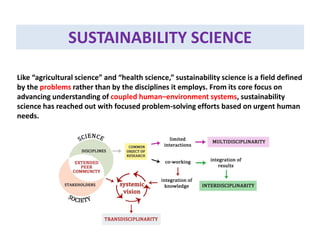
SUSTAINABILITY SCIENCE
Like “agricultural science” and “health science,” sustainability science is a field defined
by the problems rather than by the disciplines it employs. From its core focus on
advancing understanding of coupled human–environment systems, sustainability
science has reached out with focused problem-solving efforts based on urgent human
needs.
• Providing technical assistance to GIAHS
• Planning and organizing conferences, workshops and
seminars at the national , regional or global level;
promoting policy and strategic dialogue and
interchange;
• Developing and implementing classification systems for
products and activities related to GIAHS.
WORLD AGRICULTURAL HERITAGE FOUNDATION
• Networking for GIAHS: strengthening overall networking at global,
regional, and national levels, with academic and research centers, and
with Civil Society Organizations (among other Slow Food movement);
participating in the international network of Sustainability Science;
• Developing research activities, such as :
• modeling and systems analysis of the territorial agro-ecological and geo-
metric complexities;
• studying biodiversity issues;
• assessing models and mechanisms of “community management”;
• defining methodologies of dynamic conservation and adaptation in the
context of changing environment, globally and locally;
• identifying technological solutions aimed at supporting good practices in
GIAHS with special reference to water supply and primary and renewable
energy resources and sustainable uses;
• Capacity building, training, testing, demonstration and awareness
raising about GIAHS;
• Higher Education Training: the Interuniversity Center for Research on
Sustainability Development (CIRPS) collaborate with the WAHF in
undertaking training courses at several levels : Master, Doctoral and
Post-Doctoral levels. A University certificate will eventually ratify the
training with due recognition by GIAHS Secretariat for themes
specifically devoted to dynamic conservation of agriculture heritage
systems and related issues of climate, energy, environment and
sustainable development.

Voice from WAHF

  • 1.
  • 2.
    The Foundation intendspromoting, encouraging, helping emerge, supporting, enhancing and developing research and higher education within the disciplines of the Programme “GIAHS - Globally Important Agricultural Heritage Systems” TO BE PARTNER OF GIAHS WAHF will promote and support basic and applied research, project development and verification, innovation and the creation of international masters and doctorate degree programmes pursuing sustainable development and the principles of the sustainability science.
  • 4.
    SUSTAINABILITY SCIENCE Like “agriculturalscience” and “health science,” sustainability science is a field defined by the problems rather than by the disciplines it employs. From its core focus on advancing understanding of coupled human–environment systems, sustainability science has reached out with focused problem-solving efforts based on urgent human needs.
  • 5.
    • Providing technicalassistance to GIAHS • Planning and organizing conferences, workshops and seminars at the national , regional or global level; promoting policy and strategic dialogue and interchange; • Developing and implementing classification systems for products and activities related to GIAHS. WORLD AGRICULTURAL HERITAGE FOUNDATION
  • 6.
    • Networking forGIAHS: strengthening overall networking at global, regional, and national levels, with academic and research centers, and with Civil Society Organizations (among other Slow Food movement); participating in the international network of Sustainability Science;
  • 7.
    • Developing researchactivities, such as : • modeling and systems analysis of the territorial agro-ecological and geo- metric complexities; • studying biodiversity issues; • assessing models and mechanisms of “community management”; • defining methodologies of dynamic conservation and adaptation in the context of changing environment, globally and locally; • identifying technological solutions aimed at supporting good practices in GIAHS with special reference to water supply and primary and renewable energy resources and sustainable uses;
  • 8.
    • Capacity building,training, testing, demonstration and awareness raising about GIAHS; • Higher Education Training: the Interuniversity Center for Research on Sustainability Development (CIRPS) collaborate with the WAHF in undertaking training courses at several levels : Master, Doctoral and Post-Doctoral levels. A University certificate will eventually ratify the training with due recognition by GIAHS Secretariat for themes specifically devoted to dynamic conservation of agriculture heritage systems and related issues of climate, energy, environment and sustainable development.