1. Introduction
2. Characteristics of CMOS Technology
3. Characteristics of Bipolar Technology
4. Combine advantages in BiCMOS Technology
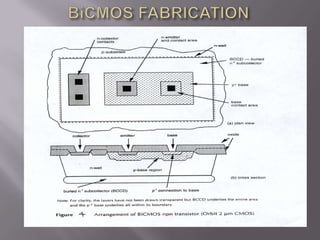
5. BiCMOS Fabrication
6. BiCMOS Integrated Circuits
8. Advantages of BiCMOS
9. Disadvantages of BiCMOS
10.Applications of BiCMOS
11.Comparison between CMOS and BiCMOS
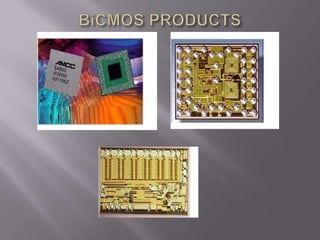
12.BiCMOS Products
13.Conclusion
 The history of semiconductor devices started in
1930’s when Lienfed and Heil first proposed
the mosfet.
 Bipolar Technology was started in 1980’s.
 CMOS Technology was also started in mid
1980’s.
 Later in 1990 there was a cross over between
bipolar and CMOS Technology.
 In BiCMOS technology, both the MOS and
bipolar device are fabricated on the same chip .
 The objective of the BiCMOS is to combine
bipolar and CMOS so as to exploit the
advantages of both the technlogies.
 Today BiCMOS has become one of the
dominant technologies used for high
speed, low power and highly functional VLSI
circuits.
 The process step required for both CMOS and
bipolar are similar so the BiCMOS process has
been enhanced and integrated into the CMOS
process without any additional steps.
 The primary approach to realize high performance
BiCMOS devices is the addition of bipolar process
steps to a baseline CMOS process.
 The BiCMOS gates could be used as an effective
way of speeding up the VLSI circuits.
 The applications of BiCMOS are vast.
 Advantages of bipolar and CMOS circuits can be
retained in BiCMOS chips.
 BiCMOS technology enables high performance
integrated circuits IC’s but increases process
complexity.
 BiCMOS technology is a combination of
Bipolar and CMOS technology.
 CMOS technology offers less power
dissipation, smaller noise margins, and higher
packing density.
 Bipolar technology, on the other hand, ensures
high switching and I/O speed and good noise
performance
 Now we are in 3rd Generation BiCMOS
Technology.
 BiCMOS technology accomplishes both -
improved speed over CMOS and lower power
dissipation than bipolar technology.
 The main drawback of BiCMOS technology is
the higher costs due to the added process
complexity.
 This greater process complexity in BiCMOS
results in a cost increase compared to
conventional CMOS technology.
Vin
 Lower static power dissipation
 Higher noise margins
 Higher packing density
 High yield with large integrated complex functions
 High input impedance (low drive current)
 Scaleable threshold voltage
 High delay load sensitivity
 Low output drive current (issue when driving large
capacitive loads)
 Low transconductance, where transconductance, gm
 Bi-directional capability (drain & source are
interchangeable)
 A near ideal switching device
 Low gain
 Higher switching speed
 Higher current drive per unit area, higher gain
 Generally better noise performance and better high
frequency characteristics
 Improved I/O speed (particularly significant with the
growing importance of package limitations in high
speed systems).
 high power dissipation
 lower input impedance (high drive current)
 low packing density
 low delay sensitivity to load
 High transconductance gm (gm Vin)
 It is essentially unidirectional.
 It follows that BiCMOS technology goes some way
towards combining the virtues of both CMOS and
Bipolar technologies
 Improved speed over purely-CMOS technology
 Lower power dissipation than purely-bipolar
technology(Lower power consumption than bipolar)
 Flexible I/Os for high performance
 Improved current drive over CMOS
 Improved packing density over bipolar
 High input impedance
 Low output impedance
 High Gain and low noise
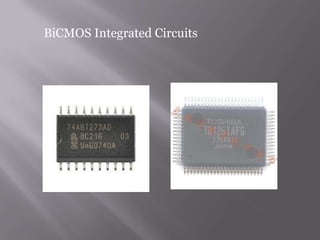
BiCMOS Integrated Circuits
ADVANTAGES
 Improved speed over CMOS
 Improved current drive over
CMOS
 Improved packing density over
bipolar
 Lower power consumption than
bipolar
 High input impedance
 Low output impedance
 High Gain and low noise
DISADVANTAGES
 Increased manufacturing process
complexity
 higher cost
 Speed degradation due to scaling
 longer fabrication cycle time BiCMOS
process
 Bipolar process
+
Well
+
Gate Oxide & Poly
+
CMOS process
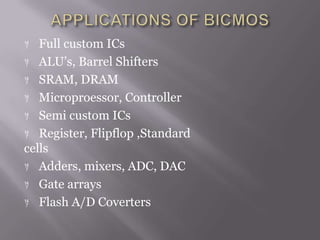
 Full custom ICs
 ALU’s, Barrel Shifters
 SRAM, DRAM
 Microproessor, Controller
 Semi custom ICs
 Register, Flipflop ,Standard
cells
 Adders, mixers, ADC, DAC
 Gate arrays
 Flash A/D Coverters
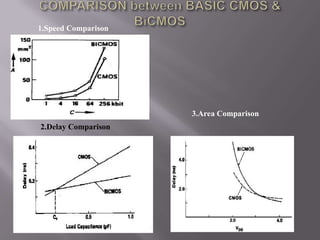
1.Speed Comparison
3.Area Comparison
2.Delay Comparison
LITERATURE SURVEY
BOOKS:
VLSI Basic Design by Douglas A. Pucknell and
Kamran Eshraghian
WEBSITES: http://www.vlsihandbook.com
http://www.bicmosdesign.com
http://website.informer.com
http://www.freepatentsonline.com/6927460.html

THANKYOU

VLSI bi cmos technology processes ppt.ppt

  • 2.
    1. Introduction 2. Characteristicsof CMOS Technology 3. Characteristics of Bipolar Technology 4. Combine advantages in BiCMOS Technology 5. BiCMOS Fabrication 6. BiCMOS Integrated Circuits
  • 3.
    8. Advantages ofBiCMOS 9. Disadvantages of BiCMOS 10.Applications of BiCMOS 11.Comparison between CMOS and BiCMOS 12.BiCMOS Products 13.Conclusion
  • 4.
     The historyof semiconductor devices started in 1930’s when Lienfed and Heil first proposed the mosfet.  Bipolar Technology was started in 1980’s.  CMOS Technology was also started in mid 1980’s.  Later in 1990 there was a cross over between bipolar and CMOS Technology.  In BiCMOS technology, both the MOS and bipolar device are fabricated on the same chip .
  • 5.
     The objectiveof the BiCMOS is to combine bipolar and CMOS so as to exploit the advantages of both the technlogies.  Today BiCMOS has become one of the dominant technologies used for high speed, low power and highly functional VLSI circuits.  The process step required for both CMOS and bipolar are similar so the BiCMOS process has been enhanced and integrated into the CMOS process without any additional steps.
  • 6.
     The primaryapproach to realize high performance BiCMOS devices is the addition of bipolar process steps to a baseline CMOS process.  The BiCMOS gates could be used as an effective way of speeding up the VLSI circuits.  The applications of BiCMOS are vast.  Advantages of bipolar and CMOS circuits can be retained in BiCMOS chips.  BiCMOS technology enables high performance integrated circuits IC’s but increases process complexity.
  • 7.
     BiCMOS technologyis a combination of Bipolar and CMOS technology.  CMOS technology offers less power dissipation, smaller noise margins, and higher packing density.  Bipolar technology, on the other hand, ensures high switching and I/O speed and good noise performance  Now we are in 3rd Generation BiCMOS Technology.
  • 8.
     BiCMOS technologyaccomplishes both - improved speed over CMOS and lower power dissipation than bipolar technology.  The main drawback of BiCMOS technology is the higher costs due to the added process complexity.  This greater process complexity in BiCMOS results in a cost increase compared to conventional CMOS technology.
  • 9.
    Vin  Lower staticpower dissipation  Higher noise margins  Higher packing density  High yield with large integrated complex functions  High input impedance (low drive current)  Scaleable threshold voltage  High delay load sensitivity  Low output drive current (issue when driving large capacitive loads)  Low transconductance, where transconductance, gm  Bi-directional capability (drain & source are interchangeable)  A near ideal switching device  Low gain
  • 10.
     Higher switchingspeed  Higher current drive per unit area, higher gain  Generally better noise performance and better high frequency characteristics  Improved I/O speed (particularly significant with the growing importance of package limitations in high speed systems).  high power dissipation  lower input impedance (high drive current)  low packing density  low delay sensitivity to load  High transconductance gm (gm Vin)  It is essentially unidirectional.
  • 11.
     It followsthat BiCMOS technology goes some way towards combining the virtues of both CMOS and Bipolar technologies  Improved speed over purely-CMOS technology  Lower power dissipation than purely-bipolar technology(Lower power consumption than bipolar)  Flexible I/Os for high performance  Improved current drive over CMOS  Improved packing density over bipolar  High input impedance  Low output impedance  High Gain and low noise
  • 13.
  • 14.
    ADVANTAGES  Improved speedover CMOS  Improved current drive over CMOS  Improved packing density over bipolar  Lower power consumption than bipolar  High input impedance  Low output impedance  High Gain and low noise
  • 15.
    DISADVANTAGES  Increased manufacturingprocess complexity  higher cost  Speed degradation due to scaling  longer fabrication cycle time BiCMOS process  Bipolar process + Well + Gate Oxide & Poly + CMOS process
  • 16.
     Full customICs  ALU’s, Barrel Shifters  SRAM, DRAM  Microproessor, Controller  Semi custom ICs  Register, Flipflop ,Standard cells  Adders, mixers, ADC, DAC  Gate arrays  Flash A/D Coverters
  • 17.
  • 19.
    LITERATURE SURVEY BOOKS: VLSI BasicDesign by Douglas A. Pucknell and Kamran Eshraghian WEBSITES: http://www.vlsihandbook.com http://www.bicmosdesign.com http://website.informer.com http://www.freepatentsonline.com/6927460.html

  • 20.