SEMIOTICS
STUDY OF IMAGES AS SIGNS & SYMBOLS
TRIES TO UNDERSTAND THE SIGNS WE USE
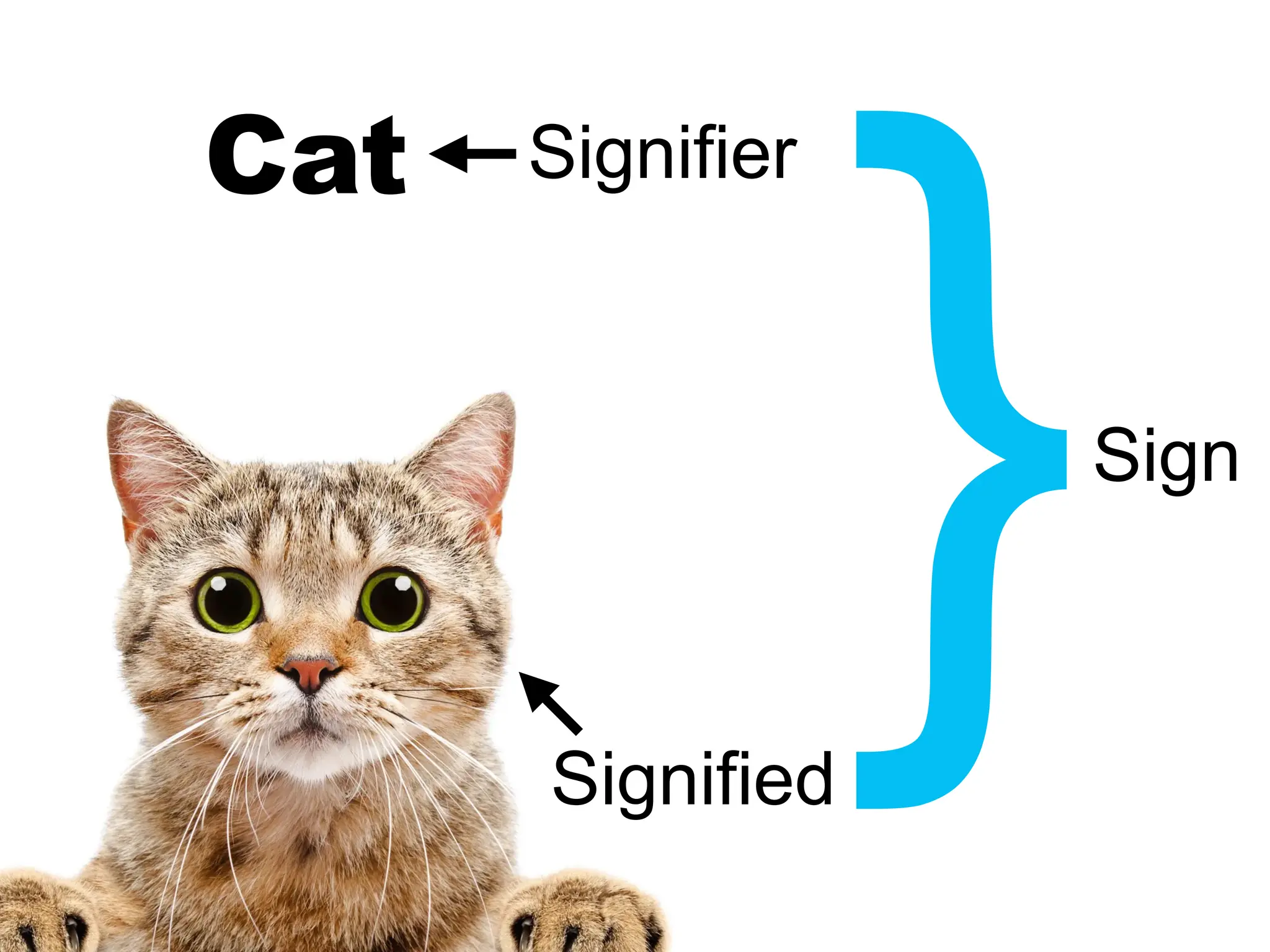
Cat
}Sign
Signified
Signifier
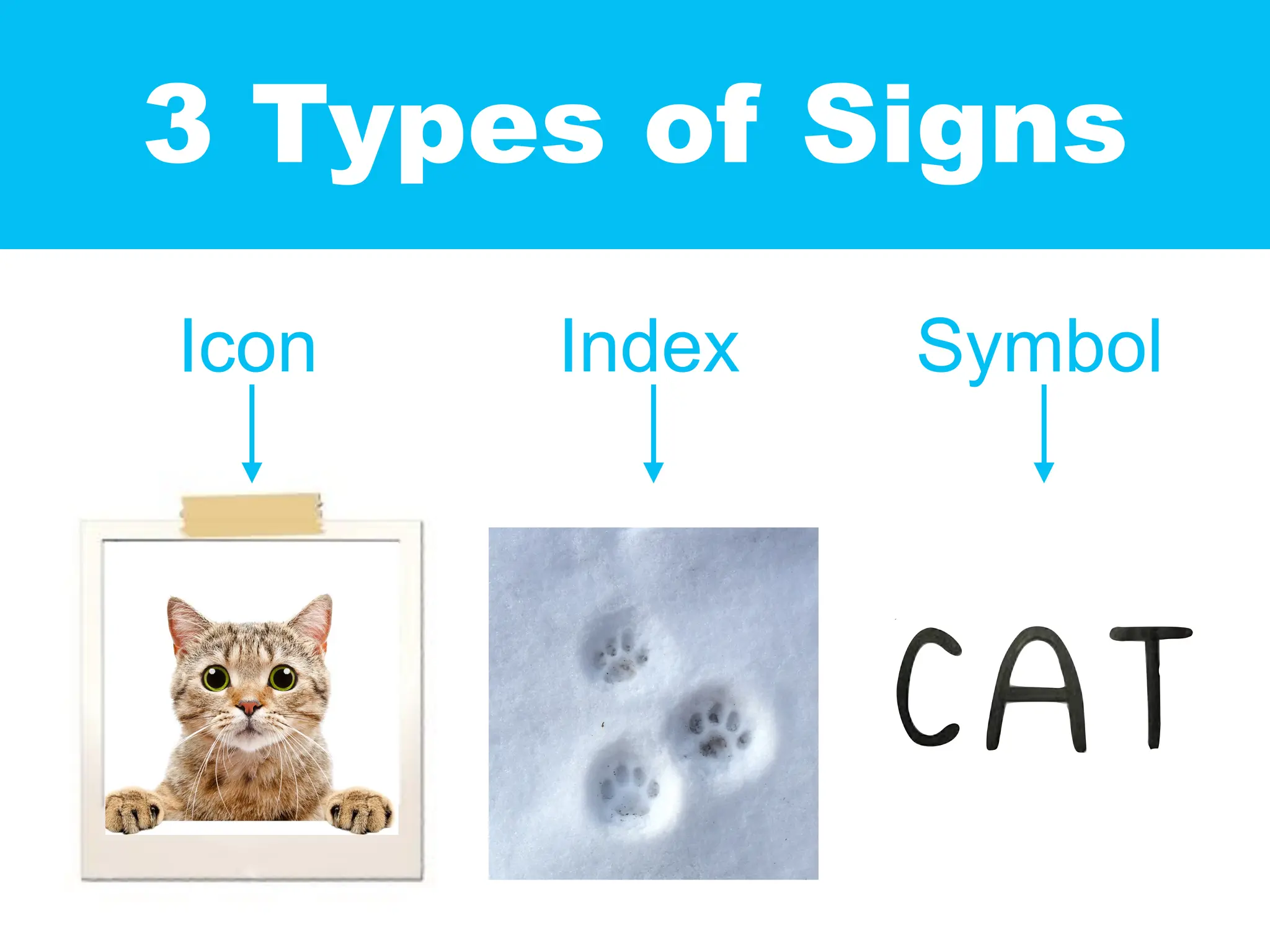
3 Types of Signs
Icon Index Symbol
1. ICONIC SIGNS
SIGNS THAT CLOSELY RESEMBLE THE OBJECT
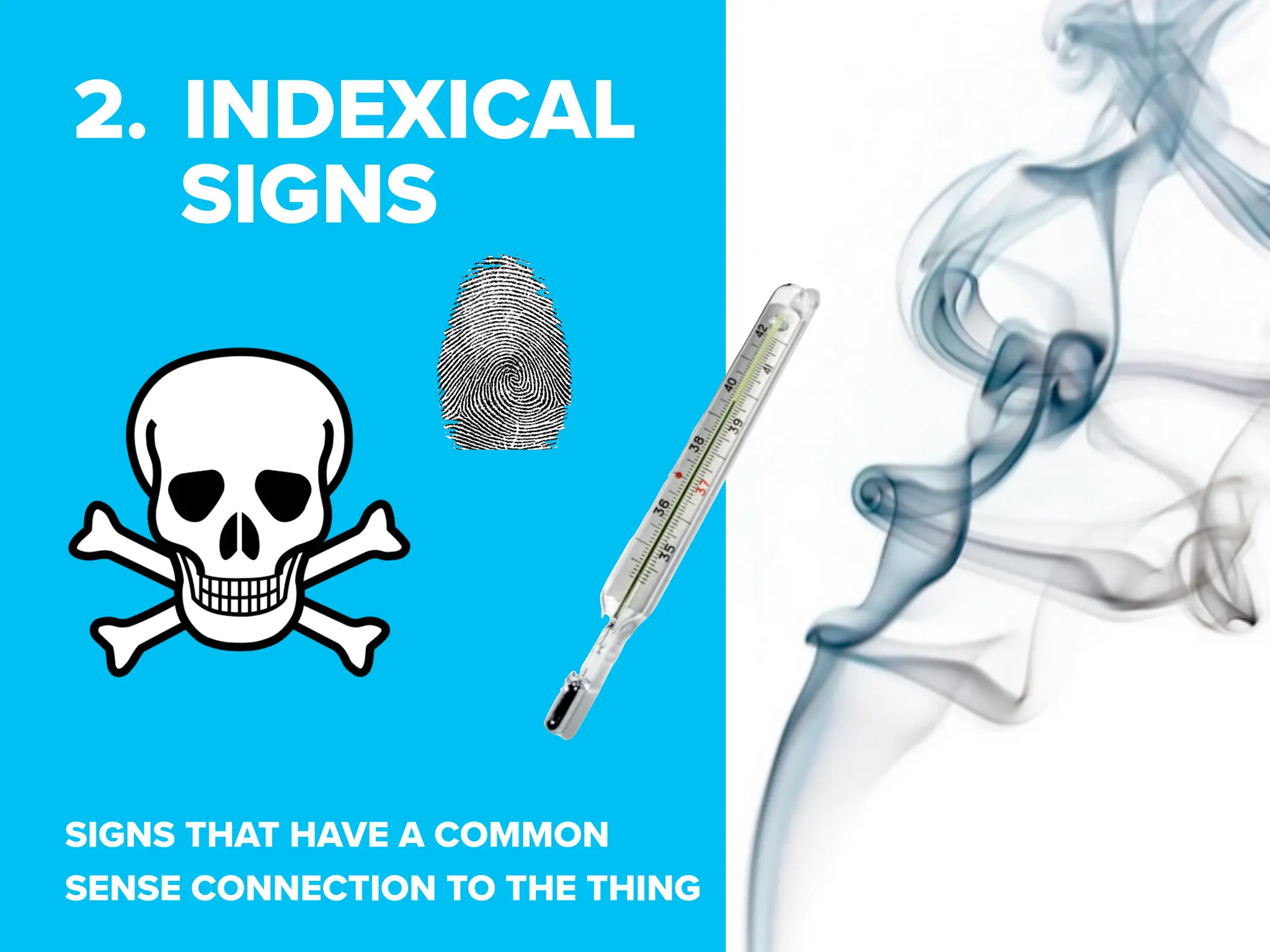
SIGNS THAT HAVE A COMMON
SENSE CONNECTION TO THE THING
2. INDEXICAL
SIGNS
3. SYMBOLIC SIGNS
SIGNS WITH NO LOGICAL
REPRESENTATIONAL CONNECTION
Words
E=MC2
Elaboration
How are persuasive messages perceived and processed?
Likelihood Model
Petty & Cacioppo, 1986
the issue-relevant arguments contained in a message.
Depends on motivation and ability to process.
Elaboration: the extent to which a person thinks about
Very little thinking Lots of thinking
taking effect next semester!
Involvement
How do you feel about moving to a plus/minus grading system?
Personal
relevance
High Low
High involvement Low involvement
involvement = motivational component
Persuasive Message
Central route to processing
Peripheral route to processing
Involvement:
High
Involvement:
Low
Ability to process:
Yes
Persuasion:
Temporary
Comprehension:
Shallow Thoughts
Persuasion:
Lasting
Comprehension:
Deep Thoughts
Ability to process:
No
Slightly Simplified Model
Actual Model
High Involvement:
Low Involvement:
focus on simple cues that are peripheral to
the message (message cues vs. source cues)
leads to issue-relevant thinking
study menu, reviews,
ask social network
Picking a BBQ place
if other people think
it’s good, then it is
bandwagon heuristic

Visual Turn