VIRTUALIZED CONTAINERS
Ananth, Himanshu, Rajaram, Sandeep, Siva, Sanjay
AGENDA
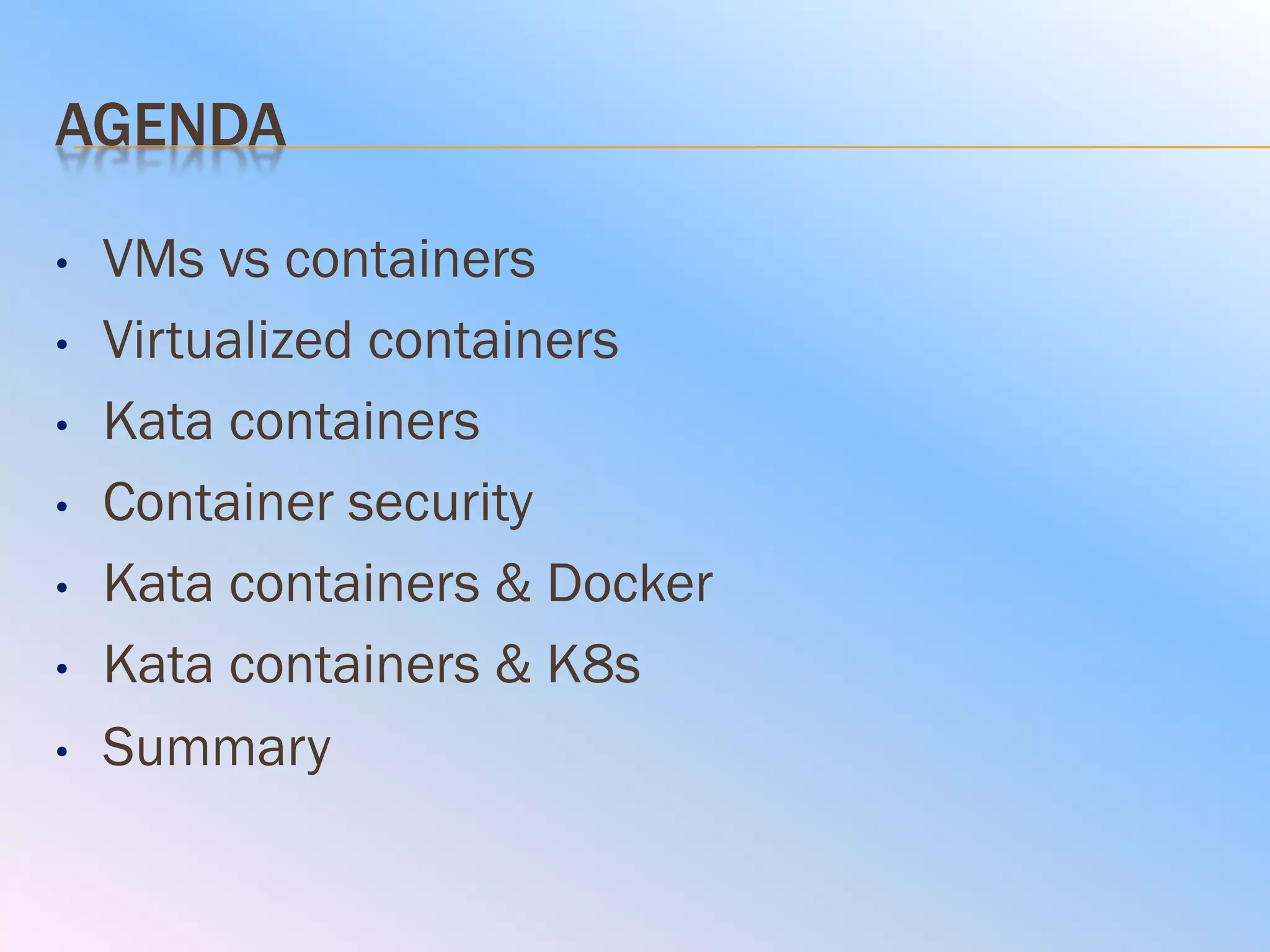
• VMs vs containers
• Virtualized containers
• Kata containers
• Container security
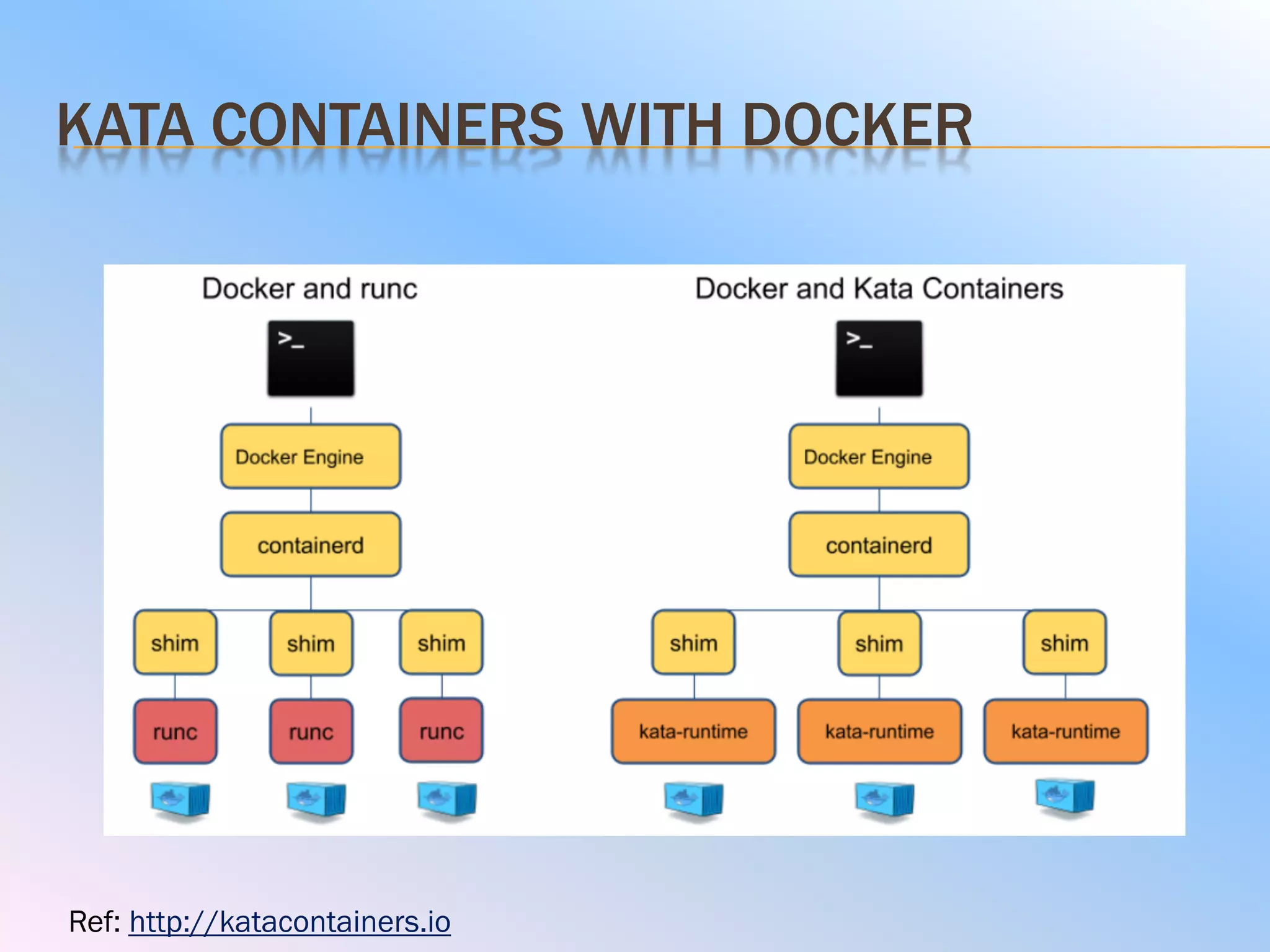
• Kata containers & Docker
• Kata containers & K8s
• Summary
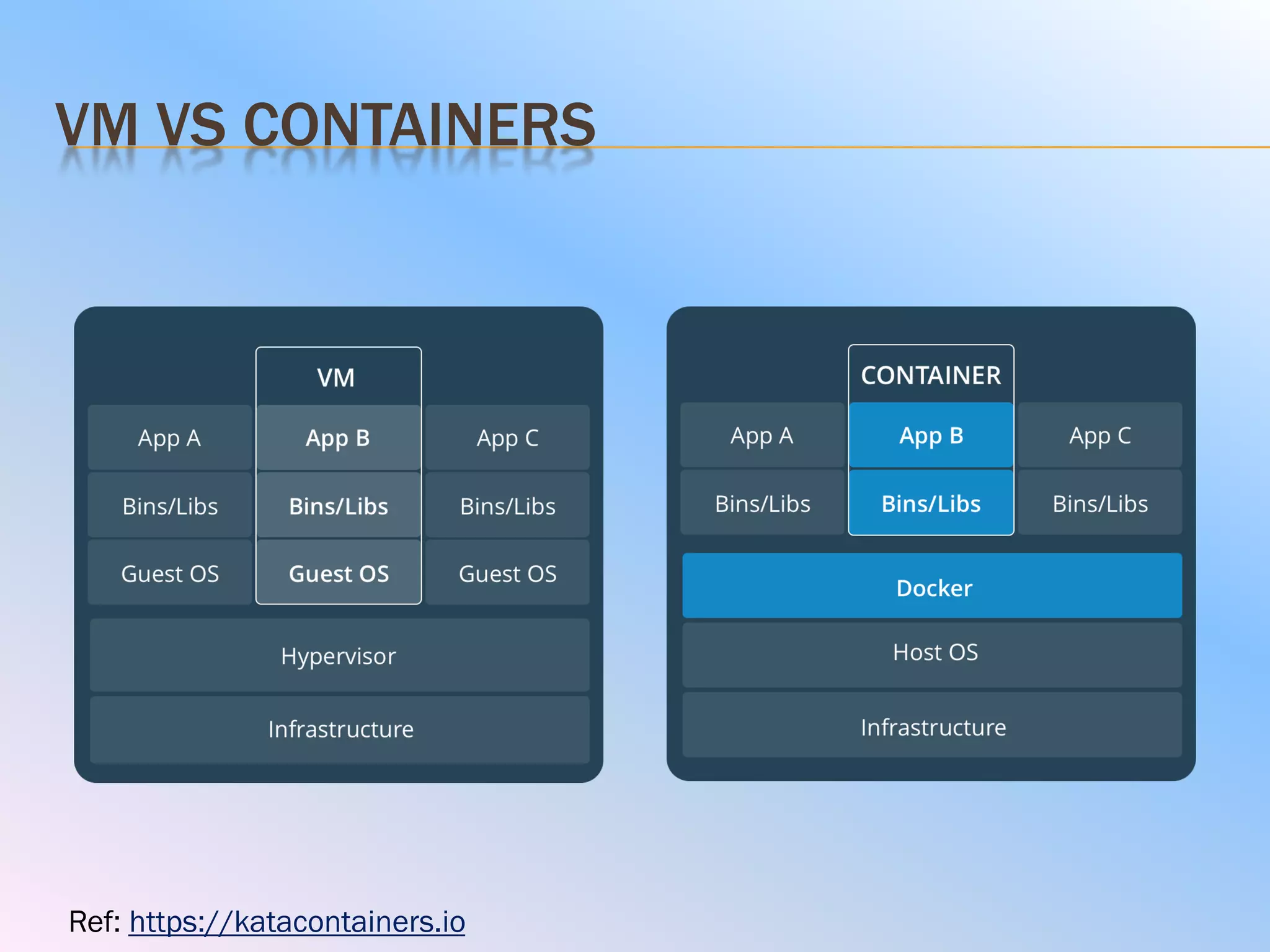
VM VS CONTAINERS
Ref: https://katacontainers.io
VM VS CONTAINERS
• VMs are abstraction of the hardware, allowing multiple servers to run
on the same hardware
• Containers are abstraction at the application layer, that packages
app code and dependencies together
• Each VM has its own operating system, all necessary binaries and
libraries, making it heavy
• Containers share the host OS kernel and has only those packages
necessary to run the application, therefore very light
• VMs take time to boot-up and the images are large in size
• The USP for containers is speed and portability
VIRTUALIZED CONTAINERS
• Speed of containers
• Security of VMs
• Otherwise called hypervisor based containers
Image Ref
Image Ref
Image refImage Ref
VIRTUALIZED CONTAINERS CONTD…
Traditional containers such as Docker Virtualized containers
Ref: http://katacontainers.io
Shared kernel Dedicated kernel
VIRTUALIZED CONTAINERS CONTD…
• Traditional containers share the underlying OS kernel.
• We run a lot of unknown un-trusted applications on
containers in our datacenter.
• If a malicious user gains access to the host OS kernel,
rest of the containers and the entire system can be
compromised.
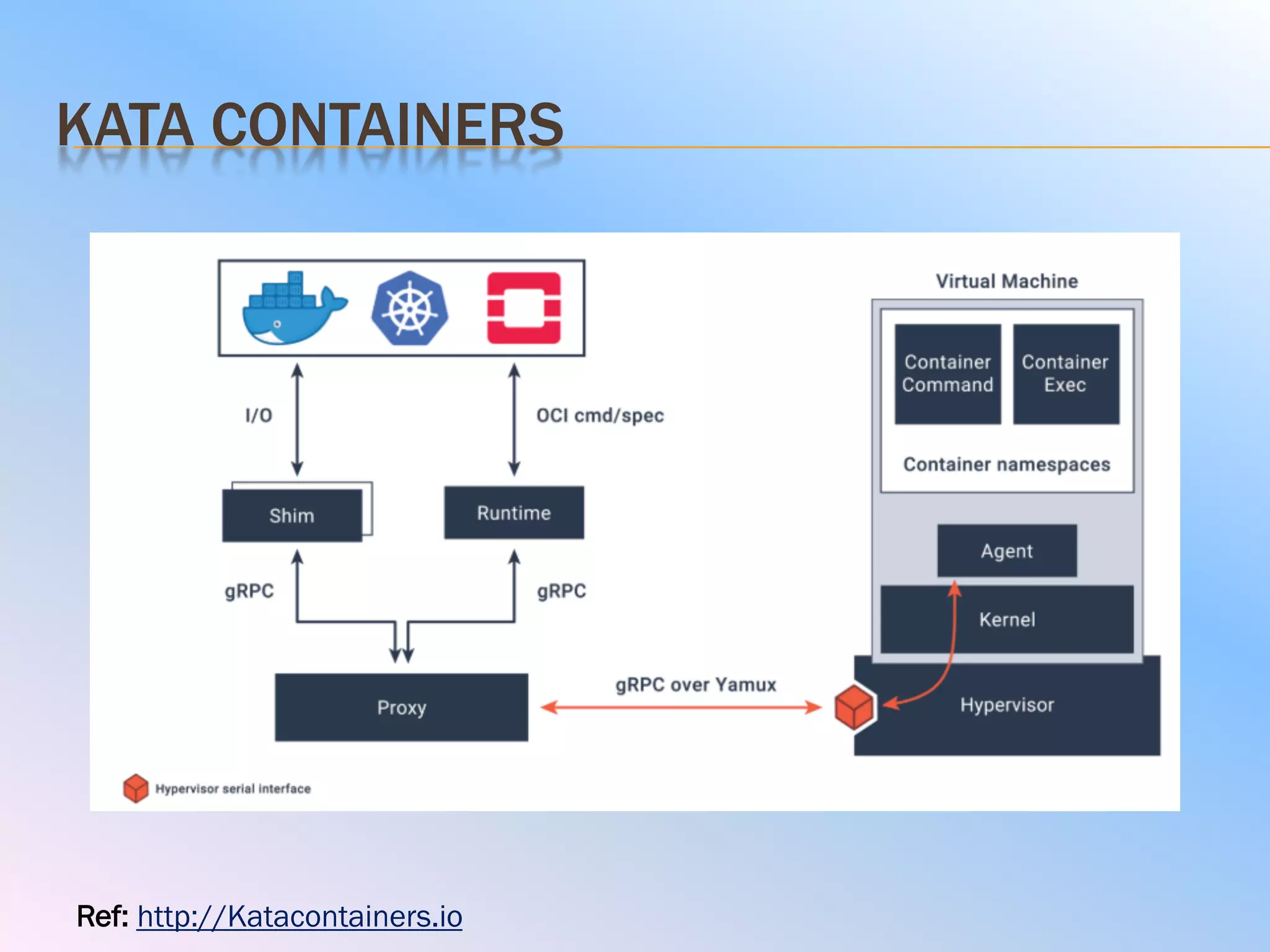
• Kata-runtime boots each containers as a light weight
VM, using hardware virtualization.
• Provides double isolation without compromising on
performance
• Reduces the attacking surface, thereby improving
security
CONTAINER SECURITY
• Docker itself is built with security and isolation
in mind. It provides lot of inherent features and
hooks to make your system more secure.
• However, it does not prevent you from “Running
random code downloaded from the Internet
and running it as root”
• We need not worry if proper security measures
are taken and best practices are adhered to
CONTAINER SECURITY CONTD…
• Host and kernel security
• Denial-of-service attacks
• Container breakout
• Credentials and secrets
• Authenticity of images
• Static image vulnerabilities
• Runtime security
KATA CONTAINERS
Ref: http://Katacontainers.io
KATA CONTAINERS WITH DOCKER
Ref: http://katacontainers.io
CONFIGURATION STEPS
• Enable virtualization (Intel VT / AMD-V) on the docker host
• Create a config file inside docker.service.d
• Restart docker
• Spin up kata containers using docker run command and docker images
[root@tt2aio docker-host]# cd /etc/systemd/system/docker.service.d
[root@tt2aio docker-host]# cat <<EOF | sudo tee kata-containers.conf
[Service]
ExecStart=
ExecStart=/usr/bin/dockerd -D --add-runtime kata-
runtime=/usr/bin/kata-runtime --default-runtime=kata-runtime
EOF
[root@tt2aio docker-host]# systemctl daemon-reload
[root@tt2aio docker-host]# systemctl restart docker
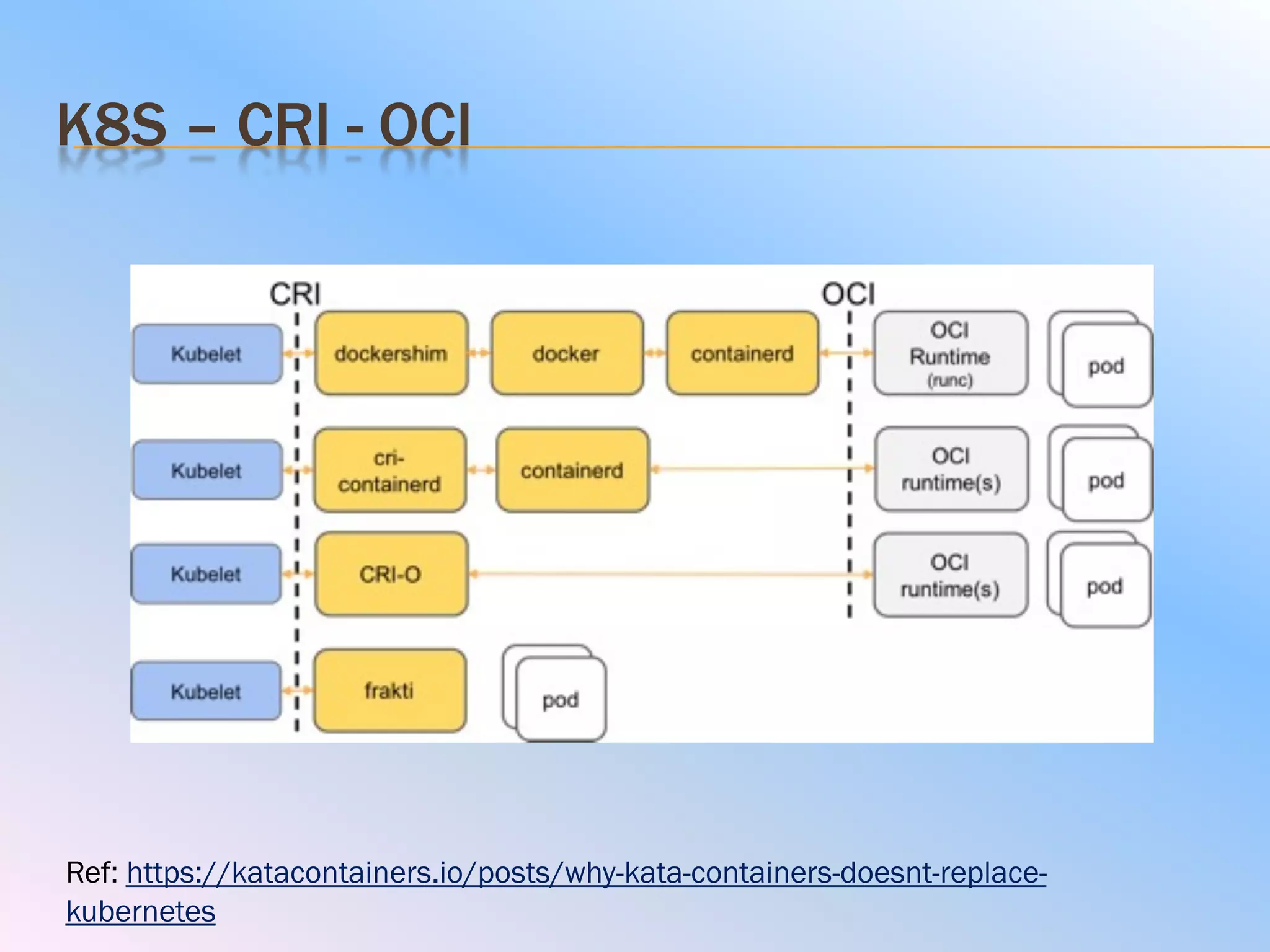
K8S – CRI - OCI
Ref: https://katacontainers.io/posts/why-kata-containers-doesnt-replace-
kubernetes
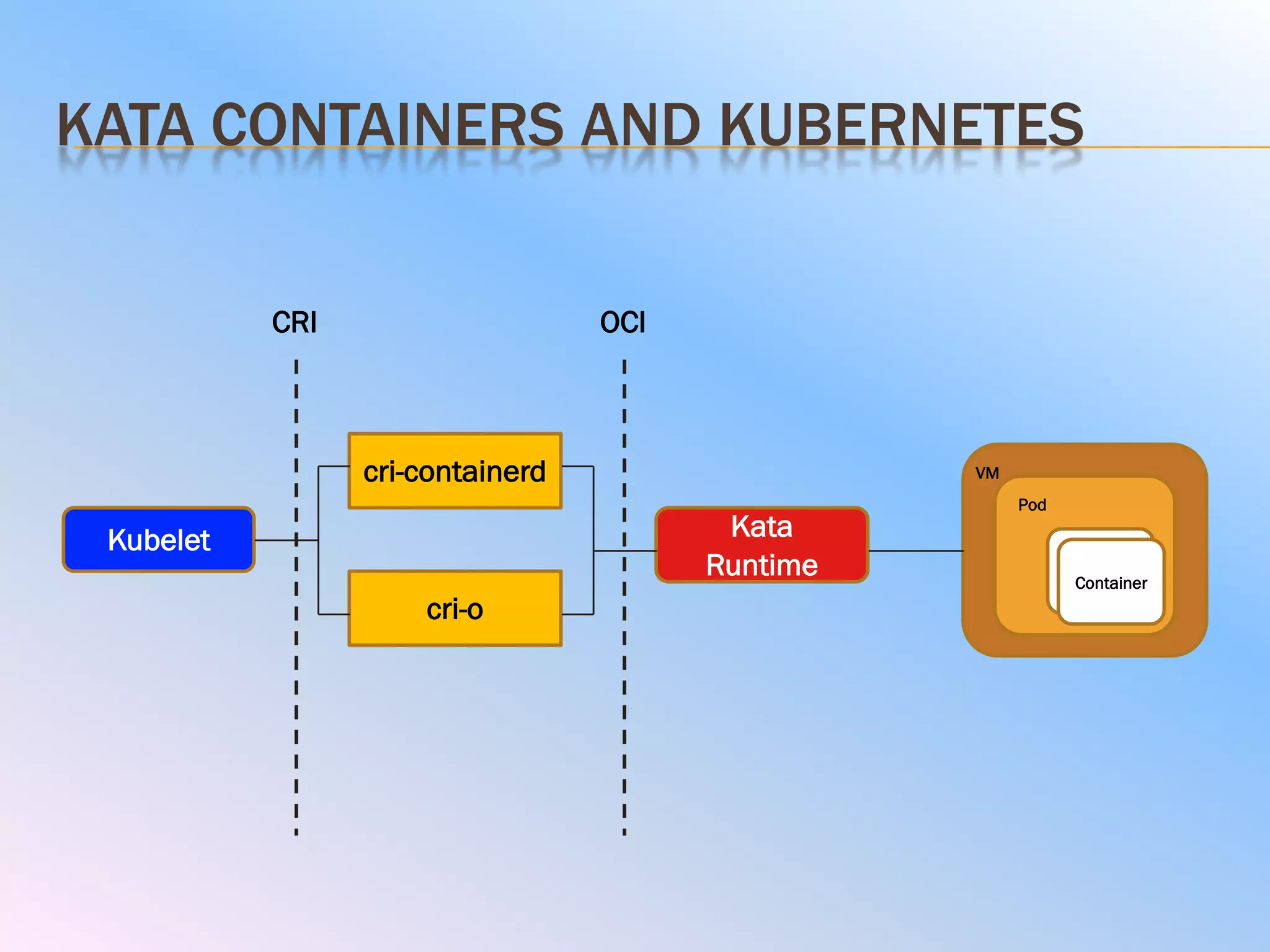
KATA CONTAINERS AND KUBERNETES
Kubelet
cri-containerd
Kata
Runtime
CRI OCI
cri-o
VM
Pod
Container
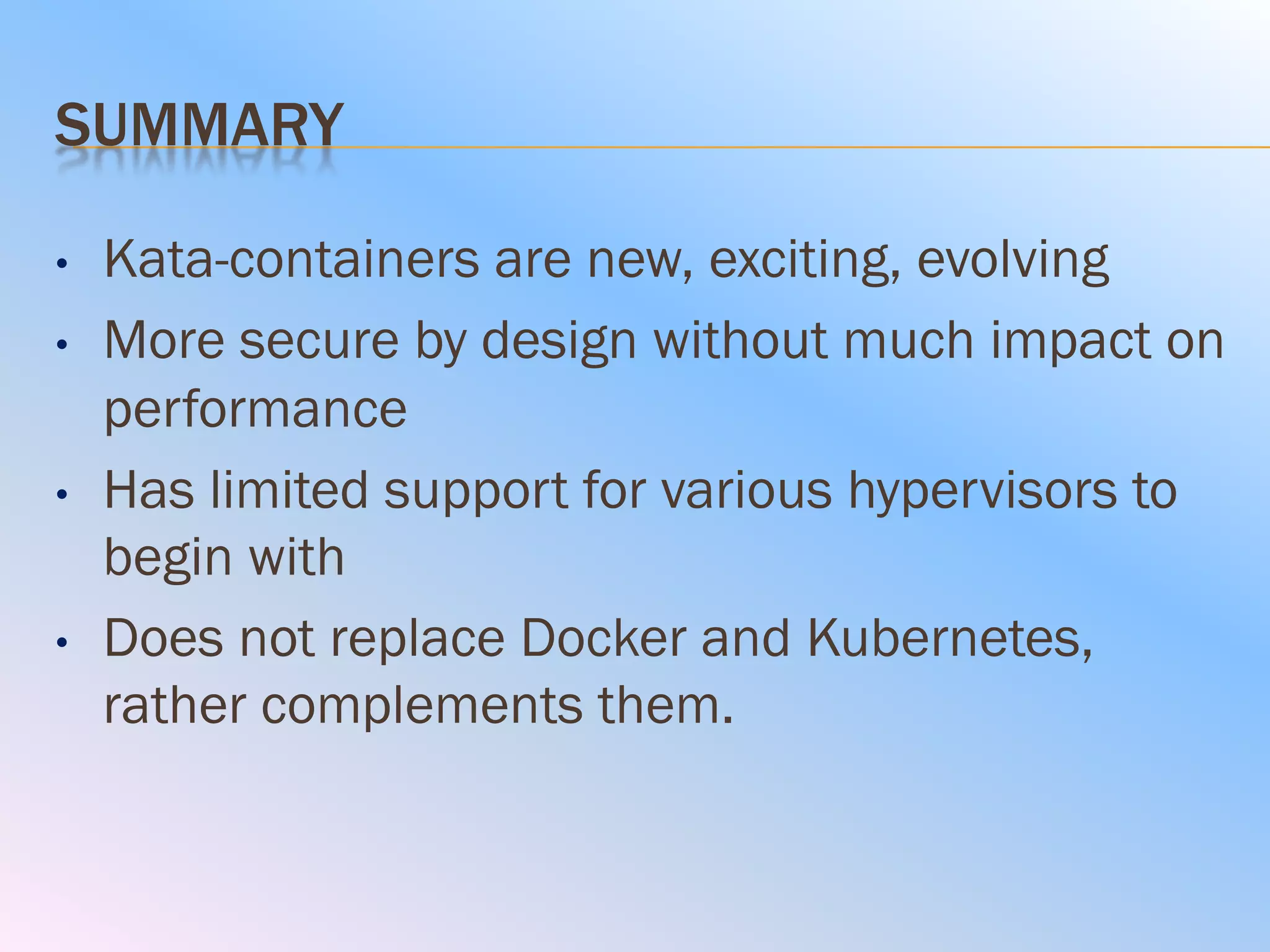
SUMMARY
• Kata-containers are new, exciting, evolving
• More secure by design without much impact on
performance
• Has limited support for various hypervisors to
begin with
• Does not replace Docker and Kubernetes,
rather complements them.
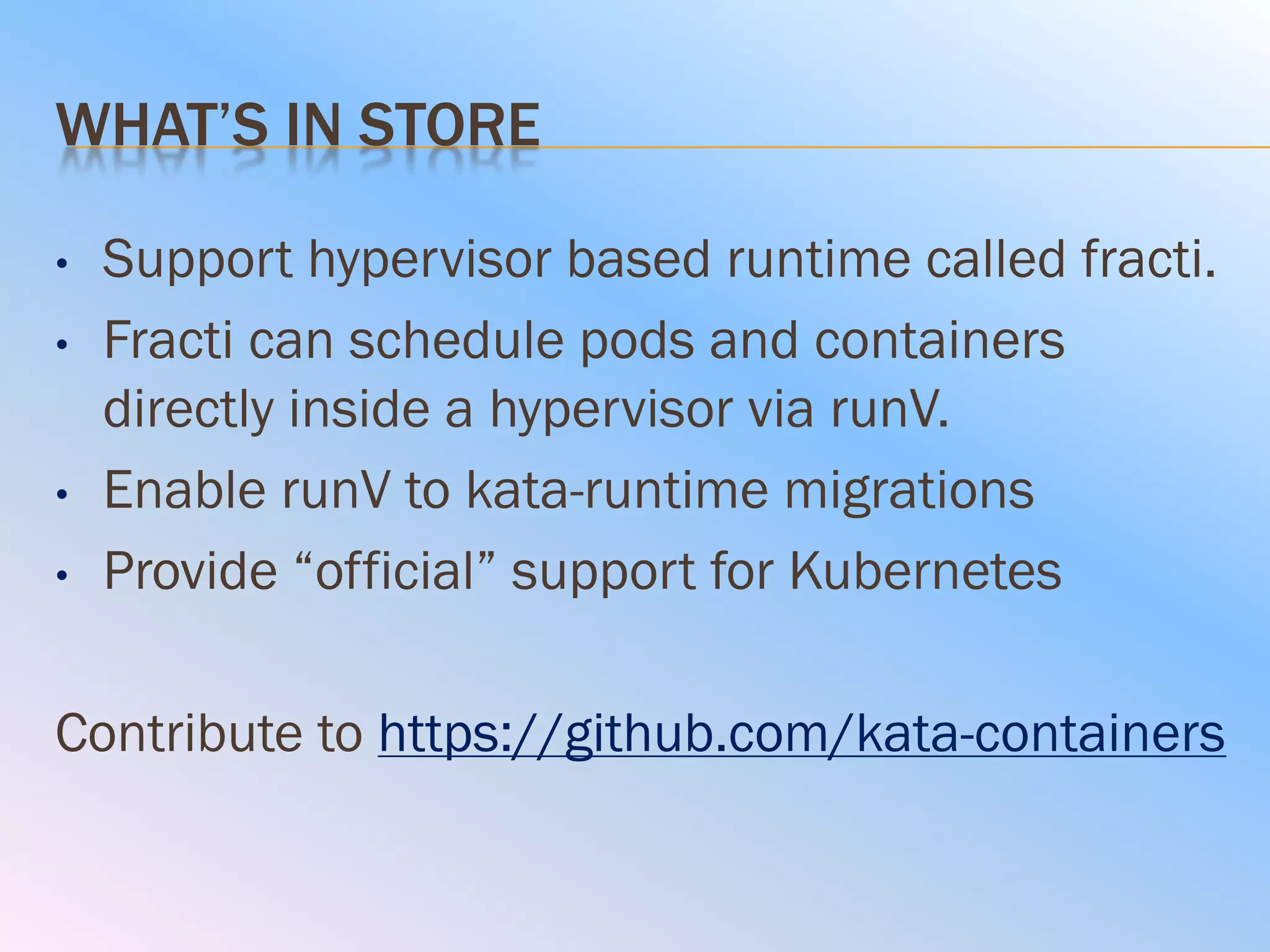
WHAT’S IN STORE
• Support hypervisor based runtime called fracti.
• Fracti can schedule pods and containers
directly inside a hypervisor via runV.
• Enable runV to kata-runtime migrations
• Provide “official” support for Kubernetes
Contribute to https://github.com/kata-containers
REFERENCES
• https://docs.docker.com/
• https://katacontainers.io/
• Docker	runtime	execution	options
• Why	Kata containers	cannot	replaces	K8S
• Container	security	vulnerabilities	and	threats
• Securing	containers
• Running	kata with	Docker
• Running	kata with	K8s

Virtualized Containers - How Good is it - Ananth - Siemens - CC18

  • 1.
    VIRTUALIZED CONTAINERS Ananth, Himanshu,Rajaram, Sandeep, Siva, Sanjay
  • 2.
    AGENDA • VMs vscontainers • Virtualized containers • Kata containers • Container security • Kata containers & Docker • Kata containers & K8s • Summary
  • 3.
    VM VS CONTAINERS Ref:https://katacontainers.io
  • 4.
    VM VS CONTAINERS •VMs are abstraction of the hardware, allowing multiple servers to run on the same hardware • Containers are abstraction at the application layer, that packages app code and dependencies together • Each VM has its own operating system, all necessary binaries and libraries, making it heavy • Containers share the host OS kernel and has only those packages necessary to run the application, therefore very light • VMs take time to boot-up and the images are large in size • The USP for containers is speed and portability
  • 5.
    VIRTUALIZED CONTAINERS • Speedof containers • Security of VMs • Otherwise called hypervisor based containers Image Ref Image Ref Image refImage Ref
  • 6.
    VIRTUALIZED CONTAINERS CONTD… Traditionalcontainers such as Docker Virtualized containers Ref: http://katacontainers.io Shared kernel Dedicated kernel
  • 7.
    VIRTUALIZED CONTAINERS CONTD… •Traditional containers share the underlying OS kernel. • We run a lot of unknown un-trusted applications on containers in our datacenter. • If a malicious user gains access to the host OS kernel, rest of the containers and the entire system can be compromised. • Kata-runtime boots each containers as a light weight VM, using hardware virtualization. • Provides double isolation without compromising on performance • Reduces the attacking surface, thereby improving security
  • 8.
    CONTAINER SECURITY • Dockeritself is built with security and isolation in mind. It provides lot of inherent features and hooks to make your system more secure. • However, it does not prevent you from “Running random code downloaded from the Internet and running it as root” • We need not worry if proper security measures are taken and best practices are adhered to
  • 9.
    CONTAINER SECURITY CONTD… •Host and kernel security • Denial-of-service attacks • Container breakout • Credentials and secrets • Authenticity of images • Static image vulnerabilities • Runtime security
  • 10.
  • 11.
    KATA CONTAINERS WITHDOCKER Ref: http://katacontainers.io
  • 12.
    CONFIGURATION STEPS • Enablevirtualization (Intel VT / AMD-V) on the docker host • Create a config file inside docker.service.d • Restart docker • Spin up kata containers using docker run command and docker images [root@tt2aio docker-host]# cd /etc/systemd/system/docker.service.d [root@tt2aio docker-host]# cat <<EOF | sudo tee kata-containers.conf [Service] ExecStart= ExecStart=/usr/bin/dockerd -D --add-runtime kata- runtime=/usr/bin/kata-runtime --default-runtime=kata-runtime EOF [root@tt2aio docker-host]# systemctl daemon-reload [root@tt2aio docker-host]# systemctl restart docker
  • 13.
    K8S – CRI- OCI Ref: https://katacontainers.io/posts/why-kata-containers-doesnt-replace- kubernetes
  • 14.
    KATA CONTAINERS ANDKUBERNETES Kubelet cri-containerd Kata Runtime CRI OCI cri-o VM Pod Container
  • 15.
    SUMMARY • Kata-containers arenew, exciting, evolving • More secure by design without much impact on performance • Has limited support for various hypervisors to begin with • Does not replace Docker and Kubernetes, rather complements them.
  • 16.
    WHAT’S IN STORE •Support hypervisor based runtime called fracti. • Fracti can schedule pods and containers directly inside a hypervisor via runV. • Enable runV to kata-runtime migrations • Provide “official” support for Kubernetes Contribute to https://github.com/kata-containers
  • 17.
    REFERENCES • https://docs.docker.com/ • https://katacontainers.io/ •Docker runtime execution options • Why Kata containers cannot replaces K8S • Container security vulnerabilities and threats • Securing containers • Running kata with Docker • Running kata with K8s