Downloaded 21 times

![REFERENCES
• Juego Studio, 2018. Virtual Reality in Education. [Online]
Available at: https://www.slideshare.net/JuegoStudioPvtLtd/virtual-reality-in-education-86682939
[Accessed 27 August 2021].
• Sai Madhav, K. V., 2020. Virtual Reality & Augment Reality. [Online]
Available at: https://www.slideshare.net/SAIMADHAV14/virtual-reality-augmented-reality-229320086
[Accessed 27 August 2021].
• SMACAR, 2017. Augmented Reality in Education. [Online]
Available at: https://www.slideshare.net/smacarsolutions/augmented-reality-in-education-72761402
[Accessed 27 August 2021].
• Yeppar- Augmented Reality Technology, 2018. Augmented Reality for Education in India. [Online]
Available at: https://www.slideshare.net/Yeppar/augmented-reality-for-education-in-india
[Accessed 27 August 2021].
• Yeppar- Augmented Reality Technology, 2018. Augmented Reality in Education. [Online]
Available at: https://www.slideshare.net/Yeppar/augmented-reality-in-education-109647805
[Accessed 27 August 2021].](https://image.slidesharecdn.com/radzilanitm219002407tst20b3repurposing-211026141204/75/Virtual-Reality-and-Augmented-Reality-13-2048.jpg)


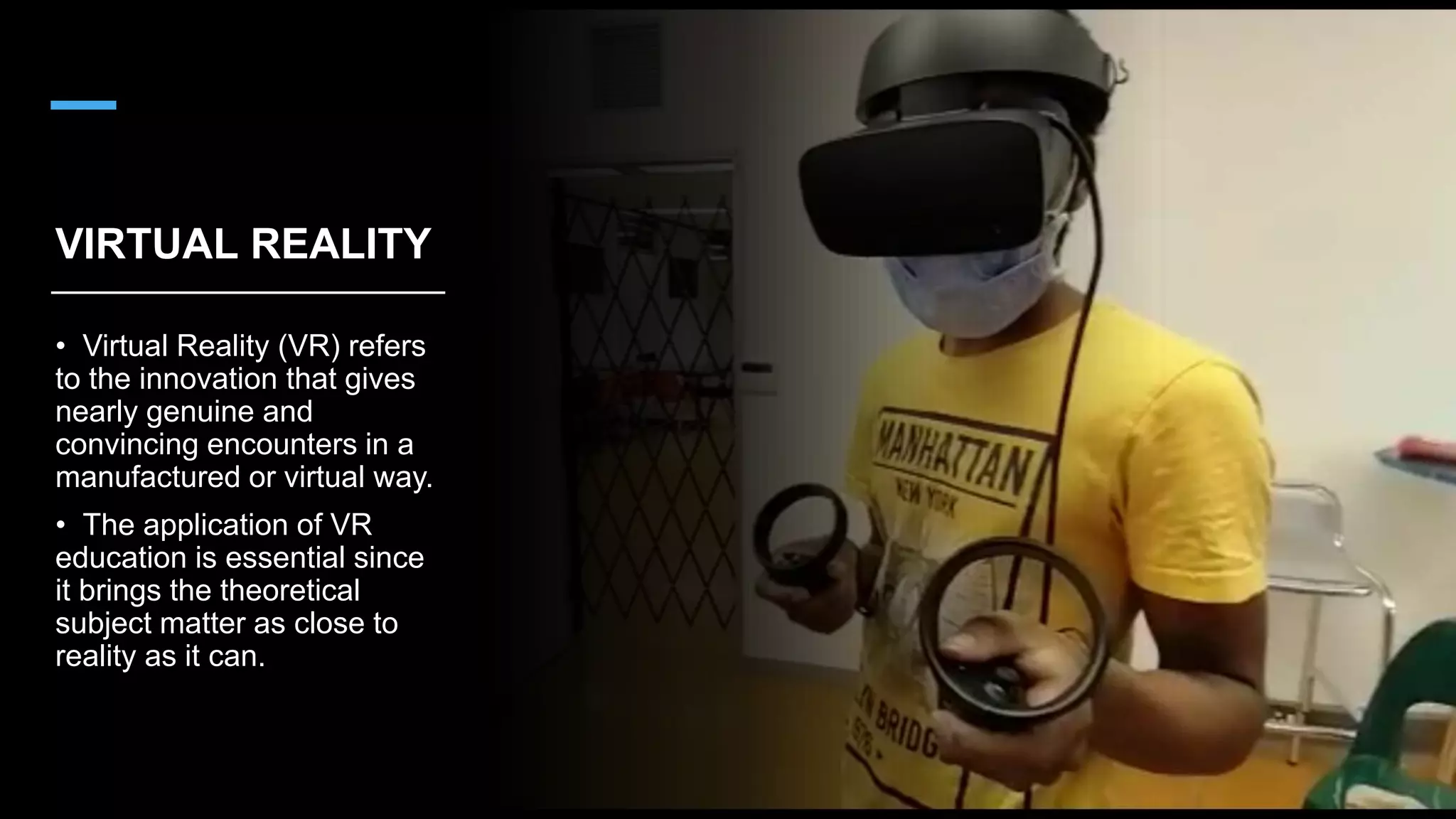
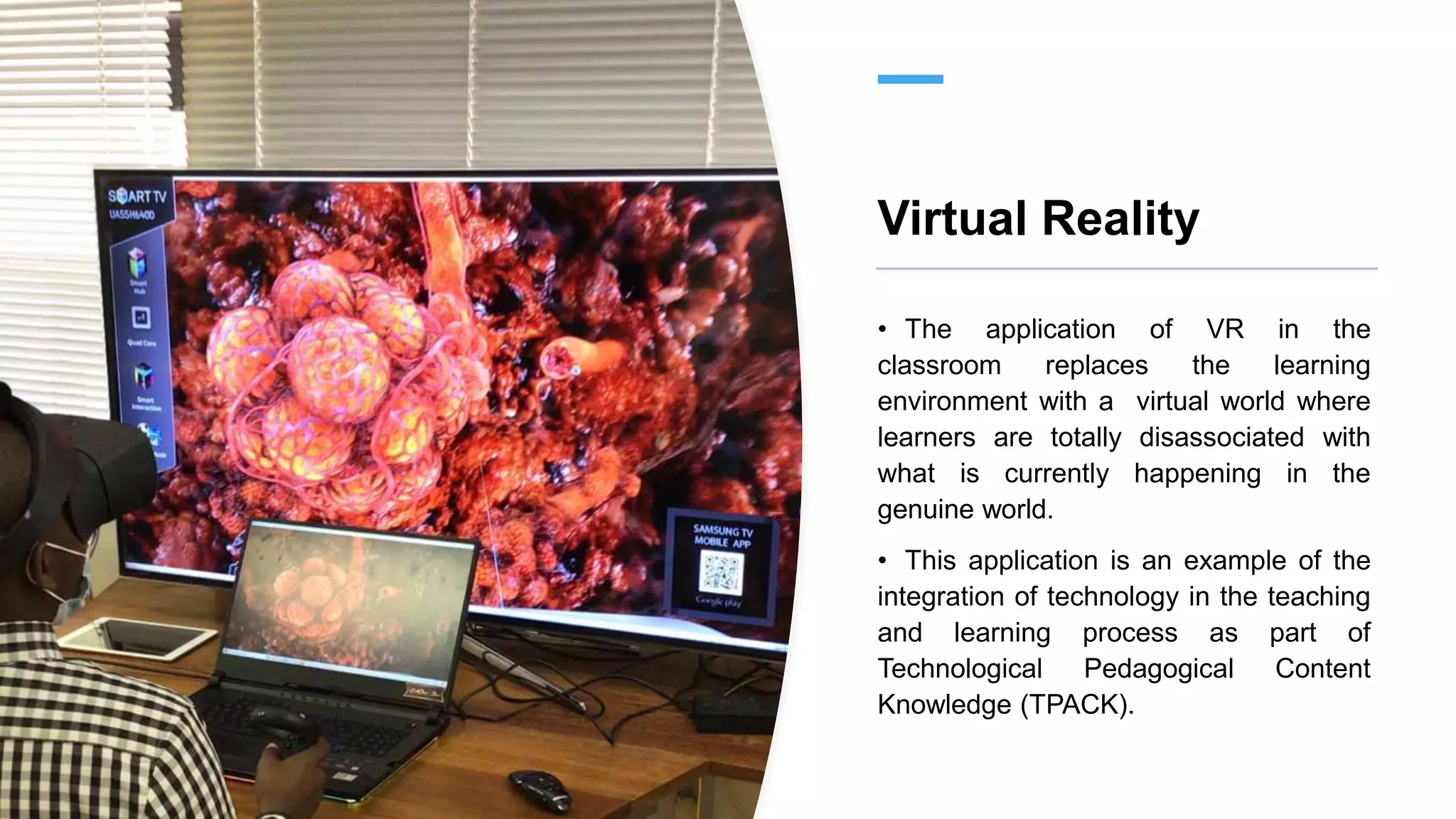
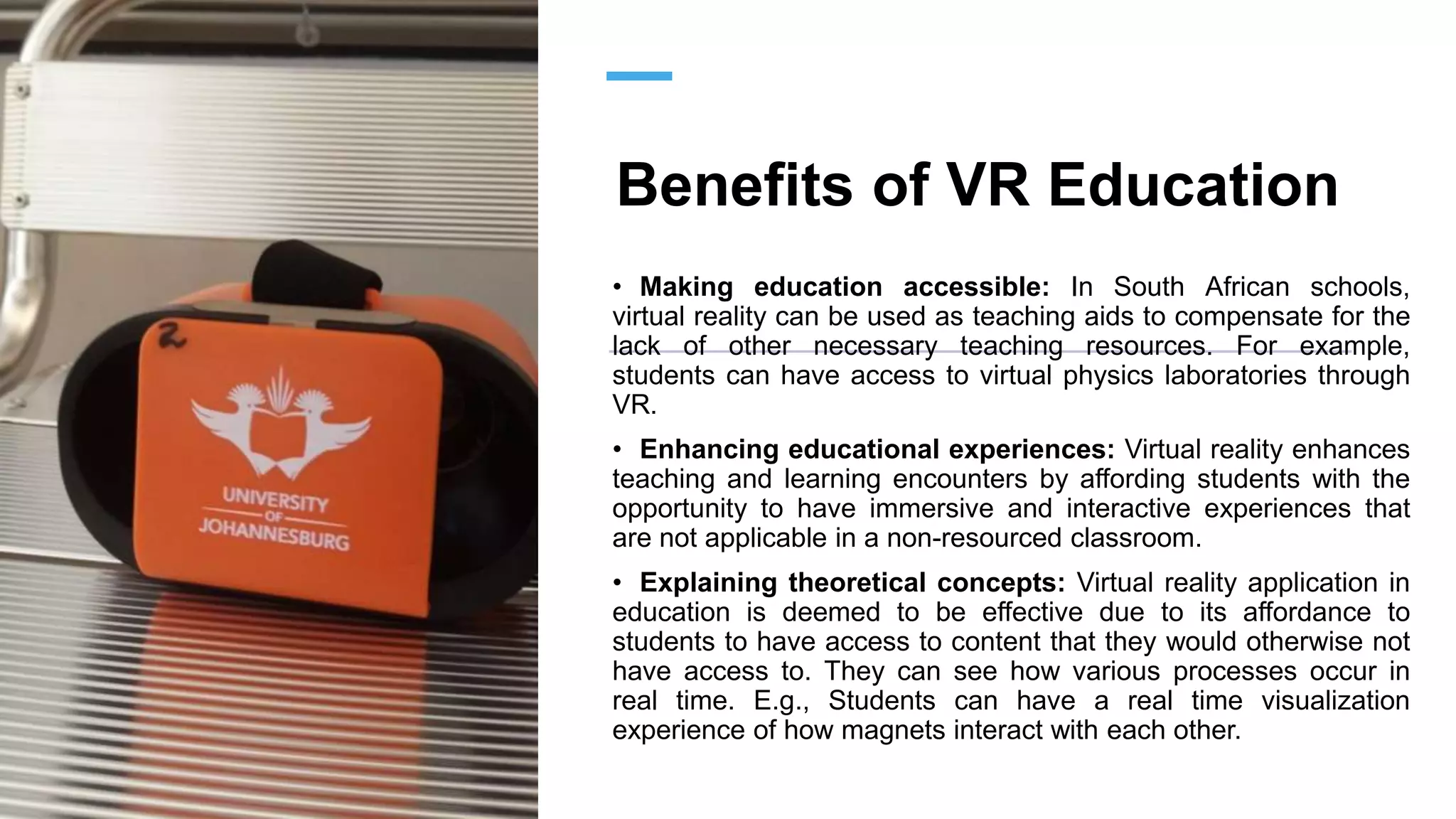
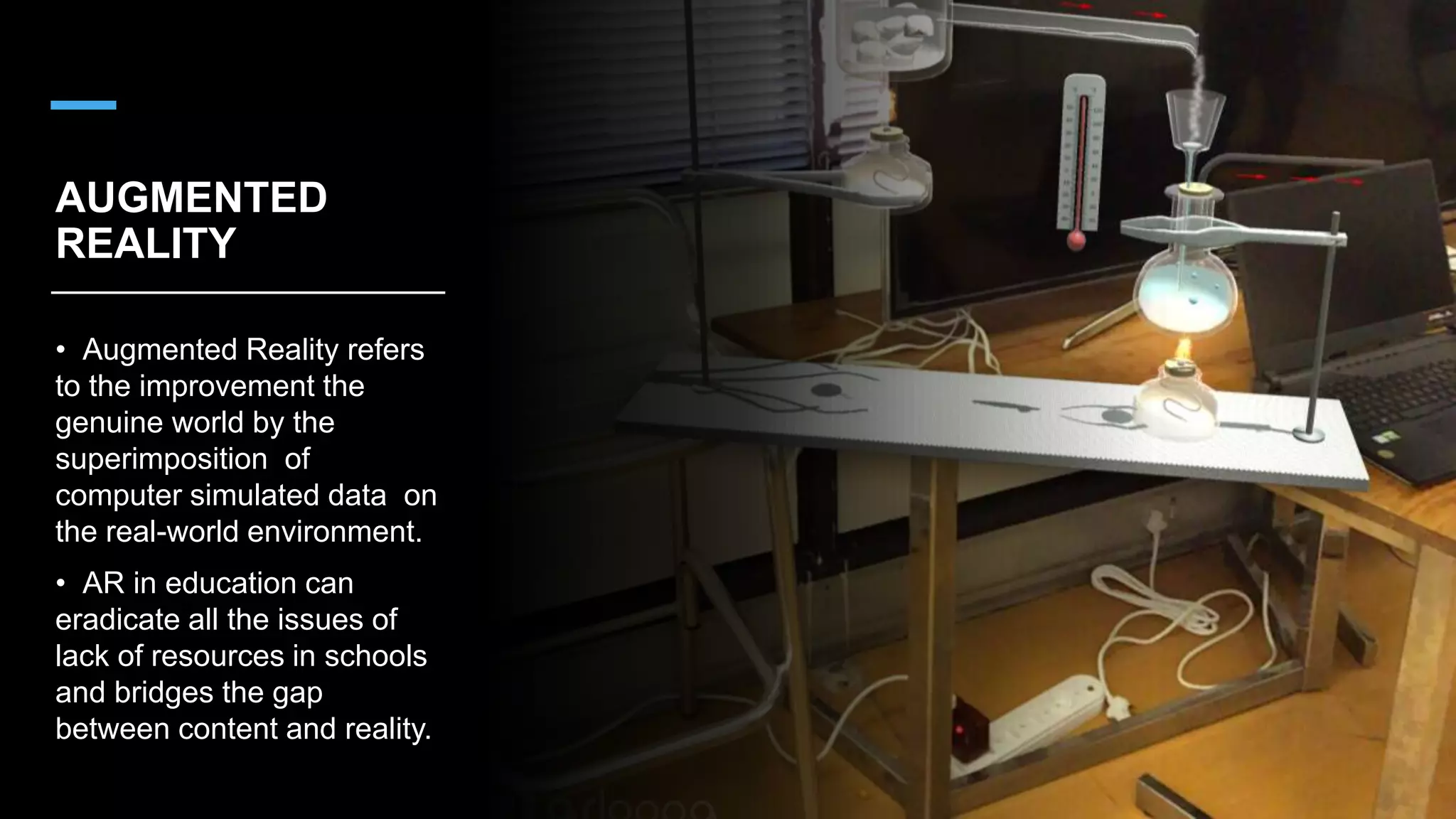
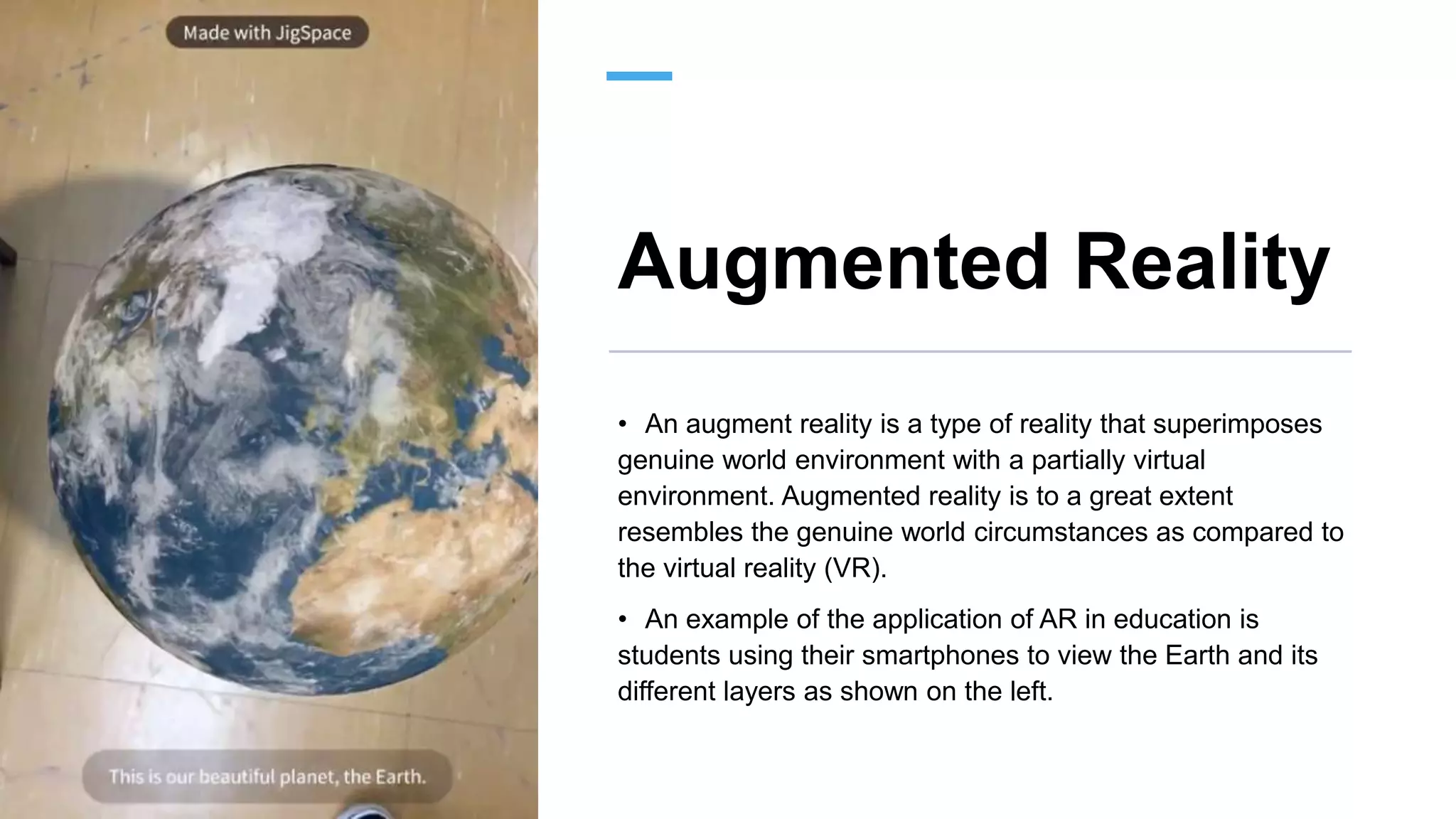
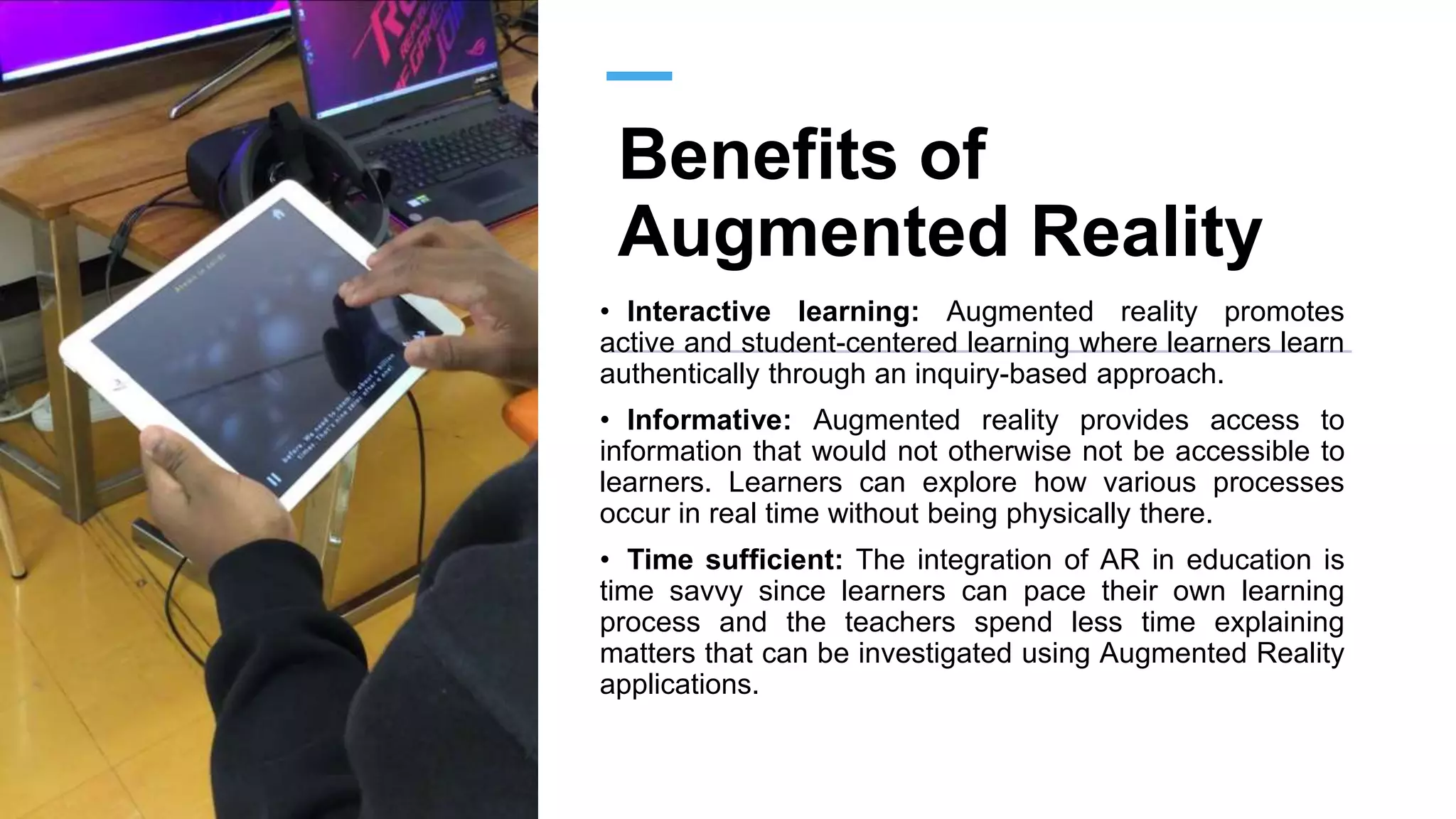
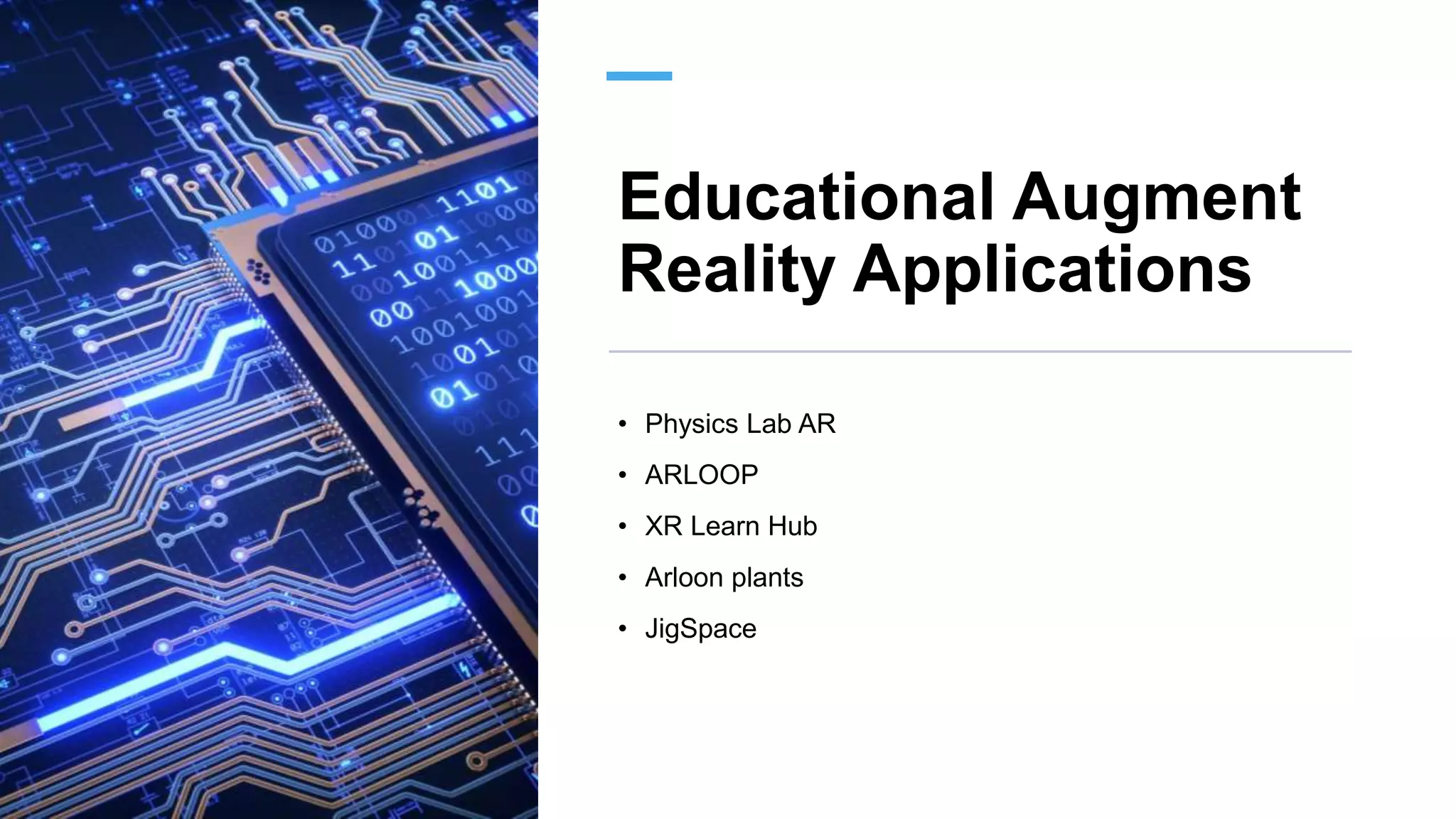
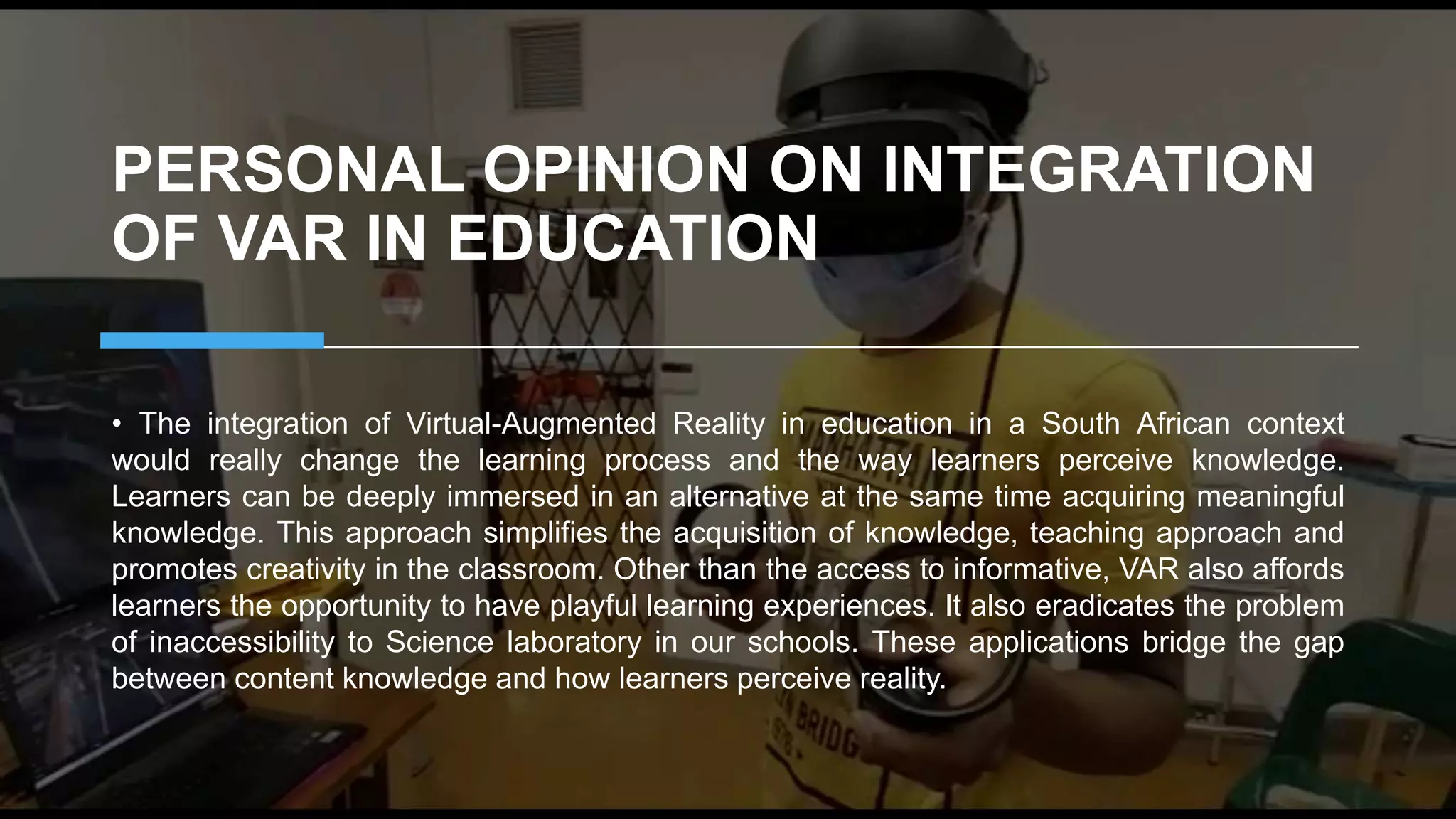
The document discusses the applications of virtual reality (VR) and augmented reality (AR) in education. VR involves immersive virtual environments while AR enhances the real world with digital elements. Both can make education more accessible and engaging by providing interactive experiences not possible in traditional classrooms. Examples of benefits include allowing students to visualize scientific concepts in real time and access virtual laboratories. Common educational applications of VR include Google Earth and anatomy apps, while AR applications include overlaying information in physics labs or viewing Earth's layers. The author believes integrating VR and AR in South African schools could transform learning by making knowledge more accessible and hands-on.


![Technology In The Classroom[1]](https://cdn.slidesharecdn.com/ss_thumbnails/technologyintheclassroom1-091208025315-phpapp01-thumbnail.jpg?width=640&height=640&fit=bounds)


![Technology In The Classroom[1]](https://cdn.slidesharecdn.com/ss_thumbnails/technologyintheclassroom1-091208025416-phpapp02-thumbnail.jpg?width=640&height=640&fit=bounds)
![Technology In The Classroom[1]](https://cdn.slidesharecdn.com/ss_thumbnails/technologyintheclassroom1-091208025414-phpapp02-thumbnail.jpg?width=640&height=640&fit=bounds)
![Technology In The Classroom[1]](https://cdn.slidesharecdn.com/ss_thumbnails/technologyintheclassroom1-091208025737-phpapp01-thumbnail.jpg?width=640&height=640&fit=bounds)


