Content Development Role
of the Educator/Developer
By the end of this lesson, you will be able to:
 Understand the components of lesson structure
 Define a textured environment
 Describe the needs of an online learner
 Understand educator examples of course
  outlines
 Describe appropriate activities
 Understand learning outcomes, staging a lesson
  and chunking information
 Understand the use of text, images and design
  presentation
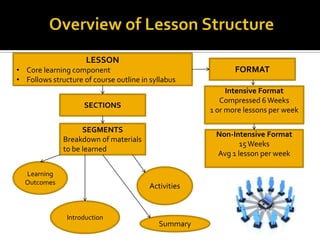
LESSON
• Core learning component                                   FORMAT
• Follows structure of course outline in syllabus
                                                          Intensive Format
                                                        Compressed 6 Weeks
                    SECTIONS
                                                     1 or more lessons per week

                    SEGMENTS
                                                      Non-Intensive Format
              Breakdown of materials
                                                             15 Weeks
              to be learned
                                                      Avg 1 lesson per week

  Learning
  Outcomes
                                        Activities


               Introduction
                                           Summary
A textured environment keeps learners involved and interested.

                  A textured environment should:
   Vary activities to enable learners to interact with each
    other, the educator and content
   Include different types of readings
   Provide solutions and let the learners search for answers
   Vary media by using audio, video and podcasts
   Use text and image-based slide shows
   Include written narratives
   Change presenters
   Provide opportunities for reflection and self-assessment
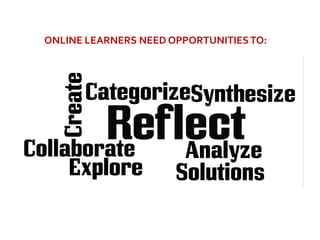
ONLINE LEARNERS NEED OPPORTUNITIES TO:
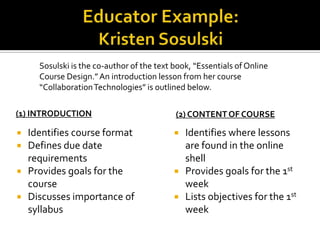
Sosulski is the co-author of the text book, “Essentials of Online
      Course Design.” An introduction lesson from her course
      “Collaboration Technologies” is outlined below.

(1) INTRODUCTION                            (2) CONTENT OF COURSE

   Identifies course format                   Identifies where lessons
   Defines due date                            are found in the online
    requirements                                shell
   Provides goals for the                     Provides goals for the 1st
    course                                      week
   Discusses importance of                    Lists objectives for the 1st
    syllabus                                    week
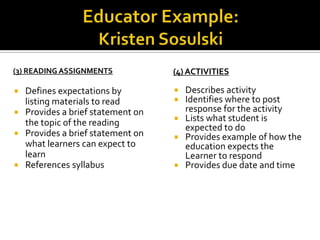
(3) READING ASSIGNMENTS           (4) ACTIVITIES

 Defines expectations by          Describes activity
  listing materials to read        Identifies where to post
 Provides a brief statement on     response for the activity
                                   Lists what student is
  the topic of the reading
                                    expected to do
 Provides a brief statement on    Provides example of how the
  what learners can expect to       education expects the
  learn                             Learner to respond
 References syllabus              Provides due date and time
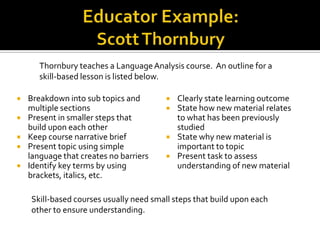
Thornbury teaches a Language Analysis course. An outline for a
       skill-based lesson is listed below.

   Breakdown into sub topics and           Clearly state learning outcome
    multiple sections                       State how new material relates
   Present in smaller steps that            to what has been previously
    build upon each other                    studied
   Keep course narrative brief             State why new material is
   Present topic using simple               important to topic
    language that creates no barriers       Present task to assess
   Identify key terms by using              understanding of new material
    brackets, italics, etc.

    Skill-based courses usually need small steps that build upon each
    other to ensure understanding.
   Provide small activities that build upon one
    another in progressive steps
   Provide larger activities that contain a series
    of steps, such as a group project
   Ensure that activities are interesting,
    challenging and pedagogically sound
   Ensure that activities address learning styles
The purpose of developing content in different
ways and perspectives ensures clarity and
extends understanding.
   Define Learning outcomes for the week
   Ensure that learning outcomes are
    measurable
   Ensure that content is directly related to the
    learning outcomes
   Ensure that activities help students achieve
    learning outcome
   Identify readings and activities
   Identify where added explanations and
    definitions are necessary to support learning
   Decide how you will help pace learning
   Decide how you will assess learning
   Break down blocks of information into
    incremental learning sections, segments or
    steps as appropriate for the subject matter
   Break down the presentation of material into
    a series of mini-presentations
Include:
 Short readings
 Text-based supplementary materials from
  internet or other sources
 Reflective self assessments


Keep things flowing and offer opportunities to
develop a range of thinking skills.
Use:
 Charts
 Photos
 Illustrations
 Links
 Audio Clips
 Video Clips
 Podcasts
 Diagrams

Make sure details are easy to see. Keep it simple to
avoid information overload.
   Make weekly announcements
   Participate and monitor online discussions
   Provide feedback on course assignments and
    activities
   Structure group activities
   Solicit feedback from students on course
    design, pace and structure
   Communicate with students regularly to
    ensure a well-engaged experience
<iframe width="420" height="315"
src="http://www.youtube.com/embed/VxY22Ih
baH4" frameborder="0"
allowfullscreen></iframe>
Think about the online classes in which you
have participated.
 Did they follow the outlines suggested in this
  lesson?
 If they did not, would any of the information
  presented have made the courses easier to
  understand?
 Did anything stand out that you will
  incorporate into your own designs?

Virtual classroom under construction

  • 1.
    Content Development Role ofthe Educator/Developer
  • 2.
    By the endof this lesson, you will be able to:  Understand the components of lesson structure  Define a textured environment  Describe the needs of an online learner  Understand educator examples of course outlines  Describe appropriate activities  Understand learning outcomes, staging a lesson and chunking information  Understand the use of text, images and design presentation
  • 3.
    LESSON • Core learningcomponent FORMAT • Follows structure of course outline in syllabus Intensive Format Compressed 6 Weeks SECTIONS 1 or more lessons per week SEGMENTS Non-Intensive Format Breakdown of materials 15 Weeks to be learned Avg 1 lesson per week Learning Outcomes Activities Introduction Summary
  • 4.
    A textured environmentkeeps learners involved and interested. A textured environment should:  Vary activities to enable learners to interact with each other, the educator and content  Include different types of readings  Provide solutions and let the learners search for answers  Vary media by using audio, video and podcasts  Use text and image-based slide shows  Include written narratives  Change presenters  Provide opportunities for reflection and self-assessment
  • 5.
    ONLINE LEARNERS NEEDOPPORTUNITIES TO:
  • 6.
    Sosulski is theco-author of the text book, “Essentials of Online Course Design.” An introduction lesson from her course “Collaboration Technologies” is outlined below. (1) INTRODUCTION (2) CONTENT OF COURSE  Identifies course format  Identifies where lessons  Defines due date are found in the online requirements shell  Provides goals for the  Provides goals for the 1st course week  Discusses importance of  Lists objectives for the 1st syllabus week
  • 7.
    (3) READING ASSIGNMENTS (4) ACTIVITIES  Defines expectations by  Describes activity listing materials to read  Identifies where to post  Provides a brief statement on response for the activity  Lists what student is the topic of the reading expected to do  Provides a brief statement on  Provides example of how the what learners can expect to education expects the learn Learner to respond  References syllabus  Provides due date and time
  • 8.
    Thornbury teaches aLanguage Analysis course. An outline for a skill-based lesson is listed below.  Breakdown into sub topics and  Clearly state learning outcome multiple sections  State how new material relates  Present in smaller steps that to what has been previously build upon each other studied  Keep course narrative brief  State why new material is  Present topic using simple important to topic language that creates no barriers  Present task to assess  Identify key terms by using understanding of new material brackets, italics, etc. Skill-based courses usually need small steps that build upon each other to ensure understanding.
  • 9.
    Provide small activities that build upon one another in progressive steps  Provide larger activities that contain a series of steps, such as a group project  Ensure that activities are interesting, challenging and pedagogically sound  Ensure that activities address learning styles
  • 10.
    The purpose ofdeveloping content in different ways and perspectives ensures clarity and extends understanding.
  • 11.
    Define Learning outcomes for the week  Ensure that learning outcomes are measurable  Ensure that content is directly related to the learning outcomes  Ensure that activities help students achieve learning outcome
  • 12.
    Identify readings and activities  Identify where added explanations and definitions are necessary to support learning  Decide how you will help pace learning  Decide how you will assess learning
  • 13.
    Break down blocks of information into incremental learning sections, segments or steps as appropriate for the subject matter  Break down the presentation of material into a series of mini-presentations
  • 14.
    Include:  Short readings Text-based supplementary materials from internet or other sources  Reflective self assessments Keep things flowing and offer opportunities to develop a range of thinking skills.
  • 15.
    Use:  Charts  Photos Illustrations  Links  Audio Clips  Video Clips  Podcasts  Diagrams Make sure details are easy to see. Keep it simple to avoid information overload.
  • 16.
    Make weekly announcements  Participate and monitor online discussions  Provide feedback on course assignments and activities  Structure group activities  Solicit feedback from students on course design, pace and structure  Communicate with students regularly to ensure a well-engaged experience
  • 17.
  • 18.
    Think about theonline classes in which you have participated.  Did they follow the outlines suggested in this lesson?  If they did not, would any of the information presented have made the courses easier to understand?  Did anything stand out that you will incorporate into your own designs?