Vietnam War
Early US Involvement
• US involved through 5 presidential terms

• Truman—military aid for French
• Eisenhower—financial aid for France;
  military advisors for S. Vietnam
• Kennedy—military personnel in advising
  capacity
• Johnson—sent troops into battle
• Nixon—pulled troops out of war
• Eisenhower defended US policy with
  domino theory--
  – Vietnam falls to communism so would others
• French struggled with guerilla tactics—
  – Irregular troops blending in with civilian
    population
• Geneva Accords—French Indochina
  divided into Vietnam, Laos, Cambodia
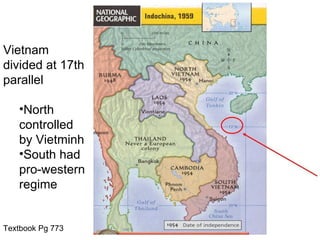
Vietnam
divided at 17th
parallel

   •North
   controlled
   by Vietminh
   •South had
   pro-western
   regime


Textbook Pg 773
Edging Closer to War
• Ngo Dinh Diem, ldr S. Vietnam, refused to
  hold national election
• Ho Chi Minh, ldr N. Vietnam, set out to
  unify North and South Vietnam
  – Created Vietcong, a guerilla army
• Kennedy continued support for S. Vietnam
  – Military personnel sent in ‘advising’ capacity
Johnson’s Turn
• Inherited Vietnam problem after
  Kennedy’s assassination (4th
  President in Vietnam)

• Cautious, but determined to keep S.
  Vietnam from becoming communist
  state
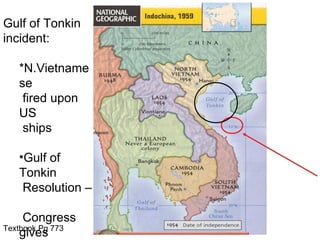
Gulf of Tonkin
incident:

   *N.Vietname
   se
    fired upon
   US
    ships

   •Gulf of
   Tonkin
    Resolution –

     Congress
Textbook Pg 773
    gives
• 1965 Johnson sends in the troops
   – Fight along side S. Vietnamese
     troops
• Underestimated Vietcong strength
• Refused full scale invasion of N.
  Vietnam
   – Feared China become involved
• Refused full-scale attack on Vietcong
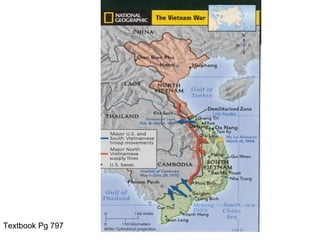
  supply line—Ho Chi Minh Trail
Textbook Pg 797
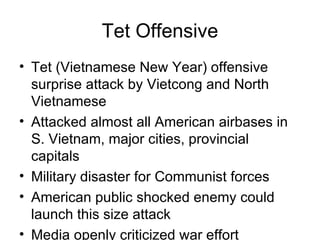
Tet Offensive
• Tet (Vietnamese New Year) offensive
  surprise attack by Vietcong and North
  Vietnamese
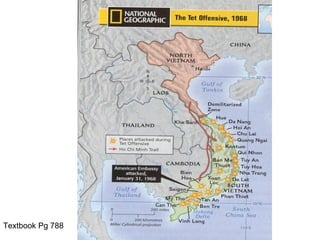
• Attacked almost all American airbases in
  S. Vietnam, major cities, provincial
  capitals
• Military disaster for Communist forces
• American public shocked enemy could
  launch this size attack
• Media openly criticized war effort
Textbook Pg 788
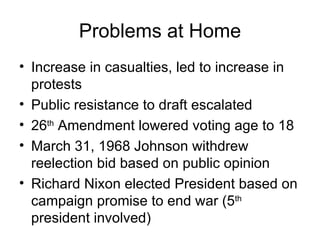
Problems at Home
• Increase in casualties, led to increase in
  protests
• Public resistance to draft escalated
• 26th Amendment lowered voting age to 18
• March 31, 1968 Johnson withdrew
  reelection bid based on public opinion
• Richard Nixon elected President based on
  campaign promise to end war (5th
  president involved)
Ending the War
• Henry Kissinger—gained authority to find
  way to end war
  – Began peace talks with N. Vietnam
• Nixon began Vietnamization
  – Gradual withdrawal of troops
• January 1973 both sides agree to end war
• March 1975 N. Vietnam invades again
  – US refuses assistance
  – By April N. Vietnamese capture Saigon and
    united N & S Vietam as one nation under
    communist rule
The End

Vietnam war pwr pt

  • 1.
  • 2.
    Early US Involvement •US involved through 5 presidential terms • Truman—military aid for French • Eisenhower—financial aid for France; military advisors for S. Vietnam • Kennedy—military personnel in advising capacity • Johnson—sent troops into battle • Nixon—pulled troops out of war
  • 3.
    • Eisenhower defendedUS policy with domino theory-- – Vietnam falls to communism so would others • French struggled with guerilla tactics— – Irregular troops blending in with civilian population • Geneva Accords—French Indochina divided into Vietnam, Laos, Cambodia
  • 4.
    Vietnam divided at 17th parallel •North controlled by Vietminh •South had pro-western regime Textbook Pg 773
  • 5.
    Edging Closer toWar • Ngo Dinh Diem, ldr S. Vietnam, refused to hold national election • Ho Chi Minh, ldr N. Vietnam, set out to unify North and South Vietnam – Created Vietcong, a guerilla army • Kennedy continued support for S. Vietnam – Military personnel sent in ‘advising’ capacity
  • 6.
    Johnson’s Turn • InheritedVietnam problem after Kennedy’s assassination (4th President in Vietnam) • Cautious, but determined to keep S. Vietnam from becoming communist state
  • 7.
    Gulf of Tonkin incident: *N.Vietname se fired upon US ships •Gulf of Tonkin Resolution – Congress Textbook Pg 773 gives
  • 8.
    • 1965 Johnsonsends in the troops – Fight along side S. Vietnamese troops • Underestimated Vietcong strength • Refused full scale invasion of N. Vietnam – Feared China become involved • Refused full-scale attack on Vietcong supply line—Ho Chi Minh Trail
  • 9.
  • 10.
    Tet Offensive • Tet(Vietnamese New Year) offensive surprise attack by Vietcong and North Vietnamese • Attacked almost all American airbases in S. Vietnam, major cities, provincial capitals • Military disaster for Communist forces • American public shocked enemy could launch this size attack • Media openly criticized war effort
  • 11.
  • 12.
    Problems at Home •Increase in casualties, led to increase in protests • Public resistance to draft escalated • 26th Amendment lowered voting age to 18 • March 31, 1968 Johnson withdrew reelection bid based on public opinion • Richard Nixon elected President based on campaign promise to end war (5th president involved)
  • 13.
    Ending the War •Henry Kissinger—gained authority to find way to end war – Began peace talks with N. Vietnam • Nixon began Vietnamization – Gradual withdrawal of troops • January 1973 both sides agree to end war • March 1975 N. Vietnam invades again – US refuses assistance – By April N. Vietnamese capture Saigon and united N & S Vietam as one nation under communist rule
  • 15.