Did Victorians Care
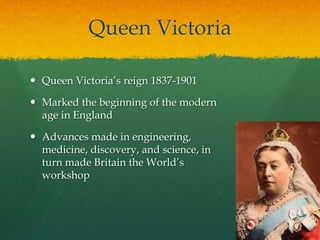
Queen Victoria 
 Queen Victoria’s reign 1837-1901 
 Marked the beginning of the modern 
age in England 
 Advances made in engineering, 
medicine, discovery, and science, in 
turn made Britain the World’s 
workshop
What happen in the 19th 
century 
 The image of the 19th century as a period of great 
opportunity for men of energy and skill is one that 
has been long establish. 
 in the past, historians have argued that middle-class. 
 But the middle-class people became more aware of 
the conditions in which the poor worked and lived. 
 They become more scared
Middle Class 
 The middle class really came to the fore in Victorian 
England 
 What distinguished middle class people from the 
aristocracy was that they did not have titles, though 
they might be very rich, therefore, they were not 
aristocracy 
 The aristocracy looked down on anyone “in trade” 
regardless of whether that person owned a large 
company and was richer than any aristocrat
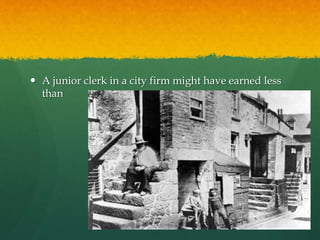
 A junior clerk in a city firm might have earned less 
than
The workhouse 
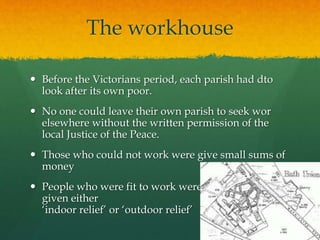
 Before the Victorians period, each parish had dto 
look after its own poor. 
 No one could leave their own parish to seek wor 
elsewhere without the written permission of the 
local Justice of the Peace. 
 Those who could not work were give small sums of 
money 
 People who were fit to work were 
given either 
‘indoor relief’ or ‘outdoor relief’
Middle class men 
 Middle class men did mental or “clean” work. 
 Men who practiced a profession were naturally 
middle class; doctors, lawyers, architects, etc, were 
middle class 
 Some people made further distinctions and classed 
head teacher, journalist, shopkeepers is low middle 
class, but generally these and clerks counted as 
middle class
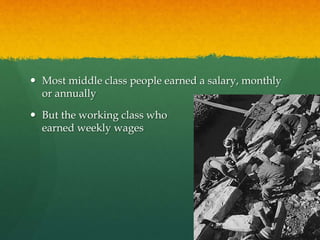
 Most middle class people earned a salary, monthly 
or annually 
 But the working class who 
earned weekly wages
Middle class woman 
 Middle class women whose husband’s were 
shopkeeper's might work in the family business 
 But if the woman is married, she did not work and 
that is part of the rule 
 The only suitable work for a single middle class 
single woman was a governess schoolmistress, or 
lady’s companion 
 If a woman is married all of her property will 
become her husband property
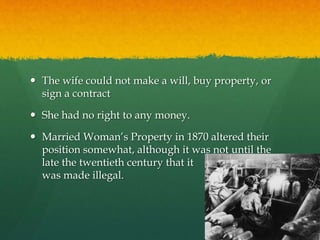
 The wife could not make a will, buy property, or 
sign a contract 
 She had no right to any money. 
 Married Woman’s Property in 1870 altered their 
position somewhat, although it was not until the 
late the twentieth century that it 
was made illegal.

Did victoria cares?

  • 1.
  • 2.
    Queen Victoria Queen Victoria’s reign 1837-1901  Marked the beginning of the modern age in England  Advances made in engineering, medicine, discovery, and science, in turn made Britain the World’s workshop
  • 3.
    What happen inthe 19th century  The image of the 19th century as a period of great opportunity for men of energy and skill is one that has been long establish.  in the past, historians have argued that middle-class.  But the middle-class people became more aware of the conditions in which the poor worked and lived.  They become more scared
  • 4.
    Middle Class The middle class really came to the fore in Victorian England  What distinguished middle class people from the aristocracy was that they did not have titles, though they might be very rich, therefore, they were not aristocracy  The aristocracy looked down on anyone “in trade” regardless of whether that person owned a large company and was richer than any aristocrat
  • 5.
     A juniorclerk in a city firm might have earned less than
  • 6.
    The workhouse Before the Victorians period, each parish had dto look after its own poor.  No one could leave their own parish to seek wor elsewhere without the written permission of the local Justice of the Peace.  Those who could not work were give small sums of money  People who were fit to work were given either ‘indoor relief’ or ‘outdoor relief’
  • 7.
    Middle class men  Middle class men did mental or “clean” work.  Men who practiced a profession were naturally middle class; doctors, lawyers, architects, etc, were middle class  Some people made further distinctions and classed head teacher, journalist, shopkeepers is low middle class, but generally these and clerks counted as middle class
  • 8.
     Most middleclass people earned a salary, monthly or annually  But the working class who earned weekly wages
  • 9.
    Middle class woman  Middle class women whose husband’s were shopkeeper's might work in the family business  But if the woman is married, she did not work and that is part of the rule  The only suitable work for a single middle class single woman was a governess schoolmistress, or lady’s companion  If a woman is married all of her property will become her husband property
  • 10.
     The wifecould not make a will, buy property, or sign a contract  She had no right to any money.  Married Woman’s Property in 1870 altered their position somewhat, although it was not until the late the twentieth century that it was made illegal.