Via Geometric (Clifford) Algebra: Equation for
Line of Intersection of Two Planes
May 5, 2019
James Smith
nitac14b@yahoo.com
https://mx.linkedin.com/in/james-smith-1b195047
Abstract
As a high-school-level example of solving a problem via Geometric
Algebra (GA), we show how to derive an equation for the line of intersection
between two given planes. The solution method that we use emphasizes
GA’s capabilities for expressing and manipulating projections and rotations
of vectors.
“Find the equation, in the form z = z0+λˆu, of the line of intersection
between the planes P1 : (x − a1) ∧ ˆB1 and P2 : (x − a2) ∧ ˆB2.”
1
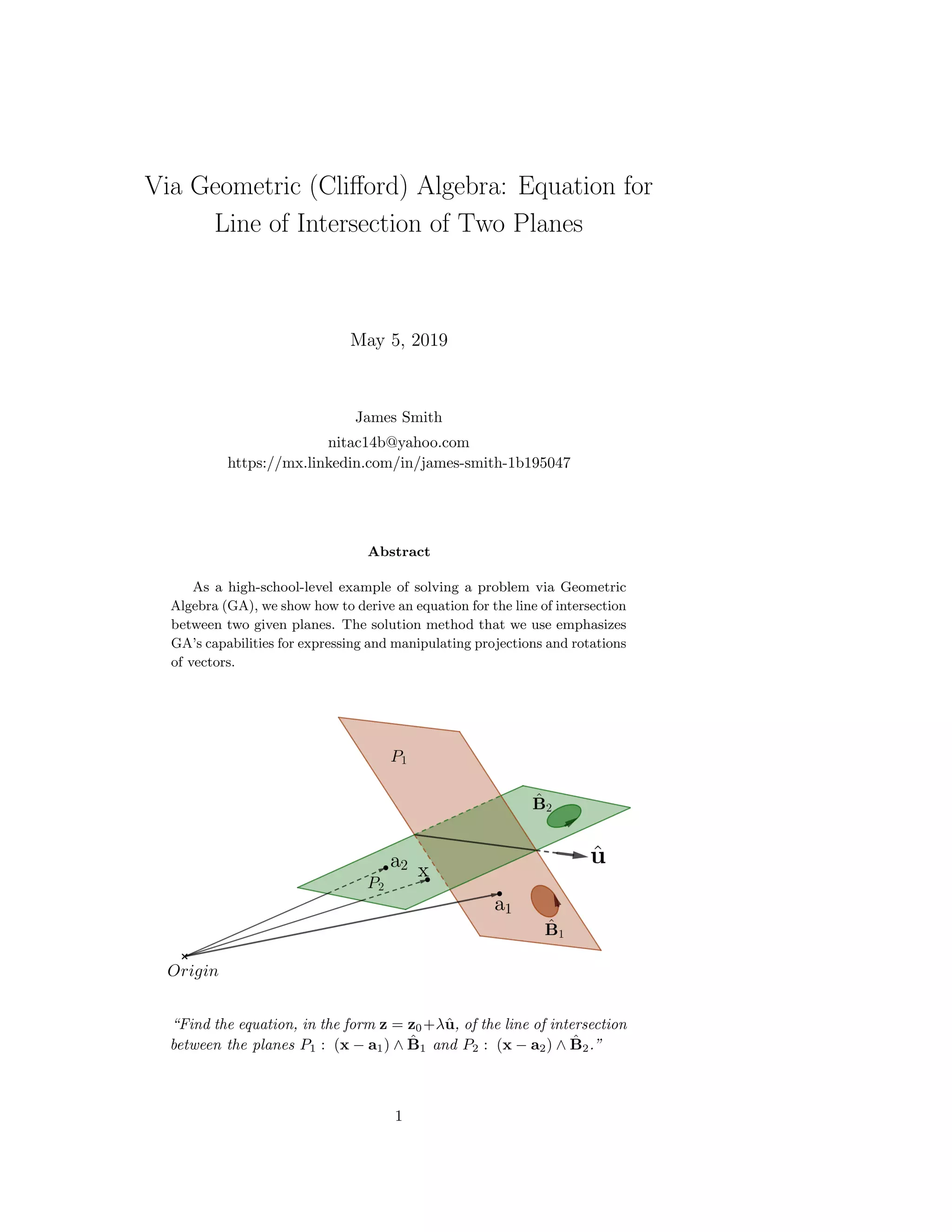
Figure 1: Plane P1 consists of the endpoints of all those vectors x that satisfy
the condition expressed by the equation (x − a1) ∧ ˆB1 = 0. Plane P2 consists of
the endpoints of all those vectors x that satisfy the condition expressed by the
equation (x − a2) ∧ ˆB2 = 0.
1 Introduction
The line of intersection of two planes is an important element of many mathe-
matical and physical problems. Here, we’ll develop an equation for such a line
using Geometric-Algebra (GA) concepts that are discussed in greater detail in
Refs. [1] and [2].
2 Problem Statement
In Fig. 1,‘Given the planes (x − a1)∧ ˆB1 = 0 and (x − a2)∧ ˆB2 = 0,
derive an equation for their line of intersection, in the parametric
form z = z0 + λˆu.
3 Solution
To define the line of intersection, we will find the line’s direction (ˆu) and one
point along the line. As that point, we will choose the one closest to the origin.
We will call the vector from the origin to that point z0.
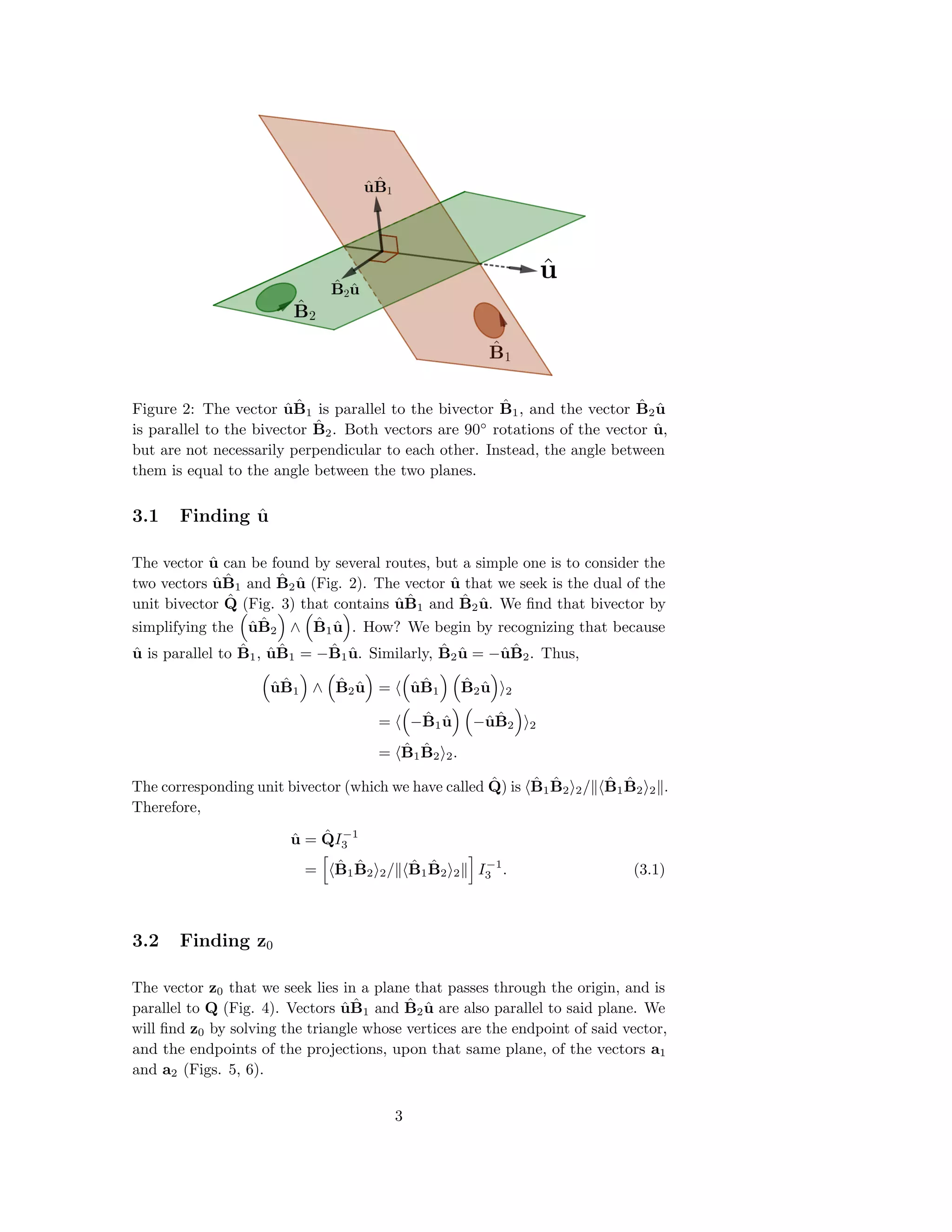
Figure 2: The vector ˆu ˆB1 is parallel to the bivector ˆB1, and the vector ˆB2 ˆu
is parallel to the bivector ˆB2. Both vectors are 90◦
rotations of the vector ˆu,
but are not necessarily perpendicular to each other. Instead, the angle between
them is equal to the angle between the two planes.
3.1 Finding ˆu
The vector ˆu can be found by several routes, but a simple one is to consider the
two vectors ˆu ˆB1 and ˆB2 ˆu (Fig. 2). The vector ˆu that we seek is the dual of the
unit bivector ˆQ (Fig. 3) that contains ˆu ˆB1 and ˆB2 ˆu. We find that bivector by
simplifying the ˆu ˆB2 ∧ ˆB1 ˆu . How? We begin by recognizing that because
ˆu is parallel to ˆB1, ˆu ˆB1 = − ˆB1 ˆu. Similarly, ˆB2 ˆu = −ˆu ˆB2. Thus,
ˆu ˆB1 ∧ ˆB2 ˆu = ˆu ˆB1
ˆB2 ˆu 2
= − ˆB1 ˆu −ˆu ˆB2 2
= ˆB1
ˆB2 2.
The corresponding unit bivector (which we have called ˆQ) is ˆB1
ˆB2 2/ ˆB1
ˆB2 2 .
Therefore,
ˆu = ˆQI−1
3
= ˆB1
ˆB2 2/ ˆB1
ˆB2 2 I−1
3 . (3.1)
3.2 Finding z0
The vector z0 that we seek lies in a plane that passes through the origin, and is
parallel to Q (Fig. 4). Vectors ˆu ˆB1 and ˆB2 ˆu are also parallel to said plane. We
will find z0 by solving the triangle whose vertices are the endpoint of said vector,
and the endpoints of the projections, upon that same plane, of the vectors a1
and a2 (Figs. 5, 6).
3
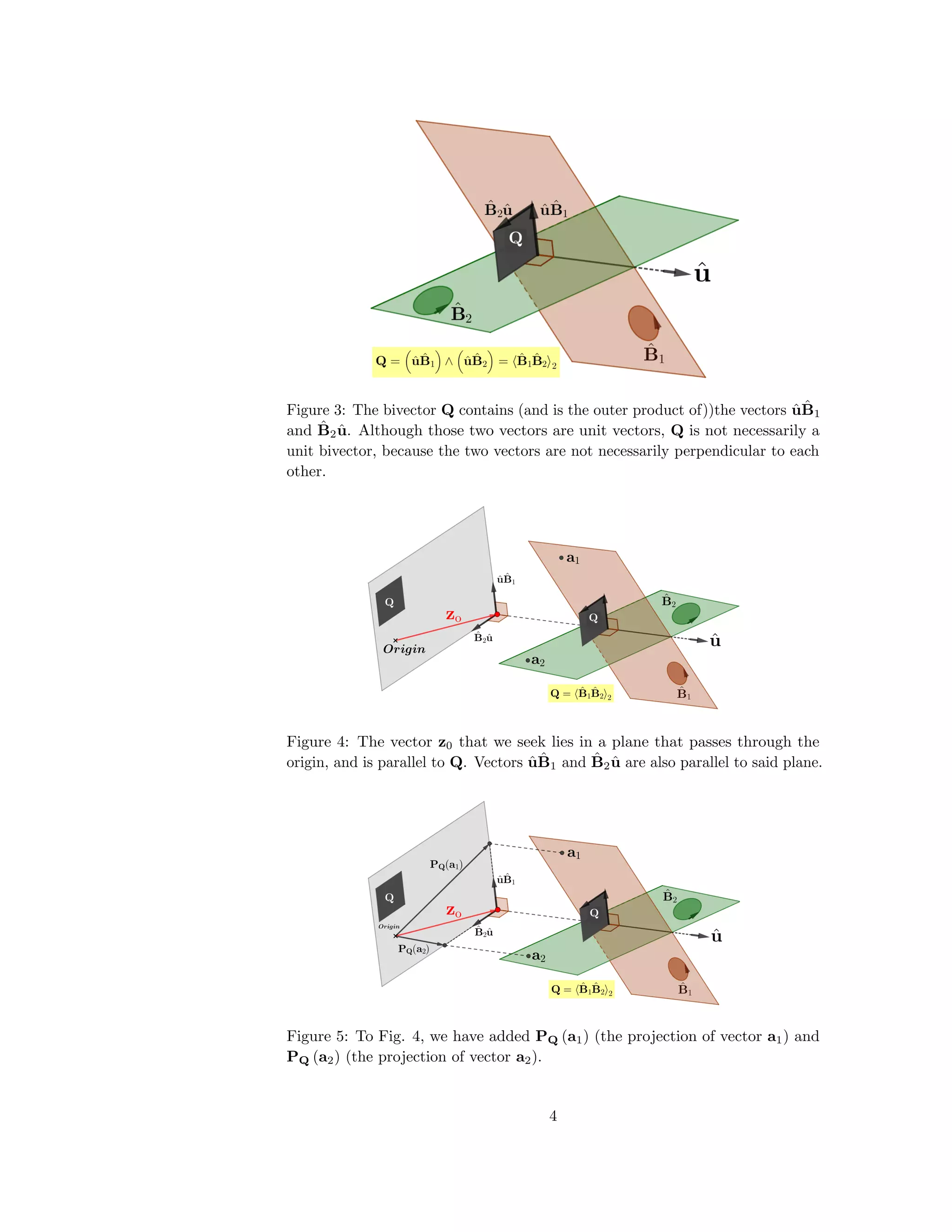
Figure 3: The bivector Q contains (and is the outer product of))the vectors ˆu ˆB1
and ˆB2 ˆu. Although those two vectors are unit vectors, Q is not necessarily a
unit bivector, because the two vectors are not necessarily perpendicular to each
other.
Figure 4: The vector z0 that we seek lies in a plane that passes through the
origin, and is parallel to Q. Vectors ˆu ˆB1 and ˆB2 ˆu are also parallel to said plane.
Figure 5: To Fig. 4, we have added PQ (a1) (the projection of vector a1) and
PQ (a2) (the projection of vector a2).
4
Figure 6: Looking downward (i.e., in the direction −ˆu) upon the gray plane
shown in Figs. 4 and 5. To find z0, we will begin by solving the blue triangle
for the vector µ1 ˆu ˆB1. Then, z0 = PQ (a1) + µ1 ˆu ˆB1.
From Fig. 6,
µ1 ˆu ˆB1 + µ2
ˆB2 ˆu = PQ (a2) − PQ (a1) .
To solve for µ1, we’ll eliminate µ2 by taking the outer product of both sides
with the vector ˆB2 ˆu:
µ1 ˆu ˆB1 + µ2
ˆB2 ˆu ∧ ˆB2 ˆu = [PQ (a2) − PQ (a1)] ∧ ˆB2 ˆu
µ1 ˆu ˆB1 ∧ ˆB2 ˆu = [PQ (a2) − PQ (a1)] ∧ ˆB2 ˆu .
ˆQ
−1
= ˆQ, and ˆB1
ˆB2
−1
2 =
− ˆB1
ˆB2 2/ ˆB1
ˆB2 2
2
/
Next, we use properties of projections and the outer product to solve for µ1:
µ1 ˆu ˆB1
ˆB2 ˆu 2 = [PQ (a2 − a1)] ∧ ˆB2 ˆu
µ1
ˆB1
ˆB2 2 = (a2 − a1) · ˆQ ˆQ
−1
=PQ(a2−a1)
ˆB2 ˆu 2
µ1
ˆB1
ˆB2 2 = − (a2 − a1) · ˆQ ˆQ ˆB2 ˆu 2
µ1
ˆB1
ˆB2 2
ˆB1
ˆB2
−1
2 = (a2 − a1) · ˆQ ˆQ ˆB2 ˆu 2
ˆB1
ˆB2 2 / ˆB1
ˆB2 2
2
µ1 = (a2 − a1) ˆQ 1
=(a2−a1)· ˆQ
ˆQ ˆB2 ˆu 2
ˆB1
ˆB2 2 / ˆB1
ˆB2 2
2
= (a2 − a1) ˆQ 1
ˆQ −ˆu ˆB2 2
ˆB1
ˆB2 2 / ˆB1
ˆB2 2
2
= (a2 − a1) ˆQ 1 − ˆQˆu ˆB2 2
ˆB1
ˆB2 2 / ˆB1
ˆB2 2
2
.
5
Now, we recall that ˆu = ˆQI−1
3 . Therefore, − ˆQˆu = − ˆQ ˆQI−1
3 = I−1
3 , and
µ1 = (a2 − a1) ˆQ 1I−1
3
ˆB2 2
ˆB1
ˆB2 2/ ˆB1
ˆB2 2
2
. (3.2)
Our purpose in finding µ1 was to then proceed to find µ1 ˆu ˆB1. We’ll do
that now.
µ1 ˆu ˆB1 =
(a2 − a1) ˆQ 1I−1
3
ˆB2 2
ˆB1
ˆB2 2
2
ˆB1
ˆB2 2
=µ1
ˆB1
ˆB2 2
ˆB1
ˆB2 2
I−1
3
=ˆu
ˆB1
= − (a2 − a1) ˆQ 1I−1
3
ˆB2 2I−1
3
ˆB1 / ˆB1
ˆB2 2 .
To finish, we recognize that I−1
3 = −I3, so that
µ1 ˆu ˆB1 = − (a2 − a1) ˆQ 1I3
ˆB2 2I3
ˆB1 / ˆB1
ˆB2 2 .
Then,
z0 = PQ (a2 − gabolda1) + µ1 ˆu ˆB1
= − (a2 − a1) ˆQ 1
ˆQ −
(a2 − a1) ˆQ 1I3
ˆB2 2I3
ˆB1
ˆB1
ˆB2 2
. (3.3)
References
[1] A. Macdonald, Linear and Geometric Algebra (First Edition) p. 126,
CreateSpace Independent Publishing Platform (Lexington, 2012).
[2] J. Smith, 2016, “Some Solution Strategies for Equations that Arise in
Geometric (Clifford) Algebra”, http://vixra.org/abs/1610.0054.
6

Via Geometric (Clifford) Algebra: Equation for Line of Intersection of Two Planes

  • 1.
    Via Geometric (Clifford)Algebra: Equation for Line of Intersection of Two Planes May 5, 2019 James Smith nitac14b@yahoo.com https://mx.linkedin.com/in/james-smith-1b195047 Abstract As a high-school-level example of solving a problem via Geometric Algebra (GA), we show how to derive an equation for the line of intersection between two given planes. The solution method that we use emphasizes GA’s capabilities for expressing and manipulating projections and rotations of vectors. “Find the equation, in the form z = z0+λˆu, of the line of intersection between the planes P1 : (x − a1) ∧ ˆB1 and P2 : (x − a2) ∧ ˆB2.” 1
  • 2.
    Figure 1: PlaneP1 consists of the endpoints of all those vectors x that satisfy the condition expressed by the equation (x − a1) ∧ ˆB1 = 0. Plane P2 consists of the endpoints of all those vectors x that satisfy the condition expressed by the equation (x − a2) ∧ ˆB2 = 0. 1 Introduction The line of intersection of two planes is an important element of many mathe- matical and physical problems. Here, we’ll develop an equation for such a line using Geometric-Algebra (GA) concepts that are discussed in greater detail in Refs. [1] and [2]. 2 Problem Statement In Fig. 1,‘Given the planes (x − a1)∧ ˆB1 = 0 and (x − a2)∧ ˆB2 = 0, derive an equation for their line of intersection, in the parametric form z = z0 + λˆu. 3 Solution To define the line of intersection, we will find the line’s direction (ˆu) and one point along the line. As that point, we will choose the one closest to the origin. We will call the vector from the origin to that point z0.
  • 3.
    Figure 2: Thevector ˆu ˆB1 is parallel to the bivector ˆB1, and the vector ˆB2 ˆu is parallel to the bivector ˆB2. Both vectors are 90◦ rotations of the vector ˆu, but are not necessarily perpendicular to each other. Instead, the angle between them is equal to the angle between the two planes. 3.1 Finding ˆu The vector ˆu can be found by several routes, but a simple one is to consider the two vectors ˆu ˆB1 and ˆB2 ˆu (Fig. 2). The vector ˆu that we seek is the dual of the unit bivector ˆQ (Fig. 3) that contains ˆu ˆB1 and ˆB2 ˆu. We find that bivector by simplifying the ˆu ˆB2 ∧ ˆB1 ˆu . How? We begin by recognizing that because ˆu is parallel to ˆB1, ˆu ˆB1 = − ˆB1 ˆu. Similarly, ˆB2 ˆu = −ˆu ˆB2. Thus, ˆu ˆB1 ∧ ˆB2 ˆu = ˆu ˆB1 ˆB2 ˆu 2 = − ˆB1 ˆu −ˆu ˆB2 2 = ˆB1 ˆB2 2. The corresponding unit bivector (which we have called ˆQ) is ˆB1 ˆB2 2/ ˆB1 ˆB2 2 . Therefore, ˆu = ˆQI−1 3 = ˆB1 ˆB2 2/ ˆB1 ˆB2 2 I−1 3 . (3.1) 3.2 Finding z0 The vector z0 that we seek lies in a plane that passes through the origin, and is parallel to Q (Fig. 4). Vectors ˆu ˆB1 and ˆB2 ˆu are also parallel to said plane. We will find z0 by solving the triangle whose vertices are the endpoint of said vector, and the endpoints of the projections, upon that same plane, of the vectors a1 and a2 (Figs. 5, 6). 3
  • 4.
    Figure 3: Thebivector Q contains (and is the outer product of))the vectors ˆu ˆB1 and ˆB2 ˆu. Although those two vectors are unit vectors, Q is not necessarily a unit bivector, because the two vectors are not necessarily perpendicular to each other. Figure 4: The vector z0 that we seek lies in a plane that passes through the origin, and is parallel to Q. Vectors ˆu ˆB1 and ˆB2 ˆu are also parallel to said plane. Figure 5: To Fig. 4, we have added PQ (a1) (the projection of vector a1) and PQ (a2) (the projection of vector a2). 4
  • 5.
    Figure 6: Lookingdownward (i.e., in the direction −ˆu) upon the gray plane shown in Figs. 4 and 5. To find z0, we will begin by solving the blue triangle for the vector µ1 ˆu ˆB1. Then, z0 = PQ (a1) + µ1 ˆu ˆB1. From Fig. 6, µ1 ˆu ˆB1 + µ2 ˆB2 ˆu = PQ (a2) − PQ (a1) . To solve for µ1, we’ll eliminate µ2 by taking the outer product of both sides with the vector ˆB2 ˆu: µ1 ˆu ˆB1 + µ2 ˆB2 ˆu ∧ ˆB2 ˆu = [PQ (a2) − PQ (a1)] ∧ ˆB2 ˆu µ1 ˆu ˆB1 ∧ ˆB2 ˆu = [PQ (a2) − PQ (a1)] ∧ ˆB2 ˆu . ˆQ −1 = ˆQ, and ˆB1 ˆB2 −1 2 = − ˆB1 ˆB2 2/ ˆB1 ˆB2 2 2 / Next, we use properties of projections and the outer product to solve for µ1: µ1 ˆu ˆB1 ˆB2 ˆu 2 = [PQ (a2 − a1)] ∧ ˆB2 ˆu µ1 ˆB1 ˆB2 2 = (a2 − a1) · ˆQ ˆQ −1 =PQ(a2−a1) ˆB2 ˆu 2 µ1 ˆB1 ˆB2 2 = − (a2 − a1) · ˆQ ˆQ ˆB2 ˆu 2 µ1 ˆB1 ˆB2 2 ˆB1 ˆB2 −1 2 = (a2 − a1) · ˆQ ˆQ ˆB2 ˆu 2 ˆB1 ˆB2 2 / ˆB1 ˆB2 2 2 µ1 = (a2 − a1) ˆQ 1 =(a2−a1)· ˆQ ˆQ ˆB2 ˆu 2 ˆB1 ˆB2 2 / ˆB1 ˆB2 2 2 = (a2 − a1) ˆQ 1 ˆQ −ˆu ˆB2 2 ˆB1 ˆB2 2 / ˆB1 ˆB2 2 2 = (a2 − a1) ˆQ 1 − ˆQˆu ˆB2 2 ˆB1 ˆB2 2 / ˆB1 ˆB2 2 2 . 5
  • 6.
    Now, we recallthat ˆu = ˆQI−1 3 . Therefore, − ˆQˆu = − ˆQ ˆQI−1 3 = I−1 3 , and µ1 = (a2 − a1) ˆQ 1I−1 3 ˆB2 2 ˆB1 ˆB2 2/ ˆB1 ˆB2 2 2 . (3.2) Our purpose in finding µ1 was to then proceed to find µ1 ˆu ˆB1. We’ll do that now. µ1 ˆu ˆB1 = (a2 − a1) ˆQ 1I−1 3 ˆB2 2 ˆB1 ˆB2 2 2 ˆB1 ˆB2 2 =µ1 ˆB1 ˆB2 2 ˆB1 ˆB2 2 I−1 3 =ˆu ˆB1 = − (a2 − a1) ˆQ 1I−1 3 ˆB2 2I−1 3 ˆB1 / ˆB1 ˆB2 2 . To finish, we recognize that I−1 3 = −I3, so that µ1 ˆu ˆB1 = − (a2 − a1) ˆQ 1I3 ˆB2 2I3 ˆB1 / ˆB1 ˆB2 2 . Then, z0 = PQ (a2 − gabolda1) + µ1 ˆu ˆB1 = − (a2 − a1) ˆQ 1 ˆQ − (a2 − a1) ˆQ 1I3 ˆB2 2I3 ˆB1 ˆB1 ˆB2 2 . (3.3) References [1] A. Macdonald, Linear and Geometric Algebra (First Edition) p. 126, CreateSpace Independent Publishing Platform (Lexington, 2012). [2] J. Smith, 2016, “Some Solution Strategies for Equations that Arise in Geometric (Clifford) Algebra”, http://vixra.org/abs/1610.0054. 6